2027 Most Affordable Online Audio and Music Degree Programs

Co-Founder and Chief Data Scientist
Choosing an online audio or music degree is not just about finding a program that lets you study from home. It is a decision about your creative direction, technical training, professional network, portfolio, and long-term income potential in a competitive field. Music careers can be rewarding, but they are often project-based, self-directed, and shaped by performance skill, technology fluency, business knowledge, and industry relationships.
This guide explains what online audio and music degree programs cover, how they compare with campus-based options, what they may cost, which specializations are available, and what career paths graduates commonly pursue. It is designed for aspiring musicians, producers, composers, audio engineers, music educators, and working adults who want formal training without giving up current professional or personal responsibilities.
Quick Answer: Is an Online Audio and Music Degree Worth Considering?
An online audio and music degree can be a practical option if you need flexible study, want structured training in music theory and production, and are prepared to build a strong portfolio alongside your coursework. It may be especially useful for students interested in music production, songwriting, digital composition, music business, or technology-driven creative work. However, students pursuing performance-heavy careers should carefully compare audition requirements, ensemble access, private instruction, internship options, and studio resources before enrolling.
According to US Bureau of Labor Statistics (BLS) data, employment for musicians and singers is projected to grow by 2% from 2023 to 2033, while employment for music directors and composers is projected to grow by 3% over the same period. The 2% outlook for musicians and singers is slower than the average for all US occupations, so students should treat the degree as one part of a broader career strategy that includes networking, live or recorded work, business skills, and a professional portfolio.
What are the benefits of getting an online audio and music degree?
- Broader access to music-related careers: A degree in audio or music can support entry into roles such as musician, singer, music director, composer, producer, or other creative and technical positions connected to performance, recording, media, and education.
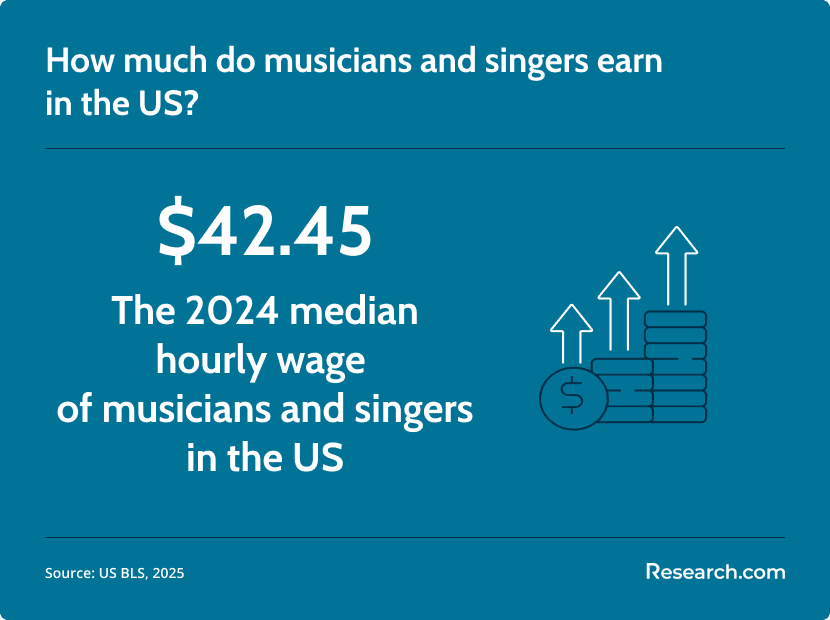
- Potentially strong hourly earnings in selected roles: In 2024, musicians and singers in the US earned a median hourly wage of $42.45, while music directors and composers earned $30.61. Both figures were higher than the 2025 median hourly wages of all occupations across the country (US BLS, 2025).
- Flexible study for working adults and active creators: Online programs can make it easier to study while working, performing, caring for family, or building a freelance practice. Many programs use virtual studios, digital audio workstations, recorded critiques, remote collaboration tools, and project-based assignments to help students develop job-relevant skills.
What can I expect from online audio and music degree programs?
Online audio and music degree programs typically combine musicianship, theory, production technology, creative practice, and industry-focused coursework. Students may study harmony, ear training, arranging, songwriting, recording, mixing, mastering, sound design, composition, music history, copyright, publishing, or music business, depending on the program and concentration.
Many assignments are built around real creative outputs rather than exams alone. Students may record performances, produce tracks, create scores, submit mix revisions, write cue sheets, analyze compositions, collaborate remotely with classmates, or receive instructor critiques through video and audio submissions. Programs focused on audio production commonly expect students to use digital audio workstations (DAWs) and may require access to specific software, microphones, headphones, MIDI controllers, or home studio equipment.
| Program component | What students usually do | Why it matters |
| Music theory and musicianship | Study harmony, melody, rhythm, notation, ear training, and analysis. | Builds the foundation for performance, composition, arranging, and production decisions. |
| Audio production | Record, edit, mix, master, and organize sessions in a DAW. | Develops technical skills used in studios, remote production, podcasting, film, games, and independent music. |
| Performance or composition work | Submit recordings, original works, scores, or live virtual performance projects. | Creates portfolio material and demonstrates artistic growth. |
| Music business and career preparation | Learn about licensing, promotion, artist management, contracts, and distribution. | Helps students understand how music careers are built and monetized. |
| Capstone or portfolio | Complete a final project, album, score, production reel, or research-based project. | Gives graduates work samples to show employers, clients, collaborators, or graduate schools. |
Where can I work with an online audio and music degree?
Music graduates work in several settings, but employment patterns differ by role. Some professionals perform, compose, teach, produce, or direct full time, while others combine multiple income streams through freelance work, studio projects, lessons, live gigs, media scoring, church music, content creation, or education.
In 2023, 169,300 musicians and singers were employed in the US. The largest employment categories for these professionals were:
- Self-employed Workers: 53%
- Religious, Grantmaking, Civic, Professional, and Similar Organizations: 30%
- Performing Arts, Spectator Sports, and Related Industries: 13%
- Educational Services (State, Local, and Private): 3%
In the same year, 50,300 music directors and composers worked in the US. Their largest employer groups were:
- Religious, Grantmaking, Civic, Professional, and Similar Organizations: 53%
- Performing Arts Companies: 7%
- Educational Services (State, Local, and Private): 3%
How much can I make with an online audio and music degree?
Earnings in music vary widely because many roles are freelance, seasonal, part time, project-based, or dependent on location, experience, genre, reputation, and professional network. Still, BLS wage data offers a useful baseline for comparing common music occupations.
In 2024, musicians and singers had a median hourly wage of $42.45, while music directors and composers had a median hourly wage of $30.61. These figures were higher than the $23.80 median hourly wages of all occupations across the country in the same year (US BLS, 2025).
| Occupation | 2024 wage figure | Important context |
| Musicians and singers | $42.45 median hourly wage | Many workers are self-employed or work irregular schedules, so annual income can vary significantly. |
| Music directors and composers | $30.61 median hourly wage | Work may involve ensembles, religious organizations, performing arts groups, schools, media projects, or commissioned compositions. |
| All occupations across the country | $23.80 median hourly wages | This benchmark helps compare music wages with the broader labor market. |
- Online Audio and Music Degree Programs for 2027
- How long online music degrees usually take
- Online vs. on-campus music programs
- Online audio and music degree costs
- Financial aid options for music students
- Admissions requirements and prerequisites
- Common online music degree courses
- Popular online music degree specializations
- Internships, partnerships, and professional growth
- Accreditation and program reputation
- Digital innovation in online music curricula
- How to choose an online music degree program
- Career paths for music degree graduates
- Job market outlook for music graduates
- Interdisciplinary study and music careers
List of Online Audio and Music Degree Programs for 2027
The programs below illustrate the range of online music and audio options available through accredited institutions. When reviewing any list, use it as a starting point rather than a final decision. Compare accreditation, curriculum, faculty, cost, transfer credit policies, performance requirements, software expectations, and career support before applying.
The selection is based on the Research.com methodology developed by our team. Data was collected and reviewed from the IPEDS database, Peterson's database, the College Scorecard database, and the National Center for Education Statistics.
| School | Online music/audio option | Length | Credits | Accreditation |
| Berklee Online | Undergraduate music degree programs with multiple concentrations | At least 4 years | 120 credits | New England Commission of Higher Education (NECHE) |
| Western Connecticut State University | Music degree programs including audio and music production | 2 to 4 years | 120 credits | NECHE |
| Southern Utah University | Online MM in Music Technology | At least 1 year | 30 credits | Northwest Commission on Colleges and Universities (NWCCU) |
| Oregon State University | Online BA and BS in Contemporary Music Industry | 4 years | 180 quarter credits | NWCCU |
| Virginia Wesleyan University | BA in Music Production | 4 years | 120 credits | Southern Association of Colleges and Schools Commission on Colleges (SACSCOC) |
1. Berklee Online
Berklee Online, part of Berklee College of Music, offers online undergraduate music degrees in areas such as music production, music composition for film, TV, and games, and interdisciplinary music studies. Launched in 2002, Berklee Online provides certificate programs, 12-week courses, and online music degree pathways for students who want Berklee coursework in a remote format.
- Program Length: At least 4 years
- Areas of Concentration:
- Music Production
- Music Business
- Interdisciplinary Music Studies
- Guitar Performance
- Piano Performance
- Voice Performance
- Songwriting
- Songwriting and Producing Music
- Electronic Music Production and Sound Design
- Music Composition for Film, TV, and Games
- Total Tuition (With Associated Fees): $62,150
- Required Credits to Graduate: 120 credits
- Accreditation: New England Commission of Higher Education (NECHE)
2. Western Connecticut State University
Western Connecticut State University, through its School of Visual, Performing, and Communication Arts, offers several music programs, including a bachelor of music (BM) in audio and music production. The university also offers BM, bachelor of arts (BA), and bachelor of science (BS) music degrees, along with a master of music (MM) in music education and jazz pedagogy.
- Program Length: 2 to 4 years
- Areas of Concentration:
- Audio and Music Production
- Music Option
- Popular Music Option
- Music Education
- Performance Option
- Jazz Studies Option
- Jazz Pedagogy
- Tuition per Term: $3,499 to $4,358 (2024–2025)
- Required Credits to Graduate: 120 credits
- Accreditation: NECHE
3. Southern Utah University
Southern Utah University offers an online MM in Music Technology with concentrations such as performance technology and film music technology. The 30-credit program is designed for accelerated graduate study and can be completed in 1 year.
- Program Length: At least 1 year
- Areas of Concentration:
- Film Music Technology Emphasis
- Game Audio Technology Emphasis
- Studio Technology Emphasis
- Performance Technology Emphasis
- Cost per Credit: $13,440
- Required Credits to Graduate: 30 credits
- Accreditation: Northwest Commission on Colleges and Universities (NWCCU)
4. Oregon State University
Oregon State University offers online BA and BS programs in contemporary music industry. The curriculum focuses on 20th and 21st century musical styles, including classical and jazz music.
- Program Length: 4 years
- Area of Concentration: Contemporary Music Industry
- Cost per Credit: $384
- Required Credits to Graduate: 180 quarter credits
- Accreditation: NWCCU
5. Virginia Wesleyan University
Virginia Wesleyan University offers a BA in Music Production. The curriculum includes keyboard harmony, basic and intermediate musicianship, digital composition, and sound recording, making it relevant for students interested in music production as well as music education or music therapy pathways.
- Program Length: 4 years
- Area of Concentration: Music Production
- Cost per Credit: $410
- Required Credits to Graduate: 120 credits
- Accreditation: Southern Association of Colleges and Schools Commission on Colleges (SACSCOC)
How long does it take to complete an online music degree program?
A bachelor’s degree in music commonly takes 4 years to complete, although the actual timeline depends on transfer credits, enrollment status, course availability, applied lesson requirements, general education requirements, and whether the student studies full time or part time. Bachelor’s programs usually combine music theory, history, performance, technology, ensembles, electives, and general education coursework.
A master’s degree in music usually takes 2 to 3 years, though some accelerated online graduate programs may be shorter. Graduate students typically focus on a narrower area such as performance, conducting, composition, music education, or music technology. Many programs require advanced projects, recitals, research, a thesis, or a capstone that demonstrates professional-level skill.
| Degree level | Typical time frame | Best fit | Common completion requirement |
| Bachelor’s degree | 4 years | Students seeking a broad undergraduate foundation in music, production, performance, or music industry studies. | Core music coursework, general education, applied work, and often a capstone or portfolio. |
| Master’s degree | 2 to 3 years | Students who already have undergraduate training and want advanced specialization. | Advanced coursework, research, thesis, recital, production portfolio, or final project. |
| Accelerated graduate option | At least 1 year | Students who can manage an intensive course load and already have strong preparation. | Concentrated graduate coursework and a culminating project or equivalent requirement. |
How does an online music degree program compare to an on-campus program?
The right format depends on your goals. Online programs can be excellent for students focused on production, composition, songwriting, music business, or technology-based work. Campus programs may be better for students who need frequent ensemble participation, in-person performance coaching, access to large studios, or close daily interaction with performers and faculty.
| Factor | Online music degree | On-campus music degree | Decision tip |
| Flexibility | Often allows asynchronous coursework and remote project submission. | Usually follows fixed class, rehearsal, lesson, and performance schedules. | Choose online if you need to work or perform while studying; choose campus if structured daily immersion helps you improve faster. |
| Studio and equipment access | May require students to use home equipment, software, and remote collaboration tools. | Often provides practice rooms, recording spaces, ensemble rooms, and school-owned equipment. | Ask whether online students receive software discounts, equipment guidance, and remote technical support. |
| Performance training | May use video submissions, livestream coaching, and virtual feedback. | Provides more immediate in-person coaching, ensemble work, and live performance opportunities. | Performance-focused students should compare lesson frequency and recital expectations carefully. |
| Networking | Can include virtual mentorship, online collaboration, and remote industry events. | Often provides daily peer contact, campus events, ensemble networks, and local scene access. | Online students should be proactive about internships, collaborations, and local music communities. |
| Accessibility | Can be completed from many locations with a reliable device and stable internet connection, though some schools restrict enrollment based on residence. | May require relocation, commuting, and additional living or transportation costs. | Confirm state authorization and any in-person residency requirements before applying. |
What is the average cost of an online music degree program?
Costs vary by institution, degree level, residency status, required technology, transfer credits, and fees. Students should compare total program cost rather than tuition alone because music programs may require software, hardware, instruments, private lesson fees, portfolio platforms, or travel for optional residencies or performances.
For example, Berklee Online lists $61,800 for its 120-credit bachelor's degree programs. Western Connecticut State University lists tuition between $3,499 and $4,358 per term for its online undergraduate music degree programs.
At the graduate level, Southern Utah University offers a fully online Master of Music in Music Technology with total tuition of $13,440. The 30-credit program can be completed in as few as 12 months and includes areas such as performance, film scoring, and game audio. Students considering future academic teaching may also review guidance on becoming a college professor, since graduate education can be one step toward some higher education roles in music or audio technology.
Creative students comparing adjacent fields may also look at the most affordable online cinematography degree options. Both music and cinematography programs combine artistic judgment with technical production skills, so comparing tuition, equipment requirements, and portfolio outcomes can help clarify which path is more financially realistic.
| Program cost item | Why it matters | Question to ask |
| Tuition and required fees | This is the largest direct academic cost. | What is the total cost to graduate after all required credits and fees? |
| Transfer credit policy | Accepted credits can shorten the degree and reduce total cost. | How many prior credits can I transfer into the program? |
| Software and equipment | Audio programs may require DAWs, microphones, headphones, controllers, or interfaces. | Which tools are required, and are student discounts available? |
| Private lessons or applied study | Some programs charge additional fees for performance instruction. | Are lessons included in tuition or billed separately? |
| Residency or travel requirements | Some online programs may include optional or required in-person experiences. | Will I need to travel at any point to complete the degree? |
What are the financial aid options for students enrolling in an audio and music degree program?
Students in online audio and music programs may be able to use scholarships, grants, institutional aid, payment plans, employer support, or other funding options. Eligibility depends on the school, program level, enrollment status, citizenship or residency requirements, academic record, talent review, and financial need.
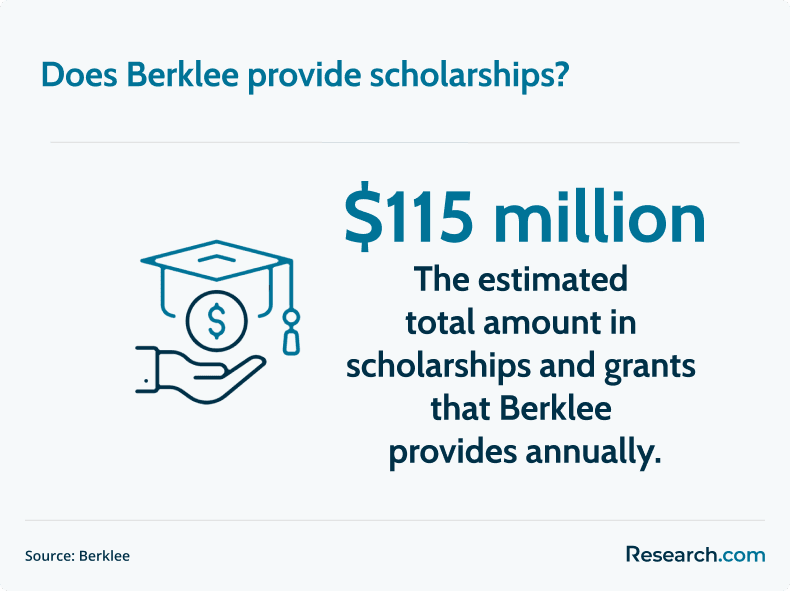
- Berklee Institutional Scholarships and Grants: Berklee awards more than $115 million in scholarships and grants each year to students at Berklee College of Music, Boston Conservatory at Berklee, Berklee Valencia, Berklee NYC, and Berklee Online. Available aid includes merit-based awards, presidential and full-tuition scholarships, and institutional need-based grants.
- Against the Grain Artistic Scholarship: Against The Grain (ATG) Productions is a traditional 501(c)(3) organization that offers scholarship programs, including the Artistic Scholarship. This award provides $1,000 for tuition and fees to eligible Asian American college students. Applicants must be at least 25% Asian and/or Pacific Islander ethnicity; a citizen, national, or legal permanent resident of the US; and a high school senior or full-time college student enrolled at a qualified academic institution.
- Davidson Fellows Scholarship: Created in 2000 by the Davidson Institute for Talent Development, the Davidson Fellows Scholarship awards $100,000, $50,000, and $25,000 to eligible students aged 18 years or younger. Applicants submit projects reviewed by experts for significance of work. Eligible projects include creative applications of existing knowledge, fresh ideas with high impact, and creative solutions with diverse implications.
Music students can also compare how aid works in other online graduate fields, such as affordable online master's in education technology programs, because many schools use similar structures for scholarships, federal aid, payment schedules, and institutional grants.
How to reduce the cost of an online music degree
- Ask for an official transfer credit evaluation before enrolling.
- Confirm whether software and equipment are included, discounted, or fully out of pocket.
- Apply for both school-based and outside scholarships, especially talent-based awards.
- Compare total program cost, not only cost per credit.
- Check whether part-time enrollment affects scholarship eligibility or tuition rates.
- Ask whether prior learning, professional experience, or military credit can apply.
What are the prerequisites for enrolling in an online music degree program?
Admissions requirements depend on the institution, degree level, and concentration. Performance and composition programs often evaluate artistic readiness, while production and music business programs may focus more on academic preparation, technical readiness, and career goals.
- High School Diploma or Equivalent: Most undergraduate online music programs require a high school diploma or an equivalent credential such as a GED. This confirms that applicants have the baseline academic preparation for college-level study.
- Audition or Portfolio Submission: Programs in performance, composition, songwriting, or production may ask for recorded auditions, original works, mixes, scores, or a creative portfolio. This helps the school assess skill level and program fit.
- Basic Technical Skills: Online students must be comfortable with learning platforms, file uploads, video or audio recording, and communication tools. Specialized audio programs may also expect familiarity with music production software or digital audio workstations (DAWs).
Questions to ask before applying
- Is an audition required, optional, or waived for certain concentrations?
- What format should portfolio files use?
- Does the program require specific instruments, microphones, audio interfaces, or software?
- Are placement tests required for theory, piano, or musicianship?
- Can transfer students skip introductory music courses if they demonstrate prior learning?
What courses are usually included in an online music degree program?
Online music and audio programs usually build skills in layers: musical foundations first, then creative application, technical production, analysis, and professional practice. The exact course sequence depends on whether the program is focused on performance, composition, production, music education, music technology, or music business.
- Music Theory and Ear Training: Students study harmony, rhythm, composition principles, notation, intervals, chords, and musical form. Ear training helps students identify musical elements by listening, which is essential for performers, composers, producers, and arrangers.
- Digital Audio Production: This course introduces recording, editing, mixing, mastering, and session management using tools such as Pro Tools or Ableton Live. Students practice technical production skills used in home studios, professional studios, and remote collaboration.
- Music History and Analysis: Students examine musical periods, genres, cultural contexts, and influential works. Analysis helps students understand how musical ideas develop and how style, audience, and technology shape creative choices.
Although the subject matter is very different, programs such as the most affordable online bachelor's in mathematics programs also rely on sequenced skill development. Music students similarly move from fundamentals to advanced application over time.
| Course area | Skills developed | Relevant career use |
| Theory and musicianship | Harmony, rhythm, notation, listening, analysis | Performance, composition, arranging, teaching |
| Production and recording | DAW workflow, editing, mixing, mastering | Producer, audio engineer, independent artist, content creator |
| Composition and songwriting | Melody, lyrics, form, orchestration, scoring | Songwriter, composer, media scorer, arranger |
| Music business | Licensing, publishing, marketing, artist management | Artist manager, music entrepreneur, label or publishing support |
| Capstone or portfolio | Project planning, revision, presentation, professional documentation | Job applications, freelance pitching, graduate admissions |
What types of specializations are available in online music degree programs?
Specializations help students align their degree with a specific career direction. Before choosing one, compare required technology, faculty expertise, portfolio outcomes, and whether the specialization matches the kind of work you want to do after graduation.
- Music Production: This track focuses on recording, mixing, producing, sound design, DAWs, and studio workflows. It can prepare students for work as producers, audio engineers, mix engineers, mastering assistants, or independent creators.
- Music Composition and Songwriting: This option is designed for students who want to write original music. Coursework may cover composition methods, song form, lyric writing, arranging, theory, and writing for film, television, or video games.
- Music Business and Industry: Students study the commercial side of music, including artist management, marketing, licensing, publishing, and distribution. This path can fit students interested in management, labels, music publishing, or event production. Understanding varied revenue streams can also be useful across fields, including topics such as how professionals may increase income in therapy careers.
- Voice: A voice concentration develops vocal technique, interpretation, performance, sight-singing, and stylistic range across genres such as classical, jazz, and contemporary music. Online programs may use live virtual coaching, recorded submissions, and instructor critiques.
- Piano: Some programs allow students to focus on instruments such as piano, guitar, or drums. A piano concentration typically develops technique, coordination, sight-reading, repertoire, interpretation, and musicianship through video feedback and virtual lessons.
| Specialization | Best for students who want to... | Portfolio examples |
| Music Production | Create, record, mix, and produce tracks. | Mixed songs, production reels, session files, remixes. |
| Composition and Songwriting | Write original music for artists, media, ensembles, or games. | Original songs, scores, cue samples, lyric sheets. |
| Music Business | Work with artists, rights, marketing, events, or distribution. | Marketing plans, release campaigns, licensing analyses, business proposals. |
| Voice | Develop vocal performance and interpretation. | Performance recordings, recital clips, audition videos. |
| Piano | Improve keyboard performance, musicianship, and repertoire. | Performance videos, accompaniment samples, repertoire documentation. |
The chart below visualizes median annual wages for music directors and composers in the US in 2024 by top-paying industries, based on 2025 data from the US BLS.
How do industry partnerships and internships foster professional growth in online music degree programs?
Industry partnerships and internships matter because music careers are often built through relationships, credits, referrals, and demonstrated work. A strong online program should not leave students to network alone. It should provide structured ways to meet professionals, complete real projects, receive feedback, and understand workplace expectations.
Online programs may collaborate with studios, media companies, artists, labels, production teams, creative agencies, or working professionals. Career centers, virtual mentorship programs, guest workshops, job fairs, portfolio reviews, and internship placement support can help students turn coursework into career-ready experience. Students interested in broader creative careers may also explore adjacent paths such as MFA creative writing career options, especially when storytelling, lyrics, media writing, or narrative design connect with music work.
What to look for in internship and career support
- Clear internship eligibility rules for online students.
- Examples of recent student projects, placements, or partnerships.
- Portfolio or demo reel review by faculty or industry professionals.
- Access to alumni networks and employer events.
- Support for freelance business basics, contracts, rates, and client communication.
Is the online music degree program accredited and reputable?
Accreditation is one of the first items students should verify. Recognized accreditation indicates that an institution has gone through external review and meets established academic standards. It can also affect transfer credits, financial aid eligibility, graduate school admission, and employer confidence.
Reputation should be evaluated more carefully than marketing language. Look at faculty experience, student work, alumni outcomes, curriculum depth, graduation requirements, academic support, and whether the program is regularly reviewed. Students comparing creative graduate pathways can apply similar quality checks when reviewing affordable online MFA programs.
Accreditation checklist
- Confirm the accreditor listed by the school and verify it through an official source.
- Check whether the accreditation applies to the institution, the program, or both.
- Ask whether credits transfer to other accredited institutions.
- Confirm whether the program meets requirements for any teaching or professional pathway you plan to pursue.
- Review student support services for online learners, not only campus students.
How do digital innovations influence online music degree curricula?
Digital tools are central to modern music education, especially online. Programs increasingly rely on DAWs, cloud collaboration, virtual instruments, notation software, remote recording workflows, video critique, and online portfolio platforms. These tools help students learn how music is created, revised, shared, and delivered in current professional environments.
Technology also expands what music students can do beyond traditional performance. Skills in sound design, interactive media, game audio, film scoring, podcast production, livestream audio, and multimedia collaboration can make a graduate more adaptable. Some students may benefit from studying related digital fields, including programs like the best online UX design degree programs, when their goals involve interactive products, apps, games, or digital content.
Current technology skills music students should watch
- DAW fluency and efficient session organization.
- Remote collaboration and cloud-based project exchange.
- Basic audio repair, editing, mixing, and mastering workflows.
- Sound design for games, video, podcasts, or interactive media.
- Portfolio presentation through websites, reels, and streaming platforms.
How do you choose the best online music degree program?
The best online music degree is the one that matches your career goal, learning style, budget, and current skill level. A highly ranked or well-known program may not be the right fit if it lacks your specialization, requires equipment you cannot afford, offers limited feedback, or does not support online students well.
- Accreditation: Choose a school with recognized accreditation. Just as students in education should investigate preschool teacher certification requirements before entering the field, music students should verify whether their degree will be recognized by employers, graduate schools, and licensing or teaching pathways where relevant.
- Curriculum and Specializations: Review the full course list, not just the program title. Make sure required courses align with your goals in production, performance, composition, music business, education, or technology.
- Faculty and Industry Connections: Look for instructors with relevant professional experience, strong teaching credentials, and active industry involvement. Also check whether the program provides mentorship, networking, internships, guest speakers, and portfolio feedback.
| Decision factor | Why it matters | What to verify before enrolling |
| Career fit | Music degrees vary widely by focus. | Does the curriculum support the exact role you want? |
| Accreditation | Affects credibility, transfer, aid, and future study. | Is the institution accredited by a recognized body? |
| Faculty feedback | Creative growth depends on useful critique. | How often will you receive individualized feedback? |
| Technology requirements | Home studio costs can change affordability. | What software, hardware, instruments, and internet capacity are required? |
| Portfolio outcomes | Employers and clients want proof of skill. | What will you graduate with: a reel, recordings, compositions, productions, or teaching materials? |
| Student support | Online learners need accessible advising and technical help. | Are tutoring, career services, library resources, and tech support available remotely? |
Common mistakes to avoid when choosing an online music degree
- Choosing based only on the school name: A recognizable brand does not guarantee the best specialization, feedback model, or cost fit for your goals.
- Ignoring accreditation: An unverified program can create problems with transfer credits, financial aid, graduate school, and employer recognition.
- Underestimating equipment costs: Audio production students may need more than a laptop, especially for recording, monitoring, and mixing.
- Assuming online means self-paced: Some online programs have weekly deadlines, live sessions, performance submissions, or cohort schedules.
- Overlooking career support: In music, internships, portfolio reviews, referrals, and collaborations can be as important as coursework.
- Expecting salary outcomes to be guaranteed: BLS medians are useful benchmarks, but individual earnings depend on role, experience, location, demand, and work consistency.
What career paths are available to graduates of online music degree programs?
Graduates can move into performance, composition, recording, production, education, directing, or music business roles. The strongest candidates usually pair their degree with a polished portfolio, live or recorded experience, technical proficiency, and professional contacts. Students who want to teach in schools should also review state-specific requirements and may find related information in guides covering the secondary school teacher career path.
- Musician: Musicians perform in live or studio settings as solo artists, ensemble members, band members, session players, or orchestra performers. They may specialize in one instrument or work across styles such as classical, jazz, pop, or contemporary music.
- Singer: Singers perform in concerts, musicals, recording sessions, worship settings, ensembles, or live events. Some work independently, while others collaborate with bands, producers, or stage productions. In 2024, singers, along with musicians, in the US had a median hourly wage of $42.45 (US BLS, 2025).
- Music Composer: Composers write original music for film, television, video games, advertisements, recordings, or live performance. Many use digital tools to write, arrange, mock up, and deliver finished work.
- Music Director: Music directors lead rehearsals, guide ensembles, shape interpretation, and manage the artistic direction of choirs, orchestras, worship groups, or other performing organizations. In 2024, music directors, along with composers, in the US had a median hourly wage of $30.61 (US BLS, 2025).
- Postsecondary Music Teacher: Postsecondary music teachers instruct college students in theory, composition, performance, history, production, or related subjects. Students comparing teaching careers in the arts may also review the requirements to become an art teacher. In 2024, art, drama, and music teachers at the postsecondary level across the country had a median annual wage of $80,190 (US BLS, 2025).
Students drawn to management, publishing, events, or media distribution may benefit from pairing music training with business coursework. An affordable online entertainment business degree can be relevant for those interested in contracts, marketing, artist management, music publishing, and event production.
| Career path | What the work involves | Helpful preparation |
| Performer | Live shows, studio work, auditions, rehearsals, recordings. | Performance study, repertoire, audition videos, networking, stage experience. |
| Producer or audio specialist | Recording, editing, mixing, mastering, session management. | DAW skills, production portfolio, studio workflow, client communication. |
| Composer or songwriter | Writing music, arranging, scoring, lyric creation, revisions. | Original portfolio, theory, orchestration, media scoring, collaboration skills. |
| Music director | Leading ensembles, planning rehearsals, interpreting works. | Conducting, score study, leadership, rehearsal technique, performance experience. |
| Music educator | Teaching theory, performance, composition, or music appreciation. | Pedagogy, advanced degree where required, teaching portfolio, licensure if applicable. |
What is the job market like for graduates of online music degree programs?
Employment for musicians and singers in the US is projected to grow by 2% from 2023 to 2033, which is slower than the average growth rate for all occupations in the country. Even with modest growth, the occupation is expected to have around 20,400 job openings per year on average, largely because workers leave the profession and need to be replaced (US BLS, 2025).
For music directors and composers, employment is projected to grow by 3% during the same decade, which aligns with the average growth rate for all US occupations. The field is projected to generate about 5,100 openings per year on average, from both job creation and replacement needs (US BLS, 2025).
Postsecondary teachers overall are projected to grow by 8% between 2023 and 2033, faster than the average for all occupations across the country. This projection equals about 118,900 openings per year on average over the decade (US BLS, 2025). Students considering academic or teaching careers may also compare adjacent education pathways, including early childhood teaching requirements, to understand how certification and hiring expectations differ by field.
| Occupation group | Projected growth, 2023 to 2033 | Average annual openings | How to interpret the outlook |
| Musicians and singers | 2% | 20,400 | Slower-than-average growth means students should build multiple skills and income channels. |
| Music directors and composers | 3% | 5,100 | Demand is steadier but still competitive, especially for desirable creative roles. |
| Postsecondary teachers overall | 8% | 118,900 | Academic roles may require advanced degrees and strong teaching or professional credentials. |
The chart below shows the projected number of annual jobs for music professionals in the US from 2023 to 2033, based on 2025 data from the US BLS.
How can interdisciplinary studies enhance an online music degree program?
Music work increasingly overlaps with media, technology, writing, business, education, gaming, and digital design. Interdisciplinary study can help students become more adaptable by connecting musical training with complementary skills such as storytelling, entrepreneurship, media production, pedagogy, or user experience.
For example, students who compose for film, games, or theater may benefit from studying narrative structure and character development. Those who write songs may strengthen lyric craft through writing courses. Students interested in content creation may combine audio production with video, marketing, or interactive design. Programs such as an affordable online creative writing degree can strengthen storytelling and communication skills that support songwriting, scoring, teaching, and multimedia production.
Key Insights
- An online audio or music degree can be valuable when it provides strong feedback, practical projects, recognized accreditation, and portfolio-building opportunities.
- Students should match the program format to their goals: online study can work well for production, composition, songwriting, music business, and technology-focused paths, while performance-heavy students should carefully evaluate lesson quality, ensemble access, and live performance opportunities.
- Music careers are competitive and often project-based. A degree alone is rarely enough; students should also build a portfolio, network, gain practical experience, and learn how the business side of music works.
- Costs vary widely. Compare total tuition, required credits, fees, transfer policies, software, equipment, and any residency requirements before committing.
- Accreditation matters for credibility, transfer credits, financial aid, graduate study, and some teaching pathways.
- BLS data shows 2% projected growth for musicians and singers and 3% projected growth for music directors and composers from 2023 to 2033, so students should plan for a career strategy that includes flexibility and multiple income sources.
References
- US Bureau of Labor Statistics. (2025, April 18). Music Directors and Composers. Occupational Outlook Handbook. https://www.bls.gov/ooh/entertainment-and-sports/music-directors-and-composers.htm
- US Bureau of Labor Statistics. (2025, April 18). Musicians and Singers. Occupational Outlook Handbook. https://www.bls.gov/ooh/entertainment-and-sports/musicians-and-singers.htm
- US Bureau of Labor Statistics. (2025). May 2024 OEWS Profiles. Occupational Employment and Wage Statistics (OEWS) Profiles. https://data.bls.gov/oesprofile
- US Bureau of Labor Statistics. (2025, May 15). Occupational Employment and Wage Statistics. Occupational Employment and Wage Statistics Query System. https://data.bls.gov/oes/#/industry/000000
- US Bureau of Labor Statistics. (2025, April 02). Table 1. National employment and wage data from the Occupational Employment and Wage Statistics survey by occupation, May 2024. Economic News Release. https://www.bls.gov/news.release/ocwage.t01.htm
Other Things You Should Know About Online Audio and Music Degree Programs
Many accredited programs accept transfer credits, usually up to 60 semester credits for a bachelor’s degree, but only from regionally accredited institutions. Schools often require syllabi or course descriptions, and music theory, ear training, and studio labs may need separate review before approval.
In 2027, some of the most affordable online programs for audio and music degrees include Berklee College of Music's Online Bachelor of Professional Studies in Music Production, Full Sail University's Bachelor of Science in Audio Production, and Southern New Hampshire University's Music Business program. Each offers competitive tuition rates and a comprehensive curriculum.
Yes, many online audio and music degree programs in 2027 offer financial aid options such as scholarships, grants, and student loans. It's crucial to check each program's financial aid resources to maximize affordability and reduce out-of-pocket costs.