2027 Most Affordable Online Master’s in Counseling Degree Programs

Co-Founder and Chief Data Scientist
Considering the high cost of pursuing advanced degrees in counseling, with tuition fees sometimes exceeding $53,850 per year in 2023, I understand the financial strain it can cause. Fortunately, there are numerous affordable online master's programs in counseling that offer quality education without burdening your finances.
Utilizing my research and extensive academic counseling and career planning background, I aim to present accessible solutions to help you navigate the process of selecting an affordable online master's degree in counseling.
What are the benefits of getting an affordable online master's in counseling degree?
- An online master's in counseling leads to various roles, like licensed counselors or family therapists.
- Graduates enjoy median earnings between $49,330 and $60,140, depending on specialization and location.
- Online learning allows you to balance studies with work and life commitments, providing convenience and accessibility.
What can I expect from an affordable online master’s in counseling degree?
- An online master's degree in counseling equips students with the knowledge and skills needed to advance their careers and become professional counselors.
- Core courses typically tackle areas like human development, counseling theories and techniques, and ethics.Students can also pursue specializations like addiction counseling and mental health counseling.
- Students can also pursue specializations like addiction counseling and mental health counseling.
- Like traditional programs, online master's degrees in counseling may offer students hands-on experience through simulations and video-recorded sessions.
Where can I work with an affordable online master’s in counseling degree?
Based on my analysis of recent employment data, I have observed that graduates of masters of counseling online programs find employment across various sectors and industries dedicated to mental health and well-being.
- Many choose to work in private practice, offering individual or family counseling services.
- Others find opportunities within community mental health agencies, addressing the diverse needs of the local population.
- Schools and educational institutions are common employers for counselors, where they provide guidance and support to students facing academic, social, or emotional challenges.
- As of 2022, 46% of school counselors work in elementary and secondary schools, while 34% of rehabilitation counselors work in community and vocational rehabilitation services.
- Furthermore, graduates may find roles in government agencies, correctional facilities, or nonprofit organizations, contributing to community outreach programs and rehabilitation services.
- The corporate sector is increasingly recognizing the importance of mental health, leading to opportunities for counselors in employee assistance programs or workplace wellness initiatives.
All in all, the versatility of an online master's in counseling degree allows graduates to positively impact various professional settings, adapting their skills to address the unique needs of diverse populations.
How much can I make with an affordable online master’s in counseling degree?
On average, based on my research of 2023 data, licensed professional counselors (LPCs) specializing in substance abuse, behavioral disorders, and mental health earn a median annual salary of around $44,150 to $54,740.
The salary for graduates with an online master's in counseling can vary based on factors such as specialization, geographic location, and years of experience. Counselors may earn salaries above the national average in certain regions or metropolitan areas with a higher demand for mental health professionals.
Furthermore, counselors working in schools or healthcare settings may have different salary structures. With experience and a successful private practice, some counselors can achieve higher earnings, especially if they build a strong client base.
- Most Affordable Online Master's in Counseling Degree Programs for 2027 List of Programs
- How long does it take to complete an affordable online master's in counseling degree? How long does it take to complete an affordable online master's in counseling degree?
- How does an online master's in counseling degree compare to an on-campus program? How does an online master's in counseling degree compare to an on-campus program?
- What is the average cost of affordable online master's in counseling degrees? Program Cost
- What are the financial aid options for students enrolling in affordable online master's in counseling degrees? Financial Aid Options
- What are the prerequisites for enrolling in affordable online master's in counseling degrees? What are the prerequisites for enrolling in affordable online master's in counseling degrees?
- What courses are typically in affordable online master's in counseling degrees? What courses are typically in affordable online master's in counseling degrees?
- What types of specializations are available in affordable online master's in counseling degrees? What types of specializations are available in affordable online master's in counseling degrees?
- How to Choose the Best Affordable Online Master's in Counseling Degrees How to Choose the Best Affordable Online Master's in Counseling Degrees
- What strategies can help students accelerate licensure after graduating from an affordable online master’s in counseling? What strategies can help students accelerate licensure after graduating from an affordable online master’s in counseling?
- How can I verify the accreditation and quality of an online master’s in counseling program? How can I verify the accreditation and quality of an online master’s in counseling program?
- What challenges do online master’s in counseling students encounter? What challenges do online master’s in counseling students encounter?
- Where can I find the cheapest CACREP accredited programs online? Where can I find the cheapest CACREP accredited programs online?
- Can online programs prepare me to become a spiritual counselor? Can online programs prepare me to become a spiritual counselor?
- Should I consider faith-based counseling programs? Should I consider faith-based counseling programs?
- How to Maximize Your ROI from an Online Master’s in Counseling Degree How to Maximize Your ROI from an Online Master’s in Counseling Degree
- What is the job market for graduates of affordable online master's in counseling degrees? Job Market
- What are the licensure requirements for graduates of online master's in counseling programs? What are the licensure requirements for graduates of online master's in counseling programs?
- Which Counseling License Is the Best Fit for My Career? Which Counseling License Is the Best Fit for My Career?
Key Insights
- The most affordable online master’s in counseling is not automatically the best choice; the program must also align with your intended license, state requirements, and clinical training needs.
- Tuition can range from $15,000 to $60,000 or more, so students should compare total program cost, not just advertised tuition.
- CACREP accreditation can be important for licensure eligibility in many states, but students should still confirm requirements directly with their state licensing board.
- Online counseling programs usually require supervised practicum and internship work, so applicants should ask how placements are approved and supported.
- Career outcomes vary by specialization. School counseling, clinical mental health counseling, addiction counseling, and marriage and family therapy lead to different licenses, employers, and salary possibilities.
- The strongest ROI comes from choosing a program that is affordable, licensure-aligned, clinically supportive, and connected to the type of counseling work you actually want to do.
Most Affordable Online Master's in Counseling Degree Programs for 2027
Choosing an online master’s in counseling is not just a tuition decision. The program you select can affect your eligibility for licensure, your supervised clinical placement options, your specialization, and how quickly you can move into counseling roles after graduation. For students comparing affordable online counseling master’s programs, the biggest questions are usually practical: Which programs are accredited? Which ones support licensure? How long will the degree take? What will it actually cost beyond tuition?
This guide is designed for prospective graduate students who want a lower-cost path into counseling without choosing a weak or poorly aligned program. You will find program options, cost and timeline comparisons, accreditation guidance, licensure considerations, financial aid strategies, career outcomes, and common mistakes to avoid before applying.
Quick Answer: What Should You Look for in an Affordable Online Master's in Counseling?
The best affordable online master’s in counseling program is one that fits your intended license, offers supervised practicum and internship support, has recognized institutional or programmatic accreditation, and provides transparent tuition information. Cost matters, but it should not be the only factor. A cheaper program that does not align with your state’s licensure requirements may cost you more time and money later.
How Research.com Evaluates Online Counseling Programs
Graduate counseling programs require a serious investment of time, money, and clinical training. Research.com reviews program information using a structured methodology and relies on established education data sources, including the IPEDS database, Peterson's database and its Distance Learning Licensed Data Set, College Scorecard, and the National Center for Education Statistics. The goal is to help students compare programs using credible data rather than marketing claims alone.
Online Master's in Counseling Programs at a Glance
| School and Program | Program Length | Credits or Hours | Listed Cost | Accreditation |
| North Carolina State University Online Master of Education in Clinical Mental Health Counseling | 3 years (part-time) | 34 to 45 credits | $31,675 (residents), $51,995 (non-residents) | Southern Association of Colleges and Schools Commission on Colleges (SACSCOC) |
| Concordia University Wisconsin Master of Science in Education | At least 2 years | 36 to 48 credits | $690 per credit | Higher Learning Commission (HLC) |
| Bellevue University Master of Science in Clinical Mental Health Counseling | At least 3 years | 60 credits | $649 per credit | Council for Accreditation of Counseling and Related Educational Programs (CACREP) |
| University of Oklahoma Master's in Clinical Mental Health Counseling | 30 months | 60 credits | $700 per hour | HLC |
| Wake Forest University Online Master's in Clinical Mental Health Counseling/Online Master's in School Counseling | At least 2 years | 60 hours | $1,650 per hour | CACREP |
| Montana State University Billings Master of Science in Clinical Rehabilitation and Mental Health Counseling | 3 years | 60 credits | $800 per semester | CACREP |
| University of West Alabama Master's in Clinical Mental Health Counseling | 2 to 3 years | 60 hours | $429 per credit | Council on Accreditation and School Improvement (SACSCASI) |
| West Texas A&M University Counseling M.A. Graduate Program | 3 to 5 years | 60 credit hours | $24,261 (off campus) | Southern Association of Colleges and Schools Commission on Colleges (SACSCOC) |
| Liberty University Master of Arts in Clinical Mental Health Counseling | 2 and a half years on average | 60 hours | $565 (full-time), $615 (part-time) per credit hour | CACREP |
| Drexel University MS in Addictions Counseling | At least one to two years | 73.5 credits | $125 per year | Middle States Commission on Higher Education (MSCHE) |
1. North Carolina State University Online Master of Education in Clinical Mental Health Counseling
North Carolina State University offers an online Master of Education in Clinical Mental Health Counseling for students preparing for clinical mental health counseling roles. The curriculum emphasizes developmental theory, counseling practice, prevention-focused interventions, multicultural awareness, and supervised field experience through community-based internships. The program is designed to meet licensure requirements in North Carolina, so students planning to practice elsewhere should confirm state-specific requirements before enrolling.
- Program length: 3 years (part-time)
- Tracks/concentrations: Career counseling and development, multicultural counseling, group counseling
- Cost per year: $31,675 (residents), $51,995 (non-residents)
- Required credits to graduate: 34 to 45 credits
- Accreditation: Southern Association of Colleges and Schools Commission on Colleges (SACSCOC)
2. Concordia University Wisconsin Master of Science in Education
Concordia University Wisconsin offers an online Master of Science in Education with pathways for students interested in school counseling licensure or professional counseling licensure. The program is structured for learners who want to support K-12 students, individuals, or clients facing personal and behavioral challenges. Students can choose a route that better matches their intended practice setting, including an option that incorporates substance abuse counseling coursework.
- Program length: At least 2 years
- Tracks/concentrations: Professional counseling, school counseling
- Cost per credit: $690
- Required credits to graduate: 36 to 48 credits
- Accreditation: Higher Learning Commission (HLC)
3. Bellevue University Master of Science in Clinical Mental Health Counseling
Bellevue University offers a Master of Science in Clinical Mental Health Counseling that can be completed on campus or 100% online. The CACREP-accredited curriculum prepares students for counseling practice through coursework in assessment, diagnosis, case conceptualization, treatment planning, ethics, psychopathology, multicultural counseling, and applied clinical skills. Practicum and internship components give students structured exposure to client-facing counseling work before graduation.
- Program length: At least 3 years
- Tracks/concentrations: Foundations of addictions counseling; advanced counseling skills, techniques, and practices; applied neuroscience and psychopharmacology
- Cost per credit: $649
- Required credits to graduate: 60 credits
- Accreditation: Council for Accreditation of Counseling and Related Educational Programs (CACREP)
4. University of Oklahoma Master's in Clinical Mental Health Counseling
University of Oklahoma offers a 60-credit hour online Master’s in Clinical Mental Health Counseling that can be finished in as few as 30 months. The program is approved by the Oklahoma Board of Behavioral Health Licensure and is designed for students pursuing Licensed Professional Counselor (LPC) preparation. Coursework includes clinical, ethical, multicultural, and social justice-oriented training for students who want to work with individuals and communities facing mental health concerns.
- Program length: 30 months
- Tracks/concentrations: Ethical issues in human relations counseling, psychosocial development, diagnosis in human relations counseling
- Cost per credit: $700 per hour
- Required credits to graduate: 60 credits
- Accreditation: HLC
5. Wake Forest University Online Master's in Clinical Mental Health Counseling/Online Master's in School Counseling
Wake Forest University offers CACREP-accredited online counseling master’s programs in Clinical Mental Health Counseling and School Counseling. These programs are built for students who need remote coursework but still want strong academic support, internship connections, tutoring, and technical assistance. The two tracks serve different licensure and employment goals, so applicants should select the option that matches their intended practice setting.
- Program length: At least 2 years
- Tracks/concentrations: Clinical mental health counseling, school counseling
- Cost per hour: $1,650
- Required credits to graduate: 60 hours
- Accreditation: CACREP
6. Montana State University Billings Master of Science in Clinical Rehabilitation and Mental Health Counseling
Montana State University Billings offers an online Master of Science in Clinical Rehabilitation and Mental Health Counseling. The CACREP-accredited program is designed to support state licensure eligibility and national certification preparation. Coursework is primarily online, though students complete two live summer semester courses. The curriculum emphasizes rehabilitation counseling standards, mental health counseling competencies, and faculty-supported clinical development.
- Program length: 3 years
- Tracks/concentrations: Mental Health Counseling, Advanced Group Counseling, Advanced Individual Counseling
- Cost per semester: $800
- Required credits to graduate: 60 credits
- Accreditation: CACREP
7. University of West Alabama Master's in Clinical Mental Health Counseling
University of West Alabama offers an online Master’s in Clinical Mental Health Counseling for students seeking broad training in counseling methods, assessment, intervention, and clinical practice. The 60-hour program includes concentration courses, electives, and a residency requirement. Applicants submit an online application, transcripts, and a counseling program admissions portfolio for review.
- Program length: 2 to 3 years
- Tracks/concentrations: Issues in addiction recovery, administration and practice of distance counseling, theory and treatment of grief
- Cost per credit: $429
- Required credits to graduate: 60 hours
- Accreditation: Council on Accreditation and School Improvement (SACSCASI)
8. West Texas A&M University Counseling M.A. Graduate Program
West Texas A&M University offers an online Counseling M.A. Graduate Program focused on preparing culturally competent counselors for clinical and community-based settings. Students complete counseling coursework, supervised practicum and internship experiences, and a comprehensive exam. Approved internship sites may include mental health centers, state hospitals, training schools, and similar organizations. Admission requirements include a bachelor’s degree, a 2.75 undergraduate GPA, official transcripts, two letters of recommendation, a departmental application, and a resume.
- Program length: 3 to 5 years
- Tracks/concentrations: Diagnosis and treatment in counseling, assessment and testing in counseling, counseling Interventions with children and adolescents
- Cost per semester: $24,261 (off campus)
- Required credits to graduate: 60 credit hours
- Accreditation: Southern Association of Colleges and Schools Commission on Colleges (SACSCOC)
9. Liberty University Master of Arts in Clinical Mental Health Counseling
Liberty University offers an online Master of Arts in Clinical Mental Health Counseling for students preparing for Licensed Professional Counselor (LPC) licensure. The CACREP-accredited program combines online coursework with required intensives, practicum, internship experiences, and faculty mentoring. Students may transfer up to 50% of the degree total, which can help reduce time and cost for eligible learners.
- Program length: 2 and a half years on average
- Tracks/concentrations: Psychopathology, crisis counseling, clinical diagnosis and treatment planning
- Cost per credit hour: $565 (full-time), $615 (part-time)
- Required hours to graduate: 60 hours
- Accreditation: CACREP
10. Drexel University MS in Addictions Counseling
Drexel University offers an MS in Addictions Counseling for students who want to work with individuals affected by drug and alcohol use disorders. The program is relevant for learners from fields such as criminal justice, nursing, and public health who want to strengthen clinical knowledge in substance use treatment. Coursework covers evidence-based approaches, assessment, treatment planning, case management, documentation, family involvement, and addiction counseling ethics. The curriculum aligns with certification exams for Master Addiction Counselor (MAC) and Advanced Alcohol and Drug Counselor (AADC).
- Program length: At least one to two years
- Tracks/concentrations: Ethical issues in addiction counseling, psychopharmacology and addictions, multicultural approaches in addiction counseling
- Cost per year: $125
- Required credits to graduate: 73.5 credits
- Accreditation: Middle States Commission on Higher Education (MSCHE)
What Graduates Say About Online Master's in Counseling Programs
- : "The online format made graduate study possible while I continued working and taking care of family responsibilities. The strongest parts were the applied assignments and class discussions, which helped me connect counseling theory to real client situations. — Keith"
- : "Studying online connected me with classmates from different regions and backgrounds. Case-based learning and interactive exercises helped me practice clinical thinking rather than simply memorize concepts. — Ira"
- : "My program required independence, but it did not feel isolating. Group projects, online resources, and faculty communication helped create a supportive learning environment while I kept my full-time job. — Leah"
Key Findings
- Tuition for online master’s in counseling degrees can cost between $15,000 and $60,000, according to current data from academic institutions in the US.
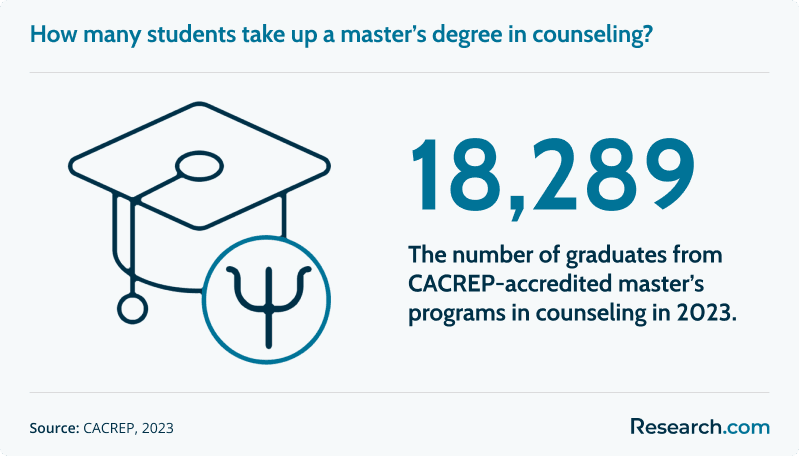
- In 2022, 18,289 graduated from master’s in counseling programs accredited by the Council for Accreditation of Counseling and Related Educational Programs (CACREP).
- In the same year, school and career counselors and advisors had a median annual wage of $60,140. In contrast, substance abuse, behavioral disorder, and mental health counselors had a 2022 median annual wage of $49,710. Marriage and family therapists and licensed psychologists, including adolescent psychologists, may earn higher salaries depending on role, setting, location, and licensure level.
- In the US, around 342,400 school and career counselors and advisors were employed in 2022.
- The employment outlook for school and career counselors and advisors between 2022 and 2032 is forecasted to be at 5%.
How Long Does It Take to Complete an Affordable Online Master's in Counseling Degree?
Most online master’s in counseling programs in the US take 2 to 3 years to complete, although the exact timeline depends on enrollment pace, credit load, practicum requirements, internship availability, and specialization. This timeframe is similar to many other graduate programs designed for working adults, including an affordable online master's degree in human resources.
Students who attend full time may finish more quickly, while part-time students often take longer because counseling programs include clinical training that cannot always be rushed. Some programs also require in-person residencies or synchronous clinical skills sessions, even when most coursework is online.
| Student Situation | Likely Timeline Impact | What to Check Before Enrolling |
| Full-time student | May complete the program closer to the shorter end of the expected range | Confirm whether full-time study is realistic with practicum and internship scheduling |
| Part-time working adult | May need additional semesters to balance coursework and field experience | Ask whether courses are offered every term or only in a fixed sequence |
| Student transferring credits | May reduce coursework if the program accepts prior graduate credits | Review transfer limits, course age restrictions, and accreditation rules |
| Student seeking licensure | Timeline depends heavily on required clinical hours and post-graduate supervision | Compare the program curriculum with your state licensing board requirements |
Online learning can make graduate study more accessible, especially for students comparing affordable online degrees, but counseling is still a clinical profession. The best timeline is not always the fastest one; it is the one that lets you complete required training without jeopardizing licensure readiness.
How Does an Online Master's in Counseling Compare With an On-Campus Program?
Online and campus-based counseling master’s programs can both prepare students for counseling careers, but the learning experience differs. The right format depends on your schedule, learning style, access to clinical placements, and need for in-person interaction.
| Factor | Online Master's in Counseling | On-Campus Master's in Counseling |
| Flexibility | Often better for students balancing work, caregiving, or relocation limits | Better for students who want a fixed weekly routine and campus access |
| Interaction | Uses video meetings, discussion boards, group projects, and virtual advising | Provides more immediate face-to-face interaction with classmates and faculty |
| Clinical experience | Usually requires students to complete practicum and internship hours near their location | May offer easier access to university-affiliated clinics or local placement networks |
| Technology use | Relies heavily on learning platforms, video conferencing, digital simulations, and online resources, similar to technology-forward degrees such as the cheapest online master's in cyber security | May use technology, but instruction is centered on in-person class meetings and campus resources |
| Best for | Self-directed learners who can manage deadlines and communicate proactively | Students who prefer structured campus routines and in-person professional community |
In 2022, 18,289 graduated from master’s in counseling programs accredited by CACREP. Whether you study online or on campus, your success will depend on completing rigorous coursework, meeting clinical expectations, and understanding licensure rules in your intended state of practice.
What Is the Average Cost of Affordable Online Master's in Counseling Degrees?
Tuition for an online master’s in counseling degree can range from $15,000 to $60,000 or more. Public universities may be less expensive for in-state residents, while private institutions often charge the same rate regardless of location. Some programs bill by credit hour, while others list tuition by semester, year, or program.
Do not compare programs by tuition alone. Counseling students may also pay for books, technology fees, background checks, liability insurance, residency travel, exam preparation, practicum costs, and graduation fees. The total price can also vary by specialization, much like costs can differ across other professional graduate options such as a high-caliber but cheap DBA online program.
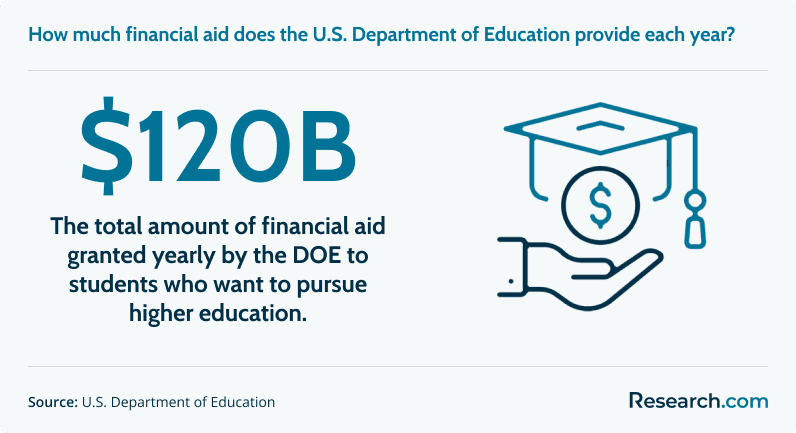
The US Department of Education’s Federal Student Aid Office provides more than $120 billion each year to students pursuing higher education. Graduate students should complete the FAFSA early and ask each program how aid applies to online enrollment, part-time attendance, and required clinical terms.
What Financial Aid Options Are Available for Online Master's in Counseling Students?
- Federal Student Aid (FAFSA): The Free Application for Federal Student Aid is the starting point for federal loans and other aid based on eligibility.
- Scholarships and grants: Universities, foundations, and professional organizations may offer awards for counseling students, including students pursuing school counseling, clinical mental health counseling, or addiction counseling.
- Employer tuition assistance: Some employers reimburse graduate coursework when the degree supports your current or future role.
- Graduate assistantships: Certain universities offer assistantship opportunities tied to research, teaching, advising, or department support.
- Loan forgiveness programs: Students planning to work in high-need or underserved areas should review eligible public service and workforce programs carefully before borrowing.
- Military benefits: Service members and veterans may be able to use benefits such as the GI Bill or Yellow Ribbon Program.
- Professional association funding: Counseling organizations, including groups such as the American Counseling Association (ACA), may list scholarship opportunities for members or students in accredited programs.
What Are the Prerequisites for Enrolling in Affordable Online Master's in Counseling Degrees?
Admissions requirements vary by university and concentration, but most online master’s in counseling programs look for evidence that applicants are academically prepared, emotionally mature, and serious about entering a helping profession. A background in psychology, social work, education, human services, or an online behavioral science degree may strengthen an application, although many programs accept students from other fields.
- Bachelor’s degree: Applicants typically need a bachelor’s degree from an accredited institution.
- GPA requirements: Many programs set a minimum GPA, often at least 3.0.
- Letters of recommendation: Programs commonly request references from professors, supervisors, or professionals who can speak to your readiness for graduate study.
- Personal statement or essay: Applicants usually explain their counseling interests, career goals, and reasons for choosing the program.
- Resume or curriculum vitae: A resume or CV helps admissions committees evaluate work, volunteer, academic, and human services experience.
- Standardized test scores: Some programs require GRE scores, while others make them optional or do not request them.
- Interview: Select programs conduct virtual or in-person interviews to assess fit, communication skills, and professional motivation.
- Prerequisite courses: Some schools require prior coursework in psychology, statistics, or related areas.
- Professional experience: Counseling-related volunteer or work experience is not always required, but it can make an application more competitive.
- Technology requirements: Online learners need reliable internet access, a suitable computer, and the ability to use video conferencing and learning management systems. Although only 7% of students are concerned about the technological aspect of online learning, students should still check whether they can meet the program’s technical expectations. Recent studies also show that 13% of students are concerned with adapting to a remote learning environment.
The chart below summarizes major student concerns about online learning based on recent Statista data.
What Courses Are Typically Included in Affordable Online Master's in Counseling Degrees?
Master’s-level counseling curricula are designed to build advanced clinical knowledge, ethical decision-making, assessment skills, and supervised practice experience. They may also prepare graduates for later doctoral study, including a doctoral degree in psychology, depending on the student’s goals and the doctoral program’s admissions requirements.
- Advanced counseling techniques: Students study major counseling theories and learn how to select interventions for different client needs, symptoms, backgrounds, and treatment goals.
- Ethical and legal issues in counseling: This course examines confidentiality, informed consent, mandated reporting, professional boundaries, documentation, and ethical decision-making.
- Group counseling and dynamics: Students learn how to plan, lead, and evaluate counseling groups while managing group roles, conflict, participation, and therapeutic safety.
- Counseling assessment and diagnosis: This coursework introduces clinical interviews, standardized tools, diagnostic frameworks, and treatment planning.
- Cultural diversity in counseling: Students develop culturally responsive counseling skills for working with clients across differences in identity, background, belief systems, and lived experience.
What Specializations Are Available in Affordable Online Master's in Counseling Degrees?
Your specialization should match the clients you want to serve and the license you plan to pursue. Before choosing a concentration, compare the curriculum with your state’s licensing rules and the work settings you are most interested in.
| Specialization | Best For Students Who Want To | Typical Practice Focus |
| School counseling | Work in K-12 educational environments | Academic support, student development, social-emotional learning, college and career planning |
| Career counseling | Help people make education, employment, and career transition decisions | Career assessment, job search support, professional development, workplace adjustment |
| Marriage and family therapy | Focus on couples, families, and relational systems | Communication, conflict, family structure, relationship stressors, and life transitions |
| Addiction counseling | Support individuals affected by substance use and behavioral health concerns | Prevention, intervention, recovery support, relapse planning, and co-occurring concerns |
| Clinical mental health counseling | Provide broader mental health counseling services in clinical or community settings | Assessment, diagnosis, treatment planning, individual counseling, crisis support |
Students interested in family systems may also benefit from understanding adjacent fields. For example, genetic counseling education can help professionals understand situations where family health history and genetics-related concerns may affect client stress, decision-making, and family communication.
How to Choose the Best Affordable Online Master's in Counseling Degree
The right counseling program is affordable, accredited, clinically rigorous, and aligned with your state’s license requirements. Use the following steps before applying.
- Start with accreditation: Confirm the university’s institutional accreditation and determine whether the counseling program has programmatic accreditation from a relevant body such as CACREP.
- Check state licensure alignment: Review your state licensing board’s education, practicum, internship, exam, and post-graduate supervision rules. Do this before committing to a program.
- Compare the full cost: Look beyond tuition. Ask about fees, residency travel, clinical placement expenses, textbooks, exam costs, and whether tuition differs for part-time students.
- Study the curriculum sequence: Some counseling courses must be taken in order. A low-cost program may take longer if required courses are offered infrequently.
- Ask how clinical placements work: Find out whether the school finds sites for students, provides leads, or expects students to secure placements independently.
- Review faculty qualifications: Look for licensed faculty, relevant clinical experience, research activity, and advising availability.
- Read student feedback carefully: Reviews and testimonials can reveal useful patterns about advising, workload, technology, and placement support. More than 80% of prospective students factor in testimonies when choosing their universities, but testimonials should support—not replace—your own research.
- Contact admissions and program advisors: Ask direct questions about accreditation, licensure outcomes, faculty access, online support, and whether the school offers related future pathways such as psychology PhD programs.
Questions to Ask Before You Apply
- Does this program meet education requirements for the license I want in the state where I plan to practice?
- Is the counseling program CACREP-accredited, institutionally accredited, or both?
- How are practicum and internship sites approved?
- Are there in-person residencies, intensives, or campus visits?
- What happens if I cannot find a local clinical site?
- How often are required courses offered?
- What student support is available for online learners?
- Can I transfer credits, and how many credits will the program accept?
What Strategies Can Help Students Accelerate Licensure After Graduating From an Affordable Online Master’s in Counseling?
Licensure is often the most important post-graduation milestone for counseling students. You can reduce delays by planning for license requirements before your first term begins.
- Map your state requirements early: Identify required coursework, supervised clinical hours, exams, background checks, and application steps in your intended state of practice.
- Choose a program with qualifying practicum and internship experiences: Fieldwork completed during the degree can help you avoid avoidable gaps after graduation.
- Prepare for the National Counselor Examination (NCE) soon after graduation: If your state accepts the NCE, taking it while coursework is still fresh may help you stay on track.
- Use your program’s licensure resources: Advising, exam workshops, supervisor directories, and alumni contacts can save time.
- Build relationships at clinical sites: Practicum and internship supervisors may become references, mentors, or employers.
- Compare alternate routes carefully: If you are looking for the quickest way to become a therapist based on your background, review how different education and licensure paths apply to your situation.
How Can I Verify the Accreditation and Quality of an Online Master’s in Counseling Program?
Accreditation confirms that a school or program has been reviewed against recognized academic standards. For counseling students, accreditation can also affect licensure eligibility, internship approval, employer recognition, and doctoral admissions. Start by checking institutional accreditation, then review whether the counseling program has CACREP or another recognized programmatic credential relevant to your intended field.
Quality also depends on outcomes and support. Ask for licensure pass rates, internship placement support, graduation rates, faculty credentials, student services, and employment information connected to counseling careers. A program should be able to explain how online students receive advising, clinical supervision support, technology help, and career guidance.
What Challenges Do Online Master’s in Counseling Students Encounter?
Online counseling students often deal with time management, limited real-time interaction, technology problems, practicum placement logistics, and the emotional demands of clinical training. Asynchronous coursework can be convenient, but it also requires consistent self-discipline.
To reduce risk, look for programs with strong advisor access, clear clinical placement procedures, live skills practice, online tutoring, and responsive faculty. Verifying that your program is a counseling degree online accredited option can also help you avoid programs that lack recognized quality controls or adequate student support.
Where Can I Find the Cheapest CACREP Accredited Programs Online?
If CACREP accreditation is important for your license or career goals, compare programs by total cost, credits required, state authorization, clinical placement support, and student outcomes. The cheapest option is not always the best if it does not serve your licensure state or specialization.
For a focused comparison, review Research.com’s guide to the cheapest CACREP accredited programs online. Use that resource alongside your state licensing board’s requirements before narrowing your school list.
Can Online Programs Prepare Me to Become a Spiritual Counselor?
Some online counseling programs include electives or integrative coursework related to spirituality, holistic care, transpersonal psychology, or faith-informed counseling. These courses can be useful for students who want to address spiritual concerns ethically within a broader counseling framework.
Students who want to become a spiritual counselor should examine whether the program clearly separates clinical counseling competencies from pastoral or spiritual support, and whether the curriculum prepares graduates for the license or credential they actually intend to pursue.
Should I Consider Faith-Based Counseling Programs?
Faith-based counseling programs may be a good fit for students who want clinical training taught alongside religious or spiritual perspectives. They can be especially relevant for learners planning to work in faith-based organizations, pastoral counseling contexts, or communities where spiritual values are central to care.
Before enrolling, compare curriculum requirements, faculty credentials, accreditation, practicum expectations, and licensure alignment. If you want a program with explicitly Christian framing, Research.com’s guide to Christian counseling masters programs can help you evaluate options.
How to Maximize Your ROI From an Online Master’s in Counseling Degree
An affordable tuition rate improves value, but return on investment depends on more than price. A strong online counseling program should help you qualify for licensure, gain supervised experience, build a professional network, and enter a specialty that matches your goals.
1. Prioritize Licensure Fit Over Sticker Price
A lower-cost program is only a good investment if it supports the license you need. Always compare the curriculum, credits, practicum, and internship expectations with your state’s counseling board requirements.
2. Choose a Specialization With a Clear Career Use
Clinical mental health counseling, addiction counseling, school counseling, and marriage and family therapy can lead to different roles and licensing paths. If you are interested in relationship and family systems work, comparing a list of affordable online MFT programs may be more useful than choosing a general counseling program.
3. Reduce Borrowing Before You Enroll
Apply for scholarships, grants, assistantships, employer tuition support, and professional association funding. Every dollar you avoid borrowing improves your long-term ROI.
4. Treat Practicum and Internship as Career Launch Points
Clinical placements can lead to references, job interviews, supervision relationships, and specialization clarity. Ask each program how it helps online students locate and secure approved sites.
5. Keep Learning After Graduation
Counseling practice changes as new treatment approaches, ethical standards, technology tools, and client needs emerge. Continuing education can support licensure renewal and career growth.
6. Build Your Network Before You Need a Job
Connect with faculty, supervisors, classmates, alumni, professional associations, and clinical site leaders throughout your program. Online students who network intentionally can offset some of the relationship-building limits of remote learning.
What Career Paths Are Available for Graduates of Affordable Online Master's in Counseling Degrees?
- School and career counselors: School counselors help students with academic, personal, social, and postsecondary planning. Career counselors help clients evaluate career options, build job-search strategies, and make education or employment decisions. In 2022, 342,400 educational, guidance, and career counselors and advisors were employed in the US.
- Mental health counselors: Mental health counselors assess client needs, provide counseling services, support treatment planning, and help clients manage emotional, behavioral, and mental health concerns. In 2022, 388,200 substance abuse, behavioral disorder, and mental health counselors were employed in the US.
- Marriage and family therapists: Marriage and family therapists focus on relational patterns, family systems, communication, conflict, and emotional functioning within couples and families. In 2022, 71,200 marriage and family therapists were employed in the US.
What Is the Job Market for Graduates of Affordable Online Master's in Counseling Degrees?
Counseling graduates may find opportunities in schools, community agencies, hospitals, treatment centers, rehabilitation settings, private practices, and telehealth environments. Students with a master’s degree in counseling or a related field, such as an online behavioral science degree, can pursue roles that match their license, specialization, and supervised experience.
- Between 2022 and 2032, school and career counseling positions in the US are expected to increase by 5%, faster than average.
- Meanwhile, openings for substance abuse, behavioral disorder, and mental health counselors during the same period have been projected to grow by 18%.
- The job growth rate for marriage and family therapists is 15% between 2022 and 2032.
Demand is influenced by mental health awareness, school support needs, substance use treatment needs, and access to telehealth. Counselors may also collaborate with other health professionals, including those with a clinical psychologist degree, in integrated care settings. Graduates who want advanced research, teaching, or clinical leadership roles may eventually compare the types of psychology PHD programs available at accredited institutions.
How Can I Build a Professional Network While Pursuing an Online Master’s in Counseling?
Online students need to be intentional about networking because they do not always have casual campus interactions. The strongest professional relationships often come from consistent participation rather than one-time introductions.
- Join professional organizations: Consider national and state counseling associations for access to webinars, conferences, continuing education, and member communities.
- Participate in online professional spaces: Use class discussion boards, counseling forums, and LinkedIn groups to connect with peers and practicing professionals.
- Attend virtual events: Webinars, panels, and online networking sessions can introduce you to employers, supervisors, and specialty areas.
- Build relationships with faculty: Professors can provide mentorship, references, research connections, and career guidance.
- Stay connected with clinical supervisors: Practicum and internship supervisors can become important references and sources of job leads.
What Are the Licensure Requirements for Graduates of Online Master's in Counseling Programs?
Licensure requirements vary by state, so students should never assume that an online program automatically qualifies them for practice everywhere. Before enrolling, review your state board’s rules and ask the program to explain how its curriculum supports licensure preparation.
- Completion of a CACREP-accredited program: Many states prefer or require graduation from a program accredited by the Council for Accreditation of Counseling and Related Educational Programs (CACREP).
- Supervised clinical hours: Counseling programs usually include practicum and internship experiences that give students supervised client-contact training.
- Post-graduation supervised experience: After graduation, many states require additional supervised clinical work before independent licensure. The number of hours varies by state but is typically between 2,000 and 4,000 hours.
- Licensing exam: Graduates may need to pass the National Counselor Examination (NCE) or the National Clinical Mental Health Counseling Examination (NCMHCE), both administered by the National Board for Certified Counselors (NBCC).
- Specialized licensure for marriage and family therapy: Students pursuing MFT roles should verify MFT-specific coursework, supervised experience, and exam requirements. Research.com’s guide to most affordable online MFT programs can help identify programs designed around that pathway.
- Continuing education requirements: Licensed counselors usually need continuing education credits to maintain their credential.
Which Counseling License Is the Best Fit for My Career?
The best counseling license depends on the clients you want to serve, the setting where you want to work, and the scope of practice allowed in your state. LPC-focused pathways often center on mental health counseling, assessment, and therapy services. Other routes may emphasize social work, family systems, school counseling, rehabilitation counseling, or addiction treatment.
If you are comparing professional counseling and clinical social work pathways, review What is the difference between LCSW and LPC?. The right choice should match your preferred role, required supervised experience, license portability needs, and long-term career plans.
Common Mistakes to Avoid When Choosing an Online Counseling Master’s Program
- Choosing based only on tuition: A low price does not guarantee licensure fit, strong field placement support, or good student services.
- Ignoring accreditation: Accreditation can affect licensure, transfer credits, employer recognition, and doctoral options.
- Assuming online means fully remote: Many online counseling programs still require residencies, intensives, practicum, or internship hours in approved settings.
- Not checking state authorization: Some schools cannot enroll students from every state or may not meet every state’s licensing rules.
- Overlooking clinical placement policies: Students should know whether the program helps secure placements or expects them to find sites independently.
- Assuming salary outcomes are guaranteed: Earnings vary by license, specialization, employer, location, experience, and whether the counselor works independently or under supervision.
- Waiting until graduation to plan licensure: The best time to understand your state’s requirements is before you apply.
Current Trends Affecting Online Master's in Counseling Students
- Telehealth is now part of counseling practice: Many students need comfort with secure video platforms, remote rapport-building, online documentation, and telehealth ethics.
- Employers increasingly expect practical clinical readiness: Programs with strong practicum support, simulation, supervision, and case-based learning may better prepare students for early counseling roles.
- State licensure rules remain a major decision factor: Online access does not eliminate state-by-state licensing differences, so students must verify requirements carefully.
- Technology skills matter: Counselors may use digital records, online assessments, video counseling platforms, and emerging administrative tools, while still protecting confidentiality and professional ethics.
- Affordability requires total-cost planning: Rising education costs make scholarships, employer support, transfer credits, and careful borrowing decisions more important for graduate students.
References:
- Council for Accreditation of Counseling and Related Educational Programs. (2023). CACREP VITAL STATISTICS 2022. CACREP.
- Statista. (2023). Concerns about choosing online education in the U.S. 2023. Statista.
- U.S. Bureau of Labor Statistics. (2023, December 18). Marriage and Family Therapists. Occupational Outlook Handbook. U.S. Bureau of Labor Statistics.
- U.S. Bureau of Labor Statistics. (2023, September 6). Rehabilitation Counselors. Occupational Outlook Handbook. U.S. Bureau of Labor Statistics.
- U.S. Bureau of Labor and Statistics. (2023, September 6). School and Career Counselors and Advisors. Occupational Outlook Handbook. U.S. Bureau of Labor Statistics.
- U.S. Bureau of Labor Statistics. (2023, September 6). Substance Abuse, Behavioral Disorder, and Mental Health Counselors. Occupational Outlook Handbook. U.S. Bureau of Labor Statistics.
Other Things You Should Know About Affordable Online Master's in Counseling Degrees
Most state boards require 2,000 to 3,000 post-degree supervised clinical hours before independent licensure. The exact number, supervision ratio, and setting come from the state counseling board or licensing authority, and these hours are completed after graduation, not during the master’s program.
Many affordable online master’s in counseling programs in 2027 require applicants to have relevant work experience in counseling or related fields. Typically, schools might ask for one to three years of such experience to ensure practical readiness and involvement with the subject matter.
In 2027, some of the most affordable online universities offering a master's in counseling include Lamar University, Fort Hays State University, and the University of the Cumberlands. These schools are known for balancing low tuition with quality education, providing students strong preparation for their counseling careers.