
2027 Substance Abuse Addiction Counseling Careers: Job Outlook, Required Skills, and More

Co-Founder and Chief Data Scientist
Choosing a career in substance abuse addiction counseling means deciding whether you are prepared to support people through one of the most difficult, high-stakes parts of their lives: recovery from alcohol, drug, and behavioral health challenges. This work can be emotionally demanding, but it also offers a clear path to meaningful service in treatment centers, hospitals, community programs, correctional settings, schools, and public health organizations.
This guide explains what substance abuse addiction counselors do, how to enter the field, which degrees and credentials matter, what salaries and job growth look like, and how to decide whether this career fits your strengths. You will also learn how licensure works, which skills employers value, how telehealth and complementary therapies are changing treatment, and what mistakes to avoid when choosing an education or certification path.
In most cases, aspiring counselors need formal education in counseling, psychology, social work, addiction studies, or a related area. A bachelor’s degree in substance abuse counseling can provide a strong foundation, but state rules vary. Many roles also require supervised clinical experience, a state license or certification, and continuing education. Because counselors work with vulnerable clients, strong ethics, careful documentation, cultural competence, and professional boundaries are just as important as classroom training.
This article is designed for students, career changers, behavioral health workers, and helping professionals who want a practical roadmap rather than a generic career description.
Substance Abuse Addiction Counseling Careers Table of Contents
- Why pursue a career in substance abuse addiction counseling?
- Substance Abuse Addiction Counseling Career Outlook
- Required Skills for Substance Abuse Addiction Counseling
- How to Start Your Career in Substance Abuse Addiction Counseling
- Emerging Trends in Substance Abuse Addiction Counseling
- Licensing and Certification Requirements for Substance Abuse Counselors
- How can I advance my career in substance abuse addiction counseling?
- What are the ethical and legal responsibilities in substance abuse addiction counseling?
- Can family therapy training improve client recovery outcomes?
- What challenges do substance abuse addiction counselors face?
- How can telehealth and digital innovation enhance substance abuse counseling?
- What are the key licensure distinctions for addiction counselors?
- Alternative Career Options for Substance Abuse Addiction Counseling
- Affordable Pathways to Becoming a Substance Abuse Addiction Counselor
- How can complementary therapies enhance treatment outcomes?
- What role can I play in addressing substance abuse and addiction?
- How can I maximize my salary as a substance abuse addiction counselor?
Quick Answer: How do you become a substance abuse addiction counselor?
To become a substance abuse addiction counselor, you typically complete education in addiction counseling, counseling, psychology, social work, or a related field; gain supervised clinical experience; meet your state’s certification or licensure requirements; and continue professional training after you begin practice. Some support roles may be available with a certificate or associate degree, but independent counseling, clinical supervision, and private practice usually require higher credentials.
| Career decision | Best fit | Important caution |
| Certificate or associate pathway | Students seeking entry-level support roles, technician jobs, or a lower-cost start | May not qualify you for independent counseling or higher-paying clinical roles |
| Bachelor’s degree pathway | Students who want a broader foundation for counseling, case management, prevention, or treatment roles | State rules may still require certification, supervised hours, or graduate study |
| Master’s degree pathway | Professionals aiming for clinical leadership, supervision, advanced counseling, or broader licensure options | Requires more time and cost, so compare return on investment carefully |
| Doctoral or research pathway | Those interested in academia, policy, research, or senior leadership | Usually unnecessary for most direct-service counseling jobs |
Why pursue a career in substance abuse addiction counseling?
Substance abuse addiction counseling is a career for people who want their work to have direct human impact. Counselors help clients understand substance use patterns, manage cravings, rebuild relationships, develop relapse-prevention plans, and connect with treatment and community resources. The work often involves setbacks, crisis situations, and complex family or legal issues, so it requires emotional steadiness as well as compassion.
The need for qualified professionals remains significant. Over 700,000 people have been known to have overdosed from drugs since 2000 (Bustamante, 2023), which shows why prevention, treatment, recovery support, and public health coordination remain urgent priorities. Counselors cannot solve the crisis alone, but they are often part of the front line of response.
Typical responsibilities include assessing client needs, developing treatment plans, leading individual and group counseling sessions, educating clients and families, coordinating referrals, tracking client progress, documenting care, and collaborating with clinicians, social workers, physicians, probation officers, or community agencies.
This career may be a strong fit if you can listen without judgment, remain calm during emotional conversations, respect client autonomy, and follow strict ethical and legal standards. It may be a poor fit if you want predictable outcomes, minimal paperwork, or work that does not involve trauma, relapse, grief, and crisis management.
Substance Abuse Addiction Counseling Career Outlook
The labor market for addiction counseling is shaped by several forces: the ongoing opioid epidemic, wider recognition of substance use disorders as health conditions, demand for integrated mental health services, and expanded treatment delivery through community and telehealth models. Lo et al. (2020), in “Substance Abuse and Public Health: A Multilevel Perspective and Multiple Responses,” argued that substance abuse is best addressed through multiple perspectives rather than one narrow intervention.
The authors wrote in the International Journal of Environmental Research and Public Health: “As substance abuse is never limited to particular social groups in human societies, it is essential to understand the unique psychological, personality, cognitive, socioeconomic, familial and cultural differences of various social groups, and to explore what common and unique characteristics they hold in terms of the initiation, processes, and consequences of substance abuse [4,6]. If researchers, service practitioners, educators, and policy makers were able to understand the common and unique etiological causes and stimulants that incur experimentation and the subsequent maintenance of substance abuse, more effective prevention and treatment strategies and programs could be introduced.”
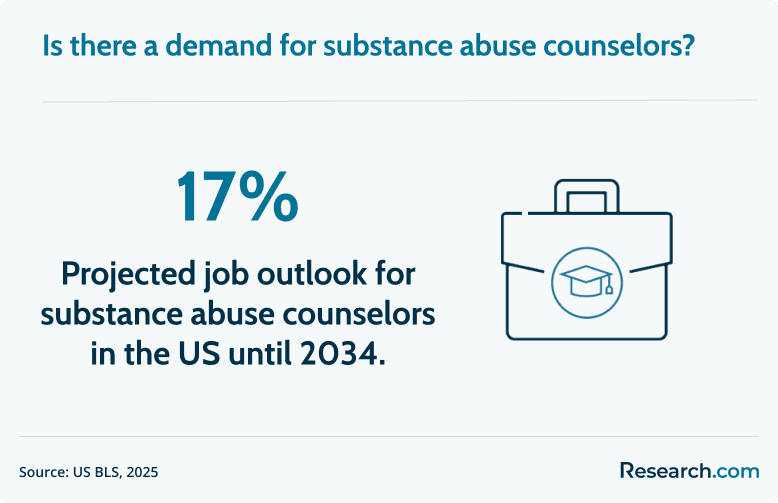
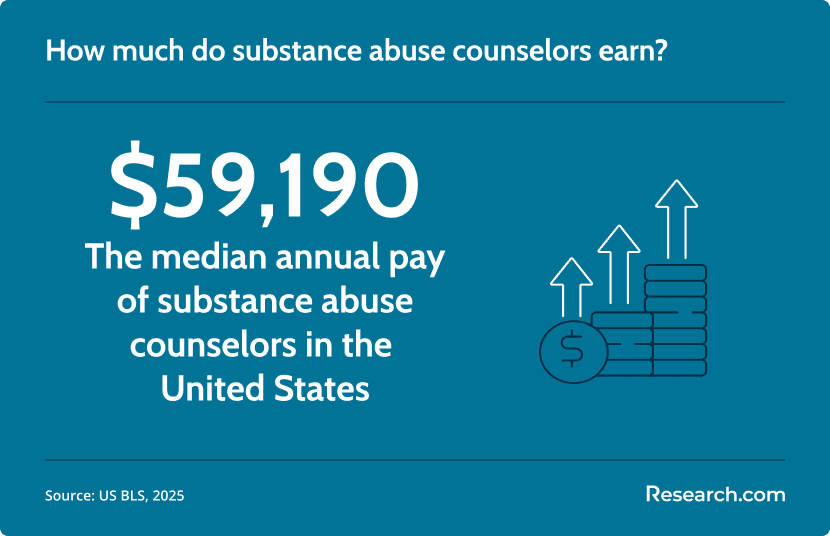
According to the Bureau of Labor Statistics (BLS), employment for substance abuse, behavioral disorder, and mental health counselors is projected to grow by 17% from 2024 to 2034, which is much faster than the average for all occupations. The median annual wage for substance abuse, behavioral disorder, and mental health counselors was $59,190 (BLS, 2025).
Pay depends heavily on employer type, location, education, license level, and years of experience. For example, those working in residential intellectual and developmental disability, mental health, and substance abuse facilities may earn a median wage of $49,610, while counselors working in hospitals may earn a higher median wage of $61,930 (BLS, 2025).
| Occupation group | Median annual wage | Projected employment growth |
| Substance abuse, behavioral disorder, and mental health counselors | $59,190 | 17% |
| Counselors, social workers, and other community and social service specialists | $57,480 | 8% |
| Total, all occupations | $49,500 | 3% |
Industry growth also affects opportunity. According to Transparent Market Research, the substance abuse treatment industry is expected to grow by 8.5% in the next decade (Transparent Market Research, n.d.). Even with a positive outlook, job competition can still vary by region. Urban areas may have more openings but also more applicants, while rural and underserved communities may have greater need but fewer treatment infrastructure resources.
Required Skills for Substance Abuse Addiction Counseling
Substance abuse addiction counseling requires clinical knowledge, interpersonal maturity, and strong judgment. Counselors often work with clients who have co-occurring mental health concerns, unstable housing, legal involvement, trauma histories, family conflict, or repeated relapse episodes. With 40.3 million people in the United States dealing with substance use disorder, professionals need more than good intentions; they need evidence-based training and the ability to respond effectively under pressure.
Essential clinical and professional skills
- Addiction and recovery knowledge: Counselors need to understand substance use disorders, withdrawal and relapse patterns, co-occurring conditions, harm reduction concepts, recovery models, and treatment levels of care.
- Assessment and treatment planning: Effective practice begins with a careful assessment of client history, risks, strengths, mental health needs, substance use patterns, and recovery goals. Treatment plans should be individualized rather than copied from a template.
- Evidence-based intervention skills: Common approaches include cognitive-behavioral therapy, motivational interviewing, contingency management, psychoeducation, relapse-prevention planning, and group counseling strategies.
- Crisis response: Counselors may need to respond to relapse, suicidal ideation, overdose risk, domestic violence concerns, housing instability, or acute emotional distress. Knowing referral protocols and emergency procedures is essential.
- Communication and active listening: Clients are more likely to engage when they feel heard rather than judged. Clear communication also matters when coordinating with families, courts, healthcare teams, or treatment programs.
- Professional boundaries: Counselors must protect confidentiality, avoid dual relationships, manage transference and countertransference, and maintain appropriate limits even when clients are in crisis.
- Legal and ethical literacy: Practice requires knowledge of informed consent, privacy rules, mandated reporting, documentation standards, scope of practice, and state-specific regulations.
- Resource navigation: Many clients need referrals for medication-assisted treatment, housing, employment support, peer recovery groups, sober living, medical care, transportation, or family services.
- Technology competence: Counselors increasingly use electronic health records, telehealth platforms, digital screening tools, secure messaging, and online continuing education.
- Cultural humility: Effective counseling recognizes how culture, race, socioeconomic status, faith, language, disability, trauma, and community context shape both addiction and recovery.
Personal qualities that support long-term success
- Patience: Recovery is rarely linear. Counselors must support progress without expecting immediate transformation.
- Empathy with accountability: Clients need compassion, but they also need realistic goals, honest feedback, and consistent expectations.
- Resilience: The work can include grief, relapse, and secondary trauma. Sustainable practice requires supervision, boundaries, and self-care.
- Team orientation: Addiction treatment often involves multidisciplinary collaboration with clinicians, physicians, social workers, nurses, peer specialists, and community agencies.
- Problem-solving: Counselors often help clients address practical barriers such as transportation, childcare, insurance, court requirements, or lack of stable housing.
- Professionalism: Accurate documentation, punctuality, ethical conduct, confidentiality, and reliable follow-through influence both client safety and employability.
How to Start Your Career in Substance Abuse Addiction Counseling
The right starting point depends on your state, budget, prior college credits, and long-term career goals. Some people begin in technician or peer support roles while earning a degree. Others complete a bachelor’s or master’s program before applying for licensure or certification. Before enrolling, verify whether the program aligns with your state’s addiction counselor credential requirements.
| Substance Abuse Counseling Path | Program Management Path | Policy Analysis Path | |
| Direct client care for people affected by substance use disorders, often through assessment, counseling, treatment planning, and recovery support. | Administrative and operational leadership for treatment programs, rehabilitation facilities, nonprofit services, or behavioral health teams. | Research, evaluation, advocacy, and policy work focused on prevention, treatment access, public systems, and community health outcomes. | |
| Entry Level Jobs | Substance Abuse Technician ($27,544/year) | Mental Health Technician ($36,311/year) | Behavioral Health Technician ($31,300/year) |
| Junior Management Jobs | Substance Abuse Counselor ($52,370/year) | Case Manager ($46,000/year) | Prevention Specialist ($39,425/year) |
| Middle Management Jobs | Substance Abuse Counselor Supervisor ($59,046/year) | Program Director ($63,296/year) | Researcher ($68,432/year) |
| Senior Management Jobs | Clinical Director ($90,881/year) | Chief Health Officer ($474,721/year) | Chief Policy Analyst ($73,278/year) |
Step-by-step path to entering the field
- Check your state’s credential rules first. Licensing requirements differ by state, and the wrong program may delay your ability to practice.
- Choose the education level that matches your goal. A certificate or associate degree may support entry-level work, while a bachelor’s or master’s degree can open broader clinical and leadership options.
- Confirm accreditation and field placement support. Look for programs that prepare students for supervised practice and state credentialing expectations.
- Gain supervised experience. Most counseling credentials require supervised hours in approved settings such as treatment centers, behavioral health clinics, hospitals, or community programs.
- Pass required exams or certification reviews. Requirements may include exams, background checks, documentation of supervised hours, and continuing education.
- Keep learning after you are employed. Addiction treatment evolves, and employers value counselors who stay current on ethics, trauma-informed care, telehealth, co-occurring disorders, and evidence-based interventions.
What can I do with an associate’s degree in substance abuse addiction counseling?
Substance Abuse Technician
Substance abuse technicians support licensed professionals by helping with intake processes, group activities, client monitoring, documentation, and day-to-day recovery support. They may work in residential treatment centers, outpatient programs, detox settings, or community agencies.
Median salary: $27,544
Behavioral Health Technician
Behavioral health technicians assist care teams serving clients with mental health and substance use concerns. Their work may include observing client behavior, recording progress notes, supporting treatment activities, and helping clients follow daily routines.
Median salary: $31,300
Case Manager
Case managers help clients identify needs, access treatment, coordinate services, and connect with community resources. In addiction-related settings, this may include referrals for housing, medical care, employment support, legal services, or recovery programs. Students interested in case management within justice-related settings may also explore an accredited online criminal justice degree to build knowledge of legal systems and justice-involved populations.
Median salary: $46,000
What can I do with a bachelor’s degree in substance abuse addiction counseling?
Substance Abuse Counselor
Substance abuse counselors help clients recognize substance use patterns, set treatment goals, participate in therapy or support groups, and build recovery plans. Depending on state rules, the role may require certification, supervised practice, or additional graduate training.
Median salary: $52,370
Mental Health Technician
Mental health technicians provide practical and emotional support to clients with behavioral health needs. In addiction settings, they may help with safety monitoring, treatment activities, basic care support, and communication with clinical staff.
Median salary: $36,311
Prevention Specialist
Prevention specialists focus on reducing substance misuse before it escalates. They may design education campaigns, work with schools and community groups, analyze risk factors, conduct outreach, and support families or at-risk populations.
Median salary: $39,425
Can you get a substance abuse addiction counseling job with only a certificate?
Yes, a certificate may qualify you for some entry-level or support positions, depending on your state and employer. However, a certificate alone may not qualify you for independent counseling, advanced clinical responsibilities, or salaries associated with licensed roles. Before enrolling, compare the certificate’s curriculum, supervised-hour eligibility, exam preparation, and recognition by your state credentialing board.
Emerging Trends in Substance Abuse Addiction Counseling
Addiction counseling is changing as treatment providers respond to workforce shortages, digital care models, co-occurring mental health needs, and demand for culturally responsive services. For students, these trends matter because they influence what employers expect and what skills can make a counselor more competitive.
- Telehealth and digital support tools: Virtual counseling platforms, secure video sessions, mobile apps, and online recovery tools can improve access for clients in rural areas, clients with transportation barriers, and those who need flexible scheduling.
- Integrated behavioral health care: Substance use treatment increasingly overlaps with mental health care, primary care, trauma services, and medication-assisted treatment. Counselors who understand team-based care may have stronger employment options.
- Holistic and complementary supports: Mindfulness, yoga, nutrition education, expressive arts, and stress-management strategies may be used alongside evidence-based counseling, not as substitutes for clinical care.
- Cultural competency and equity: Treatment programs increasingly emphasize culturally responsive care, language access, community context, and awareness of how stigma affects treatment engagement.
- Specialized career pathways: Students pursuing advanced training, including a masters in addiction counseling, may move toward telehealth coordination, family-based services, program development, clinical supervision, or specialized treatment for co-occurring disorders.
The practical takeaway is simple: future counselors should not rely only on basic counseling theory. Employers increasingly value professionals who can document well, use technology securely, collaborate across disciplines, and adapt treatment to each client’s circumstances.
Licensing and Certification Requirements for Substance Abuse Counselors
Licensure and certification determine what services you can provide, where you can work, whether you need supervision, and how far you can advance. Requirements vary by state, so your first step should be checking the state board or credentialing organization where you plan to practice.
Common licensing requirements
- Education: Many states require at least a Bachelor’s degree in psychology, social work, counseling, addiction studies, or a related field. Some advanced roles require a master’s degree or higher.
- Clinical experience: Candidates usually complete supervised work in treatment centers, rehabilitation programs, behavioral health clinics, hospitals, or community agencies.
- Supervised hours: Many states require supervised practice before full credentialing, often ranging from 1,000 to 4,000 hours, depending on the state.
- Examination: Candidates may need to pass a credentialing or licensure exam that covers counseling concepts, addiction treatment, assessment, ethics, and professional practice. The National Counselor Examination for Licensure and Certification (NCE) is a widely accepted certification exam for this field.
- Background check: Because counselors work with vulnerable clients, many jurisdictions and employers require criminal background screening.
Common certifications for addiction counseling professionals
- Certified Addiction Counselor (CAC): Offered by organizations such as the National Association for Alcoholism and Drug Abuse Counselors (NAADAC), this credential is commonly used in addiction treatment settings.
- Certified Alcohol and Drug Counselor (CADC): This credential is often awarded by regional or national counseling organizations and may help demonstrate preparation for alcohol and drug counseling roles.
- Board Certified-Trauma Specialist (BCTS): Trauma-focused certification can be useful because many clients in addiction treatment have trauma histories.
- Substance Abuse Professional (SAP): This credential is important for professionals who work with substance abuse concerns in employment contexts, including DOT-regulated positions.
Examples of state-specific requirements
- California requires a California Association for Alcohol/Drug Educators (CAADE) certification and passing the California Certification Examination for addiction counselors.
- Texas has specific licensing through the Texas Department of State Health Services, with the Licensed Chemical Dependency Counselor (LCDC) credential being one of the most recognized.
These examples show why national career advice is not enough. A program that works well for one state may not satisfy another state’s credentialing rules. Always verify requirements before paying tuition or starting supervised hours.
Pursuing further education
Advanced education can support movement into clinical supervision, program management, teaching, research, or private practice. A Master’s in Social Work (MSW), Master’s in Counseling, or specialized addiction counseling graduate program may be especially useful for professionals who want a broader scope of practice. If you are comparing flexible programs, online substance abuse counselor degree options can help you evaluate formats that fit work and family responsibilities.
How can I advance my career in substance abuse addiction counseling?
Career advancement usually comes from a combination of experience, licensure, specialization, leadership skills, and graduate education. A master’s degree in counseling or a related field can deepen clinical skills, while a doctorate may support research, teaching, or high-level policy work. According to Zippia, one in four substance abuse addiction counselors have a master’s degree in substance abuse counseling (Zippia, 2026). Professional certifications can also signal specialized expertise, and structured apprenticeships or supervised practice arrangements can help early-career counselors build confidence.
| Advancement goal | Useful next step | Why it helps |
| Earn higher clinical responsibility | Complete supervised hours and pursue state licensure | Licensure can expand scope of practice and employer options |
| Move into supervision | Gain experience, complete supervisor training, and pursue advanced credentials | Supervisors guide counselors, review documentation, and support quality care |
| Lead programs | Build management, compliance, budgeting, and staff-development skills | Program roles require both clinical understanding and operational judgment |
| Specialize | Train in trauma, family therapy, co-occurring disorders, telehealth, or medication-assisted treatment coordination | Specialization can help you serve complex client populations |
| Teach, research, or influence policy | Consider doctoral study or policy-focused experience | Advanced roles often require research literacy and systems-level expertise |
What can I do with a master’s in substance abuse addiction counseling?
Clinical Director
Clinical directors oversee treatment quality, staff performance, client care systems, and compliance within programs or facilities. They may design clinical protocols, review treatment outcomes, coordinate multidisciplinary teams, and ensure services are delivered ethically and safely. Among the different types of master degree programs, counseling and behavioral health programs are especially relevant for this leadership direction.
Median salary: $90,881
Substance Abuse Counselor Supervisor
Substance abuse counselor supervisors mentor counseling staff, review cases, provide clinical guidance, monitor documentation, and support ethical practice. They may also train new counselors and help manage schedules, quality standards, or program procedures.
Median salary: $59,046
Program Director
Program directors manage the operations of substance abuse treatment programs. Their responsibilities may include staffing, budgeting, policy development, compliance monitoring, performance evaluation, and coordination with external partners or funders.
Median salary: $63,296
What kind of job can I get with a doctorate in substance abuse addiction counseling?
A doctorate is not required for most direct counseling roles, but it can be valuable for professionals who want to conduct research, teach at the college level, consult on treatment systems, or influence public policy.
Researcher
Researchers study addiction treatment methods, prevention strategies, client outcomes, relapse patterns, service access, and public health interventions. A Ph.D. can prepare professionals to design studies and translate findings into practice.
Median salary: $68,432
Professor
Professors teach future counselors, develop course materials, advise students, conduct research, and contribute to academic programs. Courses may cover counseling theory, addiction treatment, ethics, assessment, and research methods.
Median salary: $143,823
Policy Advisor
Policy advisors use clinical and research expertise to shape laws, regulations, funding priorities, and prevention strategies. They may work with agencies, advocacy groups, healthcare organizations, or government offices focused on public policy related to addiction treatment and prevention.
Median salary: $85,846
Which certification is best for substance abuse addiction counseling?
The best certification depends on your state, education level, supervised experience, and career target. A credential that is valuable in one state or employer setting may not meet requirements elsewhere, so compare eligibility rules before choosing.
- Certified Addiction Counselor (CAC): Offered by the National Association for Addiction Professionals (NAADAC), this certification requires a high school diploma or its equivalent, completion of 270 hours of education, and 6,000 hours of supervised experience.
- Certified Alcohol and Drug Counselor (CADC): Offered by the International Certification and Reciprocity Consortium (IC&RC), this credential requires a high school diploma or its equivalent, completion of 270 hours of education, and 4,000 hours of supervised experience.
- Certified Substance Abuse Counselor (CSAC): Offered by NAADAC, this credential requires a high school diploma or its equivalent, 270 hours of education, and 4,000 hours of supervised experience.
- Advanced Alcohol and Drug Counselor (AADC): Offered by the Connecticut Certification Board, this certification requires a master’s degree, completion of 300 hours of education, and 6,000 hours of supervised experience.
- Certified Clinical Mental Health Counselor (CCMHC): Offered by the National Board for Certified Counselors (NBCC), this credential demonstrates advanced preparation in mental health counseling.
- Certified Psychiatric-Mental Health Nurse Practitioner (PMHNP-BC): Offered by the American Nurses Credentialing Center (ANCC), this certification reflects advanced training in mental health and substance abuse treatment for qualified nursing professionals.
- Certified Clinical Trauma Professional (CCTP): Offered by the International Association of Trauma Professionals (IATP), this credential supports work with clients affected by trauma, including those with addiction concerns.
When comparing certifications, ask whether the credential is recognized by your state, whether it qualifies you for the jobs you want, how many supervised hours it requires, and whether the continuing education requirements are realistic for your budget and schedule.
What are the ethical and legal responsibilities in substance abuse addiction counseling?
Ethics are central to addiction counseling because clients may disclose sensitive information about substance use, trauma, family conflict, criminal justice involvement, medical history, or relapse. Counselors must protect confidentiality, explain informed consent, document accurately, follow mandatory reporting rules, and work only within their scope of practice.
Common ethical challenges include handling relapse without shaming the client, maintaining boundaries when clients request personal help outside treatment, managing conflicts of interest, responding to safety risks, and coordinating care without violating privacy rules. Training for a licensed professional counselor can help practitioners better understand how licensure, supervision, and ethical decision-making fit into professional counseling practice.
Can family therapy training improve client recovery outcomes?
Family relationships can strongly influence recovery. Clients may need support rebuilding trust, navigating conflict, setting boundaries, or changing family patterns that reinforce substance use. Family therapy training helps counselors understand relational dynamics and involve loved ones appropriately when treatment goals and confidentiality rules allow it.
Professionals who want deeper preparation in relational care may consider options such as online marriage and family therapy master's programs. This training can complement addiction counseling by helping practitioners address communication patterns, family roles, and support systems that affect long-term recovery.
What challenges do substance abuse addiction counselors face?
Substance abuse addiction counselors often manage emotionally intense work. Clients may relapse, miss appointments, experience overdose risk, face legal consequences, or struggle with housing and employment instability. Counselors may also encounter secondary trauma, high caseloads, administrative pressure, and ethical decisions that do not have simple answers.
Burnout prevention is not optional in this field. Effective counselors use supervision, peer consultation, realistic caseload boundaries, continuing education, and personal self-care routines. Education can also help professionals build better tools for managing complex practice demands; for example, an affordable online counseling degree may support career development while allowing working adults to continue earning income.
| Common mistake | Why it can hurt your career | Better approach |
| Choosing a program without checking state requirements | You may graduate without meeting certification or licensure standards | Contact your state credentialing board before enrolling |
| Focusing only on tuition | A cheaper program may lack field placement support or credential alignment | Compare total cost, accreditation, supervised practice support, and outcomes |
| Assuming online programs automatically qualify for licensure | Licensure rules may require specific coursework or supervised hours | Ask the school to document how the program maps to your state’s requirements |
| Ignoring burnout risk | Emotional fatigue can reduce effectiveness and increase turnover | Seek supervision, manageable workloads, and training in trauma-informed care |
| Relying only on rankings | Rankings may not reflect your state, budget, schedule, or credential goals | Use rankings as one data point, not the entire decision |
How can telehealth and digital innovation enhance substance abuse counseling?
Telehealth can make treatment more accessible for clients who live far from providers, lack transportation, have mobility limitations, or need flexible scheduling. Secure video sessions, remote check-ins, digital progress tracking, and mobile recovery tools can support continuity of care when used appropriately.
Technology also creates responsibilities. Counselors must use secure platforms, protect privacy, document virtual sessions correctly, understand emergency protocols for remote clients, and stay within state practice rules. Professionals comparing education options may find that the most affordable substance abuse counseling programs online offer flexible ways to build these skills while preparing for the field.
What are the key licensure distinctions for addiction counselors?
Different credentials lead to different scopes of practice. Addiction counselor credentials may focus specifically on substance use treatment, while broader counseling or social work licenses can support wider mental health practice depending on the state. Understanding the difference matters before you choose a degree, because the wrong path can limit your job options or require extra coursework later.
For example, distinctions between counseling and social work credentials can affect supervision requirements, clinical authority, and practice settings. Research.com’s guide to LCSW meaning vs LPC can help you compare how different professional licenses may align with addiction treatment, mental health counseling, private practice, or community-based work.
Alternative Career Options for Substance Abuse Addiction Counseling
What else can a substance abuse addiction counselor do?
A background in substance abuse addiction counseling can transfer to related roles in mental health, human services, public health, justice systems, education, and healthcare. Some graduates stay in direct client care, while others move into prevention, case management, administration, research, or policy. Those exploring broader degree-to-career options may also compare pathways connected to the highest paid college degrees, while keeping in mind that compensation varies widely by field and credential.
According to Data USA, psychology graduates work across multiple industries. For example, 1.96% of psychology graduates work in legal services, 2.3% work in computer design, 2.45% in justice and public order, and 1.92% as insurance carriers (Data USA, n.d.).
Related career options include:
- Mental Health Counselor: Provides counseling for clients with mental health concerns, which may include substance use issues or co-occurring disorders.
- Behavioral Health Specialist: Supports clients with behavioral, emotional, and mental health needs in clinical or community settings.
- Case Manager: Coordinates services, referrals, and treatment access for clients navigating recovery and related life challenges.
- Social Worker: Helps individuals and families address social, emotional, behavioral, and systems-related barriers, including addiction-related issues.
- Addiction Medicine Physician: Diagnoses, treats, and helps prevent substance use disorders through medical training and specialized addiction expertise.
- Rehabilitation Counselor: Supports people with disabilities, health conditions, or addiction-related barriers as they work toward independence and personal goals.
- Public Health Educator: Designs and delivers community-level education, prevention, and outreach programs related to substance use and health behavior.
- Substance Abuse Prevention Specialist: Focuses on reducing substance misuse through school programs, community coalitions, public education, and early intervention.
- Pharmacist: Provides medication expertise, monitors drug interactions, educates patients, and collaborates with healthcare teams. Those interested in a pharmacy-related transition may start by exploring online pharmacy tech programs.
- Paralegal: Uses research, documentation, legal procedure, and regulatory knowledge in law-related settings. Counseling professionals with experience in treatment documentation or legal compliance may consider an online bachelor’s degree in paralegal studies if they want to transition toward legal support work.
The best alternative path depends on whether you prefer direct care, systems work, research, legal environments, healthcare operations, or community prevention. Do not assume every adjacent role has the same education or licensure requirements.
Affordable Pathways to Becoming a Substance Abuse Addiction Counselor
Education cost is one of the biggest barriers for aspiring counselors. The most affordable route is not always the cheapest tuition price; it is the path that gets you to the right credential without unnecessary credits, delays, or duplicate training.
Online degree programs for flexibility and cost control
Accredited online programs can help working adults complete coursework without relocating or leaving employment. Programs such as affordable online school counseling programs may cover counseling methods, ethics, human development, assessment, and related behavioral health topics. Always confirm that the curriculum fits your state’s addiction counseling requirements before enrolling.
Community college and transfer pathways
Starting at a community college can reduce tuition costs, especially for students who plan to transfer into a bachelor’s program. An associate degree may also help students qualify for entry-level roles while continuing their education.
Scholarships and financial aid
Students should look for federal aid, state grants, institutional scholarships, workforce development funds, and awards from professional organizations such as the National Association for Addiction Professionals (NAADAC). Apply early because many funding sources have deadlines and documentation requirements.
Certification-first options
Credentials such as Certified Alcohol and Drug Counselor (CADC) or Certified Addiction Counselor (CAC) can offer a faster route into certain support or counseling roles. However, a certification-first path may not produce the same long-term flexibility as a degree-based route, so compare both short-term employability and future advancement.
Employer-supported education
Some behavioral health employers offer tuition reimbursement, paid training, supervision, or work-study arrangements. This can be especially helpful for students who want to gain experience while reducing education costs.
Ways to reduce educational cost without weakening your career plan
- Apply for grants and scholarships early: Funding deadlines often arrive months before the academic term begins.
- Use transfer credits strategically: Confirm that credits will transfer before taking courses at another school.
- Choose accredited programs: Accreditation and state alignment matter more than convenience alone.
- Ask about field placement support: A program that helps you secure supervised experience may save time and stress later.
- Compare total cost: Include fees, books, residency requirements, transportation, technology costs, and lost wages if you reduce work hours.
- Seek employer sponsorships: Healthcare, social service, and behavioral health employers may help pay for relevant education.
How can complementary therapies enhance treatment outcomes?
Complementary therapies can support recovery when they are used alongside evidence-based treatment, not as replacements for clinical care. Approaches such as art therapy, mindfulness, expressive writing, yoga, and stress-reduction practices may help clients process emotions, tolerate cravings, build self-awareness, and stay engaged in treatment.
Counselors who want to add expressive or creative interventions should seek appropriate training and supervision. Programs such as the best art therapy programs may be relevant for professionals who want formal preparation in creative therapeutic methods and ethical implementation.
What role can I play in addressing substance abuse and addiction?
You do not have to work only as a counselor to contribute to addiction prevention and recovery. Direct counseling is one path, but the field also needs prevention specialists, researchers, policy professionals, peer support workers, program administrators, public health educators, case managers, and outreach coordinators.
If you want direct client contact, counseling or case management may be the right direction. If you prefer systems-level change, research, public policy, or community education may be a better fit. Research.com’s guide on how to work in addiction recovery can help you compare roles that support recovery from different angles.
How can I maximize my salary as a substance abuse addiction counselor?
Salary growth usually comes from moving beyond entry-level support roles into licensed clinical work, supervision, program leadership, specialized practice, or private practice where allowed. Advanced degrees, recognized certifications, trauma or co-occurring disorder expertise, and strong documentation or compliance skills can improve competitiveness for higher-responsibility roles.
To improve earning potential, compare employer types, pursue credentials that expand your scope of practice, document measurable achievements, seek supervision experience, and consider settings such as hospitals or leadership roles where compensation may be stronger. For broader salary context across therapy-related careers, review Research.com’s guide on how much money do therapists make.
Is a career in substance abuse addiction counseling for you?
A substance abuse addiction counseling career can be deeply meaningful, but it is not an easy helping profession. It requires patience, emotional maturity, ethical discipline, and the ability to work with clients whose recovery may involve relapse, trauma, legal issues, and unstable life circumstances.
This field may be right for you if you value direct service, can communicate without judgment, want to understand the science and psychology of addiction, and are willing to meet formal education, supervision, and licensure requirements. Students often begin with related fields such as psychology, counseling, or a social work career, then specialize through addiction-focused coursework, clinical experience, and state credentials.
Before committing, ask yourself whether you are prepared for both the human rewards and the professional demands. The strongest candidates choose accredited education, verify state requirements early, seek high-quality supervision, and continue developing skills throughout their careers.
Key Insights
- Substance abuse addiction counseling is a high-impact career: Counselors help clients assess substance use patterns, build treatment plans, prevent relapse, and connect with recovery resources.
- State requirements should guide your education choice: Do not enroll in a program until you confirm that it supports the certification or licensure rules where you plan to work.
- Job growth is strong: The BLS projects 17% employment growth for substance abuse, behavioral disorder, and mental health counselors from 2024 to 2034, with a median annual wage of $59,190 (BLS, 2025).
- Credentials shape career mobility: Certificates and associate degrees may support entry-level roles, while bachelor’s, master’s, and advanced credentials can open counseling, supervision, leadership, and specialized practice opportunities.
- Clinical skill is only part of the job: Ethical judgment, documentation, cultural humility, crisis response, boundary setting, and resource coordination are essential to safe practice.
- Technology is changing access to care: Telehealth and digital tools can improve flexibility, but counselors must understand privacy, emergency planning, and state practice rules.
- Advancement requires strategy: Higher salaries and leadership roles often require licensure, supervised experience, graduate education, specialization, and proven ability to manage complex cases or programs.
- Avoid costly mistakes: Check accreditation, compare total program cost, verify supervised-hour eligibility, and avoid assuming that every online program meets licensure requirements.
References:
- Lo, T. W., Yeung, J. W. K., & Tam, C. H. L. (2020). Substance Abuse and Public Health: A Multilevel Perspective and Multiple Responses. International Journal of Environmental Research and Public Health, 17(7), 2610. https://doi.org/10.3390/ijerph17072610
- Psychology | Data USA. (n.d.). Data USA. https://datausa.io/profile/cip/psychology
- Substance Abuse, Behavioral Disorder, and Mental Health Counselors: Occupational Outlook Handbook:: U.S. Bureau of Labor Statistics. (2025). https://www.bls.gov/ooh/community-and-social-service/substance-abuse-behavioral-disorder-and-mental-health-counselors.htm
- Substance Abuse Counselor Demographics and Statistics [2023]: Number Of Substance Abuse Counselors In The US. (2022, September 9). https://www.zippia.com/substance-abuse-counselor-jobs/demographics
- Substance Abuse Treatment Market. (n.d.). Transparency Market Research. https://www.transparencymarketresearch.com/substance-abuse-treatment-market.html
- Yerby, N. (2026). Addiction statistics. Addiction Center. https://www.addictioncenter.com/addiction/addiction-statistics/
Other Things You Should Know About Substance Abuse Addiction Counseling Careers
In 2027, the average salary for substance abuse addiction counselors is projected to be approximately $50,000–$60,000 annually, depending on the region and level of experience. Salaries may vary with additional certifications or advanced degrees.
Most employers require a criminal background check before hiring, and some state licensing boards review any felony or substance-related convictions during credentialing. You may also need fingerprinting and a child-abuse registry check if you will work with minors or in licensed treatment settings.


