
2027 Most Affordable Online School Counseling Degrees

Co-Founder and Chief Data Scientist
School counselors are integral to the education system as they help students succeed, plan their future careers, and form healthy goals, behaviors, and mindsets. However, while the American School Counselor Association recommends a 250-to-1 student-to-counselor ratio, the national average is 385-to-1.
As a career planning advisor for over 10 years, I know this indicates a demand for more school counselors. To qualify, you will need more than a bachelor's degree. You must complete a master's degree in school counseling, complete an internship, and obtain a certificate or license before practicing as a school counselor. This means you will have a long and costly journey ahead.
The good news is that there are online master's in school counseling programs that you can pursue while working. You can also choose affordable options that make this graduate degree more financially accessible.
What are the benefits of getting an online school counseling degree?
- According to the United States Bureau of Labor Statistics, the median pay for school and career counselors and advisors is $60,140 per year, or $28.92 per hour.
- Educational, guidance, and career counselors in California earn an average of $81,100 a year. This makes California the top-paying state for these professionals.
- The lowest educational level required for school counselors is a master's degree.
- A master's degree in school counseling typically takes two to three years.
- The overall tuition for an online counseling master’s program can range from $15,000 to $60,000 or more.
- The employment of school and career counselors and advisors is projected to grow 5% from 2022 to 2032.
What can I expect from an online school counseling degree?
An online counseling degree program will equip you with the knowledge and skills you need as an effective school counselor, including communication, effective listening, ethical decision-making, and crisis intervention skills. You can expect courses that will tackle the social, emotional, and academic development of children and adolescents, allowing you to understand the unique needs of students in different age groups. You will also gain exposure to counseling theories like cognitive-behavioral therapy and learn practical techniques to support students facing academic challenges, social-emotional issues, or career exploration. The program will likely emphasize cultural competency and understanding the needs of students from diverse backgrounds to ensure that you can effectively support all students in your future career.
Most online programs are designed to align with the education requirements for becoming a school counselor in your state. So, you can expect them to prepare you for the National School Counselor Assessment (NSCA) and state-specific licensure exams.
And because we're talking about an online degree program, you can expect it to balance flexibility and practical experience. They will include fieldwork or practicum experiences to gain hands-on experience working with students in school settings.
You can also expect technology integration, where you will likely learn about using technology in school counseling, such as online counseling tools and data management systems.
Where can I work with an online school counseling degree?
An online school counseling degree can qualify you to work in a variety of settings where you can support students on their academic, social, and emotional journeys. You can work in a public school, the traditional pathway for school counselors, and cater to elementary, middle, or high school students. You can also work in a charter school, private school, virtual school, or special needs school.
A non-traditional career path would be working in a non-profit organization focusing on youth development or mental health. With additional training and experience, you can also be an independent educational consultant and provide guidance and support to students and families navigating the college admissions process or other educational challenges, for that matter.
How much can I make with an online school counseling degree?
According to the United States Bureau of Labor Statistics, the median pay for school and career counselors and advisors is $60,140 per year or $28.92 per hour.
Take note, however, that your specific salary as a school counselor will depend on your location, your experience, and your employer. For example, educational, guidance, and career counselors and advisors who work in elementary and secondary schools earn an average annual wage of $72,190, which is more than the annual mean wage of those who work in junior colleges ($64,410), educational support services ($62,330), and colleges and universities ($54,430). Meanwhile, regarding location, California is the top-paying state for educational, guidance, and career counselors and advisors, paying an annual mean wage of $81,100. It is followed by Washington ($79,180), Massachusetts ($76,860), New Jersey ($76,580), and Connecticut (71,920).
- 2027 Most Affordable Online School Counseling Degrees List of Schools
- How long does it take to complete an online school counseling degree? Completion Time
- What is the average cost of online master's in school counseling degree programs? Average Cost
- How does an online master's in school counseling degree compare to an on-campus program? Online vs. On-campus
- What are the prerequisites for enrolling in an affordable online master's in school counseling program? Enrollment Prerequisites
- What career paths are available for graduates of affordable online master's in school counseling degree programs? Career Paths
- What alternative career paths can graduates of school counseling programs pursue? What alternative career paths can graduates of school counseling programs pursue?
- What courses are typically included in an online school counseling degree program? What courses are typically included in an online school counseling degree program?
- What are the financial aid options for students enrolling in affordable online master's in school counseling degrees? Financial Aid
- How do you choose the best affordable online master's in school counseling degrees? How do you choose the best affordable online master's in school counseling degrees?
- How can school counselors address the mental health crisis among students? How can school counselors address the mental health crisis among students?
- What is the job market for graduates with a school counseling degree? What is the job market for graduates with a school counseling degree?
- How can I fast-track my journey to becoming a licensed school counselor? How can I fast-track my journey to becoming a licensed school counselor?
- How can school counselors manage stress and prevent burnout? How can school counselors manage stress and prevent burnout?
2027 Affordable Online School Counseling Degrees: Program List, Costs, and Licensure Guide
Choosing an online master’s in school counseling is not only a tuition decision. The program you choose can affect where you are eligible for certification, how quickly you can complete supervised fieldwork, whether your credits meet state requirements, and how much debt you carry into a public-service career. This guide is designed for future K-12 school counselors, teachers considering a counseling role, and working adults comparing flexible graduate programs.
Below, you will find a ranked list of affordable online and hybrid school counseling programs, followed by practical guidance on accreditation, admissions, program length, tuition, licensure, field experience, online versus campus study, financial aid, career options, and common mistakes to avoid before enrolling.
Quick Answer: What Is the Best Affordable Online School Counseling Degree?
The best affordable online school counseling degree is the one that is accredited, fits your budget, includes supervised practicum and internship placements, and meets the certification or licensure requirements in the state where you plan to work. A low tuition rate matters, but it should not be the only factor. Prospective students should compare total program cost, CACREP or educator-preparation accreditation, state credential alignment, online course format, field placement support, and whether the program serves K-12 school counseling specifically rather than general counseling alone.
| Decision Factor | Why It Matters | What to Verify Before Applying |
| Accreditation | Accreditation can affect licensure eligibility, employer acceptance, and transferability. | Confirm institutional accreditation and whether the counseling program is CACREP-accredited or approved by the relevant state educator board. |
| State certification fit | School counselor requirements vary by state. | Ask whether the program meets requirements in the state where you want to practice. |
| Field experience | School counseling programs require supervised practice with students. | Check practicum and internship hours, placement support, supervisor qualifications, and local site rules. |
| Total cost | Per-credit tuition does not show the full expense. | Calculate credits, fees, travel for residencies, technology costs, books, and lost work time. |
| Online format | Some programs are fully online; others require campus visits or hybrid meetings. | Review synchronous class times, residency requirements, and whether fieldwork can be completed near you. |
How This Ranking Was Built
Research.com evaluates affordable online school counseling programs with a data-focused process that prioritizes cost, academic quality, accessibility, and verified institutional information. Our ranking methodology is intended to help students compare programs using transparent criteria rather than marketing claims.
To develop this list, Research.com reviewed information from the Integrated Postsecondary Education Data System, Peterson’s database and its Distance Learning Licensed Data Set, College Scorecard, and the National Center for Education Statistics (NCES). Because tuition, admissions rules, and certification requirements can change, students should always confirm final details with the university and the state licensing or credentialing agency before enrolling.
Affordable Online School Counseling Programs
1. Florida State University
Florida State University offers an online Master of Science in Counseling & Human Systems with a school counseling major. The program emphasizes counseling support for K-12 students from varied racial, cultural, and economic backgrounds. Coursework includes topics such as urban and rural schools and English for Speakers of Other Languages (ESOL) instruction in content areas. Students complete a 100-hour practicum in counseling and rehabilitation before moving into a 600-hour internship.
Graduates earn both a master’s degree and an Ed.S. in education, which may appeal to students who want advanced preparation beyond the master’s credential.
- Location: Tallahassee, FL
- Type of school: Public
- Program offered: Master of Science in Counseling & Human Systems
- Required credits to graduate: 60
- Tuition: $444 per credit (in-state) | $1,076 per credit (out-of-state)
- Accreditation: Southern Association of Colleges and Schools Commission on Colleges
2. University of Southern California
University of Southern California provides an online Master of Education in School Counseling for students preparing for K-12 counseling roles. The program focuses on the whole child, including academic, social, and emotional development. Students attend weekly live online classes, complete self-paced assignments, and gain field experience in or near their own communities. The curriculum is organized around college and career readiness, restorative justice, and trauma-informed practice.
USC’s M.Ed. in school counseling is designed to lead to California’s Pupil Personnel Services credential. Students may enroll full time or part time and finish the online degree in 2-3 years.
- Location: Los Angeles, CA
- Type of school: Private
- Program offered: Master of Education in School Counseling
- Required credits to graduate: 49
- Program Length: Full-time enrollment: 2 years | Part-time enrollment: 2 1/2 – 3 years
- Tuition: $2,244 per unit
- Accreditation: Western Association of Schools and Colleges Senior Colleges and University Commission
3. Wake Forest University
Wake Forest University offers an online Master of Arts in Counseling with pathways in school counseling and clinical mental health. The school counseling concentration prepares students to support school-aged children and at-risk youth through communication, guidance, and counseling skills. After online coursework, students complete supervised practicum and internship experiences through the university’s professional partners.
Recent Wake Forest graduates have a 95% pass rate on the National Counselor Exam.
- Location: Winston-Salem, NC
- Type of school: Private
- Program offered: Master of Arts in Counseling - School Counseling
- Required credits to graduate: 60
- Tuition: $1,650 per credit
- Accreditation: Southern Association of Colleges and Schools Commission on Colleges, Council for Accreditation of Counseling and Related Educational Programs
4. University of Massachusetts Global
University of Massachusetts Global offers an online MA in Counseling that also prepares students for the Pupil Personnel Services Credential (PPSC) in School Counseling for California. The program covers counseling theories, legal and ethical issues, individual counseling, group counseling, and intervention strategies for K-12 settings.
- Location: Irvine, CA
- Type of school: Private
- Program offered: Master of Arts in Counseling, PPS Credential with CWA Authorization
- Required credits to graduate: 48
- Tuition: $709 per credit
- Accreditation: Western Association of Colleges and Schools Senior Colleges and University Commission, California Commission on Teacher Credentialing
5. University of Alaska Fairbanks
University of Alaska Fairbanks offers an online Master of Education in School Counseling that combines research-based learning with field-based preparation. Students complete practicum and internship experiences supervised by a licensed counselor. The program places particular emphasis on culturally responsive counseling and the needs of Alaska’s rural communities.
- Location: Fairbanks, AK
- Type of school: Public
- Program offered: Master of Education in School Counseling
- Required credits to graduate: 60
- Tuition: $539 per credit (in-state) | $1,105 per credit (out-of-state)
- Accreditation: Northwest Commission on Colleges and Universities, Council for the Accreditation of Counseling and Related Programs
6. Texas A & M International University
Texas A & M International University offers an online Master of Science in School Counseling for educators and other professionals who want to move into school counselor certification. The program prepares students to help learners manage academic, behavioral, social, and family-related challenges while expanding their professional role beyond classroom teaching.
- Location: Laredo, TX
- Type of school: Public
- Program offered: Master of Science in School Counseling
- Program length: 16 months
- Required credits to graduate: 48
- Tuition: $367 per credit (in-state) | $1,030 per credit (out-of-state) | $17,616 total tuition
- Accreditation: Southern Association of Colleges and Schools Commission on Colleges, Texas State Board for Educator Certification
7. Lehigh University
Lehigh University offers an online Master of Education in International School Counseling for students who live outside the U.S. and work in international schools serving students from many countries. Most coursework is online, but students must attend intensive summer sessions in Bethlehem, PA, and Athens, Greece. U.S. citizens who graduate may qualify for Pennsylvania certification as school counselors, while non-American students may be able to pursue certification in other states but not Pennsylvania.
Lehigh also has a Master of Education in School Counseling with PA State Certification, but that option is delivered face to face.
- Location: Bethlehem, PA
- Type of school: Private
- Program offered: M.Ed. International School Counseling
- Required credits to graduate: 48
- Tuition: $590
- Accreditation: Middle States Commission on Higher Education
8. Arkansas Tech University
Arkansas Tech University offers a hybrid Master of Education in School Counseling and Leadership. Summer courses are completed online with optional in-person meetings, while fall and spring semesters include once-per-month face-to-face meetings. The program is designed to prepare candidates for the degree and eligibility for Arkansas licensure as a school counselor leader. The plan of study includes 17 hours of school leadership core courses and 28 hours of school counseling specialty courses.
- Location: Russellville, AR
- Type of school: Public
- Program offered: M.Ed. School Counseling and Leadership
- Required credits to graduate: 45
- Tuition: $315 per credit
- Accreditation: Higher Learning Commission, Council for the Accreditation of Educator Preparation
9. North Carolina State University at Raleigh
North Carolina State University at Raleigh offers an online Master of Education in Counselor Education for students preparing to become professional school counselors. The curriculum includes developmental theory, preventive intervention design, multicultural diversity, and exposure to clinical counseling theory and practice.
Graduates of the M.Ed. in School Counseling meet course requirements for Professional Licensure in the state of North Carolina.
- Location: Raleigh, NC
- Type of school: Public
- Program offered: M.Ed. in Counselor Education
- Required credits to graduate: 60
- Tuition: $553 per credit (in-state) | $1,663 per credit (out-of-state)
- Accreditation: Southern Association of Colleges and Schools Commission on Colleges, Council for the Accreditation of Counseling and Related Educational Programs
10. University of Louisiana at Monroe
University of Louisiana at Monroe offers a Master of Science in Counseling with six concentrations, including School Counseling, combined Addiction/School Counseling, and combined Clinical Mental Health/School Counseling. The program is designed to support LPC licensure in Louisiana and K-12 school counselor certification. It is 100% online, has no residence requirement, and includes 30 elective courses so students can shape the degree around clinical interests.
- Location: Monroe, LA
- Type of school: Public
- Program offered: Master of Science in Counseling
- Program length: 2 years
- Required credits to graduate: 60
- Tuition: $500 per credit
- Accreditation: Southern Association of Colleges and Schools Commission on Colleges, Council for the Accreditation of Counseling and Related Programs
How to Use This List Without Choosing the Wrong Program
A ranking can help you create an initial shortlist, but it should not replace your own licensure and cost research. School counseling is a regulated profession, and online programs may be built around the requirements of a particular state. Before committing, compare each program against your state’s school counselor certification rules, your preferred timeline, and your ability to complete fieldwork in an approved K-12 setting.
| If You Prioritize... | Look For... | Be Careful About... |
| Lowest tuition | Public universities, in-state rates, employer assistance, and clearly stated per-credit costs. | Extra fees, out-of-state rates, travel requirements, and longer programs that increase total cost. |
| Fast completion | Accelerated schedules, year-round courses, and early field placement planning. | Heavy course loads that are difficult to manage with full-time work. |
| State licensure | Programs explicitly aligned with your state credential or certification. | Assuming a program approved in one state automatically works in another. |
| Flexibility | Asynchronous coursework, local practicum options, and part-time enrollment. | Weekly live classes or required residencies that conflict with work or family obligations. |
| Clinical breadth | Programs with school counseling plus clinical mental health, addiction, or other concentrations. | Taking extra coursework that does not support your intended credential. |
What Graduates Often Notice About Online School Counseling Programs
-
: "I was hesitant about whether an online program could feel as engaging as a campus-based degree. What helped most was steady faculty support, virtual office hours, detailed feedback, and access to online research tools. The format also made me more independent, which has been useful in a school counseling role where priorities can change quickly.
— Maria"
-
: "Working full time and raising a family made graduate school seem out of reach. Online coursework gave me the room to study in the evenings and complete assignments around family responsibilities. It was demanding, but the flexibility made the degree possible, and I now work as a middle school counselor.
— Zara"
-
: "Because I lived in a rural area and was raising a child on my own, relocating for graduate school was not realistic. Online learning gave me access to classmates from many regions, and the discussions helped me understand different school communities. I now serve students in my local district.
— Jeremy"
What Is an Online School Counseling Degree?
An online school counseling degree is usually a graduate program that prepares students to support K-12 learners in academic planning, social-emotional development, college and career readiness, crisis response, family collaboration, and student advocacy. Most school counseling roles require a master’s degree and state certification or licensure. Online programs deliver lectures, discussions, assignments, and advising through digital platforms, but students still complete in-person practicum and internship experiences in approved school settings.
Students comparing this path with broader counseling options may also want to review online counseling classes and degree programs, especially if they are unsure whether they want school counseling, clinical mental health counseling, addiction counseling, or another specialization.
What Are the Steps to Becoming a School Counselor?
The path to becoming a school counselor usually includes undergraduate study, graduate education, supervised experience, exams, state credentialing, and ongoing renewal. Requirements vary by state, so treat the steps below as a planning framework and confirm details with your state board.
- Earn a bachelor’s degree. Start with a bachelor’s degree in counseling, education, psychology, social work, or a related field. A background in education, mental health, child development, or student services can help you prepare for graduate coursework. Students still exploring academic foundations may compare psychology, education, and social science degree pathways.
- Complete a master’s degree in school counseling. Most school counselor roles require a master’s degree from an accredited institution. Some states may prefer or require graduation from a program accredited by the Council for Accreditation of Counseling and Related Educational Programs (CACREP), which evaluates counseling programs against recognized professional standards.
- Finish supervised practicum and internship hours. Online programs still require direct, supervised work in schools. CACREP requires students to complete a 600-hour internship and a 100-hour practicum, but students should verify state-specific hour requirements before enrolling.
- Pass required certification or licensure exams. State boards may require specific exams before granting a school counselor credential. The correct exam depends on where you plan to work.
- Apply for state certification or licensure. After meeting education, fieldwork, and exam requirements, submit your application and required documentation to the appropriate state agency.
- Maintain your credential. School counselors typically renew their license or certification through continuing education and professional development. The American School Counselor Association provides professional resources, standards, and specialized learning opportunities for counselors who want to keep current.
How Long Does It Take to Finish an Online School Counseling Degree?
An online master’s in school counseling in the U.S. typically takes two to three years to complete. The exact timeline depends on transfer credits, course load, full-time or part-time enrollment, specialization, and the scheduling of practicum and internship requirements. Some programs use asynchronous coursework to help working adults move through classes more flexibly, while others require live weekly sessions.
Students may complete an accelerated plan more quickly or extend the degree if they need a lighter schedule. Fieldwork can also affect timing because school-based placements must match program rules, supervisor availability, and the academic calendar.
If you include the undergraduate degree normally required before entering a master’s program, the overall academic path to becoming a school counselor often takes six to seven years. A bachelor’s degree in psychology, education, or a related field commonly takes four years to complete.
What Is the Average Cost of an Online School Counseling Degree?
Total tuition for an online counseling master’s program can range from $15,000 to $60,000 or more. Costs vary by school type, program length, residency status, enrollment pace, fees, and whether tuition is charged per credit or as a flat program rate. Public universities often cost less for in-state students, while private institutions may have higher published tuition but different scholarship opportunities.
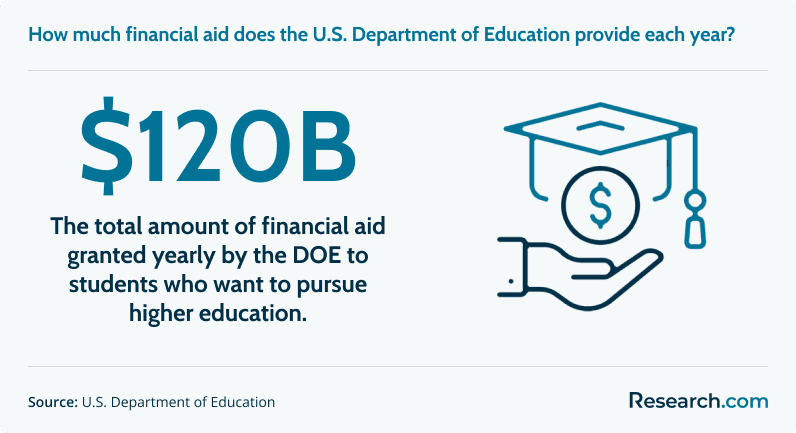
Federal aid, scholarships, grants, employer benefits, and loan programs may reduce the amount students pay out of pocket. The US Department of Education’s Federal Student Aid Office provides more than $120 billion each year to students pursuing higher education.
Students searching for the most affordable masters in school counseling programs should compare total degree cost rather than only the per-credit rate. Public schools may offer lower tuition to state residents, and some online students or military-affiliated students may qualify for out-of-state tuition waivers.
Online learning can reduce certain costs, such as relocation, commuting, and campus housing. Similar cost advantages may apply in related education fields, including affordable online elementary education degrees. However, school counseling students should still budget for books, technology, background checks, professional liability insurance, travel to field sites, and any required campus or residency sessions.
| Cost Category | Why It Can Change Your Budget |
| Tuition per credit | Programs with the same tuition rate may still differ in total cost if one requires more credits. |
| Residency status | In-state and out-of-state rates can be very different at public universities. |
| Field placement expenses | Students may need to travel to local schools, complete screenings, or meet site requirements. |
| Technology and course materials | Online programs may require reliable hardware, software, textbooks, webcams, and high-speed internet. |
| Reduced work hours | Practicum and internship schedules may require daytime availability during school hours. |
Online vs. On-Campus School Counseling Programs
Online and campus-based school counseling programs can lead to similar professional goals, but the learning experience is different. The right choice depends on your schedule, learning style, location, field placement access, and need for in-person support.
| Feature | Online Program | On-Campus Program |
| Flexibility | Better for students balancing work, family, or distance from campus. | Better for students who can attend scheduled classes in person. |
| Networking | Uses discussion boards, live video sessions, virtual groups, and online communities. | Offers more frequent face-to-face contact with classmates, faculty, and campus services. |
| Learning style | Works best for self-directed students with strong time-management habits. | Works well for students who prefer structured class meetings and immediate in-person feedback. |
| Clinical or field experience | Usually completed at approved schools near the student, if the program allows local placements. | May provide easier access to university-affiliated sites and local supervisors. |
| Program pace | May offer part-time, accelerated, or asynchronous options. | Often follows a fixed academic schedule. |
Online learning is not the right fit for everyone. While only 7% of students are concerned about the technological aspect of online learning, 13% are concerned with adapting to a remote learning environment. Students should consider whether they can stay organized, participate consistently, and complete fieldwork while managing work-life balance.
The chart below summarizes student concerns about online learning, with work-life balance ranking highest, followed by education quality and adaptation.
What Are the Admission Requirements for Affordable Online School Counseling Programs?
Admission requirements differ by university, but most online school counseling master’s programs ask for evidence that applicants can succeed in graduate study and are prepared for supervised work with students. Requirements may resemble those used by related counseling degrees, including online Christian counseling master’s programs.
- Bachelor’s degree: Most programs require a bachelor’s degree from an accredited institution. The major may not need to be counseling, although psychology, education, social work, and related backgrounds are common. Students interested in behavior-focused preparation may compare online behavioral psychology degree options.
- Minimum GPA: Graduate programs often set a minimum GPA, and the requirement is usually at least 3.0.
- Resume or CV: Applicants may need to describe academic, professional, volunteer, and school-based experience.
- Standardized test scores: Some programs require GRE scores, while others waive or do not use them.
- Recommendation letters: Schools commonly request letters from professors, supervisors, employers, or professionals who can evaluate your readiness.
- Personal statement: Many programs ask applicants to explain their interest in school counseling, career goals, and fit with the program.
- Interview: Some universities conduct virtual or in-person interviews before admission.
- Prerequisite courses: Certain programs may require prior coursework in psychology, statistics, or related areas.
- Relevant experience: Work or volunteer experience with children, adolescents, families, schools, or community programs may strengthen an application.
- Technology readiness: Online students typically need reliable internet, a suitable computer, webcam access, and the ability to use learning platforms.
What Jobs Can You Get With an Online School Counseling Degree?
Graduates of affordable online school counseling master’s programs most often pursue school counselor roles, but the degree can also support related student-services and youth-development careers. Actual eligibility depends on state certification, school district hiring rules, and any additional licenses required for non-school roles.
| Career Setting | Typical Work | Important Consideration |
| Public schools | Support elementary, middle, or high school students with academic, social, emotional, and career development needs. | Public school roles usually require state school counselor certification or licensure. |
| Charter schools | Provide counseling, academic planning, family communication, and student support services. | Requirements depend on state rules and school policies. |
| Virtual schools | Support remote learners with engagement, well-being, scheduling, and postsecondary planning. | Comfort with online communication and student data systems is important. |
| Special needs schools | Work with students who need additional social, emotional, behavioral, or academic support. | Experience with IEP teams and special education collaboration can be valuable. |
| Higher education | Serve as an academic advisor, student support specialist, or success coach. | Roles may not require school counselor certification but may prefer counseling or advising experience. |
| Nonprofit organizations | Design youth programs, provide support services, and advocate for student well-being. | Program management and community partnership skills are useful. |
School counselors in public settings frequently collaborate with teachers, administrators, families, and community agencies. Those who want deeper knowledge of early child development may also explore affordable online colleges for early childhood education.
Some graduates move beyond K-12 schools into independent educational consulting, private practice, or broader mental health services. These paths may require additional training or licensure. Students comparing helping-profession roles can review the major types of counselors before deciding on a specialization.
Alternative Careers for School Counseling Graduates
A school counseling degree builds skills in communication, assessment, crisis response, student development, advocacy, collaboration, and program planning. Those skills can transfer into several adjacent careers, although some require additional credentials.
- Marriage and family therapy: Graduates interested in family systems and relationship dynamics may consider additional preparation through affordable online MFT programs. This route can lead to work in private practice, community agencies, or healthcare settings after meeting licensure requirements.
- Academic advising: Colleges and universities hire advisors to help students choose courses, understand degree requirements, plan careers, and resolve academic challenges.
- Youth development coordination: Nonprofits and community centers need professionals who can design programs supporting mental health, leadership, college access, and career readiness.
- Career counseling and workforce development: Public workforce agencies and private organizations may hire counselors to help clients identify goals, prepare resumes, search for jobs, and overcome employment barriers.
- Educational program development: Graduates interested in curriculum, prevention programming, or student-support systems may move into roles that shape schoolwide interventions.
- Corporate training and employee assistance: Counseling, communication, and development skills can also support roles in workplace wellness, employee assistance programs, and organizational learning.
Common Courses in an Online School Counseling Program
Course names vary by school, but most school counseling programs combine counseling theory, child and adolescent development, ethics, assessment, group work, multicultural practice, career development, and supervised fieldwork.
| Course Area | What Students Typically Learn |
| Foundations of School Counseling | The profession’s history, counselor roles, ethical duties, legal responsibilities, and school-based service models. |
| Human Growth and Development | Social, emotional, cognitive, and developmental patterns across childhood and adolescence. |
| Theories of Counseling | Major counseling approaches such as cognitive-behavioral therapy, person-centered therapy, and solution-focused therapy. |
| Assessment in School Counseling | Use and interpretation of assessments related to academics, well-being, behavior, and learning needs. |
| School Counseling Techniques | Active listening, communication, crisis response, ethical decision-making, and student support strategies. |
| Group Counseling | How to plan and facilitate groups addressing issues such as bullying, motivation, social skills, or transitions. |
| Career Development | College readiness, career exploration, resume preparation, and postsecondary planning. |
| Consultation and Collaboration | Working with teachers, administrators, families, and community agencies to support students. |
| Research Methods and Program Evaluation | How to interpret research, evaluate interventions, and improve counseling programs using evidence. |
Electives may cover trauma counseling, substance abuse, students with disabilities, crisis intervention, or family systems. Students drawn more strongly to addiction treatment than K-12 counseling may compare affordable substance abuse treatment degree options.
Financial Aid Options for Online School Counseling Students
A master’s degree is a major financial commitment, but students can use several funding sources to reduce out-of-pocket costs. Begin with the school’s financial aid office and compare the net cost after grants, scholarships, and employer benefits.
- Federal Student Aid: Completing the FAFSA can help determine eligibility for federal grants and loans.
- Scholarships and grants: Universities, foundations, state agencies, and professional groups may offer funding for counseling and education students.
- Employer tuition assistance: Teachers and school employees should ask their HR office about tuition reimbursement or professional development funding.
- Loan forgiveness programs: Students planning to work in high-need or underserved areas should review loan forgiveness options carefully before borrowing.
- Military benefits: Service members and veterans may be eligible for benefits such as the GI Bill or Yellow Ribbon Program.
- Professional associations: Counseling organizations, including the American Counseling Association, may provide scholarship leads or member resources.
Another cost-control strategy is to compare the most affordable online school counseling degrees and ask each school for a full cost estimate. Do not rely on tuition alone; include fees, required travel, placement expenses, and any costs associated with licensure testing.
The image below shows how much financial aid the U.S. Department of Education allots to higher education every year.
How to Choose the Best Affordable Online School Counseling Program
The strongest program for you is the one that meets your licensure goal, offers a manageable schedule, provides credible field placement support, and fits your budget. Use the steps below before submitting applications.
- Confirm institutional and program accreditation. Verify that the university is institutionally accredited. Then check whether the counseling program has CACREP accreditation or approval from the relevant educator-preparation or state credentialing agency. Students focused on CACREP options may compare the cheapest CACREP-accredited programs online.
- Check state licensure alignment. Ask the program directly whether it satisfies school counselor certification requirements in your state. Get the answer in writing when possible.
- Review field placement support. Ask whether the school helps locate placements, whether you can use your current school district, and what happens if a placement falls through.
- Compare total cost. Add tuition, fees, books, travel, background checks, insurance, technology, and exam costs.
- Evaluate online delivery. Determine whether classes are live, asynchronous, or hybrid. If live sessions are required, make sure they fit your time zone and work schedule.
- Look beyond testimonials. Student reviews can be helpful, and more than 80% of prospective students factor in testimonies when choosing their universities. Still, reviews should supplement—not replace—accreditation, licensure, cost, and outcome research.
- Ask about faculty and advising. Strong programs provide access to qualified faculty, responsive advisors, and clear guidance on certification paperwork.
- Consider future study. If you may pursue doctoral education later, ask whether credits, research preparation, or faculty mentoring can support that goal.
Common Mistakes to Avoid
| Mistake | Why It Can Hurt You | Better Approach |
| Choosing only by lowest tuition | A cheap program may cost more if it requires extra travel, fees, or additional coursework for licensure. | Compare total cost and credential fit. |
| Ignoring state certification rules | An online degree may not automatically qualify you in your state. | Check with both the program and the state credentialing agency. |
| Assuming online means fully remote | School counseling degrees require in-person practicum and internship work. | Ask where fieldwork can be completed and who approves sites. |
| Overlooking accreditation | Accreditation can affect licensure, employment, and doctoral admission. | Verify institutional and programmatic accreditation before applying. |
| Underestimating internship scheduling | Fieldwork often happens during school-day hours. | Plan with your employer and family before the internship year. |
| Relying only on rankings | A highly ranked program may not fit your state, schedule, or budget. | Use rankings as a starting point, then verify your personal requirements. |
How Can School Counselors Respond to the Student Mental Health Crisis?
School counselors are central to student mental health support, but they are not a replacement for licensed clinical providers when a student needs higher levels of care. Their role often includes prevention, early identification, short-term support, crisis response, family communication, referrals, and coordination with school teams.
One important strategy is Social Emotional Learning (SEL), which helps students build self-awareness, emotional regulation, relationship skills, and responsible decision-making. Counselors may deliver SEL lessons directly or work with teachers to incorporate these skills into classroom routines.
Early intervention is also essential. Counselors monitor warning signs such as sudden academic decline, frequent absences, behavior changes, social withdrawal, or signs of distress. Effective response often requires collaboration with parents, teachers, administrators, school nurses, and outside mental health providers.
When students need specialized support, school counselors should use clear referral procedures and maintain relationships with licensed therapists, psychiatrists, crisis services, and community agencies. Understanding differences among helping roles can also improve referrals; for example, students can explore comparisons such as social worker vs psychologist to understand how support roles differ.
What Is the Job Market for School Counseling Graduates?
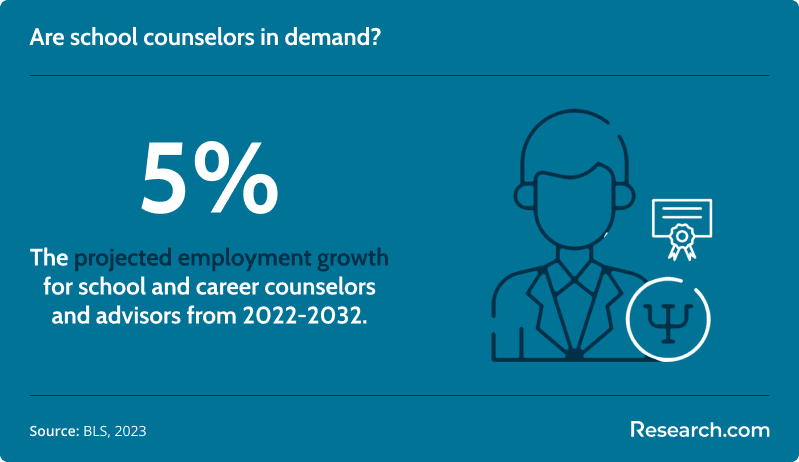
Students who are asking, “What can I do with a psychology degree?” may consider school counseling as one graduate-level path. The employment of school and career counselors and advisors is projected to grow 5% from 2022 to 2032. That is faster than the average job growth for all occupations, which is 3%. The projection also represents about 26,600 openings for these professionals each year over the same 10-year period.
How Can You Fast-Track the Path to Licensed School Counselor?
You cannot skip required education, fieldwork, exams, or state credentialing, but you can reduce delays with careful planning. Start by choosing a program that offers accelerated coursework if you can handle the pace. Texas A & M International University, for example, lists a program length of 16 months, while other programs may take two to three years or more depending on enrollment status.
Next, verify licensure fit before you begin. A program that clearly aligns with your target state can reduce the risk of needing extra courses later. CACREP-accredited options may also simplify some credential reviews, depending on state rules.
Finally, prepare for field placements and exams early. Gather transcripts, recommendation letters, background check documents, and supervisor information before deadlines. Students comparing expedited counseling routes can also review the fastest way to become a counselor.
How Can School Counselors Address Substance Abuse Concerns?
School counselors help by recognizing early warning signs, delivering prevention education, reducing stigma, and connecting students and families with appropriate services. They may collaborate with administrators, nurses, social workers, parents, and community agencies to create referral protocols and safety plans. Counselors interested in this area can also explore careers in addiction recovery to understand broader treatment and support roles.
What Legal and Ethical Issues Do School Counselors Need to Understand?
School counselors work within legal and ethical boundaries involving confidentiality, informed consent, mandated reporting, records, risk assessment, digital communication, and collaboration with families and school staff. They must protect student privacy while acting when safety concerns, abuse, self-harm, or harm to others require disclosure under law or policy.
Ongoing professional development is important because laws, technology, and school policies continue to evolve. Advanced study, including online PsyD programs, may deepen understanding of psychological assessment, ethics, and legal frameworks, although a PsyD is not required for school counselor roles.
Can Forensic Psychology Knowledge Help School Counselors?
Forensic psychology is not a standard requirement for school counselors, but selected concepts can support better risk assessment, crisis response, documentation, and collaboration with legal or mental health professionals. Counselors interested in student behavior, threat assessment, and legal contexts may find related training useful. One possible academic route is a cheap masters in forensic psychology degree, especially for professionals considering work beyond traditional school counseling.
Emerging Trends in School Counseling
School counseling continues to change as student needs, technology, family expectations, and school accountability systems evolve. Future counselors should be prepared for a role that is both relational and data-informed.
Technology-Supported Counseling
School counselors increasingly use digital scheduling tools, student information systems, virtual meetings, online resources, and data dashboards. Technology can improve access, but counselors must still follow confidentiality and security rules.
Greater Focus on Mental Health
Schools are placing more attention on anxiety, depression, trauma, grief, suicide prevention, bullying, and emotional regulation. Counselors need strong referral networks and clear boundaries between school-based support and clinical treatment.
Cultural Competence and Equity
Students come from varied racial, cultural, linguistic, economic, and family backgrounds. Effective counselors advocate for equitable access to courses, support services, disciplinary fairness, and postsecondary opportunities.
Data-Driven Student Support
Attendance, grades, discipline data, course enrollment, and graduation indicators can help counselors identify students who need targeted support. Data should guide interventions without reducing students to numbers.
Collaboration Across School and Community Systems
Counselors work with teachers, administrators, families, social workers, outside therapists, colleges, employers, and nonprofit agencies. Strong collaboration helps students receive coordinated support instead of fragmented services.
Skills Needed to Succeed as a School Counselor
School counselors need a blend of interpersonal, ethical, analytical, and organizational skills. Graduate programs can help build these competencies, but students should also develop them through fieldwork, supervision, mentoring, and continuing education.
- Empathy and compassion: Students are more likely to seek help when they feel respected, heard, and understood.
- Communication: Counselors must explain information clearly to students, families, teachers, administrators, and outside providers.
- Active listening: Careful listening helps counselors identify concerns that students may not state directly.
- Problem-solving: Counselors often help students navigate conflict, academic pressure, family challenges, or postsecondary decisions.
- Cultural competence: Effective support requires awareness of culture, identity, language, socioeconomic status, disability, and family context.
- Organization: Counselors manage caseloads, records, meetings, referrals, groups, and schoolwide programs.
- Ethical judgment: Confidentiality, mandated reporting, boundaries, and documentation require sound professional decision-making.
- Data literacy: Counselors use academic, attendance, and behavioral data to identify needs and evaluate interventions.
How Do School Counselors Work With External Mental Health Professionals?
School counselors strengthen student support when they build effective referral relationships with licensed therapists, psychologists, psychiatrists, social workers, crisis teams, and community clinics. Good collaboration requires clear consent procedures, defined roles, secure communication, and respect for confidentiality. Counselors may participate in case meetings, coordinate school supports, and help families understand available services without stepping outside their professional scope.
How Can School Counselors Support Students Experiencing Grief?
Grief support may include individual check-ins, peer support groups, crisis response, family communication, classroom consultation, and referral to outside mental health providers when needed. Counselors should watch for changes in attendance, behavior, mood, peer relationships, or academic performance after a loss. Professionals who want specialized expertise can explore how to become a grief counselor.
How Can School Counselors Continue Professional Development?
School counselors should plan for lifelong learning. Useful options include state-approved continuing education, ASCA resources, district trainings, conferences, supervision, peer consultation, trauma-informed care workshops, ethics updates, technology training, and specialized certificates. Counselors seeking advanced academic preparation may consider an affordable online doctorate degree in psychology, particularly if they want leadership, research, or advanced mental health training beyond the school counseling role.
How Does School Counseling Affect Academic Success?
School counseling supports academic success by helping students set goals, select appropriate courses, address personal barriers, improve attendance, manage behavior, and plan for college or careers. Counselors often work behind the scenes with teachers, families, and support teams to remove obstacles that interfere with learning.
Academic Planning
Counselors help students understand graduation requirements, choose courses, identify strengths, and connect school choices to future goals. This is especially important for students who may not have access to college or career guidance at home.
Personal and Mental Health Barriers
Anxiety, depression, family stress, bullying, grief, or social conflict can affect academic performance. Counselors provide short-term support, teach coping skills, and connect students with additional help when needed.
Support for Students With Disabilities
School counselors may collaborate with special education teams, families, and teachers to support students with learning differences or disabilities. They may contribute to planning, advocacy, and student transitions, while specialized staff lead formal IEP processes according to school policy.
College and Career Readiness
High school counselors often help students explore careers, prepare for applications, identify scholarships, understand admission steps, and choose postsecondary pathways. Students comparing future counseling and family-support roles can also review the most affordable online MFT programs.
How Can School Counselors Manage Stress and Prevent Burnout?
School counselors often manage high caseloads, urgent student needs, documentation, parent communication, and crisis situations. Burnout prevention requires boundaries, realistic workload management, consultation, supervision, peer support, and self-care routines that are treated as professional responsibilities rather than optional extras.
Continuing education can also help counselors understand stress, trauma, and resilience more effectively. Professionals interested in broader psychological training may compare fast track online psychology degree programs.
Questions to Ask Before Enrolling
- Does this program meet school counselor certification requirements in my state?
- Is the university institutionally accredited, and is the counseling program CACREP-accredited or state-approved?
- Can I complete practicum and internship placements near where I live?
- Who is responsible for finding and approving fieldwork sites?
- Are online classes live, asynchronous, or a mix of both?
- What is the total estimated cost, including tuition, fees, travel, books, technology, and testing?
- What support does the program provide for licensure exams and certification paperwork?
- Can I keep working while completing internship hours during school-day schedules?
- What happens if I move to another state before or after graduation?
- What are recent graduate outcomes, exam pass rates, and job placement supports?
References
- American School Counselor Association. (n.d.). School Counselor Roles & Ratios. ASCA.
- United States Bureau of Labor Statistics. (2023, April 25). May 2022 National Occupational Employment and Wage Estimates. BLS.
- United States Bureau of Labor Statistics. (2023, April 25). Occupational Employment and Wages, May 2022: 21-1012 Educational, Guidance, and Career Counselors and Advisors. BLS.
- United States Bureau of Labor Statistics. (2023, September 6). Occupational Outlook Handbook: School and Career Counselors and Advisors. BLS.
Key Insights
- The best affordable online school counseling degree must be both cost-effective and aligned with your state’s certification requirements.
- Online school counseling programs still require in-person practicum and internship work, so field placement support should be a major selection factor.
- Tuition can range from $15,000 to $60,000 or more, but total cost also includes fees, books, technology, travel, testing, and potential lost work time.
- Most online master’s in school counseling programs take two to three years, while the full education path including a bachelor’s degree often takes six to seven years.
- Accreditation matters. Verify institutional accreditation, CACREP status when relevant, and state educator approval before enrolling.
- Employment of school and career counselors and advisors is projected to grow 5% from 2022 to 2032, with about 26,600 openings each year over that period.
- Do not choose a program based only on ranking or tuition. Confirm licensure fit, fieldwork logistics, online format, faculty support, and total ROI before applying.
Other Things You Should Know About Affordable Online School Counseling Degrees
Applicants usually need a bachelor's degree in a related field and a minimum GPA of 2.5 to enroll in an affordable online school counseling degree program in 2027. Some programs may also require prerequisite courses in psychology or education.
After earning an online school counseling degree in 2027, you'll typically need to complete a supervised practicum and pass a licensing exam, such as the National Counselor Examination (NCE) or another state-specific test, adhering to the requirements of your state's licensing board.
An affordable online school counseling degree should hold regional institutional accreditation and, for counseling, programmatic accreditation from the Council for Accreditation of Counseling and Related Educational Programs, or CACREP. Many state licensing boards and employers prefer CACREP-accredited programs for school counselor preparation and licensure eligibility.


