2027 What Are the Highest Paying Business Master’s Degrees?

Co-Founder and Chief Data Scientist
Author note from Imed Bouchrika, PhD, career planning expert:
Choosing a business master’s degree is not just an academic decision. It affects your earning potential, career mobility, debt load, professional network, and access to leadership roles. Business graduate degrees can lead to strong compensation in fields such as consulting, finance, technology, healthcare, accounting, marketing, analytics, entrepreneurship, and general management, but the best option depends on your goals, work experience, budget, preferred format, and target industry.
This guide explains which business master’s degrees are associated with high salaries, what students can expect from these programs, how online and on-campus options compare, what admissions requirements to prepare for, and how to judge whether the investment makes sense. It also highlights practical questions to ask before enrolling so you can choose a program based on career fit rather than reputation alone.
Quick Answer: Which Business Master’s Degrees Tend to Pay the Most?
The highest-paying business master’s degrees are typically concentrated in finance, accounting, management, marketing, entrepreneurship, business analytics, information systems, and MBA programs with strong placement in consulting, financial services, and technology. In the salary data cited in this guide, consulting leads with an average salary of $147,178, followed by financial services at $138,834, technology at $128,442, healthcare at $116,250, and retail at $115,485.
A high salary is never guaranteed by the degree alone. Outcomes depend on the school’s employer relationships, your previous experience, location, internships, alumni network, specialization, and ability to translate graduate coursework into measurable business results.
Why consider a master’s degree in business?
- In 2025, 99% of global employers plan to hire applicants with a business master's degree.
- A graduate business degree can be a strategic credential for professionals seeking higher compensation, broader management responsibility, career switching opportunities, or entrepreneurial preparation.
- Master’s-level business training may improve access to competitive roles, especially when the program has strong career services, employer connections, and relevant experiential learning.
What Can You Expect From a Master’s Degree in Business?
A master’s degree in business is designed to move students beyond basic business concepts and into applied decision-making. Depending on the program, you may study finance, marketing, operations, strategy, accounting, entrepreneurship, business analytics, leadership, organizational behavior, or technology management.
| Program feature | What it usually means for students | Why it matters for career outcomes |
| Core business coursework | Students build graduate-level knowledge in areas such as finance, marketing, operations, human resources, strategy, and entrepreneurship. | Employers often expect business master’s graduates to understand how decisions affect multiple parts of an organization. |
| Leadership development | MBA programs often emphasize communication, negotiation, team leadership, decision-making, and management judgment. | These skills are important for promotion into supervisory, managerial, consulting, and executive-track roles. |
| Career mobility | An MBA or specialized business master’s can help candidates pursue promotions, salary growth, or career changes. | The strongest results usually come when the program aligns with a clear target role or industry. |
| Employment outcomes | Graduates of masters in business degrees are more likely to be employed, with 86% of MBA graduates being employed when they complete their program. | Employment rates can help you compare programs, but you should also review job titles, industries, salaries, and geographic placement. |
| Personal growth | Many students report greater confidence, self-awareness, and professional maturity after completing a business master’s program. | That growth can support stronger interviewing, networking, leadership, and workplace performance. |
Where Can You Work With a Master’s Degree in Business?
Business master’s graduates can work across many sectors, but hiring patterns vary by specialization. A Master of Finance often points toward financial services, investment roles, corporate finance, or risk analysis. A Master of Marketing can support brand, product, growth, pricing, consumer insights, or marketing analytics roles. An MBA may be broader and is commonly used for consulting, general management, strategy, operations, product management, or executive-track roles.
The most common industries cited for master of management graduates are:
- Consulting: 32.1%
- Finance: 25.3%
- Technology: 19%
- Healthcare/pharma/biotech: 6.8%
These figures show why specialization matters. A student targeting consulting should evaluate case interview preparation, consulting clubs, alumni placement, and employer recruiting history. A student targeting technology should look for analytics, product, AI, operations, or digital strategy coursework. A student pursuing healthcare or biotech should prioritize programs with industry electives, internships, or regional employer relationships.
How Much Can You Make With a Master’s Degree in Business?
Graduate business salaries vary widely by role, school, industry, work history, region, and economic conditions. The highest-paying industries cited in this guide are:
| Industry | Average salary cited | Best fit for students interested in |
| Consulting | $147,178 | Strategy, problem-solving, client work, analytics, operations improvement, and organizational change |
| Financial services | $138,834 | Corporate finance, investment analysis, banking, private equity, risk, and capital markets |
| Technology | $128,442 | Product management, business analytics, digital strategy, information systems, and technology operations |
| Healthcare | $116,250 | Healthcare administration, biotech strategy, pharma operations, and health-sector consulting |
| Retail | $115,485 | Merchandising, supply chain, consumer strategy, pricing, brand management, and operations |
When comparing programs, look beyond the headline salary. Ask whether the school reports base salary, signing bonus, performance bonus, total compensation, or only self-reported outcomes from graduates who responded to a survey. Also compare the percentage of students employed, the industries they entered, and whether the employers match your career goals.
- Best Master’s in Business Degrees With Highest Salaries for 2027
- How long does it typically take to complete a business master’s program?
- How much does it cost to pursue a business master’s program on average?
- Can online business master’s programs offer the same earning potential as on-campus programs?
- Are there specific prerequisites for enrolling in business masters programs?
- What strategies can students use to build effective networks during their programs?
- What are the advantages of choosing a specialized business master’s program?
- Do employers value specialized degrees in comparison to general business degrees?
- Can an online business master’s degree deliver equivalent academic quality and career outcomes as traditional programs?
- Is a business administration degree worth it?
- How do accreditation and academic rankings influence program value?
- Are accelerated business master’s programs a smart investment?
- How do business master’s programs stay current with evolving industry trends?
- How do experiential learning opportunities bridge theory and practice in business master’s programs?
- What are the potential challenges of pursuing a business master’s degree?
- Are accelerated, industry-specific master’s programs a viable alternative for career advancement?
- How do alumni connections impact job placement and salary negotiation?
- What support is provided to graduates seeking career advancement after completing their master’s program?
- How can you make your business master’s degree more affordable without sacrificing quality?
Best Master’s in Business Degrees With Highest Salaries for 2027
How Research.com Approaches This Ranking
This ranking is intended to help prospective students compare high-value business master’s options based on program structure, specialization, cost, credits, accreditation, and career relevance. The data used in this research were sourced from IPEDS, Peterson’s database including the Distance Learning Licensed Data Set, and College Scorecard. Information from the National Center of Education Statistics was also reviewed to add context on institutional and program quality. More details are available in the Research.com methodology here.
1. Master of Accounting at Gonzaga University
The Gonzaga University School of Business Administration offers a Master of Accountancy program built around 30 credits. Full-time students can finish in two semesters, while part-time students may take up to five years. Applicants without an accounting or business undergraduate background may be asked to complete prerequisite coursework, although some prerequisites may be waived based on professional experience. Course topics include Power Query/Power Pivot, Audit Analytics, Financial Accounting for Income Taxes, Data Science for Business, and Professional Ethics. Students may also use approved substitutions from related programs to better match the degree with career goals.
- Program length: Two semesters
- Tracks/concentrations: Sustainability Accounting; Fraud and Forensic Examination; Financial Statement Analysis
- Cost per credit: $1,065
- Required credits to graduate: 30 credits
- Accreditation: Association to Advance Collegiate Schools of Business (AACSB)
2. Master of Marketing at Vanderbilt University
The Vanderbilt University Owen Graduate School of Management offers a Master of Marketing for students seeking focused preparation in consumer research, market analysis, and modern marketing strategy. The program uses a holistic admissions process that considers each applicant’s goals and background. Recent graduates reported strong outcomes, with 96% accepting offers within six months of graduation and moving into roles across a range of organizations.
- Program length: Ten months
- Tracks/concentrations: Pricing Strategies; Retailing; Consumer Insights for Marketing Decision Making
- Total tuition: $68,500
- Required credits to graduate: 33 credits
- Accreditation: Southern Association of Colleges and Schools Commission on Colleges (SACSCOC)
3. Master of Finance at Massachusetts Institute of Technology
The MIT Sloan School of Management Master of Finance is a rigorous program centered on applied finance. Students complete required foundational and advanced subjects, restricted electives, and action learning experiences such as Proseminars and the Finance Lab. The program can be completed in 12 to 18 months, allowing students to choose a pace that fits their goals. MFin students may also pursue a Business Analytics Certificate to further customize their training.
- Program length: 12 to 18 months
- Tracks/concentrations: Financial Engineering; Impact Finance; Capital Markets
- Total cost: $197,000
- Required credits to graduate: 66 units
- Accreditation: New England Commission of Higher Education (NECHE)
4. MBA at Harvard University
Harvard University offers a two-year MBA focused on general management, leadership, and applied decision-making. The program is known for the case method, which places students in realistic business scenarios and asks them to analyze trade-offs from the viewpoint of decision-makers. The curriculum also includes global perspectives through international cases, classroom discussion, and project-based learning designed to prepare students for complex leadership environments.
- Program length: Two years
- Tracks/concentrations: Accounting & Management; Business, Government & the International Economy; Entrepreneurial Management
- Average total cost per year: $115,638 to $161,502
- Available elective courses: Over 90 courses
- Accreditation: AACSB
5. Master of Science in Entrepreneurship at the University of Washington
The University of Washington Foster School of Business offers a 12-month Master of Science in Entrepreneurship that blends elements of an accelerator with graduate business education. The cohort-based, in-person, full-time program enrolls up to 45 students and uses pitch clinics, workshops, competitions, and Seattle’s entrepreneurial ecosystem to support hands-on venture development. The curriculum follows the four-stage startup experience and draws on Foster faculty as well as local entrepreneurs.
- Program length: 12 months
- Tracks/concentrations: Venture Planning and Execution; Strategies for Scaling and Funding Ventures; Opportunity Recognition and Validation
- Total cost: $30,631 (resident), $45,631 (non-resident)
- Required credits to graduate: 46 credits
- Accreditation: AACSB
How to Compare High-Paying Business Master’s Degrees
| Degree type | Best for | What to verify before applying |
| MBA | Professionals seeking leadership, consulting, strategy, entrepreneurship, or a broad career pivot | Employment report, recruiter access, alumni reach, internship options, total cost, and opportunity cost |
| Master of Finance | Students targeting finance, capital markets, financial engineering, or investment-related roles | Quantitative rigor, finance lab access, placement in target firms, and technical prerequisites |
| Master of Accounting | Students seeking accounting, audit, tax, forensic accounting, or financial reporting careers | CPA preparation alignment, accreditation, prerequisite rules, and employer recruiting |
| Master of Marketing | Students interested in consumer insights, pricing, retailing, brand strategy, or growth marketing | Portfolio opportunities, analytics coursework, internship access, and job placement by function |
| Master of Entrepreneurship | Founders, venture builders, startup operators, and innovation-focused professionals | Mentor network, pitch opportunities, investor exposure, local startup ecosystem, and practical venture support |
What Graduates Often Value in a Business Master’s Program
-
: "
“A business master’s degree gave me access to an international professional network and exposed me to how organizations operate across markets. The applied projects helped me practice strategic decision-making and strengthen my leadership approach.” Steve
"
-
: "
“My program strengthened my finance knowledge while giving me practical experience through internships and projects. Online components made it easier to keep working while studying, and the academic community supported my professional growth.” Justine
"
-
: "
“The degree combined business theory with applied problem-solving. Case studies, industry projects, and a diverse cohort helped me develop a more practical perspective on business challenges.” Bill
"
Key Findings
- On average, tuition for traditional, full-time Master of Business Administration (MBA) programs at reputable business schools can range from $50,000 to over $100,000 for the entire program.
- Full-time, traditional Master of Business Administration (MBA) programs often take about two years to complete.
- Information security managers with an average salary of $164,070.
- 60% of students pursue an MBA to enhance their network.
- 61% of recruiters placed MBA hires into strategy and innovation roles, while 59% of recruiters placed Master in Management hires into HR and organizational management roles.
How Long Does It Typically Take to Complete a Business Master’s Program?
Most business master’s degrees take one to two years, but the exact timeline depends on the degree type and enrollment format. Full-time MBA programs often take about two years, while accelerated MBA programs may be completed in 12 to 18 months. Specialized master’s programs such as an MS, MFin, or other focused business degree commonly fall within one to two years.
Part-time and online formats are usually more flexible but may extend to three years or more if students take fewer courses each term. This can be a good choice for working professionals who want to avoid leaving the workforce, but it may delay access to post-degree salary gains.
| Format | Typical completion time cited | Best for | Trade-off |
| Full-time MBA | About two years | Students who can step away from full-time work and want immersive recruiting access | Higher opportunity cost because you may reduce or pause employment |
| Accelerated MBA | 12 to 18 months | Professionals who want a faster return to the workforce | Heavier course load and less time for internships or exploration |
| Specialized business master’s | One to two years | Students with a defined target field such as finance, accounting, analytics, or marketing | Less broad than a general MBA if your goals change later |
| Part-time or online program | Three years or more, depending on pace | Working professionals who need scheduling flexibility | Networking and recruiting may require more self-direction |
How Much Does It Cost to Pursue a Business Master’s Program on Average?
Business master’s degrees can be expensive, especially at well-known schools. On average, tuition for traditional, full-time Master of Business Administration (MBA) programs at reputable business schools can range from $50,000 to over $100,000 for the entire program. Students seeking lower-cost options may want to compare the cheapest online MBA programs alongside campus-based degrees.
Specialized master’s programs, including Master of Finance (MFin) and Master of Science (MS) in Business Analytics degrees, may have different prices but often fall within a similar range. Compared with earlier college degrees including bachelor’s and associate’s, a graduate business degree usually requires a larger financial commitment, so students should evaluate cost against employment outcomes, salary growth, and the likelihood that the program can help them reach a specific career target.
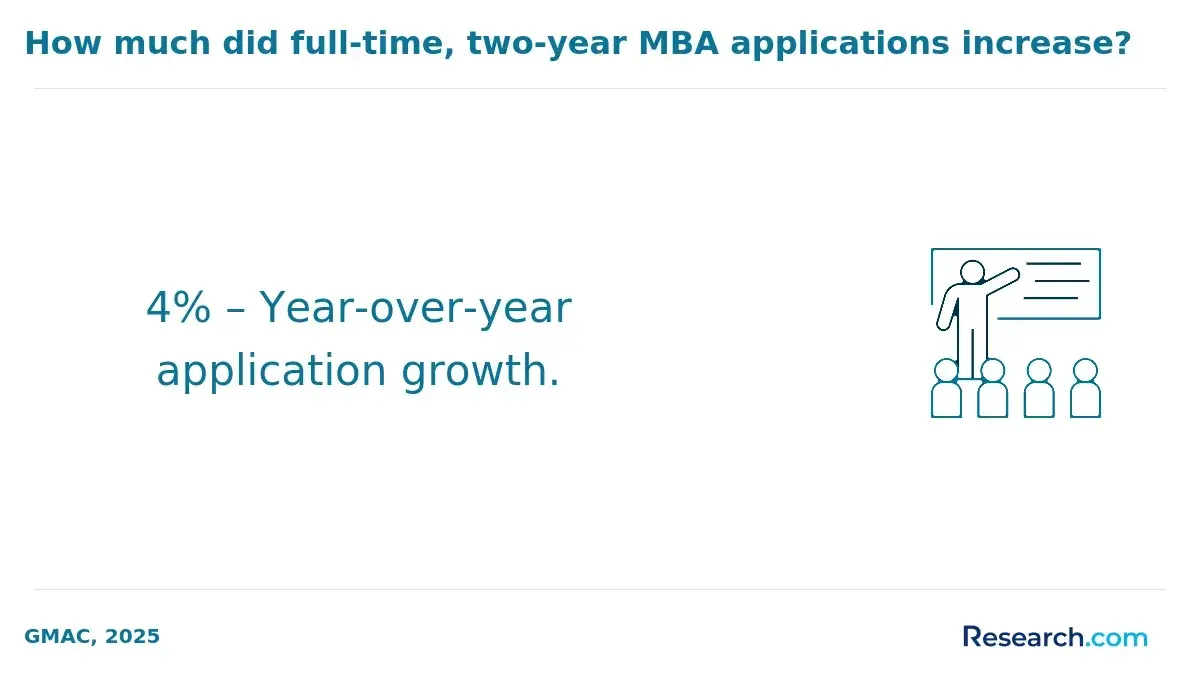
According to the Graduate Management Admission Council (GMAC) 2024 survey cited in this guide, individuals with a business master’s degree in the United States earn an approximately 33% increase in salary per year compared to individuals with a bachelor’s degree.
Cost Factors Students Often Miss
- Opportunity cost: A full-time program may require leaving or reducing paid work.
- Fees beyond tuition: Technology fees, student fees, books, travel, residency requirements, and housing can raise the total price.
- Financing costs: Interest on loans can substantially change the real cost of attendance.
- Program length: A shorter program may reduce living expenses and time away from work, but it may also offer less time for internships.
- Career services quality: A cheaper program is not automatically the better value if it lacks employer access in your target field.
Can Online Business Master’s Programs Offer the Same Earning Potential as On-Campus Programs?
Online business master’s programs can support competitive outcomes when they are accredited, well-designed, taught by qualified faculty, and connected to strong career services. Employers are generally more focused on the school’s reputation, accreditation, student skills, work experience, and career fit than on whether every class was completed on campus.
- Online masters in business programs can deliver the same core business curriculum as campus programs when the institution maintains consistent academic standards across formats.
- Networking is possible in both online and campus programs, but online students often need to be more intentional about participating in live sessions, alumni events, conferences, and employer activities.
- The flexibility of online programs can help working professionals continue gaining experience while studying, which may support increases your earning potential.
- Many employers now recognize online business degrees from reputable institutions, reducing the older perception gap between online and campus credentials.
- Program quality, specialization, employer demand, and individual performance usually matter more than delivery mode alone.
- Because data security is increasingly important to business operations, some business master’s programs include cybersecurity or information systems content. Students interested in this area may also compare an online cybersecurity degree; completers can become information security managers with an average salary of $171,200, depending on the industry.
The chart below shows the earning potential of information security managers as one example of how technology-focused business skills may connect to high-paying management paths.
Are There Specific Prerequisites for Enrolling in Business Masters Programs?
Admissions requirements differ by school and degree type, but most masters degree programs in business evaluate academic preparation, work history, quantitative readiness, recommendations, and professional goals.
| Requirement | What applicants should expect | How to strengthen your application |
| Educational background | Many programs require a bachelor’s degree from an accredited institution. Some prefer prior coursework in accounting, finance, economics, statistics, or quantitative methods. Business schools may also value accreditation from organizations such as AACSB. | Submit transcripts that show readiness for graduate-level business analysis. If your background is not in business, ask whether bridge courses or prerequisite waivers are available. |
| Work experience | Some programs, especially MBA programs, may prefer or require professional experience. Usually, at least two years of work experience is required. | Use your resume and essays to show leadership, measurable accomplishments, promotions, client work, or cross-functional projects. |
| Standardized tests | Most programs require GMAT or GRE scores, although some offer waivers or test-optional admissions. Specialized programs may accept other exams such as the LSAT for law-related MBAs. | Confirm whether the test is required, optional, waived by experience, or replaced by other evidence of readiness. |
| Letters of recommendation | Applicants may need recommenders who can discuss academic ability, professional performance, leadership potential, teamwork, communication, and problem-solving. | Choose recommenders who know your work well and can provide specific examples instead of general praise. |
| Interviews | Some schools use interviews to evaluate fit, motivation, communication, leadership, and career clarity. | Prepare examples involving ethical judgment, collaboration, conflict resolution, leadership, and business decision-making. |
What Strategies Can Students Use to Build Effective Networks During Their Business Masters Programs?
Networking is one of the most valuable parts of a business master’s program, but it only pays off when students approach it deliberately. According to the 2024 GMAC report cited here, 43% of students pursue an MBA to develop their network. It is the fourth most common motivator compared to the other motivators from the report.
- Build a complete LinkedIn profile before classes begin, then connect with classmates, faculty, guest speakers, alumni, and professionals in your target field.
- Research employers, alumni, professors, student clubs, and industry associations connected to your goals so your outreach is focused rather than random.
- Attend career fairs, alumni panels, networking receptions, employer presentations, and guest lectures even when you are not actively job hunting.
- Join business clubs, student organizations, case competitions, consulting groups, finance associations, entrepreneurship labs, or other communities tied to your intended career.
- Treat networking as relationship building. Follow up, offer help when you can, ask informed questions, and maintain contact after graduation.
| Networking action | Why it works | Common mistake to avoid |
| Speak with alumni in your target role | They can explain hiring expectations, interview formats, and salary negotiation norms. | Asking for a job before building a relationship. |
| Attend employer events early | You learn what recruiters value before application deadlines arrive. | Waiting until the final semester to explore employers. |
| Participate in student clubs | Clubs often provide peer networks, leadership experience, and employer access. | Joining many groups without contributing meaningfully. |
| Use faculty office hours | Faculty may know industry contacts, research opportunities, and applied projects. | Only contacting professors when grades are at risk. |
What Are the Advantages of Choosing a Specialized Business Master’s Program?
A specialized business master’s degree can be a strong choice when you already know the field you want to enter. Instead of covering every area of management broadly, these programs concentrate on a defined domain such as finance, accounting, marketing, analytics, entrepreneurship, cybersecurity management, or project management.
- Deeper technical expertise: Students gain targeted knowledge in a specific business field, which can help them compete for specialized roles.
- More focused resume positioning: A specialized degree can make your career direction clearer to employers than a general credential.
- Relevant professional network: Faculty, alumni, and classmates are often concentrated in the same sector, making networking more targeted.
- Potential salary upside: Specialized degrees can lead to high-paying roles when the field has strong employer demand and the student has relevant skills.
- Field-specific leadership preparation: Students can develop leadership skills suited to the realities of their chosen industry or function.
Do Employers Value Specialized Degrees in Comparison to General Business Degrees?
Employers value both general and specialized business degrees, but they use them differently. A general MBA may be preferred for leadership, consulting, management rotation programs, or broad career pivots. A specialized degree may be more attractive when the job requires defined technical knowledge, such as financial modeling, marketing analytics, accounting expertise, data interpretation, or systems strategy.
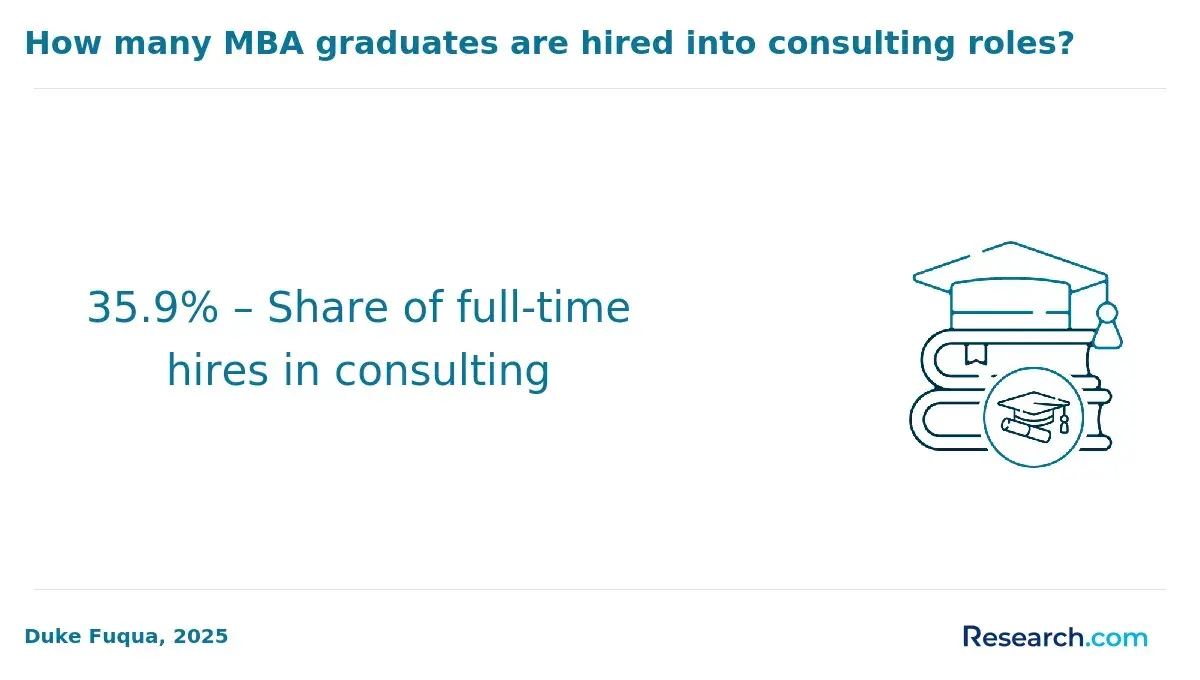
If your specialization aligns with one of the best majors to study for your target labor market, it can support a stronger career trajectory. Among the business graduates hired in 2024, 44% of Tuck MBA hires went into consulting roles, while 36% of Georgetown MBA hires went into financial services roles. These examples show that school, employer pipeline, and industry alignment can shape outcomes as much as degree title.
Can an Online Business Master’s Degree Deliver Equivalent Academic Quality and Career Outcomes as Traditional Programs?
An online business master’s degree can match traditional academic quality when the same institution applies consistent curriculum standards, faculty expectations, assessment methods, and accreditation oversight. High-quality online programs use digital platforms for case discussions, group work, live sessions, simulations, and applied projects so students can practice decision-making rather than simply watch lectures.
Career outcomes depend on more than format. Before enrolling, compare graduation outcomes, employer access, alumni engagement, career coaching, internship or project options, and whether the program’s name is clearly represented on the transcript or diploma. Students comparing flexible options can review an online business school to understand program structures and institutional credentials.
Is a Business Administration Degree Worth It?
A business administration degree can be worth it when it helps you qualify for roles that would otherwise be difficult to access, improves your leadership capability, expands your network, or supports a credible career pivot. It is less likely to be worth the cost if the program is poorly aligned with your goals, lacks employer recognition, or requires debt that your target salary cannot reasonably support.
To judge value, review curriculum depth, experiential learning, faculty expertise, accreditation, industry recognition, salary outcomes, and long-term career mobility. For a focused discussion, see Is a business administration degree worth it?.
How Do Accreditation and Academic Rankings Influence Program Value?
Accreditation is one of the first quality checks students should perform. It indicates that a program or institution has gone through external review against academic standards. Rankings can also be useful, but they should not be the only factor in your decision because ranking systems may weigh reputation, selectivity, research output, salaries, or survey responses differently.
Use accreditation to confirm baseline legitimacy, then use rankings as one data point alongside cost, career placement, curriculum, faculty, student support, alumni access, and fit with your target role. Students trying to balance quality and price may also compare the cheapest online business degree options.
Are Accelerated Business Master’s Programs a Smart Investment?
Accelerated business master’s programs can be a smart investment for students who have clear goals, strong time management skills, and a reason to finish quickly. By condensing coursework into a shorter schedule, these programs may reduce opportunity cost and help graduates return to the workforce sooner. They can be especially appealing to professionals who already have relevant experience and do not need a long exploration period.
The trade-off is intensity. Students may have less time for internships, electives, international experiences, or career switching. Before choosing this route, ask whether the compressed format still provides career coaching, employer access, alumni networking, and applied projects. Students considering shorter formats can review one year MBA programs in USA.
How Do Business Master’s Programs Stay Current With Evolving Industry Trends?
Strong business master’s programs update curricula as employer expectations change. Current areas of focus often include data analytics, artificial intelligence, digital transformation, innovation management, sustainability, cybersecurity awareness, and global market strategy. The strongest programs do not only add trendy course titles; they integrate current tools and decision frameworks into cases, simulations, consulting projects, and employer-sponsored assignments.
AI is especially important. Business graduates increasingly need to understand how AI affects operations, customer insights, productivity, risk, hiring, finance, and strategy. However, technical familiarity should be paired with judgment, ethics, communication, and change management. Students interested in budget-conscious programs with modern applied content may compare the affordable MBA project management track.
How Do Experiential Learning Opportunities Bridge Theory and Practice in Business Master’s Programs?
Experiential learning helps students convert classroom concepts into workplace-ready skills. Internships, consulting projects, case competitions, simulations, labs, live client assignments, and startup projects give students practice in problem definition, analysis, teamwork, communication, and executive-style recommendations.
This matters because employers rarely hire business master’s graduates for academic knowledge alone. They want candidates who can use data, manage ambiguity, present clearly, lead teams, and make practical recommendations. Students seeking flexible and applied options may explore the cheapest online MBA no GMAT alternative.
What Are the Potential Challenges of Pursuing a Business Master’s Degree?
A business master’s degree can create opportunity, but it also comes with real risks. Tuition can be substantial, coursework can be demanding, and the time commitment can strain work, family, and finances. Market conditions can also shift while you are enrolled, especially in competitive fields such as consulting, technology, finance, and startups.
| Challenge | Why it matters | How to reduce the risk |
| High total cost | Debt can reduce the financial value of the degree if salary gains are modest. | Compare total cost, scholarships, employer support, loan terms, and realistic salary outcomes. |
| Opportunity cost | Full-time study may require lost wages or slower career momentum during enrollment. | Evaluate part-time, online, hybrid, or accelerated formats. |
| Academic intensity | Quantitative, analytical, and team-based coursework can be demanding. | Assess prerequisites and strengthen finance, statistics, accounting, or analytics skills before starting. |
| Career uncertainty | A degree without a target role may not produce a strong return. | Define your intended industry, function, geography, and salary range before enrolling. |
| Rapid skill changes | AI, analytics, digital tools, and automation can change job requirements. | Choose programs with current coursework, applied projects, and continuous career support. |
Students who want to shorten time away from work may compare quick MBA programs, but speed should not come at the expense of academic quality or career support.
Are Accelerated, Industry-Specific Master’s Programs a Viable Alternative for Career Advancement?
Accelerated, industry-specific master’s programs can be a practical alternative for professionals who already know the field they want to enter or advance within. These programs compress focused coursework into a shorter timeframe and often emphasize applied skills tied to a defined industry.
They are usually best for students who do not need broad MBA exploration and instead want targeted advancement. For example, professionals aiming at construction management can review fast construction management online degree programs, which illustrate how shorter, sector-specific programs can serve career goals differently from traditional business degrees.
How Do Alumni Connections Impact Job Placement and Salary Negotiation?
A strong alumni network can improve access to referrals, informational interviews, unadvertised opportunities, interview preparation, and salary negotiation advice. Alumni can also explain which employers recruit from the program, what compensation packages look like in specific sectors, and how to position your experience for promotion or career switching.
The strength of an alumni network usually depends on three factors:
- Program reputation: Well-known business schools often have larger and more active alumni communities connected to lucrative good degrees and competitive career paths.
- Your level of participation: Alumni value grows when you attend events, request mentorship professionally, contribute to discussions, and maintain relationships.
- Industry alignment: Some alumni networks are especially strong in consulting, finance, technology, entrepreneurship, healthcare, or other fields. Research where graduates actually work before enrolling.
What Support Is Provided to Graduates Seeking Career Advancement After Completing Their Business Master’s Program?
Career support can be one of the most important differences between programs. A strong business school does not simply award a credential; it helps students translate the degree into interviews, offers, promotions, and long-term mobility. If you are comparing options as a business master’s degree completer, review the services available before and after graduation.
- Career centers: These offices may provide business-focused advisors, resume coaching, job boards, internship leads, employer events, and career fairs.
- Professional development: Many schools offer workshops on leadership, negotiation, networking, personal branding, communication, and executive presence.
- Internship and job placement support: Some programs maintain employer partnerships that connect students to internships or jobs related to the degree’s focus.
- Personal branding support: Students may receive guidance on LinkedIn, portfolios, professional websites, social media presence, and interview narratives, which can be especially useful for marketing, management, consulting, and entrepreneurship paths.
What Is the Return on Investment (ROI) for Business Master’s Degrees?
ROI compares the financial and career benefits of the degree with the total cost of earning it. For business master’s programs, ROI should include tuition, fees, living expenses, interest, lost income, time to graduation, salary change, bonus potential, promotion access, career switch value, and long-term advancement.
- Cost vs. salary increase: Business master’s degrees may lead to salary growth, and graduates of top MBA programs can see salary bumps of 30-60% or more in fields like consulting, finance, and technology. This should be weighed against program costs that can range from $50,000 to $100,000 or higher.
- Time to recoup investment: Some business graduates can recover their investment in as little as two to four years, depending on program cost and career path. Higher-paying sectors such as consulting and investment banking may shorten the payback period.
- Long-term growth: A graduate business degree can support movement toward executive roles and C-suite positions, where compensation may include salary increases, bonuses, and stock options.
The best ROI often comes from a program that is affordable enough to manage, reputable enough to open doors, and specialized enough to support your target outcome.
Advantages of GMAT-Free Business Master’s Programs
GMAT preparation can add time, stress, and expense to the application process. Some reputable schools now offer GMAT-free or test-waiver options that evaluate applicants through academic history, work experience, leadership, recommendations, and career goals. Choosing an online MBA no GMAT requirements may be useful for professionals whose career record is a stronger indicator of readiness than a standardized test score.
GMAT-free programs can also make graduate business education more accessible to working adults. However, students should still verify accreditation, curriculum quality, faculty credentials, graduation outcomes, and employer recognition. Test flexibility should be a convenience, not a substitute for program quality.
How Can You Make Your Business Master’s Degree More Affordable Without Sacrificing Quality?
Affordability should be evaluated through total cost, not tuition alone. Online and hybrid business master’s programs may reduce commuting, relocation, and campus living costs while offering more flexibility for students who want to keep working. Students seeking lower-cost graduate options can compare the most affordable online master’s programs while still checking accreditation, career outcomes, and academic rigor.
Scholarships, assistantships, employer tuition reimbursement, military benefits, payment plans, transfer credits, and accelerated formats may also reduce out-of-pocket cost. Apply for financial aid early, ask employers about education benefits, and compare net cost after aid rather than published tuition only.
Accelerated programs and dual-degree pathways can reduce time to completion, but they are not automatically cheaper if per-credit tuition is high or if the schedule prevents you from working. Compare total credits, fees, residency requirements, and expected time away from employment before deciding.
Prestige can matter in some fields, especially consulting and finance, but it should be weighed against debt. Many affordable business schools can provide strong outcomes when they have relevant accreditation, experienced faculty, strong employer connections, and a curriculum tied to your target role.
What Role Does Program Flexibility Play in Achieving Career Goals?
Program flexibility is especially important for working professionals, parents, military students, and career changers. Online, hybrid, evening, weekend, and part-time formats can make it possible to complete a business master’s degree without pausing a career or relocating.
Students who need a faster academic route may also consider one of the fastest business degree online options. These programs can help students build core business skills in less time, but applicants should confirm that speed does not reduce access to faculty, networking, advising, or career development.
Flexible programs may include asynchronous coursework, live online classes, modular schedules, short residencies, or hybrid learning. The best format is the one you can complete successfully while still building the relationships, projects, and career evidence employers want to see.
Common Mistakes to Avoid When Choosing a Business Master’s Degree
| Mistake | Why it can hurt you | Better approach |
| Choosing based only on ranking | A highly ranked program may not place well in your target industry or region. | Review employment reports, alumni outcomes, and recruiter access for your specific goal. |
| Ignoring accreditation | Lack of recognized accreditation can affect employer trust and transferability. | Confirm institutional and programmatic accreditation before applying. |
| Looking only at tuition | Fees, travel, housing, loan interest, and lost wages can change affordability. | Calculate total cost of attendance and opportunity cost. |
| Assuming online always means easier | Quality online programs can be rigorous and require strong self-management. | Ask about workload, live requirements, group projects, and faculty access. |
| Starting without a career target | A general goal such as “better job” is too vague to evaluate ROI. | Define target roles, industries, salary expectations, and required skills before enrolling. |
| Underusing career services | Students who wait until graduation may miss internships, networking events, and recruiter timelines. | Meet career advisors early and build a job-search plan in the first term. |
Questions to Ask Before Enrolling
- What roles, employers, and industries do recent graduates enter?
- Does the school report base salary, total compensation, bonuses, or only selected outcomes?
- Is the program accredited, and by whom?
- How many students complete internships, consulting projects, labs, or live client assignments?
- What career services are available to online, part-time, and alumni students?
- How active is the alumni network in my target field?
- Can I manage the workload while working or handling personal responsibilities?
- What is the total cost after scholarships, employer benefits, fees, and loan interest?
- Does the curriculum include current business needs such as AI, analytics, digital transformation, risk, and leadership?
- What evidence shows that this program can help me reach my specific career goal?
Key Insights
- The highest-paying business master’s paths are often tied to consulting, financial services, technology, healthcare, and retail, but salary depends heavily on school placement, experience, industry, and role.
- An MBA is usually best for broad leadership, consulting, strategy, and career switching; specialized master’s degrees are often better for targeted fields such as finance, accounting, marketing, analytics, and entrepreneurship.
- Cost matters as much as prestige. A program priced from $50,000 to over $100,000 may still be worth it, but only if the likely career outcome supports the investment.
- Online business master’s programs can be valuable when they are accredited, rigorous, and connected to strong career services. Delivery mode alone should not determine quality.
- Networking is a major reason students pursue graduate business education, but its value depends on active participation, alumni access, employer events, and industry alignment.
- Before applying, verify accreditation, employment outcomes, total cost, admissions requirements, curriculum relevance, experiential learning, and alumni strength in your target field.
References
- BestColleges (2025). Graduates With These Business Degrees Are Projected to Land Jobs in 2025. https://www.bestcolleges.com/news/mba-hiring-2025-gmac-corporate-recruiters-survey/
- Coursera Staff. (2024). MBA Degree salary: 2024 guide. Coursera. https://www.coursera.org/articles/mba-degree-salary
- Graduate Management Admission Council (2024). 2024 Report. Corporate Recruiters Survey. https://www.gmac.com/-/media/files/gmac/research/employment-outlook/2024-corporate-recruiters-survey/2024_gmac_crs_report.pdf?rev=43588bfef9a549af9bb00a432a3d7b06
- Graduate Management Admission Council (2025). MBA Programs: Demand & Career Aspirations. https://www.gmac.com/-/media/files/gmac/research/prospective-student-data/2024_pss_programreport1_mba.pdf
- Graduate Management Admission Council (2025). New Survey Finds Employers Keen on Hiring Business School Graduates as AI Integration Accelerates. https://www.prnewswire.com/news-releases/new-survey-finds-employers-keen-on-hiring-business-school-graduates-as-ai-integration-accelerates-302492429.html
- MIT Sloan School of Management (2024). 2024-2025 MBA Employment Report. https://mitsloan.mit.edu/sites/default/files/2024-12/MBA-Employment-Report-2024-2025.pdf. Additional hiring context: Statista MBA hiring data
- US BLS (2025). Occupational Outlook Handbook https://www.bls.gov/ooh/management/computer-and-information-systems-managers.htm.
Other Things You Should Know About Master’s in Business Programs
In 2027, MBA programs offer top salaries due to their comprehensive curriculum, leadership focus, and connections with industry leaders. They're designed to enhance expertise in finance, marketing, and operations, leading to lucrative opportunities in executive roles across diverse industries.
In 2027, industries like finance, technology, and consulting offer the highest salaries for business master's graduates. Graduates opting for specialized roles in investment banking, data analytics, or strategy consulting can expect competitive compensation packages, reflecting high demand and specialized skills.
Many top business master’s programs still prefer GMAT or GRE scores in 2027, with competitive MBA applicants often targeting a GMAT above 650 or a GRE Quant score near the 160s. Some schools waive testing for strong work experience, but executive or flagship programs may still require scores.
Admission requirements for high-paying business master’s degrees in 2027 typically include a bachelor's degree, a competitive GMAT or GRE score, relevant work experience, and letters of recommendation. Some programs may also require a personal statement or interview as part of the selection process.
Several factors can lead to higher salaries for business master’s degree holders in 2027. Key determinants include the specific field of study, industry demand, the reputation of the degree-granting institution, and geographic location. Fields like finance and technology management often draw higher salaries due to their critical roles in businesses.