
2027 Different Types of Business Master’s Degrees, Costs & Job Opportunities

Co-Founder and Chief Data Scientist
Choosing a business master’s degree is not just a question of whether graduate school looks good on a resume. It is a decision about time, debt, career direction, and the kind of business problems you want to solve. An MBA may help experienced professionals move into leadership, while a specialized degree in finance, marketing, accounting, analytics, supply chain, or information technology can be a better fit for students who want deeper technical expertise in one field.
This guide explains what business master’s degrees cover, how the major program types compare, what they may cost, how admissions usually work, and which career paths graduates commonly pursue. It also shows how to evaluate accreditation, delivery format, return on investment, financial aid, networking value, and common risks before you commit to a program.
Quick answer: What are the main benefits of a business master’s degree?
- A business master’s degree builds advanced knowledge in management, finance, marketing, operations, accounting, analytics, and leadership.
- Common options include a master’s in management, master of marketing, master of finance, master of accounting, master of business analytics, master of supply chain management, MBA, and technology-focused business degrees.
- Business master’s programs in the United States can cost from $15,000 to over $200,000, depending on the institution, format, length, and degree type.
- Applicants usually need a bachelor’s degree, and many programs also request work experience, GMAT or GRE scores, recommendations, essays, or an interview.
- Graduates may pursue roles such as business development manager, marketing manager, financial analyst, operations manager, and management consultant.
- The strongest outcomes usually come from matching the degree to a clear career goal, choosing an accredited program, controlling total cost, and using the school’s employer and alumni network.
- What is a business master's degree?
- What are the different specializations offered in business master's degrees?
- What is the average cost of a business master's degree in the US?
- What scholarship and financial aid options are available for business master's programs?
- What are the typical application requirements for business master's programs?
- What are the most common jobs for graduates with business master's degrees?
- How much can I expect to earn after graduating with a business master's degree?
- What factors should I consider when choosing a business school?
- What are the potential challenges of pursuing a business master’s degree?
- How does your undergraduate background influence your business master’s degree success?
- How does accreditation influence the credibility of your business master’s degree?
- Why consider 1-year MBA programs for rapid career growth?
- What professional network opportunities are available through business school programs?
- How can you verify the quality of an affordable online MBA no GMAT option?
- How can industry partnerships enhance your business master’s degree experience?
- How has a business master's degree helped graduates achieve their career goals?
- How can you choose the right format for your business master’s degree: online, hybrid, or on-campus?
- Why are business master’s degrees so popular?
- How can you evaluate the ROI of a business master’s degree?
- How can shorter programs accelerate your career advancement?
- How can accelerated, industry-specific programs create immediate career impact?
What is a business master's degree?
A business master’s degree is a graduate credential designed to develop advanced business judgment, analytical ability, and leadership skills. Depending on the program, students may study finance, accounting, marketing, operations, organizational behavior, entrepreneurship, strategy, data analysis, and global business practices.
The degree can serve different purposes. Some students use it to move from individual contributor roles into management. Others use it to change industries, strengthen technical expertise, prepare for consulting or finance roles, or build credibility before launching a business. Students interested in global markets may also use business graduate study to prepare for international business careers.
The most important distinction is between a generalist degree and a specialized degree. A generalist business master’s program, such as an MBA or master’s in management, gives broad exposure to several business functions. A specialized program, such as finance, accounting, analytics, marketing, or supply chain management, goes deeper into one professional area.
What are the different specializations offered in business master's degrees?
Business graduate programs are not interchangeable. The best choice depends on your current experience, target role, technical strengths, and how much flexibility you want after graduation. Students comparing types of college degrees should look beyond the title and examine curriculum, employer connections, internship options, and alumni outcomes.
| Degree type | Best fit | Typical focus | Common completion time |
| Master’s in Management | Early-career professionals or recent graduates seeking broad management training | Leadership, strategy, accounting, finance, marketing, operations, and organizational behavior | One to two years |
| Master of Marketing | Students aiming for brand, growth, sales, market research, or digital marketing roles | Consumer behavior, branding, advertising, digital marketing, market research, and sales management | One to two years |
| Master of Finance | Students targeting investment, corporate finance, financial analysis, or risk roles | Corporate finance, financial markets, portfolio management, risk management, and financial modeling | One to two years |
| Master of Accounting | Students preparing for public, corporate, government, or specialized accounting careers | Financial accounting, managerial accounting, taxation, auditing, ethics, and advanced accounting methods | One to two years |
| Master of Business Analytics | Students who want to use data to support business decisions | Data mining, predictive modeling, machine learning, optimization, and data visualization | One to two years |
| Master of Supply Chain Management | Students interested in logistics, sourcing, operations, procurement, or distribution | Logistics, transportation, supply chain planning, sourcing, inventory management, and risk management | One to two years |
Master’s in Management
A master’s in management provides broad training in how organizations operate and how managers make decisions. It is often a strong option for students with limited full-time work experience who want a foundation in strategy, finance, marketing, operations, and leadership before entering supervisory or analyst-level roles.
Master of Marketing
A master of marketing focuses on understanding customers, positioning products, measuring campaigns, and building growth strategies. Students may study market research, consumer behavior, branding, advertising, digital channels, and sales management. It is often best for students who want a career tied to revenue growth, customer insight, or brand strategy.
Master of Finance
A master of finance, often called an MFin, develops technical knowledge in financial theory, investment analysis, portfolio management, financial modeling, capital markets, corporate finance, and risk. It is usually more quantitative and specialized than a general MBA.
Master of Accounting
A master of accounting, or MAcc, prepares students for advanced accounting responsibilities in public accounting, corporate accounting, government, audit, tax, and related fields. Students who need a flexible route can compare campus programs with online master's degrees in accounting offered by established universities.
Master of Business Analytics
A master’s in business analytics teaches students how to transform data into business recommendations. Coursework commonly includes data mining, predictive modeling, machine learning, optimization, visualization, and decision analytics. This path works best for students comfortable with statistics, technology, and problem-solving.
Master of Supply Chain Management
A master of supply chain management examines how goods, services, information, and money move from suppliers to customers. Applicants often come from business, engineering, economics, logistics, or related backgrounds. A logistics management degree can be helpful, but many programs also accept students from adjacent fields who can demonstrate quantitative and operational readiness.
Which business master's degree is best for my career goals?
The best business master’s degree is the one that closes the gap between where you are now and the job you want next. A prestigious program that does not fit your target role can be a poor investment, while a focused, affordable, accredited program with strong employer connections can be highly practical.
| If your goal is... | Consider this degree | Why it may fit |
| Move into general leadership or management | MBA or Master’s in Management | These programs cover multiple business functions and are designed for broad managerial decision-making. |
| Work in investment, corporate finance, or financial analysis | Master of Finance | The curriculum is deeper in valuation, markets, modeling, and risk than a general business degree. |
| Build an accounting, audit, or tax career | Master of Accounting | The degree focuses on advanced accounting rules, reporting, audit, tax, and professional ethics. |
| Lead marketing, brand, growth, or customer strategy | Master of Marketing | Students study customer behavior, campaign strategy, analytics, sales, and digital channels. |
| Use data to solve business problems | Master of Business Analytics | The program emphasizes statistical tools, predictive models, visualization, and decision support. |
| Improve logistics, sourcing, and operations systems | Master of Supply Chain Management | Coursework focuses on procurement, inventory, transportation, risk, and end-to-end supply chain design. |
- Start with the job, not the degree title. Review job postings for your target roles and identify the skills, software, certifications, and experience employers request most often.
- Check whether you need breadth or depth. Career changers and aspiring managers may need a broad MBA-style curriculum, while finance, accounting, analytics, and supply chain candidates often benefit from specialized training.
- Compare outcomes, not marketing claims. Ask schools for employment reports, internship access, alumni job titles, and career services support in your target field.
- Calculate total cost. Include tuition, fees, lost income, travel, residency requirements, books, technology, and loan interest when estimating value.
What is the average cost of a business master's degree in the US?
Business master’s degree costs vary widely because program length, school type, delivery format, location, and reputation all affect tuition. MBA, MFin, and MAcc programs can be among the more expensive options, especially at private or highly ranked institutions.
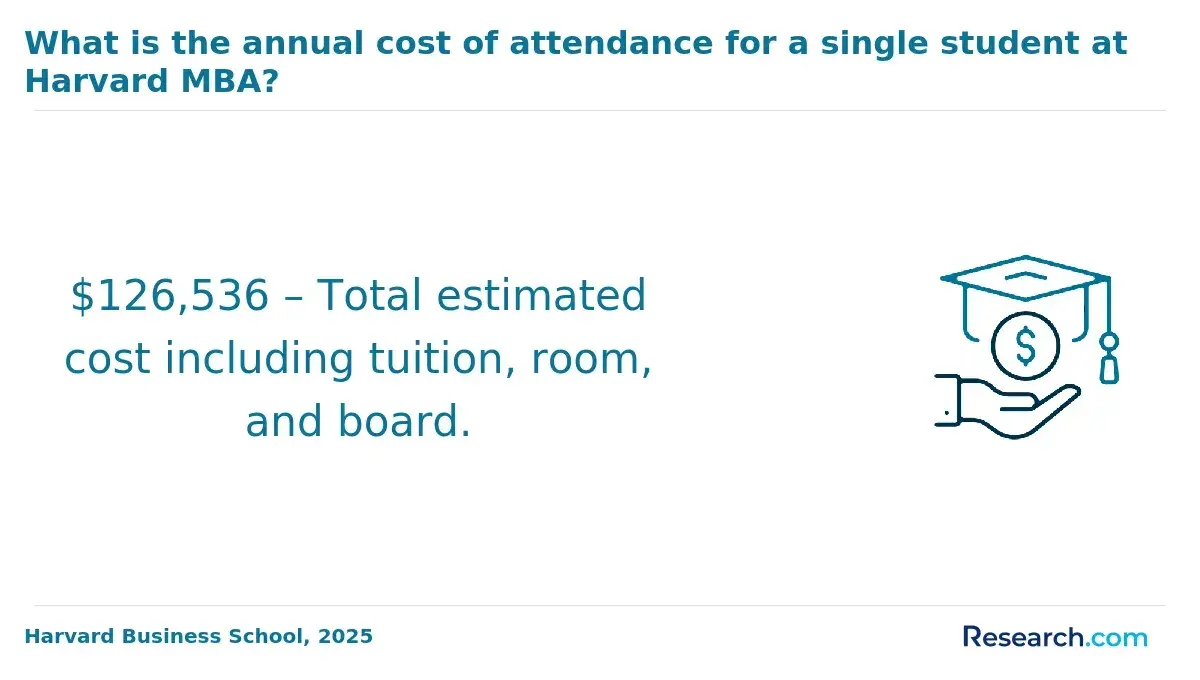
In the United States, a business master’s degree can range from $15,000 to over $200,000. Students trying to limit borrowing should compare public universities, online formats, employer tuition assistance, transfer policies, and affordable MBA programs before applying.
Sample tuition costs for selected business master’s programs
| Master’s Degree | School | Delivery Format | Cost |
| MS in Management and Systems | New York University (NYU) | Online, on-site, hybrid | $25,483 per semester |
| Master of Management Studies | University of Southern California (USC) | On-site | $72,501 per year |
| Master of Finance | Drew University | On-site | $1,392 per credit |
| Master of Finance | Oakland University | On-site | $872 per credit (in-state), $1,027 (out-of-state) |
| Master of Supply Chain Management | Syracuse University Whitman School of Management | On-site | $1,872 per credit |
| Master of Information Technology | Kennesaw State University | On-site, online, hybrid | $964 per credit (in-state), $1,734 (out-of-state) |
Cost factors students often overlook
- Fees beyond tuition: Technology, student services, graduation, residency, and course fees can change the real price.
- Opportunity cost: A full-time program may reduce or pause income, while part-time and online options may let students continue working.
- Travel or relocation: Hybrid residencies and campus-based programs may require commuting, housing, or travel.
- Loan interest: Borrowed tuition can cost more over time, especially if repayment is delayed.
- Employer reimbursement rules: Some companies require minimum grades, continued employment, or relevance to your current role.
What scholarship and financial aid options are available for business master's programs?
Financial aid can reduce the out-of-pocket cost of a business master’s degree, but students should treat borrowing carefully. As of 2026, graduate degree holders have an average of $77,300 in graduate student loans. That makes it important to compare grants, scholarships, employer support, assistantships, payment plans, and federal loan options before relying heavily on debt.
- FAFSA: Completing the Free Application for Federal Student Aid is the starting point for many federal aid options, including graduate student loans and other aid for eligible students.
- Federal Pell Grant: This need-based grant is awarded to undergraduate and graduate students with exceptional financial needs.
- Federal Direct Unsubsidized Loan: Interest begins accruing when funds are disbursed, but these loans do not require a minimum credit score and may provide larger borrowing limits than subsidized loans.
- School-based scholarships: Business schools may offer merit awards for academic performance, standardized test scores, professional achievement, leadership, or industry experience.
- Employer tuition benefits: Some employers reimburse tuition or provide education assistance when the program supports the employee’s current or future responsibilities.
- Assistantships and fellowships: Some graduate business programs provide funding in exchange for research, teaching, administrative, or program support work.
What are the typical application requirements for business master's programs?
Admissions requirements differ by school and degree type, but most business master’s programs want evidence that applicants can handle graduate-level quantitative work, communicate clearly, and contribute to class discussions. Selective programs may also look for leadership potential, professional maturity, and a clear career plan.
| Requirement | What it shows | How to prepare |
| Bachelor’s degree | Academic readiness for graduate study | Confirm prerequisite courses and whether your undergraduate major meets program expectations. |
| GMAT or GRE scores | Quantitative, verbal, and analytical preparation | Check whether scores are required, optional, waived, or replaced by work experience. |
| Work experience | Professional judgment and classroom contribution | Document achievements, promotions, leadership examples, and measurable results. |
| Letters of recommendation | Third-party support for your abilities and potential | Choose recommenders who can describe your work quality, leadership, ethics, and growth. |
| Statement of purpose or essays | Career goals and program fit | Explain why this degree, why now, and how the school’s curriculum connects to your goals. |
| Interview | Communication, motivation, and readiness | Practice concise examples that show problem-solving, teamwork, leadership, and self-awareness. |
How can I prepare for the business school admissions interview?
A strong interview does more than repeat your resume. It explains your career story, shows why the program fits your goals, and demonstrates that you understand what graduate business study will require.
Before the interview
- Study the program in detail. Review required courses, concentrations, faculty, career services, experiential projects, student clubs, and employer relationships.
- Revisit your application materials. Be ready to discuss your essays, resume, academic record, work experience, and any gaps or transitions.
- Prepare examples, not slogans. Use specific stories that show leadership, conflict resolution, analytical thinking, ethical judgment, and resilience.
- Practice common questions. Be ready for prompts such as why you want the degree, why this school, what your short-term goal is, and how you handled a difficult challenge.
- Bring thoughtful questions. Ask about career support, alumni access, applied learning, faculty engagement, or how students in your target field typically succeed.
During and after the interview
- Be professional and concise. Answer directly, then support your answer with a relevant example.
- Use the STAR method. Structure responses around the Situation, Task, Action, and Result so your examples are easy to follow.
- Connect your goals to the program. Interviewers want to know that you have chosen their school for specific reasons.
- Avoid overclaiming outcomes. Show ambition, but do not imply that the degree alone guarantees a promotion or salary increase.
- Send a timely thank-you message. A brief follow-up within 24 hours reinforces professionalism and continued interest.
What are the most common jobs for graduates with business master's degrees?
Business master’s graduates work across finance, consulting, technology, healthcare, marketing, operations, logistics, government, and entrepreneurship. The best role depends on degree specialization, prior experience, internship record, technical skill, location, and the school’s recruiting network.
| Job title | What the role does | Median annual salary |
| Business development manager | Identifies growth opportunities, builds client relationships, develops strategic plans, and supports revenue expansion. | $80,920 |
| Marketing manager | Plans marketing campaigns, studies customers and competitors, analyzes performance data, and manages marketing teams. | $72,478 |
| Financial analyst | Evaluates financial data, supports investment decisions, contributes to planning, and analyzes business performance. | $66,774 |
| Operations manager | Oversees daily business processes, improves efficiency, manages staff, and monitors productivity and service quality. | $72,361 |
| Management consultant | Advises organizations on strategy, operations, cost control, process improvement, and complex business problems. | $95,829 |
Business development manager
Business development managers focus on growth. They may research markets, identify potential partners, build client pipelines, negotiate opportunities, and coordinate internal teams around expansion strategies.
Marketing manager
Marketing managers turn customer insight into campaigns and business results. They may oversee brand positioning, advertising, content, digital campaigns, research, sales enablement, and team performance.
Financial analyst
Financial analysts help organizations make evidence-based financial decisions. Their work may involve forecasting, valuation, budgeting, investment review, merger and acquisition support, or financial planning.
Operations manager
Operations managers improve how work gets done. They typically manage people, processes, productivity, quality, workflows, policies, and operational performance across a business unit or location.
Management consultant
Management consultants help clients diagnose problems and implement improvements. Their work may include strategy, organizational design, cost reduction, process improvement, technology adoption, and change management. It is expected that there will be 98,100 openings for management consultants and analysts from 2024 to 2034.
How much can I expect to earn after graduating with a business master's degree?
Earnings after a business master’s degree depend on the job, industry, geography, employer size, prior work experience, technical skills, school reputation, and economic conditions. A graduate degree can support higher-paying opportunities, but it does not guarantee a specific salary. Students considering technology-focused leadership roles may also compare options such as an MBA in information technology.
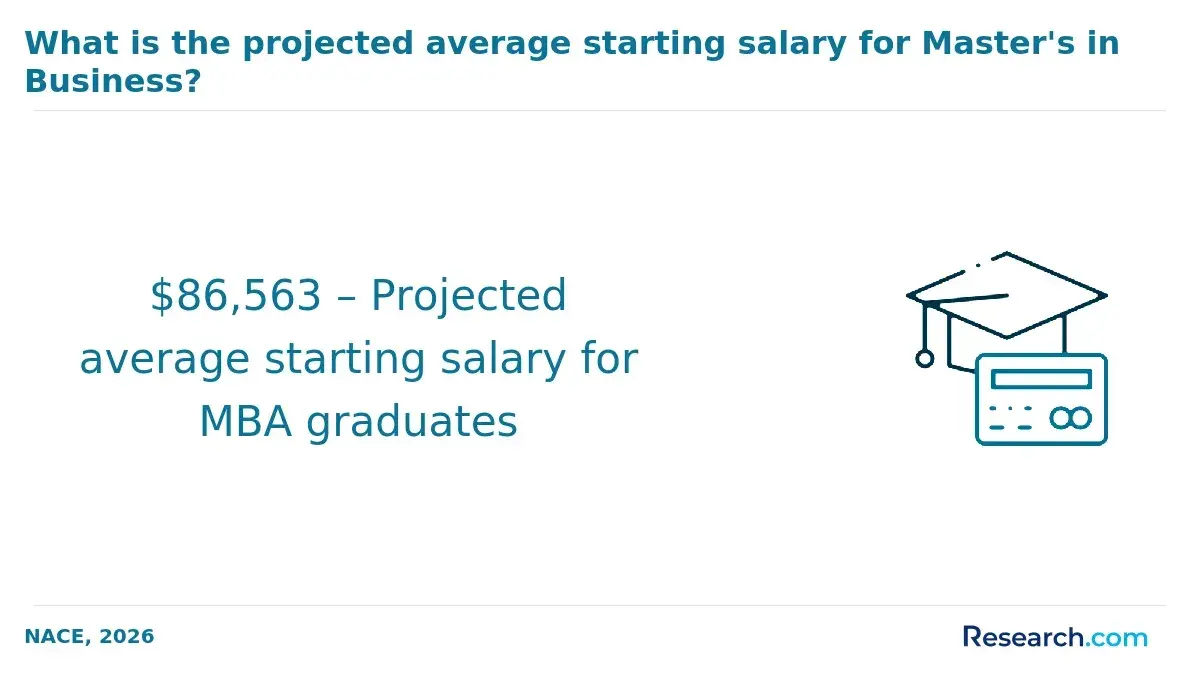
Average salaries for some common business master’s degree jobs in the United States range from $72,000 to $158,000. The chart below summarizes average annual salary information for graduates with various business master’s degrees.
How to interpret salary data responsibly
- Look at starting salary and long-term progression. A degree may be valuable if it improves promotion potential, not only first-year compensation.
- Separate degree impact from work experience. Many higher salaries reflect years of professional experience in addition to the credential.
- Compare by industry. Finance, consulting, technology, healthcare, and nonprofit roles can pay very differently for similar job titles.
- Use school-specific outcomes when possible. Ask for employment reports by concentration, location, and graduation year.
- Do not borrow based on best-case salaries. Build repayment plans around realistic income ranges, not exceptional outcomes.
What factors should I consider when choosing a business school?
Choosing a business school should be a structured comparison, not a reaction to brand name alone. The right school should fit your career target, budget, schedule, learning style, and risk tolerance.
| Factor | Why it matters | Questions to ask |
| Accreditation | Accreditation signals that the program has been reviewed against academic quality standards. | Is the program accredited by a recognized agency such as the Association to Advance Collegiate Schools of Business (AACSB), ACBSP, or IACBE? |
| Curriculum | The courses should match the skills required for your target roles. | Are there electives, concentrations, projects, or internships in my field? |
| Career services | Career support can affect internships, interviews, networking, and job transitions. | Which employers recruit from the program, and what support is available to online students? |
| Total cost | Tuition alone does not show the full financial commitment. | What are tuition, fees, travel costs, residency costs, and likely borrowing needs? |
| Format | Online, hybrid, and campus formats affect flexibility, networking, and learning experience. | Can I complete the program while working, and are any campus visits required? |
| Reputation and alumni outcomes | Employer recognition and alumni access can matter in competitive fields. | Where do graduates work, and how active is the alumni network in my industry? |
Online vs. on-campus business master's programs: pros and cons
Online and on-campus programs can both be rigorous, but they serve different student needs. Students who need flexibility may prefer an online format, while those who want immersive networking and campus recruiting may benefit from studying in person. Learners still building a business foundation may also explore related online business degree options before graduate school.
| Format | Advantages | Trade-offs | Best for |
| Online | Flexible scheduling, no relocation requirement, possible savings on commuting or housing | Requires self-discipline, reliable technology, and intentional networking | Working professionals, parents, remote learners, and students who cannot relocate |
| On-campus | In-person collaboration, easier access to campus resources, more immersive student experience | Less schedule flexibility and potentially higher relocation or commuting costs | Students who value face-to-face networking, campus recruiting, and structured schedules |
| Hybrid | Combines online convenience with periodic in-person sessions | May require travel, weekend sessions, or fixed residency dates | Professionals who want flexibility but still need some in-person connection |
What are the potential challenges of pursuing a business master’s degree?
A business master’s degree can be valuable, but it also carries real risks. Tuition can be high, coursework can be demanding, and career benefits are not automatic. Students should evaluate whether the degree is necessary for their target role or whether experience, certifications, employer training, or a lower-cost credential could meet the same goal.
- High financial commitment: Programs can cost from $15,000 to over $200,000, so debt should be weighed against likely career outcomes.
- Time pressure: Working students may face heavy demands from coursework, jobs, travel, and family responsibilities.
- Competitive admissions: Some programs require strong test scores, work experience, recommendations, and interviews.
- Uneven career outcomes: Salary gains depend on specialization, industry, prior experience, location, and job market conditions.
- Employer expectations are changing: Some employers increasingly value demonstrated skills, analytics ability, and industry experience alongside degrees.
If you are still deciding whether business is the right academic direction, reviewing whether business administration is a good major can help you compare broader undergraduate and graduate pathways.
How does your undergraduate background influence your business master’s degree success?
Your bachelor’s background can affect how quickly you adjust to graduate business coursework. Students from business, economics, accounting, finance, engineering, mathematics, computer science, or statistics may already have quantitative or analytical preparation. Students from humanities, social sciences, education, health, or creative fields may bring strong communication, research, and people skills but may need extra preparation in accounting, finance, statistics, or Excel-based analysis.
A non-business undergraduate major is not necessarily a disadvantage. Diverse academic backgrounds can strengthen team projects and case discussions because business problems often require multiple perspectives. The key is to identify gaps early and use bridge courses, boot camps, tutoring, or pre-program modules before advanced coursework begins. For example, students with a real estate bachelor's degree may be able to connect prior knowledge to finance, investment analysis, development, asset management, or real estate strategy.
How does accreditation influence the credibility of your business master’s degree?
Accreditation provides outside review of a school or program’s academic standards, faculty qualifications, curriculum, governance, and student support. It does not guarantee a job, but it can affect employer confidence, transferability, professional credibility, and access to certain forms of financial aid.
Students should verify both institutional accreditation and programmatic business accreditation where applicable. For business schools, recognized programmatic accreditors include AACSB, ACBSP, and IACBE. When comparing online or lower-cost options, affordability should be considered alongside quality indicators. Reviewing resources such as the cheapest online business administration degree can be useful only if you also confirm accreditation, curriculum relevance, faculty qualifications, and career support.
Why consider 1-year MBA programs for rapid career growth?
One-year MBA programs compress graduate business study into an intensive format. They may appeal to experienced professionals who already have business fundamentals and want to reduce time away from work. The shorter timeline can lower opportunity cost, but the pace is demanding and may leave less room for internships, exploration, or gradual career switching.
Students considering 1 year MBA programs in USA should ask whether the accelerated schedule includes the same career services access, experiential projects, alumni networking, and employer recruiting support as longer formats. A one-year program can be efficient, but it works best when your career goal is already clear.
What professional network opportunities are available through business school programs?
Networking is one of the major reasons students choose business school, but it does not happen automatically. The value depends on how actively you engage with classmates, faculty, alumni, employers, and professional associations.
Networking inside the program
- Classmates: Peer relationships can lead to referrals, partnerships, study support, and long-term professional connections.
- Faculty: Professors may provide mentoring, research opportunities, industry insight, or introductions to professional contacts.
- Alumni: Alumni networks can help students understand career paths, prepare for interviews, and access informal job leads.
- Student organizations: Clubs focused on consulting, finance, entrepreneurship, analytics, marketing, or operations can create targeted networking opportunities.
Networking beyond the classroom
- Career services: Workshops, employer panels, resume reviews, mock interviews, and career fairs can connect students with recruiters.
- Guest speakers: Executive talks and industry panels provide insight into current business problems and hiring expectations.
- Case competitions: Competitions allow students to demonstrate analytical, teamwork, and presentation skills to judges and employers.
- Professional organizations: Industry associations can provide conferences, certifications, mentoring, and job boards connected to your specialization.
How can you verify the quality of an affordable online MBA no GMAT option?
GMAT waivers and no-GMAT admissions policies can make graduate business education more accessible, but they should not be confused with lower academic standards. A strong no-GMAT program should still demonstrate accreditation, qualified faculty, rigorous coursework, student support, transparent costs, and credible career outcomes.
When reviewing an affordable online MBA no GMAT option, ask why the test is waived and what evidence the program uses instead. Some schools rely on professional experience, undergraduate GPA, prior graduate work, quantitative coursework, or managerial background. That can be reasonable if the rest of the program is well designed and properly accredited.
How can industry partnerships enhance your business master’s degree experience?
Industry partnerships can make a business master’s degree more practical by connecting coursework to current employer problems. These partnerships may support live consulting projects, internships, case studies, guest lectures, mentoring, company-sponsored projects, and recruiting events.
Partnership quality matters more than the number of company logos on a website. Ask whether students actually work with employers, whether projects lead to portfolio evidence, and whether partners recruit graduates. Students seeking a faster applied path may compare accelerated options such as quick MBA online programs, but should still confirm academic rigor and employer relevance.
How has a business master's degree helped graduates achieve their career goals?
A business master’s degree can support career goals when it builds skills that employers value and connects students to credible opportunities. The benefit is usually strongest when students enter with a plan and use the program intentionally.
- Broader business judgment: Students learn how finance, marketing, operations, accounting, strategy, and leadership interact in real organizations.
- Specialized knowledge: Concentrations in finance, marketing analytics, accounting, entrepreneurship, supply chain, or analytics can prepare students for more targeted roles.
- Data-informed decision-making: Many programs emphasize quantitative analysis and business intelligence, skills also developed in online data analytics degree programs.
- Communication and influence: Case discussions, presentations, written analysis, and team projects help students explain complex ideas to stakeholders.
- Expanded career access: Some employers prefer or require advanced business training for management, consulting, finance, or leadership-track roles.
- Career transition support: Graduate business study can help professionals shift industries when paired with internships, networking, projects, and relevant experience.
- Potential salary upside: Graduates with a Master of Finance or Master of Management degree have a median annual starting salary of $105,000.
How can you choose the right format for your business master’s degree: online, hybrid, or on-campus?
The right format depends on how you learn, whether you need to keep working, how important in-person networking is, and whether you can relocate or travel. Format can also affect cost, pace, access to faculty, and employer recruiting.
Online format
- Best advantages: Online programs allow students to study from almost anywhere and often make it easier to balance work, school, and family responsibilities.
- Main risks: Students need strong time management, reliable internet access, comfort with digital tools, and a plan for networking intentionally.
- Best fit: Working professionals, caregivers, military students, remote learners, and students who cannot relocate.
Hybrid format
- Best advantages: Hybrid programs combine online coursework with scheduled in-person sessions, which can support relationship-building without requiring full relocation.
- Main risks: Travel, weekend sessions, or required residencies can add cost and scheduling complexity.
- Best fit: Students who want flexibility but still value face-to-face collaboration and campus access.
On-campus format
- Best advantages: Campus programs provide in-person collaboration, structured schedules, easier access to resources, and more immersive networking.
- Main risks: Students may face relocation, commuting, higher living costs, and less schedule flexibility.
- Best fit: Students who want a traditional full-time experience, campus recruiting, and close peer interaction.
Choosing a business analytics program
Business analytics is a strong example of why format and curriculum must be evaluated together. A good analytics program should provide hands-on projects, exposure to industry tools, data visualization practice, statistical modeling, and career support. Students comparing lower-cost options may consider an affordable online MBA in business analytics, but should verify that the program includes applied work and not only theory.
Why are business master’s degrees so popular?
Business master’s degrees remain popular because they are flexible credentials. They can support management advancement, career switching, entrepreneurship, consulting, finance, marketing, analytics, technology management, operations, and supply chain roles. Unlike highly narrow graduate degrees, many business programs teach skills that apply across industries.
The popularity also reflects changes in work. Organizations need professionals who can interpret data, manage teams, understand financial trade-offs, improve operations, communicate across departments, and adapt to market shifts. Online, hybrid, part-time, and accelerated formats have also made graduate business education more accessible to working adults.
However, popularity alone is not a reason to enroll. Students should confirm that the degree is valued in their target field, that the program fits their schedule, and that the cost is reasonable for their expected outcomes. Those looking for faster undergraduate or bridge options may also compare an accelerated online business management degree.
How can you evaluate the ROI of a business master’s degree?
Return on investment is the relationship between what the degree costs and what it helps you gain. The calculation should include more than tuition. It should account for fees, interest, time away from work, travel, career services quality, employer demand, salary potential, promotion access, network value, and personal goals.
| ROI question | Why it matters |
| What is my total program cost? | Tuition, fees, travel, books, technology, and loan interest all affect affordability. |
| What income might I lose while studying? | Full-time study can create opportunity cost if it reduces work hours or requires leaving a job. |
| What roles am I targeting? | ROI is stronger when the degree clearly connects to jobs that require or reward graduate business training. |
| What are graduates actually doing? | Employment reports and alumni outcomes are more useful than broad salary averages. |
| Can I reduce the price? | Scholarships, employer reimbursement, public universities, and online programs can improve ROI. |
| Is there a lower-cost alternative? | Certifications, short courses, employer training, or a focused graduate certificate may be enough for some goals. |
Students seeking a cost-conscious specialized route can review options such as the cheapest online MBA project management, while still checking accreditation, curriculum, faculty, and career support.
How can shorter programs accelerate your career advancement?
Shorter business master’s programs can help students earn a credential sooner and return to career momentum faster. Some accelerated programs can be completed in as little as 12 months, which may reduce opportunity cost compared with longer full-time programs.
The trade-off is intensity. A faster program may require heavier course loads, fewer breaks, and less time for internships, exploration, or networking. It is often better for students who already know their target role and have enough professional experience to benefit immediately from advanced coursework.
An online masters degree 1 year may be especially useful for working adults who need flexibility and speed. Before enrolling, verify weekly workload, course sequencing, employer recognition, graduation requirements, and whether the accelerated format limits access to career services.
How can accelerated, industry-specific programs create immediate career impact?
Accelerated industry-specific programs can be effective when they teach skills that directly match current workplace needs. Instead of broad business theory alone, these programs may combine management coursework with applied projects, technical tools, industry cases, and employer-facing assignments.
The same logic applies outside traditional business disciplines. For example, professionals in construction, operations, or project-based industries may benefit from a fast construction management degree online if it builds practical management expertise quickly and aligns with career requirements.
Common mistakes to avoid when choosing a business master’s degree
| Mistake | Why it can hurt you | Better approach |
| Choosing only by school ranking | A highly ranked program may not fit your specialization, budget, location, or schedule. | Compare outcomes in your target field, not just overall prestige. |
| Ignoring accreditation | Unaccredited or poorly recognized programs may reduce employer confidence and limit financial aid options. | Verify institutional and programmatic accreditation before applying. |
| Focusing only on tuition | Fees, travel, technology, housing, and loan interest can change the true cost. | Build a full cost-of-attendance estimate. |
| Assuming online means easier | Quality online programs can be rigorous and require strong time management. | Ask about workload, faculty access, student support, and assessment methods. |
| Borrowing based on optimistic salary expectations | Salary outcomes vary by experience, market, industry, and location. | Use realistic salary ranges and school-specific employment data. |
| Choosing a specialization too early | A narrow degree can limit flexibility if your goals change. | Confirm your target job path before selecting a specialized program. |
Practical steps before you apply
- Define your target role. Write down the job titles, industries, and responsibilities you want within three to five years.
- Compare degree types. Decide whether you need a broad business credential or specialized technical training.
- Check accreditation. Verify the school’s institutional accreditation and whether the business program has AACSB, ACBSP, IACBE, or another recognized business accreditation.
- Request outcome data. Ask for employment reports, salary information, internship access, and alumni examples by concentration.
- Calculate total cost. Include tuition, fees, travel, books, technology, lost income, and loan interest.
- Review admissions fit. Confirm whether you need GMAT or GRE scores, work experience, prerequisites, recommendations, essays, or interviews.
- Test the format. If the program is online or hybrid, attend an information session and ask how students interact with faculty, peers, and employers.
- Compare financing options. Look for scholarships, employer reimbursement, assistantships, payment plans, and federal aid before borrowing.
- Talk to current students and alumni. Ask what support was actually useful and what they wish they had known before enrolling.
Key Insights
- A business master’s degree is most valuable when it is tied to a specific career goal, not chosen simply because it is a popular credential.
- Generalist programs such as MBAs and master’s in management degrees provide broad leadership training, while specialized programs in finance, accounting, marketing, analytics, and supply chain management prepare students for more focused roles.
- Costs vary significantly, ranging from $15,000 to over $200,000, so students should evaluate total price, debt, opportunity cost, and realistic salary outcomes before enrolling.
- Accreditation, curriculum relevance, career services, alumni access, and employer partnerships are stronger quality signals than marketing claims alone.
- Online, hybrid, accelerated, and one-year formats can improve flexibility and reduce time away from work, but they require careful review of workload, networking access, and academic support.
- Salary outcomes are influenced by experience, industry, role, location, and school network. A degree can improve opportunity, but it does not guarantee a particular job or income.
- The best next step is to compare programs using a decision framework: target role, specialization fit, accreditation, total cost, format, career outcomes, and available financial aid.
References
- Bureau of Labor Statistics (2025, August 28). Management Analysts. Occupational Outlook Handbook. https://www.bls.gov/ooh/business-and-financial/management-analysts.htm#tab-6
- Drew University (2026). Tuition and Fees Schedules. https://drew.edu/admissions-and-aid/student-financial-services/student-accounts/tuition-and-fees-schedules/
- Drew University (n.d.). Finance (MS). https://drew.edu/academics/finance-ms/
- Hanson, M. (2026, February 2). Student Loan Debt Statistics. https://educationdata.org/student-loan-debt-statistics
- Kennesaw State University (2026). Tuition and Fees. https://fiscalservices.kennesaw.edu/bursar/tuition-fees/tuition-fees.php
- Kennesaw State University (n.d.). Master of Science in Information Technology. https://www.kennesaw.edu/degrees-programs/master-degrees/information-technology.php?major=Master+of+Science+in+Information+Technology+&url=https%3A%2F%2Fwww.kennesaw.edu%2Fdegrees-programs%2Fmaster-degrees%2Finformation-technology.php
- New York University (n.d.). MS in Management and Systems. https://www.sps.nyu.edu/homepage/academics/masters-degrees/ms-in-management-and-systems.html
- New York University (n.d.). Tuition. https://www.sps.nyu.edu/homepage/admissions/tuition-and-fees.html
- Oakland University (2026). Tuition and COA. https://www.oakland.edu/financialservices/costs/tuition-rates/
- Oakland University (n.d.). Master of Science in Finance. https://www.oakland.edu/business/graduate-executive-programs/master-of-science-in-finance/
- Payscale (2025, July 14). Master of Finance (MFin) Degree. https://www.payscale.com/research/US/Degree=Master_of_Finance_(MFin)/Salary
- Payscale (2025, April 22). Master of Science (MS), Supply Chain Management Degree. https://www.payscale.com/research/US/Degree=Master_of_Science_(MS)%2C_Supply_Chain_Management/Salary
- Payscale (2025, May 18). Master of Science (MS), Marketing Degree. https://www.payscale.com/research/US/Degree=Master_of_Science_(MS)%2C_Marketing/Salary
- Payscale (2026, February 27). Average Business Development Manager Salary. https://www.payscale.com/research/US/Job=Business_Development_Manager/Salary
- Payscale (2026, February 28). Average Financial Analyst Salary. https://www.payscale.com/research/US/Job=Financial_Analyst/Salary
- Payscale (2026, February 25). Average Management Consultant Salary. https://www.payscale.com/research/US/Job=Management_Consultant/Salary
- Payscale (2026, February 27). Average Marketing Manager Salary. https://www.payscale.com/research/US/Job=Marketing_Manager/Salary
- Payscale (2026, February 26). Average Operations Manager Salary. https://www.payscale.com/research/US/Job=Operations_Manager/Salary
- Payscale (2026, February 6). Master of Business Administration (MBA), Business Management Degree. https://www.payscale.com/research/US/Degree=Master_of_Business_Administration_(MBA)%2C_Business_Management/Salary
- Sharkey, S. (2025, August 29). Average Graduate Student Loan Debt in 2025. Credible. https://www.credible.com/refinance-student-loans/average-graduate-student-loan-debt
- Syracuse University Whitman School of Management (n.d.). M.S. in Supply Chain Management. https://whitman.syracuse.edu/full-time-masters-program/masters-in-supply-chain-management
- University of Southern California Marshall (n.d.). Full-Time MBA (FTMBA) Admissions. https://www.marshall.usc.edu/programs/graduate-programs/mba-programs/full-time-mba/admissions
- University of Southern California Marshall (n.d.). Master of Management Studies. https://www.marshall.usc.edu/programs/graduate-programs/specialized-masters/master-of-management-studies
Other Things You Should Know About Different Types of Business Master’s Degrees
Many business master’s programs require a GMAT score between 550 and 700, while some accept the GRE instead. Top-ranked MBA programs may ask for 650 or higher, and many schools waive the test for applicants with strong work experience or a prior master’s degree.
Graduates with a business master’s degree in 2027 can expect diverse job prospects, often securing roles in management, consulting, finance, or marketing. According to industry reports, demand for these graduates is projected to grow, with top employers valuing their advanced analytical and leadership skills.


