2027 Most Affordable Online Doctorate in Social Work (DSW) Programs

Co-Founder and Chief Data Scientist
You're planning to take a doctorate degree in social work, but you have limited income and time to juggle studies and work. This is a common concern for many aspiring social workers who need an affordable and flexible program. No worries, this article will help you find the most affordable online Doctorate in Social Work (DSW) programs to advance your career efficiently and economically.
With over ten years of career planning experience, I’ve researched data from credible sources to guide you. You'll be glad to know the future is wide open for social workers with doctorate credentials. There are 728,600 social workers in the U.S. as of 2022, and the demand is rising due to the aging population and substance use disorders. The number of Americans aged 65 and older is projected to increase by 47% by 2050, and 46.8 million Americans battled a substance use disorder in the past year.
What are the benefits of getting an online doctorate in social work program?
Pursuing an online DSW helps you enhance your skills, expand your career options, and meet the growing demand for highly qualified social workers.
- Advanced Career Opportunities: Qualify for senior roles such as clinical director, policy advisor, and university professor.
- Diverse Industries: Work in healthcare, education, non-profits, and government sectors.
- High Demand: The aging population and rising mental health issues drive the need for advanced social work professionals.
- Increased Earning Potential: Higher degrees often lead to higher salaries and better job stability.
- Flexibility: Online programs allow you to study from anywhere, fitting education into your busy schedule.
- Cost-Effective: Save on commuting and housing costs while accessing quality education.
- Networking: Connect with a broad network of professionals and experts in the field through online platforms.
What can I expect from an online doctorate in social work program?
An online doctorate in social work (DSW) program offers a core curriculum that typically includes advanced social work practice, leadership, policy analysis, and research methods. You will also engage in a capstone project or dissertation that allows you to apply your learning to real-world social work issues.
Classes are delivered online through various formats, such as video lectures, discussion forums, and interactive assignments. Most programs offer asynchronous learning, allowing you to access course materials and complete assignments at your convenience. This flexible approach helps you balance your studies with work and personal commitments, ensuring a seamless and effective learning experience.
Where can I work with an online doctorate in social work program?
With an online DSW, you are likely to take on leadership roles and make a significant impact in various sectors. Based on BLS data, social workers in the U.S. are employed in the following sectors by share, and the job roles to expect for doctoral holders.
- Individual and Family Services (17%)
- Clinical Director
- Family Therapist
- Case Management Supervisor
- Local Government, Excluding Education and Hospitals (14%)
- Policy Advisor
- Program Administrator
- Community Services Director
- State Government, Excluding Education and Hospitals (13%)
- Social Work Supervisor
- Child Welfare Specialist
- Mental Health Program Manager
- Educational Services; State, Local, and Private (9%)
- University Professor
- School Social Work Director
- Researcher
- Community and Vocational Rehabilitation Services (3%)
- Rehabilitation Services Manager
- Community Outreach Coordinator
- Vocational Counselor
How much can I make with an online doctorate in social work program?
According to the Bureau of Labor Statistics (BLS), the median weekly earnings for doctoral degree graduates are $2,083, translating to a little over $100,000 annually. This is considerably higher than the median weekly earnings of $1,661 or (~$87,000 annual) for those with only a master's degree.
The overall median pay for social workers, regardless of degree level, is $58,380 per year. However, with a DSW, you can pursue higher-paying roles.
- Most Affordable Online Doctorate in Social Work (DSW) Programs in 2027 List of Programs
- How long does it take to complete an online doctorate in social work program? How long does it take to complete an online doctorate in social work program?
- How does an online doctorate in social work program compare to an on-campus program? Online vs. On-Campus
- What is the average cost of an online doctorate in social work program? Cost
- What are the financial aid options for students enrolling in an online doctorate in social work program? Financial Aid
- What are the prerequisites for enrolling in an online doctorate in social work program? Requirements
- What courses are typically in an online doctorate in social work program? Courses
- What types of specializations are available in an online doctorate in social work program? Specializations
- What skills will you develop in an online doctorate in social work program? Skills
- How to choose the most affordable online doctorate in social work program? How to choose the most affordable online doctorate in social work program?
- The Importance of Accreditation in Online Doctorate in Social Work Programs The Importance of Accreditation in Online Doctorate in Social Work Programs
- What career paths are available for graduates of an online doctorate in social work program? What career paths are available for graduates of an online doctorate in social work program?
- What student support services foster success in online DSW programs? What student support services foster success in online DSW programs?
- What is the job market for graduates with an online doctorate in social work program? Job Outlook
- What emerging trends are transforming online DSW education? What emerging trends are transforming online DSW education?
- Balancing Work and Study During a DSW Program Balancing Work and Study During a DSW Program
- How can interdisciplinary collaborations enhance your online DSW experience? How can interdisciplinary collaborations enhance your online DSW experience?
- How does a doctorate in social work (DSW) expand career opportunities beyond an MSW? How does a doctorate in social work (DSW) expand career opportunities beyond an MSW?
- What is the return on investment of an online DSW program What is the return on investment of an online DSW program
- What challenges are typically encountered in online DSW programs? What challenges are typically encountered in online DSW programs?
- How do online DSW programs integrate practical fieldwork opportunities? How do online DSW programs integrate practical fieldwork opportunities?
Most Affordable Online Doctorate in Social Work (DSW) Programs in 2027
Choosing an online Doctorate in Social Work is a high-stakes decision because the degree requires a major investment of time, tuition, and professional energy. The right DSW program can help experienced social workers move into advanced clinical practice, teaching, administration, policy, consulting, or organizational leadership. The wrong choice can leave students with unnecessary debt, limited flexibility, or a credential that does not align with their state licensure or career goals.
This guide is written for licensed or experienced social work professionals comparing affordable online DSW programs. It explains what these programs cost, how long they usually take, what admissions committees look for, how online and campus formats differ, and how to judge whether a DSW is worth the investment. It also highlights practical questions to ask before enrolling so you can compare programs beyond tuition alone.
Quick answer: What is the most affordable online DSW option?
Among the programs listed here, Capella University has the lowest stated per-credit tuition at approximately $540 per credit hour, followed by Walden University at approximately $560 per credit hour and the University of Tennessee and Indiana University at approximately $650 per credit hour. However, the cheapest per-credit rate is not always the lowest total cost. Students should also compare total required credits, fees, residency requirements, transfer policies, financial aid, dissertation or capstone expectations, and whether the program’s format fits their work schedule.
How these online DSW programs were evaluated
Because doctoral education is expensive, rankings should be used as a starting point rather than a final answer. Research.com evaluates programs using information from established education datasets, including the IPEDS database, Peterson's database, the College Scorecard database, and The National Center for Education Statistics. These sources help verify institutional information, tuition indicators, enrollment data, and other factors that matter to graduate students. You can review the broader process on Research.com's methodology page.
Before applying, confirm all program details directly with the university. Tuition, fees, admission rules, residency requirements, and accreditation details can change, and doctoral programs may list costs differently.
| Rank | School | Approximate cost of attendance | Program length | Accreditation listed | Best fit for |
| 1 | University of Tennessee | Approximately $650 per credit hour | 3 years | Council on Social Work Education (CSWE) | Clinical practitioners seeking leadership preparation in a structured online format |
| 2 | University of Kentucky | Approximately $700 per credit hour | 3 years | Council on Social Work Education (CSWE) | Students interested in advanced practice and a capstone-based doctoral experience |
| 3 | University of Southern California | Approximately $1,800 per credit hour | 3 years | Western Association of Schools and Colleges (WASC) | Professionals prioritizing innovation, systems change, and leadership branding |
| 4 | Capella University | Approximately $540 per credit hour | 2.5 to 3 years | Council on Social Work Education (CSWE) | Working students seeking one of the lowest listed per-credit costs |
| 5 | Walden University | Approximately $560 per credit hour | 2.5 to 3 years | Council on Social Work Education (CSWE) | Students prepared for a dissertation-based online doctoral program |
| 6 | University of St. Thomas | Approximately $800 per credit hour | 3 years | Higher Learning Commission (HLC) | Practitioners interested in clinical practice, teaching, and professional advancement |
| 7 | Simmons University | Approximately $1,200 per credit hour | 3 years | New England Commission of Higher Education (NECHE) | Clinical leaders who want coursework plus a capstone project |
| 8 | Baylor University | Approximately $1,500 per credit hour | 3 years | Southern Association of Colleges and Schools Commission on Colleges (SACSCOC) | Students interested in faith-integrated approaches to advanced social work leadership |
| 9 | Indiana University | Approximately $650 per credit hour | 3 years | Council on Social Work Education (CSWE) | Working professionals comparing affordable public university options |
| 10 | University of Pennsylvania | Approximately $1,500 per credit hour | 3 years | Middle States Commission on Higher Education (MSCHE) | Experienced practitioners seeking a research-informed clinical doctorate |
1. University of Tennessee
The University of Tennessee offers an online DSW designed around clinical practice and leadership. The program is built for working professionals and has a stated completion timeline of three years. Students who want to avoid standardized testing may also want to compare related online DSW programs no GRE required.
- Cost of Attendance: Approximately $650 per credit hour
- Program Length: 3 years
- Accreditation: Council on Social Work Education (CSWE)
2. University of Kentucky
The University of Kentucky provides an online DSW centered on advanced practice and clinical social work. Its curriculum includes doctoral coursework and a capstone project, making it a practical option for students who want to apply research and leadership concepts to real social work problems.
- Cost of Attendance: Approximately $700 per credit hour
- Program Length: 3 years
- Accreditation: Council on Social Work Education (CSWE)
3. University of Southern California
The University of Southern California offers an online DSW with a focus on leadership, innovation, and social work problem-solving. Its higher stated per-credit cost means applicants should pay close attention to total program price, employer tuition benefits, and the specific career value they expect from the USC network and curriculum.
- Cost of Attendance: Approximately $1,800 per credit hour
- Program Length: 3 years
- Accreditation: Western Association of Schools and Colleges (WASC)
4. Capella University
Capella University lists one of the lowest per-credit costs among the programs in this guide. Its online DSW emphasizes advanced practice and leadership and may appeal to students who need a flexible doctoral format while continuing full-time employment.
- Cost of Attendance: Approximately $540 per credit hour
- Program Length: 2.5 to 3 years
- Accreditation: Council on Social Work Education (CSWE)
5. Walden University
Walden University offers an online DSW intended for social workers pursuing leadership and advanced practice roles. The program includes a dissertation component, so students should consider their readiness for sustained independent research before enrolling.
- Cost of Attendance: Approximately $560 per credit hour
- Program Length: 2.5 to 3 years
- Accreditation: Council on Social Work Education (CSWE)
6. University of St. Thomas
The University of St. Thomas offers an online DSW with attention to clinical practice and teaching. It may fit experienced practitioners who want to keep working while building credentials for instruction, supervision, or senior practice leadership.
- Cost of Attendance: Approximately $800 per credit hour
- Program Length: 3 years
- Accreditation: Higher Learning Commission (HLC)
7. Simmons University
Simmons University provides an online DSW for social workers preparing for leadership in clinical practice and education. The curriculum combines coursework with a capstone project, which can be useful for students who want to complete a practice-focused doctoral deliverable rather than a traditional dissertation.
- Cost of Attendance: Approximately $1,200 per credit hour
- Program Length: 3 years
- Accreditation: New England Commission of Higher Education (NECHE)
8. Baylor University
Baylor University is listed with a doctoral social work option emphasizing advanced clinical practice and leadership, with attention to integrating faith and practice. Applicants should verify whether the program page, format, and degree type match their goals before applying.
- Cost of Attendance: Approximately $1,500 per credit hour
- Program Length: 3 years
- Accreditation: Southern Association of Colleges and Schools Commission on Colleges (SACSCOC)
9. Indiana University
Indiana University is included as an online doctoral social work option focused on advanced practice and leadership. Its stated tuition is among the more affordable options in this list, but applicants should confirm degree format, program expectations, and current admissions requirements directly with the school.
- Cost of Attendance: Approximately $650 per credit hour
- Program Length: 3 years
- Accreditation: Council on Social Work Education (CSWE)
10. University of Pennsylvania
The University of Pennsylvania offers a doctoral social work program oriented toward clinical social work and practice-based research. Because its listed cost is higher than several other options, applicants should evaluate the professional return they expect from the curriculum, institutional reputation, faculty access, and career network.
- Cost of Attendance: Approximately $1,500 per credit hour
- Program Length: 3 years
- Accreditation: Middle States Commission on Higher Education (MSCHE)
Affordability matters across many helping professions, not only social work. Students comparing health and human services degrees may also find value in reviewing cheap online nutrition degree programs as a separate career pathway.
What Graduates Say About Affordable Online DSW Programs
- Danica: "Choosing a lower-cost online doctorate helped me keep working while preparing for a leadership role. The schedule was demanding, but I could apply class projects directly to problems in my agency."
- Amin: "The online format made the degree possible because I did not have to leave my job or relocate. The biggest benefit was being able to connect coursework with my current clinical responsibilities right away."
- Carla: "I wanted a doctoral program that was rigorous without creating unmanageable debt. The affordability and flexibility helped me stay focused on research, leadership development, and long-term career growth."
Key Findings
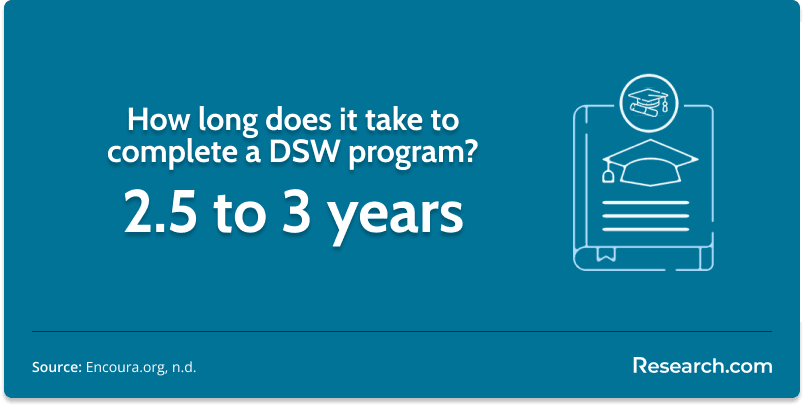
- Online DSW programs commonly take 2.5 to 3 years, depending on format, course load, and capstone or dissertation requirements.
- The listed tuition range in this guide runs from approximately $540 per credit hour to approximately $1,800 per credit hour.
- The average total tuition for an online DSW program typically ranges from $30,000 to $60,000, but fees, credits, and residency requirements can change the final cost.
- Online graduate enrollment grew by 250,000 between 2019 and 2022, according to the Encoura report, which reflects rising demand for flexible graduate education.
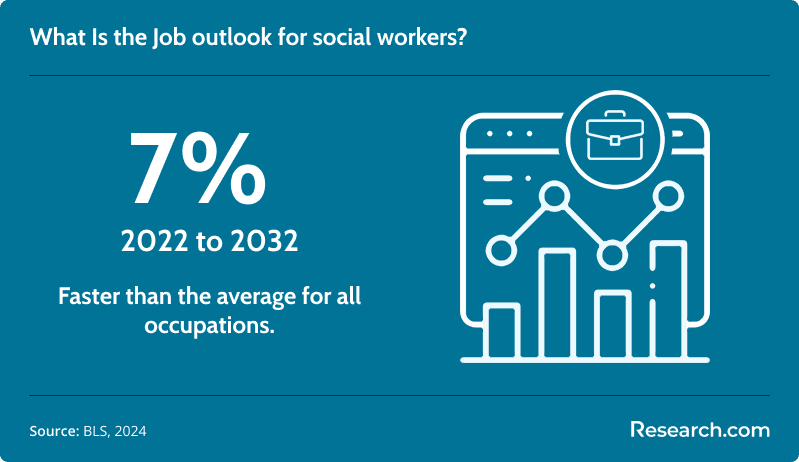
- The job outlook for social workers is expected to grow by 7% from 2022 to 2032, which is faster than the average for all occupations.
- Affordability should be weighed alongside accreditation, faculty expertise, doctoral project expectations, student support, and whether the program helps you reach a specific career outcome.
How long does it take to complete an online doctorate in social work program?
An online doctorate in social work usually takes 2.5 to 3 years. The exact timeline depends on how the program is structured, how many credits you take each term, and how quickly you complete the capstone, dissertation, or applied doctoral project.
| Factor | How it affects completion time | What to ask before enrolling |
| Full-time or part-time enrollment | Full-time students may finish in 2.5 years, while part-time students may need 3 years or more after a master’s degree such as an accelerated MSW program. | Can I reduce my course load without losing financial aid eligibility or delaying graduation significantly? |
| Program structure | Accelerated or lockstep cohorts can shorten the timeline but may be less flexible for working professionals. | Are courses asynchronous, synchronous, cohort-based, or self-paced? |
| Capstone or dissertation | Research planning, approvals, data collection, revisions, and faculty feedback can extend the program. | What percentage of students complete the doctoral project on time? |
| Professional obligations | Full-time work, clinical caseloads, supervision duties, and family responsibilities can affect weekly study time. | How many hours per week do successful students usually spend on coursework? |
The Council on Social Work Education (CSWE) reported that research doctorate programs in social work had an average enrollment of 33 students in 2020, and the number of programs offering research doctoral degrees grew by 5.9% from 2018 to 2019. That growth makes it even more important to compare program structure, not just program title.
How does an online doctorate in social work compare to an on-campus program?
An online DSW is usually best for experienced professionals who need to continue working while completing doctoral coursework. An on-campus program may be better for students who want in-person faculty contact, campus-based research opportunities, or a more traditional academic environment.
| Comparison point | Online DSW program | On-campus DSW program |
| Flexibility | Students can often study from home and build coursework around employment and family responsibilities. | Students usually attend classes or meetings on campus at scheduled times. |
| Cost considerations | Online students may avoid commuting, relocation, and housing expenses, though technology and distance-learning fees may apply. | Campus students may face higher living, transportation, and parking costs depending on location. |
| Pacing | Some programs offer asynchronous coursework or flexible scheduling, while others use fixed cohorts. | Programs often follow academic terms with set class schedules and campus expectations. |
| Interaction | Students connect through video meetings, learning platforms, discussion boards, virtual advising, and online office hours. | Students may benefit from face-to-face discussions, campus events, and informal faculty interaction. |
| Best for | Working social workers, agency leaders, clinical supervisors, and students who cannot relocate. | Students who prefer in-person learning, campus research culture, or local networking. |
According to the Encoura report, online graduate enrollment grew by 250,000 between 2019 and 2022. That increase reflects the growing acceptance of online graduate education, but it does not mean every online program is equally strong. The best format depends on your learning style, time constraints, technology comfort, and career plan.
What is the average cost of an online doctorate in social work program?
The average cost of an online doctorate in social work (DSW) program typically ranges from $30,000 to $60,000 in total tuition. Per-credit tuition in the programs listed here generally ranges from $500 to $1,800 per credit hour. This makes DSW pricing somewhat higher than the cost of an online addiction counseling degree program, though the two credentials serve different education levels and career goals.
To estimate your real cost, do not stop at the advertised tuition rate. Ask each school for a full cost breakdown that includes tuition, required credits, university fees, technology fees, dissertation or capstone continuation fees, residency travel, books, background checks, and graduation fees.
| Cost item | Why it matters | How to reduce risk |
| Per-credit tuition | A low per-credit rate can still lead to a high total price if the program requires more credits. | Compare total program tuition, not just the per-credit number. |
| Fees | Technology, student services, clinical, and graduation fees can add to the final bill. | Request an itemized estimate before committing. |
| Residency requirements | Even online programs may require short campus visits or intensives. | Budget for travel, lodging, meals, and time away from work. |
| Time to completion | Extra semesters can increase tuition and delay career benefits. | Ask about average completion time and doctoral project support. |
| Lost income or reduced hours | Some students reduce work hours to manage doctoral expectations. | Plan your workload and discuss flexibility with your employer early. |
What financial aid options are available for online DSW students?
Online DSW students may be able to use scholarships, grants, institutional aid, employer tuition benefits, and federal loans. Eligibility depends on enrollment status, program approval, citizenship or residency status, satisfactory academic progress, and the school’s financial aid policies.
- Scholarships and Grants:
- Fulbright U.S. Student Program
- AMA’s Valuing Diversity PhD Scholarship
- Esther Katz Rosen Fund Grant
- Federal Loans:
- The U.S. Department of Education provides more than $120 billion each year to help millions of students pay for higher education.
- Eligible students can borrow up to $20,500 per year and up to $138,500 during their career as a graduate student.
- Institutional Aid: Many universities offer doctoral scholarships, tuition discounts, assistantships, or grants, though availability can vary widely for online students.
- Employer Support: Some social service agencies, hospitals, universities, and government employers may offer tuition reimbursement or professional development funds.
- Payment Plans: Monthly payment plans may help students avoid borrowing the full amount at once, but fees and deadlines should be reviewed carefully.
What are the prerequisites for enrolling in an online doctorate in social work program?
Most online DSW programs are designed for experienced social workers who already hold a graduate degree and have a clear professional direction. Requirements vary by school, but applicants should expect to document prior education, professional experience, writing ability, and readiness for doctoral-level work.
- Educational Background: Applicants typically need a bachelor’s or master’s degree in social work, often from a Council on Social Work Education (CSWE)-accredited program. A masters clinical social work online may meet this expectation. Some programs may consider related graduate degrees, such as those from the cheapest MHA programs, but applicants may be required to complete additional credits.
- Licensing Requirements: Some programs prefer or require an active social work license, especially for clinical tracks. Clinical social workers must have a master’s degree, supervised clinical experience, and a state license.
- Professional Experience: Many DSW programs expect applicants to have several years of social work practice, leadership, clinical, or community service experience.
- Application Materials: Common requirements include transcripts, letters of recommendation, a statement of purpose, a resume or curriculum vitae (CV), and sometimes a writing sample.
What courses are typically included in an online doctorate in social work program?
Online DSW curricula usually combine advanced practice, applied research, leadership, ethics, policy, and a culminating doctoral project. The goal is not simply to repeat MSW content. A DSW should help practitioners analyze complex systems, lead programs, evaluate interventions, and improve practice outcomes. Students comparing doctoral costs across fields may also look at the cheapest online doctorate in Psychology or broader cheapest doctorate degree options.
| Course area | What students usually learn | Why it matters professionally |
| Advanced Social Work Practice | Complex assessment, intervention planning, supervision, and evidence-informed practice. | Supports advanced clinical, supervisory, and consulting roles. |
| Leadership and Management | Organizational strategy, team leadership, budgeting concepts, and program oversight. | Prepares graduates for director, administrator, and executive roles. |
| Policy Analysis and Advocacy | How to evaluate social policies, identify gaps, and advocate for reforms. | Helps practitioners influence systems, funding, and service access. |
| Research Methods | Applied research design, evaluation methods, data interpretation, and evidence use. | Builds capacity to measure program outcomes and improve practice models. |
| Ethics in Social Work | Ethical decision-making, boundaries, professional responsibilities, and risk management. | Supports safe and responsible leadership in complex service environments. |
| Capstone Project or Dissertation | Application of doctoral learning to a practice, policy, research, or organizational problem. | Creates a portfolio-level project that may connect directly to career goals. |
What specializations are available in an online doctorate in social work program?
Specializations help students connect doctoral study to a focused career direction. The best choice depends on whether you want to deepen clinical expertise, move into administration, teach, conduct applied research, influence policy, or lead community-level change.
- Clinical Social Work: Advanced clinical assessment, therapeutic intervention, supervision, and evidence-based treatment.
- Leadership and Administration: Management of agencies, teams, budgets, programs, compliance, and organizational change.
- Policy and Advocacy: Social policy analysis, legislative advocacy, equity-focused systems change, and program funding.
- Research and Academia: Applied research, teaching, curriculum design, and preparation for academic or research-focused positions.
- Community Practice: Community organizing, program development, public engagement, and population-level interventions.
These tracks can connect to major social work employment settings in the U.S., including:
- Individual and Family Services (17%): A strong fit for direct service, family support, clinical leadership, and program development.
- Local Government, Excluding Education and Hospitals (14%): Relevant for public service administration, community programs, and local policy implementation.
- State Government, Excluding Education and Hospitals (13%): Useful for state-level social services, compliance, policy, and systems leadership.
- Educational Services; State, Local, and Private (9%): Appropriate for school-based services, student support systems, teaching, and higher education roles.
- Community and Vocational Rehabilitation Services (3%): Relevant for rehabilitation leadership, community reintegration, and employment support programs.
What skills will you develop in an online doctorate in social work program?
A strong online DSW program should help students move from competent practice to advanced leadership. Graduates are expected to think critically about systems, evaluate outcomes, guide teams, and apply research to difficult social problems.
- Advanced Clinical Skills: Students strengthen assessment, intervention, consultation, supervision, and treatment-planning abilities for complex client and community needs.
- Research Methodologies: Coursework develops skills in research design, data analysis, program evaluation, and evidence-based decision-making.
- Leadership and Management: Students learn how to lead organizations, manage change, guide teams, and advocate for effective service delivery.
- Cultural Competence: Programs emphasize ethical, responsive, and justice-centered practice with diverse individuals, families, and communities.
- Policy Analysis: Students learn to evaluate policies, identify barriers to access, and recommend reforms that improve community welfare.
- Communication Skills: Doctoral work strengthens writing, presentation, stakeholder communication, teaching, and interdisciplinary collaboration.
How to choose the most affordable online doctorate in social work program
The most affordable DSW is the program that helps you reach your goal at the lowest realistic total cost. That means comparing quality, fit, time, support, and career alignment in addition to tuition.
- Confirm accreditation and institutional legitimacy. Review the school’s accreditation status and compare options using resources such as Research.com’s guide to nationally accredited online colleges.
- Calculate the full cost. Add tuition, fees, books, residency travel, technology requirements, and possible continuation fees for the capstone or dissertation.
- Check financial aid early. Ask about scholarships, grants, loans, employer benefits, and whether online doctoral students qualify for the same aid as campus students.
- Match the program length to your life. A shorter program can lower opportunity cost, but it may also require a heavier weekly workload.
- Review faculty expertise. Look for faculty whose research, practice background, or leadership experience matches your goals.
- Examine the doctoral project model. A capstone, dissertation, or applied project can require different skills and timelines.
- Ask about flexibility. Confirm whether courses are asynchronous, live, cohort-based, or self-paced.
- Budget for residency requirements. Even limited campus visits can add airfare, lodging, meals, and unpaid time away from work.
| Common mistake | Why it can be costly | Better approach |
| Choosing only by lowest tuition | Extra fees, more credits, or delayed completion can erase savings. | Compare total program cost and expected time to completion. |
| Ignoring accreditation | Employers, licensing boards, and academic institutions may question the credential. | Verify institutional accreditation and ask how the program is recognized in the field. |
| Assuming online means self-paced | Some online programs still require live attendance or strict cohort schedules. | Ask for a sample weekly schedule and course delivery format. |
| Underestimating the doctoral project | Capstone or dissertation delays can extend tuition and stress. | Ask about advising, milestones, completion rates, and faculty availability. |
| Not checking state licensure implications | A DSW does not automatically create clinical licensure eligibility. | Contact your state licensing board before enrolling if licensure is part of your plan. |
The importance of accreditation in online Doctorate in Social Work programs
Accreditation is one of the first items to verify when comparing online DSW programs. It helps establish that the institution meets recognized academic standards, affects financial aid eligibility, and may influence employer confidence. For social work, students should also distinguish between institutional accreditation and programmatic accreditation at the bachelor’s or master’s level.
Types of accreditation to review
- CSWE: The Council on Social Work Education is especially important for BSW and MSW preparation. If you entered doctoral study through an MSW pathway, make sure your master’s degree meets the expectations of your employer or licensing board. Students still comparing MSW options can review CSWE accredited online MSW programs.
- Regional Accreditation: Universities offering DSW programs should hold recognized institutional accreditation, such as HLC, SACSCOC, NECHE, MSCHE, or WASC, depending on the region.
How to verify accreditation before applying
- Review the university’s official accreditation page, not only the program marketing page.
- Confirm accreditation through the U.S. Department of Education or CHEA.
- Ask admissions staff whether the DSW is eligible for federal financial aid.
- Contact your employer, state licensing board, or academic institution if the doctorate will be used for promotion, teaching, or licensure-related purposes.
What career paths are available for graduates of an online doctorate in social work program?
DSW graduates often use the degree to move into senior practice, leadership, education, consulting, and policy roles. Career outcomes depend on prior experience, licensure, location, employer requirements, and the student’s professional network.
| Career path | Typical responsibilities | When a DSW may help |
| Clinical Social Worker | Provide therapy, assessment, supervision, and advanced clinical services in hospitals, clinics, agencies, or private practice. | Useful for experienced clinicians seeking deeper expertise, supervisory roles, or practice leadership. |
| Social Work Administrator | Oversee programs, staff, budgets, compliance, service delivery, and organizational strategy. | Helpful for moving from frontline or supervisory work into agency leadership. |
| Policy Analyst | Evaluate social policy, recommend reforms, analyze program outcomes, and support advocacy work. | Relevant for government, nonprofit, and systems-change roles. |
| Researcher | Conduct applied research, evaluate interventions, analyze data, and publish or present findings. | Best for students who want evidence-based practice, program evaluation, or academic-adjacent roles. |
| Educator | Teach social work courses, mentor students, design curriculum, and support field education. | May support teaching roles, especially when combined with professional experience. |
| Consultant | Advise agencies on program design, clinical practice, leadership, ethics, training, or evaluation. | Useful for practitioners who want independent or contract-based expert roles. |
| Community Advocate | Lead community initiatives, build coalitions, address service gaps, and support social change. | Relevant for professionals focused on population-level impact and equity-driven work. |
What student support services help online DSW students succeed?
Support services can make the difference between completing a DSW on time and struggling through an extended doctoral process. Before enrolling, ask how the program supports online students from admission through the doctoral project.
- Academic advising: Advisors should help students plan course loads, meet milestones, and avoid unnecessary delays.
- Doctoral project support: Strong programs offer clear capstone or dissertation timelines, faculty mentorship, writing resources, and research guidance.
- Career counseling: Career services should support leadership transitions, academic job searches, consulting goals, and resume positioning.
- Faculty access: Students should have reliable ways to reach faculty through office hours, email, video meetings, and project supervision.
- Peer networks: Cohorts, discussion forums, student associations, and alumni groups can reduce isolation and support professional networking.
- Technical support: Online students need responsive help with learning platforms, library databases, video tools, and research software.
Students who are not yet ready for doctoral study may benefit from strengthening their foundation through affordable MSW programs online before applying to a DSW.
What is the job market for graduates with an online doctorate in social work program?
The job outlook for social workers is expected to grow by 7% from 2022 to 2032, which is faster than the average for all occupations. This demand is relevant to the broader social work field, though a DSW is generally most useful for experienced professionals pursuing advanced leadership, clinical supervision, higher education, consulting, policy, or program development roles.
Students comparing helping-profession credentials may also review the cheapest BCBA online program options, but social work and behavior analysis have different training paths, licensure rules, and career outcomes.
A DSW can strengthen a candidate’s profile for senior roles, but it does not guarantee a promotion or salary increase. Outcomes depend on experience, licensure, employer needs, location, specialization, and how strategically the student uses the degree.
What emerging trends are transforming online DSW education?
Online DSW education is changing as social work practice becomes more digitally connected, interdisciplinary, and data-informed. Programs increasingly include virtual collaboration, remote service delivery considerations, applied analytics, simulation-based learning, and ethical decision-making in technology-mediated practice.
- Digital practice skills: Social workers increasingly need to understand remote engagement, privacy, documentation, boundaries, and client access in virtual environments.
- AI and analytics awareness: Programs may introduce data-informed decision-making, risk assessment tools, and ethical concerns related to automated systems.
- Interdisciplinary care: Social work leaders often collaborate with behavioral health, healthcare, education, public policy, and legal systems.
- Outcome measurement: Employers increasingly expect leaders to evaluate programs, document impact, and use evidence to improve services.
- Credential-conscious hiring: Advanced roles may value doctoral credentials, but employers still look closely at licensure, leadership record, and measurable accomplishments.
Professionals exploring broader mental health pathways may also want to understand what degree do you need to be a therapist, since therapy requirements vary by discipline and state.
Balancing work and study during a DSW program
Most online DSW students are working professionals, so success depends on planning before the first class begins. The workload can be manageable, but it requires protected study time, clear expectations with family and employers, and early preparation for the capstone or dissertation.
- Build a weekly academic schedule: Reserve consistent blocks for reading, writing, live sessions, group work, and research tasks.
- Talk with your employer: Ask whether flexible scheduling, tuition reimbursement, reduced caseloads, or professional development leave is available.
- Protect time for writing: Doctoral programs require sustained writing. Waiting until deadlines approach increases stress and weakens project quality.
- Use asynchronous flexibility wisely: Self-paced work still needs structure. Create deadlines earlier than the official due dates.
- Plan for burnout prevention: Schedule rest, exercise, family time, and clinical decompression instead of treating them as optional.
- Network intentionally: Participate in online forums, webinars, faculty meetings, and cohort discussions to build professional relationships.
If you are still deciding between doctoral models, compare DSW vs PhD in Social Work to determine whether your goals are practice leadership, academic research, teaching, or policy scholarship.
How can interdisciplinary collaboration enhance an online DSW experience?
Social problems rarely fit neatly inside one discipline. Online DSW students can gain value from interdisciplinary learning that connects social work with behavioral health, public health, education, nonprofit management, criminal justice, healthcare administration, and policy. Exposure to related fields can improve collaboration, referral planning, program design, and systems leadership.
For example, students interested in integrated care or behavioral health leadership may benefit from comparing DSW coursework with a doctorate in behavioral health. The goal is not to collect unrelated credentials, but to understand how different disciplines approach assessment, treatment, leadership, ethics, and outcome measurement.
How does a doctorate in social work (DSW) expand career opportunities beyond an MSW?
An MSW is the standard graduate degree for many social work practice and licensure pathways. A DSW is different. It is usually pursued after the MSW by professionals who want to deepen expertise, lead organizations, teach, consult, influence policy, or develop advanced practice models.
A DSW may help experienced social workers pursue roles such as social work educator, clinical director, executive director, senior consultant, program evaluator, policy advisor, or advanced clinical supervisor. The degree can also help practitioners build credibility when leading complex initiatives or training other professionals.
However, students should be realistic. A DSW is not automatically required for every promotion, and many leadership roles still depend heavily on licensure, management experience, measurable outcomes, and professional reputation. To compare career options at different education levels, review what can you do with a degree in social work.
What is the return on investment of an online DSW program?
The return on investment of an online DSW depends on what you need the degree to accomplish. For some students, the value comes from qualifying for leadership, teaching, or consulting opportunities. For others, it comes from improving practice, building authority in a specialty, or completing an applied project that benefits their organization.
To evaluate ROI, compare total program cost with realistic career outcomes. Consider tuition, fees, loan interest, time away from work, potential promotion pathways, employer reimbursement, and whether the degree is necessary for your target role. Also compare the DSW with alternatives, including certifications, leadership training, post-master’s certificates, or a PhD.
If your goal is to understand what an MSW alone can provide before pursuing a doctorate, review What can I do with an MSW?
| Question | Why it matters |
| Will this DSW qualify me for a specific role I want? | A doctorate is a stronger investment when tied to a clear career target. |
| Does my employer reward doctoral education? | Some organizations offer promotions, pay increases, or leadership pathways; others do not. |
| Can I complete the program without excessive borrowing? | Debt can reduce the financial benefit of the degree. |
| Does the curriculum match my specialty? | A low-cost program is less valuable if it does not support your professional direction. |
| What support exists for the capstone or dissertation? | Strong support can reduce delays and extra tuition. |
What challenges are typically encountered in online DSW programs?
Online DSW programs offer flexibility, but they also require discipline. Students should prepare for the academic, technical, and personal challenges of doctoral work before enrolling.
- Isolation: Online students may miss the informal support that comes from campus conversations and in-person study groups.
- Self-directed learning: Flexible schedules can lead to procrastination without strong routines and accountability.
- Technology barriers: Unstable internet, unfamiliar platforms, or limited access to research tools can disrupt progress.
- Writing intensity: Doctoral assignments, literature reviews, and capstone or dissertation work require sustained scholarly writing.
- Work-life strain: Balancing clinical work, leadership responsibilities, family obligations, and coursework can be exhausting.
- Licensure assumptions: Students may mistakenly assume a DSW changes licensure status, when licensing rules are state-specific.
Students earlier in their social work journey may need to build academic and practice foundations first through options such as the cheapest online BSW programs.
How do online DSW programs integrate practical fieldwork opportunities?
Online DSW programs are usually designed for experienced practitioners, so fieldwork may look different from BSW or MSW field placements. Instead of basic practicum training, students may complete applied projects, local agency work, supervised practice initiatives, program evaluations, leadership projects, tele-supervised experiences, or virtual simulation activities.
These experiences help students apply doctoral concepts to real-world issues such as assessment, ethical decision-making, clinical supervision, case management, program design, and integrated care. Students interested in broader behavioral science preparation may also compare methods used in an accelerated master's degree in psychology online, though psychology and social work have different scopes and licensure rules.
Questions to ask before choosing an online DSW program
- What is the total estimated cost, including tuition, fees, books, travel, and continuation charges?
- Is the institution regionally accredited, and how is the DSW recognized by employers in my field?
- Does the program require campus residencies, live sessions, or synchronous meetings?
- What are the average completion time and doctoral project completion expectations?
- How are students matched with faculty advisors?
- Can I complete the capstone or dissertation using a problem from my current workplace?
- Does the curriculum support my target role: clinical leadership, teaching, policy, administration, research, or consulting?
- What student support is available for writing, research, library access, and career planning?
- Will my employer offer tuition reimbursement or schedule flexibility?
- Does the program meet any requirements relevant to my state, employer, or professional goals?
Key Insights
- The most affordable online DSW is not simply the program with the lowest per-credit tuition. Total credits, fees, project delays, residency travel, and financial aid determine the real cost.
- Online DSW programs typically take 2.5 to 3 years, making time management and employer support essential for working professionals.
- Applicants should verify accreditation carefully, including institutional accreditation and the relevance of CSWE-accredited prior MSW preparation.
- A DSW is most useful for experienced social workers aiming for advanced clinical leadership, administration, teaching, consulting, policy, or applied research roles.
- The degree does not guarantee higher pay or automatic advancement. ROI depends on your career target, licensure, experience, employer expectations, and debt level.
- Before enrolling, ask detailed questions about total cost, doctoral project support, faculty access, student services, and whether the curriculum directly supports your next career move.
References:
- Editorial Staff. (2024, April 26). Alcohol and Drug Abuse Statistics (Facts About Addiction). American Addiction Centers. https://americanaddictioncenters.org/addiction-statistics
- Education pays, 2022. (2023, May). U.S Bureau of Labor Statistics. Retrieved June 14, 2024, from https://www.bls.gov/careeroutlook/2023/data-on-display/education-pays.htm
- Fact Sheet: Aging in the United States. (n.d.). PRB. https://www.prb.org/resources/fact-sheet-aging-in-the-united-states/
- Financial Aid for Graduate or Professional Students. (n.d.). StudentAid.gov. Retrieved June 14, 2024, from https://studentaid.gov/sites/default/files/graduate-professional-funding-info.pdf
- Gardiner, C. (2024, April 9). Which online programs are you competing against? https://www.encoura.org/resources/wake-up-call/which-online-programs-are-you-competing-against/
- Occupational Outlook Handbook - Social Workers. (2024, June). U.S. Bureau of Labor Statistics. Retrieved June 14, 2024, from https://www.bls.gov/ooh/community-and-social-service/social-workers.htm
Other Things You Should Know About Affordable Online Doctorate in Social Work (DSW) Programs
Affordable online DSW programs should hold institutional accreditation from a U.S. Department of Education-recognized accreditor; many reputable universities also list regional accreditation. The Council on Social Work Education does not accredit DSW programs, so applicants should verify the university’s institutional status before enrolling.
Admission requirements for affordable online DSW programs in 2027 typically include a Master of Social Work (MSW) degree, a valid social work license, relevant work experience, a personal statement, and letters of recommendation. Some programs may also require GRE scores. Check specific program requirements for variations.