2027 Master of Social Work (MSW) Careers: Guide to Career Paths, Options & Salary

Co-Founder and Chief Data Scientist
An MSW is the graduate degree many social workers consider when they want more responsibility, stronger clinical preparation, broader career options, or a path toward licensure. The real question is not only “What can I do with an MSW degree?” but also “Which MSW path fits my goals, finances, work style, and emotional capacity?”
A Master of Social Work can prepare graduates for roles in clinical practice, healthcare, schools, child welfare, substance abuse counseling, nonprofit leadership, public policy, community programs, research, advocacy, and education. It can also help graduates move beyond entry-level direct-service roles into supervision, program management, specialized practice, or advanced licensure depending on state requirements.
Quick Answer: What Can You Do With an MSW Degree?
With an MSW, you can pursue careers such as clinical social worker, medical social worker, school social worker, child welfare manager, community service manager, substance abuse counselor, policy analyst, nonprofit administrator, program evaluator, professor, or social services director. Some roles require state licensure, supervised clinical hours, or additional credentials. The best choice depends on whether you want to provide therapy, manage programs, work in policy, serve a specific population, or move into research and leadership.
| MSW Goal | Best-Fit Career Direction | What to Check Before Enrolling |
| Provide therapy or clinical services | Clinical social work, mental health counseling, substance abuse treatment | CSWE accreditation, state licensure rules, supervised clinical hour requirements |
| Work with families, children, or schools | Child welfare, school social work, family services | Field placement options, school social work requirements, local agency partnerships |
| Lead social service programs | Community service management, nonprofit administration, social services leadership | Management coursework, grant writing, budgeting, program evaluation training |
| Influence systems and policy | Policy analysis, advocacy, community organizing, government roles | Policy-focused curriculum, research training, internship opportunities |
| Teach or conduct advanced research | Academic, research, or doctoral-level roles | Research methods preparation and whether a DSW or Ph.D. may be needed later |
If you already have a bachelor’s degree in social work (BSW), an MSW may qualify you for advanced standing programs, faster completion options, and roles that are not usually available with a bachelor’s degree alone.
Master of Social Work (MSW) Careers Table of Contents
- Why pursue a career with a Master of Social Work?
- Master of Social Work career outlook
- Skills MSW graduates need
- How to start a social work career by degree level
- How an MSW can help you advance
- How MSW graduates can use data and analytics
- Online MSW programs: benefits and key considerations
- Can industrial organizational psychology strengthen a social work career?
- How a doctorate in social work can advance your career
- How to choose the right MSW program
- How an MSW can support substance abuse counseling careers
- LPC vs. LCSW: what is the difference?
- Current challenges affecting social work careers
- How to choose an MSW specialization
- How to keep growing professionally after an MSW
- How to finance an MSW program
Why MSW Careers Matter Now
Social workers are increasingly involved in mental health access, crisis response, healthcare navigation, school support, family services, aging services, housing instability, substance abuse treatment, and community-based care. Recent findings indicate that over 80 percent of the public views social workers as essential for improving community mental health and providing critical support systems for vulnerable populations (NASW, 2025).
Technology is also changing how social workers serve clients. Telehealth, electronic health records, digital intake systems, online counseling tools, and data dashboards can make services easier to deliver, especially for clients who cannot attend in-person sessions. At the same time, these tools raise serious questions about privacy, equity, informed consent, data security, and ethical practice.
Digital health remains a major area of investment and debate. Investor funding in digital health is listed at $23.3 billion, and 67% of polled patients were satisfied with digital health tools. For MSW students, the takeaway is practical: technology can expand access, but social workers must know how to use it responsibly.
Because technology enables data-driven decision-making and person-centered care, MSW programs now need to prepare graduates not only for counseling, advocacy, and case management but also for ethical technology use, documentation, outcome tracking, and interdisciplinary collaboration.
Why Pursue a Career with a Master of Social Work?
A Master of Social Work is best suited for people who want to combine direct service with professional growth. It can be especially valuable if you want to become a clinical practitioner, supervise other social workers, manage programs, qualify for roles with stricter education requirements, or specialize in a population such as children, older adults, families, patients, or people with substance use disorders.
Students enter MSW programs from different academic backgrounds. Some begin with a traditional or online BSW degree, while others come from psychology, sociology, public health, criminal justice, education, or a degree in human services. Those comparing licensure tracks should also understand the differences between LMSW vs LCSW requirements, since titles and scopes of practice vary by state.
Public perception of social work is strong. Most Americans have a positive view of the field, with 90% of respondents saying social workers can help individuals and families deal with difficult problems. At the same time, 80% of respondents believe social workers should be paid more. That tension matters: social work can be deeply meaningful, but prospective students should compare tuition, debt, expected salary, and emotional demands before enrolling.
Salary also varies widely by specialization, employer, geography, experience, and license. A hospital-based clinical social worker, child welfare supervisor, school social worker, and forensic social worker may have very different compensation patterns. For example, a forensic social worker salary may differ from the pay of a generalist social worker or a community program manager.
Employment options exist in both public and private settings. According to Zippia, the public and private sectors employ 32% and 57% of all social workers, respectively. That distribution gives MSW graduates room to choose between government agencies, nonprofits, healthcare systems, schools, private practices, advocacy organizations, and corporate social responsibility roles.
When an MSW Makes Sense
- You want clinical licensure. Many clinical social work pathways require an MSW from an accredited program, supervised experience, and a licensing exam.
- You want more autonomy. An MSW can support movement from case assistant or case manager roles into assessment, therapy, supervision, program leadership, or policy work.
- You want to specialize. Graduate programs allow students to focus on areas such as mental health, healthcare, child welfare, schools, aging, substance abuse, or macro practice.
- You want long-term advancement. Many leadership, administrative, teaching, and advanced-practice roles prefer or require graduate education.
When You Should Pause Before Enrolling
- You have not checked licensure rules. An MSW that does not meet your state’s requirements can delay or limit your career plans.
- You are choosing only based on prestige. Field placement quality, accreditation, cost, and licensure alignment matter more than name recognition alone.
- You are not prepared for emotionally demanding work. Social work often involves trauma, crisis, poverty, family conflict, illness, and systemic barriers.
- You have not calculated debt against likely earnings. The degree can be worthwhile, but the financial return depends on tuition, aid, employer, specialization, and location.
Master of Social Work Career Outlook
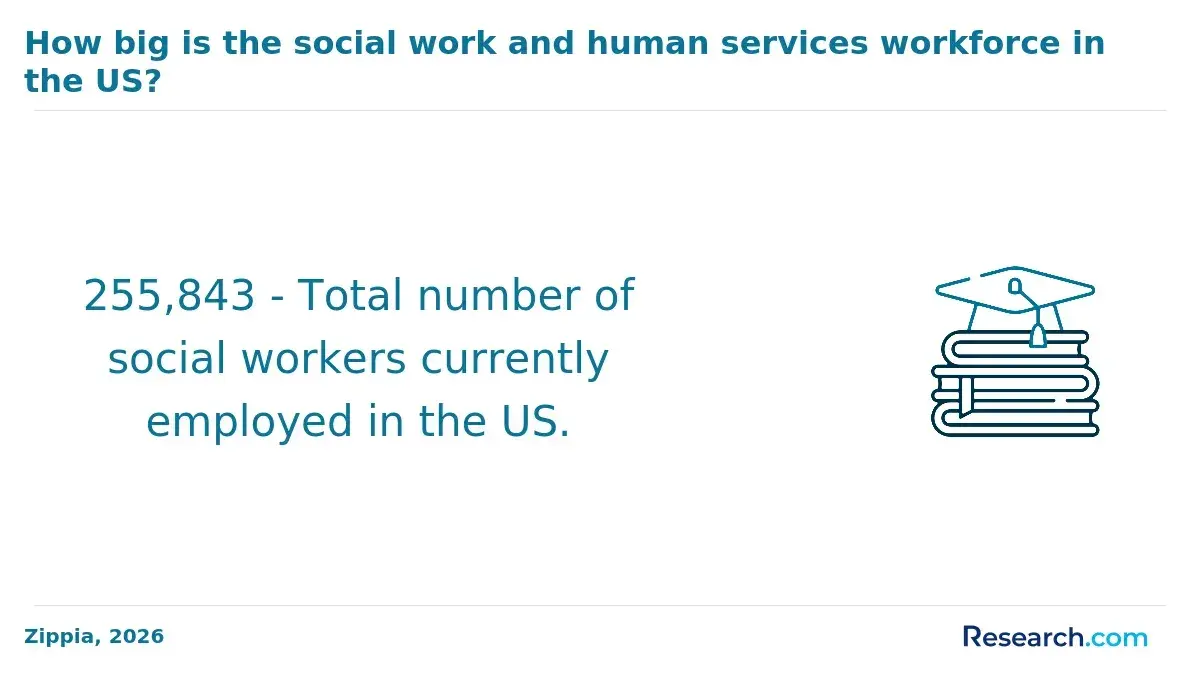
The outlook for social work careers remains positive for graduates who match their education, licensure, and field experience to the roles they want. To date, there are 761,849 in the workforce, with California, Florida, and Minnesota having the highest employment rates. Of these, 187,402 are licensed. Students comparing online graduate options can review Research.com’s list of schools offering an online social work degree.
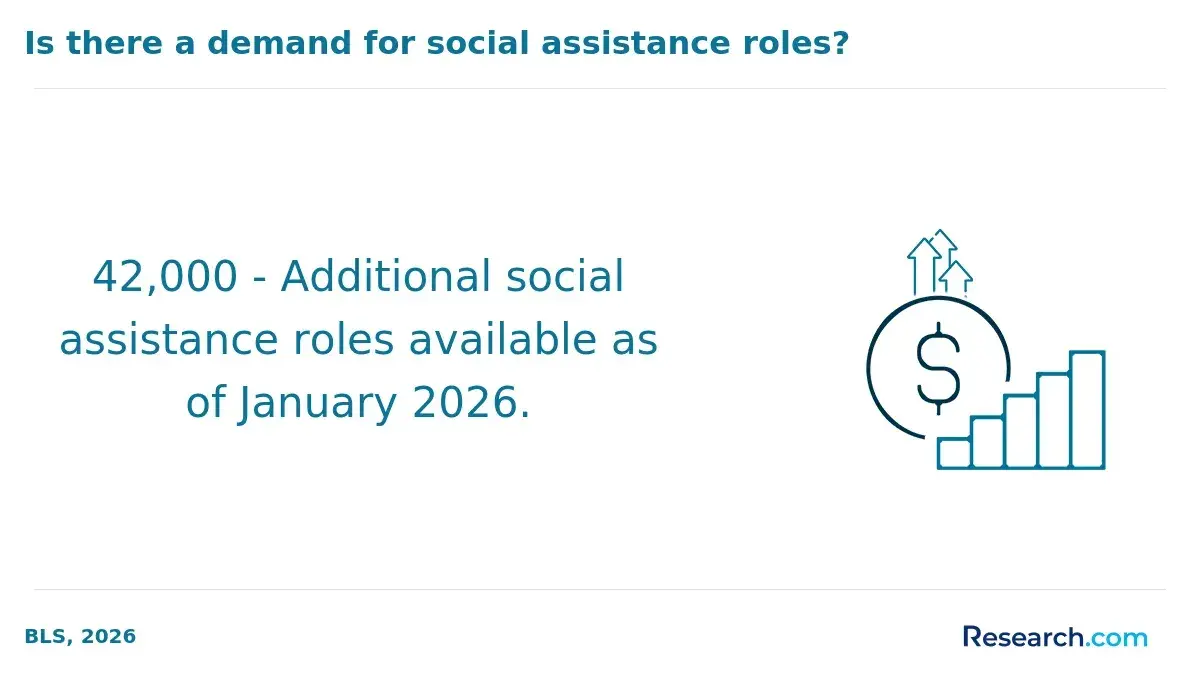
Social worker employment is projected to increase by 9% through 2031, adding 64,000 new jobs. Demand is tied to healthcare needs, social services, mental health support, and an aging population. Workforce replacement may also contribute to openings, since the average age of the workforce is 44 years old.
Employers may prefer or require MSW graduates for positions involving clinical assessment, therapy, supervision, advanced case planning, healthcare coordination, and program leadership. However, an MSW does not automatically guarantee a specific job title or salary. Field placements, license eligibility, local demand, interview strength, and specialization all affect outcomes.
| Role | Salary | Demand | How an MSW May Help |
| Social and Community Service Managers | $74,000 | 12% | Useful for program leadership, supervision, budgeting, grant work, and agency administration |
| Social and Human Service Assistants | $37,610 | 12% | Often an entry point before or during graduate study; MSW may support advancement |
| Substance Abuse, Behavioral Disorder, and Mental Health Counselors | $48,520 | 22% | Relevant for graduates focusing on behavioral health, crisis work, and treatment planning |
Common MSW Work Settings
- Hospitals and healthcare systems: discharge planning, patient advocacy, care coordination, grief support, and resource navigation.
- Schools: student support, family outreach, crisis intervention, behavioral planning, and coordination with teachers and counselors.
- Community agencies: housing support, food access, family services, benefits navigation, refugee services, and crisis response.
- Mental health clinics: assessment, therapy, group counseling, treatment planning, and case coordination.
- Government agencies: child welfare, veterans services, public health, corrections, aging services, and policy implementation.
- Private practice: clinical services, often after meeting state licensure and supervision requirements.
Skills MSW Graduates Need
Before asking what job you can get with an MSW, it is useful to ask what competencies the degree should help you build. Strong MSW graduates combine human-centered practice with documentation, ethical judgment, crisis response, cultural humility, program evaluation, and, increasingly, comfort with technology.
Advanced Skills for MSW-Level Roles
- Leadership: guiding teams, supervising staff, coordinating services, and making decisions under pressure.
- Policy analysis: understanding how laws, agency rules, funding structures, and eligibility systems affect clients.
- Research literacy: evaluating interventions, reading evidence, and applying findings to practice.
- Ethical reasoning: navigating confidentiality, boundaries, mandated reporting, documentation, conflicts of interest, and informed consent.
- Supervision: mentoring social workers, case managers, interns, and support staff while maintaining service quality.
Practice Skills Employers Expect
- Case management: organizing services, tracking progress, documenting client needs, and coordinating with multiple providers.
- Crisis intervention: responding to suicide risk, family violence, abuse, neglect, housing emergencies, and acute distress.
- Mental health knowledge: recognizing symptoms, supporting treatment plans, and referring clients appropriately.
- Social service navigation: connecting clients with benefits, housing, healthcare, employment support, legal aid, and community programs.
- Child welfare knowledge: understanding safety planning, family preservation, foster care, abuse reporting, and related regulations.
- Community outreach: building trust with local organizations, advocacy groups, schools, faith communities, and service providers.
Technology and Data Skills
- Data management and analysis: recording outcomes, identifying patterns, and using data to improve client services.
- Electronic health records management: documenting services accurately, communicating with care teams, and protecting sensitive information.
- Technology-based interventions: using telehealth, online counseling tools, and digital resources when appropriate and ethical.
- Program evaluation: measuring whether services are achieving intended outcomes and communicating results to stakeholders.
Interpersonal Skills That Still Matter Most
- Empathy: understanding client experiences without losing professional judgment.
- Active listening: hearing what clients say, what they avoid saying, and what systems are shaping their choices.
- Communication: explaining options clearly to clients, families, supervisors, courts, schools, and healthcare teams.
- Problem-solving: building practical plans when resources are limited and needs are urgent.
- Critical thinking: separating assumptions from evidence and making informed decisions.
- Time management: balancing caseloads, documentation, meetings, crises, and deadlines.
- Organization: maintaining accurate files, follow-up tasks, referrals, and compliance requirements.
MSW graduates who move into supervision should also understand burnout prevention. Emotional intelligence, work satisfaction, and affective commitment are important factors in reducing burnout and increasing work engagement among social workers.
How to Start Your Career with a Master of Social Work Degree
Most MSW programs require a bachelor’s degree for admission. A BSW can provide a direct foundation, but many programs also admit students from related fields. If you want to work before graduate school, entry-level jobs may be available in hospitals, schools, government agencies, nonprofits, behavioral health programs, and private organizations. After completing the necessary education and supervised experience, many graduates must pass a social work licensing exam to qualify for specific professional titles.
| Path | What the Work Involves | Entry-Level Jobs | Junior Management Jobs | Middle Management Jobs | Senior Management Jobs |
| Child Welfare Path | Protecting children from abuse and neglect, supporting families, and helping ensure safety in foster care and family service systems. | Juvenile Court Liaison ($47,069) | Child Welfare Case Manager ($52,987) | School Social Worker ($64,367) | Child Welfare Director ($92,820) |
| Social Services Path | Helping individuals and groups address social, economic, housing, health, and family challenges. | Social and Human Service Assistants ($37,610) | Substance Abuse, Behavioral Disorder, and Mental Health Counselors ($48,520) | Social and Community Service Managers ($74,000) | Director of Social Services ($80,723) |
| Education Path | Teaching, training, research, school support, policy development, and services that improve outcomes for students, families, and communities. | Case Manager ($44,703) | Health Education Specialists and Community Health Workers ($48,860) | Child, Family, and School Social Workers ($50,820) | Professor of Social Work ($76,064) |
| Psychology Path | Applying behavioral science, mental health knowledge, and counseling-related methods to improve individual and community well-being. | Behavioral Management Specialist ($47,244) | Child, Family, and School Social Workers ($50,820) | General Psychologist ($81,040) | Social Psychologist ($93,651) |
What Can You Do With an Associate Degree in Social Work?
An Associate’s Degree in Social Work can introduce students to human behavior, social welfare systems, community resources, and case support. It usually does not qualify graduates for professional social worker licensure, but it may help them enter support roles while deciding whether to continue into a BSW or MSW program.
| Associate-Level Role | Typical Responsibilities | Median Salary |
| Youth Services Worker | Supports young people facing homelessness, substance abuse, mental health concerns, family instability, or other barriers; may help with referrals, mentoring, counseling support, and advocacy. | $38,415 per year |
| Family Support Worker | Helps families experiencing poverty, homelessness, domestic violence, or other difficulties by identifying needs, building action plans, and connecting them with services. | $40,654 |
| Case Management Assistant | Assists social workers by gathering information, maintaining records, communicating with clients, and helping implement case plans. | $41,354 per year |
What Can You Do With a Bachelor’s Degree in Social Work?
A BSW can qualify graduates for many direct-service and case management positions. It is also a common stepping stone to an MSW, especially for students who want advanced standing admission or eventual clinical licensure.
| BSW-Level Role | Typical Responsibilities | Median Salary |
| Community Outreach Worker | Builds relationships with residents and organizations, connects people to resources, coordinates programs, and advocates for community needs. | $47,232 per year |
| Case Manager | Develops care plans, coordinates services, monitors progress, documents outcomes, and advocates for individuals, families, or groups. | $47,687 per year |
| Child Welfare Specialist | Investigates safety concerns, supports families in crisis, coordinates placements, and works to protect children at risk of abuse or neglect. | $50,377 per year |
Can You Get a Social Work Job With Only a Certificate?
A certificate may help you qualify for a narrow support role or strengthen your resume in an area such as gerontology, addiction counseling, trauma-informed care, or case management. However, most professional social work positions prefer or require a BSW or MSW. A certificate can be useful as an add-on credential, but it is usually not a substitute for a degree when the job requires licensure, independent practice, or advanced clinical responsibility.
How Can an MSW Help You Advance in Social Work?
An MSW can be a major advancement tool for professionals who want to move from support roles into clinical practice, management, specialized services, or policy work. Many students choose flexible options such as online MSW programs to continue working while completing graduate study.
According to Zippia, about a third of polled social workers have master’s degrees and work mostly in the private sector, though a substantial portion works in government. The practical value of the degree depends on whether the program is accredited, whether it supports your preferred license, and whether its field placements match your career target.
MSW-Level Jobs to Consider
| Role | What the Role Does | Median Salary |
| Community Service Manager | Oversees social service programs, manages budgets and staff, coordinates partnerships, evaluates program performance, and supports community initiatives in areas such as housing, health, education, and family services. | $54,916 per year |
| Medical Social Worker | Helps patients and families cope with illness, understand care plans, access financial aid, arrange housing or transportation, and navigate hospitals, clinics, nursing homes, and other healthcare settings. | $70,470 per year |
| Corporate Social Responsibility Manager | Develops programs related to ethics, sustainability, social impact, philanthropy, and community partnerships while reporting on social and environmental performance. | $79,828 per year |
Doctoral-Level Social Work Roles
A doctorate is not required for every advanced social work role, but it can support careers in academia, research, executive leadership, policy design, and high-level administration. Students considering this route should compare the practice-oriented DSW with research-focused doctoral pathways.
| Doctoral-Level Role | What the Role Does | Median Salary |
| Homeless Shelter Director | Manages shelter operations, staffing, budgets, program evaluation, partnerships, and strategies addressing homelessness. | $74,000 per year. |
| Professor of Social Work | Teaches social work courses, advises students, conducts research, publishes scholarship, and contributes to professional organizations. | $76,109 per year. |
| Social Service Director | Leads agencies or major programs, manages compliance, develops strategy, oversees budgets, and collaborates with policymakers and community leaders. | $81,590 per year. |
Which Certification Is Best for an MSW Graduate?
The best certification depends on your practice area. Certifications can demonstrate specialized knowledge, but they do not replace state licensure when a license is required. Before paying for a credential, verify whether employers in your target field actually value it.
- Certified Rehabilitation Counselor (CRC): Relevant for professionals working with people with disabilities; typically requires a master’s degree and an exam.
- Diplomate in Clinical Social Work (DCSW): Designed for experienced clinical social workers with a master’s or doctoral degree and a record of clinical competence.
- Functional Aging Specialty Certification (FAS): Focuses on exercise programming, aging, and wellness topics for professionals serving older adults.
- Child Development Associate (CDA): A nationally recognized early childhood credential covering child development, family relationships, and professionalism through coursework and assessment.
How Can MSW Graduates Use Data and Analytics to Improve Outcomes?
Data cannot replace professional judgment, but it can help social workers identify needs, track progress, evaluate programs, and advocate for funding. MSW graduates who understand both people and evidence can be especially valuable in agencies that must prove outcomes to funders, boards, insurers, or government partners.
- Client assessment and follow-up: Accurate records can show whether a client’s housing stability, treatment attendance, school engagement, or safety plan is improving.
- Program evaluation: Outcome data can reveal which services work best for specific groups and where resources should be redirected.
- Risk identification: Historical data may help agencies identify clients or communities that need earlier intervention, while still requiring careful safeguards against bias.
- Policy advocacy: Community-level data can strengthen arguments for funding, staffing, prevention programs, crisis services, and policy reform.
The key is ethical use. Social workers should know who owns the data, how consent is handled, how information is protected, and whether analytics tools may reinforce inequities.
Online MSW Programs: Benefits and Key Considerations
Online MSW programs can make graduate study possible for students who work full time, live far from campus, care for family members, or need a more flexible schedule. They can also expand access to specialized tracks that may not be available locally.
Flexibility does not mean less fieldwork. A legitimate MSW program still requires supervised practice experience, and students should ask how the school arranges placements near their location. Students who want a faster route may compare accelerated masters in social work online programs, especially if they already hold a BSW and qualify for advanced standing.
Accreditation is the first filter. In most states, an MSW must be accredited by the Council on Social Work Education (CSWE) to meet licensure requirements. Before enrolling, confirm accreditation directly with the school and with the relevant licensing board in the state where you plan to practice.
| Online MSW Factor | Why It Matters | Question to Ask |
| CSWE accreditation | Often essential for licensure eligibility and employer recognition | Is the program currently CSWE-accredited, and does it meet my state’s requirements? |
| Field placement support | Practicum quality strongly affects readiness and networking | Will the school find placements near me, or am I responsible for securing them? |
| Live vs. self-paced courses | Synchronous classes offer interaction; asynchronous classes offer schedule flexibility | How many required sessions meet live, and when are they scheduled? |
| Specialization options | Clinical, school, healthcare, and policy tracks can lead to different outcomes | Does the curriculum match the role I want after graduation? |
| Total cost | Fees, travel, technology, books, and unpaid fieldwork can affect affordability | What is the full estimated cost, not just tuition? |
Online MSW programs can be a strong choice when they are accredited, transparent about costs, supportive with field education, and aligned with the student’s intended license or specialization.
Can Industrial Organizational Psychology Strengthen a Social Work Career?
Industrial organizational psychology can be useful for MSW graduates who want to lead teams, improve workplace culture, design staff training, manage burnout, or evaluate organizational systems. Social service agencies often struggle with turnover, high caseloads, limited budgets, and complex team dynamics; I-O psychology concepts can help leaders make better decisions about supervision, workflow, employee support, and program performance.
This interdisciplinary direction is most relevant for social workers interested in human resources, organizational development, training, employee wellness, or executive leadership. MSW graduates who want to explore this route can review Research.com’s guide on how to become an industrial organizational psychologist.
How Can a Doctorate in Social Work Further Advance Your Career?
A doctorate in social work can help experienced professionals move into advanced leadership, university teaching, research, policy influence, or high-level program design. It is usually not necessary for most direct practice roles, but it may be valuable if your goal is to shape systems rather than only provide services within them.
Doctoral study generally emphasizes research methods, evidence-based practice, leadership, policy, and organizational change. Students comparing doctoral options can review DSW programs online to understand how practice-focused programs differ in cost, structure, and career orientation.
Alternative Career Options for Social Workers
Not every MSW graduate wants a traditional social worker title. The degree can also support careers in human resources, consulting, compliance, community relations, research, nonprofit management, policy, and adjacent fields related to sociology degrees.
What Else Can a Social Worker Do?
| Alternative Role | Why Social Work Skills Transfer | Salary Information |
| Human Resources Specialist | Communication, conflict resolution, interviewing, employee support, and training skills are useful in HR roles. | U.S. Human Resources Specialists earn $62,000 to $100,000 annually. |
| Community Outreach Coordinator | Social workers understand community needs, partnership building, program planning, and stakeholder communication. | Community Outreach Coordinator salaries in the U.S. range from $46,000 to over $70,000. |
| Program Evaluator | Research, outcome tracking, data interpretation, and service improvement skills transfer well to evaluation roles. | Program Evaluators in the U.S. earn $63,000 on average and over $100,000. |
| Non-Profit Administrator | Agency operations, grant writing, fundraising, program development, and staff management align with MSW training. | The median U.S. non-profit administrator income is $65,000, with the highest exceeding $120,000. |
| Policy Analyst | Knowledge of social systems, inequity, public programs, and advocacy supports policy research and recommendations. | U.S. policy analyst salaries range from $64,000 to over $110,000. |
These paths may be a good fit if you want to influence systems, improve organizations, or support communities without carrying a traditional clinical caseload.
How Do I Choose the Right MSW Program for My Career Goals?
The right MSW program is the one that prepares you for the license, population, setting, and work style you actually want. A lower-cost program that meets licensure requirements and offers strong field placements may be a better choice than a more expensive program with weak support in your specialization.
- Start with accreditation. Confirm that the program is accredited by the Council on Social Work Education (CSWE), especially if you plan to pursue licensure.
- Match the curriculum to your goal. Clinical practice, school social work, community organizing, policy, healthcare, and child welfare require different preparation.
- Review field placement quality. Ask where students are placed, how placements are approved, and whether the school has partners in your region.
- Compare flexibility honestly. Online programs can work well for employed students, but live classes, field hours, and group work still require time.
- Check faculty expertise. Faculty who work in your target area can provide better mentorship, research opportunities, and professional contacts.
- Ask about outcomes. Request graduation rates, licensure pass information if available, employment support, and alumni career paths.
- Plan the full education pathway. If you are still at the undergraduate stage, comparing the cheapest online BSW programs may help reduce total education costs before graduate study.
Questions to Ask Before You Enroll
- Does this MSW meet the education requirements for the state where I plan to practice?
- Will I need to move, travel, or find my own field placement?
- How many supervised hours will I need after graduation for my target license?
- What is the total cost after fees, books, technology, travel, and lost work hours?
- Does the program offer advanced standing if I have a BSW?
- Are graduates getting the jobs I want, or mostly different types of roles?
- How does the school support students during emotionally difficult field placements?
How Can an MSW Enhance a Career in Substance Abuse Counseling?
An MSW can strengthen substance abuse counseling careers by adding training in assessment, mental health, trauma, family systems, crisis intervention, ethics, case management, and social policy. This broader preparation can be helpful because substance use concerns often overlap with housing instability, family conflict, unemployment, legal involvement, medical issues, and co-occurring mental health conditions.
Students focused on this area should look for MSW programs with behavioral health placements, addiction-related electives, and faculty expertise in substance use treatment. They may also compare related training options such as an affordable online substance abuse counseling degree to understand how counseling-specific programs differ from MSW programs.
What Is the Difference Between LPC and LCSW?
LPC and LCSW credentials can both relate to counseling and mental health services, but they come from different professional traditions and are regulated differently by state boards. An LPC pathway is generally tied to professional counseling education, while an LCSW pathway is tied to graduate social work education, supervised clinical experience, and social work licensure.
The better choice depends on your desired scope of practice. If you want a social work framework that includes therapy, case management, systems advocacy, and social service navigation, the LCSW route may fit. If your focus is primarily counseling, the LPC route may be worth comparing. Because requirements vary by state, review Research.com’s detailed guide on the difference between LPC and LCSW before choosing a program.
What Are the Current Challenges Impacting Social Work Careers?
Social work careers can be rewarding, but the field also faces serious pressures. High caseloads, administrative documentation, secondary trauma, staffing shortages, funding limits, ethical technology use, and changing regulations can affect both client care and worker well-being.
Telehealth and data-driven practice can improve access, but they also create privacy, confidentiality, documentation, and equity concerns. Social workers must know when digital service delivery is appropriate, how to protect client information, and how to avoid excluding people without reliable technology access.
Compensation remains another concern. Some social workers pursue specialization, licensure, private practice, leadership, or therapy-related careers to improve earning potential. Those exploring higher-paying therapy routes can review Research.com’s guide on the highest potential salary of a therapist, while remembering that salary outcomes are never guaranteed.
Choosing the Right Specialization in MSW Programs
Your MSW specialization can shape your field placement, first job, license pathway, and long-term network. Choose based on the population you want to serve, the work you want to do each day, and the credentials required in your state.
| Specialization | Best For Students Who Want To | Possible Settings |
| Clinical Social Work | Provide therapy, assessment, treatment planning, and mental health support | Clinics, hospitals, private practice, community mental health centers |
| School Social Work | Support students, families, teachers, and school-based interventions | K-12 schools, districts, education agencies |
| Healthcare Social Work | Help patients and families navigate illness, discharge, care planning, and resources | Hospitals, rehabilitation centers, hospice, long-term care |
| Community Practice | Build programs, organize communities, manage services, and address systemic barriers | Nonprofits, advocacy groups, public agencies |
| Public Policy | Analyze laws, advocate for reform, and design systems-level solutions | Government, think tanks, advocacy organizations |
| Substance Abuse and Behavioral Health | Serve clients with substance use disorders and co-occurring mental health needs | Treatment centers, recovery programs, correctional settings, clinics |
If your goal is clinical practice, compare licensed clinical social worker degree programs and verify that each program aligns with your state’s licensure standards.
What Factors Influence a Social Worker’s Salary?
Social worker pay depends on location, employer type, license level, specialization, experience, union status, funding source, and job responsibilities. Clinical roles, leadership roles, healthcare roles, federal positions, and private practice may pay differently from community-based direct-service roles.
For state-by-state comparisons, use Research.com’s social worker salary guide. It can help you compare earnings by location and decide whether the cost of an MSW is reasonable for your target market. One salary figure often cited in this context is that social workers in the Federal Executive Branch earn an average of $86,030 annually, but individual pay still depends on title, grade, location, and qualifications.
How Can I Continue to Grow Professionally After Earning My MSW?
Career growth after an MSW depends on deliberate skill-building. Graduates should pursue licensure if it supports their goals, seek high-quality supervision, attend continuing education, join professional organizations, and build expertise in a defined practice area.
- Complete licensure steps early. Track supervised hours, exam requirements, and renewal rules carefully.
- Choose continuing education strategically. Prioritize training in trauma, ethics, telehealth, crisis response, documentation, supervision, or your specialty population.
- Build a professional network. Supervisors, field instructors, alumni, and association contacts often lead to job opportunities.
- Document outcomes. Keep examples of programs improved, clients served, grants supported, trainings delivered, or systems changed.
- Reassess your path every few years. Direct practice, supervision, policy, academia, nonprofit leadership, and consulting each require different next steps.
For broader role exploration, Research.com’s guide to careers for masters in social work can help graduates compare new directions as their goals evolve.
How Can I Finance My MSW Program Effectively?
An MSW can require a significant investment, so financing should be part of your program search from the start. Compare total cost, not only tuition. Fees, books, technology, commuting, unpaid field hours, lost income, and licensing costs can change the real price of the degree.
- File financial aid forms early. Federal and state aid options may depend on deadlines.
- Search for social work scholarships. Some awards are tied to public service, rural practice, child welfare, behavioral health, or specific populations.
- Ask about employer tuition support. Some agencies, hospitals, and government employers offer reimbursement or education benefits.
- Compare online and campus costs. Online study may reduce relocation or commuting expenses, but fieldwork can still affect work hours.
- Look into loan forgiveness carefully. Public service loan forgiveness and state-based programs may have strict eligibility requirements.
- Maintain strong academic standing. Merit aid, assistantships, and competitive awards may depend on grades or faculty recommendations.
If you are comparing helping-profession degrees and want lower-cost alternatives, Research.com’s list of the cheapest online masters in mental health counseling may be useful for understanding cost differences across related graduate paths.
Common Mistakes to Avoid When Planning an MSW Career
| Mistake | Why It Can Hurt You | Better Approach |
| Choosing a program without verifying CSWE accreditation | You may not meet licensure or employer requirements. | Confirm accreditation and state board approval before applying. |
| Looking only at tuition | Fees, unpaid fieldwork, travel, books, and lost work hours can raise the real cost. | Build a full budget for the entire degree. |
| Assuming every online MSW leads to licensure everywhere | Licensure rules vary by state and may change. | Contact the licensing board where you plan to practice. |
| Ignoring field placement support | Poor placements can limit skill development and networking. | Ask where students are placed and how problems are handled. |
| Choosing a specialization too quickly | A mismatch can lead to internships and jobs that do not fit your goals. | Interview professionals in several settings before deciding. |
| Expecting salary outcomes to be guaranteed | Pay varies by region, license, employer, and experience. | Research local job postings and salary data before borrowing heavily. |
| Neglecting burnout prevention | High caseloads and trauma exposure can affect retention. | Choose supportive supervision, set boundaries, and use continuing education to build resilience. |
Is an MSW Degree Worth It?
An MSW can be worth it if your target career requires graduate social work education, if the program meets licensure requirements, and if the total cost is reasonable compared with your expected career path. It is especially valuable for students pursuing clinical social work, healthcare roles, school social work, child welfare leadership, behavioral health, social services management, policy, or doctoral study.
It may be less worthwhile if you are unsure about the field, unwilling to complete supervised hours, choosing a non-accredited program, or taking on debt without a realistic salary plan. The best decision comes from comparing program cost, licensure fit, field placement quality, emotional demands, and long-term career options.
If you decide social work is not the right fit, your skills may still transfer to related helping professions. You can explore types of counseling jobs, consider forensic psychology jobs, or start with Research.com’s guide on how to become social worker to understand the broader pathway.
Key Insights
- An MSW is most useful when it connects directly to a career goal. Clinical practice, school social work, healthcare, policy, child welfare, and leadership roles each require different program features.
- Accreditation and licensure alignment are non-negotiable. Before enrolling, confirm CSWE accreditation and check the licensing rules in the state where you want to work.
- Career demand is positive, but outcomes vary. Social worker employment is projected to grow by 9% through 2031, adding 64,000 new jobs, but salary depends on location, specialization, license, employer, and experience.
- Technology is changing social work practice. Telehealth, EHR systems, analytics, and digital tools can improve access, but ethical use, privacy, and equity must remain central.
- Field placement quality can shape your career as much as coursework. Strong placements build skills, references, confidence, and job leads.
- Do not judge MSW programs by tuition alone. Compare total cost, financial aid, unpaid fieldwork demands, licensure preparation, and career outcomes.
- Social work offers flexibility beyond traditional roles. MSW graduates can move into clinical services, management, policy, nonprofit leadership, program evaluation, HR, education, or doctoral study.
References:
- Accredited Schools Online. (2025). Careers in social work overview. https://www.accreditedschoolsonline.org/resources/careers-in-social-work/
- MSWDegrees.org. (2025). Social work career pathways guide. https://www.mswdegrees.org/careers/social-work-career-paths/
- National Association of Social Workers. (2025). Public opinion on the value of social work. https://www.socialworkers.org/News/News-Releases/2025-public-perception-survey
- National Association of Social Workers (NASW). (2026). Social work salaries. https://www.socialworkers.org/careers/career-center/kickstart-your-job-hunt/social-work-salaries
- Psychology.org. (2025). Clinical vs direct services in social work: Salaries & roles. https://www.psychology.org/social-work/clinical-vs-direct-services-social-work/
- SocialWorkDegrees.org. (2026). Social work career guide: Degrees, jobs & salaries. https://www.socialworkdegrees.org/careers-for-students
- SocialWorkDegrees.org. (2026). What can you do with an MSW? Career paths & salaries. https://www.socialworkdegrees.org/faq/what-can-you-do-with-a-msw
- U.S. Bureau of Labor Statistics. Social Workers: Occupational Outlook Handbook. https://www.bls.gov/ooh/community-and-social-service/social-workers.htm
- U.S. Bureau of Labor Statistics. (2025). Social and human service assistants: Occupational Outlook Handbook. https://www.bls.gov/ooh/community-and-social-service/social-and-human-service-assistants.htm
- U.S. Department of Education. (2025). ERIC search: Social worker education research. https://eric.ed.gov/?ff1=subEntry+Workers&q=Worker
- USAJobs.gov. (2026). Social work job listings and pay scale. https://www.usajobs.gov/Search?keyword=%22social+worker%22
Other Things You Should Know About Master of Social Work (MSW) Careers
MSW graduates in 2027 must pass the Association of Social Work Boards (ASWB) exam and complete supervised hours to obtain licensure. Depending on the state, around 3,000 supervised hours may be required. Licensing ensures the ability to practice as a professional social worker.
Yes, an MSW degree can prepare you for non-traditional roles such as policy analysis, social work research, and corporate social responsibility. This flexibility allows for integration into sectors beyond direct practice, leveraging social work skills to influence organizational change and community development.
In 2027, certifications like the Licensed Clinical Social Worker (LCSW), Certified Advanced Children, Youth, and Family Social Worker (C-ACYFSW), and Certified Hospice and Palliative Social Worker (CHP-SW) are highly regarded. These certifications enhance expertise and career prospects in specialized areas of social work.
The median annual wage for social workers was $50,390 per year. Salaries vary by location and specialization, with social workers in the Federal Executive Branch earning an average of $86,030 annually.
Most CSWE-accredited MSW programs require 900 to 1,200 hours of supervised field education, completed in two placements or one extended placement. Students usually work in agencies serving children, families, older adults, hospitals, schools, or community organizations under licensed supervision.