2027 Low-Cost Online MSW Programs That Qualify for Federal Financial Aid

Co-Founder and Chief Data Scientist
Choosing an online Master of Social Work is not just a tuition decision. It affects your eligibility for field placement, licensure preparation, career options, and long-term debt. In 2023, the median starting salary for Master of Social Work (MSW) graduates was $58,320, compared with $42,340 for bachelor’s in social work holders. That earnings difference can make graduate study worthwhile, but only if the program fits your budget, schedule, and state licensure goals.
This guide is designed for prospective MSW students who want an accredited, flexible, and lower-cost path into advanced social work practice. Prepared by career planning experts with over 10 years of experience, it explains affordable online MSW options eligible for federal financial aid, how long these programs usually take, what they cost, what admissions requirements to expect, and how to compare programs beyond tuition alone.
What are the benefits of getting a low-cost online MSW program?
- An MSW qualifies you for roles such as clinical social worker, school social worker, or healthcare social worker, enabling you to make a meaningful impact in various settings.
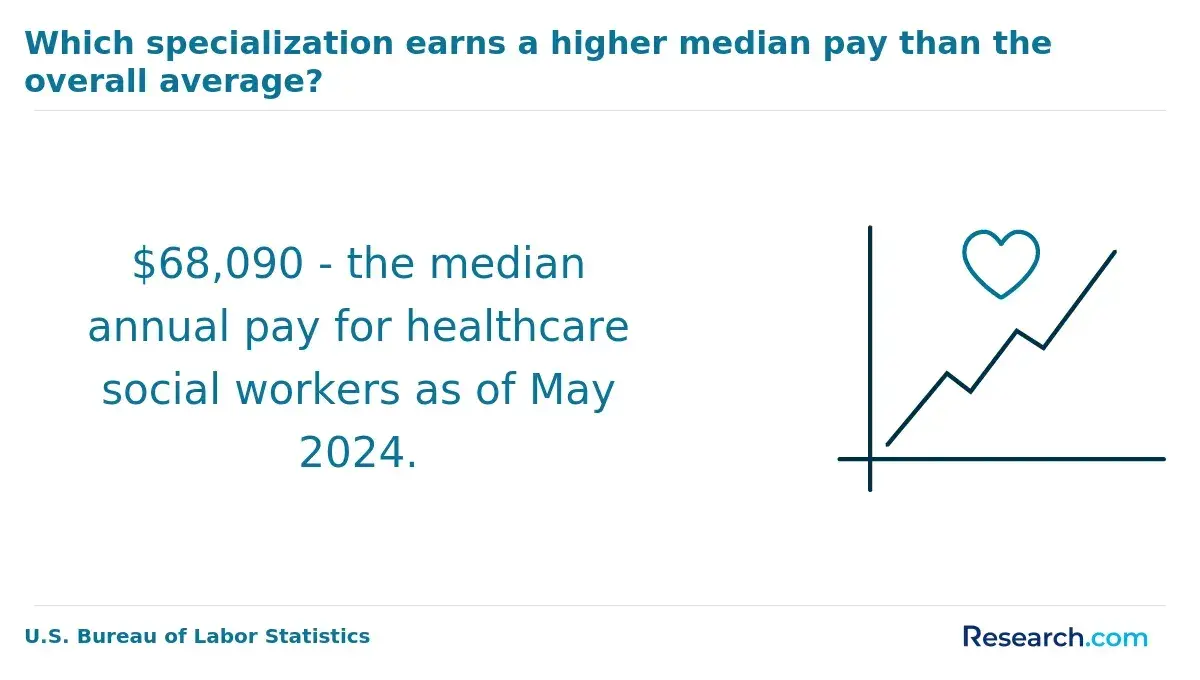
- The median annual wage for social workers was $61,330 in May 2024, with higher earnings in specialized fields like healthcare and mental health.
- Online MSW programs offer the convenience of studying from anywhere, allowing you to balance education with personal and professional commitments.
List of the Best Low-Cost Online MSW Programs for 2027
A low-cost online MSW should still meet the standards employers, licensing boards, and field agencies expect. For most students, that means prioritizing Council on Social Work Education (CSWE) accreditation, transparent tuition, realistic field placement support, and a curriculum aligned with the type of social work they want to practice.
Research.com’s ranking process draws on reliable education data sources, including the IPEDS database, Peterson's database, the College Scorecard database, and The National Center for Education Statistics. These sources help evaluate affordability, institutional quality, and student-centered outcomes. For a fuller explanation of how programs are reviewed, see Research.com’s methodology page.
1. Troy University
Troy University offers an online MSW accredited by the Council on Social Work Education (CSWE). The program is built around direct practice, making it a practical option for students who want preparation for client-facing roles in community agencies, behavioral health settings, family services, and related practice environments.
- Program Length: 1–2 years
- Specializations: Direct Practice
- Required Credits to Graduate: 60
- Cost per Credit: $475 (in-state); $950 (out-of-state)
- Accreditation: Council on Social Work Education (CSWE)
2. University of Kentucky
The University of Kentucky provides an online MSW with Regular and Advanced Standing tracks, giving students with a qualifying BSW a shorter route to graduation. Its CSWE accreditation and block tuition structure may appeal to students who plan to enroll full time and take 9 or more credit hours per semester.
- Program Length: 1–2 years
- Specializations: Clinical Social Work; Policy and Advocacy
- Required Credits to Graduate: 60 (Regular Standing); 30 (Advanced Standing)
- Cost per Credit: $790 (1–8 credit hours); $7,092.50 (block rate for 9+ credit hours)
- Accreditation: Council on Social Work Education (CSWE)
3. Eastern University
Eastern University offers a CSWE-accredited online MSW with an emphasis on social justice, community engagement, and advanced generalist practice. This structure can suit students who want a broad MSW foundation rather than a narrowly clinical or administrative track.
- Program Length: 2–3 years
- Specializations: Advanced Generalist Practice
- Required Credits to Graduate: 60
- Cost per Credit: $625
- Accreditation: Council on Social Work Education (CSWE)
4. University of Central Florida
The University of Central Florida offers a CSWE-accredited online MSW focused on clinical social work. Students considering this program should look closely at field placement expectations, state licensure requirements, and whether the clinical curriculum matches their intended practice setting.
- Program Length: 2–3 years
- Specializations: Clinical Social Work
- Required Credits to Graduate: 62
- Cost per Credit: $487.45
- Accreditation: Council on Social Work Education (CSWE)
5. Florida State University
Florida State University offers an online MSW accredited by the Council on Social Work Education (CSWE). Its clinical social work focus and part-time-friendly structure may work well for students balancing graduate school with employment or family obligations.
- Program Length: 2–3 years
- Specializations: Clinical Social Work
- Required Credits to Graduate: 60
- Cost per Credit: $444 (in-state); $625 (out-of-state)
- Accreditation: Council on Social Work Education (CSWE)
6. Mizzou Online (University of Missouri)
Mizzou Online at the University of Missouri offers a CSWE-accredited online MSW with an emphasis on rural social work. This focus is especially relevant for students interested in serving communities where access to behavioral health, family support, and social services may be limited.
- Program Length: 2–3 years
- Specializations: Rural Social Work
- Required Credits to Graduate: 60
- Cost per Credit: $634
- Accreditation: Council on Social Work Education (CSWE)
7. University of Texas at Rio Grande Valley
The University of Texas at Rio Grande Valley offers an online MSW designed for advanced generalist social work practice. Its emphasis on diverse communities can benefit students interested in clinical, community-based, and policy-informed roles.
- Program Length: 2–3 years
- Specializations: Advanced Generalist Practice
- Required Credits to Graduate: 60
- Cost per Credit: $450
- Accreditation: Council on Social Work Education (CSWE)
8. University of Denver
The University of Denver offers an online MSW with an Advanced Standing option for students who already hold a Bachelor of Social Work. Because this track requires 45 credits, it may be most appropriate for BSW graduates who want a shorter route to advanced clinical preparation.
- Program Length: 1–2 years
- Specializations: Clinical Social Work
- Required Credits to Graduate: 45 (Advanced Standing)
- Cost per Credit: $1,000
- Accreditation: Council on Social Work Education (CSWE)
9. Syracuse University
Syracuse University offers an online MSW that prepares students for practice across clinical, community, healthcare, school, and nonprofit settings. Its combination of clinical social work and policy and advocacy options can fit students who want flexibility in their career direction.
- Program Length: 2–3 years
- Specializations: Clinical Social Work; Policy and Advocacy
- Required Credits to Graduate: 60
- Cost per Credit: $1,100
- Accreditation: Council on Social Work Education (CSWE)
10. University of Southern California
The University of Southern California offers a CSWE-accredited online MSW focused on clinical social work. Students considering this higher-cost option should compare total tuition, field placement support, alumni network value, and expected career outcomes before enrolling.
- Program Length: 2–3 years
- Specializations: Clinical Social Work
- Required Credits to Graduate: 60
- Cost per Credit: $1,725
- Accreditation: Council on Social Work Education (CSWE)
How long does it take to complete a low-cost online MSW program?
Most low-cost online MSW programs take about 1–3 years, depending on whether the student qualifies for advanced standing, enrolls full time or part time, and completes field education on schedule. Students with a Bachelor of Social Work (BSW) may qualify for advanced standing programs that typically require around 30 to 45 credit hours and can be completed in approximately 12 to 16 months for full-time students or 20 to 24 months for part-time students.
Students without a BSW usually enter a regular standing track, which often requires closer to 60 credits and takes longer. Program pace also depends on whether courses are offered in accelerated terms, whether students can take summer classes, and how quickly they secure approved field placements.
Those seeking a shorter route can compare a fast social work degree online, including options that allow completion in as little as 16 months. However, speed should not be the only factor. Field education is a major part of MSW training, usually 900 to 1,200 hours, and students need enough time to complete those hours while managing work, family responsibilities, and academic deadlines.
What is the average cost of a low-cost online MSW program?
The cost of a low-cost online MSW varies widely by school, residency status, credit requirement, and whether the student qualifies for advanced standing. Tuition is often listed per credit, but students should also review fees, field placement costs, technology charges, books, travel for any campus requirements, and whether tuition differs for in-state and out-of-state students.
Some affordable programs charge substantially less than many private online MSW options. For example, the University of South Dakota charges $340.15 per credit hour for residents, making it one of the cheapest accredited online MSW programs nationwide. California State University, Northridge's online MSW program costs approximately $48,780 for in-state students.
When comparing programs, look beyond the advertised per-credit price. A program with a slightly higher per-credit rate may cost less overall if it requires fewer credits, offers an advanced standing track, has lower fees, or provides stronger field placement support. The best-value program is the one that combines reasonable total cost with CSWE accreditation, licensure alignment, and a realistic path to graduation.
What are the financial aid options for students enrolling in a low-cost online MSW program?
Students in low-cost online MSW programs may use several types of aid to reduce upfront costs and spread payments over time. The right mix depends on eligibility, school participation in federal aid programs, enrollment status, employer benefits, and whether the student is willing to work in a high-need area after graduation.
Federal Student Loans
Eligible graduate students commonly use federal student loans to help pay for MSW tuition and required expenses. These loans may offer repayment options that private loans do not, but they still create debt. Before borrowing, students should estimate total program cost, likely monthly payments, and expected income in their preferred social work role.
Federal Grants
Federal grant options for graduate students are more limited than for undergraduates. Students should complete the FAFSA and ask each school’s financial aid office which federal, state, or institutional grants may apply to MSW students. It is important not to assume that every grant listed for undergraduates is available for graduate study.
Scholarships and Program-Specific Aid
Many universities and social work departments offer scholarships based on financial need, academic merit, community service, specialization, or commitment to underserved populations. Students comparing an easiest MSW program should still review scholarship availability, accreditation, graduation requirements, and field placement quality before applying.
Employer, Agency, and Service-Based Support
Some students reduce costs through employer tuition assistance, public service programs, agency-sponsored scholarships, or workforce initiatives tied to behavioral health, child welfare, schools, or rural practice. These opportunities may require continued employment or service commitments, so read the terms before accepting funds.
What are the prerequisites for enrolling in a low-cost online MSW program?
Most low-cost online MSW programs evaluate applicants on academic readiness, fit for social work practice, and ability to complete field education. Requirements vary by school, but applicants should prepare early because transcripts, recommendations, essays, and field-related documentation can take time to gather.
- Bachelor’s Degree: Most programs require a bachelor’s degree from an accredited institution. The degree does not always have to be in social work, though non-BSW students usually enter a longer regular standing track.
- Advanced Standing: Applicants with a Bachelor of Social Work (BSW) may qualify for advanced standing, which can reduce both program length and total tuition.
- GPA Requirements: Many programs have minimum GPA requirements, often around 3.0 on a 4.0 scale. Applicants below the preferred GPA may need stronger recommendations, relevant experience, or conditional admission options.
- Professional Experience: Some programs prefer or require work, volunteer, internship, or service experience in social services, healthcare, education, advocacy, or community-based settings.
- Supplemental Coursework: Students from non-social work backgrounds may need to complete prerequisite courses before full admission or early in the program.
- Application Materials: Common requirements include official transcripts, a personal statement, letters of recommendation, a resume, and sometimes an interview.
- Field Placement Readiness: Because MSW programs require supervised field education, students may need background checks, immunization records, reliable transportation, or weekday availability depending on the placement site.
How do low-cost online MSW programs differ from traditional on-campus programs?
Low-cost online MSW programs usually cover the same core competencies as campus programs, especially when both are CSWE-accredited. The biggest differences are delivery format, scheduling, campus access, field placement logistics, and the way students build relationships with faculty and peers.
Flexibility and Accessibility
Online MSW programs allow students to complete most coursework remotely, which can help working adults, parents, military students, and students who do not live near a university. Some programs use asynchronous courses, while others require live online sessions at set times. Applicants should confirm the schedule before enrolling.
Cost and Commitment
Online programs can reduce commuting, relocation, and campus housing costs. However, students should still budget for tuition, fees, books, technology, and field placement expenses. Those who later want advanced leadership or academic roles may compare the cheapest DSW program after gaining professional experience.
Field Placement Differences
Field education is required in both online and on-campus MSW programs. The difference is how placements are arranged. Some online programs help students secure placements in their local communities, while others expect students to identify potential sites with school approval. This is one of the most important questions to ask before applying.
Student Experience
Campus programs may provide easier access to in-person networking, student organizations, and local agencies connected to the university. Online programs can offer broader geographic access and more schedule flexibility, but students need to be proactive about networking, faculty communication, and career planning.
What specializations are available in low-cost online MSW programs?
Low-cost online MSW programs may offer formal concentrations, electives, certificates, or field placement pathways that shape a student’s career direction. The right specialization depends on whether the student wants direct clinical practice, school-based work, leadership, policy, healthcare, child welfare, or community practice.
Clinical Social Work
Clinical social work prepares students for assessment, diagnosis-informed practice, therapy, case planning, crisis intervention, and behavioral health services. Students interested in clinical licensure should confirm that the curriculum and field placements align with their state’s requirements.
School Social Work
School social work focuses on supporting children, adolescents, families, and school communities. Students learn to address social, emotional, behavioral, attendance, family, and systems-level challenges within educational environments.
Social Work Administration
Social work administration prepares students for supervision, program management, grant-supported services, nonprofit leadership, budgeting, compliance, and policy implementation. Students who want to move into leadership should look for management-focused coursework and field placements in agencies with strong administrative mentoring.
Policy, Advocacy, and Community Practice
Policy and advocacy tracks are useful for students who want to influence systems rather than focus only on one-on-one services. Coursework may emphasize program evaluation, community organizing, legislative advocacy, social policy, and equity-focused systems change.
Healthcare and Behavioral Health
Healthcare and behavioral health pathways can prepare students for roles in hospitals, clinics, integrated care teams, substance use treatment, hospice, and community mental health. Selecting a concentration that supports advancement in roles with higher masters of social work salary potential can improve both career mobility and job satisfaction.
How can students maximize the value of a low-cost online MSW program?
The value of a low-cost online MSW depends on more than the tuition discount. Students get the strongest return when they choose an accredited program, minimize unnecessary debt, complete strong field placements, and graduate with a clear licensure or career plan.
- Confirm CSWE accreditation before applying. Accreditation is one of the most important quality checks for MSW students, especially those planning to pursue licensure.
- Compare total cost, not just per-credit tuition. Include fees, books, travel, technology, field placement requirements, and the number of credits required to graduate.
- Use financial aid strategically. Explore federal loans, grants where available, scholarships, employer benefits, and service-based funding before relying on private loans.
- Choose field placements intentionally. Internships and practicum experiences can lead to references, job offers, licensure supervision connections, and clearer career direction.
- Select a specialization tied to your goal. Clinical social work, healthcare, school social work, policy, administration, and community practice can lead to different roles and licensure pathways.
- Build relationships online. Participate in live sessions, discussion boards, faculty office hours, group projects, webinars, and professional associations.
- Track licensure requirements early. Requirements vary by state, so students should verify education, field hour, exam, and supervised experience rules before graduation.
What are the career advancement opportunities after earning a low-cost online MSW program?
An online MSW can support advancement into clinical practice, specialized direct service, supervision, administration, policy, and program leadership. The degree can be especially valuable for students who want roles that require graduate-level social work training or eventual clinical licensure.
Clinical and Direct Practice Roles
Many MSW graduates pursue clinical and direct practice roles in hospitals, mental health centers, schools, substance use treatment programs, family service agencies, veterans services, and private practice settings. Those seeking clinical licensure should verify post-graduate supervision and exam requirements in their state.
Administrative and Policy Positions
Some graduates move into management, quality improvement, case management leadership, program development, nonprofit administration, advocacy, or public policy roles. These positions may be a good fit for students who want to improve service systems rather than provide only individual counseling or casework.
Academic and Leadership Opportunities
Experienced social workers may later transition into training, teaching, consulting, director-level roles, or doctoral study. Students exploring long-term options can review what kind of job can you get with a social work degree to compare career paths by setting, specialization, and advancement potential.
What is the job market for graduates of a low-cost online MSW program?
The job market for MSW graduates is supported by continued demand for social services, healthcare support, behavioral health care, child and family services, and community-based programs. According to the U.S. Bureau of Labor Statistics, employment of social workers is projected to grow 6% from 2024 to 2034, faster than the average for all occupations. Healthcare social workers are projected to grow 9.6% from 2022 to 2032.
Graduates of low-cost online MSW programs can pursue roles in clinical practice, school social work, healthcare, community agencies, nonprofits, government programs, and advocacy organizations. The strongest opportunities often go to graduates who combine an accredited MSW with relevant field experience, licensure progress, strong supervision, and a specialization aligned with local workforce needs.
Cost matters in this job market because social work salaries vary by setting, state, licensure level, and years of experience. A lower-cost MSW can make it easier to manage debt while pursuing mission-driven work. Before enrolling, students should compare program outcomes, licensure alignment, field placement support, and the types of employers that commonly hire graduates.
Other Things You Should Know About Low-Cost Online MSW Programs
Low-cost online MSW programs in 2027 maintain affordability by optimizing administrative costs, leveraging technology for learning, and offering part-time options. To qualify for federal financial aid, they must have regional accreditation and be recognized by the Council on Social Work Education (CSWE).
To qualify for federal financial aid in online MSW programs in 2027, students must typically be U.S. citizens or eligible non-citizens, have a valid Social Security number, and be enrolled in an accredited program. Additionally, students must maintain satisfactory academic progress as determined by their institution.
In 2027, low-cost online MSW programs must be accredited by the Council on Social Work Education (CSWE) to qualify for federal financial aid. This accreditation ensures the program meets rigorous educational standards, improving the likelihood of student eligibility for government funding.
Students should file the FAFSA as soon as it opens for the 2027–28 aid year, which typically begins on October 1, and before each school’s priority deadline. Most online MSW programs use FAFSA results to award grants, loans, and work-study through the U.S. Department of Education.
References
- Applied Learning in Social Work Education. (2021). Triumphs and travails of building a fully online social work field evaluation system. Retrieved October 27, 2025, from https://alswe.simmons.edu/article/triumphs-and-travails-of-building-a-fully-online-social-work-field-evaluation-system
- Applied Learning in Social Work Education. (2012). Field learning in online social work programs. Retrieved October 27, 2025, from https://alswe.simmons.edu/article/field-learning-in-online-social-work-programs
- Bureau of Labor Statistics. (2023). Occupational employment and wage statistics: Social workers, all other (21-1029). U.S. Department of Labor. Retrieved October 27, 2025, from https://www.bls.gov/oes/2023/may/oes211029.htm
- Bureau of Labor Statistics. (2024). Projected employment growth for community and social service occupational group. U.S. Department of Labor. Retrieved October 27, 2025, from https://www.bls.gov/opub/btn/volume-13/projected-employment-growth-for-community-and-social-service.htm
- Bureau of Labor Statistics. (2025). Social workers: Occupational outlook handbook. U.S. Department of Labor. Retrieved October 27, 2025, from https://www.bls.gov/ooh/community-and-social-service/social-workers.htm
- Columbia University School of Social Work. (2023). Master of Science in Social Work degree recipients: Career outcomes report. Retrieved October 27, 2025, from https://www1.columbia.edu/sec/cu/ssw/ire/Columbia-University-Recent-MSW-Graduate-Outcomes-Report.pdf
- Council on Social Work Education. (2018). Online vs. in-person MSW programs: Workforce outcomes data brief. Retrieved October 27, 2025, from https://www.cswe.org/getattachment/b0294d5e-eee3-4f2f-b03b-db8656eebc63/Online-vs-Inperson-Workforce-Data-Brief-2018-%281%29.pdf
- Council on Social Work Education. (2025). Accreditation. Retrieved October 27, 2025, from https://www.cswe.org/accreditation
- Council on Social Work Education. (2025). Directory of accredited social work programs. Retrieved October 27, 2025, from https://www.cswe.org/accreditation/about/directory
- Council on Social Work Education. (2025). Annual survey of social work programs. Retrieved October 27, 2025, from https://www.cswe.org/research-statistics-0a2756984f2446870db6e935f0e44221/annual-survey-of-social-work-programs
- Federal Student Aid. (2025). Official website of Federal Student Aid. U.S. Department of Education. Retrieved October 27, 2025, from https://studentaid.gov/
- Gioia, S. W. (2021). Developing social work skills in online environments: What online MSW graduates tell us [Doctoral dissertation, Portland State University]. Portland State University PDXScholar. Retrieved October 27, 2025, from https://pdxscholar.library.pdx.edu/open_access_etds/5707/
- Kurzman, P. A., & Littlefield, M. (Eds.). (2020). Online and distance social work education: Current practice and future trends. Routledge. Retrieved October 27, 2025, from https://www.routledge.com/Online-and-Distance-Social-Work-Education-Current-Practice-and-Future-Trends/Kurzman-Littlefield/p/book/9781032839110
- National Association of Social Workers. (2025). Explore social work. Retrieved October 27, 2025, from https://www.socialworkers.org/Careers/NASW-Career-Center/Explore-Social-Work
- Social Work License Map. (2025). How long does it take to become a social worker? Retrieved October 27, 2025, from https://socialworklicensemap.com/become-a-social-worker/how-long-does-it-take
- Tseng College, California State University, Northridge. (2025). Tuition and fees: Master of Social Work (MSW) program. Retrieved October 27, 2025, from https://tsengcollege.csun.edu/programs/MSW/tuition-and-fees
- eCampus News. (2024, July 29). The 25 most affordable online Master of Social Work programs. Retrieved October 27, 2025, from https://www.ecampusnews.com/innovation-insights/2024/07/29/the-25-most-affordable-online-master-of-social-work-programs