2027 Education Careers: Guide to Career Paths, Options & Salary

Co-Founder and Chief Data Scientist
Choosing a career in education is no longer a simple decision between “become a teacher” and “do something else.” Educators now work in classrooms, virtual learning environments, curriculum teams, libraries, training departments, education technology companies, student support offices, and policy organizations. At the same time, the field is dealing with teacher shortages in some subjects and locations, projected employment declines in several K–12 teaching roles through 2034, rising expectations around technology use, and growing concern about educator workload and well-being.
This guide is for students considering an education degree, career changers exploring teaching, current educators planning their next move, and professionals who want to use education skills outside the classroom. You will learn what education careers are available, what credentials are usually required, how online degrees are viewed, which roles may offer stronger growth, what challenges to expect, and how to make a practical career plan before investing time and money in a degree.
Quick answer: Is a career in education worth pursuing?
A career in education can be worthwhile if you want work centered on learning, student development, communication, and public service. However, it is not the right fit for everyone. Teaching and education support roles can offer purpose, stability in some settings, and multiple advancement paths, but they may also involve heavy workloads, licensing requirements, administrative pressure, and compensation that varies widely by role, state, employer, and degree level.
The best path depends on your target age group, subject area, state licensure rules, preferred work setting, and long-term goals. A bachelor’s degree and state-approved teacher preparation are typically needed for public school teaching, while advanced degrees or specialized credentials may support roles in leadership, special education, library science, counseling, instructional design, higher education, and education technology.
Key things you should know before starting an education career
- An accredited degree matters. Graduating from an accredited institution can open paths into elementary teaching, high school teaching, postsecondary teaching, school support roles, career counseling, library work, and education consulting.
- Pay differs by education level and role. The median annual wage of elementary school teachers in the United States was $62,340. High school teachers earned $64,580, while postsecondary teachers yielded $81,600.
- Job outlook is mixed. Through 2034, employment for elementary and high school teachers has been projected to drop by -2%. In contrast, postsecondary teachers have a job growth rate of 5.9% during the same period.
- Shortages are not the same everywhere. Some districts and subjects report vacancies, especially in areas such as special education, science, and math, while other roles may be more competitive.
- Your degree choice should match your intended license or role. Before enrolling, confirm whether the program meets certification, endorsement, or licensure requirements in the state where you want to work.
- What makes education careers meaningful?
- How do you become a teacher?
- Are online education degrees respected by employers?
- What technology skills do modern educators need?
- What career paths are available in education?
- Which emerging education roles should you watch?
- What training do special education professionals need?
- What is the long-term job outlook for educators?
- What challenges should educators prepare for?
- What graduate degree options are available to educators?
- How can labor market trends shape your education career plan?
- Can an affordable online master’s degree improve your career options?
- Is an MLIS degree useful for educators?
- Which certifications and workshops can strengthen an educator’s resume?
- Can a master’s in library science widen your career options?
- How can educators build a stronger professional network?
- Should educators consider child development programs?
- Can educators move into careers outside schools?
- How do private and public school careers compare?
- How can educators protect their well-being and resilience?
- How can you control the cost of an education degree?
- How can you make the most of an education degree?
What makes education careers meaningful?
Education remains one of the college majors with broad career potential because it prepares graduates for work built around instruction, communication, student support, program design, and leadership. The rewards are often less about quick financial gain and more about long-term influence, professional growth, and the ability to help learners move from confusion to confidence.
- You can see student growth directly. Few careers allow professionals to watch learners gain reading skills, master difficult concepts, build confidence, or prepare for college and careers in real time.
- The relationships can be deeply meaningful. Strong educators often become trusted adults who help students navigate setbacks, celebrate progress, and feel seen in a learning environment.
- The work encourages constant learning. Teachers and education professionals regularly update lessons, learn new technologies, adapt to policy changes, and refine how they communicate with different learners.
- There are many ways to serve. Not every education career requires leading a classroom every day. Curriculum design, advising, library services, training, instructional technology, and student support can all use education expertise.
| Reward | What it looks like in practice | Who may value it most |
| Student impact | Helping learners improve academically, socially, or emotionally | People motivated by service and mentorship |
| Relationship-building | Working closely with students, families, colleagues, and communities | Strong communicators and patient listeners |
| Continuous learning | Updating methods, tools, lessons, and subject knowledge | Professionals who enjoy growth and reflection |
| Career flexibility | Moving into leadership, training, curriculum, advising, or technology roles | Educators who want options beyond one classroom role |
How do you become a teacher?
The typical path to becoming a public school teacher in the United States includes earning a bachelor’s degree, completing an approved teacher preparation program, gaining supervised classroom experience, and passing state-required certification exams. Requirements vary by state, grade level, and subject area, so the smartest first step is to identify where and what you want to teach before choosing a program.
Core skills future teachers should build
Successful teachers need more than subject knowledge. They must explain ideas clearly, manage behavior, design lessons, assess learning, use technology appropriately, and adjust instruction for students with different needs.
- Subject expertise. Teachers must understand the content they teach well enough to explain it in multiple ways, answer questions, and connect lessons to real examples. Conferences, graduate study, and professional learning can help educators deepen their content knowledge.
- Classroom management. Effective management is not just discipline. It includes routines, expectations, engagement strategies, respectful authority, and ways to reduce disruptions before they derail learning.
- Lesson and curriculum planning. Teachers need to translate standards or course goals into organized lessons, activities, assessments, and supports that make learning achievable.
- Instructional communication. Lecturing is only one method. Strong educators use discussion, modeling, practice, questioning, visual supports, collaborative learning, and tools such as virtual reality in education when these tools genuinely improve learning.
- Creativity and design thinking. Creative teachers can make lessons clearer, more engaging, and more accessible. Some educators build these skills through a graphic design degree online, while others use free design tutorials, open educational resources, or school-based professional development.
Typical education and certification steps
Most aspiring teachers should expect the following requirements, especially if they plan to teach in public schools:
- Earn a bachelor’s degree. Many future teachers choose an education degree pathway that includes foundations of teaching, child or adolescent development, assessment, and subject-specific preparation.
- Complete an approved teacher preparation program. State-approved programs usually combine coursework with fieldwork and supervised teaching practice.
- Take required education coursework. Common topics include educational psychology, curriculum design, classroom assessment, inclusive teaching, literacy, and development.
- Finish student teaching or field experience. Supervised classroom placements allow candidates to plan lessons, teach students, receive feedback, and understand school routines before becoming the lead teacher.
- Pass state certification exams. Many states use assessments such as the Praxis series or state-specific exams to evaluate subject knowledge and pedagogy.
- Apply for licensure or certification. Candidates must follow their state education agency’s process, which may include background checks, documentation, fees, and renewal requirements.
| Career goal | Common minimum preparation | Important decision before enrolling |
| Elementary school teacher | Bachelor’s degree, teacher preparation, student teaching, state certification | Confirm the program meets elementary licensure rules in your state |
| High school teacher | Bachelor’s degree with subject preparation, teacher preparation, certification exams | Check whether you need a major, minor, or endorsement in your teaching subject |
| Special education teacher | Special education degree or endorsement, supervised experience, state licensure | Verify disability-area requirements and practicum expectations |
| Postsecondary teacher | Advanced degree requirements vary by institution and field | Review whether your field expects graduate study, research, or professional experience |
Are online education degrees respected by employers?
Online education degrees can be reputable when they come from accredited institutions and meet the same academic and licensure standards as comparable campus programs. The delivery format matters less than accreditation, curriculum quality, supervised field placement, state approval, faculty qualifications, and student support.
Online learning has become more accepted because established colleges and universities now offer structured programs with learning management systems, video instruction, discussion forums, digital assignments, and faculty interaction. For working adults, parents, rural students, and career changers, online programs can make an education degree more accessible without requiring relocation or a full-time campus schedule.
However, not every online program is a good choice. A program may be accredited but still fail to meet certification requirements in your state. Before enrolling, ask whether the program is approved for teacher licensure where you live, how student teaching is arranged, whether the school has local placement partners, and what support is available for certification exams.
How to evaluate an online education degree
| What to check | Why it matters | Question to ask |
| Institutional accreditation | Accreditation affects transfer credit, financial aid eligibility, and employer confidence | Is the college or university accredited by a recognized accreditor? |
| State approval | Teaching is regulated at the state level | Does this program lead to certification in the state where I want to teach? |
| Field placement support | Teacher preparation requires supervised classroom experience | Who arranges student teaching, and where can I complete it? |
| Program outcomes | Graduation, exam support, and placement information can reveal program strength | What support do students receive for licensure exams and job searches? |
| Flexibility | Online does not always mean self-paced | Are classes asynchronous, live, full-time, part-time, or cohort-based? |
What technology skills do modern educators need?
Technology is now part of lesson delivery, assessment, communication, recordkeeping, accessibility, and professional collaboration. Educators do not need to become software engineers, but they do need enough digital fluency to choose tools wisely and protect learning from becoming tool-driven rather than student-driven.
- Digital literacy. Teachers should be comfortable using learning management systems, video tools, online gradebooks, digital resources, and classroom communication platforms. Students pursuing online degrees also rely on these skills to learn effectively in flexible formats.
- Instructional judgment. Technology should support a learning goal. Educators need to know when a digital simulation, online quiz, discussion board, accessibility feature, or collaborative document improves instruction and when simpler methods are better.
- Adaptability. Tools change quickly. Educators need a practical habit of learning new systems, testing features, and adjusting when technology fails or student needs change.
- Accessibility awareness. Digital materials should be usable by students with disabilities, language differences, limited internet access, or different learning preferences.
- Data interpretation. Many platforms generate student performance data. Teachers need to interpret that information carefully rather than treating dashboards as complete measures of learning.
What career paths are available in education?
Education careers include classroom teaching, higher education, student advising, training, library and information work, curriculum development, technology integration, consulting, and support services. The right path depends on whether you prefer direct instruction, one-on-one guidance, program design, leadership, research, or organizational training.
| Education career | Primary responsibilities | Median annual wage or career note |
| Elementary school teacher | Teach multiple subjects, build foundational skills, monitor progress, communicate with families, and create a safe classroom environment | Elementary school teachers in the US had a median annual wage of $62,340 |
| High school teacher | Teach a specific subject, prepare students for assessments, grade work, advise students, and support college or career readiness | High school teachers in the US had a median annual wage of $64,580 |
| Postsecondary teacher | Teach college-level courses, mentor students, conduct research, grade assignments, publish work, and serve academic departments | Postsecondary teachers in the US had a median annual wage of $81,600 |
| Academic coach | Help students build study strategies, manage assignments, strengthen academic habits, and complete major projects | Often works in schools, colleges, tutoring organizations, or student success offices |
| Corporate trainer | Create and deliver workplace learning for employees, onboarding, compliance, technology adoption, or leadership development | May work in one organization or consult for multiple employers |
| Career counselor | Guide students or adults through career exploration, course selection, skills assessment, job search preparation, and goal setting | Common in secondary schools, colleges, workforce programs, and career centers |
How to choose the right education career path
- Choose classroom teaching if you want daily student interaction, lesson planning, and responsibility for academic progress.
- Choose special education if you are prepared for individualized support, legal documentation, collaboration with families and specialists, and differentiated instruction.
- Choose higher education if you enjoy advanced subject matter, mentoring adults, research, and academic service.
- Choose instructional design or corporate training if you like building learning materials but do not necessarily want a K–12 classroom role.
- Choose counseling or advising if you prefer one-on-one guidance, planning, and student development over full-class instruction.
- Choose library and information science if you are interested in research support, digital collections, information literacy, and educational resources.
Which emerging education roles and trends should you watch?
Education is being reshaped by digital learning, data use, inclusive practices, artificial intelligence, mental health needs, and globalized learning environments. These changes are creating roles for educators who can combine teaching knowledge with technology, analytics, design, accessibility, and student support.
Educational technology specialist
Schools and education organizations need professionals who can help teachers select, implement, and troubleshoot digital tools. These specialists may train staff, manage learning platforms, support virtual instruction, and evaluate whether technology improves learning. Educators seeking advanced leadership preparation may compare accredited affordable online EdD programs to build administrative or systems-level expertise.
Useful skills: technology training, learning platform management, instructional support, accessibility, and communication with teachers.
Learning analytics professional
Learning analytics roles focus on student performance data, course activity, assessment results, and intervention planning. These professionals help schools identify patterns and support decisions, but they must also understand the limits of data and avoid reducing students to numbers.
Useful skills: data analysis, dashboard interpretation, educational assessment, privacy awareness, and clear reporting.
Inclusive education and student support specialist
Inclusive education roles support learners with disabilities, behavioral needs, language differences, or social-emotional challenges. Positions may involve assistive technology, intervention planning, family communication, and collaboration with special education teams.
Useful skills: knowledge of special education policy, adaptive tools, behavior supports, collaboration, and culturally responsive practice.
Online course developer
Online course developers use instructional design, multimedia, assessment planning, and user experience principles to create digital courses. They may work for colleges, school systems, nonprofits, education companies, or independent learning platforms.
Useful skills: instructional design, online assessment, multimedia development, accessibility, and learner engagement strategies.
Global education consultant
Global education consultants help institutions understand international standards, cross-cultural learning needs, curriculum alignment, and global partnerships. This path can fit educators with language skills, international experience, or policy interests.
Useful skills: cultural awareness, communication, curriculum review, international education knowledge, and project management.
Social-emotional learning facilitator
Student well-being has become a major concern for schools. SEL facilitators support programs that help students build emotional regulation, empathy, resilience, relationship skills, and responsible decision-making.
Useful skills: emotional intelligence, group facilitation, trauma-informed practice, communication, and student support planning.
AI-informed education specialist
Artificial intelligence is affecting lesson planning, tutoring tools, assessment design, academic integrity, accessibility, and administrative workflows. Educators do not need to accept every AI tool uncritically, but they do need to understand how these systems work, what risks they create, and how to use them ethically when appropriate.
Useful skills: AI literacy, data-informed decision-making, prompt evaluation, academic integrity practices, privacy awareness, and instructional adaptation.
What training is required to work in special education?
Special education professionals need preparation in disability categories, assessment, individualized instruction, legal requirements, collaboration, behavior support, assistive technology, and family communication. The exact credential depends on the state, school setting, and student population served.
- Special education degree or endorsement. Many special education teachers complete a bachelor’s or master’s program in special education or a closely related area. Students who need flexible options can compare an online degree in special education with campus-based programs.
- Supervised field experience. Practicum, internship, or student-teaching placements allow candidates to work with students with disabilities under the guidance of experienced educators.
- Certification or licensure. States set their own requirements, which may include exams, approved coursework, background checks, and demonstrated competence in special education law and instruction.
- Ongoing professional development. Special education practices, assistive technologies, and legal expectations evolve. Continuing education helps professionals maintain effective and compliant practice.
Questions to ask before choosing a special education program
- Does the program meet licensure requirements in the state where I plan to teach?
- Which disability areas, grade levels, or endorsements does the program prepare students for?
- How are field placements arranged?
- Does the curriculum include behavior intervention, assessment, assistive technology, and special education law?
- What support is available for certification exams?
What is the long-term job outlook for educators?
The education labor market is uneven. Some districts have difficulty filling roles, while national projections show declines in several K–12 teaching categories through 2034. A strong career strategy should consider both broad projections and local shortage data.
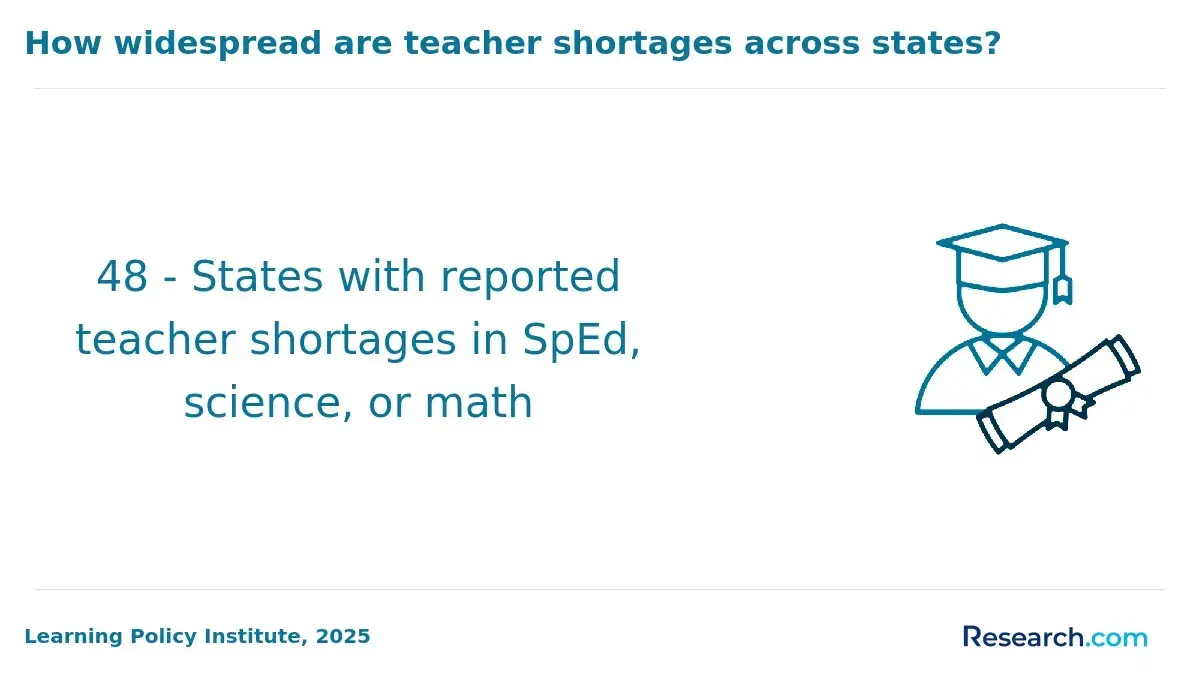
There is a certified teacher shortage across the US, with 48 states reporting vacancies in special education, science, and math and a total of 45,582 unfilled positions across 31 states and the District of Columbia. The US Department of Education maintains a teacher shortage areas database that can help prospective educators review needs by state, grade level, discipline, and subject area.
At the same time, employment for elementary, middle, high school and special education teachers will decline by 2034. That does not mean no one will be hired; retirements, resignations, geographic shortages, and hard-to-staff subjects can still create openings. It does mean candidates should choose programs carefully, build in-demand skills, and look beyond national averages.
| Role or category | Available data from this guide | Career planning implication |
| Elementary school teachers | Median annual wage was $62,340; projected employment change through 2034 is -2% | Check local demand and consider endorsements that improve flexibility |
| High school teachers | Median annual wage was $64,580; projected employment change through 2034 is -2% | Subject area matters; shortages may be stronger in specific fields |
| Postsecondary teachers | Median annual wage was $81,600; projected job growth rate through 2034 is 5.9% | Advanced credentials and subject specialization are often important |
| Special education, science, and math | 48 states reported vacancies in these areas | These fields may offer stronger local opportunities, depending on state and district |
What challenges should educators prepare for?
Education can be meaningful, but it is demanding work. Candidates should understand the pressures before committing to a degree or licensure pathway.
- Wide variation in student needs. Educators may teach students with different academic levels, cultural backgrounds, languages, disabilities, trauma histories, and learning preferences in the same classroom.
- Technology expectations. Teachers are often expected to use digital tools while managing unequal access, distraction, platform changes, cybersecurity concerns, and data privacy.
- Workload pressure. Planning, grading, meetings, family communication, documentation, professional development, and administrative tasks can extend well beyond classroom hours.
- Testing and accountability demands. Standardized testing and performance measures can shape curriculum decisions and may reduce time for deeper projects, creativity, or individualized enrichment.
- Student mental health needs. Educators are often on the front line of recognizing distress, supporting students emotionally, and connecting them with appropriate services.
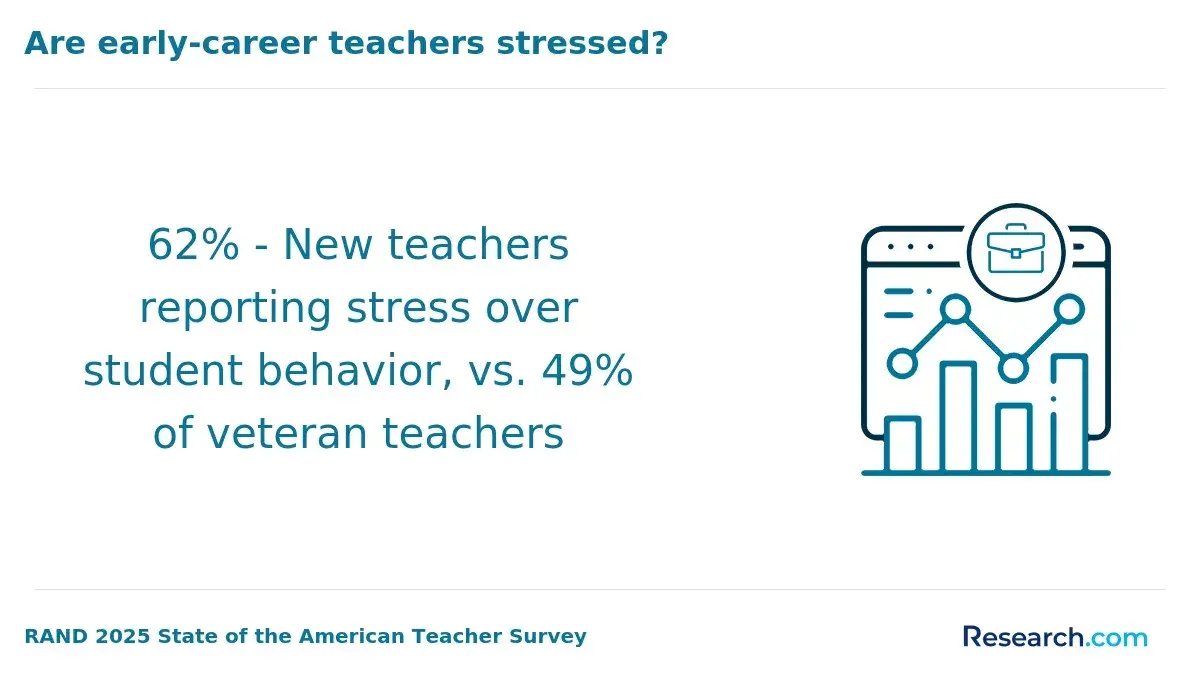
- Burnout risk. When workload, emotional demands, and limited resources combine, educators may struggle to maintain energy and well-being over time.
What graduate degree options are available to educators?
Graduate study can help educators move into leadership, curriculum design, special education, counseling-related roles, higher education, library science, or research. The right degree depends on the role you want, not simply on earning the highest credential available.
| Graduate option | Best fit | What to verify |
| Master’s in education or teaching | Teachers seeking advanced instructional skills, endorsements, or leadership preparation | Accreditation, licensure alignment, field requirements, and cost |
| Doctor of Education | Educators interested in leadership, administration, systems improvement, or applied research | Specialization, dissertation or capstone format, and career relevance |
| Special education graduate program | Educators seeking special education licensure, endorsement, or advanced practice | State approval and practicum requirements |
| Library and information science | Educators interested in school libraries, academic libraries, digital resources, archives, or information management | Program focus, school library requirements, and technology curriculum |
| Child development graduate program | Educators focused on early learning, developmental research, family support, or child-centered program design | Age-group focus, fieldwork, and career outcomes |
For educators balancing work and study, online EdD programs may provide a more flexible route into advanced leadership preparation. Before enrolling, compare admissions requirements, pacing, total cost, faculty expertise, and whether the program’s specialization matches your intended role.
How can labor market trends shape your education career plan?
Labor market information can help you avoid choosing a path based only on personal interest or outdated assumptions. By reviewing hiring demand, shortage areas, projected growth, local district needs, and alternative education careers, you can align your degree and credentials with realistic opportunities.
A practical way to start is to compare national projections with local shortage information and then review the job outlook for teachers in the next 10 years. This can help you identify whether your strongest opportunity is classroom teaching, special education, education technology, higher education, student support, or a non-school training role.
Can an affordable online master’s degree improve your education career options?
An affordable online master’s degree can be useful when it directly supports a licensure goal, salary lane, endorsement, leadership pathway, or transition into a specialized education role. It is less useful if you choose the cheapest program without checking accreditation, state approval, curriculum quality, or employer recognition.
Educators comparing options such as affordable one-year online master’s in education programs should look beyond tuition. Consider fees, books, technology requirements, practicum costs, time away from work, transfer policies, and whether the degree qualifies for advancement in your district or target employer.
Is an MLIS degree useful for educators?
A Master of Library and Information Science can be a strong option for educators who want to combine teaching skills with research support, information literacy, digital collections, archives, school library services, academic libraries, or knowledge management. It may be especially relevant for educators who enjoy helping learners find, evaluate, organize, and use information responsibly.
An MLIS is not automatically the best next step for every teacher. It makes the most sense if your target roles require or value library science, information management, digital curation, or school library preparation. To explore the range of possibilities, review career options with an MLIS degree.
Which certifications and workshops can strengthen an educator’s resume?
Shorter credentials can help educators deepen a specific skill without committing immediately to another degree. The best options are those tied to your current role, licensure requirements, district needs, or desired specialization.
- National Board Certification. This voluntary advanced credential recognizes accomplished teaching practice through a rigorous process that includes evidence of instruction, reflection, and professional knowledge.
- Google Certified Educator. This certification focuses on using Google for Education tools such as Google Classroom, Google Docs, Google Drive, and related applications in instructional settings.
- Project-Based Learning workshop. PBL training helps educators design student-centered projects that involve inquiry, collaboration, applied problem-solving, and authentic products.
- Social-Emotional Learning workshop. SEL training can help educators support empathy, self-awareness, relationship-building, emotional regulation, and classroom climate.
- Technology integration training. Workshops on learning management systems, accessibility tools, AI literacy, and digital assessment can be useful for educators in both online and in-person settings.
| Credential or workshop | Best for | Career value |
| National Board Certification | Experienced teachers seeking recognition of advanced practice | Can strengthen professional credibility |
| Google Certified Educator | Teachers using Google Workspace and digital classroom tools | Demonstrates applied technology fluency |
| Project-Based Learning workshop | Educators wanting more inquiry-based lessons | Improves lesson design and student engagement strategies |
| Social-Emotional Learning workshop | Teachers and support staff focused on student well-being | Supports classroom climate and student development |
Can a master’s in library science widen your career options?
Educators who want to move into information-centered roles may benefit from graduate study in library science. This field can build skills in research methods, digital curation, database use, information organization, resource management, and user education. These capabilities can complement classroom experience and support roles in schools, colleges, libraries, archives, and educational content organizations.
If this path interests you, compare online master’s in library science programs based on accreditation, curriculum focus, technology training, practicum options, and whether the program aligns with school library, academic library, or information management careers.
How can educators build a stronger professional network?
A strong network can help educators learn about openings, find mentors, exchange lesson ideas, explore leadership roles, and stay current on policy and technology changes. Networking should not be limited to occasional conference attendance; it should become a regular professional habit.
- Join professional associations related to your grade level, subject, specialization, or leadership goal.
- Attend conferences, webinars, district trainings, and workshops with clear learning objectives.
- Use LinkedIn or professional forums to follow educators, researchers, school leaders, and organizations in your area of interest.
- Seek mentors inside and outside your school system.
- Share useful resources, not just job requests, so networking becomes reciprocal.
- Consider specialized credentials, such as affordable MLIS online degrees, if they support the network and career field you want to enter.
Should educators consider child development programs?
Child development graduate study can be valuable for educators who want deeper expertise in how children grow, learn, communicate, regulate emotions, and respond to different environments. This option may fit early childhood educators, elementary teachers, family support professionals, curriculum developers, and specialists focused on developmental needs.
Programs in this area can help educators connect developmental theory with practical classroom strategies. If you want a stronger foundation in early learning, developmental assessment, or child-centered program design, compare child development graduate programs based on curriculum, field experience, faculty expertise, and career alignment.
Can educators move into careers outside schools?
Yes. Educators often develop transferable skills in communication, training, assessment, planning, facilitation, conflict resolution, technology use, and program design. These skills can translate into roles in business, nonprofits, government, publishing, human resources, social services, and education technology.
- Curriculum development specialist. These professionals design, review, and improve learning materials for schools, companies, publishers, nonprofits, or online learning providers.
- Educational consultant. Consultants advise schools, districts, or organizations on instruction, curriculum, assessment, improvement planning, or professional development. Educators seeking broader leadership preparation may consider online master’s in organizational leadership programs.
- Corporate training and development professional. Former teachers can design workshops, onboarding programs, compliance training, leadership development, and employee learning experiences.
- Education policy analyst. Policy roles involve research, program evaluation, advocacy, data review, and recommendations related to schools and education systems.
- Educational technology specialist. These professionals help organizations select, implement, and evaluate digital tools for teaching, learning, and training.
- Social worker. Educators who want to support individuals, families, and communities more directly may explore social work. Many programs offer affordable online MSW programs for students seeking flexible graduate preparation.
How to transition out of classroom teaching
- Identify which parts of teaching you want to keep, such as training, mentoring, design, technology, or student support.
- Translate your teaching experience into employer language, such as facilitation, stakeholder communication, learning design, data tracking, and program coordination.
- Build a portfolio with lesson samples, training materials, curriculum maps, presentations, or technology projects.
- Fill skill gaps through targeted certificates, workshops, or graduate coursework.
- Network with professionals already working in your target field.
How do private and public school careers compare?
Public and private schools can offer very different work environments. Neither is automatically better. The right choice depends on your priorities: pay structure, benefits, mission, curriculum flexibility, class size, job stability, licensure expectations, community culture, and administrative demands.
| Factor | Public schools | Private schools |
| Funding and governance | Funded through public systems and shaped by state and district requirements | Funded largely through tuition, donations, or institutional support and governed by the school’s mission |
| Curriculum | Often tied closely to state standards, district policies, and accountability measures | May allow more flexibility, depending on the school |
| Class size | May be larger, depending on district resources and enrollment | May be smaller, although this varies by institution |
| Compensation and benefits | May include structured salary schedules, benefits, union support, or pensions depending on the district | May vary widely and can depend on tuition revenue and school resources |
| Student population | Often serves a broad range of students across socioeconomic and cultural backgrounds | May serve a more specific community based on mission, admissions, religion, language, or program focus |
| Workplace pressures | Can involve mandates, testing requirements, larger systems, and administrative reporting | Can involve enrollment pressure, parent expectations, smaller staffs, or fewer resources |
When public schools may be a better fit
- You want to serve a broad public student population.
- You value structured salary schedules, district resources, or union representation where available.
- You are comfortable working within state standards and public accountability systems.
When private schools may be a better fit
- You want a school mission aligned with a specific philosophy, religion, language, or specialized program.
- You prefer potential curriculum flexibility.
- You are comfortable evaluating compensation, benefits, and job stability school by school.
How can educators protect their well-being and resilience?
Educator well-being is not a side issue. Burnout, stress, emotional fatigue, and workload overload can affect teaching quality, career longevity, and personal health. Building resilience requires individual habits, supportive leadership, reasonable workloads, professional community, and access to help when needed.
Strengthen emotional intelligence
Emotional intelligence helps educators notice their own stress responses, communicate calmly, interpret student behavior with more context, and build healthier relationships with families and colleagues.
Set realistic work boundaries
Planning and grading can consume evenings and weekends if there are no limits. Setting defined work blocks, using reusable planning systems, and protecting personal time can reduce burnout risk.
Build a support system
Peers, mentors, instructional coaches, counselors, and professional communities can help educators solve problems, process difficult experiences, and avoid isolation.
Choose professional development that includes wellness
Workshops on mindfulness, classroom stress management, trauma-informed teaching, and educator resilience can provide tools for managing high-pressure environments.
Use stress-reduction practices consistently
Breathing exercises, movement, mindfulness, journaling, and regular sleep routines are more useful when practiced before stress becomes unmanageable.
Seek help when stress becomes too heavy
Educators should use employee assistance programs, counseling services, healthcare providers, or trusted administrators when stress affects health, safety, or daily functioning.
Creative outlets can also support resilience. Educators interested in communication, storytelling, or personal expression may find that a creative writing online degree complements their teaching and provides a structured outlet for reflection.
How can you control the cost of an education degree?
The cost of an education degree should be evaluated in relation to licensure eligibility, program quality, time to completion, transfer credits, financial aid, and expected career outcomes. A low advertised tuition rate can become expensive if credits do not transfer, student teaching is hard to arrange, or the program does not meet state requirements.
- Check accreditation first. Accreditation affects financial aid, credit transfer, graduate study, and employer recognition.
- Confirm licensure alignment. Ask whether the program meets certification requirements in the state where you plan to work.
- Compare total cost, not only tuition. Include fees, books, technology, transportation, testing, background checks, and field placement expenses.
- Use transfer credits wisely. Community college credits or prior coursework may reduce the number of credits you need to complete.
- Apply for grants and scholarships. Education students may qualify for federal, state, institutional, or district-based aid depending on eligibility.
- Ask employers about tuition support. Some schools, districts, or organizations offer reimbursement or professional development funding.
- Compare online and campus formats carefully. Online study may reduce commuting or relocation costs, but some programs still require in-person fieldwork.
Students considering elementary education can review cost information for a bachelor’s degree in elementary education to compare affordability factors before committing to a program.
How can you make the most of an education degree?
An education degree is only the starting point. Your career outcomes will depend on how well you build experience, document skills, choose endorsements, develop professional relationships, and keep learning after graduation.
- Get classroom experience early. Volunteer, tutor, substitute teach, work as a teaching assistant, or complete field placements seriously. Early exposure helps confirm whether the profession fits you.
- Build communication and management skills. Clear directions, active listening, family communication, conflict resolution, and classroom routines are essential for nearly every education role.
- Stay current with education technology. Learn learning management systems, digital assessment tools, accessibility features, virtual instruction methods, and responsible AI use.
- Choose add-on credentials strategically. Certifications in special education, TESOL, educational technology, SEL, or project-based learning can strengthen your profile if they match local employer needs.
- Consider graduate study when it supports a goal. A master’s or doctoral degree may help with leadership, advanced teaching, specialized roles, or salary advancement, but only if the program aligns with your career plan. Students looking for lower-cost options can compare affordable online teaching degree programs.
- Join professional communities. Associations, conferences, webinars, and mentorship groups can expose you to job leads, teaching strategies, research, and leadership opportunities.
- Create a professional portfolio. Save lesson plans, assessments, student work examples where appropriate, presentations, training materials, and technology projects that show what you can do.
- Reflect and adapt. Strong educators regularly review what worked, what did not, and what students need next.
Common mistakes to avoid when choosing an education career path
| Mistake | Why it causes problems | Better approach |
| Choosing a program before checking state licensure rules | You may graduate without meeting certification requirements where you want to teach | Contact the state education agency and ask the program for written licensure alignment information |
| Focusing only on tuition | Fees, testing, fieldwork, books, and delayed completion can change the real cost | Compare total cost of attendance and time to completion |
| Assuming all online programs are equal | Quality, accreditation, field placement support, and state approval vary | Evaluate accreditation, student teaching arrangements, faculty, and outcomes |
| Ignoring local labor market data | National averages may not reflect hiring in your state, district, or subject area | Review state shortage databases, district postings, and projected demand |
| Relying only on rankings | Rankings may not capture licensure fit, affordability, or local placement strength | Use rankings as one input, not the whole decision |
| Assuming salary outcomes are guaranteed | Pay depends on employer, location, degree level, experience, and role | Review district salary schedules, job postings, and advancement policies |
Key Insights
- Education careers are broader than classroom teaching. Teaching remains central, but educators can also work in special education, higher education, training, counseling, curriculum, EdTech, library science, consulting, and policy.
- Licensure fit should drive program choice. Before enrolling in any education degree, confirm accreditation, state approval, student teaching support, and certification exam requirements.
- The job outlook is mixed. Elementary and high school teacher employment is projected to drop by -2% through 2034, while postsecondary teachers have a projected job growth rate of 5.9% during the same period.
- Shortage areas can still create opportunity. With 48 states reporting vacancies in special education, science, and math, candidates in hard-to-staff subjects or locations may find stronger demand than national averages suggest.
- Technology, data, AI, and student well-being are changing educator expectations. Future-ready educators need digital literacy, ethical judgment, adaptability, and strong human skills.
- Graduate degrees and certificates should be strategic. Advanced study can help, but only when it supports a clear goal such as licensure, leadership, specialization, salary advancement, or career transition.
- Well-being is part of career planning. Education can be rewarding, but workload, emotional demands, testing pressure, and administrative tasks make boundaries and support systems essential.
References:
- Learning Policy Institute. (2025, July). An Overview of Teacher Shortages: 2025 Fact Sheet. https://learningpolicyinstitute.org/media/4764/download?inline&file=Teacher_Shortages_Overview_2025_FACTSHEET.pdf
- National Student Clearinghouse Research Center. (2026, January 15). Final Fall Enrollment Trends. https://nscresearchcenter.org/final-fall-enrollment-trends
- Steiner, E. D., Levine, P. R., Doan, S., & Woo, A. (2025). Teacher WellBeing, Pay, and Intentions to Leave in 2025. RAND. https://www.rand.org/pubs/research_reports/RRA1108-16.html
- U.S. Bureau of Labor Statistics. (2025, August 28). Occupational projections, 2024–2034, and worker characteristics. Retrieved February 2026, from https://www.bls.gov/emp/tables/occupational-projections-and-characteristics.htm
Other Things You Should Know about Education Careers
In 2027, education career salaries vary by role and location, with teachers earning an average of $55,000 to $70,000 annually. Administrators can earn significantly higher, averaging $85,000 to $120,000, influenced by factors like region, institution type, and experience level.
Most states require a state teaching license plus a special education endorsement. Candidates usually need a bachelor’s degree, a teacher-preparation program, supervised student teaching, and passing scores on Praxis or a state exam. Some states also require a background check and fingerprinting before licensure.
To become a school principal in 2027, candidates typically need a master's degree in education leadership or administration, along with a minimum of 3-5 years of teaching experience. Certification or licensure requirements vary by state but often include passing a leadership assessment exam.