
2027 Best Online Psychology Degree Programs

Co-Founder and Chief Data Scientist
According to the World Health Organization, 970 million people across the world live with anxiety, depression, and similar mental disorders. As such, there is a need for psychologists now more than ever. If you aspire to become part of the solution, exploring the best online degrees in psychology is something you should consider.
In this article, I will provide you with a comprehensive overview of available and accredited online psychology degrees and the outlook of the industry after you graduate.
What are the benefits of getting an online Psychology degree?
- As of 2024, the median wage of psychologists is $92,000.
- Considering the overall cost of attending Psychology programs on campus, earning your degree online will cost less.
- Online degree courses in Psychology are also designed for busy practitioners in the field who want to take their careers to the next level.
What can I expect from an online Psychology degree?
- An online associate degree in Psychology introduces the student to the discipline, which includes major theories and topics such as personality, cognition, and developmental approaches.
- Depending on the specific focus of the degree program, most Psychology majors involve coursework in theory and research methods, developmental psychology, and even the study of addictions.
- I have observed that the Bachelor’s and Master’s in Psychology curricula include clinical experiences that provide students with practical, career-focused training.
Where can I work with a Psychology degree?
Based on my research, most psychologists are self-employed. Elementary and secondary schools are the second most common location for employment. Here are the other locations where psychologists are employed:
- Ambulatory healthcare services: 21%
- Government: 8%
- Hospitals: 4%
How much can I make with a Psychology degree?
Below, I have listed the different average salaries for psychology graduates, depending on their specialization:
- Industrial-organizational psychologists: $139,280
- Clinical and counseling psychologists: $106,420
- School psychologists: $90,130
- Other psychologists: $81,500
- Best Psychology Degree Programs for 2027 Top Psychology Degrees
- How long does it take to complete a Psychology degree program? How long does it take to complete a Psychology degree program?
- How does an online Psychology degree compare to an on-campus program? Online vs. On-Campus
- What is the average cost of a Psychology degree program? Degree Cost
- What are the financial aid options for students enrolling in a Psychology degree program? Financial Aid
- What are the prerequisites for enrolling in a Psychology degree program? Requirements
- What courses are typically in a Psychology degree program? Typical Courses
- What types of specializations are available in Psychology degree programs? What types of specializations are available in Psychology degree programs?
- How to choose the best Psychology degree program? How to choose the best Psychology degree program?
- What career paths are available for graduates of Psychology degree programs? What career paths are available for graduates of Psychology degree programs?
- How are emerging digital trends reshaping online psychology education? How are emerging digital trends reshaping online psychology education?
- Can an Online Psychology Degree Prepare You for Licensure and Specialized Certifications? Can an Online Psychology Degree Prepare You for Licensure and Specialized Certifications?
- What challenges might you encounter in an online psychology degree program? What challenges might you encounter in an online psychology degree program?
- What are the alternative pathways to becoming a therapist? What are the alternative pathways to becoming a therapist?
- What is the job market for graduates with a Psychology degree? What is the job market for graduates with a Psychology degree?
- How can psychology students improve their soft skills to enhance their career prospects? How can psychology students improve their soft skills to enhance their career prospects?
- How can you fast-track your career with accelerated online psychology master's programs? How can you fast-track your career with accelerated online psychology master's programs?
- Is a Psychology Degree Worth It? A Cost-Benefit Analysis Is a Psychology Degree Worth It? A Cost-Benefit Analysis
- What are some tips for succeeding in an online psychology degree program? What are some tips for succeeding in an online psychology degree program?
- What is the forensic psychologist job outlook? What is the forensic psychologist job outlook?
Best Psychology Degree Programs for 2027
If you are comparing psychology degrees, you probably want more than a list of schools. You want to know which program fits your goals, how much it costs, how long it takes, whether it can lead to licensure or graduate study, and whether online learning is a smart choice for your situation. This guide breaks down the best psychology degree programs for 2027 and helps you judge which option is worth your time and money.
Psychology is a flexible field, but the right degree depends on what you want to do after graduation. Some students want a broad undergraduate foundation. Others want a program with research, internships, or a pathway to counseling, social work, or doctoral study. In this article, you will find a ranked overview of selected programs, plus practical guidance on cost, accreditation, admissions, specializations, career paths, job outlook, and common mistakes to avoid.
Quick answer: which psychology degree program should you choose?
The best psychology degree program is the one that matches your intended career path, budget, learning style, and licensure goals. If you want flexibility, an accredited online program can be a strong choice. If you plan to become a licensed psychologist or counselor, you should verify the program’s accreditation, clinical training options, and state requirements before enrolling. For many students, a bachelor’s degree is the starting point; for licensed practice or advanced specialization, a master’s degree or doctorate is usually required.
How do we rank our schools?
Research.com builds this ranking to help prospective students compare programs with a practical lens. Our goal is to give readers a clearer view of the education landscape so they can make choices that match their academic goals, career plans, and budget.
To support transparency and accuracy, the data used in this research came from IPEDS, Peterson’s database (including the Distance Learning Licensed Data Set), and College Scorecard. NCES information was also used to add more context on program quality. For more detail, see Research.com’s methodology.
Best Psychology Degree Programs for 2027
1. Arizona State University
Arizona State University offers an online Bachelor of Arts in Psychology for students who want a broad introduction to human behavior, cognition, and mental processes. The curriculum includes learning, motivation, statistics, and brain function, giving students a foundation they can use in fields such as social services, business, law, policy, or graduate study. The program is built around 40 classes, each lasting 7.5 weeks, for a total of 120 credit hours.
- Program length: Four years
- Tracks/concentrations: The Criminal Mind; Effective Thinking; Personality Theory and Research
- Cost per year: $7,317
- Required credits to graduate: 120 credit hours
- Accreditation: Higher Learning Commission (HLC)
2. University of Florida
The University of Florida offers a Bachelor of Arts in Psychology with a science-based liberal arts approach. Students study psychology through both natural science and social science perspectives, with coursework in biological bases of behavior, development, learning, cognition, and sociocultural influences. The major is housed in the College of Liberal Arts and Sciences and requires at least 30 psychology credits plus related coursework in biological science, mathematics, and statistics.
- Program length: Four years
- Tracks/concentrations: Abnormal Psychology; Cognitive Psychology; Physiological Psychology
- Cost per credit: $111.92 (resident), $500 (non-resident)
- Required credits to graduate: 120 credits
- Accreditation: Southern Association of Colleges and Schools Commission on Colleges (SACSCOC)
3. Ohio University
Ohio University offers a fully online Bachelor of Science in Psychology for students who want flexibility without giving up academic structure. The program is designed for career advancement, a move into a new field, or completion of a university degree. It accepts transfer credits, uses asynchronous coursework, and gives students flexible advising. Admission requirements include a high school diploma for freshmen and a cumulative GPA of 2.0 or higher for transfer applicants.
- Program length: Four years
- Tracks/concentrations: Child and Adolescent Psychology; Social Psychology; Cognitive Psychology
- Cost per credit hour: $307 (residents), $312 (non-residents)
- Required credits to graduate: 120 semester hours
- Accreditation: HLC
4. Drexel University
Drexel University offers an online Bachelor’s Degree in Psychology with a strong emphasis on evidence-based study. Students build core knowledge in human behavior, emotion, cognition, research methods, and statistics, while electives allow for academic focus. The program also offers an optional senior thesis research opportunity. To apply, students must have completed 135 quarter credits with a grade of C or better.
- Program length: Four years
- Tracks/concentrations: N/A
- Cost per credit: $459
- Required credits to graduate: 180 quarter-credits
- Accreditation: Middle States Commission on Higher Education (MSCHE)
5. Central Washington University
Central Washington University offers an online Bachelor of Arts degree in Psychology for students planning to continue to graduate study or enter fields that overlap with psychology, such as social work, family studies, business, forensics, or primate behavior. Admission to the major requires a C (2.0) or higher in Psychology 101, at least 45 college-level credits, a cumulative GPA of 2.25 or higher, and specific math and biology coursework. Students also complete service learning or a research assistantship plus a senior assessment exam.
- Program length: At least two years
- Tracks/concentrations: Multicultural Issues in Psychology; Social Psychology; Developmental Psychology
- Cost per credit: $30,437
- Required credits to graduate: 45 or 60 credits
- Accreditation: Council for Accreditation of Counseling and Related Educational Programs (CACREP)
6. University of Utah
The University of Utah offers an online bachelor’s degree in psychology with a mix of major and minor requirements. The program is designed to help students understand psychological topics that apply to everyday life, and it includes opportunities for research, community involvement, internships, and interaction with faculty. Online delivery uses discussion forums, group work, and peer review. The program can be completed in three to four semesters, with part-time scheduling available.
- Program length: Three to four semesters
- Tracks/concentrations: Environmental Psychology & Sustainability; Science and Practice of Clinical Psychology; Stress Management
- Cost per credit: $260
- Required credits to graduate: 53 credits (major), 16 credits (minor)
- Accreditation: Northwest Commission on Colleges and Universities (NWCCU)
7. University of North Dakota
The University of North Dakota offers both a Bachelor of Arts and a Bachelor of Science in Psychology in campus and online formats. The program covers the scientific foundations of behavior, offers research opportunities, and connects students with academic communities such as the Student Psychological Association and Psi Chi. Graduates can pursue roles in mental health centers, hospitals, schools, and marketing research. The university also provides support resources and close faculty interaction.
- Program length: Three to nine months
- Tracks/concentrations: Behavior Modification and Therapy; Abnormal Psychology; Psychology and Law
- Cost per credit: $384.88
- Required credits to graduate: 120 credit hours major), 20 credit hours (minor)
- Accreditation: HLC
8. Indiana State University
Indiana State University offers an online Bachelor of Science in Psychology for students interested in service work, research, government, business, or graduate education. The degree includes 120 credits, with 45 credits in the major, around 25 elective credits, and about 50 credits in the Foundational Studies Program. The curriculum emphasizes critical thinking, leadership, and interpersonal skills while also including scientific research opportunities and practical experiences. The program is open to both freshmen and transfer students.
- Program length: Four years
- Tracks/concentrations: Psychology of Personality; Cognitive Psychology; Developmental Psychology
- Cost per semester: $11,292 (resident), $25,366 (non-resident)
- Required credits to graduate: 120 credits
- Accreditation: HLC
9. University of Massachusetts
The University of Massachusetts offers a fully online Bachelor of Arts in Psychology focused on human development, behavior, and cognition. The curriculum introduces students to experimental, developmental, social, community, personality, and clinical psychology. Students can use the degree to prepare for work in mental health, education, research, business, or graduate school. The program allows transfer of up to 90 college credits and offers a completion window of 12 to 36 months.
- Program length: 12 to 36 months
- Tracks/concentrations: Adult Development and Aging; Industrial/Organizational Psychology; Sport and Exercise Psychology
- Cost per credit: $380
- Required credits to graduate: 120 credits
- Accreditation: New England Commission of Higher Education (NECHE)
10. Eastern Illinois University
Eastern Illinois University offers an online BA in Psychology for students who already have an Associate’s degree or some college coursework, along with introductory psychology and college algebra or elementary statistics. Students can complete all psychology major requirements online, while additional coursework may be finished online or through local community colleges. The program provides internship and integrative learning opportunities, and the transcript carries the same degree designation as the campus version.
- Program length: Two years
- Tracks/concentrations: N/A
- Cost per credit: $419.85
- Required credits to graduate: 120 credit hours
- Accreditation: HLC
How long does it take to complete a psychology degree program?
The timeline depends on the degree level, your enrollment status, and how many transfer credits you bring in. A psychology degree can be a short-term academic step or a multi-year professional commitment, especially if your goal is licensure.
- Associate degree: Usually two years of full-time study.
- Bachelor’s degree: Usually about four years.
- Master’s degree: Often about two years after the bachelor’s degree.
- Doctorate in psychology: Online psychology doctorate degrees typically include either a Doctor of Philosophy (Ph. D.) or a Doctor of Psychology (PsyD). A Ph.D. may take five to eight years because of the dissertation and research requirements, while a Psy.D. is often completed in four to six years.
How does an online psychology degree compare with an on-campus program?
Online and on-campus psychology degrees usually cover similar subject matter and lead to comparable academic outcomes when they come from accredited schools. The main difference is the learning format, which affects flexibility, structure, and cost.
| Factor | Online program | On-campus program |
| Schedule flexibility | Often high; useful for working students and caregivers | More fixed class times and attendance expectations |
| Learning style | Best for students who can work independently | Better for students who want face-to-face interaction |
| Cost structure | May reduce commuting, housing, and campus-related expenses | May include more location-based costs |
| Hands-on support | Depends on the school’s advising, faculty access, and student services | Usually more immediate in-person access |
| Accreditation | Should meet the same accreditation standards as campus programs | Should also meet the same accreditation standards |
Online study can be a strong option if you need flexibility or want to reduce costs. If you are considering the cheapest online bachelor’s degree in psychology, focus on whether the lower price still comes with proper accreditation, solid advising, and useful student support.
What is the average cost of a psychology degree program?
Psychology degree prices vary widely based on degree level, school type, residency status, and transfer-credit policies. These are the ranges provided for online psychology programs:
| Degree level | Cost range |
| Associate degree | $6,260 to $35,520 |
| Bachelor’s degree | $15,501 to $128,300 |
| Master’s degree | $13.639 to $98,270 |
| Doctorate degree | $30,368 to $105,946 |
When comparing cost, do not look only at tuition. Ask about technology fees, clinical fees, practicum costs, textbooks, residency requirements, and whether transfer credits can reduce the total bill. A lower tuition number can still become expensive if the school has limited transfer options or extra program fees.
What financial aid options are available for psychology students?
Psychology students can lower costs through scholarships, grants, employer tuition assistance, and federal aid. Subject-specific awards can be especially helpful if you already know your specialization.
- American Psychological Association (APA): Maintains a large scholarship resource through its “PsycInfo” database, where students can search by keyword, eligibility, and deadline.
- Society for Personality and Social Psychology (SPSP): Offers scholarships for undergraduate and graduate research in personality and social psychology.
- Association for Psychological Science (APS): Provides scholarships, conference travel support, and awards for early-career researchers.
- Psi Chi National Honor Society: Offers scholarships for high-achieving psychology majors based on academics, research, and leadership.
- American Association for Marriage and Family Therapy (AAMFT): Supports graduate students preparing for careers in marriage and family therapy.
Federal financial aid can also help many students, depending on eligibility and school participation. Before enrolling, check whether your program qualifies for federal aid and what documents you need to file, including the FAFSA where applicable.
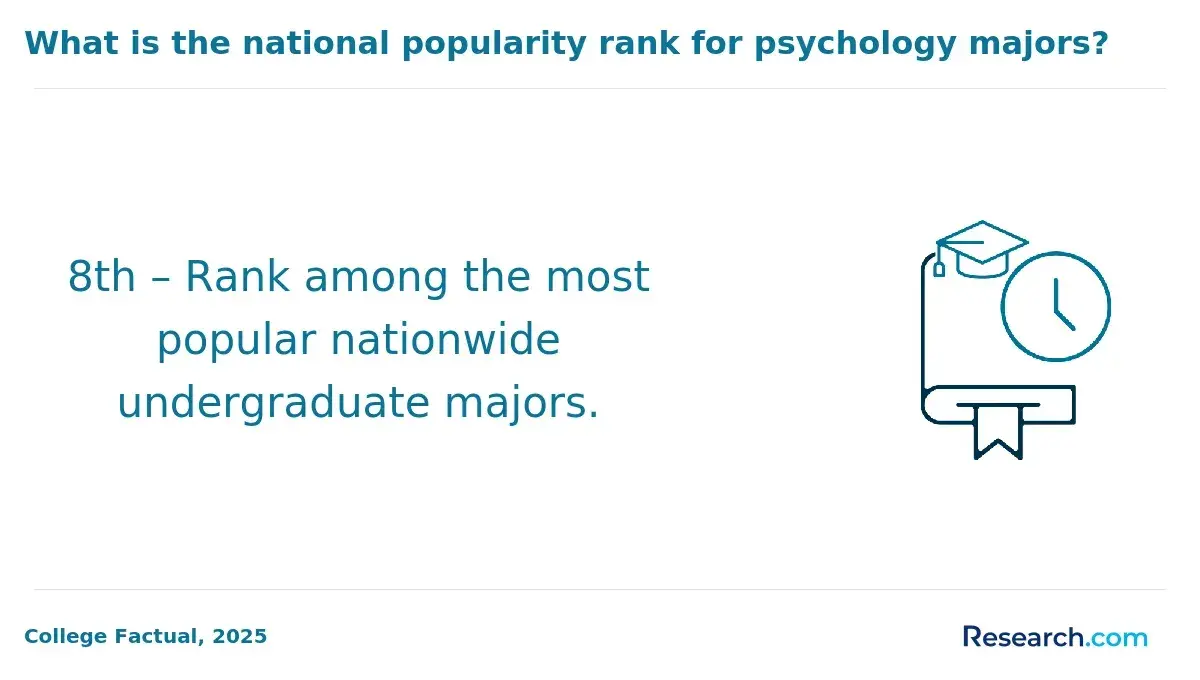
You can also review the graphic below for additional context on government support for psychology education.
What are the admissions requirements for a psychology degree program?
Admissions standards vary by degree level, but most psychology programs ask for a clear academic record and basic technical readiness for online coursework.
Admission requirements by degree level
For associate and bachelor’s programs, applicants usually need an official high school transcript or a qualifying GED score. If the student has attended college before, prior transcripts are also required.
For master’s and doctorate programs, applicants generally need a bachelor’s degree and transcripts from all postsecondary schools attended. Graduate psychology programs often expect a cumulative GPA around 3.0, though requirements differ by school. Other common materials include GRE scores, a statement of purpose, letters of recommendation, and a résumé.
Technology requirements for online study
Online psychology students should plan for reliable internet access, a laptop or desktop computer, a webcam, and a microphone. Schools typically provide system requirements, required software, and instructions for the learning platform and video-conferencing tools before classes begin.
What courses are usually included in a psychology degree?
Most psychology programs share a core set of courses that introduce research, theory, and major areas of the field. The exact titles may differ, but these subjects are common across many programs.
- Introduction to Psychology: Covers the field’s basic concepts, theories, and historical development.
- Statistical Methods in Psychology: Introduces data analysis and statistical tools used in psychological research.
- Research Methods in Psychology: Explains how studies are designed, conducted, and evaluated ethically.
- Biological Psychology: Focuses on the biological foundations of behavior, including neuroscience.
- Cognitive Psychology: Examines memory, perception, decision-making, and problem-solving.
- Developmental Psychology: Studies human growth across the lifespan, including cognitive and socioemotional change.
What specializations can psychology students choose?
The American Psychological Association recognizes 56 divisions within psychology. At the degree level, students often choose a broad concentration such as general psychology, child psychology, clinical psychology, or health professions. The right specialization depends on whether you want to work in research, counseling, healthcare, education, business, or another applied setting.
- Child psychology: Focuses on how cognitive, emotional, and behavioral development changes from infancy through adolescence. Entry into licensed clinical work usually requires a master’s degree, and many professionals hold a Ph.D. or Psy.D.
- Clinical psychology: Centers on assessment, diagnosis, and treatment of mental health disorders. This path usually requires a doctoral degree and state licensure.
- Counseling psychology: Helps people manage personal, emotional, and behavioral challenges. Many roles require a master’s degree plus supervised clinical hours.
- Developmental psychology: Studies developmental changes across the lifespan and may lead to roles in social work, counseling, or research. Direct patient services typically require a Ph.D. and state licensure.
- Educational psychology: Focuses on improving learning outcomes for children and adults, including students with ADHD, autism, or dyslexia. Licensure and degree requirements vary by role.
- Forensic psychology: Applies psychology in legal and correctional settings. Many roles require a master’s degree or higher, licensure, and professional credentials.
- Health psychology: Examines how psychological, social, and biological factors affect health and behavior. Clinical practice usually requires a master’s degree and a state license.
- Industrial-organizational psychology: Uses research and assessment to improve workplace performance, safety, leadership, and employee satisfaction. Postgraduate study is often preferred or required.
- Social psychology: Studies how beliefs, emotions, and behavior are shaped by real or perceived social interactions. Research-heavy roles often require a doctoral degree.
- Sports psychology: Focuses on performance, motivation, and mental skills in athletic settings. Some roles require a doctorate, while others are open to bachelor’s or master’s graduates in related support positions.
How should you choose the best psychology degree program?
The best psychology program is not always the most popular one. The right choice depends on accreditation, career goals, flexibility, and whether the school gives you the training you actually need after graduation.
1. Check accreditation first
Accreditation protects your investment. It affects financial aid eligibility, employer trust, and whether your credits may transfer. For psychology, programmatic accreditation matters even more if you plan to enter licensure-heavy fields. CACREP and the Commission on Accreditation for Marriage and Family Therapy Education (COAMFTE) are relevant in counseling- and therapy-related graduate pathways, while APA accreditation is especially important for doctoral psychology education. Always verify both institutional and programmatic accreditation before applying.
2. Match the degree to your career goal
A bachelor’s degree can help you enter roles in human services, business, or preparation for graduate study. A master’s degree is often the next step for counseling-adjacent or specialized roles. A doctorate is usually required for licensed psychologist roles. If you are unsure, start with the end goal and work backward.
3. Compare school reputation and faculty support
Psychology is a research-driven field, so faculty experience matters. Look for instructors who are active in the profession, accessible to students, and able to support research, internships, or mentorship. A strong faculty can improve both the learning experience and your graduate school or job applications.
4. Review practicum, internship, or clinical requirements
Some programs build in supervised experiences, while others leave more of that planning to you. If a license is your goal, confirm whether the program includes the hours and settings you need. Ask whether the school helps place students or whether you must secure your own site.
5. Choose the learning format you can finish
Online psychology programs work well for self-directed students, working adults, and learners who need schedule flexibility. Synchronous classes provide more live interaction, while asynchronous classes give you more freedom. If you know you learn best through discussion and structure, choose a program that offers strong faculty engagement and regular deadlines.
6. Evaluate class size and student support
Smaller classes can make it easier to get feedback and build relationships with faculty. Very large online sections may reduce interaction, so ask how many students are typically in each course and what support services are available. Advising, tutoring, writing help, and career services can make a major difference in completion and outcomes.
If you are trying to decide between broad undergraduate routes, it can also help to understand the difference between BA and BS in psychology before you apply.
| Decision factor | What to ask | Why it matters |
| Accreditation | Is the school and program properly accredited? | It affects licensure, transfer, and employer recognition. |
| Career goal | Do you need a bachelor’s, master’s, or doctorate? | The wrong degree can delay your next step. |
| Practicum/internship | Does the program include supervised experience? | Important for clinical and licensure-oriented paths. |
| Flexibility | Is the schedule synchronous, asynchronous, or hybrid? | It affects whether you can balance school with work or family. |
| Support services | Are advising, tutoring, and career support available? | These services can improve completion and outcomes. |
What career paths can psychology graduates pursue?
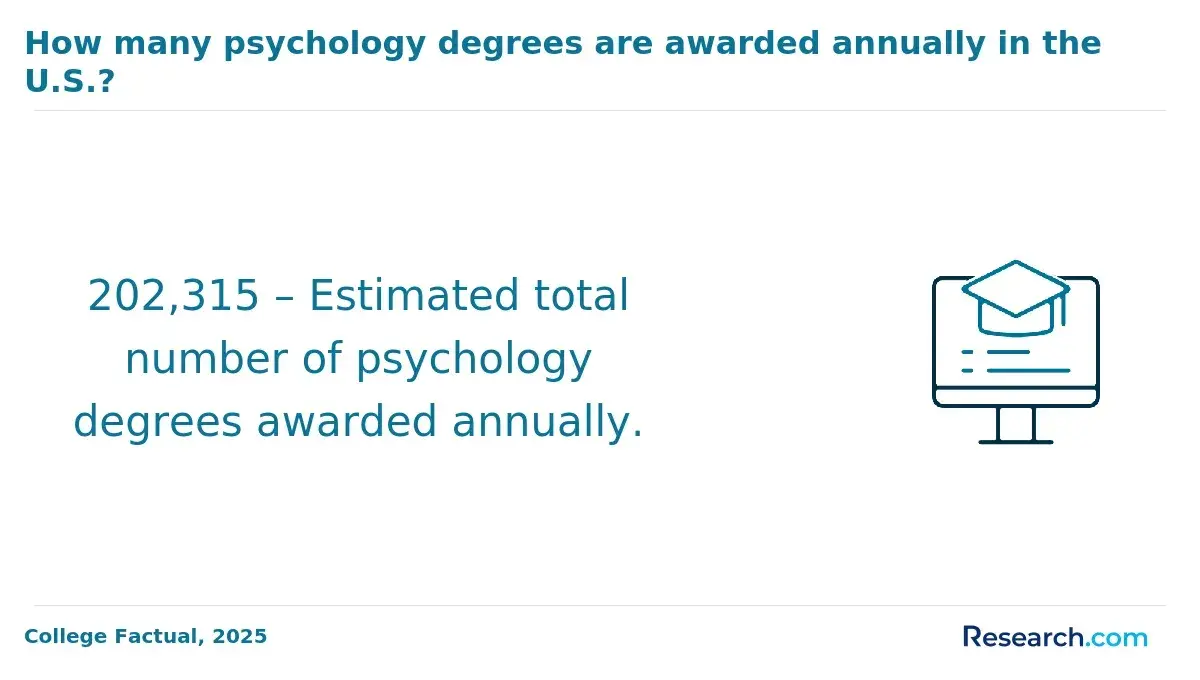
Psychology graduates can move into direct-service roles, research, education, or related helping professions. Some careers are open to bachelor’s graduates, while others require graduate training, supervised hours, and state licensure.
- Psychologist: Provides assessment, diagnosis, and treatment for mental health concerns. This is typically a doctoral-level career with licensure requirements.
- Substance abuse, behavioral disorder, and mental health counselor: Supports individuals dealing with addiction, behavioral concerns, and emotional challenges, often in clinics or rehabilitation centers.
- Social worker: Helps individuals and families connect with services and support. Clinical social work usually requires a master’s degree and, in many cases, licensure.
- School and career counselor: Helps students navigate academic, personal, and career decisions. A master’s degree and state license are usually required.
- Marriage and family therapist: Works with couples and families on relationship and emotional concerns. This role typically requires a master’s degree and state license.
The chart below summarizes average wages for psychologists across specializations and industries.
How are digital trends changing online psychology education?
Online psychology education is becoming more interactive. Programs are using stronger learning platforms, virtual simulations, live webinars, and collaborative tools to make coursework feel more applied. These tools can help students practice concepts in a more realistic setting, especially when the program includes research, case analysis, or counseling preparation.
Telehealth and digital collaboration are also shaping what employers expect from graduates. Students should look for programs that teach them how to work with digital records, remote communication tools, and technology-supported service delivery. If you want a flexible graduate option built around these trends, explore online masters in psychology.
Can an online psychology degree prepare you for licensure and specialized certifications?
Yes, but only if the program aligns with the requirements of your state and your intended credential. An online psychology degree can support licensure or certification when it includes the right coursework, supervised experience, and approved practicum or internship components. However, not every online program is designed for every license.
If you want to become a licensed counselor, therapist, or psychologist, confirm the state board requirements before enrolling. Some specialties also require extra supervision, exams, or postdegree hours. For more applied training, consider programs such as the behavioral psychology degree.
What challenges do online psychology students commonly face?
Online psychology programs offer flexibility, but they also require discipline. Common challenges include staying motivated, managing deadlines, and feeling disconnected from classmates or faculty. Technical issues can also slow progress if you do not have the right equipment or reliable internet access.
To stay on track, build a weekly study plan, participate in discussion boards, and use tutoring or academic support early. If you want a faster-paced option and can handle a heavier workload, accelerated psychology programs may be worth exploring.
How can online psychology students build a professional network?
Networking matters in psychology because many career opportunities come through faculty relationships, internships, research, and referrals. Online students can build connections through virtual office hours, alumni events, student organizations, and discussion-based classes.
Look for programs that encourage mentorship and offer real access to instructors. If you plan to continue into advanced research or specialization, a path such as an online PhD neuropsychology program can also connect you with a more focused professional network.
What are alternative pathways to becoming a therapist?
Not everyone follows the same route into therapy-related work. Depending on your state and your target role, you may be able to pursue graduate certificates, counseling-focused degrees, or other supervised pathways that lead to licensure or supported practice. These alternatives can be useful if you are changing careers or need a more affordable entry point.
If you are comparing nontraditional routes, review what degree do you need to become a therapist before choosing a program.
What is the job market for psychology graduates?
According to the U.S. Bureau of Labor Statistics, employment for psychologists is expected to grow by 8% between 2023-2033. That outlook suggests continued demand, but it does not mean every psychology graduate will find the same opportunities. Job prospects vary by degree level, specialization, location, and whether you have licensure or supervised experience.
Some of the strongest opportunities may come in healthcare, schools, social services, behavioral health, research, and industrial-organizational settings. Salaries also vary widely by role and region. If location matters to your decision, review the highest-paying cities in the field of psychology before you commit to a program.
How can psychology students strengthen the soft skills employers want?
Academic knowledge matters, but employers also look for personal skills that support communication, trust, and decision-making. These skills are especially important in helping professions, where you work with people facing stress, conflict, or behavior change.
- Communication: Use active listening, clear writing, and thoughtful questioning to explain ideas and build rapport.
- Empathy and emotional intelligence: Practice self-awareness and learn how to understand other people’s viewpoints without losing objectivity.
- Critical thinking: Analyze case studies, compare theories, and evaluate evidence before drawing conclusions.
- Time management: Plan around assignments, clinical hours, research, and personal responsibilities.
- Adaptability: Stay open to changing research, new technology, and different client needs.
- Teamwork: Build experience through group projects, internships, and research collaboration.
How can accelerated online psychology master’s programs help you move faster?
Accelerated online psychology master’s programs are built for students who want to finish sooner and enter the next career stage more quickly. These programs compress coursework into shorter terms and may be a practical fit for working professionals, career changers, or students who already know their specialization.
They usually move faster because they require a more demanding pace, which may include shorter classes, heavier weekly reading, and tightly scheduled assignments. Some also include fieldwork or internship components so students still get applied experience. If speed matters, compare the workload carefully and make sure the pace is realistic for your schedule.
For a closer look at faster options, review the accelerated psychology masters programs.
Is a psychology degree worth it?
Whether a psychology degree is worth it depends on your goals, your tolerance for graduate study, and the kind of work you want to do after graduation. The degree can be valuable because it opens doors in human services, education, research, business, and advanced clinical pathways. But the payoff is strongest when you choose a program that fits your actual career target.
What to weigh before enrolling
- Cost: Tuition can be manageable at some public schools and significantly higher at private institutions or doctoral levels.
- Career path: Some psychology jobs are open to bachelor’s graduates, while others require a master’s degree or doctorate.
- Licensure: If you want to practice clinically, you must check state requirements carefully.
- Flexibility: Online programs can help you keep working while you study.
- Long-term value: A degree may improve your earning potential, but only if it leads to a role you actually want.
For a deeper cost-benefit discussion, see Is a Psychology Degree Worth It?
How can you succeed in an online psychology program?
Online success is usually less about talent and more about consistency. Students who do well tend to build habits early and use the resources the school offers.
- Create a weekly plan: Block time for lectures, reading, discussion posts, and assignments.
- Participate actively: Ask questions and contribute to online discussions instead of treating them like busywork.
- Use support services: Take advantage of tutoring, library access, writing help, and academic advising.
- Stay in contact with faculty: Reach out when you need clarification or want feedback on your progress.
- Break large tasks into smaller steps: This helps prevent procrastination and last-minute stress.
- Ask for help early: Don’t wait until you are behind to seek support.
If you are leaning toward a specialty that involves legal systems and criminal behavior, you may want to compare forensic psychology master's programs online.
Are there affordable specializations in forensic psychology?
Yes, but affordability should never come at the expense of accreditation or career relevance. The most practical approach is to compare total cost, program quality, and whether the curriculum includes applied training that supports your goals. Forensic psychology can be a competitive specialization, so the right program should balance cost with real professional preparation.
As you compare options, review tuition, aid, field placement opportunities, and how well the program aligns with licensure or employer expectations. You can start by looking at cheap forensic psychology masters programs online.
What is the forensic psychologist job outlook?
Forensic psychology remains an important niche because courts, correctional systems, and legal teams increasingly rely on psychological expertise in assessments, risk evaluations, and rehabilitation planning. Demand will likely continue to depend on how well you combine academic training with supervised experience and legal-system familiarity.
If you want to work in this specialty, choose a program that includes applied training, strong faculty mentorship, and exposure to real-world case settings. For a closer look at the field, review the forensic psychologist job outlook.
What do graduates say about online psychology programs?
- Stefanie: "My online psychology degree gave me the flexibility to manage work and school at the same time. The virtual classroom also connected me with classmates from different backgrounds, which made the learning experience more dynamic and helped me build stronger digital collaboration skills."
- Chantel: "Studying psychology online let me shape my schedule around my life instead of the other way around. I also benefited from the discussion-based format and the easy access to research tools, which strengthened both my confidence and my academic habits."
- Nick: "Earning my psychology degree online changed the way I learned and worked. The format made it possible to fit school into a busy routine, and the variety of perspectives in class helped me think more broadly. The support from faculty made a big difference too."
Common mistakes to avoid when choosing a psychology program
- Picking a school before checking accreditation.
- Assuming every online program qualifies you for licensure.
- Comparing tuition without looking at fees, transfer rules, and total cost.
- Choosing a program because of rankings alone.
- Ignoring whether the curriculum includes statistics, research methods, or practicum experience.
- Assuming a bachelor’s degree is enough for clinical practice.
- Overlooking the school’s student support and advising structure.
Questions to ask before you enroll
- Is this school and program properly accredited?
- Does this degree match my intended career path?
- Will I need a master’s degree or doctorate later?
- Does the program include internship, practicum, or supervised experience?
- Can I transfer credits to reduce time and cost?
- What licensure rules apply in my state?
- How much direct access will I have to faculty and academic support?
- What kind of jobs do graduates actually get?
Key Insights
- The best psychology degree is the one that fits your end goal, not just the one with the biggest name.
- Accreditation is non-negotiable, especially if you may pursue licensure or graduate study.
- Online programs can be just as valuable as campus programs when they are well designed and properly accredited.
- Costs vary a lot, so compare total price, transfer credit rules, and hidden fees instead of tuition alone.
- A bachelor’s degree can open many doors, but clinical practice usually requires graduate study and state licensure.
- Specialization matters. Child, clinical, counseling, forensic, health, I/O, and sports psychology all lead to different career paths and education requirements.
- Before enrolling, verify the school’s support services, internship options, and fit with your learning style and schedule.
- Strong soft skills such as communication, empathy, time management, and adaptability can improve both academic success and employability.
References:
- College Factual. (2025). 2025 Psychology Degree Guide. https://www.collegefactual.com/majors/psychology/
- U.S. Bureau of Labor Statistics. (2025). Psychologists: Occupational Outlook Handbook. https://www.bls.gov/ooh/life-physical-and-social-science/psychologists.htm
- Teach.com. (2026). Clinical Psychologist Careers and Salary. https://teach.com/online-ed/psychology-degrees/online-masters-in-clinical-psychology/salary-and-career-outlook/
Other Things You Should Know About Online Psychology Degree Programs
Most of the best online psychology degree programs in 2027 require students to complete 120 credit hours for a bachelor's degree. This includes core psychology courses, electives, and general education credits, aligning with standard academic requirements for a comprehensive undergraduate education.
Look for regional accreditation from a U.S. Department of Education-recognized agency, plus programmatic accreditation when available. For psychology, the American Psychological Association does not accredit bachelor’s programs, but it accredits many doctoral programs. Accreditation affects transfer credit, graduate admission, and eligibility for licensure pathways.
Admission requirements for top online psychology programs in 2027 typically include a high school diploma or equivalent, a minimum GPA of 3.0, and standardized test scores such as the SAT or ACT. Some programs may also require a personal statement or letters of recommendation.


