
2027 Best One-Year Online Master’s in Psychology Degree Programs

Co-Founder and Chief Data Scientist
Choosing a one-year online master’s in psychology is a speed-versus-fit decision. The appeal is clear: finish faster, keep working while enrolled, and move sooner toward roles in counseling-adjacent services, research, human resources, organizational development, behavioral support, education, or doctoral study. The risk is also real: accelerated programs are demanding, and not every online psychology master’s meets licensure, practicum, or career requirements.
This guide is designed for working adults, recent psychology graduates, educators, HR professionals, and career changers comparing accelerated online psychology master’s programs. It explains what these programs include, how long they actually take, what they cost, how online study compares with campus-based study, which specializations fit different goals, and what questions to ask before enrolling.
Quick Answer: Is a One-Year Online Master’s in Psychology Worth Considering?
A one-year online master’s in psychology can be a strong option if you already have the academic background, time, and discipline to handle a compressed graduate workload. It is especially useful for students pursuing applied psychology, industrial-organizational psychology, research preparation, education-related psychology, or a stepping stone toward doctoral study. It is less straightforward for students seeking clinical licensure because state requirements often include specific coursework, supervised field experience, examinations, and post-degree hours.
| Decision Factor | What to Know Before Enrolling |
| Program speed | Some programs can be completed in 1 year, but many students need 18-24 months depending on course load, practicum requirements, and scheduling. |
| Best fit | Accelerated online formats work best for self-directed learners who can study consistently each week and manage intensive assignments. |
| Licensure caution | A master’s degree alone does not automatically qualify graduates for licensed psychologist roles. Requirements vary by state and specialization. |
| Cost range | The average cost of an online master’s in psychology can range from $10,000 to $30,000 or more. |
| Career value | The degree can support roles in mental health services, education, research, human resources, organizational consulting, and related fields, but outcomes depend on specialization, experience, credentials, and location. |
What are the main benefits of earning an online Master’s in Psychology?
- Broader career options: A one-year online master’s in psychology can support paths in behavioral services, counseling support, human resources, organizational development, research, market research, education, and preparation for doctoral-level psychology study. Clinical psychologist roles generally require further licensure and advanced training.
- Stronger positioning for specialized roles: Graduate study can help students build expertise in research methods, assessment, workplace behavior, human development, or behavioral analysis, depending on the concentration.
- Flexible access: Online delivery allows many students to continue working, avoid relocation, and compare programs outside their local area while pursuing advanced psychology coursework.
What can I expect from a One-Year Online Master’s in Psychology Degree?
A one-year online master’s in psychology is an accelerated graduate program that compresses advanced psychology coursework into a shorter schedule. Students commonly study research design, statistics, cognitive and social psychology, human development, ethics, psychopathology, and specialization-specific topics such as industrial-organizational psychology, forensic psychology, educational psychology, or applied behavior analysis.
The online format usually combines asynchronous assignments with readings, discussion boards, recorded lectures, projects, exams, and sometimes live virtual meetings. Some programs are built for full-time students who can move quickly, while others allow part-time enrollment and may take longer than 1 year. Students considering clinical, counseling, school psychology, or behavior analysis roles should pay close attention to whether the program includes supervised fieldwork, practicum placements, or coursework required by licensing or certification boards.
Who is a one-year online psychology master’s best for?
- Students who already completed psychology prerequisites and want a faster graduate pathway.
- Working professionals who need an online format but can commit to an intensive schedule.
- People targeting applied, organizational, research, education, or non-licensure psychology roles.
- Students planning to use the master’s degree as preparation for a doctorate or PsyD program.
Who should be cautious about this path?
- Students who need extensive in-person clinical training for licensure.
- Learners who cannot dedicate regular weekly study time to accelerated coursework.
- Applicants who have not checked whether the degree meets their state’s requirements.
- Students choosing only by speed without comparing accreditation, outcomes, cost, and faculty fit.
Where can I work with a One-Year Online Master’s in Psychology Degree?
Graduates may work in settings that use psychological research, behavioral insight, assessment skills, communication, and data interpretation. Common environments include healthcare organizations, mental health agencies, schools, colleges, social service organizations, nonprofit programs, correctional systems, research teams, and private companies.
In business settings, psychology graduates may apply their training in employee development, talent management, organizational effectiveness, leadership training, consumer research, and employee well-being initiatives. In education and social service settings, they may support student development, community programs, intervention planning, or case coordination. Roles involving independent diagnosis or treatment generally require additional licensing steps.
How much can I make with a One-Year Online Master’s in Psychology Degree?
Earnings depend heavily on role, location, credentials, industry, and whether the graduate completes licensure or certification requirements. Industrial-organizational psychologists, who apply psychology to workplace performance and organizational systems, earn a median annual salary of approximately $96,270. Behavioral analysts and mental health counselors typically earn between $50,000 and $70,000 per year. School psychologists have a median salary of around $82,770 annually.
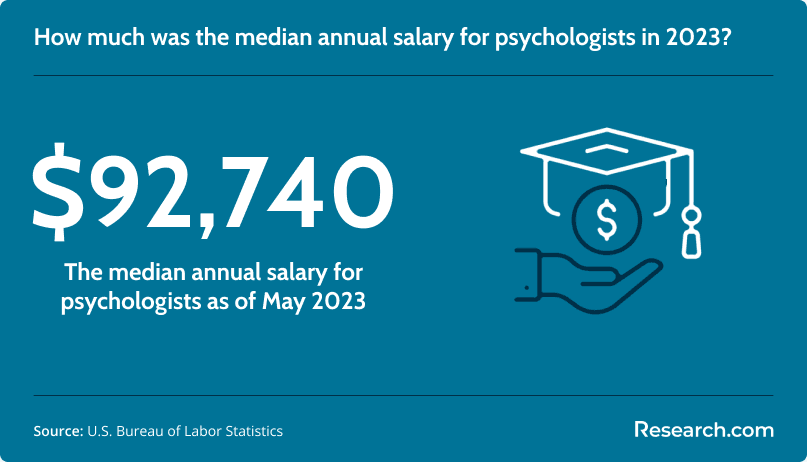
Psychology graduates who move into business roles may also see strong earnings. Human resource managers earn a median annual salary of $130,000, while market research analysts make approximately $63,920. As of May 2023, the median annual salary for psychologists was $92,740. Salaries ranged widely, with the lowest 10% earning under $52,430 and the top 10% earning over $151,880 annually.
| Career Direction | How the Degree May Be Used | Important Limitation |
| Clinical or counseling services | Can support counseling-related roles, case management, or preparation for licensure-focused programs. | Licensure rules vary by state, and a master’s alone may not qualify someone to practice independently. |
| Industrial-organizational psychology | Can prepare graduates for workplace research, employee assessment, training, and organizational improvement. | Employers may prefer candidates with analytics, consulting, or HR experience. |
| Education and child development | Can support roles related to learning, student support, program development, and developmental research. | School psychology and school counseling roles may require state-specific credentials. |
| Research and doctoral preparation | Can strengthen research methods, statistics, and academic writing skills for doctoral applications. | Students should choose programs with faculty mentorship and research opportunities. |
| Behavior analysis | Can provide a foundation for behavioral intervention roles and certification preparation. | Certification may require specific verified coursework and supervised fieldwork. |
- Best One-Year Online Master’s in Psychology Degree Programs for 2027
- How long does a one-year online Master’s in Psychology take?
- Online vs. on-campus Master’s in Psychology: what changes?
- How much does a one-year online Master’s in Psychology cost?
- What financial aid can graduate psychology students use?
- What admissions requirements should applicants expect?
- What courses are common in accelerated psychology master’s programs?
- Which psychology specializations are available online?
- What licensure and certification rules should graduates check?
- Why does accreditation matter for online psychology master’s programs?
- How should students choose the best program?
- What career paths can graduates pursue?
- What does the job market look like for psychology master’s graduates?
- What makes accelerated online psychology programs challenging?
- How should students evaluate return on investment?
- Which additional certifications may help psychology graduates?
- What career support and networking services should programs offer?
- How can graduates move from a master’s to a doctorate?
- Do employers value accelerated online psychology master’s degrees?
- What trends are changing online graduate psychology education?
- How do programs address diversity, equity, and inclusion?
- Key Insights
List of the Best One-Year Online Master’s in Psychology Degree Programs for 2027
How do we rank schools?
Choosing an accelerated psychology master’s program means weighing cost, schedule, academic quality, student support, and career fit. Research.com ranks programs to help readers compare options using a data-informed process rather than relying only on marketing claims.
The ranking is based on a transparent Research.com methodology. Data sources include the Integrated Postsecondary Education Data System (IPEDS), Peterson's databases, including the Distance Learning Licensed Data Set, and the College Scorecard from the National Center for Education Statistics. These sources help compare programs using institutional, distance learning, and student outcome data where available.
| School | Program Focus | Program Length | Cost per Credit | Credits |
| Touro University Worldwide | Media Psychology and Educational Psychology | 1 year | $500 | 36 credits |
| The Chicago School of Professional Psychology | Forensic Psychology and Industrial-Organizational Psychology | 1 year | $1,198 | 36 credits |
| University of West Alabama | Experimental Psychology | 1 year | $429 | 36 credits |
| Southern New Hampshire University | Industrial-Organizational Psychology and Child and Adolescent Development | 15 months | $627 | 36 credits |
| Arizona State University | Cognitive psychology, behavioral neuroscience, and social psychology | 1 year | $543 | 36 credits |
1. Touro University Worldwide
Touro University Worldwide offers an online Master of Arts in Psychology for students interested in applying psychology in counseling-related, educational, or research-informed settings. Launched in 2014, the program uses asynchronous coursework, which can help adult learners and working professionals manage study around existing responsibilities. Concentration options include Media Psychology and Educational Psychology.
- Program Length: 1 year
- Tracks/Concentrations: Media Psychology and Educational Psychology.
- Cost per Credit: $500
- Required Credits to Graduate: 36 credits
- Accreditation: Accredited by the WASC Senior College and University Commission (WSCUC).
2. The Chicago School of Professional Psychology
The Chicago School provides an online Master of Arts in Psychology that has been offered since 2008. The program is designed for students who want to use psychological principles in applied professional settings. Available tracks include Forensic Psychology and Industrial-Organizational Psychology, and the fully online format blends asynchronous coursework with interactive virtual discussions.
- Program Length: 1 year
- Tracks/Concentrations: Forensic Psychology, Industrial-Organizational Psychology
- Cost per Credit: $1,198
- Required Credits to Graduate: 36 credits
- Accreditation: Accredited by the Western Association of Schools and Colleges Senior College and University Commission (WSCUC).
3. University of West Alabama
The University of West Alabama offers an online Master of Science in Experimental Psychology for students focused on research careers or future doctoral study. Established in 2015, the program is delivered asynchronously and emphasizes experimental and applied psychology through courses such as cognitive psychology, statistics, and behavioral science.
- Program Length: 1 year
- Tracks/Concentrations: Focuses on experimental psychology
- Cost per Credit: $429
- Required Credits to Graduate: 36 credits
- Accreditation: Accredited by the Southern Association of Colleges and Schools Commission on Colleges (SACSCOC).
4. Southern New Hampshire University (SNHU)
Southern New Hampshire University offers an online Master of Science in Psychology that began in 2012. Students can choose tracks in Industrial-Organizational Psychology or Child and Adolescent Development. The program is fully online and built around flexible scheduling and career-oriented coursework for working adults.
- Program Length: 15 months
- Tracks/Concentrations: Industrial-Organizational Psychology, Child and Adolescent Development
- Cost per Credit: $627
- Required Credits to Graduate: 36 credits
- Accreditation: Accredited by the New England Commission of Higher Education (NECHE).
5. Arizona State University (ASU)
Arizona State University offers an online Master of Science in Psychology introduced in 2016. The curriculum focuses on cognitive psychology, behavioral neuroscience, and social psychology. It is structured for students interested in research, academic preparation, and advanced study of psychological science.
- Program Length: 1 year
- Tracks/Concentrations: Focuses on cognitive psychology, behavioral neuroscience, and social psychology.
- Cost per Credit: $543
- Required Credits to Graduate: 36 credits
- Accreditation: Accredited by the Higher Learning Commission (HLC).
6. Indiana Institute of Technology
Indiana Tech offers an online Master of Science in Psychology that has been available since 2017. The program uses asynchronous delivery and a general psychology curriculum focused on psychological theory, research, ethical reasoning, and critical thinking in applied contexts.
- Program Length: 1 year
- Tracks/Concentrations: General psychology curriculum
- Cost per Credit: $515 per credit.
- Required Credits to Graduate: 33 credits
- Accreditation: Accredited by the Higher Learning Commission (HLC).
7. University of Hartford
The University of Hartford offers an online Master of Science in Organizational Psychology for professionals interested in workplace behavior, employee motivation, leadership, and organizational performance. Available since 2014, the program is delivered through asynchronous online classes and is especially relevant to HR, training, and organizational development roles.
- Program Length: 1 year
- Tracks/Concentrations: Organizational Psychology
- Cost per Credit: $682
- Required Credits to Graduate: 36 credits
- Accreditation: Accredited by the New England Commission of Higher Education (NECHE)
8. Ball State University
Ball State University offers an online Master of Arts in Educational Psychology, with online availability since 2013. The program serves educators, school support professionals, and students interested in learning, development, and behavior. Tracks include Human Development and Applied Behavior Analysis.
- Program Length: 1 year
- Tracks/Concentrations: Human Development, Applied Behavior Analysis
- Cost per Credit: $616
- Required Credits to Graduate: 30 credits
- Accreditation: Accredited by the Higher Learning Commission (HLC)
9. Azusa Pacific University
Azusa Pacific University offers an online Master of Science in Psychology launched in 2015. The faith-based program emphasizes general psychology, ethical practice, and psychological research for students applying psychology in education, ministry, counseling-related work, or further study. Delivery includes both asynchronous and synchronous elements.
- Program Length: 1 year
- Tracks/Concentrations: Focuses on general psychology principles
- Cost per Credit: $667
- Required Credits to Graduate: 36 credits
- Accreditation: Accredited by the WASC Senior College and University Commission (WSCUC)
10. Adler University
Adler University offers an online Master of Arts in Industrial and Organizational Psychology that began in 2010. The program is designed for students interested in workplace culture, talent systems, employee performance, and organizational consulting. Concentrations include Organizational Development and Talent Management.
- Program Length: 1 year
- Tracks/Concentrations: Organizational Development, Talent Management
- Cost per Credit: $1,095
- Required Credits to Graduate: 36 credits
- Accreditation: Accredited by the Higher Learning Commission (HLC)
How long does it take to complete a one-year online Master’s in Psychology degree program?
The fastest accelerated online psychology master’s programs may be completed in as little as 12 months, but that is the shortest path, not the standard experience for every student. Most programs take 18-24 months to complete, especially when students enroll part time, take fewer courses per term, or need additional field experience.
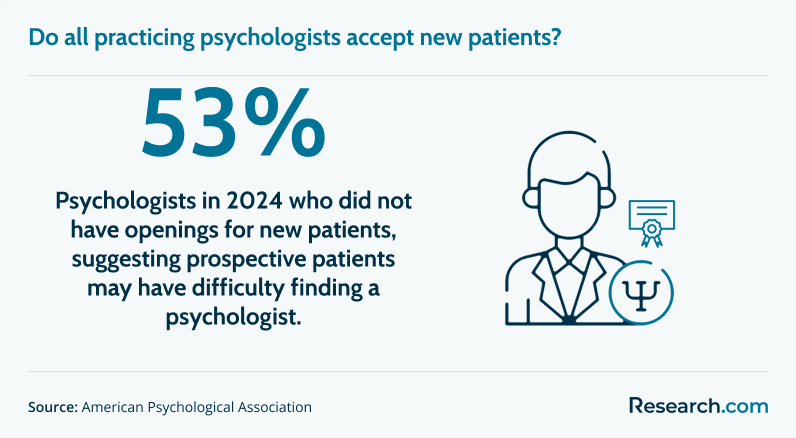
In the 2021-22 academic year, a total of 31,775 master's in psychology degrees were conferred based on NCES data.
| Timeline Factor | How It Affects Completion |
| Full-time enrollment | Often required for the shortest 1 year completion path. |
| Part-time enrollment | Usually extends the program but can be more realistic for working adults. |
| Specialization | Clinical, counseling, school, or behavior analysis tracks may require fieldwork or additional requirements. |
| Course availability | Students can be delayed if required courses are offered only in certain terms. |
| Capstone, thesis, or practicum | Research projects or supervised experiences can lengthen the timeline. |
Students planning to become licensed psychologists typically need doctoral-level preparation. Research.com’s guide to top APA accredited PsyD programs can help readers compare doctoral options after the master’s degree.
Students who want a more integrated route may also review combined master’s and PsyD programs, which are designed for learners who want to connect graduate and doctoral study in one pathway.
How does an online one-year online Master’s in Psychology degree compare to an on-campus program?
Online psychology master’s programs give students more control over where and when they study. This can be especially valuable for people with full-time jobs, caregiving responsibilities, long commutes, or limited local graduate options. Among students, 94% have a positive or very positive view of online learning post-pandemic.
Online learning can also make it easier to review lectures, participate in asynchronous discussions, and study around professional obligations. However, flexibility does not mean the workload is lighter. Accelerated online programs often require disciplined weekly study, strong writing skills, and comfort with digital collaboration.
Campus-based programs may offer more face-to-face interaction, easier access to faculty offices, in-person research labs, and local practicum relationships. Online students should ask how the program supports networking, faculty mentorship, research collaboration, and field placement coordination.
| Format | Best For | Possible Drawbacks |
| Online accelerated | Working adults, remote learners, self-directed students, and those comparing programs outside their region. | Requires strong time management and may offer fewer informal networking opportunities. |
| Online part-time | Students who need flexibility and cannot handle a full-time graduate load. | Takes longer and may delay career or doctoral plans. |
| On-campus | Students who want in-person mentoring, campus research involvement, and local professional connections. | Less flexible and may require relocation or commuting. |
| Hybrid | Students who want online convenience with occasional in-person intensives or field experiences. | Travel requirements can add cost and scheduling complexity. |
What is the average cost of a one-year online Master’s in Psychology degree program?
The average cost of an online master's in psychology can range from $10,000 to $30,000 or more. Total cost depends on tuition per credit, required credits, fees, books, technology costs, residency requirements, and whether the student qualifies for grants, scholarships, employer support, or military benefits.
Students comparing one year online masters programs should look beyond the advertised tuition rate. A lower per-credit cost may not always mean the lowest total price if the program requires more credits, travel, application fees, graduation fees, or extra practicum expenses.
- Institution type: Public universities often charge lower tuition than private institutions, although online and out-of-state pricing varies.
- Credit requirement: A 30-credit program and a 36-credit program can have very different total costs even when per-credit tuition looks similar.
- Specialization: Some concentrations require fieldwork, supervision, software, assessment materials, or residencies.
- Financial aid: Loans, grants, scholarships, tuition reimbursement, and military education benefits can change the out-of-pocket cost.
Students who are considering clinical or counseling careers should also review the broader cost of training. Research.com explains related education and credentialing expenses in its guide on how much it costs to become a therapist.
What are the financial aid options for students enrolling in a one-year online Master’s in Psychology degree program?
Graduate psychology students may be able to use several financial aid options, but eligibility depends on enrollment status, school participation, citizenship or residency status, and program structure.
Federal Student Aid
- Federal Direct Loans: Eligible graduate students can apply through the FAFSA process and borrow through federal loan programs.
- Federal Work-Study: Some students may qualify for part-time work connected to campus or community-based roles.
Scholarships
- University Scholarships: Schools may award funds based on merit, financial need, academic background, professional goals, or demographic criteria. Over the last decade, institutional scholarships grew by an additional 31% to $82.8 billion in 2023-24.
- Private Scholarships: Professional associations, foundations, nonprofits, and community organizations may offer awards for psychology graduate students.
Grants and Employer Support
- Federal Grants: Grants are need-based funds that generally do not require repayment.
- Private Grants: Foundations and organizations may provide graduate funding for research, mental health, education, or public service goals.
- Employer Tuition Reimbursement: Some employers help pay for graduate education when the degree supports an employee’s current or future role.
- Military Benefits: Veterans and active-duty military personnel may qualify for education benefits such as the GI Bill.
What are the prerequisites for enrolling in a one-year online Master’s in Psychology degree program?
Admissions requirements for accelerated psychology masters programs vary by school, but applicants should expect graduate-level review of academic preparation, writing ability, research readiness, and career goals.
| Requirement | Why It Matters |
| Bachelor's Degree | Applicants typically need a bachelor’s degree from an accredited institution. |
| GPA | Many programs expect a minimum GPA, often around 3.0 or higher. |
| GRE Scores | Some programs still require the graduate record examination (GRE), while others have test-optional policies. |
| Letters of Recommendation | Faculty or professional references help admissions teams assess readiness for graduate study. |
| Statement of Purpose | This essay should connect the applicant’s background, specialization interests, and career plans. |
| Relevant Coursework | Applicants may need courses such as Introduction to Psychology, Statistics, Research Methods, and Abnormal Psychology. |
What courses are typically in a one-year online Master’s in Psychology degree program?
Curricula differ by specialization, but accelerated psychology programs online usually combine core psychological science with applied or research-focused coursework.
- Research Methods: Covers study design, measurement, ethics, sampling, and interpretation of psychological research.
- Statistics: Introduces statistical tools used in psychology, including t-tests, ANOVA, and regression analysis.
- Psychopathology: Examines mental disorders, diagnostic concepts, symptoms, causes, and treatment frameworks.
- Lifespan Development: Studies cognitive, emotional, social, and biological development from infancy through adulthood.
- Social Psychology: Explores how people think, feel, and behave in groups and social environments.
- Cognitive Psychology: Focuses on memory, attention, perception, learning, language, and problem-solving.
What types of specializations are available in one-year online Master’s in Psychology degree programs?
Specialization choice is one of the most important decisions because it affects coursework, field experience, certification options, doctoral preparation, and career direction.
| Specialization | Best Fit For | Key Consideration |
| Clinical Psychology | Students interested in mental health assessment, treatment, and doctoral preparation. | Clinical psychologist roles generally require further licensure and advanced training. Research.com explains options in careers with a clinical psychology master’s degree. |
| Counseling Psychology | Students drawn to guidance, emotional support, and helping relationships. | Licensure requirements vary by state and may require specific supervised experience. |
| Industrial-Organizational Psychology | Students interested in workplace behavior, employee selection, training, leadership, and organizational change. | Analytics, consulting, and HR experience can improve job competitiveness. |
| Forensic Psychology | Students interested in psychology within courts, corrections, investigations, and legal systems. | Roles may require criminal justice knowledge and supervised experience. |
| School Psychology | Students focused on children, learning, behavior, and educational support. | State school psychology credentials may require specific program approval and field placements. |
| Sport Psychology | Students interested in performance, motivation, confidence, anxiety, and athlete well-being. | Research.com’s guide to sports psychology careers explains role and salary considerations. |
| Health Psychology | Students interested in stress, chronic illness, health behavior, and mind-body connections. | Career paths may differ depending on whether the graduate pursues research, coaching, healthcare support, or doctoral study. |
What are the licensure and certification requirements for graduates of online Master’s in Psychology programs?
An online master’s in psychology does not automatically lead to licensure or certification. Requirements depend on the state, profession, degree title, coursework, practicum or internship hours, exams, supervision, and whether the program is designed for a licensure track. Students should contact the relevant state licensing board before enrolling, not after graduation.
This is especially important for students interested in clinical mental health counseling, school psychology, marriage and family therapy, applied behavior analysis, or doctoral psychology practice. Those exploring health-related roles can also compare credential expectations and compensation context through Research.com’s guide to health psychologist salary and career paths.
Why is accreditation crucial for one-year online Master’s in Psychology programs?
Accreditation helps verify that an institution or program meets recognized academic standards. It can affect transfer credit, financial aid eligibility, employer recognition, doctoral admissions, and licensure review. At minimum, students should confirm that the institution holds recognized regional or national accreditation. For licensure-oriented programs, students should also ask whether the curriculum aligns with the requirements of their target state or credentialing board.
Students comparing affordability should not separate price from accreditation. Research.com’s guide to the most affordable online psychology master’s degrees can help readers compare cost while still paying attention to program credibility.
How do you choose the best one-year online Master’s in Psychology degree program?
The best program is the one that matches your career goal, budget, schedule, learning style, and credentialing needs. Start by deciding whether you want the degree for employment advancement, a career change, licensure preparation, applied workplace roles, research experience, or doctoral admissions.
Then compare curriculum, faculty background, accreditation, practicum support, student services, tuition, and outcomes. About 13,000 openings for psychologists are projected each year, on average, through 2033, but job access depends on specialization, credentials, experience, and local demand.
| Question to Ask | Why It Matters |
| Is the institution accredited? | Accreditation affects credibility, financial aid, transferability, and sometimes licensure review. |
| Does the curriculum match my state’s licensure or certification rules? | Not all psychology master’s programs are designed for licensure. |
| Can I realistically complete the workload in 1 year? | Accelerated schedules can be difficult for students working full time. |
| Are courses asynchronous, synchronous, or mixed? | Live attendance requirements can affect work and family schedules. |
| Does the program include practicum, internship, capstone, or thesis options? | Fieldwork and research experience may be essential for career or doctoral goals. |
| What career services are available to online students? | Resume support, networking, mentorship, and job boards can improve transition after graduation. |
| What is the full cost after fees and aid? | Total price may differ from the advertised tuition rate. |
What career paths are available for graduates of one-year online Master’s in Psychology degree programs?
Career outcomes depend on specialization and credentialing. Some graduates pursue clinical or counseling-adjacent work, while others move into business, education, research, social services, or doctoral study. Students who are primarily salary-focused may also compare Research.com’s guide to the highest paying jobs with a psychology degree.
Clinical and Counseling Psychology
- Mental health counselor
- School counselor
- Marriage and family therapist
- Substance abuse counselor
- Psychotherapist
Industrial-Organizational (I/O) Psychology
- Human resources specialist
- Employee relations specialist
- Training and development specialist
- Organizational consultant
- Market research analyst
Forensic Psychology
- Forensic psychologist
- Correctional counselor
- Probation officer
- Child protective services worker
- Legal assistant
Students still comparing academic pathways can review Research.com’s overview of different types of psychology degrees to understand how bachelor’s, master’s, doctoral, and certificate options connect to career goals.
What is the job market for graduates with a one-year online Master’s in Psychology degree?
The job market for psychology master’s graduates is opportunity-rich but not automatic. The U.S. Bureau of Labor Statistics (BLS) projects that employment of psychologists will grow by about 7% from 2023 to 2033. Demand for mental health care, employee well-being, behavioral health services, and organizational performance can support opportunities, but competition varies by region and role.
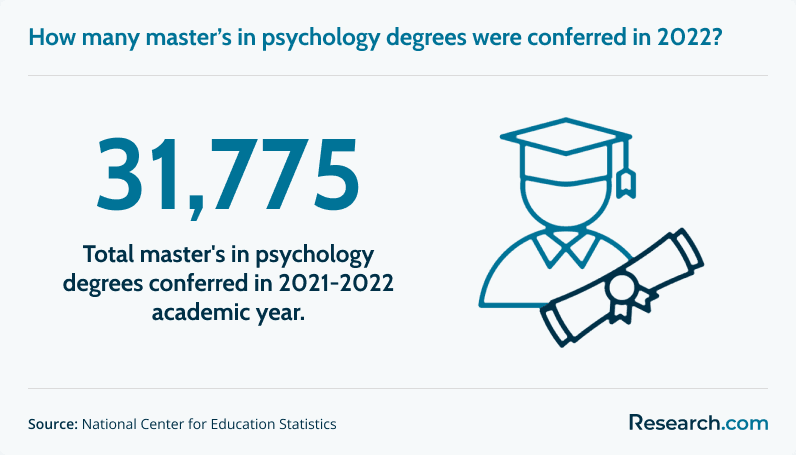
The mental health workforce also faces access challenges. More professionals report treating fewer patients and working reduced hours compared to earlier periods, particularly among later-career psychologists. At the same time, psychologists in other career stages often maintain or exceed prior workload levels. Additionally, 53% of psychologists report having no openings for new patients, showing how difficult it can be for prospective patients to find available providers.
Graduates can improve competitiveness by gaining supervised experience, completing internships or volunteer work, building quantitative and research skills, joining professional associations, and choosing concentrations with clear employer demand. For business-oriented roles, experience in HR analytics, training, consulting, survey design, or data interpretation can be especially useful.
What do graduates often value in one-year online Master’s in Psychology programs?
Many students choose accelerated online psychology programs because they want to keep working while advancing academically. The flexibility of online coursework can make graduate study more accessible, especially for students who cannot relocate or pause their careers.
Students also tend to value digital collaboration tools, faculty access, recorded lectures, structured weekly modules, and the ability to connect with classmates from different regions. Still, the most successful students usually enter with realistic expectations: a one-year format is fast, but it is also intensive.
What are the challenges of an accelerated one-year online Master’s in Psychology program?
The biggest challenge is workload compression. Students may need to read, write, analyze data, participate in discussions, complete projects, and prepare for exams in shorter terms. Missing one deadline can create a difficult catch-up cycle.
Online students also need to be proactive about connection. Faculty relationships, peer collaboration, research mentorship, and career networking may require more intentional effort than they would on campus. Students planning further doctoral study can compare future options such as accelerated doctoral programs psychology if they want to continue moving quickly after the master’s degree.
| Common Mistake | Better Approach |
| Choosing the fastest program without checking licensure fit | Contact the state licensing board and ask the program for a written explanation of licensure alignment. |
| Comparing only tuition per credit | Calculate full program cost, including credits, fees, books, technology, travel, and supervision expenses. |
| Assuming online means easier | Review weekly workload expectations and plan a realistic study schedule before enrolling. |
| Ignoring practicum or research opportunities | Choose programs that match your career goal, especially if you need doctoral preparation or supervised experience. |
| Relying only on rankings | Use rankings as a starting point, then verify accreditation, curriculum, outcomes, and student support. |
Is the Investment in an Accelerated Online Master’s in Psychology Justified?
The return on investment depends on why you need the degree. For students pursuing I/O psychology, HR leadership, research, education, or a clear doctoral pathway, a shorter online program may reduce time away from work and help accelerate next steps. For students seeking licensure, ROI depends on whether the program satisfies required coursework and supervised training expectations.
Before enrolling, compare tuition, aid, employer reimbursement, expected salary range, time to completion, and the cost of any additional licensing or certification steps. Students prioritizing price can use Research.com’s guide to an affordable psychology degree to compare value-focused options.
What additional certifications can enhance my psychology career?
Certifications can strengthen a psychology graduate’s profile when they match a specific role. They are not substitutes for licensure when licensure is required, but they can demonstrate focused skill development in areas such as behavior analysis, assessment, coaching, workforce training, or data-informed intervention.
Students interested in applied behavior analysis should review coursework and supervision requirements carefully. Research.com’s guide to BCBA certification programs can help compare education options tied to this pathway.
What career support services and networking opportunities are available?
Strong online programs provide career support that is accessible to distance learners, not only campus students. Useful services include resume reviews, interview coaching, alumni mentoring, virtual career fairs, faculty advising, research networking, employer information sessions, and psychology-specific job boards.
Students who plan to continue into advanced clinical training should also ask whether the master’s program offers doctoral advising, research mentorship, and guidance on applications. For cost-conscious doctoral planning, Research.com’s guide to cheapest APA accredited PsyD programs can help students compare possible next steps.
How Can I Transition from a Master’s to a Doctorate in Psychology?
A master’s degree can help prepare students for doctoral study when it builds research competence, academic writing, statistics, theory, and faculty relationships. Students who want a doctorate should choose a master’s program with a thesis, capstone, research assistant opportunities, or strong faculty mentorship whenever possible.
Doctoral applicants should also consider how the master’s specialization aligns with long-term goals. A student interested in clinical practice, for example, may need a different doctoral pathway than someone focused on organizational consulting or academic research. Research.com’s guide to a doctorate in psychology online explains online doctoral options and planning considerations.
Do Employers Value an Accelerated Online Master’s in Psychology Degree?
Employers are usually more concerned with accreditation, relevant skills, experience, and role fit than whether a program was completed online. An accelerated online master’s can be respected when it comes from a credible institution and the graduate can show practical competence in research, communication, assessment, data analysis, program evaluation, or organizational problem-solving.
For roles involving children, families, or schools, employers may also expect supervised experience, background checks, and state-specific credentials. Students interested in child-focused work can review Research.com’s guide to psychology jobs with children for examples of career directions.
What Industry Trends Are Shaping the Future of Online Master’s in Psychology?
Online psychology programs are changing as mental health access, telepsychology, digital assessment, data analytics, and workplace well-being become more prominent. Graduate curricula increasingly need to prepare students to work with technology, evaluate research, communicate across disciplines, and understand ethical issues in digital and remote service environments.
Behavioral intervention and applied behavior analysis also remain important areas for students interested in structured, evidence-based support. Those comparing ABA-focused pathways can review Research.com’s guide to the best ABA masters programs.
How Do Online Master’s in Psychology Programs Promote Diversity, Equity, and Inclusion?
Psychology programs increasingly address diversity, equity, and inclusion through multicultural coursework, inclusive teaching practices, community-based learning, mentorship, and training on ethical work with clients and communities from different backgrounds. These elements matter because psychology graduates often work with people across cultures, income levels, identities, languages, and life experiences.
Students should ask how DEI appears in required courses, faculty expertise, practicum preparation, student support, and research opportunities. Those exploring future clinical or research training may also compare PsyD online accredited programs that emphasize culturally responsive practice and ethical professional preparation.
Key Insights
- A one-year online master’s in psychology can be efficient, but 1 year is the fastest timeline; most programs take 18-24 months.
- Licensure is the most important risk area. Always verify state requirements before enrolling, especially for clinical, counseling, school psychology, and behavior analysis pathways.
- Cost varies widely. The average cost of an online master's in psychology can range from $10,000 to $30,000 or more, and students should compare total program cost rather than tuition alone.
- Program fit matters more than speed. The best choice depends on specialization, accreditation, faculty support, fieldwork options, schedule, and career services.
- The job market is promising but competitive. About 13,000 openings for psychologists are projected each year, on average, through 2033, and the BLS projects that employment of psychologists will grow by about 7% from 2023 to 2033.
- As of May 2023, the median annual salary for psychologists was $92,740, but salaries vary by role, credentials, location, and experience.
- Online degrees can be valuable to employers when they come from accredited institutions and are paired with relevant experience, strong communication skills, research ability, and practical specialization.
References:
- American Psychological Association. (2024). Practitioner pulse 2024: A report on the mental health workforce.
- American Psychological Association. (2024). Psychology workforce and practice resources.
- National Center for Education Statistics. (2022). Digest of education statistics 2022 [Table 325.80].
- The College Board. (2022). Trends in student aid.
- U.S. Bureau of Labor Statistics. (2023). Psychologists.
Other Things You Should Know About the Best One-Year Online Master’s in Psychology Programs
Most one-year online master’s in psychology programs require about 30 to 36 semester credits. Common courses include psychological statistics, research methods, ethics, psychopathology, developmental psychology, and assessment. Many programs also require a capstone, thesis, or practicum to show applied research or professional competence.
To apply for a one-year online master’s in psychology program in 2027, applicants typically need a bachelor's degree in psychology or a related field, GPA of 3.0 or higher, letters of recommendation, and possibly GRE scores, depending on the institution.


