
2027 Best Combined Master's and PsyD Programs

Co-Founder and Chief Data Scientist
The pursuit of a career in psychology demands a rigorous and comprehensive education. For aspiring mental health professionals, a combined Master's and PsyD program offers a unique and efficient pathway to advanced training. This integrated approach allows students to seamlessly transition from foundational knowledge to specialized clinical skills, fostering a deep understanding of psychological principles and their practical applications.
Understanding the nuances of different programs is crucial for making informed decisions about your educational journey. This guide will delve into the key factors to consider when evaluating the best combined Master's and PsyD programs.
What are the benefits of getting a combined master’s and PsyD program?
- Graduates can qualify for a range of roles, including clinical psychologist, school psychologist, and private practice owner.
- With a PsyD, professionals can earn significantly higher salaries. For instance, school psychologists with a PsyD can earn around $120,000 annually.
- Pursuing this degree online provides flexibility, allowing students to balance their studies with work and family commitments.
What can I expect from a combined master’s and PsyD program?
A combined master’s and PsyD program is designed for students seeking an efficient and comprehensive path toward becoming licensed psychologists. These programs integrate advanced coursework and practical training, allowing students to earn both degrees in a streamlined manner. Students can expect a rigorous curriculum that covers essential psychological theories, ethical practices, and extensive clinical experience, all while preparing them for the complexities of professional practice in various settings.
Where can I work with a combined master’s and PsyD program?
Graduates of a combined master’s and PsyD program have a wide array of employment opportunities across various sectors, reflecting the diverse skill set they acquire during their studies. One of the most common career paths is as a clinical psychologist, where professionals can work in settings such as hospitals, mental health clinics, and private practices. In these roles, they provide psychotherapy, conduct psychological assessments, and develop treatment plans for individuals facing mental health challenges.
How much can I make with a combined master’s and PsyD program?
With a combined master’s and PsyD program, graduates can expect a significant earning potential that varies based on several factors, including specialization, geographic location, and years of experience. On average, clinical psychologists with a PsyD earn between $60,000 and $120,000 annually. For instance, a newly graduated psychologist working in a community mental health center might start at around $60,000, while those with several years of experience in private practice or specialized settings can earn upwards of $100,000. In some cases, particularly in high-demand areas or specialized fields like neuropsychology or forensic psychology, salaries can exceed $120,000.
- List of Best Combined Master's and PsyD Programs for 2027 List of Programs
- How long does it take to complete a combined master's and PsyD program? How long does it take to complete a combined master's and PsyD program?
- How does an online combined master's and PsyD program? compare to an on-campus program? Online vs. On-Campus
- What is the average cost of a combined master's and PsyD program? Cost
- What are the financial aid options for students enrolling in a combined master's and PsyD program? Financial Aid
- What are the prerequisites for enrolling in a combined master's and PsyD program? Requirements
- What courses are typically in a combined master's and PsyD program? Courses
- What types of specializations are available in a combined master's and PsyD program? Specializations
- Is it possible to accelerate a combined master's and PsyD program? Is it possible to accelerate a combined master's and PsyD program?
- How to choose the best combined masters and PsyD program? How to choose the best combined masters and PsyD program?
- What career paths are available for graduates of combined master's and PsyD programs? What career paths are available for graduates of combined master's and PsyD programs?
- What is the job market for graduates with a combined master's and PsyD degree? Job Outlook
- What distinguishes a combined program from pursuing degrees sequentially? What distinguishes a combined program from pursuing degrees sequentially?
- How can advanced specializations and continuing education expand career opportunities? How can advanced specializations and continuing education expand career opportunities?
- What are the licensing and certification requirements after completing a combined master’s and PsyD program? Licensure & Certification
- What challenges might students face in a combined master’s and PsyD program? What challenges might students face in a combined master’s and PsyD program?
- How can additional certifications complement a combined master's and PsyD degree? How can additional certifications complement a combined master's and PsyD degree?
- How do career support services and mentorship enhance success in a combined master’s and PsyD program? How do career support services and mentorship enhance success in a combined master’s and PsyD program?
- Is online training in combined programs as credible as traditional education? Is online training in combined programs as credible as traditional education?
- Are combined master’s and PsyD programs meeting current accreditation standards? Are combined master’s and PsyD programs meeting current accreditation standards?
- How does program structure impact the timeline to become a counselor? How does program structure impact the timeline to become a counselor?
Best Combined Master’s and PsyD Programs for 2027
A combined master’s and PsyD pathway can be a smart choice if you already know you want doctoral-level psychology training, but it is not a shortcut that should be chosen only for speed. These programs often connect graduate psychology coursework, supervised clinical preparation, doctoral study, and internship planning in one sequence. That structure can reduce uncertainty, but it also locks you into a long, expensive, and academically demanding path.
This guide is designed for students comparing integrated master’s-to-PsyD programs, dual-degree psychology options, direct-admission doctoral routes, and closely related alternatives. It explains how these programs work, what they typically require, how long they may take, what costs to expect, how online and campus formats differ, and how to judge whether a program supports licensure and long-term career goals.
If your objective is to become a practicing psychologist, give priority to programs with recognized accreditation, strong practicum and internship support, transparent tuition information, and clear state licensure disclosures. Students who do not need an embedded master’s pathway may also want to compare standalone APA-accredited PsyD programs.
Quick Answer: What Is a Combined Master’s and PsyD Program?
A combined master’s and PsyD program is a graduate training model that links master’s-level psychology study with doctoral-level professional psychology preparation. In some programs, students earn the master’s degree while completing the early portion of the PsyD curriculum. In others, the master’s degree functions as a bridge or direct-admission route into doctoral study.
These programs are best suited for students who are highly confident they want advanced clinical, counseling, or school psychology training. They usually involve years of coursework, supervised practicum, internship preparation, research or dissertation work, and licensure planning. They should not be compared with short credentials or fast associate-level options, such as degrees that can be completed online in 6 months, because the professional outcome and training intensity are entirely different.
How We Evaluated Schools
Affordability is important, but it is only one part of choosing a combined master’s and PsyD pathway. A strong program should also show evidence of academic continuity, student support, faculty expertise, clinical placement access, licensure preparation, and credible accreditation. Retention, graduation, and available institutional data can help students understand whether a school provides enough structure for a demanding psychology program.
The review below considers published program details, stated tuition or per-credit costs, credit requirements, program duration, accreditation information, and institutional data sources. Because psychology training rules, tuition, clinical policies, and licensure standards can change, applicants should confirm all details directly with each school before applying.
- Integrated Postsecondary Education Data System through the IPEDS database
- Peterson’s database, including the Distance Learning Licensed Data Set
- College Scorecard database
- National Center for Education Statistics
Program Comparison at a Glance
| School | Program Length | Focus Area | Estimated Cost | Credits | Accreditation Listed |
| Widener University | 5 years | Clinical Psychology | $1,160 per credit | 140 | Commission on Accreditation of the American Psychological Association |
| University of St. Thomas | 5 years | Clinical Psychology | $1,102 per credit | 130 | Commission on Accreditation of the American Psychological Association |
| Loyola University Maryland | 5 years | Clinical Psychology | $1,015 per credit | 124 | Commission on Accreditation of the American Psychological Association |
| Boston University | 5 years | Clinical Psychology | $1,346 per credit | 124 | Commission on Accreditation of the American Psychological Association |
| California Southern University | 1.5 years | Clinical Psychology | $645 per credit | 30 | The Higher Learning Commission |
| James Madison University | 4 years | Clinical Psychology | $561 per credit | 62 | Commission on Accreditation of the American Psychological Association |
| Appalachian State University | 3 years | Clinical Psychology | $7,450 per year | 71 | Commission on Accreditation of the American Psychological Association |
| Biola University | 4 years | Clinical Psychology | $1,467 per credit | 123 | Commission on Accreditation of the American Psychological Association |
| Nova Southeastern University | 8 years | Clinical Psychology | $1,352 per credit | 118 | Commission on Accreditation of the American Psychological Association |
| Palo Alto University | 5 years | Clinical Psychology | $1,826 per credit | 150 | Commission on Accreditation of the American Psychological Association |
1. Widener University
Widener University offers a PsyD/MBA dual-degree option for students who want to combine clinical psychology preparation with business and leadership training. This format may appeal to students interested in executive coaching, organizational consulting, leadership assessment, workplace behavior, or management roles that benefit from psychological expertise. Students gain applied experience through practicums and internships, including opportunities connected with Widener’s Organizational Development Services.
- Program Length: 5 years
- Tracks/concentrations: Clinical Psychology
- Estimated Cost per Credit: $1,160
- Required Credits to Graduate: 140
- Accreditation: Commission on Accreditation of the American Psychological Association
2. University of St. Thomas
The University of St. Thomas provides a Master of Arts pathway that includes direct admission to the PsyD in Counseling Psychology. It is intended for students who want a defined progression from master’s-level preparation into doctoral counseling psychology training. The program emphasizes counseling theory, professional skill development, and applied practice preparation.
- Program Length: 5 years
- Tracks/concentrations: Clinical Psychology
- Estimated Cost per Credit: $1,102
- Required Credits to Graduate: 130
- Accreditation: Commission on Accreditation of the American Psychological Association
3. Loyola University Maryland
Loyola University Maryland features a combined M.S./Psy.D. pathway focused on clinical training, ethical practice, cultural responsiveness, and professional identity development. Its APA accreditation is an important factor for students seeking doctoral preparation that aligns with recognized psychology training standards. Applicants should expect rigorous coursework, supervised clinical development, and a practice-centered academic environment.
- Program Length: 5 years
- Tracks/concentrations: Clinical Psychology
- Estimated Cost per Credit: $1,015
- Required Credits to Graduate: 124
- Accreditation: Commission on Accreditation of the American Psychological Association
4. Boston University
Boston University offers an MA experience that can help students clarify their psychology interests and strengthen their preparation for advanced graduate study, including PsyD-level training. The first-year MA curriculum includes eight courses across areas such as clinical psychology, developmental psychology, and brain, behavior, and cognition. Students also study research methods and complete an independent project with faculty supervision.
- Program Length: 5 years
- Tracks/concentrations: Clinical Psychology
- Estimated Cost per Credit: $1,346
- Required Credits to Graduate: 124
- Accreditation: Commission on Accreditation of the American Psychological Association
5. California Southern University
California Southern University offers an online MS in General Psychology that introduces students to psychological theory, research concepts, and applied foundations. Its fully online format may work well for working adults who need flexibility before deciding whether to pursue doctoral psychology training. Students should verify whether this program supports their intended doctoral admission or licensure goals, because a master’s degree by itself is not equivalent to PsyD clinical preparation.
- Program Length: 1.5 years
- Tracks/concentrations: Clinical Psychology
- Estimated Cost per Credit: $645
- Required Credits to Graduate: 30
- Accreditation: The Higher Learning Commission
6. James Madison University
James Madison University offers a Clinical and School Psychology Psy.D. program grounded in the science and practice of psychology. A full-time teaching or graduate assistantship covers tuition costs, which can make a major difference in overall affordability. The program also includes multicultural training and applied experience with clients from diverse backgrounds.
- Program Length: 4 years
- Tracks/concentrations: Clinical Psychology
- Estimated Cost per Credit: $561
- Required Credits to Graduate: 62
- Accreditation: Commission on Accreditation of the American Psychological Association
7. Appalachian State University
Appalachian State University provides a dual Master of Arts and Specialist in School Psychology program based on a scientist-practitioner model. The curriculum combines theory, applied service, collaboration, and interpersonal skill development. This pathway is most relevant for students planning to work in school psychology roles within educational environments.
- Program Length: 3 years
- Tracks/concentrations: Clinical Psychology
- Estimated Cost per Credit: $7,450 per year
- Required Credits to Graduate: 71
- Accreditation: Commission on Accreditation of the American Psychological Association
8. Biola University
Biola University offers a PsyD in Clinical Psychology in which students receive a Master of Arts in Clinical Psychology after finishing the first two years of doctoral study. The program combines clinical psychology training with Christian theology, making it a better match for students seeking faith-integrated professional preparation. Students also complete research-focused coursework and dissertation requirements.
- Program Length: 4 years
- Tracks/concentrations: Clinical Psychology
- Estimated Cost per Credit: $1,467
- Required Credits to Graduate: 123
- Accreditation: Commission on Accreditation of the American Psychological Association
9. Nova Southeastern University
Nova Southeastern University (NSU) has a dual admission option that allows undergraduate students to reserve a seat in either a PsyD or Ph.D. program. After completing the undergraduate degree, students continue into the reserved graduate program. Graduate-level preparation includes research exposure, coursework, practicum experiences, and internships for students pursuing clinical or school psychology careers.
- Program Length: 8 years
- Tracks/concentrations: Clinical Psychology
- Estimated Cost per Credit: $1,352
- Required Credits to Graduate: 118
- Accreditation: Commission on Accreditation of the American Psychological Association
10. Palo Alto University
Palo Alto University should be viewed as a related doctoral psychology option rather than a true combined master’s and PsyD pathway because it does not provide a combined Master’s and PsyD program. Its PhD in Clinical Psychology emphasizes research, clinical practice, psychological assessment, psychotherapy, and psychological science. Students who want a more research-intensive doctoral route may find it useful to compare this option with PsyD programs.
- Program Length: 5 years
- Tracks/concentrations: Clinical Psychology
- Estimated Cost per Credit: $1,826
- Required Credits to Graduate: 150
- Accreditation: Commission on Accreditation of the American Psychological Association
How Long Does a Combined Master’s and PsyD Program Take?
Many combined master’s and PsyD programs take four to five years when the master’s coursework is incorporated into the doctoral curriculum. Some routes take longer because of dissertation progress, internship timing, clinical placement availability, part-time study, or direct admission structures that begin during undergraduate enrollment. Programs with an 8 years format show how much the full pathway can vary.
Students should evaluate the entire training sequence, not just the advertised classroom timeline. Important milestones include prerequisite coursework, the point at which the master’s degree is awarded, practicum requirements, internship preparation, dissertation or research expectations, and any postdoctoral supervised hours required by the state licensing board.
Online vs. On-Campus Combined Master’s and PsyD Programs
Online coursework can expand access to graduate psychology education for students who need flexibility because of work, family, or geography. Programs related to a master’s degree in behavioral psychology online may be useful for foundational learning. Still, PsyD preparation depends heavily on supervised clinical work, assessment practice, faculty feedback, and internship readiness, so convenience alone is not enough.
Campus-based programs often provide easier access to faculty, peer cohorts, testing resources, university clinics, and established local practicum partners. Online and hybrid programs can also be credible, but students need to ask who coordinates clinical placements, whether placements are available in their state, and whether the program meets licensing requirements where they plan to practice.
| Format | Best For | Potential Advantages | Questions to Ask Before Enrolling |
| Online or hybrid | Students who need flexibility and may not be able to relocate | Remote coursework, fewer location barriers, and more scheduling flexibility | Who approves practicum and internship sites? Does the program satisfy licensing rules in your state? |
| On campus | Students who want regular in-person training, supervision, and peer interaction | Faculty access, campus clinics, assessment resources, and local placement networks | What practicum sites are available? How competitive are clinical placements? |
What Is the Average Cost of a Combined Master’s and PsyD Program?
The total cost of a combined master’s and PsyD program depends on the school, tuition model, credit requirements, location, enrollment pace, fees, and clinical training structure. Pricing for the most affordable online psychology degree is not a direct substitute for doctoral psychology cost comparisons, but it does show how widely psychology education expenses can differ.
Tuition typically ranges from $20,000 to $30,000 per year for in-state students, while out-of-state and private-school costs can be higher. Since combined master’s and PsyD programs commonly last five to seven years, total educational costs can range from approximately $100,000 to over $350,000 depending on the school and student status. Applicants should also plan for books, university fees, commuting or relocation, internship expenses, assessment materials, testing costs, and living expenses.
Financial Aid Options for Combined Master’s and PsyD Students
Students should investigate funding before they submit applications, not after they receive an offer of admission. The best aid package is not necessarily the largest amount available to borrow. The stronger option is the one that lowers long-term debt while still allowing the student to complete required coursework, clinical training, and internship obligations.
- Federal loans and grants: The Free Application for Federal Student Aid (FAFSA) helps determine eligibility for federal aid. Federal loans may include borrower protections and repayment options that private loans may not provide.
- Work-study: Some financial aid packages include part-time employment that can help offset living costs during graduate study.
- Scholarships: Schools may offer merit-based, need-based, or program-specific awards that reduce tuition charges.
- Assistantships: Teaching or research assistantships may provide tuition remission and a stipend in exchange for academic, instructional, or research work.
- Private loans: Private lenders may help cover funding gaps, but students should compare interest rates, repayment timelines, deferment policies, and total borrowing costs carefully.
Prerequisites for Admission to a Combined Master’s and PsyD Program
Admissions requirements differ by institution and program model. Some PsyD programs accept applicants after a bachelor’s degree, while others prefer or require prior graduate coursework. Applicants should not assume that requirements are standardized across schools. This differs greatly from fields with shorter or more targeted credential options, such as an online accounting certificate.
- Bachelor’s degree: Applicants usually need a bachelor’s degree from an accredited institution. A psychology or related major may be preferred, although students from other fields may qualify if they complete required psychology courses.
- Prerequisite coursework: Common prerequisites may include introductory psychology, developmental psychology, statistics, and research methods.
- GRE scores: Many programs ask for Graduate Record Examination scores, though scores may be reviewed alongside grades, recommendations, experience, and fit.
- Transcripts: Schools generally require official transcripts from undergraduate and any post-baccalaureate study, with attention to psychology, statistics, and research-related coursework.
- Letters of recommendation: Applicants are often asked to submit two to three letters from academic or professional references who can evaluate graduate readiness, clinical potential, and professional maturity.
Common Courses in Combined Master’s and PsyD Programs
A combined Master’s and PsyD program usually includes foundational psychology, clinical assessment, therapy methods, research training, ethics, and supervised practice. Course titles vary by school, but the goal is to build advanced clinical judgment, professional competence, and readiness for supervised practice.
- History and Systems of Psychology: Introduces major theoretical traditions and explains how psychology has developed as a scientific and professional field.
- Psychopathology: Examines mental health disorders, diagnostic systems, symptom patterns, and treatment considerations.
- Developmental Psychology: Studies cognitive, social, emotional, and behavioral development across the lifespan.
- Ethics and Professional Issues: Covers confidentiality, boundaries, legal duties, professional standards, and ethical decision-making in practice.
- Biological Bases of Behavior: Explores how brain function, physiology, and biological systems influence behavior and mental processes.
Specializations Available in Combined Master’s and PsyD Programs
Specializations allow students to connect their training with the populations, conditions, and work settings they care about most. Options depend on faculty expertise, practicum partnerships, curriculum design, and available clinical sites.
- Child and adolescent psychology: Focuses on assessment and intervention for children and teenagers using developmentally appropriate approaches.
- Health psychology: Examines how psychological factors relate to physical health, chronic illness, prevention, coping, and treatment adherence.
- Neuropsychology: Studies brain-behavior relationships, neurocognitive assessment, neurological conditions, and related treatment planning. Students comparing income possibilities can review higher-paying psychology career paths, but compensation depends on licensure, role, experience, geography, setting, and specialization.
- Clinical psychology: Prepares students to assess, diagnose, and treat mental, emotional, and behavioral disorders across different populations.
Can You Accelerate a Combined Master’s and PsyD Program?
Some schools use accelerated designs to reduce repeated coursework and help students move into doctoral training more efficiently. However, there are limits to acceleration in psychology because licensure depends on supervised experience, internship completion, competency development, and state requirements—not just credit accumulation. A shorter program is only beneficial if it still provides the clinical depth, accreditation alignment, and licensure preparation the student needs.
Students interested in faster options can compare accelerated PsyD programs, then verify whether each program includes the clinical hours, internship support, supervised practice, and state-specific coursework required for their goals.
How to Choose the Best Combined Master’s and PsyD Program
The right program should match your intended license, preferred practice setting, financial plan, learning format, and specialization interests. Avoid choosing solely by tuition, brand recognition, convenience, or advertised completion speed. Even if you are researching flexible routes or the easiest counseling degree to get, doctoral psychology training should be evaluated by rigor, supervision quality, licensure relevance, and clinical outcomes.
- Confirm accreditation: Check whether the program is accredited by the American Psychological Association (APA) or otherwise acceptable for the licensing goal you plan to pursue.
- Verify state licensure alignment: Ask whether the curriculum meets educational requirements in the state where you want to practice.
- Evaluate placement support: Find out whether the school helps secure practicum sites or expects students to locate placements independently.
- Calculate total cost: Include tuition, fees, books, travel, assessment materials, internship expenses, living costs, and loan interest.
- Review faculty expertise: Look for faculty, supervisors, and practicum settings connected to your intended area of practice.
- Ask for outcomes: Request available data on graduation, internship placement, licensure, and employment outcomes.
| Common Mistake | Why It Can Hurt You | Smarter Decision |
| Picking the lowest tuition without checking accreditation | A cheaper program may not support licensure if it lacks the necessary recognition or clinical structure. | Confirm accreditation and state licensing fit before comparing prices. |
| Assuming online programs are less demanding | Remote coursework may be flexible, but practicum, internship, supervision, and assessments can still be intensive. | Ask exactly how clinical training is arranged, approved, and evaluated. |
| Overlooking transfer credit rules | Prior graduate credits may not shorten the program if the curriculum follows a fixed sequence. | Request a written transfer credit review before committing. |
| Using rankings as the only decision tool | Rankings cannot determine whether a program fits your state, budget, specialization, or licensure plan. | Use rankings as an entry point, then verify accreditation, outcomes, and costs. |
| Assuming a specific salary is guaranteed | Earnings differ by license, location, employer, experience, specialization, and practice model. | Compare likely roles, debt repayment scenarios, and regional job markets. |
Career Paths for Graduates of Combined Master’s and PsyD Programs
Graduates of combined master’s and PsyD pathways may pursue roles in clinical practice, counseling, school services, assessment, consultation, research, or organizational settings. Unlike unrelated professional routes such as an online construction management degree, doctoral psychology training is closely connected to supervised practice, professional scope, and state licensing rules.
Clinical Psychologist
- Role: Provides psychotherapy, psychological assessment, diagnosis, and treatment planning for individuals, couples, families, or groups.
- Settings: Private practices, hospitals, mental health clinics, and community health centers.
School Psychologist
- Role: Helps students with learning, emotional, behavioral, and developmental needs while working with teachers, families, and school administrators.
- Settings: Public schools, private schools, district offices, and education agencies.
Neuropsychologist
- Role: Evaluates cognitive, emotional, and behavioral functioning related to brain injury, neurological disorders, or neurocognitive conditions. Additional training or certification may be needed.
- Settings: Hospitals, rehabilitation centers, specialty clinics, and research environments.
Organizational Psychologist
- Role: Applies psychological principles to leadership development, performance assessment, employee training, workplace evaluation, and organizational change.
- Settings: Businesses, consulting firms, corporate training departments, and leadership development programs.
Marriage and Family Therapist
- Role: Supports couples and families dealing with communication challenges, relationship patterns, and mental health concerns.
- Settings: Private practices, behavioral health organizations, and community agencies.
Researcher
- Role: Designs studies, evaluates interventions, analyzes psychological data, and contributes to academic or applied research.
- Settings: Universities, research organizations, healthcare systems, and policy-focused institutions.
Job Market Outlook for Combined Master’s and PsyD Graduates
Career prospects for psychology graduates vary by license, specialization, region, experience, and employment setting. Students should rely on career-specific labor information rather than broad assumptions. For instance, exploring careers available with a library science degree may be useful for a different educational route, but it does not describe the licensing-based job market for psychologists.
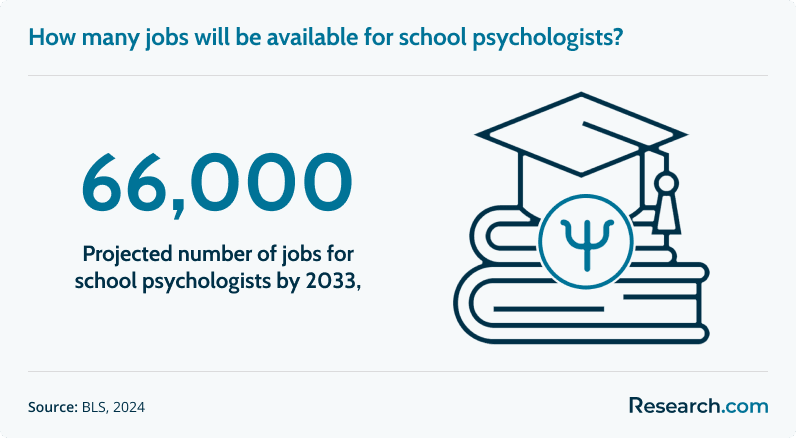
The Bureau of Labor Statistics projects a 7% increase in employment for psychologists from 2022 to 2032. Demand is tied to ongoing mental health needs in schools, hospitals, social service organizations, private practices, and healthcare systems. Areas such as forensic psychology, health psychology, and school psychology may create additional opportunities depending on local employer demand.
Combined Program vs. Earning the Master’s and PsyD Separately
A combined program can streamline the transition from foundational graduate study into doctoral psychology training. It may reduce duplicated coursework, give students earlier access to faculty and clinical preparation, and create a more predictable academic timeline. This structure is often best for students who are already certain they want a doctorate.
Earning the degrees separately can be a better fit for students who are still exploring psychology, want to strengthen their academic record before applying to doctoral programs, or need flexibility to change institutions. Cost-conscious students should compare integrated programs with standalone options, including the most affordable PsyD programs, while still prioritizing accreditation and licensure fit.
| Path | Best Fit | Main Limitation |
| Combined master’s and PsyD | Students who are confident about doctoral psychology training and want a defined sequence | Less flexibility if interests or career goals change |
| Master’s first, PsyD later | Students who want to explore specializations, build credentials, or apply to multiple doctoral programs later | May take longer and may require repeated coursework |
| PhD instead of PsyD | Students interested in research, academia, or scientist-practitioner training | May be less practice-focused depending on the program |
How Specializations and Continuing Education Can Expand Career Options
Specialized training can help psychologists serve defined populations, enter focused practice areas, or deepen assessment and treatment expertise. Continuing education also matters because licensed psychologists must stay current with changing practice standards, client needs, technology, regulation, and ethical expectations.
Students interested in legal and justice-related work, for example, may compare doctoral clinical training with an online master’s in forensic psychology to see how forensic coursework may complement broader clinical preparation. The strongest specialization is the one that supports your intended role, not the one that simply adds another credential.
Licensing and Certification After a Combined Master’s and PsyD Program
Completing a combined program does not automatically grant a psychologist license. Graduates typically must satisfy state board rules, complete supervised clinical hours, and pass an exam such as the Examination for Professional Practice in Psychology (EPPP). Some states may also require jurisprudence exams, background checks, postdoctoral experience, or specific coursework.
Before enrolling, ask the school to explain how the program maps to licensure requirements in the state where you intend to practice. Students considering flexible formats should also evaluate whether an online PsyD program meets the accreditation, supervision, residency, and clinical expectations tied to their professional goal.
Challenges Students Face in Combined Master’s and PsyD Programs
Combined programs can be difficult because students are managing advanced coursework, clinical skill development, supervision, research requirements, assessment training, and internship preparation at the same time. Progress may be affected by practicum availability, dissertation completion, funding limitations, personal responsibilities, or internship placement timing.
Financial stress is another serious issue. Students may need to borrow heavily, relocate for internship, or reduce paid work during clinical training. Those who are more interested in research-intensive academic careers may also compare PsyD training with online PhD programs in psychology, recognizing that PsyD and PhD pathways are designed for different professional priorities.
How Additional Certifications Can Complement a Combined Master’s and PsyD Degree
Additional credentials can strengthen a psychologist’s practice when they align with licensing rules, scope of practice, and career goals. Certifications may support work in trauma care, behavioral intervention, health psychology, school-based services, assessment, or specialized therapy approaches.
Professionals interested in behavior analysis may review BCBA programs as a separate credentialing pathway focused on applied behavior analysis. Students should confirm whether a certification requires additional supervised hours, exams, coursework, or board approval.
How Career Support and Mentorship Improve Student Success
Career support can have a major effect on a doctoral psychology student’s ability to complete training and transition into professional practice. Valuable services include practicum advising, internship application support, licensure planning, alumni mentoring, interview preparation, and help identifying clinical sites that match the student’s goals.
Students comparing flexible or faster psychology options may also look at accelerated psychology programs online, but speed should not outweigh mentorship, supervision quality, and clinical preparation.
Is Online Training in Combined Programs as Credible as Traditional Education?
Online psychology education can be credible when it comes from a properly accredited institution, uses qualified faculty, applies rigorous assessment standards, and provides appropriate clinical training. The real issue is not whether lectures are delivered online. The more important question is whether the program prepares students for supervised practice, internship readiness, and licensure in their intended state.
Students who are unsure how employers or licensing boards view distance learning can review guidance on online psychology degree credibility. Always confirm accreditation, practicum expectations, state approval, and clinical placement rules before enrolling.
What Graduates Say About Combined Master’s and PsyD Training
- : "The combined route helped me build a strong psychology foundation while pushing me to develop doctoral-level clinical skills. The classes were challenging, and the clinical work required serious commitment, but those experiences made me feel more prepared for professional practice. — Cameron"
- : "At first, I worried about the workload, but support from faculty and classmates helped me stay on track. The mix of research, supervision, and direct clinical learning showed me what professional psychology actually demands. My mentors helped me gain confidence throughout the process. — Andrea"
- : "The program was more demanding than I expected, but faculty guidance made a meaningful difference. I received regular feedback, direction, and encouragement during my training. By the end, I felt better prepared to work as both a clinician and researcher. — Mia"
Are Combined Master’s and PsyD Programs Meeting Current Accreditation Standards?
Accreditation should be checked early in the research process. For students pursuing clinical psychology practice, APA accreditation can be especially important because it shows that a program has met recognized training standards. Applicants should also examine faculty qualifications, practicum and internship outcomes, curriculum requirements, and licensure disclosures.
Do not assume that every graduate psychology-related program leads to the same professional role. Programs such as affordable online MFT programs may prepare students for a different license, scope of practice, and career path than a PsyD program.
How Program Structure Affects the Timeline to Become a Counselor
Program design can influence how quickly students move from coursework into supervised clinical experience. Combined pathways may reduce redundancy by connecting master’s and doctoral requirements, while separate degree routes may provide more flexibility but lengthen the total timeline. Early practicum access, coordinated advising, and clear licensure planning can help students avoid unnecessary delays.
Students focused specifically on counseling should compare PsyD options with counseling degree pathways and review how long it takes to become a counselor, because counselor licensure and psychologist licensure are separate processes.
Questions to Ask Before Applying
- Is the program APA-accredited or accepted by the licensing board in the state where I plan to practice?
- When is the master’s degree awarded, and what happens if I leave before completing the PsyD?
- Does the school arrange practicum and internship placements, or am I responsible for finding them?
- What are the program’s graduation, internship match, and licensure outcomes?
- How much debt do students typically take on, and what funding options are available?
- If the program is online or hybrid, can I complete clinical requirements in my state?
- Do faculty members have expertise in the specialization or population I want to serve?
- Are there extra costs for clinical training, assessment tools, travel, internship applications, or testing?
References
- Bureau of Labor Statistics. (2024). Occupational Outlook Handbook: Psychologists. U.S. Bureau of Labor Statistics.
- DataUSA. (2024). Psychologists. DataUSA.
- Franklin University. (2023). How Much Do Psychologists Make? | Annual & Hourly Salary. Franklin University.
- Indeed. (2024). Psychologist Salaries in the United States. Indeed.
- Payscale. (2024). Average Psychologist Salary. Payscale.
- Salary.com. (2024). Psychologist - M.A. Salary in the United States. Salary.com.
Key Insights
- Combined master’s and PsyD programs work best for students who are already committed to doctoral psychology training and want a structured academic route.
- Accreditation, licensure alignment, practicum support, and internship preparation should carry more weight than speed, convenience, or brand recognition.
- Total cost can be significant because students must account for tuition, fees, living expenses, clinical training costs, and time away from full-time work.
- Online and hybrid options can be legitimate, but students must verify placement rules, state licensure acceptance, and supervision requirements before enrolling.
- PsyD, PhD, counseling, school psychology, MFT, and behavior analysis programs can lead to different licenses and scopes of practice.
- The best program is the one that fits your intended license, specialization, budget, clinical setting, and long-term career plan—not simply the shortest or cheapest option.
Other Things You Should Know About the Best Combined Master's and PsyD Programs
It should be accredited by the American Psychological Association Commission on Accreditation for the PsyD portion, and the institution should hold regional accreditation. APA accreditation is the main standard used by licensing boards, internship sites, and employers to judge program quality and training eligibility.
In 2027, combined Master's and PsyD programs typically require students to complete 2,000 hours of supervised clinical training. This may include internships at approved facilities, where students gain hands-on experience under licensed psychologists, preparing them for professional practice and licensure.


