
2027 How to Become a Medical Assistant in Kentucky Online

Co-Founder and Chief Data Scientist
Choosing an online medical assistant program in Kentucky is usually a practical decision: you want healthcare training that fits around work, family, location, and budget, but you also need a credential employers will respect. Medical assistants support physicians, nurses, clinics, hospitals, and specialty practices by combining patient-facing clinical tasks with front-office responsibilities. In Kentucky, this career path is especially relevant because healthcare access, outpatient care, and rural workforce needs continue to shape hiring across the state.
This guide explains how online medical assistant programs in Kentucky work, what parts can and cannot be completed online, how long training takes, what accreditation means, how certification works, what costs to expect, and how to judge whether this path fits your career goals. It is designed for students, working adults, career changers, and Kentucky residents comparing online healthcare training options before committing to a program.
Quick answer: Can you become a medical assistant online in Kentucky?
Yes. You can complete much of your medical assistant training online in Kentucky, especially coursework in medical terminology, anatomy, office procedures, billing basics, and certification preparation. However, credible programs usually include in-person clinical practice, labs, or an externship because medical assistants must learn hands-on skills such as taking vital signs, preparing exam rooms, assisting with procedures, and interacting with patients.
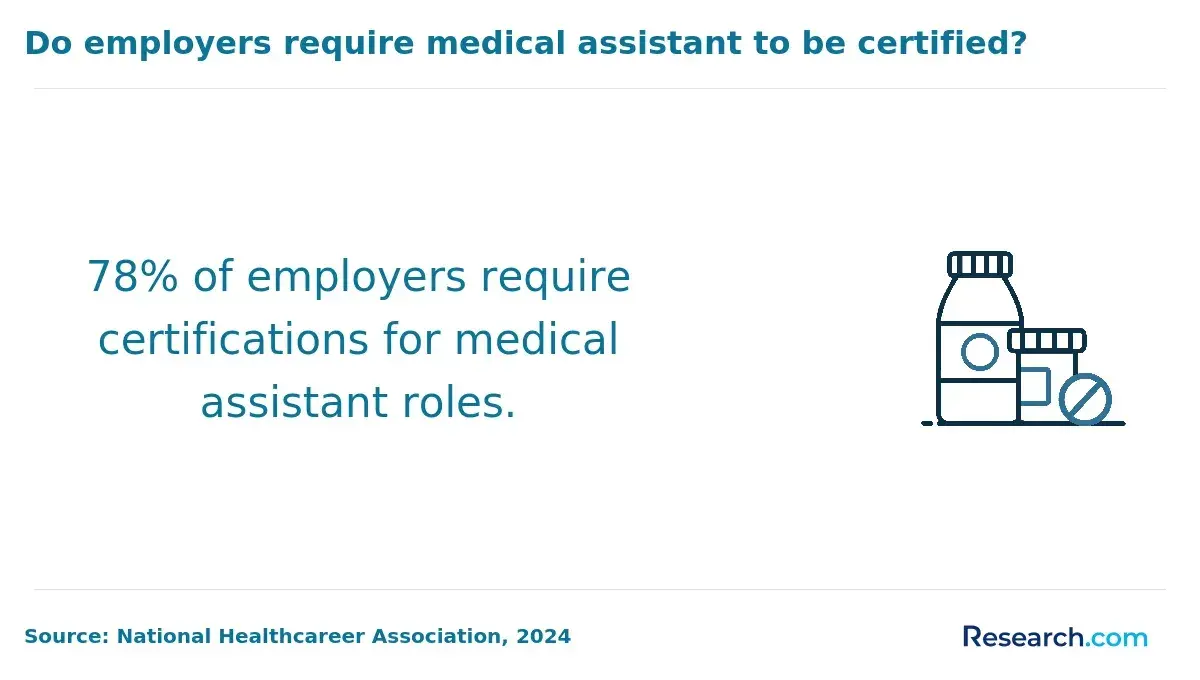
Kentucky does not require a state medical assistant license, but many employers prefer applicants who complete an accredited program and earn a national credential such as CMA, RMA, CCMA, or NCMA. The state expects a 19% job increase for medical assistants by 2030, and another cited projection points to 12% growth by 2030, so applicants with documented training, clinical hours, and certification are better positioned in the job market.
Key Things to Know Before Enrolling
- Accreditation matters. Kentucky employers are more likely to trust training from recognized schools, especially when the program supports national certification eligibility.
- Online does not mean fully remote. Most strong programs require local clinical experience so students can practice real patient-care and medical office skills.
- Certification can improve your competitiveness. Passing a credentialing exam such as the CMA, RMA, CCMA, or NCMA can help show employers that your training meets professional standards.
- Program length affects both cost and career flexibility. A short certificate may get you job-ready faster, while a diploma or associate degree may provide broader preparation.
- Compare total cost, not tuition alone. Books, supplies, technology fees, application fees, and certification exam costs can change the real price of a program.
- Online medical assistant training in Kentucky: what is possible?
- How long do Kentucky online medical assistant programs take?
- How accreditation works for online medical assistant programs
- How to become certified after online training
- Typical timeline from enrollment to first job
- Online medical assistant program costs in Kentucky
- Financial aid options for Kentucky students
- Moving from medical assisting into other healthcare roles
- Medical assistant salary expectations in Kentucky
- Do employers value online-trained medical assistants?
- Can online medical assistant training support long-term advancement?
Can you become a medical assistant in Kentucky through online programs?
Yes, but the best answer is “online plus hands-on.” Online medical assistant programs in Kentucky are often designed as hybrid career-training pathways: academic lessons are delivered through a digital platform, while clinical practice happens through in-person labs, simulations, or externships arranged in a local healthcare setting.
This structure works well for students who need flexibility but still want employer-relevant training. It is especially useful for working adults, parents, rural students, and people who cannot commute to campus several days a week. The trade-off is that you must plan ahead for clinical requirements, transportation, scheduling, and site availability.
- Online coursework: Students usually complete topics such as medical terminology, anatomy, basic pharmacology, infection control, medical office procedures, health records, and patient communication through an online learning system.
- Hybrid or blended requirements: Some programs combine virtual lectures with scheduled in-person skills labs or externship placements so students can practice clinical tasks safely.
- Clinical training: Externships and labs help students apply classroom knowledge in real healthcare environments, which is important for patient interaction, documentation, and procedural confidence.
- Certification preparation: Many programs include review materials for exams such as the CCMA and may help students understand eligibility rules, testing steps, and exam scheduling.
If you are interested in healthcare but prefer records, insurance, and administrative work over clinical patient care, it may also be worth comparing medical assisting with medical billing and coding jobs. Both fields can lead to entry-level healthcare employment, but the daily tasks are very different.
| Program feature | What it means for Kentucky students | Why it matters |
| Online classes | Lectures, readings, assignments, and quizzes are completed remotely. | Helpful if you need schedule flexibility. |
| Clinical externship | Hands-on experience is completed at an approved local site. | Shows employers you practiced patient-care skills in person. |
| Certification preparation | The program may align coursework with CMA, RMA, CCMA, or NCMA exam topics. | Certification can strengthen job applications. |
| Accreditation status | The school or program has been reviewed by a recognized accrediting body. | Can affect employer trust, financial aid access, and exam eligibility. |
How long are online medical assistant programs in Kentucky?
Online medical assistant program length in Kentucky depends mainly on the credential type. Short certificate programs focus on speed and job readiness, while diploma and associate degree programs usually include more coursework, broader training, or general education classes.
| Credential type | Typical length | Best for | Main trade-off |
| Certificate program | 4–6 Months | Students who want the fastest route into entry-level medical assisting. | Less time for broader coursework or transfer-friendly general education. |
| Diploma program | 10–12 Months | Students who want more depth than a short certificate but do not need a full associate degree. | Takes longer than a certificate and may cost more. |
| Associate degree program | 16–24 Months | Students who want a more complete academic foundation or may pursue future healthcare education. | Longest timeline and usually the greatest time commitment. |
- Certificate Programs (4–6 Months): These programs are built for quick entry into the field. They usually emphasize essential clinical and administrative skills, along with preparation for entry-level employment and certification exams.
- Diploma Programs (10–12 Months): Diploma programs typically provide a more detailed mix of medical office, patient-care, and procedural training. They may be a good fit if you want more practice before applying for jobs.
- Associate Degree Programs (16–24 Months): Associate degrees generally include additional coursework and may be useful for students considering future advancement, transfer options, or broader healthcare roles.
Externships can affect the timeline. Even if online lessons are self-paced, you may need to complete clinical hours on a site’s schedule. Students comparing healthcare credentials may also want to review how different certification routes affect cost, time, and career direction, such as this CPC vs CBCS certification salary comparison.
Are online medical assistant programs in Kentucky accredited?
Some online medical assistant programs serving Kentucky students are accredited, and some are not. Accreditation is one of the first things to verify because it can influence training quality, certification eligibility, employer confidence, and access to financial aid.
For medical assisting, two important programmatic accrediting organizations are the Commission on Accreditation of Allied Health Education Programs (CAAHEP) and the Accrediting Bureau of Health Education Schools (ABHES). These organizations review whether programs meet recognized standards for curriculum, faculty, student support, and clinical preparation. Some online programs may also reference institutional or distance education accreditation, such as DEAC, so students should understand exactly what type of accreditation applies.
Graduating from an accredited program can make it easier to qualify for national credentialing exams such as Certified Medical Assistant (CMA) or Registered Medical Assistant (RMA). It can also reassure employers that your training included both academic and practical preparation. Because medical assistants often help with documentation, coding-related workflows, insurance forms, and patient records, a basic understanding of medical billing and coding can also be useful in many offices.
How to check accreditation before you enroll
- Ask the school whether the medical assistant program itself is accredited, not only whether the institution is accredited.
- Confirm the accreditor name, such as CAAHEP or ABHES, and verify it through the accreditor’s official directory when possible.
- Ask which certification exams graduates are eligible to take after completing the program.
- Request written details on externship requirements, including whether the school helps arrange Kentucky clinical placements.
- Confirm whether financial aid applies to the specific program format you plan to take.
How do you get certified as a medical assistant in Kentucky online?
Kentucky does not require a state license for medical assistants, but certification is often the credential that helps employers evaluate your readiness. Certification is not the same as completing a program: you usually finish training first, then sit for a national exam if you meet eligibility requirements.
- Meet the basic education requirement. Most programs require a high school diploma or GED before enrollment.
- Select an appropriate online or hybrid program. Look for recognized accreditation, certification exam alignment, externship support, and transparent costs.
- Complete the online coursework. Expect classes in medical terminology, anatomy, clinical procedures, administrative systems, patient privacy, and office operations.
- Finish required in-person clinical training. Clinical labs or externships allow you to practice skills under supervision at an approved healthcare site.
- Apply for a certification exam. Common options include CCMA, RMA, NCMA, and CMA, depending on your program and eligibility.
- Pass the exam and maintain the credential. After certification, follow the credentialing organization’s renewal and continuing education rules.
| Certification-related question | What to ask the school |
| Exam eligibility | Which exams can graduates sit for after completing this program? |
| Exam fees | Are exam vouchers included, or will I pay separately? |
| Externship support | Will the school arrange a Kentucky site, or must I find one myself? |
| Graduate outcomes | What support is available for resumes, interviews, and employer connections? |
| Credential renewal | Does the program explain continuing education or renewal requirements? |
Online training can be a realistic route if it includes supervised practical experience. The strongest programs make the sequence clear: coursework first, clinical practice next, certification preparation throughout, and exam scheduling near the end.
How long does it take to become a medical assistant in Kentucky?
Most students can expect the full path to take less than a year for a short certificate or up to about two years for an associate degree. The exact timeline depends on the program type, whether you study full time or part time, when clinical hours are available, and how quickly you schedule a certification exam.
A common sequence looks like this: choose a program, complete online coursework, fulfill clinical or externship requirements, prepare for the certification exam, take the exam, and begin applying for jobs. Since Kentucky does not require medical assistant state licensure, the biggest post-training step is usually national certification rather than a state licensing process.
| Stage | What happens | What can delay progress |
| Program research | Compare accreditation, format, cost, and clinical placement support. | Unclear accreditation or vague externship policies. |
| Online coursework | Complete lessons, assignments, and assessments remotely. | Part-time pacing or missed deadlines. |
| Clinical practice | Complete labs or an externship in a healthcare setting. | Limited site availability or schedule conflicts. |
| Certification preparation | Review exam topics and submit exam paperwork. | Waiting too long to schedule the exam. |
| Job search | Apply to clinics, hospitals, physician offices, and specialty practices. | No resume support, weak references, or lack of documented clinical hours. |
One Kentucky medical assistant who completed an online program through a local school described the process as manageable but not effortless. He found the online coursework flexible, but said the clinical portion required careful planning around work. His biggest lesson was to schedule study time, externship hours, and certification preparation early instead of treating them as separate last-minute tasks.
How much does it cost to complete a medical assistant program in Kentucky online?
The cost of an online medical assistant program in Kentucky depends on the school, credential level, included services, and whether supplies or exam vouchers are bundled into tuition. A low advertised tuition price may not reflect the full amount you will pay, so compare total program cost before enrolling.
- Tuition: This is usually the largest expense. Short courses may cost a few hundred dollars, while more comprehensive diplomas or degrees may cost several thousand.
- Registration and Application Fees: One-time enrollment charges often fall around $29 to $100, depending on the school.
- Textbooks and Supplies: Some programs include materials, while others require students to purchase books, uniforms, stethoscopes, or other clinical tools separately. These costs may range from $100 to $500.
- Technology Fees: Online programs may charge for learning platforms, digital resources, or proctoring tools. These fees commonly run between $50 and $150 per term, though they can be higher in some programs.
- Certification Exam and Prep: Study guides, practice exams, and testing fees can add $150 to $300 unless the program includes them.
| Cost item | Questions to ask before enrolling |
| Tuition | Is the price charged per course, per term, or for the whole program? |
| Fees | Are application, registration, technology, lab, or graduation fees separate? |
| Supplies | Are textbooks, scrubs, equipment, and background checks included? |
| Certification | Does tuition include an exam voucher or only exam preparation? |
| Externship | Will I pay extra for placement, travel, immunizations, or site requirements? |
Can you get financial aid for online medical assistant training in Kentucky?
Financial aid may be available for some online medical assistant programs in Kentucky, but eligibility depends on the school, program type, accreditation, enrollment status, and aid rules. Before assuming aid applies, ask the school’s financial aid office to confirm whether your exact program qualifies.
- Federal Grants: These awards do not have to be repaid and are typically based on financial need, but they are usually tied to eligible accredited programs.
- Federal Student Loans: Loans must be repaid, but they may offer lower interest rates and more flexible repayment options than private loans. Students usually begin by completing the FAFSA.
- Institutional Scholarships and Grants: Some schools offer internal awards, discounts, scholarships, or payment plans.
- State-Based Aid: Kentucky options such as KEES and CAP Grants may provide support for eligible residents and eligible programs.
- Employer Tuition Assistance: Some healthcare employers help employees pay for training that supports workforce needs.
A Kentucky medical assistant who completed online training through a local school said financial aid felt confusing at the beginning, especially when sorting out forms and eligibility rules. After receiving a combination of a federal grant and an institutional scholarship, she said the cost became much easier to manage. Her advice was simple: contact the financial aid office early, ask for a written cost breakdown, and do not wait until the payment deadline to explore options.
Ways to reduce the cost of training
- Choose an accredited program only if it supports your certification and financial aid goals.
- Ask whether certification exam fees, books, and supplies are included before comparing prices.
- Check whether prior college credits or healthcare experience can reduce your required coursework.
- Compare certificate, diploma, and associate degree options based on your career plan, not prestige alone.
- Ask local healthcare employers whether they offer reimbursement, tuition assistance, or paid training pathways.
Can a Medical Assistant Transition to Other Healthcare Roles in Kentucky?
Yes. Medical assisting can be a first step into healthcare, especially for students who want patient contact and medical office experience before deciding on a longer-term path. The role exposes you to clinical workflows, electronic health records, patient communication, scheduling, documentation, and teamwork with nurses, physicians, and office staff.
However, moving into a more advanced role usually requires additional education, licensing, certification, or supervised training. Medical assistant experience may help you confirm your interests and strengthen your application, but it does not automatically qualify you for licensed roles such as nursing or therapy. If you are considering a major career change into a licensed allied health profession, review the requirements carefully; for example, this guide explains how to become an occupational therapist in Kentucky.
| Next step | Why medical assisting helps | Additional preparation usually needed |
| LPN or RN pathway | Provides patient-care exposure and familiarity with clinical settings. | Nursing program admission, clinical rotations, and licensure requirements. |
| Healthcare administration | Builds knowledge of scheduling, records, billing workflows, and office operations. | Additional coursework in management, health information, or administration. |
| Medical billing and coding | Introduces documentation, insurance workflows, and healthcare terminology. | Focused coding training and certification preparation. |
| Specialty practice roles | Offers experience in patient intake and procedure support. | Employer training or specialty-specific credentials may be required. |
What is the average salary for medical assistants in Kentucky?
Medical assistant pay in Kentucky varies by location, employer type, experience, certification, and job responsibilities. Online training by itself usually does not determine pay; employers tend to focus more on whether you completed a credible program, gained hands-on experience, earned certification, and can perform the required tasks safely.
- Entry-Level Pay: New medical assistants commonly start around $14.81 to $15.43 per hour, or roughly $30,000 to $32,090 per year.
- Median Salary: Average pay is about $15.43 per hour or $32,090 annually, while some reports show $17.27 per hour.
- Experienced Medical Assistants: With experience and certification, pay can reach $20.43 per hour or about $42,490 per year, with some top earners making more.
- Work Setting Matters: Hospitals may offer stronger pay and benefits, while private practices and clinics may provide more predictable schedules or closer patient relationships.
Use these figures as planning information, not a guarantee. Your actual earnings can depend on whether you work in a rural clinic, urban hospital, specialty office, urgent care center, school health setting, or multi-provider practice.
Are online-trained medical assistants hired as often as campus-trained ones in Kentucky?
Online-trained medical assistants can be competitive in Kentucky when their program is accredited, includes meaningful clinical practice, and prepares them for certification. Employers may still ask closer questions about hands-on training because medical assisting is not purely administrative. The diploma format matters less than whether you can prove patient-care competence, professionalism, and job readiness.
- Clinical Training Requirements: Both online and campus-based programs should include practical experience through labs or externships, usually at least 180 hours. Employers may ask for documentation of completed clinical hours.
- Employer Preferences: Some hiring managers may still feel more familiar with campus-based training, but strong online programs with local externships and certification preparation can reduce that concern.
- Job Readiness: Programs that prepare students well for certification exams can help graduates demonstrate readiness. One cited example is the 95% pass rate at U.S. Career Institute compared to the national 83%.
- Regional Workforce Needs: In rural or underserved parts of Kentucky, employers may prioritize certification, availability, interpersonal skills, and completed clinical hours over whether coursework was online or on campus.
- Accreditation and Certification: Graduating from an accredited program and earning a recognized credential can make an online-trained applicant easier for employers to evaluate.
If you are weighing different healthcare credentials, compare the time commitment and career purpose of each option. This breakdown of bachelors degree vs medical billing and coding certificate cost and time investment may help you think through short-term training versus longer academic pathways.
Common mistakes when choosing an online program
- Choosing a program without checking accreditation. A program can look convenient and still fail to meet the standards needed for certification eligibility or employer confidence.
- Assuming “online” means no in-person work. Quality medical assistant training usually requires labs, externships, or supervised clinical practice.
- Comparing only tuition. The cheaper program may become more expensive after books, supplies, fees, and certification costs are added.
- Ignoring externship placement support. If the school does not help arrange a local site, you may struggle to complete required clinical hours.
- Expecting certification to be automatic. Completing a program and passing a national exam are separate steps.
- Relying only on rankings or advertisements. A school’s marketing does not replace accreditation verification, cost review, and employer feedback.
Do online medical assistant programs in Kentucky lead to advanced healthcare careers?
Online medical assistant programs in Kentucky can support advancement, but they should be viewed as a starting point rather than a direct substitute for advanced healthcare education. They can help you enter the field, build confidence with patients, understand clinical routines, and decide whether you want to pursue a longer credential later.
- Nursing Career Advancement: Some medical assistants later pursue Licensed Practical Nurse (LPN) or Registered Nurse (RN) programs. Medical assisting experience can help with confidence and context, but nursing requires separate education and licensure.
- Healthcare Administration: Students who enjoy scheduling, records, insurance, compliance, and office operations may move toward medical office management or health administration with further training.
- Specialized Medical Assisting: Experience in areas such as pediatrics, dermatology, cardiology, or women’s health may help medical assistants build specialty skills, depending on employer needs.
- Advanced Certifications: Credentials such as Certified Medical Assistant (CMA) or Registered Medical Assistant (RMA) can strengthen job applications and may support advancement within a practice.
Students who like the administrative and documentation side of healthcare may also consider coding and billing. Learning what does a certified medical coder and biller do can help you compare patient-facing work with remote-friendly or office-based healthcare roles.
Current trends affecting medical assistants in Kentucky
- More outpatient care: Medical assistants are often needed in clinics, urgent care centers, specialty offices, and physician practices that handle high patient volume.
- Digital health records: Employers increasingly expect comfort with electronic health records, patient portals, scheduling systems, and digital documentation.
- AI-assisted administration: Automation may help with reminders, documentation support, and scheduling, but medical assistants still need judgment, patient communication skills, and privacy awareness.
- Credential-focused hiring: Certification can help employers compare candidates from different program formats, including online and campus-based training.
- Rural healthcare needs: In areas where access to care is limited, versatile medical assistants who can handle both clinical and administrative tasks may be especially valuable.
What Do Medical Assistants in Kentucky Say About Their Career?
- My online medical assistant training through Bluegrass Technical Academy gave me the flexibility to study while managing family responsibilities. The practical skills I learned helped me move into a local school-based healthcare setting, where I feel connected to student wellness and community health. Jervis
- The Appalachian Health Institute’s online program helped me build the technical foundation and confidence I needed for medical assisting. Working in an academic setting has shown me how important accessible healthcare is for Kentucky’s rural communities, and it has motivated me to keep developing professionally. Ariel
- Training with the Lexington Medical Academy's online program was a career-focused choice for me. The program’s community health emphasis matched what I wanted to do, and working in a local school has shown me how medical assistants can contribute to safer and healthier learning environments. Raymond
Related Articles for Nearby States
- 2027 How to Become a Medical Assistant in Indiana Online
- 2027 How to Become a Medical Assistant in Ohio Online
- 2027 How to Become a Medical Assistant in Tennessee Online
- 2027 How to Become a Medical Assistant in West Virginia Online
- 2027 How to Become a Medical Assistant in Virginia Online
- 2027 How to Become a Medical Assistant in Illinois Online
- 2027 How to Become a Medical Assistant in Missouri Online
- 2027 How to Become a Medical Assistant in North Carolina Online
- 2027 How to Become a Medical Assistant in Georgia Online
- 2027 How to Become a Medical Assistant in Mississippi Online
References:
- Online Medical Assistant Programs in Kentucky: Choosing a School https://www.edumed.org/online-schools/medical-assistant-programs/kentucky-ky/
- 4-Month Kentucky Medical Assistant Certification Program https://www.stepful.com/program/kentucky-medical-assistant-certification-program
- Online Certified Clinical Medical Assistant (CCMA) (Voucher Included) from Eastern Kentucky University https://careertraining.eku.edu/training-programs/certified_clinical_medical_assistant/
- [2025 Updated] Best Online Medical Assistant Programs in the US https://www.registerednursing.org/medical-assistant/programs/
- Kentucky Online Medical Assistant Certificate Program | Self-Paced Course https://www.uscareerinstitute.edu/online-medical-assistant-school/kentucky
- Explore a Career as a Clinical Medical Assistant | Western Kentucky University https://www.ed2go.com/wku/online-courses/explore-career-clinical-medical-assistant/
- Western Kentucky University course information Western Kentucky University Clinical Medical Assistant Online Certification Course https://wku.edu2.com/product/4895/clinical-medical-assistant
- Online Medical Assisting Programs for Kentucky Residents https://www.herzing.edu/healthcare/medical-assisting/kentucky
Key Insights
- Online medical assistant programs in Kentucky can prepare students for entry-level healthcare work, but credible programs still include in-person clinical training.
- Kentucky does not require state licensure for medical assistants, so national certification is often the main credential employers look for after training.
- Program length varies widely: certificates may take 4–6 Months, diplomas 10–12 Months, and associate degrees 16–24 Months.
- Accreditation should be verified before enrollment because it may affect certification eligibility, financial aid, and employer confidence.
- Total cost includes more than tuition. Ask about fees, books, supplies, technology charges, externship requirements, and certification exam costs.
- Online-trained graduates can compete with campus-trained applicants when they complete clinical hours, earn certification, and can clearly document their skills.
- Medical assisting can be a useful first healthcare role, but advancement into nursing, therapy, administration, or coding usually requires additional training or credentials.
Other Things You Should Know About Becoming a Medical Assistant Online in Kentucky
Kentucky employers commonly prefer the Certified Medical Assistant (CMA) exam from the American Association of Medical Assistants, and many also accept the Registered Medical Assistant (RMA) exam from AMT. These credentials are not state licenses, but they strengthen job prospects in 2027.
Kentucky requires medical assistants in 2027 to obtain a national certification, such as the CMA (Certified Medical Assistant) through the AAMA or the RMA (Registered Medical Assistant) through the AMT, after completing an accredited program and passing the respective exam.


