2027 How to Become a Licensed Counselor (LPC) in Nevada

Co-Founder and Chief Data Scientist
Choosing a licensed counseling career in Nevada is less straightforward than searching for “LPC license Nevada.” Nevada does not issue a license simply called Licensed Professional Counselor (LPC). Instead, most counseling candidates pursue either a Clinical Professional Counselor (CPC) license or a Marriage and Family Therapist (MFT) license, with intern licenses used during supervised practice. Nevada also does not offer automatic reciprocity for counselors licensed elsewhere, so out-of-state professionals should expect a formal review process before practicing.
This guide explains how Nevada counseling licensure works, what education and supervision are required, how CPC and MFT paths differ, what counselors can earn, and how factors such as online education, telehealth, specialization, cost of living, and continuing education should affect your decision.
Quick answer: How do you become a licensed counselor in Nevada?
To become a licensed counselor in Nevada, you generally need a qualifying graduate mental health degree, supervised postgraduate experience, required exams, a background check, and approval from the Nevada Board of Examiners for Marriage and Family Therapists & Clinical Professional Counselors. Nevada uses CPC, CPC-Intern, MFT, and MFT-Intern license categories rather than a single LPC license. Candidates should always verify current requirements with the state board before enrolling in a program or submitting an application.
What are the most important facts about licensed counseling careers in Nevada?
- The Bureau of Labor Statistics projects a strong 18% forecast employment growth rate by 2032 for counselors.
- Average annual pay for licensed counselor roles in Nevada varies by title and source, ranging from $48, 539 for mental health counselors to $72,962 for licensed professional counselors. Counselors average $64,605, while licensed counselors average $64,933.
- General psychology remains the second-most popular degree in 2025, yielding 145,100 graduates and trailing only registered nursing which produced 275,600 completions.
- Nevada housing costs 10% more than the national average. The median home price is $497,357, and median rent is $1,512.
- Utilities are 2% above average, including an energy bill of $180.89/month and a phone bill of $194.60/month.
- Healthcare is 7% below the national average, with a doctor's visit costing $115.92 and a dentist visit costing $100.01.
- Nevada does not have reciprocity agreements for Licensed Professional Counselors (LPCs), so a counseling license from another state usually does not automatically authorize practice in Nevada.
- Continuing education requirements for Nevada counselors
- How to prepare for a licensed counseling career in Nevada
- How online programs can support counseling licensure goals
- Licensed counselor vs. psychologist licensure in Nevada
- Whether an advanced degree can improve your career path
- Professional development options for Nevada counselors
- How social work differs from the LPC-style pathway
- Whether additional certifications can improve advancement
- How telehealth is changing counseling practice
- When school counseling may be a useful career pivot
- Main steps in the Nevada counseling application process
- Financial aid and scholarships for counseling students in Nevada
- Alternative education pathways for future counselors
- Substance abuse counseling as a specialization
- Ethical and legal responsibilities for licensed counselors
What Nevada Counseling Graduates Say About the Career
-
: "
Working as a licensed counselor in Nevada has given me a meaningful way to support people through difficult periods. The state’s licensure process is demanding, but that structure helped me build the clinical foundation I needed to serve clients responsibly. — Courtney
"
-
: "
My counseling career in Nevada has included schools, private practice settings, and community-based work. The professional options are varied, and the work itself is personally rewarding because you see clients and families make real progress. — Matt
"
-
: "
Nevada’s focus on continuing education and professional standards has helped me keep improving as a clinician. Ongoing training has made it easier to stay current with ethical practice, new methods, and client needs. — Jen
"
What is a licensed counselor, and what does the role involve?
A licensed counselor is a mental health professional authorized by a state licensing board to provide counseling services. In many states, the common title is Licensed Professional Counselor, or LPC. Nevada uses different license names, most commonly Clinical Professional Counselor (CPC) and Marriage and Family Therapist (MFT).
Licensed counselors typically hold a master’s degree in counseling or a closely related mental health field. They may work in private practice, outpatient clinics, hospitals, schools, community agencies, veterans affairs settings, and substance use treatment programs.
Common responsibilities of licensed counselors
- Assess client concerns through interviews, screening tools, history-taking, and clinical observation.
- Create treatment plans that connect client goals with appropriate therapeutic interventions.
- Provide individual, group, couples, or family counseling depending on training, license type, and work setting.
- Diagnose and treat mental health conditions within the scope allowed by state law and professional competence.
- Coordinate care with physicians, social workers, psychologists, case managers, school personnel, and other providers.
- Support clients through crisis intervention, psychoeducation, relapse prevention, career counseling, and referral planning.
- Maintain accurate documentation, follow confidentiality rules, and practice according to ethical and legal standards.
The key Nevada distinction is terminology. If your goal is “LPC” practice, you will likely be comparing the CPC and MFT routes rather than applying for a license literally called LPC.
What qualifications are required to become a licensed counselor in Nevada?
Nevada’s main full counseling-related licenses are the Clinical Professional Counselor (CPC) and Marriage and Family Therapist (MFT). Candidates who are still completing supervised practice may hold an intern license. The four major Nevada counselor license categories are:
- Clinical Professional Counselor (CPC)
- Clinical Professional Counselor Intern (CPC-Intern)
- Marriage and Family Therapist (MFT)
- Marriage and Family Therapist Intern (MFT-Intern)
Because licensure rules can change, candidates should confirm all requirements directly with the Nevada Board of Examiners for Marriage and Family Therapists & Clinical Professional Counselors before selecting a degree program, counting supervised hours, or applying.
Clinical Professional Counselor (CPC) requirements
- Age and work authorization: Applicants must be at least 21 years old and must be a U.S. citizen or lawfully authorized to work in the United States.
- Education: Candidates must complete a graduate mental health degree program in mental health counseling or community counseling accredited by CACREP, or complete residency training in psychiatry from a regionally accredited institution approved by the Board.
- Exam: Applicants must pass the National Clinical Mental Health Counseling Examination (NCMHCE), which is administered by the National Board for Certified Counselors (NBCC).
- Postgraduate experience: Candidates must complete at least 2 years of postgraduate professional counseling experience.
- Supervised hours: Applicants must complete at least 3,000 supervised hours, including at least 1,500 hours of direct client contact and at least 300 hours of supervision from approved supervisors, with at least one hour per week for each week of counseling provided.
- Additional requirements: Applicants must demonstrate good moral character, satisfy Nevada citizenship or legal residency requirements, and pass a background check.
Marriage and Family Therapist (MFT) requirements
- Basic eligibility: Applicants must be at least 21 years old, demonstrate good moral character, and be U.S. citizens or lawfully authorized to work in the United States.
- Education: Candidates may qualify through residency training in psychiatry from a regionally accredited program approved by the Board, a graduate mental health degree in marriage and family therapy, psychology, or social work from a regionally accredited program approved by the Board, or other education and training the Board determines to be equivalent.
- Experience: Applicants must complete at least 2 years of postgraduate marriage and family therapy experience.
- Supervised practice: Candidates must complete at least 3,000 supervised hours in marriage and family therapy, including at least 1,500 hours of direct face-to-face client contact.
- Exam: Applicants must pass the written MFT exam administered by the Board.
MFT-Intern requirements
- Licensing body: Nevada Board of Examiners for Marriage and Family Therapists and Clinical Professional Counselors.
- Application process: Candidates undergo academic review, identify approved primary and secondary supervisors, submit supervision forms, and complete a required background check.
- Supervisor access: A board-approved supervisor list is provided after application processing.
- Supervised experience: Interns complete 3,000 hours of supervised experience.
CPC-Intern requirements
- Licensing body: Nevada Board of Examiners for Marriage and Family Therapists and Clinical Professional Counselors.
- Application process: Candidates complete academic review, secure approved primary and secondary supervisors, submit supervision documentation, and complete a background check.
- Exam requirement: CPC-Intern candidates must pass the National Clinical Mental Health Counseling Examination (NCMHCE).
- Supervised experience: Interns must complete 3,000 hours of supervised experience.
CPC vs. MFT in Nevada: which path fits your goal?
| Path | Best fit for | Typical focus | Key decision point |
| CPC | Students who want a clinical mental health counseling route | Individual counseling, emotional and behavioral concerns, treatment planning, and clinical interventions | Choose this route if your primary goal is broad mental health counseling practice. |
| MFT | Students drawn to couples, families, and relational systems | Marriage, family, relationship, communication, and family-dynamics concerns | Choose this route if your preferred clinical lens is family systems and relational therapy. |
| CPC-Intern | CPC candidates completing supervised hours | Supervised clinical counseling practice | Use this license while gaining required post-degree experience. |
| MFT-Intern | MFT candidates completing supervised hours | Supervised marriage and family therapy practice | Use this license while building required MFT experience. |
What skills do licensed counselors need?
Successful counselors combine clinical knowledge with strong interpersonal judgment. Technical training matters, but the work also depends on trust-building, ethical awareness, cultural humility, and the ability to adapt treatment to each client.
| Skill area | What it means in practice | Why it matters |
| Assessment and diagnosis | Conducting interviews, interpreting screening results, and identifying client needs | Accurate assessment shapes effective treatment planning. |
| Clinical knowledge | Understanding mental health conditions, counseling theories, and evidence-based approaches | Clients need interventions grounded in professional standards. |
| Treatment planning | Creating individualized goals, interventions, and progress measures | A clear plan keeps counseling focused and accountable. |
| Documentation | Writing progress notes, risk assessments, referrals, and treatment updates | Quality records support continuity of care and legal compliance. |
| Communication | Listening actively, asking useful questions, and explaining concepts clearly | The therapeutic relationship depends on clarity and trust. |
| Ethical reasoning | Managing confidentiality, boundaries, consent, and conflicts of interest | Counselors must protect clients and practice within legal limits. |
| Crisis response | Recognizing risk, de-escalating situations, and connecting clients to urgent help | Some counseling settings require fast, calm decision-making. |
| Technology use | Using electronic health records, telehealth platforms, and secure communication tools | Digital workflows are now common in counseling practice. |
What is the NCMHCE exam format?
The National Clinical Mental Health Counseling Examination (NCMHCE) is designed to test whether candidates can apply counseling knowledge to realistic clinical situations. Rather than focusing only on memorization, the exam uses case-based scenarios.
- Content focus: The exam measures application of knowledge through clinical case studies.
- Domains: The six domains are Professional Practice and Ethics (15%), Intake, Assessment, and Diagnosis (25%), Areas of Clinical Focus (not scored individually), Treatment Planning (15%), Counseling Skills and Interventions (30%), and Core Counseling Attributes (15%).
- Scored items: The exam includes 100 scored items out of 130-150 total items.
- Scoring method: Each scored item is worth one point, and the total score equals the number of correct scored responses.
- Passing score: The passing score is determined through standard setting by subject matter experts and adjusted for exam difficulty.
- Score interpretation: Results are pass/fail based on the individual candidate’s performance, not on comparison with other test-takers.
- Question format: Questions are multiple choice, with four options and one correct answer.
- Exam length: Candidates have 255 Minutes to Complete the exam.
- Case structure: Each case study includes a narrative followed by 9-15 multiple-choice questions.
- Number of case studies: The exam includes 11 case studies, including one unscored case used for future exam development.
What career options are available to licensed counselors in Nevada?
Nevada counselors can work across clinical, educational, community, and private practice settings. The best fit depends on your license type, population interests, tolerance for crisis work, preferred schedule, and long-term income goals.
| Career option | Main responsibilities | Common settings | Best fit for counselors who want |
| Career counselor | Help clients explore career options, make education or job decisions, and prepare for employment | Schools, colleges, community agencies, private practice | A blend of counseling, coaching, assessment, and workforce guidance |
| Crisis counselor | Provide immediate support, assess risk, de-escalate distress, and connect clients to emergency resources | Emergency departments, crisis lines, mobile response teams | Fast-paced work with acute client needs |
| Geriatric counselor | Support older adults facing depression, dementia-related stress, grief, isolation, or life transitions | Clinics, senior services, hospitals, community agencies | Work focused on aging, family support, and later-life well-being |
| Marriage and family therapist | Work with couples and families on communication, conflict, parenting, and relational patterns | Private practice, agencies, family service organizations | A systems-based approach to counseling |
| Mental health counselor | Assess concerns, build treatment plans, and provide therapy for issues such as anxiety, depression, and trauma | Outpatient clinics, agencies, hospitals, private practice | Broad clinical mental health practice |
| School counselor | Support students’ academic, social, emotional, and career development while coordinating with families and educators | K-12 schools and educational systems | Student-facing work and school-based collaboration |
| Substance abuse counselor | Provide addiction-focused assessment, recovery counseling, group therapy, and relapse-prevention support | Inpatient and outpatient treatment programs | Specialized behavioral health and recovery work |
| Therapist in private practice | Deliver therapy services while managing scheduling, documentation, referrals, fees, and client care systems | Solo or group private practice | Greater autonomy, business responsibility, and client niche development |
Counseling also overlaps with adjacent psychology and education careers. For example, readers comparing school-based counseling and psychology roles may want to review an educational psychology salary guide. Those interested in workplace behavior, employee performance, and organizational systems may find industrial organizational psychologist careers more aligned with their goals.
Cost of living should be part of any Nevada career decision. Housing is higher than the national average, with median rent at $1,512/month. Utility costs also matter, including energy bills of about $180.89/month and phone bills of $194.60/month. Healthcare costs are lower than average, including a doctor's visit at $115.92 and a dentist visit at $100.01.
What are the continuing education requirements for LPCs in Nevada?
Nevada counselors must complete continuing education to keep their licenses active and maintain professional competence. Continuing education helps counselors stay current with ethics, law, cultural competency, clinical research, treatment methods, and changes in professional practice.
Required continuing education may include coursework in ethics, cultural competency, and Nevada-specific jurisprudence. Counselors may be able to complete approved training through workshops, webinars, online courses, academic lectures, and professional education offered by accredited institutions or recognized organizations.
Continuing education is also one of the main ways counselors develop a specialty. A clinician interested in family systems, for example, may pursue training connected to how to become a marriage and family therapist in Nevada, while another counselor may focus on trauma, addiction, crisis intervention, or school-based services.
The practical advice is simple: do not wait until renewal deadlines to track continuing education. Keep certificates, confirm provider approval, and make sure required subject areas are completed early enough to avoid renewal problems.
What specializations can Nevada counselors pursue?
Nevada does not create official LPC specialization licenses in the same way it grants CPC or MFT credentials. However, counselors can build recognized expertise through graduate coursework, supervised experience, continuing education, workplace focus, and additional credentials.
- Clinical mental health counseling: This path prepares counselors for community agencies, educational environments, private practice, and other clinical settings. It can lead to roles often compared with the highest paying mental health jobs.
- Marriage and family therapy: This specialization focuses on couples, families, communication patterns, family systems, and relationship concerns.
- School counseling: Counselors in this area support students with academic, career, social, and emotional development.
- Substance abuse counseling: Counselors may focus on addiction, recovery, relapse prevention, and co-occurring concerns. In Nevada, substance abuse counselors are licensed by the Nevada State Board of Examiners for Alcohol, Drug, and Gambling Counselors.
- Clinical supervision: Experienced counselors may become supervisors for interns and developing clinicians. Some professionals who begin in counseling later explore how to become a clinical psychologist, although psychology licensure follows a different educational route.
How to build a counseling specialty without a separate state specialization
- Choose a population: Focus your experience on children, adolescents, veterans, older adults, couples, families, or another defined group.
- Develop a clinical concentration: Use continuing education and supervised practice to deepen skills in trauma, grief, addiction, career counseling, crisis response, or family therapy.
- Select the right setting: Hospitals may build crisis and co-occurring disorder expertise, schools may strengthen youth-focused counseling skills, and private practice may support niche development.
- Match your license to your preferred work: MFTs usually emphasize family and relational systems, while CPCs more often focus on individual mental health counseling and broader clinical treatment.
What do Nevada internship and supervision hours include?
Supervised experience is where Nevada counseling candidates turn graduate training into real clinical skill. The hours are not only a licensing requirement; they are also the period when candidates learn documentation, boundaries, risk assessment, diagnosis, treatment planning, and professional judgment under supervision.
- Direct client contact: Nevada requires at least 1,500 hours of direct client contact. These hours may include individual therapy, group counseling, assessment, crisis support, and supervised therapeutic interventions.
- Supervision: Candidates must complete at least 300 hours of supervision. Supervision may include individual meetings, group supervision, case review, feedback on clinical decision-making, and discussion of ethical issues.
- Related professional activities: Up to 1200 hours may involve case management, treatment planning, psychological testing observation or support, referral coordination, documentation, and professional training.
Counselors who want administrative or leadership roles in behavioral health settings sometimes pair clinical experience with management education, including programs such as online MBA healthcare administration options.
What steps can aspiring LPCs take to prepare for a career in licensed counseling in Nevada?
Preparation should begin before enrolling in a graduate program. Nevada’s license structure makes program fit especially important because the wrong curriculum, accreditation status, or practicum structure can delay eligibility.
- Confirm the license you are targeting. Decide whether your goals align better with CPC, MFT, school counseling, substance abuse counseling, social work, or psychology.
- Check state requirements before choosing a school. Review degree, accreditation, exam, supervision, and background check rules with the Nevada board.
- Select a qualifying graduate program. Make sure the program’s coursework and clinical training support Nevada licensure expectations.
- Plan for supervised hours early. Ask programs how students find supervisors, practicum sites, internships, and post-degree placements.
- Prepare for the required exam. Build an exam timeline that fits your graduation date and intern application requirements.
- Gain relevant experience. Volunteer, work in human services, or seek internships that expose you to mental health, addiction, school, family, or crisis settings.
- Build a professional network. Join professional associations, attend workshops, and connect with supervisors who understand Nevada licensure.
Students who want a step-by-step overview can compare this guide with Research.com’s resource on how to become a licensed mental health counselor in Nevada.
What trends are shaping licensed counselor jobs?
Counseling is changing because demand for mental health services, technology adoption, interdisciplinary care, and employer expectations are all evolving. Future counselors should prepare for a profession that is both clinically demanding and increasingly digital.
- Greater collaboration: Counselors are more likely to coordinate with psychiatrists, primary care physicians, social workers, psychologists, case managers, and school teams. Interest in family patterns and inherited conditions has also increased attention to Genetic counseling programs.
- Cultural competency: Counselors need practical skill working with diverse clients, not just general awareness of diversity.
- Evidence-based practice: Employers and clients increasingly expect treatment methods supported by research and measurable progress.
- Changing reimbursement: Counselors in private practice may need to understand insurance, billing, documentation, and alternative payment models.
- Prevention and wellness: Some counseling roles are expanding beyond disorder treatment to stress management, resilience, and early intervention.
- Higher demand for services: Greater public awareness of mental health needs is contributing to more opportunities in schools, hospitals, agencies, and private practice.
- Addiction treatment innovation: Behavioral health teams continue to develop new approaches for substance use recovery and relapse prevention.
- Continuous upskilling: Counselors need ongoing training to stay current with clinical methods, legal standards, technology, and specialty areas.
- Access gaps: Shortages and access barriers create both challenges and opportunities, particularly for digital therapeutics and underserved communities.
- Private practice interest: Some counselors pursue private or home-based practice because of autonomy and scheduling flexibility.
- Soft skills in career counseling: Career guidance increasingly includes emotional intelligence, well-being, and mental health support.
- More specialization: Training in trauma, addiction, geriatric care, crisis work, or family therapy can help counselors compete for focused roles.
- Telehealth and EHR use: Counselors must be comfortable with secure video platforms, electronic health records, and digital documentation.
- AI and therapy technology: AI may support administrative tasks, screening, documentation workflows, or client engagement tools, but counselors still need to follow ethical, legal, and clinical standards.
- Well-being in career counseling: Career development and mental health are increasingly treated as connected issues rather than separate concerns.
How can online education programs support LPC licensure and career development in Nevada?
Online counseling programs can be useful for Nevada students who need flexibility, but they must be evaluated carefully. A convenient format is not enough. The program should align with Nevada’s required coursework, clinical training expectations, accreditation needs, and practicum or internship requirements.
Online learning may help working adults complete graduate coursework while managing employment or family obligations. Some programs also integrate digital tools, remote supervision structures, and telehealth-related training. Students comparing costs may want to review options such as an affordable online substance abuse counseling degree, especially if addiction counseling is part of their career plan.
Questions to ask before enrolling in an online counseling program
- Does the program meet Nevada’s educational requirements for the license I want?
- Is the program CACREP-accredited if I am pursuing the CPC route?
- How are practicum and internship placements arranged for students living in Nevada?
- Does the school help students identify approved supervisors?
- Will online coursework be accepted by the Nevada licensing board?
- What are the total costs, including fees, travel, clinical placement expenses, books, and exam preparation?
- What percentage of graduates complete the program and move into supervised practice?
What are the key differences between licensed counselor and psychology licensure in Nevada?
Licensed counselor and psychologist pathways differ in education level, scope, training focus, and career outcomes. Counseling licensure is typically built around a master’s-level clinical degree, supervised practice, and counseling-specific exams. Psychology licensure generally requires a doctoral degree with deeper training in assessment, research, and advanced clinical practice.
| Category | Licensed counselor pathway | Psychology pathway |
| Typical education level | Master’s-level counseling or related mental health degree | Doctoral-level psychology education |
| Training emphasis | Therapy, counseling skills, treatment planning, client support | Psychological assessment, research, diagnosis, therapy, and broader clinical training |
| Common roles | CPC, MFT, school counselor, substance abuse counselor, therapist | Psychologist, assessor, researcher, clinical practitioner, academic professional |
| Best fit | Students who want a faster route into counseling practice than a doctoral psychology path | Students interested in doctoral-level assessment, research, and advanced psychological practice |
Readers comparing these routes can review how to become a psychologist in Nevada for a closer look at psychology requirements.
Should I pursue an advanced degree to optimize my LPC career trajectory?
A graduate degree is already central to Nevada counseling licensure, but some counselors pursue additional advanced study to strengthen a niche, move into leadership, teach, supervise, or work with specialized populations. The decision should be based on cost, career goals, licensure relevance, and expected practical value rather than the assumption that more education automatically produces higher earnings.
Specialized programs can deepen clinical perspective. For example, students interested in faith-integrated counseling may compare masters in Christian counseling programs. The key is to confirm whether the degree supports licensure, adds a useful specialty, or simply expands knowledge without changing eligibility.
When additional graduate study may make sense
- You want to supervise interns or teach in higher education.
- You need deeper training in a specific clinical area such as trauma, couples counseling, addiction, or spiritual integration.
- You are moving toward administration, program development, or clinical leadership.
- Your current degree does not fully align with your target license or specialty.
When another degree may not be worth it
- You already meet Nevada licensure requirements and mainly need supervised experience.
- The program is expensive but does not improve licensure eligibility or career options.
- Your goal can be met through continuing education, certification, supervision, or focused work experience.
What professional development opportunities can maximize LPC career potential in Nevada?
Professional development should be strategic. Instead of collecting random workshops, counselors should choose training that supports their client population, work setting, ethical responsibilities, and advancement goals.
- Specialty workshops: Trauma-informed care, addiction treatment, family systems, grief counseling, crisis intervention, and cultural competency can strengthen clinical practice.
- Professional associations: Memberships can provide networking, ethics resources, conferences, and updates on licensure issues.
- Clinical supervision training: Experienced clinicians who want to supervise interns may need focused preparation and board approval.
- Leadership development: Counselors moving into program management may benefit from training in supervision, budgeting, compliance, and staff development.
- Academic partnerships: Students and professionals may use resources from good colleges for psychology in Nevada to compare local education and training options.
How does a social work pathway differ from an LPC career in Nevada?
Licensed counseling and social work both support client well-being, but they approach problems differently. Counseling programs tend to focus more heavily on therapy, diagnosis, treatment planning, and direct clinical intervention. Social work education often combines clinical support with advocacy, case management, community systems, public policy, and resource coordination.
| Path | Primary lens | Common strengths | May be better if you want |
| Counseling | Therapeutic change and clinical mental health treatment | Individual therapy, family counseling, treatment planning, emotional support | A career centered on counseling sessions and clinical intervention |
| Social work | Person-in-environment, systems, advocacy, and services | Case management, community support, policy awareness, resource navigation | A blend of clinical care, advocacy, and social service coordination |
If you are deciding between these routes, compare licensure expectations and job settings before enrolling. Research.com’s guide on how to become a social worker in Nevada can help clarify the social work route.
Can obtaining additional professional certifications boost LPC career advancement in Nevada?
Additional certifications can improve career flexibility when they build real, relevant competence. They may help counselors move into specialized roles, strengthen referral credibility, or work more effectively on multidisciplinary teams. However, a certification should not be confused with state licensure, and it should not be chosen only because it sounds marketable.
For example, counselors interested in behavioral assessment and intervention may explore how to become a behavior analyst in Nevada. This type of pathway may be useful for professionals working with behavior plans, developmental needs, or interdisciplinary care teams, but candidates should check separate credentialing requirements.
Before paying for a certification, ask:
- Does this credential align with my license and scope of practice?
- Is the training recognized by employers or referral partners?
- Will it help me serve my current or intended client population?
- Does it require continuing education, supervision, or renewal fees?
- Could I gain the same value through approved continuing education instead?
How can telehealth transform LPC practices in Nevada?
Telehealth can expand access to counseling, especially for clients who face distance, scheduling, transportation, or provider-availability barriers. For counselors, it can support flexible practice models, continuity of care, and expanded reach. It also requires careful attention to privacy, informed consent, emergency planning, documentation, and state practice rules.
Secure video platforms, electronic health records, online scheduling, and digital intake systems can make counseling more efficient. At the same time, counselors must understand which services are appropriate for telehealth, how to respond to client crises remotely, and whether clients are located in a jurisdiction where the counselor is authorized to practice. Readers interested in efficient entry routes can review the fastest way to become a counselor in Nevada.
Could transitioning to school counseling enhance your LPC career in Nevada?
School counseling can be a strong option for counselors who enjoy working with students, families, teachers, and administrators. It broadens experience beyond traditional clinical settings and can build skills in academic planning, social-emotional support, crisis response, career readiness, and student advocacy.
This pathway is not automatically interchangeable with CPC or MFT practice, so candidates should verify school counseling credential requirements separately. If your goal is to work in K-12 education, start with a guide to becoming a school counselor in Nevada.
What are the key steps in the LPC application process in Nevada?
- Identify the correct Nevada license. Decide whether you are applying for CPC, CPC-Intern, MFT, or MFT-Intern status.
- Verify your education. Confirm that your graduate degree, accreditation, and coursework meet the Board’s requirements.
- Document supervised experience. Track hours, direct client contact, supervision, and approved supervisor information carefully.
- Complete required examinations. Follow the correct exam process for your license category.
- Prepare application materials. Gather transcripts, supervision forms, exam results, background check materials, and any board-required documentation.
- Submit the application. File the application with supporting records and respond promptly to any board requests.
- Maintain ethical compliance. Follow confidentiality, scope-of-practice, supervision, and reporting rules throughout the review period and after licensure.
For a focused licensing checklist, see Nevada LPC license requirements.
What are the average salaries for licensed counselors in Nevada?
Counseling salaries in Nevada vary by job title, employer, setting, specialization, experience, and data source. The figures below should be used as comparison points rather than guaranteed outcomes.
| Role or title | Source | Reported average pay |
| Licensed Professional Counselor (LPC) | Salary.com | $64,525 |
| Licensed Professional Counselor (LPC) | Indeed.com | $84,961 |
| Licensed Professional Counselor (LPC) | Payscale.com | $56,028 |
| Licensed Counselor | Salary.com | $64,933 |
| Licensed Counselor | Payscale.com | $45,452 |
| Licensed Professional Counselor (LCPC) | Salary.com | $72,962 |
| Counselor | Indeed.com | $31.06 per hour, approximately $64,605 per year assuming a 40-hour work week |
| Counselor | DataUSA.io | $42,944 |
| Mental Health Counselor | Payscale.com | $48,539 |
| Mental Health Counselor | DataUSA.io | $48,254 |
Across the listed sources, average annual salaries for licensed counselor positions in Nevada range from $48, 539 for mental health counselors to $72,962 for licensed professional counselors, with counselors averaging $64,605 and licensed counselors averaging $64,933.
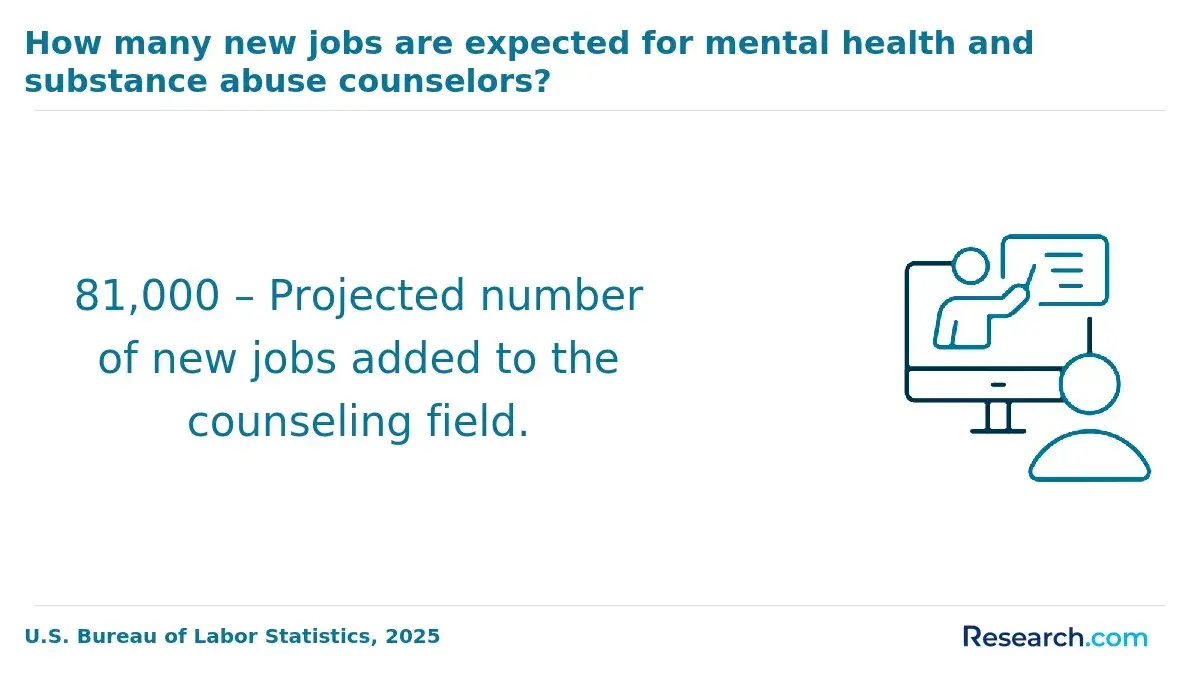
Job prospects also appear favorable for behavioral health roles. The job market for substance abuse, behavioral disorders, and mental health counselors is expected to grow 17% by 2034, which is much faster than the average growth rate for all jobs.
What financial aid and scholarship options are available for aspiring LPCs in Nevada?
A counseling master’s degree can be a major investment, so students should compare aid before choosing a program. Look beyond tuition and include fees, books, transportation, technology, unpaid internship time, exam costs, and supervision-related expenses.
- Nevada state financial aid: Nevada offers programs such as the Silver State Opportunity Grant for eligible students at Nevada public institutions. Some students may also qualify for the Governor Guinn Millennium Scholarship if they meet specific academic requirements.
- Federal Student Aid: Completing the Free Application for Federal Student Aid (FAFSA) can open access to federal grants, loans, and work-study options. Graduate students often use Direct Unsubsidized Loans and Graduate PLUS Loans.
- Counseling-specific scholarships: Organizations such as the American Counseling Association (ACA) and the National Board for Certified Counselors (NBCC) offer scholarship opportunities for counseling students. The NBCC Foundation provides scholarships for minority students and military service members pursuing counseling degrees.
- Institutional support: Nevada universities, including the University of Nevada, Las Vegas (UNLV) and the University of Nevada, Reno (UNR), may offer scholarships or assistantships for graduate counseling students based on merit, need, or program criteria.
- Private scholarships: Mental health and counseling students may also find grants or scholarships through private foundations and organizations such as the American Psychological Foundation (APF).
Cost questions to ask every counseling program
- What is the full program cost, not just per-credit tuition?
- Are internships paid, unpaid, or variable by site?
- Does the program charge additional clinical placement fees?
- Are exam preparation, liability insurance, background checks, and technology fees included?
- How much aid is available specifically for graduate counseling students?
- Can I use transfer credits or employer tuition assistance?
What are some alternative pathways to becoming an LPC in Nevada?
Future Nevada counselors may have several education formats available, but every option should be checked against licensing requirements. Flexibility is valuable only if the program still supports the credential you need.
- Accelerated programs: Some schools offer faster completion formats, which may reduce time in school but can create heavier academic and clinical workloads.
- Affordable online programs: Distance learning can reduce relocation and commuting costs. Students interested in school-based roles may compare the most affordable online school counseling degrees.
- Dual or joint degrees: Some universities offer combined pathways that can broaden employment options, such as counseling plus school counseling preparation.
- Adjacent licenses: Some students may determine that social work, school counseling, psychology, substance abuse counseling, or behavior analysis better matches their goals than the CPC or MFT path.
Can specializing in substance abuse counseling enhance LPC career prospects in Nevada?
Substance abuse counseling can be a valuable specialization for counselors interested in addiction, recovery, relapse prevention, group counseling, and co-occurring mental health concerns. It may be especially useful in treatment centers, community agencies, hospitals, and integrated behavioral health settings.
This specialty requires more than general interest. Counselors should pursue focused training in assessment, motivational interviewing, recovery planning, ethics, family impact, relapse prevention, and coordinated care. For Nevada-specific direction, see how to become a substance abuse counselor in Nevada.
Ethical Considerations and Legal Responsibilities for Licensed Counselors
Ethics are not a separate part of counseling work; they shape every client interaction. Nevada counselors must protect confidentiality, obtain informed consent, maintain professional boundaries, practice within their competence, document appropriately, and follow mandatory reporting laws.
Counselors must also know when confidentiality has legal limits, such as situations involving abuse, neglect, or imminent harm. Dual relationships, conflicts of interest, poor documentation, inadequate supervision, and practicing outside one’s scope can create serious professional risk.
Ethical complexity often increases in specialty areas. Counselors working with children, families, trauma survivors, clients with addiction, or crisis situations must pay close attention to consent, capacity, reporting duties, safety planning, and coordination with other professionals. Readers comparing counseling roles and populations can explore more types of counselors.
Common mistakes to avoid when pursuing counseling licensure in Nevada
- Assuming Nevada has a standard LPC license: Nevada uses CPC and MFT pathways, so license terminology matters.
- Ignoring accreditation: A program that is convenient or affordable may not meet the education requirements for your intended license.
- Counting hours incorrectly: Direct client contact, supervision, and related activities must be documented according to board rules.
- Assuming reciprocity applies: Nevada does not have reciprocity agreements for LPCs, so out-of-state license holders need to verify eligibility before practicing.
- Choosing based only on tuition: Total cost includes fees, clinical placement expenses, exam preparation, technology, travel, and unpaid training time.
- Waiting too long to find supervisors: Approved supervision is central to licensure and should be planned early.
- Overlooking scope of practice: Certifications, specialties, and telehealth services must fit your license and legal authority.
- Assuming salaries are guaranteed: Reported averages vary by source, title, setting, and experience.
Key Insights
- Nevada does not issue a direct LPC license. Most counseling candidates compare the CPC and MFT routes, with intern licenses used during supervised practice.
- There is no automatic LPC reciprocity in Nevada, so counselors licensed in another state should expect a formal review before practicing.
- The CPC route generally fits students seeking broad clinical mental health counseling, while the MFT route is better aligned with couples, families, and relational systems.
- Supervised experience is substantial: Nevada requires at least 3,000 supervised hours, including major direct client contact and supervision components.
- Online programs can be useful, but only if they meet Nevada’s educational, accreditation, clinical placement, and supervision expectations.
- Salary data varies widely by title and source, so compare roles, settings, and cost of living before making career assumptions.
- Specialization in areas such as substance abuse, school counseling, trauma, or family therapy can improve career focus, but it must fit your license and scope of practice.
- The safest next step is to confirm current requirements with the Nevada board before enrolling, transferring credits, applying for intern status, or accepting a counseling role.
Related Articles for Nearby States
- 2027 How to Become a Licensed Counselor (LPC) in California
- 2027 How to Become a Licensed Counselor (LPC) in Oregon
- 2027 How to Become a Licensed Counselor (LPC) in Idaho
- 2027 How to Become a Licensed Counselor (LPC) in Arizona
- 2027 How to Become a Licensed Counselor (LPC) in Utah
- 2027 How to Become a Licensed Counselor (LPC) in Washington
- 2027 How to Become a Licensed Counselor (LPC) in Montana
- 2027 How to Become a Licensed Counselor (LPC) in Wyoming
- 2027 How to Become a Licensed Counselor (LPC) in Colorado
- 2027 How to Become a Licensed Counselor (LPC) in New Mexico
References:
- American Counseling Association. Professional counseling licensure overview. Retrieved March 2026 from https://www.counseling.org/
- American Counseling Association. Licensure resources by state. Retrieved March 2026 from https://www.counseling.org/knowledge-center/licensure
- Council for Accreditation of Counseling and Related Educational Programs. CACREP accreditation standards. Retrieved March 2026 from https://www.cacrep.org/
- National Board for Certified Counselors. Certified Clinical Mental Health Counselor standards. Retrieved March 2026 from https://www.nbcc.org/Certifications/CCMHC
- Nevada Board of Examiners for Marriage and Family Therapists & CPC. Clinical Professional Counselors licensing requirements. Retrieved March 2026 from https://marriage.nv.gov/services/cpc/
- Nevada Government. Board meetings and continuing education webinar information. Retrieved March 2026 from https://marriage.nv.gov/
- Nevada Legislature. Nevada Revised Statutes, Chapter 641A. Retrieved March 2026 from https://marriage.nv.gov/services/cpc/
- Projections Central. State employment projections for counselors. Retrieved March 2026 from https://www.projectionscentral.org/
- U.S. Department of Education, National Center for Education Statistics. Digest of Education Statistics 2025 (NCES 2025-001). https://nces.ed.gov/programs/digest/index.asp
- U.S. Bureau of Labor Statistics. Employment projections for community and social service occupations. Retrieved March 2026 from https://www.bls.gov/projections/
Other Things You Should Know About Licensed Counselors in Nevada Careers
The Nevada Board of Examiners for Marriage and Family Therapists and Clinical Professional Counselors regulates LPC licensure. It reviews applications, issues the license, and enforces renewal rules. Applicants must follow its current statutes and administrative code for supervised practice, examinations, and continuing education.
To maintain an LPC license in Nevada in 2027, counselors must complete 40 hours of continuing education every two years. This includes six hours in ethics, adding to their professional development and ensuring up-to-date knowledge in the counseling field.
In 2027, to receive LPC licensure in Nevada, you must complete 3,000 hours of supervised postgraduate experience. This requirement includes 1,500 hours in direct client contact under the supervision of a board-approved licensed mental health professional.