
2027 Best Online Ph.D. and PsyD in Neuropsychology Degree Programs

Co-Founder and Chief Data Scientist
An online PhD or PsyD connected to neuropsychology is a high-stakes choice because the degree can affect licensure eligibility, supervised clinical training, debt, internship options, and long-term career direction. Neuropsychology focuses on how brain function relates to thinking, behavior, emotion, learning, memory, and daily functioning. Professionals in this area may help people with traumatic brain injury, dementia, stroke-related changes, developmental conditions, learning disorders, and other neurological or psychological concerns.
The field matters because brain-health needs are not abstract. According to the US Centers for Disease Control and Prevention (2024), about 214,110 people in the United States were hospitalized because of traumatic brain injury in 2020. For students considering doctoral study, this creates a real opportunity to enter a specialized area of psychology, but it also makes program selection more complicated. Online coursework may be flexible, but clinical psychology and neuropsychology training usually require supervised experience, assessment practice, internship planning, and state-by-state licensure verification.
This guide explains how online PhD and PsyD pathways related to neuropsychology work, how they differ, what they may cost, what admissions teams commonly review, and how to judge whether a program can support goals in clinical practice, research, teaching, rehabilitation, or healthcare leadership.
Quick Answer: Should You Consider an Online PhD or PsyD in Neuropsychology?
An online doctoral pathway related to neuropsychology can be a practical option if the program is accredited, includes appropriate supervised training, matches the licensing rules in the state where you plan to practice, and offers meaningful coursework in assessment, neuroscience, clinical psychology, and brain-behavior relationships. A PhD is usually the better match for students who want research, faculty, or academic leadership roles. A PsyD is generally designed for students who want a practice-centered clinical career.
- According to the US Bureau of Labor Statistics (2024), psychologists in the United States earned a median annual wage of $92,740 in 2023.
- Clinical and counseling psychologists earned a 2023 median annual wage of $96,100.
- Online programs may allow students to keep working during didactic coursework, but many clinical doctoral programs still require in-person practicum, internship, residency, or approved local placement experiences.
- Licensure requirements differ by state. Confirm compatibility with your intended state licensing board before you apply or enroll.
What should you expect from an online PhD or PsyD in neuropsychology?
Most online doctoral programs connected to neuropsychology blend distance-based courses with research training, clinical skill development, supervised fieldwork, assessment instruction, and a dissertation, doctoral project, or comparable culminating requirement. The structure varies widely depending on whether the degree is a PhD or PsyD, whether the program is clinical or non-clinical, and whether it is designed to prepare students for psychologist licensure.
An online PhD in psychology with neuropsychology-focused study is typically built around research. Students may study cognitive neuroscience, neuroanatomy, statistics, research design, psychological testing, and the relationship between neurological systems and behavior. Because dissertation research is central to most PhD programs, this pathway often fits students who want to publish, teach, conduct studies, evaluate programs, or move into academic, research, or clinical leadership positions.
An online PsyD with neuropsychology-related training is usually more applied. Students tend to focus on diagnosis, assessment, treatment planning, ethics, cultural competence, consultation, and supervised practice. This option may be more appropriate for students who want patient-facing work in settings such as hospitals, rehabilitation centers, outpatient clinics, integrated healthcare practices, or private practice.
| Decision Point | Online PhD Pathway | Online PsyD Pathway |
| Main focus | Research methods, theory, teaching preparation, statistics, and dissertation development | Clinical service, assessment, intervention planning, and supervised professional practice |
| Best suited for | Students targeting academia, research roles, program evaluation, or clinical leadership | Students preparing for a practitioner-oriented psychology career |
| Key requirement | A substantial dissertation based on original or advanced scholarly research | Clinical practica, internship training, and either a doctoral project or dissertation depending on the school |
| Licensure issue to verify | Whether the degree is clinical and satisfies state requirements for psychologist licensure | Whether accreditation, supervised hours, internship standards, and curriculum match state licensing rules |
Where can graduates with an online PhD or PsyD in neuropsychology work?
Doctoral graduates with neuropsychology-related preparation may work in healthcare, schools, universities, research organizations, government agencies, rehabilitation programs, consulting roles, or private practice. The right work setting depends on licensure, supervised experience, specialty training, internship quality, and whether the degree was clinical or non-clinical.
Professionals using neuropsychology training may assess cognitive changes in older adults, support people recovering from traumatic brain injury, evaluate children with developmental or learning concerns, contribute to forensic assessments, or conduct research on neurological and psychological conditions.
The US BLS reported this 2023 industry distribution for psychologists in major employment settings:
- Self-employed workers: 26%
- Elementary and secondary schools (local): 24%
- Ambulatory healthcare services: 23%
- Government: 8%
- Hospitals (state, local, and private): 4%
How much can you earn with an online PhD or PsyD in neuropsychology?
Salary depends on the exact occupation, licensure status, employer type, location, specialization, years of experience, and whether the role is clinical, academic, or research-based. A doctorate may open doors to higher-level roles, but it does not guarantee a particular income.
According to the US BLS (2024), psychologists in the United States had a median annual wage of $92,740 in 2023, and clinical and counseling psychologists had a median annual wage of $96,100. Students considering research roles should also examine medical scientist wage data, while those interested in college teaching should review salary information for postsecondary psychology teachers.
The more important question is not just how much graduates can earn. It is whether the program qualifies you for the job you want. A non-licensure doctorate in psychology may include neuroscience or neuropsychology coursework but still fail to meet requirements for clinical psychologist licensure.
- Online PhD and PsyD in Neuropsychology Degree Programs for 2027
- How long do online PhD or PsyD programs in neuropsychology take?
- Online vs. on-campus neuropsychology doctoral programs: what is different?
- How much do online PhD and PsyD programs in neuropsychology cost?
- Financial aid options for online PhD and PsyD neuropsychology students
- Admission requirements for online PhD and PsyD programs in neuropsychology
- Common courses in online PhD and PsyD neuropsychology programs
- Neuropsychology specialization options
- How to choose the best online PhD or PsyD program in neuropsychology
- Career paths for graduates of online PhD and PsyD neuropsychology programs
- Job market outlook for neuropsychology-related graduates
- Career development and networking support in online neuropsychology programs
- How to evaluate return on investment
- How to evaluate faculty quality
- Accreditation and licensure questions to verify
- How alumni feedback can help you compare programs
- Common challenges for online neuropsychology students
- How technology supports clinical training
- Employer recognition of online neuropsychology degrees
List of Online PhD and PsyD in Neuropsychology Degree Programs for 2027
The following programs can help students compare online doctoral options tied to neuropsychology, clinical psychology, or psychology specializations that may support neuropsychology-related study. Selections are based on the Research.com methodology and information reviewed from the IPEDS database, Peterson's database, the College Scorecard database, and the National Center for Education Statistics.
Use this list as a starting point, not a final enrollment decision. Before applying, confirm the current delivery format, accreditation status, residency requirements, clinical training structure, internship process, and whether the curriculum aligns with the licensing rules in the state where you intend to practice.
1. Walden University
Walden University provides an online PhD in psychology with a self-designed specialization. This format allows students to tailor part of the curriculum to their goals by choosing any four specialization courses in the PhD program to meet specialization requirements.
- Program Length: 3.25 years to 8 years
- Specializations:
- Neuropsychology
- Educational Psychology
- Health Psychology
- Research in Psychology
- Social Psychology
- Teaching in Psychology
- Cost per Credit: $630 per quarter hour
- Required Credits to Graduate: Contact the university for information on credit requirements.
- Accreditation: Higher Learning Commission (HLC)
2. Liberty University
Liberty University offers an online PhD in psychology through its School of Behavioral Sciences. The program is non-clinical and non-licensure and includes a specialization in development psychology. Courses are delivered from a biblical worldview, and students work on research, scholarly writing, and dissertation development.
- Program Length: Contact the university for information on program length.
- Specializations:
- Neuropsychology
- Developmental Psychology
- Behavioral Health Leadership
- General Psychology
- Industrial/Organizational Psychology
- Social Psychology
- TheologY
- Cost per Credit: $595 (Full Time); $650 (Part Time)
- Required Credits to Graduate: 60 credits
- Accreditation: Southern Association of Colleges and Schools Commission on Colleges (SACSCOC)
3. Alliant International University
Alliant International University offers online PhD and PsyD programs in clinical psychology through the California School of Professional Psychology (CSPP). The university states that its programs are accredited by the American Psychological Association (APA) and include internship and research opportunities.
- Program Length: 4 to 7 years
- Specializations:
- Neuropsychology
- Clinical Health Psychology
- Family/Child and Couple
- Multicultural Community-clinical Psychology
- Forensic Psychology
- Psychodynamic
- Clinical Health
- Integrative Psychology
- Multicultural and International
- Trauma, Stress, Resilience
- Cost per Credit: Contact the university for information on tuition and fees.
- Required Credits to Graduate: Contact the university for information on credit requirements.
- Accreditation: WASC Senior College and University Commission; APA
4. Capella University
Capella University offers online and in-person PsyD programs in clinical psychology and neuropsychology. The program includes coursework, residencies, practicum requirements, research components, and additional degree requirements. Coursework addresses areas such as psychopathology, psychological assessment, and evidence-based practice.
- Program Length: 5 to 7 years
- Specializations: Contact the university for information on specializations.
- Cost per Credit: $555
- Required Credits to Graduate: 145 quarter credits
- Accreditation: Higher Learning Commission (HLC)
5. California Southern University
California Southern University offers an online PsyD in clinical psychology. The curriculum covers psychology foundations, research, ethics, diversity, and professional competencies such as interpersonal communication. Students pursuing licensure may select practicum and internship courses, and the program ends with a doctoral project.
- Program Length: 4 to 5 years
- Specializations:
- Neuropsychology
- Clinical Psychology
- Cost per Credit: $645
- Required Credits to Graduate: 66 credits
- Accreditation: HLC
How long does it take to complete online PhD or PsyD degree programs in neuropsychology?
The timeline depends on your previous education, transfer credits, course load, dissertation pace, clinical placement availability, internship requirements, and whether the degree is structured for licensure. When comparing programs, ask for average completion time and student progression data rather than relying only on the fastest advertised path.
An online PhD in psychology with neuropsychology-related coursework commonly takes 5 to 7 years. Students usually complete advanced coursework, research methods training, comprehensive milestones, dissertation proposal work, data collection, analysis, writing, and defense. If you are comparing brain-health professions, a neurologist career guide can help clarify how neuropsychology differs from physician training in neurology.
An online PsyD with neuropsychology emphasis may take 4 to 6 years. PsyD programs often focus more heavily on clinical assessment, diagnosis, intervention planning, ethics, and supervised practice. Online students should pay close attention to practicum and internship logistics because approved local placements can influence graduation timing.
| Program Element | How It Can Change the Timeline | What to Ask Before You Enroll |
| Dissertation or doctoral project | Topic approval, research design, ethics review, data collection, writing, and revisions may delay completion. | What share of students complete the dissertation or project within the expected timeline? |
| Practicum and internship | Approved clinical sites may be limited, competitive, or dependent on where the student lives. | How does the school support online students who need approved clinical placements? |
| Residencies | Required in-person sessions add travel, lodging, scheduling, and cost considerations. | How many residencies are required, where do they take place, and what expenses should students expect? |
| Enrollment status | Part-time enrollment can make doctoral study more manageable but usually extends completion time. | Can students move between full-time and part-time study if life or work demands change? |
How do online PhD or PsyD degree programs in neuropsychology compare to on-campus programs?
Online and campus-based doctoral programs can cover comparable academic content, but the student experience can differ substantially. Key differences include scheduling, faculty access, peer relationships, campus resources, clinical placement support, and how assessment or supervision skills are taught. The better format depends on your career target, location, learning style, work obligations, and licensure plan.
- Flexibility and access: Online study can make doctoral education possible for working adults, caregivers, and students who cannot relocate to a campus with neuropsychology-related training. Campus programs usually require regular in-person attendance and may involve commuting or moving.
- Faculty and peer connection: Campus students may benefit from informal conversations, lab meetings, and face-to-face mentoring. Online programs typically use video meetings, discussion boards, virtual office hours, cohort activities, and residencies to build connection.
- Clinical training logistics: Both formats may require practicum and internship experiences. Campus programs may have established local training partnerships, while online students must verify how the school approves or helps secure sites near them.
- Licensure risk: Format alone is not the deciding factor. Accreditation, clinical curriculum, supervised hours, internship quality, and state licensing alignment matter more than whether lectures are online or in person.
| Choose an Online Program If... | Choose an On-Campus Program If... |
| You need to maintain employment while completing doctoral coursework. | You want frequent in-person access to faculty, classmates, labs, or campus clinics. |
| You are comfortable with independent scheduling, remote learning systems, and online deadlines. | You perform better in highly structured, face-to-face classroom settings. |
| You can access approved clinical training sites in your region. | You want a program with more built-in local placement networks. |
| You can plan for possible residencies, travel, and remote supervision requirements. | You prefer most training activities to happen on or near campus. |
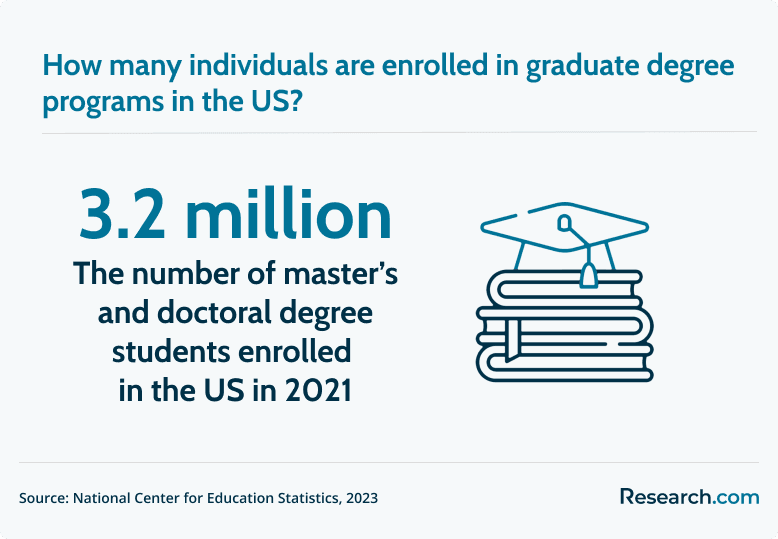
What is the average cost of online PhD or PsyD degree programs in neuropsychology?
Among the featured programs in this guide, published per-credit tuition ranges from $555 to $645 where current per-credit rates are available. Total cost can vary significantly because doctoral expenses depend on required credits, transfer credit acceptance, fees, residency travel, practicum expenses, dissertation enrollment, assessment materials, technology fees, and the number of years a student remains enrolled.
- Institution type: Public institutions may have lower rates for in-state students, while private institutions may charge more but offer specialized delivery models or concentrations.
- Program length: A PhD commonly takes 5 to 7 years, while a PsyD often takes 4 to 6 years. Students weighing shorter psychology pathways can review accelerated psychology degree options, but clinical doctoral training cannot always be shortened without affecting supervision, competency development, or licensure compliance.
- Extra costs: Plan for textbooks, research software, assessment tools, background checks, clinical supervision expenses, residency travel, dissertation costs, and possible relocation for internship or postdoctoral training.
Compare the full cost of completion, not just the cost per credit. A program with a lower credit rate may still be expensive if it requires many credits, multiple residencies, extended dissertation enrollment, or unpaid clinical work. Students exploring adjacent healthcare or behavioral health directions may also compare options such as affordable MPH programs without a GRE requirement.
The chart below presents cost-per-credit information for featured online PhD and PsyD programs related to neuropsychology, based on current tuition data available from the institutions included here.
What are the financial aid options for students enrolling in online PhD or PsyD degree programs in neuropsychology?
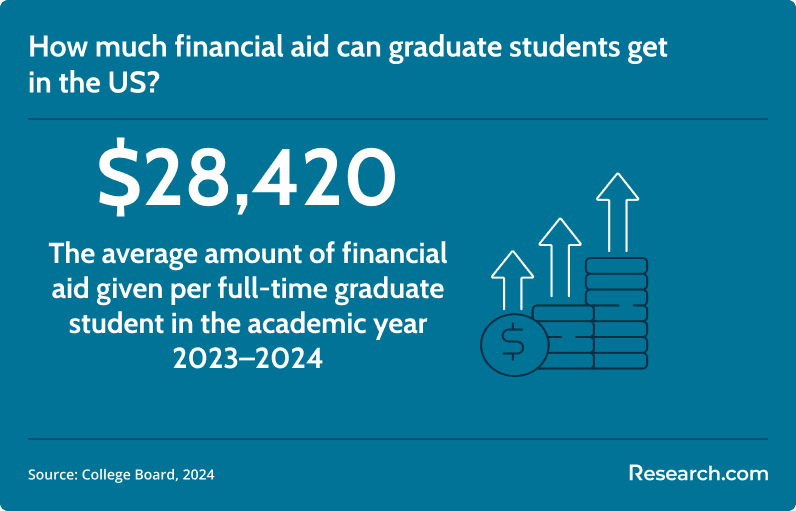
Doctoral psychology education can require a major financial commitment, so students should create a funding strategy before applying. Potential resources include scholarships, grants, dissertation awards, employer education benefits, federal graduate loans, private loans, and assistantships or research support when available. The safest approach is to compare the total amount you may borrow against realistic career timelines, licensure requirements, and expected earnings.
- Graduate Research Scholarships in Psychology: The American Psychological Foundation (APF) and the Council of Graduate Departments of Psychology (COGDOP) provide scholarships for graduate research in psychology, including more than 20 annual scholarships. Examples include the $5,000 Harry and Miriam Levinson Scholarship, the $5,000 William and Dorothy Bevan Scholarship, and the $3,000 Ruth G. and Joseph D. Matarazzo Scholarship.
- APA Dissertation Research Award: This American Psychological Association award funds dissertation research through an annual competition. The program currently offers a maximum of 15 grants of up to $5,000 for eligible graduate students.
- APAGS Outstanding Professional Development Program Award: The American Psychological Association of Graduate Students administers the APAGS Outstanding Professional Development Program Award, also known as the Stuart C. Tentoni Award. The $500 award supports student involvement in APAGS convention programming and the APA Annual Convention.
- Employer Tuition Assistance: Some employers offer reimbursement, direct tuition support, or other education benefits for employees pursuing advanced credentials. Students already working in counseling-related roles may also compare funding and career planning considerations tied to a domestic violence counselor career path.
- Federal Direct Graduate PLUS Loan Program (Grad PLUS): Grad PLUS loans let graduate students borrow from the US Department of Education for eligible education and training costs. Interest begins when funds are disbursed, and payments may be deferred while students remain enrolled at least part-time.
| Funding Source | When It Helps Most | Risk or Limitation to Check |
| Scholarships and grants | Lowering costs without taking on repayment obligations | Awards may be competitive and deadlines may occur early in the year. |
| Employer tuition assistance | Students whose current employer supports graduate education | Some benefits require continued employment or repayment if you leave. |
| Federal graduate loans | Paying tuition and approved education-related expenses | Estimate total debt and monthly repayment before borrowing the maximum. |
| Assistantships or research support | Research-oriented students, especially in PhD pathways | Online programs may offer fewer assistantship opportunities than campus-based programs. |
What are the prerequisites for enrolling in online PhD or PsyD degree programs in neuropsychology?
Admissions standards differ by institution, but doctoral psychology programs generally look for strong academic preparation, relevant experience, clear professional goals, and evidence that the applicant is ready for advanced research, writing, or clinical training.
- Educational background: Applicants often need a bachelor’s or master’s degree in psychology or a closely related field. Some students complete online psychology master's programs first to strengthen preparation in statistics, research methods, neuroscience, abnormal psychology, or clinical psychology.
- GPA and testing: Many programs prefer a minimum GPA, often 3.0 or higher. GRE policies vary, and some schools have moved to test-optional admissions. Strong grades in psychology, statistics, methods, and neuroscience-related courses may improve an application.
- Research or clinical experience: PhD admissions committees may value lab experience, publications, assessment exposure, or research assistant work. PsyD programs may emphasize applied experience in mental health, crisis support, rehabilitation, case management, or related human services settings.
- Application materials: Applicants commonly submit transcripts, recommendation letters, a statement of purpose, a resume or CV, writing samples, and sometimes interview responses.
Before applying, ask admissions staff direct questions: Is the program designed for licensure? Does it include supervised experiences required by your state? How does the school evaluate applicants with your academic and professional background?
What courses are typically offered in online PhD or PsyD degree programs in neuropsychology?
Doctoral coursework related to neuropsychology usually connects brain science, psychological assessment, clinical diagnosis, research methods, ethics, and intervention planning. The exact curriculum depends on the degree type, specialization model, faculty expertise, accreditation expectations, and whether the program is licensure-focused.
- Neuroanatomy and Brain Function: Students examine major brain systems and how neurological disruption can influence cognition, emotion, memory, behavior, language, and executive functioning.
- Neuropsychological Assessment: This course typically introduces methods for evaluating cognitive, emotional, and behavioral functioning in conditions such as dementia, traumatic brain injury, and learning disabilities.
- Cognitive and Affective Neuroscience: Students study neurological processes connected to attention, memory, decision-making, emotion regulation, and mood-related conditions.
- Ethics and Professional Issues in Neuropsychology: Topics may include confidentiality, informed consent, boundaries, cultural competence, assessment ethics, professional documentation, and legal responsibilities.
- Clinical Practicum and Internship: Supervised field experiences help students apply assessment, diagnosis, intervention, consultation, documentation, and professional communication skills in approved settings.
What types of specializations are available in online PhD or PsyD degree programs in neuropsychology?
Specializations allow doctoral students to focus on a population, clinical setting, research interest, or assessment area. Availability differs by school. Some programs offer formal concentrations, while others let students shape a focus through electives, dissertation topics, faculty mentorship, practica, or internship choices.
- Pediatric Neuropsychology: This area centers on children and adolescents with developmental, neurological, learning, behavioral, or attention-related concerns. Students may learn to evaluate needs and recommend supports for schools, families, and treatment teams.
- Forensic Neuropsychology: This concentration applies neuropsychological assessment to legal issues involving competency, disability, criminal proceedings, civil litigation, personal injury, or brain injury claims.
- Rehabilitation Neuropsychology: Students focus on individuals adjusting to or recovering from brain injury, stroke, neurodegenerative conditions, or neurological illness. This work may overlap with communication and cognitive rehabilitation topics, including issues discussed in resources on types of communication disorders treated by SLPs.
| Specialization | Common Population or Setting | Best Fit for Students Who Want To... |
| Pediatric Neuropsychology | Children, adolescents, schools, pediatric hospitals, and developmental clinics | Address learning, developmental, attention-related, or childhood neurological concerns |
| Forensic Neuropsychology | Courts, attorneys, correctional settings, and forensic evaluation practices | Use assessment skills in legal, disability, competency, or litigation contexts |
| Rehabilitation Neuropsychology | Hospitals, rehabilitation centers, outpatient clinics, and brain injury programs | Help people recover and adapt after neurological illness or injury |
How to Choose the Best Online PhD or PsyD Degree Programs in Neuropsychology
The best program is the one that fits your intended role, target licensure state, budget, preferred learning format, and clinical training needs. Rankings, tuition, and flexibility can help you narrow your list, but they should never replace accreditation checks, licensing verification, and outcome review.
- Start with accreditation: Confirm institutional accreditation and determine whether programmatic accreditation, such as APA accreditation, is required or strongly preferred for clinical psychology licensure in your state.
- Verify licensure alignment: Ask the school to show how its courses, practicum, internship, supervision, and degree requirements match the licensing rules where you plan to practice.
- Assess clinical placement support: Online students should know whether the school assigns placements, helps identify sites, approves student-found sites, or expects students to manage the process alone.
- Review curriculum depth: Look for substantial training in neuropsychological assessment, neuroscience, psychopathology, statistics, ethics, cultural responsiveness, and evidence-based intervention.
- Check faculty fit: Faculty expertise should match your interests, especially if you plan to write a dissertation, develop a research agenda, or specialize in a narrow clinical area.
- Calculate total cost: Include tuition, institutional fees, travel, residencies, books, assessment materials, reduced work hours, dissertation enrollment, loan interest, and internship-related costs.
| Question to Ask the School | Why the Answer Matters |
| Is this degree clinical, non-clinical, licensure-track, or non-licensure? | A non-licensure doctorate may not meet requirements to become a licensed psychologist. |
| Does the program meet psychologist licensing requirements in my state? | State rules determine whether you can pursue clinical practice after graduation. |
| Who finds and approves practicum and internship sites? | Placement support can affect whether you progress on schedule. |
| How many residencies or in-person sessions are required? | Residencies add travel, lodging, time away from work, and scheduling complexity. |
| What are the graduation, internship match, and licensure outcomes? | Outcome data helps you judge performance beyond admissions claims. |
What career paths are available for graduates of online PhD or PsyD degree programs in neuropsychology?
Career options depend on licensure, supervised training, specialization, research experience, internship quality, and whether the doctorate was clinical or non-clinical. Students deciding between psychology doctorates can also compare PsyD and PhD pathways, including PhD in psychology salary considerations.
- Neuropsychologist: Neuropsychologists evaluate and treat people with cognitive, behavioral, emotional, and neurological concerns. They may work in hospitals, rehabilitation facilities, academic medical centers, outpatient clinics, or private practice. According to the US BLS (2024), psychologists in the United States had a median annual wage of $92,740 in 2023.
- Medical Scientist: Graduates with a strong research focus may study brain function, neurological disorders, rehabilitation interventions, or psychological assessment methods. Medical scientists in the United States earned a 2023 median annual wage of $100,890, according to the US BLS (2024).
- Postsecondary Teacher of Psychology: Graduates interested in higher education may teach psychology courses, mentor students, publish scholarship, advise research projects, and support academic programs. Postsecondary psychology teachers had a 2023 median annual wage of $82,140, according to the US BLS (2024).
- Rehabilitation Counselor: Some graduates may pursue rehabilitation-focused positions supporting people with neurological, cognitive, physical, or emotional challenges. Credential requirements differ by role and state, so students should verify whether a psychology doctorate is the right credential or whether a counseling pathway is more appropriate.
The chart below displays 2023 median annual wages for occupations related to neuropsychology using 2024 data from the US BLS.
What is the job market for graduates with online PhD or PsyD degrees in neuropsychology?
Employment opportunities for graduates with neuropsychology-related preparation are influenced by healthcare demand, mental health awareness, aging populations, educational assessment needs, rehabilitation services, and ongoing research into brain-behavior functioning. Still, eligibility for specific roles depends on licensure, clinical specialization, supervised hours, internship background, and employer requirements.
According to US BLS 2024 data, several related occupational groups are projected to grow from 2023 to 2033:
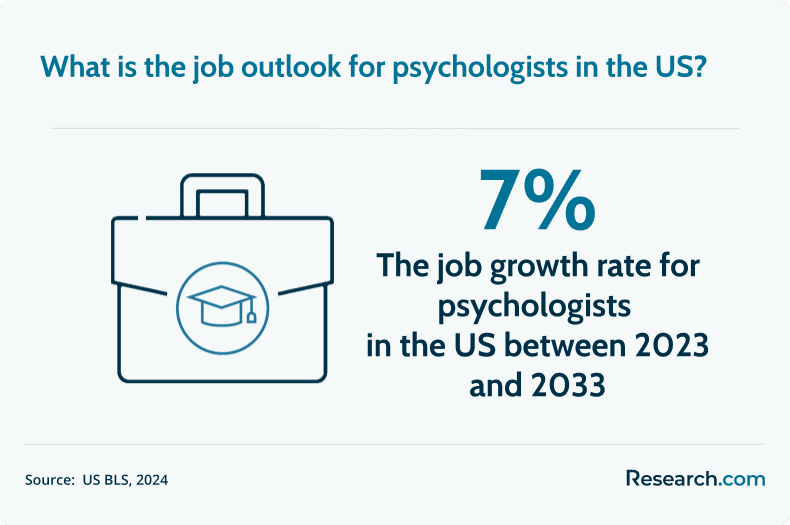
- Psychologists: Employment is projected to grow 7% from 2023 to 2033. The BLS also projects around 13,000 job openings annually during the decade for psychologists.
- Medical Scientists: Employment is projected to grow 11%, with around 8,900 job openings annually during the decade. This category reflects continued research needs in areas such as neuroscience, brain disorders, and rehabilitation.
- Postsecondary Teachers: Employment is projected to grow 8%, including psychology and related academic roles.
- Rehabilitation Counselors: Employment is projected to grow 2%, with around 8,000 job openings annually during the decade.
Use these projections carefully. BLS categories are broader than the specific title “neuropsychologist,” and job growth projections do not ensure employment for any individual graduate.
How do online neuropsychology programs support career development and networking?
High-quality online doctoral programs do not leave career preparation until the final term. They may offer faculty mentoring, dissertation advising, internship application support, clinical placement coordination, alumni events, virtual career programming, conference preparation, CV feedback, cover letter review, licensure documentation guidance, and professional identity development.
Networking can also grow through interdisciplinary exposure. Students comparing psychology, family systems, counseling, and behavioral health pathways may review the most affordable online MFT programs to understand how different helping professions prepare graduates for practice.
What is the return on investment for online neuropsychology programs?
Return on investment should include more than expected salary. A useful ROI review considers total program cost, time to completion, loan repayment, licensure eligibility, internship support, completion rates, career outcomes, clinical training quality, and whether the degree realistically supports your target role.
When comparing programs, weigh tuition against expected earnings in your intended occupation, but also include unpaid clinical hours, possible reductions in work schedule, licensing exam expenses, residency costs, and relocation for internship or postdoctoral training. Students comparing mental health career routes may also find value in reviewing what is the shortest path to becoming a counselor when evaluating time, cost, and credential differences.
How should you evaluate faculty quality in online neuropsychology programs?
A program’s faculty list is useful, but credentials alone do not prove that students receive strong mentoring. Look for faculty with relevant doctoral preparation, active clinical or research expertise, publication records, dissertation supervision experience, and clear availability for online students.
Ask whether faculty regularly advise dissertations on neuropsychology-related topics, whether they stay professionally active in clinical psychology or neuroscience, and how online students access them outside scheduled courses. Students comparing nearby areas of psychology can also review cheap forensic psychology graduate programs online to see how faculty specialization can affect fit.
Are online neuropsychology programs accredited and do they meet licensing requirements?
Accreditation should be one of your first screening criteria. Institutional accreditation can affect financial aid eligibility and academic recognition, while programmatic accreditation may affect psychologist licensure depending on the state and career goal.
Verify accreditation with the accrediting body and the state licensing board, not only with admissions representatives. If your goal is licensed psychological practice, ask whether the program’s coursework, practicum hours, internship structure, supervision model, and degree type meet state requirements. Students comparing credential-driven behavioral health fields can also review BCBA certification online cost to understand how licensure and certification pathways differ.
What insights do alumni experiences provide about online neuropsychology programs?
Alumni can provide practical information that official program pages may not show clearly. Graduates may describe faculty responsiveness, clinical placement difficulty, workload expectations, dissertation support, internship preparation, licensure support, and whether the degree helped them reach their employment goals.
When reviewing testimonials, focus on patterns instead of one unusually positive or negative comment. Ask whether alumni finished on time, secured internships, passed licensing exams, received career support, and felt prepared for supervised practice. Students comparing counseling licensure timelines may also review the fastest way to become a licensed therapist for broader context.
What challenges might online neuropsychology students face?
Online doctoral students need strong organization, self-direction, and comfort with remote learning. The most difficult parts are often not the online lectures but the clinical, research, internship, and licensure requirements that surround the degree.
- Securing approved clinical sites: Students may need to locate practicum or internship sites that meet both school standards and licensing requirements.
- Avoiding isolation: Online learners must deliberately build relationships with faculty, peers, supervisors, alumni, and professional organizations.
- Managing doctoral workload: Coursework, research, assessment training, and clinical hours can be demanding, especially for students working full time or supporting families.
- Meeting technology expectations: Reliable internet, video conferencing tools, secure platforms, digital collaboration systems, and online assessment resources may be required.
- Understanding credential boundaries: Psychology, counseling, therapy, and behavior analysis follow different training and licensing routes. For example, students considering counseling credentials can review whats an LPC to compare licensed professional counselor requirements with psychologist licensure.
How do online neuropsychology programs support clinical training through technology?
Online programs may use video supervision, virtual case conferences, simulation activities, remote assessment instruction, digital collaboration tools, and secure learning platforms to support clinical skill development. These tools can improve access and preparation, but they do not eliminate the need for required supervised clinical experience.
Ask how the school teaches assessment skills online, how supervisors observe performance, whether tele-supervision is accepted by the relevant licensing board, and how the program verifies in-person competencies. Students comparing faith-based or values-oriented counseling and psychology options may also examine Christian clinical psychology programs and related counseling pathways.
Do employers recognize and value online neuropsychology degrees?
Employers are more likely to respect an online doctoral degree when it comes from an accredited institution, includes rigorous clinical or research preparation, and leads to appropriate licensure or credentials. For clinical roles, employers usually focus less on online delivery and more on accreditation, licensure status, supervised experience, internship quality, assessment competence, references, and demonstrated professional judgment.
Be cautious with programs that emphasize flexibility but cannot clearly explain licensure outcomes, practicum requirements, internship support, or graduate results. Students comparing broader counseling education pathways can also review affordable online colleges for counseling degrees.
Common Mistakes to Avoid When Choosing an Online Neuropsychology Doctoral Program
- Assuming every psychology doctorate is a licensure pathway: Some doctoral programs are clearly non-clinical or non-licensure.
- Comparing only tuition per credit: The real price includes credits, fees, residency travel, dissertation enrollment, supervision, materials, and lost or reduced work time.
- Overlooking state licensing rules: A program that satisfies requirements in one state may not meet requirements in another.
- Underestimating placement logistics: Ask who identifies sites, who approves supervisors, and what the school does if no suitable placement is available nearby.
- Ignoring faculty fit: Neuropsychology is specialized, so mentorship, research alignment, and assessment expertise matter.
- Relying only on rankings: Rankings can help with discovery, but accreditation, licensure alignment, total cost, clinical training, and outcomes should drive the final decision.
Key Insights
- An online PhD or PsyD related to neuropsychology can work well for students who need flexibility, but only if the program has appropriate accreditation, credible clinical training, and clear licensure alignment.
- The PhD route generally fits students focused on research, teaching, scholarship, or academic leadership, while the PsyD route is usually more appropriate for students seeking practice-focused clinical work.
- Among featured programs with available per-credit tuition, costs range from $555 to $645 per credit. Total cost depends on credits, fees, residencies, dissertation time, practicum expenses, and how long it takes to finish.
- According to the US BLS, psychologists earned a 2023 median annual wage of $92,740, and clinical and counseling psychologists earned a median annual wage of $96,100.
- Licensure should be the central filter. Before enrolling, verify accreditation, supervised hours, internship structure, clinical curriculum, and compatibility with your intended state licensing board.
- The best choice is not automatically the fastest, cheapest, or most flexible program. It is the program that can move you from your current qualifications to your intended role with manageable cost, strong supervision, realistic timelines, and credible outcomes.
References
- College Board. (2024). Trends in Student Aid: Highlight. https://research.collegeboard.org/trends/student-aid/highlights
- National Center for Education Statistics. (2023, May). Postbaccalaureate Enrollment. Annual Reports and Information Staff (Annual Reports). https://nces.ed.gov/programs/coe/indicator/chb/postbaccalaureate-enrollment
- US Bureau of Labor Statistics. (2024, December 04). Medical Scientists. Occupational Outlook Handbook. https://www.bls.gov/ooh/life-physical-and-social-science/medical-scientists.htm
- US Bureau of Labor Statistics. (2024, April 03). Occupational Employment and Wages, May 2023, 19-3032 Industrial-Organizational Psychologists. Occupational Employment and Wage Statistics. https://www.bls.gov/oes/2023/may/oes193032.htm
- US Bureau of Labor Statistics. (2024, April 03). Occupational Employment and Wages, May 2023, 19-3033 Clinical and Counseling Psychologists. Occupational Employment and Wage Statistics. https://www.bls.gov/oes/2023/may/oes193033.htm
- US Bureau of Labor Statistics. (2024, April 03). Occupational Employment and Wages, May 2023, 25-1066 Psychology Teachers, Postsecondary. Occupational Employment and Wage Statistics. https://www.bls.gov/oes/2023/may/oes251066.htm
- US Bureau of Labor Statistics. (2024, August 29). Psychologists. Occupational Outlook Handbook. https://www.bls.gov/ooh/life-physical-and-social-science/psychologists.htm
- US Bureau of Labor Statistics. (2024, December 04). Rehabilitation Counselors. Occupational Outlook Handbook. https://www.bls.gov/ooh/community-and-social-service/rehabilitation-counselors.htm
- US Centers for Disease Control and Prevention. (2024, October 29). TBI in the United States. https://www.cdc.gov/traumatic-brain-injury/data-research/index.html
Other Things You Need to Know About Online PhD or PsyD Degree Programs in Neuropsychology
In 2027, some of the top online Ph.D. and PsyD in Neuropsychology programs may require short, mandatory on-campus residencies for hands-on training. These residencies typically last from one to two weeks and allow students to engage in intensive workshops and networking opportunities.
Admission requirements for top online Ph.D. and PsyD in Neuropsychology programs in 2027 typically include a master's degree in psychology or a related field, a strong GPA, relevant work experience, letters of recommendation, a statement of purpose, and possibly GRE scores. Some programs may also expect applicants to have completed certain prerequisite coursework in psychology or neuroscience.
Most U.S. psychology licenses require at least 1,500 to 2,000 postdoctoral supervised hours, plus a state-approved internship and the Examination for Professional Practice in Psychology (EPPP). Neuropsychology training also usually includes APA-accredited doctoral preparation and supervised practicum experience before licensure.
Online Ph.D. and PsyD programs in Neuropsychology typically take 4-6 years to complete, including dissertation work and supervised practice. The duration can vary based on program structure and a student's enrollment status, such as full-time or part-time study.


