
2027 Most Affordable MPH Programs That Don't Require GRE

Co-Founder and Chief Data Scientist
Choosing a Master of Public Health program without a GRE requirement can remove a major barrier from graduate school planning, especially for applicants who have strong academic, professional, or community health experience but do not want to spend extra time and money on standardized testing. This matters because the public health workforce has faced serious staffing pressure: between 2009 and 2020, approximately 40,000 state and local public health positions were vacated, and nearly half of all employees in public health agencies departed between 2017 and 2021.
This guide is designed for prospective MPH students who want an affordable, credible, and career-relevant program but do not want the GRE to determine whether they can apply. You will learn what non-GRE MPH programs include, how online and campus options compare, what they cost, which schools offer affordable options, how to evaluate accreditation and return on investment, and what career paths may be available after graduation.
Quick Answer: Are Affordable MPH Programs Without the GRE Worth Considering?
Yes, affordable MPH programs that do not require the GRE can be a practical path for students who want graduate-level public health training without the added cost, preparation time, and stress of a standardized test. The strongest options are accredited by the Council on Education for Public Health (CEPH), offer concentrations aligned with your career goals, include applied fieldwork or a capstone, and provide transparent tuition and financial aid information.
A non-GRE policy does not mean a program is less rigorous. Most schools still review your undergraduate record, statement of purpose, recommendation letters, relevant work experience, prerequisite coursework, and fit with the program’s public health mission.
Why choose an MPH program that does not require the GRE?
- Fewer admissions barriers: Applicants can focus on transcripts, experience, goals, and recommendations instead of test preparation.
- Broader career access: An MPH can support roles in epidemiology, health education, public health analysis, environmental health, community health, health policy, and public health administration.
- Flexible study options: Many online MPH programs allow working adults to complete coursework while managing employment, caregiving, or other responsibilities.
- Potentially strong earnings: MPH-related salaries vary by role, specialization, employer, and location, with reported median salaries ranging from $60,000 to over $100,000 annually depending on the position and experience level.
What can I expect from MPH programs that don’t require a GRE?
A Master of Public Health is a graduate degree focused on protecting and improving health at the population level. Instead of preparing students for one clinical role, an MPH trains them to analyze health trends, design prevention programs, evaluate interventions, manage public health initiatives, and respond to health risks affecting communities.
Most MPH curricula include core training in epidemiology, biostatistics, environmental health, health policy, and social and behavioral sciences. Many programs also allow students to choose a concentration such as global health, health education, public health administration, epidemiology, health policy, or environmental health.
In a no-GRE MPH program, admissions committees usually place greater weight on evidence that you can succeed in graduate-level work. That may include your GPA, previous quantitative coursework, professional experience, public health exposure, leadership, service, writing ability, and clarity of career goals.
| MPH program feature | What it usually means for students |
| Core public health courses | You build a foundation in population health, disease prevention, research methods, policy, and health systems. |
| Concentration or track | You focus your electives and fieldwork around a career area such as epidemiology, community health, or management. |
| Applied practice experience | You work with a public health agency, nonprofit, healthcare organization, or community partner to apply classroom learning. |
| Capstone or final project | You complete a culminating project that demonstrates public health competencies and can sometimes support your job search. |
| No GRE requirement | You avoid standardized testing, but you still need to meet academic and application standards. |
Where can I work with an MPH degree?
MPH graduates work in organizations that study, prevent, manage, or respond to health problems across populations. Common employers include local and state health departments, federal agencies, hospitals, health systems, universities, nonprofit organizations, consulting firms, insurance companies, pharmaceutical companies, and research institutions.
Government roles may involve outbreak response, health policy, program evaluation, disease surveillance, emergency preparedness, environmental inspections, or community health planning. Nonprofits often hire MPH graduates to manage health education campaigns, advocacy projects, grant-funded initiatives, and outreach programs.
Healthcare organizations may use MPH-trained professionals in quality improvement, infection prevention, population health management, patient education, analytics, and administration. In the private sector, graduates may work in health data analysis, research operations, public health communications, consulting, or market access roles related to health products and services.
How much can I make with an MPH degree?
MPH salaries depend heavily on job title, specialization, employer type, location, experience, and technical skills. According to the U.S. Bureau of Labor Statistics, epidemiologists have a median annual salary of around $78,830, while health educators and community health workers earn a median of approximately $60,600.
Public health administrators and managers can earn between $90,000 and $120,000 per year depending on responsibility level and organization size. Environmental health specialists typically earn around $76,480 annually. Roles that require advanced data analysis, biostatistics, health policy, program leadership, or federal agency experience may pay more, particularly in urban markets and private-sector settings.
Salary should not be treated as guaranteed. Before enrolling, compare the total cost of the degree with realistic salaries for the specific roles, sectors, and locations you are targeting.
- Most Affordable MPH Programs That Don’t Require the GRE for 2027
- How long does a no-GRE MPH take?
- Online MPH vs. on-campus MPH: which is better?
- How much do no-GRE MPH programs cost?
- What financial aid can MPH students use?
- What admissions requirements replace the GRE?
- What classes do MPH students take?
- What MPH concentrations are available?
- Is a non-GRE MPH cost-effective?
- Why are schools dropping the GRE?
- How does removing the GRE affect diversity?
- Which certifications can strengthen an MPH career?
- How do no-GRE MPH programs maintain rigor?
- How to choose an affordable no-GRE MPH program
- Career paths for MPH graduates
- Job market for MPH graduates
- Health administration in no-GRE MPH programs
- Career support services in MPH programs
- Research opportunities in no-GRE MPH programs
- Interdisciplinary learning in no-GRE MPH programs
List of the Most Affordable MPH Programs That Don’t Require GRE for 2027
How this ranking should be used
An affordable MPH is not automatically the best choice for every student. Use this list as a starting point, then verify each program’s current tuition, online availability, practicum rules, concentration options, admissions requirements, and CEPH accreditation status before applying.
Research.com rankings are developed through a transparent ranking methodology using information from sources such as the Integrated Postsecondary Education Data System (IPEDS), Peterson's databases, including the Distance Learning Licensed Data Set, and the College Scorecard database from the National Center for Education Statistics. These sources help compare programs across affordability and institutional factors, but students should still confirm details directly with each school.
| School | Program highlights | Program length | Tracks or concentrations | Cost per credit | Credits | Accreditation |
| New Mexico State University | Offers an MPH that began in 1996, with evening on-campus options and asynchronous online coursework for working professionals. | 2 years | Health Behavior and Health Promotion (HBHP); Health Management, Administration, and Policy (HMAP). | $444.40 | 42-45 | Council on Education for Public Health (CEPH) |
| American Public University | Provides a fully online MPH for adults seeking flexible preparation in public health practice, policy, community health, and epidemiology. | 2 years | Global Health, Public Health Administration, or Health Education | $455 | 42 | Council on Education for Public Health (CEPH) |
| University of Colorado Denver/Anschutz Medical Campus | Offers the MPH through the Colorado School of Public Health, with campus and online course options for varied student needs. | 2 years | Epidemiology, Biostatistics, Community Health, Health Systems Management, or Environmental and Occupational Health | $920 - $1,491 | 42 | Council on Education for Public Health (CEPH) |
| Liberty University | Includes residential and online MPH options and a 120-hour practicum for applied public health experience. | 2 years | Community Health, Global Health, Community Health Promotion | $545 | 42 | Council on Education for Public Health (CEPH) |
| Jackson State University | Prepares public health leaders through specialized training and flexible learning options for different student schedules. | 2 years | Biostatistics, Health Education, and Environmental Health | $428 - $696 | 42 | Council on Education for Public Health (CEPH) |
| The University of Alabama at Birmingham (UAB) | Offers an MPH through the School of Public Health, with several concentrations and select online availability. | 2 years | Epidemiology, Biostatistics, Environmental Health, Health Behavior, Health Policy, and Occupational Health | $610 - $1,211 | 42-45 | Council on Education for Public Health (CEPH) |
| Southern Connecticut State University | Focuses on leadership preparation in public health and serves both full-time students and working professionals. | 2 years | Health Promotion, Management and Leadership | $484 | 42 | Council on Education for Public Health (CEPH) |
| University of Alaska Anchorage | Emphasizes public health practice with attention to Alaska and the circumpolar north, using distance education formats. | 2 years | Public Health Practice | $383 - $783 | 42 | Council on Education for Public Health (CEPH) |
| West Chester University | Uses a hybrid format that combines online and campus learning for students pursuing public health practice and research roles. | 2 years | Community Health, Environmental Health, Health Care Management | $516 - $774 | 42 | Council on Education for Public Health (CEPH) |
| CUNY School of Public Health and Health Policy | Offers multiple MPH concentrations for students interested in practice, research, policy, nutrition, and environmental health. | 2 years | Epidemiology & Biostatistics, Health Policy and Management, Environmental and Occupational Health Sciences, Public Health Nutrition | $620 | 42 | Council on Education for Public Health (CEPH) |
How long does it take to complete MPH programs that don’t require a GRE?
Most MPH programs take around 1.5 to 2 years to complete. This timeline is common for students who enroll full time and follow a standard sequence of core courses, concentration courses, fieldwork, and a capstone or culminating project. Among recent MPH graduates, 29% work in public healthcare organizations, while 21% are affiliated with for-profit organizations.
Students who want a faster route may find accelerated MPH options that take 12 to 18 months, but these programs usually require a heavier course load and less scheduling flexibility. Part-time students may take longer than 2 years, especially if they are balancing full-time work, family responsibilities, or field placement requirements. Students comparing public health with other healthcare routes can also review an LPN career guide to understand how nursing timelines differ from graduate public health pathways.
| Enrollment format | Typical timeline | Best for | Trade-off |
| Accelerated MPH | 12 to 18 months | Students who can study intensively and want to finish quickly | Less time for work, internships, and reflection between courses |
| Full-time MPH | Around 1.5 to 2 years | Students who want a traditional graduate timeline | May be harder to balance with full-time employment |
| Part-time MPH | Often longer than 2 years | Working professionals and caregivers | Longer time before graduation and career advancement |
| Online MPH | Varies by school and pace | Students who need location flexibility | Requires strong self-management and consistent study habits |
How does an online MPH compare to an on-campus program?
An online MPH is usually the better fit for students who need flexibility, live far from campus, or want to continue working while enrolled. Course materials may be available around the clock, although assignments, discussions, exams, and group projects still follow deadlines. A high-quality online public health degree should still include faculty interaction, applied projects, and field experiences that connect coursework to real public health practice.
An on-campus MPH may be stronger for students who want in-person networking, face-to-face faculty access, structured class times, campus research opportunities, and direct involvement in student organizations or local public health partnerships. The trade-off is that campus programs may require commuting, relocation, or more rigid scheduling.
Students considering allied health or community-based care careers may also want to explore communication disorders treated by SLPs, since speech-language pathology intersects with population health, disability services, child development, and healthcare access.
| Factor | Online MPH | On-campus MPH |
| Schedule flexibility | Usually stronger for working adults | More structured and location-dependent |
| Networking | Often virtual and intentional | More spontaneous in classes, events, and labs |
| Learning style | Best for self-directed students | Best for students who prefer in-person structure |
| Field experience | May be completed near the student’s location if approved | Often connected to local campus partners |
| Costs | May reduce relocation and commuting costs | May involve housing, transportation, and campus fees |
What is the average cost of MPH programs that don’t require a GRE?
The cost of a no-GRE MPH varies widely by institution type, residency status, delivery format, fees, and credit requirements. For context, the annual salary for epidemiologists in 2023 was $81,930. That does not automatically make every MPH a good investment, but it gives students a benchmark when comparing tuition with possible career outcomes.
- Affordable programs: Some public universities offer MPH tuition under $10,000 per year for in-state residents.
- Mid-range programs: Many MPH programs cost $10,000 to $20,000 per year.
- Higher-cost programs: Some private universities and well-known programs can cost upwards of $30,000 or more per year.
When comparing programs, calculate the full cost of attendance rather than only tuition. Fees, textbooks, technology charges, travel for campus visits, practicum transportation, housing, lost work hours, and health insurance can change the real price of the degree. Students at the undergraduate planning stage may also compare graduate costs with options such as the easiest bachelor’s in public health programs to understand the full education pathway.
| Cost factor | Why it matters | Question to ask |
| Tuition per credit | MPH programs often require 42 or more credits, so small per-credit differences add up. | What is the total tuition for all required credits? |
| Residency status | Public universities may charge different rates for in-state and out-of-state students. | Can online students qualify for the same rate regardless of location? |
| Fees | Technology, student service, graduation, and distance learning fees can raise the final cost. | Are fees included in the tuition estimate? |
| Practicum expenses | Fieldwork may require commuting, background checks, immunizations, or time away from paid work. | What practicum costs should students expect? |
| Program length | Longer programs can increase living expenses and delay full-time career advancement. | Can I study part time without paying extra fees? |
What are the financial aid options for students enrolling in MPH programs that don’t require a GRE?
Financial aid can make a no-GRE MPH more manageable, but students need to compare aid packages carefully. Based on Public Health AmeriCorps data, an organization that supports the next generation of public health leaders, between 2013 and 2022, the number of degrees and certificates awarded for nurse midwives increased by 79% while degrees for social workers increased by 48%.
Students searching specifically for lower-cost options can compare affordable online MPH programs, but the best value depends on both price and fit. A slightly more expensive program may be worthwhile if it offers stronger practicum placement, employer connections, or a concentration that directly supports your goals.
Federal student aid
- Federal grants: Some students may qualify for grant aid that does not need to be repaid, such as Pell Grants or FSEOG.
- Federal loans: Graduate students may use federal loan options such as Direct Subsidized/Unsubsidized Loans and Grad PLUS Loans, which often have borrower protections not found in private loans.
Scholarships and grants
- Institutional aid: Schools may offer MPH scholarships, tuition discounts, or need-based grants through the public health department or graduate school.
- Public health organizations: Agencies and associations connected to public health may offer scholarships for students in specific specialties.
- Foundations and disease-focused associations: Organizations focused on cancer, heart disease, maternal health, environmental health, and other areas may fund students pursuing related work.
- General scholarship databases: Broad scholarship searches can uncover awards based on background, service, location, employer, or career goals.
Assistantships and fellowships
- Research assistantships: Students may support faculty research in exchange for a stipend, tuition support, or both.
- Teaching assistantships: Some graduate students assist with undergraduate instruction and may receive financial support.
- Fellowships: Competitive fellowships may cover tuition, living expenses, or professional development costs.
What are the prerequisites for enrolling in MPH programs that don’t require a GRE?
No-GRE does not mean no standards. MPH programs still expect applicants to show readiness for graduate study and commitment to public health. Among recent public health program graduates, 32% identified job security as their top motivation for choosing to work in the public sector, while 27% identified salary as a major factor.
Applicants interested in long-term academic or research pathways may also consider how an MPH could connect to doctoral study or specialized areas such as the best online PhD and PsyD programs in neuropsychology, especially if they are interested in mental health, brain health, aging, disability, or behavioral health at the population level.
- Accredited bachelor’s degree: Most programs require a completed undergraduate degree from an accredited institution.
- Minimum GPA: Many schools look for a GPA around 3.0 on a 4.0 scale, though some review applicants holistically.
- Statement of purpose: This essay should explain why you want an MPH, what public health issues matter to you, and how the program supports your goals.
- Recommendation letters: Letters from faculty, supervisors, or professional mentors can show your academic ability, reliability, communication skills, and leadership potential.
- Prerequisite coursework: Some programs may require or prefer statistics, biology, epidemiology, social science, or other relevant coursework.
- Relevant experience: Work, internships, volunteering, AmeriCorps, research, healthcare experience, or community service can strengthen your application.
- English proficiency: Applicants whose first language is not English may need TOEFL or IELTS scores.
What courses are typically in MPH programs that don’t require a GRE?
MPH coursework is generally similar whether or not a school requires the GRE. The GRE affects admissions, not the public health competencies students are expected to master. Public health training remains important because there is strong demand across multiple occupations and locations.
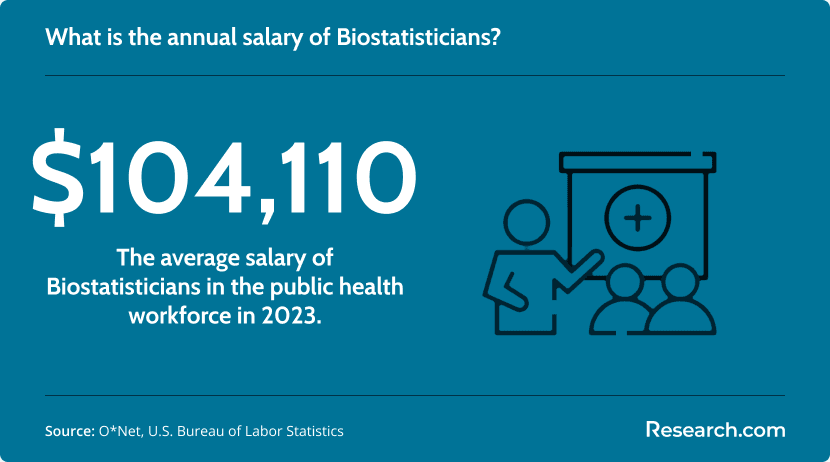
- Biostatistics: Students learn statistical tools used to interpret health data, evaluate research findings, and support evidence-based decisions. In 2023, there were 42,300 biostatisticians in the public health workforce earning $104,110 average annual salary.
- Epidemiology: This course examines disease distribution, risk factors, outbreak investigation, surveillance, and prevention strategies.
- Environmental health sciences: Students study how air, water, food systems, workplaces, housing, climate, toxins, and built environments affect health.
- Social and behavioral sciences: This area focuses on how culture, behavior, inequality, communication, and social conditions shape health outcomes.
- Health policy and management: Students examine healthcare systems, public health law, financing, leadership, program management, and policy implementation.
What types of specializations are available in MPH programs that don’t require a GRE?
GRE policy usually does not determine which concentrations a school offers. Concentration options depend more on faculty expertise, community partnerships, institutional mission, and current workforce demand.
| MPH specialization | Best for students interested in | Common career direction |
| Epidemiology | Disease patterns, outbreaks, surveillance, and prevention | Epidemiologist, surveillance analyst, research coordinator |
| Biostatistics | Quantitative analysis, study design, and health data | Biostatistician, data analyst, research analyst |
| Environmental Health Sciences | Environmental risks, occupational hazards, food safety, air and water quality | Environmental health specialist, occupational health specialist |
| Health Policy and Management | Health systems, leadership, financing, policy, and program administration | Policy analyst, program manager, public health administrator |
| Social and Behavioral Sciences | Health promotion, community engagement, behavior change, and equity | Health educator, community health program specialist |
| Maternal and Child Health (MCH) | Women’s health, child health, family health, and community-based support | MCH coordinator, family health program manager |
The projected job growth for epidemiologists through 2033 is strong at 19%, with expected 2,100 openings per year. Students interested in this path should prioritize programs with strong quantitative coursework, practicum placements in health departments or research settings, and faculty who work in surveillance, infectious disease, chronic disease, or population health analytics.
Is investing in a non-GRE MPH program a cost-effective decision for your career?
A no-GRE MPH can be cost-effective when the program is accredited, priced realistically for your budget, aligned with your career goals, and supported by useful fieldwork and career services. The absence of the GRE can reduce application-related costs, but the larger financial question is whether the full degree cost makes sense for the roles you want.
To evaluate return on investment, compare tuition and fees against likely salaries in your target job market. Also review completion rates, practicum quality, employer partnerships, alumni outcomes, and whether the concentration teaches skills employers request, such as data analysis, grant writing, program evaluation, health communication, and policy analysis. Students comparing adjacent healthcare leadership routes may also review accelerated online MHA programs to decide whether public health or healthcare administration is the better match.
Why do institutions eliminate the GRE requirement for MPH programs?
Many public health schools have removed the GRE because they want admissions decisions to reflect more than standardized test performance. GRE preparation can be expensive and time-consuming, and test scores may not capture a candidate’s field experience, leadership, community engagement, writing ability, or commitment to health equity.
Instead, programs may use a holistic review process that weighs GPA, prior coursework, professional background, essays, recommendations, and mission fit. This approach can be especially useful in public health, where real-world judgment, communication, cultural awareness, and collaboration are central to professional success. Students exploring other healthcare education pathways can also compare public health with affordable online doctorate in pharmacy programs.
How does eliminating the GRE enhance diversity in MPH programs?
Removing the GRE may help broaden the applicant pool by reducing a cost and access barrier that can discourage otherwise qualified students. A more inclusive admissions process can recognize applicants with community health experience, public service, bilingual skills, caregiving experience, military service, rural health exposure, or nonprofit work that may not be reflected in test scores.
Diverse MPH cohorts can improve classroom discussion because students bring different perspectives on healthcare access, environmental risk, disability, race, income, geography, policy, and culture. For students comparing additional clinical or healthcare pathways, online pharmacy schools may offer another route into population health, medication access, and healthcare systems work.
What additional certifications can enhance my career with an MPH that doesn’t require a GRE?
Certifications can help MPH graduates signal specialized knowledge, especially when they are targeting technical, administrative, or leadership roles. The best certification depends on your concentration and career goal. For example, students interested in analytics may look for data or informatics training, while those pursuing management may consider project management or healthcare administration credentials.
Some graduates also build complementary administrative skills through programs related to coding, billing, compliance, or health information. Training through a medical billing and coding online school may be useful for public health professionals who want to understand claims data, reimbursement, health records, and administrative workflows.
| Career goal | Helpful skill area | Why it can complement an MPH |
| Epidemiology or research | Statistics, data visualization, research methods | Supports surveillance, evaluation, and evidence-based decision-making. |
| Program management | Project management, budgeting, grant management | Helps graduates lead funded public health initiatives. |
| Health policy | Policy analysis, advocacy, health law | Strengthens work in government, nonprofits, and regulatory settings. |
| Healthcare administration | Operations, billing, compliance, health information | Connects population health goals with healthcare delivery systems. |
| Community health | Health education, communication, cultural competency | Improves program design, outreach, and community engagement. |
How do non-GRE MPH programs guarantee rigorous training and professional success?
No program can guarantee professional success, but reputable no-GRE MPH programs maintain quality through accreditation, competency-based coursework, applied practice experiences, faculty oversight, capstone projects, and assessment of public health skills. CEPH accreditation is especially important because it signals that the program meets recognized public health education standards.
Students should look for programs that require real-world application, not just lecture-based coursework. Practicums, community-based projects, research assignments, data analysis tasks, and policy briefs help students demonstrate job-ready skills. For learners who want a shorter healthcare credential alongside graduate study, affordable online medical assistant programs may provide a different type of practical healthcare preparation.
How do you choose the best and most affordable MPH programs that don’t require a GRE?
The best no-GRE MPH is the one that fits your career plan, budget, learning style, and timeline while meeting recognized quality standards. Do not choose based only on price or rankings. A low-cost program that lacks your concentration, has limited fieldwork support, or does not fit your schedule may cost more in the long run.
Students who are more interested in managing healthcare organizations than population health initiatives may also compare MPH programs with an online healthcare management degree.
Step 1: Define your target public health role
- Choose a concentration based on the work you want to do after graduation.
- Identify whether you need quantitative training, policy preparation, community health experience, or administration skills.
- Review job postings for your target roles and note recurring skill requirements.
Step 2: Verify accreditation and program credibility
- Prioritize CEPH-accredited programs when possible.
- Confirm accreditation status directly with the school or accreditor.
- Review faculty expertise, practicum partners, course descriptions, and student outcomes.
Step 3: Compare total cost, not just tuition
- Calculate tuition for all required credits.
- Add fees, books, travel, living expenses, and practicum-related costs.
- Ask whether online students pay in-state, out-of-state, or separate distance-learning rates.
- Compare scholarships, assistantships, employer tuition benefits, and loan options.
Step 4: Match the format to your life
- Choose online if you need location flexibility and can manage deadlines independently.
- Choose campus-based study if you want in-person faculty contact, structured learning, and local networking.
- Choose part-time study if maintaining income is more important than finishing quickly.
- Choose accelerated study only if you can handle an intensive workload.
Common mistakes to avoid
| Mistake | Why it can hurt you | Better approach |
| Choosing the cheapest program without checking accreditation | Some employers and doctoral programs may prefer or require accredited public health training. | Verify CEPH accreditation before applying. |
| Assuming no GRE means easy admission | Programs still evaluate academic readiness and professional fit. | Strengthen your statement, recommendations, resume, and prerequisite preparation. |
| Ignoring practicum requirements | Fieldwork can affect scheduling, cost, and location flexibility. | Ask how placements are arranged and whether local placements are allowed. |
| Comparing tuition only | Fees and living costs can change affordability. | Calculate total cost of attendance. |
| Picking a concentration without a career plan | The wrong specialization may limit your preparation for target roles. | Use job postings and informational interviews to guide your choice. |
What career paths are available for graduates of MPH programs that don’t require a GRE?
A no-GRE MPH can lead to the same broad career categories as other MPH programs, assuming the program is credible and the graduate develops relevant experience. Communicable diseases were the primary work area of 24% of public health professionals in 2021, while 14% focused on maternal and child health.
Students asking what you can do with a master’s in public health should start by matching concentrations to roles rather than treating the MPH as one single career path.
Public health practice and community programs
- Health educator: Designs and delivers programs that encourage healthier behaviors and reduce disease risk.
- Community health worker: Connects communities with resources, education, outreach, and support services.
- Public health program coordinator: Helps plan, implement, monitor, and evaluate health initiatives.
Epidemiology, surveillance, and research
- Epidemiologist: Studies disease patterns, investigates outbreaks, evaluates risk factors, and supports prevention planning.
- Research scientist: Conducts public health studies, analyzes data, and contributes to evidence used in practice and policy.
- Infection control specialist: Works in healthcare or community settings to reduce the spread of infections.
Environmental and occupational health
- Environmental health specialist: Evaluates risks connected to air, water, food, housing, workplaces, and environmental exposures.
- Occupational health and safety specialist: Supports safer workplaces and helps prevent work-related illness and injury.
Health policy, leadership, and advocacy
- Health policy analyst: Studies policies, regulations, and systems that affect population health.
- Government health official: Works in local, state, or federal settings to develop, manage, and evaluate public health programs.
What is the job market for graduates with MPH that don’t require a GRE?
The job market for MPH graduates depends on specialization, technical skills, experience, location, and employer type. Students asking whether public health is a good major should understand that public health is broad: some jobs are data-heavy, some are community-facing, some are administrative, and some focus on policy or research.
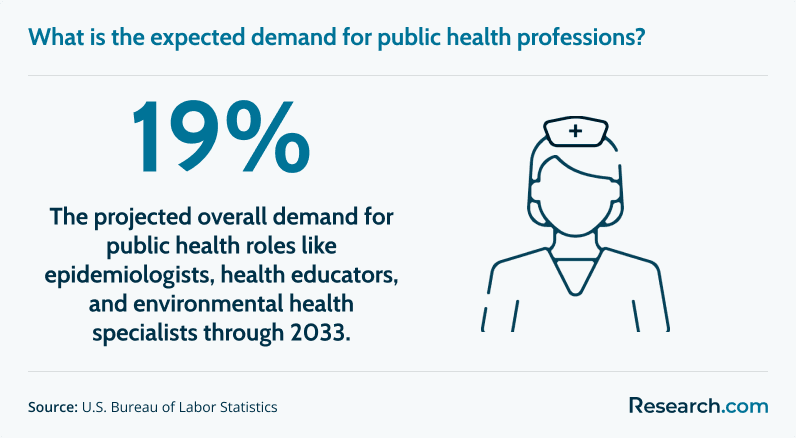
The overall demand for public health roles like epidemiologists, health educators, and environmental health specialists is expected to remain steady at 19% through 2033. Demand is influenced by public health emergencies, chronic disease prevention, aging populations, health disparities, environmental risks, and the need for stronger health data systems.
Specializations such as epidemiology and biostatistics can be especially valuable because public health agencies and healthcare organizations rely on surveillance, analytics, evaluation, and evidence-based planning. Professionals considering a more clinical or travel-oriented healthcare path may also review the steps to become a travel LPN to compare nursing mobility with MPH career options.
What graduates often value in MPH programs that did not require a GRE
Students often choose no-GRE MPH programs because the admissions process lets them emphasize experience, goals, and commitment to public health instead of test performance. Commonly valued features include affordability, online flexibility, accessible faculty, applied coursework, and the ability to continue working while enrolled.
When reading student testimonials, treat them as personal experiences rather than guarantees. A graduate’s outcome may depend on prior experience, location, networking, practicum quality, specialization, and the job market at the time of graduation.
How are health administration components integrated into non-GRE MPH curricula?
Many MPH programs include health administration through courses in leadership, budgeting, policy implementation, healthcare systems, program planning, quality improvement, and organizational management. This is especially useful for students who want to manage public health programs, lead nonprofit initiatives, work in hospitals, or move into population health administration.
Students who want a deeper management focus may compare the MPH with online health administration degrees. In general, an MPH is stronger for population health, prevention, epidemiology, and policy, while a health administration degree may focus more heavily on healthcare operations, finance, staffing, and organizational leadership.
What support services drive career success in non-GRE MPH programs?
Strong career support can make a major difference in the value of an MPH. Look for programs that provide career advising, resume and interview help, practicum placement guidance, alumni networking, employer events, mentorship, and workshops in leadership, communication, data tools, and grant writing.
Students building hands-on healthcare familiarity may consider a 6-week medical assistant program as a separate credential, but they should be clear about the distinction: medical assistant training is clinical and entry-level, while an MPH is graduate-level public health preparation.
How do non-GRE MPH programs offer research opportunities to bolster career progression?
Research experience can help MPH students qualify for roles in epidemiology, evaluation, analytics, policy, doctoral study, and public health consulting. No-GRE programs may offer faculty-led research projects, community-based studies, agency partnerships, literature reviews, data analysis assignments, and capstones focused on current public health problems.
Students interested in health data, records, and technology may also explore the fastest online health information management degree options to understand how health information systems intersect with public health research and analytics.
How are interdisciplinary approaches integrated into non-GRE MPH programs?
Public health problems rarely fit within one discipline. No-GRE MPH programs may integrate epidemiology, behavioral science, data analytics, environmental science, policy, healthcare management, communication, and digital health tools. This interdisciplinary structure helps students address complex issues such as infectious disease, chronic illness, climate-related health risks, maternal health, substance use, and healthcare access.
Students interested in the intersection of biology, computation, and population health may compare MPH analytics coursework with online bioinformatics master’s programs, particularly if they want to work with genomic data, infectious disease modeling, or biomedical research.
Key Insights
- No-GRE MPH programs can be a strong option for applicants who want graduate public health training without the cost and time burden of standardized testing.
- Accreditation matters. CEPH accreditation is one of the most important quality signals when comparing MPH programs.
- Affordability should be measured by total cost, not tuition alone. Include fees, books, practicum costs, living expenses, and lost work time.
- Most MPH programs take around 1.5 to 2 years, while accelerated options may take 12 to 18 months and part-time formats may take longer.
- Online MPH programs are best for flexibility, while campus programs may offer stronger in-person networking and structured learning.
- Among recent public health program graduates, 32% identified job security as their top motivation for working in the public sector, while 27% identified salary as a major factor.
- The overall demand for public health roles like epidemiologists, health educators, and environmental health specialists is expected to remain steady at 19% through 2033.
- Communicable diseases were the primary work area of 24% of public health professionals in 2021, while 14% focused on maternal and child health.
- In 2023, 42,300 biostatisticians in the public health workforce earned $104,110 average annual salary.
- Based on Public Health AmeriCorps data, between 2013 and 2022, the number of degrees and certificates awarded for nurse midwives increased by 79% while degrees for social workers increased by 48%.
- Among recent MPH graduates, 29% work in public health care organizations while 21% are affiliated with for-profit organizations.
References:
- Bureau of Labor Statistics. (2024). Community health workers occupational outlook.
- Bureau of Labor Statistics. (2024). Epidemiologists occupational outlook.
- Bureau of Labor Statistics. (2024). Substance abuse, behavioral disorder, and mental health counselors outlook.
- Centers for Disease Control and Prevention. (2025). About the public health workforce.
- CUNY Graduate School of Public Health & Health Policy. (2024, August). IPEDs Data Analysis Report-2024.
- de Beaumont Foundation. (2022). PH WINS 2021 findings.
- Minnesota Workforce Center of Excellence. (2024). Summary Report for: 15-2041.01 - Epidemiologists. ONET.
- Public Health Workforce Interests and Needs Survey. (2024). National dashboard.
- University of Minnesota, School of Public Health, Center for Public Health Workforce Research. (2025). Employment choices of recent public health graduates.
Other Things You Should Know About the Most Affordable MPH Programs That Don’t Require GRE
It should be accredited by the Council on Education for Public Health, or CEPH. CEPH accreditation is the main public health standard in the United States and confirms that the MPH meets required curriculum, faculty, and field training expectations for employers and licensure reviews.
Financial aid options for affordable 2027 MPH programs that don’t require the GRE include federal loans, grants like the Pell Grant, and scholarships specific to public health. Many schools also offer work-study programs and payment plans to help manage tuition costs.


