
2027 10 Best Accredited Medical Billing and Coding Schools Online

Co-Founder and Chief Data Scientist
The demand for skilled medical billing and coding professionals is on the rise, making this a promising career choice for those seeking job stability and growth. Medical billing and coding specialists play a crucial role in ensuring that healthcare providers are accurately reimbursed for their services, a task that requires both technical knowledge and attention to detail.
With the increasing reliance on technology in healthcare, the need for certified professionals is more critical than ever. Fortunately, aspiring coders can pursue their education through accredited online programs that offer flexibility and accessibility, allowing students to balance their studies with work and personal commitments.
In this article, we will explore the best accredited medical billing and coding schools online, highlighting the quality of their programs, support services, and the potential to launch a successful career in this dynamic field.
What are the benefits of getting an accredited medical billing and coding program from an online school?
- According to the U.S. Bureau of Labor Statistics (BLS), the median annual wage for medical records and health information technicians, which includes billing and coding specialists, was around $48,000 as of May 2023, with the potential for higher salaries in managerial or specialized roles.
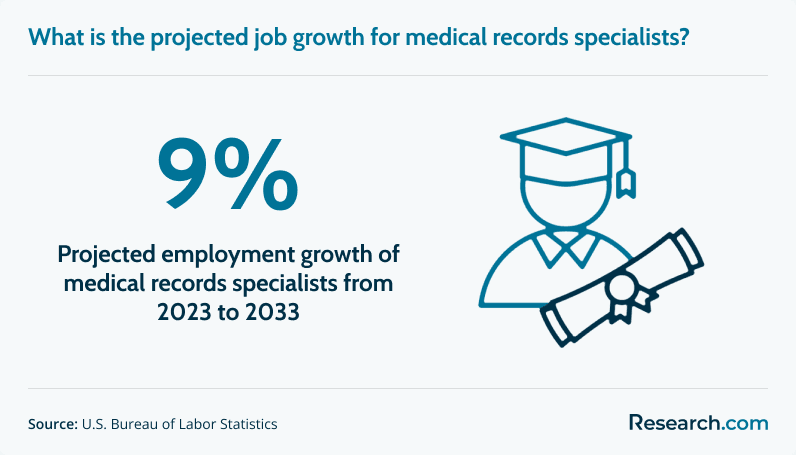
- The BLS projects a growth rate of 9% for medical records and health information technicians from 2023 to 2033, which is faster than the average for all occupations. Accredited programs often include job placement assistance, further enhancing job prospects.
- Online accredited programs provide the flexibility to study at your own pace and on your own schedule, making it easier for students to balance education with work or personal commitments. This format also eliminates the need for commuting, saving time and expenses.
What can I expect from an accredited medical billing and coding school online?
When enrolling in an accredited medical billing and coding school online, you can expect a variety of components that will equip you with the necessary skills and knowledge to succeed in the healthcare industry.
You will study essential topics such as medical terminology, coding systems, billing processes, healthcare laws, and regulations. The curriculum is designed to align with industry standards and certification requirements.
Accredited programs usually include opportunities for hands-on practice through coding exercises, case studies, and virtual simulations. Some may offer access to coding software that mirrors what you will use in the workplace.
Where can I work with an accredited medical billing and coding program online?
With an accredited medical billing and coding program completed online, you can pursue various career opportunities in healthcare settings such as hospitals, physician’s offices, outpatient clinics, health insurance companies, long-term care facilities, home healthcare services, and medical billing companies.
Many positions also offer remote work options, providing flexibility and the ability to work from home. Graduates can expect to engage in roles that involve coding, billing, and managing patient records, with a potential for professional growth in administrative and supervisory positions across diverse environments.
How much can I make with an accredited medical billing and coding program online?
With an accredited medical billing and coding program completed online, you can expect to earn between $35,000 and $70,000 annually, depending on factors such as experience, location, and the specific employer. Entry-level positions typically start around $35,000 to $45,000, while the median salary for medical records and health information technicians is approximately $46,000. Experienced professionals, particularly in specialized or managerial roles, can command higher salaries, especially in urban areas with a higher cost of living.
- 2027 List of Accredited Medical Billing and Coding Schools Online List of Schools
- What are the different types of online medical billing and coding programs? Types of Programs
- What are the most common medical billing and coding certifications? Common Certifications
- What are the advantages and disadvantages of online learning for medical billing and coding? Pros and Cons
- How do I choose an accredited online medical billing and coding school? School Selection Criteria
- Are online medical billing and coding programs as reputable as in-person? Online vs. In-Person Programs
- What courses are included in an accredited medical billing and coding program? What courses are included in an accredited medical billing and coding program?
- What are the admission requirements for online medical billing and coding programs? Admission Requirements
- What additional skills can enhance my medical billing and coding career? What additional skills can enhance my medical billing and coding career?
- How long does it take to complete an accredited online program in medical billing and coding? How long does it take to complete an accredited online program in medical billing and coding?
- How much does an accredited online medical billing and coding program cost? Program Cost
- What financial aid options are available for medical billing and coding students? Financial Aid Options
- How can continuous professional development impact my career in medical billing and coding? How can continuous professional development impact my career in medical billing and coding?
- What challenges might you face and how can you overcome them? What challenges might you face and how can you overcome them?
- What are the most affordable medical coding certification programs online? What are the most affordable medical coding certification programs online?
- How can short online courses help you get started in medical billing and coding quickly? How can short online courses help you get started in medical billing and coding quickly?
- How are emerging technologies impacting medical billing and coding? How are emerging technologies impacting medical billing and coding?
- What is the career outlook for medical billing and coding professionals from online programs? What is the career outlook for medical billing and coding professionals from online programs?
- Do online programs offer robust career support services? Do online programs offer robust career support services?
- What practical training opportunities do online programs offer? What practical training opportunities do online programs offer?
- What are the job placement rates and career outcomes for online programs? What are the job placement rates and career outcomes for online programs?
- Should I explore complementary healthcare programs to broaden my career prospects? Should I explore complementary healthcare programs to broaden my career prospects?
- How do industry partnerships influence program credibility and career outcomes? How do industry partnerships influence program credibility and career outcomes?
- How do digital tools and virtual simulations enhance practical skills in online programs? How do digital tools and virtual simulations enhance practical skills in online programs?
- How do instructors' expertise and academic support strategies drive program success? How do instructors' expertise and academic support strategies drive program success?
- How can integrating health administration skills accelerate career progression? How can integrating health administration skills accelerate career progression?
2027 Accredited Online Medical Billing and Coding Schools: Programs, Costs, Certifications, and How to Choose
Choosing an online medical billing and coding school is not just a question of convenience. The program you select can affect your eligibility for certification exams, your confidence with coding systems, your access to financial aid, and how employers view your training. This guide is for students who want a practical, accredited path into healthcare administration work without committing to a long clinical degree.
You will learn how online medical billing and coding programs differ, what accreditation means, which certifications matter, how long training usually takes, what costs to compare, and how to evaluate schools beyond tuition. The goal is to help you build a shortlist of programs that fit your schedule, budget, and career plans.
Quick Answer: What Is the Best Way to Choose an Online Medical Billing and Coding School?
The best online medical billing and coding school is accredited, prepares students for recognized certification exams, teaches ICD, CPT, HCPCS, billing, compliance, and electronic health records, and provides transparent information about cost, completion requirements, career support, and student outcomes. A shorter certificate can be a good fit if you want to enter the workforce quickly, while an associate degree may make more sense if you want broader health information training or plan to advance later.
Before enrolling, confirm the school’s accreditation, ask which certification exam the curriculum supports, review all fees, check whether credits transfer, and compare career services rather than relying only on rankings or advertised program length.
How Research.com evaluates online medical billing and coding schools
An online medical billing and coding program is a meaningful financial and time commitment, so rankings should be based on more than marketing claims. Research.com uses a transparent ranking methodology that considers data from sources such as the Integrated Postsecondary Education Data System (IPEDS), Peterson's databases including distance learning data, and the College Scorecard from the National Center for Education Statistics. These sources help compare schools using institutional information, affordability indicators, and online learning availability.
Accredited online medical billing and coding schools to consider
The schools below offer online or flexible programs related to medical billing, medical coding, health information technology, or medical office administration. Use this list as a starting point, then verify current tuition, delivery format, certification preparation, and state-specific requirements directly with the school.
| Rank | School | Program or concentration | Length | Cost information | Credits or hours | Accreditation |
| 1 | GateWay Community College-Central City | Physician-Based Medical Billing and Coding | 11 months | $4,180 | 804 clock hours | Higher Learning Commission |
| 2 | Fox Valley Technical College | Medical Billing and Coding | 2 years | $4,962 | 24 | Higher Learning Commission |
| 3 | Sinclair Community College | Health Information Technology (HIT) with a concentration in Medical Coding | 4 years | $141-$188 per credit | 24 | Higher Learning Commission |
| 4 | Southcentral Kentucky Community and Technical College | Medical Office Specialist | 2 years | $186 per credit | 22 | Southern Association of Colleges and Schools Commission on Colleges |
| 5 | South Georgia Technical College | Medical Coding Technical Certificate of Credit | 2 years | $100 per credit | 20 | Southern Association of Colleges and Schools Commission on Colleges |
| 6 | Lake Land College | Medical Billing and Coding Specialist | 2 years | $111-$238 per credit | 41 | Higher Learning Commission |
| 7 | Waubonsee Community College | Medical Billing and Coding Specialist | 2 years | $4,958 | 28 | Higher Learning Commission |
| 8 | Paris Junior College | Medical Office Specialist | 2 years | $86-$136 per credit | 40 | Southern Association of Colleges and Schools Commission on Colleges |
| 9 | Barton County Community College | Medical Coding | 2 years | $113-$122 per credit | 44 | Higher Learning Commission |
| 10 | Southwest Wisconsin Technical College | Medical Office Assistant | 2 years | $146 per credit | 33 | Higher Learning Commission |
What each featured program emphasizes
- GateWay Community College-Central City: The physician-based medical billing and coding option focuses on coding and billing work in physician practices, hospitals, surgery centers, outpatient clinics, and similar healthcare environments. Students study anatomy, physiology, pathophysiology, pharmacology, and medical terminology as they apply to billing and coding and may be prepared to pursue national certification exams.
- Fox Valley Technical College: The medical coding and billing professional program includes a diploma route and uses hands-on training tied to the AAPC Certified Professional Coder (CPC) exam blueprint. Coursework includes medical terminology, anatomy and physiology, insurance coding, and healthcare software applications.
- Sinclair Community College: The Associate of Applied Science in Health Information Technology with a medical coding concentration provides broader preparation in health information work, including medical terminology, anatomy and physiology, insurance coding, healthcare delivery systems, and electronic health records.
- Southcentral Kentucky Community and Technical College: The Medical Office Specialist certificate with a medical coding concentration combines administrative office training with coding-related coursework, including medical terminology, anatomy and physiology, insurance coding, medical office procedures, and software applications.
- South Georgia Technical College: The Medical Coding Technical Certificate of Credit is intended for students entering healthcare or adding coding skills. It covers anatomy and physiology, medical terminology, medical procedural coding, and physician procedural coding.
- Lake Land College: The Medical Billing and Coding Specialist certificate teaches medical terminology, anatomy and physiology, insurance coding, and healthcare regulations while preparing students for entry-level billing and coding responsibilities.
- Waubonsee Community College: The Medical Billing and Coding Specialist certificate can support full-time or part-time study and includes medical terminology, anatomy and physiology, insurance coding, healthcare regulations, practical training, and preparation for the Certified Billing and Coding Specialist (CBCS) exam.
- Paris Junior College: The Medical Office Specialist certificate with a medical billing and coding concentration prepares students for combined administrative and coding duties through coursework in medical terminology, anatomy and physiology, insurance coding, medical office procedures, and software applications.
- Barton County Community College: The medical coding program includes preparation for certification exams and courses such as business English, computer concepts and applications, keyboarding, and medical administrative skills.
- Southwest Wisconsin Technical College: The Medical Office Assistant program includes medical coding emphasis and prepares students for administrative and coding work through medical terminology, anatomy and physiology, insurance coding, medical office procedures, and software applications.
What Types of Online Medical Billing and Coding Programs Are Available?
As of May 2023, there were 191,500 medical records specialists in the U.S. healthcare workforce. Students can enter this field through several education formats, and the right choice depends on how quickly you want to finish, how much general education you want, and whether you plan to advance into health information management later.
| Program type | Typical length | Best for | Main trade-off |
| Certificate | Six to 12 months | Students who want focused, career-oriented training and a faster route to entry-level billing or coding roles | May include fewer general education courses and may offer limited transfer value depending on the school |
| Diploma | About 12 to 18 months | Students who want job-focused training with additional healthcare office or anatomy coursework | Usually takes longer than a short certificate but may still be narrower than an associate degree |
| Associate degree | About two years | Students who want broader health information technology preparation, transfer potential, or a stronger foundation for advancement | Requires more time and may cost more overall than a certificate |
A certificate may be enough if your goal is to qualify for entry-level billing or coding work and prepare for a certification exam. An associate degree may be a better fit if you want to study health records, data systems, compliance, and healthcare operations in more depth.
What Medical Billing and Coding Certifications Should You Know?
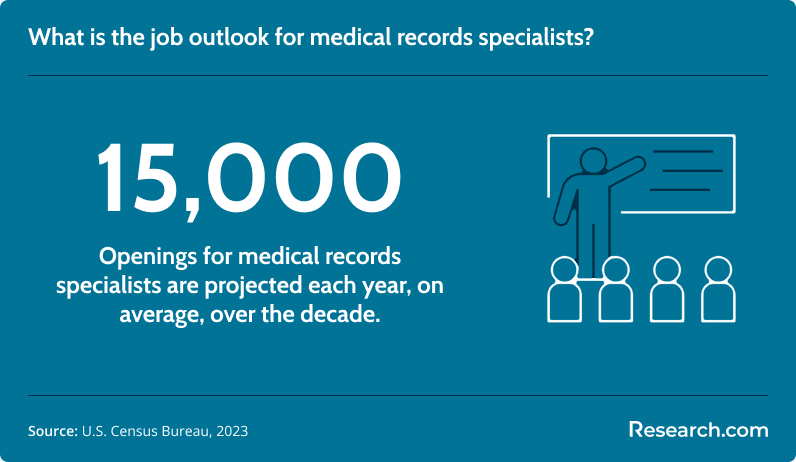
The Bureau of Labor Statistics projected an average of 15,000 openings for medical records specialists each year through 2033. Certification is not always legally required, but many employers prefer or expect applicants to hold a recognized billing or coding credential. Your program should clearly state which exam or exams it helps students prepare for.
| Certification | Focus | Common fit |
| Certified Professional Coder (CPC) | CPT, ICD-10, and HCPCS coding systems | Physician offices, clinics, and other outpatient coding environments |
| Certified Coding Specialist (CCS) | Inpatient and outpatient medical record coding, with emphasis on ICD-10-CM and CPT | Coders who want a broader medical records coding credential |
| Certified Coding Specialist – Physician-based (CCS-P) | Physician-based coding with CPT and ICD-10-CM emphasis | Private practices, specialty clinics, and physician services |
| Certified Inpatient Coder (CIC) | ICD-10-CM and ICD-10-PCS coding for inpatient hospital records | Hospital inpatient coding roles |
| Certified Outpatient Coder (COC) | CPT, ICD-10-CM, and HCPCS Level II for outpatient facilities | Outpatient hospitals and ambulatory surgical centers |
| Certified Billing and Coding Specialist (CBCS) | Billing, claims processing, insurance procedures, revenue cycle basics, and coding foundations | Students seeking a combined billing and coding credential |
If you already know where you want to work, match the credential to the setting. For example, physician-office coding and inpatient hospital coding require overlapping knowledge but are not identical career paths.
Online vs. In-Person Medical Billing and Coding Programs: Pros and Cons
Online training can work well for medical billing and coding because much of the work is computer-based, documentation-heavy, and tied to coding systems and health information software. However, online learning is not automatically the right fit for every student.
| Factor | Online program advantage | Possible drawback |
| Schedule | Students can often study around work, caregiving, or other responsibilities | Self-paced formats require discipline and consistent study habits |
| Location | No commute is required, and students can enroll from outside the immediate campus area | Some services, internships, or testing arrangements may still have location limits |
| Cost | Students may reduce transportation, parking, and childcare expenses | Technology fees, software subscriptions, exam fees, and textbooks can still raise total cost |
| Interaction | Discussion boards, video meetings, and online office hours can provide support | Students who learn best through face-to-face instruction may feel less connected |
| Practical training | Virtual labs, coding case studies, and simulated software can build applied skills | Not every program offers the same depth of hands-on practice |
Online programs are most appropriate for students who are comfortable with independent learning, written communication, and digital platforms. If you need frequent live guidance, ask whether the program includes synchronous sessions, tutoring, faculty office hours, or cohort-based courses.
If you are comparing healthcare careers outside billing and coding, reviewing earning information such as speech pathology salary paths can help you understand how education length and licensure requirements differ across health professions.
How to Choose an Accredited Online Medical Billing and Coding School
Accreditation is the first filter, not the final decision. A school can be accredited and still be a poor fit for your budget, timeline, certification goal, or support needs. Use the checklist below before enrolling.
| What to check | Why it matters | Questions to ask |
| Institutional accreditation | Accreditation can affect financial aid eligibility, credit transfer, and employer confidence | Is the school currently accredited by a recognized accrediting body? Where can I verify it? |
| Certification alignment | Employers often value credentials such as CPC, CCS, CCS-P, CIC, COC, or CBCS | Which certification exam does the curriculum prepare students for? |
| Curriculum depth | Medical coders need more than memorized code sets; they must understand documentation, compliance, and payer rules | Are ICD, CPT, HCPCS, billing, EHR, anatomy, medical terminology, and reimbursement covered? |
| Practical training | Students need practice reading medical documentation and applying codes accurately | Does the program include coding simulations, case studies, virtual labs, or externship options? |
| Total cost | Tuition is only one part of the price | What are the fees for books, software, exam preparation, certification exams, and technology? |
| Career services | Resume help, interview coaching, and employer connections can support the transition into work | What career support is available to online students, and are outcome data published? |
| Transfer policy | Credits may or may not apply to a future associate or bachelor’s degree | Will these credits transfer into another program at this school or elsewhere? |
Some students also compare flexible online programs in related business and healthcare fields, including accessible project management degree options, when they are weighing administrative career paths. Keep the comparison focused on your target role, required credential, and expected return on investment.
Are Online Medical Billing and Coding Programs Respected by Employers?
Yes, an online medical billing and coding program can be respected when it is offered by an accredited institution, teaches current coding and billing standards, and prepares students for recognized certification exams. Employers are usually more concerned with competency, certification readiness, accuracy, and experience than with whether every course was completed on campus.
However, not all online programs are equal. A reputable program should publish clear information about accreditation, curriculum, faculty qualifications, student support, software access, certification preparation, and career services.
- Accreditation: As with many healthcare administration programs, including affordable online MHA programs, recognized accreditation helps students avoid low-value credentials.
- Curriculum: Strong online programs teach the same core billing, coding, documentation, and compliance concepts expected in campus-based training.
- Faculty: Instructors should have healthcare, coding, billing, or health information experience and, ideally, relevant certifications.
- Career preparation: Look for resume support, mock interviews, internship guidance, employer connections, or job-search coaching.
What Courses Are Usually Included in an Accredited Medical Billing and Coding Program?
General medical and surgical hospitals employed 47,530 medical records specialists in 2023. To work effectively in this area, students need a foundation in healthcare language, reimbursement rules, documentation, and data systems. Most accredited medical billing and coding programs include the subjects below.
- Medical terminology: Students learn the language of healthcare, including prefixes, suffixes, abbreviations, body systems, procedures, and diagnoses.
- Anatomy and physiology: This course explains body structures and functions so students can interpret clinical documentation more accurately.
- Insurance coding: Students study coding systems such as ICD and CPT and learn how diagnoses and procedures are translated into standardized codes.
- Medical billing: Coursework covers claims creation, insurance submission, patient balances, reimbursement, denials, and payment workflows.
- Health insurance plans: Students compare Medicare, Medicaid, private insurance, and payer-specific rules that affect claims processing.
- Electronic health records: EHR instruction introduces documentation, data entry, reporting, privacy, and health information workflows.
- Practice management: Students learn administrative processes such as scheduling, records management, collections, and office operations. Those who later want management preparation may consider affordable online master's in healthcare administration programs.
What Are the Admission Requirements for Online Medical Billing and Coding Programs?
Medical billing and coding can be one of the more accessible healthcare education paths, and some students compare it with other low-cost online college options. The BLS gave the field a 9% growth projection over the next decade, but admission standards still vary by school and credential level.
Common requirements
- High school diploma or GED: Most certificate, diploma, and associate-level programs require proof of secondary education or an equivalent credential.
- Basic computer ability: Students should be comfortable with email, learning management systems, document creation, spreadsheets, and online research.
- Application and fee: Some schools require an application form and an admissions fee before review.
Possible additional requirements
- Entrance exam: Some programs may ask applicants to complete placement testing such as Accuplacer or submit SAT scores.
- Recommendations: A school may request letters from teachers, supervisors, or professional references.
- Personal statement: Some programs ask applicants to explain their goals and interest in healthcare administration work.
- Background check: Because students may work with sensitive healthcare information, some programs require a criminal background check.
What Skills Help Medical Billing and Coding Students Succeed?
Technical coding knowledge matters, but employers also look for accuracy, judgment, communication, and comfort with healthcare technology. Students who build these skills during training are usually better prepared for certification exams and entry-level work.
- Technology proficiency: Learn EHR systems, billing platforms, coding tools, spreadsheet basics, and secure data handling practices.
- Attention to detail: Coding mistakes can affect reimbursement, compliance, and patient billing, so accuracy is central to the job.
- Communication: Billers and coders may need to clarify documentation with providers, explain billing issues, or coordinate with insurers.
- Analytical thinking: Strong coders interpret records, compare code choices, review payer rules, and identify inconsistencies.
- Time management: Healthcare revenue cycle work often involves deadlines, record volume, claim follow-up, and competing priorities.
Students who are exploring adjacent clinical or therapeutic roles can also compare options such as accelerated online speech pathology programs, but those paths may have different licensure, clinical, and graduate education requirements.
How Long Does an Accredited Online Medical Billing and Coding Program Take?
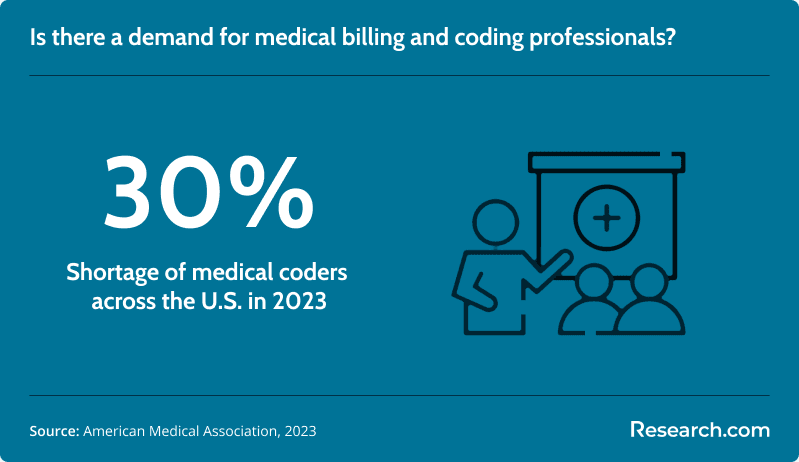
Most accredited online medical billing and coding programs take between six to 12 months to complete, although some formats are shorter or longer. This is why the field is often discussed alongside shorter degree and certificate paths with career potential. As of 2023, the shortage of medical coders reached 30% across the U.S., and that demand continues to increase.
Some accelerated programs can be completed in as little as four months. Other programs take longer because they are part-time, include more credits, lead to a diploma or associate degree, or include broader health information technology coursework.
| If your priority is... | Consider... | Be careful about... |
| Fast entry into the field | A focused certificate or accelerated course | Programs that are too short to prepare you for certification or real coding practice |
| Balancing work and school | A part-time online certificate or diploma | Extended timelines that may delay certification or job search plans |
| Future advancement | An associate degree or transferable credits | Noncredit programs that may not apply toward later degrees |
| Career change with low risk | A short introductory course before committing to a longer program | Assuming a short course is equal to a full certification-prep program |
If flexibility is your main concern, compare completion formats with other online credentials such as affordable online graduate certificate programs. If you plan to move later into analytics-heavy healthcare roles, you may also evaluate options such as the most affordable online master's in data science programs.
How Much Does an Accredited Online Medical Billing and Coding Program Cost?
An accredited online medical billing and coding program generally ranges from $5,000 to $15,000, but the final cost depends on school type, program length, residency status, fees, books, software, and certification exam expenses. Students looking for lower-cost options can compare affordable online medical billing and coding schools.
Costs to compare before enrolling
- Tuition: Check whether tuition is charged per credit, per clock hour, per term, or as a flat program price.
- Fees: Ask about technology fees, lab fees, online course fees, graduation fees, and registration fees.
- Books and coding manuals: Coding references can add to the total program cost.
- Software access: Some programs include EHR or billing software access, while others require separate purchases.
- Certification exam costs: Ask whether exam vouchers, review materials, or practice exams are included.
- Financial aid eligibility: Not every short-term course qualifies for the same aid options as a credit-bearing certificate or degree.
Do not choose solely by sticker price. A slightly more expensive accredited program with certification preparation, strong support, and transparent outcomes may offer better value than a cheaper program with unclear credentials.
What Financial Aid Options Are Available for Online Medical Billing and Coding Students?
Online students may qualify for several financial aid options, but eligibility depends on the school, program type, enrollment status, and whether the program is approved for aid. Always confirm aid eligibility with the school’s financial aid office before enrolling.
Federal financial aid
- Federal Direct Loans: Eligible students may use federal loans through the Federal Student Aid program.
- Subsidized Loans: These loans do not accrue interest while the student is enrolled at least half-time.
- Unsubsidized Loans: These loans begin accruing interest when they are disbursed, even if the student is still in school.
- Grants: Grants generally do not require repayment if students meet the program’s requirements.
- Pell Grant: This grant is available to eligible undergraduate students who have not earned a bachelor’s degree.
- Federal Supplemental Educational Opportunity Grants (FSEOG): These grants are available to low-income undergraduate students.
State, local, and school-based aid
- State grants: Some states provide grant aid for eligible students attending approved online or campus programs.
- Local scholarships: Community organizations, employers, and local foundations may fund students pursuing healthcare training.
- Institutional scholarships: Schools may offer awards based on academic performance, financial need, program enrollment, or other criteria.
- Work-study: Eligible students may be able to earn wages through part-time work connected to their school.
How Does Continuing Education Affect a Medical Billing and Coding Career?
Medical coding and billing rules change as payer policies, documentation standards, code sets, and healthcare technology evolve. Continuing education helps professionals stay current, maintain certifications, and qualify for more specialized responsibilities. Workshops, webinars, coding updates, specialty credentials, and software training can all strengthen long-term employability.
Students and professionals comparing compensation and advancement can review Research.com’s guide on how to become a medical coder and medical coding salary considerations.
What Challenges Do New Medical Billers and Coders Face?
New graduates may struggle with changing coding rules, payer-specific requirements, claim denials, incomplete documentation, productivity expectations, and unfamiliar healthcare software. These challenges are manageable, but students should choose programs that include realistic coding practice rather than only textbook definitions.
| Common challenge | Why it matters | How to prepare |
| Claim denials | Denied claims delay payment and require careful follow-up | Practice reading denial reasons and correcting coding or billing errors |
| Documentation gaps | Coders cannot assign accurate codes without adequate provider documentation | Learn when to query providers or escalate unclear records |
| Regulatory changes | Rules and code sets can shift over time | Join professional associations and complete continuing education |
| Software variation | Healthcare employers use different billing and EHR systems | Build general digital confidence and ask programs about software training |
| Salary expectations | Pay varies by role, employer, location, credential, and experience | Compare related healthcare roles, including medical assistant salary by state, to understand broader market differences |
What Are the Most Affordable Online Medical Coding Certification Programs?
Affordable certification-focused programs can help students enter the field without taking on unnecessary costs. The best low-cost programs still provide structured instruction in ICD-10, CPT, billing procedures, health records, compliance, and certification exam preparation. Students can compare low-cost online medical coding certification options when building a shortlist.
Price should not be the only factor. Confirm that the school is accredited, that the curriculum matches your target certification, and that the program includes enough applied coding practice to prepare you for real work.
Can Short Online Courses Help You Start Medical Billing and Coding Quickly?
Short online courses can be useful if you want to test your interest in the field, learn basic terminology, or gain introductory exposure to coding and billing before committing to a longer program. Some courses focus on practical topics such as ICD-10, CPT, HCPCS, billing workflows, and medical office documentation.
A 4 week online course for medical coding and billing may help you understand the basics quickly, but it may not provide the same depth as a certificate, diploma, or associate degree. Before choosing a short course, ask whether it prepares you for a recognized certification exam, whether it offers instructor support, and whether credits or training hours can be applied to a longer program.
How Are AI and Digital Tools Changing Medical Billing and Coding?
Healthcare organizations increasingly use automated coding tools, electronic health records, cloud-based systems, and analytics platforms to support billing and documentation workflows. These tools can improve efficiency, but they do not eliminate the need for trained professionals who can interpret documentation, review code accuracy, understand payer rules, and correct errors.
Online programs are stronger when they include virtual simulations, EHR practice, coding scenarios, and exposure to billing software. Students interested in broader healthcare technology roles may also compare interdisciplinary options such as online pharmacy school pathways, though those programs have very different professional requirements.
What Is the Career Outlook for Graduates of Online Medical Billing and Coding Programs?
The career outlook depends on training quality, certification, experience, location, employer type, and the graduate’s ability to work accurately with health records and claims systems. According to the U.S. Bureau of Labor Statistics information cited in the original article, the medical records and health information field, which includes billers and coders, is projected to grow 7% from 2021 to 2031.
Graduates may work in hospitals, physician offices, outpatient care centers, long-term care facilities, insurance companies, billing services, and remote administrative roles. With experience, some professionals move into auditing, compliance, revenue cycle management, health information management, or specialty coding.
To improve employment readiness, choose programs from reputable accredited online colleges that clearly explain certification preparation, practical training, and career support.
How Do Industry Partnerships Affect Program Credibility?
Industry partnerships can make an online program more practical when they connect students with current case studies, employer feedback, software tools, internships, mentorship, or job-search opportunities. Partnerships are most valuable when they create measurable student benefits rather than simply appearing in promotional materials.
Ask schools which healthcare employers, professional associations, or technology vendors are involved and how students actually interact with those partners. If you are comparing healthcare leadership pathways as well, reviewing healthcare administration career and salary information can help you understand how billing and coding may connect to broader revenue cycle or operations roles.
Do Online Programs Offer Career Support?
Many accredited online medical billing and coding programs offer career support, but the quality varies widely. Strong services may include resume review, interview preparation, certification exam guidance, employer connections, job boards, internship referrals, and alumni networking.
Students who need both training and affordability support can compare online medical billing and coding classes with financial aid. Before enrolling, ask whether career services are available to online students in the same way they are available to campus students.
What Practical Training Should an Online Program Include?
Because billing and coding are applied skills, students should look for more than recorded lectures. Good online programs use coding cases, documentation review, mock claims, EHR exercises, billing software practice, virtual labs, and instructor feedback.
Some schools may also offer remote internships, job shadowing, or employer-connected projects. Students who want additional hands-on healthcare exposure can also review short medical assistant programs, although medical assisting is a different occupation with different duties.
What Job Placement and Outcome Data Should You Ask For?
Outcome data can help you estimate whether a program is worth the investment, but not every school reports the same information. Ask for job placement rates, graduation rates, certification exam pass rates, employer partnerships, internship availability, and the types of jobs graduates obtain.
When comparing schools, look for transparent evidence rather than vague promises. Research.com’s broader guide to medical billing and coding schools can help you compare additional program options.
Should You Consider Complementary Healthcare Programs?
Medical billing and coding can be a standalone career path, but some students use it as an entry point into broader healthcare administration, clinical support, health information, compliance, or data roles. Complementary training can be valuable if it aligns with a clear career goal.
For example, students curious about diagnostic care may explore diagnostic medical sonography programs, while those interested in public health systems may compare affordable online MPH programs. These alternatives require different preparation, so compare admissions, clinical requirements, licensure, costs, and career outcomes before switching paths.
How Can You Maximize Return on Investment From an Online Program?
To get the strongest value from an online medical billing and coding program, compare total cost against certification preparation, transfer options, practical training, career services, and likely time to completion. A program is not automatically high-value because it is cheap or short.
- Verify accreditation first. Confirm the school’s accreditation status through recognized sources, not only the program website.
- Match the program to your target credential. Do not enroll until you know whether the curriculum supports CPC, CCS, CCS-P, CIC, COC, CBCS, or another goal.
- Calculate full cost. Include tuition, fees, books, manuals, software, certification exams, and retake costs.
- Ask about outcomes. Request completion rates, certification pass rates, and job placement information if available.
- Use career services early. Start building a resume, LinkedIn profile, and employer list before graduation.
- Plan your next step. If you want leadership roles, consider whether credits can support later health administration study, such as a health administration degree online.
How Do Digital Tools and Virtual Simulations Improve Online Training?
Digital simulations help students practice realistic coding and billing tasks before they work with live healthcare records. Virtual labs can present medical documentation, coding decisions, claim errors, payer rules, and EHR workflows in a controlled environment where learners can receive feedback.
These tools are especially useful for online students because they create applied practice without requiring constant on-campus attendance. Students interested in broader life science and digital learning may also compare an online BS biology degree, although biology programs are designed for different academic and career outcomes.
Why Do Faculty Expertise and Academic Support Matter?
Instructor quality can strongly affect how well students understand coding rules, documentation requirements, compliance issues, and certification exam expectations. Look for faculty with industry experience, current credentials, and a clear process for giving feedback on coding assignments.
Academic support also matters. Tutoring, office hours, discussion forums, advising, technical help, and exam preparation resources can prevent online students from feeling isolated. Students who are comparing faster science pathways may also review the quickest online bachelor's in biology degree options, but should weigh those against their actual career goals.
How Can Health Administration Skills Support Career Growth?
Billing and coding professionals who understand healthcare operations, revenue cycle management, compliance, and leadership may be better positioned for supervisory or administrative roles over time. Adding health administration skills can be useful for professionals who want to move beyond entry-level coding or billing tasks into team leadership, auditing, practice management, or operations.
Common Mistakes to Avoid When Choosing a Program
| Mistake | Why it can hurt you | Better approach |
| Choosing only by lowest tuition | The cheapest option may not include certification preparation, software, or adequate support | Compare total cost and value, not tuition alone |
| Ignoring accreditation | Unrecognized credentials may limit aid, transfer, or employer acceptance | Verify accreditation before applying |
| Assuming online means easy | Medical coding requires precision, memorization, interpretation, and practice | Set a weekly study schedule and use instructor support |
| Not checking certification alignment | A program may not prepare you for the exam your target employers prefer | Match the curriculum to CPC, CCS, CBCS, or another specific credential |
| Overlooking fees | Books, manuals, technology, and exams can increase costs | Ask for a complete cost breakdown in writing |
| Relying only on rankings | A highly ranked school may not fit your timeline, budget, or learning style | Use rankings as a starting point, then evaluate personal fit |
Student Perspectives on Online Medical Billing and Coding Programs
- Leah: "The accredited online format gave me enough flexibility to keep working while I studied. The coursework connected directly to certification preparation, and instructor feedback helped me feel ready for healthcare billing work."
- Mark: "I was unsure about online learning at first, but the platform was easy to use and the lessons were organized. Accreditation was important to me because I wanted employers to recognize the training."
- Sandy: "Studying online made it possible to balance school with family responsibilities. The program helped me practice billing software and prepare for the CPC exam while still giving me access to support when I needed it."
Questions to Ask Before You Enroll
- Is the institution currently accredited, and by which accrediting body?
- Which certification exam does the program prepare students for?
- Are coding manuals, software, exam vouchers, and textbooks included in the listed price?
- How much instructor feedback will I receive on coding assignments?
- Does the program include practical coding cases, EHR work, or billing simulations?
- Can I study part-time, full-time, or asynchronously?
- What percentage of students complete the program?
- What career support is available to online students?
- Do credits transfer into a diploma, associate degree, or bachelor’s program?
- Are there any state, employer, or certification limitations I should know about?
References
- American Medical Association (AMA). (n.d.). Addressing another health care shortage: Medical coders.
- American Academy of Professional Coders (AAPC). (n.d.). Medical coding salary survey.
- American Health Information Management Association (AHIMA). (n.d.). Certified Coding Specialist (CCS).
- Bureau of Labor Statistics (BLS), U.S. Department of Labor. (n.d.). Medical records and health information technicians. Occupational Outlook Handbook.
- O*NET OnLine. (n.d.). Medical records and health information technicians.
Key Insights
- Accreditation should be your first filter. It can affect financial aid, transfer options, and employer confidence.
- Program type matters. Certificates are faster, diplomas may add more applied training, and associate degrees offer broader preparation.
- Certification alignment is essential. Choose a program that clearly prepares you for the credential most relevant to your target job setting.
- Online programs can be reputable. The strongest ones combine accredited instruction, practical coding exercises, faculty support, and career services.
- Total cost is more than tuition. Include books, coding manuals, software, technology fees, and certification exam expenses.
- AI and automation are changing the work, not eliminating the need for skill. Employers still need professionals who can review documentation, apply rules accurately, and resolve billing issues.
- The best choice is personal. Compare accreditation, cost, completion time, certification preparation, support, and outcomes before committing to any online medical billing and coding school.
Other Things You Should Know About Accredited Medical Billing and Coding Schools Online
In 2027, online medical billing and coding programs should be accredited by recognized bodies like the Commission on Accreditation for Health Informatics and Information Management Education (CAHIIM) or the Accrediting Bureau of Health Education Schools (ABHES).
Many accredited programs include a supervised externship, but it is not universal. Schools aligned with AAPC, AHIMA, or CAAHEP standards may require 80 to 160 hours of practical experience. Some programs waive it for students already working in a medical office.


