2027 How to Become a Medical Coder – Salary & Requirements

Co-Founder and Chief Data Scientist
Are you considering a career in medical coding? With approximately 188,700 medical records specialist jobs in the U.S. in 2024 and an 8% projected job growth from 2024 to 2034, the field offers promising opportunities for those seeking stable employment in the healthcare industry. However, navigating the path to becoming a medical coder can be daunting without proper guidance. In this article, drawing upon my career planning experience, I'll provide a comprehensive guide on how to enter this rewarding profession and succeed in it.
Key things you should know about becoming a medical coder
- The annual average salary of medical coders varies based on credentials, with top earners in 2024 reaching up to $83,391 for advanced credentials such as Certified Professional Compliance Officer (CPCO) and $65,715 for Certified Outpatient Coder (COC).
- With approximately 188,400 medical records specialist jobs in the US in 2024 and an 8% projected job growth from 2024 to 2034, the field offers promising career prospects and stability.
- The median annual salary for medical records specialists in 2024 was $68,920, highlighting the competitive pay scale within the industry.
- Medical coding offers opportunities for remote or freelance work, providing flexibility and the ability to work from home for those seeking a better work-life balance.
- Beyond traditional medical coding roles, individuals with coding expertise can explore alternative career options such as certified physician practice manager (CPPM) or certified professional medical auditor (CPMA), which offer higher earning potential and advancement opportunities.
- California, Texas, and Florida have the highest employment levels for medical records specialists, offering opportunities for employment across different regions of the US.
- Why pursue a career in medical coding? Why pursue a career in medical coding?
- What is the career outlook for medical coders? Career Outlook
- What are the required skills for a medical coder? Required Skills
- How do you start your career in medical coding? Starting Career
- How can you advance your career in medical coding? Career Advancement
- What is the cheapest way to become a medical coder? What is the cheapest way to become a medical coder?
- What is the average salary of a medical coder? Salary
- What educational pathways can enhance a medical coder's career? Education
- What factors should I consider when evaluating a career in medical coding? What factors should I consider when evaluating a career in medical coding?
- How can medical coders negotiate competitive compensation? How can medical coders negotiate competitive compensation?
- How can I access affordable, high-quality training for medical coding? How can I access affordable, high-quality training for medical coding?
- How can medical coders stay ahead of evolving healthcare regulations? How can medical coders stay ahead of evolving healthcare regulations?
- What are the prospects for remote or freelance medical coding work? What are the prospects for remote or freelance medical coding work?
- What are the alternative career options for a medical coder? What are the alternative career options for a medical coder?
- How can advanced healthcare administration education transform a medical coder’s career? How can advanced healthcare administration education transform a medical coder’s career?
- What are some ways for medical coders to network within the industry? What are some ways for medical coders to network within the industry?
- How can advanced clinical degree programs supplement a medical coder’s expertise? How can advanced clinical degree programs supplement a medical coder’s expertise?
- Are there any emerging technologies shaping the future of medical coding? Are there any emerging technologies shaping the future of medical coding?
- How can interdisciplinary education boost coding proficiency? How can interdisciplinary education boost coding proficiency?
- How do medical coders contribute to patient care? How do medical coders contribute to patient care?
Medical Coding Career Guide: Is This Path Worth Pursuing?
Medical coding is a healthcare administration career for people who want to work with clinical information, billing systems, insurance rules, and digital patient records without providing direct bedside care. If you are comparing healthcare careers, it is important to separate this role from medical assisting; the question of what kind of degree a medical assistant should have leads to a different training path, different daily duties, and different patient-facing expectations.
This guide explains what medical coders do, how to enter the field, what skills and credentials matter, how much medical coders can earn, and when a certificate, associate degree, or broader healthcare degree makes the most sense. It is written for prospective students, career changers, healthcare support workers, and anyone deciding whether medical coding offers the right mix of flexibility, stability, advancement potential, and training cost.
Quick Answer: Why Choose Medical Coding?
Medical coding can be a practical healthcare career choice because it usually requires less schooling than many clinical roles, can lead to remote or hybrid work, and builds transferable knowledge in health records, reimbursement, compliance, and healthcare technology. It may also serve as a stepping stone for people planning to move into nursing, health information management, revenue cycle leadership, healthcare administration, auditing, compliance, or healthcare data roles.
It is not the best fit for everyone. Medical coders need strong attention to detail, comfort with rules and documentation, patience with repetitive review work, and willingness to keep learning as coding guidelines, payer requirements, and healthcare technologies change.
What Does a Medical Coder Actually Do?
A medical coder reviews clinical documentation and converts diagnoses, procedures, services, and treatments into standardized codes used for billing, insurance reimbursement, healthcare reporting, audits, and patient record management. The role sits at the intersection of healthcare, information management, compliance, and revenue cycle operations.
Medical coders may work for hospitals, physician practices, outpatient clinics, insurance companies, billing companies, telehealth organizations, and other healthcare organizations. Their work helps providers document care accurately, submit compliant claims, track services, and maintain usable patient records.
| Decision factor | What it means for future coders |
| Training time | Many entry-level pathways are shorter than clinical degrees, especially certificate-based routes. |
| Work environment | Roles may be onsite, remote, or hybrid depending on employer policy, experience level, and productivity expectations. |
| Career mobility | Coding experience can support movement into billing, auditing, compliance, health information, data analysis, or management. |
| Work style | The job suits people who prefer structured, detail-heavy work more than fast-paced direct patient care. |
| Credential value | Employers often prefer applicants with recognized coding training or certification from organizations such as AAPC or AHIMA. |
Some students use medical coding as a bridge into other healthcare careers. For example, someone who wants to become a nurse but needs time to save for accredited online RN to BSN programs may choose a coding role to gain healthcare exposure while earning income. Coding does not replace nursing prerequisites or licensure, but it can provide useful familiarity with medical language, clinical workflows, and health documentation.
Career growth is also possible within coding itself. According to the American Academy of Professional Coders (AAPC), medical coders typically see a 52% income increase from entry-level to late-career stages. A 2024 AAPC survey also found that 60% of medical records specialists work remotely full-time, while 20% have a hybrid work arrangement.
What Graduates Say About Online Medical Coding Programs
- Kyle: "The online format worked better than I expected. Live virtual sessions, group assignments, and coding practice helped me meet classmates and build professional contacts even though we were not in the same room."
- Manuel: "Studying from home made it possible for me to keep moving toward a new career. Hearing from classmates with different healthcare and work backgrounds also made the coding discussions more useful."
- Beverly: "The simulations and case-based exercises gave me a clearer sense of what coding work looks like on the job. I was able to practice the same kind of documentation review I later used at work."
Medical Coding Job Outlook
Medical coders are part of the broader medical records and health information workforce. Demand is tied to healthcare utilization, electronic health records, insurance claims processing, compliance requirements, and the need for accurate health data. Coders can find opportunities in hospitals, clinics, physician groups, insurance organizations, billing vendors, and other healthcare-related employers.
The outlook is positive but not effortless. In 2024, there were approximately 213,000 jobs in the field, and employment is projected to grow by 7% up to 2034. Candidates with recognized training, certification, strong productivity, and experience with electronic health record systems are generally better positioned than those relying only on informal self-study.
Skills Medical Coders Need
Medical coding does not always require several years of college, but it does require careful training. Coders handle sensitive health information, interpret clinical documentation, and apply detailed coding rules. That makes accuracy, confidentiality, and ongoing learning essential. By comparison, clinical technical careers such as sonography follow a different preparation process; students interested in imaging should review the steps for how to become a medical sonographer.
Core Technical Skills
- ICD knowledge. Coders need to understand the International Statistical Classification of Diseases and Related Health Problems (ICD) and stay prepared for coding system updates. ICD is a central classification system used to record, report, and monitor diseases across healthcare systems.
- Medical terminology. Coders must recognize terms related to anatomy, physiology, pharmacology, diagnoses, procedures, and treatment plans. Just as a surgical scrub tech salary is influenced by hands-on technical ability, coding compensation and job readiness are shaped by mastery of clinical language and coding rules.
- Digital record and software proficiency. Medical coding is deeply connected to electronic records, billing platforms, and data systems. Familiarity with the best electronic medical record (EMR) software used today can help coders adapt to healthcare technology environments. Broader digital capability also matters because 92% of jobs across industries demand workers with digital skills.
Professional Skills
- Independent work habits. Many coding roles require sustained focus with limited supervision, especially in remote settings. Employers expect coders to meet accuracy and productivity standards without constant oversight.
- Precision and error checking. A wrong code, missing diagnosis detail, or unsupported claim can affect reimbursement, compliance, reporting, and patient records. Strong coders know how to slow down enough to catch inconsistencies.
- Clear communication. Coders may need to ask providers for clarification, explain claim issues, document coding decisions, or coordinate with billing teams. The work may be computer-based, but it is not completely isolated.
| Skill area | Why it matters | How to build it |
| ICD, CPT, and HCPCS coding | These systems support diagnosis, procedure, service, and billing classification. | Complete coding coursework, practice case scenarios, and review current coding guidelines. |
| Clinical documentation review | Coders must connect provider notes to accurate, supportable codes. | Use sample charts, coding labs, and supervised practice exercises. |
| Compliance awareness | Incorrect coding can create audit, reimbursement, or privacy problems. | Study payer rules, HIPAA principles, and professional ethics requirements. |
| Technology comfort | Most coding work happens inside EHR, billing, and computer-assisted coding systems. | Train on common healthcare software and stay current with workflow automation tools. |
| Communication | Coders often clarify documentation and work with billers, providers, and administrators. | Practice writing concise queries and explaining coding decisions clearly. |
How to Start a Medical Coding Career
Medical coding is more accessible than many licensed clinical careers. Unlike the preparation involved in how many years of college it takes to become a pediatric nurse, medical coding can often begin with a high school diploma, focused training, and proof that you understand coding systems and healthcare documentation.
Still, many employers prefer applicants who have completed online medical coding degree or certificate programs. Certificate programs often take approximately 9-12 months and concentrate on coding, billing, terminology, and related fundamentals. An associate degree in medical coding usually takes around 2 years and adds general education courses that may be useful for transfer or future study. A report showed that 37% of medical coders have an associate’s degree, making it the most common highest educational achievement among these professionals.
There are no bachelor’s and graduate degrees devoted only to medical coding, but students who want broader advancement options may study healthcare administration, health information management, public health, data analytics, or a related area and then add coding certification.
| Pathway | Typical length | Best for | Main trade-off |
| Short course or self-study | Varies by provider and learner pace | People testing interest before paying for a full program | May not be enough for employers that prefer formal training or certification preparation. |
| Medical coding certificate | Approximately 9-12 months | Career changers who want the fastest structured entry route | Less general education and long-term academic flexibility than an associate degree. |
| Associate degree | Around 2 years | Students who want broader healthcare knowledge and possible future transfer credit | Usually takes longer than a certificate and may cost more overall. |
| Healthcare administration or health information degree plus certification | Varies by degree level | Coders aiming for management, compliance, data, or health information roles | More education than required for many entry-level coding jobs. |
Entry-Level Roles for Associate Degree Graduates
Ancillary Coder
An ancillary coder often reviews documentation tied to diagnostic services, ordered treatments, and support services. This role is commonly associated with early-career coders or newly credentialed professionals beginning their medical coding career. The work requires matching clinical reports and provider orders to appropriate codes.
Estimated median salary: $57,728
Medical Records Technician
A medical records technician, sometimes called a health information technician, organizes and maintains patient information such as histories, diagnoses, test results, and treatment details. The role may involve assigning classification codes and making sure records are accessible, accurate, and usable for care, billing, and reporting.
Estimated median salary: $40,000
Medical Claims Edit Specialist
A claims edit specialist reviews claims before or during submission to identify mistakes, overcharges, missing documentation, or payer-rule issues. The goal is to support accurate claims processing for patients, providers, and insurers.
Estimated median salary: $36,000
Can You Get a Medical Coding Job With Only a Certificate?
Yes. A certificate can be enough for some entry-level medical coding roles, especially when it prepares students for recognized credentials and includes hands-on coding practice. However, a certificate alone is not a guarantee of employment. Employers may also consider certification, accuracy testing, experience, productivity potential, software familiarity, and knowledge of payer policies.
Common AAPC core credentials include:
- Certified Professional Coder (CPC). Often associated with outpatient coding and billing processes in physician offices and outpatient settings.
- Certified Outpatient Coder (COC). Focuses on outpatient facility coding, including outpatient hospital departments and ambulatory surgery centers.
- Certified Inpatient Coder (CIC). Covers inpatient facility coding for hospital stays, including diagnoses, procedures, and treatments.
- Certified Risk Adjustment Coder (CRC). Centers on diagnosis coding for risk adjustment models such as Medicare Advantage and other risk-based payment systems.
- Certified Professional Biller (CPB). Emphasizes billing processes, claim submission, reimbursement, and insurance compliance.
Salary data suggests that COC and CRC credentials are especially valuable, with credentialed workers earning more than $60,000 per year. The chart below provides additional salary detail.
How to Advance in Medical Coding
Career growth in medical coding usually comes from a combination of certification, experience, specialization, continuing education, and stronger understanding of revenue cycle operations. Coders who want to move beyond entry-level production roles should plan their next credential and work experience intentionally.
- Add advanced certifications. After earning a foundational credential, coders can pursue areas such as auditing, compliance, practice management, outpatient documentation, or risk adjustment. Credentials such as Certified Professional Medical Auditor (CPMA) or Certified Physician Practice Manager (CPPM) can support movement into higher-responsibility roles.
- Build experience across settings. Hospital, outpatient, specialty practice, insurance, and billing company experience can expose coders to different documentation patterns and reimbursement rules.
- Keep learning. Coding guidelines, payer rules, documentation standards, and technology tools change. Continuing education through courses, workshops, webinars, and conferences helps coders stay current. If a coder supports a specialty such as speech-language pathology, reviewing related coursework from online speech pathology programs may deepen understanding of clinical terminology and services.
- Network with healthcare professionals. Relationships with coders, billers, physicians, auditors, compliance officers, and administrators can lead to mentoring, job leads, and stronger understanding of organizational needs.
- Pursue supervisory or leadership work. Coding supervisor, compliance officer, department manager, trainer, and revenue cycle roles may require stronger communication, reporting, and staff management skills.
- Develop a specialty. Coders may increase their value by focusing on areas such as cardiology, oncology, mental health, inpatient coding, risk adjustment, or documentation improvement.
Which Medical Coding Certification Is Best?
The strongest certification depends on the setting where you want to work. The Certified Professional Coder (CPC) from AAPC is widely recognized for outpatient and physician-practice coding. The Certified Coding Specialist (CCS) from AHIMA is often associated with inpatient coding and can be a better fit for hospital-focused career goals.
Use employer job postings in your target area to choose. If local hospitals repeatedly ask for CCS, that matters. If physician groups and outpatient employers list CPC, that may be the more practical first credential.
| Credential focus | Best fit | Typical work setting |
| CPC | Outpatient and physician-based coding | Physician offices, outpatient clinics, ambulatory settings |
| CCS | More hospital-oriented coding knowledge | Hospitals and inpatient-focused health information roles |
| COC | Outpatient facility coding | Outpatient hospital departments and ambulatory surgery centers |
| CIC | Inpatient facility coding | Hospitals and inpatient care environments |
| CRC | Risk adjustment coding | Medicare Advantage, payer, and value-based care environments |
AAPC also offers advanced credentials for coders who want to move into management, compliance, auditing, documentation improvement, or education:
- Certified Physician Practice Manager (CPPM). Covers medical practice management topics such as revenue cycle, operations, compliance, and administration.
- Certified Professional Compliance Officer (CPCO). Focuses on healthcare compliance requirements and ethical coding and billing practices.
- Certified Professional Medical Auditor (CPMA). Prepares coders for documentation review, coding accuracy checks, and regulatory audit work.
- Certified Documentation Expert – Outpatient (CDEO). Emphasizes outpatient documentation improvement and records that support correct coding and billing.
- Certified Professional Coder – Instructor (CPC-I). Recognizes coding professionals qualified to teach and mentor future coders.
Among advanced certificates, the CPCO credential appears to be the most financially rewarding, with holders earning a little north of $80,000 on average. The chart below shows additional salary details.
Cheapest Ways to Become a Medical Coder
The least expensive path is usually a focused certificate or low-cost training plan that prepares you for certification without paying for unnecessary coursework. The right option depends on your budget, timeline, prior healthcare knowledge, and whether employers in your area require formal credentials.
- Choose an affordable certificate program. Medical coding certificates are often less expensive than degree programs because they concentrate on coding systems, billing basics, medical terminology, and compliance. Many community colleges and online providers offer programs that can be completed in 9–12 months. Students comparing low-cost healthcare training may also review the cheapest medical assistant programs to understand pricing across related entry-level healthcare options.
- Use free or low-cost study resources carefully. Platforms such as Coursera, Khan Academy, or Udemy may help beginners learn basic terminology or coding concepts at a lower cost. However, free courses may not provide enough practice, instructor feedback, or certification preparation for every learner.
- Ask employers about reimbursement or training. Some healthcare organizations offer tuition support, on-the-job training, or reimbursement for coding courses and credentials. This can reduce upfront cost if you already work in healthcare.
- Start in a related records or billing role. A position such as medical records technician, billing assistant, or health information clerk can provide exposure to documentation workflows while you build funds and experience for coding training.
| Cost-saving strategy | When it makes sense | Risk to avoid |
| Community college certificate | You want structured training at a potentially lower cost than private programs. | Do not enroll without checking whether the curriculum aligns with certification preparation. |
| Employer-sponsored training | You already work in a healthcare organization with education benefits. | Confirm whether you must remain employed for a certain period after reimbursement. |
| Self-paced online course | You need flexibility and can stay disciplined without frequent instructor contact. | A cheap course may not provide enough coding practice for certification exams or job testing. |
| Associate degree | You want broader education and possible long-term transfer value. | Do not choose a longer program only because it sounds more impressive; compare it with your actual career goal. |
Average Medical Coder Salary
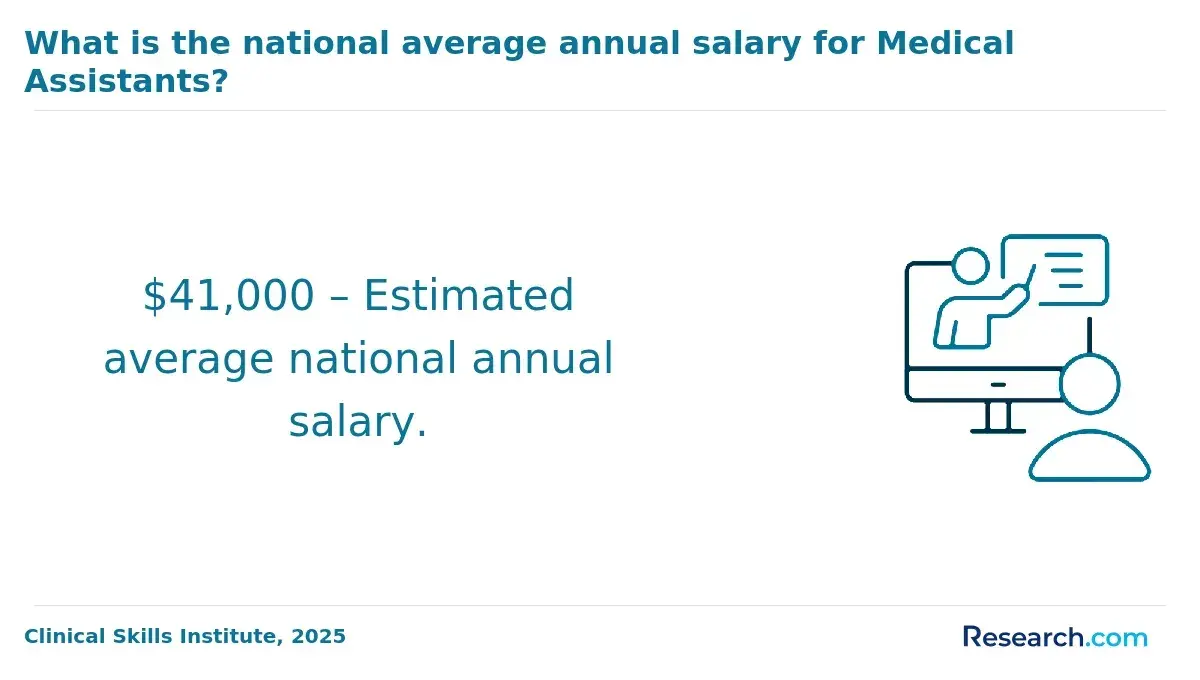
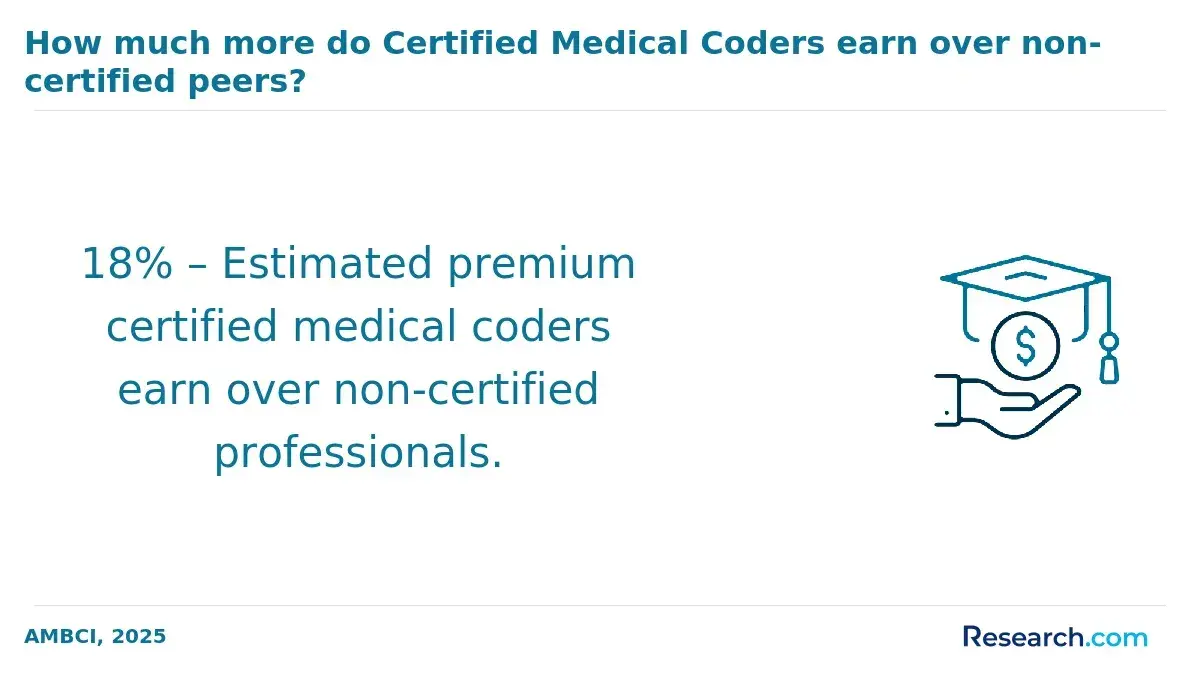
Medical coder pay varies by experience, credential, employer type, specialty, productivity expectations, and location. According to AAPC data, the annual average salary for medical coders ranged from $58,056 for certified professional billers (CPB) to $65,584 for certified outpatient coders (COC) in 2024. On average, medical records specialists make about $68,970 per year.
Salary figures should be treated as benchmarks, not promises. A new coder without experience may earn less than an experienced certified coder in a high-demand specialty or leadership role. Remote work, benefits, overtime eligibility, productivity standards, and advancement opportunities can also affect the total value of a job offer.
Educational Pathways That Can Strengthen a Coding Career
Initial coding certification can open the door to entry-level work, but long-term growth often requires broader knowledge. Coders who want to move into management, analytics, compliance, documentation improvement, or training may benefit from additional education in healthcare administration, health information management, public health, or related fields.
For example, a one year masters program may appeal to working professionals who already have a bachelor’s degree and want a faster route to advanced skills. Such programs are not required for standard coding jobs, but they may support transitions into health data analysis, compliance, revenue cycle leadership, or healthcare operations roles.
Ongoing professional development also matters. Workshops, webinars, conferences, and continuing education help coders stay aware of changing regulations, payer rules, documentation standards, artificial intelligence tools, and predictive analytics used in healthcare operations.
Is Medical Coding a Good Career for You?
To decide whether medical coding fits your goals, compare the work itself with your preferred learning style, income goals, tolerance for detail, and interest in healthcare administration. A deeper discussion of whether medical billing and coding is a good career can also help you weigh the role against other healthcare options.
| Medical coding may be a good fit if... | You may want another path if... |
| You like structured work, rules, documentation, and problem-solving. | You want frequent direct patient care or hands-on clinical procedures. |
| You want a healthcare role that may be possible with certificate-level training. | You are unwilling to study coding changes, payer rules, and compliance updates over time. |
| You are comfortable working on a computer for most of the day. | You strongly prefer physically active work or highly social environments. |
| You value the possibility of remote or hybrid work. | You need a job where remote work is guaranteed from day one. |
| You want a stepping stone into revenue cycle, health information, or healthcare administration. | You want a role with no certification pressure or performance monitoring. |
How Medical Coders Can Negotiate Better Pay
Medical coders can improve salary discussions by preparing evidence before asking for a raise or evaluating an offer. Useful evidence may include certification status, accuracy rates, productivity metrics, audit performance, specialty coding experience, denial reduction work, and contributions to revenue cycle improvement. Timing also matters; performance reviews and budgeting cycles are often better moments for compensation conversations.
Specialized credentials or advanced training can strengthen your case, especially if your employer needs expertise in compliance, auditing, inpatient coding, outpatient facility coding, or risk adjustment. For broader salary context in healthcare, review Research.com’s guide to the highest paying medical jobs.
How to Find Affordable, High-Quality Medical Coding Training
Affordable training should still prepare you for real coding work. Do not judge a program only by price. Look for current coding content, enough practice cases, instructor access, certification preparation, transparent costs, and clear student support. If you are comparing budget-friendly options, start with cheap medical billing and coding classes online and then verify whether each course matches your credential and career goals.
Questions to Ask Before Enrolling
- Which coding systems and manuals are covered?
- Does the program prepare students for CPC, CCS, COC, CIC, CRC, or another credential?
- How many real or simulated coding cases will students complete?
- Are exam fees, books, coding manuals, and software access included in tuition?
- Who teaches the courses, and what coding experience do they have?
- Does the school publish completion, certification, or job placement information?
- Can credits transfer into an associate degree or related healthcare program?
How Medical Coders Stay Current With Healthcare Regulations
Medical coders must monitor updates from professional organizations, regulatory agencies, payers, and employers. Coding rules, documentation standards, privacy expectations, and reimbursement policies change over time, so continuing education is part of the job rather than an optional extra.
Coders can stay current by subscribing to coding updates, attending webinars, completing continuing education units, using employer compliance tools, and participating in professional forums. The habit of regulatory learning can also support advancement into compliance and quality-focused roles. For readers comparing broader science and healthcare career options, Research.com also covers high paying jobs with a biology degree.
Remote and Freelance Medical Coding Prospects
Remote medical coding is a real option, but it usually depends on employer trust, secure technology, productivity standards, and demonstrated coding accuracy. Many organizations now use electronic health records and digital workflows that make offsite coding possible.
In 2024, 60% of medical records specialists work remotely full-time, while 15% have a hybrid work setup. AAPC data elsewhere reports 20% hybrid work, so applicants should review the original survey details and employer-specific policies before assuming a particular arrangement. Freelance coding may also be available, but independent work can require stronger experience, client management skills, compliance awareness, and careful attention to contract terms.
| Work arrangement | Advantages | Challenges |
| Onsite coding | Easier access to supervisors, teams, and training for beginners. | Less schedule and location flexibility. |
| Remote coding | No daily commute and more location flexibility. | Requires strong self-management, secure systems, and consistent productivity. |
| Hybrid coding | Balances home-based work with in-person collaboration. | Schedules may change based on employer needs. |
| Freelance coding | Potential for independent work and client variety. | May require experience, business management, and irregular workload planning. |
Alternative Careers for Medical Coders
Medical coding can lead to other roles where healthcare, information systems, documentation, billing, compliance, and data intersect. Some transitions require additional education, licensure, technical training, or professional certification.
Related Career Paths
- RN Coder. RN coders are registered nurses who apply clinical training to coding, chart review, and auditing work. Nurses may move into coding to step away from bedside care, while coders interested in nursing would need to complete nursing education and licensure. Those planning a long-term nursing route may eventually compare options such as online BSN to DNP programs.
- Medical Software Engineer. Coding experience can provide useful healthcare context for software work, but this path requires substantial additional training in programming, systems design, databases, and healthcare software development.
- Healthcare Data Analyst. Coders who enjoy working with structured health information may transition toward analytics. This path usually requires stronger skills in data tools, reporting, statistics, visualization, and healthcare operations.
The broader healthcare technology market continues to expand. The global healthcare IT market was valued at $392.5 billion in 2024 and is projected to reach $1.4 trillion by 2034. That growth may create opportunities across health data, software, compliance, revenue cycle technology, and digital operations, although individual job outcomes depend on skills, credentials, experience, and employer demand.
How Healthcare Administration Education Can Expand Coding Opportunities
Healthcare administration education can help medical coders move from production coding into management, operations, compliance, revenue cycle, and strategic roles. Courses in leadership, finance, healthcare law, quality improvement, and organizational management can complement coding expertise and prepare professionals to supervise teams or improve administrative systems.
Coders comparing this route should look for programs that align with their budget and career stage. A relevant starting point is Research.com’s guide to the most affordable online healthcare administration program.
How Medical Coders Can Network Professionally
Networking helps coders learn about job openings, certification expectations, specialty areas, and changes in the profession. Useful networking channels include professional conferences, workshops, local chapter meetings, employer training events, online forums, and coding-focused social media groups.
Organizations such as the American Academy of Professional Coders (AAPC) and the American Health Information Management Association (AHIMA) can also provide continuing education, professional communities, certification information, and peer support. New coders should use networking not only to ask for jobs, but also to understand which credentials and specialties are valued in their local or remote job market.
How Clinical Education Can Support Coding Accuracy
Clinical coursework can make coders stronger when it improves their understanding of treatment logic, medications, diagnoses, procedures, and patient care workflows. This does not mean every coder needs an advanced clinical degree, but deeper clinical knowledge can help in specialty coding, documentation review, auditing, and quality assurance.
For example, exposure to pharmacy concepts through Pharm D online programs may help professionals better understand medication-related documentation and evidence-based care. However, advanced clinical degrees are usually a major investment and should be pursued only when they match a clear career goal.
Technologies Shaping the Future of Medical Coding
Technology is changing how coders work, but it is not removing the need for human judgment. Automation can suggest codes, flag documentation issues, and speed up repetitive tasks, while coders remain responsible for interpretation, compliance, validation, and escalation when records are unclear.
- Artificial intelligence and machine learning. AI-enabled tools can review documentation and recommend possible codes, helping speed up routine coding tasks.
- Natural language processing. NLP systems interpret unstructured clinical notes and convert parts of that documentation into more usable data.
- Computer-assisted coding systems. CAC platforms suggest codes based on clinical documentation, but coders still need to verify whether suggestions are accurate and supported.
- Blockchain technology. Blockchain may support secure and tamper-resistant health record management, which can affect privacy and data integrity workflows.
- Telemedicine platforms. Virtual care creates coding needs for remote visits, digital monitoring, and telehealth-related documentation.
- Health information exchange systems. HIE systems allow patient data to move between providers, improving care coordination and giving coders access to broader documentation.
The practical takeaway: future coders should be comfortable working with technology, but they should not rely on software to replace coding knowledge. Employers will continue to value professionals who can audit outputs, interpret documentation, and apply coding rules responsibly.
How Interdisciplinary Education Can Improve Coding Work
Medical coding does not exist in isolation. Public health, data analytics, healthcare policy, clinical science, and administration can all deepen a coder’s understanding of why health information is collected and how it is used. Students interested in population health, reporting, and healthcare systems may explore affordable public health degrees as a broader complement to coding experience.
This type of education is most useful for coders who want to move into analysis, compliance, policy, quality improvement, or health information leadership. It may be unnecessary for someone whose only goal is a narrow entry-level coding role.
How Medical Coding Supports Patient Care
Medical coders usually work behind the scenes, but their accuracy affects patient records, reimbursement, healthcare reporting, compliance, and operational efficiency. For students who want a fast introduction to the field, a 4 week online course for medical coding and billing may provide foundational exposure, although short courses may not be enough for all certification or employment goals.
Accurate Patient Records
Coders translate provider notes, diagnoses, tests, procedures, and treatments into standardized codes such as ICD-10-CM, CPT, and HCPCS. Accurate records help clinicians review patient history, track conditions, and understand past care.
Timely Reimbursement
Healthcare providers rely on correct coding to submit claims to Medicare, Medicaid, private insurers, and other payers. Coding errors can lead to denials, delays, corrections, and administrative burden.
Public Health and Research Data
Coded information helps health organizations monitor disease patterns, evaluate treatment outcomes, and analyze healthcare trends. Researchers also use coded data to study care delivery and population health questions.
Compliance and Quality Control
Coders help organizations follow documentation, privacy, billing, and regulatory standards, including Health Insurance Portability and Accountability Act (HIPAA) requirements. Strong coding practices reduce risk and support cleaner audits.
Efficient Healthcare Operations
Standardized coding makes it easier to retrieve information, process claims, organize data, and reduce administrative friction. Better documentation workflows allow clinical and administrative teams to spend less time correcting errors.
Common Mistakes to Avoid Before Choosing Medical Coding
- Assuming a short course guarantees a job. Training can help, but employers may still require certification, testing, or experience.
- Choosing only by tuition price. A cheap program can become expensive if it does not prepare you for credential exams or real coding work.
- Ignoring certification expectations. Review job postings before choosing CPC, CCS, COC, CIC, CRC, or another credential path.
- Assuming all online programs are equal. Compare instructor support, practice cases, curriculum currency, exam preparation, and student outcomes.
- Expecting remote work immediately. Some employers prefer new coders to train onsite before moving to remote or hybrid schedules.
- Overlooking continuing education. Coding rules, software, regulations, and payer policies change, so learning cannot stop after the first credential.
- Treating salary averages as guarantees. Pay depends on experience, credential, setting, geography, productivity, and specialty.
Key Insights
- Medical coding is a healthcare information career focused on translating clinical documentation into standardized codes for billing, records, reporting, and compliance.
- The field can be entered through certificate training, associate degree programs, or related healthcare education plus certification; certificate programs often take approximately 9-12 months, while associate degrees usually take around 2 years.
- In 2024, there were approximately 213,000 jobs in the field, with projected growth of 7% up to 2034.
- AAPC data reports annual average salaries ranging from $58,056 for certified professional billers (CPB) to $65,584 for certified outpatient coders (COC) in 2024, while medical records specialists make about $68,970 per year on average.
- Remote work is a major advantage for many coders, but it is not automatic; employers often expect proven accuracy, productivity, and secure technology use.
- The best certification depends on your target setting: CPC is commonly aligned with outpatient and physician-practice coding, while CCS is often stronger for hospital-oriented coding goals.
- Career advancement is strongest for coders who combine experience with advanced credentials, specialty knowledge, compliance awareness, and technology skills.
- Before enrolling, compare total program cost, certification preparation, practice opportunities, instructor qualifications, transfer options, and employer expectations in your target job market.
References:
- American Academy of Professional Coders. (2024). Medical Coding Salary Survey. AAPC. https://www.aapc.com/blog/29837-medical-coding-salary-survey-2024
- AMBCI. (2025). How Much Do Medical Coder and Billers Make? https://ambci.org/medical-billing-and-coding-certification-blog/how-much-do-medical-coder-and-billers-make
- Clark, C. (2024, February 27). Key statistics for medical coders in 2024. Careerist. https://careerist.com/blog/medical-coder-statisticsAMBCI salary resource
- Clinical Skills Institute. (2025). How Much Do Medical Assistants Earn in 2025? https://www.clinicalskillsinstitute.com/post/how-much-do-medical-assistants-earn-in-2025-salary-guide-by-state
- Delta Technical College. (2025). Medical Coding Enrollment and Outcomes 2024-2025. https://www.deltatechnicalcollege.com/programs/medical-coding-training/enrollment-and-outcomes/
- Precedence Research. (2024). Healthcare IT Market. Retrieved from https://www.precedenceresearch.com/healthcare-it-marketDelta Technical College outcomes resource
- U.S. Bureau of Labor Statistics. (2025). Occupational Outlook Handbook: Healthcare. https://www.bls.gov/ooh/healthcare/
- U.S. Bureau of Labor Statistics. (2024, April 17). Medical Records Specialists. Occupational Outlook Handbook. https://www.bls.gov/ooh/healthcare/medical-records-specialists.htm
- U.S. Bureau of Labor Statistics. (2025, February 20). Medical Records and Health Information Specialists. Occupational Outlook Handbook. https://www.bls.gov/ooh/healthcare/medical-records-and-health-information-technicians.htmBLS medical records specialistsBLS healthcare occupationsDelta Technical College enrollment and outcomesClinical Skills Institute salary guideAMBCI medical billing and coding salary guide
Other Things You Should Know About How to Become a Medical Coder
In 2027, medical coders typically need certifications like the Certified Professional Coder (CPC) from the AAPC or the Certified Coding Specialist (CCS) from AHIMA. These credentials demonstrate coding proficiency and are often prerequisites for employment in the field.
In 2027, a medical coder's salary can vary significantly based on experience, location, and certification, ranging from $40,000 to $70,000 annually. Professionals with advanced certifications may earn higher salaries, reflecting the industry's demand for specialized skills and knowledge.
Most medical coding certificate programs take 4 to 12 months to finish. Programs usually require about 20 to 40 credit hours and cover ICD-10-CM, CPT, HCPCS, medical terminology, and health record documentation before students sit for AAPC or AHIMA certification exams.