
2027 Cognitive Psychology Careers: Guide to Career Paths, Options & Salary

Co-Founder and Chief Data Scientist
Cognitive Psychology Careers: What to Know Before Choosing This Path
Cognitive psychology is the study of how people think, learn, remember, pay attention, solve problems, use language, and make decisions. If you are considering this field, the real question is not simply whether cognitive psychology sounds interesting. It is whether the education, licensing expectations, research training, career options, and salary potential match your goals.
This guide explains what cognitive psychology professionals do, which jobs are available at different degree levels, how much cognitive psychologists earn, what skills employers look for, and how to choose a program that supports your long-term career plan. It is designed for psychology students, career changers, graduate school applicants, and professionals comparing research, clinical, technology, education, and applied psychology roles.
The field matters now because demand for mental health and behavioral expertise remains high. A recent report found that 55% of U.S. adults with mental illness do not receive the support they need. At the same time, cognitive psychology is expanding beyond traditional therapy and research settings into user experience design, artificial intelligence, education technology, human factors, legal consulting, and data-driven product development.
Quick Answer: Is Cognitive Psychology a Good Career?
Cognitive psychology can be a strong career path for people who enjoy research, data analysis, human behavior, and problem-solving. The average annual salary of cognitive psychologists in the United States is $92,813, and employment of psychologists from 2024 to 2034 is projected to grow by 6%. However, most professional cognitive psychology roles require graduate education, and clinical or assessment-focused work typically requires licensure.
| Key Question | Short Answer |
| What does cognitive psychology study? | Mental processes such as attention, memory, perception, language, learning, decision-making, and reasoning. |
| How long does the degree take? | A cognitive psychology degree may take 2 to 4 years to complete, depending on the level and program format. |
| How much can it cost? | A cognitive psychology program may cost anywhere from $50,000 to more than $100,000 to complete, depending on the institution and degree level. |
| What is the average salary? | The average annual salary of cognitive psychologists in the United States is $92,813. |
| What is the job outlook? | The employment of psychologists from 2024 to 2034 is projected to grow by 6%. |
| What are common alternatives? | Cognitive psychology graduates may also work as teachers, writers, graphic designers, UX researchers, market researchers, or data-focused professionals. |
- Why pursue a career in cognitive psychology?
- What is the average salary of cognitive psychologists?
- What is the job outlook for cognitive psychologists?
- What are the essential skills of cognitive psychologists?
- What are the specializations of cognitive psychologists?
- How can I start my career in cognitive psychology?
- What are the ideal certifications in cognitive psychology?
- How can I advance my career in cognitive psychology?
- What are the alternative career options for cognitive psychologists?
- What is the role of cognitive psychology in technology development?
- What practical experiences best prepare you for a cognitive psychology career?
- How does cognitive psychology overlap with other psychology subfields?
- What factors should I consider when choosing a cognitive psychology program?
- How does cognitive psychology contribute to mental health and therapy?
- How does cognitive psychology inform legal and forensic practices?
- What are the advantages of pursuing dual masters and PsyD programs in psychology?
- How can professional networking accelerate career growth in cognitive psychology?
- What ethical dilemmas do cognitive psychology professionals encounter?
- What are the most affordable options for pursuing a career in cognitive psychology?
- What are the future trends impacting cognitive psychology careers?
- How can I fast-track my education and career in cognitive psychology?
- Key insights
Career Snapshots From Cognitive Psychology Graduates
-
: "
My cognitive psychology training led me into educational technology, where I study how learners absorb and retain information. The most rewarding part is seeing research influence real product decisions and improve the way students use learning tools. - Keira
"
-
: "
I started in neuroscience, but cognitive psychology helped me understand perception, attention, and decision-making in a more applied way. As a UX researcher, I use those concepts to help teams build interfaces that feel clearer and easier to use. - Janet
"
-
: "
Cognitive psychology gave me a framework for understanding memory, judgment, and human error. In legal consulting, that background helps me analyze real cases where recall and decision-making can affect outcomes. - Sam
"
Why pursue a career in cognitive psychology?
A career in cognitive psychology may be worth considering if you want to understand the science behind thought, learning, attention, memory, and behavior. The field fits students who enjoy research, careful observation, experimental design, and evidence-based problem solving. It can also appeal to people who want a psychology career but do not want to limit themselves to one work setting.
The path requires planning. Students who want to become psychologists should understand how long it takes to get a psychology degree, because entry-level psychology work and licensed psychologist roles have very different requirements. Many students begin with an undergraduate psychology degree and then pursue graduate study focused on cognition, neuroscience, clinical practice, human factors, or another related area.
Graduate education is often the turning point. Comparing the types of masters degrees can help you decide whether you want a research-oriented, clinical, counseling, applied psychology, or interdisciplinary route. Students interested in diagnosis and therapy may also compare cognitive psychology with clinical psychology career options. Those considering advanced clinical or research leadership should understand how a PhD or PsyD affects training, licensure, dissertation expectations, and career outcomes.
Cognitive psychology is especially useful because it connects with many industries. Graduates may work in laboratories, hospitals, universities, schools, technology companies, advertising agencies, government offices, private practice, or consulting. The same skills used to study memory and decision-making can also support work in UX research, artificial intelligence, product design, legal analysis, organizational training, and consumer behavior.
There are also broad employment opportunities across the United States. About 30 to 1,500 psychologists or more are employed per state in the US, and increased demand would likely lead to more opportunities in the near future.
| Choose Cognitive Psychology If... | Consider Another Psychology Path If... |
| You enjoy research, experiments, data, and theory-driven questions. | You want to enter independent clinical practice as quickly as possible. |
| You are interested in memory, attention, language, perception, and decision-making. | You prefer direct counseling work over research or assessment. |
| You want career flexibility across health care, education, technology, research, and business. | You are not interested in graduate school, statistics, or research methods. |
| You are open to long-term training, licensure, or board certification for advanced roles. | You need a short, low-cost path into a defined occupation with minimal credentialing. |
What is the average salary of cognitive psychologists?
According to data from ZipRecruiter, the median annual salary of cognitive psychologists in the U.S. is $92,813. This figure is higher than many entry-level psychology-related occupations because cognitive psychologist roles commonly require advanced study, specialized research skills, and, in some settings, licensure or doctoral training.
When comparing income, remember that the broader average psychology degree salary may differ from cognitive psychology earnings because psychology graduates work in many roles with different education requirements. Salary can vary by employer, state, degree level, work setting, years of experience, and whether the position is clinical, academic, research-based, technical, or managerial.
Industry also matters. Government agencies and offices typically pay psychologists a median annual salary of $106,690; hospitals shell out $101,030, and ambulatory healthcare services hand out $92,170.
| Salary Factor | Why It Matters |
| Degree level | Advanced clinical, research, and faculty positions often require a master’s or doctorate. |
| Licensure | Clinical and assessment roles may require state licensure, which can affect eligibility and pay. |
| Industry | Government, hospital, ambulatory care, technology, and academic employers may pay differently. |
| Specialization | Neuropsychology, human factors, UX research, and data-heavy roles may lead to different salary ranges. |
| Location | Local demand, cost of living, and employer type can influence compensation. |
What is the job outlook for cognitive psychologists?
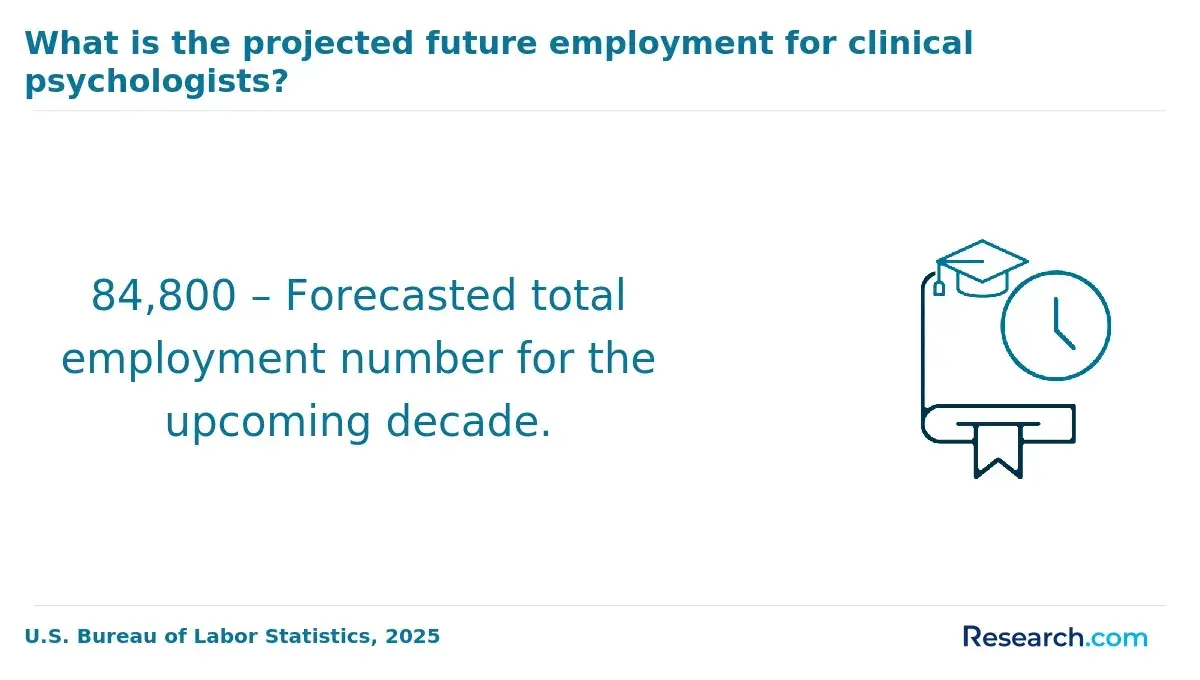
Data from the BLS shows that the employment of psychologists from 2024 to 2034 is projected to grow by 6%. In that period, the expected annual openings are 12,800, which does not include opportunities outside the United States.
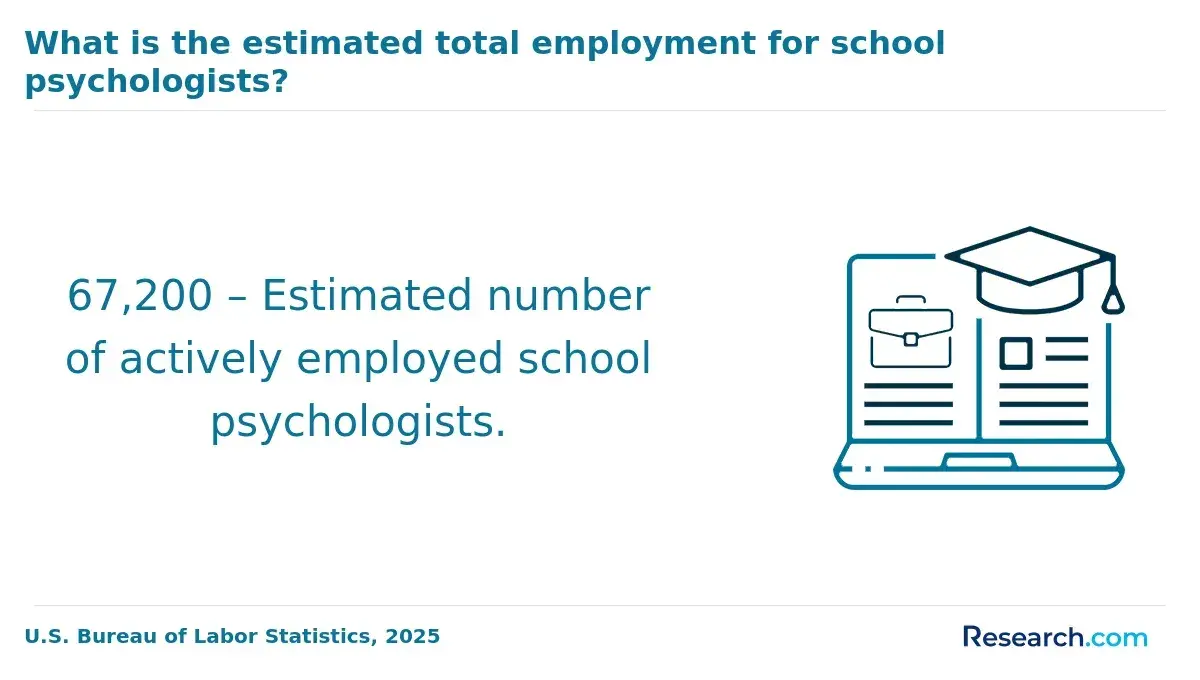
The outlook differs by psychology specialty. Clinical and counseling psychologists' employment is growing at 11% during the specified period, ahead of industrial-organizational psychologists at 6%, psychologists of all other types at 5%, and school psychologists at 1%. For cognitive psychology graduates, this means career planning should be specific. A student targeting research, UX, clinical assessment, or teaching may need different credentials and experiences.
The strongest candidates are usually those who combine psychology knowledge with practical evidence of skill: research assistantships, statistical software experience, internships, publications, supervised clinical training, usability studies, or experience translating research findings for non-specialist audiences.
What are the essential skills of cognitive psychologists?
Cognitive psychology is one of the more research-intensive areas of psychology. Like many of the best college degrees, it develops technical, analytical, and communication skills that can transfer across industries. The strongest professionals are not just interested in human thought; they can measure it, interpret it, explain it, and apply it responsibly.
Core Skills for Cognitive Psychology Careers
- Research design and evidence evaluation. Cognitive psychologists review prior studies, design experiments, analyze results, and connect findings to real-world questions. Strong research training is essential for work involving Alzheimer’s disease, ADHD, sensory processing, trauma, learning, or decision-making. Programs such as the best online psychology degree in Texas and similar psychology options in other states may include research projects, capstones, or dissertations that strengthen this foundation.
- Data and computer literacy. Many roles require survey design, statistical reasoning, behavioral data analysis, experiment software, spreadsheets, databases, or research management tools. Students who want technology, UX, or data-focused roles should build a portfolio of applied projects.
- Observation and attention to detail. Cognitive psychologists often notice patterns in behavior, language, memory, response time, test performance, or research data that others may miss.
- Problem-solving. Professionals may need to adjust a study design, interpret inconsistent findings, refine an assessment plan, or recommend interventions based on limited information.
- Ethical judgment. Work involving human participants, patients, personal data, or legal decisions requires privacy protection, informed consent, fairness, and careful handling of sensitive findings.
Professional Skills Employers Value
- Communication. Communication skills ranked second in LinkedIn’s 2024 Most In-Demand Skills. Cognitive psychology professionals must explain complex findings clearly to clinicians, engineers, educators, executives, attorneys, patients, or research teams.
- Collaboration. Many cognitive psychology jobs involve interdisciplinary teams, especially in hospitals, universities, technology firms, product design groups, and legal settings.
- Emotional intelligence. Even research-focused professionals benefit from empathy, self-awareness, and patience when working with participants, patients, students, or stakeholders.
- Patience and persistence. Research can be slow, clinical progress can be uneven, and data interpretation can require repeated testing and revision.
- Adaptability. The field changes as new tools emerge in neuroscience, artificial intelligence, education technology, behavioral analytics, and digital health.
What are the specializations of cognitive psychologists?
Cognitive psychology includes several focused areas. Choosing a specialization early can help you select the right courses, research labs, internships, and graduate programs.
| Specialization | What It Focuses On | Possible Career Connections |
| Memory and Learning | How people encode, store, retrieve, and apply information. | Educational research, learning technology, cognitive assessment, instructional design. |
| Attention | How people focus, divide attention, ignore distractions, and manage cognitive load. | UX research, human factors, safety design, ADHD-related research. |
| Perception | How the brain interprets sensory information, including visual and auditory input. | Interface design, accessibility, neuroscience, product testing. |
| Cognitive Neuroscience | How brain systems support memory, language, attention, decision-making, and other cognitive processes. | Neuropsychology, brain injury research, medical settings, research laboratories. |
| Language Processing | How people understand, produce, acquire, and connect language with thought. | Speech and language research, education, artificial intelligence, reading interventions. |
| Decision Making and Problem Solving | How people evaluate choices, solve problems, use reasoning, and respond to uncertainty. | Behavioral economics, legal consulting, product strategy, organizational decision-making. |
How can I start my career in cognitive psychology?
The best starting point depends on how far you want to go. An associate degree can help students enter support roles, while a bachelor’s degree can open doors to assistant, technician, counseling support, market research, or applied behavioral roles. To become a cognitive psychologist, students usually need graduate-level training and, for clinical work, licensure.
Some students begin with an associate degree to reduce upfront cost and test their interest in psychology. Others move directly into a bachelor’s program, including traditional psychology programs or an online bachelor’s counseling degree. If you are still comparing psychology routes, review what you can do with a degree in psychology before committing to a graduate specialization.
| Education Level | Common Role Types | Best For Students Who... |
| Associate degree | Human services support, research support, administrative or care-assistant roles. | Want a lower-cost entry point and plan to transfer later. |
| Bachelor’s degree | Technician, aide, counselor support, market research, behavioral health, UX or research assistant roles. | Want broad career flexibility or plan to apply to graduate school. |
| Master’s degree | Survey research, applied research, counseling-related roles, human resources, some psychology support roles. | Want stronger specialization without immediately pursuing a doctorate. |
| Doctorate | Licensed psychologist, professor, senior researcher, neuropsychology, human factors, leadership roles. | Want advanced clinical, academic, research, or specialist positions. |
What can I do with an associate’s degree in cognitive psychology?
Social and Human Service Assistants
Social and human service assistants support social workers and other professionals by helping coordinate services, maintaining records, researching community resources, and assisting clients with daily needs. They may serve older adults, children, immigrants, veterans, people with disabilities, or people navigating social service systems.
Median salary: $38,520
Research Assistants
Research assistants help cognitive psychologists and other researchers gather materials, review literature, organize participant information, administer surveys, and support focus groups or lab activities. Students who want stronger quantitative skills may later explore a data analytics degree online, while students in Texas can also compare the best schools in Texas for psychology for campus-based research opportunities.
Median salary: $49,512
The chart below shows the financial progression of research assistants in the United States as they gain tenure.
What can I do with a bachelor’s degree in cognitive psychology?
Psychiatric Technicians and Aides
Psychiatric technicians and aides work in hospitals, clinics, residential facilities, and mental health settings. Their duties may include patient intake and discharge support, basic care, vital sign monitoring, meal assistance, group activity support, and helping staff respond when patients are distressed.
Median salary: $37,330
Substance Abuse, Behavioral Disorder, and Mental Health Counselors
These professionals help clients address addiction, behavioral challenges, emotional difficulties, and mental health habits. They listen, document progress, help clients build recovery plans, and connect them with support systems. Independent clinical services generally require the proper degree, supervision, and licensure.
Median salary: $49,710
Market Research Analysts
Market research analysts study consumer behavior, evaluate trends, conduct surveys, interpret data, and recommend marketing strategies. Cognitive psychology training is useful because it helps analysts understand attention, perception, motivation, and decision-making.
Median salary: $68,230
Sports Psychologists
A sports psychologist career applies psychological principles to athletic performance, motivation, focus, confidence, anxiety management, team dynamics, and resilience. Professionals in this area may work with athletes, coaches, teams, or performance organizations.
Median salary: $92,813
What are the ideal certifications in cognitive psychology?
Certifications can strengthen a professional profile, but they are not a shortcut around degree, supervision, or licensure requirements. Students should separate three things: academic certificates, professional certifications, and state licenses. Each serves a different purpose.
Licensed psychologists who want specialty recognition may pursue board certification through the American Board of Professional Psychology. Relevant options include the Behavioral and Cognitive Psychology Certification and the Clinical Neuropsychology Certification.
Students and working professionals may also use on-campus or online psychology graduate programs to build specialized knowledge. Undergraduate certificates can introduce cognitive psychology concepts and may support entry-level applications, but they do not make someone a licensed cognitive psychologist.
Most people pursuing this field should plan for at least a traditional or online psychology masters degree. For many clinical, assessment, and board-certification routes, a doctoral degree, supervised experience, and licensure may also be necessary.
This pattern appears across related psychology specialties. For example, students interested in forensic practice often complete an in-person or online master's program in forensic psychology and then pursue the additional doctoral and licensure steps required for their intended role.
| Credential Type | What It Can Do | What It Cannot Do |
| Undergraduate certificate | Build introductory knowledge and show focused interest. | Replace a psychology degree or license. |
| Graduate certificate | Add specialized training in areas such as cognition, assessment, or applied behavior. | Guarantee eligibility for psychologist licensure. |
| State license | Authorize certain clinical or psychological services, depending on state rules. | Automatically grant specialty board certification. |
| ABPP board certification | Recognize advanced professional competence in a specialty. | Substitute for required education, licensure, or supervised experience. |
How can I advance my career in cognitive psychology?
Career advancement in cognitive psychology usually comes from a combination of graduate education, supervised experience, research productivity, licensure, specialized technical skills, and professional reputation. Students aiming for senior research, clinical, academic, or leadership positions should compare the best psychology graduate programs carefully before enrolling.
The right advancement path depends on whether you want to work with patients, conduct research, teach, build technology, lead teams, or advise organizations. The table below compares common cognitive psychology career tracks and salary examples by level.
| Career Stage | Clinical and Medical Path | Research Path | Marketing and Advertising | Teaching Path |
| Main Focus | Treating illnesses in human mental processes in hospitals, treatment facilities, or private practice. | Conducting in-depth research, tests, or observations on interpreting how the brain works in research facilities or government agencies. | Creating surveys and marketing strategies based on consumer decision-making processes and behavior. | Conducting lessons and administering assessments in psychology and its branches. |
| Entry Level Jobs | Genetic Counseling Technician ($34,295) | Psychology Research Assistant ($30,829) | Survey Researchers ($59,740) | Teaching Assistant ($38,040) |
| Junior Management Jobs | Cognitive Psychologist ($84,223) | Research Psychologist ($78,859) | UX Research Scientist ($83,622) | Assistant Professor of Psychology ($66,837) |
| Middle Management Jobs | Neuropsychologist ($101,472) | Senior Research Psychologist ($93,234) | Digital Product Designer ($91,691) | Associate Professor of Psychology ($82,073) |
| Senior Management Jobs | Psychology Services Director ($140,273) | Research and Development Director ($219,000) | Marketing Director ($177,827) | Full Professor of Psychology ($106,820) |
What can I do with a master’s in cognitive psychology?
Survey Researchers
Survey researchers design questions, collect responses, use statistical tools, evaluate data quality, and present findings in charts, reports, or dashboards. Their work can support public policy, health care, business, education, or social science research.
Median salary: $60,410
Cognitive Psychologists
Cognitive psychologists study conditions and patterns related to cognition, including autism spectrum, sensory sensitivity, trauma, and aggressive behavior. Depending on their role and credentials, they may support diagnosis, work with families and professionals, design training programs, analyze complex behavior, or contribute expertise in legal settings.
Median salary: $92,813
Human Resources Managers
Human resources managers oversee recruiting, compensation, benefits, employee relations, and workplace policy. Cognitive psychology can support training, motivation, selection, and decision-making work. Professionals who want leadership preparation may also consider an online masters organizational leadership program.
Median salary: $130,000
What kind of job can I get with a doctorate in cognitive psychology?
Human Factors Specialists
Human factors specialists study how people interact with tools, software, systems, workplaces, and environments. They may collaborate with engineers, designers, product teams, or safety professionals to improve usability, performance, accessibility, and ergonomics. Some also contribute to machine learning and artificial intelligence applications.
Median salary: $89,120
Clinical Psychologists
Clinical psychologists assess, diagnose, and treat mental health, emotional, and behavioral concerns. Many complete doctoral training through campus-based programs or the best online PsyD programs, then pursue the supervised experience and licensure required for practice. Some work in private practice, hospitals, clinics, or interdisciplinary health teams.
Median salary: $90,130
Data Scientists
Data scientists collect, structure, analyze, and explain large datasets. Cognitive psychology graduates who build strong quantitative and programming skills may apply their background in behavior, decision-making, and research methods to business, education, pharmaceutical, government, or technology settings.
Median salary: $103,500
Cognitive psychology also connects with leadership studies, especially in training, decision-making, and organizational behavior. If you are interested in executive-level roles, compare options such as a doctorate in organizational leadership.
The chart below shows the potential jobs of individuals who earned graduate degrees in psychology.
What are the alternative career options for cognitive psychologists?
Cognitive psychology training can transfer to careers that require audience insight, communication, perception, learning design, behavior analysis, or user-centered thinking. These alternatives are especially useful for graduates who decide not to pursue licensure or who want to apply psychology outside traditional clinical settings.
What else can a cognitive psychologist do?
- Teacher. Psychology graduates who enjoy explaining ideas may teach general education, social sciences, psychology-related topics, or learning skills. Cognitive psychology knowledge can help educators design lessons around attention, memory, motivation, and student development.
- Writer. Graduates can write for health, lifestyle, science, education, or psychology publications. They may translate research into practical articles, explain mental health topics, or create evidence-informed content for public audiences.
- Graphic Designer. Students with visual design talent can apply knowledge of perception, attention, and decision-making to brand, interface, or marketing visuals. Additional training through online graphic design courses can help them build a portfolio and technical design skills.
What is the role of cognitive psychology in technology development?
Cognitive psychology has become increasingly important in technology because products succeed when they match how people actually think, notice, learn, and decide. Cognitive psychologists help technology teams reduce confusion, improve usability, support accessibility, and design systems that align with human cognitive limits.
- User Experience (UX) Design. Cognitive psychology helps teams organize visual information, reduce cognitive load, improve navigation, and test whether users understand a product as intended.
- Artificial Intelligence (AI) and Machine Learning. Knowledge of learning, memory, reasoning, and decision-making can inform AI systems intended to model or support human behavior.
- Human-Computer Interaction (HCI). Cognitive psychologists study how users interact with devices, applications, dashboards, and software workflows, especially when attention and multitasking affect performance.
- Assistive Technologies. Cognitive psychology can support tools for people with cognitive impairments, including voice recognition, augmented reality, virtual reality, and rehabilitation-oriented technology.
- Behavioral Analytics. Companies may use cognitive psychology principles to interpret behavioral data, personalize experiences, improve engagement, or evaluate how users respond to digital environments.
What practical experiences best prepare you for a cognitive psychology career?
Practical experience is one of the strongest ways to stand out. Classroom knowledge matters, but employers and graduate programs also want evidence that you can conduct research, handle data, communicate with participants or clients, and apply cognitive psychology concepts responsibly.
Useful experiences include research assistantships, laboratory projects, supervised clinical placements, internships, usability studies, survey research, statistical analysis projects, poster presentations, and applied behavioral work. Students interested in behavior-focused training may also compare specialized options such as the best ABA programs in the US, especially if they want exposure to applied behavioral analysis and related methods.
| Experience | What You Learn | Best For |
| Research lab work | Study design, literature review, participant management, data collection. | Graduate school, academic research, cognitive science roles. |
| Internship | Professional communication, applied projects, workplace expectations. | UX, education, nonprofit, health care, business roles. |
| Supervised clinical placement | Assessment, documentation, ethics, client interaction. | Clinical, counseling, neuropsychology, or therapy-adjacent paths. |
| Data project | Statistics, visualization, interpretation, reporting. | Research, data science, survey research, human factors. |
| Portfolio project | Applied problem-solving and communication of findings. | UX research, product, consulting, technology roles. |
How does cognitive psychology overlap with other psychology subfields?
Cognitive psychology is distinct, but it rarely operates in isolation. Because thinking, memory, attention, and perception influence nearly every area of behavior, cognitive principles appear across clinical, health, educational, neuropsychological, and workplace settings.
- Clinical Psychology. Cognitive psychology informs cognitive behavioral therapy and other approaches that examine how thoughts influence emotion and behavior. Cognitive principles can help clinicians identify distorted thinking, maladaptive beliefs, and patterns that maintain anxiety, depression, trauma responses, or other concerns.
- Health Psychology. Cognition affects health choices, treatment adherence, risk perception, and motivation. Students drawn to this connection may explore health psychology careers, where mental processes and physical health behavior often intersect.
- Educational Psychology. Learning, memory, problem-solving, attention, and motivation are central to educational design. Cognitive psychology helps shape interventions, assessments, and learning tools for diverse students.
- Neuropsychology. Neuropsychology connects mental processes with brain structure and function. Cognitive psychology provides the theories that help practitioners interpret memory, language, executive function, and attention changes after injury or illness.
- Industrial-Organizational Psychology. Workplace decision-making, motivation, attention, training, and cognitive workload all draw on cognitive psychology. This overlap is useful for improving performance, safety, hiring, and organizational systems.
What factors should I consider when choosing a cognitive psychology program?
Choosing a cognitive psychology program should be a career decision, not just an admissions decision. A program that looks convenient or affordable may not be the best fit if it lacks research mentorship, supervised experience, licensing alignment, or the specialization you need.
Start by checking accreditation, faculty expertise, research opportunities, curriculum depth, internship connections, and whether the program supports your preferred outcome. If you need a shorter format, compare accelerated options such as a one year masters psychology pathway, but make sure speed does not come at the expense of licensure preparation or research quality.
| Program Factor | Questions to Ask Before Enrolling |
| Accreditation | Is the institution properly accredited, and does the program meet expectations for graduate admission, employment, or licensure? |
| Faculty fit | Do faculty members study cognition, neuroscience, memory, learning, attention, UX, human factors, or your preferred area? |
| Research access | Can students join labs, complete thesis projects, publish, present, or work with real datasets? |
| Licensure alignment | If you want clinical practice, does the curriculum meet state requirements for your intended license? |
| Internship and practicum options | Does the program offer supervised experience in settings related to your career goal? |
| Online vs. campus format | Can you complete required labs, practica, research work, and supervision in the program format offered? |
| Total cost | What will tuition, fees, books, travel, technology, and lost work time cost? |
| Career outcomes | Where do graduates work, and how many continue into doctoral study or licensure-focused pathways? |
Common mistakes when choosing a cognitive psychology program
- Choosing a program without confirming accreditation.
- Looking only at tuition and ignoring fees, practicum costs, commuting, technology, and opportunity cost.
- Assuming every online psychology program meets clinical licensure requirements.
- Enrolling before checking whether faculty research matches your interests.
- Ignoring transfer credit policies and prerequisite requirements.
- Relying only on rankings instead of comparing outcomes, mentoring, and training opportunities.
- Assuming a psychology degree guarantees a specific salary or job title.
How does cognitive psychology contribute to mental health and therapy?
Cognitive psychology contributes to mental health by explaining how thought patterns, beliefs, attention, interpretation, memory, and decision-making influence emotions and behavior. This knowledge supports assessment, diagnosis, therapy planning, relapse prevention, trauma treatment, family work, and substance use treatment.
Cognitive Behavioral Therapy (CBT)
Cognitive Behavioral Therapy is one of the best-known clinical applications of cognitive psychology. It focuses on identifying and changing unhelpful thought patterns and behaviors. Cognitive psychology contributes to CBT by clarifying how people interpret situations, form beliefs, and learn new coping strategies.
- Career Path: CBT Therapist, Licensed Mental Health Counselor, Clinical Psychologist
- How to Get Started: Students typically pursue a master’s or doctoral program in clinical psychology, counseling, or a related field, then complete required supervised experience and licensure.
Mindfulness and Acceptance-Based Approaches
Approaches such as Acceptance and Commitment Therapy use cognitive principles to help clients relate differently to thoughts, emotions, and internal experiences. Cognitive psychology research on attention and perception helps inform these strategies.
- Career Path: Mindfulness-Based Therapist, ACT Therapist, Clinical Psychologist
- How to Get Started: Professionals may pursue graduate training, continuing education, workshops, or post-graduate specialization in mindfulness-informed care.
Cognitive Assessment and Diagnosis
Cognitive psychologists and related specialists use assessment tools to evaluate memory, attention, reasoning, language, and problem-solving. These assessments can help identify concerns such as dementia, Alzheimer’s disease, ADHD, and other cognitive conditions.
- Career Path: Neuropsychologist, Cognitive Assessment Specialist, Clinical Psychologist
- How to Get Started: This work commonly requires doctoral training, specialized assessment preparation, supervised experience, and licensure.
Trauma-Informed Therapy
Cognitive psychology helps explain how traumatic experiences affect memory, attention, threat perception, beliefs, and emotional regulation. Trauma-focused approaches may help clients reframe harmful beliefs and reduce the cognitive and emotional impact of traumatic events.
- Career Path: Trauma Specialist, Clinical Psychologist, Licensed Therapist
- How to Get Started: Graduates may pursue training in trauma-focused therapy, trauma-informed care, or post-graduate certifications.
Family Therapy
Family therapy can draw on cognitive psychology when examining belief systems, interpretations, communication patterns, and assumptions that shape family conflict. Understanding how family members perceive one another can help therapists guide healthier communication.
- Career Path: Family Therapist, Marriage Counselor, Clinical Psychologist
- How to Get Started: Students may pursue family therapy, marriage counseling, or clinical psychology training and then add cognitive techniques to their practice.
Substance Use Treatment
Cognitive psychology is also relevant to substance use treatment because addiction can involve impulsive decision-making, denial, cravings, triggers, and distorted beliefs. Cognitive interventions can help clients identify thought patterns and build healthier responses.
- Career Path: Addiction Counselor, Substance Use Therapist, Clinical Psychologist
- How to Get Started: Students may pursue a master’s degree in addiction counseling, clinical psychology, or a related field with training in cognitive therapies for substance use.
Students interested in helping people with cognitive and behavioral challenges may also explore BCBA programs, particularly if they want to work with individuals on the autism spectrum or in applied behavior analysis settings.
How does cognitive psychology inform legal and forensic practices?
Cognitive psychology affects legal and forensic work because courts often rely on memory, judgment, perception, and decision-making. Cognitive research can help legal professionals understand eyewitness reliability, jury reasoning, false confessions, competency, and the cognitive effects of stress or trauma.
- Eyewitness Testimony. Cognitive psychologists study memory distortion, suggestibility, stress, attention, and recall. This research can inform witness interview methods and reduce bias in memory retrieval.
- Jury Decision-Making. Jurors must interpret evidence, weigh credibility, and make judgments under uncertainty. Cognitive psychology helps identify biases, emotional influences, and information-processing challenges that may affect verdicts.
- Forensic Assessments. Cognitive specialists may evaluate competency to stand trial, mental state, cognitive impairment, or the impact of cognitive disorders in legal matters.
- Criminal Behavior Analysis. Cognitive psychology can help explain planning, motivation, judgment, impulsivity, and patterns of decision-making relevant to criminal behavior.
- Forensic Psychology Careers. Students who want to combine cognition and law can explore the job outlook for forensic psychologist to understand qualifications, salary considerations, and career pathways.
What are the advantages of pursuing dual masters and PsyD programs in psychology?
Students who want both advanced clinical preparation and broad graduate-level training may consider dual masters and PsyD programs in psychology. These pathways can combine theoretical coursework, research exposure, assessment skills, and supervised clinical practice in a more integrated format.
The main advantage is continuity. Instead of completing separate programs with separate admissions processes, students may move through a coordinated curriculum that builds from foundational graduate study into doctoral-level clinical training. This can be useful for learners who are confident they want advanced clinical roles and want preparation in diagnosis, treatment planning, evidence-based practice, and interdisciplinary leadership.
How can professional networking accelerate career growth in cognitive psychology?
Networking can shape a cognitive psychology career because many opportunities develop through research labs, faculty mentorship, conference presentations, professional associations, internships, and interdisciplinary collaborations. Strong networks can lead to research projects, graduate recommendations, job referrals, consulting work, and exposure to emerging specialties.
Students should start early by connecting with faculty, attending psychology events, joining relevant associations, presenting posters, asking about lab openings, and maintaining relationships with internship supervisors. Professionals who want a faster applied route may also compare programs such as the fastest clinical mental health counseling graduate programs online, especially if they want training that connects coursework with supervised practice.
What ethical dilemmas do cognitive psychology professionals encounter?
Cognitive psychology professionals often work with sensitive data, vulnerable participants, clinical records, cognitive assessments, or findings that may influence legal, medical, educational, or commercial decisions. Ethical practice requires clear consent, confidentiality, appropriate test use, bias reduction, and honest communication of limitations.
- Confidentiality. Researchers and clinicians must protect identifiable information and explain how data will be stored, used, and shared.
- Informed consent. Participants and clients should understand the purpose, risks, benefits, and limits of services or studies.
- Assessment misuse. Cognitive test results should be interpreted only by qualified professionals and within the limits of the tool.
- Bias and fairness. Professionals must consider cultural, linguistic, disability-related, and socioeconomic factors when interpreting behavior or test performance.
- Commercial conflicts. Cognitive findings used in advertising, product design, or behavioral analytics require careful attention to user welfare and transparency.
- Legal implications. When cognitive psychology informs court cases, testimony must be scientifically grounded and clearly limited to the professional’s expertise.
Some students explore related helping professions through nontraditional routes. If that applies to you, review guidance on how to become a therapist without a bachelor's in psychology before assuming one path fits every state or role.
What are the most affordable options for pursuing a career in cognitive psychology?
Cost is a major consideration because cognitive psychology careers may require several years of education. A program may cost anywhere from $50,000 to more than $100,000 to complete, depending on the institution and degree level. Students should compare the total cost of attendance, not just posted tuition.
Lower-cost strategies may include starting at a community college, transferring credits into a bachelor’s program, choosing an accredited public institution, applying for assistantships, working in a research lab, comparing online options, and selecting a program with strong placement outcomes. Students looking for flexible and lower-cost routes can begin by reviewing the most affordable online psychology degree programs.
| Cost-Saving Strategy | What to Check First |
| Start with an associate degree | Confirm transfer agreements and whether credits apply to the psychology major. |
| Choose an online program | Verify accreditation, practicum requirements, research access, and licensure alignment. |
| Apply for assistantships | Ask whether graduate assistantships include tuition support, stipends, or research opportunities. |
| Use employer tuition support | Confirm reimbursement limits, grade requirements, and work commitment rules. |
| Compare total program length | A cheaper annual tuition rate may not be cheaper if the program takes longer to complete. |
What are the future trends impacting cognitive psychology careers?
Cognitive psychology careers are being shaped by technology, interdisciplinary research, and growing interest in how people make decisions in digital environments. Professionals who understand both human cognition and modern tools may have stronger opportunities in applied settings.
- Artificial intelligence. Cognitive psychology can support AI design, human-AI interaction, explainability, decision support, and ethical use of behavioral data.
- UX and human-computer interaction. More products require research into attention, memory, usability, accessibility, and cognitive load.
- Data-driven behavioral research. Employers increasingly value professionals who can combine psychology theory with analytics and clear reporting.
- Digital mental health tools. Cognitive principles are relevant to apps, telehealth platforms, cognitive training tools, and behavioral interventions.
- Interdisciplinary collaboration. Cognitive psychology now overlaps heavily with neuroscience, behavioral economics, computer science, education, law, and product strategy.
Continuous education matters. Professionals who want to stay competitive may pursue graduate study, targeted certificates, technical training, or an affordable online master's in clinical psychology if that path aligns with their goals.
How can I fast-track my education and career in cognitive psychology?
Students can shorten the path into cognitive psychology by choosing efficient, accredited programs and gaining experience while studying. However, speed should not come at the expense of licensure eligibility, research preparation, or supervised training.
Accelerated formats, transfer credits, year-round enrollment, online courses, combined degrees, and focused research assistantships can all reduce delays. Students seeking a quicker graduate route can compare fast master's in psychology online degrees, but they should confirm whether the program supports their intended career path.
Practical steps to move faster without weakening your preparation
- Choose an accredited program with clear transfer and graduation requirements.
- Meet with an academic advisor before enrolling to map every required course.
- Join a research lab early instead of waiting until senior year or graduate school.
- Take statistics, research methods, neuroscience, and cognitive psychology courses as soon as prerequisites allow.
- Build a portfolio with research papers, presentations, data projects, UX studies, or applied case examples.
- Clarify whether your target job requires licensure, certification, a doctorate, or supervised experience.
- Apply for internships, assistantships, and practicum placements before deadlines.
- Network with faculty and professionals in your intended specialization.
Key Insights
- Cognitive psychology is best for students who want to study how people think, learn, remember, pay attention, make decisions, and interact with the world.
- The average annual salary of cognitive psychologists in the United States is $92,813, but earnings vary by degree level, industry, location, licensure, and specialization.
- The employment of psychologists from 2024 to 2034 is projected to grow by 6%, with stronger growth reported for some clinical and counseling roles.
- Graduate education is usually necessary for professional cognitive psychology roles, and clinical or assessment-focused work typically requires licensure.
- Cognitive psychology is not limited to therapy or academia. It also supports careers in UX research, human factors, artificial intelligence, education technology, legal consulting, marketing, data science, and organizational leadership.
- Before choosing a program, check accreditation, faculty research areas, practicum options, licensure alignment, total cost, and graduate outcomes.
- The most competitive students build experience early through research labs, internships, supervised placements, data projects, and professional networking.
- A fast program is only useful if it still provides the training, supervision, and credentials required for your intended career.
References:
- Solomon, L. (2024, January 8). Psychologists face challenges of increased demand, patient severity. Medical Xpress
- BLS (2025). Data Scientists. BLS
- BLS (2025). Human Resources Managers. BLS
- BLS (2025). Market Research Analysts. BLS
- BLS (2025). Psychiatric Technicians and Aides. BLS
- BLS (2024, February 16). Psychologists. BLS
- BLS (2025). Social and Human Service Assistants. BLS
- BLS (2025). Substance Abuse, Behavioral Disorder, and Mental Health Counselors. BLS
- BLS (2025). Survey Researchers. BLS
- Glassdoor (2024, February 10). Research Assistant Salaries. Glassdoor
- ZipRecruiter (2024, March 5). Cognitive Psychologist Salary. ZipRecruiter
- ZipRecruiter (2024, March 5). Human Factors Specialist Salary. ZipRecruiter
Other Things I Need to Know About Cognitive Psychology Careers
Employers look for experiment design, statistical analysis, and software skills such as SPSS, R, or Python. Experience with EEG, fMRI, eye-tracking, and participant testing is valuable for research assistant and lab coordinator roles, especially in universities, hospitals, and private research firms.
To pursue a cognitive psychology career in 2027, individuals typically need a master's or doctoral degree in psychology with a focus on cognitive processes. Some positions may require additional postdoctoral training or certification, depending on the specific role and employer requirements.





