2027 Best CNA to RN Degree Online Bridge Programs

Co-Founder and Chief Data Scientist
Moving from Certified Nursing Assistant to Registered Nurse is one of the most practical ways to increase responsibility, earning potential, and long-term mobility in healthcare. Online CNA to RN bridge programs are designed for working nursing assistants who already understand patient care but need formal nursing education, supervised clinical training, and eligibility to take the NCLEX-RN.
This guide explains how CNA to RN pathways work, what “online” really means in nursing education, how long programs take, what they cost, how to compare schools, and what career options may open after licensure. It also highlights important cautions: not every online nursing program is a direct CNA to RN bridge, clinical hours are still in person, and state licensure requirements can affect whether a program is the right fit.
Quick Answer: What Is an Online CNA to RN Bridge Program?
An online CNA to RN bridge program helps qualified Certified Nursing Assistants complete the education required to become Registered Nurses. Coursework may be delivered online, but clinical training must be completed face-to-face in approved healthcare settings. Graduates must meet state board requirements and pass the National Council Licensure Examination for Registered Nurses (NCLEX-RN) before they can practice as RNs.
The most common pathways are an Associate Degree in Nursing (ADN), an Associate of Science in Nursing (ASN), a Bachelor of Science in Nursing (BSN), or an accelerated BSN option for students who already hold a non-nursing bachelor’s degree. Some schools do not offer a formal CNA to RN bridge but may allow CNAs to enter as transfer students or use prior coursework toward degree requirements.
What are the benefits of getting an online CNA to RN bridge program degree?
- Broader nursing career options. An RN license can qualify graduates for roles across hospitals, clinics, long-term care facilities, public health agencies, schools, home healthcare, and some non-bedside areas such as nursing education, hospital management, legal nurse consulting, and care coordination.
- Higher earning potential. Advancing from CNA to RN can increase annual income by over $50,000. Median wages for registered nurses rose from $86,070 in May 2023 to $93,600 as of May 2024. (Bureau of Labor Statistics, 2024)
- Flexibility for working CNAs. Online coursework can make it easier to keep working while completing nursing theory, general education, and exam preparation requirements. Students still need to plan for in-person labs, simulations, and clinical rotations.
- A stronger foundation than starting from scratch. CNAs enter with patient-care exposure, comfort in clinical environments, and familiarity with healthcare teams, which can make the transition into professional nursing more manageable.
What can I expect from an online CNA to RN bridge program?
A CNA to RN bridge program builds on hands-on nursing assistant experience and adds the clinical judgment, science background, medication knowledge, leadership training, and licensure preparation required for registered nursing practice. The curriculum often overlaps with ADN, ASN, or BSN nursing coursework.
Typical study areas include:
- Anatomy and physiology
- Medical terminology and pharmacology
- Clinical practice
- Patient assessment and management
- Community health
- Leadership and management
- National Council Licensure Examination for Registered Nurses (NCLEX-RN) preparation
Most CNA to RN bridge programs require applicants to hold an active CNA credential. Schools may also expect prior healthcare work experience, completed prerequisites, a minimum GPA, and readiness for college-level science courses. Some programs award credit for previous coursework, CNA training, or clinical exposure, which can reduce the total number of credits needed. Policies vary widely, so students should confirm transfer-credit rules before enrolling.
Online does not mean fully remote
Nursing is a regulated clinical profession. Even when lectures, discussions, assignments, and exams are online, students must complete in-person clinical hours in approved settings. Before choosing a program, ask whether the school helps arrange clinical placements near your location or requires you to find your own site.
Where can I work with an online CNA to RN bridge program?
CNAs already play a direct role in patient care by supporting RNs, physicians, and other clinicians. They assist with daily living needs, monitor basic patient information, and communicate changes to the care team. Becoming an RN expands that role: RNs assess patients, administer medications, develop care plans, educate patients and families, and coordinate care across providers.
After completing an approved program, meeting state requirements, and passing the NCLEX-RN, graduates may qualify for registered nursing roles in settings such as:
- Hospitals. Hospital RNs care for patients with acute, complex, or chronic conditions in units such as emergency care, intensive care, medical-surgical nursing, and perioperative services.
- Nursing homes. RNs in long-term care monitor residents, manage medications, coordinate care plans, and often supervise CNAs and LPNs.
- Clinics. Outpatient RNs help with assessments, patient education, routine procedures, care coordination, and follow-up. Schedules may be more predictable than in many hospital units.
- Rehabilitation centers. Rehab nurses support patients recovering from illness, injury, surgery, or substance use disorders, with a focus on functional progress and long-term recovery goals.
- Home healthcare agencies. Home health RNs provide skilled nursing care for patients recovering at home or managing chronic conditions.
- Public health departments. Public health nurses work on prevention, vaccination, education, screenings, community outreach, and disease control.
- Schools. School nurses manage student health needs, respond to emergencies, administer medications, and support health-related accommodations.
Online bridge programs can be especially useful for CNAs balancing shifts, family responsibilities, and school. The key is to choose a program that prepares graduates for the NCLEX-RN and aligns with the licensure rules in the state where they plan to practice.
How much can I make with an online CNA to RN bridge program?
The salary difference between CNA and RN roles is one of the main reasons many nursing assistants pursue registered nursing. As of January 2025, CNAs in the United States earn an average hourly wage of $20.27, or approximately $42,160 annually (Indeed, 2025). By comparison, RNs have a median annual wage of $93,600 as of May 2024, with the lowest 10% earning less than $66,030 and the highest 10% earning more than $135,320 (U.S. BLS, 2024).
Pay depends on location, employer type, shift, experience, union status, specialty, and degree level. The BLS reports the following 2024 median annual wages for registered nurses by work setting:
- Government: $106,480
- Hospitals (state, local, and private): $97,260
- Ambulatory healthcare services: $83,780
- Nursing and residential care facilities: $81,820
- Educational services (state, local, and private): $74,360
These figures show why RN licensure can be a meaningful financial step, but they should not be treated as guaranteed earnings. Local labor markets and individual qualifications matter.
- 2027 List of Online CNA to RN Degree Bridge Programs
- How long does it take to complete an Online CNA to RN degree program?
- How does an Online CNA to RN degree program compare to an on-campus program?
- What is the average cost of an Online CNA to RN degree program?
- What are the financial aid options for students enrolling in an Online CNA to RN degree program?
- What are the prerequisites for enrolling in an Online CNA to RN degree program?
- What courses are typically in an Online CNA to RN degree program?
- What types of specializations are available in Online CNA to RN degree programs?
- Are Online CNA to RN Programs Accredited and Recognized?
- What challenges might students encounter during their Online CNA to RN program?
- Can Advanced Certifications Enhance Your Nursing Career After a CNA to RN Program?
- Is an Online CNA to RN Bridge Program Worth the Investment?
- How to choose the best Online CNA to RN degree program?
- What career paths are available for graduates of Online CNA to RN degree programs?
- What is the job market for graduates with an Online CNA to RN degree?
- What advanced academic opportunities are available after an Online CNA to RN program?
2027 List of Online CNA to RN Degree Bridge Programs
How do we rank schools?
Choosing a nursing program affects your cost, schedule, clinical training access, licensure preparation, and future career options. Research.com evaluates schools using factors that matter to prospective students, including program costs, graduation rates, faculty-to-student ratios, curriculum focus, and accessibility. Our methodology uses objective and current data from trusted sources such as the IPEDS database, Petersons database including the Distance Learning Licensed Data Set, College Scorecard database, and the National Center for Education Statistics.
Important note: true CNA to RN bridge programs are not always labeled the same way by colleges. Some schools offer ADN or ASN pathways that can lead to RN licensure, some allow CNA transfer applicants into BSN programs, and others offer RN to BSN options intended for students who are already licensed RNs. Review each program carefully to confirm whether it matches your current credential level.
| School | Best fit | Program details to verify |
| University of Pittsburgh | Students with a non-nursing bachelor’s degree seeking an accelerated BSN | Full-time intensity, clinical schedule, and eligibility for the ABSN pathway |
| SUNY Downstate Health Sciences University | Licensed RNs pursuing BSN completion or bachelor’s degree-holders considering ABSN | Whether your current CNA background qualifies for the pathway you want |
| Texas Tech University Health Sciences Center | Licensed RNs seeking a flexible RN to BSN option | RN license requirement, residency tuition, and transfer-credit policy |
| University of San Francisco | Transfer students pursuing a traditional BSN route | Prerequisites, GPA requirements, campus attendance, and clinical availability |
| Herzing University | Students seeking an ASN route toward RN licensure | Campus requirements, approved transfer credits, and state licensure alignment |
1. University of Pittsburgh
The University of Pittsburgh School of Nursing offers an Accelerated Second-Degree Bachelor of Science in Nursing (ABSN) for students who already have a non-nursing bachelor’s degree. This intensive full-time route lets students complete a BSN in just one year through three consecutive terms. It is best suited for applicants who can commit to a fast, demanding schedule and want preparation for RN licensure and possible graduate study.
- Program Length: Approximately 1 year (3 consecutive terms)
- Tracks/concentrations: Generalist BSN
- Cost per Credit: $1,078
- Required Credits to Graduate: 124
- Accreditation: Commission on Collegiate Nursing Education (CCNE)
2. SUNY Downstate Health Sciences University
SUNY Downstate Health Sciences University provides a fully online RN to BSN program for applicants who already have at least 60 transferable credits, including 30 nursing credits from an Associate’s Degree in Nursing (ADN). Students complete 35 upper-division credits at Downstate and graduate with 125 total credits. The university does not offer a dedicated CNA to RN bridge, but it also has a 15-month ABSN pathway for students with a non-nursing bachelor’s degree that includes 60 credits of focused nursing coursework.
- Program Length: 3 semesters, full-time
- Tracks/concentrations: RN to BSN
- Cost per Credit: $295 for NY residents; $353 for non-residents
- Required Credits to Graduate: 125 (including 35 upper-division credits at Downstate)
- Accreditation: CCNE
3. Texas Tech University Health Sciences Center
The Texas Tech University Health Sciences Center (TTUHSC) RN to BSN program is one of 22 nursing program options offered by the school. The fully online format is designed for working registered nurses and can be completed in as few as two semesters full-time or over three to six semesters part-time. Coursework is asynchronous and emphasizes leadership, evidence-based practice, and holistic nursing care.
- Program Length: 2 semesters (full-time) to 3-6 semesters (part-time)
- Tracks/concentrations: RN to BSN
- Cost per Credit: $214.07 for TX residents; $624.07 for non-residents
- Required Credits to Graduate: 30
- Accreditation: CCNE
4. University of San Francisco
The University of San Francisco (USF) offers a BSN at its Hilltop and Sacramento campuses. The school does not operate a standalone CNA to RN bridge, but CNAs may apply as transfer students if they satisfy prerequisite coursework and GPA expectations. Depending on prior credits and clinical placement availability, transfer students typically need six to eight semesters to complete the degree.
- Program Length: 6-8 semesters for transfer students
- Tracks/concentrations: Generalist BSN
- Cost per Credit: $2,200 per credit for part-time students (fewer than 12 credits) during fall/spring terms; $1,475 per credit during summer term
- Required Credits to Graduate: 128
- Accreditation: CCNE
5. University of Florida-Online
University of Florida-Online offers a fully online RN to BSN program for working registered nurses who hold an associate degree. The curriculum covers leadership, evidence-based practice, and community health. Students can complete the program in five semesters of part-time study and receive 30 upper-level credit hours in the final semester based on active RN licensure and completion of a professional portfolio.
- Program Length: Approximately 40 months (5 semesters, part-time)
- Tracks/concentrations: RN to BSN
- Cost per Credit: $129.18 for FL residents; $552.62 for non-residents
- Required Credits to Graduate: 120
- Accreditation: CCNE
6. University of Wisconsin-Madison
The University of Wisconsin–Madison offers two nursing pathways: BSN@Home for licensed RNs and an Accelerated BSN (ABSN) for students with a non-nursing bachelor’s degree. BSN@Home is fully online and built for RNs with an associate degree or diploma in nursing. It includes asynchronous coursework and 7- or 14-week course formats. Students may transfer up to 90–96 credits, but at least 30 credits must be completed through UW–Madison. The university also offers a 12-month on-campus ABSN accredited by CCNE.
- Program Length: 1.5 to 2.5 years
- Tracks/concentrations: RN to BSN
- Cost per Credit: $452
- Required Credits to Graduate: 120 (including transferred credits)
- Accreditation: CCNE
7. University of Nebraska Medical Center
The University of Nebraska Medical Center (UNMC) offers an ABSN for students who already hold a non-nursing bachelor’s degree. The 12-month full-time program begins each January and includes two 16-week semesters plus one 13-week summer session. Students complete 760 hours of clinical training across UNMC’s five campuses in Omaha, Lincoln, Scottsbluff, Kearney, and Norfolk. The program reported a 97.64% NCLEX-RN pass rate for 2024 graduates.
- Program Length: 12 months
- Tracks/concentrations: ABSN
- Cost per Credit: $424 for NE residents; $1,141 for non-residents
- Required Credits to Graduate: 120
- Accreditation: CCNE
8. Adelphi University
Adelphi University offers a BSN that combines classroom learning, clinical experience, and NCLEX-RN preparation. The university also provides an RN to BSN program for licensed registered nurses who want to complete a bachelor’s degree. That pathway includes online coursework and 35 hours of clinical work.
- Program Length: 4 years (traditional BSN); not specified for RN to BSN
- Tracks/concentrations: RN to BS in Nursing
- Cost per Credit: Approximately $1,395; $565 for RN to BSN
- Required Credits to Graduate: 124; not specified for RN to BSN
- Accreditation: CCNE
9. Herzing University
Herzing University offers an Associate of Science in Nursing (ASN) at multiple campus locations. The program combines online general education coursework with on-campus nursing courses and prepares students for RN licensure. Coursework includes health assessment, medical-surgical nursing, family nursing, pharmacology, and other foundational nursing topics. Students may reduce tuition by transferring up to 52–54 approved credits from prior college coursework.
- Program Length: Approximately 20 months
- Tracks/concentrations: Generalist ASN
- Cost per Credit: $925 for the online ASN program
- Required Credits to Graduate: Varies by campus; 72 for Birmingham, AL
- Accreditation: Higher Learning Commission
10. Drexel University
Drexel University offers an online RN to BSN Completion Program for registered nurses with an ADN or ASN. Students may transfer up to 135 of the required 180 quarter credits, including credit for RN licensure coursework. The program reports a 1:25 student-to-faculty ratio and allows students to submatriculate into an MSN program during the final term. The NCLEX pass rate for the College of Nursing and Health Professions was 98.73% for Q1 of the 2023 academic year (October - December 2023).
- Program Length: Varies based on transferred credits
- Tracks/concentrations: RN to BSN
- Cost per Credit: $549 (2024–2025 academic year)
- Required Credits to Graduate: 180 quarter credits
- Accreditation: CCNE
How long does it take to complete an Online CNA to RN degree program?
Online CNA to RN pathways can take from 10 months to five years, depending on the credential, school format, transfer credits, prerequisite completion, and whether students enroll full-time or part-time. The biggest timeline difference is usually ADN versus BSN.
| Pathway | Typical purpose | Timeline considerations |
| ADN or ASN | Prepares students for RN licensure through an associate-level nursing route | Often shorter than a BSN, but clinical hours and prerequisites can extend the timeline |
| Traditional BSN | Provides bachelor’s-level nursing preparation and RN licensure eligibility | May take up to four or five years, though transfer credits can shorten completion |
| Accelerated BSN | Designed for students who already hold a non-nursing bachelor’s degree | Can be intensive and fast, but usually requires full-time study |
| RN to BSN | For students who are already licensed RNs | Not a CNA to RN route; useful after earning RN licensure through an ADN or ASN |
ADN programs usually take about two years of full-time study, while BSN programs may take up to four or five years. Prior CNA training, college coursework, and healthcare experience may help reduce required credits, depending on school policy. Students comparing faster bachelor’s pathways can also review online accelerated BSN programs.
Clinical requirements are often the factor students underestimate most. Even if academic classes are online, in-person clinical hours are required for licensure preparation, and placement availability can affect graduation timing.
How does an Online CNA to RN degree program compare to an on-campus program?
Online and campus-based CNA to RN pathways can both prepare students for RN licensure, but they serve different learning styles and life situations. Online programs are usually better for working CNAs who need flexibility, while campus programs may be better for students who want more structure, frequent face-to-face instruction, and easier access to labs and faculty.
| Factor | Online CNA to RN pathway | On-campus pathway |
| Schedule | Often more flexible, especially with asynchronous classes | More structured, with set class and lab times |
| Clinical training | Still completed in person; placement support varies by school | Often coordinated near campus or affiliated healthcare sites |
| Cost considerations | May reduce commuting or housing expenses | May involve transportation, parking, relocation, or campus fees |
| Learning environment | Requires self-discipline and comfort with online systems | Provides more immediate in-person interaction |
| Best for | Working CNAs, parents, and students with limited schedule flexibility | Students who prefer hands-on structure and regular campus support |
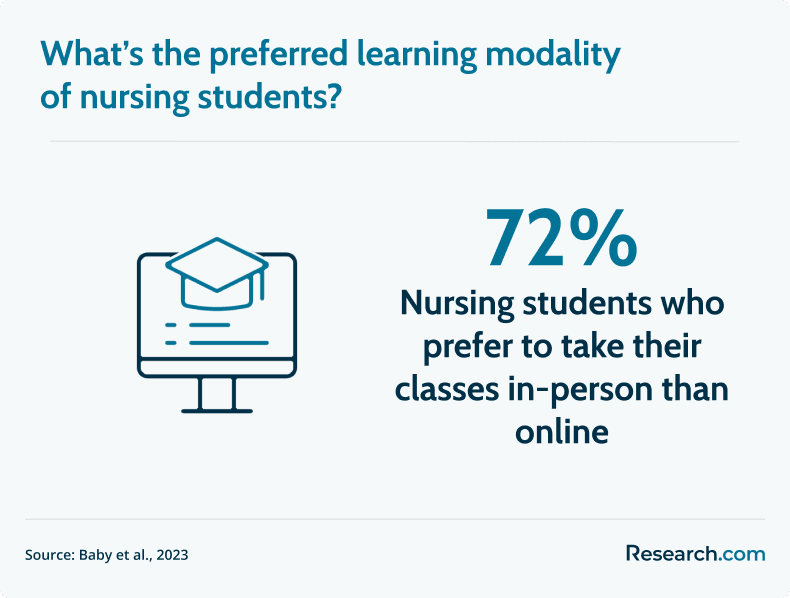
Research on nursing students shows mixed preferences. Despite acknowledging that online classes met expectations, 72% of undergraduate nursing students reported preferring traditional in-person classes over online learning (Baby et. al., 2023). Another study found that online courses were preferred for flexibility (46.1%) and access to study materials (46.5%), while in-person learning led in perceived knowledge acquisition (44.9%), clinical skills (52.7%), and social competencies (52.7%) (Siddiqui et al., 2024).
The right choice depends on your schedule, support needs, learning style, and local clinical options. A convenient online program is not a good choice if it cannot support the clinical training or state authorization required where you live.
What is the average cost of an Online CNA to RN degree program?
The cost of an online CNA to RN bridge program depends on the degree level, institution type, transfer credits, residency status, program length, and required fees. Tuition for an online ADN commonly ranges from $6,000 to $20,000 at public colleges and up to $40,000 or more at private institutions.
Students pursuing a BSN through a bridge or transfer pathway can expect costs between $15,000 and $50,000, depending on the school and the number of accepted transfer credits. These estimates often do not include textbooks, uniforms, background checks, immunizations, lab supplies, clinical fees, insurance, technology fees, or NCLEX-RN exam-related costs. Students should also budget for lab fees, insurance, and exam fees (National Center for Education Statistics, 2023).
| Cost category | Why it matters |
| Tuition per credit | The headline price can change significantly based on required credits and transfer acceptance |
| Residency rate | Public colleges may charge different rates for in-state and out-of-state students |
| Clinical expenses | Students may need transportation, uniforms, background checks, health screenings, and supplies |
| Licensure costs | NCLEX-RN preparation, application fees, and state board fees can add to total expenses |
| Lost work time | Clinical rotations and labs may require schedule changes or reduced work hours |
Community colleges and in-state public institutions are often the lowest-cost options, but online pricing varies. Before enrolling, request a full cost sheet from each school and ask which expenses are mandatory.
What are the financial aid options for students enrolling in an Online CNA to RN degree program?
Students pursuing a CNA to RN bridge program, an ADN, an ASN, a BSN, or even a licensed practical nurse career path may be able to use several funding sources. Eligibility depends on school accreditation, enrollment status, financial need, citizenship or residency status, and program approval.
- Federal Aid. Submit the Free Application for Federal Student Aid (FAFSA) to determine eligibility for federal aid such as Pell Grants and federal student loans. Pell Grants are need-based and do not require repayment, while loans must be repaid with interest.
- Scholarships and Grants. Nursing students can look for awards through schools, state agencies, professional associations, hospitals, and community organizations. The American Association of Colleges of Nursing (AACN) lists scholarships through its Foundation for Academic Nursing, including opportunities connected to the American Assembly for Men in Nursing Foundation, American Association of Post-Acute Care Nursing, and the American Indian Graduate Center (AIGC), among others. The Nurse Corps Scholarship Program covers full education costs in exchange for service in high-need areas.
- Payment Plans. Some schools offer interest-free installment plans that spread tuition payments across a term.
- Employer Assistance. Healthcare employers may offer tuition reimbursement or prepaid tuition for employees moving into higher-need nursing roles.
The table below shows the percentage of students in Less-than-2-year programs awarded financial aid for public and private institutions.
Financial Aid Applicants Awarded in A.Y. 2022 - 2023
| Public Less-than-2-year programs | Private For-profit Less-than-2-year programs | |
| Federal Pell grants | 40.2% | 66.4% |
| Federal loans | 12.8% | 66.6% |
| State/local grants and scholarships | 27.2% | 3.7% |
Source: NCES, 2023
What are the prerequisites for enrolling in an Online CNA to RN degree program?
Admission requirements differ by school and state, but most CNA to RN bridge programs expect students to show both academic readiness and clinical suitability. Common prerequisites include:
- An active CNA credential in good standing, recognized by the state board.
- A high school diploma or GED.
- A minimum cumulative GPA, often at least 2.5–2.75.
- Completed prerequisite courses such as anatomy and physiology, microbiology, developmental psychology, and basic math.
- Entrance exam scores, such as the Test of Essential Academic Skills (TEAS), or a comparable exam when required.
- Official transcripts from high school and previous colleges.
- A personal essay, statement of purpose, or interview in some programs.
- Documentation of paid or volunteer healthcare experience, when requested.
- Background check, drug screening, immunization records, CPR certification, and health documentation before clinical placement.
Do not assume that CNA experience alone guarantees admission. Competitive nursing programs often weigh science grades, entrance exam performance, healthcare experience, and available clinical seats.
What courses are typically in an Online CNA to RN degree program?
CNA to RN bridge coursework moves students from basic bedside support into registered nursing judgment, care planning, medication safety, leadership, and patient education. Common courses include:
- Anatomy and Physiology. Study of body systems, structure, and function.
- Microbiology. Introduction to microorganisms, infection processes, and disease prevention.
- Pharmacology. Medication actions, safe administration, dosage principles, and drug interactions.
- Nursing Fundamentals. Core nursing skills, patient safety, documentation, and evidence-based care.
- Health Assessment. Techniques for collecting, interpreting, and documenting patient data.
- Nutrition. Foundational concepts also seen in nutrition degree online coursework, including diet, health status, and patient education.
- Maternal and Pediatric Nursing. Nursing care for pregnant patients, newborns, infants, children, and families.
- Mental Health Nursing. Care for patients with psychiatric and behavioral health needs.
- Leadership and Ethics. Delegation, professional accountability, legal issues, and team-based decision-making.
- NCLEX-RN Prep. Structured review and testing strategies for the RN licensure exam.
All RN-preparation programs also require supervised clinical experiences. These clinical hours help students apply nursing theory in real patient-care environments under approved supervision.
What types of specializations are available in Online CNA to RN degree programs?
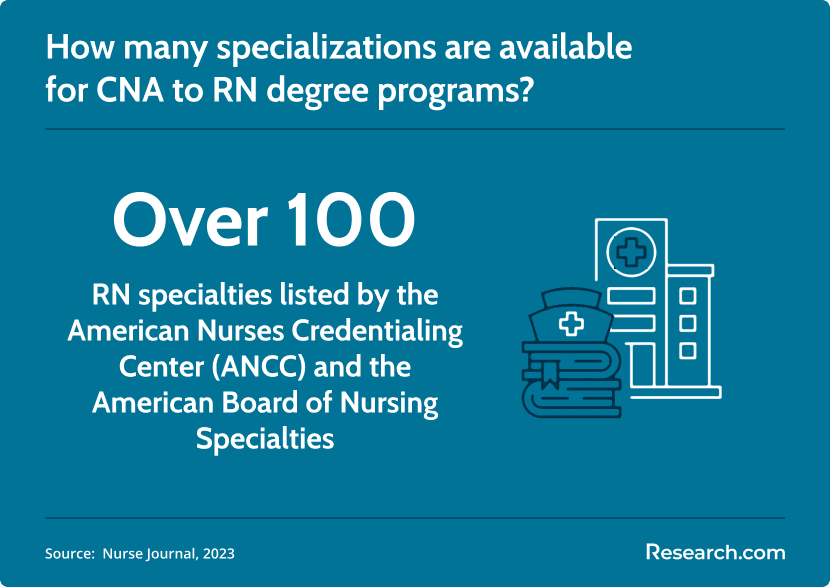
Most CNA to RN programs do not offer deep specialization at the pre-licensure level. Instead, students complete broad nursing coursework and clinical rotations that introduce major areas of practice. Specialization usually happens after RN licensure through work experience, certifications, BSN completion, graduate education, or employer training.
Common focus areas include:
- Medical-Surgical Nursing. Care for adults with acute and chronic conditions, including preoperative and postoperative needs.
- Mental Health and Psychiatric Nursing. Support for patients with behavioral health conditions through assessment, communication, crisis response, and medication-related care.
- Pediatric Nursing. Nursing care for infants, children, and adolescents, with attention to development, family education, and age-appropriate communication.
- Obstetric and Women’s Health Nursing. Care related to pregnancy, labor, delivery, postpartum recovery, and newborn health.
- Community and Public Health Nursing. Students who ask what does a community health nurse do will find that this area focuses on prevention, education, screenings, and population health in schools, clinics, health departments, and community settings.
- Geriatric and Long-Term Care Nursing. Support for older adults in long-term care, rehabilitation, assisted living, and home-care settings.
- Emergency and Critical Care Nursing. Fast-paced care for patients with serious injuries, acute illness, or life-threatening conditions.
- Leadership, Informatics, and Case Management. Focus areas for nurses interested in team coordination, care planning, healthcare data, and quality improvement. Students considering leadership roles can also explore what does a clinical nurse leader do.
Are Online CNA to RN Programs Accredited and Recognized?
Accreditation is one of the first things to verify before applying. It helps confirm that a nursing program meets recognized academic and clinical standards, and it can affect financial aid eligibility, transfer credits, employer recognition, graduate school options, and state licensure review.
Prospective students should look for programmatic accreditation from recognized nursing accreditors such as the Accreditation Commission for Education in Nursing (ACEN) or the Commission on Collegiate Nursing Education (CCNE), when applicable. Institutional accreditation also matters. If you plan to continue into BSN completion later, compare costs and pathways using resources such as How much is a RN to BSN program?.
Accreditation alone is not enough. Also confirm state authorization, NCLEX-RN eligibility, clinical placement rules, and whether the program is accepted by the nursing board in the state where you want to be licensed.
What challenges might students encounter during their Online CNA to RN program?
Online CNA to RN students often face the same academic pressure as campus students, with added responsibility for managing their own time. The most common challenges include arranging clinical placements, balancing work shifts with coursework, staying motivated in an online format, and understanding state-specific licensure rules.
| Challenge | Why it matters | What to ask before enrolling |
| Clinical placement | Students cannot become RNs through online coursework alone | Does the school secure local clinical sites, or must I find my own? |
| Time management | Nursing courses, labs, exams, and clinicals can conflict with CNA shifts | Can I complete the program part-time or adjust my course load? |
| Limited face-to-face support | Online students may have fewer informal mentoring opportunities | How often can I meet with faculty, advisors, tutors, or success coaches? |
| State licensure rules | Not every program is approved for every state | Will this program make me eligible for NCLEX-RN and licensure in my state? |
| Technology demands | Online testing, simulations, and learning platforms require reliable access | What software, equipment, and technical support are required? |
Applicants should review NCLEX-RN pass rates, completion timelines, advising quality, and job placement support. Students comparing admissions accessibility and support structures may also find it useful to review the easiest BSN program as one reference point.
Can Advanced Certifications Enhance Your Nursing Career After a CNA to RN Program?
Advanced certifications can help RNs build expertise after licensure, especially in areas such as critical care, emergency nursing, oncology, pediatrics, case management, informatics, or public health. Certifications may improve competitiveness for specialized positions, but they usually require RN experience and sometimes additional education.
For nurses who want to move beyond RN practice into advanced clinical roles, graduate education may be more important than a short certification. For example, nurses interested in primary care may later compare online FNP programs affordable options. The best credential depends on your target role, employer requirements, accreditation, clinical-hour expectations, and long-term career plan.
Is an Online CNA to RN Bridge Program Worth the Investment?
An online CNA to RN bridge program can be worth the investment when it is accredited, affordable for your budget, approved for licensure in your state, and realistic for your work and family schedule. The clearest financial argument is the wage gap between CNAs and RNs: as of May 2024, the median annual wage for RNs was $93,600, compared with approximately $42,160 annually for CNAs as of January 2025.
However, ROI depends on more than salary. Students should compare tuition, fees, transfer credits, commuting costs for clinicals, lost work hours, NCLEX-RN pass rates, completion rates, and employer tuition assistance. A low-tuition program may not be a good value if it has weak clinical support or does not meet state licensure rules.
Students who plan to pursue advanced nursing roles later may also consider whether the program creates a smooth pathway into BSN, MSN, or nurse practitioner education, including specialized options such as the quickest women's health nurse practitioner programs online.
How to choose the best Online CNA to RN degree program?
The best online CNA to RN program is not simply the cheapest or fastest option. It is the program that can get you to RN licensure safely, affordably, and without creating unnecessary barriers. Use the following checklist before applying:
- Confirm accreditation. Look for recognized nursing accreditation such as ACEN or CCNE when applicable, along with institutional accreditation.
- Verify state approval. Ask whether graduates are eligible for NCLEX-RN and RN licensure in your state.
- Review NCLEX-RN pass rates. Strong pass rates can indicate effective preparation. State-specific pass-rate information may be available through the National Council of State Boards of Nursing (NCSBN).
- Compare total cost, not only tuition. Include fees, clinical expenses, technology, textbooks, licensure costs, and possible income reduction.
- Ask about clinical placement support. This is especially important for online students who live far from campus.
- Evaluate schedule flexibility. Working CNAs should confirm whether classes are asynchronous, whether part-time study is allowed, and how labs or clinicals are scheduled.
- Check transfer-credit rules. Ask exactly how CNA training, prior college courses, or previous healthcare coursework will be evaluated.
- Understand financial aid options. Use the Federal Student Aid Office to learn about federal loans, grants, and work-study options.
Common mistakes to avoid
- Choosing a program before checking licensure eligibility. Always confirm that the program meets requirements in the state where you plan to practice.
- Assuming online means no campus or clinical attendance. RN preparation requires hands-on clinical experience.
- Comparing only tuition. Fees, supplies, testing costs, and clinical travel can change the real price.
- Ignoring NCLEX-RN outcomes. Graduation is not enough; you must be prepared to pass the licensure exam.
- Relying only on rankings. Rankings can help you build a shortlist, but your final decision should reflect accreditation, clinical support, cost, schedule, and state approval.
- Assuming CNA experience will automatically reduce credits. Schools set their own transfer and prior-learning policies.
What career paths are available for graduates of Online CNA to RN degree programs?
After earning RN licensure, graduates can pursue direct-care and coordination roles across many healthcare settings. Demand for RNs is projected to increase 6% by 2032. According to the U.S. Bureau of Labor Statistics (BLS), RNs work in hospitals, outpatient clinics, nursing homes, schools, public health departments, telehealth, case management, and home healthcare (BLS, 2024).
Common paths include:
- Staff Nurse. Provides direct nursing care in hospitals, clinics, rehabilitation facilities, and other healthcare settings.
- Pediatric, Geriatric, or Psychiatric Nurse. Specializes in care for children, older adults, or patients with mental health needs. Students comparing support roles and nursing roles should understand the difference between LPN and CNA as well as how RN responsibilities differ.
- Public Health Nurse. Supports prevention, education, outreach, immunization, and community wellness programs.
- Home Health Nurse. Provides skilled care to patients in their homes, often after hospitalization or during chronic-condition management.
- Charge Nurse or Nurse Manager. Oversees staff, assignments, workflow, and patient-care coordination within a unit.
- Case Manager. Coordinates services, discharge plans, care transitions, and treatment resources for patients.
- Nurse Educator. Teaches or mentors nursing students, new nurses, or healthcare staff. Some educator roles require additional academic preparation; students can review masters in education requirements for a broader look at graduate-level education expectations.
The chart below shows the projected demand growth for Healthcare jobs from 2023 - 2033. The 6% for RNs translates to approximately 194,500 new jobs over the decade.
What is the job market for graduates with an Online CNA to RN degree?
The RN job market remains favorable compared with many occupations. Students often research How much does a BSN nurse make because degree level, employer type, and specialty can affect long-term earnings. The BLS reports that RN employment is projected to grow 6% from 2023 to 2033, supported by an aging population, chronic health needs, and continued emphasis on preventive care.
As of May 2024, the median annual wage for RNs was $93,600, compared with the $49,500-median annual wage for all occupations. RN opportunities exist in hospitals, clinics, long-term care, public health, home healthcare, and telehealth.
Nurses who continue into advanced roles such as nurse practitioners may see even stronger demand, with these positions projected to grow 40% by 2033. Career advancement usually requires additional education, certification, and experience (BLS, 2024).
Military spouses comparing portable education options can also review the best online schools for military spouses.
What advanced academic opportunities are available after an Online CNA to RN program?
After becoming an RN, graduates can continue into higher nursing credentials based on career goals. Common next steps include RN to BSN completion, Master of Science in Nursing (MSN) programs, nurse practitioner tracks, nursing leadership programs, nurse education programs, and doctoral study.
MSN programs may offer focused preparation in areas such as critical care, anesthesia, public health, leadership, or advanced practice. Nurses seeking the highest levels of clinical leadership or administrative responsibility may consider doctoral pathways. Those who want an accelerated doctoral route can compare the fastest online DNP programs while paying close attention to clinical requirements, accreditation, state authorization, and workload.
Questions to Ask Before Enrolling
- Is this program a true CNA to RN pathway, an ADN/ASN program, a BSN transfer route, an ABSN, or an RN to BSN program?
- Will completing this program make me eligible to take the NCLEX-RN in my state?
- Who arranges clinical placements, and how far might I need to travel?
- How many credits will transfer from my previous coursework or CNA training?
- What is the full estimated cost, including fees, supplies, testing, and clinical requirements?
- What are the program’s NCLEX-RN pass rates and completion outcomes?
- Can I continue working as a CNA while enrolled, or will clinical schedules require reduced hours?
- What student support is available online, including tutoring, advising, technical support, and career services?
Here’s What Graduates Have to Say About Their Online CNA to RN Degree
-
: "
"Going from a certified nursing assistant to a registered nurse online allowed me to keep working while earning my license. Now, as an RN in a pediatric unit, I not only earn almost double what I did before, but I get to make a bigger impact on families every day." -Alyssa
"
-
: "
"The flexibility of the online bridge program meant I could study at night after my shifts. Becoming a licensed nurse has opened doors to roles and positions I never thought possible, and it’s been the most rewarding leap in my career." -Josiah
"
-
: "
"I was worried about the cost of going back to school, but the online CNA to RN bridge program was far more affordable than I expected. Now, as a nurse, I’m earning over $90,000 a year. That’s almost a 100% increase in my old salary." -Elena
"
Key Insights
- Online CNA to RN programs are hybrid by nature. Coursework may be online, but labs and clinical training must be completed in person for RN preparation.
- The fastest program is not always the best choice. Programs can take 10 months to five years, but licensure approval, clinical placement support, and NCLEX-RN preparation matter more than speed alone.
- Costs vary widely. According to 2023 data from the National Center for Education Statistics (NCES), online ADN programs commonly cost $6,000 to $20,000 at public institutions and up to $40,000 or more at private schools. A 6 month RN to BSN program may cost between $15,000 and $50,000, depending on institution type and residency status.
- RN licensure can substantially improve earnings. As of May 2024, registered nurses had a median annual wage of $93,600, while CNAs earned about $42,160 annually as of January 2025.
- Learning format is a real decision point. 73.3% of undergraduate nursing students preferred traditional in-person classes over online learning, even though online options were valued for flexibility (46.1%) and easier access to study materials (46.5%).
- Job prospects are steady. RNs are needed in hospitals, clinics, long-term care, home health, public health, telehealth, and case management, with 6% growth projected until 2032.
- Accreditation and state approval are non-negotiable. Before applying, verify nursing accreditation, institutional accreditation, NCLEX-RN eligibility, state authorization, and clinical placement requirements.
References:
- 2024 NCLEX Pass Rates | NCSBN. (2024). NCSBN. https://www.ncsbn.org/publications/2024_NCLEX_Pass_Rates
- Ba, T. C. (2025, March 25). Find Online Nursing Programs with Financial Aid. EduMed. https://www.edumed.org/online-schools/nursing-rn-programs/financial-aid/
- Baby, Priya; Philip, Angelina; Simon, Anna E.; Sibi, Ann M.; Shaju, Anitta M.; Abraham, Ann M.; Kathyayani, B. V.. Undergraduate Nursing Students’ Experiences of Attending Online Classes During the COVID-19 Pandemic. Education in the Health Professions 6(1):p 42-45, Jan–Apr 2023. | DOI: 10.4103/EHP.EHP_25_22. https://journals.lww.com/ehpf/fulltext/2023/06010/undergraduate_nursing_students__experiences_of.7.aspx
- CNA to RN Guide. (2024, July 30). Nurse.org. https://nurse.org/education/cna-to-rn/
- Kovacs, K. (2023, October 3). Guide to Nursing Specializations and Concentrations. NurseJournal.org. https://nursejournal.org/resources/nursing-specialties-guide/
- Nelson, Lara (2025, March 17). Online vs. traditional nursing programs: Which one is right for you? AFA Education Blog. https://afaeducation.org/blog/online-vs-traditional-nursing-programs-which-one-is-right-for-you/
- Number of full-time, first-time degree/certificate-seeking undergraduate students enrolled, number and percentage awarded financial aid, and average amount of financial aid awarded at Title IV institutions, by control and level of institution and type of aid awarded: United States, academic year 2022–23. (2023) U.S. Department of Education, National Center for Education Statistics, IPEDS, Student Financial Aid component (provisional data).
- Nursing assistant salary in United States. (2025). Indeed. https://www.indeed.com/career/nursing-assistant/salaries
- Registered nurses. (2025, April 18). Bureau of Labor Statistics. https://www.bls.gov/ooh/healthcare/registered-nurses.htm
- Siddiqui, A. A., Zain Ul Abideen, M., Fatima, S., Talal Khan, M., Gillani, S. W., Alrefai, Z. A., Waqar Hussain, M., & Rathore, H. A. (2024). Students' Perception of Online Versus Face-to-Face Learning: What Do the Healthcare Teachers Have to Know?. Cureus, 16(2), e54217. https://doi.org/10.7759/cureus.54217
Other Things You Should Know About CNA to RN Degree Online Bridge Programs
Most programs require a criminal background check, drug screen, CPR certification, and proof of immunizations before clinical placement. Common records include MMR, varicella, hepatitis B, influenza, and a current TB test. Clinical affiliates can deny placement without these documents.
Most 2027 CNA to RN online bridge programs require a current CNA certification, completion of specific coursework like anatomy, and a minimum GPA of 2.5. Some may also require clinical experience or completion of prerequisite science courses before admission.