2027 What Are the Requirements for a Master’s Degree in Education?

Co-Founder and Chief Data Scientist
Choosing a master’s degree in education is usually not just about earning another credential. For teachers, career changers, instructional designers, counselors, and aspiring school leaders, the bigger question is whether the program will help them qualify for the role they want, meet state licensure rules, and justify the cost and time commitment. The decision matters because education employers increasingly look for specialized training in areas such as instructional leadership, special education, curriculum design, educational technology, and student support.
According to the U.S. Bureau of Labor Statistics, employment for education administrators is projected to grow 4% from 2022 to 2032, which signals steady demand for professionals who can manage schools, improve instruction, and support student outcomes. A Master’s in Education, often called an M.Ed., can help educators move into leadership or specialist roles, but requirements vary widely by school, concentration, state, and whether the program leads to licensure.
This guide explains what you typically need to apply to a master’s in education program, how different education master’s degrees compare, what specializations lead to different careers, how long programs usually take, what they may cost, and how to evaluate return on investment before enrolling.
Quick Answer: What Do You Need for a Master’s in Education?
Most master’s in education programs require a bachelor’s degree from an accredited institution, official transcripts, a minimum GPA often around 2.75 to 3.0, letters of recommendation, a résumé, and a statement of purpose. Some programs also ask for teaching experience, state teacher certification, prerequisite coursework, GRE scores, or English proficiency scores for international applicants. Licensure-focused tracks may have stricter requirements than non-licensure programs.
Key Things You Should Know About Master’s in Education Requirements
- Admission usually starts with a bachelor’s degree, transcripts, recommendation letters, and a GPA that commonly falls in the 2.75 to 3.0 range. More selective or licensure-based programs may also require teaching credentials, field experience, or standardized test scores.
- The M.Ed., MAT, MST, MAEd, MA in Education, and MS in Education are not interchangeable. The M.Ed. often supports leadership, policy, administration, or specialist roles; the MAT and MST generally emphasize classroom teaching and certification; and MA or MS programs may place more weight on theory, research, or preparation for doctoral study.
- Many full-time students finish in 1.5 to 2 years, while accelerated options may take about 12 to 18 months. Part-time and online formats are common for working educators who need to continue teaching while enrolled.
- Common concentrations include Educational Leadership, Special Education, Curriculum and Instruction, Educational Technology, School Counseling, Literacy, TESOL/ESL, and Higher Education Administration. The right choice depends on whether you want to teach, lead, advise, design curriculum, or move into another education-related role.
- Total tuition can range from $10,000 to $50,000+, depending on the institution, residency rules, delivery format, and program length. Scholarships, TEACH Grants, employer support, and loan forgiveness programs can reduce the amount students pay out of pocket.
- Typical admission requirements for a master’s in education
- Undergraduate degrees that can qualify you for an education master’s
- Types of master’s degrees in education and how they differ
- Popular master’s in education specializations
- How long a master’s in education usually takes
- Typical cost of a master’s degree in education
- Scholarships and funding options for education graduate students
- Jobs you can pursue with a master’s in education
- Average salaries for master’s in education graduates
- How to assess the ROI of a master’s in education
- How to judge the quality of a master’s in education program
- Advanced degrees after a master’s in education
- How to find affordable, high-quality online programs
- Challenges to expect while earning the degree
- Careers beyond traditional teaching
- Common mistakes to avoid when choosing a program
What are the typical admission requirements for a master's in education program?
A master’s in education program usually requires proof that you are academically prepared for graduate-level work and professionally aligned with the field of education. Most schools ask for a bachelor’s degree from an accredited college or university, official transcripts, a current résumé, a statement of purpose, and two or more letters of recommendation. Applicants often come from an education degree background, but many programs also accept students from other majors if their goals match the program.
GPA standards vary, but many programs list a minimum undergraduate GPA around 2.75 to 3.0. Some schools review applications holistically, meaning a lower GPA may be considered alongside strong teaching experience, professional recommendations, or a compelling personal statement. GRE scores may still appear in some admissions policies, but many practitioner-focused and online education programs no longer require them.
Requirements become more specific when the degree connects to licensure. For example, an educational leadership program may require an active teaching license and classroom experience. A school counseling track may require background checks, practicum eligibility, or prerequisite coursework. A special education licensure pathway may ask applicants to meet state certification rules before entering advanced field placements.
| Requirement | What It Usually Shows | When It Matters Most |
| Bachelor’s degree | You have completed undergraduate study at an accredited institution. | Required for nearly all programs. |
| Minimum GPA | You can handle graduate-level reading, writing, and research. | Important for competitive programs and scholarship consideration. |
| Letters of recommendation | Faculty, supervisors, or administrators can speak to your readiness and professionalism. | Especially useful for applicants with classroom or school-based experience. |
| Statement of purpose | You understand why you want the degree and how it fits your career goals. | Critical when changing careers or applying to a specialized track. |
| Teaching license or experience | You meet professional prerequisites for leadership or specialist roles. | Often required for principal, administrative, or advanced teaching tracks. |
| English proficiency scores | You can complete graduate work in English. | Common for international applicants. |
Before applying, read each program’s admission page carefully and confirm whether the degree leads to initial licensure, added certification, professional advancement, or a non-licensure credential. That distinction affects both the admission requirements and the career value of the program.
What undergraduate degrees qualify for a Master's in Education?
The most direct path into a master’s in education is a bachelor’s degree in education, early childhood education, elementary education, secondary education, special education, or a closely related teaching field. These majors usually include coursework in pedagogy, classroom management, curriculum planning, child or adolescent development, and educational psychology, so they align naturally with graduate-level education study. In the academic year 2021-22, a total of 89,410 bachelor's degree in education were conferred.
However, an undergraduate education major is not always required. Many schools admit applicants with degrees in English, mathematics, biology, chemistry, history, psychology, sociology, the arts, public administration, or business, depending on the program’s purpose. This is especially common in programs for career changers, alternative teacher preparation, higher education administration, education policy, learning design, and adult education.
If you do not already hold a teaching degree or license, the key question is whether the master’s program is designed for your starting point. Some programs are built for licensed teachers who want to advance. Others are designed for people entering education careers for the first time. A non-education bachelor’s degree can be acceptable, but the school may require prerequisite courses, content-area testing, supervised fieldwork, or a longer program timeline.
| Undergraduate Background | Best-Fit Master’s Options | Possible Extra Requirements |
| Education or teaching major | M.Ed., curriculum and instruction, educational leadership, special education, literacy | Teaching license may be required for advanced licensure tracks. |
| Subject-area major such as English, math, science, or history | MAT, MST, secondary education, initial certification programs | Subject testing, student teaching, or prerequisite pedagogy courses may apply. |
| Psychology, sociology, or human services | School counseling, student support, special education, higher education student affairs | Field placement, background checks, or licensure prerequisites may be required. |
| Business, public administration, or communications | Higher education administration, education policy, training and development | Education-related experience can strengthen the application. |
| Technology, design, or media | Instructional technology, learning design, educational technology | Portfolio samples or technical experience may be useful. |
What are the different types of master's degrees in education?
Education master’s degrees differ by purpose. Some prepare licensed teachers for leadership or specialist roles. Others prepare career changers to enter the classroom. Some focus on research, policy, curriculum, counseling, or administration rather than teaching directly. Choosing the wrong degree type can delay licensure, limit job eligibility, or reduce return on investment.
The Master of Education, or M.Ed., is commonly used by practicing educators who want to move into curriculum leadership, school administration, instructional coaching, special education, educational technology, or policy-related work. An M.Ed. may or may not lead to teacher licensure, so students should not assume it automatically qualifies them to teach.
The Master of Arts in Teaching and Master of Science in Teaching are usually more classroom-focused. These degrees often emphasize instructional methods, subject-area pedagogy, classroom assessment, and supervised teaching practice. They may be a better fit for people who want initial teacher certification or more direct preparation for K–12 instruction.
The Master of Arts in Education, Master of Science in Education, and MAEd can vary by institution. Some resemble an M.Ed.; others are more research-oriented and may suit students interested in curriculum theory, education research, policy analysis, or eventual doctoral study.
| Degree Type | Primary Focus | Best For | Licensure Consideration |
| M.Ed. | Leadership, administration, curriculum, policy, or specialist practice | Current educators seeking advancement or specialization | May not lead to initial licensure unless explicitly designed to do so. |
| MAT | Teaching methods, classroom practice, and student teaching | Career changers and future teachers | Often connected to initial teacher certification. |
| MST | Teaching practice with a strong content or STEM emphasis | Prospective or current teachers in specific subject areas | May support certification depending on state and program design. |
| MAEd | Education theory, applied practice, and sometimes research | Educators who want a balance of practice and scholarship | Varies by institution and concentration. |
| MA or MS in Education | Research, policy, curriculum, or disciplinary study | Students considering doctoral study, research, or non-classroom roles | Not automatically a licensure pathway. |
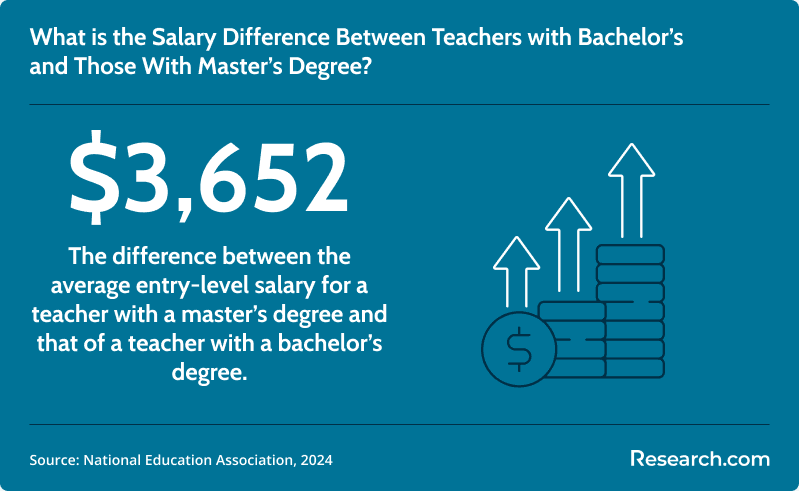
Salary outcomes depend on role, state, district pay schedules, years of service, and credentials. The average salary for high school teachers with a master’s degree ranges from $60,000 to $90,000 per year, depending on experience, location, and subject area. Elementary school teachers with a master’s degree typically earn between $55,000 and $80,000 annually. Students comparing flexible options may also want to review affordable online course options before choosing a program format.
Earning a master’s in education can improve advancement opportunities, but it should be tied to a specific professional goal rather than pursued simply because it is available. The chart below summarizes salary ranges for elementary and high school teachers with a master’s degree.
What are the popular specializations within a master's in education?
The specialization is often more important than the degree title because it determines the courses you take, the field experiences you complete, and the roles you may qualify for after graduation. A general M.Ed. can be useful, but a targeted concentration may create a clearer path to leadership, licensure, instructional design, counseling, literacy intervention, or special education.
- Curriculum and Instruction: Best for teachers who want to design curriculum, improve instructional strategies, support assessment practices, or become instructional coaches.
- Educational Leadership or Administration: Designed for educators pursuing roles such as principal, assistant principal, school administrator, or district-level leader. Students comparing cost-conscious options can review the most affordable online educational leadership programs.
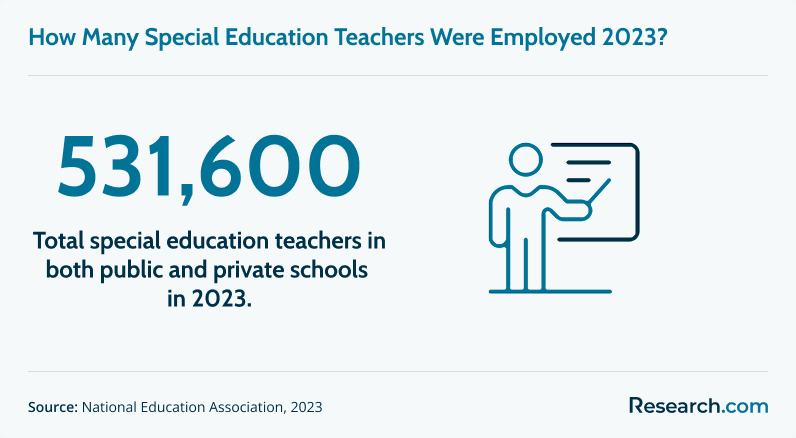
- Special Education: Focuses on individualized instruction, disability law, behavioral supports, assessment, and collaboration with families and service providers. In 2023, there were 531,600 special education teachers in both public and private schools.
- Instructional Technology or Educational Technology: Prepares educators to select, design, and evaluate digital learning tools, online courses, learning platforms, and technology-supported instruction.
- School Counseling: Prepares students to support academic planning, social-emotional development, college readiness, and student well-being. This path often has licensure or certification requirements.
- Higher Education Administration: Fits students interested in academic advising, admissions, student affairs, enrollment management, residence life, or college administration.
- Literacy and Reading Specialist: Trains educators to assess reading challenges, design intervention programs, coach teachers, and support literacy development across grade levels.
- TESOL/ESL: Focuses on teaching English language learners, language acquisition, culturally responsive instruction, and assessment. English language instruction for non-native speakers is a $63 billion-a-year industry.
- Early Childhood Education: Centers on developmentally appropriate teaching for young children from birth through age 8, including play-based learning, family engagement, and early literacy.
- Adult and Continuing Education: Supports careers in community colleges, workforce training, corporate learning, adult literacy, professional development, and lifelong learning programs.
| If Your Goal Is... | Consider This Specialization | Check Before Enrolling |
| Become a principal or school leader | Educational Leadership or Administration | State principal licensure rules and required teaching experience. |
| Work with students with disabilities | Special Education | Whether the program leads to added endorsement or certification. |
| Move into instructional coaching | Curriculum and Instruction or Literacy | Fieldwork, coaching practice, and district recognition. |
| Design online or digital learning | Instructional Technology | Portfolio opportunities and experience with current learning platforms. |
| Support student development | School Counseling or Higher Education Administration | Licensure, practicum hours, and placement support. |
If you are comparing education with a different graduate field, such as engineering, it may help to review how degree types affect outcomes in other disciplines, including this guide to MEng vs MS salary.
How long does it typically take to complete a master's in education program?
A master’s in education commonly takes one to two years of full-time study, although the actual timeline depends on credit requirements, concentration, licensure requirements, and whether the student enrolls full time or part time. Full-time students may finish in about 12 to 18 months, particularly in accelerated or online programs. Part-time students often take two to three years because they are balancing coursework with teaching, family responsibilities, or school leadership duties.
Programs that include initial teacher certification, school counseling licensure, administrative licensure, or special education endorsements may take longer because of practicum placements, student teaching, supervised internship hours, or state testing. Online programs can add flexibility, but they may still require in-person fieldwork in approved schools or agencies. If flexibility is your top priority, compare online teaching degree programs carefully and confirm whether local placements are available in your state.
| Enrollment Format | Typical Timeline | Best For | Trade-Off |
| Accelerated full-time | About 12 to 18 months | Students who can handle a heavy course load | Less flexibility and more intense deadlines. |
| Standard full-time | About 1.5 to 2 years | Students who want a steady graduate pace | May be difficult while teaching full time. |
| Part-time | Often two to three years | Working teachers and administrators | Longer time before career benefits may appear. |
| Licensure or counseling track | May extend beyond standard timelines | Students who need certification, endorsement, or supervised practice | Field placements can limit scheduling flexibility. |
How much does a master's degree in education typically cost?
The price of a master’s in education depends on the school, residency classification, program length, delivery format, and fees. Public universities often charge less than private institutions, especially for in-state students. Tuition commonly ranges from $10,000 to $30,000 for the entire program at public universities, while private institutions may charge between $25,000 and $50,000 or more.
Residency status can make a major difference at public institutions, so applicants should review state rules before assuming they qualify for in-state tuition. A helpful starting point is this overview of state residency status. Some online programs charge a flat tuition rate regardless of residency, while others keep separate in-state and out-of-state rates.
Tuition is only part of the full cost. Students should also budget for technology fees, course materials, background checks, certification exams, travel to practicum sites, graduation fees, and possible lost income if they reduce work hours. For working educators, an online or part-time format may improve affordability by allowing continued employment while enrolled.
| Cost Factor | Why It Matters | Question to Ask |
| Tuition | This is the largest direct program expense. | Is tuition charged by credit, semester, cohort, or flat program rate? |
| Residency status | Public universities may charge different rates for in-state and out-of-state students. | Does the online program offer the same rate to all students? |
| Fees | Technology, advising, clinical placement, and graduation fees can add to the total. | What is the full estimated cost of attendance? |
| Licensure expenses | Testing, background checks, and field placement costs may be required. | Which licensure-related costs are not included in tuition? |
| Work schedule | Reducing work hours can increase the real cost of the degree. | Can I keep my current job while completing the program? |
Are there scholarships available for master's in education students?
Yes. Master’s in education students may qualify for institutional scholarships, federal grants, state programs, nonprofit awards, professional association scholarships, employer tuition assistance, and loan forgiveness options. Broad scholarship databases, including scholarships available for master's degree students, can be useful, but education students should also search by specialization, state, district, subject shortage area, and service commitment.
TEACH Grant
- Award: Up to $4,000 per year
- Requirements: Students must enroll in a TEACH Grant-eligible program and agree to teach in a high-need field at a low-income school for at least four years within eight years of graduation.
James Madison Graduate Fellowships
- Award: Up to $24,000
- Requirements: Intended for current or future secondary school teachers of American history, government, or civics who agree to teach after earning the degree.
Knowles Teaching Fellows Program
- Award: Up to $150,000 in financial and professional development support over five years
- Requirements: Designed for STEM graduates preparing to teach at the high school level and enrolled in a teaching credential program.
Pi Lambda Theta Scholarships through PDK International
- Award: Varies, often between $500 and $1,000
- Requirements: Applicants generally must belong to Pi Lambda Theta, enroll in an education-related graduate program, and show academic achievement and leadership potential.
Fulbright Distinguished Awards in Teaching Program for International Teachers
- Award: Fully funded travel, tuition, and living expenses
- Requirements: Supports international educators pursuing graduate-level research in the U.S.; applicants typically need teaching experience and leadership potential.
National Board for Professional Teaching Standards Scholarships
- Award: Varies depending on the partner organization
- Requirements: Often connected to professional development, advanced certification, or National Board-related goals.
State-Specific Scholarships and Loan Forgiveness Programs
- Award: Varies by state
- Requirements: Many programs require graduates to teach in shortage areas, high-need schools, or specific subjects in the sponsoring state. Examples include the New York State Math & Science Teaching Incentive Program and California’s Golden State Teacher Grant.
When comparing funding options, read the service obligation closely. A grant that becomes a loan if requirements are not met can be valuable for the right student but risky for someone unsure about teaching in a required location or subject area. The chart below highlights selected scholarships and eligibility details for students pursuing a master’s in education.
What jobs can you get with a master's degree in education?
A master’s degree in education can lead to classroom, school leadership, student support, curriculum, consulting, and higher education roles. The best job fit depends on your specialization, state credentials, prior experience, and whether your program is connected to licensure. Students comparing flexible and lower-cost routes may want to start with accredited online teaching degree programs.
Instructional Coordinator
Instructional coordinators help schools evaluate curriculum, align instruction with standards, support teachers, analyze assessment data, and recommend improvements. This role often fits educators who enjoy both teaching and systems-level improvement.
School Administrator
Principals, assistant principals, and other school administrators manage school operations, supervise staff, support instruction, oversee student discipline, communicate with families, and implement district policies. Many states require administrative licensure for these roles.
Special Education Teacher
Special education teachers design and deliver instruction for students with disabilities, write or implement Individualized Education Programs, adapt lessons, monitor progress, and collaborate with families, paraprofessionals, therapists, and general education teachers.
Education Consultant
Education consultants may advise schools, districts, nonprofits, publishers, or edtech companies on curriculum, teacher training, assessment, technology adoption, intervention models, or program evaluation. Independent consulting usually requires a strong professional track record.
College or University Academic Advisor
Academic advisors help college students choose courses, understand degree requirements, create academic plans, address progress issues, and connect with campus resources. This path often fits graduates interested in student affairs or higher education administration.
If you are comparing education roles with counseling careers, you may also find it useful to review state requirements for substance abuse counselors, since licensing rules can vary significantly across helping professions.
What are the average salaries for professionals with a master's in education?
Salary after a master’s in education depends on occupation, state, district salary schedule, collective bargaining agreements, years of experience, leadership duties, and whether the role is in K–12 education, higher education, nonprofit work, government, or private industry. A master’s degree can improve eligibility for some roles, but it does not guarantee a specific salary.
| Role | Average Salary Range | What Typically Affects Pay |
| School Administrator, including principal or assistant principal | $80,000 to $120,000 | District size, location, leadership level, and years of administrative experience. |
| Instructional Coordinator | $60,000 to $75,000 | Experience, district budget, subject area, and leadership responsibility. |
| Special Education Teacher | $50,000 to $70,000 | Grade level, district pay scale, certification area, and location. |
| Higher Education Administrator | $70,000 to $110,000 | Institution type, seniority, department, and administrative scope. |
| Education Consultant | $60,000 to $90,000 | Client base, specialization, employment setting, and independent versus firm-based work. |
Benefits, stipends, summer work, leadership supplements, and extra-duty pay can also affect total compensation. Before enrolling, ask whether graduates from your target program move into the role you want and whether your state or employer provides a salary step, credential bonus, or advancement pathway for master’s degree holders.
If you are exploring other licensed helping professions, compare education salaries with fields such as therapy by reviewing this explanation of licensed marriage and family therapist salary.

How Can I Assess the Return on Investment of My Master’s in Education Program?
To evaluate ROI, compare the total cost of the degree with the specific career benefit you expect. A master’s in education can be a strong investment when it qualifies you for a required credential, moves you into a higher salary lane, prepares you for leadership, or gives you access to roles you could not pursue with a bachelor’s degree alone. It may be a weaker investment if the program is expensive, does not meet licensure rules, or does not connect to a realistic career outcome.
| ROI Factor | How to Evaluate It | Why It Matters |
| Total program cost | Add tuition, fees, materials, licensure exams, travel, and any reduced income. | A low tuition rate can still be costly if fees and fieldwork expenses are high. |
| Career goal | Identify the exact role, endorsement, license, or salary lane you want. | A general degree may not produce the same value as a targeted program. |
| Employer recognition | Ask your district or employer whether the degree affects pay or promotion. | Some employers reward graduate education more directly than others. |
| Licensure alignment | Confirm the program meets state requirements before enrolling. | A degree that does not meet licensure requirements can delay career plans. |
| Flexibility | Consider whether you can keep working while enrolled. | Maintaining income can improve ROI, even if the program takes longer. |
| Alumni outcomes | Request placement, promotion, and completion information from the school. | Program-specific outcomes are more useful than broad salary averages. |
It is also reasonable to compare education programs with other graduate pathways if you are weighing several career directions. For example, reviewing affordable online MLIS programs can help you benchmark tuition, flexibility, and career fit against another education-adjacent field.
What factors should I consider when evaluating the quality of a master's in education program?
A strong master’s in education program should match your career goal, meet accreditation and licensure expectations, provide relevant fieldwork, and offer enough support to help you finish. Do not rely only on rankings or brand recognition. A program that is highly regarded in one area may not be the best option for your state, specialization, schedule, or budget.
Accreditation
Confirm institutional accreditation first, then check whether the education program holds specialized recognition such as accreditation from the Council for Accreditation of Educator Preparation or legacy recognition connected to the National Council for Accreditation of Teacher Education. Accreditation can affect financial aid, licensure eligibility, transferability, and employer acceptance.
Licensure and State Approval
If your goal is teacher certification, principal licensure, school counseling licensure, or a special education endorsement, verify state approval directly. Online students should be especially careful because a program approved in one state may not automatically meet requirements in another.
Specialization Fit
Review the course plan, fieldwork, capstone, and electives. The concentration should clearly support your target role, whether that is instructional coach, reading specialist, principal, school counselor, higher education administrator, or learning designer.
Faculty and Practitioner Experience
Look for faculty with relevant research, school leadership, classroom, policy, counseling, or technology experience. In professional education programs, practical expertise can be just as important as academic credentials.
Program Format
Decide whether online, hybrid, or campus-based learning fits your schedule and learning style. Online programs can be convenient for working educators, while campus programs may provide stronger local networking and in-person mentoring.
Student Support
Ask about advising, field placement assistance, tutoring, writing support, career services, licensure exam preparation, and technical help. Support services can make a major difference for working adults.
Cost and Financial Aid
Compare total cost rather than tuition alone. A higher-priced program may be worth considering if it has strong placement support and licensure alignment, but a lower-cost accredited program may offer better ROI if it meets the same professional requirements.
Outcomes and Alumni Network
Ask where graduates work, how many complete the program, and whether alumni move into leadership or specialist roles. Strong district partnerships and alumni networks can help with internships, references, and job searches.
If you are comparing graduate education with healthcare pathways, review how advanced credentials function in other fields, such as the role of community health nurse, before making a final decision.
What Advanced Degrees Can Further Elevate My Career in Education?
After earning a master’s degree, some education professionals pursue a doctorate to move into senior leadership, policy, university teaching, research, or system-level improvement. The most common next step is a Doctor of Education, or EdD, which is typically practice-focused and designed for experienced educators who want to lead schools, districts, colleges, nonprofits, or education organizations.
A PhD in Education may be a better fit for students who want to conduct research, teach at the university level, or contribute to scholarship in areas such as learning sciences, education policy, curriculum theory, or educational psychology. The right choice depends on whether you want to solve applied leadership problems or focus primarily on research.
Professionals who want a shorter or more flexible doctoral route can compare EdD online programs, but they should still verify accreditation, dissertation or capstone expectations, faculty access, and whether the program is respected in their target career setting.
How Can I Identify Affordable and High-Quality Online Programs?
An affordable online master’s in education should still meet the same quality standards as a campus program. Start with accreditation, then check licensure alignment, curriculum depth, faculty access, student support, field placement procedures, and total cost. A low advertised tuition rate is not enough if the school lacks strong advising, has unclear practicum arrangements, or does not meet your state’s credential requirements.
Compare online programs by asking for the full cost of attendance, average time to completion, student support services, fieldwork requirements, technology expectations, and whether courses are asynchronous, synchronous, or cohort-based. Students who want cost benchmarks outside education can review an affordable online master degree history resource to see how pricing and flexibility compare across fields.
What challenges might I face while pursuing my master's in education?
The biggest challenge for many education graduate students is time. Teachers often enroll while managing lesson planning, grading, parent communication, professional development, and personal responsibilities. Online and accelerated formats can help with access, but they also require strong self-direction and consistent weekly study time.
Licensure-based programs add another layer of complexity because field placements, internships, background checks, and testing deadlines may not fit neatly around a full-time job. Students in leadership or counseling tracks may need access to approved school sites and supervisors. Students in online programs may also need to navigate learning management systems, video meetings, group projects, and remote faculty communication.
For students who want to move quickly, accelerated routes can be appealing, but speed should not come at the expense of licensure alignment or learning quality. If completion time is a major factor, compare options for how to fast track a teaching degree and ask whether the workload is realistic for your schedule.
Can I Expand My Career Horizons Beyond Traditional Teaching Roles?
Yes. A master’s in education can support careers outside K–12 classroom teaching, especially when the program develops transferable skills in leadership, assessment, curriculum design, learning technology, research, communication, and program evaluation. Graduates may work in higher education, nonprofit education programs, educational publishing, instructional design, workforce training, edtech, policy organizations, museums, community education, or corporate learning.
To make a nontraditional transition, choose coursework and projects that create evidence of your skills. For example, an instructional technology student should build a portfolio of learning modules or digital training materials. A curriculum student should document assessment design and instructional improvement projects. A policy-focused student should develop writing samples, data analysis work, or program evaluation experience.
Some education graduates also explore adjacent fields such as library and information science, where teaching, research, community programming, and information literacy skills can transfer well. If that path interests you, compare potential jobs for MLIS degree holders with education-focused roles.
Common Mistakes to Avoid When Choosing a Master’s in Education Program
Many students choose a program because it is convenient, familiar, or inexpensive without confirming whether it actually supports their career goal. That can lead to wasted time, extra coursework, or licensure problems. Use the checklist below before committing.
| Mistake | Why It Can Hurt You | Better Approach |
| Choosing without checking accreditation | Accreditation can affect financial aid, licensure, and employer acceptance. | Verify institutional and program-level accreditation before applying. |
| Assuming every M.Ed. leads to teaching licensure | Many M.Ed. programs are designed for already licensed educators or non-licensure roles. | Ask whether the program leads to initial certification, added endorsement, or no licensure. |
| Looking only at tuition | Fees, exams, travel, books, and lost income can change the real cost. | Compare full cost of attendance and expected out-of-pocket expenses. |
| Ignoring state requirements | Online programs may not meet licensure rules in every state. | Contact your state education agency and the program’s licensure office. |
| Choosing the wrong specialization | A mismatch can limit job options after graduation. | Start with the role you want, then choose the concentration that supports it. |
| Relying only on rankings | Rankings may not reflect affordability, placement support, or state approval. | Use rankings as one data point, not the final decision-maker. |
| Assuming salary gains are automatic | Pay increases depend on employer policies, contracts, location, and role changes. | Ask your district or employer how graduate credits affect compensation. |
What Teachers Say About Earning a Master’s Degree in Education
-
: "
Completing my Master’s in Education online made it possible to keep teaching full time while raising my family. The coursework strengthened my curriculum design skills, and the virtual format still gave me access to responsive professors and meaningful feedback. Jessica
"
-
: "
My online M.Ed. helped me move into an assistant principal position soon after graduation. The leadership courses were grounded in research, but they also connected directly to the decisions I was making every day in school. Marcus
"
-
: "
Studying online connected me with educators from different states and school systems. Those conversations broadened my perspective and helped me clarify my long-term interest in education reform. Alyssa
"
References
- Bureau of Labor Statistics. (n.d.). Elementary, middle, and high school principals, Occupational Outlook Handbook.
- Educators 4 Excellence. (2024, June). 2024 voices from the classroom: Educators’ perspectives on the state of the profession.
- National Center for Education Statistics. (n.d.). Table 325.40. Degrees conferred in education by level of degree and sex of student: 2010-11 through 2022-23, Digest of Education Statistics.
- National Association of Elementary School Principals. (n.d.). A 10-year study of the principalship.
- O*NET Online. (n.d.). Education Administrators, Elementary and Secondary School.
Key Insights
- A master’s in education is most valuable when it is tied to a clear goal, such as teacher certification, a leadership license, a specialist endorsement, instructional coaching, counseling, higher education administration, or education technology work.
- Admission requirements usually include a bachelor’s degree, transcripts, a résumé, recommendation letters, a statement of purpose, and a GPA often around 2.75 to 3.0; licensure tracks may require teaching credentials or field experience.
- Degree type matters. An M.Ed. often supports advancement or specialization, while an MAT or MST is usually more focused on classroom preparation and initial teaching certification.
- Full-time students may finish in about 12 to 18 months, but part-time, licensure, counseling, and fieldwork-heavy programs can take longer.
- Costs vary widely, with public university tuition commonly ranging from $10,000 to $30,000 and private institutions often charging $25,000 to $50,000 or more.
- Before enrolling, verify accreditation, state approval, total cost, field placement support, and whether the program actually qualifies you for the role or credential you want.
- Do not assume a master’s degree guarantees a salary increase. Confirm how your employer, district, state, or target industry rewards graduate education before calculating ROI.
Other Things to Know About the Requirements for a Master’s Degree in Education
Financial aid for a Master's degree in education in 2027 may include federal loans, scholarships, and grants. Specific options are often provided by government programs, educational institutions, and private organizations. It is essential to check individual program offerings for eligibility criteria and deadlines.
Many education master’s programs require a criminal background check and, for licensure-track programs, a fingerprint clearance before any fieldwork or practicum placement. Schools may also require proof of immunizations and child abuse registry screening, especially before student teaching in K–12 settings.