2027 Self-Paced Online Criminal Justice Bachelor's Degree Programs

Co-Founder and Chief Data Scientist
A self-paced online criminal justice bachelor's degree is built for students who need college to fit around work shifts, family responsibilities, military service, or an unpredictable schedule. Instead of logging in for weekly deadlines or moving through courses with a cohort, students in many self-paced programs advance by completing assignments, exams, projects, or competency assessments when they are ready.
The format can be a strong option for disciplined adult learners, transfer students, public safety professionals, and career changers. It is not automatically easier than a traditional online degree. The flexibility that makes these programs appealing also requires careful planning, steady motivation, and a clear understanding of tuition rules, accreditation, transfer credit, and financial aid.
Recent data indicates that enrollment in these programs has increased by 25% over the past five years, reflecting growing demand for flexible education formats. This guide explains how self-paced online criminal justice bachelor's degree programs work, how they compare with traditional online formats, what they may cost, which institutions offer them, and how to evaluate whether this pathway supports your career goals.
Key Benefits of Self-Paced Online Criminal Justice Bachelor's Degree Programs
- Self-paced online criminal justice bachelor's degree programs offer flexibility for working professionals to balance employment and studies, reducing time conflicts and enabling personalized progress schedules.
- These programs accelerate skill acquisition by allowing students to move swiftly through familiar material-competency-based models can shorten degree completion by up to 40% compared to traditional formats.
- They provide cost-effective pathways with lower tuition rates and opportunities to earn credits through prior learning assessments and transfer policies, making accredited credentials more accessible.
What Are Self-Paced Online Criminal Justice Bachelor's Degree Programs, and How Do They Differ From Traditional Online Formats?
Self-paced online criminal justice bachelor's degree programs let students control how quickly they move through coursework. Instead of following a weekly class calendar, students typically complete lessons, projects, exams, or competency checks as they demonstrate readiness. The core subject matter is similar to other criminal justice bachelor's programs, but the delivery model is more flexible.
These programs are most useful for learners who can study independently and who need room to adjust their academic schedule around work, caregiving, military duty, or other commitments. They may be competency-based, subscription-based, or simply designed with broader assignment windows than standard online courses.
How self-paced programs usually work
- Flexible start dates: Some programs allow open enrollment or multiple start dates rather than only semester-based entry.
- Independent pacing: Students may accelerate through familiar material or slow down when work, family, or difficult courses require more time.
- Milestone-based progress: Advancement may depend on completing assessments, projects, exams, or demonstrated competencies rather than attending weekly live sessions.
- Asynchronous support: Faculty, mentors, or advisors usually provide help through email, messaging, discussion boards, video feedback, or scheduled appointments.
- High personal accountability: Students must track deadlines, financial aid requirements, satisfactory academic progress, and course completion expectations.
Self-paced vs. traditional online criminal justice programs
| Feature | Self-paced online format | Traditional online format |
| Course schedule | Students often set their own study rhythm within program rules. | Students usually follow weekly modules, assignment deadlines, and term calendars. |
| Enrollment timing | May offer open enrollment, rolling starts, or more frequent start dates. | Usually tied to semester, quarter, or term start dates. |
| Class interaction | Often asynchronous and on demand, with less reliance on live participation. | May include scheduled discussions, live sessions, or required weekly participation. |
| Best fit | Self-directed learners with strong time-management skills. | Students who benefit from structure, peer interaction, and regular deadlines. |
| Main risk | Falling behind because no one is pacing the week for you. | Less flexibility when work or personal demands change suddenly. |
The right format depends on how you learn. If you need structure, instructor reminders, and class discussions to stay engaged, a traditional online program may be safer. If you are organized, motivated, and trying to finish faster with transfer credits or prior experience, a self-paced format can be more efficient.
Before enrolling, compare accreditation, financial aid eligibility, transfer credit policies, faculty access, technology requirements, and whether the program uses competency-based education. Students researching flexible education costs may also find it useful to compare broader affordable graduate pathways, including cheap PhD programs online, to understand how pricing models vary across online higher education.
Which Accredited Institutions Offer Self-Paced Online Criminal Justice Bachelor's Degree Programs?
Accredited self-paced and flexible online criminal justice bachelor's programs are available through several institutions, though the exact level of self-pacing differs by school. Some use competency-based education and flat-rate terms, while others use asynchronous online courses with transfer-friendly policies and accelerated options.
When comparing schools, do not rely only on the phrase "self-paced." Ask whether the program has weekly deadlines, whether courses must be completed within a term, how many credits can transfer, and whether federal financial aid applies to the specific format you plan to use.
Institutions commonly associated with flexible online criminal justice options
- Western Governors University: WGU offers a competency-based Criminal Justice bachelor's degree with a subscription tuition model. Instead of paying per credit, students pay a flat rate per six-month term. The institution is accredited by the Northwest Commission on Colleges and Universities (NWCCU), and students who progress quickly may finish in as little as 2.5 years.
- Capella University: Capella's FlexPath option is designed for fully self-paced, competency-based learning in its Criminal Justice degree. Tuition is subscription-based per six-month term, which can reward faster progress. Capella holds regional accreditation from the Higher Learning Commission (HLC), with many students finishing within three years.
- Southern New Hampshire University: SNHU offers a fully online Criminal Justice degree using a traditional credit-hour structure, but it supports accelerated courses and generous transfer credit policies. It is regionally accredited by the New England Commission of Higher Education (NECHE), and typical completion takes 3 to 4 years.
- University of Maryland Global Campus: UMGC's online asynchronous Criminal Justice program is designed for adult learners and includes extensive transfer options and prior learning assessments. It is accredited by the Middle States Commission on Higher Education (MSCHE), charges per credit hour, and allows students to set a personalized pace. Completion times range from 3 to 5 years.
- WGU Indiana: WGU Indiana is a branch of Western Governors University and offers the same competency-based degree structure with flat-rate subscription tuition. Accredited by the HLC, its self-paced model is well suited for working adults, with average completion around 2.5 to 3 years.
How to compare institutions before applying
- Confirm accreditation: Verify institutional accreditation through recognized databases rather than relying only on marketing pages.
- Ask about pacing rules: Some "flexible" programs still require term-based course completion.
- Review transfer limits: A program with generous transfer credit can shorten time to graduation and reduce cost.
- Compare tuition models: Subscription pricing benefits fast completers; per-credit pricing may be safer for students who need a slower pace.
- Check career alignment: Look for concentrations, internships, faculty expertise, and coursework that match your target role.
Students planning long-term advancement in management, public administration, or agency leadership may also compare graduate options such as PhD leadership online programs to see how a criminal justice bachelor's degree can support later education.
How Long Does It Take to Complete a Self-Paced Online Criminal Justice Bachelor's Degree?
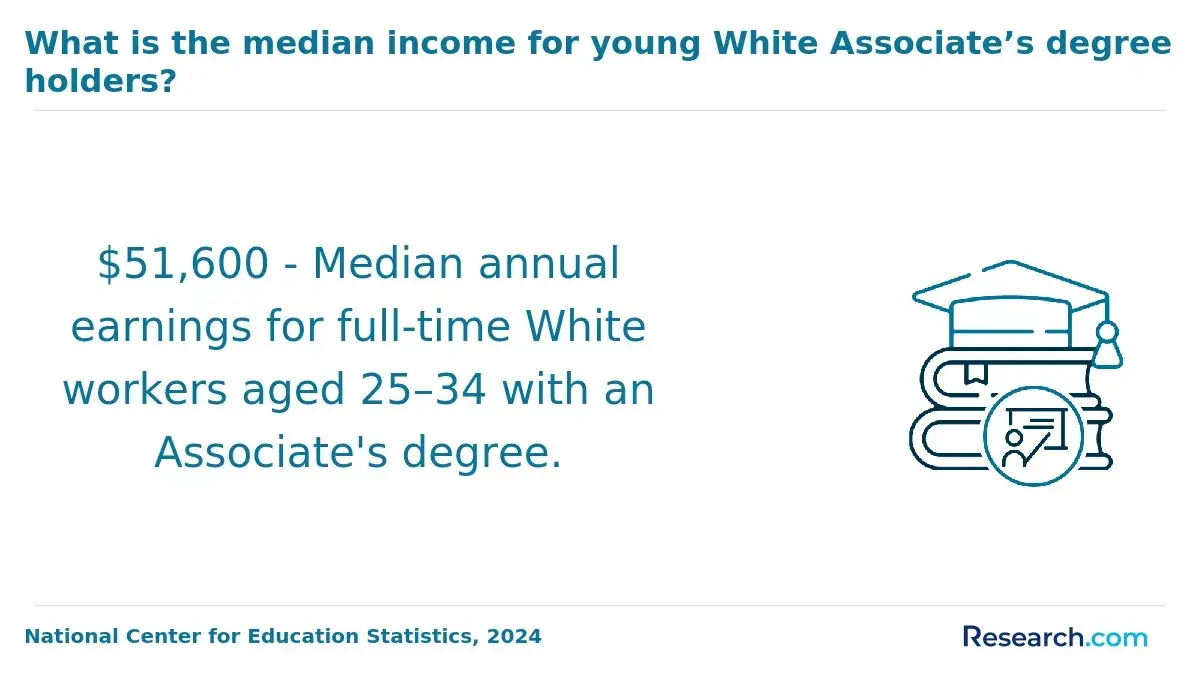
The time required to complete a self-paced online criminal justice bachelor's degree depends on transfer credit, weekly study time, program format, and how consistently the student completes assessments. Some students may finish in just one year, but most take three to five years. That range is close to traditional degree timelines reported by the National Center for Education Statistics (NCES) and the Bureau of Labor Statistics (BLS). These organizations note that part-time students usually complete their degrees in about four to six years.
The biggest advantage of a self-paced program is not that everyone finishes quickly. The advantage is control. A student with many transfer credits and 20+ study hours per week may move rapidly, while a student working long shifts may choose a steadier pace without leaving school entirely.
Factors that affect completion time
- Prior credits: Students who already completed college coursework or an associate degree may reduce the number of remaining courses by a year or more, depending on institutional policy.
- Transfer coursework: Credits from accredited community colleges or prior universities may satisfy general education, elective, or major requirements if they match the curriculum.
- Weekly hours invested: Students studying 20+ hours a week often progress much faster than students studying 5-10 hours, especially in competency-based programs.
- Prior learning assessments: Some schools award credit for professional experience, certifications, military training, or exams that demonstrate college-level learning.
- Realistic scheduling: A fast plan only works if it accounts for work cycles, family obligations, health, and predictable busy seasons.
- Support services: Academic coaching, tutoring, writing help, faculty feedback, and time-management tools can keep students moving when motivation drops.
Typical pacing scenarios
| Student situation | Likely pacing pattern | Planning advice |
| Many transfer credits and strong weekly availability | May finish much faster than a traditional timeline. | Choose a program with generous transfer policies and a tuition model that rewards acceleration. |
| Full-time worker with moderate study time | Often completes at a steady multi-year pace. | Build a weekly study routine and avoid overloading terms early. |
| Student with few credits and limited weekly time | May take closer to a part-time completion timeline. | Prioritize affordability, advising, and predictable financial aid disbursement. |
| Military, public safety, or shift-based worker | Progress may vary by deployment, overtime, or schedule changes. | Ask about leave policies, course extensions, and military credit evaluation. |
A professional who enrolled in a self-paced online criminal justice bachelor's program described the timeline as manageable but demanding. He said staying disciplined was "a constant challenge" while balancing work, family, and study. Academic coaching helped him "break down the workload into manageable chunks." The flexibility mattered most when life interrupted his plan, allowing him to adjust without abandoning the degree.
What Are the Admission Requirements for Self-Paced Online Criminal Justice Bachelor's Degree Programs?
Admission requirements for self-paced online criminal justice bachelor's degree programs are usually similar to other bachelor's programs. Applicants generally need a high school diploma or GED, official transcripts, and proof that they are prepared for college-level reading, writing, and quantitative work. Minimum GPA expectations commonly range from 2.0 to 2.5, though selective institutions may require stronger academic records.
The main difference is timing. Many self-paced or adult-focused programs use open enrollment, rolling admissions, or multiple start dates, which can make it easier for working students to begin when they are ready instead of waiting for a traditional semester.
Common admission requirements
- High school diploma or GED: Required to show basic eligibility for undergraduate study.
- Official transcripts: Schools usually require high school transcripts and transcripts from every college previously attended.
- Minimum GPA expectations: Many programs expect a GPA in the 2.0 to 2.5 range, while selective programs may set higher standards.
- English and math readiness: Programs may review prior coursework or use placement assessments to determine whether support courses are needed.
- Application form and fee: Some institutions require a standard undergraduate application and may charge an application fee.
- Additional materials: Recommendation letters, personal statements, resumes, or proof of relevant experience may help applicants with weaker academic records.
Open-access vs. selective programs
| Admission model | What it means | Best for |
| Open-access or rolling admission | Designed to reduce barriers and allow more students to start throughout the year. | Adult learners, returning students, and applicants with nontraditional academic histories. |
| Selective admission | May require stronger grades, more documentation, or additional review. | Students seeking a more structured academic environment or a program with specific academic standards. |
| Transfer-focused admission | Places major emphasis on previous college credits and course equivalency. | Students with an associate degree, prior college coursework, or military training. |
If your GPA is below the stated minimum, contact an admissions counselor before applying. Some schools allow provisional admission, bridge coursework, or review of professional experience. A clear personal statement can also help explain your goals, especially if you are moving into criminal justice from military service, public safety, legal support, corrections, or another related field.
Applicants who are comparing flexible undergraduate options with later business or leadership study may also find it useful to review fast track MBA programs to understand how accelerated formats work in other disciplines.
How Much Does a Self-Paced Online Criminal Justice Bachelor's Degree Cost, and What Affects Tuition?
The cost of a self-paced online criminal justice bachelor's degree depends heavily on the school's pricing model and how quickly the student completes coursework. Per-credit programs typically charge between $250 and $600 per credit. Because a bachelor's degree usually requires 120 credits, total tuition often falls around $30,000 to $60,000 before fees and other expenses.
Some self-paced programs use flat-rate subscription pricing instead. In that model, students pay generally $1,000 to $1,500 monthly for access to coursework during a defined period. This can reduce costs for fast completers, but it can become expensive if progress slows.
Common tuition models
| Cost model | How it works | Who may benefit most | Main risk |
| Per-credit tuition | Students pay for each credit attempted or completed, often between $250 and $600 per credit. | Students who need a predictable pace or plan to study part time. | Total tuition can be high if few credits transfer. |
| Subscription tuition | Students pay a flat monthly or term-based amount, generally $1,000 to $1,500 monthly, and complete as much as they can. | Students with strong discipline, prior knowledge, and substantial weekly study time. | Slow progress can raise the final cost. |
| Bundled tuition and fees | Some schools combine tuition with selected required fees. | Students who want fewer separate charges. | Comparisons can be difficult if not all costs are included. |
Costs beyond tuition
- Technology fees: Online programs may charge fees for learning platforms, systems access, or digital services.
- Exam proctoring: Some courses require paid proctored exams.
- Course materials: Textbooks, e-books, access codes, and digital resources may not be included in tuition.
- Software subscriptions: Certain classes may require specialized software or online tools.
- Transcript and graduation fees: These smaller charges can still affect the final budget.
The most important cost question is not the advertised tuition rate. It is the total cost to finish based on your transfer credits, likely pace, financial aid eligibility, and required fees. Ask each school for a written cost estimate that includes tuition, fees, materials, and the number of credits still required after transfer evaluation.
A professional who completed a self-paced online criminal justice bachelor's degree said the subscription structure required careful time management. "It felt like balancing a race against the clock-I wanted to make the most of the unlimited course access each month without extending my enrollment unnecessarily." She also noted that technology and exam charges sometimes affected her budget, making advance planning essential.
What Financial Aid Options Are Available for Self-Paced Online Criminal Justice Bachelor's Programs?
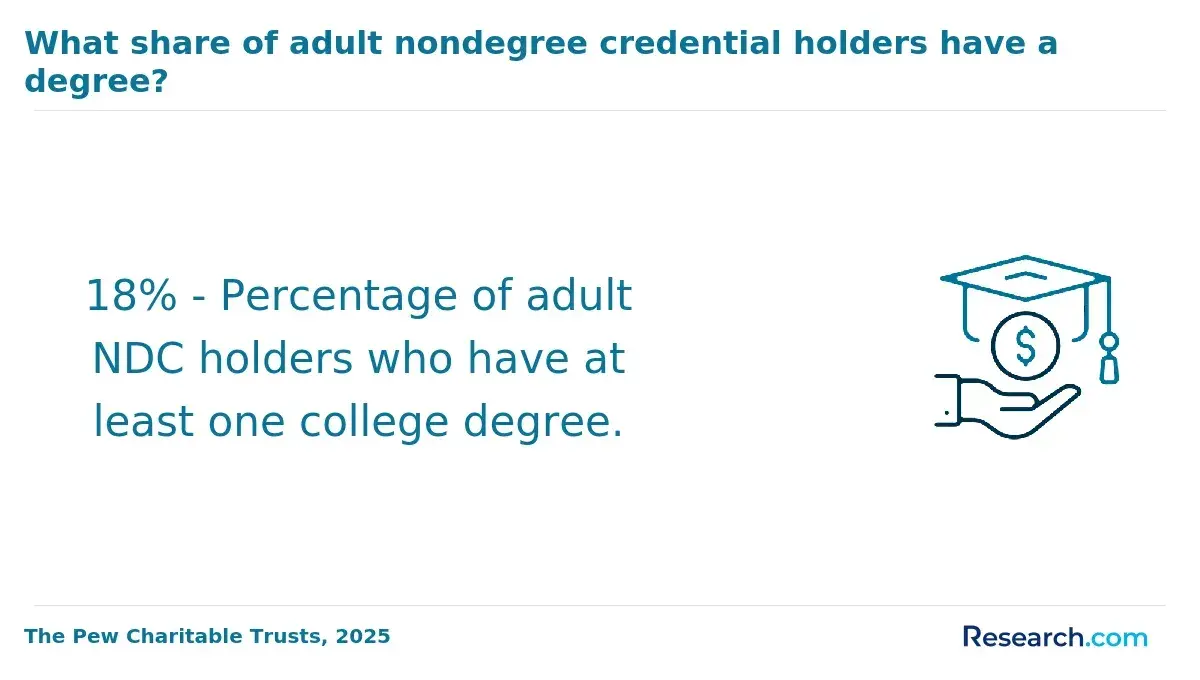
Financial aid may be available for self-paced online criminal justice bachelor's programs, but students should verify eligibility before enrolling. Aid rules can be more complicated in competency-based education programs because schools must define academic progress, credit-hour equivalencies, enrollment status, and disbursement schedules in ways that meet financial aid requirements.
For most students, the starting point is the FAFSA. Federal Student Aid programs such as Pell Grants, Direct Loans, and work-study remain primary sources of funding when the school and program are eligible. State grants, institutional scholarships, veterans benefits, employer tuition assistance, and criminal justice scholarships may also help reduce out-of-pocket cost.
Financial aid options to check
- Federal aid: Pell Grants, Direct Loans, and work-study may apply if the institution and program meet eligibility rules.
- State aid: Some state-funded grants and scholarships support residents enrolled in accredited online programs.
- Institutional aid: Colleges may offer scholarships, grants, tuition discounts, or payment plans for online learners.
- Professional scholarships: Organizations such as the American Correctional Association and the National Black Police Association may offer awards for students pursuing Criminal Justice education.
- Veterans benefits: Military-affiliated students should ask how benefits apply to self-paced or competency-based formats.
- Employer tuition assistance: Public safety agencies, correctional facilities, government employers, and private organizations may help pay for job-related education.
Questions to ask the financial aid office
- Is this exact self-paced or competency-based program eligible for federal financial aid?
- How does the school define full-time or part-time enrollment in this format?
- When are aid funds disbursed?
- What happens if I complete courses faster or slower than expected?
- How is satisfactory academic progress measured?
- Are fees, course materials, or proctoring costs covered by aid?
Federal data indicate that around 73% of undergraduates receive financial aid, and online learners increasingly use these resources. Still, students should not assume that every flexible program works the same way. Confirm all aid rules in writing, especially if your program uses subscription tuition or competency-based assessments.
How Do Competency-Based Education (CBE) Models Work in Self-Paced Online Criminal Justice Programs?
Competency-based education (CBE) allows students to progress by proving they have mastered defined skills and knowledge rather than by spending a fixed number of weeks in a course. In a self-paced online criminal justice program, that may mean completing exams, papers, case analyses, scenario-based projects, or applied assessments tied to specific learning outcomes.
CBE can be especially useful for adult learners who already have related experience in law enforcement, corrections, military service, legal support, cybersecurity, or public administration. Students who know the material may move quickly. Students encountering new concepts can take more time before attempting assessments.
Two common CBE structures
| CBE model | How it works | Why it matters |
| Direct assessment | Students are evaluated directly on competencies rather than traditional credit hours. | Financial aid and transfer evaluation can require extra attention because the program is not structured like a standard credit-hour degree. |
| Credit-hour-equivalent | Competencies are mapped to traditional credit equivalents. | This can make financial aid, employer review, and transfer evaluation easier to understand. |
Examples of CBE-style program features
- Western Governors University (WGU): Uses performance-based assessments, including timed exams and real-world projects, with support from dedicated mentors.
- Southern New Hampshire University: Combines adaptive assessments with faculty-led online coaching to guide students through competencies.
- Purdue University Global: Uses modular assessments and ongoing faculty interaction in flexible online learning formats.
CBE is not the right fit for every student. It rewards independence, consistency, and comfort with assessment-based progress. Students who prefer lectures, frequent live discussion, and weekly instructor reminders may find a traditional online course structure easier to manage.
According to an Eduventures survey, 35% of adult learners now consider competency-based programs essential for flexible educational pathways. That interest reflects the appeal of skills-focused education, but students should still evaluate accreditation, support services, assessment rules, and how credits appear on transcripts.
What Accreditation Should a Self-Paced Online Criminal Justice Bachelor's Program Hold?
A self-paced online criminal justice bachelor's program should be offered by an accredited institution, preferably one with regional accreditation. Accreditation affects whether credits may transfer, whether students may qualify for financial aid, whether graduate schools will recognize the degree, and how employers evaluate the credential.
The U.S. Department of Education recognizes six regional accrediting bodies: the Middle States Commission on Higher Education, the New England Commission on Higher Education, the Higher Learning Commission, the Northwest Commission on Colleges and Universities, the Southern Association of Colleges and Schools Commission on Colleges, and the WASC Senior College and University Commission.
Why accreditation matters
- Credit transfer: Regionally accredited institutions are generally more widely accepted when students transfer or pursue graduate study.
- Financial aid: Federal aid usually requires enrollment at an eligible accredited institution and program.
- Employer recognition: Criminal justice employers may check whether a degree comes from a recognized institution.
- Graduate school admission: Master's programs often prefer or require degrees from regionally accredited schools.
- Licensure and agency requirements: Some public-sector or specialized roles may have education standards tied to accredited coursework.
Regional vs. programmatic accreditation
| Accreditation type | What it reviews | How to use it in your decision |
| Regional accreditation | The institution as a whole. | Make this a baseline requirement when evaluating online bachelor's programs. |
| Programmatic accreditation | A specific program or discipline area. | Consider it an additional quality signal when available, not a substitute for institutional accreditation. |
| National accreditation or no recognized accreditation | May apply to certain institutions or may be absent altogether. | Review carefully because transfer, financial aid, and employer recognition may be limited. |
Some criminal justice programs may also reference programmatic recognition through specialized bodies such as the Academy of Criminal Justice Sciences (ACJS). Before enrolling, verify accreditation through the U.S. Department of Education's accreditation database or the Council for Higher Education Accreditation (CHEA) directory.
Students who want a shorter credential before or alongside a degree may also compare short certificate programs that pay well, especially if they need targeted skills in areas such as investigations, legal support, cybersecurity, or public administration.
How Many Transfer Credits Can Be Applied Toward a Self-Paced Online Criminal Justice Bachelor's Degree?
Transfer credit can significantly reduce the time and cost required to earn a self-paced online criminal justice bachelor's degree. Policies vary by institution, but many programs accept between 60 and 90 transfer credits. Some programs accept up to 90 transfer credits, which is roughly equivalent to three years of coursework.
Transfer credit is especially important for adult learners, community college graduates, military-affiliated students, and applicants who previously started a bachelor's degree. A generous transfer policy can make a self-paced program much more practical, but only if the credits apply to degree requirements rather than only to free electives.
Common sources of transfer credit
- Accredited community colleges: Associate degree coursework often transfers well, especially when schools have articulation agreements.
- Regionally accredited universities: Prior bachelor's-level coursework may satisfy general education, major, or elective requirements.
- Military training: Military personnel and veterans may receive credit for training evaluated by the American Council on Education (ACE).
- Professional training: Some job-related training may qualify if the school recognizes it through formal review or prior learning assessment.
- Standardized exams: CLEP, DSST, or similar exams may reduce remaining coursework if accepted by the institution.
How to avoid transfer credit surprises
- Request an official transfer credit evaluation before committing to a program.
- Ask how many credits apply to the major, general education, and electives.
- Confirm whether there is a maximum number of transfer credits.
- Ask whether upper-division criminal justice courses must be completed at the institution.
- Provide syllabi or course descriptions when the school needs more detail.
- Get the remaining course list and estimated cost in writing.
The goal is not simply to transfer the largest number of credits. The goal is to transfer credits that shorten the actual path to graduation. Military-affiliated students can also review military friendly online colleges when looking for schools that understand ACE credit, veterans benefits, and flexible learning needs.
Can Students Earn Credit Through Prior Learning Assessment in Self-Paced Online Criminal Justice Programs?
Yes. Many self-paced online criminal justice bachelor's programs allow students to earn credit through Prior Learning Assessment (PLA). PLA evaluates college-level learning gained outside a traditional classroom, including work experience, military training, certifications, professional development, and independent study.
PLA can be valuable for students who already work in policing, corrections, security, emergency management, courts, investigations, legal services, or military roles. However, schools do not award credit just for time on the job. Students must document what they learned and show how that learning matches college-level outcomes.
Common PLA methods
- Portfolio evaluation: Students submit evidence such as resumes, job descriptions, certificates, work products, reflective essays, and supervisor verification.
- Challenge exams: Students test out of specific courses by proving mastery of the course content.
- Standardized exams: CLEP and DSST may provide credit for accepted subject areas.
- ACE-reviewed training: The American Council on Education recommends credit for many military and professional training programs.
- Certification review: Some schools award credit for approved law enforcement, corrections, security, or technology credentials.
Programs such as Southern New Hampshire University and Liberty University offer accommodating PLA policies and often grant up to 30 credits. Students typically need to submit documentation through an online system and follow strict school deadlines and credit limits.
How to maximize PLA credit
- Collect certificates, licenses, transcripts, training records, and employment documentation early.
- Match each experience to a specific course or competency in the degree plan.
- Ask whether PLA credits count toward major requirements or only electives.
- Confirm fees for portfolio review or exams before submitting.
- Complete PLA review before finalizing your enrollment plan, if possible.
Recent studies show nearly 70% of adult learners utilize PLA to shorten the time needed to complete their degrees. For self-paced students, PLA can reduce both time and cost, but only when the institution's policy fits the student's background and documentation is strong.
What Concentrations or Specializations Are Available in Self-Paced Online Criminal Justice Bachelor's Programs?
Many self-paced online criminal justice bachelor's programs offer concentrations that help students align the degree with a specific career direction. The right specialization depends on whether you want to work in enforcement, corrections, investigations, forensic support, cybersecurity, policy, legal services, or agency administration.
Concentrations can also affect program length and scheduling. Tracks with internships, labs, certification preparation, or field experiences may be less flexible than theory-based or policy-focused tracks. Before choosing, confirm whether the concentration is fully online, whether it includes in-person requirements, and whether it supports your target role.
Common criminal justice concentrations
- Law Enforcement and Policing: Designed for students interested in police work, investigations, detective roles, or federal agencies. This track may connect to state certification or academy requirements. Median salaries hover around $67,600 annually according to BLS figures.
- Corrections and Rehabilitation: Focuses on correctional systems, offender rehabilitation, probation, parole, and reentry services. It can support roles such as probation officer or substance abuse counselor, though some positions require specialized credentials. Median pay is approximately $55,000.
- Forensic Science and Criminalistics: Covers crime scene procedures, evidence handling, laboratory concepts, and investigative science. Some programs may require internships or hands-on lab components. Salaries range from $60,000 to $65,000 on average.
- Cybersecurity and Digital Forensics: Addresses cybercrime, digital evidence, data protection, and investigative technology. Industry certifications like CISSP may be useful for related roles. Related positions often exceed $100,000 in median income.
- Legal Studies and Criminal Justice Policy: Prepares students for legal support, policy analysis, advocacy, compliance, or public administration pathways. It may allow accelerated completion because it often requires less practical training. Median earnings vary widely between $50,000 and $80,000.
How to choose a concentration
- Start with the job description: Review requirements for roles you want and choose coursework that matches those skills.
- Check licensure and certification rules: A bachelor's degree may help, but some roles require academy training, exams, background checks, or separate credentials.
- Consider field requirements: Internships and labs can be valuable but may reduce flexibility.
- Match your experience: Students already working in public safety may benefit from leadership, policy, or investigations tracks.
- Think beyond the first job: Choose a path that supports promotion, graduate study, or specialized training later.
What Graduates Say About Self-Paced Online Criminal Justice Bachelor's Degree Programs
- Patricia: "Choosing a self-paced online criminal justice bachelor's degree was essential for me because I needed the flexibility to juggle my full-time job and family life. The affordable tuition made it possible to invest in my future without accumulating overwhelming debt. Since graduating, I've noticed a significant boost in my confidence and career opportunities-I was promoted within months of completing the program."
- Amanda: "Reflecting on my journey, the self-paced structure of the criminal justice program allowed me to learn at my own speed and absorb complex topics more thoroughly. The cost was reasonable compared to traditional programs, which helped me manage finances wisely. Professionally, the degree opened doors to roles in federal law enforcement that I had only dreamed about before."
- Nathan: "What drew me to a self-paced online criminal justice bachelor's degree was the ability to tailor my studies around a demanding work schedule in public safety. The program's affordability was a major factor-I needed a degree that wouldn't break the bank but still held strong academic credibility. Earning this degree has not only expanded my knowledge but also positioned me for leadership roles within my department."
Other Things You Should Know About Criminal Justice Degrees
In 2027, most self-paced online criminal justice bachelor's degree programs require a high school diploma or equivalent. Some programs may also ask for SAT/ACT scores, but flexibility exists to accommodate diverse backgrounds. Check specific institutions for precise requirements.
Many programs require a criminal background check and fingerprinting before any supervised internship or field placement. Schools often set a clear disqualification policy for certain violent or sex offenses, and the check must usually be completed before the placement site approves the student.
Graduates of 2027 self-paced online criminal justice bachelor's degree programs can pursue careers as law enforcement officers, probation officers, forensic science technicians, and correctional treatment specialists. These positions typically require knowledge of criminal justice principles and may necessitate additional certifications, dependent on state or agency requirements.
References
- Discovering the path to a criminal justice degree online https://blog.elgazuly.com/discovering-the-path-to-a-criminal-justice-degree-online/
- Accredited Online Criminal Justice Bachelor Degree Programs https://www.distance-learning-college-guide.com/online-criminal-justice-bachelor-degree.html
- CBE (Education) – Study Guide | StudyGuides.com https://studyguides.com/study-methods/study-guide/cmircflph5db001aais8i6xld
- What is Competency-Based Education (CBE) and How Does it Work Online? https://www.onlineeducation.com/features/cbe-competency-based-education-online
- Calaméo - what is Bachelor Criminal Justice Degree Online? https://www.calameo.com/books/002746075fbbeea19c30e
- Competency-Based Education: Understanding the CBE Student's Experience - FullScale https://www.fullscalelearning.org/cw/competency-based-education-understanding-the-cbe-students-experience/
- 2025 Most Affordable Online Criminal Justice Degrees https://www.onlineu.com/most-affordable-colleges/criminal-justice-degrees
- Fastest Way to Finish a Criminal Justice Degree Online https://www.collegetransitions.com/blog/fastest-way-to-finish-a-criminal-justice-degree-online/
- Credit for Prior Learning: Save Time and Money in Online College https://www.collegevaluesonline.com/resources/transfer-students/credit-for-prior-learning/
- Bachelor of Science in Criminal Justice (B.S.) University of Toledo https://www.hotcoursesabroad.com/india/course/us-usa/bachelor-of-science-criminal-justice-b-s/56430290/program