
2027 Best Online Master’s Degree Programs in Education

Co-Founder and Chief Data Scientist
Choosing an online master’s degree in education is not just a question of convenience. The bigger decision is whether a program will help you qualify for the role you want, meet state licensure or certification rules, fit your schedule, and justify the tuition you will pay. With online education offerings estimated to serve around 7.9 million users in 2024, students now have more choices than ever, but that also makes comparison harder.
This guide is designed for teachers, school staff, education professionals, career changers, and aspiring administrators who want a practical way to evaluate online master’s programs in education. You will learn what these degrees cover, how long they take, how online and campus formats differ, what costs and financial aid options to expect, which specializations match specific career goals, and how to avoid choosing a program that does not support your next step.
Quick Answer: Is an Online Master’s Degree in Education Worth It?
An online master’s degree in education can be worth it if it directly supports a specific career goal, such as moving into curriculum leadership, instructional design, school administration, special education, higher education administration, or education consulting. The degree is most valuable when the program is properly accredited, aligned with your state’s licensing requirements if licensure matters, and priced in a way that makes sense for your expected salary growth.
Graduates may pursue roles such as educational consultant, curriculum coordinator, instructional designer, dean of students, education specialist, ESL teacher, academic coordinator, school administrator, or higher education professional. Salary potential varies by role, employer, location, experience, and specialization. For example, educational consultants have an average annual salary of $94,974, while curriculum coordinators have a median salary of $74,720.
What are the benefits of getting an online master's degree in education?
- Career mobility: A graduate education credential can support advancement into roles such as curriculum leader, instructional coach, education consultant, administrator, or instructional designer.
- Flexible study: Online delivery can make graduate school more realistic for working teachers, parents, and professionals who cannot relocate or attend daytime campus classes.
- Specialized expertise: Concentrations in areas such as special education, educational leadership, instructional technology, ESL, literacy, curriculum design, and higher education can help you target a specific career path.
- Competitive salary options: Some education roles tied to advanced training offer strong compensation, including educational consultant positions with an average annual salary of $94,974 and curriculum coordinator roles with a median salary of $74,720.
What can I expect from an online master's degree in education?
An online master’s degree in education usually combines advanced coursework in teaching, learning, leadership, curriculum, assessment, research, and education policy. Depending on the program, you may study classroom practice, school improvement, instructional design, student support, educational technology, special education, or administration.
Most programs are built for working educators and use online learning platforms for lectures, assignments, discussions, group projects, and faculty feedback. Some degrees are fully asynchronous, while others require live online meetings, field experiences, practicums, internships, or locally arranged observations. If you are pursuing licensure, certification, or an administrative credential, you should confirm that the online format satisfies the requirements in the state where you plan to work.
Where can I work with an online master's degree in education?
Graduates can work in K-12 schools, colleges, universities, education agencies, nonprofit organizations, government offices, educational consulting firms, edtech companies, corporate learning departments, and curriculum publishing organizations. Your options depend heavily on your specialization. For example, a curriculum and instruction degree may lead to instructional coaching or curriculum development, while a higher education degree may support roles in admissions, student affairs, advising, or enrollment management.
| Work Setting | Common Roles | Best-Fit Specializations |
| K-12 schools | Teacher leader, instructional coach, curriculum coordinator, special education teacher, administrator | Curriculum and instruction, special education, educational leadership, literacy, ESL |
| Colleges and universities | Academic advisor, admissions professional, student affairs staff, higher education administrator | Higher education, student affairs, education leadership |
| Corporate training | Learning specialist, trainer, instructional designer | Instructional design, educational technology, adult learning |
| Nonprofits and agencies | Program manager, education coordinator, policy analyst | Policy, leadership, community education, program evaluation |
| Consulting and publishing | Educational consultant, content developer, curriculum writer | Curriculum design, assessment, instructional technology |
How much can I make with an online master's degree in education?
Earnings after an online master’s in education vary by job title, experience, location, employer, and whether the role is in K-12, higher education, government, nonprofit, corporate training, or consulting. The degree itself does not guarantee a raise, but it can help qualify you for roles that require or prefer graduate-level education.
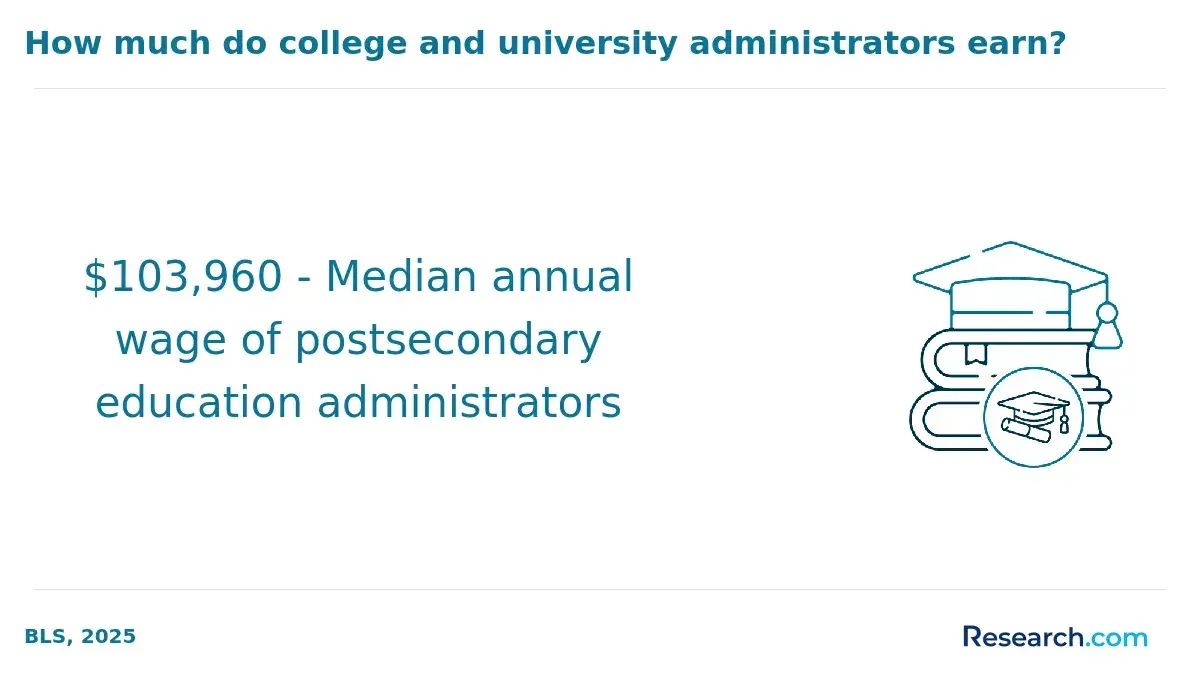
Among commonly cited roles, educational consultants report an average annual salary of $94,974, and curriculum coordinators earn a median salary of $74,720. Other positions, including dean of students, instructional designer, education specialist, ESL teacher, and academic coordinator, often fall in the $55,000 to $80,000 range. Postsecondary education administrators in the US earned a median annual salary of $103,960, while elementary, middle, and high school principals earned $104,070.
- 2027 Best Online Master's Degrees in Education
- How long does it take to complete an online master's degree in education?
- How does an online master's degree in education program compare to an on-campus program?
- What is the average cost of an online master's degree in education program?
- What are the financial aid options for students enrolling in an online master's degree in education program?
- What are the prerequisites for enrolling in an online master's degree in education program?
- What courses are typically in an online master's degree in education program?
- What types of specializations are available in an online master's degree in education program?
- How do you choose the best online master's degree in education program?
- What career paths are available for graduates of online master's degrees in education programs?
- What is the job market for graduates of online master's degrees in education programs?
- What challenges might I encounter in pursuing an online master’s degree in education?
- How do online master's programs incorporate immersive, practical experiences?
- How do online master's programs foster career development and professional networking?
- How do online master’s programs promote diversity and inclusion?
- How can interdisciplinary studies, such as creative writing, enhance my online master's in education?
- Do employers value online master's degrees in education?
- What are some alternative career paths for graduates of an online master's degree in education?
- How do I choose the right online master’s in education program for my career goals?
- What are the latest trends in online master’s degrees in education?
- What is the return on investment for an online master’s degree in education?
- What accreditation factors should I consider in an online master’s degree in education program?
2027 Best Online Master's Degrees in Education
How do we rank schools?
This list was developed using information from recognized education data sources, including the IPEDS database maintained by the National Center for Education Statistics and Peterson's database, including the Distance Learning Licensed Data Set. We also reviewed information from the College Scorecard to compare program costs and student outcome indicators where available.
When reviewing these programs, do not rely on rank alone. A strong program for one student may be a poor fit for another if the specialization, licensure pathway, fieldwork structure, cost, or schedule does not match the student’s goals.
1. University of Virginia - MEd in Curriculum and Instruction
The University of Virginia offers an online Master of Education in Curriculum and Instruction for educators who want to strengthen instructional practice and improve student learning. The fully asynchronous format is designed around research-informed teaching strategies, curriculum improvement, and applied instructional decision-making. Students can use the program to deepen classroom expertise, prepare for leadership in curriculum work, or build knowledge in a focused area of education.
- Program Length: 1 year (full-time); 2 to 3 years (part-time)
- Specializations: Educational Innovation; English as a Second Language (ESL); Gifted Education; Instructional Technology; Literacy; Professional Studies; Social and Emotional Learning; Social Foundations; and a choice of custom coursework
- Required Credits to Graduate: 36
- Cost per Credit: $622
- Accreditation: Council for the Accreditation of Educator Preparation (CAEP)
2. University of Florida - MEd in Educational Leadership
The University of Florida offers a Master of Education in Educational Leadership with an emphasis on Educational Policy Analysis and Evaluation. The program is suited for students interested in research, policy analysis, leadership, and evidence-based decision-making in education systems. Coursework introduces qualitative and quantitative research methods and examines how policy is developed, implemented, and assessed across educational settings.
- Program Length: ~1.5 to 3 years
- Required Credits to Graduate: 36
- Cost per Credit: $734
- Accreditation: Southern Association of Colleges and Schools Commission on Colleges (SACSCOC)
3. University of Wisconsin-Madison - MS in Educational Leadership and Policy Analysis: Wisconsin Idea Principal Preparation
The University of Wisconsin-Madison offers an online Master of Science in Educational Leadership and Policy Analysis through the Wisconsin Idea Principal Preparation named option. The program is designed for current educators and system leaders who want to prepare for school principal licensure in Wisconsin. Its coursework mirrors the campus-based curriculum and focuses on school leadership, equity, and educational opportunity.
- Program Length: 1 year (full-time); 2 to 3 years (part-time)
- Named Option: Wisconsin Idea Principal Preparation
- Required Credits to Graduate: 30
- Tuition (Annual): $12,252 (in-state); $19,992 (Minnesota resident); $25,578 (out-of-state)
- Accreditation: Higher Learning Commission (HLC)
4. Michigan State University - MA in Education
Michigan State University offers an online Master of Arts in Education for educators and professionals working in P-12 schools, higher education, community organizations, and workplace learning. The program emphasizes advanced study of teaching, learning, leadership, and professional inquiry. Students can select concentration areas that match their career interests while participating in a flexible online learning community.
- Program Length: ~1.5 to 3 years
- Specializations: Literacy Education; P-12 School and Postsecondary Leadership; Science and Mathematics Education; Special Education; Sport Coaching and Leadership; and Technology and Learning
- Required Credits to Graduate: 30
- Cost per Credit: $933
- Accreditation: Higher Learning Commission (HLC)
5. Clemson University - MEd in Teaching and Learning
Clemson University offers a fully online Master of Education in Teaching and Learning for current PK-12 educators. The program is structured to help teachers strengthen classroom practice, study current instructional methods, and select a specialization that supports their professional goals. Students may complete the degree in as few as 18 months.
- Program Length: as few as 18 months
- Specializations: Effective and Reflective Teaching; Experiential Learning for Early Childhood; Instructional Coaching; and STEAM
- Required Credits to Graduate: 30
- Cost per Credit: $515
- Accreditation: Southern Association of Colleges and Schools Commission on Colleges (SACSCOC)
6. Arizona State University - MA in Education
Arizona State University offers an online Master of Arts in Education for teachers and education professionals who want a customizable graduate program. Students select two focal areas, allowing them to combine interests such as applied behavior analysis, gifted education, early childhood education, global education, and other areas. The degree can be useful for educators, community college professionals, and others who want to better understand learning across age groups and settings.
- Program Length: ~1.5 to 3 years
- Required Credits to Graduate: 30
- Cost per Credit: $692
- Accreditation: Higher Learning Commission (HLC)
7. San Diego State University - MAT in Elementary and Secondary Education
San Diego State University offers a fully online Master of Arts in Teaching in Elementary Education or Secondary Education. The program is intended for K-12 educators who want to grow as master teachers while studying equity, diversity, research-based pedagogy, assessment, virtual learning, and educational technology. Students complete online coursework while engaging with content designed to support diverse learners.
- Program Length: 1 year
- Required Credits to Graduate: 30
- Tuition (semester): $3,588 (in-state); $3,957 (out-of-state)
- Accreditation: Western Association of Schools and Colleges (WASC)
8. Auburn University - MEd in Elementary Education
Auburn University offers a fully online Master of Education in Elementary Education for educators who already hold initial-level teaching certification. The program focuses on improving instruction for elementary learners and gives students access to faculty guidance while expanding their teaching approaches. Graduates may apply for Alabama Class A professional educator certification.
- Program Length: ~1.5 to 3 years
- Required Credits to Graduate: 30
- Cost per Credit: $594
- Accreditation: Council for the Accreditation of Educator Preparation (CAEP)
9. University at Albany--SUNY - MS in Higher Education
The University at Albany--SUNY offers an MS in Higher Education for early-career and mid-career professionals who want to work in college and university administration. The curriculum supports interests such as admissions, enrollment management, advising, student life, diversity and inclusion, and education policy. Students can tailor the degree toward administrative roles in higher education, government, nonprofit organizations, education companies, and policy research settings.
- Program Length: ~1.5 to 3 years
- Required Credits to Graduate: 30
- Cost per Credit: $532.76 (in-state); $626.76 (out-of-state)
- Accreditation: Middle States Commission on Higher Education (MSCHE)
10. University of North Texas - MEd in Special Education, Educational Diagnostician
The University of North Texas offers an online Master of Education in Special Education with an Educational Diagnostician concentration. The program prepares educators to assess academic, cognitive, social, emotional, and behavioral needs and to collaborate with teachers on accommodations, modifications, and interventions. Students must complete a minimum of 160 clock hours and work with TEA-approved districts and certified educational diagnosticians as field mentors.
- Program Length: ~1.5 to 3 years
- Specialization: Education Diagnostician
- Required Credits to Graduate: 33
- Cost per Credit: $464.50
- Accreditation: Council for the Accreditation of Educator Preparation (CAEP)
Key Findings
- Online master’s degrees in education can provide academic quality comparable to campus programs when they are accredited, well-supported, and aligned with professional standards.
- The strongest programs are not always the most famous programs; the right choice depends on specialization, licensure alignment, fieldwork requirements, tuition, schedule, and career goals.
- Graduates can pursue school-based and non-school roles, including educational consultant, curriculum coordinator, instructional designer, higher education administrator, and corporate trainer.
- Median and average salaries differ substantially by role. Examples include $59,950 for ESL teachers, $74,720 for curriculum coordinators, and $94,974 for educational consultants.
- Postsecondary education administrators in the US earned a median annual salary of $103,960, while elementary, middle, and high school principals earned $104,070.
- K-12 administrator and instructional coordinator openings may come from new jobs, occupational transfers, and labor force exits, so local hiring conditions matter.
What Graduates Say About Online Master's Degrees in Education
-
: "
My online master’s in education helped me strengthen my curriculum design skills while still working full time and caring for my family. The flexibility mattered, but the biggest benefit was being able to bring new teaching strategies back into my classroom right away. — Kate
"
-
: "
The program gave me a deeper understanding of educational psychology, assessment, and student learning. Online discussions and faculty feedback helped me connect theory to the challenges I was already seeing in my school. — Jane
"
-
: "
Studying technology integration changed how I plan lessons and engage students. Because the coursework was online, I could test digital tools in my own classroom while completing the degree. — Nolan
"
How long does it take to complete an online master's degree in education?
Most online master’s degrees in education take about one and a half to two years of full-time study. Part-time students often need longer, especially if they are teaching, working in schools, raising children, or completing fieldwork at the same time.
Some institutions also offer accelerated options. Students who want a shorter timeline can compare 1 year masters programs online, but faster programs are not automatically better. A compressed schedule can be demanding, and students pursuing licensure or administrator certification may still need to satisfy field experience or state requirements after coursework.
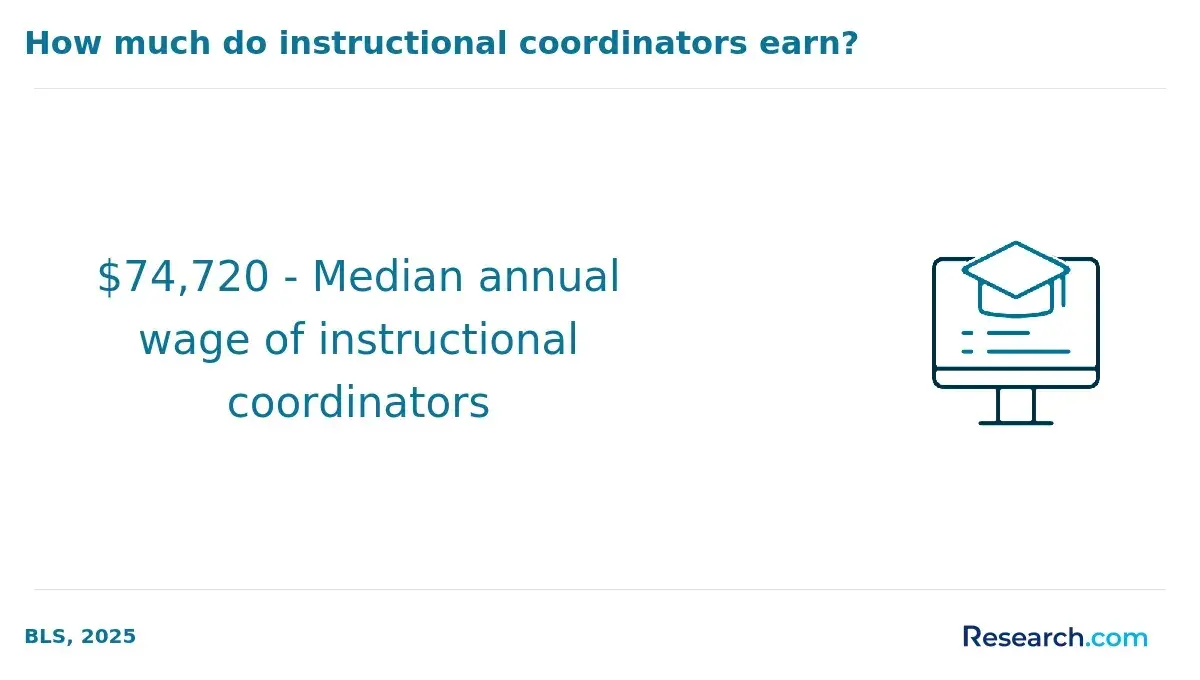
Before enrolling, ask whether previous graduate credits can transfer, whether courses are offered every term, and whether any practicum or internship sequence could delay graduation. For students targeting instructional coordinator roles, it is also useful to understand the labor market: in the US, 232,600 instructional coordinators were employed with a median annual salary of $74,720.
How does an online master's degree in education program compare to an on-campus program?
Online and on-campus master’s programs in education often cover similar academic content, but the learning experience can be very different. Online programs are typically better for working professionals who need flexibility, while campus programs may appeal to students who prefer face-to-face discussion, on-site networking, and immediate access to campus resources.
Many online programs use learning platforms similar to the systems used in other online degree fields, including the best online CS programs. Courses may include recorded lectures, message boards, online assessments, group projects, video meetings, and digital portfolios. Programs that use asynchronous learning let students complete most work on their own schedule, while synchronous programs require live attendance at specific times.
Students comparing online and campus options should look beyond format. The most important questions are whether the program is accredited, whether it meets licensure or certification requirements, whether it includes fieldwork if needed, and whether faculty support is strong. Students who want a teaching-focused route can also compare online teacher degree options to see how program structures differ.
| Factor | Online Master’s in Education | On-Campus Master’s in Education |
| Schedule | Often better for working adults, especially when courses are asynchronous | Usually follows fixed class times and campus calendars |
| Networking | Depends on online discussions, cohort design, virtual events, and alumni access | Often easier to build in-person faculty and peer relationships |
| Fieldwork | May be completed locally if the program permits it | Often arranged through nearby school or agency partners |
| Best for | Teachers and professionals who need flexibility | Students who want campus immersion and face-to-face support |
What is the average cost of an online master's degree in education program?
The cost of an online master’s degree in education depends on the institution, residency status, credit requirements, fees, and whether tuition is charged per credit, per semester, or by program. Students should compare total program cost rather than focusing only on advertised tuition. A broader review of the cost of a college degree can also help put graduate tuition into context.
Among the programs included here, the average cost per credit is approximately $900 for in-state students and around $1,000 per credit for out-of-state students. The average total tuition is $18,500 for in-state students and $20,200 for out-of-state students. These costs can overlap with graduate-level expenses in other fields, including some doctoral degrees.
The lowest listed cost per credit ranges from $400 for in-state students to $500 for out-of-state students, while minimum total tuition ranges from $7,200 for in-state students to $7,900 for out-of-state students. At the upper end, the maximum cost per credit is $3,600 for in-state students and $4,000 for out-of-state students, with total tuition reaching up to $28,000 for both in-state and out-of-state students.
Students evaluating online teacher degrees should also include technology fees, books, certification exam fees, field placement costs, travel for any campus residencies, and lost income if they reduce work hours. Tuition and college enrollment statistics can provide context, but the most useful number is your net cost after scholarships, grants, employer support, and transfer credits.
| Cost Item | Figure Listed in This Guide | What to Ask Before Enrolling |
| Average in-state cost per credit | Approximately $900 | Are online students charged the same rate as campus students? |
| Average out-of-state cost per credit | Around $1,000 | Is there a separate online tuition rate? |
| Average in-state total tuition | $18,500 | Does the estimate include fees? |
| Average out-of-state total tuition | $20,200 | Can residency, employer benefits, or scholarships reduce the price? |
| Maximum listed total tuition | Up to $28,000 | What salary or career advancement would justify this cost? |
What are the financial aid options for students enrolling in an online master's degree in education program?
Online graduate students may have access to several forms of financial support, but eligibility varies by school, enrollment status, program type, and student circumstances. Always confirm whether the program is eligible for federal aid and whether you must enroll at least half time.
- Federal financial aid: Students can submit the FAFSA to be considered for federal aid options, including loans and some work-study opportunities. Federal aid may also be available at more affordable colleges, depending on institutional eligibility.
- Scholarships: Universities, professional associations, districts, private foundations, and state organizations may offer awards for graduate education students. Scholarships exist across many fields, including masters in health informatics online programs, and education students should search specifically for awards connected to teaching, leadership, special education, STEM education, and education degree pathways.
- Employer tuition reimbursement: School districts, colleges, nonprofits, and companies may reimburse part of tuition when the degree supports the employee’s role. This type of benefit also appears in fields such as technology, where workers may pursue certificates or graduate programs such as the top cybersecurity masters programs.
- Graduate assistantships: Some institutions offer assistantships that provide tuition support or stipends in exchange for work, though fully online students may have fewer options than campus students.
- State aid programs: Some states provide grants, loan forgiveness, or scholarships for educators, especially in shortage areas or hard-to-staff schools.
- Private loans: Alternative loans may fill funding gaps, but students should compare interest rates, repayment terms, and borrower protections carefully.
Financial aid can make online degrees more manageable, but borrowing should be tied to a realistic career plan. Leadership roles can improve ROI; for example, local elementary and secondary schools in the US pay a median annual salary of $104,070 for educational administrators.
What are the prerequisites for enrolling in an online master's degree in education program?
Admissions requirements differ by school and specialization. Programs that prepare students for teaching licensure, principal certification, educational diagnostician roles, or advanced educator credentials may have more specific requirements than general education master’s programs.
- Bachelor's degree: Applicants typically need a bachelor's degree from an accredited institution. Some programs require an education-related major, while others accept applicants from broader academic backgrounds.
- Minimum GPA: Many programs expect a minimum undergraduate GPA, commonly around 3.0 on a 4.0 scale, though requirements vary.
- Letters of recommendation: Schools may ask for academic or professional references who can speak to teaching ability, leadership potential, work ethic, or readiness for graduate study.
- Statement of purpose: Applicants often need to explain their professional goals, relevant experience, and reasons for pursuing a graduate education degree.
- Prerequisite coursework: Some programs require previous education courses, subject-area preparation, or coursework tied to certification.
- Standardized test scores: GRE or MAT scores are not always required. Many programs in education and other online fields, including online bachelor’s in construction management programs, have moved away from standardized testing requirements.
- Professional experience: Leadership, special education, and advanced teacher programs may prefer or require classroom or school-based experience.
Before applying, review the program’s admissions page, licensure disclosures, and state authorization information. If the program leads to a credential, ask the admissions office to confirm whether your current license, state, and experience satisfy eligibility requirements.
What courses are typically in an online master's degree in education program?
Coursework varies by specialization, but most online master’s programs in education combine theory, research, applied practice, and leadership skills. Common courses include:
- Educational leadership and administration: This course examines school leadership, organizational decision-making, supervision, governance, and management. It can also prepare students who later consider a doctorate in educational leadership.
- Curriculum development and instructional design: Students study curriculum planning, learning objectives, assessment design, instructional models, and technology integration. This area overlaps with content found in online master’s degrees in education technology.
- Educational psychology: Coursework explores learning, motivation, development, cognition, behavior, and classroom strategies that support student growth.
- Diversity and inclusion in education: Students examine equity, culturally responsive teaching, inclusive curriculum, and strategies for serving diverse learners.
- Research methods in education: This course introduces qualitative and quantitative research, data interpretation, ethics, and evidence-based evaluation in education settings.
What types of specializations are available in an online master's degree in education program?
Specialization choice is one of the most important decisions in an online master’s program. It affects coursework, field experiences, career options, and sometimes licensure eligibility. Common options include:
- Special education: Focuses on instructional strategies, assessment, accommodations, IEPs, disability law, and support for learners with exceptional needs.
- Educational leadership and administration: Prepares students for school or district leadership, policy work, supervision, and administrative decision-making.
- Curriculum and instruction: Emphasizes curriculum design, instructional improvement, assessment, and teacher leadership.
- Instructional technology: Covers digital learning tools, online course design, multimedia instruction, learning platforms, and technology-supported teaching.
- Adult and continuing education: Focuses on adult learners, workforce training, professional development, and lifelong learning programs.
- Early childhood education: Addresses developmentally appropriate teaching, child development, early literacy, and curriculum for young children from birth to age eight.
A good specialization should satisfy two tests: it should fit the work you actually want to do, and it should make sense in your local or target job market. Some roles offer higher earning potential than others. Among common options for graduates in 2027, educational consultant roles report an average annual salary of $94,974, with top earners making anywhere from $132,000 to $240,000. Education is not always grouped among high-paying college major categories, so students should evaluate cost carefully.
| If Your Goal Is... | Consider This Specialization | Check Before You Enroll |
| Become a school leader | Educational leadership or administration | Whether the program meets your state’s principal or administrator requirements |
| Move into curriculum work | Curriculum and instruction | Whether coursework includes assessment, instructional coaching, and curriculum evaluation |
| Support students with disabilities | Special education | Whether certification or endorsement requirements are included |
| Design online learning | Instructional technology or instructional design | Whether you will build a portfolio of digital learning projects |
| Work in colleges | Higher education or student affairs | Whether the program includes internships, advising, enrollment, or student services coursework |
How do you choose the best online master's degree in education program?
The best online master's degree in education is the one that fits your career target, state requirements, budget, learning style, and timeline. Use the following checklist before applying.
- Verify accreditation: Choose an institution with recognized accreditation, and for educator preparation programs, look for program-level approval or accreditation when relevant. Programs offering online accredited education degrees are more likely to be understood by employers and licensing bodies.
- Match the specialization to the job: Do not choose a general program if your target role requires a specific credential, endorsement, or licensure pathway.
- Confirm state authorization and licensure alignment: If you need teacher, principal, administrator, or specialist certification, ask whether the program meets requirements in your state.
- Compare total cost: Look at tuition, fees, books, exams, travel, residency requirements, and potential lost income.
- Assess online support: Ask about advising, tutoring, faculty access, tech support, career services, and field placement assistance.
- Review course delivery: Decide whether you prefer asynchronous work, live classes, cohort pacing, or self-paced flexibility.
- Evaluate faculty and field connections: Strong programs should connect academic work to real schools, districts, higher education offices, or learning organizations.
- Talk to students and alumni: Ask about workload, responsiveness, career outcomes, and whether the program delivered what admissions materials promised.
| Common Mistake | Why It Can Hurt You | Better Approach |
| Choosing based only on ranking | A high-ranked program may not match your state, schedule, or career goal | Use rankings as a starting point, then verify fit |
| Ignoring accreditation | Licensure, transfer credit, employer recognition, or aid eligibility may be affected | Check institutional and program-level accreditation |
| Looking only at tuition per credit | Fees and required credits can change the total price | Calculate full program cost |
| Assuming online means self-paced | Many programs have weekly deadlines or live sessions | Ask about course format before applying |
| Overlooking licensure rules | A program may not qualify you for the credential you need | Confirm requirements with the school and your state education agency |
What career paths are available for graduates of online master's degrees in education programs?
An online master’s in education can lead to classroom-based, administrative, consulting, training, and higher education roles. The right path depends on your specialization, experience, credentials, and local market demand.
- Educational leadership or administration: Graduates may pursue roles such as school principal, assistant principal, curriculum coordinator, or education administrator in K-12 schools, colleges, districts, or agencies.
- Curriculum specialist or instructional coach: These professionals help teachers improve instruction, align curriculum, interpret assessment data, and implement teaching strategies.
- Special education teacher or specialist: Graduates may work with students with disabilities or exceptionalities, develop IEPs, provide specialized instruction, and collaborate with families and school teams.
- Higher education administration: Graduates may work in admissions, academic advising, student affairs, enrollment services, program coordination, or college administration.
- Education consultant or trainer: Professionals may deliver workshops, advise schools or organizations, support curriculum design, or train educators and employees.
What is the job market for graduates of online master's degrees in education programs?
The job market for education master’s graduates depends on role, geography, public funding, school staffing needs, and institutional budgets. Across several education occupations, growth rates range from 1% to 6%, which is broadly comparable to the 3% growth rate for all occupations combined.
Students should research district-level and regional demand before choosing a specialization. For example, if your goal is instructional technology, special education, or school administration, local hiring patterns may matter more than national averages. Those considering technology-focused education roles can review options such as a Master’s Degree in Education with an educational technology emphasis.
For education administrators in postsecondary institutions, projected job growth through 2034 is 1.7%, with around 15,100 annual job openings. Students targeting colleges and universities may want to compare a Master’s Degree in Higher Education or a related program. For K-12 school administrators, projected growth is -1.5% over the same decade, with an annual average of 20,800 job openings. Many openings are expected to come from occupational transfers and labor force exits rather than new job creation.
What challenges might I encounter in pursuing an online master’s degree in education?
Online graduate study can be flexible, but it is not effortless. Common challenges include managing weekly deadlines while working full time, staying motivated without a physical classroom, navigating unfamiliar technology, and finding time for group projects, readings, and field experiences.
Students can reduce these risks by choosing programs with strong advising, responsive faculty, online tutoring, technical support, clear course schedules, and peer interaction. If you are still comparing education pathways, reviewing bachelors in education online programs can help you understand how support systems differ across degree levels.
How do online master's programs incorporate immersive, practical experiences?
Many online education master’s programs connect coursework to practice through local field placements, virtual simulations, case studies, action research, classroom-based projects, remote practicums, internships, and mentorship. These experiences are especially important in programs tied to teaching, special education, school leadership, counseling-adjacent roles, or diagnostics.
Students interested in advanced leadership and applied research may later compare Ed.D programs online, especially if they want a doctoral-level pathway focused on practice-based leadership.
How do online master's programs foster career development and professional networking?
Strong online programs support career growth through faculty mentorship, alumni networks, virtual career events, resume guidance, portfolio development, district partnerships, and professional learning communities. Networking is not automatic in an online program, so students should intentionally participate in discussion boards, live sessions, webinars, professional associations, and alumni events.
Cost should also remain part of career planning. Students comparing education programs with other graduate pathways may find it helpful to examine pricing patterns in related fields, such as How much is a masters in library science?.
How can I fast-track my teaching licensure process with an online master’s degree in education?
Some online master’s programs combine graduate coursework with preparation for state licensure, endorsement, or certification. These programs may help students complete academic and credential requirements in a coordinated sequence, but requirements vary widely by state.
Before enrolling, verify whether the program leads to initial licensure, advanced certification, an endorsement, or only a graduate degree. Ask whether student teaching, practicum hours, exams, background checks, or state applications are included. Students researching accelerated routes can compare guidance on how fast can you get a teaching license, but they should always confirm details with their state education agency.
How do online master’s programs promote diversity and inclusion?
Many online master’s programs in education include coursework on cultural competence, inclusive teaching, anti-bias education, differentiated instruction, accessibility, and support for diverse learners. These topics are especially relevant for educators working with multilingual students, students with disabilities, rural communities, urban schools, and historically underserved populations.
Students comparing interdisciplinary education-related fields may also review the average cost of a library science degree to understand how graduate program costs vary across student-centered professions.
How can interdisciplinary studies, such as creative writing, enhance my online master's in education?
Interdisciplinary study can strengthen an education degree when it supports a clear teaching or leadership goal. Creative writing, for example, can help educators improve storytelling, literacy instruction, reflective practice, communication, and student engagement. Teachers who use narrative, project-based learning, or writing-intensive instruction may benefit from creative approaches to curriculum design.
Educators interested in this connection can explore an online degree creative writing pathway to see how writing-focused programs build communication and narrative skills that can complement education practice.
Do employers value online master's degrees in education?
Employers generally focus less on whether a degree was completed online and more on whether the institution is accredited, the program is credible, the specialization fits the role, and the graduate has relevant experience. In education, licensure and state approval may matter more than delivery format.
An online degree can also signal strong time management, digital communication, and self-direction. Students who combine education with interdisciplinary skills may stand out in curriculum, literacy, training, or content roles. For example, reviewing the fastest online creative writing degree programs may interest educators who want to build stronger writing and communication expertise alongside education credentials.
What are some alternative career paths for graduates of an online master’s degree in education?
Not every graduate remains in a traditional classroom or school office. An education master’s can also support work in training, policy, publishing, nonprofit leadership, and digital learning.
- Corporate trainer: Designs and delivers employee learning, professional development, onboarding, and skills-based workshops.
- Instructional designer for eLearning platforms: Builds online courses, learning modules, multimedia lessons, assessments, and learner engagement strategies.
- Educational policy analyst: Studies education laws, funding models, programs, and outcomes for agencies, nonprofits, advocacy groups, or research organizations.
- Education program director for nonprofits: Leads literacy, youth development, community education, tutoring, or workforce learning initiatives.
- Content developer for educational publishing: Creates curriculum materials, textbooks, assessments, teacher guides, and digital learning resources.
How do I choose the right online master’s in education program for my career goals?
Start with the job you want, then work backward. If you want to become a school administrator, prioritize educational leadership programs that match your state’s credential rules. If you want to design online courses, look for instructional technology or instructional design programs with portfolio projects. If you want to work in colleges, compare higher education programs with coursework in advising, enrollment, student affairs, and institutional leadership.
Some graduates later continue into doctoral study, especially those interested in executive leadership, research, policy, or faculty roles. If that is part of your long-term plan, compare educational leadership PhD programs online and ask whether the master’s program builds research skills, writing ability, and leadership experience that would support future doctoral applications.
What are the latest trends in online master’s degrees in education?
Online education master’s programs are adapting to changes in schools, higher education, workforce learning, and digital instruction. Current trends include:
- More technology integration: Programs increasingly include learning management systems, virtual classrooms, online assessment tools, multimedia instruction, and digital teaching platforms.
- Greater attention to personalized learning: Coursework often addresses differentiated instruction, student-centered design, and ways to adapt teaching to individual learning needs.
- Data-informed decision-making: Educators are being trained to use assessment data, learning analytics, and evidence to identify gaps and improve instruction.
- Flexible and hybrid formats: Some programs blend online coursework with local fieldwork, internships, residencies, or in-person workshops.
- Demand for targeted specializations: Areas such as educational leadership, special education, STEM education, instructional technology, and curriculum design continue to attract students seeking focused expertise.
- Broader collaboration: Online programs can connect students across regions, allowing educators to compare classroom, district, and institutional challenges in different contexts.
Students seeking flexible and cost-conscious pathways can also compare masters in teaching programs online to identify programs that match both career goals and budget constraints.
What is the return on investment for an online master’s degree in education?
ROI depends on how much you pay, how much you borrow, whether the degree helps you qualify for a better role, and how salaries work in your district, institution, or target industry. For teachers, the ROI may depend on salary schedule increases. For administrators, consultants, instructional designers, and higher education professionals, ROI may depend on promotion opportunities and employer demand.
To evaluate ROI, compare total program cost with realistic outcomes, not best-case salaries. Ask whether graduates enter the roles you want, whether your state or employer recognizes the credential, and whether the specialization has demand in your region. Students focused on leadership value may want to compare affordable options such as the cheapest online master's in education administration.
What accreditation factors should I consider in an online master’s degree in education program?
Accreditation is one of the most important quality checks for an online master’s degree in education. At minimum, the institution should hold recognized institutional accreditation. If the program prepares educators for licensure or certification, students should also check for program-level accreditation or state approval, such as recognition connected to the Council for the Accreditation of Educator Preparation (CAEP), where applicable.
Accreditation can affect financial aid eligibility, credit transfer, employer recognition, licensure, and future doctoral study. Students comparing online institutions may also review resources on the most accredited online university, but they should still verify whether a specific education program meets their professional requirements.
Do not rely only on a school’s marketing language. Confirm accreditation through the accreditor, the state education agency, and the institution’s official disclosures. If you are pursuing a license, ask for written confirmation that the program is designed for your state.
Questions to Ask Before Applying
- Does this program meet my state’s licensure, certification, endorsement, or administrator requirements?
- Is the institution accredited, and is the education program approved or accredited where necessary?
- What is the full cost, including tuition, fees, books, exams, travel, and fieldwork expenses?
- Are classes asynchronous, synchronous, cohort-based, self-paced, or hybrid?
- Can I complete fieldwork, practicum hours, or internships in my local area?
- What support is available for online students, including advising, technology help, library access, tutoring, and career services?
- What roles do graduates actually pursue after completing the program?
- Will my employer, district, or state recognize this degree for salary advancement or promotion?
Key Insights
- An online master’s degree in education is most valuable when it is tied to a specific career outcome, not chosen simply because it is flexible.
- Accreditation, state authorization, licensure alignment, and fieldwork requirements should be verified before tuition is paid.
- Program cost varies widely, so students should compare full program price, financial aid, employer reimbursement, and likely salary impact.
- Specialization matters. Educational leadership, curriculum and instruction, special education, higher education, and instructional technology can lead to very different roles.
- Online programs can be respected by employers when they come from credible institutions and prepare graduates for real professional requirements.
- Local labor market research is essential, especially for K-12 administration, higher education roles, and specialized educator positions.
- The best program is the one that fits your career goal, schedule, state requirements, budget, and preferred learning format.
References:
- National Student Clearinghouse Research Center. (2026, January 15). Final Fall Enrollment Trends. https://nscresearchcenter.org/final-fall-enrollment-trends
- Steiner, E. D., Levine, P. R., Doan, S., & Woo, A. (2025). Teacher WellBeing, Pay, and Intentions to Leave in 2025. RAND. https://www.rand.org/pubs/research_reports/RRA1108-16.html
- U.S. Bureau of Labor Statistics. (2025, August 28). Occupational projections, 2024–2034, and worker characteristics. Retrieved February 2026, from https://www.bls.gov/emp/tables/occupational-projections-and-characteristics.htm
- ZipRecruiter. (2026). Educational Consultant Salary. Retrieved March 2026, from https://www.ziprecruiter.com/Salaries/Educational-Consultant-Salary
Other Things You Should Know About Online Master's Degrees in Education
Yes, in 2027, many online master's degree programs in education offer specialized tracks. These tracks include areas like curriculum and instruction, educational leadership, and special education, allowing students to tailor their studies to specific career paths or interests.
Students in 2027 online master's education programs need a reliable internet connection, updated operating system, and compatible software like Zoom or Slack. Schools may require specific learning management systems, often detailed in the program's technical guidelines.


