2027 Fastest Online Master's in Curriculum & Instruction

Co-Founder and Chief Data Scientist
With 32% of students now behind grade level, the need for true educational leadership is critical. For many experienced teachers, this isn't just a statistic; it's a daily reality. You are an expert in your classroom, but you've likely hit a ceiling on your ability to fix the systemic issues you see every day. You have the insights, but you need the authority to become an architect of learning.
Our career planning experts, with over 10 years of experience, have created this guide to serve as your strategic roadmap. It will show you exactly how an online master's in curriculum and instruction provides the direct path to a leadership role where you can finally drive meaningful, system-wide change.
What are the benefits of getting a fast online master's in curriculum and instruction degree?
Here are the core benefits of earning your master's in curriculum and instruction:
- It qualifies you for district-level leadership roles like instructional coordinator, where you can design programs that directly improve student learning on a large scale.
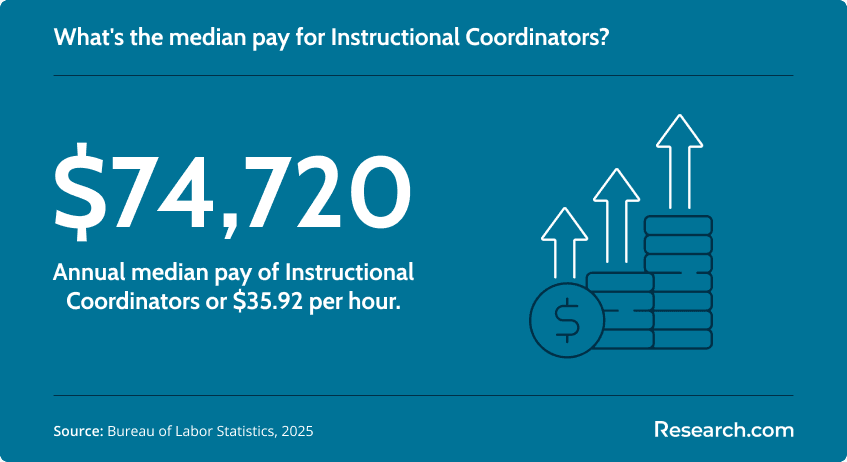
- You can expect a significant salary increase, as the median pay for instructional coordinators is $74,720 annually.
- The online format gives you the flexibility to earn your degree and advance your career while still working full-time.
What can I expect from a fast online master's in curriculum and instruction degree program?
You can expect an intense but focused academic sprint. These accelerated programs are designed for working professionals, so they cut out the fluff and concentrate on applying advanced theory directly to the real-world problems you already face in your school or district.
This isn't a review of your undergraduate education courses. The focus shifts entirely from classroom tactics to systemic strategy. You’ll move beyond lesson planning and into the architecture of learning itself.
You will learn how to analyze curriculum, interpret educational law, and use data to make informed decisions that impact hundreds or even thousands of students. Modern programs also increasingly prepare you to become a policy leader on emerging challenges, such as the integration of artificial intelligence in schools. It’s a program that equips you to lead, not just to teach.
Where can I work with a fast online master's in curriculum and instruction degree?
The primary work environments for this degree are K-12 school districts, but it also opens up administrative roles in colleges and universities. It's designed to move you out of a single classroom and into a position that oversees learning systems.
The most common job title you'll see is Instructional Coordinator. However, that's not the only path. This degree also prepares you for roles like Curriculum Specialist, Assessment Director, and leadership positions in educational technology.
How much can I make with a fast online master's in curriculum and instruction degree?
With an online master's in curriculum and instruction, you are positioning yourself for a significant pay increase. The median annual salary for an instructional coordinator is $74,720.
This reflects a major step up from a standard teaching salary and recognizes the advanced responsibilities of the role. Top earners in the field can command salaries of more than $115,000.
Of course, your exact salary will depend on your location, years of prior experience, and the size of the school district or organization you work for. But the degree clearly opens the door to a higher earning bracket.
- How does a fast online master's in curriculum and instruction degree compare to the quickest online EdD programs? How does a fast online master's in curriculum and instruction degree compare to the quickest online EdD programs?
- How Can Interdisciplinary Insights Enhance Your Leadership in Education? How Can Interdisciplinary Insights Enhance Your Leadership in Education?
- How Can Alumni Networks and Mentorship Accelerate Your Career? How Can Alumni Networks and Mentorship Accelerate Your Career?
Fast Online Master’s in Curriculum and Instruction Programs for 2027: What to Know Before You Enroll
A fast online master’s in curriculum and instruction is built for licensed or experienced educators who want to move beyond classroom teaching into curriculum leadership, instructional coaching, assessment, teacher development, or district-level academic roles. The appeal is clear: many programs can be completed in 10 to 18 months, often without requiring teachers to leave their jobs.
The decision is not only about speed. A shorter program can save time, but it may also mean heavier weekly coursework, fewer breaks, and less flexibility if your school year becomes demanding. This guide explains how accelerated online curriculum and instruction programs work, how to compare them, what they cost, what admissions requirements to expect, and which career paths they can support.
Quick Answer: Is a Fast Online Master’s in Curriculum and Instruction Worth It?
A fast online master’s in curriculum and instruction can be worth it for educators who already have classroom experience and want a practical graduate degree tied to curriculum design, instructional leadership, assessment, or coaching. It is usually a better fit for teachers seeking applied school or district leadership than for students who want a research-heavy doctorate, initial teacher licensure, or a purely technology-focused instructional design career.
The strongest candidates compare programs by accreditation, total tuition, licensure alignment, specialization options, course format, faculty experience, and employer tuition reimbursement. The fastest option is not automatically the best option; the right program is the one that matches your career goal and your realistic weekly schedule.
List of the Best Fast Online Master’s in Curriculum and Instruction Programs for 2027
The programs below are designed for educators who want an accelerated or flexible online route to advanced curriculum and instruction training. Some emphasize classroom-based leadership, while others are more focused on content specialization, instructional coaching, assessment, or district-level curriculum work.
How Research.com Ranks These Programs
Because a graduate degree can affect your finances, career options, and licensure pathway, Research.com uses a data-informed ranking process rather than relying on marketing claims alone. Our methodology considers information from trusted education data sources, including the IPEDS database, Peterson's database, the College Scorecard database, and The National Center for Education Statistics. To learn more about how programs are evaluated, see Research.com's methodology page.
| Program | Fastest Stated Completion Time | Credits or Units | Cost Information | Best Fit |
| Western Governors University — M.S. in Curriculum and Instruction | Approximately 24 months, self-paced | 32 competency units | Approximately $4,395 per 6-month term | Experienced educators who want a competency-based format and the ability to move faster through material they already know |
| Ohio University — Master’s in Curriculum & Instruction | As few as 3 semesters | 30 credits | $518 in-state per credit; $540 out-of-state per credit | Working teachers seeking asynchronous coursework and preparation connected to National Board certification |
| Walden University — MS in Education Curriculum, Instruction, and Assessment | 15 months | 45 quarter credits | $319.44 per quarter credit | Educators interested in standards-based curriculum, differentiated instruction, and assessment practices |
| Emporia State University — Master of Science in Curriculum & Instruction | 12 months | 33 credits | $332 per credit | Teachers who want 7-week courses and specialization options in curriculum leadership, instructional coaching, effective practice, or National Board Certification |
| Texas A&M University — M.Ed. in Curriculum and Instruction | 12 months | 36 credits | $788 in-state per credit; $1,320 out-of-state per credit | PK-12 educators seeking a research-grounded, non-thesis program from a large public university |
| Purdue University — Master’s in Curriculum & Instruction | 18 months | 30 credits | $450 in-state per credit; $670 out-of-state per credit | Students who want concentration choices such as English Language Learning, STEM, instructional design, mathematics education, gifted education, or special education |
| The University of Texas Rio Grande Valley — M.Ed. in Curriculum & Instruction with a Content Specialization in English | 10 months | 30 credit hours | $459 per credit | Educators who want an accelerated English-focused curriculum and instruction program delivered in 7-week modules |
| Southeastern Oklahoma State University — M.Ed. in Curriculum & Instruction | 12 months | 30 credit hours | $329 per credit | Teachers looking for an affordable, accelerated English curriculum and instruction pathway |
1. Western Governors University — M.S. in Curriculum and Instruction
Western Governors University offers a competency-based M.S. in Curriculum and Instruction that allows qualified educators to progress by demonstrating mastery rather than sitting through a fixed weekly class schedule. The program is aligned with National Board standards and is designed for educators who want to strengthen curriculum planning, instructional improvement, and learning design skills.
- Program length: Approximately 24 months, self-paced
- Required competency units: 32
- Tuition: Approximately $4,395 per 6-month term
- Accreditation: Northwest Commission on Colleges and Universities (NWCCU)
2. Ohio University — Master’s in Curriculum & Instruction
Ohio University’s online Master’s in Curriculum & Instruction is structured for educators who need flexibility while continuing to teach. Its asynchronous design supports working professionals, and the curriculum emphasizes classroom application, curriculum development, and preparation connected to National Board certification.
- Program length: As few as 3 semesters
- Required credits: 30
- Cost per credit: $518 for in-state students; $540 for out-of-state students
- Accreditation: Higher Learning Commission (HLC)
3. Walden University — MS in Education Curriculum, Instruction, and Assessment
Walden University’s MS in Education focuses on curriculum, instruction, and assessment for teachers who want to design more effective learning experiences for diverse students. The program highlights differentiated instruction, standards-based planning, reflective practice, and research-informed approaches to learning.
- Program length: 15 months
- Required quarter credits: 45
- Cost per quarter credit: $319.44
- Accreditation: Higher Learning Commission (HLC); Council for the Accreditation of Educator Preparation (CAEP)
4. Emporia State University — Master of Science in Curriculum & Instruction
Emporia State University’s online MS in Curriculum & Instruction uses accelerated 7-week courses and can be completed in 12 months. The program offers several PreK-12 options, making it useful for educators who want to move into curriculum leadership, instructional coaching, effective practice, or National Board Certification-related work.
- Program length: 12 months
- Specializations: Curriculum Leadership PreK-12; Effective Practitioner PreK-12; Instructional Coach Teacher Leader PreK-12; National Board Certification PreK-12
- Required credits: 33
- Cost per credit: $332
- Accreditation: Higher Learning Commission (HLC)
5. Texas A&M University — M.Ed. in Curriculum and Instruction
Texas A&M University’s online M.Ed. in Curriculum and Instruction is a non-thesis program for PK-12 educators who want advanced training in evidence-based teaching, curriculum methods, and instructional improvement. The program is designed to help teachers become academic leaders who can improve classroom practice and educational opportunity.
- Program length: 12 months
- Required credits: 36
- Cost per credit: $788 for in-state students; $1,320 for out-of-state students
- Accreditation: Southern Association of Colleges and Schools Commission on Colleges (SACSCOC); State Board of Educator Certification (SBEC); Texas Education Agency (TEA)
6. Purdue University — Master’s in Curriculum & Instruction
Purdue University’s online MSEd in Curriculum and Instruction offers a graduate pathway for educators who want advanced curriculum expertise and concentration-based study. Students can choose among six career-aligned areas that reflect the needs of diverse classrooms and school systems.
- Program length: 18 months
- Specializations: English Language Learning; Gifted, Creative, and Talented Studies; Integrated STEM Education; Mathematics Education; Instructional Design; Special Education
- Required credits: 30
- Cost per credit: $450 for in-state students; $670 for out-of-state students
- Accreditation: Council for the Accreditation of Educator Preparation (CAEP)
7. The University of Texas Rio Grande Valley — Master of Education in Curriculum & Instruction with a Content Specialization in English
The University of Texas Rio Grande Valley offers a fully online M.Ed. in Curriculum & Instruction that can be completed in as little as 10 months. Its English specialization is aimed at educators who want deeper content expertise and advanced instructional skills for teaching diverse high school and community college learners.
- Program length: 10 months
- Specialization: English
- Required credit hours: 30
- Cost per credit: $459
- Accreditation: Southern Association of Colleges and Schools Commission on Colleges (SACSCOC)
8. Southeastern Oklahoma State University — Master of Education in Curriculum & Instruction
Southeastern Oklahoma State University’s online M.Ed. in Curriculum & Instruction provides an accelerated English-focused pathway for educators who want to become stronger curriculum specialists, instructional coordinators, or content leaders. Its pay-as-you-go structure may appeal to working teachers managing graduate school costs while remaining employed.
- Program length: 12 months
- Specialization: English
- Required credit hours: 30
- Cost per credit: $329
- Accreditation: Council for the Accreditation of Educator Preparation (CAEP)
What Is a Master’s in Curriculum and Instruction?
A master’s in curriculum and instruction is a graduate degree for educators who want to improve how learning is planned, delivered, measured, and revised. Unlike a general teaching degree, it usually assumes you already understand classroom practice. The focus shifts to designing curriculum, evaluating instructional materials, analyzing assessment data, coaching teachers, and aligning instruction with standards.
Graduates often work in schools, districts, colleges, education agencies, nonprofit organizations, or education technology settings. The degree can support roles such as instructional coordinator, curriculum specialist, instructional coach, assessment coordinator, professional development leader, or educational technology integration specialist.
How Long Does It Take to Complete a Fast Online Master’s in Curriculum and Instruction?
Many accelerated online curriculum and instruction programs can be finished in 12 to 18 months, although some programs list shorter or longer timelines. The pace depends on course length, credit load, transfer policies, practicum or capstone requirements, and whether the program is self-paced or term-based.
A fast program is not a lighter program. It compresses graduate-level reading, writing, projects, collaboration, and applied research into a shorter calendar. That can work well for experienced educators, but it requires a realistic plan for evenings, weekends, school-year demands, and peak grading periods.
| Program Pace | Typical Fit | Advantages | Trade-Offs |
| 10 to 12 months | Educators who can handle an intensive schedule and have strong support at work and home | Fastest route to the credential; may reduce time before applying for leadership roles | Less room for schedule disruptions; weekly workload can be demanding |
| 15 to 18 months | Working teachers who want speed but need a more manageable rhythm | Still accelerated while allowing more time for projects and reflection | Longer completion time than the fastest programs |
| Self-paced | Educators with prior knowledge, strong discipline, and variable schedules | May allow faster movement through familiar material | Requires high self-management; progress depends heavily on personal consistency |
| Part-time or extended | Teachers with heavy workloads, family obligations, or uncertain schedules | More breathing room and lower term-by-term course pressure | Slower path to career advancement and possible tuition changes over time |
How Does a Fast Online Master’s in Curriculum and Instruction Compare to an On-Campus Program?
At accredited universities, online and campus-based curriculum and instruction programs generally follow the same academic expectations, though delivery, scheduling, interaction style, and field requirements can differ. Before enrolling, ask whether the transcript or diploma identifies the delivery format and whether any on-site requirements apply.
Online programs are often the practical choice for full-time teachers because coursework can be completed around school schedules. Campus programs may be stronger for students who prefer face-to-face discussion, local networking, or a more structured weekly routine.
| Factor | Online Accelerated Program | On-Campus Program |
| Schedule | Often asynchronous or partially asynchronous, which helps working educators | Typically requires set class times and commuting |
| Networking | May include virtual cohorts, discussion boards, and online faculty access | Offers in-person relationships with classmates, faculty, and local school partners |
| Workload | Can be intensive because courses are compressed | May feel more evenly paced, depending on the term structure |
| Best for | Teachers who need flexibility and can manage independent learning | Students who want campus interaction and predictable class meetings |
What Online Completion Signals to Employers
Finishing an online graduate program while teaching can demonstrate more than academic knowledge. It can show that you can manage deadlines, solve problems independently, communicate in digital environments, and sustain performance under competing responsibilities. Those are relevant leadership behaviors, especially for roles that involve coordinating teachers, managing curriculum projects, or leading district initiatives.
What Is the Average Cost of a Fast Online Master’s in Curriculum and Instruction?
Based on the programs reviewed, total tuition can range from as low as $9,870 to as high as $47,520. The difference is driven by tuition model, public or private status, residency rules, credit requirements, term fees, and whether the school charges a flat rate or per-credit price.
In this program set, the average tuition for in-state students is just under $16,000. That figure is useful for comparison, but your actual cost may be higher once fees, books, technology requirements, travel for any campus components, and lost work time are considered.
How to Think About ROI
Return on investment depends on your current salary, your district’s pay scale, tuition assistance, the role you pursue, and how quickly you can move into a higher-paying position. The median salary for an instructional coordinator is $74,720, but salary outcomes are not guaranteed and vary by employer, location, experience, and job title.
A low-cost program can be the right choice if it is accredited and aligned with your career goal. A more expensive program may still be reasonable if it offers a specialization, reputation, faculty expertise, or licensure alignment that supports your next role. The key is to compare total cost against realistic job opportunities, not just advertised program length.
| Cost Factor | Why It Matters | Question to Ask |
| Per-credit or term-based tuition | Self-paced and term-based programs can reward faster progress, while per-credit programs are easier to estimate | Will my cost change if I take fewer or more courses in a term? |
| Residency status | Public universities may charge different rates for in-state and out-of-state students | Do online students qualify for in-state, out-of-state, or separate online tuition? |
| Fees | Technology, graduation, assessment, and course fees can raise the total price | What is the full program cost, including all required fees? |
| Employer support | Tuition reimbursement can substantially reduce out-of-pocket cost | Does my district or employer reimburse graduate education tied to leadership roles? |
What Financial Aid Options Are Available for Online Curriculum and Instruction Master’s Students?
Graduate students in eligible online programs may qualify for federal student aid, and the first step is completing the FAFSA. Online students should also ask each university about institutional scholarships, educator discounts, graduate assistant opportunities, payment plans, and partnerships with school districts.
Professional associations and state education organizations may offer scholarships or grants for teachers pursuing advanced credentials. Availability varies, so it is important to check deadlines early rather than waiting until admission decisions are complete.
Employer Tuition Reimbursement Can Be the Best Starting Point
If you already work in a school district, college, or education organization, ask human resources about tuition reimbursement before you borrow. Many employers prefer to invest in current employees who are preparing for hard-to-fill leadership, coaching, or curriculum roles.
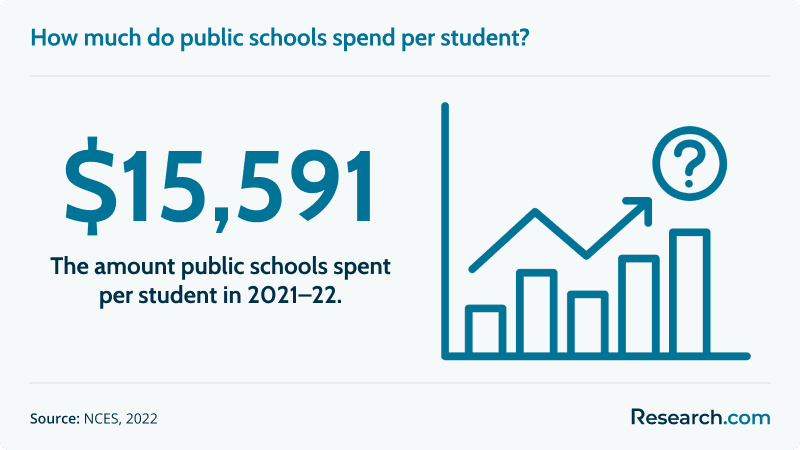
Public schools spend $15,591 per student on average, which reflects the scale of investment in education systems. If your degree would help your school or district meet curriculum, assessment, literacy, technology, or teacher development goals, make that connection clear when you request support.
- Ask HR whether graduate tuition reimbursement is available for education degrees.
- Confirm annual reimbursement limits, grade requirements, and service commitments.
- Find out whether reimbursement is paid before courses begin or after successful completion.
- Get the policy in writing before enrolling.
- Compare reimbursement rules against each program’s term schedule and payment deadlines.
What Are the Prerequisites for a Fast Online Master’s in Curriculum and Instruction?
Most programs require a bachelor’s degree from an accredited institution. Many also expect a teaching license, classroom experience, or current employment in an educational setting, although requirements vary by school and specialization.
This degree is usually not designed for someone who has never taught and is still deciding whether to enter the profession. If you are at that earlier stage, a better first question may be whether becoming a teacher is worth it before choosing a graduate curriculum and instruction pathway.
Why Classroom Experience Matters
Graduate work in curriculum and instruction relies on real educational problems: uneven student outcomes, inconsistent assessment practices, outdated materials, gaps in teacher support, and policy constraints. Teachers who have lived those challenges can analyze them more effectively and design solutions that are practical rather than theoretical.
Experience also helps you choose the right specialization. A teacher who has led grade-level teams may be drawn to instructional coaching, while a teacher who has worked on literacy gaps may prefer reading or English-focused curriculum. Your professional history should guide the program you select.
What Courses Are Common in a Fast Online Master’s in Curriculum and Instruction?
Coursework usually combines curriculum theory, instructional design, learning science, assessment, data use, diversity and inclusion, education research, and leadership. Many programs end with a capstone, portfolio, action research project, or applied school improvement project.
The work is practical. Instead of only studying teaching methods, students often evaluate curriculum maps, design units, analyze assessment evidence, review standards alignment, plan professional development, and propose instructional improvements for real educational settings.
| Course Area | What You Learn | How It Applies at Work |
| Curriculum design | How to build coherent units, courses, and programs aligned with learning standards | Creating curriculum maps, selecting materials, and revising instructional sequences |
| Assessment and data | How to interpret evidence of student learning and evaluate instructional effectiveness | Using formative and summative data to guide school improvement |
| Learning sciences | How students learn and how cognitive, developmental, and social factors affect instruction | Designing learning experiences for diverse student needs |
| Instructional leadership | How to guide teachers, lead teams, and support implementation across classrooms | Coaching teachers, leading professional learning, and coordinating curriculum initiatives |
| Research or capstone | How to investigate a problem of practice and propose an evidence-informed solution | Completing an applied project connected to your school, district, or organization |
Learning Science Is Educational, Not Clinical
Courses in learning science may draw from psychology, neuroscience, and human development, but the goal is educational application. Students study how to improve instruction, not how to provide clinical mental health treatment. If your interests are clinical rather than instructional, a different graduate path, such as one of the cheapest online PsyD programs, may be more appropriate.
What Specializations Are Available in a Fast Online Master’s in Curriculum and Instruction?
Specializations allow educators to connect curriculum leadership with a specific student population, subject area, or school priority. Common options include literacy, English, STEM, special education, gifted education, mathematics education, English language learning, instructional coaching, assessment, and educational technology.
A specialization should match the role you want. For example, an English specialization may support secondary or community college teaching goals, while instructional coaching may fit educators who want to support teachers across grade levels. Educators interested in STEM Leadership should compare whether the curriculum focuses on classroom integration, district strategy, or content-specific pedagogy.
Educational Technology Leadership Is Different From Instructional Design
An educational technology concentration inside a curriculum and instruction degree usually focuses on system-level technology decisions: adoption, integration, teacher support, digital learning policy, and responsible use of tools. It is not always the same as a hands-on instructional design program focused on building corporate training modules or online courses.
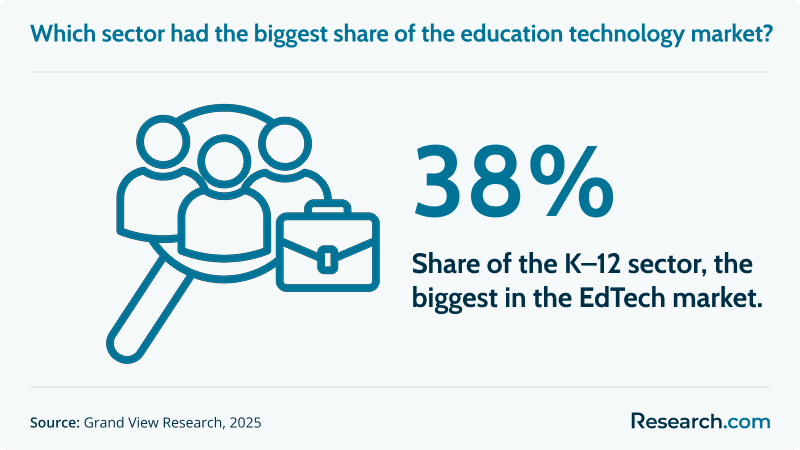
This distinction matters because the K-12 sector represents 38% of the entire education technology market. Schools need leaders who can evaluate software, support teachers, consider equity, and shape AI and digital learning policies without treating technology as a substitute for sound instruction.
Student Support Knowledge Can Strengthen Curriculum Leadership
Curriculum leaders do not work in isolation. They collaborate with counselors, social workers, special educators, interventionists, and administrators. Understanding what school counselors do can help curriculum leaders design systems that support academic, social, and emotional needs rather than focusing only on test performance.
How to Choose a Fast Online Master’s in Curriculum and Instruction Program
The best program is the one that fits your career target, learning style, budget, and licensure needs. Do not choose based only on the shortest advertised completion time. A 10-month program can be a smart choice for one educator and a poor fit for another, especially if the schedule conflicts with teaching responsibilities.
| Selection Factor | Why It Matters | What to Verify |
| Accreditation | Accreditation affects credibility, financial aid eligibility, employer acceptance, and transferability | Confirm institutional accreditation and, when relevant, educator preparation accreditation such as CAEP |
| Licensure alignment | Some programs enhance existing credentials, while others do not lead to licensure or endorsements | Ask whether the program meets requirements in your state and for your intended role |
| Format | Asynchronous, synchronous, self-paced, and cohort models require different time management styles | Request a sample weekly schedule or syllabus |
| Specialization | The concentration can shape your career path and job competitiveness | Compare course titles, faculty expertise, and capstone options |
| Total cost | Tuition alone does not show the full financial commitment | Calculate tuition, fees, books, technology costs, and employer reimbursement |
| Student support | Online graduate students still need advising, library access, writing support, and career guidance | Ask whether online students have dedicated advisors and faculty access |
Curriculum and Instruction vs. Teacher Leadership
A curriculum and instruction master’s focuses on the design, evaluation, and improvement of learning systems. It is often a strong fit for educators who want to influence curriculum, assessment, instructional materials, and districtwide academic strategy.
By comparison, the fastest online master’s in teacher leadership programs may place more emphasis on mentoring teachers, leading professional learning communities, and supporting school-based change. Both paths can be valuable, but they are not interchangeable. Choose curriculum and instruction if you want deeper expertise in what is taught, how it is assessed, and how instruction improves across classrooms.
Questions to Ask Before Enrolling
- Is the university regionally or institutionally accredited?
- Does the program lead to any endorsement, certification, or licensure in my state?
- How many hours per week should I expect during accelerated terms?
- Are courses asynchronous, live, self-paced, or cohort-based?
- Will I complete a capstone, portfolio, practicum, or action research project?
- Can I use my current school or district as the setting for applied projects?
- What support is available for online graduate students?
- What is the full cost after fees, materials, and possible reimbursement?
Common Mistakes to Avoid
Accelerated online programs can be efficient, but the wrong choice can cost time and money. Avoid these common errors before committing.
| Mistake | Why It Can Hurt You | Better Approach |
| Choosing only the fastest program | The workload may be unrealistic during the school year | Compare pace against your actual weekly availability |
| Ignoring accreditation | Employers, licensing agencies, and financial aid rules may not recognize the degree as expected | Verify accreditation directly before applying |
| Looking only at tuition | Fees and course materials can change the true cost | Ask for a full cost estimate in writing |
| Assuming online means self-paced | Many online programs still have strict weekly deadlines | Confirm whether courses are asynchronous, synchronous, or competency-based |
| Assuming the degree guarantees a raise | Salary increases depend on employer policy, location, role, and experience | Check your district salary schedule and job postings before enrolling |
| Overlooking state requirements | Licensure and endorsement rules vary | Contact your state education agency or district certification office |
What Career Paths Are Available With a Fast Online Master’s in Curriculum and Instruction?
The most direct career path is instructional coordinator, a role focused on improving curriculum, teaching methods, assessment systems, and instructional materials. Graduates may also work as curriculum specialists, instructional coaches, assessment directors, professional development coordinators, education consultants, department leaders, or educational technology integration specialists.
In these roles, you move from improving learning in one classroom to improving learning across classrooms, schools, departments, or districts. The work often involves analyzing data, reviewing curriculum, supporting teachers, leading training, and helping administrators make instructional decisions.
| Role | Typical Focus | Who It Fits |
| Instructional coordinator | Curriculum quality, instructional standards, assessment, and teacher support | Educators who want district or schoolwide academic leadership |
| Curriculum specialist | Course materials, standards alignment, content sequencing, and instructional resources | Teachers with strong subject-area or grade-level expertise |
| Instructional coach | Teacher development, classroom strategies, and professional learning | Educators who enjoy mentoring peers and improving practice directly |
| Assessment coordinator | Testing systems, data interpretation, progress monitoring, and program evaluation | Professionals who are comfortable with data and accountability requirements |
| Educational technology integration specialist | Technology adoption, teacher training, digital learning tools, and implementation strategy | Educators interested in responsible and effective technology use |
Curriculum Leaders Solve System-Level Classroom Problems
A curriculum and instruction role is not only about writing lesson plans. It is about reducing barriers that make good teaching harder. For example, when 70% of teachers report not having enough time, curriculum leaders may help streamline materials, improve pacing guides, coordinate assessments, or design professional learning that saves teachers effort instead of adding more tasks.
Strong curriculum leaders also understand how student services connect to instruction. Knowing how school social workers enter and serve the profession can help you coordinate academic support with broader student needs.
What Is the Job Market for Curriculum and Instruction Master’s Graduates?
The job market for curriculum and instruction graduates is tied to the ongoing need for schools and education organizations to improve student learning, support teachers, update instructional materials, and respond to assessment demands. The field may not always grow rapidly, but it remains central to how education systems operate.
Instructional coordinator job growth is projected at 2%. That figure should be interpreted carefully. It does not mean opportunities disappear; it means candidates should pay attention to retirements, turnover, regional hiring patterns, district budgets, and specialized needs such as literacy, English language learning, special education, STEM, assessment, and educational technology.
AI and Education Technology Are Changing Curriculum Work
AI and digital tools are becoming part of curriculum planning, assessment, tutoring, teacher workflow, and content creation. That creates new responsibilities for curriculum leaders: evaluating tool quality, protecting student privacy, supporting teachers, checking for bias, and making sure technology serves instructional goals rather than replacing professional judgment.
Employers may increasingly value educators who can combine curriculum expertise with data literacy, technology evaluation, change management, and teacher training. A master’s program that includes educational technology, assessment, or applied research can be useful if those areas match your career goals.
How Does a Fast Online Master’s in Curriculum and Instruction Compare to the Quickest Online EdD Programs?
A fast online master’s in curriculum and instruction is usually the better fit for educators who want an applied graduate credential for curriculum leadership, instructional coaching, assessment, or school improvement roles. It focuses on practical instructional systems and can often be completed more quickly than a doctorate.
The quickest online EdD programs are designed for professionals seeking doctoral-level study in research, policy, executive leadership, and large-scale institutional change. Choose the master’s if you want to advance into applied curriculum work sooner. Consider the EdD if your long-term goal requires doctoral credentials, high-level administration, policy influence, or advanced research leadership.
How Can Interdisciplinary Knowledge Improve Educational Leadership?
Curriculum leaders work with students, families, communities, policies, and institutions. That means strong leadership often requires more than knowledge of lesson design. Cultural awareness, social context, communication, organizational behavior, and community dynamics all affect how curriculum succeeds in real classrooms.
Some educators build that broader perspective through related fields. For example, online anthropology degree programs may interest professionals who want to study culture, human behavior, and social systems more deeply. This is not a required path for curriculum leadership, but interdisciplinary study can strengthen how educators design inclusive and community-responsive learning systems.
What Graduates Say About Fast Online Master’s in Curriculum and Instruction Programs
- Linda: "The accelerated format mattered most to me. I wanted the master’s credential for a leadership opening, and a 12-month online program gave me the fastest realistic path. It was a demanding year, but it helped me move forward without putting my career on hold."
- Sean: "Before earning the degree, I was working as a community college adjunct and moving from one contract to another. The assessment and program evaluation courses gave me language, tools, and credentials I could use in higher education administration. That helped me transition into my current department director role."
- David: "I felt stuck professionally for a long time. The online master’s gave me a way to keep teaching while preparing for the next step. The workload was serious, but the schedule made it possible. Six months after finishing, I accepted an instructional coordinator position with a 30% pay increase."
Can Alumni Networks and Mentorship Help After Graduation?
Alumni networks and mentorship can help graduates find job leads, understand district hiring expectations, prepare for interviews, and learn how curriculum leadership works beyond coursework. When comparing programs, ask whether online students can access alumni events, faculty mentoring, career services, and graduate communities.
Some educators also broaden their professional profile with complementary credentials. For example, the best affordable master’s in library science online options may be relevant for professionals interested in school libraries, information literacy, research support, or instructional resource leadership. The best add-on credential depends on your target role, not on collecting degrees for their own sake.
References
- Arbinger Institute. (n.d.). 2025 Workplace Trends Report. Retrieved August 4, 2025, from https://go.arbinger.com/trends-report-2025
- Association for Talent Development. (n.d.-a). Bridging the skills gap: Using learning opportunities to address current and future talent needs. Retrieved August 4, 2025, from https://www.td.org/product/research-report--bridging-the-skills-gap-using-learning-opportunities-to-address-current-and-future-talent-needs/792404
- Association for Talent Development. (n.d.-b). Bridging the TD skills gap: Preparing for the future. Retrieved August 4, 2025, from https://www.td.org/product/research-report--bridging-the-td-skills-gap-preparing-for-the-future/192415
- Association for Talent Development. (n.d.-c). Looking ahead: Trends in talent development. Retrieved August 4, 2025, from https://assets.td.org/m/5c371bec72bbd39b/original/trends-2025-ebook-1611641012.pdf
- CEU Emplea. (n.d.). The job skills of 2024 report. Retrieved August 4, 2025, from https://emplea.ceu.es/wp-content/uploads/The-Job-Skills-of-2024-Report.pdf
- The Conference Board. (n.d.). C-Suite outlook. Retrieved August 4, 2025, from https://www.conference-board.org/topics/c-suite-outlook
- Grand View Research. (n.d.). Education technology market size, share & trends analysis report. Retrieved August 4, 2025, from https://www.grandviewresearch.com/industry-analysis/education-technology-market
- Instructure. (n.d.). The EdTech top 40. Retrieved August 4, 2025, from https://www.instructure.com/resources/research-reports/edtech-top40-2025
- McKinsey & Company. (n.d.). How artificial intelligence will impact K-12 teachers. Retrieved August 4, 2025, from https://www.mckinsey.com/industries/education/our-insights/how-artificial-intelligence-will-impact-k-12-teachers
- McLean & Company. (n.d.). Future of work. Retrieved August 4, 2025, from https://hr.mcleanco.com/research/ss/future-of-work
- National Assessment Governing Board. (n.d.). Nation's report card shows decline in reading, progress in math for nation’s eighth-graders. Retrieved August 4, 2025, from https://www.nagb.gov/news-and-events/news-releases/2025/nations-report-card-decline-in-reading-progress-in-math.html
- National Center for Education Statistics. (n.d.). Fast facts. Retrieved August 4, 2025, from https://nces.ed.gov/fastfacts/
- Statista. (n.d.). E-learning and digital education. Retrieved August 4, 2025, from https://www.statista.com/topics/3115/e-learning-and-digital-education/
- U.S. Bureau of Labor Statistics. (n.d.-a). Instructional coordinators. Occupational Outlook Handbook. Retrieved August 4, 2025, from https://www.bls.gov/ooh/education-training-and-library/instructional-coordinators.htm
- U.S. Bureau of Labor Statistics. (n.d.-b). Occupational employment and wage statistics. Retrieved August 4, 2025, from https://data.bls.gov/oesprofile/
- U.S. Bureau of Labor Statistics. (n.d.-c). Training and development specialists. Occupational Outlook Handbook. Retrieved August 4, 2025, from https://www.bls.gov/ooh/business-and-financial/training-and-development-specialists.htm
Key Insights
- A fast online master’s in curriculum and instruction is best for experienced educators who want applied leadership roles in curriculum, assessment, instructional coaching, or teacher development.
- Program speed varies widely. Some options list completion times as short as 10 to 12 months, but accelerated coursework requires serious weekly commitment.
- Total tuition in the reviewed programs ranges from $9,870 to $47,520, with average in-state tuition just under $16,000. Always calculate full cost, not tuition alone.
- Accreditation and licensure alignment are non-negotiable. Confirm both before applying, especially if you need the degree for a state-specific role or district salary advancement.
- The median salary for an instructional coordinator is $74,720, but individual ROI depends on your current pay, location, employer policies, specialization, and job market.
- Online programs can be ideal for working teachers, but “online” does not always mean self-paced. Ask about live sessions, weekly deadlines, capstone expectations, and field requirements.
- Choose your specialization based on the job you want. Literacy, English, STEM, special education, assessment, instructional coaching, and educational technology can lead to different opportunities.
- AI and education technology are making curriculum leadership more complex. Future-ready educators should understand tool evaluation, data use, privacy, teacher support, and responsible implementation.
Other Things You Should Know About Fast Online Master's in Curriculum and Instruction Degree Programs
Most accelerated online master's programs in curriculum and instruction require 30 to 36 semester credit hours. Programs built on a 10-week term schedule can often finish in 12 to 18 months, especially when they allow year-round enrollment and transfer credit approval.
Admission requirements for the fastest online Master's in Curriculum & Instruction in 2027 typically include a bachelor's degree from an accredited institution, a minimum GPA (often around 3.0), letters of recommendation, a personal statement, and often a teaching license or relevant experience in education.
Specialization options often include STEM education, special education, educational leadership, and literacy development. These programs allow students to focus on specific areas within curriculum design, enhancing both career prospects and personal interest alignment for graduates of the fastest online programs.