2027 Best Online Master’s in Educational Administration Degree Programs

Co-Founder and Chief Data Scientist
Choosing an online master’s in educational administration is not just a question of convenience. It is a career decision that can affect your eligibility for leadership roles, licensure pathways, salary potential, and long-term fit in K-12 schools, higher education, educational support organizations, and related sectors. The field is also changing quickly as schools rely more on data systems, online learning infrastructure, student support analytics, and administrators who can manage both people and technology.
This guide explains how online master’s programs in educational administration work, what they typically cost, how employers view them, which requirements to expect, and how to compare programs before enrolling. It also includes a ranked program list, practical selection criteria, career considerations, and common mistakes to avoid. If you are comparing education degree pathways or planning a move from teaching into leadership, use this as a decision tool rather than just a program directory.
The career outlook is steady but not explosive: the job outlook for postsecondary education administrators is expected to increase by 1.7% through 2034 (Bureau of Labor Statistics, 2025). That means program choice matters. A respected, accredited, career-aligned online master’s can help you compete, but the degree alone does not guarantee a leadership position.
Best Online Master’s Program in Educational Administration Table of Contents
- Can you get a degree completely online?
- Will employers take my online degree seriously?
- Are online degrees recognized all over the world?
- Online vs. Traditional Master’s Program in Educational Administration
- How much does an online master’s program in educational administration cost?
- What are the requirements of an online master’s program in educational administration?
- Courses to Expect in Online Master’s Program in Educational Administration
- Things to Look for in an Online Master’s Program in Educational Administration
- 2027 Top Online Master’s in Educational Administration
- How can data analytics transform educational administration?
- What are the financial considerations and affordability for an online master’s in educational administration?
- How can I customize my educational administration master’s program to align with my career goals?
- What career opportunities can I expect after earning an online master’s in educational administration?
- Can I fast track my online master’s in educational administration?
- Can integrating interdisciplinary studies enhance my career prospects?
- How can I maximize networking and professional development opportunities during my online master’s in educational administration?
- How Does Integrating Child Development Enhance Educational Administration Decision-Making?
- Emerging Trends and Innovations in Educational Administration
- What challenges might you encounter while pursuing an online master’s in educational administration?
- How does accreditation impact the value of an online master’s in educational administration?
- How Do Alumni Outcomes and Program Success Rates Influence Your Career Trajectory?
Quick Answer: Is an Online Master’s in Educational Administration Worth Considering?
Yes, an online master’s in educational administration can be worth considering if you want to move into school leadership, higher education administration, student services, academic operations, policy, or education-related management. The strongest candidates usually choose accredited programs that match their state licensure goals, offer relevant field experiences, and provide clear support for working professionals.
The degree is not the right choice for everyone. If you do not want to manage budgets, personnel, compliance, conflict, student services, or institutional change, another education graduate degree may fit better. If your target role requires licensure, you must verify that the online program meets your state’s requirements before enrolling.
Can you get a degree completely online?
Yes. Many students now complete graduate education degrees fully online, and educational administration is one of the fields where online delivery can work well because many learners are already employed in schools or education-related organizations. Courses are usually delivered through digital platforms, with assignments, discussions, lectures, projects, and advising handled remotely.
Online graduate study is no longer unusual. In a recent survey, 44% of graduate students were enrolled in fully online programs, while 56% were in hybrid programs (Education Dynamics, 2026). Many institutions that were once primarily campus-based now offer online options, and major universities have expanded online degree enrollments.
Online education is also tied to broader workplace and instructional trends. As shown in online education statistics, distance learning, virtual training, digital assessment, AI-assisted tools, and augmented learning environments are becoming more common in education and professional development. For future administrators, this matters because leaders are often responsible for selecting, funding, supporting, and evaluating the technologies used by faculty, staff, students, and families.
Will employers take my online degree seriously?
Employers are more likely to respect an online master’s degree when it comes from an accredited, recognizable institution with a credible education leadership program. In most cases, the diploma itself does not identify whether coursework was completed online or in person. What matters more is the school’s reputation, accreditation, field experience requirements, licensure alignment, and whether the graduate can demonstrate leadership skills.
Online programs are also becoming more common among higher education institutions. In a survey among higher educational institution leaders, 47% plan to open one to four new online programs in the next three years. This normalization helps, but employer attitudes are not identical across organizations.
A study in the Journal of Employment Counseling titled “Employer perceptions of online versus face-to-face degree programs” found that “Those making selection decisions view face-to-face degrees more positively than online degrees. This finding is considerably more pronounced for employers making new hire decisions than for those making promotion decisions. (Roberto & Johnson, 2019).” This distinction is important. A licensed teacher seeking promotion within education may encounter less skepticism than someone using an online degree to enter a new field without related experience.
Are online degrees recognized all over the world?
In general, online degrees from properly accredited institutions are recognized by many employers, universities, and professional organizations. Recognition, however, depends on the country, employer, credential evaluator, and licensing authority involved. If you plan to work internationally or transfer credentials across borders, ask the university how its degrees are documented and whether graduates have successfully used the credential in your target location.
State rules are especially important for K-12 leadership. Some principal, superintendent, or administrative credential pathways require a valid teaching license, teaching experience, supervised fieldwork, or state-specific exams. Requirements are often different for postsecondary administrative roles, where responsibilities may center on enrollment, budgets, student services, academic operations, compliance, or personnel rather than classroom teaching. Still, teaching experience can help because it gives administrators firsthand knowledge of the systems they will later manage.
For K-12 education administrators, common employing industries include elementary and secondary schools, local and state government, educational support services, and child care services.
Online vs. Traditional Master’s Program in Educational Administration
Online and campus-based master’s programs in educational administration may cover similar topics, but the student experience can be very different. The best format depends on your schedule, learning style, state requirements, access to field placements, and need for in-person networking.
| Factor | Online Master’s Program | Traditional Campus Program | Best Fit |
| Schedule | Often designed for working educators, with asynchronous or evening options | May require set class times and campus attendance | Online is usually better for full-time employees |
| Networking | Virtual discussions, online cohorts, remote mentoring, and local practicum connections | Face-to-face faculty contact, campus events, and local school partnerships | Campus may suit students who value in-person relationship building |
| Fieldwork | May be completed locally, but requirements vary by program and state | Often coordinated through nearby partner schools or districts | Either format can work if field placements are well supported |
| Cost of attendance | Can reduce commuting, housing, and relocation expenses | May involve travel, parking, housing, or campus fees | Online can be more affordable beyond tuition alone |
| Learning style | Requires strong self-management and comfort with digital tools | Provides more direct classroom structure | Choose based on how you stay accountable |
Flexibility
Online programs typically use learning management systems for education to organize lectures, readings, discussions, assignments, exams, and instructor feedback. Some courses meet live at scheduled times, while others allow students to complete weekly work asynchronously.
This flexibility is valuable for teachers, instructional coaches, student affairs professionals, and other working adults. However, flexibility does not mean easy. Graduate-level education administration coursework often requires policy analysis, research writing, leadership reflection, case studies, field observations, and applied projects. Students need to manage deadlines without the daily structure of a campus classroom.
Completion Time
Like many in-person options, online education administration programs often take about two to four years and around 45 credits to complete. Some programs require capstones, internships, practicums, or supervised field experiences. These requirements may not be fully online, but they can be valuable because they connect academic theory to real administrative work. Treat them like early on-the-job training opportunities rather than obstacles.
Is an online degree cheaper?
On average, online degree programs cost less than traditional ones, but tuition varies widely by school. Some online programs charge premium tuition, especially at high-profile institutions. Others offer the same rate to all online learners regardless of residency.
The larger savings often come from avoiding relocation, commuting, parking, campus housing, and regular meal expenses. Online students may still pay technology fees, buy software, upgrade equipment, or travel for short residencies, exams, or practicums. Compare total cost, not just tuition per credit.
Is an online degree as good as a regular degree?
An online degree can be academically comparable to a campus degree when it is offered by the same institution, taught by qualified faculty, and built around the same learning outcomes. The delivery format is less important than program quality, accreditation, curriculum relevance, fieldwork supervision, and graduate outcomes.
Be cautious with any school that markets convenience while avoiding details about accreditation, faculty credentials, licensure alignment, completion rates, or student support. A strong online program should be transparent about all of those items.
How much does an online master’s program in educational administration cost?
For a master’s in educational administration, the in-state public tuition is around $8,000 and out-of-state private tuition is $32,000. Actual costs depend on residency rules, institutional fees, number of required credits, course format, and whether the program requires travel or in-person activities.
In-state tuition is commonly lower because public institutions receive state support from taxpayers. From a school’s perspective, nonresidents have not paid taxes to the state where the institution is located. Some online programs, however, charge one tuition rate for all distance learners, which can make out-of-state enrollment more practical.
| Cost Item | Why It Matters | Question to Ask Before Enrolling |
| Tuition per credit | This is the largest direct cost and varies by school and residency status | Is the rate different for in-state, out-of-state, and online students? |
| Required credits | A lower per-credit rate may not be cheaper if the program requires more credits | How many credits are required to graduate? |
| Technology and course fees | Online students may pay platform, proctoring, or digital resource fees | What fees are charged each term beyond tuition? |
| Fieldwork or residency travel | Some online programs still require in-person activities | Can practicums be completed near my home or workplace? |
| Licensure expenses | Exams, background checks, and certification applications may add costs | Which licensure costs should I plan for? |
| Lost time or reduced work hours | Accelerated or intensive programs may affect income | Can I complete the program while keeping my current workload? |
Is an online master’s program in educational administration degree worth it?
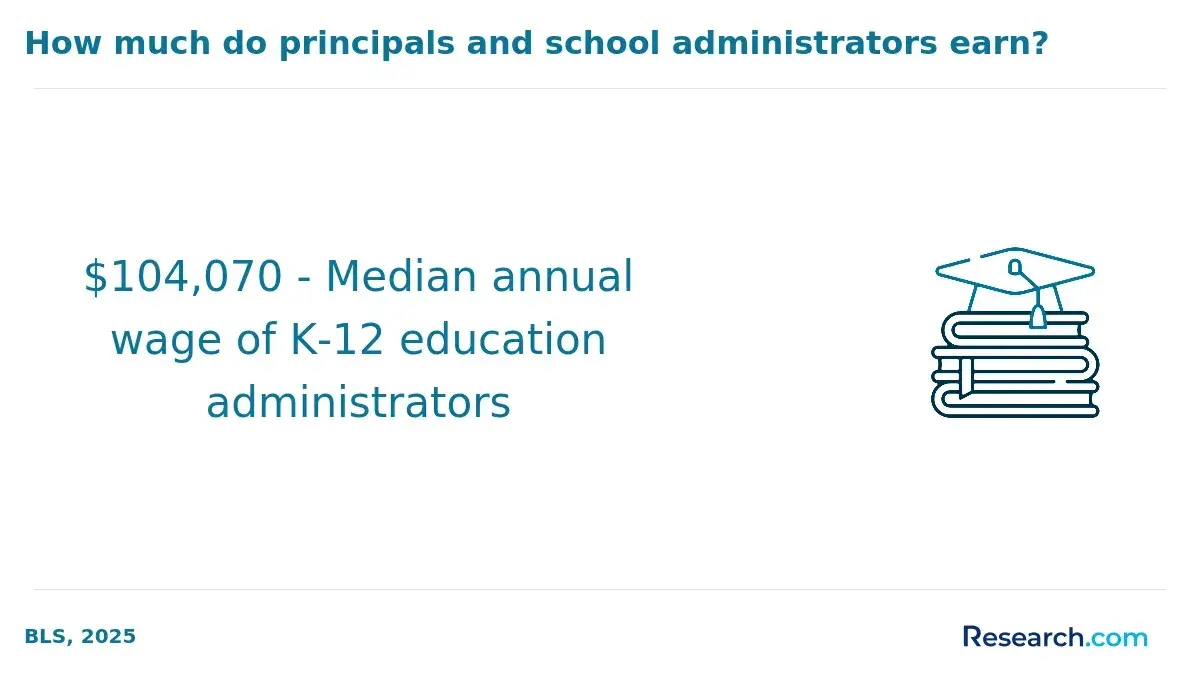
The degree may be worth it if it helps you qualify for a leadership role you could not otherwise pursue, strengthens your advancement prospects, or aligns with your district, institution, or state credentialing requirements. The median wage of educational leadership and administration professionals in K-12 schools is $104,070. Meanwhile, postsecondary leaders earn $103,960. Compared to the ~$40,000 tuition rates that the best online master’s in educational administration programs have, the possible return can be compelling for students who choose carefully and have a realistic career plan.
Do not evaluate ROI using salary alone. Consider your current earnings, expected promotion timeline, licensure requirements, debt, employer tuition assistance, geographic job market, and whether you are willing to take on administrative responsibilities such as conflict resolution, budgeting, policy implementation, staff evaluation, and family or stakeholder communication.
What are the requirements of an online master’s program in educational administration?
Online and campus-based educational administration programs usually have similar admission standards. Requirements vary by institution, especially when a program leads to principal, superintendent, or other administrative certification. Always compare the admissions page with your state’s licensure rules.
Admission Requirements
- Bachelor’s degree: Applicants generally need a bachelor’s degree from an accredited institution.
- Valid teaching certificate: Some certification tracks require an active teaching credential. Non-certification tracks may not require one, and some students may move into certification later.
- Teaching experience: Many programs expect applicants to have at least two years of prior teaching experience.
- Instructional evaluations: Some schools ask for recent evaluations that show effective teaching performance.
- Minimum GPA: Requirements differ, but a 3.0 minimum GPA is common.
- Prerequisite coursework: Applicants from outside education administration may need foundational courses before or during the program.
- Graduate Record Exam (GRE) score: Some programs request GRE scores, while others waive them or do not require them.
- Personal statement: Graduate programs often ask applicants to explain their leadership goals, background, and fit for the program. Some use a single essay prompt, while others require multiple responses.
- Recommendation letters: Two or three letters are commonly required, ideally from supervisors, administrators, faculty, or professional colleagues who can speak to leadership potential.
General Requirements
Educational administrators need more than content knowledge. They must coordinate people, policies, resources, and institutional priorities while making decisions that affect students, families, faculty, staff, and communities. O*NET OnLine identifies several skills and work capacities associated with education administrators, kindergarten through secondary (O*NET OnLine, 2025).
- Service orientation: A consistent focus on identifying and meeting the needs of students, staff, families, and the institution.
- Social perceptiveness: The ability to recognize how people are reacting and understand why those reactions may be occurring.
- Coordination: The capacity to adjust one’s work in relation to other people, departments, or school priorities.
- Time management: The ability to manage personal responsibilities while also coordinating schedules and deadlines for others.
- Critical thinking: The use of logic and evidence to evaluate problems, compare options, and make defensible decisions.
- Instructing: The ability to teach, coach, train, or guide others in new practices or procedures.
- Speaking: Clear communication with faculty, staff, students, families, boards, agencies, and community partners.
- Judgment and decision making: The ability to weigh costs, risks, benefits, and consequences before choosing a course of action.
- Systems evaluation: The use of performance indicators to judge whether programs, services, or policies are meeting goals.
- Management of personnel resources: Hiring, assigning, motivating, developing, and supervising people effectively.
- Management of financial resources: Budgeting for institutional needs and monitoring how funds are spent.
Strong applicants usually enter with some understanding of schools, teaching, student support, or institutional operations. Strong graduates leave with deeper knowledge of law, ethics, assessment, budgeting, equity, personnel management, technology systems, and organizational change.
What are the technological requirements of students for online learning?
Most online programs require a dependable computer, stable internet access, webcam, microphone, and basic productivity software for writing papers, building presentations, analyzing data, and collaborating with classmates. For live classes, a headset with a clear microphone can reduce distractions and improve participation.
Some programs introduce students to research, analytics, enterprise, or communication platforms used in education administration. Examples may include analytic software such as SPSS and enterprise resource planning solutions like SAP. Administrators also frequently use desktop communication, scheduling, task management, and student information tools to coordinate work with students, teachers, parents, faculty, staff, and other stakeholders.
Courses to Expect in Online Master’s Program in Educational Administration
Online educational administration programs usually combine leadership theory, applied school or campus management, legal and ethical issues, research methods, assessment, organizational improvement, and supervised practice. Course titles vary, but many programs cover similar competencies.
- Foundations for Educational Leaders: Introduces leadership theories, professional standards, ethics, and the role of administrators in educational settings.
- School Administration: Examines how administrators design, implement, manage, and improve academic programs and school operations.
- Educational Research and Assessment: Builds skills in qualitative, quantitative, and theoretical research, with applications to institutional decision-making and student outcomes.
- Law in Higher Education: Reviews legal principles affecting public and private higher education institutions, including federal and state requirements.
- Student Development Theories: Explores how students develop in academic, social, emotional, and institutional contexts.
Things to Look for in an Online Master’s Program in Educational Administration
The best program for you is the one that fits your target role, state requirements, budget, schedule, and experience level. Rankings can help you build an initial list, but they should not replace your own due diligence.
| Program Factor | Why It Matters | What to Verify |
| Availability | Some online programs restrict admission by state, certification goal, or professional background | Does the program accept students in your location and situation? |
| Accessibility | You need reliable access to learning materials, faculty, advising, and placement support | Are online students given the same support as campus students? |
| Teaching methods | Synchronous, asynchronous, hybrid, cohort-based, and self-paced formats feel very different | How are courses delivered, and how often must you attend live sessions? |
| Reputation | Faculty experience, alumni network, and employer recognition can affect opportunities | Where do graduates work, and who teaches the courses? |
| Accreditation | Accreditation affects quality assurance, credit transfer, financial aid, and licensure pathways | Is the institution and, where relevant, the educator preparation program accredited? |
| Hidden costs | Fees, travel, exam costs, and equipment can change affordability | What is the full estimated cost of completion? |
| Support services | Online learners need advising, technical help, career support, library access, and field placement guidance | Which services are available remotely? |
| On-site requirements | Some programs require campus visits, local practicums, exams, or internships | Can you meet every in-person requirement without disrupting work? |
2027 Top Online Master’s in Educational Administration
For the 2027 rankings, Research.com’s review team evaluated public datasets from credible sources. Ranking factors include academic ratings, enrollment rate, affordability, accessibility, online reliability, alumni testimonials, and student service reviews. Use the list as a starting point, then confirm tuition, licensure alignment, admissions requirements, and fieldwork expectations directly with each school.
University of Florida
The University of Florida offers an online Master of Education (M.Ed.) in Educational Leadership and Policy. The program is built for students who want leadership preparation supported by faculty mentoring, online instruction, and field-based experience. It offers two tracks: one with eligibility for Florida Level 1 Certification in Educational Leadership and one without certification eligibility. Students entering the certification track must have a prior three-year teaching experience. Students with less than three years of experience may transition to the certification track after meeting the teaching experience requirement.
- Program Length: 2 years
- Tracks/concentrations: One with eligibility for Florida Level 1 Certification in Educational Leadership, one without
- Cost per Credit: $734
- Required Credits to Graduate: 36 39
- Accreditation: Southern Association of Colleges and Schools Commission on Colleges (SACSCOC)
Mississippi College
Mississippi College offers a fully online Master of Higher Education Administration through its School of Education. The program is designed for students interested in administrative careers in colleges, universities, and related higher education settings. Its curriculum emphasizes administrative theory and practice, and students complete two-hour practicums after finishing nine graduate hours. Practicums may be completed at a higher education institution near the student.
- Program Length: 2 years
- Tracks/concentrations: Higher Education Administration
- Cost per Credit: $695
- Required Credits to Graduate: 31
- Accreditation: Southern Association of Colleges and Schools Commission on Colleges (SACSCOC)
Liberty University
Liberty University has offered distance education opportunities since 1985. Its 100% online Master’s in Education Administration and Supervision uses eight-week courses and can be completed in just two years. The program is intended for licensed teachers pursuing advanced licensure and combines education leadership theory with practical administrative skill development. Graduates may apply their training in schools and in other management-oriented environments such as local government, religious sectors, and hospitals.
- Program Length: 2 years
- Tracks/concentrations: Education Administration and Supervision
- Cost per Credit: $415
- Required Credits to Graduate: 36
- Accreditation: Council for the Accreditation of Educator Preparation (CAEP)
Lamar University
Lamar University, a public university in Beaumont, Texas, offers a fully online Master of Education in Administration. It was the institution’s first online offering and remains its largest fully online graduate program. Students study administrative skills such as instructional design, implementation, and human resource development. The program is designed for aspiring principals and superintendents who need to build community support, encourage parent involvement, and connect leadership decisions to student and school outcomes.
- Program Length: 2 years
- Tracks/concentrations: Administration
- Cost per Credit: $719 (per three-hour course)
- Required Credits to Graduate: 30
- Accreditation: Southern Association of Colleges and Schools Commission on Colleges (SACSCOC)
Texas A&M International University
Texas A&M International University in Laredo offers a fully online Master of Science in Educational Administration. The curriculum can be completed in as fast as 10 months and is structured for working professionals. Coursework includes topics such as Public School Law, Advanced Problems in Supervision, and Principalship. The program is also designed to help students prepare for Texas Education Agency principal exams, including the Principal 268 and Performance Assessment for School Leaders (PASL) Certification Assessment.
- Program Length: as short as 10 months
- Tracks/concentrations: Principalship in three different education levels (elementary, middle school, and high school)
- Cost per Credit: $367 (in-state); $1,030 (out-of-state)
- Required Credits to Graduate: 30
- Accreditation: Southern Association of Colleges and Schools Commission on Colleges (SACSCOC)
How can data analytics transform educational administration?
Data analytics helps educational administrators move from reactive decisions to evidence-informed planning. Instead of relying only on intuition, leaders can examine patterns in attendance, grades, retention, enrollment, resource use, course demand, staffing, and student support needs.
- Student performance and retention: Administrators can use performance trends to identify students who may need timely support. Predictive analytics can also help institutions anticipate retention challenges and plan interventions earlier.
- Resource allocation: Data can show how budgets, staffing, classrooms, technology, and support services are being used, helping leaders prioritize areas with the strongest connection to student success.
- Curriculum effectiveness: Analytics can help evaluate student engagement and achievement, giving administrators evidence to improve programs, teaching strategies, and academic support.
- Operational efficiency: Enrollment patterns, faculty workload, course scheduling, and facility usage data can help reduce bottlenecks and improve planning.
Professionals who want to strengthen their data and management skills may also compare broader affordable graduate options, including programs listed in Research.com’s guide to the cheapest master’s degree online.
What are the financial considerations and affordability for an online master’s in educational administration?
Affordability depends on more than the tuition rate posted on a school website. Students should compare the total cost of the degree, the time required to finish, the likelihood of completing while employed, financial aid options, licensure expenses, and the career value of the credential.
Tuition and Associated Costs
Online programs may reduce indirect costs, but they do not eliminate every expense. Tuition can vary significantly among public, private, in-state, out-of-state, and flat-rate online programs. Students should also budget for technology fees, books, digital materials, proctoring, software, certification applications, exam fees, and travel for practicums or residencies when required.
Financial Aid and Scholarships
Students enrolled in eligible accredited programs may be able to use federal loans, grants, institutional scholarships, employer tuition assistance, or district-supported reimbursement plans. Some schools also offer scholarships for educators, aspiring school leaders, or graduate students in education. Before borrowing, ask the financial aid office for a full cost estimate and repayment information.
Value and Return on Investment (ROI)
ROI is strongest when the degree directly supports a realistic next step: principal certification, district leadership, higher education administration, student services leadership, or another defined role. A low-cost program is not automatically a good value if it does not meet licensure requirements or lacks meaningful support. Students comparing cost-conscious options can also review teaching degree online programs to understand the broader education degree market.
Strategies for Cost Management
- Ask your employer or school district about tuition reimbursement before enrolling.
- Choose a program that allows you to remain employed while studying.
- Compare total program cost, not only cost per credit.
- Confirm whether transfer credits, prior coursework, or professional experience can reduce time to completion.
- Avoid taking extra courses that do not support your licensure or career goal.
How can I customize my educational administration master’s program to align with my career goals?
Customization matters because educational administration is not one job. A future K-12 principal, higher education student affairs leader, policy analyst, and district operations administrator need different preparation. Look for programs that let you align coursework, fieldwork, and projects with the role you want.
- Choose the right track or concentration: Options may include K-12 Leadership, Higher Education Administration, Special Education Leadership, Policy and Governance, or related areas. Select the track that matches your intended workplace and credential needs.
- Use electives strategically: Electives in finance, curriculum leadership, student services, education law, assessment, or digital learning can help you build role-specific expertise.
- Plan your internship or practicum carefully: Fieldwork should place you in an environment similar to your target role. A future principal should seek school-based leadership exposure, while a higher education candidate may benefit from enrollment, advising, residence life, or academic affairs settings.
- Make the capstone career-relevant: A strong capstone can address a real problem such as staff retention, attendance, student engagement, assessment quality, program evaluation, or technology implementation.
- Seek mentorship early: Faculty, supervisors, alumni, and working administrators can help you avoid mismatched courses and build a clearer path to your next role.
What career opportunities can I expect after earning an online master’s in educational administration?
Graduates may pursue leadership and administrative roles in K-12 schools, districts, colleges, universities, educational support organizations, nonprofit education programs, public agencies, and private training environments. Common paths include school principal, assistant principal, district administrator, academic dean, student affairs professional, program coordinator, enrollment leader, policy specialist, or education operations manager.
The strongest opportunities usually go to graduates who combine the degree with relevant experience, licensure where required, strong references, fieldwork, and evidence of leadership impact. For a broader look at career options, Research.com’s guide to jobs with a masters in education can help you compare roles that use graduate education training.
| Career Direction | Typical Setting | Important Preparation |
| K-12 school leadership | Elementary, middle, and high schools | Teaching experience, state licensure, supervision skills, school law, instructional leadership |
| District administration | School districts and public education agencies | Budgeting, personnel management, policy implementation, data analysis, community relations |
| Higher education administration | Colleges and universities | Student development, enrollment, academic affairs, compliance, assessment, campus operations |
| Education support services | Nonprofits, consulting groups, government programs, service providers | Program evaluation, grant management, stakeholder communication, operations leadership |
| Training and learning management | Private organizations, health, scientific research, and other sectors | Adult learning, program design, staff development, analytics, organizational management |
Can I fast track my online master’s in educational administration?
Some schools offer accelerated formats for students who can handle heavier workloads, shorter course terms, or year-round study. These options may use condensed courses, transfer credits, prior professional experience, or tightly sequenced cohorts to reduce the time required to graduate.
Fast tracking can be useful if you already meet experience requirements and need the degree for a specific promotion or licensure timeline. It can be risky if you are working full time, managing family obligations, or still need significant field experience. Before choosing an accelerated path, confirm that the shorter format does not weaken your preparation for certification exams, internships, or leadership practice. For more context on intensive education pathways, review Research.com’s guide to a fast track education degree.
Can integrating interdisciplinary studies enhance my career prospects?
Yes, interdisciplinary study can improve career flexibility when it complements your administrative goals. Educational leaders increasingly work across technology, student support, information access, compliance, community partnerships, workforce training, and data-informed planning. Adding knowledge from another field can make you more useful in specialized administrative roles.
For example, pairing educational administration with information management can support leadership in academic libraries, learning resources, digital access, or institutional knowledge systems. Students interested in that direction may explore how a library science career connects with education leadership.
How can I maximize networking and professional development opportunities during my online master’s in educational administration?
Online students need to be intentional about networking because professional relationships may not happen automatically in hallways or campus events. Look for programs that build connection into the experience through cohort models, live discussions, mentoring, alumni panels, practicum partnerships, and faculty advising.
- Attend optional virtual events, even when they are not graded.
- Ask faculty about professional associations and conferences relevant to your target role.
- Use discussion boards to build real professional relationships, not just complete participation requirements.
- Choose practicum sites where supervisors can become references.
- Connect with alumni working in the roles you want.
- Document leadership projects and outcomes so you can discuss them in interviews.
Students focused on workforce learning, continuing education, or nontraditional learners may also benefit from comparing options in adult education degree online programs.
How Does Integrating Child Development Enhance Educational Administration Decision-Making?
Child development knowledge can help administrators make better decisions about curriculum, behavior support, family engagement, staffing, early intervention, and school climate. Leaders who understand developmental milestones and learning differences are better positioned to evaluate whether policies and programs support the whole child rather than only compliance metrics.
This perspective is especially useful for administrators working in early childhood, elementary education, special education, family services, or child-centered nonprofit programs. Professionals who want deeper preparation in this area may compare an online masters degree in child development with administration-focused programs.
Emerging Trends and Innovations in Educational Administration
Educational administration is being reshaped by technology, enrollment pressures, workforce concerns, equity priorities, and changes in how students learn. Future administrators need to understand these shifts because they affect budgeting, staffing, policy, student support, and institutional strategy.
The Rise of Data-Driven Decision-Making
Administrators are increasingly expected to interpret data on attendance, achievement, enrollment, retention, staffing, and program effectiveness. Data literacy is becoming a practical leadership skill, not a technical extra.
Integration of Artificial Intelligence (AI) and Machine Learning
AI tools can support tasks such as enrollment forecasting, student outreach, scheduling, and early alerts. Administrators must also address risks related to privacy, bias, academic integrity, faculty workload, and responsible implementation.
Expansion of Remote and Hybrid Learning Models
Remote and hybrid learning are now part of long-term education planning. Leaders must evaluate accessibility, student engagement, instructional quality, digital equity, assessment integrity, and faculty support.
Emphasis on Equity and Inclusion
Equity and inclusion affect hiring, discipline, student services, curriculum, accessibility, funding, and community trust. Administrators play a central role in turning institutional commitments into daily practice.
Focus on Early Childhood Education
Early childhood leadership continues to attract attention because early learning affects later academic and developmental outcomes. Students interested in this specialization may compare affordable early childhood education degree online programs with broader educational administration options.
What challenges might you encounter while pursuing an online master’s in educational administration?
Online graduate study is manageable for many working adults, but it brings real challenges. Students often struggle with time management, isolation, technology issues, fieldwork coordination, and balancing professional responsibilities with academic deadlines.
| Common Challenge | Why It Happens | Better Approach |
| Underestimating weekly workload | Online courses can appear flexible but still require substantial reading, writing, and projects | Block recurring study time before the term starts |
| Weak peer connection | Remote students may not naturally form relationships | Join live sessions, study groups, and program forums early |
| Licensure confusion | State requirements can be complex and location-specific | Confirm requirements with both the program and the state licensing agency |
| Field placement delays | Practicums may require approvals, supervisors, and local site agreements | Ask about placement procedures before enrolling |
| Technology problems | Unstable internet, outdated hardware, or unfamiliar platforms can interfere with coursework | Test tools before classes begin and use technical support quickly |
Students planning longer-term academic advancement may also compare doctoral options after the master’s, including cheapest online doctoral programs in education.
How does accreditation impact the value of an online master’s in educational administration?
Accreditation is one of the most important checks in choosing an online master’s program. It signals that an institution or educator preparation program has been reviewed against recognized standards. Accreditation can affect federal financial aid eligibility, credit transfer, employer confidence, doctoral admissions, and licensure pathways.
Students should verify institutional accreditation and, when relevant, programmatic accreditation for educator preparation. Do not rely only on marketing language. Search the accreditor’s database, check the school’s accreditation page, and ask the program directly whether it meets requirements for your target state and role.
Accreditation is also relevant when comparing specialized education degrees. For example, students considering early childhood leadership can review options such as the cheapest online master's degree in early childhood education and compare how accreditation aligns with affordability and career use.
How Do Alumni Outcomes and Program Success Rates Influence Your Career Trajectory?
Alumni outcomes help you judge whether a program delivers practical career value. Before enrolling, look for information on graduation rates, completion timelines, licensure exam preparation, employment outcomes, alumni roles, and employer partnerships. If a program does not publish this information, ask admissions or program staff directly.
Outcome data should be interpreted carefully. A program with strong results for in-state principal candidates may not be the best option for a student seeking higher education administration in another state. Compare outcomes against your own goal, not just the program’s overall reputation. Students who want complementary administrative pathways may also review the most affordable MLIS online degrees.
Common Mistakes to Avoid When Choosing a Program
- Choosing without checking accreditation: Accreditation affects financial aid, transferability, licensure, and employer trust.
- Assuming all online programs meet your state’s licensure rules: Certification requirements vary, especially for K-12 leadership.
- Looking only at tuition: Required credits, fees, travel, exams, and technology can change the true cost.
- Ignoring fieldwork logistics: Practicums and internships may require local approvals, supervisors, or site partnerships.
- Relying only on rankings: Rankings can identify strong programs, but your best fit depends on career goal, location, schedule, and credential needs.
- Assuming salary outcomes are guaranteed: Salary depends on role, region, experience, employer, licensure, and available openings.
- Choosing the fastest program without checking workload: Accelerated formats can be effective, but they can also strain full-time workers.
Finding Your Place in Education Administration
Educational administration includes many specialties: K-12 leadership, higher education administration, student affairs, district operations, policy, assessment, early childhood leadership, instructional systems, and education support services. Your program choice should start with the role you want, not just the degree title.
If you are unsure where you fit, choose a program with strong advising, mentorship, field placement support, and career guidance. Faculty and supervisors can help you identify whether you are better suited for school leadership, campus administration, student support, policy, operations, or another administrative track.
Strong education administrators need reliability, flexibility, strategic thinking, and the courage to make difficult decisions. The work often involves competing priorities: academic quality, budgets, staffing, safety, equity, compliance, family concerns, student well-being, and public accountability. Administrators also help students and staff manage pressure, including issues like dealing with stress in demanding academic environments.
The role can also involve politics. Promotions, grants, staffing decisions, policy changes, and resource allocation can create conflict. Effective leaders need analytical skill, emotional resilience, ethical judgment, and the ability to communicate decisions clearly even when not everyone agrees. If that type of responsibility matches your goals, an online master’s in educational administration can be a practical path into education leadership.
Key Insights
- An online master’s in educational administration can be valuable when it matches a specific career goal. The degree is strongest when aligned with licensure, fieldwork, and the leadership role you want.
- Accreditation and state requirements are nonnegotiable. Before enrolling, verify institutional accreditation, program accreditation where relevant, and whether the program meets your state’s administrative credential rules.
- Online does not mean lower quality by default. Employer confidence depends on the institution, program reputation, faculty quality, field experience, and graduate outcomes.
- Cost should be measured as total cost of completion. Tuition, credits, fees, travel, technology, exam costs, and lost work time all affect affordability.
- Educational administration is increasingly data- and technology-driven. Future leaders need to understand analytics, online learning systems, AI-related opportunities, privacy concerns, and digital equity.
- Career outcomes are not automatic. Experience, licensure, local job market, networking, practicum quality, and demonstrated leadership matter as much as the diploma.
References:
- Ash, A. M. (2025, September 24). Teachers Who Collaborate, Learn at Work Are More Satisfied. Gallup.
- EducationDynamics. (2026). Modern Learner 2.0 The New Enrollment Model. EDDY.
- Hanson, M. (2025, October 27). Cost of online education vs. traditional education: Comparison. Education Data Initiative.
- Kurtz, H. & Baker, L. (2025, March 4). What Teacher Morale Looks Like in Every State. EdWeek.
- Learning Policy Institute. (2025, July). An Overview of Teacher Shortages: 2025 Fact Sheet. Learning Policy Institute.
- Ma, J., Pender, M., & Hu, X. (2025). Trends in College Pricing and Student Aid 2025. College Board.
- National Student Clearinghouse Research Center. (2026, January 15). Final Fall Enrollment Trends. National Student Clearinghouse Research Center.
- O*NET OnLine. (2025). 11-9032.00 Education administrators, kindergarten through secondary. O*NET OnLine.
- Roberto, K. J., & Johnson, A. F. (2019). Employer perceptions of online versus face-to-face degree programs. Journal of Employment Counseling, 56(4), 180-189. https://doi.org/10.1002/joec.12132
- Simunich, B., Garrett, R., Fredericksen, E. E., & Gay, K. (2025). CHLOE 10 | Meeting the Moment: Navigating Growth, Competition, and AI in Online Higher Education, 2025. Quality Matters.
- U.S. Bureau of Labor Statistics. (2025, August 28). Occupational projections, 2024–2034, and worker characteristics. Retrieved February 2026, from BLS.
Other Things You Should Know About Online Master’s in Educational Administration Degree Programs
An online master's program in educational administration offers flexibility and accessibility compared to traditional programs. Online students benefit from being able to study remotely, which can be ideal for working professionals. Both formats typically offer similar curriculums, but online courses often use digital tools to facilitate interaction and learning.
Graduates can pursue various leadership roles, such as school principal, district administrator, or director of student services. Positions often require experience and state licensure, aligning with the advanced skills developed in 2027 online educational administration programs.
Yes, in 2027, the Council for the Accreditation of Educator Preparation (CAEP) is one of the key accrediting bodies for online master's programs in educational administration. Accreditation by CAEP ensures that the program meets high standards for educator preparation.
In 2027, the cost of an online master's in educational administration program can vary significantly, ranging from $10,000 to $30,000. Factors influencing the cost include the institution's prestige, duration of the program, and additional fees for technology or materials. Prospective students should compare programs to find one that fits their budget and goals.
Most states require a principal or education administrator license for school leadership jobs. After graduation, candidates usually must hold a teaching license, complete an approved internship or supervised practicum, and pass a state exam such as the School Leaders Licensure Assessment, or SLLA, where required.