2027 Most Affordable Online Educational Policy Degree Programs

Co-Founder and Chief Data Scientist
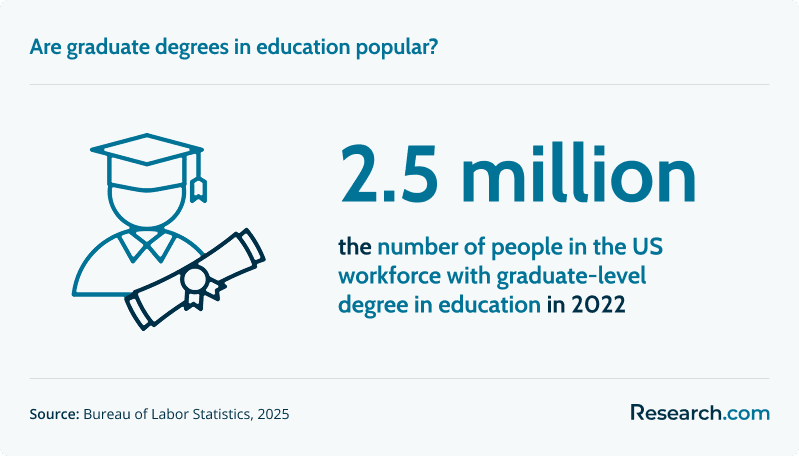
Choosing an online educational policy degree is not just a question of finding the lowest tuition. It is a decision about career direction, research training, leadership preparation, accreditation, total cost, and whether the program can help you move into policy analysis, education leadership, advocacy, government, consulting, or academia. The choice matters because the field is competitive: as of 2022, more than 2.5 million US professionals held graduate degrees in education.
This guide is designed for working educators, policy professionals, administrators, researchers, and career changers who want an affordable online path into educational policy. You will learn how these programs work, what they cost, how master’s, EdD, and PhD options differ, which careers they can support, what job-market data suggest, and how to compare programs before applying.
Quick answer: Are affordable online educational policy degrees worth considering?
Yes, an affordable online educational policy degree can be a strong option if the program is accredited, matches your career goals, offers relevant policy or research training, and fits your budget without excessive borrowing. A master’s program may be enough for policy analyst, program evaluation, nonprofit, government, or administrative roles. A doctorate may be more appropriate for advanced research, faculty positions, senior leadership, or high-level policy work.
| Best fit | Typical degree choice | What to check before enrolling |
| Working educators moving into policy or leadership | Online MEd, MA, or EdD | Licensure expectations, leadership coursework, applied projects, and employer tuition support |
| Future researchers or faculty members | PhD in education policy or related field | Faculty research fit, dissertation support, funding, research methods depth, and publication opportunities |
| Policy analysts, nonprofit professionals, and government staff | Master’s or doctorate, depending on seniority goals | Quantitative methods, policy analysis, internships or applied research, and alumni outcomes |
| Students mainly seeking the lowest possible price | Affordable accredited online master’s program | Total tuition, fees, transfer credits, financial aid, and time to completion |
What are the benefits of enrolling in the most affordable online educational policy degree programs?
- Lower upfront investment: Affordable programs can reduce the cost of earning a graduate credential while still providing training in policy analysis, research, leadership, and educational systems.
- Preparation for influential roles: Graduates may pursue positions such as policy analyst, senior researcher, postsecondary education administrator, political scientist, nonprofit leader, or education consultant, depending on degree level and experience.
- Stronger earning potential in some roles: Advanced policy-related careers can offer substantial salaries. For example, political scientists reported median annual pay of $139,380 in 2024.
- Flexibility for working adults: Online delivery can make graduate study more realistic for professionals who need to keep working while completing coursework, research, or a capstone project.
- Access to specialized study without relocation: Students can compare programs across states and institutions instead of being limited to nearby campuses.
What can I expect from the most affordable online educational policy degree programs?
Affordable online educational policy programs usually cover how education systems are governed, funded, evaluated, and changed through policy. At the master’s level, students typically build skills in policy analysis, research interpretation, education law, equity, leadership, and program evaluation. At the doctoral level, students go deeper into advanced research design, applied problem-solving, data analysis, organizational change, and original scholarship or practice-based inquiry.
Most online programs are designed to be academically comparable to campus-based programs at the same institution, but the student experience can differ. Expect online readings, recorded or live lectures, discussion boards, group projects, virtual office hours, and independent research. Some programs are fully asynchronous, while others require scheduled online meetings or short residencies.
Master’s programs often end with a capstone, portfolio, applied policy project, or comprehensive exam. Doctoral programs usually require a dissertation, dissertation of practice, or major capstone project. The most important difference at the doctoral level is the program’s orientation: a PhD is generally built around original research, while an EdD is usually designed for experienced practitioners solving problems in educational organizations.
Where can I work after graduating from the most affordable online educational policy degree programs?
Graduates can work in school districts, state education agencies, federal offices, higher education institutions, think tanks, advocacy organizations, foundations, consulting firms, research centers, and nonprofit organizations. Some graduates stay in K-12 or higher education but move into policy, compliance, assessment, institutional research, student success, curriculum, or leadership roles.
Your degree level matters. A master’s degree may support analyst, coordinator, program manager, or administrator roles. An EdD may support senior practitioner-leadership positions. A PhD is usually the stronger match for academic research, faculty work, and roles requiring advanced empirical research training. Some K-12 leadership jobs, such as principal or superintendent roles, may require state-specific licensure beyond an educational policy degree.
How much can I make with a degree from the most affordable online educational policy degree programs?
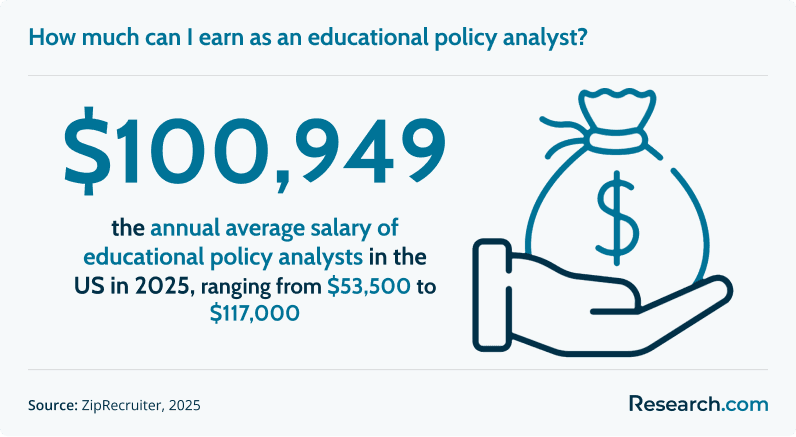
Income depends on role, sector, location, experience, degree level, and specialization. Educational policy analysts reported an average annual salary of about $100,949 in 2025. Related master’s-level roles such as management analysts had median annual pay of $101,190 in 2024. Doctoral-level roles can pay more in some cases; for example, political scientists had median annual pay of $139,380 in 2024.
These figures are useful benchmarks, not guarantees. A low-cost program can improve return on investment, but career outcomes still depend on the quality of your experience, professional network, research skills, internship or project work, and the labor market in your target sector.
- Most affordable online educational policy degree programs for 2027
- How long online educational policy degrees take
- Online vs. on-campus educational policy programs
- Average cost and total price factors
- Financial aid options for online educational policy students
- Admission requirements and prerequisites
- Common courses in educational policy programs
- Specializations in online educational policy degrees
- Accreditation and reputation
- How to choose the right affordable program
- Current policy challenges and emerging skills
- Career paths after graduation
- Job market outlook
- Hands-on learning in online programs
- Career advancement support, applied learning, employment outlook, and common mistakes to avoid
10 Most Affordable Online Educational Policy Degree Programs for 2027
How do we rank schools?
This ranking is based on research and data review conducted using Research.com’s ranking methodology. The analysis used multiple data sources, including the IPEDS database from the National Center for Education Statistics, Peterson’s database and its Distance Learning Licensed Data Set, and the College Scorecard database for information on cost and outcomes.
| Rank | School and program | Credits | Listed cost information | Best for |
| 1 | Texas Tech University — MEd in Educational Leadership with a Concentration in Educational Policy | 36 | $447.83 per credit; estimated total of $16,122 | Students seeking an affordable master’s path into policy-informed leadership |
| 2 | University of Illinois Urbana-Champaign — Master’s in Education Policy, Organization, and Leadership | 36 | $538 per credit; total estimate of $17,216 | Students who want specialization options in equity, global studies, learning design, or human resource development |
| 3 | Florida State University — EdD in Educational Leadership and Policy | 69 | $444.26 in-state per credit; $1,075.66 out-of-state per credit | Mid-career education leaders seeking an applied doctorate |
| 4 | Mississippi State University — EdD in Educational Policy and Organizational Design | 61 | $558.50 per credit; total estimate of $34,068.50 | Scholar-practitioners focused on organizational improvement |
| 5 | Liberty University — PhD in Public Policy – Education Policy | 60 | $595 full-time per credit; $650 part-time per credit | Students interested in public policy with an education policy specialization |
| 6 | Boston College — MEd in Educational Leadership and Policy | 30 | $1,370 per credit; estimated total of $41,100 | Students seeking leadership preparation with policy, social justice, or licensure-related options |
| 7 | University of Pennsylvania — PhD in Education Policy | 16 course units | $44,792; full scholarship for first 8 semesters including stipend | Research-focused students pursuing advanced empirical education policy scholarship |
| 8 | Walden University — PhD in Education in Educational Policy, Leadership, and Management | 86 | $760 per credit; total estimate of $65,360 | P-20 education leaders seeking a research-oriented online doctorate |
| 9 | University of Iowa — EdD in Educational Policy and Leadership Studies | 90 | $764 per credit; total estimate of $68,760 | PK-20 leaders interested in problem-based applied doctoral study |
| 10 | American University — EdD in Education Policy and Leadership | 40 | $2,000 per credit; total estimate of $80,000 | Education leaders seeking a practice-focused doctorate with residencies |
1. Texas Tech University - MEd in Educational Leadership with a Concentration in Educational Policy
Texas Tech University offers a fully online 36-hour Master of Education in Educational Leadership with a Concentration in Educational Policy. The program is intended for students preparing for non-certified leadership roles in education, government, nonprofits, or the private sector, as well as those considering later doctoral study. Coursework emphasizes the relationship between education, leadership, policy, research, and evidence-based decision-making, with attention to equity-oriented leadership and policy change.
- Program Length: ~2 years
- Required Credits to Graduate: 36
- Cost per Credit: $447.83 (at an estimated total of $16,122)
- Accreditation: Southern Association of Colleges and Schools Commission on Colleges (SACSCOC)
2. University of Illinois Urbana-Champaign - Master’s in Education Policy, Organization, and Leadership
The University of Illinois Urbana-Champaign provides a Master’s in Education Policy, Organization, and Leadership for students pursuing roles such as academic professional, adult educator, policy analyst, learning designer, or organizational development specialist. The program includes specialization choices and graduate support through faculty advising and resources such as the Bureau of Educational Research.
- Program Length: 18 months
- Available Specializations: Diversity & Equity in Education; Global Studies in Education; Human Resource Development; and Learning Design and Leadership
- Required Credits to Graduate: 36
- Cost per Credit: $538 (with a total estimate of $17,216)
- Accreditation: Higher Learning Commission (HLC)
3. Florida State University - EdD in Educational Leadership and Policy
Florida State University offers an online EdD in Educational Leadership and Policy for mid-career education professionals. The program prepares scholarly practitioners to examine organizational systems, use research to improve policy and practice, and address challenges in K-12 and higher education. Courses are delivered asynchronously online, and students participate in an annual summer institute in Tallahassee.
- Program Length: ~3 to 4 years
- Available Major: Educational Leadership/Administration
- Required Credits to Graduate: 69
- Cost per Credit: $444.26 (in-state); $1,075.66 (out-of-state); $30,653.94 (in-state total tuition estimate); $74,220.54 (out-of-state total tuition estimate)
- Accreditation: Southern Association of Colleges and Schools Commission on Colleges (SACSCOC)
4. Mississippi State University - EdD in Educational Policy and Organizational Design
Mississippi State University offers an EdD in Educational Policy and Organizational Design for scholar-practitioners working in educational and professional settings. The terminal degree emphasizes critical examination of programs, action research, theory-to-practice problem-solving, and organizational improvement. The program is 100% online and uses a blended asynchronous and synchronous format.
- Program Length: ~3 to 4 years
- Required Credits to Graduate: 61
- Cost per Credit: $558.50 (with a total estimate of $34,068.50)
- Accreditation: Southern Association of Colleges and Schools Commission on Colleges (SACSCOC)
5. Liberty University - PhD in Public Policy – Education Policy
Liberty University provides an online PhD in Public Policy with an Education Policy specialization. The program focuses on policy analysis, policy development, legislative knowledge, research methods, and education policy issues affecting K-12 schools and universities at local, state, and federal levels.
- Program Length: ~2 years
- Specialization: Educational Policy
- Required Credits to Graduate: 60
- Cost per Credit: $595 (full-time, with an estimated total of $35,700); $650 (part-time, with an estimated total of $39,000)
- Accreditation: New England Commission of Higher Education (NECHE)
6. Boston College - MEd in Educational Leadership and Policy
Boston College offers a Master of Education in Educational Leadership and Policy for students preparing for leadership, policy, advocacy, school, or district roles. The curriculum addresses standards-based reform, technology, evidence-based practice, and optional study in Social Justice Leadership or Educational Policy Development.
- Program Length: ~2 years
- Available Specializations: School Principal Licensure; Educational Policy Development; and Social Justice Leadership
- Required Credits to Graduate: 30
- Cost per Credit: $1,370 (with an estimated total of $41,100)
- Accreditation: Southern Association of Colleges and Schools Commission on Colleges (SACSCOC)
7. University of Pennsylvania - PhD in Education Policy
The University of Pennsylvania offers a PhD in Education Policy for students seeking advanced empirical research training. The individualized doctoral program uses an apprenticeship model in which students work closely with faculty to design, conduct, and communicate research. It is designed for future education policy scholars and researchers.
- Program Length: 4 years
- Available Specializations: School Principal Licensure; Educational Policy Development; and Social Justice Leadership
- Required Course Units to Graduate: 16
- Total Tuition: $44,792 ($22,396 for first 8 semesters; all PhD students are guaranteed full scholarship for their first 8 semesters, including a stipend. Additional semesters have a flat rate of $2,800)
- Accreditation: Middle States Commission on Higher Education (MSCHE)
8. Walden University - PhD in Education in Educational Policy, Leadership, and Management
Walden University offers a PhD in Education with a specialization in Educational Policy, Leadership, and Management. The program focuses on policy influence across the P-20 education system and helps students strengthen leadership, management, research, and change-oriented skills. Students may also earn a Master of Philosophy degree on the way to the doctorate.
- Program Length: ~8 years
- Specialization: Education Policy, Leadership, and Management (P–20)
- Required Credits to Graduate: 86
- Cost per Credit: $760 (with a total estimate of $65,360)
- Accreditation: Higher Learning Commission (HLC)
9. University of Iowa - EdD in Educational Policy and Leadership Studies
The University of Iowa offers an EdD in Educational Policy and Leadership Studies for educators pursuing advanced leadership in PK-20 settings. The program uses blended learning and a problem-based approach to help students analyze complex educational challenges, collaborate with peers, and conduct applied research.
- Program Length: 3 years
- Required Credits to Graduate: 90
- Cost per Credit: $764 (with a total estimate of $68,760)
- Accreditation: Higher Learning Commission (HLC)
10. American University - EdD in Education Policy and Leadership
American University offers an EdD in Education Policy and Leadership for scholarly practitioners focused on education change and social impact. The program combines practice-oriented coursework, research, a dissertation of practice, and three on-campus residencies.
- Program Length: < 3 years
- Required Credits to Graduate: 40
- Cost per Credit: $2,000 (with a total estimate of $80,000)
- Accreditation: Middle States Commission on Higher Education (MSCHE)
How long does it take to complete the most affordable online educational policy degree programs?
Completion time depends on degree level, enrollment intensity, transfer credit, dissertation or capstone requirements, and whether the program uses a cohort or self-paced structure. For working professionals, time to completion is often as important as tuition because a longer program can increase fees, delay career advancement, and add scheduling pressure.
| Degree type | Typical completion range | Common final requirement | Best for |
| Online master’s in educational policy | 1.5 to 3 years | Capstone, portfolio, comprehensive exam, or applied project | Students seeking policy, administration, nonprofit, or government roles without committing to a doctorate |
| Online EdD in educational policy or leadership | 3 to 7 years | Dissertation of practice, applied research project, or doctoral capstone | Experienced practitioners who want to solve organizational or policy problems |
| Online or hybrid PhD in education policy | 3 to 7 years | Research dissertation | Students targeting academic, research, or high-level policy scholarship roles |
Master’s Programs in Educational Policy: Typical Duration
Most online master’s programs in educational policy, including MEd, MA, and similar degrees, are structured for completion in 1.5 to 3 years. Full-time students may finish in about two academic years, while part-time students may extend the timeline to three or four years depending on course load and program flexibility. Credit requirements commonly fall between 30 and 42 credits.
Doctoral Programs in Educational Policy: Typical Duration
Doctoral programs require a larger commitment because students complete advanced coursework and produce original or applied research. A PhD or EdD in educational policy commonly takes 3 to 7 years. Coursework may take 2-3 years, while the dissertation or doctoral capstone can add 1-4 years depending on topic scope, research access, committee feedback, and writing progress.
PhD vs. EdD: Which doctorate fits your goal?
Before applying, compare the difference between an EdD and a PhD carefully. The decision affects your coursework, research expectations, professional identity, and likely career path.
A PhD in Educational Policy is usually designed for students who want to produce original research, contribute to theory, publish scholarship, and pursue roles in universities, research organizations, or advanced policy analysis. The culminating requirement is typically a dissertation based on new research.
An EdD is generally built for scholar-practitioners. Students apply research to practical problems in schools, districts, higher education institutions, nonprofits, or policy organizations. The final project may involve applied research, program evaluation, policy analysis, or a dissertation of practice.
What can speed up or slow down completion?
- Credit requirements: A 30-credit master’s program is a very different commitment from a 90-credit doctorate.
- Full-time vs. part-time enrollment: Full-time study may shorten the timeline, but part-time study is often more realistic for working adults.
- Dissertation or capstone complexity: Doctoral research can become the most unpredictable stage of the degree.
- Transfer credit: Some schools accept previous graduate coursework, which may reduce required credits.
- Residency requirements: Even online programs may include campus visits, institutes, defenses, or intensive sessions.
- Work and family obligations: Consistent writing and research time can determine whether students finish on schedule.
Program websites provide estimates, but your actual timeline will depend on both institutional structure and your ability to maintain steady academic progress.
How does an online educational policy degree program compare to an on-campus program?
Online educational policy programs can be a practical alternative to campus programs, especially for professionals who cannot relocate or pause their careers. The key is not whether the program is online; it is whether the institution is accredited, the curriculum is rigorous, the faculty are qualified, and the program supports online learners well.
Students comparing flexible education-leadership options may also review related pathways such as the most affordable online EdS degrees in special education, particularly if their policy interests involve special education systems, services, or leadership.
| Factor | Online educational policy degree | On-campus educational policy degree |
| Flexibility | Often better for working adults because courses may be asynchronous or scheduled outside traditional hours | More structured and tied to campus schedules |
| Networking | Can connect students across regions, but students must be proactive | Offers more spontaneous in-person contact with faculty, peers, and campus events |
| Cost | May reduce commuting, relocation, and housing costs; useful when comparing affordable online EdD programs | May include additional living, transportation, or campus-related expenses |
| Academic rigor | Can be equally rigorous when offered by an accredited institution with strong faculty and assessment standards | Can be rigorous, but quality still varies by institution and program |
| Student support | Depends heavily on virtual advising, library access, tech support, and online community design | Often easier to access physical offices, libraries, and campus services |
| Best fit | Self-directed learners who need flexibility | Students who prefer in-person discussion, campus immersion, and local networking |
Employers generally evaluate the institution, accreditation, degree level, skills, experience, and relevance of the program more than the delivery format alone. Still, online students should be intentional about networking, faculty contact, and applied experience because those elements may not happen automatically.
What is the average cost of the most affordable online educational policy degree programs?
The most affordable online educational policy programs in this list begin at about $16,100 in total tuition for master’s study. Doctoral options listed here range from about $30,700 to $80,000 or higher, depending on credits, residency status, and institutional pricing. Per-credit rates span from about $440 to more than $2,000.
Some online programs use one tuition rate for all students, while others charge different in-state and out-of-state rates. Similar cost-comparison logic applies when students evaluate other low-cost online programs, such as the most affordable online Christian ministry degree programs, where tuition, fees, and delivery format all affect total price.
What costs should you include besides tuition?
- Mandatory university fees: Technology, student service, graduation, library, or distance-learning fees can add to the total.
- Books and software: Research programs may require statistical software, databases, or specialized materials.
- Residency travel: Hybrid or low-residency programs may require transportation, lodging, and meals.
- Lost time or reduced work hours: A demanding program may affect your ability to take on additional work.
- Loan interest: Borrowed funds can make the long-term cost higher than the advertised tuition.
How should you think about ROI?
Return on investment should be evaluated by comparing total cost with likely career benefits. Potential benefits may include qualifying for specialized policy roles, moving into leadership, strengthening research credentials, or positioning yourself for doctoral-level work. Relevant salary benchmarks include 2024 median pay of $101,190 for management analysts and $139,380 for political scientists.
Students considering broader policy careers may also compare educational policy with related fields, such as the most affordable online energy policy degree programs, to decide which policy specialization best matches their professional goals and cost tolerance.
For a direct role benchmark, educational policy analysts in the US earned an average annual salary of approximately $100,949 in 2025, with typical earnings ranging from $53,500 to $117,000.
What are the financial aid options for students enrolling in a the most affordable online educational policy degree programs?
Affordable does not always mean easy to pay for, especially at the doctoral level. Students should build a funding plan before enrolling and compare net price, not just sticker price. The earlier you contact financial aid offices, the more time you have to identify scholarships, employer benefits, fellowships, and loan options.
- Federal Student Aid: Graduate students in eligible programs may use federal loans, including Direct Unsubsidized Loans and Grad PLUS Loans, after completing the Free Application for Federal Student Aid.
- Institutional scholarships and grants: Universities may offer merit awards, need-based grants, graduate scholarships, or department-level funding that does not require repayment.
- Employer tuition assistance: School districts, universities, nonprofits, and government employers may reimburse part of the cost when the degree supports the employee’s role.
- Doctoral fellowships and assistantships: These are more common in full-time PhD programs, but some online or hybrid students may find competitive funding connected to teaching, research, or institutional service.
- Private loans: Private education loans may fill gaps, but they can have fewer borrower protections than federal loans.
- State aid and loan forgiveness: Some states offer graduate aid, service-based programs, or public-service-related benefits for eligible residents.
- Field-specific awards: Students should search for awards tied to education research, public service, equity, leadership, or policy work. The same targeted-search approach applies in other fields, such as students comparing an accelerated online psychology degree.
| Funding source | Best use | Question to ask |
| Federal loans | Covering remaining tuition after grants or employer support | What will my monthly repayment look like after graduation? |
| Scholarships and grants | Reducing out-of-pocket cost | Are online graduate students eligible for the same awards as campus students? |
| Employer assistance | Lowering cost while staying employed | Do I need to remain with my employer for a certain period after receiving reimbursement? |
| Assistantships or fellowships | Reducing doctoral costs and gaining research or teaching experience | Are these available to part-time or online students? |
What are the prerequisites for enrolling in the most affordable online educational policy degree programs?
Admission requirements vary by school, degree level, and program selectivity. However, most online educational policy programs expect applicants to show academic readiness, writing ability, professional purpose, and a clear reason for studying policy.
Common application materials
- Online application and fee: Applicants usually complete a university application and pay a nonrefundable fee.
- Official transcripts: Schools require records from all postsecondary institutions attended.
- Recommendation letters: Most programs request two or three letters from academic or professional references.
- Statement of purpose: Applicants explain their background, goals, research interests, and reasons for choosing the program.
- Resume or CV: The document should highlight education, work history, leadership, research, publications, presentations, and awards.
Master’s program prerequisites
- Bachelor’s degree: Applicants typically need a bachelor’s degree from an accredited college or university. Education, social science, public policy, or related backgrounds may help, but many programs accept students from varied fields.
- Minimum GPA: Programs often expect about a 3.0 GPA on a 4.0 scale, though requirements differ.
- GRE policy: Some programs are test-optional or do not require the GRE, but applicants should verify each school’s current policy.
Doctoral program prerequisites
Doctoral admission is usually more selective because students must be ready for advanced research, leadership inquiry, or dissertation-level writing. Some expectations resemble those found in other graduate programs, including specialized options such as the most affordable online graduate certificates in nursing informatics.
- Master’s degree: Most PhD and EdD programs expect a relevant accredited master’s degree.
- Bachelor’s-to-doctorate options: A small number of programs may consider highly qualified bachelor’s-level applicants, but this is less common.
- Strong academic record: Doctoral programs often look for strong graduate performance, sometimes around 3.5 or higher.
- Research or leadership evidence: PhD applicants may need research experience, while EdD applicants often need substantial professional experience.
- Writing sample: A thesis, report, publication, or analytical paper may be required.
- Faculty fit: PhD applicants in particular should show that their research interests align with faculty expertise.
- Interview: Some doctoral programs require a virtual or in-person interview.
Prospective students should always confirm requirements directly with each program. In 2022, the US saw approximately 2.18 million master’s degrees, nearly 179,000 professional doctorates, and more than 149,000 research doctorates awarded in education, showing how common advanced education credentials have become in the field.
What courses are typically in the most affordable online educational policy degree programs?
Course titles vary, but most educational policy programs combine policy theory, data analysis, leadership, law, finance, equity, and applied research. The balance depends on whether the degree is a master’s, EdD, or PhD.
Common core courses
- Foundations of Educational Policy: Students examine the historical, political, social, and philosophical forces that shape education systems.
- Research Methods and Data Analysis: Programs often include quantitative, qualitative, mixed-methods, statistics, and evaluation coursework.
- Policy Analysis and Development: Students learn how policies are created, implemented, assessed, and revised, including topics related to economic analysis in education.
- Education Law and Ethics: Coursework addresses governance, legal responsibilities, student rights, institutional obligations, and ethical decision-making.
- Organizational Leadership and Change: Students study leadership theory, institutional reform, change management, and systems improvement.
How PhD and EdD coursework differs
PhD coursework usually places heavier emphasis on theory, advanced research design, statistics, scholarly writing, and original empirical study. EdD coursework is typically more applied, focusing on how leaders use research to solve real problems in schools, districts, colleges, agencies, or nonprofits.
Common electives and concentration topics
- Higher Education Policy
- K-12 Education Reform
- Urban Education Policy
- Social Justice and Equity in Education
- Education Finance
- Technology and Education Policy
Before applying, review each curriculum course by course. A low-cost program is only a good value if it teaches the skills you need for your intended role.
What types of specializations are available in the most affordable online educational policy degree programs?
Specializations help students focus their research, electives, professional projects, and career direction. Availability differs by institution, but common options include the following:
- Higher Education Policy: Focuses on college access, affordability, governance, accountability, student success, finance, and workforce alignment.
- K-12 Education Policy and Reform: Covers curriculum standards, school improvement, teacher policy, assessment, accountability, and school choice.
- Social Justice and Equity in Education: Examines how policy affects students across race, income, gender, language, disability, and other identity or access factors.
- Education Finance and Resource Allocation: Studies funding formulas, budgeting, resource distribution, and how finance decisions affect quality and equity.
- Educational Law and Governance: Looks at legal frameworks, student rights, special education law, liability, and institutional authority.
- Technology and Innovation in Education Policy: Addresses digital learning, online education, data privacy, digital access, and technology integration.
- Global and Comparative Education Policy: Compares education systems, reforms, and policy challenges across countries and cultural contexts.
A specialization can influence the kinds of jobs you pursue and the research or projects you complete. At the doctoral level, focused expertise can be especially important for competitive roles. For example, political scientists reported median annual pay of $139,380 in 2024.
The following data further illustrates the median annual pay for select occupations often pursued by individuals with doctorate degrees in educational policy, reflecting the earning potential associated with such advanced, specialized expertise:
Are these affordable online educational policy degree programs accredited and reputable?
Accreditation is one of the most important quality checks for any online educational policy degree. An accredited institution has been reviewed against recognized academic standards, which can affect credit transfer, federal financial aid eligibility, employer recognition, and eligibility for future graduate study.
Students should verify institutional accreditation through the school’s website and recognized accreditor listings. They should also review faculty credentials, student support, curriculum quality, dissertation or capstone expectations, and alumni outcomes. This same due-diligence process is important when comparing related doctoral options, including the shortest online EdD programs, where speed should never outweigh academic legitimacy.
How do you choose the best most affordable online educational policy degree programs?
The best affordable online educational policy program is the one that fits your goals, budget, schedule, and preferred career path. A cheap program that lacks the right research training, support, or specialization may cost less upfront but deliver weaker long-term value.
Decision checklist before applying
- Confirm accreditation: Verify institutional accreditation first. Do not rely only on marketing language.
- Match the degree to the career: Choose a master’s for many analyst or administrative roles, an EdD for practice-based leadership, and a PhD for research-heavy or academic goals.
- Study the curriculum: Look for courses in policy analysis, research methods, statistics, law, equity, finance, and your area of specialization.
- Review faculty fit: Doctoral students should identify faculty members whose research aligns with their interests.
- Calculate total cost: Include tuition, fees, books, travel, technology, and loan interest.
- Ask about online support: Strong programs provide advising, library access, writing support, technical help, and structured faculty interaction.
- Check applied learning: Look for capstones, internships, policy labs, simulations, research centers, or partnerships.
- Investigate outcomes: Ask where graduates work, how many finish, and what career services are available.
| Question to ask | Why it matters |
| Is the institution accredited by a recognized accreditor? | Accreditation affects legitimacy, aid, transferability, and employer trust. |
| Does the program prepare me for licensure if I need it? | Some K-12 leadership roles require separate state credentials. |
| How are online students mentored? | Faculty access and advising can affect persistence and research quality. |
| What is the actual total cost? | Fees, residency travel, and materials can change affordability. |
| What final project is required? | A thesis, dissertation, dissertation of practice, or capstone can shape both workload and career preparation. |
Contact admissions offices, faculty, current students, and financial aid staff before making a final decision. Rankings are useful starting points, but they should not replace program-level research.
How do affordable online educational policy degree programs prepare graduates for evolving policy challenges?
Educational policy is being shaped by debates over equity, finance, digital learning, accountability, workforce preparation, student support, and the use of data in decision-making. Strong online programs respond by teaching students to analyze legislation, interpret evidence, evaluate programs, and communicate recommendations to varied audiences.
Current programs may also emphasize digital transformation, data-informed leadership, institutional innovation, and policy responses to changing state and federal priorities. These skills can be useful outside traditional education agencies as well. For example, graduates comparing information, research, and public-service careers may also examine career options for master’s in library science graduates to understand how research and information-management skills transfer across sectors.
What career paths are available for graduates of the most affordable online educational policy degree programs?
Educational policy graduates can pursue roles that combine research, systems thinking, communication, leadership, and public decision-making. The right path depends on degree level, prior experience, specialization, and whether the student wants to work in practice, research, advocacy, administration, or academia.
- Policy analyst or researcher: These professionals work in government, think tanks, universities, foundations, nonprofits, or research firms to analyze policies, evaluate programs, and recommend improvements.
- Educational administrator or leader: Graduates may work in higher education, school districts, departments, or agencies. Some K-12 administrative roles require licensure beyond the degree.
- Government or public-sector professional: Graduates may work in departments of education, legislative offices, executive agencies, or local policy offices. Some roles overlap with broader political science career paths.
- Nonprofit or advocacy professional: Organizations focused on education reform, access, equity, early learning, or student success hire people for policy, program, research, communications, and grant-related roles.
- Faculty member or academic researcher: PhD graduates, and some EdD graduates, may teach, publish research, and mentor students in colleges or universities.
- Consultant: Experienced graduates may advise schools, colleges, agencies, foundations, or companies on policy, strategy, evaluation, and organizational improvement.
Graduates with a master’s in educational policy may pursue roles such as management analyst, a career with median annual pay of $101,190 in 2024. Doctoral graduates may pursue more advanced research, academic, or senior policy roles, though these positions can be competitive.
The following data provides further insight into the earning potential for select occupations commonly pursued by those with master's degrees in this field:
What is the job market for graduates of the most affordable online educational policy degree programs?
The job market for educational policy graduates is broad but uneven. Demand depends on public funding, school and higher education priorities, government policy cycles, research needs, and the graduate’s ability to analyze data and communicate findings clearly. Students interested in early learning policy may also benefit from understanding early childhood education salary and career paths, since early education is often connected to policy discussions about long-term learning outcomes.
Job outlook for master’s-level graduates
For the 2023-2033 period, outlooks vary across occupations relevant to educational policy. Management analysts are projected to grow by 11%, with about 95,700 average annual job openings. Instructional coordinators are projected to grow by 2%, with about 20,100 openings. Survey researchers are projected at 0% growth, with about 800 openings. Elementary, middle, and high school principals are projected to decline by -1%, and these roles usually require specific licensure beyond a typical educational policy degree.
Job outlook for doctoral-level graduates
For doctorate-level graduates, postsecondary teachers are projected to grow by 8%, with an average of 118,900 annual openings. Sociologists are projected to grow by 7%, with about 300 openings. Political scientists and postsecondary education administrators are each projected to grow by 3%, with about 500 and 15,200 openings, respectively.
These projections show why career planning should be specific. Some roles have many openings, while others are niche and highly competitive. Doctoral students should build a strong research portfolio, develop quantitative and qualitative methods skills, present or publish when possible, and maintain an active professional network.
How do affordable online educational policy degree programs integrate practical, hands-on experiences?
Strong online educational policy programs do more than assign readings. They give students opportunities to apply policy frameworks to real organizational and public problems. Applied learning may include capstone projects, policy briefs, program evaluations, data-analysis assignments, virtual simulations, research partnerships, internships, or collaborations with schools, agencies, nonprofits, and think tanks.
Prospective students comparing applied online education degrees may also review the most affordable online master’s degrees in teaching to see how practice-based assignments, field connections, and career preparation differ across education programs.
How do affordable online educational policy degree programs support career advancement?
Career support can make a major difference, especially for online students who are not physically present on campus. Look for programs that offer career coaching, resume and interview support, virtual career fairs, alumni networking, faculty mentorship, research opportunities, and connections to education agencies or nonprofit organizations.
Educational policy can also pair well with interdisciplinary backgrounds. For example, students comparing humanities, policy, and education pathways might review an affordable online master’s degree in history to understand how research, writing, and analysis skills can support public-facing or policy-oriented careers.
Common mistakes to avoid when choosing an online educational policy degree
- Choosing based only on tuition: The lowest price is not the best value if the curriculum, faculty access, or support services are weak.
- Ignoring accreditation: Always confirm institutional accreditation before applying or borrowing money.
- Assuming online means easier: Graduate policy programs require substantial reading, research, writing, and independent time management.
- Overlooking licensure: Some school leadership jobs require state credentials that an educational policy degree alone may not provide.
- Skipping the PhD vs. EdD decision: A research doctorate and a practitioner doctorate can lead to different academic experiences and career outcomes.
- Not calculating total cost: Fees, books, travel, and loan interest can change the true price of a program.
- Relying only on rankings: Rankings help narrow options, but program fit, faculty expertise, and outcomes matter more for your individual goals.
- Waiting too long to plan career steps: Internships, applied projects, publications, networking, and professional memberships should begin during the program, not after graduation.
Key Insights
- An affordable online educational policy degree can be worthwhile when it is accredited, career-aligned, and realistically priced after fees, aid, and time commitment are included.
- Master’s programs are often the better fit for policy analyst, program evaluation, nonprofit, government, or administrative roles; doctoral programs are stronger for advanced research, faculty, senior leadership, or high-level policy work.
- Degree type matters: a PhD usually emphasizes original research, while an EdD typically focuses on applying research to solve real problems in educational organizations.
- Costs vary widely. Listed programs begin around $16,100 for some master’s options and range from about $30,700 to $80,000 or higher for doctoral programs.
- Salary potential depends on role and experience. Relevant benchmarks include $100,949 average annual salary for educational policy analysts in 2025, $101,190 median annual pay for management analysts in 2024, and $139,380 median annual pay for political scientists in 2024.
- Labor-market outlook is mixed. Management analysts are projected to grow by 11% from 2023 to 2033, while postsecondary teachers are projected to grow by 8% over the same period.
- The best program is not simply the cheapest one. It is the program that combines accreditation, strong research or applied training, relevant specialization options, student support, and a total cost you can justify.
References:
- Bureau of Labor Statistics. (2025). Elementary, middle, and high school principals. Occupational Outlook Handbook. Retrieved May 27, 2025, from BLS.
- Bureau of Labor Statistics. (2025). Instructional coordinators. Occupational Outlook Handbook. Retrieved May 27, 2025, from BLS.
- Bureau of Labor Statistics. (2025). Management analysts. Occupational Outlook Handbook. Retrieved May 27, 2025, from BLS.
- Bureau of Labor Statistics. (2025). Occupational Employment and Wage Statistics (OEWS) Profiles - May 2024 OEWS Profiles. Retrieved May 27, 2025, from BLS.
- Bureau of Labor Statistics. (2025). Political scientists. Occupational Outlook Handbook. Retrieved May 27, 2025, from BLS.
- Bureau of Labor Statistics. (2025). Postsecondary education administrators. Occupational Outlook Handbook. Retrieved May 27, 2025, from BLS.
- Bureau of Labor Statistics. (2025). Postsecondary teachers. Occupational Outlook Handbook. Retrieved May 27, 2025, from BLS.
- Bureau of Labor Statistics. (2025). Sociologists. Occupational Outlook Handbook. Retrieved May 27, 2025, from BLS.
- Bureau of Labor Statistics. (2025). Survey researchers. Occupational Outlook Handbook. Retrieved May 27, 2025, from BLS.
- Data USA. (2025). Education. Retrieved May 27, 2025, from Data USA.
- National Governors Association. (2025, April 2). Education themes in 2025 state of the state addresses. Retrieved May 27, 2025, from NGA.
- ZipRecruiter. (2025). Education policy analyst salary. Retrieved May 27, 2025, from ZipRecruiter.
Other Things You Should Know About The Most Affordable Online Educational Policy Degree Programs
In 2027, evaluating the best affordable online educational policy programs involves considering factors such as accredited faculty, comprehensive curriculum, flexibility in scheduling, technological support, and postgraduate success rates. Affordability should not compromise the quality of education or resources available to students.
When exploring affordable online educational policy degree programs in 2027, prioritize accreditation, comprehensive coursework, faculty expertise, and strong student support services. Check program-specific costs and financial aid options. Evaluate online learning technology and flexibility to match your personal and professional obligations.