
2027 Fastest Online Master's Degree in Educational Counseling

Co-Founder and Chief Data Scientist
Choosing an accelerated online master’s in educational counseling is usually a timing decision as much as an academic one. You may already work in education, youth services, advising, or mental health support, and you want a faster route into school counseling or a related student-support role without stepping away from work for two years. The challenge is finding a program that is not only quick, but also properly accredited, aligned with licensure, realistic about fieldwork, and worth the cost.
This guide explains how fast online master’s programs in educational counseling work, what students should verify before enrolling, how accelerated programs compare with traditional formats, what careers may follow, and which factors matter most when evaluating programs. It is written for working adults, teachers, career changers, and education professionals who want a practical way to compare speed, cost, licensure fit, and long-term value.
Quick answer: Is an accelerated online master’s in educational counseling worth considering?
An accelerated online master’s in educational counseling can be a strong option if the program is accredited, fits your state’s school counselor certification rules, and gives you a workable plan for practicum and internship placement. The fastest programs can shorten the academic timeline, but students should not choose speed alone. Licensure alignment, supervised fieldwork, faculty support, and total cost are just as important as completion time.
Why students choose accelerated online educational counseling programs
- Employment demand remains steady, with educational counselor demand projected to grow 4% by 2034 (BLS, 2024).
- Educational counselors earn an average annual salary of $59,514, according to ZipRecruiter (n.d.).
- Online delivery can make graduate study more manageable for students who need to keep working, care for family, or complete fieldwork near home.
What can I expect from an accelerated online master’s in educational counseling?
An online master’s in educational counseling prepares students to support learners academically, socially, emotionally, and developmentally. In most programs, the online portion covers counseling theory, ethics, student development, assessment, career readiness, and school systems. The in-person portion usually comes through supervised practicum or internship hours completed in approved educational settings.
Accelerated programs cover many of the same competencies as longer programs, but they compress the schedule. That means shorter terms, fewer breaks, faster assignment cycles, and earlier planning for field placement. Students should expect a demanding pace, especially once coursework overlaps with practicum requirements.
- Academic and career advising preparation: Students learn how to help learners select courses, track graduation requirements, prepare for college or vocational options, and set realistic postsecondary goals.
- Supervised school-based experience: Practicum and internship requirements allow students to apply counseling skills in K–12 schools, colleges, or other approved educational settings.
- Student support and intervention training: Coursework often addresses learning barriers, behavioral concerns, academic performance issues, and coordinated support plans.
- Crisis and mental health foundations: Students study how anxiety, trauma, grief, peer conflict, family instability, and other challenges can affect learning and school engagement.
- Cultural, legal, and ethical practice: Programs train future counselors to work with diverse student populations while following confidentiality, mandated reporting, professional ethics, and school policy requirements.
- Licensure-focused curriculum: Strong programs clearly state whether their coursework and fieldwork are designed to meet school counseling certification or licensure rules in specific states.
Where can I work with an online master’s in educational counseling?
Graduates of online educational counseling master’s programs often work in settings where students need academic planning, emotional support, career guidance, crisis response, or transition help. The exact job title and eligibility depend on state rules, employer requirements, and whether the graduate completes any required certification or licensure process.
Common work environments include schools, colleges, workforce-focused education providers, nonprofit programs, and remote learning organizations.
| Work setting | Typical counseling focus | What to verify before choosing this path |
| Public and private K–12 schools | Academic planning, social-emotional support, behavior interventions, family communication, crisis response | State school counselor certification requirements and approved fieldwork settings |
| Colleges and universities | Academic advising, degree planning, career readiness, stress management, student persistence | Whether the role requires counseling licensure, advising experience, or student affairs training |
| Vocational and technical schools | Career planning, workforce preparation, program selection, job-readiness support | Employer expectations for counseling credentials versus career advising experience |
| Educational nonprofits | College access, youth mentoring, outreach, student development, underserved community support | Whether the position is counseling, case management, program coordination, or advising |
| Online learning platforms | Virtual advising, student success coaching, academic planning, remote student support | Technology requirements, caseload expectations, and whether virtual services require state-specific authorization |
How much can I earn with an online master’s in educational counseling?
Salary outcomes vary by state, district, employer type, experience level, union or contract structure, and whether the position is in K–12 education, higher education, nonprofit work, or a specialized counseling role. A master’s degree can help meet credential requirements for many school counseling positions, but it does not guarantee a specific salary.
According to ZipRecruiter (n.d.), educational counselor salary figures include the following:
| Salary level | Annual pay | What it may represent |
| Top Earners | $87,000/year | Experienced counselors, professionals in higher-paying districts, or those in administrative or specialized roles |
| 75th Percentile | $75,500/year | Counselors with stronger experience, larger-system roles, or specialized responsibilities |
| Average | $59,514/year | A national benchmark across educational counseling roles |
| 25th Percentile | $42,000/year | Early-career professionals or counselors in lower-funded or rural settings |
When estimating return on investment, compare total program cost against realistic local salary ranges, not only national averages. Also consider whether the degree qualifies you for the specific credential required in your state or employer setting.
- Fastest Online Master’s in Educational Counseling Programs for 2027
- How long does an accelerated online master’s in educational counseling take?
- Accelerated vs. traditional educational counseling master’s programs
- How to finish faster without a formal fast-track program
- Financial aid options for accelerated educational counseling master’s students
- Admissions requirements for online master’s in educational counseling programs
- Common courses in an online master’s in educational counseling
- Specializations in online educational counseling master’s programs
- How to choose the best accelerated online educational counseling program
- Career paths for graduates of online educational counseling master’s programs
- Online educational counseling master’s programs vs. online PsyD programs
- Job outlook for educational counseling graduates
- Licensing and certification requirements for educational counselors
Fastest Online Master’s in Educational Counseling Programs for 2027
The fastest online master’s in educational counseling programs are designed for students who want to complete graduate training efficiently while preparing for school counseling or closely related student-support roles. Speed can be valuable, but it should be weighed against accreditation, state approval, field placement support, and the total cost of attendance. Students comparing counseling programs may also find it useful to review related education pathways, such as the fastest online master’s in elementary education programs, when evaluating workload and online format expectations.
How do we rank schools?
Research.com rankings are built to help prospective students compare programs using consistent information rather than marketing claims alone. For this guide, the ranking process considers program speed, online availability, institutional information, cost, accreditation, and data from recognized education sources.
The Research.com team reviews information from the IPEDS database, Peterson’s database, including the Distance Learning Licensed Data Set, College Scorecard, and the National Center for Education Statistics. These sources help provide a more transparent view of schools and programs.
Rankings should be used as a starting point, not the only basis for enrollment. Before applying, students should confirm current tuition, program length, licensure alignment, fieldwork expectations, and state authorization directly with the university.
For a deeper explanation of the ranking process, review the Research.com methodology.
1. Campbellsville University
Campbellsville University offers a fully online MA in Education – School Counseling (P–12) for students preparing to support learners in academic, emotional, and career-development areas. The program includes a values-based approach and emphasizes ethical counseling practice in varied school communities.
- Program Length: 18 months
- Tracks/concentrations: School counseling
- Estimated Cost: $15,312
- Accreditation: Southern Association of Colleges and Schools Commission on Colleges (SACSCOC)
2. Southeastern Oklahoma State University
Southeastern Oklahoma State University provides a 100% online MA in Education - School Counseling aimed at educators who want to move into school counseling responsibilities. The curriculum addresses topics such as child development, assessment, diversity, and psychopathology.
- Program Length: 16 months
- Tracks/concentrations: School counseling
- Estimated Cost: $13,356
- Accreditation: Higher Learning Commission (HLC)
3. Marshall University
Marshall University offers an MA in School Counseling designed around West Virginia Department of Education certification standards. The program also identifies an alternative route for students who do not have a teacher education background but want to pursue school counselor certification in West Virginia.
- Program Length: 18 months
- Tracks/concentrations: School counseling
- Estimated Cost: $31,305
- Accreditation: Higher Learning Commission (HLC)
4. Capella University
Capella University offers an online MS in School Counseling developed with input from the School of Social and Behavioral Sciences Advisory Board. The curriculum includes counseling theories for children and adolescents, group counseling, college and career readiness, and adolescent psychopathology.
- Program Length: 12-18 months
- Tracks/concentrations: School counseling, child and adolescent counseling
- Estimated Cost: $2,640 - $3,075
- Accreditation: Higher Learning Commission (HLC)
5. Angelo State University
Angelo State University offers a nationally recognized MA in Education - School Counseling in a 100% online format. The program emphasizes practical application, portfolio development, and hands-on preparation through practicum and internship experiences.
- Program Length: 8 weeks
- Tracks/concentrations: School counseling
- Estimated Cost: $7,508.90 - $14,888.90
- Accreditation: Southern Association of Colleges and Schools Commission on Colleges (SACSCOC)
How long does an accelerated online master’s in educational counseling take?
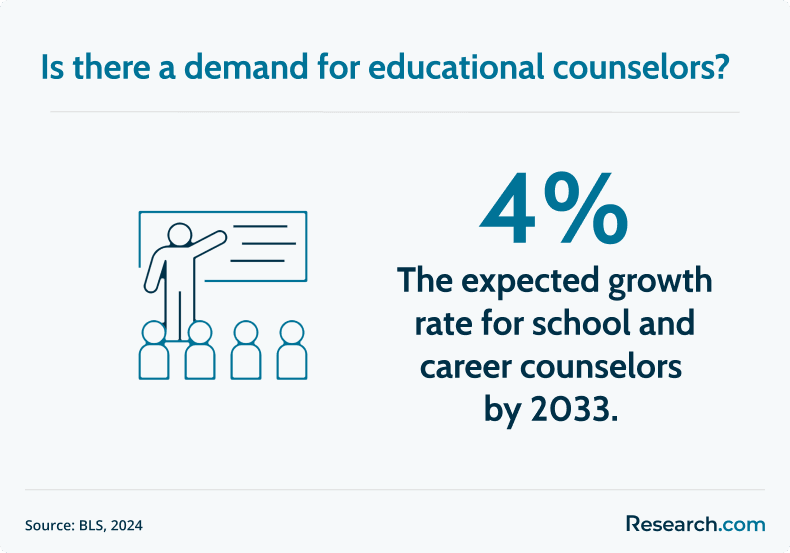
BLS data projects 4% employment growth for school and career counselors and advisors by 2033, which helps explain why many students want a faster route into the field. Accelerated online programs are built for students who can manage a compressed schedule and begin field placement planning early.
Program length depends on course sequencing, credit requirements, fieldwork hours, transfer credit policy, and whether the school offers year-round enrollment.
| Program format | Typical completion time | Best fit | Main caution |
| Accelerated online program | As little as 8 months | Students with strong time management, flexible schedules, and early field placement access | The pace can be intense, especially when practicum begins |
| Traditional full-time program | 18 to 24 months | Students who want a steady graduate schedule with more time for reflection and fieldwork planning | Longer enrollment can increase indirect costs |
| Part-time or self-paced program | Up to 3 years | Working adults, caregivers, and students who need a lower course load | Taking fewer credits may delay certification or career transition |
Students focused on the shortest possible route should also compare program expectations with the fastest way to become a counselor, especially if they are deciding between school counseling and broader counseling careers.
Accelerated vs. traditional educational counseling master’s programs
Accelerated and traditional programs can both prepare students for educational counseling careers, but they differ in pace, scheduling, and workload management. A fast program is not automatically easier or cheaper. It simply compresses the same major decision points: admissions, coursework, fieldwork, licensure planning, and career preparation. Students comparing multiple education tracks may see similar speed-versus-depth trade-offs in the fastest online STEM education degree programs.
| Factor | Accelerated online master’s | Traditional master’s program |
| Time to completion | May be completed in 8 months in some formats | Often takes 18-24 months |
| Course structure | Short, intensive terms with limited downtime | Longer semesters and a more gradual academic rhythm |
| Fieldwork | Requires early planning so practicum and internship do not delay graduation | Usually allows more time to identify and arrange placements |
| Flexibility | Often online and designed for working adults, but the pace may limit flexibility week to week | May offer more breathing room, though some programs require campus attendance |
| Cost considerations | Shorter enrollment may reduce some costs, but tuition structure varies by school | Longer timelines may increase fees and opportunity costs |
| Best for | Highly organized students with clear licensure goals and strong support systems | Students who prefer more time for coursework, supervision, networking, and fieldwork preparation |
If your career interests lean toward therapy for children rather than school-based counseling, compare this pathway with the child counselor career guide before committing to a program.
How to finish faster without a formal fast-track program
Some online master’s programs do not advertise an accelerated option, but students may still reduce delays through careful planning. The goal is not to overload yourself blindly. The better strategy is to understand prerequisites, fieldwork timing, transfer policies, and term schedules before your first class begins.
- Map prerequisites before enrollment: Ask which courses must be completed before practicum, internship, or advanced counseling classes.
- Use approved transfer credits: If the school allows it, transfer relevant graduate coursework in education, psychology, child development, or counseling-related areas.
- Take summer or winter courses: Short terms can help students complete electives or required classes without extending the degree timeline.
- Secure field placement early: Practicum and internship delays are one of the biggest barriers to finishing on time. Start discussing approved sites before the placement term arrives.
- Choose asynchronous sections when appropriate: Flexible classes may help working students complete assignments around job and family responsibilities.
- Align projects with certification goals: When possible, use research papers, capstones, and applied assignments to build evidence of competencies needed for your state credential. Students in the fastest online master of arts in teaching programs often use similar planning to avoid wasted credits.
Students interested in broader advising and workforce guidance can also compare educational counseling with how to become a career counselor.
Financial aid options for accelerated educational counseling master’s students
Graduate counseling students may be able to combine federal aid, institutional aid, employer tuition assistance, scholarships, and professional foundation awards. Accelerated students should pay close attention to disbursement timing because shorter terms can affect when aid is applied and how much must be paid upfront.
| Funding option | Amount stated | Who it may support |
| NBCC Minority Fellowship Program for Mental Health Counselors | $12,000 | Master’s-level counseling students committed to serving minority populations and expanding mental health access |
| NBCC Foundation Rural Scholarship | $8,000 | Students planning to serve underserved rural communities |
| Melanie Foundation Scholarship | $2,500 | Graduate students in accredited mental health programs, including educational counseling, with a community impact focus |
| Harry and Susanne Clay Scholarship | $2,000 | Graduate-level school counseling students with academic promise |
| Emeliza Swain Scholarship | $1,000 | Students at Georgia universities enrolled in guidance or school counseling master’s programs |
To reduce borrowing, compare tuition, fees, residency rules, transfer credit policies, and scholarship eligibility before applying. Students who want lower-cost counseling options should also review the most affordable CACREP-accredited counseling programs online.
Admissions requirements for online master’s in educational counseling programs
Admissions requirements vary by institution, but online master’s programs in educational counseling typically look for evidence that applicants can handle graduate coursework and work responsibly with students. Programs may be open to different undergraduate majors, though applicants with backgrounds in psychology, education, counseling, social services, or child development may find the transition more familiar. Students comparing adjacent education-focused graduate programs can also review the fastest online TESOL master’s degree programs to understand how admissions expectations differ by field.
- Bachelor’s degree: Most programs require a completed undergraduate degree from an accredited institution.
- Minimum GPA: Many schools expect a 2.75–3.0 GPA for admission to graduate study.
- Recommendation letters: Strong references should address communication ability, professionalism, experience with youth, and readiness for counseling training.
- Statement of purpose: Applicants should explain why they want to enter educational counseling and how their goals align with student support.
- Resume or professional background: Experience in teaching, mentoring, advising, coaching, youth services, or community programs can strengthen an application.
- GRE scores: Some programs still request GRE scores, while others make them optional or do not require them.
If cost is a major concern, compare these admissions requirements with programs listed among the most affordable online counseling degrees.
Common courses in an online master’s in educational counseling
Online educational counseling curricula combine counseling methods, human development, school systems, ethics, research, and supervised practice. Some programs also include electives that connect with literacy, special education, career planning, mental health, or college access. Students comparing related instructional pathways may also want to review the fastest online master’s in reading and literacy.
| Course area | What students learn | Why it matters in practice |
| Foundations of School Counseling | History, role, philosophy, and structure of counseling in educational systems | Clarifies how counselors support students, families, teachers, and administrators |
| Counseling Theories and Techniques | Major counseling models and practical helping skills | Builds the foundation for individual and group support |
| Career Development | Frameworks for academic, college, vocational, and career planning | Helps students make informed decisions about future pathways |
| Crisis Intervention and Trauma-Informed Care | Approaches for supporting students dealing with crisis, grief, trauma, or self-harm risk | Prepares counselors to respond appropriately to urgent student needs |
| Ethics and Legal Issues in School Counseling | Confidentiality, FERPA, mandated reporting, professional boundaries, and ethical decision-making | Protects students and helps counselors practice within legal and professional standards |
| Psychology | Research and theory related to learning, behavior, development, and counseling practice | Connects student behavior and development to effective support strategies |
Many educational counselors enter the field after undergraduate study in education, psychology, or related social science areas.
Specializations in online educational counseling master’s programs
Specializations help students focus their training on a particular age group, student need, or counseling function. Not every program offers formal concentrations, but many provide electives or field experiences that allow students to shape their preparation. Students interested in serving advanced learners may also compare this path with the fastest online master’s in gifted education programs.
| Specialization | Primary focus | Best fit for students who want to... |
| K–12 School Counseling | Academic, behavioral, developmental, and emotional support across grade levels | Work in elementary, middle, or high school counseling roles |
| College Readiness Counseling | Postsecondary planning, applications, financial aid awareness, and vocational exploration | Help students transition from high school to college or career training |
| Mental Health in Schools | Student wellness, adjustment challenges, anxiety, depression, and referral coordination | Support emotional needs within a school-based framework |
| Special Education Counseling | Support for students with disabilities, learning differences, and behavioral needs | Work alongside IEP and 504 plan teams |
| Diversity Counseling | Culturally responsive and equitable counseling practices | Serve students from varied racial, cultural, linguistic, and socioeconomic backgrounds |
| Substance Abuse and Behavioral Intervention | Recognition and response strategies for substance use, self-harm, and disruptive behavior | Work with students who need coordinated behavioral or wellness support |
| Crisis and Trauma Counseling | Immediate and ongoing student support after grief, abuse, violence, or family disruption | Prepare for crisis response roles in schools or districts |
Specialization choice should be connected to your intended work setting, not just personal interest. A concentration is most valuable when it supports your state credential requirements, practicum goals, and local employer needs.
How to choose the best accelerated online educational counseling program
The best accelerated program is not simply the shortest one. It is the program that can move you efficiently toward your target role without creating licensure gaps, fieldwork delays, or unnecessary debt. The same evaluation mindset applies when comparing other accelerated education degrees, including the fastest online master’s in teacher leadership programs.
Key factors to compare before enrolling
- Institutional and program accreditation: Confirm institutional accreditation first, then check whether the program has CACREP accreditation or another recognition required or preferred in your state.
- State licensure alignment: Ask the program to state clearly whether it meets school counseling certification requirements in your state.
- Practicum and internship support: Find out who locates placements, what settings qualify, and whether your local schools can be approved.
- Course length and sequencing: Six- to eight-week courses can speed progress, but only if required classes are offered in the right order.
- Start dates and continuous enrollment: Multiple annual start dates and back-to-back terms can reduce waiting time between courses.
- Faculty access: Accelerated students need responsive advising because delays in course planning or fieldwork approval can affect graduation timing.
- Completion outcomes: Ask about completion rates, average time to graduation, and common reasons students take longer than advertised.
- Total program cost: Look beyond tuition and include fees, books, background checks, technology costs, travel, and unpaid fieldwork time.
Questions to ask admissions or program advisors
| Question | Why it matters |
| Does this program meet school counselor certification requirements in my state? | Online programs may not satisfy every state’s rules. |
| How many practicum and internship hours are required? | Fieldwork can determine whether the advertised timeline is realistic. |
| Can I complete fieldwork near where I live? | Local placement flexibility is essential for many online students. |
| Are classes asynchronous, synchronous, or mixed? | Live meeting requirements may affect students who work full time. |
| What happens if I cannot secure a placement on time? | Placement delays can extend the program beyond the accelerated timeline. |
| What is the full estimated cost, including fees? | Tuition alone does not show the real cost of attendance. |
Common mistakes to avoid
- Choosing the fastest program without confirming state licensure eligibility.
- Assuming online delivery means no in-person fieldwork will be required.
- Comparing tuition only and ignoring fees, books, background checks, and unpaid internship time.
- Waiting too long to identify practicum or internship sites.
- Relying only on rankings instead of checking accreditation, outcomes, and state approval.
- Assuming salary outcomes are guaranteed after graduation.
Career paths for graduates of online educational counseling master’s programs
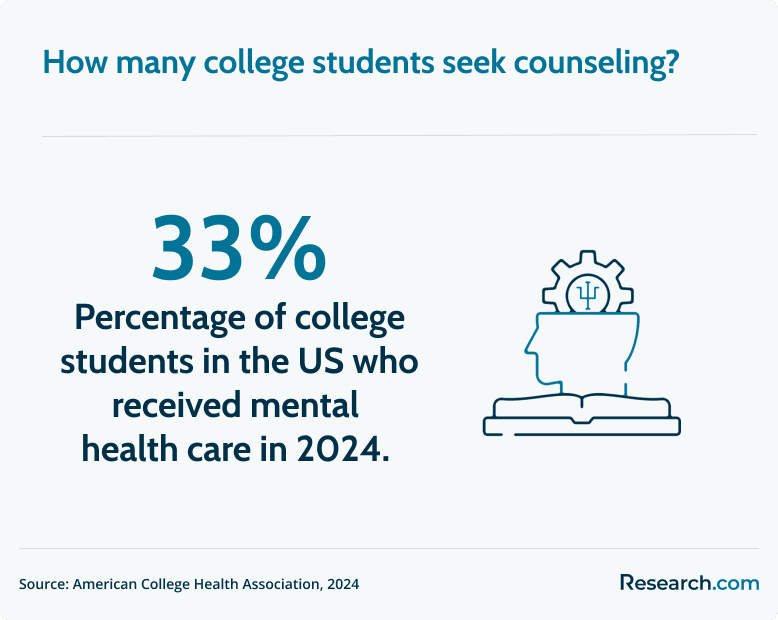
Educational counseling graduates may pursue roles in schools, higher education, youth programs, student success services, nonprofit organizations, and related counseling or advising settings. The American College Health Association (2024) found that over 33% of college students received mental health care in the previous year, underscoring the importance of trained student-support professionals.
Career options vary by credentials. Some positions require school counselor certification, while others may value counseling training but use titles such as coach, advisor, coordinator, or program director. Students interested in serving multilingual students may also compare this pathway with the fastest online master’s in multilingual learner education.
| Career path | Typical responsibilities | Credential considerations |
| Academic Success Coach | Help students improve study habits, time management, academic planning, and goal setting | Requirements vary by school or college employer |
| Child Therapist | Support children with emotional, behavioral, or developmental challenges | May require separate clinical counseling licensure depending on state and setting |
| Youth Program Director | Lead youth development, mentoring, counseling, or education programs in community organizations | Leadership experience and youth-services background may be important |
| Addiction Counselor | Support individuals dealing with substance use concerns | This role requires an addiction counselor certification |
| Crisis Intervention Counselor | Respond to urgent student needs, including grief, abuse, self-harm concerns, or traumatic events | May require specialized training or licensure depending on employer |
| District-Level Counseling Coordinator | Support counseling programs across multiple schools, train staff, and help maintain compliance | Often requires experience as a school counselor |
| Education Program Consultant | Advise schools, nonprofits, education companies, or mental health organizations on student support initiatives | Experience in counseling systems and program design can be valuable |
Online educational counseling master’s programs vs. online PsyD programs
Online master’s programs in educational counseling and online PsyD programs serve different professional goals. A master’s in educational counseling is usually focused on practical student support in schools and educational environments, including academic planning, crisis response, career readiness, and student advocacy. A PsyD is a doctoral-level clinical psychology pathway that typically involves deeper preparation in assessment, diagnosis, therapy, and clinical practice.
| Pathway | Main purpose | Common outcome | Best fit |
| Online master’s in educational counseling | Prepare graduates for school counseling, advising, and student support roles | School counselor, academic advisor, student success professional, related education roles | Students who want to work directly in educational settings |
| Online PsyD program | Prepare doctoral-level practitioners for clinical psychology roles | Clinical, diagnostic, assessment, or therapeutic roles depending on licensure | Students seeking advanced clinical practice and doctoral-level training |
If your goal is to work in schools as a counselor, an educational counseling master’s is typically the more direct path. If your goal is clinical diagnosis or doctoral-level psychological practice, a PsyD may be more appropriate, but it usually involves a longer and more intensive training route.
Job outlook for educational counseling graduates
Schools and colleges continue to need professionals who can help students manage academic demands, emotional stress, career decisions, and post-graduation planning. Job availability will vary by region, school funding, credential requirements, and student population needs.
According to the Bureau of Labor Statistics (2024), the outlook for school and career counselors and advisors includes:
- Job Growth (2023–2033): Employment for school and career counselors and advisors is expected to grow at 4%.
- Job Openings Annually: Approximately 29,100 positions are projected to open each year, largely due to retirements and career changes.
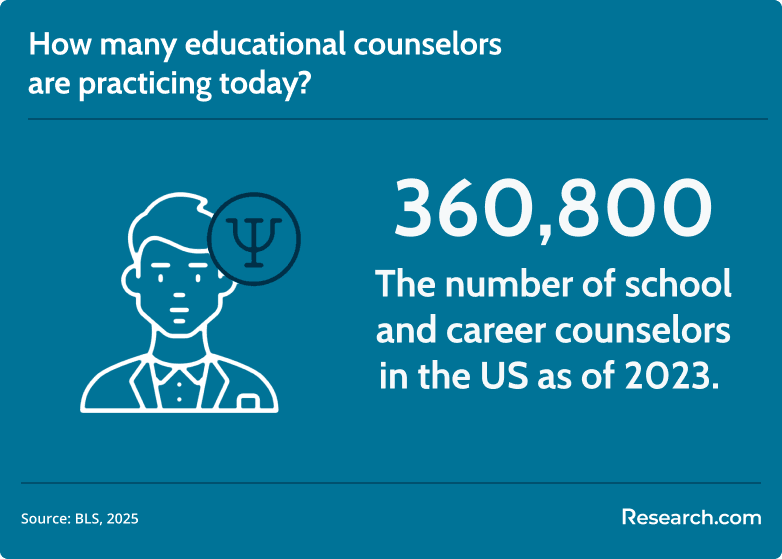
- Jobs in 2023: There were 360,800 school and career counseling positions in the U.S. in 2023, across K–12 schools, colleges, and career centers.
These figures suggest steady opportunity, but students should research hiring conditions in their own state or district before estimating career return on investment.
What are the licensing and certification requirements for educational counselors?
Licensing and certification rules for educational counselors are state-specific. Graduates commonly need an approved graduate degree, supervised field experience, background checks, and required exams before they can work as school counselors in public school systems. Some states also require teaching experience or offer alternative pathways for applicants without teaching backgrounds.
Before enrolling, contact your state education agency or licensing board and ask the university for written confirmation that its program meets your state’s requirements. This is especially important for online students who enroll in a school located outside their state. Students considering broader family or clinical counseling options may also compare this pathway with affordable MFT programs online.
Licensure checklist before you apply
- Confirm that the institution is accredited by a recognized accreditor.
- Check whether the program is CACREP-accredited or otherwise approved for school counseling in your state.
- Verify required practicum and internship hours.
- Ask whether your local placement site can be approved before you begin fieldwork.
- Review exam, background check, and application requirements for your state.
- Ask whether the program has recent graduates licensed or certified in your state.
Key Insights
- The fastest online master’s in educational counseling programs can shorten the path to graduation, but students should prioritize licensure alignment, fieldwork support, and accreditation over speed alone.
- Some accelerated formats use 8-week courses and may allow motivated students to finish in under a year, while traditional full-time programs often take 18 to 24 months and part-time options may take up to 3 years.
- Educational counselor pay varies widely; ZipRecruiter (n.d.) reports an average annual salary of $59,514, with listed figures ranging from $42,000/year at the 25th Percentile to $87,000/year for Top Earners.
- BLS (2024) reports 4% projected growth for school and career counselors and advisors from 2023–2033, with approximately 29,100 projected openings each year and 360,800 jobs in 2023.
- Online does not mean fully remote. Most educational counseling programs still require supervised practicum or internship experiences in approved school or educational settings.
- The best program is the one that fits your state’s certification rules, your schedule, your budget, and your intended student population.
References:
- American College Health Association. (2024). NCHA IIIb Fall 2024 Reference Group Executive Summary. Acha.org. Retrieved 29 June 2025.
- Bureau of Labor Statistics. (2024). School and career counselors and advisors. U.S. Department of Labor. Bls.gov. Retrieved 29 June 2025.
- Campbellsville University. (n.d.). M.A. in Education – School Counseling (P–12). Online.campbellsville.edu. Retrieved 29 June 2025.
- Capella University. (n.d.). MS in School Counseling program. Capella.edu. Retrieved 29 June 2025.
- College Counseling Center Mental Health Trends (CCMH). (n.d.). Diagnostic prevalence and trends in college counseling. Penn State University. Ccmh.psu.edu. Retrieved 29 June 2025.
- Emporia State University. (n.d.). Lloyd A. Stone School Counseling Scholarship. Michigan School Counselor Association. Michiganschoolcounselor.org. Retrieved 29 June 2025.
- Georgia School Counselor Association. (n.d.). Scholarships. Gaschoolcounselor.org. Retrieved 29 June 2025.
- Melanie Foundation. (n.d.). Melanie Foundation Scholarship. Themelaniefoundation.com. Retrieved 29 June 2025.
- National Board for Certified Counselors (NBCC). (n.d.). Minority Fellowship Program (MFP). Nbcc.org. Retrieved 29 June 2025.
- NBCC Foundation. (n.d.). Rural Scholarship Eligibility. Nbccf.org. Retrieved 29 June 2025.
- Southeastern Oklahoma State University. (n.d.). M.Ed. in School Counseling. Online.se.edu. Retrieved 29 June 2025.
- Zippia. (n.d.). Educational counselor education. Zippia.com. Retrieved 29 June 2025.
- ZipRecruiter. (n.d.). Educational Counselor Salary. Ziprecruiter.com. Retrieved 29 June 2025.
Other Things You Need to Know About Accelerated Online Master’s Degrees in Educational Counseling
Most educational counseling programs require 100 to 300 supervised practicum or internship hours, plus a longer field experience in a school setting. The placement is usually approved by the program and completed under a licensed supervisor, and some states require additional hours before counseling licensure.
Yes, you can balance full-time employment with the 2027 Fastest Online Master's Degree in Educational Counseling. Most programs offer flexible study schedules and self-paced online courses, allowing students to complete coursework around their work commitments, potentially earning their degree in as little as one year.
The 2027 Fastest Online Master's Degree in Educational Counseling can be completed in as little as one year. This accelerated path condenses coursework while maintaining rigorous standards, enabling motivated students to advance rapidly in their careers.


