
2027 Highest Paying Bachelor’s Degrees and Their Job Growth Rates

Co-Founder and Chief Data Scientist
Note from Imed Bouchrika, PhD, career planning expert:
Picking a bachelor’s degree is no longer only a question of interest. For many students, parents, and working adults, the bigger question is whether four years of study can lead to stable employment, manageable debt, and a realistic path to higher earnings. That decision has become more complicated as tuition rises, employers shift toward skills-based hiring, and technology changes the value of many traditional majors.
A Gallup poll found that 35% of Americans described a college education as “very important,” while only about a third of adults ages 18 to 34 shared that view (Ray, 2024). That skepticism makes sense: not every degree produces the same labor-market return, and salary outcomes are never guaranteed. Still, some bachelor’s degrees consistently connect graduates to fields with strong pay, clear advancement routes, and durable employer demand.
This guide explains which bachelor’s degrees are associated with high early-career salaries, how job growth differs across fields, what trade-offs students should weigh, and how to compare degree options before enrolling. It is designed for high school students, transfer students, career changers, and working adults who want a practical way to evaluate majors by compensation, employability, flexibility, and long-term career fit.
Quick Answer: Which Bachelor’s Degrees Tend to Pay the Most?
The highest-paying bachelor’s degrees are usually concentrated in engineering, computer science, finance, mathematics, actuarial science, pharmacy-related study, and quantitative business fields. In this list, pharmacy shows the highest early-career salary at $112,842, followed by petroleum engineering at $96,742, software engineering/software development at $88,150, physics at $86,168, and actuarial science at $85,581. However, salary should not be the only factor. Job growth, licensure requirements, graduate school expectations, geographic demand, and personal skill fit can change the value of a degree.
| Best fit if you want... | Degree areas to compare | What to check before choosing |
| High pay soon after graduation | Software engineering, petroleum engineering, pharmacy, finance, actuarial science | Entry-level hiring volume, internship access, and whether graduate study or licensure is required |
| Strong projected job growth | Computer science, statistics, operations research, actuarial science, software development | Whether the curriculum includes current tools such as programming, analytics, cybersecurity, AI, or modeling |
| Broad career flexibility | Business administration, economics, information technology, mathematics, industrial engineering | Concentrations, experiential learning, employer partnerships, and transferable skills |
| A regulated healthcare path | Nursing, pharmacy, biomedical engineering, health management pathways | Licensure eligibility, clinical requirements, accreditation, and state rules |
| A technical career without being limited to one industry | Computer engineering, MIS, electrical engineering, mechanical engineering, data-focused majors | Lab access, capstone projects, certifications, and internship placement support |
What are the benefits of choosing a bachelor’s degree in a high-growth field?
- More room for career mobility: Bachelor’s degree holders often qualify for roles with stronger advancement prospects, greater job security, and higher income potential. Most baccalaureate degree holders earn $1,432 each week (U.S. Bureau of Labor Statistics, 2023a).
- Better alignment with expanding industries: Majors tied to technology, healthcare, analytics, business operations, and engineering can help graduates enter fields where employers are actively adapting to new tools and market needs.
- Lower unemployment risk than less-educated groups: In 2026, bachelor’s degree holders ages 20-24 had a 7.3% unemployment rate in February, a stronger outcome than high school graduates at higher levels (Federal Reserve Bank of St. Louis, 2026).
- Highest Paying Bachelor’s Degrees for 2027
- How health science job growth compares with other fields
- Highest-paying careers in the health sciences
- Average salary for business majors
- Business job growth by industry
- In-demand skills in computer science, IT, and engineering
- Job growth across computer science, IT, and engineering
- Salary differences in science and mathematics
- In-demand science and math careers
- Average salary for bachelor’s degree holders
- Online programs and high-paying careers
- How the job market has changed for bachelor’s graduates
- Bachelor’s degrees vs. associate degrees
- Emerging trends in high-paying careers
- How to choose a high-paying bachelor’s degree
- Whether an accredited online bachelor’s degree is worth it
- Using a one-year online master’s program after a bachelor’s degree
- How experience and soft skills affect career outcomes
- When a graduate degree can improve career growth
- Whether an affordable online doctorate can support advancement
- Using an associate degree as a stepping stone
List of Highest Paying Bachelor’s Degrees for 2027
1. Business Administration
- Early career salary: $51,489
- Projected job growth: 10%
A business administration bachelor’s degree gives students a foundation in how organizations operate. Common coursework covers finance, marketing, logistics, human resources, management, and organizational behavior. Many programs also let students focus on areas such as entrepreneurship, international business, nonprofit management, or operations, making this degree useful for students who want broad career options rather than a narrowly defined technical role.
2. Computer Science
- Early career salary: $74,000
- Projected job growth: 32%
Computer science remains one of the strongest bachelor’s options for students who want technical careers with high earning potential. The degree typically emphasizes programming, algorithms, software design, computer systems, networks, and data structures. Many universities now include advanced coursework in artificial intelligence, machine learning, data science, and cybersecurity because employers increasingly expect graduates to understand modern computing environments.
Graduates may pursue roles in software development, systems design, data engineering, security, and technical product work. The strongest candidates usually leave school with a portfolio, internships, collaborative coding experience, and evidence that they can solve real business or engineering problems with technology.
2. Accounting
- Early career salary: $51,002
- Projected job growth: 4%
An accounting bachelor’s degree prepares students to record, evaluate, audit, and interpret financial activity. Courses often include auditing, managerial accounting, cost accounting, taxation, accounting information systems, and financial reporting. Some programs offer tracks in public accounting, forensic accounting, financial analysis, or corporate accounting.
The U.S. Bureau of Labor Statistics notes that automation is changing routine accounting tasks, which makes analytical judgment, compliance knowledge, advisory skills, and the ability to interpret financial data increasingly important for accounting professionals.
4. Finance
- Early career salary: $76,000
- Projected job growth: 20%
A finance bachelor’s degree is designed for students who want to evaluate investments, manage capital, assess risk, and support financial decisions. Typical coursework includes statistics, accounting, taxation, business law, corporate finance, financial markets, and investment analysis. Concentrations may include asset management, corporate finance, banking, or financial planning.
Graduates commonly pursue roles such as financial analyst, investment analyst, controller, financial examiner, or financial manager, although advancement may depend on experience, certifications, graduate education, and performance in highly competitive markets.
5. Nursing
- Early career salary: $65,792
- Projected job growth: 6%
A Bachelor of Science in Nursing (BSN) prepares students for registered nursing roles that involve direct patient care, care coordination, health assessment, clinical judgment, and patient education. Compared with an associate degree route, a BSN may support access to broader responsibilities, leadership tracks, and stronger compensation in some settings (Nurse.org, n.d.).
A BSN can also serve as the academic starting point for advanced nursing pathways, including nurse practitioner, clinical nurse specialist, nurse educator, and leadership-focused graduate programs. Students should confirm that any nursing program meets state licensure and clinical placement requirements.
6. Management Information Systems
- Early career salary: $64,000
- Projected job growth: 15%
Management information systems, often called MIS, sits between business and technology. Students learn how organizations use software, databases, analytics, networks, and information systems to improve decisions and operations. Programs usually combine technical courses, such as programming or database management, with business topics, such as finance, marketing, project management, economics, and cybersecurity.
7. Economics
- Early career salary: $77,589
- Projected job growth: 6%
Economics trains students to analyze markets, incentives, policy effects, consumer behavior, and business decisions. As firms rely more heavily on data, economists are increasingly involved in forecasting, pricing, platform design, labor analysis, and market strategy. A 2024 analysis of labor trends noted that economists have become important in technology companies such as Microsoft, Uber, and Amazon because these organizations manage complex data ecosystems.
Recent industry assessments by Luca (2025) report that Amazon continues to place hundreds of economists within decentralized teams focused on cloud logistics, advertising yield, and global supply chain resilience. Uber’s economic research units are also described as focusing on algorithmic matching efficiency and changing labor regulations across international markets.
Economics majors generally study microeconomics, macroeconomics, econometrics, economic theory, and quantitative analysis. Depending on the institution, students may specialize in financial economics, mathematical economics, agricultural economics, public policy, or international economics.
8. Software Engineering, Software Development
- Early career salary: $88,150
- Projected job growth: 26%
Software engineering and software development degrees focus on designing, building, testing, deploying, and maintaining applications and systems. Students usually study programming, software architecture, application development, databases, version control, testing, security, and project workflows. Many curricula also require discrete mathematics, calculus, and team-based engineering projects.
According to a 2024 report by IDC, a shortage of qualified engineering talent has contributed to a national shortage of software engineers. The same report stated that 65% of organizations planned to increase budgets for software outsourcing.
9. Electrical Engineering
- Early career salary: $76,426
- Projected job growth: 4%
Electrical engineering students learn to design, test, and improve electrical systems, devices, circuits, and equipment used in communications, radar, navigation, power, electronics, and computing. The degree is math-intensive and typically includes circuits, signal processing, electromagnetics, controls, electronics, and lab-based design work.
Many programs allow students to focus on a technical area. At the University of Maryland, for example, students can choose among controls, computer engineering, electrophysics, power systems, microelectronics, and communications and signals processing (University of Maryland, n.d.).
10. Information Technology (IT)
- Early career salary: $67,110
- Projected job growth: 10%
Information technology programs are usually more applied than computer science programs. Instead of concentrating primarily on theory and algorithm design, IT degrees focus on using networks, systems, databases, cloud tools, security practices, and support infrastructure to solve organizational problems. Students often take courses in systems administration, information security, IT management, database administration, and networking.
Common career paths include database administrator, network administrator, systems analyst, cloud support specialist, cybersecurity analyst, and computer network architect.
11. Petroleum Engineering
- Early career salary: $96,742
- Projected job growth: 2%
Petroleum engineering is one of the highest-paying bachelor’s pathways, but it is also closely tied to the energy sector’s cycles and geographic demand. Students learn how to design methods and equipment for extracting oil and gas from underground reserves. Coursework often covers drilling, reservoir engineering, production systems, geology, fluid flow, and field operations. Petroleum engineers may also supervise drilling sites and improve extraction efficiency.
12. Operations Research
- Early career salary: $74,114
- Projected job growth: 25%
Operations research teaches students how to use mathematics, modeling, probability, optimization, statistics, and analytics to improve decisions when resources are limited. Columbia University in the City of New York describes the field as focused on decision problems involving the allocation and management of limited resources (Columbia University in the City of New York, n.d.). Because the degree builds strong quantitative reasoning, it can lead to roles in logistics, supply chain, finance, defense, healthcare systems, technology, and consulting.
13. Marine Engineering
- Early career salary: $70,837
- Projected job growth: 4%
Marine engineering is a strong fit for students interested in ships, offshore systems, propulsion, and maritime technology. Programs usually teach the scientific and engineering principles behind cargo ships, submarines, aircraft carriers, and other marine vessels. Coursework commonly includes fluid sciences, propulsion, applied mechanics, marine design, thermodynamics, and systems maintenance.
14. Computer Engineering
- Early career salary: $80,587
- Projected job growth: 5%
Computer engineering combines hardware, software, and network design. Compared with computer science, it usually places more emphasis on embedded systems, digital logic, circuits, computer architecture, and the interaction between physical devices and software. Students complete lab-based design work and may build systems used in robotics, communications, cybersecurity, computing devices, and infrastructure.
15. Systems Engineering
- Early career salary: $78,239
- Projected job growth: 5%
Systems engineering is broader than many traditional engineering majors. Students learn to design, model, evaluate, and manage complex systems that involve people, technology, processes, data, and constraints. Coursework often includes probability, decision analysis, modeling, optimization, risk analysis, and engineering management. Graduates may work in defense, logistics, transportation, manufacturing, healthcare systems, or technology operations.
16. Chemical Engineering
- Early career salary: $75,427
- Projected job growth: 8%
Chemical engineering applies chemistry, physics, biology, and mathematics to the design and improvement of manufacturing and production processes. Students study materials, reactions, thermodynamics, transport phenomena, process control, and safety. Depending on the program, advanced topics may include polymers, materials engineering, energy sustainability, biotechnology, or environmental applications.
17. Aerospace Engineering
- Early career salary: $82,053
- Projected job growth: 6%
Aerospace engineering focuses on aircraft, spacecraft, satellites, propulsion, aerodynamics, and flight systems. Students complete substantial coursework in physics, mathematics, structures, propulsion, control systems, and aerodynamics. The U.S. Bureau of Labor Statistics notes that aerospace engineers may specialize in aeronautical engineering, which centers on aircraft, or astronautical engineering, which focuses on spacecraft.
18. Mechanical Engineering
- Early career salary: $72,441
- Projected job growth: 10%
Mechanical engineering is one of the most versatile engineering degrees. Students learn to design, analyze, build, and test mechanical devices and systems, including engines, generators, elevators, manufacturing equipment, robotics, and thermal systems. Core courses usually include thermodynamics, materials science, fluid mechanics, dynamics, mechanics of materials, and design. Some programs offer electives in robotics, machine learning, automotive research, energy systems, or advanced manufacturing.
19. Biomedical Engineering
- Early career salary: $70,486
- Projected job growth: 5%
Biomedical engineering applies engineering methods to healthcare and human biology. Students may learn to design medical devices, artificial organs, diagnostic tools, imaging systems, prosthetics, and clinical technologies. Programs commonly blend engineering, biology, physiology, materials science, and laboratory work. Some schools offer focused study in biomechanics, biomedical imaging, tissue engineering, or medical instrumentation.
20. Industrial Engineering
- Early career salary: $70,229
- Projected job growth: 12%
Industrial engineering prepares students to improve systems, reduce waste, increase productivity, and design more efficient processes. The curriculum typically combines engineering, data analysis, work design, supply chain management, quality control, human factors, and operations. Because these skills apply across manufacturing, healthcare, logistics, technology, retail, and consulting, industrial engineering can offer a flexible route into high-value operational roles.
Compared with some engineering specialties, industrial engineering is projected to grow more quickly, reflecting employer demand for professionals who can improve cost, workflow, quality, and resource use.
21. Cognitive Science
- Early career salary: $82,000
- Projected job growth: no data available
Cognitive science is an interdisciplinary major that studies the mind, behavior, decision-making, language, perception, learning, and artificial intelligence. Because it draws from psychology, neuroscience, computer science, philosophy, linguistics, and data analysis, graduates may move into fields such as user research, data science, machine learning, behavioral research, human-computer interaction, and forensic psychology. Students should review each program’s technical depth carefully because career outcomes can vary widely by curriculum.
22. Pharmacy
- Early career salary: $112,842
- Projected job growth: -2%
A bachelor’s degree in pharmacy or pharmaceutical sciences gives students a foundation in chemistry, biology, mathematics, pharmacology, toxicology, and drug development. It can support roles such as pharmacy technician, pharmaceutical research assistant, or preparation for advanced pharmacy education. Students who want to become licensed pharmacists should confirm the required professional degree and state licensure pathway before enrolling.
23. Interaction Design
- Early career salary: $75,526
- Projected job growth: 13%
Interaction design blends creativity, technology, and user research. Students learn to design digital interfaces for websites, applications, software platforms, smart devices, and other interactive products. Columbia College Chicago describes the field as focused on creating intuitive and appealing electronic interfaces (Columbia College Chicago, n.d.). Coursework often includes user experience design, human-computer interaction, programming, prototyping, visual design, usability testing, and product thinking.
24. Actuarial Science
- Early career salary: $85,581
- Projected job growth: 24%
Actuarial science is built for students who enjoy mathematics, statistics, risk, and financial modeling. The degree prepares students to estimate the cost of future events, such as illness, disability, loss, or death, and to help organizations manage uncertainty. Coursework commonly includes probability, statistics, economics, finance, business, and actuarial modeling.
Many actuaries work in insurance, but demand can also come from enterprise risk management, consulting, pensions, healthcare, and financial services. Students should understand the professional exam pathway before choosing this major.
25. Electronics Engineering
- Early career salary: $78,910
- Projected job growth: 7%
Electronics engineering focuses on electronic systems and devices used in communications, satellites, flight systems, radar, embedded technology, and advanced equipment. Required courses vary by school but often include circuits, transistor design, digital systems, microcontrollers, signal processing, electronics labs, and system testing. Graduates may work in product development, telecommunications, defense, aerospace, manufacturing, or hardware design.
26. Statistics
- Early career salary: $79,100
- Projected job growth: 32%
Statistics differs from a general mathematics degree because it emphasizes data collection, probability, inference, modeling, uncertainty, and applied analysis. Students learn to evaluate data and support decisions in fields such as business, healthcare, policy, technology, sports analytics, and research. Core coursework typically includes probability, statistical methods, regression, data analysis, and computing.
The U.S. Bureau of Labor Statistics expects fast employment growth for statisticians as organizations continue to rely on statistical analysis for business decisions, public policy, research, and operational planning.
27. Physics
- Early career salary: $86,168
- Projected job growth: 5%
Physics students study matter, energy, motion, forces, fields, and the laws that describe the physical universe. Programs usually include classical mechanics, quantum mechanics, thermodynamics, electromagnetism, laboratory methods, and mathematics. Many physics graduates move into applied research, engineering-adjacent roles, analytics, education, or technology development in areas such as energy storage, instrumentation, navigation, and advanced materials.
28. Mathematics
- Early career salary: $69,435
- Projected job growth: 15.2%
Mathematics bachelor’s programs may award either a BA or a BS. A BA in mathematics often leaves more room for electives and interdisciplinary study, while a BS usually requires deeper coursework in areas such as calculus, linear algebra, abstract mathematics, logic, and computer science. Students interested in analytics, finance, teaching, research, or graduate study should compare degree requirements carefully.
Demand for mathematics professionals is expected to rise as businesses and government agencies need stronger quantitative analysis, modeling, and big-data interpretation.
29. Civil Engineering
- Early career salary: $66,517
- Projected job growth: 5%
Civil engineering prepares students to design, build, repair, and manage infrastructure such as roads, bridges, water systems, buildings, transportation networks, and public works. Common courses include surveying, fluid mechanics, structural analysis, hydraulic engineering, geotechnical engineering, transportation systems, and construction methods.
Students may choose concentrations such as construction engineering, structural engineering, environmental systems, transportation, or water resources, depending on the school.
30. Aviation Management
- Early career salary: $79,000
- Projected job growth: 7%
Aviation management is designed for students interested in airport operations, airline management, safety, logistics, regulation, and aviation business. Courses often cover aviation law, airport safety, airline operations, crisis communication, disaster management, and transportation systems. Some programs also provide flight training for students pursuing pilot certification, though requirements and costs can vary substantially.
How to Compare High-Paying Bachelor’s Degrees
| Factor | Why it matters | Questions to ask |
| Accreditation and licensure | Some careers require specific program approval or state eligibility. | Does this program meet licensing, certification, or professional exam requirements in the state where I plan to work? |
| Salary range, not just average salary | Starting pay can vary by location, employer, specialization, and experience. | What do graduates from this specific program earn, and how many are employed in the field? |
| Internships and projects | Employers often value proof of applied skill as much as coursework. | Does the program include co-ops, clinicals, capstones, labs, portfolios, or employer-sponsored projects? |
| Graduate school expectations | Some “high-paying” paths require additional credentials. | Can I enter the field with only a bachelor’s degree, or will I need a master’s, doctorate, or professional license? |
| Total cost | ROI depends on tuition, fees, lost wages, borrowing, and time to completion. | What is the full cost after grants, scholarships, transfer credits, and required materials? |
Health Sciences
How does job growth for health science professionals compare to other fields?
Health science careers often show stronger demand than many non-health fields because healthcare needs are tied to population aging, chronic disease management, medical technology, and access to care. The BLS (2024) projects that healthcare practitioners and technical occupations will grow by 7.2% from 2024 to 2034, while the healthcare and social assistance sector will grow by 8.4%.
- Medical/Health Services Managers: 28%
- Exercise Physiologists: 10%
- Registered Nurses: 6%
Healthcare managers often need a bachelor’s degree and are responsible for facility operations, staffing, budgets, compliance, and care quality. Exercise physiologists support physical health and rehabilitation, while registered nurses commonly need a bachelor’s degree in nursing to deliver patient care and coordinate treatment. Like mechanical engineering career paths, healthcare roles require applied problem-solving, technical judgment, and hands-on competence.
Further education can expand both scope of practice and earning potential. Speech-language pathologists and genetic counselors, which require master’s degrees, anticipate 19% and 16% job growth respectively. Registered nurses who move into nurse practitioner roles can expect a 45% increase in job opportunities over the next decade.
Telemedicine, demographic change, care coordination, and medical technology all affect employment demand. Students considering health sciences should pay close attention to accreditation, clinical placements, state licensing rules, and whether graduate study is necessary for the role they want.
What are the highest-paying careers within the health sciences?
Healthcare pay differs sharply by credential level, occupation, setting, and state. Based on BLS data gathered for this guide, the median salary of healthcare workers is around $65,000. Students with bachelor degrees in certain healthcare-related fields can move into roles with higher compensation, although some of the highest-paying clinical careers require graduate or professional education.
Registered nurses earn an average salary of $89,010 each year. Medical and health service managers and medical dosimetrists earn as much as $127,980 and $129,080 respectively. Advanced-credential roles can pay more: pharmacists take home $129,410 annually, nurse practitioners make $124,680, and physicians earn $150,000 or more. In general, the best-paid health science occupations require advanced training, regulated credentials, clinical expertise, and strong knowledge of complex medical systems.
Business
What is the average salary for business majors?
Business graduates have many possible outcomes because “business” includes accounting, finance, analytics, management, human resources, marketing, operations, and entrepreneurship. Individuals with a bachelor’s degree in business can generally expect a starting salary of $62,856 or more (Coursera, 2026), but the specific major and role matter.
For example, graduates with a bachelor’s degree in accounting may earn $86,740 in accounting-related roles because the field requires specialized financial, regulatory, and analytical knowledge. A bachelor’s degree in finance can support careers such as financial examiner at $95,610 or financial and investment analyst at $108,790. Graduates with degrees in human resources may reach $145,750 as managers.
Advanced degrees, certifications, industry experience, and location can increase earning potential. Metropolitan areas and high-cost regions often pay more, while sectors such as finance, consulting, technology, and healthcare administration may offer stronger compensation for business graduates with specialized skills.
How does job growth for business professionals vary by industry?
Business job growth depends heavily on industry, role, and specialization. Based on BLS reports, the following business and finance fields show different projected outlooks:
- Finance: 20% for Financial Examiners and 16% for Financial Managers
- Marketing: 13% for Marketing Research Analysts
- Business Administration: 10% for Management Analysts and 3% for All Other Managers
- Accounting: 4%
Across the economy, there will be around 474,800 yearly opportunities for computer and mathematical occupations and around 1,982,700 openings for all industries from 2024 to 2034.
A bachelor’s degree in business administration can be useful because management, analysis, operations, and communication skills transfer across many industries. NACE (2025) reported that nearly 87% of employers planned to recruit for both full-time and internship positions in fall 2025. In the same survey, 8.3% of employers planned to recruit only interns and 4.8% only full-time hires for that period.
Business graduates may find especially strong opportunities in healthcare, technology, consulting, finance, logistics, and analytics-driven organizations. To stand out, students should build evidence of applied skills through internships, case competitions, data projects, leadership roles, or industry certifications.
Computer Science, IT, and Engineering
What are the most sought-after skills in computer science, IT, and engineering?
Employers in computer science, IT, and engineering usually look for graduates who can combine technical fluency with practical execution. Based on industry reports reviewed for this guide, high-demand skills include knowledge or experience in:
- Programming languages
- Cloud computing platforms
- Cybersecurity, threat detection and prevention, and incident response strategies
- Data analytics tools
- AI and machine learning concepts and algorithms
- Web development frameworks
Technical ability alone is not enough. Students preparing for a computer science career should also develop problem-solving, critical thinking, documentation, teamwork, communication, and attention to detail. These skills help graduates work with cross-functional teams, understand user needs, and translate technical work into business value.
The chart below compares projected average salaries by bachelor’s degree discipline to show how compensation can differ across technical fields.
What is the job growth across different computer science, IT, and engineering disciplines?
BLS data shows a 15.2% overall projected employment change for computer-related jobs and 5.2% overall growth for engineering occupations. The following employment increases by 2032 were compiled for this guide:
- Computer Science: 32% for Information Security Analysts
- Software Engineering/Development: 26% for Software Developers and 20% for Software QA Analysts
- Web Development/Digital Designing: 16%
- Management Information Systems: 15% for Computer and Information Systems Managers
- Information Technology: 10% for Computer Systems Analysts
- Industrial Engineering: 12%
- Mechanical Engineering: 10%
- Chemical Engineering: 8%
- Electronics Engineering: 7%
- Aviation Management: 7% for Air Transportation Workers
- Aerospace Engineering: 6%
- Biomedical Engineering: 5%
- Civil Engineering: 5%
- Computer Hardware Engineering: 5%
- Systems Engineering: 5%
- Electrical Engineering: 4%
- Petroleum Engineering: 2%
Software development, artificial intelligence, cybersecurity, cloud systems, and analytics remain among the strongest technical areas because organizations continue to digitize operations. A bachelor’s degree in computer engineering follows a different academic path than computer science; a computer engineering degree usually emphasizes hardware, software, embedded systems, and networks. By contrast, computer programmer employment is declining by -11% as automation absorbs some routine coding tasks, although programmers may shift toward design, architecture, and strategic planning work.
An industrial engineering degree can also lead to strong opportunities because organizations need professionals who can reduce costs, improve workflows, and optimize systems. Still, demand varies by industry, economic conditions, and technology adoption. Students should compare not only projected growth but also internship access, regional employers, and the technical depth of each program.
Science and Mathematics
How do salaries for science and math professionals vary by specialization?
Science and mathematics salaries depend on specialization, industry, education level, location, and whether the role is research-focused, applied, managerial, or technical. The following occupations illustrate the range:
- Actuaries: $127,580
- Data Scientists: $115,240
- Chemists: $90,530
- Postsecondary Mathematical Science Teachers: $90,110
- Biologists: $87,300
Economists can also earn strong compensation, with income reaching as high as $128,180 yearly. A bachelor’s degree in economics typically covers economic theory, microeconomics, macroeconomics, and quantitative analysis. Because economics is broad, students may focus on agricultural economics, financial economics, mathematical economics, or policy-oriented areas.
A bachelor’s degree in physics develops deep understanding of matter, energy, mechanics, and the physical laws behind technology. Many physics graduates enter applied research or technical fields involving energy storage, navigation, instrumentation, and advanced systems. They can earn as much as $150,130 each year.
Students should treat salary figures as directional rather than guaranteed. Advanced degrees, specialized software skills, internships, research experience, and geographic mobility can significantly influence science and mathematics career outcomes.
What are the most in-demand science and math-related careers?
Government data reviewed for this guide shows the following job growth by 2032:
- Statisticians: 32%
- Mathematical Science Occupations: 29%
- Operations Research Analysts: 23%
- Actuaries: 23%
- Economists: 6%
- Physicists: 5%
Similar to graduates with a bachelor’s degree in computer science, mathematics graduates benefit from strong employment projections, at 15.2%. Life, physical, and social science jobs, including careers connected to a chemistry degree, are projected to grow by 6.1% over the same timeframe. Graduates may work in research institutions, government agencies, healthcare organizations, schools, universities, banks, insurance companies, think tanks, and private corporations.
What is the average salary for individuals with a bachelor's degree?
The average starting salary projection for the class of 2024 with a bachelor’s degree is around $64,717, a 3.2% increase from the projections (NACE, 2024). Some employers also offer average signing bonuses ranging from $4,500 to $7,200 for applicants in business, computer science, data science, engineering, and finance (NACE, 2024). These figures matter because students are also dealing with the rising costs of college and the long-term burden of student loans.
High-earning degree pathways can reduce financial pressure, but they do not eliminate risk. Sallie Mae & Ipsos (2024) found that 88% believe college is an investment in their child's future, and 79% are willing to stretch financially to get there. Students should therefore compare salary potential with total program cost, borrowing, time to graduation, and the probability of entering the intended career.
Can online programs provide a flexible path to high-paying careers?
Online programs can be a practical option for students who need flexibility, but they should be evaluated carefully. A strong online bachelor’s program should be accredited, transparent about costs, realistic about time commitments, and connected to career-relevant outcomes. Self-paced or asynchronous courses can help working adults balance school with employment, caregiving, or military responsibilities. Students comparing options such as accredited self-paced online colleges should look beyond convenience and verify academic quality, transfer policies, faculty support, and employer recognition.
How has the job market for bachelor's degree holders evolved over the past decade?
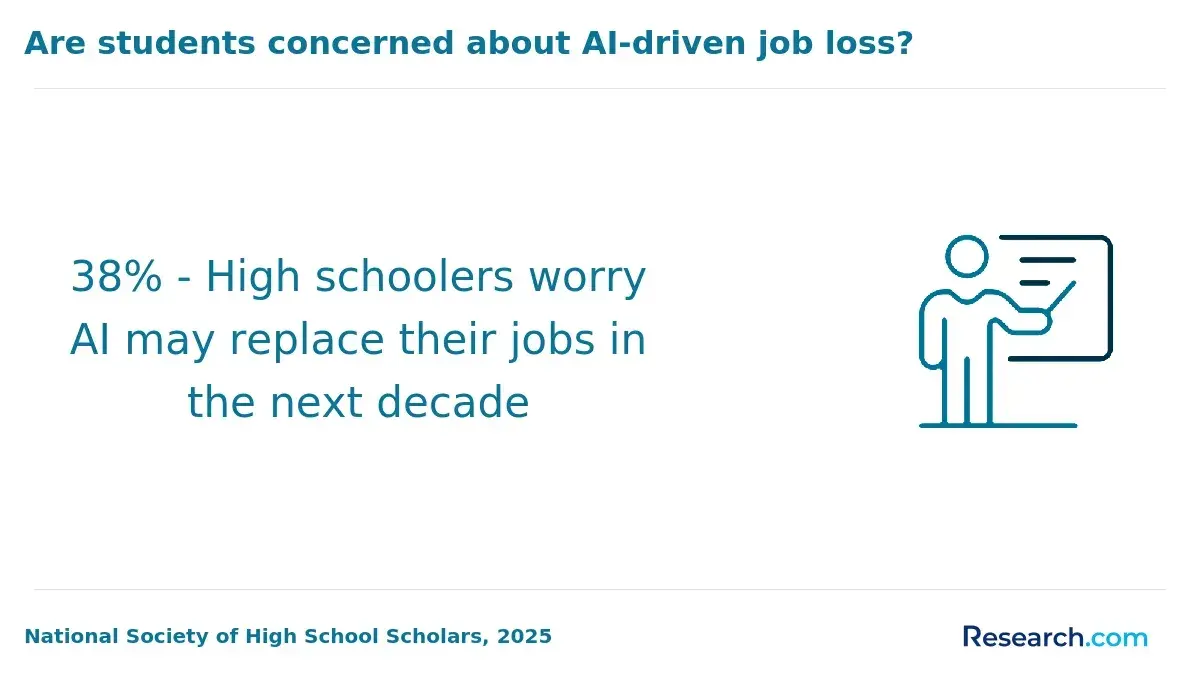
The labor market for bachelor’s degree holders has changed as automation, digital tools, remote work, and skills-based hiring have reshaped employer expectations. Demand has grown for professionals who can work as database administrators, data analysts, AI specialists, cybersecurity analysts, digital marketers, and systems-focused problem solvers.
At the same time, a bachelor’s degree is no longer the only route into every high-paying field. Some workers without a bachelor’s degree in electrical engineering, for example, may qualify for technical roles if they have credible experience, certifications, portfolios, or military training. LinkedIn (2024) reported that 73% of recruiters prioritize hiring based on skills. Associate degree holders and certificate earners can also compete in some technical and applied fields when they can prove job-ready ability.
For bachelor’s graduates, the implication is clear: the degree matters most when it is paired with evidence of competence. Internships, projects, licenses, certifications, research, leadership, writing ability, and digital fluency can make the difference between simply holding a degree and being competitive for a strong role.
How do high-paying bachelor’s degrees compare to quicker associate degrees?
A bachelor’s degree can open doors to higher-level roles, management tracks, graduate school, and certain licensed professions. An associate degree can be faster, less expensive, and more targeted for entry-level employment. The better choice depends on your career goal, finances, timeline, and whether your target occupation requires a four-year credential.
| Comparison point | Bachelor’s degree | Associate degree |
| Time to complete | Usually longer, commonly structured around four years of study | Can be shorter; options such as the best associate degree in 6 months online may appeal to students seeking faster completion |
| Cost | Often higher because of more credits, fees, and opportunity cost | Usually more affordable and may reduce borrowing |
| Career level | Can support professional, technical, analytical, and managerial pathways | Often prepares students for applied, technical, or entry-level roles |
| Long-term flexibility | May offer stronger access to graduate study and advancement | Can transfer into a bachelor’s program if credits are accepted |
| Best for | Students targeting careers that require a bachelor’s degree or higher | Students who need a faster, lower-cost route into the workforce |
What are the emerging trends in high-paying careers?
High-paying career paths are being shaped by technology, healthcare demand, sustainability, and changing employer expectations. Students should watch these trends when comparing majors:
- Technology across every industry: Healthcare, finance, logistics, education, and engineering all depend more heavily on software, data, AI, and cybersecurity, increasing the value of computer science, data science, and technical business degrees.
- Healthcare and wellness demand: Aging populations and changing care models support demand for healthcare managers, nursing professionals, telemedicine-related roles, and public health-oriented careers.
- Sustainability and green work: Renewable energy, environmental compliance, sustainable operations, and green technology are influencing engineering, business, and science pathways.
- Financial technology: FinTech continues to create demand for professionals with finance, economics, data, risk, and technology skills, including financial analysts and blockchain-related specialists.
- Remote work and flexible education: Software development, project management, analytics, and digital consulting can support remote or hybrid employment. Working adults may use the best online degree programs for working adults to change careers or upskill without leaving employment.
- Cybersecurity and information security: As organizations store more sensitive data, demand continues for professionals who can protect systems, detect threats, and respond to incidents.
- Independent and contract work: Skilled professionals in software, analytics, design, consulting, and digital services may earn strong incomes in the gig economy, though income stability can vary.
What are the key factors to consider when choosing a high-paying bachelor's degree?
The best high-paying bachelor’s degree is not simply the one with the largest salary figure. It is the one that matches your strengths, has credible labor-market demand, fits your financial situation, and leads to work you can realistically perform and sustain.
- Labor-market demand: Compare growth in technology, healthcare, business, analytics, and engineering, but also check demand in the region where you want to live.
- Salary potential: Look at entry-level and mid-career pay, not just the highest possible salary. Computer science, engineering, finance, and actuarial science may offer strong pay, but outcomes vary.
- Personal strengths: Choose a path that fits how you think and work. Quantitative majors reward math and analysis; healthcare requires judgment and communication; engineering requires design and problem-solving.
- Additional education requirements: Some careers require graduate degrees, licensure, or professional exams. If speed matters, accelerated online bachelor degree programs accredited may reduce time to completion while preserving credential value.
- Industry stability: Fields such as healthcare administration, cybersecurity, software, and analytics may provide strong demand, but students should still examine employer concentration, automation risk, and economic sensitivity.
- Program quality: Review accreditation, graduation rates, internship access, faculty expertise, student support, transfer credit rules, and career outcomes.
Common Mistakes to Avoid When Choosing a High-Paying Major
- Choosing only by salary: A high salary figure is not useful if you dislike the work, lack the required strengths, or need expensive graduate training to enter the field.
- Ignoring accreditation: This is especially risky in nursing, engineering, pharmacy-related pathways, and any field connected to licensure or professional exams.
- Comparing tuition but not total cost: Fees, commuting, housing, software, clinical costs, lab fees, flight training, and lost work hours can change affordability.
- Assuming online always means easier: Strong online programs can be rigorous, and some technical or clinical degrees still require labs, practicums, exams, or in-person placements.
- Skipping internships and portfolios: In technical, business, and design fields, employers often want proof that students can apply what they learned.
- Relying only on rankings: Rankings can be useful, but program fit, cost, accreditation, transfer policy, and employer connections usually matter more for individual outcomes.
Is an Accredited Online Bachelor's Degree Worth the Investment?
An accredited online bachelor’s degree can be worth the investment when it lowers attendance barriers, fits your schedule, and leads to a credential that employers and graduate schools recognize. The key is accreditation. Without it, transfer credits, financial aid eligibility, graduate admission, and employer trust may be limited.
Students should compare tuition, fees, technology costs, transfer credit acceptance, graduation timelines, career services, faculty access, and job placement information. Online learning can reduce some costs associated with campus attendance, but it does not automatically guarantee a better return. For program options, review accredited online bachelor's degree pathways through accredited online bachelor's degree resources.
Can a one-year online master’s program accelerate career growth after a bachelor's degree?
A one-year online master’s program may help graduates move into specialized or leadership roles faster, especially in fields where advanced technical, analytical, managerial, or professional knowledge is rewarded. These programs can be useful for bachelor’s graduates who already have a clear career direction and need a focused credential rather than a broad second degree.
Before enrolling, compare cost, accreditation, admissions requirements, employer recognition, workload, and whether the program’s outcomes justify the time and expense. Students interested in faster graduate study can compare one year online masters programs.
How can practical experience and soft skills propel career success?
A high-paying bachelor’s degree becomes more valuable when students graduate with real evidence of workplace readiness. Internships, co-ops, capstone projects, clinical experience, research, industry certifications, and mentor-guided projects help students show employers that they can apply classroom knowledge to real problems.
Soft skills also affect advancement. Communication, leadership, teamwork, ethical judgment, adaptability, and problem-solving are critical in business, healthcare, technology, science, and engineering. Students exploring flexible credential options can review What degrees can I get online? for additional pathways tied to job-ready skills.
Can a Graduate Degree Significantly Boost Career Growth After a High-Paying Bachelor's Degree?
A graduate degree can improve career growth when it is required for licensure, linked to promotion, or clearly valued in the target industry. It may be especially useful for healthcare, advanced analytics, engineering leadership, research, finance, education, and specialized management roles. However, graduate school can also add debt and delay full-time earnings, so students should compare expected benefits with cost and opportunity cost.
Before applying, ask whether the degree changes your job options, salary ceiling, professional network, or eligibility for leadership roles. For advanced education pathways, see Research.com’s guide to What are the highest paying graduate degrees?.
Can an Affordable Online Doctorate Further Elevate Career Success?
An online doctorate can support career advancement for professionals pursuing research, senior leadership, consulting, university teaching, or specialized expertise. Affordability matters because doctoral study can take significant time and money. Programs such as affordable PhD programs may help reduce cost while preserving access to advanced academic training.
Prospective doctoral students should evaluate accreditation, faculty expertise, dissertation support, research fit, residency requirements, funding, and career services. A doctorate is most valuable when it aligns with a specific professional goal rather than a general desire for a higher credential.
Can an Associate Degree Serve as an Effective Stepping Stone to High-Paying Careers?
An associate degree can be a practical first step for students who want job-ready skills, lower upfront costs, or a transfer pathway into a bachelor’s program. Applied associate programs in healthcare, technology, business, and skilled technical fields can help students enter the workforce sooner while preserving the option to continue later.
The key is transferability. Students who plan to pursue a bachelor’s degree should confirm whether credits will apply to the future program. To compare accessible starting points, explore easy associate degrees.
Questions to Ask Before Enrolling in a High-Paying Bachelor’s Program
- Is the institution properly accredited, and does the program meet licensing or certification rules for my target career?
- What percentage of graduates work in the field within a reasonable time after graduation?
- What is the total cost after scholarships, grants, transfer credits, fees, and required materials?
- Does the program include internships, labs, clinicals, capstones, research, or portfolio-building opportunities?
- What employers recruit from the program?
- Will I need a graduate degree or professional exam to reach the salary level I expect?
- Can I complete the program on my timeline without taking on unmanageable debt?
Key Insights
- The highest early-career salaries in this list are concentrated in technical, quantitative, healthcare-related, and engineering fields. Pharmacy, petroleum engineering, software engineering, physics, and actuarial science stand out, but each comes with different risks and requirements.
- Job growth matters as much as pay. Computer science, statistics, software engineering, operations research, and actuarial science show strong projected growth, while some high-paying fields grow more slowly.
- A bachelor’s degree is strongest when paired with applied experience. Internships, clinicals, co-ops, projects, portfolios, certifications, and research can make graduates more competitive than coursework alone.
- Online and accelerated programs can be worthwhile, but only if they are accredited and aligned with career goals. Flexibility should not replace checks on quality, licensure, transferability, and employer recognition.
- Skills-based hiring is changing the value of degrees. Employers increasingly reward demonstrable skills, so students should graduate with proof of technical, analytical, communication, and problem-solving ability.
- The best degree choice is personal and financial. Compare salary, growth, total cost, graduate school requirements, geographic demand, and your own strengths before committing.
References:
- Deloitte. (2025). 2025 Gen Z and Millennial Survey: Growth and the pursuit of money, meaning, and well-being. https://www.deloitte.com/content/dam/assets-shared/docs/campaigns/2025/2025-genz-millennial-survey.pdf
- Gatta, M., Kahn, J., Koncz, A. J., Galbraith, A., Patil, S., & Longenberger, A. (2025, November). 2026 Job Outlook. National Association of Colleges and Employers. https://www.naceweb.org/research/reports/job-outlook/2026
- Gulish, A., Morris, C., Cheah, B., & Strohl, J. (2024). Graduate Degrees: Risky and Unequal Paths to the Top. Georgetown University Center on Education and the Workforce. https://cew.georgetown.edu/cew-reports/graduatedegrees
- Ma, J., Pender, M., & Hu, X. (2025). Trends in College Pricing and Student Aid 2025. College Board. https://research.collegeboard.org/media/pdf/Trends-in-College-Pricing-and-Student-Aid-2025-final_1.pdf
- Walton Family Foundation & Gallup. (2025). Voices of Gen Z Study Year 3 Annual Report. https://www.gallup.com/analytics/651674/gen-z-research.aspx
Other Things to Know about the Highest Paying Bachelor’s Degrees
In 2027, some of the highest-paying bachelor's degrees include Computer Science, Engineering, and Healthcare Administration. Computer Science graduates can expect median salaries of around $85,000, with projected job growth of 16%. Engineering fields vary but have a median salary of about $80,000, with a growth rate between 4% and 8%. Healthcare Administration offers salaries near $102,000, with job growth expected around 9%.
Some do. Engineering graduates often need a state-issued Professional Engineer license, which usually requires an ABET-accredited degree, the Fundamentals of Engineering exam, and about four years of supervised experience before the Principles and Practice exam. Nursing and accounting also have state licensing rules.
Bachelor's degrees in computer science, data analysis, and renewable energy engineering are expected to have the fastest job growth by 2027, with projected increases exceeding 20% due to technological advancements and the global shift towards sustainability.
Job growth for business professionals varies by industry. For example, finance-related roles such as financial examiners and managers are expected to grow by 20% and 16%, respectively. Marketing research analysts have a projected growth rate of 13%, while management analysts and accounting professionals see growth rates of 10% and 4%, respectively.
Highly sought-after skills include proficiency in programming languages, cloud computing platforms, cybersecurity, data analytics, AI and machine learning, and web development frameworks. Additionally, problem-solving, critical thinking, collaboration, and communication skills are essential for success in these fields.


