
2027 Easiest Online Degrees

Co-Founder and Chief Data Scientist
Choosing an “easy” online degree usually means looking for a program that is realistic to complete—not a degree with no rigor or career value. For many students, the best fit is a flexible, accredited program with manageable coursework, strong advising, transfer-credit options, and a clear path to employment or further study.
This guide is for working adults, parents, career changers, first-generation students, and anyone comparing online degrees that can fit around real-life responsibilities. You will learn which online degrees are often considered more manageable, how to judge program quality, what admissions and costs may look like, and how to avoid choosing a program that is convenient but not useful.
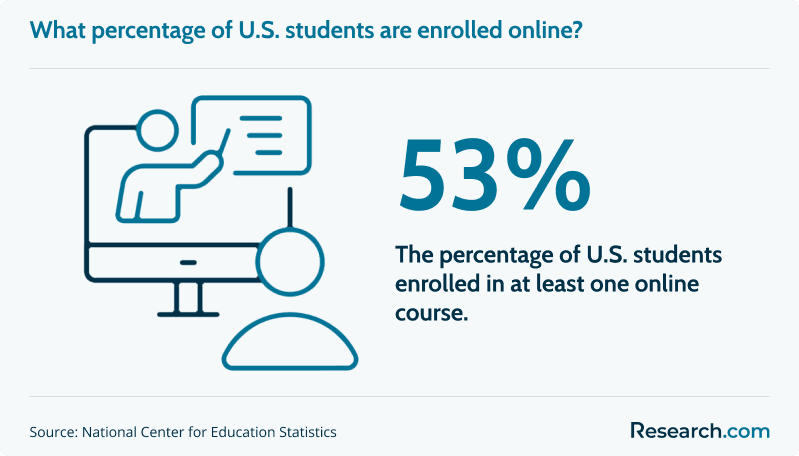
Online learning has become a mainstream part of college education. According to 2023 data, 53% of undergraduate students are enrolled in at least one online course. That growth gives students more choices, but it also makes careful comparison more important.
Quick Answer: What Are the Easiest Online Degrees?
The easiest online degrees are typically programs with flexible scheduling, broad course options, generous transfer-credit policies, clear academic support, and fewer in-person requirements. Common examples include business administration, general studies, communication, psychology, liberal studies, management, healthcare administration, and some information technology programs. However, “easy” depends heavily on your strengths, prior credits, career goals, and whether the field requires licensure or clinical practice.
For 2026 planning, the best easy online degree is not simply the fastest or cheapest option. It is the accredited program you can complete successfully, afford responsibly, and use for a realistic career or graduate-school goal.
Key Things You Should Know About Easiest Online Degrees:
- Online degrees can be easier to manage because students often have more control over when and where they study, especially in asynchronous courses.
- Most students (77%) select online colleges for their affordability, and 60% value the ability to customize programs through electives or concentrations that match their goals.
- Online degrees can carry strong value when they come from reputable, accredited institutions. In 2023, 63% of students chose an online program based on the school’s reputation.
- The online university education industry in the US is substantial, with an estimated annual revenue of $82.3 billion in 2024, reflecting a 17.2% increase from 2023.
- Many online schools design programs for working adults through accelerated terms, part-time enrollment, prior-learning credit, and flexible course formats. In 2023, 58% of students chose online degrees for faster completion times.
Affordable Quick Online Degree Programs With High Acceptance Rates for 2027
The following fields often appear in flexible online formats and may be easier for students to schedule around work and family. Still, students should check accreditation, practicum requirements, transfer policies, and whether the degree meets licensing rules in their state.
1. Nursing
Online nursing pathways can be manageable for students who already work in healthcare or need a flexible academic schedule, but they are not “easy” in the casual sense. Programs usually combine online theory courses with clinical requirements, skills labs, and preparation for licensure exams. Students should verify clinical placement support and state approval before enrolling.
2. Computer Science
Computer science programs delivered online can work well for self-directed learners who enjoy problem-solving, programming, and structured technical assignments. Many programs offer accelerated tracks and flexible deadlines, but students should expect intensive coursework in coding, algorithms, systems, and software development.
3. Healthcare Administration
Healthcare administration is often a practical online choice for students who want to work in healthcare without direct clinical licensure. Coursework usually focuses on operations, finance, policy, compliance, and leadership in healthcare settings. These programs may be especially useful for working professionals seeking advancement into supervisory or administrative roles.
4. Management
Online management degrees are typically built around workplace-relevant topics such as organizational behavior, leadership, human resources, planning, and team supervision. They may feel more manageable for students who already have work experience because many assignments connect directly to business and organizational problems.
5. Management Information Systems
Management information systems programs combine business decision-making with technology, data, and information systems. They can be a good fit for students who want a tech-adjacent degree but prefer business applications over a heavily theoretical computer science curriculum. Students should compare whether programs emphasize analytics, cybersecurity, databases, or IT project management.
6. Special Education
Online special education degrees can offer flexibility for paraprofessionals, career changers, and aspiring teachers, but licensing rules matter. Many programs require fieldwork, student teaching, background checks, or state-specific approvals. Students should confirm that the program aligns with certification requirements where they plan to teach.
7. Business Administration
Business administration is one of the most flexible online degree options because it covers broad, transferable subjects such as finance, marketing, accounting, management, and operations. It can be a strong choice for students who want multiple career options or who have not yet narrowed their professional path.
8. Economics
Economics programs can be completed online by students who are comfortable with analytical thinking, data interpretation, and quantitative coursework. While the subject can be challenging, the degree is versatile because it applies to business, policy, finance, research, and consulting-related roles.
9. Social Work
Online social work programs may be accessible and flexible academically, but students must pay close attention to field placement and licensure requirements. Programs often prepare graduates for community organizations, schools, hospitals, and social service agencies. The best fit is usually a program with strong practicum coordination and clear state licensing guidance.
10. Accounting
Online accounting degrees are structured, career-focused, and often available in accelerated formats. Students study financial reporting, auditing, taxation, and business law. Those aiming for CPA licensure should confirm whether the program helps meet their state’s education requirements.
- 10 easiest online degrees for 2027
- Online versus on-campus: which format is easier to manage?
- Main advantages of earning an easy online degree
- Are easy online degrees respected by employers?
- What makes an online degree easier to complete?
- How to verify accreditation and program quality
- Typical admissions requirements
- Average cost of easy online degrees
- Whether certifications can strengthen an online degree
- How to judge whether the investment is worth it
- Financial aid options for online students
- How to choose the best easy online degree program
- Hands-on learning in online programs
- Accelerated online degree options
- Using an easy online degree as a path to graduate study
- How online degrees adapt to workforce changes
- Networking and mentorship in online programs
- Career outcomes after easy online degrees
10 Easiest Online Degrees for 2027
How We Evaluated Manageable Online Degrees
A degree should not be called “easy” only because it has simple admissions requirements or a lighter reputation. For students, ease usually comes from fit: flexible scheduling, understandable course design, relevant support services, transfer-credit acceptance, affordability, and a curriculum aligned with personal strengths.
To support transparent program research, we reviewed information from reputable education data sources, including the IPEDS database from the National Center for Education Statistics, Peterson's database (including their Distance Learning Licensed Data Set), and the College Scorecard database.
For more information about Research.com’s review process, see our methodology section.
| Degree | Typical Full-Time Completion Time | Best Fit For | Important Caution |
| Bachelor of Science in Business Administration | 4 years | Students who want broad business skills and flexible career options | Concentrations matter; compare accounting, finance, marketing, and management tracks carefully |
| Associate of Arts in General Studies | 2 years | Students exploring majors or planning to transfer later | Career outcomes may be broader but less specialized |
| Bachelor of Science in Psychology | 4 years | Students interested in behavior, research, people-focused work, or graduate study | Clinical roles usually require additional graduate education and licensure |
| Bachelor of Science in Education | 4 years | Aspiring teachers and education professionals | State licensure and student-teaching requirements must be verified |
| Bachelor of Science in Criminal Justice | 4 years | Students interested in courts, policing, corrections, security, or policy | Some roles require academy training, background checks, or additional credentials |
| Bachelor of Arts in Communication | 4 years | Students strong in writing, speaking, media, public relations, or messaging | Portfolio, internships, and work samples can be as important as the degree |
| Bachelor of Science in Information Technology | 4 years | Students who want applied technology skills in networking, systems, databases, or IT management | Technical certifications may be useful for specific IT jobs |
| Associate of Arts in Liberal Studies | 2 years | Students seeking a flexible foundation before choosing a specialization | Students should plan transfer pathways early |
| Bachelor of Science in Health Administration | 4 years | Students interested in healthcare operations, management, policy, or informatics | Leadership roles may require experience in healthcare settings |
| Associate Degree in Nursing | 2 years | Students seeking a focused route into registered nursing | Clinical requirements and NCLEX-RN preparation are essential |
1. Bachelor of Science in Business Administration
A Bachelor of Science in Business Administration gives students a practical foundation in how organizations operate. The curriculum commonly includes finance, marketing, accounting, management, analytics, and business law. This degree is often manageable online because assignments can be project-based and connected to workplace examples.
- Time to Graduate: 4 years (full-time study)
- Courses Offered: Business Law, Marketing Principles, Management Principles, Statistics & Business Analytics
- Potential Careers: Financial Analyst, Marketing Manager, Management Consultant
2. Associate of Arts in General Studies
An Associate of Arts in General Studies is a flexible starting point for students who want a broad academic base before committing to a major. It usually includes general education courses across writing, mathematics, humanities, science, and social science. It can also support transfer into a bachelor’s program when planned carefully.
- Time to Graduate: 2 years (full-time study)
- Courses Offered: English Composition, Mathematics, Humanities, Natural Sciences
- Potential Careers: Administrative Assistant, Customer Service Representative, Sales Associate
3. Bachelor of Science in Psychology
A Bachelor of Science in Psychology introduces students to the scientific study of behavior, development, cognition, emotion, personality, and social interaction. Online psychology programs are often appealing because readings, discussion boards, research assignments, and data analysis activities can translate well to virtual learning.
- Time to Graduate: 4 years (full-time study)
- Courses Offered: Developmental Psychology, Abnormal Psychology, Social Psychology, Statistics & Research Methods
- Potential Careers: Clinical Mental Health Counselor, Market Research Analyst, School Psychologist
4. Bachelor of Science in Education
A Bachelor of Science in Education prepares students to understand learning theory, curriculum design, instructional methods, classroom management, and child development. Online coursework can be flexible, but students should expect fieldwork or student-teaching components if the program leads to licensure.
- Time to Graduate: 4 years (full-time study)
- Courses Offered: Foundations of Education, Curriculum Development & Instruction, Classroom Management, Technology in Education
- Potential Careers: Teacher (elementary, middle school, high school), Curriculum Specialist, Educational Consultant
5. Bachelor of Science in Criminal Justice
A Bachelor of Science in Criminal Justice examines crime, law enforcement, courts, corrections, victimology, juvenile justice, forensic concepts, and criminal procedure. It can be a manageable online degree for students who enjoy reading, case analysis, policy discussions, and applied problem-solving.
- Time to Graduate: 4 years (full-time study)
- Courses Offered: Criminal Law and Procedure, Juvenile Delinquency, Victimology, Crime Analysis
- Potential Careers: Police Officer, Crime Scene Investigator, Security Analyst
6. Bachelor of Arts in Communication
A Bachelor of Arts in Communication helps students develop writing, speaking, media literacy, research, persuasion, and audience-analysis skills. The degree can be well suited to online delivery because students can complete presentations, media projects, writing assignments, and collaborative work through digital platforms.
- Time to Graduate: 4 years (full-time study)
- Courses Offered: Introduction to Communication Theory, Media Literacy, Public Speaking, Writing for Media
- Potential Careers: Public Relations Specialist, Advertising Copywriter, Media Planner
7. Bachelor of Science in Information Technology
A Bachelor of Science in Information Technology focuses on applied computing systems, including networks, databases, operating systems, cybersecurity foundations, programming, and IT project management. It can be more accessible than some theory-heavy computing degrees for students who prefer practical technology work.
- Time to Graduate: 4 years (full-time study)
- Courses Offered: Computer Networks, Database Management Systems, Operating Systems, IT Project Management
- Potential Careers: Network Administrator, Software Developer, IT Project Manager
8. Associate of Arts in Liberal Studies
An Associate of Arts in Liberal Studies gives students a broad introduction to subjects such as literature, history, philosophy, psychology, mathematics, and natural sciences. It can be a useful stepping stone for students who want to build academic confidence, complete general education requirements, or transfer later.
- Time to Graduate: 2 years (full-time study)
- Courses Offered: Social Sciences, Mathematics, History, English
- Potential Careers: Customer Service Representative, Sales or Marketing Associate, Administrative Assistant
9. Bachelor of Science in Health Administration
A Bachelor of Science in Health Administration prepares students to understand healthcare organizations, finance, law, ethics, informatics, human resources, and policy. It may be a good online option for students who want to work in healthcare leadership or operations without pursuing direct patient-care licensure.
- Time to Graduate: 4 years (full-time study)
- Courses Offered: Healthcare Finance, Healthcare Law & Ethics, Healthcare Informatics & Data Analysis, Human Resource Management in Healthcare
- Potential Careers: Hospital Administrator, Health Information Manager, Healthcare Policy Analyst
10. Associate Degree in Nursing
An Associate Degree in Nursing is a focused pathway toward registered nursing. Students complete nursing theory, lab work, and clinical preparation for direct patient care. After completing the program and passing the National Council Licensure Examination (NCLEX-RN), graduates can work as registered nurses in healthcare settings.
- Time to Graduate: 2 years (full-time study)
- Courses Offered: Anatomy & Physiology, Pharmacology, Nursing Fundamentals, Medical-Surgical Nursing
- Potential Careers: Registered Nurse, Operating Room (OR) Nurse, Emergency Room Nurse
How Does an Easy Online Degree Program Compare to an On-Campus Program?
An online program is usually easier to schedule because students can access lectures, readings, assignments, and discussions from home or another location. This format helps students who work full time, care for family members, live far from campus, or need to study outside standard classroom hours.
An on-campus program may offer more immediate face-to-face interaction, stronger campus life, easier access to physical labs, and direct contact with faculty and classmates. For students who need structure, in-person accountability, or hands-on facilities, campus learning may actually feel easier.
| Factor | Online Degree | On-Campus Degree |
| Schedule | Often more flexible, especially with asynchronous classes | Usually follows fixed class times |
| Location | Can reduce commuting or relocation needs | Requires regular campus attendance |
| Interaction | Uses discussion boards, video meetings, email, and virtual collaboration | Offers in-person class discussions, office hours, and campus events |
| Hands-on requirements | May use simulations, local placements, or limited residencies | May provide easier access to labs, clinics, studios, or field sites |
| Best for | Independent learners with strong time-management skills | Students who prefer face-to-face structure and campus resources |
What Are the Biggest Advantages of Getting an Easy Degree Online?
The main advantage of an easy online degree is control. Students can often choose a program structure that fits their life instead of reorganizing work, childcare, transportation, and finances around a campus schedule.
- Flexible study schedule: Online programs can make it easier to balance school with employment and family responsibilities. This same flexibility is one reason students compare options such as affordable online ABA master's programs.
- Access beyond your local area: Students are not limited to nearby campuses, which can expand choices for specialized or lower-cost programs.
- Potential cost savings: Online learners may reduce housing, commuting, and relocation costs. For example, future educators may compare the cheapest masters in education online to control graduate-school expenses.
- More customizable academic paths: Some programs offer concentrations, electives, certificates, and transfer-friendly structures.
- Career development while enrolled: Students can keep working while earning credentials, which may help them apply coursework immediately. Advanced learners may also review options such as the most affordable PhD psychology programs when planning long-term goals.
In 2023, the top reasons for choosing an online college were affordability (77%), reputation (63%), and the ability to tailor a program to one's interest (60%). See the chart below for more details.
Is an Easy Online Degree as Valuable as a Traditional On-Campus Degree?
An online degree can be as valuable as an on-campus degree when it comes from an accredited institution, uses qualified faculty, maintains appropriate academic standards, and matches employer or licensure expectations in the field. Employers generally care about the institution, the major, the student’s skills, experience, portfolio, and whether the credential is legitimate.
The delivery format matters less when the program is reputable and the student can demonstrate competence. For example, a graduate of an accredited online masters degree in human resources may be evaluated on HR knowledge, communication skills, workplace experience, and the school’s credibility—not simply on whether classes were online.
According to recent data, the online university education industry in the U.S. generated an estimated annual revenue of $82.3 billion in 2024, reflecting a 17.2% increase from the previous year. This growth reflects broad acceptance of online education, but students should still choose carefully because program quality varies.
What Factors Determine an Easy Online Degree?
An easy online degree is usually easier because of program design, not because the content lacks standards. Students should evaluate the following factors before enrolling.
- Curriculum flexibility: Programs with multiple start dates, part-time options, and asynchronous coursework are often easier to manage. Students comparing teacher-preparation pathways, for example, may look at an elementary education degree online for scheduling flexibility.
- Academic and technical support: Tutoring, advising, writing support, library access, career services, and 24/7 technical help can reduce frustration and improve completion chances.
- Transfer and prior-learning credit: Schools that accept previous credits, military training, professional certifications, or portfolio-based learning may shorten time to graduation.
- Clear course structure: Weekly modules, transparent grading rubrics, predictable deadlines, and easy-to-use learning platforms make online study more manageable.
- Accreditation and reputation: Accreditation protects students by signaling that the institution meets recognized academic standards. It also affects transfer credit, graduate-school eligibility, financial aid, and employer recognition.
- Fit with your strengths: A business-oriented student may find the cheapest business degree online more manageable than a technical or clinical program, while another student may prefer healthcare, education, or communication.
| If You Want... | Look For... | Avoid... |
| Fast completion | Accelerated terms, transfer credits, prior-learning assessment | Programs that hide course sequencing or limit transfer credit |
| Low stress | Predictable deadlines, strong advising, part-time options | Overloaded accelerated schedules you cannot realistically sustain |
| Career mobility | Internships, projects, career services, employer-aligned skills | Programs with vague career outcomes or no applied assignments |
| Licensure | State-approved curriculum and required placements | Programs that say “may meet requirements” without state-specific guidance |
| Affordability | Total cost estimates, financial aid, tuition guarantees, transfer savings | Choosing only by sticker tuition without checking fees and time to completion |
How Can I Verify the Accreditation and Quality of My Online Degree?
Before applying, confirm that the institution is accredited by a recognized accrediting organization and that any program-level accreditation or state approval required for your field is in place. This is especially important for nursing, education, social work, counseling, and accounting pathways tied to licensure or professional exams.
Students should also review faculty credentials, student support services, graduation requirements, transfer policies, and available outcome information. Program lists such as the best online degrees for moms can be useful starting points, but they should not replace direct verification with the school and relevant licensing boards.
Questions to Ask Before You Enroll
- Is the institution accredited, and by which accreditor?
- Does the program meet licensing or certification requirements in my state?
- How many credits can I transfer?
- Are courses asynchronous, synchronous, or a mix of both?
- Are internships, clinicals, labs, practicums, or campus visits required?
- What student support services are available to online learners?
- What is the total estimated cost, including fees, books, technology, and required travel?
What Are the Typical Admissions Requirements for Easy Online Degrees?
Admissions requirements for many flexible online degrees are less selective than highly competitive residential programs, but students still need to show academic readiness. Some schools also review prior college credit, military experience, professional training, or work history.
- High School Diploma or GED: Most undergraduate online programs require proof of high school completion or an equivalent credential.
- Official Transcripts: Applicants may need transcripts from high school and any previously attended colleges.
- Application Essay or Personal Statement: Some programs ask students to explain their academic goals, career plans, or reasons for choosing the field.
Programs with licensure, clinical practice, or field placement may also require background checks, immunization records, prerequisite courses, minimum GPAs, or placement testing.
What Is the Average Cost of Easy Online Degrees?
Easy online degrees can cost anywhere from $18,000 to more than $100,000, depending on the cost per credit and the type of degree being pursued. The cost per credit hour for online programs can range from $300 to $600 for public universities and $500 to $900 for private institutions.
Degree level also affects cost. Associate degrees typically take 2 years, while bachelor’s degrees typically take 4 years. Graduate programs and professional degrees may cost more. Even affordable MBA programs, for example, can be more expensive than many humanities or social science programs.
Accredited institutions may charge higher tuition than non-accredited providers, but accreditation can be essential for financial aid, transfer credit, graduate admissions, licensure, and employer recognition. Choosing a non-accredited option to save money can become more expensive if credits do not transfer or the degree is not accepted.
| Cost Factor | Why It Matters | What to Check |
| Tuition per credit | Determines the base academic cost | Whether online students pay in-state, out-of-state, or separate online rates |
| Fees | Can significantly raise total cost | Technology, graduation, course, lab, clinical, and assessment fees |
| Transfer credits | Can reduce time and tuition | Maximum accepted credits and whether old credits expire |
| Program length | Longer programs usually cost more | Required credits, course sequencing, and whether courses run every term |
| Books and materials | Often excluded from tuition estimates | Textbooks, software, equipment, subscriptions, and exam costs |
Is Supplementing Your Easy Online Degree with Additional Certifications Beneficial?
Certifications can make an online degree more career-focused when they match the job you want. A general business, communication, IT, healthcare administration, or psychology degree may become more competitive when paired with targeted training in software, analytics, project management, human resources, coding, cybersecurity, or another applied skill area.
Students should choose certifications based on employer demand, not just convenience. Before paying for extra credentials, compare options such as online training courses and confirm whether the certification is recognized in your target industry.
Is the Investment in an Easy Online Degree Worth It?
An easy online degree may be worth it if it helps you complete a credential you can afford and use. The best way to evaluate return on investment is to compare total program cost, likely time to completion, career outcomes, transfer value, and whether the degree supports your next step.
Students should be cautious about assuming that any degree automatically produces a salary increase. Outcomes vary by field, region, experience, employer, and labor market conditions. Comparing programs with fast school programs that pay well can help students think beyond speed and consider long-term earning potential.
What Types of Financial Aid Are Available for Students of Online Degrees?
Online students may qualify for many of the same financial aid options as campus-based students if they enroll in an eligible accredited institution and meet aid requirements.
- Federal Aid (FAFSA): Eligible students can complete the Free Application for Federal Student Aid to be considered for federal grants, loans, and work-study options.
- Scholarships: Students may find scholarships based on academics, financial need, field of study, demographics, military status, or professional goals.
- Institutional Aid: Colleges may offer online learners grants, scholarships, discounts, or tuition partnerships.
- Employer Tuition Assistance: Some employers reimburse tuition or pay part of the cost for job-related education.
- Military Benefits: Veterans, active-duty service members, and eligible dependents may qualify for military tuition assistance, GI Bill benefits, or related aid programs.
Tuition varies by school type and program. In general, private non-profit four-year colleges cost the highest at $41,540 on average for SY 2023-2024. Public two-year in-district tuition cost the lowest on average at only $3,990. See the chart below for more details.
How to Choose the Best Easiest Online Degree Program
The right online degree should fit your schedule, budget, learning style, academic background, and career direction. Use the steps below to compare programs before applying.
- Define the outcome you want. Decide whether you need a job-ready credential, a transfer pathway, a licensure route, a promotion, or preparation for graduate school.
- Start with accredited schools. Remove any institution that lacks recognized accreditation or cannot clearly explain licensure alignment.
- Compare the actual curriculum. Look at required courses, electives, concentration options, capstones, internships, labs, and exams.
- Ask how credits transfer. If you have prior college coursework, request a preliminary transfer-credit review before committing.
- Check the online format. Confirm whether classes are asynchronous, live, self-paced, competency-based, or term-based.
- Calculate total cost. Include tuition, fees, materials, technology, exams, travel, lost work time, and the cost of delayed completion.
- Evaluate support services. Strong advising, tutoring, career help, library access, and technical support can make a program much easier to finish.
- Review career alignment. Look for relevant projects, employer partnerships, internship options, alumni outcomes, and industry-recognized skills.
- Speak with real people. Contact admissions, program faculty, current students, alumni, and advisors before enrolling.
These steps apply across fields. For example, a paramedic considering a paramedic to RN bridge program should verify clinical requirements, state approval, transfer policies, and scheduling expectations before choosing a pathway.
Do Easy Online Degrees Offer Practical, Hands-On Learning Opportunities?
Many online degrees now include applied learning through simulations, virtual labs, case studies, capstone projects, digital portfolios, remote internships, and local field placements. The type of hands-on work depends on the major. Business and communication programs may use projects and presentations, while nursing, education, and social work often require supervised in-person experience.
Students who want applied learning should compare the best accredited bachelor's degree online options and ask each school how online students complete practical requirements.
Are Accelerated Options Viable for Easy Online Degrees?
Accelerated online degrees can be viable for disciplined students with enough weekly study time, prior credits, or relevant experience. Common acceleration strategies include shorter terms, year-round enrollment, competency-based learning, credit for prior learning, and generous transfer policies.
However, faster is not always easier. Compressed courses can require more weekly reading, writing, testing, and project work. Students comparing accelerated degree programs should ask how many hours per week each course typically requires.
Can Easy Online Degrees Propel You Toward Advanced Degrees?
Yes, an easy online degree can support graduate study if it is accredited, academically credible, and includes prerequisites required for the next program. Students planning for master’s or doctoral study should choose undergraduate programs with strong writing, research, statistics, and discipline-specific preparation.
Some students use an online bachelor’s degree as a foundation for advanced pathways, including online doctoral programs. Before enrolling, confirm that graduate schools will accept the degree and that the curriculum meets prerequisite expectations.
How Do Easy Online Degrees Evolve to Meet Future Workforce Demands?
Online programs are increasingly expected to teach current tools, workplace communication, digital collaboration, data literacy, and applied problem-solving. Many programs update electives, embed software training, and use project-based assignments to reflect employer expectations.
Students comparing a fast track bachelor degree online should look for evidence that the curriculum is reviewed regularly and that assignments build skills relevant to current job postings.
Do Easy Online Degrees Offer Robust Networking and Mentorship Opportunities?
Online programs can offer networking, but students often need to be more intentional than they would be on campus. Useful opportunities may include virtual career fairs, alumni communities, discussion forums, faculty office hours, group projects, employer webinars, student organizations, and mentorship programs.
When comparing cost-conscious options such as the most affordable bachelor's degree, ask whether online students have access to the same career services, alumni networks, internships, and advising as campus students.
What Are the Career Outcomes for Graduates of Easy Online Degrees?
Career outcomes depend on the degree field, local labor market, work experience, internships, certifications, and whether the program meets licensing requirements. The following examples show possible outcomes mentioned for common online degree paths.
- Business Administration: Graduates can pursue roles such as financial analyst, marketing manager, or business consultant, with average salaries ranging from $60,000 to $80,000.
- Healthcare Administration: Careers include hospital administrator, health services manager, and healthcare policy analyst, with median salaries around $67,000 annually.
- Computer Science: Graduates often work as software developers, IT project managers, or cybersecurity specialists, earning between $80,000 and $100,000.
- Social Work: Graduates may enter fields like case management, mental health counseling, or school social work, with salaries averaging $50,000 to $60,000.
- Special Education: Educators in this field work in schools or specialized institutions, earning around $60,000 per year.
Students should treat salary figures as planning estimates, not guarantees. Individual earnings vary by employer, experience, location, credentials, and economic conditions.
What 1 Year Degree Makes the Most Money?
Some one-year or accelerated programs may lead to strong earnings, but income depends on the occupation, licensing requirements, regional demand, prior education, and experience. Students should verify whether a program is truly a degree, a certificate, a bootcamp, a bridge pathway, or professional training.
- Registered Nurse (RN): An accelerated Bachelor of Science in Nursing or RN-to-BSN bridge pathway may support healthcare advancement. Students can compare the easiest RN to BSN programs online and later review the best shortest online MSN programs in USA.
- Software Developer: Intensive coding bootcamps or accelerated software development programs may prepare students for technology roles, especially when paired with a strong portfolio.
- Dental Hygienist: Some accelerated dental hygiene pathways can lead to clinical roles, but licensing and clinical training requirements must be confirmed.
- Radiologic Technologist: Accelerated radiologic technology or radiography programs may prepare students for medical imaging careers when they meet credentialing standards.
- Commercial Pilot: Accelerated flight training may lead toward aviation roles, but students should carefully review licensing, flight-hour requirements, and training costs.
Common Mistakes to Avoid When Choosing an Easy Online Degree
| Mistake | Why It Can Hurt You | Better Approach |
| Choosing the fastest program without checking accreditation | Credits may not transfer, employers may not recognize the degree, and financial aid may be limited | Verify institutional and program-level accreditation before applying |
| Looking only at tuition | Fees, materials, travel, exams, and extra terms can raise the real cost | Compare total cost of attendance and time to completion |
| Assuming online means self-paced | Many online courses still have weekly deadlines and live requirements | Ask whether courses are asynchronous, synchronous, competency-based, or term-based |
| Ignoring licensure rules | The degree may not qualify you for teaching, nursing, counseling, or social work licensure in your state | Check with the state licensing board before enrolling |
| Overloading your schedule | Accelerated programs can become unmanageable with work and family obligations | Estimate weekly study hours honestly before choosing full-time or accelerated enrollment |
| Relying only on rankings | A highly ranked program may not fit your budget, schedule, location, or career path | Use rankings as one input, then compare fit, support, outcomes, and requirements |
Key Insights
- The easiest online degree is the one you can complete successfully while still meeting your career, transfer, licensure, and budget goals.
- Business administration, general studies, liberal studies, communication, psychology, management, healthcare administration, and information technology often offer flexible online formats.
- Licensure-focused fields such as nursing, education, social work, and accounting require extra caution because state rules, exams, clinicals, or fieldwork may apply.
- Accreditation is non-negotiable. It affects financial aid, transfer credit, graduate-school eligibility, professional licensing, and employer trust.
- Online programs can save time and increase flexibility, but they still require discipline, weekly study time, writing, participation, and reliable technology.
- Before enrolling, compare total cost, transfer-credit policy, course format, support services, practical learning opportunities, and realistic career outcomes.
References:
- College Board. (2023) Trends in college pricing and student aid 2023. College Board.
- National Center for Education Statistics. (2024). College navigator. Retrieved May 23, 2024, from NCES.
- Statista. (2023, September 8). U.S. students' reasons for online college selection 2023. Statista.
- Statista. (2024). Online university education. Retrieved May 23, 2024, from Statista.
Other Things You Should Know About The Easiest Online Degrees
Most online associate degrees require 60 semester credits, or about 20 courses, and full-time students often finish in two years. Programs that accept transfer credits or award credit for prior learning can shorten that timeline, but the degree still must meet the school’s published graduation requirements.
In 2027's easiest online degrees, common assessments include online quizzes, open-book exams, and independent research papers. These programs often emphasize projects and essays over traditional testing, providing flexibility and catering to various learning styles.


