2027 Best Online Master’s Programs for Military Service Members

Co-Founder and Chief Data Scientist
Choosing an online master’s degree while serving in the military is not the same as choosing a standard graduate program. You may need courses that work around duty schedules, deployments, relocations, tuition assistance rules, GI Bill benefits, and a future civilian career plan. The best choice is not always the fastest program or the school with the strongest marketing. It is the program that is accredited, flexible enough for military life, aligned with your occupational specialty or transition goals, and financially realistic after benefits are applied.
This guide is for active-duty service members, veterans, reservists, National Guard members, and military-connected students comparing online master’s programs in the United States. It explains which graduate degrees tend to translate well from military experience to civilian employment, what to check before enrolling, how to compare costs and accreditation, and which online programs are commonly considered for fields such as cybersecurity, IT management, logistics, project management, homeland security, intelligence, operations research, engineering management, business, health administration, data science, and national security studies.
Quick Answer: What Is the Best Online Master’s Degree for Military Service Members?
The best online master’s degree for a military service member depends on career goal, current military experience, clearance status, preferred industry, and funding options. Cybersecurity, information technology management, logistics and supply chain management, project management, intelligence, data science, operations research, engineering management, health administration, and national security studies are among the strongest options because they build on skills often developed in military roles and can also apply to civilian careers.
If you want the most portable civilian credential, look closely at cybersecurity, data science, IT management, project management, logistics, or an MBA. If you plan to remain in defense, federal service, intelligence, emergency management, or security policy, homeland security, strategic intelligence, national security studies, and operations research may be a stronger match.
What are the benefits of getting an online master's degree as a military service member?
- Career mobility: A graduate degree can strengthen your qualifications for military advancement, federal roles, defense contracting, private-sector leadership, and post-service career changes.
- Flexibility during service: Online coursework can often be completed from different duty stations and may be easier to manage during relocations than a campus-based program.
- Better use of military experience: Many programs allow you to build on leadership, operations, logistics, intelligence, IT, healthcare, or technical experience gained during service.
- Reduced relocation pressure: Because the program is online, you may avoid moving solely for graduate school and can compare programs nationally.
- Specialized preparation: Fields such as cybersecurity, logistics, analytics, and project management can turn military responsibilities into civilian-ready credentials and language.
What can I expect from an online master's degree program as a military service member?
An online master’s program should provide advanced coursework, structured faculty interaction, and academic expectations similar to an on-campus degree. For military students, the real question is whether the program can remain manageable when service obligations change. Before enrolling, ask how the school handles deployment interruptions, withdrawals, course extensions, transfer credit, military tuition assistance, and GI Bill certification.
- Advanced coursework: You can expect deeper study in an area such as cybersecurity, management, logistics, intelligence, analytics, engineering leadership, or healthcare administration.
- Online learning tools: Most programs use recorded or live lectures, discussion boards, virtual labs, group projects, digital libraries, and online assessments.
- Military student services: Strong programs typically provide military-affiliated advising, VA benefits support, transfer-credit review, and career guidance.
- Professional networking: Online programs may offer alumni groups, employer events, peer forums, and faculty connections that can support your transition into civilian roles.
- Leadership development: Many master’s degrees emphasize decision-making, communication, budgeting, project execution, risk management, and team leadership.
- Transferable skills: Graduate work can help you translate military experience into civilian competencies such as analysis, planning, operations, compliance, and organizational leadership.
Where can I work with an online master's degree as a military service member?
An online master’s degree does not limit you to remote jobs or online-only employers. If the school is properly accredited and the program is respected in your field, the degree can support opportunities in military, government, nonprofit, defense, healthcare, technology, logistics, and corporate settings.
- Military leadership and specialist roles: Advanced education may support assignments involving cyber operations, logistics, intelligence, healthcare systems, engineering projects, or command-level planning.
- Federal and state agencies: Graduates may pursue work in national security, emergency management, intelligence analysis, public administration, cybersecurity, or policy support.
- Defense contractors: Military experience plus a graduate credential can be valuable in systems development, program management, cybersecurity, logistics, analytics, and technical operations.
- Private-sector employers: Technology, supply chain, healthcare, consulting, finance, energy, and manufacturing organizations often hire candidates with leadership and operational backgrounds.
- Consulting firms: Project management, risk, logistics, cybersecurity, operations, and strategy consulting can be a fit for professionals who can solve complex problems under pressure.
- Nonprofit and public service organizations: Leadership, compliance, healthcare administration, emergency preparedness, and program operations skills can transfer well to mission-driven organizations.
How much can I make with an online Master's Degree as a Military Service Member?
Pay varies by role, region, employer, clearance requirements, prior experience, technical skill level, and whether you remain in uniform or transition to civilian employment. The ranges below are broad estimates from the original program categories and should be used for comparison, not as guaranteed outcomes.
| Career path | General salary range | Best-fit degree areas |
| Project Manager | $70,000 - $120,000+ per year | Project Management, MBA, Engineering Management |
| Cybersecurity Analyst/Manager | $80,000 - $150,000+ per year | Cybersecurity, IT Management, Data Science |
| Logistics/Supply Chain Manager | $75,000 - $130,000+ per year | Logistics and Supply Chain Management, MBA, Operations Research |
| Government/Defense Analyst | $65,000 - $110,000+ per year | Homeland Security, Strategic Intelligence, National Security Studies |
| IT Manager | $90,000 - $160,000+ per year | Information Technology Management, Cybersecurity, MBA |
| Healthcare Administrator | $80,000 - $140,000+ per year | Health Administration, MBA |
- Best master’s degrees for military personnel
- Online MS in Cybersecurity programs
- Online MS in Information Technology Management programs
- Online MS in Logistics and Supply Chain Management programs
- Online MS in Project Management programs
- Online MS in Homeland Security programs
- Online MS in Strategic Intelligence programs
- Online MS in Operations Research programs
- Online MS in Engineering Management programs
- Online MBA and business administration programs
- Online MS in Health Administration programs
- Online MS in Data Science programs
- Online MS in National Security Studies programs
- Decision checklist, mistakes, and final insights
Which Master's Degrees Best Equip Military Personnel for Success In and Out of Service?
The strongest master’s degree for a service member is one that connects three things: your military background, your next promotion or assignment, and your civilian career options after separation or retirement. A degree should not only sound relevant; it should help you build a credible professional story.
| Degree area | Best for service members who want to... | Important caution |
| Cybersecurity | Move into cyber defense, security operations, incident response, or defense technology roles | Look for hands-on labs, security tools, and alignment with certifications or technical skill expectations. |
| Information Technology Management | Lead IT teams, manage systems, and connect technology decisions with organizational goals | Make sure the curriculum is not too general if you need deep technical training. |
| Logistics and Supply Chain Management | Translate military logistics, procurement, distribution, or readiness experience into civilian operations roles | Compare analytics, global logistics, procurement, and transportation content before choosing. |
| Project Management | Formalize mission planning, team coordination, budgeting, and execution skills | Check whether coursework supports recognized project management methods and employer expectations. |
| Homeland Security or National Security | Work in emergency management, policy, security planning, law enforcement, or federal service | Career outcomes may depend heavily on location, clearance, agency hiring, and prior experience. |
| Strategic Intelligence | Build analysis, counterintelligence, geopolitical, or threat assessment skills | Verify whether the program emphasizes practical analytic tradecraft, not only theory. |
| Operations Research or Data Science | Use quantitative methods, modeling, analytics, and decision science to solve complex problems | Be honest about math, statistics, coding, and data preparation requirements. |
| Engineering Management | Lead technical teams, systems projects, or engineering operations | This is usually best for students with engineering or technical backgrounds. |
| MBA | Broaden leadership, finance, operations, strategy, and organizational management options | Compare tuition carefully and look for career support, employer reputation, and concentration fit. |
| Health Administration | Move into healthcare operations, medical facility leadership, or health systems management | Healthcare leadership roles often require relevant healthcare experience in addition to the degree. |
1. MS in Cybersecurity
An MS in Cybersecurity is a strong match for service members interested in protecting networks, systems, data, and mission-critical infrastructure. It can support military cyber roles as well as civilian positions in government, defense contracting, and private-sector security.
- Curriculum: Common topics include network security, cryptography, ethical hacking, digital forensics, risk management, security policy, and incident response.
- Skills Developed: Students build skills in vulnerability analysis, threat evaluation, security control design, and cyber incident response.
- Military Benefit: The degree can strengthen cyber defense, information protection, and cyber operations capabilities.
- Student Benefit
- While in Service: It can support specialized assignments and advancement into cyber-focused responsibilities.
- Post-Service: It can help translate military technical experience into cybersecurity roles in federal, defense, and commercial settings.
- Average salary: $80,000 - $150,000+ per year
2. MS in Information Technology Management
An MS in Information Technology Management is designed for students who want to lead technology teams rather than work only as individual technical contributors. It is useful for service members with communications, systems, cyber, operations, or IT leadership experience.
- Curriculum: Courses often cover IT governance, project management, systems analysis, database management, and strategic IT planning.
- Skills Developed: Students learn IT project leadership, technology implementation, systems improvement, and planning for enterprise technology needs.
- Military Benefit: The degree can help improve IT infrastructure oversight, operational efficiency, and technology-informed decision-making.
- Student Benefit
- While in Service: It can prepare students for IT project, systems, or department leadership responsibilities.
- Post-Service: It can support civilian IT management roles across industries.
- Average salary: $90,000 - $160,000+ per year
3. MS in Logistics and Supply Chain Management
Military operations depend on getting people, equipment, materials, and information where they need to be. A graduate degree in logistics and supply chain management can help service members convert that experience into civilian operations, procurement, transportation, and supply chain leadership roles.
- Curriculum: Typical coursework includes supply chain optimization, procurement, distribution, inventory management, and logistics technology.
- Skills Developed: Students develop strategic logistics planning, supply chain analysis, and resource allocation skills.
- Military Benefit: The degree can support readiness, deployment planning, and more efficient resource movement.
- Student Benefit
- While in Service: It can strengthen logistics planning and operational readiness work.
- Post-Service: It can position graduates for civilian logistics, supply chain, procurement, and operations roles.
- Average salary: $75,000 - $130,000+ per year
4. MS in Project Management
Project management is a practical graduate path for service members who have coordinated missions, led teams, managed timelines, controlled budgets, or delivered complex initiatives. It provides civilian terminology and frameworks for experience many military professionals already have.
- Curriculum: Programs usually include project planning, risk management, budgeting, scheduling, and team leadership.
- Skills Developed: Students build skills in planning, risk mitigation, stakeholder coordination, and project execution.
- Military Benefit: The degree can improve mission planning, operational execution, and cross-functional coordination.
- Student Benefit
- While in Service: It can strengthen project leadership and operational management.
- Post-Service: Project management skills are broadly transferable across technology, construction, defense, healthcare, logistics, and business.
- Average salary: $70,000 - $120,000+ per year
5. MS in Homeland Security
A homeland security master’s degree focuses on domestic and international threats, emergency planning, terrorism studies, crisis response, and interagency coordination. It may fit students targeting public safety, emergency management, security policy, federal service, or related defense roles.
- Curriculum: Coursework commonly includes terrorism studies, crisis management, intelligence analysis, and security policy.
- Skills Developed: Students learn threat assessment, crisis planning, policy development, and coordinated response strategies.
- Military Benefit: The degree can support national security planning, defense coordination, and response readiness.
- Student Benefit
- While in Service: It can improve security planning and operational response capabilities.
- Post-Service: It can lead toward roles in government, law enforcement, emergency management, and security organizations.
- Average salary: $65,000 - $110,000+ per year
6. MS in Strategic Intelligence
Strategic intelligence programs train students to collect, evaluate, interpret, and communicate information for high-stakes decisions. This pathway can be especially relevant for service members with intelligence, security, operations, or geopolitical experience.
- Curriculum: Common areas include intelligence analysis, counterintelligence, strategic planning, and geopolitical analysis.
- Skills Developed: Students build intelligence gathering, data interpretation, analytic writing, and strategic forecasting skills.
- Military Benefit: The degree can enhance intelligence support, planning, and decision-making in complex environments.
- Student Benefit
- While in Service: It can sharpen analytic and planning skills for intelligence-related assignments.
- Post-Service: It may support intelligence, analysis, risk, security, and government contractor roles.
- Average salary: $70,000 - $120,000+ per year
7. MS in Operations Research
Operations research applies math, modeling, statistics, simulation, and optimization to decision-making. For service members who enjoy analytical problem-solving, resource planning, and operational improvement, this can be one of the most rigorous and transferable graduate options.
- Curriculum: Programs typically cover statistical modeling, optimization, simulation, and decision analysis.
- Skills Developed: Students learn data analysis, model building, scenario evaluation, and structured problem-solving.
- Military Benefit: The degree can improve resource allocation, operational efficiency, and evidence-based planning.
- Student Benefit:
- While in Service: It can support complex decision-making and operational analysis.
- Post-Service: It can prepare graduates for analytics, consulting, operations research, and decision science roles.
- Average salary: $80,000 - $140,000+ per year
8. MS in Engineering Management
Engineering management combines technical expertise with leadership, budgeting, project oversight, and systems thinking. It is often best for service members with engineering, maintenance, technical systems, aviation, construction, or technology backgrounds.
- Curriculum: Courses commonly cover engineering project management, systems engineering, and technology leadership.
- Skills Developed: Students build technical project leadership, systems analysis, and technology implementation skills.
- Military Benefit: The degree can support systems development, engineering oversight, and technical modernization efforts.
- Student Benefit
- While in Service: It can prepare students for technical team leadership and engineering project responsibilities.
- Post-Service: It can support management roles in engineering, technology, manufacturing, defense, and infrastructure.
- Average salary: $90,000 - $160,000+ per year
9. MS in Business Administration (MBA)
An MBA gives military students a broad business foundation in leadership, finance, operations, strategy, and organizational decision-making. It can be valuable for service members moving into management, consulting, entrepreneurship, operations, or executive-track roles.
- Curriculum: Common topics include business strategy, financial management, organizational behavior, operations, and leadership.
- Skills Developed: Students develop strategic planning, financial analysis, communication, organizational leadership, and management skills.
- Military Benefit: An MBA can strengthen resource management, personnel leadership, and strategic planning.
- Student Benefit
- While in Service: It can improve leadership and management performance in military organizations.
- Post-Service: It offers broad preparation for leadership roles in many civilian sectors.
- Average salary: $85,000 - $150,000+ per year
10. MS in Health Administration
A health administration master’s degree focuses on the management of healthcare facilities, health systems, policy, finance, quality, and operations. It can fit military medical personnel, healthcare administrators, and service members interested in transitioning into civilian healthcare leadership.
- Curriculum: Programs commonly include healthcare policy, financial management, and healthcare operations.
- Skills Developed: Students build healthcare management, policy implementation, operations, and quality improvement skills.
- Military Benefit: The degree can improve medical facility management, healthcare delivery, and personnel health support.
- Student Benefit
- While in Service: It can strengthen skills for military medical administration and health systems roles.
- Post-Service: It can support careers in hospital administration, healthcare operations, managed care, and health services management.
- Average salary: $80,000 - $140,000+ per year
11. MS in Data Science
Data science programs teach students how to draw useful insights from large datasets through statistics, machine learning, programming, and visualization. For military students, this can apply to intelligence, logistics, operations, cybersecurity, maintenance, personnel analysis, and civilian analytics roles. Students comparing cost-sensitive options can also review Research.com’s guide to the most affordable online master’s programs in data science and analytics.
- Curriculum: Coursework often includes statistical analysis, machine learning, and data visualization.
- Skills Developed: Students learn data analysis, model development, visualization, and data-informed decision-making.
- Military Benefit: The degree can improve intelligence analysis, planning, forecasting, and operational decision support.
- Student Benefit
- While in Service: It can build stronger analytical capability for data-heavy military operations.
- Post-Service: It can prepare graduates for data science, analytics, business intelligence, and technical decision-support roles.
- Average salary: $90,000 - $160,000+ per year
12. MS in National Security Studies
National security studies programs examine policy, strategy, international relations, threat environments, and defense planning. They can fit service members who want to remain connected to national security work after graduation.
- Curriculum: Common topics include national security policy, strategic studies, and international relations.
- Skills Developed: Students strengthen policy analysis, strategic planning, geopolitical analysis, and security-focused communication.
- Military Benefit: The degree can support strategic planning, policy development, and national security initiatives.
- Student Benefit
- While in Service: It can sharpen strategic thinking and policy analysis for military leadership roles.
- Post-Service: It may support work in national security policy, analysis, government, law enforcement, and defense organizations.
- Average salary: $70,000 - $120,000+ per year
The Post-9/11 GI Bill provides education benefits for eligible service members and veterans who served after September 10, 2001. Benefit levels depend on qualifying active-duty service time. The stated tiers are 100% for 36+ months or 30+ continuous days with a service-connected disability; 90% for 30-36 months; 80% for 24-30 months; 70% for 18-24 months; 60% for 6-18 months; 50% for 90 days to 6 months; and no benefit for less than 90 days of service. In practical terms, a longer qualifying service period generally produces a higher benefit percentage, as reflected in the chart below.
For the 2023-2024 academic year, the bill covers full in-state tuition and fees at public institutions and up to $27,120.05 for private or foreign institutions, with annual adjustments. It can also include a monthly housing allowance based on the school’s location and a books and supplies stipend of up to $1,000 per year. Eligible programs may include colleges, universities, trade schools, flight schools, and apprenticeship programs approved for benefits.
Best Online MS in Cybersecurity Programs
The following online cybersecurity master’s programs are options military-affiliated students may compare. If you are still testing your interest before committing to a full degree, you can also explore online cybersecurity courses with certificates from accredited institutions.
1. University of Maryland Global Campus (UMGC)
The University of Maryland Global Campus (UMGC) MS in Cybersecurity is built around information security principles, cyber risk, and applied defense practices. Students study topics such as network security, cyber forensics, and security management while developing the ability to evaluate vulnerabilities and plan secure systems. The program’s online format can be useful for working adults and military personnel who need flexibility.
- Program Length: Approximately 24 months
- Tracks/Concentrations: Cyber Operations, Cybersecurity Management and Policy, Digital Forensics.
- Tuition Cost: $659 per credit (in-state and out-of-state)
- Required Credits to Graduate: 36 credits
- Accreditation: Middle States Commission on Higher Education (MSCHE)
2. SANS Technology Institute
SANS Technology Institute offers an MS in Cybersecurity with a strong emphasis on hands-on technical preparation. Courses are tied closely to real-world security scenarios, including network defense, incident response, and ethical hacking. Because the program is connected with certification-oriented training, it may appeal to students who want graduate study that also supports practical cybersecurity skill development.
- Program Length: Varies based on chosen certifications
- Tracks/Concentrations: varies depending on certificate choices.
- Tuition Cost: Varies depending on certificate choices.
- Required Credits to Graduate: 36 credits
- Accreditation: Middle States Commission on Higher Education (MSCHE)
3. Syracuse University
Syracuse University offers an online MS in Cybersecurity that blends technical security knowledge with management-oriented preparation. The curriculum includes cyber operations, forensics, incident response, and security management. Students can build skills in threat analysis, security strategy, and cybersecurity leadership while studying online.
- Program Length: Approximately 15 months.
- Tracks/Concentrations: Cyber Operations, Forensics, Incident Response, Security Management.
- Tuition Cost: $1,688 per credit
- Required Credits to Graduate: 30 credits
- Accreditation: Middle States Commission on Higher Education (MSCHE)
The 2024 Global Cybersecurity Workforce Gap Estimate is 5,457,173 professionals, with a year-over-year increase of 0.1%. North America has a gap of 1,454,868 unfilled positions after a 2.7% decrease. Latin America’s gap is 1,273,868 after a 0.9% decrease. Europe’s gap is estimated at 1,300,023 after a 0.7% decrease. The Middle East and Africa region reported 431,302 unfilled roles, a 7.4% increase, while Asia-Pacific reported 997,068, a 3.8% increase. The chart below shows why cybersecurity education remains a major workforce issue across regions.
Best Online MS in Information Technology Management Programs
Information technology management is different from a highly technical computer science curriculum because it focuses on leading technology systems, teams, budgets, and strategy. Students who want deeper computing theory may want to compare it with an accelerated online computer science degree pathway.
1. University of Southern California (USC)
The University of Southern California (USC) online MS in Information Technology emphasizes using IT strategically to support organizational goals. Students study areas such as IT governance, project management, systems analysis, and database management while learning how to connect technology investments with business and mission outcomes.
- Program Length: Approximately 20 months.
- Tracks/Concentrations: Various, including data analytics and cybersecurity.
- Tuition Cost: $2,095 per credit.
- Required Credits to Graduate: 30 credits
- Accreditation: WASC Senior College and University Commission (WSCUC)
2. Virginia Tech
Virginia Tech offers an online MSIT program focused on managing IT resources in complex organizations. Coursework includes IT governance, project management, and systems analysis, with an emphasis on practical application and real-world technology leadership.
- Program Length: Approximately 24 months.
- Tracks/Concentrations: Business Analytics, Cybersecurity Management, Decision Support.
- Tuition Cost: $950 per credit (in-state and out-of-state)
- Required Credits to Graduate: 30 credits
- Accreditation: Southern Association of Colleges and Schools Commission on Colleges (SACSCOC)
3. Penn State World Campus
Penn State offers an online MS in Information Systems through World Campus with a focus on strategic IT leadership. Students examine governance, systems, project management, and specialized areas such as enterprise architecture and information security management.
- Program Length: Approximately 24 months.
- Tracks/Concentrations: Various, including Enterprise Architecture and Information Security Management.
- Tuition Cost: $995 per credit (in-state and out-of-state)
- Required Credits to Graduate: 30 credits
- Accreditation: Middle States Commission on Higher Education (MSCHE)
Best Online MS in Logistics and Supply Chain Management Programs
Military logistics experience can translate well into civilian supply chain, procurement, distribution, and operations roles. Students planning this route may also want to review what a logistics career path can look like after graduation.
1. Arizona State University (ASU)
Arizona State University (ASU) offers an online MS in Supply Chain Management focused on strategic supply chain planning. Students study procurement, distribution, inventory, analytics, and global logistics while learning how to improve supply chain performance.
- Program Length: Approximately 24 months.
- Tracks/Concentrations: Global Logistics, Procurement, Supply Chain Analytics.
- Tuition Cost: $1,358 per credit (in-state and out-of-state)
- Required Credits to Graduate: 30 credits
- Accreditation: Higher Learning Commission (HLC)
2. Purdue University Global
Purdue Global offers an online MS in Logistics and Supply Chain Management with a practical focus on logistics, transportation, and supply chain operations. The program may suit students who want applied coursework connected to operational efficiency and global movement of goods.
- Program Length: Approximately 18 months.
- Tracks/Concentrations: General Supply Chain Management.
- Tuition Cost: $480 per credit.
- Required Credits to Graduate: 48 credits
- Accreditation: Higher Learning Commission (HLC)
3. Pennsylvania State University (Penn State World Campus)
Penn State World Campus offers an MS in Supply Chain Management that emphasizes leadership, supply chain strategy, logistics, and operations management. The curriculum is designed for students who want to manage complex supply chains and lead logistics teams.
- Program Length: Approximately 24 months.
- Tracks/Concentrations: Integrated Supply Chain Management.
- Tuition Cost: $995 per credit.
- Required Credits to Graduate: 30 credits.
- Accreditation: Middle States Commission on Higher Education (MSCHE)
Best Online MS in Project Management Programs
Project management programs are a natural fit for military students who have led teams, coordinated operations, managed resources, or delivered time-sensitive objectives. Compare programs by curriculum, cost, schedule flexibility, and how well they connect to your target industry.
1. George Washington University (GWU)
George Washington University offers an online MS in Project Management focused on complex project leadership. Students study planning, risk, team leadership, and project methods that can apply across industries.
- Program Length: Approximately 24 months
- Tracks/Concentrations: General Project Management, Program Management
- Tuition Cost: $1,820 per credit
- Required Credits to Graduate: 30 credits
- Accreditation: Middle States Commission on Higher Education (MSCHE)
2. Colorado State University Global
Colorado State University Global offers an online MS in Project Management for working professionals who want structured training in planning, execution, control, scope, schedule, and budget management.
- Program Length: Approximately 24 months
- Tracks/Concentrations: General Project Management.
- Tuition Cost: $500 per credit
- Required Credits to Graduate: 36 credits
- Accreditation: Higher Learning Commission (HLC)
3. Northeastern University
Northeastern University offers an online MS in Project Management centered on strategic project leadership, risk management, stakeholder engagement, and innovation-focused execution.
- Program Length: Approximately 24 months
- Tracks/Concentrations: Various, including Agile Project Management
- Tuition Cost: $1,850 per credit
- Required Credits to Graduate: 30 credits
- Accreditation: New England Commission of Higher Education (NECHE)
Best Online MS in Homeland Security Programs
Homeland security programs are designed for students interested in emergency preparedness, counterterrorism, public safety, crisis management, cyber security, and national resilience. Military students should compare concentration options carefully because these programs can differ significantly in focus.
1. Pennsylvania State University (Penn State World Campus)
Penn State World Campus offers an online MS in Homeland Security that emphasizes planning, crisis management, terrorism studies, intelligence analysis, and collaboration across agencies.
- Program Length: Approximately 24 months
- Tracks/Concentrations: Counterterrorism, Cyber Security, Public Health Preparedness.
- Tuition Cost: $995 per credit
- Required Credits to Graduate: 30 credits
- Accreditation: Middle States Commission on Higher Education (MSCHE)
2. Arizona State University (ASU)
Arizona State University (ASU) offers an online MS in Homeland Security that covers crisis management, intelligence analysis, security policy, and threat assessment.
- Program Length: Approximately 24 months
- Tracks/Concentrations: Emergency Management, Cyber Security, Terrorism and Security.
- Tuition Cost: $1,358 per credit (in-state and out-of-state)
- Required Credits to Graduate: 30 credits
- Accreditation: Higher Learning Commission (HLC)
3. George Washington University (GWU)
George Washington University (GWU) offers an online MS in Homeland Security with emphasis on policy, counterterrorism, emergency management, and strategic security planning.
- Program Length: Approximately 24 months
- Tracks/Concentrations: Counterterrorism, Emergency Management.
- Tuition Cost: $1,820 per credit
- Required Credits to Graduate: 30 credits
- Accreditation: Middle States Commission on Higher Education (MSCHE)
In 2023, Information Security Analysts earned median pay of $120,360 per year, or $57.87 per hour. The typical entry-level education was a bachelor's degree, less than five years of related work experience was generally required, and formal on-the-job training was not typically provided. There were 180,700 jobs in 2023, with projected growth of 33% from 2023 to 2033 and an employment change of 59,100 additional jobs. These figures indicate why cybersecurity-related homeland security skills can be valuable in the labor market.
Best Online MS in Strategic Intelligence Programs
Strategic intelligence degrees are best for students who want to analyze threats, interpret geopolitical developments, support decision-makers, and work in government, defense, intelligence, or security-related environments.
1. American Military University (AMU)
American Military University offers an online MS in Intelligence Studies focused on analytical reasoning, counterintelligence, intelligence analysis, and strategic planning.
- Program Length: Approximately 24 months
- Tracks/Concentrations: various, including Counterterrorism and Strategic Intelligence.
- Tuition Cost: $370 per credit
- Required Credits to Graduate: 36 credits
- Accreditation: Higher Learning Commission (HLC)
2. Mercyhurst University
Mercyhurst University offers an online MS in Strategic Intelligence that emphasizes applied intelligence analysis, critical thinking, and real-world analytic methods.
- Program Length: Approximately 24 months
- Tracks/Concentrations: Competitive Intelligence, Cyber Intelligence.
- Tuition Cost: $760 per credit
- Required Credits to Graduate: 36 credits
- Accreditation: Middle States Commission on Higher Education (MSCHE)
3. Arizona State University (ASU)
Arizona State University offers an online MA in Global Security that examines national security, intelligence-related concerns, counterterrorism, and policy analysis through a global lens.
- Program Length: Approximately 24 months
- Tracks/Concentrations: Global Security.
- Tuition Cost: $1,358 per credit (in-state and out-of-state)
- Required Credits to Graduate: 30 credits
- Accreditation: Higher Learning Commission (HLC)
Best Online MS in Operations Research Programs
Operations research and related analytics programs are strong options for service members who want to turn planning, modeling, logistics, targeting, manpower, or resource-allocation experience into quantitative career paths.
1. North Carolina State University (NC State)
North Carolina State University offers an online Master of Analytics focused on statistical modeling, optimization, simulation, and data-driven decision-making.
- Program Length: Approximately 24 months
- Tracks/Concentrations: Analytics.
- Tuition Cost: $743 per credit (in-state), $1,486 per credit (out-of-state)
- Required Credits to Graduate: 33 credits
- Accreditation: Southern Association of Colleges and Schools Commission on Colleges (SACSCOC)
2. Pennsylvania State University (Penn State World Campus)
Penn State World Campus offers an online MS in Applied Statistics that prepares students to use statistical modeling, data mining, and simulation to solve applied problems.
- Program Length: Approximately 24 months
- Tracks/Concentrations: Applied Statistics.
- Tuition Cost: $995 per credit
- Required Credits to Graduate: 30 credits
- Accreditation: Middle States Commission on Higher Education (MSCHE)
3. Arizona State University (ASU)
Arizona State University offers an online MS in Business Analytics that applies statistical modeling, data mining, and optimization to business decision-making.
- Program Length: Approximately 24 months
- Tracks/Concentrations: Business Analytics.
- Tuition Cost: $1,358 per credit (in-state and out-of-state)
- Required Credits to Graduate: 30 credits
- Accreditation: Higher Learning Commission (HLC)
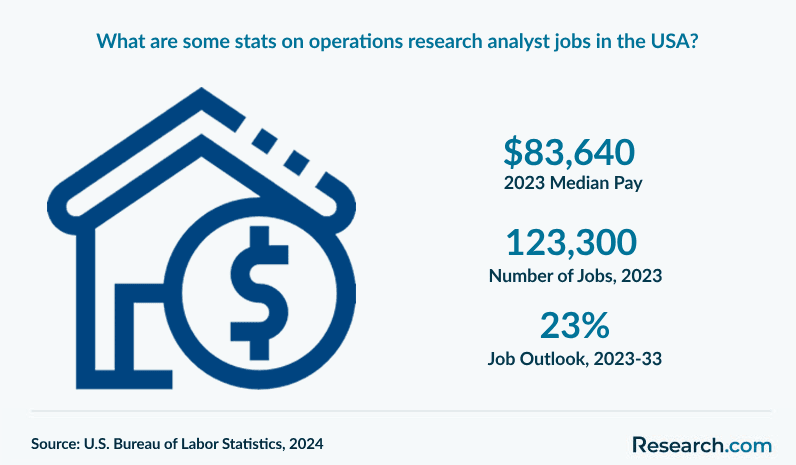
In 2023, operations research analysts earned median pay of $83,640 per year, or $40.21 per hour. A bachelor's degree was the typical entry-level education, and neither related work experience nor on-the-job training was generally required. There were 123,300 jobs in 2023, with projected growth of 23% from 2023 to 2033 and an employment change of 28,300 additional jobs.
Best Online MS in Engineering Management Programs
Engineering management programs are best suited to students who already have technical, engineering, maintenance, systems, construction, or technology experience and want to move into leadership.
1. University of Southern California (USC)
University of Southern California offers an online MS in Engineering Management that combines technical project management, systems engineering, and technology leadership.
- Program Length: Approximately 20 months
- Tracks/Concentrations: Engineering Management.
- Tuition Cost: $2,095 per credit
- Required Credits to Graduate: 30 credits
- Accreditation: WASC Senior College and University Commission (WSCUC)
2. George Washington University (GWU)
George Washington University offers an online MS in Engineering Management focused on technical leadership, project oversight, systems work, and strategic planning.
- Program Length: Approximately 24 months
- Tracks/Concentrations: Engineering Management.
- Tuition Cost: $1,820 per credit
- Required Credits to Graduate: 30 credits
- Accreditation: Middle States Commission on Higher Education (MSCHE)
3. Purdue University Online
Purdue University Online offers an MS in Engineering Management that prepares students to lead engineering teams, manage technical work, and oversee complex projects.
- Program Length: Approximately 24 months
- Tracks/Concentrations: Engineering Management.
- Tuition Cost: $800 per credit
- Required Credits to Graduate: 30 credits
- Accreditation: Higher Learning Commission (HLC)
Best Online MS in Business Administration MBA Programs
An MBA can be a flexible option for military leaders who want to move into corporate management, operations, consulting, entrepreneurship, or executive roles. Students specifically interested in people leadership may also compare online MBA programs in organizational leadership.
1. University of Southern California (USC)
University of Southern California offers an online MBA with broad coverage of strategy, financial management, organizational behavior, leadership, and business decision-making.
- Program Length: Approximately 21 months
- Tracks/Concentrations: Various, including leadership.
- Tuition Cost: $2,231 per credit
- Required Credits to Graduate: 51 credits
- Accreditation: WASC Senior College and University Commission (WSCUC)
2. Indiana University (Kelley School of Business)
Indiana University offers an online MBA that emphasizes strategic thinking, financial decision-making, leadership, and organizational management.
- Program Length: Approximately 24 months
- Tracks/Concentrations: Various, including leadership.
- Tuition Cost: $1,385 per credit
- Required Credits to Graduate: 54 credits
- Accreditation: Higher Learning Commission (HLC)
3. University of North Carolina (UNC) at Chapel Hill (Kenan-Flagler Business School)
The University of North Carolina offers an online MBA focused on leadership, strategy, finance, and organizational management for students preparing for higher-responsibility business roles.
- Program Length: Approximately 24 months
- Tracks/Concentrations: Various, including leadership.
- Tuition Cost: $2,140 per credit
- Required Credits to Graduate: 62 credits
- Accreditation: Southern Association of Colleges and Schools Commission on Colleges (SACSCOC)
Best Online MS in Health Administration Programs
Health administration is a practical option for military students with healthcare, medical operations, patient administration, public health, or facility management experience.
1. University of Southern California (USC)
The University of Southern California offers an online Master of Health Administration that covers healthcare policy, finance, operations, and health system leadership.
- Program Length: Approximately 24 months
- Tracks/Concentrations: Health Administration
- Tuition Cost: $2,095 per credit
- Required Credits to Graduate: 36 credits
- Accreditation: WASC Senior College and University Commission (WSCUC)
2. George Washington University (GWU)
George Washington University offers an online Master of Health Administration centered on strategic leadership, healthcare policy, financial management, and operations.
- Program Length: Approximately 24 months
- Tracks/Concentrations: Health Administration
- Tuition Cost: $1,820 per credit
- Required Credits to Graduate: 50 credits
- Accreditation: Middle States Commission on Higher Education (MSCHE)
3. Pennsylvania State University (Penn State World Campus)
Penn State World Campus offers an online Master of Health Administration focused on healthcare policy, operations, finance, and organizational leadership.
- Program Length: Approximately 24 months
- Tracks/Concentrations: Health Administration
- Tuition Cost: $995 per credit
- Required Credits to Graduate: 48 credits
- Accreditation: Middle States Commission on Higher Education (MSCHE)
Students comparing cost should also review Research.com’s list of affordable online master’s degrees in healthcare administration from accredited institutions.
Best Online MS in Data Science Programs
Data science can be a strong fit for military students who enjoy analytics, modeling, intelligence, operations, cyber, logistics, or decision support. Before choosing a program, review prerequisites in statistics, programming, and mathematics.
1. University of Southern California (USC)
The University of Southern California offers an online MS in Applied Data Science focused on statistical analysis, machine learning, visualization, and data-informed decisions.
- Program Length: Approximately 20 months
- Tracks/Concentrations: Data Science
- Tuition Cost: $2,095 per credit
- Required Credits to Graduate: 32 credits
- Accreditation: WASC Senior College and University Commission (WSCUC)
2. University of Illinois at Urbana-Champaign (UIUC)
The University of Illinois at Urbana-Champaign offers an online MS in Data Science emphasizing analytics, machine learning, statistics, and visualization.
- Program Length: Approximately 24 months
- Tracks/Concentrations: Data Science
- Tuition Cost: $$670-$1,385 per credit, depending on course.
- Required Credits to Graduate: 32 credits
- Accreditation: Higher Learning Commission (HLC)
3. Syracuse University
Syracuse University offers an online MS in Applied Data Science with a practical focus on statistical analysis, machine learning, visualization, and applied data problem-solving.
- Program Length: Approximately 18 months
- Tracks/Concentrations: Data Science
- Tuition Cost: $1,688 per credit
- Required Credits to Graduate: 30 credits
- Accreditation: Middle States Commission on Higher Education (MSCHE)
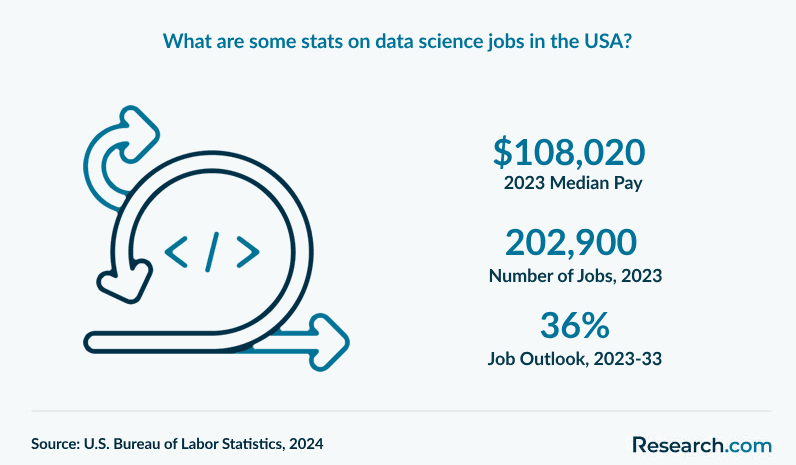
In 2023, the median pay for data science occupations was $108,020 per year, or $51.93 per hour. A bachelor's degree was the typical entry-level education, and neither prior work experience nor on-the-job training was generally required. There were 202,900 jobs in 2023, and employment was projected to grow 36% from 2023 to 2033, producing an employment change of 73,100 additional jobs.
Best Online MS in National Security Studies Programs
National security studies programs are often best for students targeting policy, analysis, security planning, intelligence-adjacent roles, federal service, or defense-related work.
1. American Military University (AMU)
American Military University offers an online MS in National Security Studies covering national security policy, strategic studies, international relations, and threat analysis.
- Program Length: Approximately 24 months
- Tracks/Concentrations: National Security
- Tuition Cost: $370 per credit
- Required Credits to Graduate: 36 credits
- Accreditation: Higher Learning Commission (HLC)
2. George Washington University (GWU)
George Washington University offers an online MS in Security Policy Studies that focuses on national security policy, strategy, international affairs, and security analysis.
- Program Length: Approximately 24 months
- Tracks/Concentrations: Security Policy
- Tuition Cost: $1,820 per credit
- Required Credits to Graduate: 30 credits
- Accreditation: Middle States Commission on Higher Education (MSCHE)
3. Arizona State University (ASU)
Arizona State University offers an online MS in Global Security focused on national security, global threats, policy, international relations, and strategic analysis.
- Program Length: Approximately 24 months
- Tracks/Concentrations: Global Security.
- Tuition Cost: $1,358 per credit (in-state and out-of-state)
- Required Credits to Graduate: 30 credits
- Accreditation: Higher Learning Commission (HLC)
Are quick online degrees a viable option for military service members?
Accelerated online programs can work for military students, but only if the schedule, academic intensity, and deployment policies are realistic. A faster program may help you finish before a PCS, transition window, or promotion board. However, speed should never outweigh accreditation, faculty quality, employer recognition, military benefits processing, or your ability to complete demanding coursework while serving.
If you are comparing shorter or career-focused pathways, review program outcomes and academic requirements carefully. Research.com’s guide to quick online degrees that pay well can help you think through alternative education routes, but graduate-level decisions should still be tied to your long-term career plan.
How Do Online Master’s Programs Drive Long-Term Career Advancement for Military Service Members?
A well-chosen online master’s program can help military students convert service experience into civilian language employers understand. For example, leading a unit can translate into operations management; securing systems can translate into cybersecurity; planning movement of equipment can translate into supply chain management; and intelligence work can translate into analysis, risk, or national security roles.
The strongest programs offer more than coursework. Look for career coaching, resume support for military-to-civilian translation, alumni networks, employer connections, and faculty with applied experience. If you are still completing undergraduate requirements, Research.com’s overview of the easiest bachelor’s degree programs may help you evaluate foundational pathways before graduate study.
How Do Online Master’s Programs Maintain Academic Rigor and Credibility?
Credible online master’s programs maintain quality through institutional accreditation, faculty oversight, structured learning outcomes, regular assessment, updated curriculum, and consistent graduate-level expectations. Online delivery should not mean weaker standards. In strong programs, students still complete research, projects, labs, case studies, exams, presentations, and capstone work.
Military students considering accelerated study should verify that faster timelines do not reduce academic quality. Research.com’s guide to fast online master’s degree options can help you compare speed, but the safest choice is a program that balances completion time with credible coursework and recognized accreditation.
What Are the Admission and Credit Transfer Processes for Online Master’s Programs?
Admissions requirements vary by school and program, but applicants commonly submit transcripts, a resume, letters of recommendation, a statement of purpose, and sometimes standardized test scores or proof of professional experience. Military students should ask whether the school reviews Joint Services Transcript documentation, prior graduate coursework, professional certifications, or military training for potential credit.
Credit transfer can reduce time and cost, but policies differ widely. Before enrolling, request a written evaluation of transfer credits and confirm whether credits apply to core requirements or only electives. If you are planning further study after a master’s degree, you may also want to compare short online doctoral program options and how master’s credits may or may not transfer.
How to Choose an Online Master’s Program as a Military Student
Use a decision process instead of relying on rankings alone. The best program for another service member may not be the best program for your benefits, duty schedule, career plan, or family situation.
- Define your target role first. Choose the job family you want after graduation, then work backward to the degree that fits it.
- Check institutional accreditation. Verify that the school is accredited by a recognized accreditor and that any field-specific accreditation or approval matters for your career path.
- Ask about military policies in writing. Confirm deployment withdrawal, leave of absence, re-entry, tuition assistance, and VA benefit procedures.
- Calculate the real cost. Compare tuition, fees, books, technology costs, benefit caps, housing allowance rules, and out-of-pocket expenses.
- Review course format. Determine whether classes are asynchronous, live, hybrid, cohort-based, self-paced, or term-based.
- Compare transfer-credit rules. Ask whether military training, certifications, or prior coursework can reduce required credits.
- Evaluate career support. Look for military-to-civilian resume help, employer connections, internships, capstones, and alumni outcomes.
- Confirm technical requirements. Cybersecurity, data science, analytics, and engineering management programs may require programming, statistics, math, or lab access.
Online vs. Campus Master’s Programs for Military Students
| Factor | Online master’s program | Campus master’s program |
| Schedule flexibility | Usually better for deployments, duty shifts, relocations, and family obligations | May be harder to maintain if your station or schedule changes |
| Networking | Can include virtual networking, alumni groups, and online events | May offer more face-to-face access to faculty, peers, and local employers |
| Program availability | Lets you compare schools across the country without relocating | Limited by geography unless you move |
| Learning style | Requires self-discipline, strong time management, and comfort with digital tools | Provides more in-person structure and immediate classroom interaction |
| Military practicality | Often a better fit for active-duty and frequently relocating students | May work well for veterans or students with stable local access |
Common Mistakes Military Students Should Avoid
- Choosing a school before checking accreditation: Accreditation affects credit transfer, employer recognition, financial aid, and graduate school options.
- Looking only at tuition per credit: Total cost also depends on fees, credits required, books, technology, transfer credit, benefit eligibility, and time to completion.
- Assuming “military-friendly” means academically strong: Marketing language is not proof of quality. Check student support, policies, outcomes, and curriculum.
- Ignoring deployment policies: Ask what happens if you must pause, withdraw, or restart coursework because of military obligations.
- Choosing a degree that does not match a target job: A graduate degree should connect directly to career goals, not just sound impressive.
- Overestimating transfer credit: Some schools may review military training but apply little or no credit toward graduate requirements.
- Assuming salary outcomes are guaranteed: Pay depends on experience, location, employer, clearance, technical skills, and labor market conditions.
- Relying only on rankings: Rankings can be useful, but program fit, cost, flexibility, accreditation, and career alignment matter more.
Questions to Ask Before Enrolling
| Question | Why it matters |
| Is the institution accredited, and by whom? | Accreditation is central to credibility, financial aid, transferability, and employer trust. |
| Does the school have a military or veterans services office? | Dedicated support can help with GI Bill processing, tuition assistance, and military-related interruptions. |
| What happens if I deploy or receive new orders? | You need clear policies for pauses, withdrawals, refunds, extensions, and re-enrollment. |
| How many credits are required, and can any transfer? | Required credits directly affect cost, time, and benefit use. |
| Are courses asynchronous or live? | Live attendance may be difficult across time zones or during irregular duty schedules. |
| What career services are available for military students? | Transition support can help translate military experience into civilian resumes and interviews. |
| Does the curriculum match my target role? | Program titles can be similar even when course content differs significantly. |
| What is my estimated out-of-pocket cost after benefits? | You should know the cost before committing, not after benefits are processed. |
Current Trends Affecting Military Students in Online Master’s Programs
- Cybersecurity demand remains significant: The cybersecurity workforce gap data in this guide shows continued need for trained professionals across regions.
- Analytics skills are increasingly valuable: Data science and operations research projections show strong growth, making quantitative skills useful across defense and civilian sectors.
- Employers are scrutinizing practical skills: Degrees are stronger when paired with labs, capstones, certifications, portfolios, clearance-relevant experience, or applied projects.
- Online education is now a mainstream option: Many established universities offer online graduate programs, but students must still verify accreditation, support, and academic quality.
- Cost control matters more than ever: Military benefits can reduce expenses, but tuition differences across programs are substantial, especially at the graduate level.
Here's What Graduates Say About Online Master’s Programs for Military Service Members
-
: "
“I did not think I could balance active duty with graduate school until I found an online cybersecurity program that worked around my schedule. The flexibility helped me keep serving while building skills that made my civilian transition feel more realistic.” Jackson
"
-
: "
“My logistics master’s program helped me explain my military supply chain experience in terms civilian employers understood. The online format still felt connected, and the instructors understood that military students do not always have predictable schedules.” Corinne
"
-
: "
“As a military spouse, relocation made traditional graduate school difficult. An online health administration program gave me consistency and a professional path I could continue from different duty stations.” Thalia
"
Key Insights
- The right master’s degree depends on your next move. Cybersecurity, IT management, logistics, project management, data science, operations research, engineering management, business, health administration, intelligence, homeland security, and national security can all be strong choices, but each leads to different roles.
- Accreditation and military support are non-negotiable. Before applying, confirm institutional accreditation, VA benefit processing, deployment policies, transfer-credit rules, and student support for military-affiliated learners.
- Benefits can reduce cost, but they do not make every program a good value. Compare total program cost, required credits, tuition per credit, fees, transfer options, and out-of-pocket expenses after the Post-9/11 GI Bill or other benefits are applied.
- Online flexibility is valuable only if the program structure fits military life. Asynchronous courses, flexible deadlines, leave policies, and responsive advising can matter as much as curriculum quality.
- Technical and analytical fields show strong labor-market signals in the data provided. Information security analysts, operations research analysts, and data science occupations all show strong projected growth from 2023 to 2033 in the figures cited above.
- Do not choose based on speed alone. Accelerated programs can be useful, but only when academic rigor, accreditation, career relevance, and your duty schedule align.
- Your military experience is an asset, but it needs translation. The best programs help you turn leadership, operations, security, logistics, healthcare, or technical responsibilities into civilian-ready skills and credentials.
References:
- Bureau of Labor Statistics. (2024, August 29). Architectural and engineering managers. U.S. Department of Labor, Occupational Outlook Handbook. Bureau of Labor Statistics.
- Bureau of Labor Statistics. (2024, April 17). Data Scientists. U.S. Bureau of Labor Statistics.
- Bureau of Labor Statistics. (2024, August 29). General and operations managers. U.S. Department of Labor, Occupational Outlook Handbook. Bureau of Labor Statistics.
- Bureau of Labor Statistics, U.S. Department of Labor. (2024, April 17). Information Security Analysts. Occupational Outlook Handbook. Bureau of Labor Statistics.
- Bureau of Labor Statistics. (2024, August 29). Home. U.S. Department of Labor, Occupational Outlook Handbook. Bureau of Labor Statistics.
- Bureau of Labor Statistics. (2024, August 29). Logisticians. U.S. Department of Labor, Occupational Outlook Handbook. Bureau of Labor Statistics.
- Bureau of Labor Statistics. (2024, August 29). Medical and health services managers. U.S. Department of Labor, Occupational Outlook Handbook. Bureau of Labor Statistics.
- Bureau of Labor Statistics, U.S. Department of Labor. (2024, April 17). Operations Research Analysts. Occupational Outlook Handbook. Bureau of Labor Statistics.
- Bureau of Labor Statistics. (2024, August 29). Police and detectives. U.S. Department of Labor, Occupational Outlook Handbook. Bureau of Labor Statistics.
- Bureau of Labor Statistics. (2024, August 29). Project managers. U.S. Department of Labor, Occupational Outlook Handbook. Bureau of Labor Statistics.
- ISC2. (2024). ISC2 2024 cybersecurity workforce study. ISC2.
- Jowers, K., Shane, L., III, & Myers, M. (2024). Military benefits guide. Military Times.
Other Things You Should Know About Online Master’s Programs for Military Service Members
Yes. The Post-9/11 GI Bill can cover tuition and fees for approved online master’s programs, and eligible students may also receive a monthly housing allowance if they take at least one in-person class. Courses must be offered by a VA-approved school.
Military service members can access options like the Post-9/11 GI Bill, which covers tuition and fees, and the Yellow Ribbon Program, which reduces out-of-pocket expenses. Some schools offer military scholarships specifically for online master's programs in 2027, providing additional financial relief.