2027 Easy Certifications That Pay Well

Co-Founder and Chief Data Scientist
Earning a certificate can be a practical way to qualify for a better job, change fields, or add a marketable skill without spending years in a degree program. The challenge is choosing a credential that employers actually recognize, fits your schedule, and has enough earning potential to justify the cost.
This guide explains easy certifications that pay well for 2027, including healthcare, skilled trades, service, and technical career options. You will learn how long certificate programs usually take, what they cost, how online and campus formats compare, what financial aid may be available, and how to avoid low-value programs that look convenient but do not improve your job prospects.
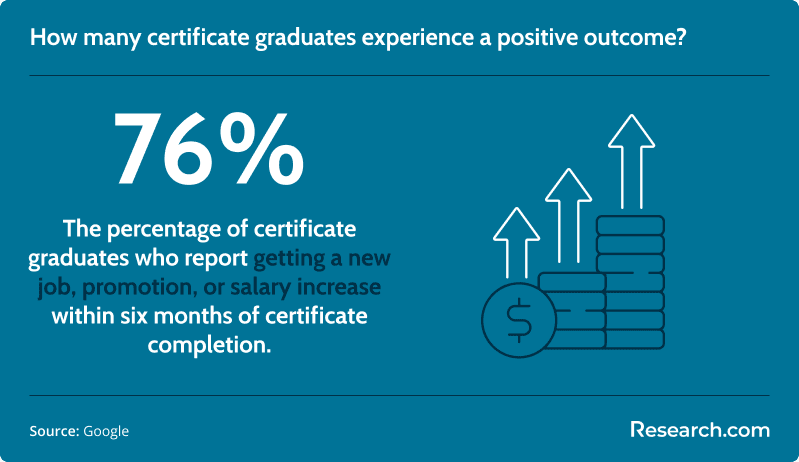
Certificates can affect pay and hiring outcomes, but results vary by field, employer, location, and experience. CertMag’s 2023 survey found that 64% of American respondents and around 40% of non-Americans said an IT certification helped them earn a 3%-20% raise within a year of completing their certificate programs.
Quick Answer: Are Easy Certifications Worth It?
Easy certifications can be worth it when they prepare you for a specific job, are recognized by employers, and cost less than the income or career mobility they may help you gain. They are especially useful for roles in healthcare support, IT, skilled trades, administrative services, and hands-on technical fields. However, a certificate is not automatically valuable. Before enrolling, confirm accreditation, licensing requirements, employer demand, total cost, completion time, and whether the credential is required or preferred for the jobs you want.
- 10 Easy Certifications That Pay Well for 2027
- How long does it take to complete certificate programs?
- How does an online certificate program compare to an on-campus program?
- What is the average cost of certficate programs?
- What are the financial aid options for students enrolling in certificate programs?
- What are the prerequisites for enrolling in certificate programs?
- What courses are typically in certificate programs?
- What types of specializations are available in certificate programs?
- How to choose the best certificate programs?
- What career paths are available for graduates of certificate programs?
- What is the job market for graduates with certificate programs?
- What are the pros and cons of pursuing easy certifications?
- Are easy certifications as valuable as more challenging certifications?
- How do certificate programs compare with accelerated bachelor degree programs?
- How do certifications impact career growth for 2027?
- How can you assess the credibility of easy certification programs?
- Do certificate programs offer effective career support services?
- Are certificate programs a smart alternative to traditional degrees?
- Is an Advanced Degree the Logical Next Step After a Certificate Program?
- Are Certificate Programs Financially Accessible Through Diverse Funding Options?
- What Are Emerging Trends Shaping Certificate Programs?
- Can Certificate Programs Accelerate a Career Transition?
- Can Certificate Programs Bridge the Gap to Further Education?
- How do employers perceive certificate programs?
- What Are the Long-Term Career Outcomes for Certificate Program Graduates?
What are the benefits of getting certificate programs?
Certificate programs are designed for targeted career preparation. They are not a substitute for every degree, but they can be an efficient credential when the job market values practical, demonstrable skills.
- Faster career movement: A relevant certificate can strengthen your resume for entry-level hiring, internal promotion, or a shift into a related role.
- Lower time commitment: Many programs take weeks or months rather than several years, which helps working adults and career changers move more quickly.
- Focused skill building: Instead of general education requirements, certificate programs usually concentrate on job-specific knowledge, tools, procedures, or compliance standards.
- Potential pay improvement: Some credentials can support better compensation, especially when employers use certifications to screen candidates or determine advancement eligibility.
- Pathway into a new field: Certificates can help people test a career direction before committing to a full associate, bachelor’s, or graduate degree.
What can I expect from certificate programs?
A certificate program usually provides concentrated training for a defined occupation, software skill, technical process, or professional function. The best programs clearly state what you will be able to do by graduation and which jobs or exams the curriculum prepares you for.
| Program feature | What it means for students | Why it matters |
| Focused curriculum | Courses center on a specific role, tool, or industry skill. | You spend less time on unrelated coursework and more time learning job tasks. |
| Flexible delivery | Many programs are available online, part-time, evenings, or in hybrid formats. | This can make training more manageable for students who work or care for family. |
| Practical application | Assignments may include labs, simulations, clinical practice, portfolios, or fieldwork. | Employers often want evidence that you can perform, not just complete lectures. |
| Shorter duration | Programs often range from a few weeks to a year. | You may be able to enter the workforce or qualify for a new role sooner. |
| Lower cost than degrees | Community colleges may offer programs for as low as $1,000, while specialized institutions may charge up to $20,000 for certification. | Total cost should be compared with expected job opportunities, licensure needs, and salary potential. |
Where can I work with certificate programs?
Certificate holders work in many industries, but the best opportunities are usually in fields where employers need proof of specific technical, clinical, safety, or software skills. Common sectors include:
- Healthcare: Certificates can prepare students for support roles such as medical assisting, medical coding, phlebotomy, dental assisting, and nursing aide work.
- Technology: IT support, cybersecurity, cloud computing, web development, and data-related roles may value recognized credentials from providers such as CompTIA, AWS, or Google IT.
- Skilled trades: HVAC, plumbing, welding, electrical work, equipment repair, and construction inspection often require practical training, safety knowledge, and sometimes state or local licensing.
- Business and administration: Certificates in bookkeeping, project management, digital marketing, office technology, and compliance can help workers qualify for specialized administrative roles.
- Service and creative fields: Grooming, landscaping, culinary arts, design, and similar programs can help learners build a portfolio or business-ready skill set.
How much can I make with certificate programs?
Pay depends on the occupation, region, employer, work schedule, experience, union status, licensure, and whether the certificate is only an entry credential or part of a larger career ladder. The ranges below show common earning potential connected to certificate-supported roles.
- Healthcare: Certified medical coders and phlebotomists can earn between $35,000 to $55,000 annually, while higher-paying certifications like pharmacy technician or radiation therapist can lead to salaries of $60,000 or more.
- Technology: IT certifications like CompTIA or AWS can lead to salaries ranging from $50,000 to $90,000+, depending on experience and specialization.
- Skilled trades: Electricians, plumbers, and HVAC technicians with certifications can earn between $45,000 and $75,000 annually, with the potential for higher earnings with experience.
10 Easy Certifications That Pay Well for 2027
How this guide was developed
To evaluate easy certifications that pay well, Research.com reviewed education and labor-market information from reputable sources, including the IPEDS database, Peterson's Distance Learning Licensed Data Set, College Scorecard database, and the National Center for Education Statistics.
You can review how Research.com evaluates and organizes education data in our research methodology section.
| Certification path | Average salary | Projected job growth | Best fit for |
| Phlebotomist/Phlebotomy Technician | $38,000 | 10% (2023-2033) | Students who want a fast clinical support role involving direct patient contact. |
| Medical Assistant | $38,000 | 14% (2023-2033) | People who want a blend of patient care and healthcare office duties. |
| Dental Assistant | $44,000 | 8% (2023-2033) | Learners interested in dental care, chairside support, and patient education. |
| HVAC Technician | $54,000 | 5% (2023-2033) | Hands-on problem solvers who want a trade connected to building systems. |
| Building Inspector | $63,000 | 3% (2023-2033) | Workers with interest in construction quality, safety, codes, and compliance. |
| Heavy Vehicle and Mobile Equipment Technician | $57,000 | 9% (2023-2033) | Mechanically minded students who want to repair large equipment and machinery. |
| Pet Groomer | $49,008 | 15% (2023-2033) | Animal-focused learners who want client-facing, service-based work. |
| Landscaper | $39,790 | 5% (2023-2033) | People who enjoy outdoor work, plant care, and property improvement. |
| Culinary Arts | $69,000 | 8% (2023-2033) | Students aiming for kitchen leadership, food preparation, or hospitality roles. |
| Nursing Aide | $33,000 | 5% (2023-2033) | Students seeking direct patient care experience and a possible healthcare ladder. |
1. Phlebotomist/Phlebotomy Technician
- Average salary: $38,000
- Projected job growth: 10% (2023-2033)
Phlebotomy technicians collect blood samples for lab tests, transfusions, donations, and medical screenings. Their work requires careful patient identification, proper labeling, sterile technique, and calm communication with people who may be anxious about needles. Hospitals, diagnostic laboratories, clinics, and blood donation centers commonly hire phlebotomists. This path may appeal to students who want healthcare experience without immediately pursuing a longer nursing or allied health degree.
2. Medical Assistant
- Average salary: $38,000
- Projected job growth: 14% (2023-2033)
Medical assistants help healthcare offices run efficiently by combining front-office and clinical support responsibilities. Depending on state rules and employer policies, they may take vital signs, prepare exam rooms, update patient records, schedule appointments, help with billing tasks, and support providers during visits. This certification can be a strong fit for students who want broad exposure to healthcare operations and patient interaction before deciding whether to advance into nursing, administration, or another clinical specialty.
3. Dental Assistant
- Average salary: $44,000
- Projected job growth: 8% (2023-2033)
Dental assistants support dentists during exams and procedures while also helping with patient preparation, sterilization, appointment flow, records, and billing-related tasks. Some roles may include dental X-rays, depending on state requirements and credentialing rules. This credential can suit detail-oriented students who want a healthcare role in a dental office setting and who are comfortable working closely with patients during treatment.
4. HVAC Technician
- Average salary: $54,000
- Projected job growth: 5% (2023-2033)
HVAC technicians install, inspect, maintain, and repair heating, ventilation, and air conditioning systems in homes, commercial buildings, and industrial spaces. The work involves electrical knowledge, mechanical troubleshooting, refrigerant handling, customer communication, and safety procedures. HVAC can be a strong option for learners who prefer hands-on work, want a trade with service demand, and are willing to keep learning as building systems and energy-efficiency standards evolve.
5. Building Inspector
- Average salary: $63,000
- Projected job growth: 3% (2023-2033)
Building inspectors review construction, renovation, and repair work to determine whether projects comply with applicable codes, zoning rules, and safety standards. They may examine foundations, framing, plumbing, electrical systems, accessibility features, and structural elements, then document findings and communicate required corrections. This path is often a good fit for people with construction experience or strong interest in building safety, documentation, and regulatory compliance.
6. Heavy Vehicle and Mobile Equipment Technician
- Average salary: $57,000
- Projected job growth: 9% (2023-2033)
Heavy vehicle and mobile equipment technicians diagnose, repair, and maintain large machinery used in construction, agriculture, mining, transportation, and related industries. Their work may involve engines, hydraulic systems, braking systems, electrical components, and diagnostic tools. This certification path may suit learners who enjoy mechanical problem-solving and want a trade where equipment downtime can have major business consequences.
7. Pet Groomer
- Average salary: $49,008
- Projected job growth: 15% (2023-2033)
Pet groomers bathe, brush, trim, style, and care for animals’ coats, nails, ears, and general hygiene. The role requires patience, safe handling techniques, customer service, and an understanding of animal behavior. Groomers may work in salons, veterinary offices, pet stores, mobile grooming businesses, or self-employment. This option can be attractive for people who want animal-focused work and are comfortable building repeat client relationships.
8. Landscaper
- Average salary: $39,790
- Projected job growth: 5% (2023-2033)
Landscapers install, maintain, and improve outdoor spaces by caring for lawns, planting trees and flowers, trimming shrubs, managing irrigation systems, and supporting property design projects. Some professionals specialize in hardscaping, sustainable landscaping, water features, or commercial grounds maintenance. This certificate can help learners develop practical skills for outdoor work, seasonal demand, small business opportunities, and property services.
9. Culinary Arts
- Average salary: $69,000
- Projected job growth: 8% (2023-2033)
Culinary arts certificates can prepare students for kitchen roles that require food preparation skills, sanitation knowledge, recipe execution, ingredient handling, and teamwork under time pressure. With experience, culinary professionals may move into supervisory or chef roles, where they oversee kitchen staff, maintain food quality, manage inventory, and develop menus. This path is best for students who understand that food careers can involve long hours, physical work, and continual skill refinement.
10. Nursing Aide
- Average salary: $33,000
- Projected job growth: 5% (2023-2033)
Nursing aides, also called nursing assistants, provide basic care in hospitals, nursing homes, long-term care facilities, and similar healthcare settings. They may help patients bathe, dress, eat, move safely, and monitor basic changes in condition under the supervision of licensed nurses. This role can be physically and emotionally demanding, but it can also provide direct patient care experience for students considering a longer-term path in nursing or healthcare.
How long does it take to complete certificate programs?
Most easy certifications that pay well take less time than a traditional degree and are generally shorter than degree pathways such as the cheapest MLIS programs. Completion time depends on the field, required clinical or lab hours, state licensing rules, and whether you study full time or part time.
| Typical timeline | Examples | Best for |
| Few weeks to six months | Medical billing, IT support, project management, and other short-term certificates | Students who need a quick skill upgrade or entry credential. |
| 6 to 12 months | Web development, digital marketing, and some healthcare-related certifications | Learners who need more structured training or hands-on practice. |
| 12 to 18 months | Advanced certifications in technology, finance, and skilled trades | Students preparing for more technical roles or regulated occupations. |
How does an online certificate program compare to an on-campus program?
Online and campus-based certificate programs can both lead to useful credentials, but they serve different learners. The right format depends on your schedule, learning style, field, and whether the program requires hands-on training.
| Factor | Online certificate program | On-campus certificate program |
| Flexibility | Often easier to fit around work, childcare, or irregular schedules. | Usually follows set class times and location-based requirements. |
| Hands-on learning | Works well for software, business, IT, and theory-based training; may require local labs or clinical placements for some fields. | Often stronger for trades, healthcare labs, equipment practice, and supervised demonstrations. |
| Cost | May reduce transportation, housing, and commuting expenses. | Can include campus fees, travel costs, and schedule-related expenses. |
| Networking | May rely on discussion boards, virtual events, and online career communities. | Provides more face-to-face access to instructors, classmates, and local employers. |
| Student discipline | Requires strong time management and self-direction. | Provides more built-in structure and immediate classroom support. |
For technology-oriented learners, an option such as game programming college online shows how remote study can support coding and design skills. In contrast, healthcare and trade certificates may require in-person labs, clinical hours, or supervised practice. Highly flexible online programs, including options like the cheapest DNP program online, are often convenient for working adults, but convenience should never replace a careful check of accreditation, licensure alignment, and employer recognition.
What is the average cost of certificate programs?
Certificate program costs vary by institution, subject, delivery format, equipment needs, exam fees, and whether the program is offered through a community college, university, employer, private training provider, or industry organization.
| Cost category | Typical range | Common examples | What to check before paying |
| Affordable programs | $500 to $3,000 | IT support, medical billing, digital marketing, and similar basic certificates | Whether exam vouchers, books, software, or supplies are included. |
| Mid-range programs | $3,000 to $7,000 | Healthcare, business, technology, and CompTIA-related training | Whether the program prepares you for recognized industry exams. |
| High-end programs | $7,000 to $15,000 or more | Finance, skilled trades, advanced IT, and equipment-heavy training | Whether the credential has enough employer demand to justify the cost. |
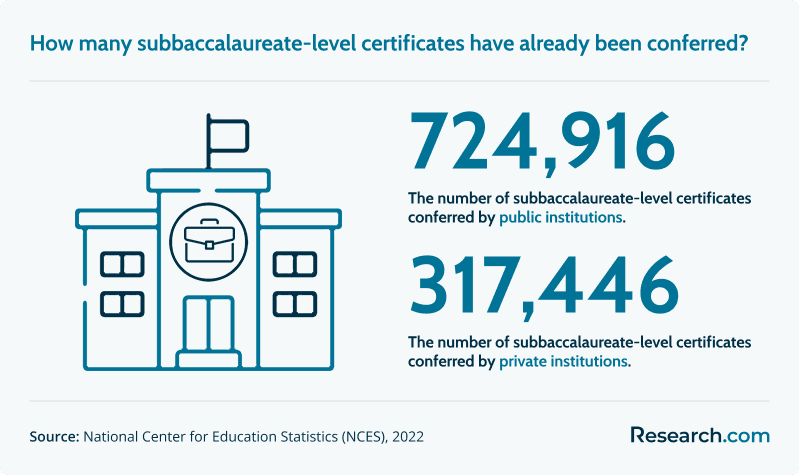
Certificates are often less expensive than full degree programs. For comparison, students researching college costs, including questions such as how much does it cost to get a counseling degree, should note that as of the 2023-24 school year data from the NCES, overall tuition for a four-year program from an in-state public university costs $22,389 and $49,654 at private schools.
What are the financial aid options for students enrolling in certificate programs?
Not every certificate program qualifies for federal or state aid, so students should verify eligibility before enrolling. Funding may come from scholarships, grants, employer reimbursement, workforce development programs, private loans, or school-based assistance.
- Ascent Funding: Ascent Funding is a private loan option for eligible training and certification programs. It offers flexible repayment structures, including a $25 minimum repayment and deferred tuition or outcomes loan options.
- Sallie Mae's Smart Option Loan: Sallie Mae’s Smart Option Loan allows eligible students to borrow up to the full attendance cost of a selected program and may cover books, travel, equipment, supplies, and tools.
- University of Washington Certificate Scholarship: UW covers 80% of the certificate program cost, up to $4,000. Eligible scholars must be Washington state residents, be accepted into an eligible certificate program, meet household income limits, lack access to other financial assistance, not have been a part- or full-time student in the last year, and not be UW employees.
- Google: Google offers 100,000 need-based scholarships for certification programs in tech-related fields. Recipients receive full access to course content and assignments required for certificate completion.
Questions to ask about certificate funding
- Is this certificate eligible for FAFSA, state aid, or workforce funding?
- Does the listed tuition include books, tools, uniforms, software, exam fees, and licensing fees?
- Will my employer reimburse part or all of the cost?
- What happens financially if I withdraw or fail a required exam?
- Does the school publish job placement or completion information?
What are the prerequisites for enrolling in certificate programs?
Many entry-level certificate programs are open to students with a high school diploma or GED. More advanced programs may expect prior coursework, work experience, placement testing, a background check, immunizations, drug screening, or earlier credentials. Requirements can be more specific than those for some academic programs, including graduate options such as a master's in Christian counseling, because certificates often prepare students for regulated or safety-sensitive roles.
- Educational background: Some easy certifications that pay well require only a high school diploma or GED, while advanced programs may require college coursework or a related degree.
- Work experience: Programs in areas such as project management, healthcare, or technical trades may expect applicants to understand workplace basics before entering advanced training.
- Basic skills: IT, finance, and technical certificates may require computer literacy, math readiness, keyboarding, or familiarity with specific software.
- Prior certification or training: Advanced credentials may require lower-level certificates before students can move into specialized coursework.
- Entrance exams or assessments: Some schools use placement tests or readiness assessments to determine whether students can handle the program.
The following careers can be entered with just a certificate.
What courses are typically in certificate programs?
Certificate courses are usually practical and job-centered. The exact curriculum depends on the industry, but strong programs connect every course to workplace tasks, certification exams, licensure requirements, or portfolio outcomes.
- Introductory field courses: These explain core concepts, terminology, workplace expectations, and the role’s purpose. A project management certificate, for example, may begin with project fundamentals.
- Technical skill courses: These teach specific tools, procedures, or systems, such as network security, programming languages, cloud computing, patient intake, billing software, or diagnostic equipment.
- Compliance and safety courses: Healthcare, finance, construction, and trade programs may include regulations, ethical standards, privacy rules, or safety requirements. Skilled trade students may encounter standards connected to OSHA's regulations.
- Hands-on labs or practicums: Many healthcare, trade, design, and technology programs include supervised practice, labs, clinical experiences, simulations, or portfolio assignments.
- Capstone or final project: Some programs end with a project, portfolio, business plan, clinical evaluation, or technical demonstration that shows job readiness.
What types of specializations are available in certificate programs?
Specialization matters because employers often hire for a specific skill set rather than a general certificate title. Choose a concentration that matches the job postings you plan to pursue.
| Specialization area | Examples | Career direction |
| Healthcare | Medical coding, phlebotomy, healthcare administration | Clinical support, patient services, billing, records, and healthcare operations. |
| IT | Cybersecurity, cloud computing, data analysis, network administration | Technical support, systems work, security operations, and entry-level tech roles. |
| Business and finance | Project management, accounting, digital marketing, financial analysis | Administrative, analytical, marketing, and operations-focused roles. |
| Skilled trades | HVAC technology, plumbing, electrical work | Hands-on technical work in construction, maintenance, repair, and installation. |
| Creative and design | Graphic design, web development, UX/UI design | Portfolio-based creative and technical roles. |
Students considering visual or digital media should compare certificates with broader degree options. For example, if you are asking what can I do with an animation degree, a degree may support roles in film, television production, game design, advertising, and animated content for social media and online platforms, while a certificate may be better for a narrower software or portfolio skill.
Here's the share of programs yielding a positive ROI by credential type, weighted by enrollment.
How to choose the best certificate programs?
The best certificate program is the one that connects directly to a realistic job goal. Do not choose only because a program is short, cheap, or heavily advertised. Start with the jobs you want, then work backward to the credential employers request.
- Identify target job titles. Review current job postings and note required certificates, licenses, software skills, experience, and pay ranges.
- Check recognition. Confirm that the school, training provider, or certification body is known in the field.
- Verify accreditation and licensing alignment. This is especially important for healthcare, education, trades, and roles regulated by state agencies.
- Compare total cost. Include tuition, supplies, books, exam fees, background checks, uniforms, travel, and lost work time. Students comparing academic alternatives may also research the exercise science degree cost when deciding whether a certificate or degree is more appropriate.
- Review outcomes. Ask about completion rates, exam pass rates, job placement support, and whether graduates are hired in the field.
- Match the format to the skill. Online delivery can work well for software-based training, while hands-on fields may require in-person labs or clinical placements.
Common mistakes when choosing a certificate
| Mistake | Why it can hurt you | Better approach |
| Choosing the cheapest program without checking recognition | A low-cost certificate may have little value if employers do not know or trust it. | Ask employers, licensing boards, and industry associations which credentials they recognize. |
| Ignoring total cost | Exam fees, tools, software, travel, and uniforms can raise the real price. | Request a complete cost breakdown before enrolling. |
| Assuming online programs meet local requirements | Some online certificates may not satisfy state licensing or clinical requirements. | Confirm requirements with the appropriate state agency or licensing board. |
| Relying only on rankings | A highly ranked school may not offer the specific credential employers want in your area. | Compare curriculum, outcomes, employer partnerships, and exam preparation. |
| Skipping career services questions | Some programs provide training but little help finding work. | Ask about resume help, interview coaching, employer referrals, and apprenticeship connections. |
If you want a longer academic path in a related field, programs such as a sports management degree online may offer broader preparation for managing teams, organizations, and events in sports-related settings.
What career paths are available for graduates of certificate programs?
Certificate programs can lead to entry-level roles, advancement within a current field, or a stepping stone into further education. The strongest paths are those with clear employer demand and a credential that maps to real job duties.
- Phlebotomist: Graduates may work in hospitals, labs, clinics, or blood donation centers collecting blood samples for tests, transfusions, and screenings.
- Dental Assistant: Certificate holders can support dentists with chairside assistance, records, sterilization, patient preparation, and office workflow.
- HVAC Technician: Graduates may install, repair, and maintain heating, ventilation, and air conditioning systems in residential, commercial, or industrial settings.
- Certified Nursing Assistant (CNA): CNAs assist patients with daily activities and basic care in hospitals, nursing homes, and long-term care facilities.
- Bookkeeping or accounting clerk: Business certificate holders may support financial recordkeeping, invoicing, payroll preparation, and office accounting tasks.
- IT support specialist: Technology certificates may help candidates qualify for help desk, systems support, or entry-level technical service roles.
Interest in associate degrees and certificates has grown as students compare shorter credentials with longer programs. One study shows that undergrad certificates in the technical trades are more lucrative than a bachelor's or master's like forensic psychology master's programs online.
What is the job market for graduates of certificate programs?
The Bureau of Labor Statistics identifies 51 occupations requiring a postsecondary nondegree credential, including certificates. Heavy and tractor-trailer truck drivers are projected to have the most vacancies, with about 240,300 from 2023 until 2033. Other in-demand occupations and their 10-year occupational openings include:
- Nursing assistants: 208,600
- Bookkeeping, accounting, and auditing clerks: 174,900
- Teaching assistants, except postsecondary: 161,900
- Medical assistants: 119,800
- Hairdressers, hairstylists, and cosmetologists: 80,000
- Automotive service technicians and mechanics: 67,800
- Preschool teachers, except special education: 61,400
- Dental assistants: 54,900
- Licensed practical and licensed vocational nurses: 54,000
Technology certificates can also support career exploration. Students comparing tech options may find it useful to review the top 10 highest paying jobs in the computer science field, including paths such as software engineering, data science, and cybersecurity.
Overall, BLS sees more than 19 million openings per year, on average through 2033, across all professions. Many openings are expected because employers need to replace workers who retire or change careers, while some openings are tied to newly created jobs.
What are the pros and cons of pursuing easy certifications?
Easy certifications can be a smart investment, but they are not the right answer for every student or every career. Some people may be better served by a degree, such as the best associate degree in 6 months online, especially when employers require broader academic preparation.
| Pros | Cons |
| Lower cost: Many certificates cost less than degree programs. | Less depth: Short programs may not provide the broad knowledge needed for long-term advancement. |
| Quick completion: Some credentials can be completed in weeks or months. | Variable recognition: Some certificates carry more employer value than others. |
| Job-focused learning: Coursework is usually tied to specific skills or workplace tasks. | Possible renewal requirements: Some credentials require continuing education, fees, or retesting. |
| Flexible formats: Online, evening, hybrid, and part-time options can support working adults. | Limited networking: Short programs may offer fewer alumni, internship, or campus connections. |
| Career testing: A certificate can help you explore a field before committing to a degree. | Degree barriers remain: Some employers still require associate, bachelor’s, or graduate degrees for advancement. |
Are easy certifications as valuable as more challenging certifications?
Easy certifications can be valuable when they match a real hiring requirement or teach a skill employers need immediately. Their value is usually strongest for entry-level access, skill updates, or career exploration. More challenging certifications may carry greater weight when they require experience, rigorous exams, supervised practice, or advanced technical knowledge.
A practical way to compare credentials is to ask what the certification proves. A short certificate may show that you understand foundational tools or procedures. A more demanding credential may show deeper expertise, readiness for specialized work, or eligibility for roles with greater responsibility. In fields such as healthcare, IT, and finance, employers may treat advanced credentials differently from introductory ones.
Students who need affordable training should compare recognized certificate options with broader low-cost institutions. Researching cheap accredited online colleges can help you evaluate whether a certificate, associate degree, or bachelor’s program offers the best balance of cost, flexibility, and career value.
How do certificate programs compare with accelerated bachelor degree programs?
Certificate programs and accelerated bachelor degree programs serve different goals. A certificate is usually best when you need targeted skills for a specific job, certification exam, license, or workplace function. An accelerated bachelor’s degree is broader and may support roles that require a four-year credential, management preparation, graduate school eligibility, or long-term advancement.
| Comparison point | Certificate program | Accelerated bachelor degree program |
| Main purpose | Build a specific job skill or occupational credential. | Complete a broader undergraduate degree more quickly than a traditional timeline. |
| Typical time commitment | Often weeks to 18 months, depending on field and requirements. | Longer than most certificates but structured to reduce total time compared with standard bachelor’s study. |
| Career use | Entry-level access, technical upskilling, licensure preparation, or career transition. | Broader career eligibility, advancement, graduate study preparation, and degree-required roles. |
| Best fit | Students with a defined job target and limited time or budget. | Students who need a bachelor’s credential for their desired career path. |
How do certifications impact career growth for 2027?
For 2027, certifications can support career growth by helping workers prove current, job-relevant skills. This matters in fields where tools, regulations, software platforms, safety standards, and employer expectations change quickly.
- They can support higher earning potential: A respected certification may help you qualify for better-paying roles, especially when employers use the credential to identify specialized skills.
- They can open job options: Some positions require or strongly prefer a certificate before applicants are considered.
- They can improve mobility: A certificate can help workers move from general duties into more technical or specialized responsibilities.
- They can keep skills current: In areas such as technology and healthcare, certifications may help workers stay aligned with updated tools and practices.
- They can fit working schedules: If you are asking what certifications can I get online, online credentials in IT, project management, healthcare support, and business skills may offer flexible routes for career improvement.
How can you assess the credibility of easy certification programs?
A credible certificate should be recognized by employers, aligned with industry standards, and transparent about outcomes. Before enrolling, verify whether the provider is accredited, whether the certificate prepares you for a known exam or license, and whether graduates actually use the credential in the field.
- Check whether the school or provider is accredited by a recognized body when accreditation applies.
- Confirm whether the credential is required, preferred, or rarely mentioned in job postings.
- Ask local employers or professional associations whether they respect the program.
- Review curriculum details instead of relying on promotional descriptions.
- Look for published information on completion rates, exam pass rates, job placement, and student support.
- Compare expected outcomes with resources on what certifications make the most money.
Do certificate programs offer effective career support services?
Some certificate programs provide strong career support, while others offer little beyond coursework. Because many certificates are short, career services can make a major difference in whether training turns into employment.
Look for programs that provide resume assistance, mock interviews, employer introductions, apprenticeship or clinical placement help, portfolio review, exam preparation, and job search coaching. Also ask whether support continues after graduation. If you want to combine a certificate with a broader credential, a cheapest easiest online degree may add flexibility and expand your qualification profile.
Are certificate programs a smart alternative to traditional degrees?
Certificate programs can be a smart alternative to traditional degrees when your target role values practical training more than a full academic credential. They can also be useful for workers who already have a degree but need a new technical skill, software credential, or industry update.
They are less suitable when the career you want requires a bachelor’s degree, graduate degree, state license, supervised clinical hours, or a broad academic foundation. When comparing options, review programs such as degrees you can get online to determine whether a certificate or degree offers the stronger return for your goals.
Is an Advanced Degree the Logical Next Step After a Certificate Program?
An advanced degree may be the logical next step if your certificate helped you enter a field but your long-term goals require deeper expertise, leadership preparation, licensure, or graduate-level credentials. For example, a healthcare support certificate may lead to direct patient care experience, while a later degree could support more advanced clinical, administrative, or specialized roles.
Before moving from a certificate to graduate study, compare the cost, time commitment, admissions requirements, and career payoff. Some students may benefit from an online one year masters if it builds directly on their existing training and career direction.
Are Certificate Programs Financially Accessible Through Diverse Funding Options?
Certificate programs are often marketed as affordable, but students should still examine the full funding picture. In addition to tuition, consider exam fees, materials, tools, transportation, background checks, uniforms, software subscriptions, and potential lost income if the schedule affects your work hours.
Funding may include scholarships, employer tuition reimbursement, workforce grants, private loans, and school payment plans. Some students may also want to review online trade schools that accept FAFSA to understand federally supported financing options and how aid eligibility may differ by institution and program type.
What Are Emerging Trends Shaping Certificate Programs?
Certificate programs are changing as employers place more emphasis on specific competencies, updated technical skills, and flexible learning formats. Programs are increasingly shaped by online delivery, hybrid labs, employer partnerships, modular credentials, and micro-credentials that can be stacked toward larger qualifications.
AI and automation are also changing what workers need to learn. In many fields, certificates that teach current software, data handling, cybersecurity awareness, process improvement, or technology-supported workflows may be more useful than outdated training. At the same time, credentials must still be evaluated carefully. A trendy topic does not guarantee job value. Broader nontraditional pathways, including the shortest EdD program online, show how flexible credentials are becoming part of lifelong professional development.
Can Certificate Programs Accelerate a Career Transition?
Certificate programs can help career changers move faster when they teach the exact skills required for a new role. They are especially useful for people who already have transferable experience but need a recognized credential, technical vocabulary, portfolio, or supervised practice in a new field.
Career changers should choose programs that include practical assignments, employer connections, and clear job alignment. Working adults may also want to compare flexible schools through the best online colleges for working adults to find training that fits work schedules and family responsibilities.
Can Certificate Programs Bridge the Gap to Further Education?
Certificates can serve as stepping stones into further education when credits transfer, coursework builds foundational skills, or the program helps clarify a long-term academic goal. However, not all certificate credits apply to degree programs. Students should ask about transfer policies before assuming that certificate coursework will count later.
A certificate combined with an easy bachelor degree may help some learners combine focused technical preparation with broader academic credentials. This route can be useful when employers value both practical skills and a degree.
How do employers perceive certificate programs?
Employers generally value certificate programs when they trust the provider, understand the credential, and see a clear connection between the training and job performance. A certificate from a respected institution or industry body can signal that a candidate has current, job-ready skills. A certificate from an unknown provider with vague coursework may carry much less weight.
The best way to measure employer perception is to review job postings, speak with hiring managers, contact professional associations, and ask program graduates whether the certificate helped them get interviews or promotions.
What Are the Long-Term Career Outcomes for Certificate Program Graduates?
Long-term outcomes depend on whether the certificate is used as a one-time credential or as part of continued professional growth. Graduates who pair certificates with experience, additional training, strong work performance, and updated skills are more likely to see lasting career benefits.
Certificates can support immediate employment, but they may also lead to further education. Some graduates later pursue associate, bachelor’s, or graduate programs, including options such as the quickest masters degree online, when their goals shift toward leadership, specialization, or degree-required roles.
Key Insights
- Easy certifications can pay off when they are tied to a specific job, recognized by employers, and priced reasonably compared with expected career benefits.
- Basic certificates cost around $500 to $3,000, while higher-cost programs may require a stronger ROI review before enrollment.
- Certificate programs may qualify for federal or state financial aid, scholarships, grants, private loans, or employer reimbursement, but eligibility varies by program.
- Undergraduate certificates have yielded a positive ROI of 72% as of a recent study.
- Among all credential types, technical trade certificates currently have the highest average ROI, which amounts to $313,022.
- BLS identifies 51 occupations requiring a postsecondary nondegree credential, and nursing assistants are projected to have 208,600 openings through 2033.
- Online certificates are convenient for business, IT, and software-based skills, but healthcare and skilled trades may require in-person labs, clinical training, or licensing checks.
- The biggest mistakes are choosing only by price, ignoring accreditation, assuming online programs meet licensure rules, and enrolling before checking whether employers actually value the credential.
References:
- Bureau of Labor Statistics. (2024, August). Education level and projected openings, 2023-33. Retrieved September 30, 2024, from BLS.
- CertMag. (2023, January 9). Salary Survey 2023: Certification attractive to employers, improves job performance. Retrieved September 30, 2024, from CertMag.
- Cote, C. (2023, April 20). How to Choose the Right Online Certificate Program for You. Retrieved September 30, 2024, from Harvard Business School.
- National Center for Education Statistics. (n.d.). Average undergraduate tuition, fees, room, and board charges for full-time students in degree-granting postsecondary institutions, by control and level of institution and state: Academic years 2021-22 and 2022-23. Retrieved September 16, 2024, from the NCES.
Other Things You Should Know About Certificate Programs That Pay Well
Renewal requirements for easy, high-paying certifications in 2027 often involve continuing education credits or periodic re-examination. For instance, CompTIA A+ requires recertification every three years, sometimes needing 20 Continuing Education Units to maintain validity and earnings.
Certifications in project management, such as CAPM and CompTIA ITF+, do not require prior experience and can lead to well-paying entry-level positions. CAPM, governed by PMI, introduces foundational project management processes while CompTIA ITF+ offers basic IT proficiency knowledge.
It does not have a formal renewal cycle. Google’s Data Analytics Professional Certificate is an online, self-paced credential on Coursera, and employers usually focus on the listed skills and projects rather than a renewal date. If the course content changes, you can retake modules to refresh your knowledge.