
2027 Best Online Bachelor's Degree Completion Programs

Co-Founder and Chief Data Scientist
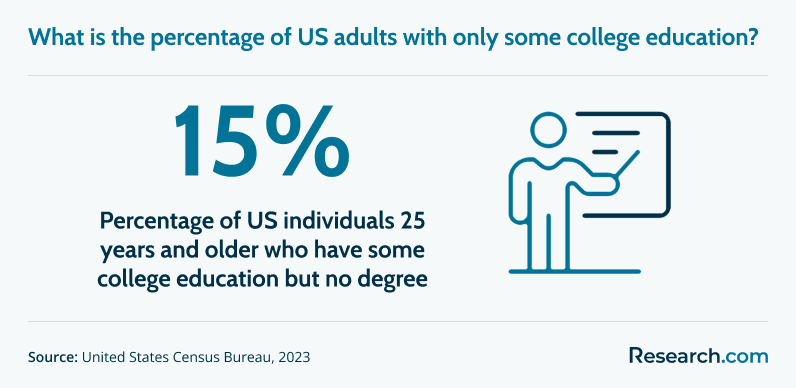
Finishing a bachelor’s degree can change the range of jobs, promotions, graduate programs, and salary opportunities available to you. This matters for a large group of adults: according to 2023 data from the United States Census Bureau, 15% of people in the United States age 25 and older have attended college but did not earn a degree. An online bachelor’s degree completion program is built for exactly that situation: students who already have college credits and want a practical route to finish.
This guide explains how online bachelor’s completion programs work, how long they take, what they cost, how transfer credits affect your timeline, and how to compare programs without relying only on rankings. It also highlights online degree completion options in fields such as business, nursing, computer science, healthcare administration, psychology, criminal justice, and information systems.
Quick Answer: What Is an Online Bachelor’s Degree Completion Program?
An online bachelor’s degree completion program is a bachelor’s pathway for students who already have college credits, an associate degree, or previous undergraduate coursework. Instead of starting over, students transfer eligible credits into a bachelor’s program and complete the remaining major, general education, and residency requirements online. Many full-time students finish in about two years, although the timeline depends on how many credits transfer and whether the program is taken full time or part time.
- Graduates earn the same type of bachelor’s credential as students in traditional bachelor’s programs.
- The median annual salary of bachelor’s degree holders in the United States is $77,636.
- Online completion programs often provide more scheduling flexibility and may cost less than campus-based options.
| Best fit | May not be the best fit |
| Adults with prior college credits who want to finish a bachelor’s degree without relocating | Students who need extensive in-person labs, studio work, clinical placements, or campus-based networking |
| Working professionals seeking promotion, career change, or graduate school eligibility | Students whose prior credits will not transfer into their intended major |
| Learners who can manage asynchronous coursework and weekly deadlines | Students who need frequent face-to-face structure to stay engaged |
Affordable Quick Online Degree Programs With High Acceptance Rates
Online degree completion is not limited to one major. Many affordable online bachelor’s programs also offer transfer-friendly pathways for students who have already completed part of an undergraduate education. The best choice depends on your credits, career goal, licensing needs, and tolerance for quantitative, technical, writing-heavy, or clinical coursework.
1. Nursing
A nursing degree prepares students for professional patient care through coursework in health assessment, evidence-based practice, care coordination, and clinical decision-making. Students who complete an eligible nursing program and pass the National Council Licensure Examination (NCLEX-RN) can become Registered Nurses (RNs). Online completion options are especially common for licensed RNs who already hold an associate degree and want to earn a bachelor’s credential.
2. Computer Science
A computer science degree develops programming, algorithmic thinking, data structures, software design, and systems knowledge. Students learn to solve technical problems and build applications, preparing for roles in software development, systems analysis, cybersecurity, and related technology fields. Degree completion students should check prerequisite requirements carefully because computer science programs often expect prior math and programming coursework.
3. Healthcare Administration
A healthcare administration degree focuses on the management side of healthcare organizations. Coursework commonly covers healthcare finance, operations, policy, compliance, quality improvement, and organizational leadership. Graduates may work in hospitals, clinics, long-term care organizations, public health agencies, or medical practice settings.
4. Management
A management degree builds leadership, planning, communication, budgeting, and organizational problem-solving skills. Students study topics such as business strategy, human resources, operations, team leadership, and financial analysis. This option can suit students who already work in business, retail, logistics, healthcare, nonprofit, or administrative roles and want a broader leadership credential.
5. Management Information Systems
A management information systems degree connects business operations with information technology. Students study databases, systems analysis, business processes, cybersecurity concepts, project management, and data-driven decision-making. MIS can be a strong option for students who want a technology-focused business degree rather than a more coding-intensive computer science path.
6. Economics
An economics degree examines how people, businesses, governments, and markets make decisions. Students study production, consumption, competition, public policy, trade, and quantitative analysis. The degree can support careers in finance, analytics, consulting, policy research, and business strategy, especially when paired with data, statistics, or programming skills.
7. Business Administration
A business administration degree gives students a broad foundation in accounting, finance, marketing, management, operations, and communication. Because it is versatile, it is one of the most common choices for degree completion students who want to qualify for business, administrative, sales, operations, or management-track roles.
8. Accounting
An accounting degree trains students to record, interpret, audit, and report financial information. Coursework often includes financial accounting, tax, auditing, managerial accounting, cost accounting, and compliance. Students considering CPA-related pathways should verify whether the program’s credits meet state-specific accounting and licensure requirements.
9. Social Work
A social work degree prepares students to support individuals, families, and communities facing complex social and behavioral challenges. Coursework typically includes human behavior, social policy, case management, intervention methods, ethics, and community services. Students should confirm field placement and licensure-related requirements before choosing an online program.
10. Special Education
A special education degree prepares future educators to support students with learning, developmental, behavioral, or physical disabilities. Students study inclusive teaching methods, assessment, individualized education programs, classroom management, and disability law. Because teacher licensure rules vary by state, online students should confirm that the program meets requirements where they plan to teach.
- Best Online Bachelor’s Degree Completion Programs for 2027
- How long does an online bachelor’s degree completion program take?
- Online vs. on-campus bachelor’s completion programs
- Average cost of an online bachelor’s degree completion program
- Financial aid options for online degree completion students
- Common admission requirements and prerequisites
- Typical courses in online bachelor’s completion programs
- Common specializations in online bachelor’s completion programs
- How to choose the best online bachelor’s degree completion program
- Financial planning questions before enrolling
- Support services for online bachelor’s completion students
- Do employers recognize online bachelor’s degree completion programs?
- Time management and study habits for online degree completion
- Career paths after an online bachelor’s degree completion program
- Easy degrees available through online completion programs
- Can a completion program help you qualify for graduate school?
- How to simplify the application process
- Job market for bachelor’s degree completion graduates
- Common challenges in online bachelor’s degree completion programs
- Is an accelerated master’s program an alternative?
- Networking and professional growth in online programs
- Can certifications improve career options after graduation?
- Bachelor’s degree vs. bachelor’s degree completion program
Best Online Bachelor's Degree Completion Programs for 2027
How We Ranked Schools
Online bachelor’s degree completion programs require a real investment of time, money, and effort, so rankings should be judged by transparent data and practical student outcomes. To prepare this list, our research team reviewed information from sources such as the Integrated Postsecondary Education Data System database (IPEDS), Peterson’s database, College Scorecard, and the National Center for Education Statistics (NCES).
You can review our methodology for more detail on how Research.com evaluates programs.
1. Iowa State University Bachelor of Business Administration – Degree Completion Program
The online BBA Degree Completion Program at Iowa State University serves working professionals who have at least 45 college credits. The curriculum includes business fundamentals such as project management, human resources, and financial management. Students complete 27 credits of core business coursework and 21 credits of upper-level electives, while also satisfying general education and business requirements. The program is AACSB accredited.
- Program Length: 2 years
- Tracks/Concentrations: None
- Cost per Credit: $501
- Required Credits to Graduate: 120
- Accreditation: Association to Advance Collegiate Schools of Business
2. New York University BS in Information Systems Management
The BS in Information Systems Management from New York University is available through online degree completion, full degree, and on-site formats. This STEM-designated degree blends information technology with management coursework, including management information systems, database design, and network architecture. Students can benefit from flexible study options, transfer credit pathways, and applied learning opportunities.
- Program Length: 2 years
- Tracks/Concentrations: None
- Cost per Credit: $1,488.92
- Required Credits to Graduate: 120
- Accreditation: Middle States Commission on Higher Education
3. San Francisco State University BSBA Online Degree Completion
The BSBA Online Degree Completion program from San Francisco State University is a fully online Bachelor of Science in Business Administration pathway with a concentration in General Business. It is intended for students who already hold at least 60 college credits. The program emphasizes business functions, communication, analytical thinking, and flexible scheduling, and it holds AACSB accreditation.
- Program Length: 2 years
- Tracks/Concentrations:
- General Business
- Cost per Credit: $495
- Required Credits to Graduate: 120
- Accreditation: Association to Advance Collegiate Schools of Business
4. Notre Dame da Namur University Bachelor of Arts in Psychology (BA) Degree Completion
The BA in Psychology Degree Completion Program at Notre Dame da Namur University is a fully online, asynchronous program with optional live meetings. Students may transfer up to 78 units, and admission requires 45 transfer units. The four-semester curriculum includes psychobiology, professional ethics, personality theory, research methods, communication, and core psychological concepts. Applicants need a GPA of 2.0 or above.
- Program Length: 2 years
- Tracks/Concentrations: None
- Cost per Credit: $400
- Required Credits to Graduate: 120
- Accreditation: WASC Senior College and University Commission
5. Old Dominion University Health Services Administration Online Program
The Health Services Administration Online Program at Old Dominion University offers both a full degree and a degree completion option. The program is fully online and asynchronous, requires at least 30 credits from ODU, and requires 120 credits for the full degree. Its curriculum, certified by the Association of University Programs in Health Administration, prepares students for healthcare management roles and includes a practicum or internship component.
- Program Length: 2 years
- Tracks/Concentrations: None
- Cost per Credit: $408 (in-state); $439 (out-of-state)
- Required Credits to Graduate: 120
- Accreditation: Southern Association of Colleges and Schools Commission on Colleges
6. Minnesota State University Mankato RN Baccalaureate Completion Online
The RN Baccalaureate Completion Program at Minnesota State University, Mankato is a fully online program for licensed RNs with an associate degree. Courses are asynchronous, and multiple start dates allow nurses to balance work and school. The program emphasizes family-centered care and can be completed part time or full time; full-time students may finish in one year. It also offers rolling admissions.
- Program Length: 1 to 2 years
- Tracks/Concentrations: None
- Cost per Credit: $367.90
- Required Credits to Graduate: 120
- Accreditation: Commission On Collegiate Nursing Education
7. University of Northern Iowa Criminology and Criminal Justice
The online Criminology and Criminal Justice program at the University of Northern Iowa is built for students who hold an Associate of Arts degree. Learners may study part time or full time while preparing for roles in law enforcement, courts, corrections, social justice reform, and related areas. The program emphasizes applied learning, communication, critical thinking, and problem-solving. Admission requires an AA or AS degree and a minimum 2.0 GPA.
- Program Length: 2 years
- Tracks/Concentrations: None
- Cost per Credit: $350
- Required Credits to Graduate: 120
- Accreditation: Higher Learning Commission
8. Boston University Online Undergraduate Degree Completion Program, Bachelor’s Degree
The Online Degree Completion Program at Boston University leads to a Bachelor of Liberal Studies in Interdisciplinary Studies. It is designed for students with 40–80 transferable credits and includes humanities, social sciences, math, and natural sciences coursework. The curriculum is structured to strengthen communication, critical thinking, and problem-solving while meeting BU Hub general education requirements.
- Program Length: 1.5 to 3 years
- Tracks/Concentrations: None
- Cost per Credit: $550
- Required Credits to Graduate: 48 to 88
- Accreditation: New England Commission of Higher Education
9. The California State University Computer Science Online Degree Completion
The CS Online Degree Completion Program at California State University is intended for transfer students and students who already hold a non-CS bachelor’s degree. The curriculum combines computing theory with software development practice and includes collaborative projects and a capstone experience. Small cohorts, faculty interaction, and industry connections support students as they prepare for technology roles.
- Program Length: 2 years
- Tracks/Concentrations: None
- Cost per Credit: $525
- Required Credits to Graduate: 120
- Accreditation: WASC Senior College and University Commission
10. State University of New York Brockport Business Administration Online Degree Completion Program
The Business Administration Online Degree Completion Program at SUNY Brockport offers junior- and senior-level courses for students completing a BS degree. The fully online program is designed for transfer students and includes areas such as human resources, organizational management, business analytics, and information systems. Students work on teamwork, communication, presentations, projects, and simulations with support from a dedicated academic advisor. Admission requires substantial progress toward an associate degree, introductory business courses, and a minimum GPA of 2.5 in foundation courses.
- Program Length: 2 years
- Tracks/Concentrations: None
- Cost per Credit: $353
- Required Credits to Graduate: 120
- Accreditation: Association to Advance Collegiate Schools of Business
Students with business experience across regions or countries may also compare completion programs with globally focused business options. If you are still asking, “What can I do with an international business degree?” reviewing international business pathways can clarify whether a broader cross-border curriculum better fits your goals.
Students who prefer faith-based institutions may also explore Christian degrees online . Working adults who need lower-cost flexible options can compare affordable online colleges for working adults.
What Graduates Often Value in Online Bachelor’s Degree Completion Programs
-
: "
“Completing my bachelor’s degree online helped me move forward professionally while keeping my work schedule intact. The learning platform, instructor communication, and flexible format made the process manageable and gave me more confidence about my next career step.” - Jordan
"
-
: "
“I had postponed finishing my degree because I was raising children and working. The online completion format made the goal realistic. Clear deadlines and student support helped me stay focused even when my schedule was difficult.” - Lisa
"
-
: "
“I worried that returning to school after many years would feel isolating. Instead, online discussions connected me with classmates from different backgrounds, and those conversations helped me understand my field in new ways.” - David
"
Key Findings
- Many students complete online bachelor’s degree completion programs in about two years of full-time study.
- Online bachelor’s completion programs often cost about $300 to $600 per credit, although some private institutions charge more.
- The 20-year ROI of a bachelor’s degree is 38.1%, while its lifetime ROI is 287.7%.
- Among individuals aged 25 to 34, those with bachelor’s or higher degrees have an employment rate of 87%, compared with 79% for those with some college education, 73% for high school graduates, and 61% for those with less than a high school diploma.
- Many online completion programs require a minimum GPA, often between 2.0 and 2.5 on a 4.0 scale, depending on prior coursework.
How Long Does It Take to Complete an Online Bachelor's Degree Completion Program?
Most full-time students can finish an online bachelor’s degree completion program in about two years. The actual timeline depends on how many credits you can transfer, whether those credits satisfy major requirements or only electives, and how many credits the school requires you to complete through its own institution.
A student who already has an associate degree with courses aligned to the target major may finish faster than a student with scattered credits from several colleges. Before enrolling, request a formal credit evaluation and ask how each transferred course applies to graduation. This is especially important in structured fields such as nursing, computer science, engineering, and programs similar to some cheap online engineering degree options.
| Your starting point | Likely impact on timeline | What to verify |
| Associate degree in a related field | Often the fastest route if credits satisfy lower-division requirements | Major prerequisites, general education completion, and residency credits |
| 60 to 75 mixed credits | May still be efficient, but some credits may transfer as electives | Course-by-course transfer evaluation |
| Prior credits from several schools | Timeline can vary significantly | Transcript deadlines, credit age limits, and duplicate course rules |
| Prior degree in another field | Useful for some second-degree or completion pathways | Whether upper-division major requirements remain |
How Does an Online Bachelor's Degree Completion Program Compare to an On-Campus Program?
On-Campus Bachelor’s Degree Completion Programs
Campus-based completion programs provide in-person access to faculty, classmates, libraries, labs, advising offices, and campus events. This format can be valuable for students who learn best through live discussion, need physical facilities, or want regular face-to-face networking. The trade-off is that campus programs usually require commuting, fixed class times, and less flexibility for students with work or family obligations.
Online Bachelor’s Degree Completion Programs
Online bachelor’s completion programs are designed for students who need to study around jobs, caregiving, military service, or other commitments. Many courses use asynchronous formats, meaning students can review lectures, complete assignments, and participate in discussions without attending at a fixed time. This model can work well for learners comparing flexible options such as the cheapest online bachelors degree business administration pathways.
The main trade-off is that online students need more self-direction. They may have fewer spontaneous conversations with professors and classmates, and some majors still require in-person labs, clinicals, practicums, internships, or exams. Strong programs address this by offering academic advising, tutoring, library access, career services, technical support, and clear instructor availability.
| Factor | Online completion program | On-campus completion program |
| Schedule | Often more flexible; many asynchronous courses | More fixed meeting times |
| Location | Usually no relocation required | Requires campus access |
| Interaction | Discussion boards, video meetings, email, virtual advising | Face-to-face classes, office hours, campus networking |
| Cost considerations | May reduce commuting, housing, and campus costs | May include more campus-related expenses |
| Best for | Working adults and students needing flexibility | Students wanting in-person structure and campus resources |
What Is the Average Cost of an Online Bachelor's Degree Completion Program?
Online bachelor’s degree completion programs often charge about $300 to $600 per credit, although some well-known private institutions charge more. That range is similar to costs students may see when researching affordable options such as the psychology degree online cost at lower-cost institutions.
Tuition is only one part of the cost. Students should also account for technology fees, books, course materials, graduation fees, transcript fees, prior learning assessment fees, and any required travel for labs, practicums, or orientations. If the total cost is too high, financial aid, employer tuition benefits, payment plans, and transfer-credit optimization can reduce out-of-pocket expense.
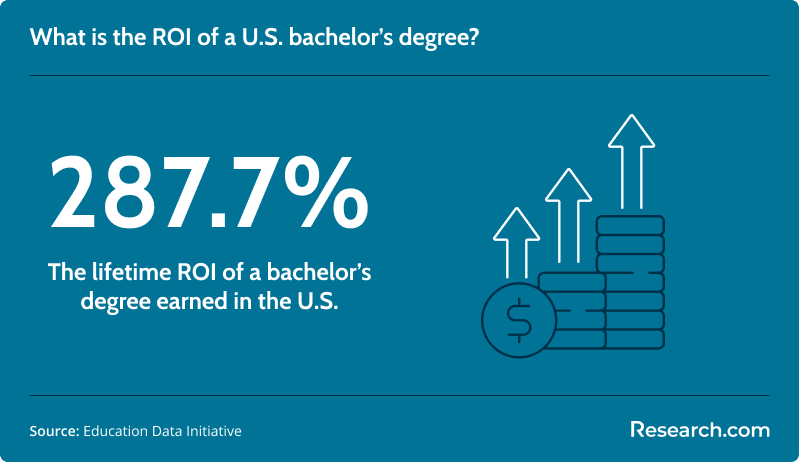
According to research from the Education Data Initiative, the 20-year ROI of a bachelor’s degree is 38.1%, while its lifetime ROI is 287.7%. ROI is not automatic, however. It depends on the field of study, total borrowing, current earnings, career advancement, and how quickly the student completes the program.
What Financial Aid Options Are Available for Online Bachelor’s Degree Completion Students?
Students in eligible online bachelor’s degree completion programs may qualify for many of the same aid options as campus-based students. The key is to confirm that the school is accredited, the program is aid-eligible, and your enrollment level meets aid requirements.
- Federal aid. Students should complete the FAFSA to determine eligibility for federal grants, loans, and work-study where available.
- Grants and scholarships. State agencies, schools, professional associations, community organizations, and private scholarship providers may offer awards for transfer students, adult learners, online students, or degree completion candidates.
- Employer tuition assistance. Some employers reimburse tuition or provide education benefits for employees pursuing job-relevant degrees.
- Institutional scholarships. Many universities offer awards specifically for returning adults, online learners, military-affiliated students, or students transferring from partner colleges.
- Payment plans. Monthly payment arrangements can help students avoid paying an entire term’s balance upfront.
What Are the Prerequisites for Enrolling in an Online Bachelor's Degree Completion Program?
Admission requirements vary, but online bachelor’s completion programs generally expect applicants to arrive with prior college coursework. Students comparing programs, including fields such as the cheapest online public health degree options, should look closely at both the number and type of credits accepted.
- College credits. Many programs expect 60 to 75 college credits, often equivalent to an associate degree or substantial transferable coursework.
- Official transcripts. Schools use transcripts to verify previous enrollment, grades, credits, and course equivalencies.
- Minimum GPA. Many programs require a GPA between 2.0 and 2.5 on a 4.0 scale, depending on the major and courses completed.
- Application form and fee. Applicants usually submit an institutional application and may need to pay an application fee.
- Letters of reference. Some programs ask for recommendations from professors, supervisors, or professionals who can speak to the applicant’s preparation.
- Personal statement or essay. Programs may request a statement explaining academic goals, career plans, and reasons for returning to finish a degree.
If you are still undecided about a major, consider whether a practical business pathway fits your skills and goals. Research.com’s guide to the easiest business major can help you compare business fields by workload and career direction.
What Courses Are Typically in an Online Bachelor's Degree Completion Program?
Coursework depends heavily on the major. A student completing a business degree will take a different set of upper-division courses than a student pursuing nursing, cybersecurity, psychology, or criminal justice. Students interested in technical options such as cyber security programs online should pay close attention to prerequisites and lab or project requirements.
- General education courses. These courses build broad academic skills in writing, communication, quantitative reasoning, science, humanities, and social sciences. Common areas include:
- English composition and communication
- Mathematics
- Natural sciences such as biology or chemistry
- Social sciences such as history, psychology, or sociology
- Humanities such as literature, philosophy, or arts
- Major courses. These courses focus on the student’s field and usually make up much of the remaining degree plan. Examples include:
- Business: marketing, accounting, finance, management, and human resources
- Healthcare: healthcare administration, nursing coursework for eligible programs, and health information management
- Technology: computer science, web development, software engineering, and information technology
- Education: curriculum design, instructional methods, and educational technology
What Types of Specializations Are Available in Online Bachelor's Degree Completion Programs?
Many online bachelor’s completion programs allow students to choose a concentration that matches their professional goals. Specializations can make a general degree more targeted, but students should confirm that enough transfer credits apply to the chosen track.
- Accounting: financial reporting, auditing, taxation, and accounting standards
- Marketing: market research, advertising, consumer behavior, branding, and digital marketing
- Human resources management: recruiting, employee relations, training, compensation, and organizational development
- Supply chain management: logistics, procurement, inventory, operations, and supply chain optimization
- Entrepreneurship: business planning, innovation, venture funding, and small business management
Some fields offer more specialized online completion pathways in selected regions or institutions. For example, students interested in justice-related careers may compare the easiest online criminal justice degree options and confirm whether a program aligns with local hiring expectations.
The chart below compares median salaries for bachelor’s degree holders and people with some college education but no degree.
How Does One Choose the Best Online Bachelor's Degree Completion Program?
The best online bachelor’s degree completion program is not always the highest-ranked or best-known school. It is the program that accepts the most useful transfer credits, fits your schedule, meets accreditation standards, supports your career goal, and keeps your total cost manageable.
1. Confirm Accreditation First
Accreditation affects credit transfer, graduate school eligibility, employer recognition, financial aid access, and professional licensure pathways. Look for institutional accreditation from a recognized accreditor and, where relevant, programmatic accreditation such as AACSB for business or CCNE for nursing.
2. Request a Formal Transfer Credit Evaluation
Do not rely on informal estimates. Ask the school to show exactly which credits transfer, which requirements they satisfy, and how many credits remain. A program that accepts more credits as electives may still take longer than one that applies fewer credits directly to major or general education requirements.
3. Match the Curriculum to Your Career Goal
Review required courses, electives, capstones, internships, practicums, and licensing preparation. A flexible program is helpful, but flexibility should not come at the expense of career relevance.
4. Compare Flexibility Honestly
Check whether classes are asynchronous, synchronous, accelerated, self-paced, cohort-based, full time, or part time. Students with unpredictable work schedules should be cautious about programs requiring frequent live attendance.
5. Consider Competency-Based Options
Degree completion programs can be efficient, but they are not the only path. Students with strong professional experience may also review competency-based degrees, which may award credit based on demonstrated skills. Research.com’s list of competency-based colleges can help you compare that model.
| Question to ask | Why it matters |
| How many of my credits apply to the major, not just electives? | This determines your real time to graduation. |
| Is the institution accredited? | Accreditation affects aid, transfer, employer recognition, and graduate school options. |
| Are courses asynchronous or live? | Your schedule must match the delivery format. |
| Are there clinicals, practicums, internships, or campus visits? | Some online programs still require in-person components. |
| What is the total estimated cost after transfer credits and aid? | Cost per credit alone does not show total affordability. |
| Will this program meet licensure or certification requirements in my state? | This is critical for teaching, nursing, social work, accounting, and similar fields. |
What Are the Financial Considerations for Online Bachelor's Degree Completion Programs?
Before enrolling, calculate the full price of the degree, not just the advertised tuition rate. A lower cost per credit may not save money if the school accepts fewer transfer credits or requires extra prerequisites.
Online bachelor’s degree completion programs often charge about $300 to $600 per credit, but total cost also depends on remaining credits, fees, textbooks, technology requirements, residency rules, and any in-person experiences. Students seeking federal aid should compare online colleges that accept FAFSA, because FAFSA eligibility may open access to federal aid such as Pell Grants and subsidized loans.
Budget for reliable internet, a working computer, proctoring fees, transcript requests, and emergency expenses. If money is tight, ask whether the school offers tuition freezes, employer partnerships, military benefits, scholarships for returning adults, or interest-free payment plans.
What Support Services Are Available to Online Bachelor's Degree Completion Students?
Strong support services can make the difference between enrolling and actually finishing. Look for services designed specifically for online and adult learners rather than generic campus resources that are hard to access remotely.
- Academic advising: degree planning, course sequencing, transfer credit review, and graduation tracking
- Career services: resume help, interview preparation, job search tools, career coaching, and employer connections
- Online tutoring: writing help, math support, subject tutoring, and study skills coaching
- Technical support: help with the learning platform, login issues, software, and online exams
- Library access: databases, research help, citation support, and online journals
- Mental health and wellness services: counseling or referrals for students managing stress, work, family, and school
Are Online Bachelor's Degree Completion Programs Recognized by Employers?
Employers generally focus on the legitimacy of the institution, the relevance of the degree, the applicant’s skills, and work experience. An online bachelor’s degree completion program from an accredited institution leads to a bachelor’s credential that can be evaluated similarly to a campus-based degree in the same field.
That said, students should avoid unaccredited schools and programs that make unrealistic career promises. If you are still building toward a bachelor’s degree, a transfer-friendly associate pathway can also reduce cost; Research.com’s guide to the cheapest associate degree online options may help you plan the first step.
How Can I Improve My Time Management and Study Habits for Online Degree Completion Success?
Online completion programs are flexible, but they are not effortless. Students who succeed usually build a repeatable weekly system for coursework, deadlines, communication, and exam preparation.
- Create a weekly study block: Reserve specific times for reading, assignments, discussion posts, quizzes, and long-term projects.
- Break large assignments into smaller tasks: Treat research, outlining, drafting, editing, and submission as separate steps.
- Use a planning tool: A calendar, Trello, Asana, or Google Calendar can help track deadlines and avoid last-minute work.
- Control distractions: Study in a consistent location, silence nonessential alerts, and communicate study times to family or roommates.
- Check courses several times per week: Online classes can move quickly, and missed announcements can lead to missed deadlines.
- Use support early: Contact instructors, tutors, advisors, or tech support before a small problem becomes a course failure.
What Career Paths Are Available for Graduates of Online Bachelor's Degree Completion Programs?
Graduates of online bachelor’s degree completion programs can pursue the same general career paths as graduates of bachelor’s programs in the same major. The degree format matters less than the field, accreditation, skills gained, internships or work experience, and whether the program meets licensure or certification requirements.
Common degree completion fields include business, computer science, information technology, healthcare administration, psychology, nursing, criminal justice, education, and social work. Some careers require additional graduate education or professional licensure beyond the bachelor’s degree.
According to 2024 data from the BLS, the jobs in the United States with the highest median annual salary, excluding senior and managerial roles, include:
- Surgeons: $239,200 or more
- Radiologists: $239,200 or more
- Psychiatrists: $239,200 or more
- Obstetricians and Gynecologists: $239,200 or more
- Neurologists: $239,200 or more
- Pathologists: $239,200 or more
- Dermatologists: $239,200 or more
- Cardiologists: $239,200 or more
- Anesthesiologists: $239,200 or more
- Orthodontists: $239,200 or more
What Are Some Easy Degrees to Pursue Through Online Bachelor's Degree Completion Programs?
“Easy” depends on your strengths. A writing-heavy degree may feel manageable to one student and difficult to another; a quantitative business or technology degree may be the opposite. For students with prior credits, the easiest completion path is often the one that accepts the most credits into the major and does not require many new prerequisites.
Students seeking flexible completion options may compare Research.com’s guide to easy degrees. Use the guide as a starting point, but also review course lists, transfer policies, and career outcomes before choosing a major.
Can an Online Bachelor's Degree Completion Program Propel You Towards Advanced Degrees?
Yes. A bachelor’s degree completion program can help students qualify for master’s, doctoral, professional, or certificate programs, provided the degree is from an accredited institution and meets the prerequisites for the next level of study. This can be important for students targeting graduate programs in business, counseling, education, healthcare, public administration, technology, or research fields.
Students planning long-term academic advancement should choose a completion program with strong writing, research, quantitative, and major-specific preparation. If doctoral study is part of your plan, compare future options such as affordable online PhD programs before selecting your bachelor’s pathway.
What Steps Can I Take to Streamline the Application Process for an Online Bachelor's Degree Completion Program?
Start by gathering every official transcript, including credits from community colleges, universities, military training, and prior online coursework. Then request a preliminary or formal transfer evaluation from each school you are considering.
- List every college attended and order official transcripts early.
- Compare admission requirements, GPA thresholds, deadlines, and required credits.
- Ask which credits apply to general education, electives, prerequisites, and the major.
- Prepare recommendation letters, personal statements, and resumes if required.
- Complete financial aid forms and scholarship applications before priority deadlines.
- Confirm whether credits from an easiest associate's degree program or other prior coursework can shorten your timeline.
What Is the Job Market for Graduates With an Online Bachelor's Degree Completion Program?
A bachelor’s degree is associated with stronger employment outcomes than stopping after some college or high school, although results vary by field, region, experience, and economic conditions.
According to 2023 data from the NCES, individuals aged 25 to 34 with bachelor’s or higher degrees have an employment rate of 87%. That compares with 79% for those with some college education, 73% for those with a high school diploma, and 61% for those with less than a high school diploma. Around 80% of this age group is currently employed.
What Are the Common Challenges in Online Bachelor's Degree Completion Programs?
Online degree completion can be efficient, but students should plan for common barriers before enrolling.
| Common mistake or challenge | Better approach |
| Assuming all previous credits will count toward graduation | Request a written transfer evaluation before committing. |
| Choosing based only on tuition per credit | Compare total remaining credits, fees, aid, and time to completion. |
| Ignoring accreditation | Verify institutional and programmatic accreditation where relevant. |
| Overestimating available study time | Choose part-time, asynchronous, or extended formats if your schedule is limited. |
| Assuming online means self-paced | Check deadlines, live attendance requirements, and course pacing. |
| Forgetting licensure rules | Confirm state requirements for nursing, teaching, social work, accounting, and similar fields. |
Students comparing flexible online pathways can also review options such as degrees you can get online, but they should still verify accreditation, transfer rules, and career alignment.
Is an Accelerated Master's Program a Viable Alternative to Completing Your Bachelor's Degree Online?
An accelerated master’s program is usually not a substitute for finishing a bachelor’s degree unless you already meet the graduate program’s admission requirements. For students without a completed bachelor’s degree, an online completion program is often the more direct step.
However, students who are close to completing a bachelor’s degree or who already hold one may compare graduate options such as a masters degree in a year. The right choice depends on your current education level, career target, cost tolerance, and whether your field rewards graduate credentials.
How Do Online Bachelor's Degree Completion Programs Enhance Networking and Professional Growth?
Good online programs do more than post lectures. They may include virtual career fairs, alumni panels, employer events, group projects, mentoring, discussion forums, and internship support. These opportunities can help students build professional relationships without attending campus full time.
Networking is especially useful for students who plan to move into management, graduate study, or specialized roles. If graduate education is part of your long-term plan, it may be useful to explore fields connected to the highest paying jobs with a master's degree.
Can Supplementary Certifications Boost Career Opportunities After Degree Completion?
Yes, targeted certifications can strengthen a bachelor’s degree when they match your career goal. A business graduate may add project management or analytics credentials, while a technology graduate may pursue cloud, cybersecurity, data, or vendor-specific certifications. The best certifications add practical proof of skills that employers can recognize.
Before paying for an exam or certificate, verify employer demand, renewal requirements, cost, and whether the credential complements your degree. Research.com’s guide to certifications that make money can help you compare options.
How Does a Bachelor’s Degree Differ From a Bachelor’s Degree Completion Program?
A traditional bachelor’s degree and a bachelor’s degree completion program can lead to the same credential, but they are designed for different students.
A traditional bachelor’s program usually serves students beginning college for the first time. It commonly takes about four years of full-time study and includes lower-division general education, introductory major courses, upper-division coursework, electives, and campus-based opportunities such as clubs, internships, labs, and advising.
A bachelor’s degree completion program is built for students who already have prior undergraduate credits, often from an associates degree online or previous college enrollment. These programs focus on helping students complete remaining degree requirements without repeating coursework they have already finished.
| Feature | Traditional bachelor’s degree | Bachelor’s degree completion program |
| Typical student | First-time college student or recent high school graduate | Adult learner, transfer student, or student with prior college credits |
| Starting point | Begins with first-year coursework | Begins after transfer credit evaluation |
| Typical format | Campus, online, or hybrid | Often online or hybrid |
| Time to finish | Usually longer for students starting from zero credits | Often shorter when many credits transfer |
| Main advantage | Full college experience and broad campus access | Flexibility and faster completion for students with prior credits |
Key Insights
- An online bachelor’s degree completion program is best for students who already have college credits and want to finish a bachelor’s degree without starting over.
- The most important factor is not the school name alone; it is how many credits transfer and how those credits apply to your remaining requirements.
- Many full-time students finish in about two years, but timelines vary based on transfer credits, course availability, prerequisites, and enrollment pace.
- Online bachelor’s completion programs often cost about $300 to $600 per credit, but total cost depends on remaining credits, fees, aid, and required in-person components.
- Accreditation is essential for employer recognition, graduate school options, federal financial aid, credit transfer, and some licensure pathways.
- Students in licensed fields such as nursing, teaching, social work, and accounting should confirm state-specific requirements before enrolling.
- Online learning works best for students who can manage deadlines independently and use advising, tutoring, career services, and technical support early.
- A completion program can improve career mobility and graduate school eligibility, but salary and job outcomes depend on the major, experience, location, and labor market conditions.
References
- Hanson, M. (2021, November 19). College Degree Return on Investment. Education Data Initiative
- NCES (2023). Employment rates of young adults. NCES BLS education and earnings data
- Rivera, H. (2024, May 17). Average college graduate salaries: 2024 projections. Bankrate
- Stamos, R. (2023, October 13). How Does a Degree Completion Program Work? Notre Dame de Namur University Bankrate salary resource
- United States Census Bureau (2023, February 16). Census Bureau Releases New Educational Attainment Data. United States Census Bureau Census educational attainment release
Other Things You Should Know About Online Bachelor's Degree Completion Programs
Most online bachelor's degree completion programs require at least 60 transferable semester credits, and many accept up to 90 credits toward a 120-credit bachelor’s degree. Schools usually require regionally accredited coursework and a minimum 2.0 GPA before accepting transfer credit.
Yes, many programs in 2027 allow the transfer of credits from previous college coursework. Typically, accredited institutions require a minimum grade, often a 'C' or better, for transfer eligibility. Check with individual programs for their specific credit transfer policies.
Most 2027 online bachelor's degree completion programs require applicants to have completed an associate degree or equivalent, with a minimum GPA of 2.5 to 3.0. Official transcripts and, in some cases, a personal statement or letters of recommendation may also be needed.


