
2027 What Prerequisites Do You Need for a Nutrition Degree? Entry Requirements, Credits & Eligibility Rules

Co-Founder and Chief Data Scientist
Choosing a nutrition degree often starts with a practical question: are you academically ready to apply, or will you need extra courses first? Requirements can differ by school, degree level, and whether the program is designed for general nutrition, dietetics, public health nutrition, or preparation for supervised practice. That variation is why many applicants underestimate the science, math, communication, and technology expectations attached to nutrition programs.
The stakes are real. Research indicates that nearly 40% of applicants lack some required science prerequisites, and missing even one lab science or statistics course can delay admission, increase costs, or push back graduation. Planning early helps you avoid paying for courses that will not transfer, applying before you are eligible, or discovering too late that a program has stricter standards than the university itself.
This guide explains the common high school and college prerequisites for nutrition degrees, how transfer credits are usually evaluated, whether test scores or experience matter, what online students need technologically, and what international applicants should prepare before applying.
Key Things to Know About the Prerequisites for a Nutrition Degree
- Prerequisites usually include foundational courses in biology, chemistry, and anatomy to ensure understanding of human body functions and nutrient interactions.
- A minimum GPA of 2.5 to 3.0 is commonly required, reflecting academic readiness for rigorous science coursework.
- Programs often require 60-90 college credits before entry, alongside strong communication and analytical skills for effective nutrition practice.
Do Nutrition Programs Require Specific High School Prerequisites?
Yes, many nutrition programs expect applicants to have a strong high school background in science, math, and communication, although the exact requirements vary by institution. Some colleges list these courses as formal admission requirements, while others treat them as recommended preparation for success in first-year science and nutrition classes.
Students aiming for a nutrition degree should prioritize the following high school subjects:
- Biology: Biology builds the foundation for understanding cells, organs, digestion, metabolism, and human body systems. Nutrition coursework often moves quickly into anatomy, physiology, and biochemistry, so weak biology preparation can make the first year more difficult.
- Chemistry: Chemistry is one of the most important subjects for nutrition majors because nutrients, enzymes, metabolism, and food composition all depend on chemical processes. Programs with dietetics or clinical nutrition tracks may place especially strong emphasis on chemistry readiness.
- Mathematics: Algebra supports dosage calculations, nutrient analysis, and quantitative reasoning. Statistics is also useful because nutrition students must learn to interpret research findings, population health data, and evidence-based recommendations.
- English or Communication: Nutrition professionals need to explain complex science clearly to patients, clients, communities, and healthcare teams. Strong reading and writing skills also help students evaluate research papers and prepare professional reports.
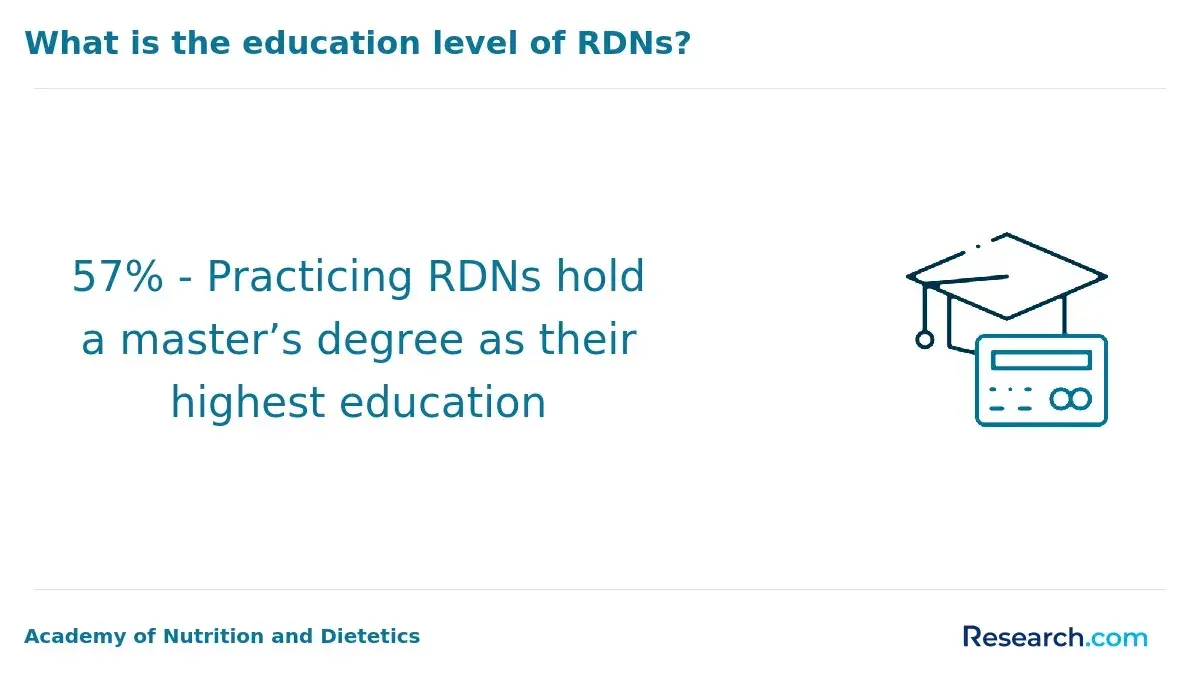
These subjects align with the Accreditation Council for Education in Nutrition and Dietetics (ACEND) emphasis on strong foundational preparation for students entering nutrition and dietetics education. They also help students handle the workload once college-level lab sciences, research assignments, and applied nutrition courses begin.
Some programs also recommend psychology or sociology because nutrition is not only biological; it is also behavioral, cultural, and social. Students interested in counseling, community nutrition, public health, or eating behavior should treat those courses as useful preparation, even when they are not mandatory.
Before choosing a major, students comparing career outcomes may also want to review the best college majors for jobs to understand how nutrition fits alongside other health and science-related fields.
What College-Level Prerequisites Are Required Before Starting a Nutrition Degree?
Most nutrition degree programs require or strongly recommend college-level prerequisites before students enter upper-division major coursework. These classes are designed to prove that students can handle the science, research, and communication demands of the degree.
The most common college prerequisites include:
- Introductory Biology: Covers cells, tissues, body systems, and physiological processes that support later coursework in human nutrition, metabolism, anatomy, and physiology.
- General Chemistry: Introduces chemical reactions, molecular structure, solutions, and lab techniques. Nutrition students use this foundation when studying nutrient metabolism, food chemistry, and biochemistry.
- Statistics: Helps students read research, evaluate nutrition studies, interpret population data, and understand evidence-based practice. This course is especially important for students planning graduate study or dietetics pathways.
- Writing Courses: Develops the ability to write research summaries, patient education materials, lab reports, and professional communication. Strong writing is a practical advantage in both academic and applied nutrition settings.
- Introductory Nutrition or Health Science: Gives students early exposure to nutrients, dietary guidelines, health promotion, and the role of nutrition in disease prevention and wellness.
Students should check whether courses must include a lab, whether online lab courses are accepted, and whether minimum grades apply. Many programs require prerequisite courses to be completed with a C or higher, and some competitive programs expect stronger grades in biology and chemistry.
A common mistake is assuming that university admission means admission to the nutrition major. In many schools, students are first admitted to the institution and then must complete prerequisite courses before applying to the nutrition program or moving into advanced major classes.
Students still exploring academic options can compare nutrition with broader degree pathways by reviewing which is the easiest bachelor degree, while keeping in mind that nutrition is typically science-heavy and may not be the easiest route for students who want to avoid lab-based coursework.
How Many Credits Can You Transfer Into a Nutrition Degree?
Students can typically transfer between 50% and 75% of the credits needed for a nutrition degree, depending on the school, accreditation expectations, course equivalency rules, and the structure of the major. In many cases, this equals about 60 to 90 credits. However, nutrition programs often review science and major courses more carefully than general education courses.
Transfer limits are not only about the number of credits. Schools also evaluate whether each course matches the content, level, lab requirements, and learning outcomes of the nutrition curriculum. A general biology class, for example, may transfer as elective credit but still fail to satisfy a required biology sequence if it lacks the correct lab or depth.
Common transfer rules include:
- Accreditation of the sending institution: Credits are most likely to transfer when they come from a regionally accredited college or university.
- Minimum grade requirements: Many programs require a C or above for transfer credit, especially in science, math, and nutrition-related courses.
- Residency requirements: Students may need to complete a set number of credits, frequently 30 to 40, at the degree-granting school.
- Limits on major coursework: Core nutrition, dietetics, clinical, or supervised-practice-related courses may need to be taken through the program itself.
- Exclusions for unrelated courses: Remedial, physical education, or unrelated business courses often do not count unless they fit the nutrition degree plan.
Before enrolling in any prerequisite at another institution, students should request written confirmation that the course will transfer and satisfy the correct requirement. Course titles alone are not enough; schools may require syllabi, lab descriptions, credit-hour details, and catalog descriptions.
When I spoke with a nutrition student about her transfer experience, she described the process as "challenging but insightful." She had to work closely with advisors to verify which credits would count. "It wasn't just about transferring as much as possible," she explained, "but making sure what I brought in actually strengthened my degree pathway, which in the end, made me feel more confident about my coursework."
For 2026, most nutrition degree programs do not require SAT or ACT scores for admission because many colleges have adopted test-optional or test-blind policies. Still, applicants should verify the rule for each school because some competitive programs, public university systems, honors colleges, or scholarship pathways may still request or consider standardized test scores.
If a school is test-optional, students should submit scores only when they strengthen the application. Strong SAT or ACT results may help offset a weaker part of the file, support merit-based scholarship consideration, or demonstrate readiness for science-heavy college work. If scores are not competitive, applicants can usually focus on the rest of the application instead.
When test scores are not required, admissions committees often place greater weight on:
- High school GPA: A consistent academic record, especially in science and math, is one of the clearest indicators of readiness.
- Relevant coursework: Biology, chemistry, algebra, statistics, and health-related courses can show preparation for the nutrition curriculum.
- Personal statement: A strong statement should explain why the applicant wants to study nutrition, what career direction they are considering, and how their experiences connect to the field.
- Recommendations: Letters from science teachers, counselors, employers, or volunteer supervisors can help confirm academic discipline and professional potential.
- Activities and service: Health clubs, food banks, wellness programs, athletics, caregiving, or community service can demonstrate interest in nutrition, health, or public service.
The safest approach is to check the admissions page, the nutrition department page, and scholarship requirements separately. A university may be test-optional for admission but still use scores for certain awards or selective programs.
Before enrolling in a nutrition degree program, students should be ready for a mix of lab science, data interpretation, written communication, and people-focused problem solving. Nutrition is often more rigorous than students expect because it combines biology, chemistry, health behavior, public health, and evidence-based practice.
The most useful skills to build before starting include:
- Foundational Academic Knowledge: Students need enough biology, chemistry, and math to understand metabolism, nutrient function, digestion, energy balance, and disease-related nutrition concepts.
- Technical Competency: Nutrition students may use spreadsheets, learning management systems, dietary analysis tools, databases, and research platforms. Comfort with digital tools reduces avoidable stress during assignments and group projects.
- Analytical and Problem-Solving Skills: Students must learn to interpret dietary intake, compare evidence, identify nutrition risks, and make recommendations based on context rather than memorized rules.
- Effective Communication: Strong speaking and writing skills matter because nutrition professionals translate technical information into clear guidance for clients, patients, families, organizations, and healthcare teams.
- Field-Specific Awareness: Students benefit from understanding that nutrition advice is shaped by ethics, culture, access to food, public health policy, medical conditions, and socioeconomic factors.
Students can prepare by reviewing chemistry basics, practicing research reading, learning spreadsheet formulas, and building study routines before classes begin. If science has been a weak area, tutoring or a refresher course can be a better investment than struggling through the first semester unprepared.
When I spoke with a recent graduate, he said the early challenge was not interest in nutrition but the intensity of the chemistry content. He gained confidence by using tutoring, forming study groups, and learning common software tools before major assignments began. "Preparing mentally for the workload and being proactive in acquiring these skills really shaped my success," he noted.
Professional experience is usually not required for entry into an undergraduate nutrition degree program. Most bachelor's programs focus first on academic readiness, especially completion of biology, chemistry, math, and general education requirements. Volunteer work or related employment can strengthen an application, but it is commonly optional rather than mandatory.
Graduate nutrition programs may treat experience differently. Programs focused on clinical nutrition, dietetics, public health nutrition, or advanced applied practice may require or strongly prefer six months to two years of relevant experience in healthcare, community nutrition, food service, wellness, research, or public health settings.
Experience helps because it shows that applicants understand the field beyond classroom interest. It can also help students write stronger personal statements, confirm their career direction, and perform better in interviews or applied coursework.
Examples of useful experience include:
- volunteering with food banks, school meal programs, community gardens, or public health agencies;
- working in healthcare, long-term care, fitness, wellness, food service, or patient support roles;
- shadowing registered dietitians, nutrition educators, or public health professionals when permitted;
- participating in undergraduate research, health outreach, or campus wellness programs.
Students without experience can still be competitive if they have strong grades, clear motivation, and completed prerequisites. According to the Academy of Nutrition and Dietetics, about 40% of graduate nutrition applicants report some form of work or volunteer experience, which shows that experience is common but not always an absolute requirement.
Online nutrition students need reliable technology before classes begin because coursework may include live lectures, virtual labs, recorded demonstrations, dietary analysis assignments, discussion boards, exams, and group projects. A weak computer or unstable internet connection can quickly become an academic problem.
The most common tech prerequisites for online nutrition degree 2026 include:
- Hardware: A computer with at least a dual-core processor, 8 GB of RAM, and a minimum of 256 GB storage supports video conferencing, document management, nutrition software, and multimedia course materials.
- Internet Speed: A stable broadband connection with at least 25 Mbps download speed helps students participate in live sessions, stream lectures, upload assignments, and join group meetings without frequent interruptions.
- Software and Platforms: Students may need access to learning management systems such as Canvas or Blackboard, updated browsers, PDF readers, spreadsheet software, video meeting platforms, and sometimes specialized nutrition analysis software.
- Digital Literacy: Students should be able to manage files, submit assignments, participate in discussion boards, join virtual meetings, troubleshoot basic issues, and communicate professionally online.
Before enrolling, students should ask whether the program uses remote proctoring, virtual lab kits, nutrition analysis software, or synchronous class meetings. These details affect not only technology needs but also scheduling, privacy, and cost.
According to the National Center for Education Statistics, nearly 50% of health-related online degree students emphasize technology access as a key factor in their academic success. For online nutrition students, dependable technology is not optional support; it is part of academic readiness.
Students considering shorter or staged online pathways can also explore fast associate degree programs online while checking whether credits will later apply to a nutrition bachelor's program.
International students applying to nutrition programs usually need to meet all academic prerequisites required of domestic students plus additional documentation requirements. Schools must verify that previous coursework is equivalent to U.S. standards and that applicants have the English proficiency needed for science-heavy coursework, lab reports, clinical terminology, and group communication.
Common prerequisites and application requirements include:
- Academic Transcripts: Applicants must submit official records from secondary or post-secondary institutions. Many schools require a credential evaluation to determine U.S. course and grade equivalency.
- English Language Proficiency: Most programs require TOEFL or IELTS scores from applicants whose prior education was not completed in English. Strong reading, writing, speaking, and listening skills are essential in nutrition courses.
- Minimum GPA Requirements: Many institutions set a minimum GPA threshold, typically around 3.0 on a 4.0 scale, particularly for programs with science prerequisites or competitive admission.
- Prerequisite Coursework: International applicants may need documented coursework in biology, chemistry, mathematics, and related sciences. Course descriptions or syllabi may be required to prove equivalency.
- Statement of Purpose: A clear essay should explain the applicant's interest in nutrition, academic background, career goals, and reasons for studying in the U.S.
International students should start the process early because transcript evaluation, English testing, visa documentation, and prerequisite review can take time. They should also ask whether science courses completed abroad will satisfy lab requirements or whether some courses must be retaken in the U.S.
Applicants comparing nutrition with other career-focused options may also find it useful to review quick degrees that make good money before committing to a specific academic pathway.
General university requirements determine whether you can enter the institution. Program-specific prerequisites determine whether you can enter the nutrition major, progress into upper-division coursework, or qualify for a specialized track. These are different checkpoints, and confusing them is one of the most common planning mistakes.
General University Admission Requirements
- GPA thresholds: Most universities require a minimum GPA, typically between 2.5 and 3.0, to qualify for admission into undergraduate or graduate programs.
- English language proficiency: Non-native speakers must often submit TOEFL or IELTS scores to demonstrate adequate language skills for academic success.
- General education coursework: Students may need broad courses in humanities, social sciences, writing, and basic math as part of university admission or degree completion.
Nutrition Program-Specific Prerequisites
- Required science coursework: Nutrition degrees often require biology, chemistry, anatomy, physiology, and related lab sciences. Many programs insist on a minimum grade of C to confirm adequate preparation.
- Practical experience: Some programs request or prefer healthcare, food service, wellness, or community nutrition experience, especially for competitive or graduate-level pathways.
- Additional evaluations: Selective programs may require interviews, essays, portfolios, recommendation letters, or reviews of communication skills and professional motivation.
The practical difference is timing. A student may be accepted to a university as a pre-nutrition, health science, or undeclared student but still need one or more semesters of prerequisite coursework before formal admission to the nutrition program. This can affect graduation plans, tuition costs, financial aid sequencing, and eligibility for internships or supervised practice later.
Students should build a term-by-term plan with an academic advisor and confirm which courses must be completed before applying to the major. This is especially important for transfer students, online students, and students changing majors after completing unrelated credits.
Students interested in combining nutrition with another field can also explore which universities offer double degrees to compare options for pairing nutrition with public health, business, psychology, education, or another discipline.
Yes. Students generally pay for prerequisite courses before entering or formally starting a nutrition program. These courses may include biology, chemistry, anatomy, physiology, statistics, writing, and introductory nutrition. Tuition applies whether the courses are taken at the target university, a community college, or an approved online provider.
Cost varies by institution. Many students choose community colleges for prerequisites because costs there typically range from $100 to $300 per credit hour, compared with four-year universities where fees may surpass $500 per credit hour. Online options may be more flexible or affordable, but students must confirm that the credits are accredited, transferable, and accepted for the exact requirement they need.
Before paying for a prerequisite course, students should verify:
- whether the nutrition program accepts the course from that institution;
- whether a lab is required and whether an online lab is acceptable;
- the minimum grade needed for the course to count;
- whether the course has an expiration policy, especially for sciences;
- whether the course will count as a prerequisite, general education credit, elective credit, or not at all.
Students can reduce costs by applying for financial aid through FAFSA or state grants, looking for scholarships for pre-health or nutrition students, completing transferable credits at a community college, using approved CLEP exam credits where accepted, or attending part-time to spread tuition expenses over a longer period.
The key is to avoid paying twice. A lower-cost prerequisite is only a good deal if the nutrition program accepts it in the category you need.
What Graduates Say About the Prerequisites for Their Nutrition Degree
- : "Getting accepted into the nutrition degree program required me to complete several prerequisite biology and chemistry courses, which was challenging but definitely worth it. The average cost of attendance was around $25,000 per year, and while it was a considerable investment, the knowledge and credentials opened doors to my career as a clinical dietitian. I'm enthusiastic about how this degree shaped my professional growth and enabled me to help clients improve their health holistically. — Robert"
- : "Reflecting on my journey, meeting the prerequisite requirements for the nutrition program was a pivotal step that ensured I was well-prepared academically. The cost, which hovered near $20,000 annually, was something I carefully budgeted for since I saw it as a long-term investment in my future. Today, as a community nutritionist, I see the impact of that choice every day through the positive changes I help cultivate in people's lives. — Case"
- : "The nutrition degree program was competitive, so fulfilling all the prerequisite requirements kept me disciplined and focused from the start. Although the tuition cost was somewhat steep at roughly $22,000 per year, the return on investment has been undeniable in my career as a registered dietitian. Professionally, earning this degree gave me credibility and expanded my opportunities in healthcare settings. — Sebastian"
Other Things You Should Know About Nutrition Degrees
A minimum GPA of 3.0 is typically required to apply for a nutrition degree in 2027. Some programs may have higher standards or specific prerequisites, so it's essential to check the admission details of each program you're interested in.
Yes. Most nutrition degree programs require high school biology and chemistry, and many expect algebra or college-prep math. Some schools also ask for a minimum 2.5–3.0 GPA and completion of 16 core high school units before admission in 2027.
- How to Become a Dietitian: 2026 Guide https://www.coursera.org/articles/how-to-become-a-dietitian
- Online Programs & Certificates https://health.usf.edu/publichealth/apply/online/online-mph-nd
- B.S. Nutritional Sciences https://human.cornell.edu/degrees/nutritional-sciences
- Graduate Programs in Human Nutrition https://www.ohsu.edu/school-of-medicine/human-nutrition-graduate-programs/admissions
- Bachelor's Degree (BS) in Human Nutrition https://academics.uky.edu/programs/bachelors/human-nutrition
- Become a Registered Dietitian Nutritionist https://www.eatright.org/become-an-rdn
- Study Nutrition, why & how to study https://www.thecompleteuniversityguide.co.uk/subject-guide/nutrition
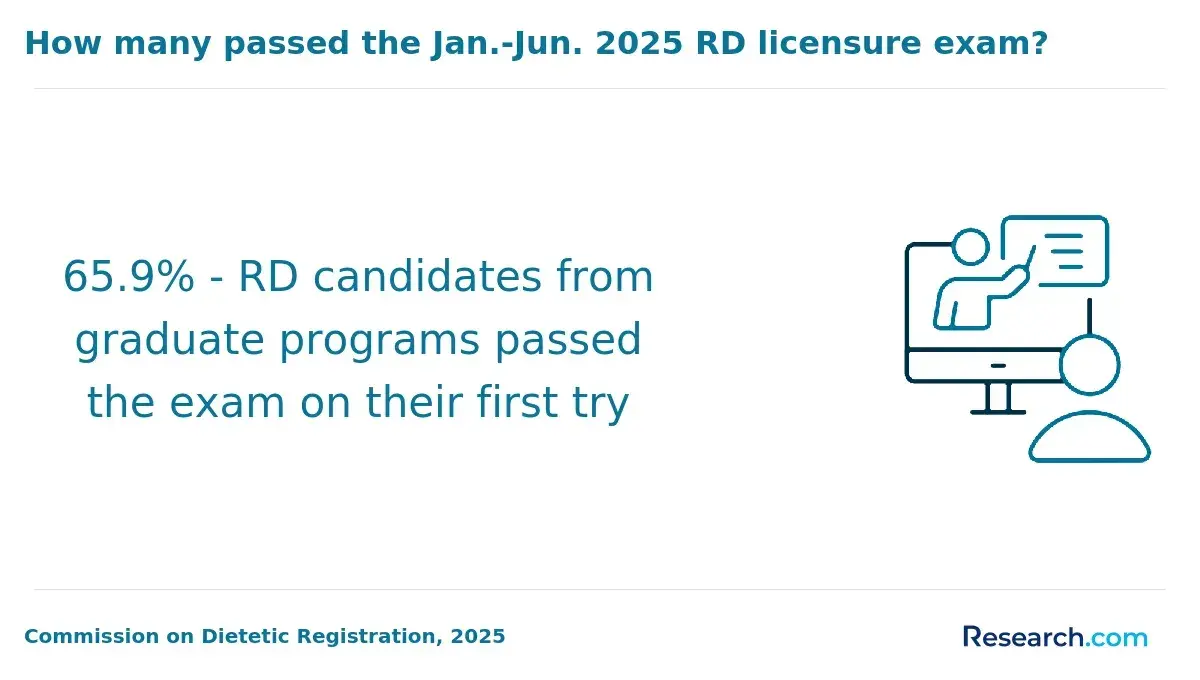
- Commission on Dietetic Registration. (2025). Summary by Registration Pathway (January-June, 2025) - First-Time Pass Rate. https://www.cdrnet.org/vault/2459/web//First%20Time%20Pass%20Rate%20Jan-June,%202025%20GP1.pdf
- Academy of Nutrition and Dietetics. (2024). Compensation & Benefits Survey of the Dietetics Profession 2024 (biennial). https://www.cdrnet.org/vault/2459/web//Compensation%20Benefits%20Survey%20of%20the%20Dietetics%20Profession%202024-TOC_Exec%20Sum.pdf
- U.S. Bureau of Labor Statistics. (2024, May). Occupational Employment and Wage Statistics. Retrieved January 2026, from https://data.bls.gov/oes/#/industry/000000
- U.S. Bureau of Labor Statistics. (2025, August 28). Occupational projections and worker characteristics. Retrieved January 2026, from https://www.bls.gov/emp/tables/occupational-projections-and-characteristics.htm


