2027 Most Affordable Online DNP Programs

Co-Founder and Chief Data Scientist
In today's rapidly evolving job market, the pursuit of advanced degrees has become increasingly crucial. As I delved into the latest trends and statistics, I discovered a pressing need for affordable options in graduate education, particularly in the field of nursing. With a staggering 45% projected job growth for nurse practitioners (NPs) from 2022 to 2032, amounting to an estimated 118,600 additional NP positions by the end of the period, the demand for highly qualified nursing professionals is undeniable.
However, the cost and accessibility of doctor of nursing practice (DNP) programs can pose significant barriers to aspiring NPs. In this guide, drawing upon my expertise as a career planning advisor, I aim to address this challenge by highlighting the most affordable online DNP programs for 2027, empowering individuals to pursue their career goals without financial constraints.
What are the benefits of getting an affordable online DNP degree?
- Graduates can access high-paying job opportunities in advanced nursing practice through the most affordable online DNP programs.
- With a DNP degree, individuals can anticipate a median salary of $121,610, demonstrating the financial benefits of their education.
- Choosing an online DNP program provides flexibility and convenience, enabling students to manage their studies alongside other obligations seamlessly.
What can I expect from the most affordable online DNP programs?
The most affordable online DNP programs offer comprehensive curricula that equip students with advanced clinical skills, leadership abilities, and evidence-based practice expertise. These programs typically cover various topics, such as healthcare policy, population health, advanced pharmacology, and healthcare informatics. Students can expect interactive online coursework, practical clinical experiences, and research and scholarly inquiry opportunities.
Additionally, reputable online DNP programs often provide mentorship from experienced faculty members and networking opportunities with peers in the field. Despite their affordability, these programs uphold rigorous academic standards and accreditation requirements, ensuring graduates are well-prepared to excel in their careers as nurse practitioners, nurse executives, clinical nurse specialists, or nurse educators.
However, prospective students should be aware of potential challenges such as limited face-to-face interaction with faculty and peers, the need for self-discipline and time management skills to succeed in an online learning environment, and the importance of ensuring accreditation and program quality. Despite these considerations, the affordability and flexibility of online DNP programs make them an attractive option for many aspiring nursing professionals.
Where can I work with a degree from the most affordable DNP programs?
Graduates of the most affordable DNP programs have many career opportunities. They can work in various healthcare settings, including hospitals, clinics, community health centers, long-term care facilities, and private practices. With their advanced clinical skills and leadership training, DNP graduates are well-equipped to take on roles such as nurse practitioners, nurse executives, clinical nurse specialists, nurse educators, and healthcare administrators. Additionally, they may pursue research, policy development, consulting, and advocacy opportunities within the healthcare industry. The flexibility and versatility of a DNP degree prepare graduates to excel in diverse and dynamic healthcare environments, making them valuable assets to their organizations and communities.
How much can I make with a degree from the most affordable DNP programs?
Graduates of the most affordable DNP programs can anticipate a wide range of earning potential. With median annual wages around $121,610, according to data, entry-level salaries may start at approximately $87,340 (10th percentile), while experienced professionals could earn upwards of $165,240 (90th percentile), reflecting the diverse career opportunities and financial rewards associated with advanced nursing practice.
- 2027 Most Affordable Online DNP Programs List of Programs
- How long does it take to complete the most affordable online DNP programs? How long does it take to complete the most affordable online DNP programs?
- How do the most affordable online DNP programs compare to an on-campus program? Online vs. On-Campus
- What is the average cost of the most affordable online DNP programs? Cost
- What are the financial aid options for students enrolling in the most affordable online DNP programs? Financial Aid
- What are the prerequisites for enrolling in the most affordable online DNP programs? Requirements
- What courses are typically in the most affordable online DNP programs? Courses
- What types of specializations are available in the most affordable online DNP programs? Specializations
- Exploring the Least Stressful Specialties in DNP Programs Exploring the Least Stressful Specialties in DNP Programs
- How do you choose the best yet affordable online DNP program? How do you choose the best yet affordable online DNP program?
- How can I verify the accreditation and quality standards of an online DNP program? How can I verify the accreditation and quality standards of an online DNP program?
- Is an online DNP degree worth the investment? Is an online DNP degree worth the investment?
- How do online DNP programs support the RN to NP transition? How do online DNP programs support the RN to NP transition?
- What additional fees and hidden costs should be expected in online DNP programs? What additional fees and hidden costs should be expected in online DNP programs?
- How do online DNP programs integrate emerging healthcare technologies and simulation-based learning? How do online DNP programs integrate emerging healthcare technologies and simulation-based learning?
- Comparing the Affordability and Value of Online DNP Programs Comparing the Affordability and Value of Online DNP Programs
- How to find the right mentorship during a DNP program? How to find the right mentorship during a DNP program?
- What career paths are available for graduates of the most affordable online DNP programs? What career paths are available for graduates of the most affordable online DNP programs?
- What is the job market for graduates of online DNP programs? Job Outlook
- What are the benefits of enrolling in an accelerated DNP program? What are the benefits of enrolling in an accelerated DNP program?
- How do employers assess online DNP degrees compared to traditional programs? How do employers assess online DNP degrees compared to traditional programs?
- What student support services can enhance your online DNP experience? What student support services can enhance your online DNP experience?
2027 Most Affordable Online DNP Programs
Choosing an online Doctor of Nursing Practice program is not only an academic decision; it is a financial, professional, and licensure-related decision. A DNP can help experienced nurses move into advanced practice, executive leadership, education, policy, or quality improvement roles, but the cost and structure of programs vary widely. This guide focuses on affordable online MSN to DNP options and explains how to compare them beyond tuition alone.
You will find a ranking of low-cost online DNP programs, a side-by-side cost and requirements comparison, admission expectations, common courses, specialization options, financial aid routes, career outcomes, and practical questions to ask before applying. The goal is to help you identify a program that is affordable, accredited, compatible with your schedule, and aligned with your intended nursing role.
Quick answer: What is the most affordable online DNP program?
Based on the programs reviewed here, Wichita State University lists one of the lowest stated per-credit tuition rates at $326.15 for in-state students, while the University of Central Arkansas lists $353.71 per credit. However, the cheapest program for one student may not be the cheapest for another because residency status, required credits, campus visits, fees, transfer policies, and clinical placement costs can change the final price.
How this ranking was developed
This ranking of affordable online DNP programs for 2027 was built using institutional data, public education databases, and manual tuition review. Research.com applies its own ranking methodology and consults sources such as the IPEDS database from the National Center for Education Statistics, Peterson's database Distance Learning Licensed Data Set, and the College Scorecard. Tuition details were also checked manually where available so readers can compare program costs with more context.
Affordable online DNP programs at a glance
| Rank | School and program | Length | Credits | Listed cost | Accreditation |
| 1 | Wichita State University - Online MSN to DNP | 2 to 3 years | 29 | $326.15 (in-state); $801.01 (out-of-state) | Commission on Collegiate Nursing Education (CCNE) |
| 2 | Fort Hays State University - Online MSN to DNP | 2 years | 30 | $428 | Commission on Collegiate Nursing Education (CCNE) |
| 3 | University of Central Arkansas - Online MSN to DNP | 6 semesters (part-time) | 33-37 | $353.71 | American Association of Colleges of Nursing (AACN) |
| 4 | Georgia College & State University - Online MSN to DNP | 3 years | 37 | $405.50 | Commission on Collegiate Nursing Education (CCNE) |
| 5 | University of North Georgia - Online MSN to DNP | 5 semesters (full-time); 8 semesters (part-time) | 38 | $468 | Accreditation Commission for Education in Nursing (ACEN) |
| 6 | Arkansas State University - Online MSN to DNP - Education | ~2 years | 36 | $456 | Accreditation Commission for Education in Nursing (ACEN) |
| 7 | Jacksonville State University - Online MSN to DNP | 6 semesters | 36 | $512 | Commission on Collegiate Nursing Education (CCNE) |
| 8 | Southern Illinois University-Edwardsville - Online MSN to DNP | 6 semesters | 30 | $676 | Commission on Collegiate Nursing Education (CCNE) |
| 9 | Ohio University - Online MSN to DNP | 6 semesters | 36 | $648 (in-state); $667 (out-of-state) | Commission on Collegiate Nursing Education (CCNE) |
| 10 | Missouri State University - Online MSN to DNP | 2 years | 29 | $32,119 (in-state); $43,959 (out-of-state) | Commission on Collegiate Nursing Education (CCNE) |
1. Wichita State University - Online MSN to DNP
Wichita State University offers a post-master’s online DNP designed for nurses who want to strengthen evidence-based practice, clinical decision-making, and leadership capacity. The program may be a strong fit for nurses seeking an affordable route into advanced practice or a more specialized DNP plan, especially because it lists several concentration options.
- Program Length: 2 to 3 years
- Specializations: Adult-Gerontology Acute Care Nurse Practitioner (AG/ACNP); Family Nurse Practitioner (FNP); Psychiatric/Mental Health Nurse Practitioner (PMHNP); Individual/Family Focus
- Required Credits to Graduate: 29
- Cost per Credit: $326.15 (in-state); $801.01 (out-of-state)
- Accreditation: Commission on Collegiate Nursing Education (CCNE)
2. Fort Hays State University - Online MSN to DNP
Fort Hays State University provides an online MSN to DNP pathway for nurses who already hold an MSN from an accredited program and have preparation in an advanced practice role. Coursework is largely online, but students must attend one campus visit for the formal DNP project presentation tied to graduation. The program can work well for nurses who want leadership preparation but can also accommodate occasional synchronous activities.
- Program Length: 2 years
- Specialization: Nursing Leadership
- Required Credits to Graduate: 30
- Cost per Credit: $428
- Accreditation: Commission on Collegiate Nursing Education (CCNE)
3. University of Central Arkansas - Online MSN to DNP
The University of Central Arkansas offers an online MSN to DNP for experienced clinicians who want to expand their influence through leadership, policy, evidence translation, and outcome measurement. This option is important to review carefully because it builds on prior role preparation rather than serving as an initial advanced nursing practice preparation program.
- Program Length: 6 semesters (part-time)
- Specialization: Nursing Leadership
- Required Credits to Graduate: 33-37
- Cost per Credit: $353.71
- Accreditation: American Association of Colleges of Nursing (AACN)
4. Georgia College & State University - Online MSN to DNP
Georgia College & State University offers a post-graduate DNP track for nurses who already hold an MSN. Students may also add coursework connected to certification exam preparation in Family Nurse Practitioner, Psychiatric Mental Health Nurse Practitioner, or Women’s Health Nurse Practitioner areas. The program is typically completed in five semesters of full-time study, though final requirements may depend on transcript review.
- Program Length: 3 years
- Specializations: Family Nurse Practitioner (FNP), Psychiatric Mental Health Nurse Practitioner (PMHNP), or Women’s Health Nurse Practitioner (WHNP)
- Required Credits to Graduate: 37
- Cost per Credit: $405.50
- Accreditation: Commission on Collegiate Nursing Education (CCNE)
5. University of North Georgia - Online MSN to DNP
The University of North Georgia provides a 38-credit-hour post-master’s DNP for advanced practice registered nurses. Students can choose a five-semester full-time plan or an eight-semester part-time plan. The format combines synchronous and asynchronous online classes with two required campus experiences: Orientation and DNP Intensive. Students should also account for the requirement that DNP graduates complete at least 1000 post-baccalaureate practice hours.
- Program Length: 5 semesters (full-time); 8 semesters (part-time)
- Specializations: Nursing Education; Executive Leadership
- Required Credits to Graduate: 38
- Cost per Credit: $468
- Accreditation: Accreditation Commission for Education in Nursing (ACEN)
6. Arkansas State University - Online MSN to DNP - Education
Arkansas State University offers a nursing education-focused MSN to DNP with 100% online coursework and pay-as-you-go tuition. The curriculum addresses nurse education leadership while also covering informatics, policy, finance, leadership, and translational research. This program may fit nurses who want to teach, design curriculum, lead academic initiatives, or support clinical education in healthcare settings.
- Program Length: ~2 years
- Specialization: Nursing Education
- Required Credits to Graduate: 36
- Cost per Credit: $456
- Accreditation: Accreditation Commission for Education in Nursing (ACEN)
7. Jacksonville State University - Online MSN to DNP
Jacksonville State University offers a post-master’s DNP that emphasizes leadership, informatics, evidence translation, and advanced clinical practice. The program is intended for registered nurses and nurse practitioners who want a terminal practice doctorate focused on improving healthcare delivery and leading quality-focused initiatives.
- Program Length: 6 semesters
- Specialization: Nursing Leadership
- Required Credits to Graduate: 36
- Cost per Credit: $512
- Accreditation: Commission on Collegiate Nursing Education (CCNE)
8. Southern Illinois University-Edwardsville - Online MSN to DNP
Southern Illinois University-Edwardsville offers an online DNP that combines online study with faculty-supported specialty practice development. Students participate in immersion experiences lasting one to three days annually. Prospective out-of-state students should confirm clinical arrangements with the assistant dean of graduate programs because clinical requirements may vary by state.
- Program Length: 6 semesters
- Specialization: Nursing Leadership
- Required Credits to Graduate: 30
- Cost per Credit: $676
- Accreditation: Commission on Collegiate Nursing Education (CCNE)
9. Ohio University - Online MSN to DNP
Ohio University offers an MSN to DNP for working nurses who want to grow in advanced clinical or executive practice. Courses are delivered in a blended format, with online classes supplemented by periodic on-campus intensives that support faculty interaction, interprofessional work, and applied learning.
- Program Length: 6 semesters
- Specializations: Advanced Clinical; Executive Practice
- Required Credits to Graduate: 36
- Cost per Credit: $648 (in-state); $667 (out-of-state)
- Accreditation: Commission on Collegiate Nursing Education (CCNE)
10. Missouri State University - Online MSN to DNP
Missouri State University offers an MSN to DNP through its School of Nursing with a community-based emphasis. The program prepares nurses to address health disparities, including the needs of rural populations, and includes study in health policy, finance management, and technology. Graduates may use the preparation in provider, educator, consultant, management, or leadership roles.
- Program Length: 2 years
- Specialization: Nursing Leadership
- Required Credits to Graduate: 29
- Tuition (Total): $32,119 (in-state); $43,959 (out-of-state)
- Accreditation: Commission on Collegiate Nursing Education (CCNE)
What Graduates Say About Affordable Online DNP Programs
- : "Moving from bedside practice into leadership felt intimidating at first, but completing a DNP online helped me build the confidence and practical judgment I needed to lead effectively. The applied projects made the learning feel connected to real healthcare decisions. — Johnny"
- : "Online study made the degree possible while I was working and raising a family. Being able to review lectures and course materials around my schedule helped me keep progressing without giving up important time at home. — Anne"
- : "The online format allowed me to keep my full-time job while earning the degree. I could manage the pace, stay engaged with the coursework, and continue building my career without stepping away from practice. — Olivia"
Key Findings
- The lowest listed in-state per-credit price in this ranking is $326.15, but total affordability depends on credits, fees, campus visits, residency rules, and clinical requirements.
- Most programs listed here are MSN to DNP pathways, so they are generally designed for nurses who already hold graduate nursing preparation.
- Several affordable programs still require limited in-person experiences, such as intensives, orientation sessions, or project presentations.
- Accreditation matters. Most programs in this list report CCNE accreditation, while others report ACEN or AACN-related accreditation information.
- Online DNP programs can support working nurses, but students must verify state authorization, clinical placement rules, licensure alignment, and certification eligibility before enrolling.
How long does it take to complete an affordable online DNP program?
Affordable online DNP programs vary by entry point, course load, specialty, and project requirements. Many MSN to DNP programs in this ranking take about 2 years, 6 semesters, or 2 to 3 years. Some programs also offer part-time plans, such as 6 semesters (part-time) or 8 semesters (part-time), which can make the degree more manageable for nurses working full time.
Students moving from RN roles toward nurse practitioner responsibilities may need additional education before a DNP pathway fits their goals. Bridge options, including RN to DNP routes and some of the cheapest RN to MSN online programs, may shorten the overall progression for eligible students.
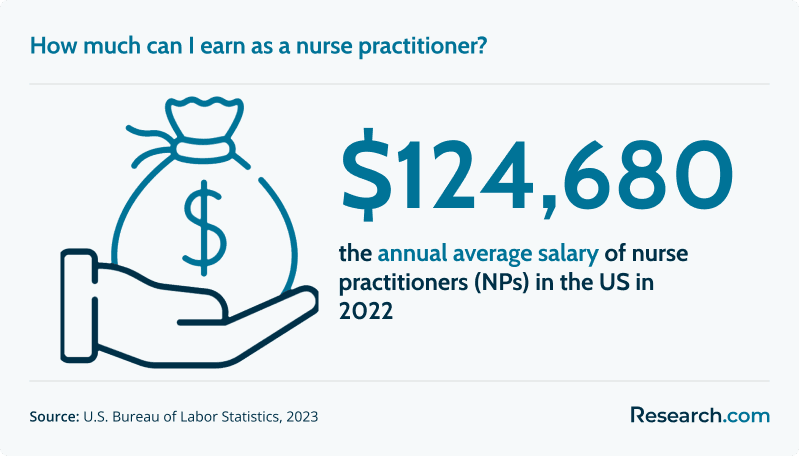
In 2022, there were 266,300 NPs in the US, earning an average annual salary of $124,680.
Online DNP vs. on-campus DNP: which format makes more sense?
Online and campus-based DNP programs can both deliver accredited doctoral nursing education, but they differ in schedule, interaction, cost structure, and learning style. Online programs are usually better for nurses who need to continue working, avoid relocation, or complete coursework around clinical and family responsibilities. Campus programs may appeal to students who prefer in-person faculty access, structured class meetings, and easier face-to-face networking.
| Factor | Online DNP | On-campus DNP |
| Best for | Working nurses who need flexibility and local clinical options | Students who want in-person instruction and campus-based networking |
| Schedule | Often asynchronous or blended, though some live sessions may be required | More likely to follow fixed class times and campus attendance requirements |
| Travel | May require limited visits for orientation, intensives, or final presentations | Requires regular commuting or relocation |
| Student discipline | Requires strong time management and independent study habits | Provides more built-in structure through scheduled class meetings |
| Networking | Available through virtual cohorts, faculty meetings, projects, and intensives | Often easier through regular in-person interaction |
The right format depends on how you learn, where you live, whether your state permits participation in the program, and how much support you need for clinical placement and doctoral project work.
What does an affordable online DNP program cost?
Among the affordable online DNP programs reviewed, the average cost per credit is approximately $530 for in-state students and around $620 for out-of-state students. Based on those figures, average total tuition is approximately $17,660 for in-state students and roughly $20,290 for out-of-state students.
Costs can still differ substantially by school. In-state rates may range from $330 to $1,110 per credit, with total tuition ranging from $9,460 to $32,120. Out-of-state rates may range from $360 to $1,520 per credit, with total tuition ranging from $12,840 to $43,960. Before deciding, ask each school for a full cost sheet that includes tuition, university fees, technology costs, campus travel, clinical expenses, graduation fees, and any required certification or licensure-related costs.
What financial aid options are available for online DNP students?
Online DNP students may be able to reduce out-of-pocket costs through federal aid, school-based funding, employer support, and external nursing scholarships. Eligibility varies, so students should confirm whether their enrollment status, program type, and credit load qualify.
- Federal Student Aid. Students can start by completing the Free Application for Federal Student Aid (FAFSA) to determine eligibility for federal aid options.
- Institutional Scholarships and Grants. Some universities offer nursing scholarships, graduate awards, need-based grants, or merit-based funding for DNP students.
- Employer Tuition Reimbursement Programs. Hospitals, health systems, and other healthcare employers may help fund graduate nursing education when the degree supports workforce needs.
- Private Scholarships and External Funding. Nursing associations, foundations, and professional organizations may provide scholarship opportunities for advanced nursing students.
When comparing aid packages, look at net price rather than published tuition. A program with a higher tuition rate may become more affordable if it offers stronger scholarships or employer reimbursement compatibility.
What are the prerequisites for affordable online DNP programs?
Admission requirements depend on whether the program is built for BSN-prepared nurses or MSN-prepared nurses. A BSN degree typically takes around four years. If you are asking, “How many years is a MSN degree?” the usual answer is around two to three years, although some students take longer. These two degrees are the most common academic entry points into DNP study.
Common BSN-DNP admission requirements
- A BSN degree from an accredited college or university.
- An active, unrestricted registered nurse license.
- A minimum GPA, often ranging from 3.0 to 3.5 on a 4.0 scale, although some of the best BSN to DNP programs online have waived GPA requirements.
- Professional or academic recommendation letters.
- A statement of purpose explaining DNP goals, specialty interests, and professional motivation.
Common MSN-DNP admission requirements
- An MSN from an accredited institution, often with advanced practice nursing preparation.
- APRN certification in a relevant specialty, such as nurse practitioner, nurse anesthetist, or clinical nurse specialist, when required by the track.
- Current unrestricted APRN licensure for programs that require it.
- A graduate GPA meeting the program’s minimum standard.
- Recommendation letters, a personal statement, and documentation of clinical or practice hours, when requested.
Do not assume that one DNP program’s requirements apply to another. Before applying, confirm admission rules, state authorization, clinical hour expectations, and whether the track matches your current license and certification background.
What courses are usually included in affordable online DNP programs?
DNP coursework is designed to move nurses beyond individual patient care into systems-level improvement, advanced clinical judgment, leadership, evidence translation, and healthcare policy. For MSN-prepared nurses, the curriculum builds on graduate nursing preparation from programs such as accredited online MSN programs.
- Advanced Nursing Practice. Students refine clinical reasoning, advanced assessment, diagnostic thinking, therapeutic planning, and patient management across settings and populations.
- Healthcare Policy and Advocacy. This area examines policy development, healthcare access, regulatory issues, and advocacy strategies that affect care delivery and health equity.
- Evidence-Based Practice. Students learn to evaluate research, translate evidence into practice, and lead improvement initiatives designed to strengthen patient outcomes.
- Leadership in Healthcare Systems. Coursework often addresses organizational behavior, team leadership, strategic planning, budgeting, conflict resolution, and change management.
- Population Health and Epidemiology. Students study population-level data, health disparities, prevention strategies, and public health interventions.
These courses can prepare graduates for work across industries that employ nurse practitioners. Home health services ($148,960) and vocational rehabilitation services ($139,640) are the highest-paying ones. However, those industries employ far fewer NPs than the most common NP employment settings.
What specializations are available in affordable online DNP programs?
DNP specializations shape your clinical scope, certification route, schedule, patient population, and long-term career options. Many online programs, including online nurse practitioner programs and MSN to DNP online pathways, allow students to focus on advanced practice, education, executive leadership, public health, or specialty care.
- Family Nurse Practitioner (FNP). FNP students prepare to provide primary care for patients and families across the lifespan. The role often includes assessment, diagnosis, prescribing, preventive care, chronic disease management, and patient education. Students comparing cost-conscious FNP options can also review cheapest online FNP programs.
- Psychiatric-Mental Health Nurse Practitioner (PMHNP). PMHNPs assess, diagnose, and manage mental health conditions. They may provide psychotherapy, prescribe medications, and work with interdisciplinary teams in hospitals, community mental health centers, and private practices.
- Adult-Gerontology Nurse Practitioner (AGNP). AGNPs focus on adult and older adult care, including acute and chronic condition management, diagnostic testing, medication management, and care coordination.
- Nurse Executive Leadership. This specialization prepares nurses for administrative roles involving operations, quality improvement, staffing, budgets, policy implementation, and organizational strategy.
- Nursing Education. Nurse educators teach students or practicing clinicians, supervise clinical learning, build curriculum, evaluate outcomes, and support workforce development.
- Public Health Nursing. Public health-focused nurses work on disease prevention, community outreach, population assessment, health education, and policies that reduce barriers to care.
- Forensic Nurse Practitioner. A forensic nurse practitioner works with patients affected by violence, trauma, abuse, or legal-medical concerns and may document evidence, support examinations, and collaborate with legal or law enforcement professionals.
Some DNP programs also support additional certifications. Credential choices should be tied to your scope of practice, state rules, and employer expectations. Students exploring salary-focused credentials can review RN certifications to increase salary, including certifications related to nurse anesthetists and nurse midwives.
Regardless of specialization, most NPs in 2022 worked in the offices of physicians (47.57%) and general medical and surgical hospitals (22.49%). The chart below shows major NP employment industries and average annual salaries.
Which DNP specialties may feel less stressful?
No DNP specialty is stress-free. Workload, emotional strain, autonomy, patient complexity, documentation burden, staffing levels, and schedule predictability all affect stress. Still, some nurses prefer specialties with more routine hours or lower acuity than emergency, acute care, or high-intensity inpatient roles.
If lifestyle balance is a major priority, you may want to compare specialties linked to outpatient care, primary care, education, or leadership roles. Research.com’s guide to the least stressful nurse practitioner specialty can help you think through specialty fit, but you should also speak with nurses currently practicing in the role you want.
Before choosing a track, ask yourself: Do I want long-term patient relationships or fast-paced acute care? Am I comfortable with psychiatric crisis work? Do I prefer teaching, systems leadership, or direct diagnosis and treatment? Your specialty should match both your professional goals and the kind of work environment you can sustain.
How should you choose the best affordable online DNP program?
The lowest-cost option is not always the best option. The best value is usually the program that meets accreditation standards, supports your licensure or certification goals, fits your schedule, and keeps total costs manageable. Students comparing cheapest nurse practitioner programs should use the same logic: affordability only matters if the program supports the outcome you need.
- Check accreditation first. Look for recognized nursing accreditation, such as CCNE or ACEN, and confirm that the exact program or school of nursing is covered.
- Compare total cost, not only tuition. Review tuition rates, mandatory fees, travel costs, books, software, background checks, clinical onboarding, and graduation expenses.
- Match the curriculum to your goal. A leadership DNP may not prepare you for a new NP specialty. A clinical track may have more practice-hour and placement requirements.
- Review faculty experience. Look for faculty with current clinical, research, leadership, education, or policy expertise in the area you plan to pursue.
- Ask about clinical placement support. Some programs help secure sites; others expect students to identify preceptors locally.
- Evaluate flexibility honestly. Asynchronous classes help working nurses, but deadlines, live sessions, projects, and intensives can still be demanding.
- Examine student support. Strong advising, library access, writing support, technical help, and career services can make a major difference in an online doctoral program.
How can you verify accreditation and program quality?
Start by confirming whether the program is accredited by a recognized nursing accreditor, such as the Commission on Collegiate Nursing Education (CCNE) or the Accreditation Commission for Education in Nursing (ACEN). Then verify whether the program meets your state’s requirements for clinical placement, advanced practice licensure, and certification eligibility if your DNP track is tied to practice authority.
Quality indicators also include faculty qualifications, DNP project support, graduate outcomes, student retention, clinical partnerships, and transparency around costs. Rankings of affordable online BSN to DNP degree programs can help with early comparison, but they should not replace direct verification with the school and your state board of nursing.
Is an online DNP worth the investment?
An online DNP may be worth it for nurses who need the credential for advanced practice, leadership advancement, academic roles, policy work, or evidence-based systems improvement. The financial case depends on your current salary, program cost, specialty, location, employer support, and whether the degree qualifies you for roles you could not otherwise access.
To evaluate return on investment, compare total tuition and fees with realistic role options in your region. Salary information, such as doctor of nursing practice salary data, can be useful, but no degree guarantees a specific income. A careful ROI review should also include lost work time, loan interest, reimbursement opportunities, and the nonfinancial value of professional autonomy or leadership mobility.
How do online DNP programs support the RN to NP transition?
Some nurses use online graduate pathways to move from registered nurse practice toward nurse practitioner roles. The right route depends on current education level, license status, state requirements, and whether the program includes the clinical preparation needed for NP certification. Bridge pathways can help students build on existing nursing experience while completing graduate requirements in a structured sequence.
Students considering this direction should review program entry points carefully and compare options such as the RN to NP bridge program. Not every affordable DNP is designed to create a new NP role, especially post-master’s leadership-focused DNPs that assume prior advanced practice preparation.
What extra fees and hidden costs should online DNP students expect?
Tuition is only one part of the price. Online DNP students may also pay application fees, technology fees, library fees, course material costs, simulation expenses, clinical onboarding fees, background checks, drug screening, malpractice insurance, travel for intensives, graduation fees, and licensure or certification-related expenses.
Ask the school for a complete fee schedule before enrollment. Also ask whether clinical placements require travel, whether you must pay for health records or compliance tracking, and whether campus visits are mandatory. For a broader view of how nursing education expenses can extend beyond tuition, see this comparison of LPN fees in USA.
How are technology, AI, telehealth, and simulation changing online DNP programs?
Online DNP programs increasingly use virtual simulation, telehealth platforms, digital case studies, remote collaboration tools, and data-informed quality improvement projects. These tools can help students practice decision-making, analyze systems problems, and connect coursework to healthcare delivery without being on campus every week.
AI and automation are also changing nursing leadership and advanced practice. DNP students may need stronger skills in informatics, clinical documentation review, patient safety analytics, ethical technology use, and evidence evaluation. Students who want more clinical specialization after a master’s degree can also compare options such as an online post master's FNP pathway.
How should you compare affordability and value in online DNP programs?
Affordability answers the question, “Can I pay for this?” Value answers the broader question, “Will this program help me reach the role I want at a cost that makes sense?” A low-cost program can be a poor choice if it lacks your specialty, requires unaffordable travel, offers limited clinical support, or does not align with licensure needs.
| Decision factor | Why it matters | Question to ask |
| Accreditation | Supports educational quality and may affect certification, licensure, and employer recognition | Is the nursing program accredited, and by which organization? |
| Total cost | Fees, travel, and clinical requirements can change the final price | What is the full estimated cost from enrollment through graduation? |
| Specialty fit | Your concentration affects role eligibility and career direction | Does this track prepare me for the exact role I want? |
| Clinical placement | Placement support can determine whether you can progress on time | Does the school arrange clinical sites or must I find my own? |
| State authorization | Online programs may not operate in every state | Can I complete this program and clinical work where I live? |
| Schedule | Working nurses need a realistic workload | Are classes asynchronous, synchronous, blended, full-time, or part-time? |
Choosing one of the most affordable online DNP programs can lower the cost of doctoral nursing education, but the best choice should also include strong advising, credible faculty, practical project support, and a clear path to your intended career outcome.
How can you find strong mentorship during a DNP program?
Mentorship matters in a DNP program because students often need guidance on doctoral projects, leadership growth, specialty development, scholarly writing, and career planning. A good mentor can help you connect academic work to practical healthcare problems.
- Clarify your goals. Decide whether you need support in clinical specialization, leadership, education, policy, research translation, or career advancement.
- Start with faculty. Identify instructors whose experience matches your DNP project topic or specialty area.
- Use professional organizations. Nursing associations often provide mentoring, networking, conferences, and specialty communities.
- Attend events and workshops. Virtual and in-person events can connect you with leaders outside your university.
- Build a professional online presence. Platforms such as LinkedIn can help you find nurses working in roles you hope to enter.
- Ask focused questions. A specific request is more effective than a general request for help.
- Maintain the relationship. Share progress, ask for feedback, follow through, and thank mentors for their time.
- Take initiative. Mentorship works best when students are prepared, responsive, and clear about what they need.
What career paths are available after an affordable online DNP?
DNP graduates may work in direct care, leadership, education, policy, research translation, consulting, or system improvement. The right path depends on specialty preparation, certification, licensure, work history, and employer needs.
- Advanced Practice Registered Nurse (APRN). DNP-prepared nurses may work as nurse practitioners, nurse anesthetists, nurse midwives, or clinical nurse specialists when they meet certification and licensure requirements.
- Nurse Executive or Administrator. Graduates may lead departments, oversee nursing operations, manage quality initiatives, or shape organizational strategy.
- Nursing Educator or Professor. DNP graduates may teach in academic programs, support clinical education, mentor nurses, and contribute to curriculum design.
- Health Policy Analyst or Advocate. Some graduates work on policy development, implementation, evaluation, access, equity, and healthcare delivery reform.
- Clinical Researcher or Scholar. DNP-prepared nurses may translate research into practice, evaluate outcomes, publish scholarly work, and lead evidence-based improvement.
- Healthcare Consultant or Entrepreneur. Graduates may advise organizations on quality improvement, workflow redesign, clinical operations, or healthcare technology implementation.
What is the job market for online DNP graduates?
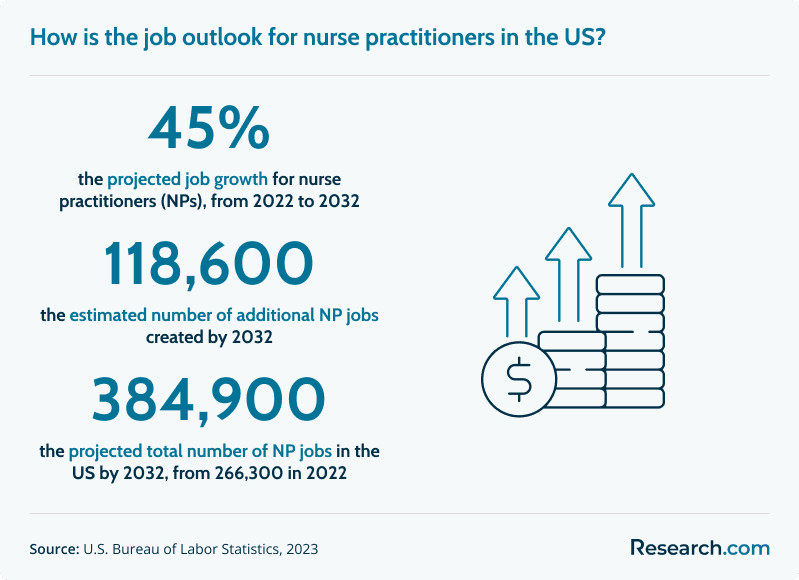
The job market is especially strong for nurse practitioners. The projected job growth for NPs is 45% from 2022 to 2032, with an estimated 118,600 additional NP jobs expected to be created by 2032. The projected total number of NP jobs in the US will reach 384,900 by 2032, up from 266,300 in 2022.
These figures point to strong demand for advanced practice nurses, but individual outcomes still depend on specialty, geography, licensure, experience, employer needs, and local competition. DNP graduates who combine clinical expertise with leadership, informatics, quality improvement, and policy skills may be better positioned for broader opportunities.
What are the benefits of an accelerated DNP program?
Accelerated DNP programs may appeal to nurses who want to complete doctoral study faster and move into advanced roles sooner. These pathways compress the curriculum into a shorter timeline while still requiring rigorous coursework, practice hours, and project completion.
The main advantages are speed, potentially lower overall costs, and earlier access to advanced opportunities. The trade-off is intensity. Accelerated students often take heavier course loads, complete year-round study, and need strong time-management skills. Before enrolling, compare accelerated options with guides such as the fastest DNP program to decide whether the pace is realistic for your work and family responsibilities.
How do employers view online DNP degrees?
Employers generally focus less on whether coursework was online and more on whether the program was accredited, rigorous, relevant to the role, and supported by meaningful clinical or project experience. For online graduates, it helps to highlight applied DNP projects, leadership outcomes, informatics skills, practice hours, certifications, and measurable improvements from workplace-based initiatives.
Students should still choose carefully. A flexible online format is not enough if the program lacks accreditation, weakens clinical preparation, or does not match employer expectations. Applicants comparing access-focused nursing pathways may also find value in reviewing options related to the easiest nursing degree to get into, but admissions accessibility should never outweigh program quality.
What student support services improve the online DNP experience?
Strong support services can determine whether an online DNP feels manageable or overwhelming. Look for academic advising, faculty access, writing support, technical help, online library services, career counseling, clinical placement guidance, virtual orientation, and regular check-ins.
Support is especially important for students balancing work, family, and doctoral-level expectations. Programs that also help students plan longer pathways, such as progression from RN to BSN through the easiest and cheapest online RN to BSN program, can be useful for nurses mapping out step-by-step advancement.
Common mistakes to avoid when choosing an online DNP program
| Mistake | Why it can hurt you | Better approach |
| Choosing based only on tuition | Fees, travel, and clinical costs can make a “cheap” program more expensive than expected | Compare full program cost and ask for a written fee estimate |
| Ignoring accreditation | Accreditation may affect licensure, certification, financial aid, and employer acceptance | Verify accreditation directly with the accreditor and the school |
| Assuming online means no campus visits | Some programs require intensives, orientation, or final presentations | Ask about every in-person requirement before applying |
| Overlooking state authorization | You may be unable to enroll or complete clinical work from your state | Confirm state eligibility with the program and your board of nursing |
| Picking the wrong specialization | A leadership DNP may not qualify you for NP practice if you need clinical preparation | Match the track to your intended license, certification, and role |
| Assuming salary gains are automatic | Pay depends on location, specialty, experience, and employer demand | Research local job postings and realistic salary ranges before borrowing |
Questions to ask before applying
- Is the program accredited by CCNE, ACEN, or another recognized nursing accreditor?
- Does the program accept students from my state?
- Will this track meet my intended licensure or certification goals?
- How many campus visits, intensives, or synchronous sessions are required?
- Who is responsible for finding clinical sites and preceptors?
- What is the total estimated cost, including fees and travel?
- Can I study part time while working full time?
- What DNP project support is available?
- What student outcomes does the school report?
- How quickly do students typically finish the program?
Key Insights
- The most affordable online DNP is not automatically the best choice; accreditation, specialty fit, clinical support, and state authorization are just as important as tuition.
- MSN to DNP programs are often shorter than BSN to DNP pathways, but many assume prior advanced practice or graduate nursing preparation.
- Online DNP programs can work well for experienced nurses who need flexibility, but some still require campus visits, live sessions, and locally arranged practice experiences.
- Before borrowing, compare total cost against realistic career outcomes in your region and specialty. Salary data can guide your planning, but it should not be treated as a guarantee.
- Ask detailed questions before applying. A program’s true value becomes clear only after you understand accreditation, licensure alignment, fees, clinical placement responsibilities, and student support.
References:
- Davis, J. H., & Morrow, M. R. (2020). Using strengths, weaknesses, opportunities, and threats analysis to pursue a doctor of nursing practice education. Clinical Nurse Specialist, 34(6), 295-297. Clinical Nurse Specialist.
- U.S. Bureau of Labor Statistics. (2023). Nurse anesthetists, nurse midwives, and nurse practitioners. Retrieved March 20, 2024, from BLS.
- U.S. Bureau of Labor Statistics. (2023). Occupational employment and wage statistics, May 2022 - 29-1171 nurse practitioners. Retrieved March 20, 2024, from BLS.
Other Things You Should Know About Online DNP Programs
Affordable online DNP programs in 2027 typically require applicants to have completed a minimum of 500 clinical hours in advanced practice nursing. This experience is crucial to ensure students possess practical skills needed for the program’s rigor and focus on advanced practice.
To apply for affordable online DNP programs in 2027, you typically need a BSN or MSN, an active RN license, relevant clinical experience, and GRE scores. Some programs may require a minimum GPA, letters of recommendation, and a personal statement.
Most online DNP programs require at least 1,000 post-baccalaureate practice hours for graduation, including any hours completed in a prior MSN program. Students usually document these hours through a clinical log and complete them at approved sites under faculty or preceptor supervision.