2027 Easiest Nurse Practitioner Specialty Programs to Get Into

Co-Founder and Chief Data Scientist
With nurse practitioners projected to see a remarkable 46% job growth from 2023 to 2033, the demand for these advanced healthcare professionals is undeniable. However, for many aspiring nurse practitioners, finding a specialty program that aligns with career goals while remaining accessible can be a challenge. Highly competitive programs often require extensive prerequisites or high GPAs, which may feel discouraging to those eager to advance.
In this article, I aim to guide prospective students toward nurse practitioner specialty programs with less stringent admission requirements, making it easier to achieve their goals without unnecessary obstacles.
What are the benefits of getting a degree in nurse practitioner specialty programs?
- Earning a nurse practitioner degree opens doors to in-demand roles such as family nurse practitioner, adult-gerontology nurse practitioner, and psychiatric mental health nurse practitioner.
- Nurse practitioners earned a median annual salary of $129,480 in 2023, making it a lucrative and rewarding career path.
- Completing this degree online allows students to balance their studies with work and personal responsibilities, providing flexibility and convenience.
What can I expect from a nurse practitioner specialty program?
In a nurse practitioner specialty program, you can expect a focused curriculum tailored to specific patient populations, such as family health, adult-gerontology, pediatrics, or psychiatric-mental health. Courses typically cover advanced health assessment, diagnostic reasoning, pharmacology, and evidence-based practice, helping students gain a deep understanding of clinical care within their chosen specialty. Additionally, students engage in supervised clinical rotations that provide hands-on experience in real healthcare settings, which is essential for building clinical competence and confidence.
Many programs are structured to accommodate working professionals, offering part-time and online options to provide greater flexibility. These programs emphasize skills that prepare you for independent and collaborative roles, such as developing treatment plans, managing chronic illnesses, and counseling patients. Overall, you can expect a rigorous but rewarding educational experience that equips you with the specialized skills needed to meet the healthcare needs of your chosen patient population.
Where can I work with a nurse practitioner degree?
With a nurse practitioner degree, you can work in a range of healthcare settings, depending on your specialty. The top industries employing nurse practitioners in the US in 2023 include offices of physicians, which employ approximately 137,030 NPs, and general medical and surgical hospitals, employing around 61,740 NPs. Outpatient care centers and home health care services also offer significant employment levels, with 25,440 and 7,410 NPs, respectively.
Beyond hospitals and clinics, nurse practitioners are also needed in long-term care facilities and specialty practices like cardiology or oncology. Additionally, some nurse practitioners work in public health, academia, or research, contributing to healthcare policy, educating future practitioners, or advancing clinical knowledge. This degree provides flexibility, allowing you to pursue roles that align with your career goals and preferred work environment.
How much can I make with a nurse practitioner degree?
With a nurse practitioner degree, you can expect to earn a competitive salary. In 2023, the estimated salary range for nurse practitioners in the US is between $94,530 and $168,030, depending on factors such as specialty, location, and experience. This broad range reflects the demand for nurse practitioners in various healthcare settings, offering a rewarding financial opportunity for those in the field.
- Easiest Nurse Practitioner Specialty Programs to Get Into for 2027 List of Programs
- How long does it take to complete a nurse practitioner specialty program? Program Length
- How does an online nurse practitioner specialty program compare to an on-campus program? How does an online nurse practitioner specialty program compare to an on-campus program?
- What is the average cost of a nurse practitioner specialty program? Program Cost
- What are the financial aid options for students enrolling in the easiest nurse practitioner specialty programs to get into? Financial Aid
- What are the prerequisites for enrolling in a nurse practitioner specialty program? Admission Requirements
- What courses are typically in a nurse practitioner program? What courses are typically in a nurse practitioner program?
- What types of specializations are available in nurse practitioner programs? Specialization Options
- How to choose the best among the easiest nurse practitioner program specializations to get into? How to choose the best among the easiest nurse practitioner program specializations to get into?
- Are Nurse Practitioner Specialty Programs Accredited and How Do You Verify Their Quality? Are Nurse Practitioner Specialty Programs Accredited and How Do You Verify Their Quality?
- What are the key success indicators for a high-quality nurse practitioner program? What are the key success indicators for a high-quality nurse practitioner program?
- What challenges should prospective nurse practitioners prepare for? What challenges should prospective nurse practitioners prepare for?
- How can non-nursing professionals pursue nurse practitioner specialty programs? How can non-nursing professionals pursue nurse practitioner specialty programs?
- Are non-clinical bridge pathways a viable option for aspiring nurse practitioners? Are non-clinical bridge pathways a viable option for aspiring nurse practitioners?
- How can affordable RN-to-BSN bridge programs strengthen my NP candidacy? How can affordable RN-to-BSN bridge programs strengthen my NP candidacy?
- Can a Dual-Degree Option Boost My Nurse Practitioner Career? Can a Dual-Degree Option Boost My Nurse Practitioner Career?
- What career paths are available for graduates of nurse practitioner specialty programs? What career paths are available for graduates of nurse practitioner specialty programs?
- What is the job market for graduates of nurse practitioner programs? Job Outlook
- How can you accelerate your journey to becoming a nurse practitioner? How can you accelerate your journey to becoming a nurse practitioner?
- How do nurse practitioner specialty programs prepare you for licensure and long-term career success? How do nurse practitioner specialty programs prepare you for licensure and long-term career success?
- Is It Possible to Balance Quality Education with Affordability? Is It Possible to Balance Quality Education with Affordability?
- Are clinical training opportunities sufficiently robust? Are clinical training opportunities sufficiently robust?
- Do nurse practitioner specialty programs foster strong research and evidence-based practice? Do nurse practitioner specialty programs foster strong research and evidence-based practice?
Easiest Nurse Practitioner Specialty Programs to Get Into for 2027
Finding the “easiest” nurse practitioner specialty program is not about choosing a low-quality or low-effort degree. NP programs are graduate-level clinical programs, and every legitimate option should require advanced coursework, supervised clinical practice, national certification preparation, and state licensure alignment. In this guide, “easiest to get into” means specialties that often have broader program availability, more flexible online or hybrid formats, clearer prerequisite pathways, and admissions requirements that may be manageable for qualified registered nurses.
This guide is for RNs, BSN-prepared nurses, ADN nurses considering a bridge pathway, MSN graduates seeking a post-master’s certificate, and non-nursing professionals exploring whether an accelerated route is realistic. You will learn which NP specialties may be more accessible, how online and campus programs compare, what prerequisites and courses to expect, how much programs may cost, and how to evaluate quality before applying.
Quick answer: Which NP specialties are usually easier to enter?
The nurse practitioner specialties that may be easier to access are typically those offered by many schools and aligned with common workforce needs: family nurse practitioner, psychiatric mental health nurse practitioner, adult gerontology primary care nurse practitioner, pediatric nurse practitioner, and women’s health nurse practitioner. However, admission difficulty varies by school, location, clinical placement availability, GPA expectations, RN experience requirements, and whether the program is MSN, DNP, or post-master’s level.
If you are comparing accessible pathways, start with accredited programs that match your license status, preferred patient population, schedule, and long-term practice goals. A flexible easiest nurse practitioner program may help you enter advanced practice sooner, but it should still prepare you for certification, licensure, and safe clinical care.
What “easy to get into” should and should not mean
| Factor | What it can mean | What to avoid |
| Admissions access | Clear requirements, multiple start dates, no unnecessary barriers, and support for working nurses | Programs that accept students without proving clinical readiness or license eligibility |
| Flexible format | Online didactic courses, part-time pacing, hybrid intensives, or accelerated options | Assuming online means easier coursework or fewer clinical expectations |
| Specialty availability | More schools offer the track, making it easier to find a program that fits your background | Choosing a specialty only because it is available, not because you want the patient population |
| Clinical placement support | The school helps students identify approved preceptors and sites | Enrolling before understanding who is responsible for securing clinical placements |
| Accreditation | The program is recognized by CCNE or ACEN and supports certification and licensure goals | Choosing a cheaper or faster option that may not meet state or certification requirements |
1. Psychiatric Mental Health Nurse Practitioner (PMHNP)
Psychiatric mental health nurse practitioner programs prepare nurses to assess, diagnose, and manage mental health conditions such as depression, anxiety, schizophrenia, substance use disorders, and mood disorders. PMHNP students study psychiatric assessment, psychopharmacology, therapy modalities, crisis intervention, and care coordination across inpatient, outpatient, community, and telehealth settings.
This specialty may be accessible because many schools now offer PMHNP tracks in online or hybrid formats, and mental health care needs have kept employer interest strong. It is a good fit for nurses who are comfortable with complex conversations, long-term patient relationships, medication management, trauma-informed care, and interdisciplinary work. Students who need a flexible graduate pathway can also compare the easiest online master's degree programs, but they should confirm that any nursing option includes approved clinical training and licensure preparation.
2. Pediatric Nurse Practitioner (PNP)
Pediatric nurse practitioner programs train nurses to care for infants, children, adolescents, and young adults. Coursework often emphasizes child development, pediatric assessment, pediatric pharmacology, preventive care, family education, immunization schedules, and management of common acute and chronic pediatric conditions.
PNP programs may be a practical option for nurses with pediatric, school nursing, emergency, neonatal, or family practice experience. Graduates commonly work in pediatric clinics, hospitals, specialty practices, and community health settings. Before applying, confirm whether the program prepares students for primary care, acute care, or another pediatric certification pathway. Students comparing cost-sensitive online options may also review online colleges that accept FAFSA to understand how federal financial aid eligibility can affect affordability.
3. Women’s Health Nurse Practitioner (WHNP)
Women’s health nurse practitioner programs focus on reproductive, gynecologic, prenatal, postpartum, sexual, and preventive health across the lifespan. Students typically study family planning, contraception, fertility concerns, menopause care, screening guidelines, health promotion, and gender-specific risk factors.
This specialty may be easier to narrow into for nurses who already work in obstetrics, gynecology, fertility care, public health, labor and delivery, or reproductive health clinics. It is not the broadest NP track, so students should consider whether they want a highly focused scope of practice rather than a general primary care role. A strong WHNP program should offer clinical experiences that expose students to diverse patient needs, culturally competent communication, and evidence-based reproductive health care.
4. Adult Gerontology Primary Care Nurse Practitioner (AGPCNP)
Adult gerontology primary care nurse practitioner programs prepare nurses to provide ongoing care for adults, including older adults with chronic conditions, functional limitations, medication complexity, and age-related health concerns. Common areas of study include disease prevention, chronic illness management, geriatric assessment, health promotion, polypharmacy, mobility issues, and cognitive changes.
AGPCNP programs can be a strong choice for nurses with adult medical-surgical, internal medicine, long-term care, home health, outpatient, or chronic disease management experience. The specialty is especially relevant for students who prefer sustained primary care relationships instead of high-acuity emergency or intensive care settings. Nurses interested in the technology side of care delivery may also ask what is the easiest nursing informatics online program, since informatics skills can support population health tracking, documentation quality, and patient data management.
5. Family Nurse Practitioner (FNP)
Family nurse practitioner programs are among the most widely available NP tracks because they prepare nurses to provide primary care across the lifespan. FNP students study adult, pediatric, women’s health, geriatric, preventive, and chronic care topics, making the specialty one of the broadest advanced practice options.
FNP may be one of the more accessible NP specialties because many schools offer it in MSN, DNP, post-master’s certificate, online, hybrid, full-time, and part-time formats. It is a strong fit for nurses who want generalist primary care training and flexibility across clinics, community health centers, urgent care settings, and family practices. It may be less ideal for students who already know they want a highly specialized role, such as neonatal, acute care, or psychiatric-only practice.
How Long Does It Take to Finish a Nurse Practitioner Specialty Program?
Most full-time nurse practitioner specialty programs take about two to three years, although the actual timeline depends on the degree level, enrollment pace, clinical hour requirements, transfer credits, and whether the student is entering with an ADN, BSN, MSN, or non-nursing bachelor’s degree. Some accelerated pathways may be shorter, and certain family nurse practitioner programs can be completed in around 12 months.
A 12 month FNP program online can appeal to experienced nurses who want a faster route, but applicants should look closely at weekly workload, clinical placement expectations, certification pass preparation, and whether working full-time during the program is realistic. Faster does not always mean better if it creates delays in clinical placement or exam readiness.
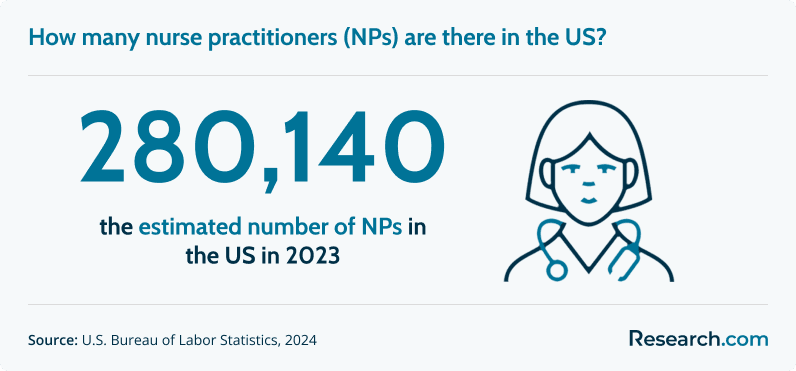
In 2023, there were around 280,140 NPs in the US.
| Entry background | Common pathway | Timeline considerations |
| BSN-prepared RN | MSN-NP, BSN-to-DNP, or accelerated NP option | Often the most direct route because the applicant already has RN licensure and baccalaureate nursing preparation |
| ADN-prepared RN | RN-to-BSN, ADN-to-MSN, or bridge pathway | May take longer because upper-division nursing coursework is usually needed before advanced practice training |
| MSN-prepared nurse | Post-master’s NP certificate or DNP | Can be shorter if prior graduate coursework transfers and the new specialty requirements are clearly defined |
| Non-nursing bachelor’s graduate | Direct-entry MSN or accelerated nursing pathway before NP preparation | Usually requires foundational nursing coursework, RN licensure preparation, and then advanced practice training |
Online vs. On-Campus Nurse Practitioner Programs: Which Format Fits You?
Online and on-campus nurse practitioner programs can lead to the same professional goal, but they differ in structure, scheduling, learning style, and clinical placement logistics. Online programs usually deliver didactic coursework remotely, while clinical hours must still be completed in approved healthcare settings. Campus programs may offer more face-to-face interaction, structured schedules, simulation labs, and local clinical networks.
Students looking for a faster route often compare accelerated NP programs online. These options can be useful for disciplined learners with strong time-management skills, but they require careful planning. Ask whether lectures are synchronous or asynchronous, whether intensives are required, how exams are proctored, and whether the school helps locate clinical sites near your residence.
| Program format | Best for | Potential drawbacks |
| Online | Working nurses who need scheduling flexibility and live far from campus | Clinical placement responsibility may fall partly or mostly on the student |
| Hybrid | Students who want remote coursework plus occasional campus labs or intensives | Travel costs, required visits, and scheduling blocks can add complexity |
| On-campus | Students who prefer structured classroom learning and direct faculty access | Less flexible for nurses working rotating shifts or living outside the school’s region |
What Is the Average Cost of a Nurse Practitioner Specialty Program?
NP program costs vary by school type, residency status, degree level, program length, technology fees, clinical fees, books, travel, background checks, certification exam costs, and lost work hours. The median in-state public tuition for NP programs in 2022 was $8,434. Out-of-state and private tuition can be much higher, so applicants should compare the full cost of attendance rather than tuition alone.
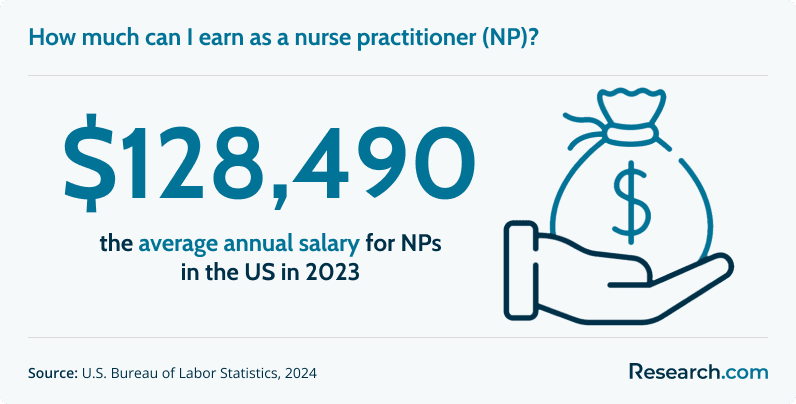
The average annual salary for nurse practitioners in the U.S. was $128,490 in 2023. That earning potential can support a positive return on investment, but salary depends on specialty, setting, state, employer, experience, schedule, and scope-of-practice rules. Do not assume a program’s advertised affordability or speed guarantees a specific income after graduation.
Financial Aid Options for NP Specialty Students
Graduate nursing students may use several funding sources to reduce upfront costs and limit borrowing. The best strategy is usually to combine federal aid, scholarships, employer support, and loan repayment options when available.
- Federal student loans: Graduate students may qualify for Direct Unsubsidized Loans and Grad PLUS Loans. These loans can offer repayment options that private loans may not provide, but students should still calculate total borrowing and interest.
- Scholarships and grants: Schools, nursing associations, hospitals, foundations, and specialty organizations may offer awards based on merit, need, service goals, specialty interest, or background. These funds typically do not require repayment.
- State-specific loan repayment programs: Some states provide repayment assistance for nurse practitioners who work in rural, underserved, or high-need communities for a defined service period.
- Work-study programs: Eligible students may be able to work part time through institutional or community-based placements, although availability varies by school and funding source.
- Employer-sponsored tuition assistance: Hospitals, clinics, and healthcare systems may help pay for graduate nursing education, often in exchange for continued employment or a service commitment.
- Veterans benefits: Eligible military-connected students may use benefits such as the GI Bill to help cover nursing education costs.
When comparing aid packages, ask whether scholarships renew automatically, whether employer reimbursement is paid before or after course completion, and whether loan repayment programs require work in a specific location or facility type.
Prerequisites for Nurse Practitioner Specialty Programs
NP admissions requirements vary by school and pathway, but most programs expect applicants to have an active nursing license, appropriate prior nursing education, academic readiness for graduate study, and a plan for completing clinical requirements. Some programs also require letters of recommendation, a personal statement, resume, interview, prerequisite coursework, or standardized test scores.
For RNs with a Bachelor of Science in Nursing
- Valid and unencumbered RN license
- Undergraduate GPA that meets the program’s minimum, often 3.0 or higher
- Professional nursing experience, frequently one to two years depending on the school and specialty
- Completed prerequisite coursework such as anatomy, pharmacology, or pathophysiology if required
For RNs with an Associate Degree in Nursing
- Completion of an RN-to-BSN program may be required before NP admission
- Some bridge pathways allow ADN-prepared RNs to progress toward graduate nursing study while completing baccalaureate-level requirements
- RN license, clinical experience, and GPA expectations still apply
For Nurses with a Master’s Degree in Nursing
- MSN degree from an eligible nursing program
- Prior graduate coursework that may reduce repeated requirements
- Specialty-specific experience or certification if required for a post-master’s certificate
For Applicants Without a Nursing Background
- Bachelor’s degree in another field, commonly a science or health-related discipline
- Foundational nursing coursework before advanced practice content
- Preparation for RN licensure before entering advanced clinical NP responsibilities
RNs who need a cost-conscious bridge into advanced practice can compare affordable online FNP programs, but should verify that the program accepts their current degree level and license status.
Before submitting applications, request written confirmation of admission prerequisites, clinical hour expectations, state authorization, and certification eligibility. Requirements can differ even among programs with the same specialty title.
What Courses Are Typically Included in a Nurse Practitioner Program?
Most nurse practitioner programs include graduate-level core courses, specialty courses, and supervised clinical experiences. Core content usually develops advanced diagnostic reasoning, prescribing knowledge, patient assessment skills, and ethical decision-making. These competencies help NPs excel in clinical practice across specialties and patient populations.
- Advanced Health Assessment: Students learn to take patient histories, perform physical exams, interpret findings, and identify when additional testing or referral is needed.
- Advanced Pharmacology: This course covers medication actions, prescribing principles, drug interactions, safety concerns, and population-specific considerations.
- Advanced Pathophysiology: Students examine disease mechanisms and how altered physiology affects assessment, diagnosis, and treatment planning.
- Clinical Diagnosis and Treatment: Case-based learning helps students connect symptoms, examination findings, diagnostics, and evidence-based treatment choices.
- Ethics and Healthcare Policy: Students study legal responsibilities, professional boundaries, patient rights, scope of practice, regulatory issues, and policy influences on care.
After completing the shared advanced practice foundation, students move into specialty-specific courses and clinical rotations. For example, an FNP student receives broad primary care preparation, while a PMHNP student focuses more deeply on psychiatric assessment, therapy frameworks, and psychopharmacology.
Industry setting also matters after graduation. Offices of Physicians employ the largest number of nurse practitioners, with 137,030 professionals in 2023, and offer competitive salaries, including a median annual wage of $122,780. See the chart below for more industry employment statistics.
Other Nurse Practitioner Specializations to Consider
The five specialties above are often accessible because they are common and widely offered, but they are not the only choices. Some students should consider a narrower specialty if their experience, interests, or local job market point in that direction.
- Acute Care Nurse Practitioner: Acute care NPs manage patients with serious, complex, or rapidly changing conditions, often in hospitals, ICUs, emergency departments, and specialty units.
- Neonatal Nurse Practitioner: Neonatal NPs care for newborns who are premature, critically ill, or medically fragile, commonly in neonatal intensive care units.
- Orthopedic Nurse Practitioner: Orthopedic NPs focus on musculoskeletal conditions, injuries, arthritis, fractures, post-operative care, and rehabilitation planning.
- Cardiovascular Nurse Practitioner: Cardiovascular NPs support patients with heart disease, arrhythmias, hypertension, heart failure, and related conditions in inpatient and outpatient settings.
- Gastroenterology Nurse Practitioner: Gastroenterology NPs assess and manage digestive health conditions, liver disease, screening needs, and chronic gastrointestinal disorders.
- Infectious Disease Nurse Practitioner: Infectious disease NPs help diagnose, treat, monitor, and prevent infections in hospitals, clinics, public health settings, and specialty practices.
Students drawn to mental health care can compare most affordable PMHNP programs to identify options that balance specialty fit, clinical quality, and cost.
How to Choose Among the Easiest NP Specialties to Get Into
The best NP specialty is not simply the one with the fewest admissions barriers. A program should match your clinical strengths, preferred patients, schedule, budget, licensure goals, and local employment market. Use accessibility as one factor, not the whole decision.
| If your priority is... | Consider... | Ask before applying |
| Broad primary care flexibility | Family Nurse Practitioner | Does the program provide clinical experiences across the lifespan? |
| Mental health practice | Psychiatric Mental Health Nurse Practitioner | Are therapy, psychopharmacology, and psychiatric clinical placements integrated well? |
| Adult and older adult care | Adult Gerontology Primary Care Nurse Practitioner | Will the program prepare you for chronic disease and geriatric care in your preferred setting? |
| Child and adolescent health | Pediatric Nurse Practitioner | Is the track primary care, acute care, or another pediatric pathway? |
| Reproductive and gender-specific care | Women’s Health Nurse Practitioner | Do clinical sites include gynecology, prenatal, preventive, and reproductive health experiences? |
- Check admission requirements: Compare GPA minimums, RN experience expectations, prerequisite courses, essay requirements, interviews, and application deadlines.
- Confirm accreditation: Look for recognized nursing accreditation such as CCNE or ACEN and verify that the program supports certification and licensure goals.
- Match the curriculum to your career goal: If your interest is behavioral health, a PMHNP pathway may be more appropriate than a generalist track. Additional credentials such as substance abuse counselor certification online may also complement work with addiction and behavioral health populations.
- Evaluate flexibility honestly: Online or part-time study can help working nurses, but clinical hours still require in-person time, scheduling coordination, and preceptor availability.
- Review job market fit: Demand can vary by region and specialty. Look at employers in your area and the roles they hire for before committing to a specialty.
If your long-term goal includes doctoral preparation, compare shortest DNP program options carefully. A shorter doctoral route should still provide rigorous clinical leadership, evidence-based practice, and population health training.
Are NP Specialty Programs Accredited, and How Can You Verify Quality?
Accreditation is one of the most important checks before enrolling. A program accredited by a recognized agency such as the Commission on Collegiate Nursing Education or the Accreditation Commission for Education in Nursing is more likely to meet academic and clinical standards tied to certification, licensure, and federal financial aid eligibility.
To verify quality, do not rely only on marketing language. Check the school’s accreditation page, confirm the program listing with the accrediting organization, ask your state board of nursing about eligibility, and request recent outcomes such as certification exam pass rates, graduation rates, and clinical placement support. Students comparing specialty earnings can also review psychiatric nurse practitioner salary information to understand how location may affect compensation.
Key Success Indicators of a Strong Nurse Practitioner Program
A high-quality NP program should show evidence that students complete the curriculum, pass certification exams, secure relevant clinical experience, and move into appropriate roles after graduation. Tuition matters, but it should never be the only selection factor.
- Accreditation status: Confirm current programmatic nursing accreditation and state authorization.
- Certification exam preparation: Ask for recent pass rates and how the curriculum supports exam readiness.
- Clinical partnerships: Strong programs maintain relationships with healthcare sites and qualified preceptors.
- Faculty expertise: Faculty should have relevant advanced practice, specialty, research, or leadership experience.
- Graduate outcomes: Placement data, employer relationships, and alumni feedback can show whether graduates are prepared for practice.
Students with budget constraints can compare cheapest nurse practitioner programs, but affordability should be weighed alongside accreditation, clinical support, and certification outcomes.
Challenges Prospective Nurse Practitioners Should Expect
NP programs are demanding even when admission is accessible. Students must manage graduate coursework, clinical hours, patient documentation, certification preparation, family responsibilities, and often part-time or full-time work. Online students may also need to be more self-directed because they have fewer built-in campus routines.
Clinical placement can be one of the biggest pressure points. Some programs assign placements; others require students to find preceptors with school approval. ADN-prepared RNs should also plan for bridge requirements, and programs such as an ADN to NP pathway may help them build the academic foundation needed for advanced practice.
How Non-Nursing Professionals Can Pursue Nurse Practitioner Training
Non-nursing professionals cannot typically move directly into independent NP practice without first completing foundational nursing education, becoming eligible for RN licensure, and then completing advanced practice training. Direct-entry and accelerated pathways can make the transition possible, but they are intensive and should be evaluated carefully.
Applicants from other fields can explore direct-entry MSN programs for non-nurses online if they want a structured route into nursing. Before enrolling, confirm whether the program leads to RN licensure preparation, whether it includes a nurse practitioner specialty, and whether additional post-master’s training will be required.
Can Non-Clinical Bridge Pathways Help Future NP Applicants?
Some bridge programs focus on leadership, research, health assessment, community health, and upper-level nursing theory rather than adding extensive new clinical rotations. These options can help RNs meet academic prerequisites before applying to graduate-level NP programs, especially when they already have significant clinical experience.
For example, RN to BSN online programs without clinicals may work for licensed RNs who need the BSN credential for NP admission and want a flexible academic route. However, students should understand that NP programs themselves still require supervised clinical practice.
How Affordable RN-to-BSN Programs Can Strengthen NP Applications
An RN-to-BSN program can improve an NP application by helping ADN-prepared nurses complete baccalaureate-level nursing coursework, strengthen writing and research skills, and demonstrate readiness for graduate study. It can also give applicants time to build clinical experience before entering a specialty track.
Cost matters at this stage because NP education may involve additional borrowing later. Comparing the cheapest RN to BSN online programs can help nurses preserve financial flexibility while meeting common graduate admissions requirements.
Can a Dual Degree Improve an NP Career Path?
A dual degree can make sense for nurse practitioners who want to move beyond direct patient care into administration, healthcare operations, consulting, entrepreneurship, or executive leadership. An MSN paired with business training may help NPs understand budgeting, staffing, strategy, compliance, and service-line management.
This route is not necessary for every NP. It is most useful for students who already see leadership or management as part of their long-term plan. Those interested in this blend of clinical and business education can compare the best online MSN/MBA programs.
Career Paths for Graduates of NP Specialty Programs
NP graduates can work in many settings depending on their specialty, state scope-of-practice rules, certification, and experience. Common employers include physician offices, hospitals, community clinics, mental health centers, long-term care facilities, specialty practices, urgent care centers, academic institutions, and healthcare organizations.
- Clinical practice: Many NPs provide direct patient care in primary care, behavioral health, pediatrics, women’s health, geriatrics, specialty clinics, or acute care settings.
- Healthcare consulting: Experienced NPs may advise organizations on care quality, workflows, compliance, population health, or specialty services. Those with behavioral health interests may pair clinical expertise with substance abuse counselor certification online knowledge.
- Education: Some NPs teach in nursing programs, train clinical staff, develop continuing education, or mentor new advanced practice nurses.
- Healthcare administration: NPs with leadership interests may supervise clinical teams, develop policies, manage service lines, or support quality improvement initiatives.
- Research: NPs may contribute to evidence-based practice, clinical trials, quality improvement projects, or academic research.
- Private practice: In states and settings where scope-of-practice rules allow it, some NPs build independent or collaborative practices.
As NPs gain experience, compensation can vary by specialty and industry. Some of the top-paying industries for nurse practitioners in 2023 include business support services and residential intellectual and developmental disability, mental health, and substance abuse facilities.
What Is the Job Market for Nurse Practitioner Graduates?
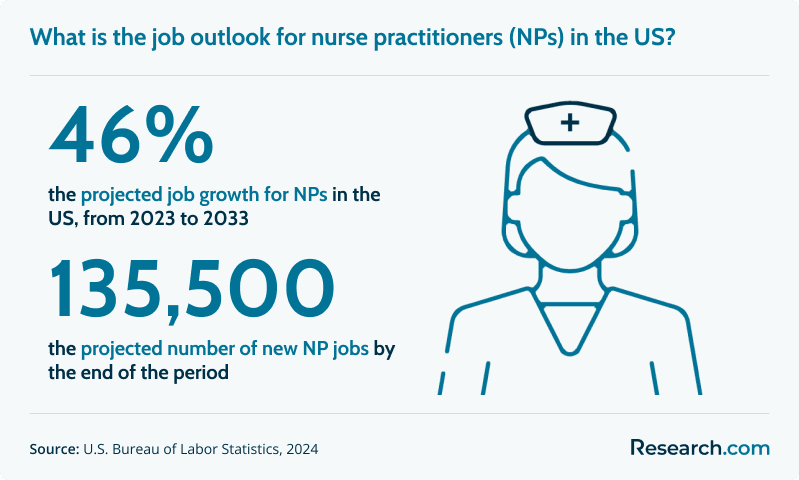
The job market for nurse practitioners is strong. New NP jobs are expected to rise by 46% from 2023 to 2033, adding approximately 135,500 new positions to the field. Growth is tied to expanded use of advanced practice providers, primary care needs, aging populations, and care access gaps in many communities.
NPs are also important in a nationwide shortage of healthcare workers, where they help extend access to preventive, chronic, behavioral, and specialty care. Still, job opportunities differ by region, specialty, state practice authority, employer type, and willingness to work in high-need settings.
How to Accelerate Your Path to Becoming a Nurse Practitioner
Students can shorten their NP timeline through careful planning, but speed should not compromise clinical preparation or licensure eligibility. The fastest option is usually available to nurses who already hold the required license, degree, prerequisites, and clinical experience.
- Compare accelerated tracks: Experienced nurses may consider 1 year nurse practitioner programs, especially if they can handle a condensed workload.
- Use online or hybrid formats strategically: Flexible delivery can reduce commuting time and make coursework easier to schedule around work.
- Transfer eligible credits: Prior graduate nursing coursework may shorten a post-master’s or second-specialty pathway if the school accepts it.
- Choose a specialty with clear pathways: FNP and PMHNP tracks are commonly available, which may make program comparison and scheduling easier.
- Prioritize clinical placement support: Delays in finding approved preceptors can extend graduation timelines.
- Adjust work hours if possible: Reducing work commitments during clinical-heavy terms may help students finish on schedule.
How NP Programs Prepare Students for Licensure and Career Success
Effective NP programs align coursework, clinical experiences, certification preparation, and state licensure expectations. Students should graduate with the assessment, diagnostic, pharmacologic, communication, and ethical reasoning skills needed for entry-level advanced practice.
Before applying, ask for evidence of certification exam outcomes, graduate employment support, faculty advising, and clinical mentorship. Students comparing accessible options can also review nursing schools that are easy to get into to understand how admission accessibility should be balanced against quality indicators.
Can You Balance NP Program Quality with Affordability?
Yes, but it requires comparing more than posted tuition. A lower-cost program may be a strong choice if it is accredited, transparent about fees, supportive with clinical placement, aligned with certification requirements, and realistic for your schedule. A cheap program that causes licensure problems, clinical delays, or poor exam preparation can cost more in the long run.
Students considering doctoral-level preparation can review cheapest online DNP programs while also checking clinical quality, faculty qualifications, graduation outcomes, and state authorization.
Do NP Specialty Programs Promote Cultural Competence and Diversity?
Strong NP programs prepare students to care for patients with different cultural backgrounds, languages, health beliefs, socioeconomic barriers, gender identities, and access challenges. Cultural competence should appear in coursework, case studies, simulation, clinical placements, communication training, and faculty mentorship.
This is especially important in specialties that involve sensitive conversations, reproductive care, family systems, behavioral health, chronic disease, and community health. Students interested in gender-focused care can compare cheapest WHNP programs online while asking how each program addresses diverse patient needs.
How to Evaluate Clinical Training Opportunities
Clinical training is where NP students build real-world judgment. A strong program should explain how clinical sites are approved, how preceptors are vetted, what patient populations students will see, and how faculty monitor progress. Do not enroll until you understand whether you or the school is responsible for finding placements.
Ask about clinical site diversity, specialty match, telehealth exposure, simulation requirements, documentation expectations, and what happens if a placement falls through. Cost-conscious students can compare options such as the cheapest BSN to DNP programs, but clinical depth should remain a priority.
Do NP Programs Support Research and Evidence-Based Practice?
High-quality NP programs train students to evaluate research, apply clinical guidelines, question weak evidence, and improve patient outcomes through evidence-based care. This preparation may include research methods, quality improvement projects, data interpretation, literature appraisal, and scholarly writing.
Students who want a stronger research, leadership, or systems-improvement focus may consider doctoral routes. Comparing the easiest DNP programs can help applicants understand which programs offer accessible admissions while still supporting advanced scholarly and clinical development.
Common Mistakes When Choosing an “Easy” NP Program
- Choosing based only on admission requirements: A program that is easy to enter may not be the best fit if it lacks clinical support or certification preparation.
- Ignoring accreditation: Accreditation affects financial aid, certification eligibility, licensure pathways, and employer confidence.
- Assuming online means fully remote: NP clinical hours are completed in person at approved sites, even when coursework is online.
- Focusing only on tuition: Fees, travel, technology, certification exams, books, and reduced work hours can change the total cost.
- Overlooking state authorization: Online programs may not be authorized to enroll students or place them clinically in every state.
- Not asking about clinical placement: If you must find your own preceptors, start early and understand the school’s approval process.
- Choosing the wrong specialty for your goals: A broad FNP may not fit someone who wants psychiatric practice, and a WHNP may not fit someone who wants lifespan primary care.
- Assuming salary is guaranteed: NP pay varies by state, employer, specialty, experience, and setting.
Questions to Ask Before Applying
- Is the NP program accredited by a recognized nursing accreditor?
- Does the program meet certification and licensure requirements in my state?
- What RN license, degree, GPA, and work experience are required?
- Who is responsible for finding clinical placements?
- What are the program’s recent certification exam pass rates?
- How many clinical hours are required, and where are they completed?
- Are courses synchronous, asynchronous, hybrid, or campus-based?
- What is the full cost of attendance, including fees and travel?
- Can I study part time, full time, or in an accelerated format?
- What support is available for advising, clinical issues, exam preparation, and career placement?
Key Insights
- The easiest NP specialty to get into is usually the one that matches your current nursing background, has broad program availability, and offers a realistic clinical placement plan.
- FNP, PMHNP, AGPCNP, PNP, and WHNP tracks are common accessible options, but each leads to a different patient population and scope of practice.
- Most full-time NP specialty programs take about two to three years, although some accelerated options may be shorter and certain FNP programs can take around 12 months.
- The median in-state public tuition for NP programs in 2022 was $8,434, while the average annual salary for nurse practitioners in the U.S. was $128,490 in 2023.
- Accreditation, certification exam outcomes, state authorization, and clinical placement support matter more than convenience alone.
- Online NP programs can be flexible, but they still require in-person clinical training and careful scheduling.
- The NP job outlook is strong, with new NP jobs expected to rise by 46% from 2023 to 2033 and approximately 135,500 new positions projected.
- Before applying, compare programs by specialty fit, total cost, admissions requirements, clinical support, licensure alignment, and long-term career goals.
References:
- American Association of Nurse Practitioners. (2023, November 13). Nurse practitioner profession grows to 385,000 strong. AANP.
- Data USA. (2024, November 15). Nursing practice. Data USA.
- U.S. Bureau of Labor Statistics. (2024, November 15). Nurse anesthetists, nurse midwives, and nurse practitioners. BLS.
- U.S. Bureau of Labor Statistics. (2024, November 15). Occupational employment and wages, May 2023 - 29-1171 Nurse practitioners. BLS.
Other Things You Should Know About The Easiest Nurse Practitioner Specialty Programs to Get Into
Yes. Most nurse practitioner specialty programs require an active, unencumbered RN license in the state where clinical rotations occur. Many also require a BSN from an accredited school and a minimum GPA, often 3.0, before the application is reviewed.
Prerequisites for the easiest nurse practitioner specialty programs in 2027 often include a Bachelor of Science in Nursing (BSN), active RN licensure, and a minimum GPA. Some programs may also require specific coursework in areas like anatomy or pharmacology. Confirm specifics with individual schools.