2027 Easiest WHNP Online Programs to Get Into

Co-Founder and Chief Data Scientist
Choosing an online Women’s Health Nurse Practitioner program is not just about finding a school that will admit you. It is about finding a program that is accessible, accredited, clinically realistic, affordable enough for your budget, and aligned with the state where you plan to practice. WHNPs provide advanced care in reproductive health, gynecology, prenatal and postpartum care, family planning, menopause management, and women’s primary care. For registered nurses who want to move into advanced practice, the WHNP path can be a focused route into a specialized and high-demand area of nursing.
This guide is designed for nurses comparing the easiest WHNP online programs to get into without sacrificing program quality. You will learn what these programs usually require, how long they take, what they cost, how online and campus formats compare, what career paths are available, and which questions to ask before applying. The goal is to help you build a shortlist of programs that are realistic for your academic background, work schedule, clinical placement needs, and long-term career plans.
Quick answer: What are the benefits of enrolling in the easiest WHNP online programs to get into?
- Completing a WHNP program can prepare you for advanced practice roles such as women’s health nurse practitioner, reproductive health specialist, or OB-GYN nurse in hospitals, clinics, private practices, and community health settings.
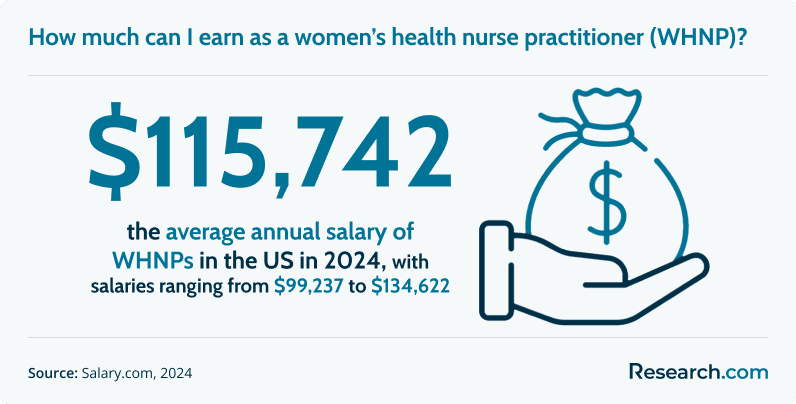
- Women’s health nurse practitioners in the US have a median annual salary of $115,742 in 2024, with typical earnings between $99,237 and $134,622.
- Online WHNP programs can make graduate nursing education more manageable for working nurses because many offer flexible coursework, local clinical placement options, and fewer required campus visits.
What can I expect from the easiest WHNP online programs to get into?
The easiest WHNP online programs to get into usually have admissions standards that are more accessible than highly selective nursing graduate programs, but they still must meet advanced practice nursing standards. “Easy to get into” should not mean low quality. A strong program should still be accredited, prepare students for certification, include supervised clinical practice, and teach the advanced assessment, diagnosis, pharmacology, and women’s health competencies needed for safe patient care.
Most online WHNP programs combine web-based didactic courses with in-person clinical requirements. Coursework may be asynchronous, synchronous, or hybrid. Clinical hours are typically completed in approved healthcare sites, often near the student’s home region when the school allows local placements. Some programs also require campus intensives, skills residencies, or immersion sessions for hands-on assessment and clinical preparation.
| What to evaluate | Why it matters | What to ask before applying |
| Accreditation | Accreditation can affect certification eligibility, licensure, transferability, and employer acceptance. | Is the program accredited by CCNE or ACEN? |
| Clinical placement support | Online students may still need approved preceptors and clinical sites. | Does the school place students, assist with placement, or require students to find their own sites? |
| Campus requirements | Online programs may include required intensives or residencies. | How many campus visits are required, and when do they occur? |
| Certification preparation | Graduates generally need to qualify for national certification before advanced practice licensure. | Does the curriculum prepare graduates for the NCC Women’s Health Nurse Practitioner certification examination? |
| State authorization | Not every online nursing program can enroll students from every state or meet every state’s APRN rules. | Is the program approved for students in my state, and does it meet my state’s licensure requirements? |
Where can I work after graduating from the easiest WHNP online programs to get into?
WHNP graduates commonly work in settings that provide reproductive, gynecologic, prenatal, postpartum, and women’s primary care. Typical employers include hospitals, OB-GYN practices, outpatient clinics, private practices, reproductive health centers, family planning organizations, community health centers, and women-focused primary care offices.
Some WHNPs also move into nontraditional or expanded roles, including clinical education, health program development, public health, research support, and policy advocacy. The right setting depends on your certification, state scope-of-practice rules, clinical background, and whether you want to focus on direct patient care, leadership, population health, or education.
How much can I make with a degree from the easiest WHNP online programs to get into?
Women’s health nurse practitioners earn competitive wages because they provide specialized advanced practice care. In 2024, the median annual salary for WHNPs in the United States is $115,742, with a salary range from $99,237 to $134,622.
Actual earnings can differ by state, employer type, years of experience, scope of responsibility, specialty focus, patient population, and local demand. Metropolitan practices, specialty clinics, and high-need regions may offer different compensation structures than smaller community settings. Some underserved areas may also provide loan repayment or incentive programs, but those benefits vary by employer and location and should be verified before enrollment or relocation.
- 10 Easiest WHNP Online Programs to Get Into for 2027
- How long does it take to complete the easiest WHNP online programs to get into?
- How do the easiest WHNP online programs to get into compare to an on-campus program?
- What is the average cost of the easiest WHNP online programs to get into?
- What are the financial aid options for students enrolling in the easiest WHNP online programs to get into?
- What are the prerequisites for enrolling in the easiest online WHNP online programs to get into?
- What courses are typically in the easiest WHNP online programs to get into?
- What types of specializations are available in the easiest WHNP online programs to get into?
- What student support services boost success in online WHNP programs?
- How can you verify the credibility and accreditation of an online WHNP program?
- Can an online DNP further advance your WHNP career?
- How do you choose the best easiest WHNP online program to get into?
- Can individuals with a non-nursing bachelor's degree enter MSN programs?
- What career paths are available for graduates of the easiest WHNP online programs to get into?
- What challenges might you encounter in online WHNP programs and how can you address them?
- How do these easy WHNP online programs integrate emerging healthcare trends?
- What is the job market for graduates with a degree from the easiest WHNP online programs to get into?
- How do online WHNP programs facilitate the transition to real-world clinical practice?
- How do online WHNP programs promote cultural competence in diverse care environments?
- What are the alternative pathways to transition from RN to WHNP?
- How do affordability and accessibility influence program selection?
- How can I maximize my WHNP earning potential?
- How does continuing education impact your WHNP career?
10 Easiest WHNP Online Programs to Get Into for 2027
How do we rank schools?
This list was developed by reviewing program accessibility, online learning structure, admissions expectations, accreditation, cost information, and available institutional data. Research.com’s ranking process draws from its established methodology, along with external data sources such as the IPEDS database from the National Center for Education Statistics, Peterson’s database and its Distance Learning Licensed Data Set, the College Scorecard, and institutional program information.
| School | Program length | Credits | Cost per credit | Accreditation |
| Northwestern State University of Louisiana | ~2 to 3 years | 42 | $475 | Commission on Collegiate Nursing Education (CCNE); Accreditation Commission for Education in Nursing (ACEN) |
| Carlow University | 2.5 years | 49 | $918 | Commission on Collegiate Nursing Education (CCNE) |
| Georgia College & State University | ~2 to 3 years | 40 | $382 (plus $405 online learning fee at $787 total) | Commission on Collegiate Nursing Education (CCNE) |
| Kent State University | ~2 years | 42 | $594.78 (in-state); $604.78 (out-of-state) | Commission on Collegiate Nursing Education (CCNE) |
| Drexel University | 3 years | 55 | $1,134 | Commission on Collegiate Nursing Education (CCNE) |
| University of Cincinnati | ~2 years | 49 | $892 (in-state); $907 (out-of-state) | Commission on Collegiate Nursing Education (CCNE) |
| University of South Alabama | ~2 to 3 years | 45 | $594 | Commission on Collegiate Nursing Education (CCNE) |
| University Of Missouri - Kansas City | ~2 to 3 years | 46 | $880.65 (estimated $40,509.90 total) | Commission on Collegiate Nursing Education (CCNE) |
| Frontier Nursing University | ~2 to 3 years | 49 | $685 | Accreditation Commission for Education in Nursing (ACEN) |
| Regis College | 28-36 months | 46-61 | $995 | Accreditation Commission for Education in Nursing (ACEN) |
1. Northwestern State University of Louisiana
Northwestern State University of Louisiana offers a Women’s Health Nurse Practitioner clinical sequence through its MSN program. The track is designed for nurses preparing for advanced practice in women’s health primary care across the lifespan. Students complete core MSN work, advanced assessment, pharmacotherapeutics, clinical practicums, and Family Dynamics, with at least 42 credits required. Graduates may apply for the NCC Women’s Health Nurse Practitioner certification examination.
- Program Length: ~2 to 3 years
- Credits Required to Graduate: 42
- Cost per Credit: $475
- Accreditation: Commission on Collegiate Nursing Education (CCNE); Accreditation Commission for Education in Nursing (ACEN)
2. Carlow University
Carlow University offers an MSN Women’s Health Nurse Practitioner program that prepares students to deliver specialized, patient-centered care to women throughout life. The curriculum includes 24 online courses, 49 credit hours, 600 clinical hours, and a short in-person residency. Graduates are prepared for NCC national board certification and may continue into doctoral study, including a DNP or PhD. The program reports a 100% board certification pass rate and provides a pathway toward a DNP for students who want additional clinical leadership training.
- Program Length: 2.5 years
- Credits Required to Graduate: 49
- Cost per Credit: $918
- Accreditation: Commission on Collegiate Nursing Education (CCNE)
3. Georgia College & State University
Georgia College & State University provides an online MSN option for BSN-prepared registered nurses who want to advance into graduate nursing roles. Most coursework is online, while clinical rotations are completed in Georgia with preceptors approved by the School of Nursing. The university assists students with clinical placement. Students also attend a required four-day campus immersion at the beginning of the program to meet faculty, build foundational skills, and connect with peers.
- Program Length: ~2 to 3 years
- Credits Required to Graduate: 40
- Cost per Credit: $382 (plus $405 online learning fee at $787 total)
- Accreditation: Commission on Collegiate Nursing Education (CCNE)
4. Kent State University
Kent State University offers an MSN concentration in Women’s Health Nurse Practitioner practice. The program focuses on women’s primary care, health promotion, disease prevention, and advanced nursing management of acute and chronic conditions. Students build clinical judgment through mentored experiences and preceptorships in ambulatory care environments. Kent State also has a WHNP post-master's certificate for nurses who already hold an advanced nursing degree. Courses are delivered 100% online with no campus visits required.
- Program Length: ~2 years
- Credits Required to Graduate: 42
- Cost per Credit: $594.78 (in-state); $604.78 (out-of-state)
- Accreditation: Commission on Collegiate Nursing Education (CCNE)
5. Drexel University
Drexel University offers an online MSN Women’s Health/Gender-Related Nurse Practitioner program for nurses seeking advanced preparation in reproductive, gynecologic, and women’s health care. Students study well-woman care, prenatal and postpartum care, and management of complex women’s health needs in primary and specialty settings. The program is mainly online, but students must attend required on-campus intensives, including two in-person sessions during clinical courses. Students may identify and coordinate their own clinical sites and preceptors, with Drexel providing resources to support that process.
- Program Length: 3 years
- Credits Required to Graduate: 55
- Cost per Credit: $1,134
- Accreditation: Commission on Collegiate Nursing Education (CCNE)
6. University of Cincinnati
The University of Cincinnati offers an online Women’s Health Nurse Practitioner program for registered nurses who want to become advanced practice providers in women’s health. The curriculum emphasizes wellness, prevention, lifespan care, patient-provider communication, and support for informed health decision-making. The program is structured for nurses managing professional and personal responsibilities while pursuing graduate-level preparation.
- Program Length: ~2 years
- Credits Required to Graduate: 49
- Cost per Credit: $892 (in-state); $907 (out-of-state)
- Accreditation: Commission on Collegiate Nursing Education (CCNE)
7. University of South Alabama
The University of South Alabama offers an MSN program with a Women’s Health Nurse Practitioner focus. Students prepare to provide advanced care in primary care, gynecologic care, obstetrical services, sexual health, infertility, and sexually transmitted infection management. The curriculum covers health promotion, prevention, maintenance, and restoration. Graduates are prepared to sit for a national certification exam and may qualify for APRN licensure depending on state requirements.
- Program Length: ~2 to 3 years
- Credits Required to Graduate: 45
- Cost per Credit: $594
- Accreditation: Commission on Collegiate Nursing Education (CCNE)
8. University Of Missouri - Kansas City
The University of Missouri - Kansas City offers a Women’s Health Nurse Practitioner track within its MSN program. The track prepares nurses for advanced practice in gynecologic, prenatal, and women’s primary care. Students study evidence-based diagnosis, treatment, health assessment, health promotion, and patient management. Clinical learning occurs with preceptors in outpatient or community settings, and graduates are prepared to manage patient care within the specialty, including pharmacologic prescribing where permitted by scope-of-practice rules.
- Program Length: ~2 to 3 years
- Credits Required to Graduate: 46
- Cost per Credit: $880.65 (estimated $40,509.90 total)
- Accreditation: Commission on Collegiate Nursing Education (CCNE)
9. Frontier Nursing University
Frontier Nursing University offers a Women’s Health Care Nurse Practitioner specialty track through its MSN and Post-Graduate Certificate options. The program prepares nurses to care for women through well-woman visits, reproductive health services, gynecologic care, prenatal care, and postpartum care. Students complete online coursework and clinical experiences with mentorship from certified WHNPs. Graduates may also pursue a Doctor of Nursing Practice degree at FNU.
- Program Length: ~2 to 3 years
- Credits Required to Graduate: 49
- Cost per Credit: $685
- Accreditation: Accreditation Commission for Education in Nursing (ACEN)
10. Regis College
Regis College offers an online MSN with a Women’s Health Nursing Practice focus. The program addresses sexual health, pregnancy, childbirth, postnatal care, breast cancer, osteoporosis, and other health concerns affecting women across the lifespan. The curriculum supports advanced practice preparation and nurse management skills. Flexible entry points may appeal to nurses entering with different academic backgrounds.
- Program Length: 28-36 months
- Credits Required to Graduate: 46-61
- Cost per Credit: $995
- Accreditation: Accreditation Commission for Education in Nursing (ACEN)
How long does it take to complete the easiest WHNP online programs to get into?
Completion time depends on your starting credential, whether you enroll full time or part time, and whether you choose an MSN, DNP, or certificate pathway. Most BSN-prepared nurses pursuing an MSN WHNP route should plan for graduate study plus clinical hours, while nurses who already have an MSN may finish a certificate more quickly.
| Pathway | Typical timeline | Best fit | Decision note |
| BSN to MSN pathway | 2 to 3 years | Registered nurses with a BSN who want an MSN and WHNP preparation | This is the most common route for nurses entering WHNP practice. |
| BSN to DNP pathway | 3 to 4 years | BSN-prepared nurses seeking doctoral-level clinical leadership preparation | This path may make sense if you want a terminal practice degree. |
| Post-master's certificate pathway | 1 to 2 years | MSN-prepared nurses adding WHNP specialization | This can be faster than earning another full graduate degree. |
Some nurses use bridge or accelerated options before applying to WHNP study. For example, affordable accelerated nursing programs may help students move through earlier nursing requirements more quickly, while the fastest RN to BSN program options can help RNs complete a bachelor’s degree before graduate admission.
In 2022, among the 8,862 nursing practice degrees awarded in the United States, 262 were WHNP degrees. That small number shows how specialized the WHNP field is compared with broader nursing practice categories.
How do the easiest WHNP online programs to get into compare to an on-campus program?
Online and campus WHNP programs can lead to the same professional goal, but the student experience is different. Online programs usually offer more scheduling flexibility and remove the need to relocate. Campus programs may provide more face-to-face faculty access, simulation lab time, and built-in local clinical networks. The better choice depends on your learning style, work schedule, location, and clinical placement needs.
| Factor | Online WHNP program | On-campus WHNP program |
| Course delivery | Often asynchronous, synchronous, or hybrid | Usually scheduled in-person classes and labs |
| Flexibility | Better for many working nurses and caregivers | Less flexible but may offer more structure |
| Clinical training | Completed in person at approved sites, sometimes near the student | Often tied to school-affiliated regional clinical partners |
| Networking | Requires intentional online engagement and clinical networking | More frequent in-person peer and faculty interaction |
| Best for | Self-directed students who need geographic flexibility | Students who prefer campus structure and in-person support |
Students comparing online graduate nursing pathways may also find the easiest MSN online program options useful when evaluating flexibility and cost. Other healthcare fields follow a similar online-plus-clinical model; for example, the easiest radiology programs often combine distance coursework with required hands-on clinical training.
The key point: online WHNP coursework may be remote, but clinical preparation is not optional. Any credible WHNP program should require supervised clinical practice and meet certification and licensure expectations.
What is the average cost of the easiest WHNP online programs to get into?
The total tuition for the easiest WHNP online programs to get into generally ranges from $25,000 to $62,000, depending on the institution, program length, fees, and residency status. In-state tuition averages around $39,661, while out-of-state tuition averages around $39,827. Cost per credit typically falls between $594 and $1,134.
Tuition is only one part of the total cost. Online students should also budget for university fees, technology fees, books, clinical compliance requirements, background checks, immunizations, travel for campus intensives, certification exam fees, and possible costs related to finding or traveling to clinical sites.
| Cost category | Why students overlook it | How to reduce the risk |
| Online learning fees | They may be listed separately from tuition. | Ask for a full program cost sheet before applying. |
| Campus intensives | Travel, lodging, and time away from work can add up. | Confirm the number and timing of required visits. |
| Clinical placement costs | Some students may need to travel farther than expected. | Ask how placements are approved and whether the school helps secure sites. |
| Certification and licensure | These costs usually occur near graduation. | Plan for exam, application, and state board fees early. |
If cost is your main concern, compare WHNP programs with broader cheapest online NP programs to see whether another nurse practitioner specialty better matches your goals and budget. Students considering graduate study outside nursing may also compare the quickest master’s degree online options or explore unrelated flexible programs such as what are the best online English degree programs, depending on their career direction.
Because WHNPs have a median annual salary of $115,742 in 2024, with salaries ranging from $99,237 to $134,622, the degree may offer a strong professional return for nurses who choose an accredited program, complete certification, and practice in a region with solid demand.
What are the financial aid options for students enrolling in the easiest WHNP online programs to get into?
Financial aid can make an online WHNP program more realistic, especially for nurses balancing tuition with work, family obligations, and existing debt. Start by completing the financial aid process early, then compare aid packages based on total net cost rather than tuition alone.
- Federal student loans: Eligible graduate students may use federal loan options through the U.S. Department of Education. Borrowing should be compared against expected repayment obligations and projected income.
- Grants and scholarships: Schools, nursing organizations, and professional associations may offer awards based on need, merit, specialty interest, or service commitment. The American Association of Nurse Practitioners (AANP) provides scholarships for students in nurse practitioner programs.
- Work-study programs: Some students may qualify for employment opportunities that help cover education or living expenses while building relevant experience.
- External scholarships: Organizations such as the Nurse Practitioner Healthcare Foundation may offer scholarships for students pursuing advanced practice nursing degrees.
- Employer tuition assistance: Hospitals and health systems may help pay for graduate nursing education, often with service commitments or reimbursement rules.
- Loan repayment programs: Some graduates who work in eligible underserved areas may qualify for loan repayment opportunities, but terms vary and should be confirmed directly with the program administrator.
Pairing affordable online degrees with scholarships, employer assistance, and careful borrowing can lower the long-term cost of becoming a WHNP. Apply early because many nursing scholarships have limited funding and strict deadlines.
Location can also affect return on investment. Washington reports an average annual salary of $140,852 for WHNPs, while the District of Columbia reports an average salary of $140,532. These figures do not guarantee individual earnings, but they show why students should consider both program cost and intended practice state.
What are the prerequisites for enrolling in the easiest online WHNP online programs to get into?
Admission requirements depend on the pathway. Even programs with more accessible admissions still expect applicants to show readiness for graduate nursing coursework, clinical responsibility, and advanced practice preparation.
BSN to MSN Pathway
- A Bachelor of Science in Nursing (BSN) from an accredited nursing program is usually required.
- Applicants generally need an active, unencumbered Registered Nurse (RN) license.
- Many programs expect a minimum undergraduate GPA of 3.0 or higher.
- Professional references, a resume, and a personal statement may be required.
- Clinical nursing experience may be recommended or required, even when prior women’s health experience is not mandatory.
BSN to DNP Pathway
- Applicants typically need a BSN and a current RN license.
- A strong academic record is expected, commonly including a minimum GPA of 3.0.
- Because the DNP is a doctoral pathway, programs may look for leadership potential, clinical maturity, and clear goals in women’s health care.
- Letters of recommendation from faculty, supervisors, or nursing leaders may be requested.
- A personal statement may need to explain why the applicant wants doctoral-level WHNP preparation.
Post-Master's Certificate Pathway
- Applicants must usually hold an MSN from an accredited nursing program.
- A current RN license in good standing is required.
- Some schools expect prior clinical experience in an advanced or related nursing area.
- Personal statements and recommendations may be used to evaluate professional fit.
- A minimum GPA of 3.0 in the previous MSN program may be required.
The master’s pathway represented 96.20% of WHNP degrees awarded in 2022, making it the dominant route into the field. Certificates and doctorates can be valuable, but most students still enter WHNP preparation through an MSN-based pathway.
What courses are typically in the easiest WHNP online programs to get into?
WHNP programs usually include a graduate nursing core, advanced practice core, specialty women’s health courses, and supervised clinical practice. The exact course titles differ by school, but the competencies are broadly similar. Programs should prepare students for advanced clinical responsibilities, patient assessment, diagnosis, treatment planning, and ongoing care coordination.
- Advanced Health Assessment: Students learn to perform comprehensive assessments, gather patient histories, evaluate findings, and use clinical data to guide decision-making.
- Pathophysiology: This course examines disease processes and physiologic changes relevant to advanced practice and women’s health conditions.
- Pharmacology for Nurse Practitioners: Students study medication selection, drug interactions, contraindications, prescribing principles, and safe medication management.
- Reproductive Health: Coursework covers assessment and management of common reproductive and gynecologic concerns, including family planning, menstrual disorders, and fertility-related issues.
- Women's Health Primary Care: Students focus on prevention, wellness, chronic condition management, screening, counseling, and lifespan care for women.
- Clinical Practicum: Supervised clinical experiences allow students to apply advanced practice knowledge in women’s health settings under approved preceptors.
What types of specializations are available in the easiest WHNP online programs to get into?
Some WHNP programs offer formal concentrations, electives, or clinical experiences that let students emphasize a specific area of women’s health. These options can be useful if you already know the patient population or care setting you want to serve.
- Reproductive Health: This area may include fertility concerns, contraception, family planning, endometriosis, polycystic ovary syndrome (PCOS), and reproductive health counseling.
- Obstetrics and Prenatal Care: Students may focus on prenatal services, pregnancy-related care coordination, postpartum care, and support for expectant mothers.
- Gynecological Care: This focus may include screening, diagnosis, and management of gynecologic concerns such as cervical cancer, ovarian cysts, and sexually transmitted infections (STIs).
- Menopause and Aging Women's Health: This area emphasizes hormonal changes, osteoporosis, cardiovascular health, symptom management, and health promotion for older women.
- Pediatric and Adolescent Women's Health: Students may focus on menstrual health, adolescent sexual health education, early screening, and developmentally appropriate care.
If you want broader family-focused primary care rather than a women’s health-only scope, compare WHNP pathways with affordable online FNP programs. FNP and WHNP roles overlap in some areas, but they prepare graduates for different patient populations and certification pathways.
What student support services boost success in online WHNP programs?
Strong support services can make the difference between finishing smoothly and struggling through preventable problems. Online WHNP students should look for academic advising, faculty office hours, writing and research support, board certification preparation, technology help, clinical placement guidance, and access to virtual simulation or skills resources.
Support is especially important for students entering through accelerated or bridge pathways. For example, nurses who have completed a 6 month RN to BSN program may benefit from advising that helps them adjust to graduate-level expectations, advanced clinical reasoning, and the pace of NP coursework.
How can you verify the credibility and accreditation of an online WHNP program?
Before applying, confirm that the nursing program is accredited by a recognized nursing accreditor such as CCNE or ACEN. Accreditation supports program quality and may affect eligibility for certification, licensure, employer reimbursement, and future education. You should also confirm that the institution is properly recognized, that the program is authorized to enroll students in your state, and that the curriculum aligns with the certification and APRN licensure requirements where you plan to practice.
Ask the school for certification pass rates, clinical placement outcomes, attrition information, and recent graduate employment data if available. Also compare cost against outcomes when deciding whether is nursing school worth it for your situation. A low-admission-barrier program is only useful if it leads to the credential and practice authority you need.
Can an online DNP further advance your WHNP career?
An online DNP may be worth considering if you want doctoral-level preparation in evidence-based practice, clinical leadership, quality improvement, health policy, or systems-level change. For some WHNPs, a DNP can support movement into leadership, teaching, program development, or advanced clinical roles. However, it also requires more time, tuition, and project-based doctoral work than an MSN.
If you are comparing doctoral options, review curriculum rigor, faculty expertise, clinical partnerships, project expectations, and schedule flexibility. Some nurses looking for a shorter doctoral path compare online DNP options before deciding whether the investment fits their career plan.
How do you choose the best easiest WHNP online program to get into?
The best accessible WHNP program is the one that meets your state requirements, fits your schedule, provides realistic clinical support, prepares you for certification, and does not create unmanageable debt. Do not choose a program only because it has a simpler application. Choose it because you can enter, complete, become certified, and practice where you intend to work.
- Confirm accreditation first: Look for CCNE or ACEN accreditation before comparing cost, convenience, or admissions requirements.
- Check state eligibility: Verify that the program can enroll students from your state and supports licensure in your intended practice state.
- Review clinical placement rules: Ask whether the school secures sites, assists students, or leaves placement entirely to the student.
- Compare total cost: Include tuition, fees, books, travel, clinical compliance costs, certification fees, and lost work time.
- Evaluate admissions fit: Check GPA expectations, RN license requirements, BSN or MSN requirements, experience expectations, and application materials.
- Ask about certification preparation: Review board pass-rate information and how the curriculum prepares students for the NCC exam.
- Match the format to your life: Choose asynchronous coursework if you need schedule flexibility; choose more structured formats if you prefer set meeting times and direct interaction.
| If your priority is... | Look for... | Be careful about... |
| Getting admitted | Clear prerequisites, accessible GPA expectations, and no unnecessary specialized experience requirements | Programs that are easy to enter but weak on support or clinical placement |
| Lower cost | Lower cost per credit, fewer fees, scholarships, and employer support | Ignoring travel, clinical, and certification expenses |
| Fast completion | Full-time or accelerated schedules | Burnout if you work full time while taking heavy clinical courses |
| Licensure readiness | Accreditation, certification preparation, and state authorization | Assuming an online program automatically meets your state’s APRN requirements |
| Better clinical experience | Strong placement support and preceptor vetting | Programs that require students to secure clinical sites without enough guidance |
Can individuals with a non-nursing bachelor's degree enter MSN programs?
Some schools offer direct-entry MSN pathways for students who hold a bachelor’s degree in a field other than nursing. These programs are different from standard WHNP tracks for licensed RNs. They generally begin with accelerated nursing foundations and prerequisite science or healthcare coursework before students move into advanced nursing content.
If you are not already a nurse, confirm whether the program leads to RN eligibility first and whether WHNP preparation is included later or requires an additional step. Students exploring this route can review non-nursing bachelor's to MSN online pathways to understand how prerequisites, clinical training, and licensure sequencing usually work.
What career paths are available for graduates of the easiest WHNP online programs to get into?
WHNP graduates can pursue several advanced practice and healthcare roles. Your options will depend on certification, state scope of practice, employer requirements, clinical experience, and whether you want direct care, education, leadership, policy, or research-focused work.
- Women’s health primary care provider: WHNPs may provide preventive care, screening, wellness visits, contraception counseling, and management of common women’s health concerns.
- OB-GYN practice provider: Graduates may work in practices that provide gynecologic, prenatal, and postpartum services.
- Reproductive health specialist: Some WHNPs focus on family planning, fertility-related counseling, STI care, and reproductive health education.
- Clinical educator: Experienced WHNPs may teach nursing students, mentor clinical staff, or support continuing education in hospitals and academic settings.
- Public health or policy advocate: Graduates may work on programs that improve access to women’s healthcare, reproductive health services, or community-based prevention.
- Women’s health researcher: Some WHNPs contribute to clinical studies, quality improvement projects, or population health research focused on women’s health outcomes.
WHNPs who want broader leadership influence may later consider graduate or doctoral leadership education, including options such as the cheapest online doctorate in leadership, depending on their career goals.
In 2023, the top industries employing nurse practitioners regardless of specialization were physician's offices (137,030), general medical and surgical hospitals (61,740), and outpatient care centers (25,440).
What challenges might you encounter in online WHNP programs and how can you address them?
Online WHNP programs are flexible, but they are not easy in the academic sense. Common challenges include managing self-paced coursework, staying engaged without regular campus contact, coordinating clinical placements, navigating learning technology, and balancing work with practicum hours.
| Common challenge | Why it happens | Better strategy |
| Underestimating clinical time | Students focus on online coursework and forget that clinical hours require fixed scheduling. | Map work, family, and clinical availability before the first practicum term. |
| Waiting too long to secure preceptors | Clinical sites can fill quickly, especially in competitive regions. | Ask the school early about placement timelines, contracts, and approved site requirements. |
| Choosing based only on admission ease | Accessible admissions do not guarantee strong outcomes. | Compare accreditation, board preparation, support, and clinical infrastructure. |
| Ignoring state rules | Online nursing programs do not automatically meet every state’s APRN requirements. | Verify state authorization and licensure alignment before applying. |
| Taking on too much at once | Graduate nursing coursework and clinical practice can be demanding. | Consider part-time study if you work full time or have major caregiving responsibilities. |
Students comparing advanced nursing programs with leadership or business components may also review options such as the best MSN MBA programs to understand how curriculum structure and support services differ across graduate nursing pathways.
How do these easy WHNP online programs integrate emerging healthcare trends?
Current WHNP education increasingly reflects changes in healthcare delivery, including telehealth, virtual simulation, electronic health records, team-based care, evidence-based practice, and attention to social determinants of health. These topics matter because WHNPs often serve patients across outpatient, community, and specialty settings where digital tools and coordinated care are now routine.
When comparing programs, look for coursework or clinical preparation in telemedicine, culturally responsive care, data-informed practice, patient education, and interprofessional collaboration. Students beginning earlier in their nursing education can also compare easy nursing programs to understand how foundational nursing schools address accessibility and current healthcare expectations.
What is the job market for graduates with a degree from the easiest WHNP online programs to get into?
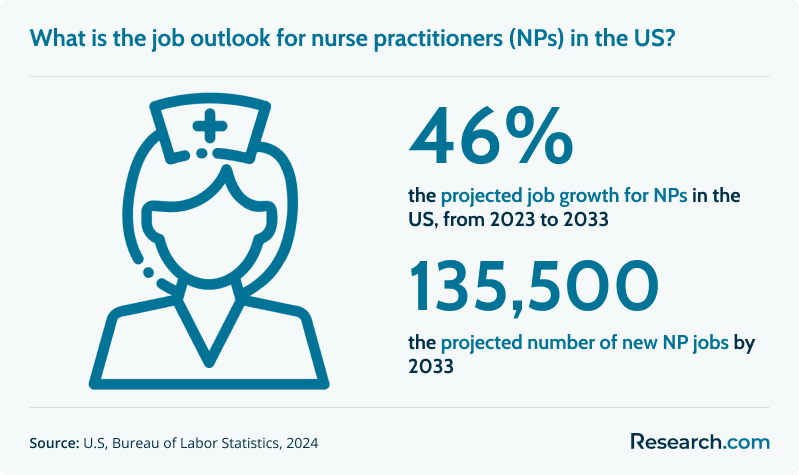
The broader nurse practitioner job market is strong. From 2023 to 2033, employment for nurse practitioners is projected to grow by 46%, with 135,500 new NP jobs expected across the United States. This projection applies to nurse practitioners overall, not only WHNPs, but it signals strong demand for advanced practice providers.
Some states show especially notable demand for nurse practitioners. Arizona, New Mexico, and Texas are projected to have significant job openings, and Texas alone is projected to add more than 2,200 new positions. WHNP graduates may find opportunities in urban health systems, private practices, outpatient care centers, reproductive health organizations, community clinics, and underserved areas.
How do online WHNP programs facilitate the transition to real-world clinical practice?
Online WHNP programs connect classroom learning to practice through supervised clinical rotations, preceptor mentorship, skills development, simulation, case-based assignments, and certification-focused preparation. The strongest programs do not leave students to figure out practice readiness alone. They provide clear clinical expectations, evaluation tools, faculty oversight, and support for applying advanced assessment and treatment skills safely.
Students who know they want a doctoral pathway from the beginning may compare WHNP preparation with broader advanced practice options such as the cheapest BSN to DNP programs online. The right pathway depends on whether you want an MSN-level route, a DNP-level route, or a step-by-step progression.
How do online WHNP programs promote cultural competence in diverse care environments?
WHNPs care for patients across different ages, identities, communities, health beliefs, and access barriers. Strong online WHNP programs include training in social determinants of health, implicit bias, trauma-informed communication, health disparities, patient education, and culturally responsive care. Clinical placements can also expose students to diverse communities and patient needs.
When affordability and inclusive care are both priorities, compare program cost with curriculum depth, faculty expertise, clinical population diversity, and student support. Students focused specifically on low-cost WHNP options can review the cheapest women's health nurse practitioner degree pathways as part of their research.
What are the alternative pathways to transition from RN to WHNP?
RNs can reach WHNP practice through several routes. A licensed RN without a BSN may first complete an RN-to-BSN program, then apply to an MSN WHNP program. A BSN-prepared RN may apply directly to an MSN or BSN-to-DNP WHNP pathway. An MSN-prepared nurse may pursue a post-master’s WHNP certificate.
For nurses who need the bachelor’s degree step, RN to BSN programs without clinical requirements may be worth comparing if they meet your academic and professional needs. Always confirm that the bachelor’s program is accredited and acceptable for later graduate nursing admission.
What do graduates say about easy WHNP online programs?
- Moving from RN practice into women’s health advanced practice felt more manageable because the online format gave me structure without forcing me to leave my job. The coursework was demanding, but faculty support and peer interaction helped me stay on track. I was able to use what I learned almost immediately in clinical settings. Courtney
- I was unsure whether an online WHNP program would feel connected enough, but the local clinical experience made the training practical. The admissions process was clear, the courses matched my career goals, and I felt prepared for the certification exam when I finished. Tara
- I needed a program that respected my work schedule but still challenged me. The online classes required discipline, and the clinical rotations helped connect theory to actual patient care. The flexibility made graduate school possible while I continued working in healthcare. Kristen
How do affordability and accessibility influence program selection?
Affordability and accessibility should be evaluated together. A program with easy admissions may not be the best choice if it has high fees, weak clinical support, or limited state authorization. Likewise, a low-tuition program may become expensive if it requires repeated travel or leaves students responsible for difficult clinical placement arrangements.
Compare tuition, fees, financial aid, clinical support, campus visit requirements, completion time, and state licensure fit. Nurses still completing undergraduate requirements may also compare the easiest and cheapest online RN to BSN program options before applying to WHNP graduate study.
How can I maximize my WHNP earning potential?
To improve your earning potential as a WHNP, focus on employability factors you can control. Choose an accredited program, prepare well for certification, gain experience in high-need women’s health services, build comfort with procedures and patient education, and consider additional training in areas such as reproductive health, menopause care, or prenatal services.
Compensation also varies by region and specialty. Review salary data before negotiating, and compare offers by base pay, benefits, schedule, call expectations, productivity requirements, continuing education funding, and loan repayment options. For benchmarking across advanced practice roles, you can review the psychiatric nurse practitioner salary report as a related compensation resource.
How does continuing education impact your WHNP career?
Continuing education helps WHNPs maintain licensure, stay current with clinical guidelines, strengthen specialty knowledge, and adapt to changes in women’s health care. It can also support advancement into leadership, teaching, quality improvement, or doctoral study.
If you want to expand beyond the MSN or certificate level, compare doctoral options carefully. The cheapest online doctor of nursing practice program options may be useful for WHNPs who want a practice doctorate without taking on unnecessary cost.
Common mistakes to avoid when choosing an easy WHNP online program
- Assuming “easy to get into” means easy to complete: WHNP programs still include rigorous graduate coursework, clinical hours, and certification preparation.
- Skipping accreditation checks: Unaccredited or poorly aligned programs can create problems with certification, licensure, employment, and future education.
- Looking only at tuition: Fees, travel, clinical requirements, and certification costs can significantly affect total cost.
- Ignoring clinical placement support: A flexible online program can become stressful if students must find preceptors without enough help.
- Assuming online programs work in every state: State authorization and APRN licensure rules vary. Confirm eligibility before applying.
- Relying only on rankings: Rankings are a starting point, not a substitute for checking fit, cost, outcomes, and licensure alignment.
- Expecting salary guarantees: Salary data can guide planning, but earnings depend on location, experience, employer, and role responsibilities.
Key Facts
- Nurse practitioner employment in the United States is projected to grow by 46% from 2023 to 2033, with 135,500 new NP jobs expected by 2033.
- Women’s health nurse practitioners have a median annual salary of $115,742 in 2024, with a salary range from $99,237 to $134,622.
- Washington reports an average WHNP salary of $140,852 in 2024, while the District of Columbia reports $140,532.
- Physician's offices employ the largest number of nurse practitioners in the U.S., with 137,030 NPs working in that setting.
- In 2022, 262 women’s health nurse practitioner degrees were awarded, underscoring the specialized nature of this nursing field.
References:
- U.S. Bureau of Labor Statistics. (2024). Occupational employment and wages, May 2023 - 29-1171 Nurse practitioners. Retrieved December 13, 2024, from BLS nurse practitioner wage data.
- U.S. Bureau of Labor Statistics. (2024). Nurse anesthetists, nurse midwives, and nurse practitioners. Retrieved December 13, 2024, from BLS occupational outlook.
- Data USA. (2024). Women's health nurse. Retrieved December 13, 2024, from Data USA WHNP profile.
- Salary.com. (2024). Nurse practitioner - Women's health salary in the United States. Retrieved December 13, 2024, from Salary.com WHNP salary data.
- ZipRecruiter. (2024). What is the average women's health nurse practitioner salary by state. Retrieved December 13, 2024, from ZipRecruiter WHNP salary by state.
Key Insights
- The easiest WHNP online program to get into is not automatically the best option. Prioritize accreditation, certification preparation, state licensure fit, and clinical placement support before admissions simplicity.
- Most WHNP students follow the MSN route, which represented 96.20% of WHNP degrees awarded in 2022. BSN-to-DNP and post-master’s certificate options can be better for specific career goals.
- Online WHNP programs offer flexibility, but clinical training remains in person. Ask early whether the school helps secure preceptors or expects students to arrange placements independently.
- Program costs commonly range from $25,000 to $62,000, and total cost should include fees, travel, clinical compliance, and certification expenses—not just tuition.
- The WHNP career path can offer strong earning potential, with a 2024 median annual salary of $115,742, but actual income depends on state, employer, experience, and role scope.
- Before applying, confirm three things in writing: the program is accredited, it can enroll students in your state, and it meets the requirements for certification and APRN licensure where you plan to practice.
Other Things You Should Know About the Easiest WHNP Online Programs To Get Into
WHNP graduates usually must pass the National Certification Corporation’s Women’s Health Care Nurse Practitioner exam, commonly called the WHNP-BC exam. It is the national certification used for licensure in women’s health nurse practitioner roles after completing an accredited master’s or DNP program with required clinical practice.
The easiest WHNP online programs in 2027 often require a minimum GPA of 2.5 to 3.0 for admission. This requirement ensures that applicants have a basic level of academic competence suitable for advanced nursing studies.