
2027 Easiest Nurse Midwife Programs to Get Into

Co-Founder and Chief Data Scientist
Choosing a nurse midwife program is not just about finding a school that will admit you. You need a program that is accredited, clinically strong, financially realistic, and aligned with the certification and licensure rules in the state where you plan to practice. This guide is for registered nurses, ADN-prepared nurses, BSN graduates, career changers, and advanced practice nurses comparing nurse-midwifery pathways with the goal of finding accessible but credible options.
Admission to nurse-midwifery programs can be competitive. Recent statistics indicate that acceptance rates for nurse-midwifery programs typically fall between 40% and 60%, so applicants should look beyond reputation alone and evaluate prerequisites, GPA expectations, clinical placement support, program format, tuition, and graduate certification preparation. In this guide, you will learn what nurse midwife programs require, which pathways may be easier to enter, how long they take, what they cost, and how to strengthen your application without choosing a low-quality program.
Quick Answer: What Are the Easiest Nurse Midwife Programs to Get Into?
The easiest nurse midwife programs to get into are usually accredited MSN, DNP, post-master’s certificate, online, hybrid, part-time, or rolling-admission programs that use holistic admissions rather than relying only on GPA. These programs may still require RN licensure, a BSN or bridge coursework, prerequisite science courses, references, and clinical experience. “Easier to get into” should never mean unaccredited or weak clinical training; for nurse-midwifery, accreditation and certification eligibility matter more than admissions convenience.
| Best-fit applicant | Most practical pathway | Why it may be more accessible |
| RN with an ADN | RN-to-BSN followed by MSN or DNP nurse-midwifery | Builds the BSN foundation many graduate programs expect |
| RN with a BSN | MSN or DNP in nurse-midwifery | Direct graduate entry is usually the standard route |
| MSN-prepared nurse in another specialty | Post-master’s nurse-midwifery certificate | Shorter route focused on specialty coursework and clinical training |
| Non-nurse with a bachelor’s degree | Direct-entry or accelerated nursing pathway, then midwifery specialization | Longer but designed for career changers without prior nursing education |
| Working RN | Online or hybrid nurse-midwifery program | Flexible scheduling may make admission and completion more realistic |
Why Earn a Nurse Midwife Degree?
A nurse midwife degree prepares registered nurses for advanced practice in pregnancy, birth, postpartum care, reproductive health, and primary women’s health services. The degree can lead to the Certified Nurse-Midwife (CNM) credential after completing an accredited graduate program and passing the required certification exam.
- Specialized patient care: Nurse midwives provide evidence-based care before, during, and after childbirth and often support patients across the broader reproductive health lifespan.
- Career advancement: The degree can move an RN into an advanced practice role with greater responsibility, more clinical authority, and broader care-management duties.
- Higher earning potential: Certified Nurse Midwives (CNMs) typically earn higher salaries than RNs. According to the U.S. Bureau of Labor Statistics, the median annual salary for nurse midwives is significantly above the median for registered nurses.
- Greater practice autonomy: In many states, nurse midwives can diagnose conditions, prescribe medications, and manage care independently or with limited physician oversight, depending on state practice laws.
- Mission-driven work: CNMs often support families during childbirth and may contribute to better maternal and newborn care access, especially in underserved communities.
What Can I Expect From a Nurse Midwife Program?
Nurse midwife programs combine graduate-level nursing coursework with supervised clinical practice. Students learn to manage normal pregnancy and birth, recognize complications, provide gynecologic and reproductive health care, and collaborate with physicians and other health professionals when patient needs require additional expertise.
- Curriculum: Common courses include advanced pathophysiology, advanced pharmacology, antepartum care, intrapartum care, postpartum care, gynecological health, newborn care, research, and evidence-based practice.
- Program length: Master’s programs generally take 2-3 years, while Doctor of Nursing Practice (DNP) programs usually take 3-4 years.
- Clinical training: Students typically complete 500-1,000 supervised clinical hours in settings such as hospitals, clinics, birth centers, and women’s health practices.
- Format: Programs may be campus-based, online, or hybrid, with part-time and full-time schedules for students balancing school with work or family responsibilities.
- Cost: Average tuition ranges from $30,000 to $60,000, depending on school type, residency status, degree level, and format.
- Certification preparation: Accredited nurse midwife programs prepare graduates to sit for the American Midwifery Certification Board (AMCB) exam, which is required to become a Certified Nurse-Midwife (CNM).
Where Can Nurse Midwives Work?
Nurse midwives work in settings that provide maternal, reproductive, newborn, and women’s health services. Hospitals remain a major employer because CNMs assist with labor and delivery, postpartum care, triage, and gynecologic services. Birth centers are also common workplaces for CNMs who want to support low-intervention birth models in a more personalized setting.
CNMs may also practice in private physician groups, nurse-led clinics, community health centers, public health programs, and family planning organizations. These roles can include prenatal visits, routine reproductive health care, contraception counseling, wellness exams, and postpartum follow-up.
Experienced nurse midwives may move into teaching, research, clinical leadership, policy work, or global health. Universities and nursing schools may hire CNMs as faculty or clinical mentors, while maternal health organizations may use midwifery expertise to improve care access and patient outcomes.
How Much Can I Make as a Nurse Midwife?
Nurse midwifery can offer strong earning potential because it is an advanced practice nursing role requiring graduate education, clinical expertise, certification, and state authorization to practice. According to recent data cited in this guide, the median annual salary for nurse midwives in the United States is around $120,000, with entry-level positions typically starting around $80,000 to $90,000 per year.
Experienced nurse midwives or CNMs working in high-demand areas can earn upwards of $150,000 annually. Pay varies by state, employer type, clinical setting, years of experience, scope of practice, and additional credentials. Urban markets and states such as California and New York often report higher pay than many rural regions, though rural and underserved positions may offer other incentives.
Total compensation may include health insurance, retirement benefits, paid leave, bonuses, or loan repayment support. Applicants comparing programs should evaluate likely salary alongside tuition, debt, clinical placement quality, and certification outcomes rather than assuming a high income is guaranteed.
- Accessible Nurse Midwife Programs to Consider for 2027
- How long does it take to complete a nurse midwife program?
- Why are some nurse midwife programs considered easier to get into?
- What GPA is required to get into a nurse midwife program?
- What is the job outlook for certified nurse midwives?
- What factors should I consider when selecting a nurse midwife program?
- What financing options can help manage the costs of nurse midwife education?
- Can nurse midwife programs lead to healthcare leadership roles?
- How can I strengthen my application for nurse midwife programs?
- Is an RN-to-BSN program important for future nurse midwives?
- What common challenges do students face during nurse midwife programs?
- How can an accelerated RN-to-BSN program enhance my nurse midwife application?
- What types of nursing experience are needed to apply for midwife programs?
- What student support services help nurse midwife students succeed?
- Can accelerated pathways improve my nurse midwife application?
- Can an accelerated BSN pathway enhance my nurse midwife admission prospects?
- Are online nurse midwife programs easier to get into than traditional ones?
- How much does it cost to attend a nurse midwife program for 2027?
- What are the salary expectations for certified nurse midwives for 2027?
- Are there alternative affordable online advanced practice nursing options available?
- What exams and certifications are required to become a nurse midwife?
List of the Easiest Nurse Midwife Programs to Get into for 2027
How Do We Rank Schools?
Our school research uses established higher education data sources, including the IPEDS database, Peterson's database and Distance Learning Licensed Data Set from Peterson's Data, the College Scorecard, and the NCES. These sources help verify institutional information, program availability, and student-facing education data. To see how Research.com evaluates schools and programs, review our methodology section.
The programs below should be used as a starting point, not as a final decision list. Before applying, confirm current admission requirements, tuition, clinical placement policies, accreditation status, and state licensure alignment directly with each school.
1. University of New Mexico – Albuquerque, NM
The University of New Mexico offers an MSN in Nurse-Midwifery for students who want graduate preparation in culturally responsive, evidence-based maternal and reproductive health care. The program emphasizes care for diverse populations and includes both academic coursework and clinical training for future nurse-midwives.
- Program Length: Approximately 2 years (full-time)
- Tracks/Concentrations: Master of Science in Nursing (MSN) with Nurse-Midwifery focus
- Cost: For residents, $53,515; for non-residents, $170,170
- Required Credits to Graduate: 55 credits
- Accreditation: Accreditation Commission for Midwifery Education (ACME)
2. East Carolina University – Greenville, NC
East Carolina University offers an MSN in Nurse-Midwifery with attention to rural and underserved communities. The curriculum blends advanced nursing science with midwifery-specific clinical preparation, and the school offers both full-time and part-time study options for students who need scheduling flexibility.
- Program Length: 2 years full-time; part-time options available
- Tracks/Concentrations: MSN in Nurse-Midwifery
- Cost: Tuition varies; consult the university’s website for updates
- Required Credits to Graduate: Approximately 50 credits
- Accreditation: Accreditation Commission for Midwifery Education (ACME)
3. Marquette University – Milwaukee, WI
Marquette University provides an MSN in Nurse-Midwifery that combines classroom learning with supervised clinical experiences. The program prepares students to deliver holistic care and manage patient needs across different maternal and women’s health settings.
- Program Length: 2–3 years, depending on enrollment
- Tracks/Concentrations: MSN in Nurse-Midwifery
- Cost: $1,245 per credit; total ranges from $61,005 to $63,495
- Required Credits to Graduate: 49–51 credits
- Accreditation: Accreditation Commission for Midwifery Education (ACME)
4. University of Minnesota – Minneapolis, MN
The University of Minnesota offers a DNP in Nurse-Midwifery for students seeking doctoral-level preparation in advanced clinical practice, leadership, and evidence-based care. The program is designed for those who want a terminal practice degree in nurse-midwifery.
- Program Length: 3 years full-time
- Tracks/Concentrations: Doctor of Nursing Practice (DNP) in Nurse-Midwifery
- Cost: Approximately $1,100 per credit; total depends on credit requirements
- Required Credits to Graduate: 71 credits
- Accreditation: Accreditation Commission for Midwifery Education (ACME)
5. University of Utah – Salt Lake City, UT
The University of Utah offers a DNP pathway with preparation in Nurse-Midwifery and Women’s Health Nurse Practitioner practice. This dual-focus structure may appeal to students who want broader reproductive and women’s health career options after graduation.
- Program Length: 3 years full-time
- Tracks/Concentrations: DNP in Nurse-Midwifery and Women’s Health Nurse Practitioner
- Cost: Residents, $3,963.36 per credit hour; non-residents, $7,322.27 per credit hour
- Required Credits to Graduate: Approximately 90 credits
- Accreditation: Accreditation Commission for Midwifery Education (ACME)
How to Use This List Without Choosing the Wrong Program
A program with more accessible admissions can still be academically rigorous. The safest approach is to treat “easy to get into” as one factor among many, not as the main reason to enroll. For nurse-midwifery, the program must support certification eligibility, clinical readiness, and state practice requirements.
| Decision factor | Why it matters | Question to ask the school |
| ACME accreditation | Accreditation is central to CNM certification eligibility | Is the nurse-midwifery track currently accredited by ACME? |
| Clinical placement support | Students need supervised birth, prenatal, postpartum, and women’s health experiences | Does the school arrange placements, or must students find their own sites? |
| State authorization | Online programs may not be approved for every state | Can students from my state enroll and complete required clinical hours? |
| Certification preparation | The program should prepare students for the AMCB exam | How does the curriculum prepare graduates for certification? |
| Total cost | Tuition alone may not include fees, travel, books, or clinical expenses | What is the full estimated cost through graduation? |
| Student support | Graduate nursing programs are demanding and clinically intensive | What advising, tutoring, faculty mentoring, and placement support are available? |
Key Findings
- Acceptance rates for nurse-midwifery programs range from 40% to 60%, which means applicants should build a balanced school list rather than applying only to highly selective programs.
- Nurse midwives serve an important role in maternal and newborn care, and major employment settings include physicians' offices, hospitals, and outpatient care centers.
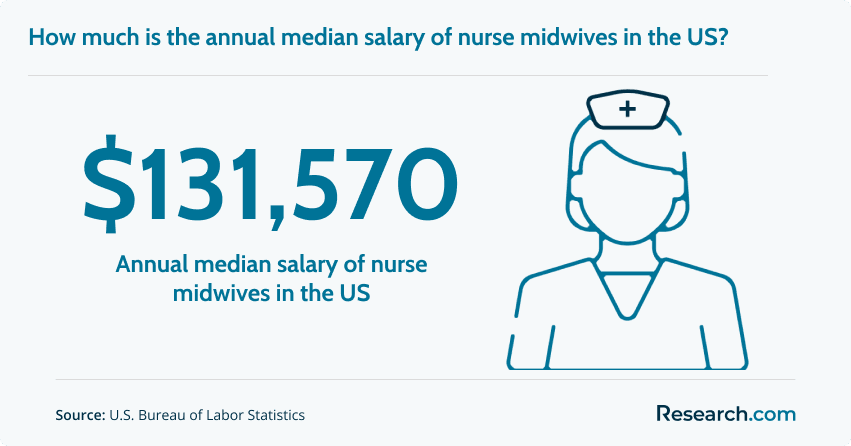
- Certified nurse midwives in the U.S. have a median annual salary of $131,570, with top-paying states such as California offering salaries up to $183,740.
- Online, hybrid, part-time, and rolling-admission programs may be more accessible because they are designed for working nurses and may use broader admissions criteria.
- Accreditation is non-negotiable: even a program that is easier to enter should meet recognized nurse-midwifery education standards and prepare graduates for certification.
How Long Does It Take to Complete a Nurse Midwife Program?
The time required to become a nurse midwife depends on your starting point. A BSN-prepared RN can usually move into graduate midwifery education faster than an ADN-prepared nurse or a student who has no nursing background. The degree level also matters: MSN programs are generally shorter than DNP programs, while post-master’s certificates can be shorter for nurses who already hold a graduate nursing degree.
| Starting point | Typical pathway | Estimated time |
| RN with an Associate Degree in Nursing (ADN) | Complete BSN bridge coursework, then MSN or DNP nurse-midwifery | Around 3–4 years |
| RN with a BSN | Apply directly to an MSN or DNP nurse-midwifery program | Usually 2–3 years |
| Non-nurse with a bachelor’s degree | Complete direct-entry or accelerated nursing preparation, RN licensure, then midwifery training | Generally 4–6 years |
| Nurse with an MSN in another specialty | Complete a post-master’s certificate in nurse-midwifery | Typically 1–2 years |
For Registered Nurses with an Associate Degree (ADN)
ADN-prepared nurses usually need to complete a BSN before entering many graduate nurse-midwifery programs. An accelerated RN-to-BSN pathway can shorten that step, after which the nurse can pursue an MSN or DNP in midwifery. This route often takes around 3–4 years in total. Nurses comparing advanced healthcare options may also review the easiest online MSW programs if they are interested in broader social service or healthcare-adjacent graduate study.
For Registered Nurses with a Bachelor’s Degree (BSN)
BSN-prepared registered nurses typically have the most direct route into nurse-midwifery graduate study. They can apply to MSN or DNP programs that build on prior nursing education and clinical experience, with many programs taking 2–3 years. Nurses researching advanced career options alongside high paying medical jobs may also compare nurse-midwifery with related specialties such as the easiest NNP programs online.
For Individuals Without a Nursing Background
Students without prior nursing education need a longer plan. Direct-entry or accelerated nursing programs can combine foundational nursing coursework, RN licensure preparation, and graduate-level training, but the process may take 4–6 years. Career changers who want to understand the behavioral and social dimensions of healthcare can also explore the difference between psychology and sociology as part of broader career planning.
Post-Master’s Certificate Programs
Nurses who already hold an MSN in another area may pursue a post-master’s certificate to add nurse-midwifery preparation. These programs are generally shorter because students have already completed graduate nursing core requirements. Applicants comparing advanced practice alternatives can review what are the easiest nurse practitioner specialty programs to get into to understand how midwifery compares with other NP pathways.
Why are some nurse midwife programs considered easier to get into?
Some nurse midwife programs are considered easier to enter because they use flexible or holistic admissions policies. They may consider recent academic improvement, professional nursing experience, leadership, community service, prerequisite performance, and recommendations rather than screening applicants by GPA alone. Programs with rolling admissions, multiple start dates, larger cohorts, online delivery, or part-time schedules may also create more opportunities for qualified applicants.
Accessibility does not remove the academic and clinical demands of the field. A reputable nurse-midwifery program still requires graduate-level nursing work, supervised clinical hours, patient-care competency, and preparation for certification. Applicants should be cautious of any program that appears easy because it lacks accreditation, has weak clinical support, or avoids clear disclosure of outcomes and requirements.
| Feature that may make admission easier | Potential benefit | Risk to check |
| Rolling admissions | More chances to apply during the year | Seats may still fill early |
| Online or hybrid format | More accessible for working RNs | Clinical placements may still be local and difficult to secure |
| Holistic review | Experience and recommendations can offset weaker areas | Minimum requirements may still be enforced |
| Part-time option | More manageable for students with jobs or family duties | Longer time to graduation may increase total expenses |
| Lower minimum GPA | More accessible to applicants with uneven academic histories | Graduate coursework remains demanding |
What GPA is required to get into a nurse midwife program?
Most nurse midwife programs expect applicants to have at least a 3.0 GPA on a 4.0 scale, although more selective schools may prefer a GPA of 3.5 or higher. GPA expectations vary by school, degree level, and applicant pool. A strong GPA can help, but it is rarely the only factor reviewed.
If your GPA is below the stated minimum, your application may still be competitive if you can show readiness for graduate nursing work. Strong grades in anatomy, microbiology, pathophysiology, pharmacology, statistics, or other science-heavy courses can be especially helpful. So can recent academic improvement, relevant RN experience, leadership, a clear personal statement, and strong references from supervisors or faculty.
Some schools may offer conditional admission to applicants who show promise but do not meet every benchmark. Before applying, ask whether the program reviews applicants holistically and whether additional coursework can strengthen your file. If you are still comparing academic routes, resources such as healthcare program rankings and easiest online degrees that pay well can help you understand broader education options, but nurse-midwifery applicants should prioritize accredited nursing pathways.
What is the job outlook for certified nurse midwives?
Certified nurse midwives are positioned within a healthcare labor market that continues to need advanced clinicians in women’s health, maternal care, reproductive services, and newborn care. Employment opportunities may be available in hospitals, physician practices, birth centers, outpatient clinics, community health organizations, and public health settings. Demand can vary significantly by region, scope-of-practice rules, employer type, and local maternity care access.
Job outlook should not be evaluated by salary alone. Students should also examine state practice authority, malpractice coverage, call expectations, birth volume, employer support, and whether a region uses midwives widely in maternal care teams. For broader nursing salary context, review how much do BSNS make.
What factors should I consider when selecting a nurse midwife program?
The best nurse midwife program is the one that prepares you for certification, fits your life, and gives you enough clinical support to graduate practice-ready. Start with accreditation, then compare cost, format, clinical placements, faculty expertise, student support, certification preparation, and state authorization. Students without a nursing background can also compare entry routes such as online RN programs for non nurses before committing to a graduate midwifery pathway.
- Accreditation: Confirm that the nurse-midwifery track is accredited by a recognized body such as ACME.
- Clinical placements: Ask whether the school guarantees, coordinates, or merely approves clinical sites.
- State eligibility: Make sure online or hybrid enrollment is allowed in your state and supports your intended licensure path.
- Faculty access: Look for experienced midwifery faculty, responsive advising, and mentorship.
- Cost transparency: Compare tuition, fees, travel, books, equipment, exam costs, and potential lost wages.
- Outcomes: Ask about graduation, certification exam preparation, and employment support.
What financing options can help manage the costs of nurse midwife education?
Nurse midwife education can be expensive, so students should build a financing plan before enrolling. Common options include scholarships, grants, federal loans, private loans, employer tuition assistance, payment plans, and service-based loan repayment opportunities in underserved areas. Students considering doctoral preparation can also compare cost and structure with an online DNP program.
| Funding option | Best for | What to verify |
| Scholarships and grants | Reducing debt without repayment | Eligibility, deadlines, renewal rules |
| Federal student loans | Students needing broad financing access | Borrowing limits, interest, repayment options |
| Employer tuition reimbursement | Working nurses whose employers support advancement | Service commitments and covered expenses |
| Payment plans | Students who can pay in installments | Fees, due dates, and whether plans cover all charges |
| Loan repayment programs | Graduates willing to work in shortage or underserved areas | Approved sites, contract length, and award conditions |
Can nurse midwife programs pave the way for diverse healthcare leadership roles?
Yes. Nurse midwife programs develop more than birth-related clinical skills. Students also learn evidence-based practice, patient advocacy, interprofessional communication, quality improvement, and systems-level thinking. These competencies can support leadership roles in hospitals, public health agencies, community clinics, academic programs, maternal health initiatives, and policy-focused organizations.
CNMs may become clinical directors, faculty members, researchers, program managers, consultants, or advocates for maternal health access. Some professionals also use advanced practice nursing as a foundation for related healthcare fields, including gerontology careers, especially when working with reproductive health across the lifespan or broader family health systems.
How Can I Strengthen My Application for Nurse Midwife Programs?
A strong nurse-midwifery application shows academic readiness, clinical maturity, and a clear commitment to women’s health and birth care. Admissions committees want evidence that you understand the realities of midwifery, can handle graduate-level science, and can communicate well with patients during emotionally intense care experiences.
- Build relevant RN experience: Labor and delivery, postpartum, women’s health, neonatal, public health, or family practice experience can help.
- Improve prerequisite performance: If your GPA is uneven, earn strong grades in recent science or graduate-level coursework.
- Write a specific personal statement: Explain why midwifery, why this program, and how your background supports your goals.
- Choose recommenders carefully: Ask supervisors, faculty, or advanced practice clinicians who can describe your clinical judgment, reliability, and patient communication.
- Prepare for interviews: Be ready to discuss ethical scenarios, teamwork, maternal health disparities, and your understanding of the CNM role.
- Address weaknesses directly: If your GPA, experience, or employment history has gaps, explain what changed and how you are prepared now.
Applicants who do not yet have a nursing background can compare routes such as direct entry MSN programs for non-nursing majors online before deciding how to enter the profession.
Is Enrolling in an RN-to-BSN Program Essential for Nurse Midwife Aspirants?
For ADN-prepared nurses, an RN-to-BSN program is often an important step because many nurse-midwifery graduate programs require or strongly prefer a BSN. A BSN can strengthen academic preparation in leadership, research, population health, and evidence-based practice, all of which are relevant to graduate midwifery training.
Not every applicant will need the same route, so review admission policies carefully. Some schools may offer bridge pathways, while others require a completed BSN before admission. If affordability is a priority, compare cheapest BSN nursing programs and confirm regional accreditation, nursing accreditation, transfer credit policies, and whether the curriculum satisfies graduate prerequisites.
What common challenges do students face during nurse midwife programs?
Nurse midwife programs are demanding because students must master advanced theory while completing intensive clinical training. Common challenges include managing time, finding or traveling to clinical sites, balancing work with call schedules, handling emotionally complex birth situations, and preparing for certification while completing graduate assignments.
Students may also struggle with the shift from RN task execution to advanced practice decision-making. Comparing midwifery with other specialties, such as mental health NP salary and psychiatric NP career paths, can help applicants understand how clinical responsibilities, patient populations, and work environments differ across advanced nursing roles.
| Common mistake | Why it creates problems | Better approach |
| Choosing based only on easy admission | The program may not fit certification, clinical, or state requirements | Verify accreditation and outcomes first |
| Ignoring clinical placement policies | Students may be responsible for finding scarce sites | Ask exactly how placements are secured |
| Comparing tuition only | Fees, travel, exams, and lost work hours can change total cost | Request a full cost estimate |
| Assuming online means fully remote | Clinical hours must be completed in person | Confirm local site availability before enrolling |
| Applying with a generic personal statement | It does not show fit for midwifery | Connect your experience to maternal and reproductive health goals |
How can an accelerated RN-to-BSN program enhance my nurse midwife application?
An accelerated RN-to-BSN program can help ADN-prepared nurses meet graduate admission requirements faster while strengthening academic preparation in nursing research, leadership, health assessment, and community health. It can also provide a chance to raise your GPA before applying to nurse-midwifery programs.
If speed is important, compare formats carefully. The shortest RN to BSN online program may be attractive, but you should still verify accreditation, workload, transfer credit rules, clinical or practicum requirements, and whether the schedule is realistic while working.
What types of nursing experience are needed to apply for midwife programs?
Many nurse midwife programs prefer applicants with RN experience because advanced midwifery education assumes a foundation in patient assessment, communication, safety, documentation, and clinical decision-making. Labor and delivery experience is especially relevant because it exposes nurses to prenatal assessment, fetal monitoring, childbirth, postpartum care, and obstetric emergencies.
Experience outside labor and delivery can still be valuable. Applicants may come from postpartum units, gynecology clinics, family practice, neonatal care, community health, public health, emergency departments, or other highest paying nursing jobs if they can explain how their skills transfer to midwifery. Programs often value nurses who understand patient education, family-centered care, cultural humility, and interdisciplinary teamwork.
Requirements vary. Some programs require at least one to two years of full-time RN experience, while others do not state a formal experience minimum but still prefer clinically prepared applicants. Before applying, review each school’s policy and consider gaining experience that puts you close to women’s health, birth, newborn care, or community-based reproductive health services.
What student support services enhance nurse midwife program success?
Strong support services can make the difference between admission and completion. Nurse-midwifery students benefit from academic advising, faculty mentoring, certification exam preparation, writing support, clinical placement assistance, mental health resources, career coaching, and peer networks. These supports are especially important for online students, working nurses, and students completing rotations far from campus.
Students who still need to complete BSN preparation may benefit from flexible bridge options such as easy RN to BSN programs, but they should verify that any bridge program supports their long-term graduate nursing goals. The best support systems are proactive, not just available after a student is already struggling.
Can accelerated pathways improve my nurse midwife application?
Accelerated pathways can help applicants fill prerequisite gaps, complete a BSN, or transition into nursing more quickly. They are most useful when they are accredited, academically rigorous, and connected to the student’s long-term goal of graduate nurse-midwifery education. A fast pathway is helpful only if it leaves the student prepared for advanced science, clinical judgment, and graduate-level workload.
Career changers and students with a non-nursing bachelor’s degree may compare ABSN programs online as one possible route into RN licensure before applying to nurse-midwifery programs. Confirm clinical requirements, state authorization, licensure preparation, and transfer policies before enrolling.
Can an accelerated BSN pathway enhance my nurse midwife admission prospects?
An accelerated BSN can strengthen a future nurse-midwifery application by giving career changers a direct route into nursing fundamentals, RN licensure preparation, and clinical patient care. It can also demonstrate that the applicant can handle a compressed, demanding academic environment.
However, accelerated does not automatically mean better. Programs such as the easiest accelerated BSN options should be evaluated for accreditation, NCLEX preparation, clinical quality, faculty support, and compatibility with future graduate admissions. If your goal is nurse-midwifery, choose the pathway that prepares you for both RN practice and advanced practice study.
Are online nurse midwife programs easier to get into than traditional ones?
Online nurse midwife programs may be more accessible because they are often built for working nurses who need flexible schedules. Like many affordable online medical assistant programs, they may offer remote coursework, multiple start dates, or part-time plans. Some may also use holistic admissions or waive standardized test requirements.
Online admission does not mean online completion is effortless. Nurse-midwifery clinical training must happen in person, and students may need to travel, locate approved preceptors, or complete rotations on schedules that include births, nights, weekends, or on-call hours. Before choosing an online program, ask whether the school provides placement support in your area and whether your state allows enrollment.
| Online nurse-midwifery programs | Campus-based nurse-midwifery programs |
| May offer more scheduling flexibility for working RNs | May provide more face-to-face faculty and peer interaction |
| Can reduce relocation and commuting needs | May have established local clinical partnerships near campus |
| Requires strong self-direction and time management | Provides more structured in-person learning routines |
| Clinical placements may depend heavily on student location | Clinical access may be easier if the school has regional sites |
How much does it cost to attend a nurse midwife program for 2027?
Nurse midwife program costs vary widely by degree level, school type, residency status, and delivery format. On average, tuition for affordable MSN degrees or Doctor of Nursing Practice (DNP) programs specializing in nurse midwifery ranges from $20,000 to $70,000. Programs at prestigious private universities can cost upwards of $100,000.
Online programs may cost less overall for some students, with tuition often ranging from $20,000 to $50,000. Savings may come from avoiding relocation, reducing commuting costs, or continuing to work while enrolled. Public universities may also offer lower rates for in-state students, while private schools may charge the same tuition regardless of residency.
Students should budget beyond tuition. Additional expenses may include university fees, textbooks, clinical placement costs, background checks, immunizations, travel to clinical sites, technology, certification exam fees, and licensure-related expenses. Financial aid, scholarships, employer assistance, and loan repayment programs can reduce out-of-pocket costs, but applicants should request a full cost breakdown before enrolling.
What are the salary expectations for certified nurse midwives for 2027?
Certified nurse midwives generally have strong salary potential because they practice at an advanced level and provide specialized maternal, reproductive, and women’s health services. On average, CNMs in the United States can expect to earn between $110,000 and $150,000 annually, depending on geographic location, employer, experience, and credentials. Entry-level CNMs may start closer to $90,000 to $100,000, while highly experienced CNMs or those in high-demand areas can earn upwards of $160,000 or more.
Location has a major impact on compensation. States such as California, New York, and Massachusetts tend to offer higher salaries, partly because of cost of living and demand for healthcare services. Rural areas may offer lower base pay, but some positions may include loan repayment, relocation support, or other incentives.
Salary can also vary by setting. Hospitals and large health systems may pay differently than private practices, birth centers, clinics, or community health organizations. Education level, additional certification, call responsibilities, productivity models, and union or employer policies may also affect compensation. Prospective students should compare likely earnings with total program cost and debt before deciding whether a program is financially worthwhile.
Are there alternative affordable online advanced practice nursing options available?
Yes. Nurse-midwifery is a specialized path, but it is not the only advanced practice nursing option. Students who are interested in online graduate nursing programs may also compare family practice, psychiatric-mental health, neonatal, women’s health, adult-gerontology, and other NP pathways. The right choice depends on preferred patient population, clinical setting, state rules, cost, and long-term career goals.
For example, cheap online psych NP programs may appeal to nurses interested in behavioral health rather than birth and reproductive care. When comparing alternatives, use the same standards: accreditation, clinical placement support, state authorization, certification eligibility, faculty qualifications, and total cost.
What exams and certifications are required to become a nurse midwife?
To become a Certified Nurse-Midwife (CNM) in the United States, students generally need RN licensure, graduate-level midwifery education, national certification, and state authorization to practice. Requirements can differ by state, so always verify rules in the state where you plan to work.
Registered Nurse (RN) Licensure
- Education: Complete a Bachelor of Science in Nursing (BSN) degree from an accredited nursing program or an approved pathway that meets RN licensure requirements.
- Licensure Exam: Pass the National Council Licensure Examination for Registered Nurses (NCLEX-RN) to become a licensed registered nurse.
Graduate Education in Midwifery
- Program Enrollment: Complete a graduate-level midwifery program accredited by the Accreditation Commission for Midwifery Education (ACME), such as an MSN or DNP with a nurse-midwifery focus.
- Clinical Training: Finish the supervised clinical hours required by the program, including hands-on experiences in midwifery and women’s health care.
Certification by the American Midwifery Certification Board (AMCB)
- Eligibility: After graduating from an eligible program, apply to take the CNM certification exam administered by the AMCB.
- Examination: Pass the CNM certification exam, which evaluates knowledge and clinical judgment for midwifery practice.
- Certification Maintenance: Keep certification active through continuing education and recertification requirements set by the AMCB.
Some students may also consider the Certified Midwife (CM) credential, which does not require prior nursing experience but uses a similar certification process through the AMCB. Another pathway is the Certified Professional Midwife (CPM) credential, administered by the North American Registry of Midwives (NARM), which is focused more heavily on out-of-hospital birth settings.
Each credential has a different scope of practice, educational route, and state recognition pattern. Before choosing a pathway, compare state regulations, career goals, and educational requirements. If you are still evaluating school quality more broadly, review guidance on the most accredited online colleges.
References:
- U.S. Bureau of Labor Statistics. (2023, May). Occupational employment and wages, May 2023: Nurse midwives. U.S. Bureau of Labor Statistics nurse midwife wage data.
- World Health Organization. (2023). Nursing and midwifery. World Health Organization nursing and midwifery fact sheet.
- World Health Organization. (2023). Strengthening the nursing and midwifery agenda globally. World Health Organization global nursing and midwifery agenda.
Key Insights
- The easiest nurse midwife program to get into is not automatically the best choice. Prioritize ACME accreditation, certification eligibility, clinical placement support, and state authorization before admissions convenience.
- Most applicants need RN licensure and a BSN or bridge preparation before entering an MSN or DNP nurse-midwifery pathway. Career changers should expect a longer timeline.
- Typical nurse-midwifery programs include advanced nursing coursework, 500-1,000 supervised clinical hours, and preparation for the AMCB certification exam.
- Online and hybrid programs may be more flexible, but clinical training still happens in person. Always ask who secures clinical sites and whether placements are available near you.
- Costs can range widely, with average tuition commonly cited from $30,000 to $60,000 and broader MSN or DNP nurse-midwifery tuition ranging from $20,000 to $70,000; private universities may cost upwards of $100,000.
- A competitive application should show academic readiness, relevant nursing experience, strong recommendations, and a clear commitment to maternal, reproductive, and women’s health care.
Other Things You Should Know About the Easiest Nurse Midwife Programs
Yes. Most nurse midwifery programs require an active, unencumbered RN license before enrollment, and many also require a BSN from a regionally accredited school. Some programs accept APRN applicants or RNs with graduate prerequisites, but clinical placement usually cannot begin without proof of licensure.
To improve their chances of acceptance into a nurse midwife program in 2027, applicants should focus on gaining relevant clinical experience and obtaining strong recommendations from healthcare professionals. Additionally, maintaining a high GPA, crafting a compelling personal statement, and preparing thoroughly for interviews can significantly enhance their application.
Yes, several nurse midwife programs considered easiest to enter in 2027 offer online coursework options. These programs often blend virtual classes with required clinical hours, providing flexibility for working students while meeting certification standards set by accrediting bodies.


