
2027 Easiest Accelerated BSN Programs to Get Into

Co-Founder and Chief Data Scientist
With the number of registered nurses (RNs) reaching 5.1 million in 2025, many non-nursing graduates are considering a career shift into the field. One of the quickest paths to becoming an RN is through an accelerated Bachelor of Science in Nursing (BSN) program. In this article, we've compiled a list of the 10 easiest accelerated BSN programs to get into in 2027, helping aspiring nurses take the first step toward a rewarding and high-demand career in healthcare.
What are the benefits of getting into the easiest accelerated BSN programs?
- Accelerated BSN programs allow students to earn their nursing degree in a fraction of the time compared to traditional programs, enabling graduates to enter the workforce quickly and begin their career in nursing sooner.
- Many accelerated BSN programs offer online coursework, allowing students to balance their education with personal or work commitments. This flexibility makes it easier to pursue a nursing degree without sacrificing other responsibilities.
- With the nursing field experiencing significant demand for qualified professionals, completing an accelerated BSN program opens doors to a wide range of job opportunities, providing long-term career stability and job security.
What can I expect from the easiest accelerated BSN degree?
In accelerated BSN programs, you can expect an intense, fast-paced learning experience designed to help you earn your nursing degree quickly. These programs build on your previous academic background, allowing you to complete the required coursework and clinical hours in a shorter time frame compared to traditional nursing programs. You can also expect full-time coursework with no breaks between sessions, ensuring a rigorous and immersive education.
In terms of admission standards, accelerated BSN programs typically require a minimum 3.0 GPA, as these programs are designed for individuals who have demonstrated academic success. Due to the program's demanding nature, students are often advised not to work while enrolled.
Where can I work with the easiest accelerated BSN degree?
With an accelerated BSN degree, you can work in a variety of healthcare settings. While 59% of RNs are employed in hospitals and 19% in ambulatory services, opportunities also exist in government facilities, schools, nursing homes, and residential care settings. The flexibility of a nursing degree allows you to choose from a wide range of environments where your skills are in demand.
How much can I make with the easiest accelerated BSN degree?
With an accelerated BSN degree, the median salary for registered nurses in 2024 is around $93,600 per year. However, your salary may vary depending on factors such as your location, employer, area of specialization, and level of experience. Nurses in certain specialties or regions may earn higher salaries, making it a versatile and rewarding career choice.
- Easiest Accelerated BSN Programs for 2025 Easiest Programs
- How long does it take to complete the easiest accelerated BSN program? Completion Time
- How does an online easiest accelerated BSN compare to an on-campus program? How does an online easiest accelerated BSN compare to an on-campus program?
- What is the average cost of the easiest accelerated BSN program? Average Cost
- What are the financial aid options for students enrolling in the easiest accelerated BSN program? Financial Aid
- What are the prerequisites for enrolling in the easiest accelerated BSN program? Requirements
- What courses are typically in the easiest accelerated BSN program? What courses are typically in the easiest accelerated BSN program?
- What types of specializations are available in the easiest accelerated BSN programs? What types of specializations are available in the easiest accelerated BSN programs?
- Are Accelerated BSN Programs Fully Accredited and Recognized? Are Accelerated BSN Programs Fully Accredited and Recognized?
- How can I transition to advanced practice roles after an accelerated BSN degree? How can I transition to advanced practice roles after an accelerated BSN degree?
- How do you choose the easiest accelerated BSN program? How do you choose the easiest accelerated BSN program?
- Are there opportunities in gerontology for accelerated BSN graduates? Are there opportunities in gerontology for accelerated BSN graduates?
- What challenges might I face in an accelerated BSN program and how can I overcome them? What challenges might I face in an accelerated BSN program and how can I overcome them?
- What career paths are available for graduates of the easiest accelerated BSN programs? What career paths are available for graduates of the easiest accelerated BSN programs?
- Do NCLEX Pass Rates Accurately Reflect Accelerated BSN Program Quality? Do NCLEX Pass Rates Accurately Reflect Accelerated BSN Program Quality?
- What is the job market for graduates with the easiest accelerated BSN degree? Job Market
- What are my options for further education following an accelerated BSN? What are my options for further education following an accelerated BSN?
- Do RN to BSN Programs Require Clinicals? Do RN to BSN Programs Require Clinicals?
- How do clinical training opportunities enhance the accelerated BSN experience? How do clinical training opportunities enhance the accelerated BSN experience?
- Is the Accelerated BSN Degree a Sound Financial Investment? Is the Accelerated BSN Degree a Sound Financial Investment?
- Can Self-Paced RN to BSN Programs Offer Enhanced Flexibility for Busy Professionals? Can Self-Paced RN to BSN Programs Offer Enhanced Flexibility for Busy Professionals?
- How Can Accelerated BSN Programs Facilitate a Career in Psychiatric Nursing? How Can Accelerated BSN Programs Facilitate a Career in Psychiatric Nursing?
- What Long-Term Career Opportunities Can Accelerated BSN Programs Lead To? What Long-Term Career Opportunities Can Accelerated BSN Programs Lead To?
Most Accessible Accelerated BSN Programs for 2027
Accelerated BSN programs are built for people who already have college experience and want to move into registered nursing faster than a traditional four-year BSN route allows. The trade-off is intensity: a shorter timeline usually means full-time study, compressed science and nursing courses, frequent labs, and clinical rotations that can be difficult to schedule around work or family obligations.
This guide is for career changers, second-degree students, licensed practical nurses exploring RN pathways, and healthcare workers comparing accelerated nursing options. You will learn which programs on this list may be more manageable based on format, timeline, cost, clinical structure, admission pathway, and support features—not because nursing school is “easy,” but because some programs are designed with clearer entry routes, flexible delivery, or stronger student support.
Use this article to compare accelerated BSN programs, understand accreditation and licensure issues, estimate costs, review prerequisites, and decide whether an ABSN is the right next step for your nursing career.
Quick answer: What makes an accelerated BSN program easier to complete?
The easiest accelerated BSN program is usually not the shortest one. A more manageable ABSN often has clear prerequisites, predictable clinical placements, strong advising, reasonable cohort sizes, hybrid or online coursework when appropriate, transparent costs, and accreditation from a recognized nursing accreditor such as CCNE or ACEN. Students should also verify that the program meets the requirements of the state board of nursing where they plan to become licensed.
How this ranking was developed
Research.com evaluates schools with a focus on practical student decision-making. For accelerated BSN rankings, important factors include program length, curriculum structure, affordability, accreditation, student outcomes, institutional data, and overall value. A program may be considered more accessible if it offers flexible delivery, a clear route for second-degree students, multiple start dates, or support services that help students handle a compressed nursing curriculum.
To support transparency, Research.com uses established education data sources, including the IPEDS database, Peterson’s database, including the Distance Learning Licensed Data Set, the College Scorecard database, and the National Center for Education Statistics.
Best accelerated BSN programs at a glance
| School | Program Length | Credits | Cost Information | Accreditation |
| New Jersey City University | 12 months | 64 | $13,940.94 per semester including nursing fee | Commission on Collegiate Nursing Education (CCNE) |
| University of Kentucky | 16 months | 54-55 | $624 per credit | CCNE |
| Cox College | 16 months | 120 | $435 per credit | CCNE |
| University of New Mexico | 16 months | 59-65 | $526.84 per credit for New Mexico residents; $1,252.88 for non-residents | CCNE |
| University of Maine at Fort Kent | 14 months | 60-63 | $16,062 to $28,218 per year | CCNE and Maine State Board of Nursing |
| Keiser University-Ft. Lauderdale | 16 months | 76 | $22,900 per year | CCNE |
| Concordia University Texas | 16 months | 62 | $17,300 per term | CCNE |
| Cleveland State University | 16 months | 69 | $307.20 - $441.60 per credit for Ohio residents; $435.97 - $626.70 for non-residents | CCNE |
| University of Wyoming | 15 months | 55-58 | $5,190 for Wyoming residents; $21,600 for non-residents; $7,786 for children of alumni | CCNE |
| Felician University | 16 months | 67 | $855 per credit | CCNE |
1. New Jersey City University
New Jersey City University offers a 12-month accelerated BSN for students ready for a full-time, high-commitment route into nursing. The program is available in Jersey City, where the cohort begins in September, and Fort Monmouth, where the cohort begins in May. Seat availability is limited to 60 students at Jersey City and 30 students at Fort Monmouth, and a waitlist is used when applications exceed capacity.
The curriculum compresses BSN-level nursing preparation into an intensive format that combines classroom instruction, simulation and lab work, hospital-based clinical learning, and community health experiences. Applicants must complete required prerequisites before entering the program. Graduates are prepared to pursue RN licensure through the NCLEX-RN pathway and to move into professional nursing roles.
- Program Length: 12 months
- Tracks/concentrations: N/A
- Cost: $13,940.94 per semester including nursing fee
- Required Credits to Graduate: 64
- Accreditation: Commission on Collegiate Nursing Education (CCNE)
2. University of Kentucky
The University of Kentucky provides an accelerated BSN in an online hybrid structure. Students complete both synchronous and asynchronous coursework while attending weekly in-person labs and clinical learning experiences. This format may appeal to students who want some online flexibility but still expect regular hands-on training.
Eligibility is broader than a typical second-degree-only ABSN. Applicants may qualify with a completed Bachelor of Science (BS) or Bachelor of Arts (BA), medical specialist military training, or an LPN program plus an active license. The program is designed for students who want a fast route into registered nursing without giving up structured clinical preparation.
- Program Length: 16 months
- Tracks/concentrations: N/A
- Cost per Credit: $624
- Required Credits to Graduate: 54-55
- Accreditation: CCNE
3. Cox College
Cox College offers an accelerated BSN for students who already hold a bachelor’s degree outside nursing. Before moving into core nursing and general education courses, students complete 26 credit hours of nursing-focused coursework. The cohort begins in the spring semester, which gives applicants a defined entry point for planning prerequisites, finances, and work transitions.
The program prepares graduates to sit for the NCLEX-RN exam and pursue registered nurse licensure. Its cohort model can help students move through the curriculum with a consistent peer group, which may make the accelerated pace more manageable for career changers.
- Program Length: 16 months
- Tracks/concentrations: N/A
- Cost per Credit: $435
- Required Credits to Graduate: 120
- Accreditation: CCNE
4. University of New Mexico
The University of New Mexico offers an Accelerated 2nd Degree BSN for applicants with a non-nursing bachelor’s degree. Students study at New Mexico’s only R-1 research institution and use resources such as advanced simulation and skills labs.
The program emphasizes patient-centered care, culturally appropriate nursing practice, evidence-based decision-making, quality improvement, leadership, interprofessional collaboration, and technology-supported patient care. It may be a strong fit for students who want a research-intensive environment and a curriculum that connects clinical nursing with health equity and systems improvement.
- Program Length: 16 months
- Tracks/concentrations: N/A
- Cost per Credit: $526.84 (New Mexico resident); $1,252.88 (non-resident)
- Required Credits to Graduate: 59-65
- Accreditation: CCNE
5. University of Maine at Fort Kent
The University of Maine at Fort Kent offers an accelerated BSN option for non-nursing degree holders and eligible students transferring from the traditional track. Students who want to transfer from the traditional program must keep a strong academic record and must not fail any courses after matriculating at UMFK.
The program requires a minimum cumulative GPA of 2.5 for graduation. Its 14-month structure may appeal to motivated students who want a faster pathway than a traditional BSN while still completing the clinical and academic requirements expected of pre-licensure nursing students.
- Program Length: 14 months
- Tracks/concentrations: N/A
- Cost: $16,062 to $28,218 per year
- Required Credits to Graduate: 60-63
- Accreditation: CCNE and Maine State Board of Nursing
6. Keiser University-Ft. Lauderdale
Keiser University-Ft. Lauderdale offers an accelerated BSN for students who already have a college degree. After completing any needed general education and prerequisite courses, students can finish the nursing curriculum in four semesters.
The program focuses on compassionate and culturally competent nursing care across individuals and communities. Coursework addresses wellness, health promotion, disease management, end-of-life care, teamwork in interprofessional settings, and the use of healthcare technologies. Graduates are eligible to take the NCLEX-RN exam after completing the program.
- Program Length: 16 months
- Tracks/concentrations: N/A
- Cost: $22,900 per year
- Required Credits to Graduate: 76
- Accreditation: CCNE
7. Concordia University Texas
Concordia University Texas uses a blended accelerated BSN model that combines online coursework with skills-based learning and in-person clinical practice. Students do not need previous healthcare experience to apply to the ABSN track, but they must complete at least 60 credits through prior education or prerequisites before enrollment.
Incoming students are eligible for a $10,000 Nursing Workforce Development Scholarship. The program may be a practical option for career changers who want a structured transition into nursing and prefer a mix of online academic work and hands-on clinical preparation.
- Program Length: 16 months
- Tracks/concentrations: N/A
- Cost: $17,300 per term
- Required Credits to Graduate: 62
- Accreditation: CCNE
8. Cleveland State University
Cleveland State University offers an accelerated BSN with online coursework and two in-person residencies. Students enroll full time for four consecutive semesters. The in-person track starts in January, while the online option begins in the Fall or Spring.
The program includes 764 clinical hours and 171 lab hours, with clinical placement services available. Residencies are held in the university’s nursing resource laboratory in downtown Cleveland, where students practice and refine clinical skills before applying them in patient care environments.
- Program Length: 16 months
- Tracks/concentrations: N/A
- Cost per Credit: $307.20 - $441.60 (Ohio resident); $435.97 - $626.70 (non-resident)
- Required Credits to Graduate: 69
- Accreditation: CCNE
9. University of Wyoming
The University of Wyoming offers the Bachelors Reach for Accelerated Nursing Degree, or BRAND, program. This distance-learning pathway blends online coursework, hybrid classes, and in-person clinical experiences.
The curriculum combines didactic nursing education with clinical training for students who want to enter nursing quickly while maintaining some flexibility. Because hands-on learning remains essential in pre-licensure nursing education, applicants should confirm clinical placement expectations before enrolling.
- Program Length: 15 months
- Tracks/concentrations: N/A
- Cost: $5,190 (Wyoming resident); $21,600 (non-resident); $7,786 (children of alumni)
- Required Credits to Graduate: 55-58
- Accreditation: CCNE
10. Felician University
Felician University offers accelerated BSN options in hybrid and campus-based formats. The full-time curriculum combines foundational nursing coursework, hands-on nursing labs, and in-person clinical rotations.
Students in the hybrid ABSN pathway complete coursework online, attend labs in Parsippany, and complete clinical experiences at local healthcare facilities. This option has three start dates per year. The on-ground ABSN track begins in September and requires coursework and labs at the Rutherford campus, along with clinical placements in nearby healthcare settings.
- Program Length: 16 months
- Tracks/concentrations: N/A
- Cost per Credit: $855
- Required Credits to Graduate: 67
- Accreditation: CCNE
How long does it take to finish an accelerated BSN program?
Accelerated BSN programs are commonly designed for students who already completed a non-nursing bachelor’s degree and want to transition into registered nursing. Many programs run 11 to 18 months, depending on prerequisite completion, curriculum design, clinical scheduling, and whether the school uses a full-time cohort model.
The shorter timeline is possible because students enter with prior college credit and focus heavily on nursing theory, health assessment, pharmacology, patient care, evidence-based practice, and supervised clinical learning. The pace is demanding. Students should expect frequent exams, skills labs, simulation work, and clinical rotations in healthcare settings.
Students who want a faster entry into nursing but are not ready for an ABSN may compare other routes. A fast track LPN pathway can provide an earlier entry point into nursing practice, while those aiming directly for advanced practice may want to review the best direct entry NP programs, which combine nursing preparation with graduate-level study for eligible non-nurses.
| Path | Who It May Fit | Main Advantage | Main Trade-Off |
| Accelerated BSN | Second-degree students seeking RN licensure | Fast route to a BSN and NCLEX-RN eligibility | High workload and limited flexibility |
| Fast-track LPN | Students wanting earlier entry into practical nursing | Shorter initial training path | Does not lead directly to RN licensure |
| Direct-entry NP | Non-nurses with a long-term advanced practice goal | Can combine entry-level nursing and graduate nursing preparation | Longer commitment and more advanced academic expectations |
Online vs. on-campus accelerated BSN programs: which format is easier?
An online or hybrid accelerated BSN is not fully remote. Pre-licensure nursing programs require in-person labs, simulation, and clinical rotations. The real difference is where you complete the didactic coursework and how much structure you want in your weekly schedule.
| Format | Best For | Strengths | Challenges |
| Online or hybrid accelerated BSN | Students who can manage independent study and travel to clinical sites | More flexibility for lectures, assignments, and some exams; useful for students with family or work responsibilities | Requires strong self-discipline, reliable technology, and travel for labs or clinicals |
| On-campus accelerated BSN | Students who learn best with scheduled classes and face-to-face interaction | More direct access to faculty, peers, labs, and campus resources | Less scheduling flexibility and may require relocation or commuting |
Hybrid programs can be useful for students already working in healthcare. For example, people in phlebotomist careers may prefer online coursework while completing required nursing labs and clinicals in person. However, full-time accelerated nursing study is difficult to combine with full-time work, so applicants should ask each program how many hours per week are expected.
Licensed practical nurses who want to become registered nurses should also compare LPN to RN bridge programs. A bridge pathway may be more appropriate than a second-degree ABSN for an LPN with existing nursing education and clinical experience.
How much does an accelerated BSN program cost?
The average cost of an accelerated BSN program typically ranges from $30,000 to $70,000. The final amount depends on tuition, residency status, required fees, clinical expenses, living costs, transfer credits, and whether a student can work while enrolled.
- Residency status: Public universities may charge lower tuition to in-state students than to out-of-state students.
- Delivery format: Online or hybrid coursework may reduce commuting or relocation costs, but students still need to budget for labs and clinical travel.
- Nursing-specific fees: Students often pay for lab supplies, clinical placement requirements, uniforms, equipment, background checks, drug screens, immunizations, testing platforms, and textbooks.
- Financial aid and scholarships: Grants, loans, institutional awards, and employer support can reduce the amount paid out of pocket. Working RNs comparing bachelor’s completion options can also review RN to BSN cost considerations.
When comparing programs, do not look only at tuition. A lower per-credit price can become less attractive if the program requires relocation, unpaid time away from work, expensive fees, or extra prerequisite coursework.
What financial aid can accelerated BSN students use?
Accelerated BSN students may have fewer grant options than first-time undergraduates, especially if they already used federal aid for a prior bachelor’s degree. Even so, several funding sources may be available, and students should ask each school for a program-specific financial aid estimate before applying.
- Federal and state grants: In 2024-25, undergraduate and graduate students received a total of $275.1 billion in grant aid according to CollegeBoard. Eligibility depends on student status, prior aid use, enrollment level, and program classification.
- Employer tuition repayment: Hospitals, healthcare systems, and clinical partners sometimes offer tuition repayment or sponsorship programs. Employers such as Tenet Healthcare, Carondelet Health Network, Duke University Health System, and others actively support accelerated nursing programs.
- Scholarships and fellowships: Some schools and healthcare organizations provide awards for accelerated nursing students, students entering shortage areas, or graduates who commit to work in specific facilities.
- Legislative and workforce support: State and federal advocacy continues around scholarship and grant funding for accelerated nursing pathways because these programs help prepare new nurses more quickly.
Before borrowing, ask whether aid covers prerequisite courses, summer terms, clinical fees, testing fees, and living expenses. Also ask whether scholarships are renewable or limited to the first term.
What are the usual admission requirements for an accelerated BSN?
Admission requirements vary by school, but most accelerated BSN programs expect applicants to show that they can handle an intensive science-based curriculum and meet clinical site requirements. Even programs with more accessible admissions standards still require academic readiness and professional conduct.
| Requirement | Why It Matters | What to Check |
| Bachelor's Degree in a Non-Nursing Field | Many ABSN programs are built for second-degree students who already completed general education coursework. | Confirm whether the school accepts any bachelor’s field or requires specific prior coursework. |
| GPA Requirement | Programs often use GPA to estimate whether applicants can manage accelerated nursing coursework. | Ask whether the school reviews cumulative GPA, prerequisite GPA, science GPA, or last-credit GPA. |
| Prerequisite Coursework | Courses such as anatomy, physiology, microbiology, chemistry, nutrition, and statistics may be required before admission. | Verify accepted course age limits, online lab policies, minimum grades, and transfer equivalencies. |
| Letters of Recommendation | References help admissions committees evaluate work ethic, maturity, communication, and readiness for patient care. | Choose recommenders who can speak specifically about your academic or professional performance. |
| Personal Statement or Essay | The essay explains why you are changing careers and how you understand the responsibilities of nursing. | Avoid generic statements; connect your experience to patient care, service, and resilience. |
| Healthcare Experience | Some schools require or prefer volunteering, CNA work, medical assisting, scribing, or other patient-facing exposure. | Ask whether experience is required, recommended, or used only as a competitive factor. |
| Entrance Exams | Some programs require TEAS, HESI, or another assessment of reading, math, science, and English readiness. | Check score minimums, retake policies, and test expiration rules. |
| Background Check and Drug Screen | Clinical partners require students to meet safety and compliance standards before patient contact. | Ask how prior legal issues or test results may affect clinical eligibility. |
| Immunizations and Health Records | Clinical sites require health documentation to protect students and patients. | Budget time and money for vaccines, titers, TB testing, physical exams, and documentation. |
| Interview | Some programs use interviews to assess communication, judgment, motivation, and professionalism. | Prepare to discuss stress management, teamwork, ethical scenarios, and why nursing fits your goals. |
| Application Fee | Most schools charge a fee to process admissions materials. | Ask about fee waivers if cost is a barrier. |
What classes are included in an accelerated BSN curriculum?
An accelerated BSN covers the same core nursing competencies as a traditional pre-licensure BSN, but in a compressed schedule. Students should expect a demanding combination of lecture-based learning, skills practice, simulation, clinical rotations, and NCLEX-RN preparation.
Students who plan to continue into graduate nursing after the ABSN can compare options such as the cheapest MSN programs online, but the immediate goal of an ABSN is preparation for entry-level registered nursing practice.
- Nursing Fundamentals: Introduces basic patient care, vital signs, hygiene, infection control, safety, and foundational nursing procedures.
- Health Assessment: Teaches students how to collect health histories, perform physical assessments, and identify abnormal findings.
- Anatomy and Physiology for Nurses: Reviews body systems and their relationship to illness, treatment, and nursing care.
- Pharmacology: Covers medication classifications, mechanisms, adverse effects, interactions, dosage safety, and nursing responsibilities.
- Medical-Surgical Nursing: Focuses on adult patients with acute and chronic conditions, surgical needs, post-operative care, and hospital-based nursing.
- Maternal and Child Health Nursing: Addresses pregnancy, labor and delivery, postpartum care, newborn care, and pediatric nursing.
- Mental Health Nursing: Builds skills in therapeutic communication, psychiatric assessment, crisis response, and care for patients with mental health conditions.
- Nursing Leadership and Management: Introduces delegation, teamwork, quality improvement, conflict management, healthcare policy, and nursing administration concepts.
- Community and Public Health Nursing: Explores prevention, health promotion, population health, community education, and care delivery outside hospitals.
- Nursing Research and Evidence-Based Practice: Teaches students to evaluate research and apply evidence to clinical decisions.
- Nursing Ethics and Law: Covers informed consent, confidentiality, patient rights, professional accountability, and ethical decision-making.
- Clinical Practicum/Simulation: Gives students supervised opportunities to apply nursing skills in labs, simulation centers, and real care settings.
- Nursing Informatics: Introduces electronic health records, healthcare data systems, telemedicine, and technology-supported patient care.
Can accelerated BSN students specialize before graduation?
Most accelerated BSN programs do not offer formal specializations because their primary purpose is to prepare students for generalist registered nursing practice and NCLEX-RN eligibility. Specialization usually happens after licensure through work experience, graduate study, employer training, or certification.
Electives and focused learning opportunities
Some ABSN programs allow students to explore areas of interest through electives or focused coursework. These options may include pediatrics, geriatrics, public health nursing, mental health nursing, emergency nursing, or women’s health. These are usually not official specializations, but they can help students identify preferred career settings.
Clinical exposure in specialty settings
Clinical rotations may introduce students to specialized environments such as the Neonatal Intensive Care Unit (NICU), Emergency Room (ER), pediatric care, oncology, or cardiology. Placement availability depends on school partnerships, clinical site capacity, and local healthcare systems.
Post-licensure certifications and graduate pathways
After earning RN licensure, nurses may pursue credentials such as Certified Pediatric Nurse (CPN) or Certified Emergency Nurse (CEN). Students with advanced practice goals may consider a Nurse Practitioner accelerated program or a traditional NP pathway in a specialty such as family practice, pediatrics, or psychiatric nursing. Other long-term options include Clinical Nurse Specialist (CNS), Nurse Educator, Certified Nurse Midwife (CNM), and Certified Registered Nurse Anesthetist (CRNA) preparation.
ABSN-to-MSN planning
Some schools offer routes that connect a BSN with graduate nursing education. These pathways can lead toward roles such as nurse practitioner, nurse anesthetist, nurse midwife, nursing administrator, or nurse educator. Students should confirm whether graduate admission is automatic, competitive, or separate from the ABSN.
Are accelerated BSN programs accredited and accepted for licensure?
Accreditation is one of the most important checks before enrolling in any accelerated BSN. A recognized nursing accreditation status helps show that a program meets accepted educational standards for curriculum, faculty qualifications, clinical learning, and student outcomes. Common nursing accreditors include the Commission on Collegiate Nursing Education (CCNE) and the Accreditation Commission for Education in Nursing (ACEN).
Accreditation is not the only requirement. Students should also verify approval or recognition by the state board of nursing where they intend to take the NCLEX-RN and become licensed. This is especially important for online or hybrid students who live in a different state from the school. If you are comparing rapid nursing routes, a 6 month RN to BSN program may be useful for licensed RNs, but pre-licensure ABSN students need a program that satisfies RN eligibility requirements.
How can accelerated BSN graduates move into advanced practice?
An accelerated BSN can be the foundation for advanced nursing roles, but graduates typically need RN licensure, clinical experience, and graduate education before moving into advanced practice. Common next steps include MSN, DNP, nurse practitioner, nurse educator, nurse leadership, and specialty certification pathways.
Students interested in family nurse practitioner roles can compare BSN to MSN FNP online programs. These programs build on BSN-level preparation with advanced assessment, pharmacology, pathophysiology, population-specific care, and clinical practicum requirements.
How should you choose the easiest accelerated BSN program for your situation?
“Easy” is the wrong lens for nursing education. A better question is: which accelerated BSN is most manageable for your background, finances, learning style, location, and career goals? The right program should be rigorous enough to prepare you for safe nursing practice while providing the structure and support you need to finish.
| Factor | Why It Affects Difficulty | Questions to Ask |
| Program Length and Intensity | A 12-month program may be faster but more compressed than a 16-month option. | How many hours per week are expected for class, study, lab, and clinicals? |
| Academic Support | Tutoring, advising, faculty access, mentoring, and simulation labs can make a difficult program more manageable. | What support is available before students fall behind? |
| Accreditation | Accredited programs are more likely to meet licensure, employer, and graduate school expectations. | Is the program accredited by CCNE or ACEN and accepted by the relevant state board of nursing? |
| Location and Format | Hybrid formats can reduce classroom travel, but clinicals remain in person. | Where are labs, residencies, and clinical rotations held? |
| Class Size | Smaller cohorts may allow more individualized faculty attention. | What is the student-to-faculty ratio in labs and clinicals? |
| Clinical Placement | Clear clinical placement support can reduce stress and uncertainty. | Does the school arrange placements, or must students find their own sites? |
| Total Cost | Tuition is only part of the investment; fees, commuting, lost wages, and supplies matter. | What is the full estimated cost from prerequisites through graduation? |
| Outcomes | NCLEX pass rates, graduation rates, and job placement support can indicate program effectiveness. | What are recent NCLEX pass rates, attrition rates, and graduate employment outcomes? |
- Compare workload honestly: Most accelerated BSN programs are full-time. If you must work, ask whether past students have successfully worked during the program and how many hours were realistic.
- Check licensure alignment first: A program that looks convenient is not useful if it does not qualify you for licensure where you plan to practice.
- Evaluate return on investment carefully: If you are asking, How much do BSNs make, compare expected earnings with debt, lost wages, and the timeline to RN employment.
- Look beyond admission ease: A school that is easy to enter but has weak support, unclear clinical placement, or poor outcomes may be harder to finish.
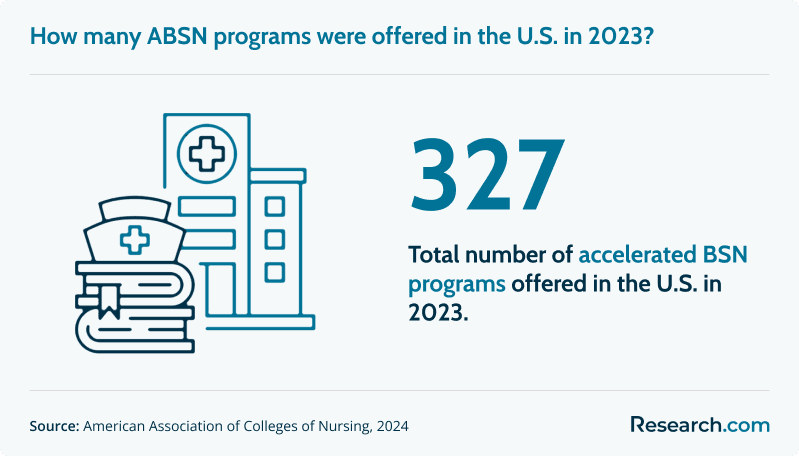
- Plan for future education: According to recent data, in 2023, there were more than 300 accelerated baccalaureate programs and 92 entry-level master’s programs available at nursing schools across the U.S. Additionally, 36 new accelerated baccalaureate programs and 15 new entry-level master's programs are in development. Students with advanced practice goals may later compare options such as a 12 month FNP program online.
Common mistakes when choosing an accelerated BSN
- Choosing only the shortest program: A shorter timeline can increase stress, reduce work flexibility, and leave little room to recover from academic setbacks.
- Ignoring accreditation: Always verify nursing accreditation and state board recognition before paying application fees or deposits.
- Assuming online means fully remote: ABSN students still complete in-person labs, simulations, clinical rotations, and sometimes residencies.
- Underestimating clinical logistics: Ask where clinicals happen, who arranges them, and whether travel is required.
- Comparing tuition without fees: Include books, supplies, uniforms, health records, background checks, exams, transportation, and housing.
- Relying only on rankings: Rankings can narrow your list, but the best program depends on your state, prerequisites, schedule, finances, and learning needs.
Can accelerated BSN graduates work in gerontology?
Yes. Accelerated BSN graduates can pursue nursing roles that serve older adults in hospitals, rehabilitation centers, home health, long-term care, community health, and specialty clinics. Gerontology can be a strong fit for nurses who are interested in chronic disease management, care coordination, patient education, mobility support, medication safety, and family communication.
Additional certifications, focused clinical experience, or graduate study may strengthen a nurse’s qualifications in this area. Students interested in aging-related healthcare careers can explore the fastest-growing careers in gerontology to understand related opportunities beyond bedside nursing.
What challenges do accelerated BSN students face?
The biggest challenge in an accelerated BSN is the pace. Students must absorb dense scientific and clinical content quickly while developing hands-on skills and meeting professional standards in clinical settings. Time pressure can affect sleep, finances, family responsibilities, and mental well-being.
- Heavy weekly workload: Use a detailed calendar for lectures, exams, assignments, lab practice, clinical prep, and commuting.
- Clinical anxiety: Practice skills early, use simulation labs, ask for feedback, and review patient care plans before each shift.
- Science-heavy content: Refresh anatomy, physiology, microbiology, and pharmacology basics before the first term.
- Financial pressure: Build a budget that includes reduced work hours, transportation, required supplies, and licensure costs.
- Burnout risk: Schedule recovery time, use advising resources, and seek support before falling behind.
Students planning long-term graduate study should avoid overloading themselves during the ABSN. If advanced nursing is the goal, research options such as online direct entry MSN programs for non-nurses, but prioritize successful RN preparation first.
What jobs can you get after an accelerated BSN?
Accelerated BSN graduates who pass the NCLEX-RN and receive licensure can pursue registered nurse roles in many healthcare settings. According to data from 2025, registered nurses held about 5.1 million jobs in the U.S., with employment spread across hospitals, ambulatory care, government health services, residential care, education, travel nursing, and specialized practice areas.
| Career Setting | Typical Work | Why ABSN Graduates May Consider It |
| Hospital Settings | Care for patients in medical-surgical units, emergency rooms, ICUs, operating rooms, and specialty floors. | Strong option for building broad clinical skills quickly after licensure. |
| Ambulatory Healthcare Services | Support outpatient procedures, chronic disease management, patient education, and follow-up care. | May offer a different pace than inpatient hospital work. |
| Government Healthcare | Work in public health departments, military healthcare, correctional facilities, and community programs. | Appeals to nurses interested in population health or underserved communities. |
| Nursing and Residential Care Facilities | Provide ongoing care for older adults, rehabilitation patients, and people with chronic conditions. | Useful for nurses interested in gerontology, care planning, and long-term patient relationships. |
| Educational Services | Support school health, community health education, wellness initiatives, or future nurse training with additional qualifications. | Fits nurses who enjoy teaching, prevention, and communication-heavy roles. |
| Travel Nursing | Take temporary assignments in different locations to fill staffing needs. | Can provide variety, but usually requires strong clinical experience first. |
| Specialized Roles | Work in telemedicine, case management, pediatrics, oncology, critical care, neonatal care, or surgical nursing. | Often requires experience, employer training, or specialty certification. |
Further education can open advanced clinical, leadership, and policy roles. Nurses considering doctoral-level practice may want to examine how much does a DNP make a year while comparing the cost and time required for graduate nursing education.
Do NCLEX pass rates show whether an accelerated BSN is high quality?
NCLEX pass rates are useful, but they should not be the only measure of program quality. A strong pass rate may suggest that the curriculum, faculty support, testing preparation, and clinical training are aligned with licensure expectations. However, applicants should also review graduation rates, attrition, student support, clinical placement quality, state board approval, accreditation, and job placement resources.
Students who plan to move from RN licensure into advanced practice can use NCLEX performance as one indicator of preparation, then compare graduate options such as the cheapest nurse practitioner program when they are ready for the next credential.
What is the job outlook for accelerated BSN graduates?
The job market for registered nurses remains strong across many healthcare settings. Employment of registered nurses is projected to grow 5% from 2024 to 2034, according to the U.S. Bureau of Labor Statistics, which is faster than the average growth rate for all occupations.
- Aging Population: As the number of older adults rises, healthcare systems need more nurses to support chronic disease management, medication education, mobility needs, and care coordination.
- Chronic Conditions: Patients with diabetes, heart disease, obesity, and other long-term conditions require ongoing nursing support in multiple care settings.
- Healthcare Settings: Hospitals remain major RN employers, while outpatient care centers also need nurses for chemotherapy, rehabilitation, surgery, and other same-day services.
- Home and Residential Care: More patients receive care at home or in residential facilities, increasing demand for nurses who can manage treatment plans outside acute care hospitals.
Over the next decade, approximately 166,100 job openings for registered nurses are projected each year, largely because employers need to replace nurses who retire or move into other occupations. This creates continuing opportunities for ABSN graduates who become licensed RNs, although local hiring conditions vary by region, specialty, and experience level.
What education options are available after an accelerated BSN?
After earning an accelerated BSN and RN licensure, nurses can pursue graduate education, specialty certification, leadership training, or doctoral study. The right choice depends on whether the nurse wants advanced clinical practice, management, education, informatics, public health, or policy work.
Common next steps include MSN programs, nurse practitioner programs, nurse educator preparation, nursing leadership tracks, and DNP programs. Nurses comparing doctoral pathways can review DNP online programs to understand how advanced practice and leadership training may fit into long-term career plans.
Do RN to BSN programs require clinicals?
RN to BSN programs are different from accelerated BSN programs. ABSN programs are pre-licensure pathways for students who are not yet registered nurses. RN to BSN programs are degree-completion pathways for licensed RNs who already have clinical nursing experience.
Some RN to BSN programs reduce or replace traditional clinical hours with community health projects, practicums, leadership activities, or assignments that build on existing RN experience. Licensed nurses comparing flexible completion options can review does RN to BSN require clinicals for more detail.
How do clinical placements affect the accelerated BSN experience?
Clinical training is central to an accelerated BSN because nursing cannot be learned only through lectures. Clinical rotations help students practice assessment, communication, medication safety, documentation, teamwork, prioritization, and patient care under supervision.
Before enrolling, ask whether the school arranges placements, how far students may need to travel, which specialties are available, how many hours are required, and whether simulation hours count toward clinical preparation. These questions matter as much as format or tuition. Students comparing accelerated completion routes for licensed nurses can also review the fastest RN to BSN program, but pre-licensure ABSN students should focus first on clinical readiness and RN eligibility.
Is an accelerated BSN worth the financial investment?
An accelerated BSN can be worth it for students who are committed to registered nursing, understand the workload, and have a realistic financing plan. The value comes from entering the RN workforce faster than a traditional BSN route, but the cost can be substantial when tuition, fees, living expenses, and lost income are included.
Before enrolling, calculate the full cost of attendance, expected debt, prerequisite expenses, licensing costs, and the income you may give up during full-time study. Then compare that investment with likely RN earnings in your region and the long-term value of a BSN for advancement. Students still comparing options can review the top accelerated BSN programs for broader program comparisons.
Are self-paced RN to BSN programs a better fit for working nurses?
Self-paced RN to BSN programs are intended for licensed registered nurses, not students seeking initial RN licensure through an accelerated BSN. For working RNs, self-paced formats can provide more control over deadlines and course progression while still requiring students to meet academic and competency standards.
Busy nurses who already have RN licensure and want more flexibility can explore self paced RN to BSN programs. Career changers who are not yet RNs should choose a pre-licensure pathway such as an ABSN, ADN, or direct-entry nursing program.
Can an accelerated BSN lead to psychiatric nursing?
Yes. Accelerated BSN programs include mental health nursing content and may include clinical exposure in psychiatric or behavioral health settings. This foundation can support entry-level psychiatric nursing roles after RN licensure, especially for graduates who develop strong therapeutic communication, assessment, safety planning, and crisis response skills.
Nurses who want advanced psychiatric practice can later pursue graduate preparation and specialty certification. Cost-conscious students may compare affordable online PMHNP programs after gaining RN experience and confirming state licensure requirements.
What students often value in accessible accelerated BSN programs
- Stella: "The format made a difficult nursing curriculum feel more manageable because I could complete lectures online while still receiving guidance from faculty and classmates. The flexibility did not make the program easy, but it made it possible to keep moving forward."
- Jamie: "The strongest part of the program was the focus on practical skills. Labs, clinical practice, and interactive online coursework helped me build confidence before entering patient care settings."
- Brianna: "The accelerated pace pushed me hard, but the organized course sequence helped me stay on track. I had to plan my time carefully, but the structure made the transition into nursing feel achievable."
What long-term opportunities can an accelerated BSN create?
An accelerated BSN can lead to more than a first RN job. After licensure and experience, graduates may move into specialty nursing, case management, public health, telehealth, leadership, nursing education, informatics, or advanced practice. Career growth depends on clinical performance, employer opportunities, additional credentials, and graduate education choices.
Applicants who want a nursing school with a more accessible admission process can compare easy nursing schools with high acceptance rates, but acceptance rate should never be the only deciding factor. Accreditation, NCLEX preparation, clinical placements, student support, and total cost are more important for long-term success.
Key Insights
- No accelerated BSN is truly easy. The most manageable programs are the ones with clear admissions requirements, strong academic support, reliable clinical placement, transparent costs, and recognized accreditation.
- Program length matters, but support matters more. A 12-month ABSN may be faster, while a 16-month structure may give students more time to absorb material and handle clinical requirements.
- Online ABSN programs still require in-person training. Expect labs, simulations, clinical rotations, and sometimes campus residencies even when lectures are online.
- Accreditation and state board approval are non-negotiable. Verify both before applying, especially if you live in a different state from the school.
- Total cost is larger than tuition. Include fees, supplies, background checks, health records, travel, housing, lost wages, and NCLEX-related expenses.
- NCLEX pass rates help, but they are incomplete. Also review attrition, graduation rates, faculty support, clinical placement quality, and employer connections.
- An ABSN can be a strong career-change pathway. Graduates who earn RN licensure can pursue hospital nursing, ambulatory care, public health, long-term care, travel nursing, specialty roles, and eventually graduate nursing education.
References:
- AACN. (2024, June). Accelerated baccalaureate and master's degrees in nursing. American Association of Colleges of Nursing. Retrieved December 14, 2024.
- AACN. (n.d.). Accelerated nursing programs. American Association of Colleges of Nursing. Retrieved December 14, 2024.
- ACCN. (2024). Fact sheet: Accelerated baccalaureate and master’s degrees in nursing. American Association of Colleges of Nursing. Retrieved December 17, 2024.
- Edwards, S. (2025, October 9). How many nurses in the U.S.? ConsumerShield. Retrieved November 8, 2025.
- HIMSS. (2024, July 29). HIMSS nursing informatics workforce survey. Healthcare Information and Management Systems Society. Retrieved December 17, 2024.
- U.S. BLS. (2024, August 29). Occupational outlook handbook: Registered nurses. U.S. Bureau of Labor Statistics. Retrieved December 14, 2024.
- U.S. BLS. (2024, August 29). Registered nurses: Work environment. U.S. Bureau of Labor Statistics. Retrieved December 17, 2024.
- U.S. BLS. (2024, August 29). Registered nurses: Pay. U.S. Bureau of Labor Statistics. Retrieved December 17, 2024.
- U.S. BLS. (2024, August 29). Registered nurses: Job outlook. U.S. Bureau of Labor Statistics. Retrieved December 17, 2024.
- Zippia. (2025). Registered nurse (RN) education & requirements. Zippia. Retrieved November 8, 2025.
Other Things You Should Know About the Easiest Accelerated BSN Programs
To gain admission into 2026 accelerated BSN programs, applicants typically need a non-nursing bachelor’s degree, a minimum GPA of 3.0, completion of prerequisite courses such as anatomy and chemistry, and a satisfactory score on the TEAS or HESI exams. Health-related experience is often advantageous.
Yes. Most accelerated BSN programs require a criminal background check, drug screening, proof of immunizations, and current CPR certification before clinical placement. Many also require a physical exam and health insurance documentation. These steps must be completed before students can begin supervised hospital rotations.


