2027 Best Online Master’s in Secondary Education Programs

Co-Founder and Chief Data Scientist
An online master’s in secondary education is designed for teachers, career changers, and education professionals who want advanced preparation for teaching adolescents, leading instruction, or moving into curriculum and school-based leadership roles. The decision is more complicated than simply choosing the lowest tuition or the most recognizable university name: you need to understand licensure rules, accreditation, field experience requirements, delivery format, cost, career outcomes, and whether the program fits your current teaching status.
This guide explains how online master’s programs in secondary education work, what they typically cost, how employers view them, what courses and admissions requirements to expect, and how to compare programs realistically. It also highlights selected programs, current teaching trends, salary considerations, and practical questions to ask before enrolling in online education degree programs.
Quick Answer: Is an Online Master’s in Secondary Education Worth Considering?
Yes, an online master’s in secondary education can be a strong option if the program is accredited, aligns with your state’s licensure requirements, includes any required fieldwork or student teaching, and fits your career goal. It may help licensed teachers qualify for salary schedule movement, instructional leadership roles, department chair positions, curriculum work, or specialized teaching responsibilities. For career changers, the key issue is whether the program leads to initial teacher licensure in the state where they plan to teach.
High school teacher employment is projected to grow by 5% from 2024 to 2034, according to the U.S. Bureau of Labor Statistics (2025). That outlook does not guarantee a job, but it does show continued need for qualified secondary educators, particularly in areas where teacher shortages, subject-area demand, and local hiring needs remain important factors.
| Best fit | Why it may make sense | What to verify first |
| Licensed teachers seeking advancement | May support salary progression, leadership eligibility, or instructional specialization | District salary schedule, accreditation, and whether the degree meets local requirements |
| Career changers with strong subject knowledge | Some MAT or licensure tracks prepare candidates to enter secondary teaching | Initial licensure pathway, field placement rules, and state approval |
| Teachers interested in curriculum or coaching | Graduate coursework often covers assessment, curriculum design, adolescent learning, and teacher leadership | Availability of relevant electives, practicum options, and career support |
| Students needing flexibility | Online delivery can make graduate study possible while working full time | Synchronous class times, workload, technology requirements, and residency or fieldwork expectations |
Best Online Master's in Secondary Education Programs Table of Contents
- Can a secondary education master’s be completed fully online?
- Do employers respect online education master’s degrees?
- Are online teaching degrees accepted internationally?
- Online vs. campus master’s in secondary education
- Cost of an online master’s in secondary education
- Admissions and technical requirements
- Common courses in secondary education master’s programs
- How to choose an online secondary education program
- 2027 best online master’s in secondary education programs
- Teaching methods changing secondary classrooms
- Career impact of a master’s in secondary education
- Financial planning for your graduate degree
- Trends shaping the future of secondary education
- Can this degree expand teaching options across education levels?
- Challenges of online graduate study in secondary education
- Salary potential with a master’s in secondary education
- Why accreditation matters
- Career support and networking in online programs
- Program outcomes and job placement data
- Faculty qualifications in online education programs
- Using child development research in secondary teaching
Can you get a degree completely online?
Many master’s programs in secondary education can be completed mostly or entirely through online coursework. Students typically access readings, recorded lectures, assignments, discussion boards, assessments, and faculty feedback through a learning management system. Some programs also include live virtual sessions, group projects, online presentations, or digital teaching demonstrations.
The important distinction is between online coursework and in-person field requirements. Programs that lead to initial teacher licensure often require classroom observations, practicum hours, student teaching, or local field placements. These experiences may take place in approved schools near the student’s community, but they are not the same as a fully virtual program. Before enrolling, confirm whether the program is licensure-focused, endorsement-focused, or designed only for already licensed educators.
Will employers take my online degree seriously?
Most employers focus less on whether a degree was earned online and more on whether it came from an accredited institution, whether it meets licensure or district requirements, and whether the graduate can demonstrate strong instructional skills. An online secondary education master's degree from a recognized school can be credible, especially when the program has appropriate accreditation, experienced faculty, and meaningful field or classroom connections.
If you are comparing online master degrees in education, look closely at institutional accreditation, educator preparation approval, licensure alignment, and employer recognition in your state. On a resume or in an interview, it is usually better to emphasize the institution, degree title, certification outcomes, teaching experience, and relevant projects rather than simply stating that the program was online.
Are online degrees recognized all over the world?
Recognition depends on the country, employer, licensing body, and institution evaluating the degree. Acceptance of online credentials has continued to expand worldwide, particularly when programs are offered by established universities and follow the same academic standards as campus-based programs.
However, teaching is often regulated locally. A degree that supports licensure in one U.S. state or country may not automatically qualify you to teach elsewhere. If you plan to work internationally or move across state lines, contact the relevant teacher certification agency, school system, ministry of education, or credential evaluation service before you apply. Ask whether online coursework, field placements, and the issuing institution will be accepted for the specific teaching role you want.
Online vs. Traditional Master's Degree in Secondary Education
Online and campus-based secondary education graduate programs often cover similar academic areas: adolescent development, instructional design, classroom management, curriculum planning, content-area pedagogy, assessment, research, and educational equity. The main differences are usually scheduling, interaction style, fieldwork logistics, and how students balance graduate study with work and family obligations.
| Factor | Online master’s in secondary education | Campus-based master’s in secondary education |
| Schedule | Often designed for working educators, with asynchronous coursework or limited live sessions | Usually follows set class meeting times and campus calendars |
| Interaction | Uses discussion boards, video meetings, collaborative documents, and online feedback | Relies more on face-to-face discussion, campus seminars, and in-person collaboration |
| Field experience | May allow approved placements near the student’s location | Often coordinated through nearby partner schools |
| Best for | Working teachers, rural students, career changers needing flexibility, and students unable to relocate | Students who prefer in-person networking, campus resources, and structured weekly meetings |
| Potential drawback | Requires strong self-management and comfort with digital tools | May be harder to complete while working full time or living far from campus |
Schedule
Online master's in secondary education programs, like many education-related options including a special education online degree, are often built around flexibility. Students may complete weekly modules, recorded lectures, readings, and assignments without commuting. This structure can be especially useful for teachers who need to study outside school hours.
Traditional programs usually require attendance at scheduled lectures, seminars, workshops, or campus-based activities. This format can provide a stronger sense of routine and immediate in-person interaction, but it may be less practical for students with full-time teaching jobs, family responsibilities, or limited access to a nearby university.
Learning Experience
Online MEd in secondary education programs can still be highly interactive when they include live sessions, faculty office hours, peer review, cohort discussions, and collaborative assignments. Students may also benefit from learning alongside classmates from different regions and school contexts.
Campus programs offer immediate face-to-face conversation, spontaneous peer interaction, and direct access to campus facilities. For some learners, that environment improves motivation and connection. For others, the time and travel requirements create barriers that online delivery can reduce.
Pacing
Some online programs use accelerated terms, self-paced modules, or competency-based structures, while others follow a traditional semester schedule. Self-paced options can help experienced educators move faster, but they also require discipline and careful planning. Programs with fixed deadlines may provide more external structure.
Campus-based master’s programs generally follow a set academic calendar. This can make expectations predictable, but it may offer less flexibility for students who need to slow down, speed up, or pause because of professional obligations.
Teaching Methods
Online programs frequently use recorded lectures, virtual simulations, digital portfolios, discussion forums, video-based teaching reflections, and technology-supported assignments. Strong programs model the same digital teaching practices that educators may later use with secondary students.
Traditional programs often emphasize classroom demonstrations, in-person group activities, live seminars, and school-based practice. The best choice depends on your learning style, access to local field placements, and whether your career goals require in-person clinical experiences.
Is an online degree cheaper?
An online master’s degree in secondary education may cost less than an on-campus option, but that is not always true. Recent data show that 75% of colleges offering lower tuition for online programs do so because of market competition, according to EducationData.org (2025). The same source notes that 65% of colleges cite reduced costs tied to campus activities, facilities, maintenance, and security as reasons online tuition may be lower.
Still, total cost depends on tuition rate, credit requirements, student fees, technology fees, books, state residency rules, field placement expenses, and time to completion. A program with a low per-credit rate can become expensive if it requires many more credits, while a higher-priced program may be worthwhile if it leads directly to licensure or salary advancement.
Is an online degree as good as a regular degree?
An online degree can be comparable to a campus degree when it is offered by an accredited institution, taught by qualified faculty, and aligned with the same academic and professional standards. For education programs, the most important issue is not the delivery format alone. It is whether the program meets the requirements for your intended career path.
Before enrolling, check institutional accreditation, educator preparation approval, state licensure compatibility, field experience expectations, graduation outcomes, and employer recognition. A reputable online program should make these details easy to find and confirm.
How much does an online master's in secondary education cost?
The cost of an online master’s in secondary education varies by institution, number of credits, residency status, delivery model, licensure requirements, and whether students pay per credit or per term. Program length also matters: a 30-credit program at a higher per-credit price may cost less overall than a lower-cost program requiring substantially more credits.
For example, The University of Alabama Online charges about $480 per credit hour for graduate courses, which would make a 30-credit master’s program about $14,400 in tuition for the year, although additional college-specific fees may apply (The University of Alabama Online, 2025).
By comparison, graduate tuition for on-campus students at the University of Alabama is about $11,980 for in-state students and $33,972 for out-of-state students per academic year, excluding housing, food, books, transportation, and other related costs (UnivStats.com, 2025). These comparisons show why students should calculate the full cost of attendance rather than looking only at a headline tuition rate.
| Cost item | Why it matters | Question to ask |
| Tuition per credit or term | This is the largest direct cost for most students | Is tuition fixed for online students, or does it differ by residency? |
| Required credits | More credits can increase total tuition even when the per-credit price is lower | How many credits are required to graduate? |
| Fees | Technology, student service, graduation, or program fees can add up | What fees are mandatory for online students? |
| Field placement expenses | Licensure programs may require travel, background checks, testing, or placement-related costs | Who arranges placements, and what extra costs should I expect? |
| Books and materials | Graduate education courses may require textbooks, software, or assessment tools | Are digital materials included in tuition? |
| Licensure exams | Career changers may need state-required tests after or during the program | Which exams are required for my state and subject area? |
To judge affordability, request a written cost breakdown from each school. Then compare scholarships, federal aid eligibility, district tuition reimbursement, military benefits, payment plans, and employer support before borrowing.
Is an online secondary education degree worth it?
An online secondary education degree may be worth it if it clearly supports your next career step. For a licensed teacher, the value may come from salary schedule movement, stronger instructional practice, eligibility for leadership roles, or preparation for curriculum and coaching positions. For a career changer, value depends heavily on whether the program leads to the correct teaching license.
Students earlier in their education pathway may start with foundational options such as an associate degree in education, while experienced educators may later consider advanced study such as a doctorate degree in education online. The best choice depends on your current credentials, timeline, finances, and long-term career goals.
What are the requirements for an online master's in secondary education?
Admissions requirements differ by university and by program type. A master’s program for already licensed teachers may ask for teaching certification or classroom experience, while an MAT program for career changers may focus more on undergraduate preparation in a teachable subject area.
Admission
Common admissions requirements include the following:
- Bachelor's Degree – Applicants are generally expected to hold a bachelor’s degree from an accredited institution. Some programs prefer or require a major related to the secondary subject area the applicant plans to teach.
- Transcripts – Schools usually request official transcripts from every college or university previously attended to verify degree completion and academic performance.
- GPA (Grade Point Average) – Requirements vary, but a GPA of 2.5 or higher on a 4.0 scale is often considered competitive.
- Work Experience – Some programs prefer applicants with teaching, tutoring, substitute teaching, instructional support, or school-based experience, especially for advanced educator tracks.
- Letters of Recommendation – Applicants may need references from professors, supervisors, principals, mentor teachers, or other professionals who can speak to their academic readiness and potential as educators.
- Statement of Purpose – This essay usually explains why the applicant wants the degree, what career goals they are pursuing, and how the program fits those goals.
- Resume or Curriculum Vitae (CV) – A resume or CV may be required to document education, employment history, certifications, classroom experience, professional development, and relevant achievements.
- Standardized Test Scores – Some institutions may request GRE or MAT scores, although policies vary by school and program.
- English Language Proficiency – International applicants whose first language is not English may need TOEFL scores or results from the International English Language Testing System (IELTS).
General Requirements
Successful online graduate students in secondary education usually need more than academic eligibility. The format demands professional habits and strong communication.
- Clear Communication – Online students must write clearly, participate in discussions, ask questions, give peer feedback, and communicate professionally with faculty and classmates.
- Time Management and Self-Discipline – Graduate coursework can be demanding, especially for full-time teachers. Students need a weekly study plan and the ability to meet deadlines without frequent reminders.
- Teaching or Educational Experience – Prior experience is not always mandatory, but classroom exposure helps students connect theory to real instructional decisions.
- Cultural Competence – Secondary classrooms include students with different cultures, languages, abilities, identities, and learning needs. Educators must be prepared to teach inclusively.
- Professionalism and Ethical Conduct – Graduate students preparing for education roles should demonstrate confidentiality, fairness, responsibility, and commitment to student well-being.
If your interests are more content-specific, you may also want to compare secondary education programs with a math education masters pathway.
What are the technological requirements of students for online learning?
Online programs depend on reliable technology. Requirements differ by school, but most students should expect to need the following:
- Reliable Internet Connection – A stable broadband connection is important for accessing coursework, joining live sessions, streaming videos, submitting assignments, and participating in discussions.
- Computer or Laptop – Students usually need a device that meets the program’s hardware and software standards, including enough memory, processing power, storage, and an up-to-date operating system.
- Web Browsers – Learning platforms commonly work with browsers such as Google Chrome, Mozilla Firefox, or Safari. Keeping browsers updated helps prevent access problems.
- Productivity Software – Coursework may require word processing, spreadsheets, presentations, PDFs, and collaborative documents such as Microsoft Office or Google Workspace tools.
- Communication Tools – Students may use email, video conferencing platforms, discussion boards, messaging systems, and digital collaboration tools to work with instructors and peers.
Courses to Expect in Online Master's in Secondary Education
Most online master’s programs in secondary education combine teaching theory, adolescent learning, classroom application, assessment, and research. Licensure-focused programs may also include methods courses tied to a specific subject area and supervised clinical practice.
| Course area | What students typically learn | Why it matters in secondary schools |
| Curriculum Design and Development | How to build standards-aligned units, sequence lessons, select materials, and adapt curriculum | Secondary teachers must connect content standards to meaningful learning experiences |
| Instructional Strategies | Differentiation, active learning, technology integration, questioning, and subject-specific teaching methods | Adolescents need instruction that is rigorous, engaging, and responsive to varied readiness levels |
| Classroom Management and Discipline | How to create routines, address behavior, build relationships, and support a positive classroom culture | Effective management protects learning time and improves student engagement |
| Adolescent Development | Cognitive, social, emotional, and physical development during adolescence | Teachers make better instructional and behavioral decisions when they understand adolescent learners |
| Educational Research and Data Analysis | Research design, data collection, interpretation, and classroom-level inquiry | Teachers use evidence to evaluate instruction and improve student outcomes |
| Special Education and Inclusive Practices | Legal, ethical, and instructional strategies for supporting students with disabilities and diverse learning needs | Secondary teachers must collaborate and adapt instruction in inclusive classrooms |
| Assessment and Evaluation | Formative assessment, summative assessment, rubrics, feedback, and data-informed decisions | Assessment helps teachers identify gaps, adjust instruction, and document learning |
| Professional Ethics and Leadership | Ethical responsibilities, legal expectations, advocacy, collaboration, and teacher leadership | Graduate-prepared educators are often expected to lead beyond their own classrooms |
If you are still comparing broader education pathways, review how an online bachelor degree education program differs from graduate-level secondary education preparation.
Things to Look for in an Online Master's in Secondary Education
Choosing a program should be a structured decision. A recognizable school name is not enough. You need evidence that the program fits your licensure needs, budget, schedule, and career plan.
- Accreditation – Confirm institutional accreditation and, when relevant, educator preparation accreditation or state approval. This affects transferability, financial aid, licensure, and employer confidence.
- Licensure Alignment – If you need initial certification or an added endorsement, ask whether the program meets requirements in your state and subject area.
- Curriculum and Specializations – Review whether courses match your goals, such as content-area teaching, instructional technology, equity, curriculum leadership, or adolescent literacy.
- Faculty Qualifications and Experience – Look for instructors with graduate credentials, classroom experience, research activity, and expertise in secondary education.
- Flexibility and Course Delivery – Ask whether courses are asynchronous, synchronous, cohort-based, accelerated, part-time, or self-paced. Match the structure to your work schedule.
- Technology and Learning Resources – Strong programs provide a reliable learning platform, digital library access, research databases, technical support, and tools for online collaboration.
- Student Support Services – Academic advising, licensure advising, tutoring, career services, and mentoring can make a major difference in completion and career planning.
- Practicum or Field Experience Opportunities – If the program includes clinical requirements, ask who arranges placements and whether local schools in your area can be approved.
- Affordability and Financial Aid – Compare total program cost, not just tuition. Include fees, books, testing, background checks, travel, and lost work time if applicable.
| Common mistake | Why it can hurt you | Better approach |
| Choosing based only on tuition | A cheaper program may not meet licensure needs or may require more credits | Compare total cost, completion time, accreditation, and career outcome fit |
| Assuming all online programs lead to licensure | Some master’s programs are for already licensed teachers only | Ask for written confirmation of licensure eligibility in your state |
| Ignoring field placement requirements | Practicum or student teaching can affect your schedule and location options | Confirm placement rules before applying |
| Relying only on rankings | A high-ranked program may not fit your subject area, state, or budget | Use rankings as one data point, then evaluate fit |
| Overlooking district salary rules | A master’s may not produce the raise you expect if your employer has specific policies | Review your district salary schedule or HR policy before enrolling |
Educators considering administrative or higher education leadership may also want to compare this path with higher education administration phd programs.
2027 Best Online Master’s in Secondary Education Programs
The programs below represent online or online-oriented graduate options connected to secondary education, teaching, curriculum, or licensure preparation. Use this list as a starting point, not as a substitute for checking state requirements, tuition updates, faculty fit, and field placement policies.
1. Clemson University MAT in Secondary Education
The Online Secondary Education Master of Arts in Teaching (MAT) at Clemson University is a 30-credit hour program for mid-career professionals with content preparation in English/Language Arts, Social Studies, Mathematics, or Science who want to transition into teaching. The program is designed to support placement and retention efforts connected to South Carolina’s teacher shortage and includes classroom field experiences that students complete in their local area.
- Program Length: 14 months
- Tracks/concentrations: English, Mathematics, Science (Biology, Chemistry, or Physics), Social Studies
- Cost per Credit: $660
- Required Credits to Graduate: 30
- Accreditation: National Council for Accreditation of Teacher Education (NCATE)
2. University of Illinois Urbana-Champaign Online Master of Education (EdM)
The Online Master of Education (EdM) from the University of Illinois Urbana-Champaign is designed for working professionals who want to address complex education issues and strengthen their leadership capacity. Students learn from faculty and researchers and can choose from several areas of study, including Diversity & Equity in Education and Digital Learning.
- Program Length: 18 months
- Tracks/concentrations: Bilingual/Bi-cultural; Digital Learning; Diversity & Equity in Education, Global Studies in Education, Human Resource Development, International Education Administration & Leadership; Perspectives and Practices; Teaching Biology
- Cost per Credit: $510
- Required Credits to Graduate: 32
- Accreditation: Higher Learning Commission
3. Western Governors University M.A. Science Education (Secondary Chemistry)
The M.A. Science Education (Secondary Chemistry) at Western Governors University (WGU) is intended for certified teachers who want to add secondary chemistry to their teaching credentials. The competency-based online format can be useful for teachers who already have a bachelor’s degree and want focused graduate preparation in chemistry education.
- Program Length: 24 months
- Tracks/concentrations: Secondary chemistry
- Cost per Credit: $3,190 per term
- Required Credits to Graduate: 31
- Accreditation: National Council for Accreditation of Teacher Education (NCATE)
4. University of Nebraska Kearney Master of Arts in Education (Secondary Education Concentration)
The University of Nebraska Kearney offers a Master of Arts in Education with a Secondary Education focus through a curriculum centered on curriculum and instruction. The program serves 7-12 teachers across subject areas and includes options connected to Business, History, English, Math, Science, and other content areas. Applicants are expected to have teaching certification when applying.
- Program Length: 2 years
- Tracks/concentrations: none
- Cost per Credit: $369
- Required Credits to Graduate: 36
- Accreditation: National Council for Accreditation of Teacher Education (NCATE)
5. University of Cincinnati Masters Degree + Licensure in Secondary Education
The University of Cincinnati offers a pathway that combines a Master’s of Education degree with additional coursework for State of Ohio licensure. Students who complete the required program and licensure coursework may become eligible for an Ohio initial teaching license in Adolescent to Young Adult, Secondary grades 7-12, Education.
- Program Length: 4 semesters
- Tracks/concentrations: English Language Arts, Integrated Mathematics, Social Studies, Science
- Cost per Credit: $1,100
- Required Credits to Graduate: 54
- Accreditation: Council for the Accreditation of Educator Preparation (CAEP)
What innovative teaching methods are transforming secondary education today?
Secondary classrooms are changing as teachers respond to technology, diverse learning needs, student engagement challenges, and the demand for stronger college and career readiness. Graduate programs increasingly ask educators to evaluate new approaches critically rather than adopting every trend without evidence.
- Gamification and Game-Based Learning
- Teachers use challenges, progress indicators, feedback loops, and structured rewards to increase engagement.
- Educational games can help students practice complex concepts in math, science, social studies, and other subjects.
- Flipped Classroom Model
- Students review lectures, readings, or videos before class.
- Class time is then used for practice, discussion, problem-solving, labs, and targeted support.
- Project-Based Learning (PBL)
- Students investigate real-world problems through extended projects.
- This method can build research, collaboration, communication, and critical thinking skills while still aligning to academic standards.
- Personalized Learning Plans
- Teachers use data, student goals, and technology tools to adjust pace, content, and support.
- Adaptive platforms may modify practice activities based on student performance.
- Experiential and Outdoor Learning
- Hands-on learning, fieldwork, labs, and community-based projects make abstract ideas more concrete.
- Subjects such as environmental science and biology can benefit from direct observation and applied learning.
- AI and Technology Integration
- AI-supported tools may assist with feedback, planning, tutoring, and grading workflows when used responsibly.
- Virtual reality and augmented reality can create immersive experiences, but schools must weigh cost, access, privacy, and instructional value.
How can an online Master’s in Secondary Education impact your career?
An online Master’s in Secondary Education can support career growth in several ways, but the impact depends on your current role, employer policies, state requirements, and the program’s design. For classroom teachers, the degree may strengthen instructional practice and support eligibility for department chair, instructional coach, mentor teacher, curriculum coordinator, or teacher-leader responsibilities.
For career changers, the degree may provide a route into secondary teaching if it includes the right licensure preparation. For experienced educators, it may help with movement into curriculum design, education consulting, online teaching, policy-related work, or school improvement roles. It is also reasonable to ask whether online degrees are respected; the answer usually depends on accreditation, institutional reputation, and career relevance rather than delivery format alone.
A strong program should help educators connect theory to classroom practice, use assessment data effectively, teach diverse learners, and evaluate technology with professional judgment. Those outcomes are more valuable than the credential by itself.
How can financial planning ease the path to earning your degree?
Financial planning can prevent a graduate degree from becoming a long-term burden. Start by calculating total program cost, including tuition, fees, books, technology, field placement expenses, licensure exams, travel, and any income reduction if you need to adjust work hours.
Next, compare grants, scholarships, federal financial aid, district professional development funds, payment plans, and employer tuition reimbursement. Some students reduce costs by choosing an affordable online university teaching degree option that still meets accreditation and career requirements.
If you need loans, borrow conservatively. Compare interest rates, repayment timelines, deferment options, and whether the expected career benefit justifies the debt. Teachers should also review their district salary schedule before assuming a master’s degree will automatically lead to a specific raise.
| Financial planning step | Action to take |
| Confirm total cost | Request a full cost estimate from the school, not just a tuition quote |
| Check employer support | Ask HR or your district office about tuition reimbursement and salary schedule rules |
| Apply for aid early | Review institutional scholarships, grants, and federal aid timelines |
| Limit borrowing | Borrow only after comparing out-of-pocket costs, aid, and realistic salary benefits |
| Plan around fieldwork | Budget time and money for student teaching, testing, background checks, or travel if required |
What emerging trends are shaping future secondary education?
Secondary education is being shaped by digital learning, data-informed instruction, culturally responsive teaching, AI-supported tools, student mental health concerns, interdisciplinary projects, and increased attention to career readiness. Online master’s programs that stay current often include coursework on technology integration, equitable instruction, assessment literacy, and personalized learning.
Educators should approach trends carefully. New tools such as augmented reality or AI can support learning, but they must be used with attention to privacy, accessibility, academic integrity, and actual instructional value. Teachers who want broader interdisciplinary perspectives may also compare education pathways with related fields such as library and information science; for example, Research.com discusses related career questions in what you can do with a master’s in library science.
Can an Online Master’s in Secondary Education Expand Teaching Opportunities Across Education Levels?
An online Master’s in Secondary Education primarily prepares educators for middle or high school teaching contexts, depending on state definitions and program scope. It can also strengthen skills that transfer into curriculum design, teacher mentoring, instructional coaching, education consulting, and some online learning roles.
However, it does not automatically qualify graduates to teach every grade level. Elementary, early childhood, special education, and administrative roles may require separate licensure, endorsements, or degrees. If you are considering movement across grade bands, compare secondary education requirements with options such as an affordable online elementary education degree and speak with your state licensing agency before enrolling.
What challenges might I face in an online Master's in Secondary Education program?
Online graduate study can be demanding, especially for teachers who are already managing lesson planning, grading, family responsibilities, and school obligations. Common challenges include time management, isolation, technology issues, limited spontaneous interaction, and balancing coursework with field experiences.
Students can reduce these challenges by building a weekly study routine, participating actively in class discussions, using faculty office hours, joining peer groups, and seeking technical support early. Some educators also broaden their digital resource skills through related study, such as a library science master's online, but most students benefit first from mastering the expectations of their primary program.
| Challenge | Practical solution |
| Falling behind in asynchronous courses | Block weekly study time and treat it like a scheduled class |
| Feeling disconnected | Join discussion groups, attend live sessions, and contact instructors early |
| Technology disruptions | Test platforms before deadlines and keep backup internet options when possible |
| Unclear licensure steps | Work with a licensure advisor before and during the program |
| Field placement conflicts | Ask about placement timelines before committing to a start date |
What salary potential can I expect with a Master's in Secondary Education?
Salary potential varies widely by state, district, experience, subject area, union contract, education level, and school funding. A master’s degree may improve long-term earning potential in districts that reward graduate education, but it does not guarantee a specific salary increase or promotion.
Salary Ranges
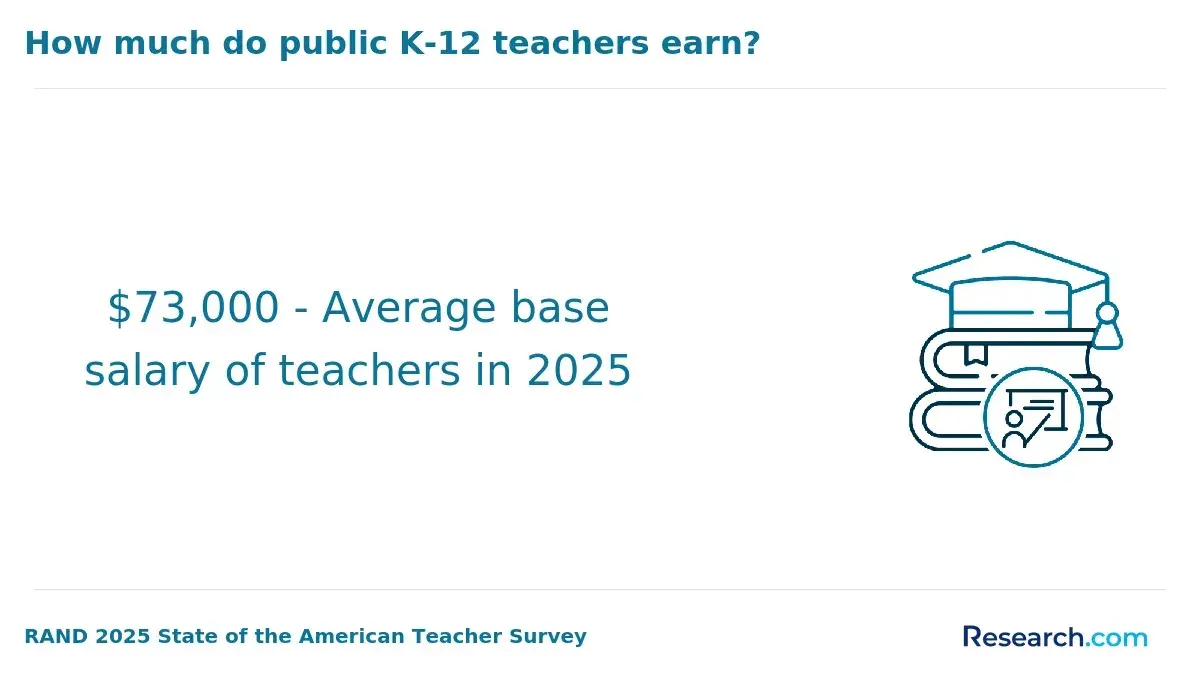
According to the National Center for Education Statistics (NCES), public school secondary teachers earned a median salary of $72,105 in the 2024. Salary can still differ substantially based on location, years of experience, education level, subject area, and district size (National Center for Education Statistics, 2025).
- Experience: Teachers generally move up salary schedules as they gain years of service.
- Location: Districts in higher-cost regions may offer higher salaries, although purchasing power can still vary.
- School District: Compensation differs across districts because of funding, contracts, and local labor market conditions.
- Subject Area: Some areas may have stronger demand for certain teaching fields, which can affect hiring opportunities.
Beyond Base Salary
Compensation is not limited to salary. Many public school teachers also receive benefits that can significantly affect total compensation.
- Health insurance: Many schools provide health coverage options for teachers and eligible family members.
- Retirement plans: Teachers may participate in pension systems, 401(k) programs, or other retirement arrangements.
- Paid time off: Teachers commonly receive sick leave, personal days, and scheduled school breaks under district policies.
Master's Degree Impact
A master’s degree may support financial growth in several ways, but the outcome depends on local rules and available roles.
- Higher Salary Schedule Placement: Some districts place teachers with graduate degrees on higher salary lanes or steps.
- Leadership Opportunities: Graduate education can support eligibility for department chair, instructional coach, or other teacher-leader positions.
- Expanded Career Options: A master’s may help educators compete for curriculum specialist, consultant, or advanced instructional roles.
Exploring Salary Data
For a broader look at compensation across education roles, review Research.com’s guide to masters in education jobs.
How does accreditation influence the quality of online Master's in Secondary Education programs?
Accreditation is one of the most important quality checks for an online master’s in secondary education. Institutional accreditation affects financial aid eligibility, credit transfer, employer recognition, and graduate school acceptance. Educator preparation accreditation or state approval can also matter if the program leads to licensure or endorsements.
Before applying, verify accreditation through the institution and relevant accrediting or state education agencies. Do not rely only on marketing language. Ask whether the program is approved for your intended credential, whether it has recent accreditation reviews, and whether graduates have been eligible for licensure in the states where they teach. Comparing standards across education fields, including online colleges for early childhood education, can also help you understand why approval and accreditation differ by teaching level.
What career support and networking opportunities do online Master's in Secondary Education programs provide?
Strong online programs do more than deliver courses. They connect students to advisors, faculty mentors, alumni, peer cohorts, school partners, licensure specialists, and career services. These supports can be especially important for online students who do not have daily access to campus offices.
Look for resume support, interview preparation, virtual networking events, district partnerships, alumni panels, mentorship options, and guidance on certification steps. Career services should also help students understand how different education degrees align with classroom, leadership, curriculum, and specialist roles.
What are the program outcomes and job placement statistics?
Program outcomes can help you judge whether a degree delivers real value. Ask schools for graduation rates, licensure exam pass rates if applicable, employment outcomes, field placement support, alumni satisfaction, and examples of roles graduates obtain. If a school cannot provide clear outcomes, ask why.
Be careful when comparing job placement data. Different programs track employment differently, and a high placement rate may reflect graduates who were already employed as teachers before enrolling. If you are comparing advanced education options, including cheapest EdD online programs, use outcome data alongside cost, accreditation, program purpose, and your own career goals.
What are the faculty qualifications and expertise in online Master's in Secondary Education programs?
Faculty quality affects the depth and usefulness of a graduate education program. Review faculty profiles for advanced degrees, classroom teaching experience, secondary education expertise, research areas, publications, professional service, and involvement in current school partnerships.
In practical terms, strong faculty should be able to connect theory with real classroom challenges: adolescent engagement, differentiation, assessment, classroom management, content-area literacy, technology use, and equity. Students exploring interdisciplinary education careers may also compare faculty and curriculum models in related programs such as an affordable MLIS degree online.
How can insights from child development enhance secondary education strategies?
Secondary teachers work with adolescents who are developing cognitively, socially, emotionally, and physically. Understanding child and adolescent development helps educators design age-appropriate instruction, manage behavior more effectively, support motivation, and respond to students’ academic and emotional needs.
Graduate programs that integrate development research can help teachers interpret student behavior, build stronger relationships, differentiate instruction, and support inclusive classrooms. For educators who want deeper preparation in developmental research, Research.com also reviews the best schools for masters in child development online.
How to Choose the Right Online Master’s in Secondary Education
The right program is the one that meets your professional goal with the least unnecessary cost, risk, and delay. Start with your desired outcome, then work backward.
- Define your goal. Decide whether you need initial licensure, an added endorsement, salary advancement, curriculum leadership preparation, or general professional development.
- Check state requirements. Contact your state education agency or district HR office to confirm whether the program fits your intended teaching license or salary lane.
- Verify accreditation. Confirm institutional accreditation and any educator preparation approval relevant to licensure.
- Compare total cost. Include tuition, fees, books, technology, testing, fieldwork, and time to completion.
- Review delivery format. Make sure asynchronous or live class requirements fit your work schedule and learning preferences.
- Ask about field placements. If practicum or student teaching is required, confirm where and how placements are arranged.
- Evaluate outcomes. Request graduation, licensure, employment, and alumni data where available.
- Talk to advisors and graduates. Ask direct questions about workload, faculty responsiveness, support services, and career impact.
The Transformative Journey to Excellence in Secondary Education
An online master’s in secondary education can be a practical way to strengthen teaching skills, qualify for certain advancement opportunities, or transition into secondary teaching. The degree is most valuable when it is accredited, aligned with licensure or employer requirements, affordable for your situation, and connected to your long-term career plan.
Before enrolling, compare programs carefully. Do not assume every online master’s leads to teacher certification, a salary increase, or the same career outcome. Ask schools for written details about accreditation, fieldwork, cost, outcomes, and licensure alignment. If your goal is school leadership rather than classroom instruction, you may also want to compare secondary education programs with online master's programs in educational administration.
Key Insights
- An online master’s in secondary education can be credible and career-relevant when it comes from an accredited institution and matches your state, district, or employer requirements.
- Licensure is the biggest decision point. Career changers should confirm whether the program leads to initial teacher certification in the state where they plan to teach.
- Online programs may reduce commuting and some campus-related costs, but total cost depends on credits, fees, fieldwork, testing, and time to completion.
- Public school secondary teachers earned a median salary of $72,105 in the 2024, according to NCES, but pay varies by district, experience, location, and salary schedule rules.
- High school teacher employment is projected to grow by 5% from 2024 to 2034, according to the U.S. Bureau of Labor Statistics (2025), but local hiring demand differs by subject and region.
- The best program choice depends on fit: accreditation, licensure alignment, faculty quality, field placement support, flexibility, affordability, and measurable outcomes.
- Common mistakes include choosing based only on tuition, ignoring accreditation, assuming online means no fieldwork, and expecting a guaranteed salary increase without checking district policies.
References:
- Hanson, M. (2023, January 2). Cost of online education vs. Traditional education [2023]: Comparison. Education Data Initiative. Education Data.
- The University of Alabama. (n.d.). Cost of attendance - financial aid | the University of Alabama. The University of Alabama.
- The University of Alabama Online. (n.d.). Tuition rates – online degrees – the University of Alabama. Online and Distance Degrees – UA Online. The University of Alabama Online.
- National Center for Education Statistics. (2025). Digest of Education Statistics: Salaries of public school teachers by level and type of school. Department of Education. National Center for Education Statistics.
- UnivStats.com. (2025). The University of Alabama 2025 tuition & fees. UnivStats.com.
- The University of Alabama Online. (2025). Tuition, financial aid & scholarships: Tuition rates. The University of Alabama Online.
- EducationData.org. (2025). The cost of online college: Tuition, fees, and savings. EducationData.org.
- U.S. Bureau of Labor Statistics. (2025). High school teachers: Occupational outlook handbook. U.S. Bureau of Labor Statistics.
Other Things You Should Know About Online Master's in Secondary Education Programs
Most 2027 online master’s in secondary education programs require 30 to 36 credit hours. Programs that include initial teacher licensure or a supervised practicum may require 39 to 45 credits, plus a classroom placement approved by the university and state education agency.
Yes, in 2027, several universities offer accelerated online master's programs in secondary education. These programs typically allow students to complete their degree in as little as one year, depending on course load and individual pace.
In 2027, universities such as the University of Florida and Penn State offer online master’s programs in secondary education with a STEM focus, addressing the increasing demand for science, technology, engineering, and math educators. These programs integrate interdisciplinary curricula specific to secondary education.