2027 Most Affordable Online Cybersecurity Degrees

Co-Founder and Chief Data Scientist
In this guide, we have discussed everything you need to know about having an online cybersecurity degree, including the requirements and costs. We have also highlighted some of the best online cybersecurity degree programs that you can enroll in to help you decide which one is best for you.
What are the benefits of pursuing an online cybersecurity degree?
There are also several benefits to obtaining an online cybersecurity degree, such as:
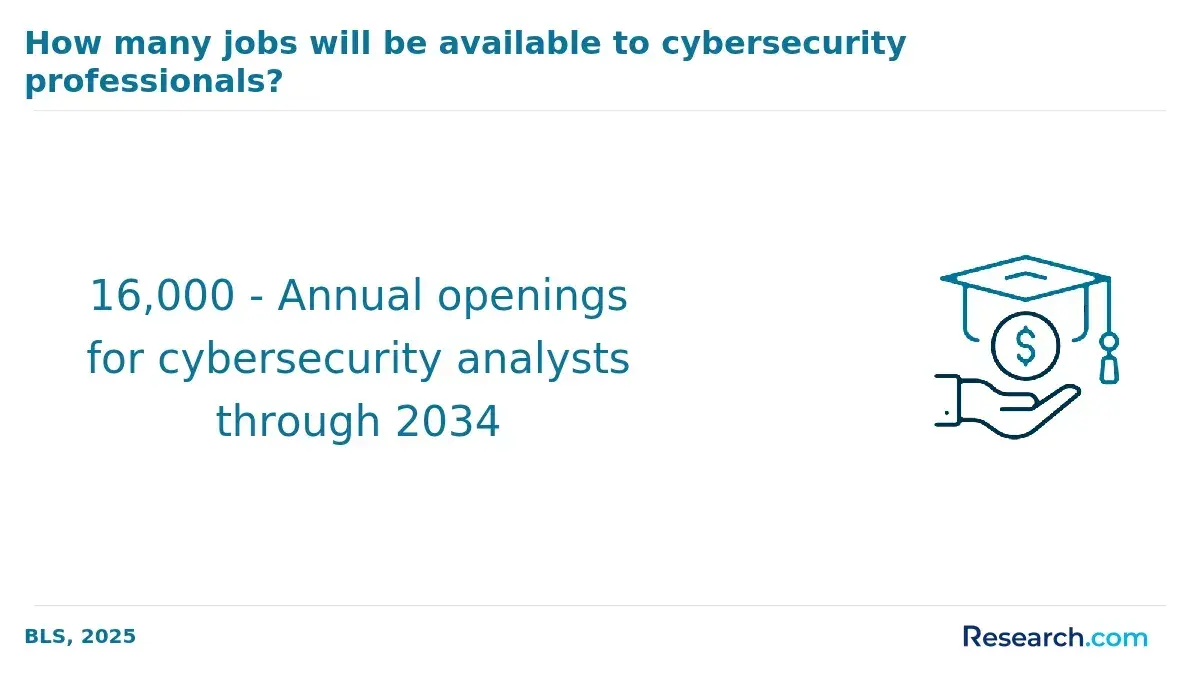
- The field of cybersecurity and information security analysis is projected to have a 29% increase in employment through 2034.
- The average salary of those working in cybersecurity is $132,962 as of March 2026.
- A degree in cybersecurity can provide the necessary skills and knowledge to work in one of the fastest-growing fields in this day and age.
What can I do with an online cybersecurity degree?
An online cybersecurity degree can open various career paths across different sectors. The job outlook for information security analysts is expected to grow by 29% from 2024 to 2034. Additionally, the job outlook for computer and information research scientists is projected to grow by 20%. Lastly, the job outlook for computer network architects is expected to grow by 12% during the same time frame.
Meanwhile, graduates looking to advance their studies can seek worthwhile graduate programs at cheap and best universities for MS in computer science.
If you are interested in pursuing roles in cybersecurity, here are some examples that you can choose from:
- Security Consultant: advising businesses on cybersecurity strategies, evaluating their systems, and suggesting improvements.
- Cybersecurity Analyst: Analyzing threats, monitoring security measures, and implementing solutions to safeguard systems and data.
- Information Security Manager: Overseeing an organization’s overall security posture, policies, and compliance.
- Security Software Developer: Creating and maintaining security software solutions to protect against cyber threats.
- Security Architect: Designing and implementing secure network systems and infrastructures.
- Incident Responder: An incident responder’s tasks include handling and mitigating cyber threats, investigating security breaches, and managing the response to security incidents.
Where can I work with an online cybersecurity degree?
If you want to work in high-paying jobs with a master’s in education, then you can start by completing a cybersecurity degree. The need for cybersecurity professionals is widespread across almost every industry, offering a broad spectrum of employment opportunities. Some of the potential workplaces include:
- Government Agencies
- Financial Institutions
- Tech Companies
- Retail and e-commerce
- Nonprofit Organizations
- Healthcare Organizations
- Energy and Utilities
- Education Institutions
How much can I make with an online cybersecurity degree?
According to our research, you can expect to make around $132,962 annually as a cybersecurity professional. This equates to about $63.92 per hour, which is higher than the average salary of other professions in the U.S. How much you can make with an online cybersecurity degree can also vary depending on your job position. Entry-level positions might start at $118,064 and will increase as you acquire more skills and experience in the field
- Can you get a degree completely online? Can you get a degree completely online?
- Will employers take my online degree seriously? Will employers take my online degree seriously?
- Are online degrees recognized all over the world? Are online degrees recognized all over the world?
- Online vs. Traditional Cybersecurity Degree Online vs. On-Campus
- What skills will I gain from an online cybersecurity degree? Skills
- How much does an online cybersecurity degree cost? Cost
- What are the requirements for an online cybersecurity degree? Requirements
- What certifications should you pursue alongside an online cybersecurity degree? Certifications
- Things to Look for in an Online Cybersecurity Degree Programs Things to Look for in an Online Cybersecurity Degree Programs
- Best Online Cybersecurity Degree Programs for 2027 List of Programs
- How can accelerated online programs expedite my cybersecurity career? How can accelerated online programs expedite my cybersecurity career?
- How to Build a Successful Cybersecurity Career Path How to Build a Successful Cybersecurity Career Path
- How do online cybersecurity degrees offer practical, hands-on experience? How do online cybersecurity degrees offer practical, hands-on experience?
- How does your location affect your cyber security salary? How does your location affect your cyber security salary?
- What are the emerging trends in cybersecurity education and career paths? What are the emerging trends in cybersecurity education and career paths?
- How can I finance my online cybersecurity degree? How can I finance my online cybersecurity degree?
- How can cybersecurity skills complement other high-growth industries? How can cybersecurity skills complement other high-growth industries?
- Is working in the cybersecurity industry a good career choice? Is working in the cybersecurity industry a good career choice?
- What job placement and career support resources are available with an online cybersecurity degree? What job placement and career support resources are available with an online cybersecurity degree?
- How can I assess the quality of an online cybersecurity degree program? How can I assess the quality of an online cybersecurity degree program?
- How are emerging technologies shaping online cybersecurity degrees? How are emerging technologies shaping online cybersecurity degrees?
Can You Earn a Cybersecurity Degree Fully Online?
Yes. A cybersecurity degree can be completed entirely online through many accredited colleges and universities. For students who are working, serving in the military, changing careers, or managing family responsibilities, online cybersecurity programs can make technical training more accessible without requiring relocation or daily campus attendance.
This guide explains how online cybersecurity degrees work, whether employers value them, what they cost, how to compare programs, which skills and certifications matter, and how to use the degree to build a cybersecurity career. The goal is simple: help you decide whether an online cybersecurity degree is the right investment for your time, budget, and career plans.
Online cybersecurity programs often cover information systems, networking, secure data storage, programming, cloud security, risk management, ethical hacking, and incident response. The flexibility is similar to other career-focused online pathways, such as online LPN programs, where students need a format that can fit around work and personal obligations.
Quick Answer: Is an Online Cybersecurity Degree Worth Considering?
An online cybersecurity degree is worth considering if it comes from an accredited institution, includes hands-on labs or applied projects, aligns with recognized cybersecurity roles, and fits your schedule and budget. Employers generally care more about accreditation, relevant skills, certifications, projects, and experience than whether the coursework was completed online or on campus.
However, not every online program offers the same value. Before enrolling, confirm accreditation, review the curriculum, compare total costs, ask about virtual labs and career services, and check whether the program prepares students for certifications such as CompTIA Security+, CISSP, CEH, CISM, or Cisco Certified CyberOps Associate.
Will Employers Respect an Online Cybersecurity Degree?
Employers are generally more likely to take an online cybersecurity degree seriously when the school is properly accredited and the program teaches job-relevant technical skills. Accreditation matters because it shows that the institution has gone through an external quality review. The same principle applies across fields; for example, a criminal justice online degree accredited by recognized bodies may open more doors than a credential from an unaccredited provider.
For cybersecurity hiring, the format of the degree is only one factor. Employers may also evaluate your lab experience, security tools knowledge, certifications, internships, portfolio projects, communication skills, and ability to explain technical risks clearly. A strong online graduate who has built projects, earned certifications, and practiced incident response can be competitive with a campus-based graduate.
That said, hiring preferences vary. Some employers may prefer applicants with in-person internships, security clearance eligibility, or prior IT experience. If you are targeting government, defense, healthcare, finance, or critical infrastructure roles, ask programs whether they have employer partnerships, career placement support, or preparation for sector-specific requirements.
Are Online Cybersecurity Degrees Recognized Internationally?
Online degrees can be recognized outside the United States when they are awarded by accredited institutions, but recognition is not automatic in every country, industry, or employer setting. If you plan to work internationally, verify how the country, employer, licensing body, or graduate school evaluates U.S. online credentials.
Distance education has become a normal part of higher education. In 2024, 26.4% of undergraduate students took online courses exclusively. Technology and business employers are often comfortable evaluating online degrees, especially when graduates can show technical competence. Other fields may have stricter clinical, licensure, or in-person requirements, as seen in programs such as accelerated nurse practitioner programs.
If your long-term plan includes global work, choose a well-known accredited institution, keep copies of syllabi and transcripts, and ask whether the degree title and delivery format will be listed differently on the diploma or transcript.
Online vs. Campus Cybersecurity Degree: Which Format Fits You?
The best format depends on how you learn, how much schedule flexibility you need, what type of hands-on support you want, and whether you can access strong local internship or networking opportunities. Online cybersecurity degrees can be practical and career-focused, but campus programs may offer more face-to-face mentoring, lab access, and local recruiting events.
The same comparison applies in many online degree decisions, including affordable online educational leadership programs: flexibility is valuable, but students still need to evaluate quality, support, and outcomes.
| Factor | Online Cybersecurity Degree | Campus Cybersecurity Degree |
| Schedule | Often better for working adults, parents, military learners, and career changers who need flexible study times. | Better for students who want fixed class times, in-person accountability, and a traditional college routine. |
| Location | Can be completed from any location with reliable technology and internet access. | Requires commuting or relocation unless the student already lives near the school. |
| Hands-on learning | May use virtual labs, simulations, cloud environments, and remote capstone projects. | May offer physical labs, in-person team projects, and direct access to campus technology resources. |
| Cost considerations | May reduce commuting, housing, and campus-related expenses, but students still need proper equipment. | May involve transportation, housing, parking, campus fees, and higher living expenses. |
| Networking | Depends heavily on virtual events, career services, alumni networks, and student initiative. | Can offer easier access to professors, student clubs, career fairs, and local employer visits. |
| Best for | Self-directed students who can manage deadlines, study independently, and seek support proactively. | Students who prefer in-person instruction, structured schedules, and campus community. |
Is an Online Cybersecurity Degree Usually Cheaper?
It can be, but students should compare the full cost rather than tuition alone. Some online programs charge lower tuition or reduce expenses related to commuting, housing, parking, and campus services. Online students may also use digital course materials instead of printed textbooks in some programs.
However, online learning has its own expenses. You may need a reliable computer, stable internet, security software, a headset, webcams, external storage, or lab fees. Some schools also charge technology or online learning fees. Before enrolling, ask for a complete cost breakdown that includes tuition, required fees, books, technology, graduation fees, and certification exam preparation if it is built into the program.
Is an Online Cybersecurity Degree as Good as an On-Campus Degree?
An online cybersecurity degree can be academically strong when it is offered by an accredited institution and supported by current labs, experienced faculty, security tools, and employer-aligned coursework. The delivery format does not automatically determine quality. Program design does.
Look for evidence that students practice real cybersecurity tasks: analyzing logs, hardening systems, identifying vulnerabilities, responding to incidents, writing security reports, and using industry tools. A program with weak hands-on learning may not prepare students well, even if the school is legitimate.
What Skills Can You Build in an Online Cybersecurity Degree?
A good online cybersecurity degree should help you build both technical and professional skills. Cybersecurity work is not only about tools; professionals must also assess risk, communicate clearly, document incidents, and make decisions under pressure.
| Skill Area | What You Learn | Why It Matters at Work |
| Network security | Firewalls, VPNs, intrusion detection, secure network design, and traffic analysis. | Organizations need professionals who can protect systems from unauthorized access and network-based attacks. |
| Risk assessment | How to identify vulnerabilities, evaluate likelihood and impact, and recommend controls. | Security teams must decide which risks are urgent and which defenses are worth funding. |
| Incident response | How to detect, contain, investigate, and document security events. | Fast, organized response can reduce damage during breaches or system compromises. |
| Encryption and data protection | How encryption, access controls, authentication, and secure storage protect sensitive information. | Data security is central in healthcare, finance, government, education, and technology organizations. |
| Compliance and governance | Frameworks and requirements such as GDPR and HIPAA, along with security policies and audits. | Many employers must meet legal, regulatory, or industry security obligations. |
| Technical fluency | Operating systems, scripting, programming basics, cloud environments, and security tools. | Cybersecurity professionals need enough technical depth to investigate, test, and secure systems. |
| Problem-solving | How to analyze incomplete information, test hypotheses, and respond to changing threats. | Security incidents rarely follow a script; professionals need structured judgment. |
| Communication | How to explain security risks, write reports, brief stakeholders, and document findings. | Security recommendations must be understandable to managers, users, and technical teams. |
| Continuous learning | How to keep up with new threats, tools, certifications, and attacker methods. | Cybersecurity changes quickly, so outdated skills lose value. |
How Much Does an Online Cybersecurity Degree Cost?
The cost of an online cybersecurity degree depends on the school, degree level, credit requirements, residency rules, fees, and whether the student receives transfer credit or financial aid. Cost comparisons should be handled carefully, much like evaluating exercise science degree cost factors across different institutions.
Residency can affect tuition at some schools because in-state or out-of-state rates may differ. However, some online programs use separate online tuition structures, so students should not assume residency will or will not affect the final price.
According to our research, an online undergraduate program in cybersecurity can cost between $25,520 and $44,880. A graduate degree can cost around $9,270 to $19,836, depending on the institution and the total number of credits required.
| Cost Item | Why It Matters | Question to Ask |
| Tuition | This is the largest visible cost, but not always the full cost. | Is tuition charged per credit, per term, or as a flat rate? |
| Fees | Technology, online learning, lab, graduation, and student service fees can add up. | What mandatory fees are not included in the advertised tuition? |
| Transfer credits | Accepted credits can shorten the program and reduce tuition. | How many prior credits can I transfer, and how will they apply to the major? |
| Technology | Cybersecurity courses may require capable hardware and reliable internet access. | What computer specifications and software access are required? |
| Certifications | Some programs include certification preparation, while others do not. | Are certification exam vouchers, preparation materials, or boot camps included? |
| Financial aid | A lower sticker price is not always cheaper after scholarships and aid are applied. | What grants, scholarships, employer benefits, or payment plans are available? |
Is an Online Cybersecurity Degree Worth the Investment?
An online cybersecurity degree can be worth it when it helps you qualify for roles you could not access otherwise, builds practical skills, and fits your financial situation. It may be especially valuable for students who need flexibility, cannot move near a campus, or want to continue working while studying.
It may not be the right choice if you struggle with self-directed learning, need constant in-person support, or choose a program without strong labs, accreditation, or career services. Before enrolling, compare the program’s total cost with your likely career path, the time required to complete it, and the experience or certifications you may still need after graduation.
What Are the Admission Requirements for an Online Cybersecurity Degree?
Admission requirements vary by school and degree level. As with choosing an education degree, students should check each institution’s requirements rather than assuming all programs use the same standards.
| Requirement | Bachelor’s Degree Programs | Master’s Degree Programs |
| Prior education | Usually a high school diploma or GED equivalent. | Usually a bachelor’s degree, sometimes in a related technical field. |
| Transcripts | High school and any prior college transcripts are commonly required. | Undergraduate transcripts are commonly required. |
| Test scores | Some schools may ask for SAT or ACT scores. | Some programs may request GRE scores. |
| Technical background | Introductory programs may accept beginners, though basic computer skills help. | Advanced programs may expect coursework or experience in IT, networking, programming, or cybersecurity. |
| Recommendations | Some institutions may request them, but requirements vary. | Graduate programs are more likely to request academic or professional recommendations. |
| Prerequisite planning | Students may need math, computing, or introductory IT coursework. | Applicants without a technical background may need bridge or prerequisite courses, similar to how students entering a masters in educational psychology may need suitable prior preparation. |
Which Certifications Pair Well With an Online Cybersecurity Degree?
A degree can establish broad academic preparation, while certifications can signal job-specific competence. Many cybersecurity employers value certifications because they show familiarity with recognized security domains, tools, and practices.
| Certification | Best Fit | What It Signals |
| CompTIA Security+ | Students and early-career professionals. | Foundational knowledge in risk management, threats, controls, and security operations. |
| Certified Ethical Hacker (CEH) | Learners interested in penetration testing or vulnerability assessment. | Understanding of attacker techniques and ethical testing methods. |
| Certified Information Systems Security Professional (CISSP) | Experienced professionals pursuing advanced or leadership roles. | Broad expertise in security design, governance, implementation, and management. |
| Certified Information Security Manager (CISM) | Professionals moving toward security management. | Ability to oversee and manage information security programs. |
| Cisco Certified CyberOps Associate | Students targeting security operations center roles. | Preparation for monitoring, detecting, and responding to security events. |
When choosing certifications, start with your target job. A student aiming for security operations may prioritize different credentials than someone aiming for penetration testing, cloud security, or management. Some cyber security courses online include certification preparation, which can help students build focused skills before or alongside a degree.
How to Choose a High-Quality Online Cybersecurity Degree Program
The cybersecurity labor market remains a major reason students consider this field. The global cybersecurity workforce gap was 4.8 million in 2024, after earlier estimates of about one million job openings in the industry. Demand alone, however, does not make every degree a smart investment. Program quality matters.
Key Tech Areas That Are Understaffed

Use the following factors to compare programs before applying:
- Accreditation: Confirm that the institution is accredited before you evaluate anything else. This is essential whether you are comparing cybersecurity programs or unrelated online options such as online psyd programs.
- Curriculum fit: Review whether courses cover networks, systems, cloud security, secure coding, risk management, digital forensics, incident response, governance, and hands-on labs.
- Applied learning: Look for virtual labs, simulations, capstone projects, case studies, competitions, or internship options. Cybersecurity cannot be learned through readings alone.
- Faculty background: Check whether instructors have academic credentials, professional cybersecurity experience, research activity, or industry certifications.
- Technology access: Ask what tools, virtual environments, cloud platforms, and lab resources students can use from home.
- Cost and aid: Compare tuition, fees, transfer credit policies, scholarships, employer tuition benefits, and payment options.
- Career services: Evaluate resume help, interview preparation, employer connections, virtual career fairs, alumni networks, and internship support.
- Student support: Online students need access to tutoring, advising, technical support, library resources, and faculty communication.
Common Mistakes to Avoid When Choosing an Online Cybersecurity Program
| Mistake | Why It Can Hurt You | Better Approach |
| Choosing a program without checking accreditation | An unaccredited school can limit transfer options, graduate study, employer recognition, and financial aid eligibility. | Verify institutional accreditation before applying. |
| Comparing only tuition | Fees, books, equipment, transfer policies, and certification costs can change the true price. | Request the full estimated cost of attendance. |
| Ignoring hands-on learning | Cybersecurity employers often expect practical ability, not only theory. | Look for labs, projects, simulations, and internship opportunities. |
| Assuming the degree alone is enough | Many roles also value certifications, IT experience, projects, and communication skills. | Build a portfolio, prepare for certifications, and seek applied experience. |
| Overlooking transfer credit rules | You may pay for courses you do not need if prior credits are not evaluated early. | Ask for a transfer credit review before committing. |
| Relying only on rankings | A highly ranked program may not fit your budget, schedule, or career goals. | Use rankings as one input, not the entire decision. |
Best Online Cybersecurity Degree Programs for 2027
Online cybersecurity programs differ in cost, credit requirements, accreditation, concentrations, and instructional model. The programs below are examples of online options students commonly compare when evaluating cybersecurity bachelor’s pathways.
Organizations continue to need people who can protect networks, systems, and sensitive data. A survey reported over 8,895 cybersecurity analysts working in the U.S., and the number is still expected to increase within the next decade.
Purdue Global
Purdue Global’s online bachelor’s degree in cybersecurity introduces students to cybersecurity fundamentals and the use of accepted and emerging practices to address real security problems. Students can also choose from multiple concentrations to align the degree with specific career interests.
- Program Length: Four Years
- Tracks/concentrations: cloud computing, data management, programming and analytics, software development, and many more.
- Cost per credit: $371
- Required Credits to Graduate: 180
- Accreditation: Computing Accreditation Commission of ABET
Dakota State University
DSU’s BS degree in cyber operations is designed for students who want a program centered on cyber operations. Coursework addresses threats such as data breaches, malware infections, software weaknesses, and attacker methods, making it relevant for students interested in finding and reducing security vulnerabilities.
- Program Length: Four Years
- Tracks/concentrations: cyber law and policy, web development, reverse engineering, data structures, and more.
- Cost per credit: $464.90
- Required Credits to Graduate: 120
- Accreditation: National Security Cyber Assistance Program (NSCAP) Accreditation
Regent University
Regent University’s bachelor of science in cybersecurity program is built for students seeking entry or advancement in technology and network security. The program emphasizes digital strategies that help protect organizational data resources, and online students may study part time or full time.
- Program Length: Four Years
- Tracks/concentrations: digital forensics, systems security, ethics for computer science, management of information security, and more.
- Cost per credit: $450 (part-time), $395 (full-time).
- Required Credits to Graduate: 120
- Accreditation: National Security Cyber Assistance Program (NSCAP) Accreditation
University of Arizona Global Campus
UAGC offers an online bachelor’s degree in cyber and data security technology for students who want to study cybercrime, data breaches, identity theft, and information security principles. The program includes domestic and international information security topics. UAGC also offers an accelerated cyber and data security technology program that can be completed within five to six weeks.
- Program Length: Four Years
- Tracks/concentrations: computer forensics, risk management and infrastructure, computer networking, and more.
- Cost per credit: $500
- Required Credits to Graduate: 120
- Accreditation: WASC Senior College and University Commission (WSCUC)
Western Governor’s University
WGU’s online B.S. Cybersecurity and Information Assurance degree is a computer systems-focused program that develops knowledge of IT security principles. It may appeal to students interested in roles connected to the Department of Homeland Security (DHS) and the National Security Agency. WGU also includes 15 of the top industry certifications for students who want to strengthen their credentials during the program.
- Program Length: Four Years
- Tracks/concentrations: information systems security, scripting and programming, IT foundations, risk management, and more.
- Cost: $3,950 per six months
- Required Credits to Graduate: 120
- Accreditation: Northwest Commission on Colleges and Universities
Can an Accelerated Online Program Help You Enter Cybersecurity Faster?
Accelerated online cybersecurity programs can shorten the time to graduation by using compressed terms, year-round courses, transfer credits, or competency-based pacing. This can help motivated learners move into the job market sooner, but faster is not always better.
An accelerated format works best for students who can handle heavy reading, frequent assignments, lab work, and independent study. It may be risky for beginners who need more time to master networking, operating systems, scripting, and security fundamentals. To compare timelines across related technical degrees, see this guide to how long it takes to get a computer science degree.
How to Build a Cybersecurity Career Path After an Online Degree
A cybersecurity degree can support several career directions, but most graduates still need experience, certifications, and practical proof of skill. Building a cybersecurity career path usually means starting with technical foundations, gaining hands-on practice, and then specializing.
| Career Stage | Common Roles | What to Focus On |
| Entry level | Cybersecurity Analyst, IT Security Technician, Incident Response Analyst | Networking basics, system administration, CompTIA Security+, log analysis, ticketing, and documentation. |
| Mid level | Penetration Tester (Ethical Hacker), Security Engineer, Cybersecurity Consultant | Specialized tools, cloud environments, vulnerability testing, security architecture, and client or stakeholder communication. |
| Senior and leadership | Security Architect, Chief Information Security Officer (CISO), Director of Security Operations | Strategy, governance, risk management, team leadership, budgeting, incident planning, and executive communication. |
Step 1: Build a Technical Base
Start with networking, operating systems, scripting, cloud fundamentals, and basic security concepts. These foundations make advanced security topics easier to understand.
Step 2: Add Practical Experience
Use labs, projects, internships, capture-the-flag exercises, help desk work, or home lab practice to show that you can apply what you learn.
Step 3: Match Certifications to Your Target Role
Entry-level students may start with CompTIA Security+ or CEH, while experienced professionals may pursue CISSP, CISM, or role-specific credentials.
Step 4: Specialize Over Time
Common specializations include security operations, penetration testing, digital forensics, cloud security, governance and risk, secure software development, and cybercrime investigation.
How Do Online Cybersecurity Programs Provide Hands-On Training?
Strong online cybersecurity programs use virtual labs, simulated attacks, cloud-based environments, security operations exercises, and capstone projects to help students practice real tasks. These activities allow students to work with systems and scenarios safely without putting live organizational data at risk.
Students should ask whether labs are self-paced or instructor-guided, whether the school provides tool access, and whether projects can be added to a portfolio. Applied practice is important across digital programs; for example, online game development programs also show how project-based learning can help students demonstrate practical ability.
How Does Location Affect Cybersecurity Salary?
Cybersecurity pay can vary by region because of local employer demand, cost of living, industry concentration, remote work policies, and experience requirements. A role in a finance, technology, government, or defense market may pay differently from a similar role elsewhere.
Students should compare job markets before assuming a degree will lead to the same salary everywhere. For state-level comparisons, review this guide to cyber security salary by location.
What Trends Are Shaping Cybersecurity Education and Careers?
Cybersecurity education is changing as employers face more complex threats and depend on cloud systems, remote work, artificial intelligence, and connected devices. Programs are responding by adding more applied labs, cloud security content, threat analysis, secure coding, digital forensics, and governance topics.
Students interested in criminal activity, investigations, and digital evidence may consider a specialized cybercrime degree online. Others may build expertise through certifications in ethical hacking, forensic analysis, security operations, or cloud security.
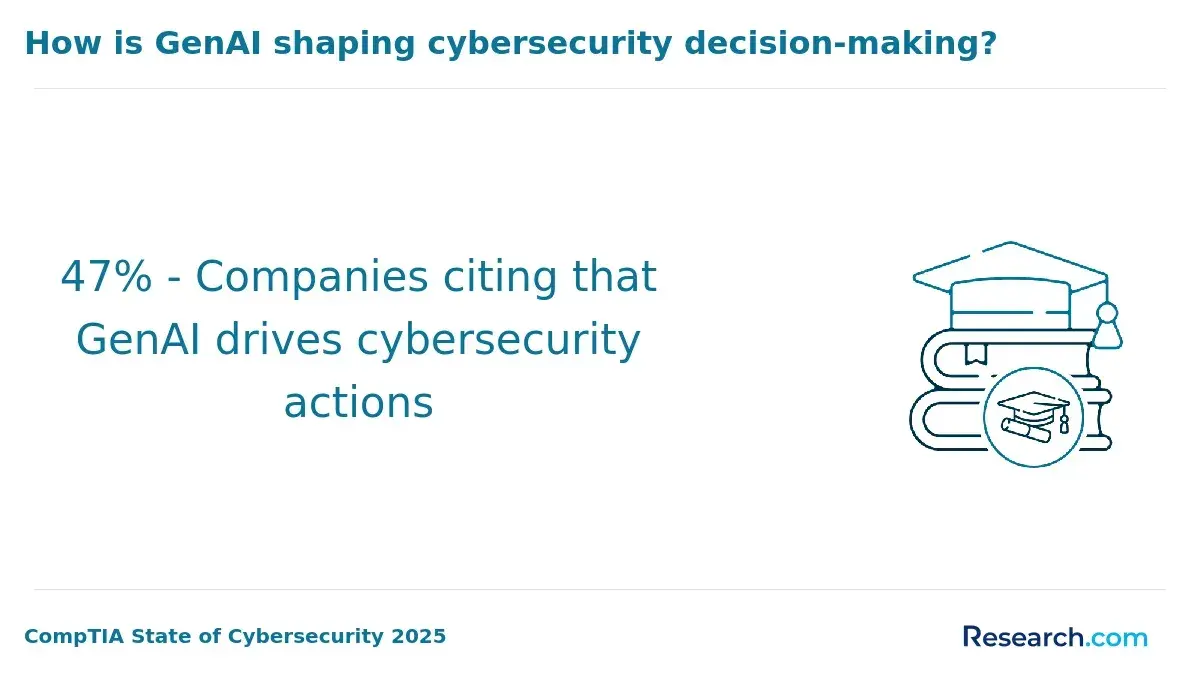
Artificial intelligence is also influencing the field. Security teams may use automation and analytics to detect suspicious activity, while attackers may use new tools to scale phishing, social engineering, or vulnerability discovery. Graduates should expect continuous learning to be part of the profession.
How Can You Finance an Online Cybersecurity Degree?
Financing an online cybersecurity degree requires more than finding the lowest advertised tuition. Students should compare federal and state financial aid, scholarships, grants, employer tuition reimbursement, military education benefits, transfer credits, and payment plans.
Start by estimating the total program cost, then subtract confirmed aid rather than possible aid. If affordability is your top priority, compare options through resources focused on cyber security schools online. Ask each school whether online students qualify for the same scholarships, advising, and career services as campus students.
Can Cybersecurity Skills Transfer to Other Industries?
Cybersecurity skills are useful beyond traditional IT departments. Healthcare, finance, education, government, manufacturing, retail, energy, and biotech organizations all need to protect sensitive data, systems, intellectual property, and customer information.
For example, professionals exploring careers in biotech may find that cybersecurity knowledge is valuable when protecting research data, proprietary systems, and regulated information. Combining security expertise with industry-specific knowledge can make a candidate more useful in specialized environments.
Is Cybersecurity a Good Career Choice?
Cybersecurity can be a strong career choice for people who enjoy technology, problem-solving, continuous learning, and high-stakes decision-making. The field offers many paths, including security operations, ethical hacking, incident response, threat intelligence, digital forensics, cloud security, compliance, and security engineering.
It is not a low-pressure field. Security incidents can be urgent, complex, and stressful. Professionals may need to respond quickly, document carefully, and communicate with nontechnical leaders during sensitive situations. Students should build both technical confidence and the ability to stay organized under pressure.
What Career Support Should an Online Cybersecurity Program Offer?
Career support can make a major difference for online students, especially those changing careers or entering cybersecurity without prior IT experience. Look for programs that provide resume review, interview coaching, internship support, employer partnerships, virtual career fairs, alumni networking, and mentorship.
Students interested in broader technology roles may also consider adding complementary knowledge through an artificial intelligence degree online, especially if they want to work at the intersection of AI, data, automation, and security.
How Can You Judge the Quality of an Online Cybersecurity Degree?
To evaluate quality, look beyond marketing language. A strong program should have accreditation, current cybersecurity coursework, hands-on labs, qualified faculty, accessible student support, transparent costs, and evidence of career preparation.
Use the same careful comparison process you would apply when reviewing other technical programs, such as cheap online bioinformatics masters options. The lowest-cost program is not always the best fit if it lacks applied training or employer-aligned coursework.
How Are Emerging Technologies Changing Online Cybersecurity Degrees?
Online cybersecurity programs increasingly use virtual environments, cloud-based labs, machine learning concepts, and simulated threat scenarios to mirror modern security work. These tools can help students practice analysis, incident response, and risk management in realistic settings.
Cybersecurity is also becoming more interdisciplinary. Students may benefit from understanding artificial intelligence, data science, software development, and cloud computing. For learners comparing adjacent technology pathways, resources on the fastest artificial intelligence degree online programs can provide context on how AI-focused education overlaps with security work.
Questions to Ask Before Enrolling
- Is the institution accredited, and by which accrediting body?
- Will the diploma or transcript identify the program as online?
- How many credits are required, and how many transfer credits will the school accept?
- What is the total cost, including fees, labs, books, software, and technology?
- Does the program include virtual labs, simulations, capstones, or internships?
- Which certifications does the curriculum prepare students for?
- What cybersecurity tools and platforms will students use?
- What career services are available to online students?
- Are faculty members experienced in cybersecurity practice, research, or both?
- What support is available if you struggle with technical coursework?
References
- Cybersecurity Guide (2026). Top affordable online cybersecurity master degree programs. https://cybersecurityguide.org/rankings/most-affordable-online-masters/
- Dakota State University. (n.d.). Online tuition by credit hour. https://dsu.edu/admissions/online/cost-aid/index.html
- ISC2 (2024). 2024 ISC2 Cybersecurity Workforce Study. https://www.isc2.org/Insights/2024/10/ISC2-2024-Cybersecurity-Workforce-Study
- MastersInAI.org (2026). The Most Affordable Online Bachelor's in Cybersecurity Degree Programs for 2026. https://www.mastersinai.org/degrees/affordable-online-cybersecurity-degrees/
- National Center for Education Statistics (2024). Number and percentage of students enrolled in degree-granting postsecondary institutions, by distance education participation, location of student, level of enrollment, and control and level of institution. https://nces.ed.gov/programs/digest/d24/tables/dt24_311.15.asp https://nces.ed.gov/fastfacts/display.asp?id=80
- Salary.com. (2026). Entry Level Cyber Security Analyst Salary. https://www.salary.com/research/salary/posting/entry-level-cyber-security-analyst-salary
- U.S Bureau of Labor Statistics. (2025). Occupational Handbook for Information Security Analysts. https://www.bls.gov/ooh/computer-and-information-technology/information-security-analysts.htm#tab-6
- Zippia (2025). Cyber security analyst demographics and statistics in the US. https://www.zippia.com/cyber-security-analyst-jobs/demographics/
- ZipRecruiter. (2026). Cyber Security Salary. https://www.ziprecruiter.com/Salaries/Cyber-Security-Salary
Key Insights
- An online cybersecurity degree can be credible if it comes from an accredited institution and includes practical, employer-relevant training.
- Program format matters less than program quality. Prioritize accreditation, hands-on labs, current tools, faculty expertise, career services, and transparent costs.
- Online undergraduate cybersecurity programs in our research cost between $25,520 and $44,880, while graduate programs cost around $9,270 to $19,836.
- Certifications can strengthen a degree. CompTIA Security+ is often useful for beginners, while CISSP, CISM, CEH, and Cisco Certified CyberOps Associate support more specialized paths.
- Cybersecurity careers can be rewarding but demanding. Students should prepare for continuous learning, technical troubleshooting, documentation, and pressure during incidents.
- The smartest program choice is not always the cheapest or fastest option. Choose the degree that best matches your career target, learning style, support needs, and budget.
Other Things You Should Know About Affordable Online Cybersecurity Degrees
Many affordable online cybersecurity degrees include a capstone in the final term. Students usually complete a hands-on project, a written report, and a presentation using tools such as Wireshark, Kali Linux, or SIEM software. Some programs require 120 total credit hours before the capstone is approved.
Admission requirements for affordable online cybersecurity degrees in 2027 typically include a high school diploma or GED, a minimum GPA (often around 2.5), and standardized test scores like the SAT or ACT. Some programs may also request prior coursework in math or computer science.