2027 Fastest Accredited Online Clinical Psychology Programs: Accelerated Degrees and Completion Times

Co-Founder and Chief Data Scientist
The hard part is not finding an online clinical psychology program; it is knowing which one can be finished quickly without creating accreditation, transfer, or licensure problems. The Bureau of Labor Statistics projects psychologist employment to grow 7% from 2024 to 2034, so speed matters for students planning graduate study or mental health careers.
This guide explains accelerated online clinical psychology options, who they fit, and how course length, transfer credits, prerequisites, residency requirements, and fieldwork can change the real graduation date.
Key Things You Should Know
- The fastest accredited online clinical psychology path is usually a bachelor's-completion program: students entering with about 60 to 90 transferable credits may finish the remaining coursework in roughly 12 to 24 months, while first-time students usually need about 3 to 4 years.
- Accelerated formats commonly use 4-week, 5-week, 7.5-week, 8-week, or 10-week courses, but shorter terms compress the workload rather than reduce it; clinical placements, practica, internships, and state licensure rules can still extend graduate-level timelines.
- Many online bachelor's programs accept up to 75% of a 120-credit degree, or about 90 credits, through transfer and prior learning, but doctoral clinical psychology licensure paths usually require APA-accredited doctoral study and supervised clinical training that cannot be skipped.
Which Colleges Offer the Fastest Accredited Online Clinical Psychology Programs?
The "fastest" accredited online clinical psychology program depends on degree level. At the undergraduate level, speed usually comes from transfer-friendly bachelor's programs with clinical, counseling, mental health, or behavioral health concentrations. At the doctoral level, the fastest credible option is rarely "fast" because clinical psychologist licensure requires advanced clinical training, supervision, and state approval.
The table below compares commonly available U.S. online or online-hybrid options that are relevant to clinical psychology preparation. Use it as a shortlist, not as a guarantee: schools can update catalogs, tuition, transfer limits, residency rules, and clinical placement policies:
| College or program type | Accreditation to verify | Acceleration features | Realistic completion-time notes |
| Liberty University, BS in Psychology: Clinical/Counseling online | Institutional accreditation through SACSCOC | 8-week online courses, 120-credit bachelor's structure, large transfer-credit allowance | Transfer-rich students may finish in about 1 to 2 years; first-time students typically need closer to 3.5 to 4 years. |
| Southern New Hampshire University, BA in Psychology with mental health focus online | Institutional accreditation through NECHE | 8-week undergraduate terms, 120-credit structure, up to 90 transfer credits commonly allowed | Fastest for students with substantial prior college credit; students starting from zero should plan for a traditional bachelor's timeline. |
| University of Central Florida Online, BS in Psychology with clinical psychology track | Institutional accreditation through SACSCOC | Public online degree pathway, clinical psychology track, strong fit for transfer students entering with lower-division credits | Often most efficient for students who already completed an associate degree or about 60 credits; full degree timelines remain longer. |
| Purdue Global, online psychology bachelor's pathways with behavioral health-related options | Institutional accreditation through HLC | Online terms, transfer-credit review, prior learning credit options | Can be faster for adults with military, professional, or prior college learning; clinical psychologist licensure still requires graduate study. |
| Pepperdine University, online MA in Clinical Psychology-related counseling pathway | Institutional accreditation through WSCUC; state licensure alignment should be verified | Online coursework with supervised clinical training requirements | Often advertised around a little over 2 years, but practicum site availability and state rules may control the actual finish date. |
| Fielding Graduate University, PhD in Clinical Psychology hybrid/distributed model | Institutional accreditation through WSCUC and APA accreditation for the doctoral clinical psychology program | Hybrid doctoral format with online learning, in-person components, practica, internship, and dissertation | Usually a multi-year doctoral path, commonly 5 years or more; faster than some campus-only paths for certain adults, but not an accelerated shortcut. |
For most students searching for the fastest accredited online clinical psychology degree, the practical answer is a transfer-friendly online bachelor's program followed by a carefully chosen graduate pathway. A bachelor's degree can be accelerated; clinical licensure preparation is harder to compress because supervised practice and state board rules protect client safety.
How Long Does It Take to Complete an Accredited Online Clinical Psychology Degree?
Completion time depends on where you start. "Advertised completion time" often assumes continuous enrollment, accepted transfer credits, no repeated courses, and an approved field placement on schedule. "Realistic completion time" includes course availability, advising delays, prerequisite sequencing, employment obligations, and clinical training requirements.
The table below summarizes typical timelines by degree type. It is especially useful if you are deciding whether to enter a bachelor's-completion program, a master's program, or a doctoral clinical psychology route:
| Degree path | Typical credit structure | Fastest realistic online timeline | Who can usually meet the faster timeline |
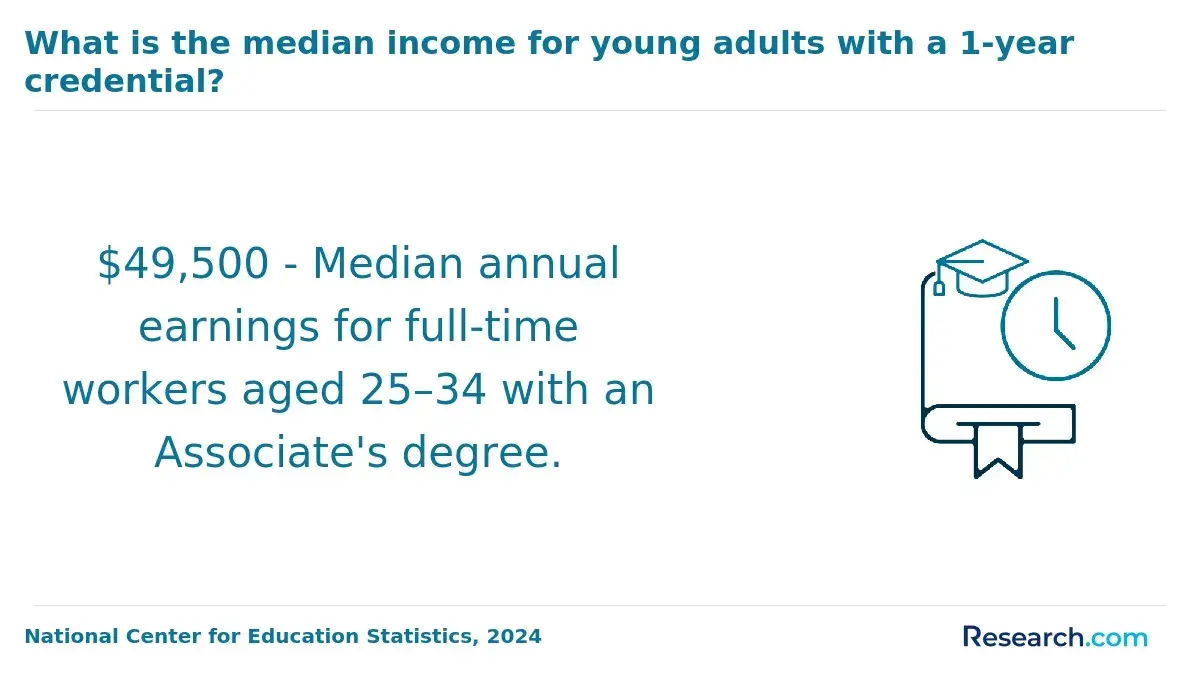
| Online bachelor's completion in psychology or clinical/counseling psychology | About 120 total credits, with many students transferring 60 to 90 credits | About 12 to 24 months | Students with an associate degree, prior general education credits, or approved military/professional learning |
| Full online bachelor's degree starting with no transfer credit | About 120 credits | About 3 to 4 years with year-round full-time enrollment | Students who can take heavy course loads through summer and accelerated terms |
| Online master's in clinical psychology, counseling psychology, or mental health counseling | Often 48 to 72 graduate credits, depending on licensure design | About 2 to 3 years | Students who meet prerequisites and can complete practicum or internship placements without interruption |
| Online-hybrid PhD or PsyD in clinical psychology | Doctoral coursework, practica, dissertation or project, internship, and supervised training | About 5 to 7 years in many cases | Students with strong preparation, flexible schedules, and access to approved clinical training sites |
A shorter term does not always mean a shorter degree. For example, two 8-week courses taken at the same time can feel like a full semester's worth of reading, writing, exams, and projects compressed into half the calendar time. Students who need high grades for graduate admission should consider whether speed could weaken academic performance.
How Do Accelerated and Competency-Based Online Clinical Psychology Programs Work?
Accelerated online clinical psychology programs usually work by changing the calendar, not by removing core learning outcomes. Competency-based programs go further by allowing students to progress after demonstrating mastery, but true competency-based clinical psychology options are more common at the general psychology or behavioral science level than in licensure-focused clinical training.
The main acceleration models below affect time to completion in different ways. Understanding the model helps you estimate whether the advertised pace is realistic for your schedule:
- Short-course terms compress a standard course into 4, 5, 7.5, 8, or 10 weeks, allowing more start dates and more courses per year.
- Year-round enrollment removes long summer breaks, which can help full-time students complete additional credits each year.
- Transfer-heavy bachelor's completion lets students enter with lower-division credits already finished, so only major, elective, and residency credits remain.
- Prior learning assessment may award credit for military training, workplace learning, standardized exams, or professional certifications when the school's policy allows it.
- Competency-based progress can be faster for students who already know the material, but it requires strong self-direction and may not fit every graduate-school prerequisite expectation.
The trade-off is intensity. A student taking one 8-week course at a time may move steadily but not dramatically faster. A student taking two or three accelerated courses while working full time may finish sooner, but the risk of burnout, lower grades, or withdrawal rises.
What Accreditation Should an Online Clinical Psychology Program Have?
Accreditation is the line between a degree that supports your next step and one that may create problems with transfer, graduate admission, financial aid, or licensure. For online clinical psychology programs, you should separate institutional accreditation, programmatic accreditation, and state licensure approval.
Institutional accreditation applies to the whole college or university and should come from an accreditor recognized by the U.S. Department of Education or CHEA. Programmatic accreditation is different: APA accreditation is the key standard for doctoral clinical psychology programs, while CACREP or MPCAC may matter for counseling programs, depending on the state and career goal.
Clinical psychology has more licensure risk than many online degrees. This is similar to regulated health fields such as online PharmD programs, where the degree format is less important than whether the program meets professional and state requirements.
Before enrolling, verify these accreditation and approval points directly with the school and the relevant state board:
- The institution is accredited by a recognized institutional accreditor.
- The doctoral clinical psychology program is APA-accredited if your goal is to become a licensed clinical psychologist in a state that expects or strongly prefers APA training.
- The master's program is designed for the license you actually want, such as LPC, LMHC, LMFT, or another state-specific credential.
- The online format is accepted by your intended licensing board, employer, or graduate school.
- Practicum, internship, residency, and in-person requirements can be completed where you live.
Do not rely only on the word "accredited" in marketing copy. Ask which accreditor, which program, which license, and which state rules are being addressed.
How Can Transfer Credits and Prior Learning Shorten an Online Clinical Psychology Degree?
Transfer credit is often the biggest factor separating a genuinely fast online clinical psychology degree from a standard timeline. Many bachelor's programs require about 120 credits, so entering with 60 to 90 accepted credits can remove one to three years of coursework.
The table below shows how transfer and prior learning may affect graduation time. The exact result depends on whether the credits meet general education, major, elective, residency, and upper-division requirements:
| Credit situation | Possible time saved | Main limitation |
| Associate degree or about 60 transferable credits | Often reduces a bachelor's timeline to about 2 years | Some credits may transfer as electives instead of required psychology or general education courses. |
| Up to about 90 transferable credits accepted | May reduce remaining study to about 1 year of full-time work | Schools usually require a minimum number of credits completed in residence. |
| AP, CLEP, DSST, military training, or ACE-reviewed learning | Can reduce lower-division or elective requirements | Credit awards vary widely by school, score, subject, and degree plan. |
| Prior graduate coursework | May reduce some master's or doctoral coursework | Clinical training, practicum, internship, and dissertation requirements are rarely waived in full. |
To shorten your degree without losing credits, follow a transfer-first process before committing to a program:
- Request unofficial transfer reviews from multiple schools before applying or depositing.
- Ask how each accepted course applies to the degree plan, not just whether it transfers.
- Confirm the maximum transfer limit and the minimum number of credits that must be completed at the school.
- Ask whether old psychology, statistics, biology, or research methods credits expire for the major.
- Get the final transfer evaluation in writing before building a graduation plan.
The common mistake is assuming that "90 credits accepted" means only 30 credits remain. If the remaining requirements include upper-division psychology, statistics, research methods, capstone, or residency credits, the calendar may still stretch beyond one year.
What Are the Admission Requirements and Start Dates for Accelerated Online Clinical Psychology Programs?
Accelerated online clinical psychology programs tend to have more frequent start dates than campus programs, but admissions requirements still vary by level. Bachelor's programs may offer monthly or term-based starts, while graduate clinical programs often admit by cohort because practicum sequencing and supervision are harder to schedule.
The admissions items below can affect how quickly you start and how quickly you finish. Missing one requirement can delay enrollment by an entire term or cohort cycle:
- Bachelor's applicants usually submit high school transcripts, prior college transcripts, transfer evaluations, and sometimes placement or readiness requirements.
- Master's applicants commonly need a bachelor's degree, minimum GPA, personal statement, recommendations, prerequisite coursework, and sometimes an interview.
- Doctoral clinical psychology applicants often need stronger research preparation, psychology prerequisites, recommendations, interview performance, and a clear fit with faculty or training model.
- Clinical programs may require background checks, immunizations, liability insurance, site approval, or state-specific paperwork before fieldwork begins.
- Rolling-start undergraduate programs may begin every few weeks, while cohort-based graduate programs may only start once or a few times per year.
If you are comparing clinical psychology with other healthcare paths, remember that patient-facing programs often have placement limits. For example, students looking at ultrasound tech online programs also need to account for clinical site availability, not just online coursework.
Students who want the fastest start should complete transcript requests early, ask about the next available term, and verify whether the program requires prerequisite courses before the first major or graduate course.
How Much Does a Fast Online Clinical Psychology Degree Cost, and Is Financial Aid Available?
A fast online clinical psychology degree is not automatically cheaper. Acceleration may lower living or opportunity costs if you graduate sooner, but heavy course loads can also increase short-term tuition bills, reduce work hours, or lead to dropped courses that cost more in the long run.
Recent national pricing data can help you frame the budget before comparing individual schools. College Board's 2024-25 pricing data shows why transfer credits and public options can materially change the total cost:
- Published tuition and fees averaged $11,610 for in-state students at public four-year institutions.
- Published tuition and fees averaged $43,350 at private nonprofit four-year institutions.
- Published tuition and fees averaged $4,050 at public two-year colleges, which can make community college transfer a cost-saving route for lower-division credits.
Use those figures as context, not as a quote for a specific online program. Online tuition may be charged per credit, per term, or by competency-based subscription period, and fees can include technology, books, background checks, clinical placement, residency travel, and graduation charges.
Financial aid may be available if the school and program are eligible for federal aid and you complete the FAFSA. Employer tuition assistance, military benefits, scholarships, payment plans, and state grants may also reduce out-of-pocket cost. Students comparing mental health roles with administrative healthcare careers may also want to review healthcare administration programs, which can have different fieldwork and licensure cost structures.
The best cost question is not "Which program is cheapest per credit?" It is "Which accredited program lets me use the most applicable credits, finish with the fewest repeated courses, and still meet my career or graduate-school requirements?"
Can You Work Full Time While Completing an Accelerated Online Clinical Psychology Degree?
You can work full time while completing some accelerated online clinical psychology programs, especially at the bachelor's level, but the realistic course load matters. A single accelerated course may be manageable; multiple 8-week courses plus research papers, statistics assignments, group projects, and exams can become difficult quickly.
The table below summarizes common enrollment patterns. It can help you choose a pace that is fast enough without risking grades or persistence:
| Enrollment pace | Best fit | Speed trade-off |
| One accelerated course at a time | Full-time workers, caregivers, and students returning after a long break | More sustainable, but may not shorten the total degree much unless transfer credits are high. |
| Two accelerated courses at a time | Students with predictable schedules and strong study habits | Can speed completion, but weekly workload may resemble a heavy full-time academic load. |
| Year-round full-time enrollment | Students prioritizing the fastest graduation date | Can reduce calendar time, but burnout and lower grades are real risks. |
| Graduate clinical coursework plus practicum | Students with flexible work hours or supportive employers | Clinical site schedules may conflict with traditional work hours. |
Students who need a shorter, more job-focused healthcare credential rather than a psychology degree may compare options such as the best medical coding online programs, which generally do not require the same clinical psychology training sequence.
A good rule is to protect your GPA if graduate school is part of your plan. Finishing three months faster is usually not worth repeating a statistics course, withdrawing from a practicum, or earning grades that weaken future applications.
Are Accelerated Online Clinical Psychology Degrees Respected by Employers and Graduate Schools?
Employers and graduate schools generally focus less on whether coursework was online and more on accreditation, curriculum, grades, supervised experience, skills, and fit with the role. An accelerated online degree from a properly accredited institution can be respected, but only if it matches the next credential or job requirement.
Clinical psychology is not a field where a bachelor's degree alone makes someone a licensed clinical psychologist. Bachelor's graduates may pursue roles in behavioral health support, case management, research assistance, human services, or graduate study. The Bureau of Labor Statistics reported a May 2024 median annual wage of $94,310 for psychologists, but that figure reflects roles that typically require advanced graduate education and licensure, not entry-level bachelor's positions.
Graduate schools may value strong grades in research methods, statistics, abnormal psychology, developmental psychology, and writing-intensive courses. Employers may value crisis communication, ethical judgment, documentation skills, cultural competence, data literacy, and experience with vulnerable populations.
If your long-term goal is healthcare leadership rather than clinical practice, an online masters in healthcare management may align better with management roles and may involve fewer clinical licensure constraints.
The respect question is ultimately practical: Will the degree be accepted by the graduate program, employer, licensing board, or certification body you plan to use next? If the answer is unclear, ask before enrolling.
How Should You Compare the Fastest Accredited Online Clinical Psychology Programs?
The fastest accredited online clinical psychology program for you is the one that minimizes wasted credits while protecting your academic record, accreditation status, and career eligibility. Do not rank programs by advertised completion time alone; rank them by your actual remaining requirements.
The table below gives a side-by-side comparison framework. Use it when speaking with admissions advisors so you can compare programs on the same terms:
| Comparison factor | Why it matters for speed | What to confirm |
| Transfer-credit fit | Accepted credits can remove semesters or years from a bachelor's plan. | How many credits apply to required courses, not only electives. |
| Term length | Short terms create more chances to complete credits each year. | Whether courses are 4, 5, 7.5, 8, 10, or 16 weeks. |
| Course availability | A required course offered only once per year can delay graduation. | When upper-division, capstone, statistics, and research courses are offered. |
| Fieldwork requirements | Clinical placements can control graduate timelines. | Who finds the site, who approves it, and whether sites are available near you. |
| Accreditation and licensure alignment | Wrong accreditation can block licensure or graduate admission. | Institutional accreditation, APA status for doctoral clinical psychology, and state board fit. |
| Total cost after transfer | Per-credit tuition can be misleading if many credits do not apply. | Estimated total remaining tuition, fees, books, travel, and clinical costs. |
Common mistakes can turn a "fast" program into a longer and more expensive path. Watch for these red flags before committing:
- Assuming accelerated means easier, when it usually means the same work in fewer weeks.
- Choosing a program before receiving a written transfer-credit evaluation.
- Ignoring APA accreditation when the goal is doctoral-level clinical psychologist licensure.
- Overlooking required residencies, campus visits, practica, internships, or supervised hours.
- Comparing only tuition per credit instead of total remaining cost.
- Taking too many accelerated courses at once and damaging the GPA needed for graduate admission.
- Assuming every state accepts the same online clinical training pathway.
The strongest next step is to create a personal completion map. List your accepted credits, remaining courses, term schedule, maximum course load, fieldwork requirements, and expected graduation term for each school. The fastest program on paper is only the best choice if it is also accredited, affordable, sustainable, and aligned with your intended career.
Other Things You Should Know About Clinical Psychology
Programs like Southern New Hampshire University and Arizona State University offer accelerated pathways enabling completion in as little as 20 months by 2027. Check for start dates and course intensiveness to match fast-track criteria. Always confirm accreditation status for eligibility.
APA-accredited clinical psychology doctoral programs may use hybrid or distributed formats, but they include in-person training, practica, internship, and residency-style requirements. Fully online doctoral clinical psychology paths should be reviewed very carefully with the APA directory and your state board.
The fastest online clinical psychology programs in 2027 generally require a bachelor's degree in psychology or a related field. Applicants may also need relevant work experience or prerequisite courses like abnormal psychology and statistics, depending on the program's specific entry requirements.
The most common reasons are fewer accepted transfer credits than expected, heavy course loads that lead to withdrawals, limited availability of required courses, and delays securing approved practicum or internship placements.
References
- Raising the Bar: The Impact of Accreditation on Psychology Training | SoMAP - The Society of Modern Applied Psychology https://thesomap.org/raising-the-bar-the-impact-of-accreditation-on-psychology-training/
- Hybrid PsyD Program: Accelerated, Comprehensive, and Blended Psychology Doctorate https://www.scuhs.edu/psyd-article/hybrid-psyd-program-accelerated-comprehensive-and-blended-psychology-doctorate/
- Explore One Year Psychology Master's Programs Online https://www.onlinemastersdegrees.org/best-programs/psychology/1-year-accelerated/
- Fastest Online Master's In Counseling Programs https://www.psychology.org/counseling/fastest-online-degrees/
- Why Choose to Train at a PCSAS-Accredited Program? - PCSAS https://pcsas.org/information-for-current-and-prospective-pcsas-students/why-choose-to-train-at-a-pcsas-accredited-program/
- Accelerated Online Master's in Counseling Degrees https://onlinecounselingprograms.com/online-counseling-degrees/accelerated/
- Accreditation standards, evidence guide and rules - APAC https://apac.au/education-providers/standards/