2027 Gerontology Careers: Guide to Career Paths, Options & Salary

Co-Founder and Chief Data Scientist
Gerontology Career Guide for 2026: What the Field Is, Who It Suits, and How to Start
If you are considering gerontology in 2026, the biggest question is not whether aging matters. It clearly does. The real question is which gerontology path fits your goals: direct care, clinical practice, research, policy, administration, housing, counseling, or education. Some paths require a license. Others do not. Some start with a certificate or associate degree, while others call for graduate study and supervised experience.
This guide breaks down what gerontology professionals do, what education they need, how salaries and job outlook vary by role, and how to compare online, part-time, and campus-based options. It also highlights ethical issues, technology changes, financial considerations, and common mistakes so you can choose a path with clearer expectations and less guesswork.
Quick Answer: Is Gerontology a Good Career Path?
Gerontology can be a strong choice if you want to work with older adults in healthcare, social services, research, administration, education, or advocacy. It is not a single occupation. It is a broad field with very different entry points and outcomes. Some roles are open to candidates with certificates or associate degrees. Others require a bachelor’s degree, graduate education, or state licensure. Earnings also vary widely by specialization, credential level, and location. In the cited 2024 data, the average annual salary of gerontologists was $65,720.
Why People Choose Gerontology
- It offers multiple career paths, from direct support to advanced clinical and research work.
- It connects to a major and growing need: helping older adults manage health, independence, housing, and care transitions.
- It can lead to higher-paying specialties. For example, gerontology counseling is listed at an average annual salary of $192,683 in 2024 data.
- It includes both clinical and nonclinical options, which makes it accessible to students from many backgrounds.
- It can support advancement in healthcare, nonprofit leadership, public health, and aging services.
- What does a gerontologist do?
- Why choose gerontology as a career?
- What is the job outlook for gerontology careers?
- What skills do gerontology professionals need?
- How do you start a career in gerontology?
- How can you move into advanced gerontology roles?
- What nontraditional jobs can gerontology graduates pursue?
- Can you study gerontology online or part time?
- What ethical issues should gerontology professionals understand?
- Which technologies are changing gerontology work?
- How can flexible online programs support career growth?
- What myths about gerontology careers should you ignore?
- What financial factors should you consider before enrolling?
- How can non-healthcare professionals enter gerontology?
- Can an advanced nursing degree speed up advancement?
- Why do accreditation and licensing matter?
- How does advanced clinical training fit into gerontology?
- What education options are available in gerontology?
- How can mentorship and professional networks help?
- When do bridge programs make sense?
- Can short-term online certificates improve your prospects?
- What trends will shape the future of gerontology?
What Graduates Say About Working in Gerontology
“The best part of the work is solving practical problems that affect daily life. You see how much difference good support can make for an older adult’s independence and confidence.” — Liam
“My path opened more doors than I expected. I started in a care setting and later moved into program management, where I now help shape wellness and social engagement for older adults.” — Benjamin
“This field rewards patience and listening. When you build trust with older adults and their families, the work becomes deeply meaningful.” — Carla
What Is a Gerontologist?
A gerontologist studies aging and uses that knowledge to improve services, systems, and outcomes for older adults. The role is broader than many people expect. A gerontologist is not the same as a geriatrician, who is a physician. Instead, gerontologists may work in healthcare coordination, social services, housing, policy, education, research, senior services, or advocacy.
Because aging affects many parts of life, gerontology includes physical health, mental health, cognitive change, family dynamics, mobility, caregiving, loneliness, housing, benefits, long-term care, and end-of-life planning. Some professionals interact directly with older adults. Others design programs, study trends, manage services, or advise organizations.
Common Work Settings for Gerontology Professionals
Gerontology professionals work in hospitals, nursing homes, assisted living communities, home health agencies, senior centers, universities, research institutes, public agencies, nonprofit organizations, and advocacy groups. Some also work in consulting, insurance, senior housing, and aging-related technology.
What Degree Do You Need for Gerontology?
There is no single required degree for all gerontology jobs. Programs in gerontology, nursing, social work, public health, psychology, sociology, biology, and healthcare administration can all lead into aging-related work. Students interested in behavioral health and aging may also review psychology degree career options, while those focused on biological aging or research can compare biology degree careers.
Higher-level roles often require graduate study, a license, or both. Experience also matters. Internships, volunteer work, supervised practice, research support, case management, and field placements can make a candidate more competitive.
| Education Level | Typical Purpose | Common Roles | Best Fit For |
| Certificate or diploma | Fast entry into support-focused training | Nursing aide, care support worker, social services assistant | Career changers or students testing the field |
| Associate degree | Entry-level direct care or administrative support | Geriatric care assistant, medical assistant, social services assistant | Students wanting a lower-cost starting point |
| Bachelor’s degree | Broader preparation for coordination and program roles | Geriatric care manager, senior housing manager, aging program coordinator | Students aiming for professional roles without immediate graduate school |
| Master’s degree | Advanced leadership, research, or specialized practice | Gerontological researcher, advanced care manager, program leader | Professionals seeking stronger advancement options |
| Doctorate | Teaching, research, executive leadership, or consulting | Professor, consultant, director of aging services | Those pursuing academic or senior leadership careers |
Why Pursue a Career in Gerontology?
Gerontology is attractive to people who want work that is practical, meaningful, and tied to a clear social need. Older adults often need help with healthcare decisions, transportation, housing, medication management, family support, cognitive changes, grief, mobility, and chronic conditions. Gerontology professionals help reduce confusion and improve quality of life during these transitions.
The field is also more flexible than many students realize. A gerontology background can lead to work in nursing, social work, occupational therapy, public health, senior living administration, nonprofit leadership, education, and policy. If you are comparing earnings and role options, you may also want to look at this guide to geriatric social work careers.
Who Gerontology Fits Best
- People who can communicate clearly and patiently with older adults, families, and care teams.
- Students who want a people-centered career with healthcare or social impact, but not necessarily a physician path.
- Professionals who like solving problems that involve health, emotion, family systems, and practical support.
- Nurses, social workers, counselors, researchers, and administrators who want to specialize in aging.
Who May Want a Different Path
- People who want work with little emotional intensity or family interaction.
- Students who strongly dislike illness, dementia care, grief, or end-of-life conversations.
- Applicants who want high earnings immediately without planning for licensure or advanced education.
- Professionals who prefer less documentation, fewer compliance rules, and minimal coordination with other providers.
What Is the Job Outlook for Gerontology Careers?
The outlook depends on the specific occupation. The title “gerontologist” covers many paths, and the strongest growth often appears in related healthcare, management, and research roles. For example, nurse practitioner jobs, including adult-gerontology nurse practitioners, are projected to grow by 44.5% from 2024 to 2034. Medical and health services management jobs are projected to grow by 28% during the same period, equal to 144,700 jobs.
These trends matter for long-term planning in aging services and related professions. Medical and health services managers earned a median annual salary of $110,680 as of May 2024.
Research-oriented gerontology roles can connect to medical science occupations. For medical scientists, jobs are projected to grow by 18%, compared with 3% for all occupations. In 2024, medical scientists earned a median annual salary of $108,760.
| Career Area | Projected Growth or Job Data | Salary Data Cited | What It Means for You |
| Nurse practitioners, including gerontology specialists | 44.5% growth from 2024 to 2034 | Gerontology nurse practitioners earned an average annual salary of $133,000 according to 2025 data | Best for candidates who want advanced clinical work and are willing to complete licensure and graduate training |
| Medical and health services management | 28% growth from 2024 to 2034; 144,700 jobs | Median annual salary of $110,680 as of May 2024 | Good for people who want operations, compliance, and care-system leadership |
| Medical science research | 18% growth; all occupations at 3% | Median annual salary of $108,760 in 2024 | Strong option for those interested in aging research and graduate study |
| General gerontology roles | Varies by employer and specialization | Average annual salary of $65,720 in 2024 | Outcomes depend heavily on role type, experience, and credential level |
What Skills Do Gerontology Professionals Need?
People who succeed in gerontology usually combine technical knowledge with strong people skills. The work often involves older adults dealing with chronic illness, cognitive decline, disability, caregiving stress, grief, family conflict, or financial strain. Good professionals stay organized, communicate clearly, and protect the dignity of the people they serve.
Core Knowledge Skills
- Aging knowledge: Understand physical, emotional, cognitive, and social changes associated with later life.
- Problem-solving: Identify barriers tied to housing, transportation, health, finances, safety, and benefits.
- Clear communication: Explain information to older adults, families, clinicians, and administrators in a way that is easy to follow.
- Documentation: Maintain accurate records, care plans, referrals, and follow-up tasks.
- Flexibility: Adjust to changing needs across hospitals, home care, long-term care, and community settings.
Interpersonal Skills
- Team communication: Work effectively with healthcare, social service, and community partners.
- Compassion: Respond to people with respect rather than assumptions or impatience.
- Patience: Allow time for repeated conversations, mobility needs, and decision-making.
- Respect for autonomy: Support older adults’ choices whenever possible, even when family members disagree.
Technology Skills
- Electronic health records: Use digital systems to document and coordinate care.
- Telehealth platforms: Support virtual visits and remote communication.
- Assistive technology: Understand tools such as medication reminders, fall detection systems, and wearable devices.
These abilities also matter in related fields. If you are comparing career returns more broadly, you may find this overview of high-paying career paths useful.
The chart below shows selected salary data for gerontology-related occupations in 2024.
How Do You Start a Career in Gerontology?
Your first step should be choosing the role you want, because the right education depends on the job. Entry-level support positions may be available with a certificate, diploma, or associate degree, often in two years or less. These routes may lead to jobs such as nursing aides, orderlies, occupational therapy assistants, medical assistants, or social services assistants. If you are exploring clinical advancement, you may also want to review nurse practitioner career pathways.
A bachelor’s degree is usually a better foundation for long-term growth in care coordination, aging services management, senior housing, community programming, and nonprofit work. Graduate education is commonly needed for adult-gerontology nurse practitioners, advanced care managers, researchers, faculty positions, and many leadership jobs.
Step-by-Step Path Into Gerontology
- Pick a setting. Decide whether you want direct care, housing, social services, research, administration, counseling, policy, or nursing.
- Choose the right credential. Match the education level to the job instead of paying for more schooling than you need.
- Get experience early. Look for volunteer or paid work in senior centers, home care, assisted living, hospitals, adult day programs, or aging nonprofits.
- Learn records and referrals. Many jobs require careful documentation, follow-up, and coordination across services.
- Check licensure rules. Nursing, counseling, social work, and some clinical roles are regulated by state boards.
- Build a specialty. Focus on dementia care, caregiver support, long-term care, aging policy, palliative care, or geriatric mental health.
What You Can Do With an Associate Degree in Gerontology
Geriatric Care Assistant
Geriatric care assistants help older adults in residential care communities, nursing homes, and similar settings. Work may include assistance with daily living tasks, observation of health or behavior changes, and companionship.
Average salary: $39,994
Social Services Assistant
Social services assistants support case managers, social workers, and nonprofit staff by helping older adults access transportation, activities, community services, benefits information, and family support.
Average salary: $43,685
Medical Assistant
Medical assistants handle both clinical and administrative duties for nurses, physicians, and healthcare administrators. Tasks may include recording histories, taking vital signs, helping with procedures, and scheduling appointments.
Median salary: $36,625
What You Can Do With a Bachelor’s Degree in Gerontology
Geriatric Care Manager
Geriatric care managers help families and older adults coordinate services, evaluate needs, and create care plans. They may connect clients with providers and advocate for safety and quality of life.
Average salary: $58,958
Senior Housing Manager
Senior housing managers oversee communities for older adults, including assisted living and retirement settings. Their work often includes staffing, resident services, compliance, operations, and activity planning.
Average salary: $46,489
Aging Program Coordinator
Aging program coordinators create and manage services for older adults through nonprofits, healthcare organizations, public agencies, or community centers. Programs may include wellness education, support groups, recreation, and health promotion.
Average salary: $46,489
Can You Get a Gerontology Job With Only a Certificate?
Yes, but usually in support-focused or entry-level roles. A certificate may help you qualify for positions such as nursing aide, activity assistant, caregiver support worker, or social services assistant. It is rarely enough for advanced case management, research, clinical practice, or leadership roles.
A certificate can still be worthwhile if you are changing fields, testing your interest, or adding aging expertise to an existing career. If you want stronger advancement potential, compare whether an associate or bachelor’s degree makes more sense over time.
The chart below summarizes salary potential for some bachelor’s-level gerontology roles.
How Do You Advance Your Career in Gerontology?
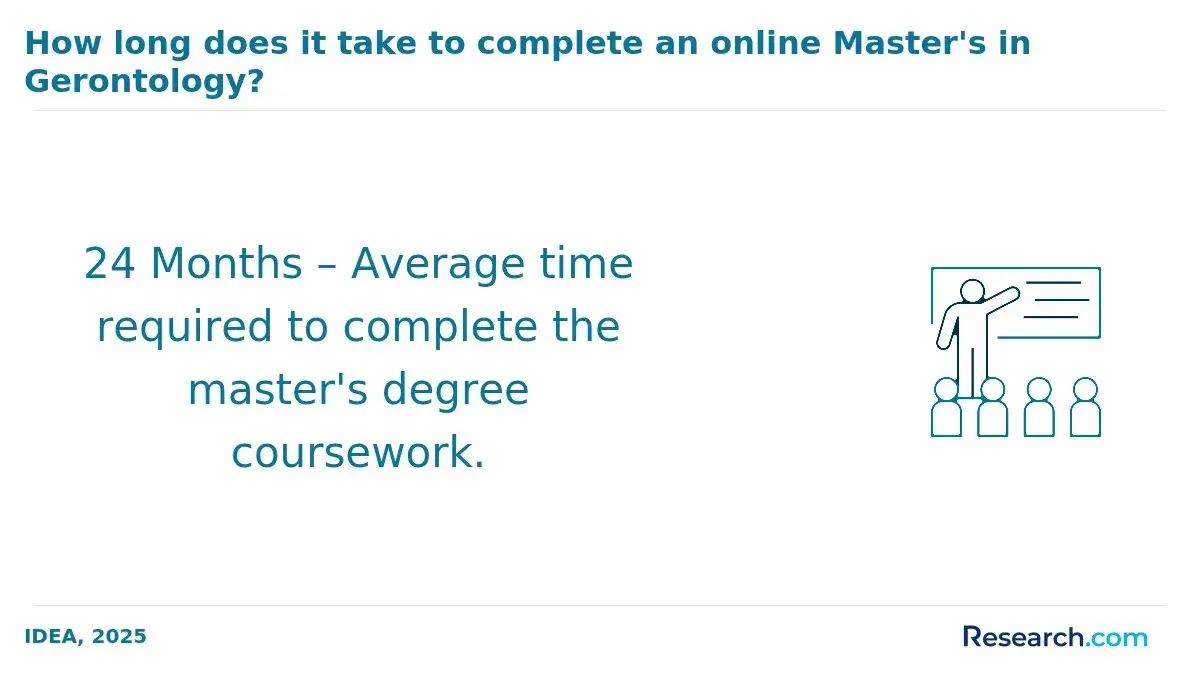
Most advancement comes from one or more of four moves: earning a graduate degree, obtaining a license or certification, moving into administration, or specializing in an in-demand area such as dementia care, long-term care operations, aging policy, or geriatric research. Some professionals complete a master’s degree or doctorate degree; others choose a graduate certificate that can be finished in less time.
What You Can Do With a Master’s in Gerontology
Gerontological Researcher
Gerontological researchers study questions such as cognitive decline, care systems, family support, social isolation, policy, and interventions that improve later-life outcomes. They may work in universities, research centers, public agencies, nonprofits, or healthcare organizations.
Average salary: $117,556
Geriatric Care Manager
Advanced geriatric care managers support older adults with complex health and family needs. They may complete assessments, build care plans, coordinate services, and help families make difficult decisions. In some settings, this work overlaps with clinical nurse specialist responsibilities.
Professionals in regulated clinical roles typically need a master’s degree, and state licensure is required when the role falls under a licensed profession.
Average salary: $92,190
What Jobs Can You Get With a Doctorate in Gerontology?
Gerontological Consultant
Gerontological consultants advise health systems, agencies, nonprofits, and private organizations on aging-related strategy, program design, policy, research, and evaluation.
Average salary: $86,430
Director of Aging Services
Directors of aging services oversee programs and organizations that serve older adults. Typical duties include strategic planning, budgeting, staff leadership, policy development, and program evaluation.
Average salary: $76,855
Gerontology Professor
Gerontology professors teach, publish research, mentor students, and contribute to scholarship at colleges and universities or research institutions.
Average salary: $114,792
Which Certification Is Best for Gerontology?
The right certification depends on your current background and target role. Nurses and nurse practitioners may pursue adult-gerontology credentials through nursing organizations. Professionals with gerontology training may earn certification through the National Association for Professional Gerontologists.
Before enrolling in any certification, check whether employers recognize it, how often it must be renewed, what continuing education is required, and whether it fits your state or specialty.
Are There Alternative Career Options for a Gerontologist?
Yes. Gerontology knowledge can be applied in much more than bedside care or academic research. It can also support work in business, policy, housing, finance, technology, and public health.
Alternative Career Paths
- Healthcare administration: Work as a healthcare manager, hospital administrator, long-term care operations leader, or director of aging services.
- Nonprofit leadership: Serve as a program director, outreach leader, fundraising manager, or executive director for aging-focused organizations.
- Public health: Develop aging-related prevention efforts, community education, policy programs, and population health initiatives.
- Market research: Study older consumers for healthcare, housing, technology, or service companies.
- Financial planning or elder law: Help families with retirement, estate, and long-term care issues when properly trained and credentialed.
These options may appeal to professionals who want to work with older adults without entering a traditional care setting. They also connect to larger questions about how college education influences career and financial outcomes.
Can You Study Gerontology Online or Part Time?
Yes. Gerontology is widely available in online, hybrid, and part-time formats, much like other flexible graduate pathways such as online doctorate degrees in psychology. These options are especially useful for working adults, caregivers, nurses, social workers, and career changers who cannot commit to full-time daytime classes.
Common coursework includes theories of aging, health and wellness in later life, cognitive change, social policy, advocacy, research methods, ethics, long-term care, and family caregiving. When comparing programs, always confirm whether practicum, fieldwork, clinical hours, or campus visits are required.
| Program Format | Main Advantages | Possible Drawbacks | Best For |
| Online asynchronous | Maximum schedule flexibility | Requires strong self-management and may offer less live interaction | Working adults and remote learners |
| Online synchronous | Live sessions add structure and interaction | Set meeting times can conflict with work or caregiving | Students who want online learning with a fixed schedule |
| Hybrid | Mixes online convenience with in-person learning | May require travel to campus or field sites | Students who want flexibility and networking |
| Part-time campus-based | Direct access to faculty, peers, and campus support | Slower completion and less location flexibility | Students near a strong local program |
What Ethical Issues Should Gerontology Professionals Understand?
Ethics is central to gerontology because the work often involves older adults who may be medically vulnerable, socially isolated, cognitively impaired, or dependent on others for daily support. The most important issues include autonomy, informed consent, privacy, safety, dignity, and fair access to care.
One of the hardest balancing acts is protecting people without taking away their independence. An older adult may decide to live alone even when family members worry about risk. Gerontology professionals must avoid assuming incapacity because of age alone, while still recognizing when neglect, abuse, or serious cognitive decline requires action.
Digital tools add another layer of concern. Electronic records, remote monitoring, artificial intelligence, and smart-home systems can improve care, but they also raise questions about consent, surveillance, privacy, and human connection. Professionals moving toward clinical nursing roles may consider routes such as an RN to BSN in 6 months when broader preparation is needed for complex care settings.
What Emerging Technologies Are Changing Gerontology Work?
Technology is reshaping how older adults receive care, remain safe at home, and stay connected to providers and families. Gerontology professionals do not need to be developers, but they do need enough digital fluency to evaluate tools and explain their limits.
- Telemedicine and telehealth: Remote visits can reduce travel burdens and improve access.
- Wearable health devices: Smartwatches, trackers, and alert systems can monitor movement, vital signs, and falls.
- Artificial intelligence and machine learning: AI can support data analysis, risk prediction, and care planning.
- Robotic assistance: AI-enabled robots with sensors may help with reminders, mobility, home tasks, and safety monitoring.
- Virtual reality and augmented reality: VR and AR may support cognitive activity, rehabilitation, and engagement.
- Remote monitoring and smart-home tools: Connected devices can help older adults age in place with more support.
How Can Flexible Online Programs Support Career Growth?
Flexible online programs can help working professionals add gerontology expertise without leaving their current jobs. This is especially useful for nurses, social workers, case managers, and administrators who already serve older adults but want a stronger credential for advancement. For nurses, options like the easiest RN to BSN online program can strengthen leadership and population-health skills relevant to geriatric care.
When reviewing programs, focus on accreditation, faculty experience in aging, practicum support, transfer credit policies, student services, and whether the curriculum matches your target role. Convenience helps, but it should not replace quality.
What Common Misconceptions About Gerontology Should You Ignore?
One common myth is that gerontology only means nursing home work. In reality, the field includes research, policy, housing, counseling, education, advocacy, administration, and technology-enabled services.
Another misconception is that gerontology careers all pay poorly. Entry-level roles may offer modest wages, but specialized clinical, research, management, and consulting positions can pay much more. Salary depends on the setting, location, experience, degree level, and licensure status.
It is also false to assume the work is always depressing. It can be difficult, especially when people face illness or loss, but many professionals find it highly rewarding because they help improve safety, dignity, and independence during a major stage of life.
What Financial Factors Should You Consider Before Enrolling?
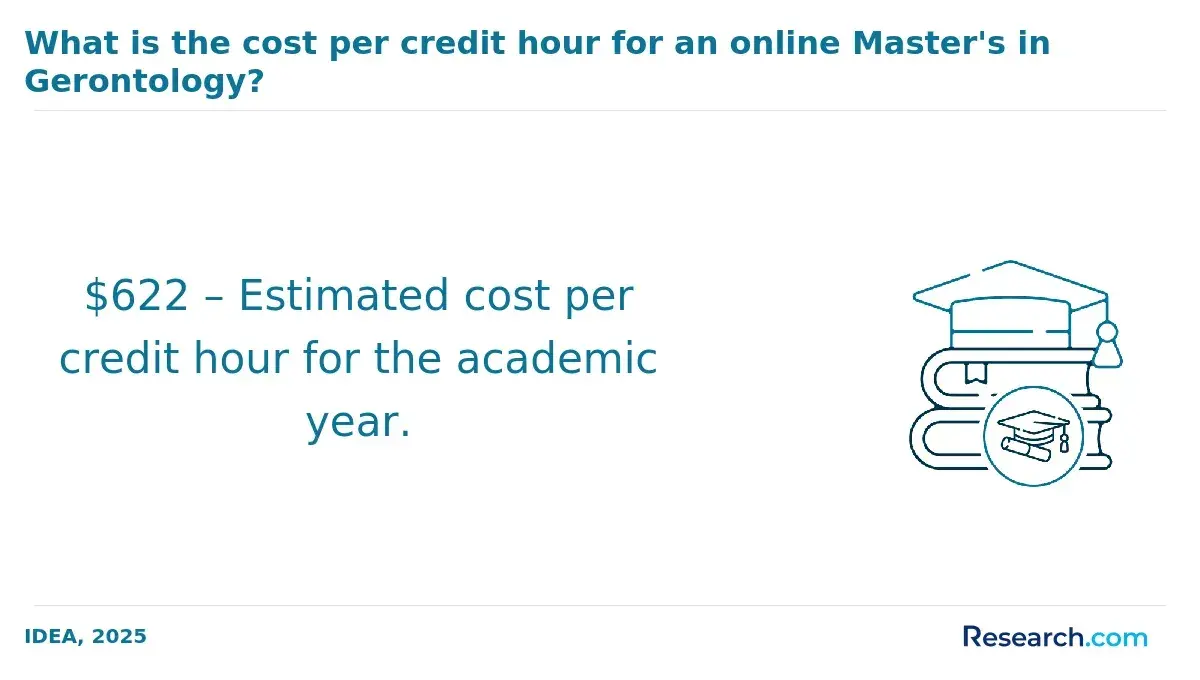
When comparing programs, do not focus only on tuition. Total cost also includes books, technology, commuting, background checks, licensing fees, certification exams, clinical requirements, and any unpaid fieldwork hours.
If you are comparing healthcare education costs, it can help to review related benchmarks such as LPN tuition cost. For gerontology, the key is to match program cost to the role you actually want. A certificate, associate degree, bachelor’s degree, bridge program, and doctorate can lead to very different returns.
Questions to Ask Before You Pay for a Program
- Is the school accredited by a recognized accreditor?
- Does the program prepare students for a specific job, certification, or license?
- Are field experiences, practicums, or clinical hours included?
- What kind of help is available for online students?
- How many credits can transfer?
- What is the full cost after fees?
- Do graduates move into the jobs you want?
- Will the program meet state requirements if licensure is involved?
How Can Non-Healthcare Professionals Enter Gerontology?
People from education, business, nonprofit work, human services, psychology, public administration, or technology can move into gerontology without starting from zero. The right path depends on whether you want a nonclinical role or a licensed healthcare role.
For nonclinical careers, a certificate, bachelor’s degree, or master’s degree in gerontology may be enough for work in aging services, housing, policy, advocacy, programming, or administration. For clinical nursing roles, career changers may need a formal nursing pathway such as online RN programs for non-nurses, followed by aging-focused training if desired.
| Starting Background | Possible Entry Route | Likely Direction in Gerontology |
| Education or counseling | Gerontology certificate or graduate study | Caregiver education, wellness programs, aging-related support services |
| Business or management | Bachelor’s or master’s study in aging services | Senior housing, operations, nonprofit leadership, program administration |
| Social services | Gerontology specialization or social work training | Case management, advocacy, community support, benefits navigation |
| Healthcare support | Associate, bachelor’s, or nursing bridge pathway | Clinical support, care coordination, adult-gerontology nursing |
| Research or data analysis | Graduate study in gerontology, public health, or a related field | Aging research, policy analysis, program evaluation |
Can an Advanced Nursing Degree Speed Up Advancement?
Yes, especially for nurses who want more responsibility in clinical practice, leadership, or research. Adult-gerontology nursing pathways can prepare professionals to manage complex conditions, lead care teams, improve systems, and contribute to evidence-based practice. Nurses comparing cost may want to review options like the most affordable online DNP programs when planning advanced education.
An advanced nursing degree is not necessary for every gerontology role. It makes the most sense if your target job requires advanced clinical authority, prescriptive authority, higher-level case management, or doctoral preparation.
Why Do Accreditation and Licensing Matter?
Accreditation and licensing can determine whether your education is accepted by employers, licensing boards, graduate schools, and financial aid systems. This matters most in nursing, counseling, social work, and other regulated professions.
If you are planning a clinical route, check both institutional accreditation and program-level approval. Students considering practical nursing or similar entry routes may compare affordable online LPN programs, but they should confirm that the program meets state licensure rules before enrolling.
Common Accreditation and Licensing Mistakes
- Choosing the lowest-cost program without confirming accreditation.
- Assuming an online program automatically qualifies you for licensure everywhere.
- Waiting too long to review clinical placement requirements.
- Confusing a voluntary certificate with a required license.
- Enrolling before checking local employer recognition.
How Does Advanced Clinical Training Fit Into Gerontology?
Advanced clinical training matters if you want to assess, diagnose, treat, or manage complex health needs in older adults. Gerontology knowledge helps you understand the aging population, but clinical authority usually comes from regulated healthcare education and licensure.
Programs such as the easiest nurse practitioner degree online may appeal to nurses looking for a path into advanced practice. Still, convenience should never come at the expense of quality preparation. In geriatric care, supervised training and sound clinical judgment are essential.
What Educational Opportunities Are Available for Gerontology?
Students can study gerontology through certificates, associate degrees, bachelor’s degrees, master’s degrees, doctoral degrees, and graduate certificates. Online formats are common, including options such as gerontology degree online programs.
Typical coursework includes aging theory, health in later life, cognitive change, social policy, caregiving, ethics, advocacy, research methods, and program planning. If you want direct clinical practice, choose a program that aligns with licensure requirements. If you want policy, research, or administration, look for faculty expertise, internships, and capstone work.
How Can Mentorship and Professional Networks Help?
Mentorship can help you decide which credential matters most, how to handle care-team or family conflict, and where your next move should be. A mentor can also help you avoid spending time and money on a credential that does not support your target role.
Professional networks matter just as much. Conferences, aging associations, alumni groups, research teams, and volunteer organizations can lead to references, job leads, and career insight. For a broader view of possible directions, see this overview of careers in gerontology.
When Do Bridge Programs Make Sense?
Bridge programs are useful when you already have relevant education or licensure and want to move up without repeating coursework. They can be a practical choice for professionals who want a faster route to advanced roles.
For example, nurses may use bridge pathways such as an RN to nurse practitioner online program to build on existing nursing preparation. Before enrolling, verify admission requirements, clinical hours, state authorization, specialty options, and total cost.
Can Short-Term Online Certification Programs Improve Your Prospects?
Short-term online certificates can help when they add a specific skill employers recognize. They may be useful in areas such as dementia care, elder abuse awareness, care coordination, long-term care administration, palliative care, or caregiver support.
They are less useful when they are generic, unaccredited, or unrelated to your target job. Professionals who already hold graduate clinical credentials may also consider specialized options such as post masters FNP online programs if they are expanding scope in a regulated field.
What Trends Will Shape the Future of Gerontology?
Gerontology is being influenced by longer life expectancy, caregiver shortages, pressure on healthcare systems, wider technology use, and the growing preference of many older adults to remain at home. These trends are increasing demand for people who can combine aging knowledge with care coordination, ethics, digital literacy, and policy awareness.
- Technology integration: Telehealth, wearables, AI, and remote monitoring are changing how care is delivered.
- Aging in place: More services are being built around home-based care, safety modifications, and community support.
- Policy and advocacy: Aging populations are increasing pressure on healthcare access, transportation, housing, and long-term care systems.
- Interdisciplinary teamwork: Gerontology increasingly depends on cooperation among nurses, physicians, social workers, therapists, administrators, and caregivers.
- Credential-focused hiring: Employers often want aging-specific knowledge backed by recognized clinical, administrative, or research credentials.
For nurses and future advanced practice providers, cost-conscious graduate options such as the cheapest online nurse practitioner programs may be worth comparing alongside adult-gerontology specialization needs and financial aid.
Common Mistakes to Avoid When Planning a Gerontology Career
- Picking a program before picking a role: Start with the job, then work backward to the required credential.
- Looking only at tuition: Add fees, books, travel, exams, licensing, and unpaid placement time.
- Assuming every gerontology role is clinical: Many jobs are in policy, research, housing, education, and administration.
- Ignoring state rules: Licensure requirements differ for nursing, counseling, social work, and related professions.
- Trusting rankings alone: A strong ranking does not guarantee the best fit for your schedule, budget, or goals.
- Assuming salary is guaranteed: Published salary figures are averages or medians, not promises.
Key Insights
- Gerontology is a broad field focused on aging, not a single occupation. Career options include healthcare, social services, research, policy, housing, administration, education, and consulting.
- Education requirements vary by role. Certificates and associate degrees can open entry-level paths, while advanced clinical, research, and leadership roles usually require graduate study and sometimes licensure.
- Salary depends heavily on specialization. The cited 2024 average annual salary for gerontologists is $65,720, but advanced roles can pay substantially more.
- Job growth is strongest in related occupations such as nurse practitioner roles projected to grow by 44.5% from 2024 to 2034 and medical and health services management projected to grow by 28%.
- Online and part-time study can work well, but only if the program has the right accreditation, fieldwork support, and state authorization for your career goal.
- Technology, ethics, aging-in-place services, and interdisciplinary teamwork are becoming central to the work.
- The best strategy is to choose the role first, confirm the required credential, compare total cost, build experience with older adults, and select a program that supports your next step.
References:
- College Factual. (2025). 2025 Best Gerontology Schools. https://www.collegefactual.com/majors/multi-interdisciplinary-studies/gerontology/rankings/top-ranked/
- U.S. Bureau of Labor Statistics. (2024, April 17). Occupational Outlook Handbook: Medical Scientists. U.S. Department of Labor. https://www.bls.gov/ooh/life-physical-and-social-science/medical-scientists.htm
- U.S. Bureau of Labor Statistics. (2024, April 17). Medical and Health Services Managers. Occupational Employment and Wages, May 2023. https://www.bls.gov/oes/current/oes119111.htm
- U.S. Bureau of Labor Statistics. (2024, September 4). Physicians and Surgeons: Occupational Outlook Handbook. https://www.bls.gov/ooh/healthcare/physicians-and-surgeons.htm
- U.S. Bureau of Labor Statistics. (2024). Occupational Employment and Wages, May 2024: Sociologists. U.S. Department of Labor. https://www.bls.gov/oes/current/oes193041.htm
- U.S. Bureau of Labor Statistics. (2025). Occupational Employment and Wages, May 2025: 29-1171 Nurse Practitioners. U.S. Department of Labor. https://www.bls.gov/oes/current/oes291171.htm
- U.S. Bureau of Labor Statistics. (2025, September 4). Nurse Anesthetists, Nurse Midwives, and Nurse Practitioners. Occupational Outlook Handbook. https://www.bls.gov/ooh/healthcare/nurse-anesthetists-nurse-midwives-and-nurse-practitioners.htm
- U.S. Bureau of Labor Statistics. (2025). Occupational Outlook Handbook: Healthcare. https://www.bls.gov/ooh/healthcare/
- U.S. Bureau of Labor Statistics. (2025). Nursing Assistants and Orderlies. Occupational Outlook Handbook. https://www.bls.gov/ooh/healthcare/nursing-assistants.htm
- UN News. (2026). Global health systems ‘at risk’ as funding cuts bite, warns WHO. https://news.un.org/en/story/2026/02/1166869
- IDEA. (2025). Online Gerontology Master's Degree & Graduate Certificate. https://www.idea.edu/program/gerontology
Other Things You Should Know About Gerontology Careers
Many gerontology programs require a practicum or internship of about 100 to 300 hours in settings such as long-term care, hospitals, or community agencies. Students often complete supervised fieldwork in aging services, case management, or program evaluation before graduation.
In 2027, a gerontology degree can lead to roles such as geriatric care manager, elder advocate, aging consultant, and research analyst. These roles involve working with aging populations to enhance their quality of life, support healthcare planning, and contribute to policy development in the field of aging.
In 2027, gerontology professionals may require certifications such as the Certified Senior Advisor (CSA) or Gerontological Nursing Certification, depending on their role. These credentials can enhance expertise and credibility, often necessitating exams and continuing education to maintain certification.