
2027 Cost of LPN Programs & Schools

Co-Founder and Chief Data Scientist
Choosing an LPN program is often a cost-and-speed decision: you want to enter nursing quickly, but you also need to know whether the tuition, fees, supplies, exam costs, and lost work time make financial sense. Licensed practical nurses (LPNs), also called licensed vocational nurses (LVNs) in some states, provide basic nursing care under the supervision of registered nurses and physicians. For many students, this credential is one of the most affordable ways to start a nursing career.
Demand is a major reason students compare LPN programs now. The US Bureau of Labor Statistics projects an average of 54,000 openings for LPNs and LVNs each year from 2023 to 2033 (US BLS, 2024). But program prices vary widely, and the lowest advertised tuition is not always the lowest total cost. This guide explains what LPN school can cost in 2027, what affects the final price, how LPN expenses compare with CNA, RN, BSN, and FNP pathways, and how to evaluate whether the investment fits your career goals.
Quick answer: How much does an LPN program cost?
LPN program costs can range from approximately $2,000 to $18,000, depending on the school, location, residency status, and program format. Some schools charge by credit hour, while others list a total program price. You should also budget for textbooks, uniforms, lab supplies, background checks, immunizations, clinical requirements, the NCLEX-PN exam fee of $200, and state licensure fees that can range from $75 to $300.
The best-value LPN program is not simply the cheapest one. A strong choice is accredited or state-approved, prepares graduates for the NCLEX-PN, offers reliable clinical placements, fits your schedule, and has transparent costs before enrollment.
Why compare LPN program costs in 2027?
- Prices differ sharply by school and state. Public community colleges are often less expensive than private institutions, but residency rules, fees, and program length can change the real price.
- Financial aid can lower your out-of-pocket cost. Scholarships, grants, federal aid, employer tuition assistance, and responsible borrowing can make an LPN program more manageable.
- Licensure expenses matter. Tuition is only one part of the budget. NCLEX-PN, state licensure, supplies, and clinical compliance costs can add up quickly.
- The credential can be a stepping stone. Many students start as LPNs, work in healthcare, and later move into RN, BSN, or advanced practice pathways.
- How much does an LPN program cost on average in 2027?
- What factors affect the cost of LPN school?
- What is the cost difference between an LPN and a CNA program?
- How does the cost of an LPN program compare to an RN program?
- What are the best scholarships for LPN students?
- Are there grants available for LPN students?
- What are the best loan options for LPN students?
- How can I transition from an LPN to advanced nursing roles?
- What is the fastest pathway to earn a BSN after becoming an RN?
- How do LPN program expenses compare to the average cost of FNP program?
- Can I work while attending an LPN program to cover costs?
- How can online accelerated BSN programs support my career advancement?
- How can a self paced RN to BSN program benefit my career progression?
- Is the cost of an LPN program worth it?
- What are the highest-paying states for LPNs?
- How does accreditation influence my LPN program and career progression?
- What are the job placement rates for LPN graduates?
How much does an LPN program cost on average in 2027?
The average cost of an LPN program depends heavily on where you enroll and how the school prices the program. Some institutions publish tuition per credit hour, while others provide a total estimated program cost. Based on the examples below, per-credit rates can differ substantially between resident and non-resident students.
Affordable examples include University of Arkansas Community College, where residents pay $87 per credit hour and non-residents pay $103. Louisiana State University Shreveport charges $305.28 per credit hour for residents and $853.37 for non-residents. Mid-range examples include CUNY Medgar Evers College at $620 per credit hour and Herzing University at $525. Utah State University shows one of the widest differences, with residents paying $735.08 per credit hour and non-residents paying $2,202.60.
| Cost item to check | Why it matters | Question to ask the school |
| Tuition | This is the advertised instructional cost, but it may not include required fees. | Is tuition charged by credit hour, semester, term, or full program? |
| Program fees | Nursing programs may charge lab, simulation, technology, testing, and clinical fees. | Can you provide a written full-cost estimate before enrollment? |
| Books and supplies | Textbooks, uniforms, clinical equipment, and software can raise total expenses. | Which items are required in the first term, and which are optional? |
| Licensure and exam costs | Students must prepare for the NCLEX-PN and state licensing costs after graduation. | Are NCLEX-PN preparation materials included in tuition or billed separately? |
| Transportation and clinical costs | Clinical placements may require commuting, parking, health documentation, or schedule changes. | Where are clinical sites located, and are evening or weekend placements available? |
Students comparing LPN tuition may also want to review CNA to LPN transition programs online, especially if they already work as certified nursing assistants and want a structured path into practical nursing.
The chart below shows the cost of LPN schools per credit at selected academic institutions in the US, based on current tuition data.
What factors affect the cost of LPN school?
The final price of LPN school is shaped by more than tuition. Two students in the same state can pay very different amounts depending on school type, residency classification, clinical requirements, and whether they attend full time or part time.
- School type and location: Community colleges and public technical schools often charge less than private institutions. Costs also vary by state because public funding, local demand, and institutional pricing differ.
- Residency status: Public colleges frequently offer lower tuition to in-state residents. Out-of-state students may face much higher per-credit rates.
- Program format and length: LPN programs are commonly attractive to students looking for the quickest way to become a nurse. However, shorter or accelerated formats may have intense schedules, higher per-credit costs, or limited ability to work while enrolled.
- Clinical and lab requirements: Practical nursing requires hands-on training. Lab kits, simulations, skills testing, drug screenings, background checks, immunizations, and clinical travel can affect the total bill.
- Online or hybrid delivery: Hybrid programs may reduce commuting time for lecture courses, but students still need in-person labs and clinical placements. Always confirm where clinical hours are completed.
- Financial aid eligibility: Not every short-term or private training program qualifies for the same forms of aid. Accreditation and institutional eligibility can influence access to federal aid, state grants, and employer tuition support.
| Program feature | Can lower cost when... | Can raise cost when... |
| Public college | You qualify for in-state or in-district tuition. | You are classified as a non-resident. |
| Private school | The program includes supplies, testing, and support services in one price. | Tuition is higher and fewer grants apply. |
| Accelerated schedule | You graduate and begin earning sooner. | You must reduce work hours or pay higher term-based fees. |
| Hybrid format | You save commuting time for lecture courses. | Clinical sites are far from home or require extra travel. |
| Bridge pathway | You receive credit for prior CNA or healthcare experience. | Credits do not transfer into future RN programs. |
What is the cost difference between an LPN and a CNA program?
CNA programs usually cost less than LPN programs because they are shorter and prepare students for a narrower scope of practice. CNA training can take between 1 month to 3 months to complete, while LPN programs can take a minimum of 1 year.
Current LPN program tuition can range from $46 to $226.46 per credit for resident students. For non-resident students, the range may be between $46 and $723.93 per credit. CNA programs typically have lower overall costs because they require fewer credits, less time in school, and a more limited training sequence.
| Pathway | Typical completion time stated | Cost pattern | Best fit |
| CNA | 1 month to 3 months | Lower upfront cost and shorter training period | Students who want fast entry into patient care or want to test whether healthcare is a good fit |
| LPN | Minimum of 1 year | Higher cost than CNA because training is longer and more clinical | Students who want broader nursing responsibilities, licensure, and a stronger base for advancement |
If you are still deciding between these roles, read this comparison of LPN vs CNA. It explains differences in duties, preparation, scope, and career direction, not just price.
A CNA program may be the better first step if you need the lowest possible upfront cost or want healthcare experience before committing to nursing school. An LPN program may be a better investment if you are ready for a longer training commitment and want a licensed nursing role with more responsibility.
The chart below shows the cost of CNA programs per credit at selected academic institutions in the US, based on current tuition data.
How does the cost of an LPN program compare to an RN program?
LPN programs are generally less expensive than registered nurse programs because they are shorter and do not award the same level of nursing credential. The trade-off is that RN programs usually create broader employment options, higher career mobility, and a stronger foundation for leadership or advanced practice roles.
CNA programs may take 1 month to 3 months to finish. LPN programs can take a minimum of 1 year. Registered nurses must complete at least an associate degree in nursing (ADN), which can take 2 years. Students without prior nursing experience who want a flexible RN pathway may compare online ADN programs for non nurses. RNs can also earn a bachelor of science in nursing (BSN), which can take 4 years and includes more advanced coursework and training.
| Nursing pathway | Time to complete stated | Relative cost | Career role |
| CNA | 1 month to 3 months | Lowest of the three pathways | Entry-level patient care support |
| LPN/LVN | Minimum of 1 year | More than CNA, generally less than RN programs | Licensed practical nursing care under supervision |
| ADN-RN | 2 years | Usually higher than LPN because it is a degree pathway | Registered nursing practice |
| BSN-RN | 4 years | Usually higher than ADN and LPN due to length and degree level | Registered nursing with broader advancement options |
Many LPNs choose to work first and later enter an LPN-to-RN bridge program. This approach can help students earn income while continuing their education, but it works best when credits transfer cleanly and the next program is properly accredited. Students thinking far ahead about advanced practice may also compare the cheapest nurse practitioner programs after understanding the RN and graduate-level requirements involved.
The chart below shows tuition for ADN and BSN programs per semester at selected academic institutions in the US, based on current tuition data.
What are the best scholarships for LPN students?
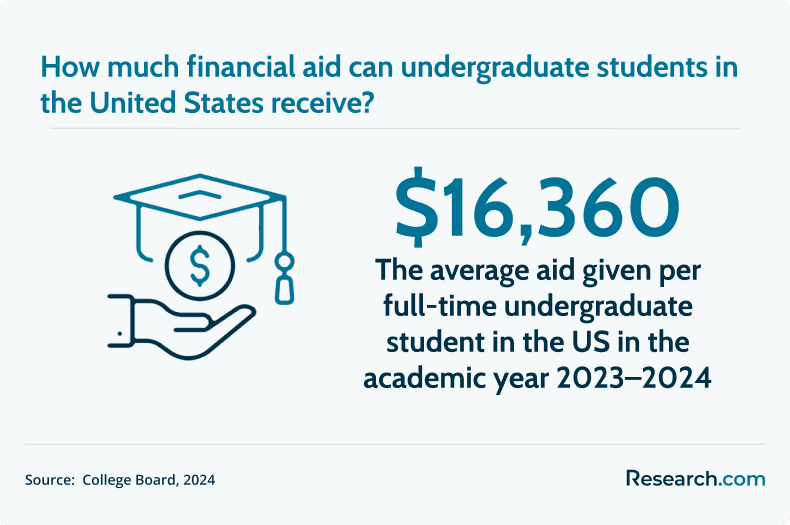
Scholarships are one of the best ways to reduce LPN school costs because they do not need to be repaid. Some awards are open to nursing students broadly, while others focus on specific backgrounds, locations, service commitments, or professional goals. Always confirm eligibility directly with the scholarship provider because requirements and deadlines can change.
- Foundation of the National Student Nurses’ Association Inc. (FNSNA) Undergraduate Scholarship Program: This program supports eligible nursing students currently enrolled in nursing education across the US. The award amount is up to $10,000 per academic year.
- Jane Delano Nursing Student Scholarship: Created in honor of Jane Delano, the principal organizer of the Red Cross Nursing Service, this scholarship supports students pursuing nursing education.
- Hispanic Scholarship Fund (HSF) Scholar Program: The HSF provides scholarships to 10,000 qualified students and offers access to career services, mentorship, leadership development, and other support. The program awards over $30 million in scholarships every year.
| Before applying, check... | Why it matters |
| Enrollment requirement | Some awards require admission or active enrollment before you can apply. |
| Eligible program type | Confirm that practical nursing, vocational nursing, or diploma programs qualify. |
| GPA or academic standards | Some scholarships require minimum academic performance. |
| Service or work obligation | Certain awards may expect recipients to work in a specific area or facility type. |
| Renewal rules | A one-time award helps differently than a renewable award across multiple terms. |
Students planning to use their LPN credential for flexible employment may also explore the steps to become a travel LPN, since travel roles can appeal to nurses who want different work settings after gaining experience.
Are there grants available for LPN students?
Grants can be especially valuable for LPN students because they usually do not require repayment. Availability depends on financial need, school eligibility, residency, enrollment status, and program type. The first step for many students is completing the FAFSA and asking the school’s financial aid office which grants apply to its practical nursing program.
- Federal Pell Grant: The Federal Pell Grant is need-based and available to eligible students in undergraduate programs, including qualifying LPN programs. For the 2025–2026 academic year, the minimum award amount is $740 and the maximum award amount is $7,395.
- State-specific nursing grants: Some states fund nursing students through programs such as the New York State Tuition Assistance Program (TAP) or the Kansas Nursing Service Scholarship, which provides financial aid in exchange for service in the state’s healthcare system.
Grant planning should match your credential goal. If you are comparing practical nursing with registered nursing, review the difference between LPN and RN so you understand how program length, scope of practice, and future education needs may affect total cost.
What are the best loan options for LPN students?
Loans can help close a funding gap, but they should be used carefully. Before borrowing, compare grants, scholarships, employer reimbursement, payment plans, and part-time work options. If you do borrow, ask for the total repayment estimate and understand when repayment begins.
- Federal Direct Subsidized and Unsubsidized Loans: These loans are accessed through the Free Application for Federal Student Aid (FAFSA). They are government-backed and may offer lower interest rates and more flexible repayment options than many private alternatives.
- Private Student Loans: Banks, credit unions, and online lenders may offer private loans to LPN students who need extra funding. These can involve higher interest rates and stricter terms, so they are typically better considered after federal aid options have been reviewed.
- Income-Share Agreements (ISAs): Some schools offer funding in exchange for a percentage of future income over a defined period. Students should read these contracts closely and compare the potential total cost with traditional loans.
| Funding option | When it may make sense | Main caution |
| Federal loans | You need predictable repayment protections and qualify through FAFSA. | You still must repay the balance with interest. |
| Private loans | You have a remaining gap after scholarships, grants, and federal aid. | Rates and terms can be less flexible. |
| ISA | You prefer payments tied to future income and understand the contract. | Total repayment may be difficult to compare without careful calculations. |
| Employer tuition assistance | You work for a healthcare employer that supports nursing education. | You may need to remain employed for a required period. |
How can I transition from an LPN to advanced nursing roles?
An LPN credential can be the first step in a longer nursing career, but it is not the final credential required for advanced practice. LPNs who want broader scope, leadership options, or advanced clinical roles usually need to become RNs first and then complete additional education.
A common route is LPN to RN, followed by BSN or graduate-level nursing education. Bridge programs can recognize prior healthcare experience, but admission standards, clinical requirements, and credit transfer policies vary. Before enrolling, ask whether credits apply toward future RN or BSN study and whether graduates are eligible for the licensure exams required in their state.
If your long-term goal includes nurse practitioner practice, compare bridge options carefully. Programs such as RN to NP programs online can help experienced nurses evaluate how prior RN preparation may connect to graduate nursing study.
What is the fastest pathway to earn a BSN after becoming an RN?
After becoming an RN, many nurses use an RN-to-BSN pathway to complete a bachelor’s degree more efficiently than starting from scratch. These programs usually build on existing RN licensure and clinical experience while adding coursework in leadership, evidence-based practice, population health, and nursing management.
The fastest option is not always the best option. Students should check accreditation, transfer credit policies, clinical or practicum expectations, course pacing, faculty support, and whether the schedule fits work responsibilities. If speed is a priority, compare options such as the fastest RN to BSN program online while also verifying quality and affordability.
How do LPN program expenses compare to the average cost of FNP program?
LPN programs usually require a much smaller upfront investment than family nurse practitioner programs because LPN training is shorter and prepares students for an entry-level licensed nursing role. FNP programs are graduate-level pathways designed for advanced practice, so they require more prior education, more time, and a larger financial commitment.
The right comparison is not just “Which costs less?” It is “Which credential matches my current stage?” LPN school may be appropriate if you are entering nursing for the first time. FNP education is relevant much later, after completing RN preparation and meeting graduate admission requirements. To understand the larger financial step involved in advanced practice education, review the average cost of FNP program.
Can I work while attending an LPN program to cover costs?
Working during an LPN program is possible for some students, but it requires realistic scheduling. Practical nursing programs can be demanding because they combine classroom instruction, lab practice, clinical rotations, skills testing, and exam preparation. A full-time work schedule may be difficult during heavy clinical terms.
Part-time work is often more manageable, especially in healthcare support roles such as CNA or medical assistant positions. These jobs can provide relevant experience and income, but they should not interfere with clinical attendance or study time. Missing clinical hours can delay graduation.
Some students reduce costs through employer-sponsored tuition assistance. Hospitals, nursing homes, and healthcare facilities may offer tuition reimbursement, work-study opportunities, or education benefits. Before relying on this support, ask whether the employer requires a service commitment, minimum grades, continued employment, or repayment if you leave early.
| Work option | Potential benefit | Risk to plan for |
| Part-time healthcare job | Provides income and patient-care experience. | Work shifts may conflict with labs or clinicals. |
| Weekend or evening work | May fit around weekday classes. | Fatigue can affect studying and exam performance. |
| Employer tuition support | Can lower out-of-pocket tuition. | May include service or repayment conditions. |
| No outside work during intensive terms | Allows stronger focus on coursework and clinicals. | Requires savings, aid, or family support. |
How can online accelerated BSN programs support my career advancement?
Online accelerated BSN programs may support career growth for students who need a faster route to bachelor-level nursing education, but they are not the same as LPN programs. They are typically designed for students who meet specific prerequisites or already hold certain academic credentials. For LPNs, the more common sequence is to become an RN first, then pursue BSN completion if needed.
If you are considering this route, confirm admission requirements, in-person clinical expectations, accreditation, state authorization, and whether the program fits your current license level. To compare structured options, review online accelerated BSN programs.
How can a self paced RN to BSN program benefit my career progression?
A self-paced RN-to-BSN program can be useful for registered nurses who need flexibility around work, family, and rotating shifts. These programs allow students to move through coursework on a more personalized timeline, which may help working nurses continue earning while completing a bachelor’s degree.
For LPNs, this pathway generally becomes relevant after earning RN licensure. If your long-term plan is LPN to RN to BSN, ask future schools how transfer credits work and whether your previous nursing coursework will count. A self paced RN to BSN program may be a practical option once you reach the RN stage and want more control over your study pace.
Is the cost of an LPN program worth it?
An LPN program can be worth the cost if you want a relatively fast entry into nursing, can manage the total expense, and choose a program that prepares you for licensure. It may be less worthwhile if the school is not properly approved, the credits will not transfer, the schedule would force you to drop out, or the debt is too high compared with your likely earnings.
In 2023, LPNs and LVNs in the US had a median annual wage of $59,730. That equals a median hourly wage of $28.72, compared with the $23.11 median hourly wage for all US occupations in the same year (US BLS, 2024). Employment for LPNs and LVNs is projected to grow by 3% from 2023 to 2033, which is as fast as the average for all occupations. The BLS also projects about 54,000 openings each year over that decade.
Students asking “Is being a nurse worth it?” should think beyond median pay. Consider local wages, your cost of living, program debt, graduation and NCLEX-PN outcomes, and whether you plan to advance to RN or APRN roles later. Some LPNs eventually pursue accelerated nurse practitioner programs, but that path requires additional education and licensure steps after RN preparation.
| LPN school may be worth it if... | Consider another option if... |
| You want to enter nursing faster than a traditional RN pathway. | You already know you want RN-level roles and can afford to start with an ADN or BSN. |
| The program is state-approved and has strong licensure preparation. | The school cannot clearly document approval, outcomes, or clinical placements. |
| You can cover costs with grants, scholarships, savings, employer aid, or manageable loans. | You would need to borrow heavily without a clear repayment plan. |
| You plan to work as an LPN and possibly bridge to RN later. | You need a credential that immediately qualifies you for advanced nursing roles. |
What are the highest-paying states for LPNs?
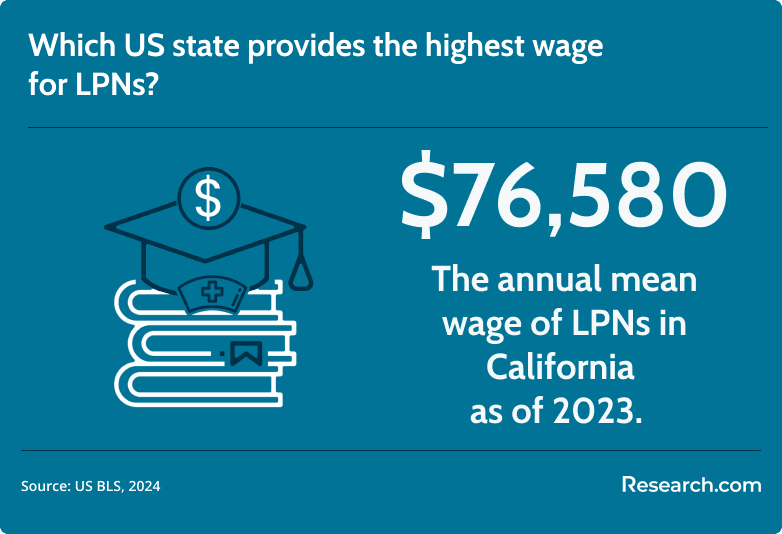
LPN pay varies by state and local labor market. According to US BLS data for 2023, California reported the highest annual mean wage for LPNs at $76,580. Rhode Island followed at $75,470, Washington at $75,410, Alaska at $74,260, and Massachusetts at $73,400.
| State | 2023 annual mean wage for LPNs |
| California | $76,580 |
| Rhode Island | $75,470 |
| Washington | $75,410 |
| Alaska | $74,260 |
| Massachusetts | $73,400 |
High wages do not automatically mean a better financial outcome. Cost of living, commute time, state licensure rules, employer demand, overtime availability, and benefits can all affect take-home value. If relocation is part of your plan, compare salary with quality-of-life factors using resources on the best places for nurses to live.
How does accreditation influence my LPN program and career progression?
Accreditation and state approval are critical when choosing an LPN program. At minimum, the program must meet the requirements that allow graduates to pursue the NCLEX-PN and state licensure. Without proper approval, you may have trouble becoming licensed, transferring credits, receiving financial aid, or entering bridge programs later.
Accreditation can also affect employer confidence and future education options. If you plan to continue from LPN to RN and eventually BSN, ask whether credits from the LPN program are accepted by nearby bridge programs. Later in your career, pathways such as online RN to BSN without clinicals may be relevant, but only after you meet RN-level requirements.
How to verify an LPN program before enrolling
- Check the state board of nursing or relevant state agency to confirm the program is approved for practical nursing education.
- Ask the school for NCLEX-PN pass-rate information and graduate outcome data.
- Confirm whether the program qualifies for federal or state financial aid.
- Ask where clinical rotations take place and whether placements are guaranteed by the school.
- Request a written total cost estimate that includes fees, supplies, testing, and licensure preparation.
- Ask which RN bridge programs accept the school’s credits if you plan to advance later.
What are the job placement rates for LPN graduates?
Job placement rates can help you evaluate an LPN program, but they should be interpreted carefully. A high placement rate is most useful when the school explains how it is calculated, which graduates are included, and whether jobs are in practical nursing roles.
Ask each program for current placement data, employer partners, clinical site relationships, career services, and alumni feedback. Strong clinical training and local healthcare connections can support employment, but no program can guarantee a job or salary outcome. If your long-term goal is advanced nursing, a direct entry NP program may be worth researching later, although it represents a different educational stage than LPN training.
Common mistakes to avoid when comparing LPN program costs
- Choosing only by advertised tuition: A program with low tuition may still be expensive after fees, supplies, exam costs, and transportation.
- Ignoring state approval: If the program does not meet state licensure requirements, the low price is not a bargain.
- Assuming online means fully remote: LPN training requires in-person clinical and lab components, even when some coursework is online.
- Not asking about NCLEX-PN preparation: Licensure exam readiness is central to the value of the program.
- Overborrowing: Loans can help, but borrowing should be tied to a realistic repayment plan based on local earnings.
- Forgetting transfer goals: If you plan to become an RN later, confirm whether credits transfer before enrolling.
- Relying only on rankings or reputation: A well-known school may not be the best fit if the schedule, clinical sites, or total cost do not work for you.
Questions to ask before choosing an LPN program
- Is the program approved by the state for practical nursing licensure preparation?
- What is the full estimated cost, including tuition, fees, books, supplies, uniforms, testing, and licensure expenses?
- What financial aid, scholarships, grants, payment plans, or employer partnerships are available?
- Where are clinical rotations located, and who arranges them?
- What are the program’s NCLEX-PN outcomes and job placement results?
- Can I attend part time, evenings, weekends, or hybrid courses if I need to work?
- Will credits apply toward an LPN-to-RN or other bridge program later?
- What happens if I need to pause or repeat a course?
Key Insights
- LPN program costs can range from approximately $2,000 to $18,000, but total cost depends on tuition, fees, supplies, clinical expenses, NCLEX-PN costs, and licensure fees.
- Some lower-cost examples include University of Arkansas Community College, where residents pay $87 per credit hour and non-residents pay $103. Louisiana State University Shreveport charges $305.28 per credit hour for residents and $853.37 for non-residents.
- CNA training is faster and usually cheaper, taking 1 month to 3 months, while LPN programs can take a minimum of 1 year and prepare students for a broader licensed nursing role.
- RN pathways cost more because ADN programs can take 2 years and BSN programs can take 4 years, but they also open wider nursing responsibilities and advancement options.
- Scholarships and grants can significantly reduce out-of-pocket cost. The FNSNA Undergraduate Scholarship Program offers awards up to $10,000 per academic year, and the Federal Pell Grant ranges from $740 to $7,395 for the 2025–2026 academic year.
- LPNs and LVNs had a 2023 median annual wage of $59,730, or $28.72 per hour, and employment is projected to grow by 3% from 2023 to 2033, with about 54,000 openings each year.
- Accreditation and state approval should be non-negotiable. They affect licensure eligibility, financial aid, employer trust, and future bridge-program options.
- The best LPN program is the one that balances affordability, licensure preparation, clinical quality, schedule fit, and future transfer potential—not simply the one with the lowest tuition.
References:
- College Board. (2024). Trends in Student Aid: Highlight. https://research.collegeboard.org/trends/student-aid/highlights
- US Bureau of Labor Statistics. (2024, August 29). Licensed Practical and Licensed Vocational Nurses. Occupational Outlook Handbook. https://www.bls.gov/ooh/healthcare/licensed-practical-and-licensed-vocational-nurses.htm
- US Bureau of Labor Statistics. (2024, April 03). May 2023 National Occupational Employment and Wage Estimates, United States. Occupational Employment and Wage Statistics. https://www.bls.gov/oes/2023/may/oes_nat.htm
- US Bureau of Labor Statistics. (2024, August 29). Nurse Anesthetists, Nurse Midwives, and Nurse Practitioners. Occupational Outlook Handbook. https://www.bls.gov/ooh/healthcare/nurse-anesthetists-nurse-midwives-and-nurse-practitioners.htm
- US Bureau of Labor Statistics. (2024, April 03). Occupational Employment and Wages, May 2023, 29-2061 Licensed Practical and Licensed Vocational Nurses. Occupational Employment and Wage Statistics. https://www.bls.gov/oes/2023/may/oes292061.htm
Other Things You Need to Know About the Cost of LPN Programs and Schools
Most LPN programs require about 500 to 1,000 supervised clinical hours, in addition to classroom and lab instruction. State boards of nursing set approval standards, and programs must meet those minimums before graduates can sit for the NCLEX-PN exam.
Apart from tuition, factor in costs for textbooks, supplies, uniforms, licensing exams, technology fees, and transportation. These incidental expenses can significantly impact the overall budget for your LPN program in 2026, and proper planning is essential to avoid financial surprises.


