
2027 Best Accelerated BSN Programs Online

Co-Founder and Chief Data Scientist
Earning a Bachelor of Science in Nursing has become increasingly vital for registered nurses. According to a 2023 American Association of Colleges of Nursing survey, 25% of healthcare employers now require a BSN for new hires, and 69.8% strongly prefer BSN graduates. Completing a traditional BSN degree, however, takes an additional four years for those with a bachelor’s degree in a different field.
Fortunately, there are now accelerated BSN programs online that cater to non-nursing graduates. In this guide, I’ve compiled some of the best accelerated BSN programs online for non-nursing graduates who aim to fast-track their way into a career in the nursing field.
What are the benefits of getting an accelerated BSN program online?
- Registered nurses with BSN degrees can pursue roles in staff nursing, management, specialization, research, education, telehealth, and more.
- The median annual wage for registered nurses with BSN degrees was $86,070 in May 2023.
- Accelerated online BSN programs enable quicker entry into the workforce and provide scheduling flexibility ideal for working professionals.
What can I expect from an accelerated BSN program online?
An online accelerated BSN program is a more convenient option for RNs without a bachelor's degree or those with a degree in another field who want to become RNs quickly. These programs are faster than traditional four-year BSN programs, with intensive and fast-paced coursework.
Students will take multiple classes per semester, often with shorter durations, and most learning occurs online through lectures, assignments, and discussions. While this offers more flexibility, it is important to remember that it requires strong time management skills.
Despite the online format, students will complete clinical placements at healthcare facilities for hands-on experience under licensed nurses' supervision. These programs emphasize NCLEX-RN exam preparation, crucial for those yet to obtain their RN license.
Where can I work with an online accelerated BSN program?
According to a 2022 AACN survey, over 70% of RNs have at least a BSN degree or higher, which enhances their career opportunities. With an online accelerated BSN degree, graduates can work in a variety of healthcare settings. U.S. Bureau of Labor Statistics reveals that nearly 60% of RNs in the U.S. work in hospitals, providing direct patient care. About 18% are employed in ambulatory healthcare services, such as outpatient clinics and surgical centers. Other potential workplaces include nursing and residential care facilities, government agencies, and educational services, though these sectors employ less than 10% of RNs.
How much can I make with an online accelerated BSN program?
With an online accelerated BSN degree, your salary can vary significantly based on your role and location. For example, nursing managers earn around $97,900 annually on average, while oncology nurses make about $102,000 per year. Health policy nurses can earn approximately $117,469 a year.
The location also impacts earnings. In Aspen, CO, RNs with a BSN can earn an average of $132,524 annually. In Santa Clara, CA, the average salary is $128,079, and in Washington, DC, it is $126,428. These figures highlight the competitive pay available to BSN-educated nurses in various roles and locations.
- List of the Best Accelerated BSN Programs Online for 2027 List of Programs
- How long does it take to complete an accelerated BSN program online? How long does it take to complete an accelerated BSN program online?
- How does an online accelerated BSN compare to an on-campus program? How does an online accelerated BSN compare to an on-campus program?
- What is the average cost of an accelerated BSN program online? Program Costs
- What are the financial aid options for students enrolling in an accelerated BSN program online? Financial Aid Options
- What are the prerequisites for enrolling in an accelerated BSN program online? Program Requirements
- What courses are typically in an online accelerated BSN program? What courses are typically in an online accelerated BSN program?
- What types of specializations are available in accelerated BSN programs online? What types of specializations are available in accelerated BSN programs online?
- How do you choose the best online accelerated BSN program? How do you choose the best online accelerated BSN program?
- What career paths are available for graduates of online accelerated BSN programs? What career paths are available for graduates of online accelerated BSN programs?
- What advanced certifications can further accelerate career growth? What advanced certifications can further accelerate career growth?
- What is the job market for graduates with an online accelerated BSN degree? Job Outlook
- How can bridge programs facilitate the transition from ADN to advanced practice roles? How can bridge programs facilitate the transition from ADN to advanced practice roles?
- Are online accelerated BSN programs cost-effective compared to traditional pathways? Are online accelerated BSN programs cost-effective compared to traditional pathways?
- How can dual degree programs boost career advancement for accelerated BSN graduates? How can dual degree programs boost career advancement for accelerated BSN graduates?
- What kind of support services are available to online accelerated BSN students? What kind of support services are available to online accelerated BSN students?
- What are the prerequisites for transitioning from an RN to a BSN program? What are the prerequisites for transitioning from an RN to a BSN program?
- How does accreditation impact the success of online accelerated BSN programs? How does accreditation impact the success of online accelerated BSN programs?
- What are the next educational steps after completing an accelerated BSN program? What are the next educational steps after completing an accelerated BSN program?
- How to transition from an accelerated BSN program to advanced nursing roles? How to transition from an accelerated BSN program to advanced nursing roles?
- What challenges do online accelerated BSN students face? What challenges do online accelerated BSN students face?
- How can I effectively compare online accelerated BSN program outcomes? How can I effectively compare online accelerated BSN program outcomes?
Best Online Accelerated BSN Programs for 2027
An online accelerated BSN can help college graduates move into registered nursing faster than a traditional four-year bachelor’s program. The decision is not simple, though. These programs are intensive, clinical hours must be completed in person, state authorization matters, and total costs can vary widely from one school to another.
This guide is for students who already have college credit or a bachelor’s degree in another field and are considering a second-degree nursing pathway. It explains how online accelerated BSN programs work, how long they take, what they cost, what admissions requirements to expect, and how to compare programs based on accreditation, clinical placement, NCLEX-RN preparation, and career outcomes.
Quick answer: Is an online accelerated BSN worth considering?
An online accelerated BSN is most useful for students who want to become registered nurses quickly, already meet most prerequisite requirements, and can commit to a demanding full-time schedule with in-person labs, residencies, and clinical rotations. It is not a fully remote degree. Even when lectures are online, nursing programs require supervised hands-on training before graduates can qualify for RN licensure.
The strongest programs are accredited by CCNE or ACEN, clearly explain clinical placement expectations, publish realistic cost information, and prepare students for the NCLEX-RN exam. Students should also confirm that the program is authorized for their state and meets licensure requirements where they plan to work.
How Research.com evaluates schools
Research.com treats degree selection as a financial, academic, and career decision. Our ranking process is designed to make program comparisons clearer by using structured data and transparent criteria. You can review our full research methodology, which draws from trusted sources such as the IPEDS database, Peterson’s database and its Distance Learning Licensed Data Set, the College Scorecard database, and the National Center for Education Statistics.
Top online accelerated BSN programs at a glance
| School | Program length | Credits | Cost information | Accreditation |
| Baylor University | 12 months | 62 | $68,100 for the entire program | Commission on Collegiate Nursing Education (CCNE) |
| University of Indianapolis | 15 months | 56 | $980 per credit | CCNE |
| Elmhurst University | 16 months | 60 | $50,000 for the entire program | CCNE |
| University of Massachusetts Boston | 12 months | 52 | $600 per credit | CCNE |
| University of Tulsa | 18 months | 60 | $445 per credit including textbooks | Accreditation Commission for Education in Nursing (ACEN) |
| Northeastern University | 16 months | 67 | $1,263 per credit | CCNE |
| Grand Canyon University | 16 months | 123 | $850/credit for core courses and $425/credit for prerequisite courses | CCNE |
| Cleveland State University | 16 months | 69 | $434.60 in-state tuition; $619.70 out-of-state tuition | CCNE |
| Marymount University | 16 months | 65 | $18,700 per semester | CCNE |
| Rockhurst University | 16 months | 60 | $783 per credit | CCNE |
1. Baylor University
Baylor University offers a Distance Accelerated Bachelor of Science in Nursing for Texas residents who want a fast, full-time route into professional nursing. Students complete most academic work online, attend two required campus visits, and then complete clinical placements that provide direct patient-care experience.
- Program Length: 12 months
- Tracks/concentrations: N/A
- Cost: $68,100 for the entire program
- Required Credits to Graduate: 62
- Accreditation: Commission on Collegiate Nursing Education (CCNE)
2. University of Indianapolis
The University of Indianapolis provides a Distance Online Accelerated BSN that combines remote coursework with two campus-based residencies. Its 1:1 clinical placement model is built around individualized support, and students complete 570 clinical hours before graduation. Applicants must also pass the HESI A2 test, which may be taken at a local testing site.
- Program Length: 15 months
- Tracks/concentrations: N/A
- Cost per Credit: $980
- Required Credits to Graduate: 56
- Accreditation: CCNE
3. Elmhurst University
Elmhurst University’s Online Accelerated BSN uses fully online coursework, two required campus residencies, and supported clinical placement. Students complete over 450 clinical hours, and admission requires applicants to live in, or be willing to relocate to, Illinois, Iowa, Missouri, or Wisconsin.
- Program Length: 16 months
- Tracks/concentrations: N/A
- Cost: $50,000 for the entire program
- Required Credits to Graduate: 60
- Accreditation: CCNE
4. University of Massachusetts Boston
UMass Boston’s Accelerated BSN online is intended for students who already hold a bachelor’s degree in another subject and want to move into nursing. The program offers both full-time and part-time study options, and live online sessions are scheduled with working adults in mind.
- Program Length: 12 months
- Tracks/concentrations: N/A
- Cost per Credit: $600
- Required Credits to Graduate: 52
- Accreditation: CCNE
5. University of Tulsa
The University of Tulsa’s Accelerated BSN program online is structured for professionals and non-nursing graduates preparing for a career shift. The curriculum incorporates the Roy Adaptation Model and emphasizes collaborative, holistic responses to complex healthcare needs. Coursework is also aligned with preparation for the Next Generation NCLEX.
- Program Length: 18 months
- Tracks/concentrations: N/A
- Cost per Credit: $445 including textbooks
- Required Credits to Graduate: 60
- Accreditation: Accreditation Commission for Education in Nursing (ACEN)
6. Northeastern University
Northeastern University’s Accelerated ABSN online program serves students with non-nursing degrees who are ready to enter the nursing profession. Online courses introduce core nursing knowledge, including health assessment, medication therapy, ethics, and professional practice. Students then build technical skills in nursing labs and gain direct experience through clinical rotations in areas such as adult care and community health.
- Program Length: 16 months
- Tracks/concentrations: N/A
- Cost per Credit: $1,263
- Required Credits to Graduate: 67
- Accreditation: CCNE
7. Grand Canyon University
Grand Canyon University’s Accelerated ABSN online program may accept up to 90 transfer credits, which can help students with previous coursework move forward more efficiently. Nursing coursework is delivered online, while students complete skills labs, simulation-based learning, and supervised clinical rotations at approved sites. A hybrid option is also available.
- Program Length: 16 months
- Tracks/concentrations: N/A
- Cost per Credit: $850/credit for core courses and $425/credit for prerequisite courses
- Required Credits to Graduate: 123
- Accreditation: CCNE
8. Cleveland State University
Cleveland State University offers an Online ABSN program for students who already have a non-nursing degree. Coursework is completed online, and the school provides clinical placement services. Students complete 778 clinical hours, 145 lab hours, and two residencies at the nursing resource laboratory in downtown Cleveland, Ohio.
- Program Length: 16 months
- Tracks/concentrations: N/A
- Cost per Credit: $434.60 (in-state tuition); $619.70 (out-of-state tuition)
- Required Credits to Graduate: 69
- Accreditation: CCNE
9. Marymount University
Marymount University’s Online ABSN program is built for bachelor’s-prepared students from outside nursing. Students may enroll from outside Virginia if they can complete 592 clinical hours and required campus residency components in Virginia.
- Program Length: 16 months
- Tracks/concentrations: N/A
- Cost: $18,700 per semester
- Required Credits to Graduate: 65
- Accreditation: CCNE
10. Rockhurst University
Rockhurst University’s online ABSN program is a full-time pathway for students living in Idaho, Iowa, Kansas, Missouri, and Nebraska. Courses are delivered online, and students attend a 10-day campus residency with hands-on simulation lab training in one of the listed states. Graduates also receive 1:1 NCLEX coaching after completing the program.
- Program Length: 16 months
- Tracks/concentrations: N/A
- Cost per Credit: $783
- Required Credits to Graduate: 60
- Accreditation: CCNE
Key Findings
- Online accelerated BSN programs are not fully online because labs, residencies, clinical placements, and rotations must be completed in person.
- The listed programs range from 12 months to 18 months, although some hybrid ABSN options, such as Regis College, may take 24 months.
- Costs vary substantially by school, credit requirement, residency status, prerequisite needs, and whether tuition is charged per credit, per semester, or for the full program.
- Accreditation from CCNE or ACEN is one of the most important filters because it affects educational quality, licensure preparation, and employer recognition.
- Students should compare clinical placement support carefully. A convenient online format can become difficult if clinical sites are unavailable near where the student lives.
What Graduates Say About Earning an Accelerated BSN Online
- Emma: "My online accelerated BSN gave me enough flexibility to keep up with work and family responsibilities while completing a demanding nursing curriculum. Faculty support and structured online learning helped me stay on track, and I was able to reach my goal of becoming a licensed RN."
- Javier: "The program moved quickly, but the format worked well for me. Online tools helped me understand difficult topics, and the in-person clinical experiences connected the coursework to real patient care. By the end, I felt prepared to sit for the NCLEX-RN exam."
- Sherry: "Choosing an online accelerated BSN made my career change possible without forcing me to leave my community. The clinical placement support, online classmates, and responsive instructors helped me feel connected throughout the process."
How Long Does It Take to Complete an Online Accelerated BSN?
Most online accelerated BSN programs are designed for rapid completion, but timelines differ by school. Baylor University and UMass Boston offer programs that can be completed in 12 months, while the University of Tulsa’s online ABSN takes up to 18 months. Some schools use longer hybrid formats; for example, Regis College offers a 24-month ABSN program that combines online study with campus-based requirements.
Program length also depends on transfer credits, prerequisite completion, clinical scheduling, lab availability, and whether the student studies full time or part time. Even when academic coursework is online, the hands-on requirements can affect the calendar because nursing students must complete supervised skills training and clinical rotations before graduation.
How Does an Online Accelerated BSN Compare With an On-Campus Program?
Accelerated, or second-degree, BSN programs are frequently discussed as one response to the nursing shortage in the U.S. Both online and campus-based ABSN programs are designed to move qualified students into nursing faster than a traditional BSN. The main difference is how students experience the classroom portion of the program. Online ABSN programs usually deliver lectures and assignments through digital platforms, while campus programs rely more heavily on scheduled in-person classes and direct classroom interaction.
The better format depends on the student. Online programs can reduce commuting and may provide more scheduling flexibility, especially when asynchronous courses are available. Campus programs may be a better fit for students who learn best through face-to-face discussion, fixed routines, and immediate access to faculty and peers. In both formats, clinical training remains in person.
| Factor | Online accelerated BSN | On-campus accelerated BSN |
| Course delivery | Primarily online, often with required residencies or labs | Mostly in-person lectures, labs, and campus activities |
| Flexibility | Usually stronger for students managing work, family, or commuting limits | More structured and less flexible because schedules are campus-based |
| Clinical experience | Completed in person at approved healthcare sites | Completed in person through the school’s clinical partners |
| Best fit | Self-directed students with strong time management skills | Students who prefer regular face-to-face instruction and campus support |
| Main risk | Technology issues, limited in-person peer contact, and clinical site logistics | Relocation, commuting, and less schedule control |
What Is the Average Cost of an Online Accelerated BSN?
Online accelerated BSN programs can differ sharply in price, with typical costs ranging from $17,000 to $90,000. A nursing degree online may be 10-20% less expensive than a traditional campus-based program, but the final cost depends on far more than tuition alone.
Students should compare public versus private tuition, per-credit rates, semester charges, required fees, clinical expenses, technology costs, books, uniforms, background checks, immunizations, testing fees, and possible relocation. Clinical fees can range from $200 to $2,000 per term, and textbooks and supplies can cost thousands of dollars per year.
Cost factors to check before enrolling
| Cost factor | Why it matters |
| Prerequisite courses | Students missing required science or general education courses may need to pay for additional credits before beginning nursing coursework. |
| Residencies and labs | Travel, lodging, meals, and time away from work can increase the real cost of a program. |
| Clinical placement location | Students may need to commute long distances or temporarily relocate if approved sites are not nearby. |
| Tuition structure | Per-credit pricing can be harder to compare with flat program tuition or semester-based tuition. |
| Fees and supplies | Technology fees, clinical fees, testing costs, uniforms, equipment, and books can add thousands of dollars. |
What Financial Aid Options Are Available for Online Accelerated BSN Students?
Financial aid can make an accelerated BSN more manageable, but students should confirm eligibility early because second-degree undergraduate students may face different aid limits than first-time bachelor’s students. Student financial aid statistics show that 87.3% of college students receive some type of financial aid. Nursing students in distance education programs may be able to use many of the same funding options as campus-based students.
- Federal Grants. Need-based federal grants, including Pell Grants, may be available to eligible undergraduate students with exceptional financial need and do not have to be repaid.
- Federal Loans. Federal student loans must be repaid, but subsidized loans include government-paid interest while the student meets qualifying enrollment conditions. Nearly 39% of undergraduates receive an average of $7,487 in federal loans every year.
- State Grants and Scholarships. Some states fund nursing scholarships, grants, or loan programs. The State of Florida offers funding opportunities through the Florida Nurses Foundation, while Washington State provides scholarships, loans, and grants through the Washington Center for Nursing. Students should verify available options through their state nursing board or higher education department.
- Institutional Scholarships and Aid. Colleges and universities may offer nursing scholarships, tuition discounts, or school-based aid for qualified applicants.
- Organizations and Foundations. Professional associations and nursing organizations may provide scholarships or grants. Examples include the National Association of Neonatal Nurses (NANN), the Foundation of National Student Nurses' Association, Inc., and the AACN.
What Are the Prerequisites for an Online Accelerated BSN?
Admissions requirements vary by school, but most online accelerated BSN programs expect applicants to prove that they are academically ready for a fast-paced nursing curriculum and able to complete in-person clinical requirements.
Common academic requirements
- Bachelor's degree. Many accelerated BSN programs are built for students who already hold a bachelor’s degree in a non-nursing field from an accredited institution.
- Minimum GPA. Programs commonly require a minimum cumulative GPA, often around 3.0 or higher. Some schools also set a separate GPA requirement for prerequisite science courses.
- Prerequisite coursework. Applicants are usually expected to complete courses such as anatomy, physiology, microbiology, chemistry, statistics, nutrition, or related sciences before starting nursing classes.
Additional admissions and clinical requirements
- Standardized test scores. Some schools require tests such as the Test of Essential Academic Skills (TEAS) to evaluate readiness for nursing or allied health education.
- Technology readiness. Because coursework is online, students need reliable internet access, basic computer skills, and comfort using learning management systems.
- Health and compliance documents. Immunization records, background checks, drug screening, CPR certification, and other clinical documentation are often required before students can enter healthcare facilities.
What Courses Are Usually Included in an Online Accelerated BSN?
Accelerated BSN curricula are compressed, but they still cover the core knowledge expected of entry-level professional nurses. Typical courses include:
- Pathophysiology. Students examine how disease changes normal body function, how conditions develop, and how symptoms appear across body systems.
- Pharmacology for Nurses. This course introduces medication classifications, mechanisms of action, side effects, dosage considerations, and safe administration practices.
- Health Assessment. Students learn how to collect patient histories, complete physical assessments, measure vital signs, and identify possible health concerns.
- Foundations of Nursing Practice. This course introduces the professional role of the nurse, including ethics, legal responsibilities, therapeutic communication, nursing theory, and culturally responsive care.
- Nursing Leadership and Management. Students study delegation, teamwork, conflict management, quality improvement, and leadership responsibilities in healthcare environments.
What Specializations Are Available in Online Accelerated BSN Programs?
Most accelerated BSN programs do not offer formal specializations. Their purpose is to prepare students for generalist RN practice and the NCLEX-RN, not to provide advanced specialty training. A school may mention specialty interests or clinical exposure areas, but those are usually not separate concentrations within the BSN.
After completing an online or campus-based accelerated BSN and earning RN licensure, nurses can pursue focused training through several pathways.
Specialty courses and professional training
Hospitals, healthcare employers, and professional nursing organizations often offer short courses in specific practice areas. These can help nurses build focused skills without committing immediately to a certificate or graduate degree.
Post-licensure certificate programs
Some schools offer online nursing certificates after RN licensure. These programs may take a few months to a year and can support development in areas such as:
- Critical Care Nursing
- Neonatal Intensive Care Nursing
- Wound Care Nursing
- Women's Health Nursing
- Emergency Room Nursing
Master of Science in Nursing programs
An MSN allows nurses to move deeper into advanced practice, leadership, or education. Traditional and online MSN programs commonly take two years to complete, especially the easiest MSN online program options, and may lead toward roles such as:
- Nurse Practitioner (NP)
- Clinical Nurse Specialist (CNS)
- Certified Registered Nurse Anesthetist (CRNA)
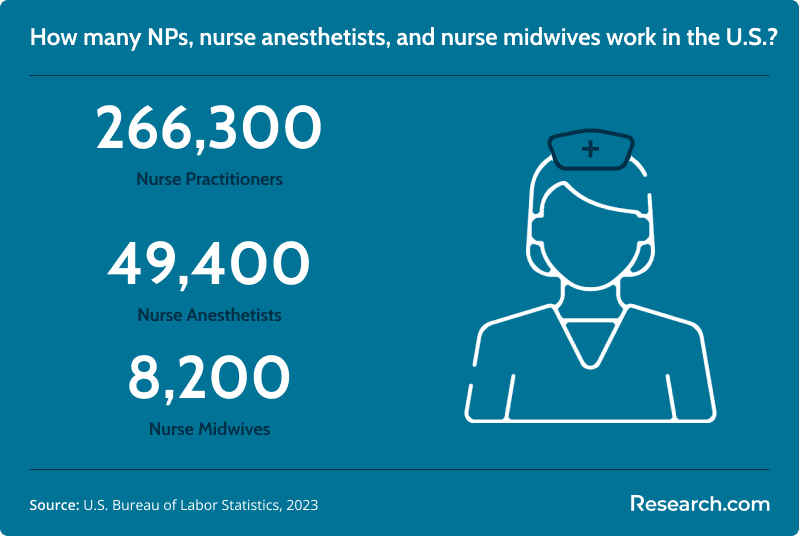
In 2022, more than 17% of nurses in the U.S. held master’s degrees and around 266,300 are nurse practitioners:
How Do You Choose the Best Online Accelerated BSN Program?
The best online accelerated BSN is not automatically the fastest or cheapest option. The right program is the one that meets licensure expectations, fits your state and clinical location, matches your budget, and provides enough support for a compressed nursing curriculum.
- Verify accreditation first. Look for programmatic accreditation from CCNE or ACEN. Accreditation is a key signal that the curriculum and clinical training meet recognized nursing education standards.
- Confirm state authorization and licensure fit. Ask whether the program is authorized for students in your state and whether it meets educational requirements where you plan to become licensed.
- Compare synchronous and asynchronous formats. Asynchronous courses offer more scheduling control, while synchronous sessions provide live interaction. Choose based on your learning style, work schedule, and availability.
- Ask detailed questions about clinical placement. Online coursework will not remove the need for in-person clinicals. Confirm whether the school arranges placements, how far students typically travel, and what happens if a site is not available nearby.
- Calculate the full cost. Include tuition, program fees, clinical fees, books, testing costs, residencies, travel, lost work hours, and living expenses if relocation is required.
- Review NCLEX-RN preparation. Ask for NCLEX-RN pass rates, remediation support, practice testing, and coaching options.
- Evaluate student support. Strong programs provide academic advising, technical help, tutoring, clinical coordination, career services, and guidance for future education, including practical comparisons of the cheapest online graduate programs when students plan to continue after the BSN.
- Consider transfer credit policies. If you already have an associate degree or significant college coursework, review the fastest degree completion programs to understand how transfer-friendly pathways can affect your timeline.
Questions to ask before applying
| Question | Why it matters |
| Is the program accredited by CCNE or ACEN? | Accreditation affects quality assurance, licensure preparation, and employer confidence. |
| Can I enroll from my state? | State authorization and clinical placement rules can limit eligibility. |
| Who secures clinical placements? | Students need to know whether the school provides placement support or expects them to find sites. |
| How many campus visits or residencies are required? | Travel can affect cost, scheduling, and feasibility. |
| What is the total estimated cost? | Tuition alone does not reflect the full financial commitment. |
| What NCLEX-RN support is included? | Licensure exam preparation is essential for becoming a registered nurse. |
What Career Paths Are Available After an Online Accelerated BSN?
Graduates of online accelerated BSN programs typically pursue registered nurse roles after meeting licensure requirements. According to the cited employment data, 59% work in hospitals and ambulatory healthcare services. These environments include acute care hospitals, outpatient clinics, and surgical centers, with opportunities in areas such as emergency nursing, intensive care, oncology, and community-based care.
BSN-prepared nurses may also work in nursing and residential care facilities, government agencies, public health settings, rehabilitation centers, assisted living communities, schools, and educational services. Career direction often depends on clinical experiences, state licensure, local hiring demand, and whether the nurse later completes specialty training or graduate education.
Below are some of the biggest employers of nurses in the U.S.:
What Advanced Certifications Can Help Accelerated BSN Graduates Grow Their Careers?
After earning RN licensure, accelerated BSN graduates can strengthen their qualifications through specialty certifications, employer-based training, and graduate education. Certifications can demonstrate knowledge in areas such as acute care, community health, emergency nursing, pediatrics, or leadership, depending on the nurse’s chosen practice setting.
Nurses who want to move into advanced practice should also compare graduate certificate and MSN pathways. For nurses who already hold advanced nursing credentials, post masters FNP online certificate programs may provide a route toward family nurse practitioner preparation.
What Is the Job Market for Online Accelerated BSN Graduates?
The job market for BSN-prepared nurses is supported by consistent healthcare demand. Within four to six months of graduation, 96% of BSN graduates receive job offers for entry-level positions, according to the cited AACN data.
Registered nurse employment is projected to grow by 6% from 2022 to 2032, faster than the average for all occupations. That projection represents about 193,100 registered nurse job openings each year over the decade. Many openings are expected to come from replacing nurses who retire or move into other occupations.
How Can Bridge Programs Help ADN Nurses Move Toward Advanced Practice?
Bridge programs are designed for nurses who already hold an associate degree and want a more direct academic route toward a BSN, MSN, or advanced practice preparation. These programs typically build on existing clinical knowledge while adding upper-division nursing coursework, leadership training, evidence-based practice, and more advanced clinical expectations.
For ADN-prepared nurses who want to become nurse practitioners, bridge options can reduce duplication and create a more efficient transition into graduate study. Students comparing these pathways can review RN to nurse practitioner bridge programs to understand how ADN-to-MSN routes are structured.
Are Online Accelerated BSN Programs Cost-Effective Compared With Traditional Nursing Pathways?
An accelerated BSN can be cost-effective when the shorter timeline helps students enter the workforce sooner. However, the compressed format may also require students to reduce work hours, pay higher tuition, travel for residencies, or relocate for clinical placements. The true return on investment depends on total program cost, financial aid, transfer credits, living expenses, and how quickly the graduate becomes licensed and employed.
Students should compare accelerated BSN costs with alternative nursing pathways, including LPN/LVN, ADN, and traditional BSN options. Reviewing related cost information, such as LVN tuition cost, can help students understand whether a faster BSN route is financially realistic for their situation.
How Can Dual Degree Programs Support Career Advancement After an Accelerated BSN?
Some accelerated BSN graduates eventually move toward healthcare leadership, administration, consulting, or executive roles. Dual degree programs can help nurses combine clinical knowledge with business, finance, operations, and management training.
For nurses who want to lead healthcare teams or organizations, MSN MBA dual degree programs online can connect advanced nursing preparation with business strategy. This route is best suited for nurses who want management responsibility rather than a purely bedside or specialty clinical role.
What Support Services Should Online Accelerated BSN Students Expect?
Support services matter more in accelerated programs because students move quickly through difficult science, clinical, and professional nursing content. Before enrolling, students should ask what support is available, when it is available, and whether it is designed specifically for online ABSN students.
- Academic advising. Advisors help students understand course sequencing, clinical requirements, academic policies, and progression rules.
- Tutoring and study resources. Online tutoring, digital libraries, exam preparation tools, and study groups can help students manage difficult subjects such as pharmacology and pathophysiology.
- Technical support. Reliable help with learning platforms, recorded lectures, assignment submission, and online testing is essential in a distance format.
- Career services. Resume support, interview preparation, employer connections, and job search coaching can help graduates transition into RN roles.
- Mental health and wellness resources. Accelerated nursing programs can be stressful, so counseling, wellness programming, and stress-management resources can be important.
- Clinical placement assistance. Dedicated clinical placement staff can help students meet in-person training requirements and avoid delays caused by limited site availability.
What Are the Prerequisites for Moving From RN to BSN?
RN-to-BSN programs are different from accelerated BSN programs. Accelerated BSN programs generally serve non-nurses with prior degrees, while RN-to-BSN programs are designed for licensed registered nurses who already completed an associate degree or diploma pathway and want to earn a bachelor’s degree.
Typical RN-to-BSN prerequisites include:
- Active RN licensure. Schools usually require a valid, unencumbered registered nurse license.
- Prior nursing credits. Applicants often need completed coursework from an associate degree or diploma program, including anatomy, physiology, microbiology, chemistry, and related nursing courses.
- Minimum GPA. Many schools set minimum academic requirements for previous nursing and general education coursework.
- Professional documentation. A resume, letters of recommendation, and a personal statement may be required.
- Clinical or work experience. Some schools prefer or require professional RN experience, although this varies by program.
Nurses looking for a faster bachelor’s completion route can compare the fastest RN to BSN program options. This path can help working RNs qualify for leadership roles, graduate study, and specialized nursing opportunities.
How Does Accreditation Affect Online Accelerated BSN Program Quality?
Accreditation is one of the most important safeguards when choosing an online accelerated BSN. It indicates that the program has been reviewed against recognized nursing education standards, including curriculum quality, faculty qualifications, clinical preparation, and student outcomes.
Students should confirm both institutional accreditation and nursing program accreditation before applying. CCNE and ACEN are commonly recognized nursing accrediting bodies. Accreditation can influence licensure eligibility, graduate school admission, employer acceptance, and long-term career mobility. Students comparing practical nursing-to-BSN pathways can also review LPN to BSN online options for additional context.
What Are the Next Educational Steps After an Accelerated BSN?
After earning an accelerated BSN and becoming licensed, nurses may continue their education to qualify for specialized, advanced practice, education, research, or leadership roles. Common next steps include a Master of Science in Nursing (MSN), Doctor of Nursing Practice (DNP), post-graduate certificate, or specialty certification.
Some BSN graduates who want to influence nursing education, workforce training, or healthcare policy may also explore broader leadership degrees, including a doctorate in educational leadership online. This option may be more relevant for nurses interested in academic administration, program leadership, or organizational education roles than for those focused on direct advanced clinical practice.
How Can Accelerated BSN Graduates Move Into Advanced Nursing Roles?
An accelerated BSN can be the first step toward advanced practice, but BSN graduates typically need additional education, licensure, and certification before moving into roles such as nurse practitioner, clinical nurse specialist, or nurse educator.
1. Decide whether advanced practice fits your career goals
Advanced roles often involve more responsibility, deeper specialization, and in some settings, greater clinical autonomy. For example, advanced practice nurses may diagnose conditions, prescribe medications, manage patient panels, teach future nurses, or lead care improvement initiatives.
- Higher earning potential. Advanced practice nurses often earn more. The median annual salary for NPs is $123,780, compared to $86,070 for RNs with a BSN.
- Specialization opportunities. Graduate study can support focused practice in areas such as pediatrics, oncology, mental health, adult-gerontology, or family care.
- Expanded responsibility. Depending on state rules and role preparation, advanced practice nurses may take on diagnosis, prescribing, and primary care responsibilities.
2. Choose the right graduate pathway
Most advanced nursing roles require additional education beyond the BSN. Common options include:
- Master of Science in Nursing (MSN). This degree is a common requirement for nurse practitioner, clinical nurse leader, and other advanced nursing pathways.
- Doctor of Nursing Practice (DNP). The DNP is a terminal clinical nursing degree that can support advanced practice, systems leadership, and specialized clinical roles.
- Bridge programs. Some schools offer BSN-to-DNP or RN-to-MSN routes that reduce unnecessary steps and help students progress more efficiently.
3. Compare accelerated routes carefully
Students who want the fastest possible path should still avoid programs that sacrifice clinical quality, accreditation, or licensure alignment. Reviewing the shortest time to become a nurse practitioner can help students understand realistic timelines for MSN or DNP preparation.
4. Plan for certification and licensure
Advanced nursing roles often require national certification after graduate study. Examples include:
- Certified Family Nurse Practitioner (FNP-C)
- Certified Pediatric Nurse Practitioner (CPNP)
- Adult-Gerontology Acute Care Nurse Practitioner (AGACNP-BC)
5. Use the BSN program strategically
Students can prepare for advanced roles while still in an accelerated BSN by choosing clinical experiences thoughtfully, building faculty and employer relationships, strengthening academic performance, and learning which specialties align with their interests.
6. Understand the advanced practice job outlook
The demand for advanced practice nurses continues to grow, with a projected 45% job growth rate for Nurse Practitioners between 2020 and 2030. This growth is connected to an aging population, preventive care needs, and broader access to healthcare services.
What Challenges Do Online Accelerated BSN Students Face?
Online accelerated BSN programs are demanding because students must absorb complex nursing content quickly while coordinating clinical schedules, labs, residencies, and personal responsibilities. The flexibility of online coursework does not remove the intensity of the program.
Common challenges include time management, limited downtime, clinical placement logistics, technology issues, and reduced face-to-face interaction with classmates and instructors. Students can reduce risk by choosing a program with strong advising, clear calendars, reliable clinical support, simulation lab access, and responsive faculty. Applicants still exploring accessible nursing routes may find additional context in Which nursing program is easiest to get into?.
How Can I Compare Online Accelerated BSN Program Outcomes?
To compare program outcomes, focus on measurable results and practical fit rather than marketing claims. Ask for NCLEX-RN pass rates, completion rates, clinical placement policies, graduation timelines, employment outcomes, and total cost estimates. Then compare those data points with your state, schedule, budget, and ability to attend required in-person components.
Students should also compare online learning quality, faculty access, tutoring, simulation resources, and career services. For nurses considering a different bachelor’s completion route, the easy RN to BSN degree ranking can help compare flexible pathways designed for licensed RNs.
Common Mistakes to Avoid When Choosing an Online Accelerated BSN
- Assuming “online” means no campus visits. Most programs still require labs, residencies, simulations, and clinical rotations in person.
- Ignoring state authorization. A program may be online but unavailable to students in certain states or unsuitable for licensure in the student’s intended state of practice.
- Choosing based only on speed. A 12-month program may be attractive, but it can also be difficult for students who need to work or manage major family responsibilities.
- Comparing tuition without fees. Clinical fees, travel, testing, supplies, and prerequisite courses can substantially change the total cost.
- Overlooking clinical placement details. Students should know exactly how placements are arranged and what happens if a local site is unavailable.
- Assuming job or salary outcomes are guaranteed. Employment depends on licensure, location, experience, employer needs, and individual performance.
- Skipping accreditation checks. Accreditation should be verified through official accreditor and school sources before enrollment.
Key Insights
- An online accelerated BSN is best for students with prior college education who want a fast, structured route to RN licensure and can handle a rigorous schedule.
- These programs are hybrid in practice, even when advertised as online, because nursing education requires in-person clinical and lab training.
- Accreditation, state eligibility, clinical placement support, and NCLEX-RN preparation should matter more than convenience claims.
- Program costs vary widely, so students should calculate tuition, fees, prerequisites, books, travel, residencies, and lost income before deciding.
- Accelerated BSN graduates can pursue hospital, ambulatory care, community health, long-term care, public sector, and education-related nursing roles after licensure.
- Students who plan to become nurse practitioners, nurse educators, nurse leaders, or healthcare executives should map out MSN, DNP, certificate, or dual degree options early.
References
- AACN. (2022, November 16). 2022 data on new nurse graduates and employers preferences. American Association of Colleges of Nursing. Retrieved May 29, 2024.
- AACN. (2023, October). New graduate employment data: 2023 employment research brief. American Association of Colleges of Nursing. Retrieved May 22, 2024.
- AACN. (2023, April). The impact of education on nursing practice. American Association of Colleges of Nursing. Retrieved May 22, 2024.
- AACN. (n.d.). Scholarships & financial aid. American Association of Colleges of Nursing. Retrieved May 28, 2024.
- FNA. (n.d.). Available scholarships and grants. Floridanurse.org. Retrieved May 29, 2024.
- Hanson, M. (2022, March 2). Average cost of online college [2023]: Yearly tuition + fees. Education Data Initiative. Retrieved May 27, 2024.
- Hanson, M. (2022, February 15). Financial aid statistics [2023]: Average aid per student. Education Data Initiative. Retrieved May 29, 2024.
- Lindner, J. (2024, May 19). Statistics about the average cost of nursing school. GITNUX. Retrieved May 27, 2024.
- Regis College. (n.d.). Accelerated bachelor of science in nursing (BSN)—24 months. Regis College. Retrieved May 27, 2024.
- Smiley, R. A., Allgeyer, R. L., Shobo, Y., Lyons, K. C., Letourneau, R., Zhong, E., Kaminski-Ozturk, N., & Alexander, M. (2023). “The 2022 National Nursing Workforce Survey.” Journal of Nursing Regulation, 14(1).
- U.S. BLS. (2024, April 17). Nurse Anesthetists, nurse midwives, and nurse practitioners. U.S. Bureau of Labor Statistics. Retrieved May 29, 2024.
- U.S. BLS. (2024, April 17). Occupational outlook handbook: Registered nurses. U.S. Bureau of Labor Statistics. Retrieved May 22, 2024.
- U.S. BLS. (2024, April 17). Registered nurses: Work environment. U.S. Bureau of Labor Statistics. Retrieved May 23, 2024.
- What is the average BSN salary by state. (2024, May 19). ZipRecruiter. Retrieved May 27, 2024.
Other Things You Should Know About the Best Accelerated BSN Programs Online
Yes. Online accelerated BSN programs require in-person clinical rotations, usually completed at approved healthcare sites near the student. Nursing boards and accrediting bodies expect supervised practice hours, and many programs require background checks, immunizations, drug screening, and current CPR certification before placement.
To enroll in an accelerated BSN online program in 2027, candidates typically need a bachelor's degree in any field and completion of specific science prerequisites like anatomy, microbiology, and statistics, often with a minimum GPA requirement, varying by institution.


