
2027 Best Fast Online Degree Completion Programs

Co-Founder and Chief Data Scientist
Finishing a bachelor’s degree quickly is usually not about taking shortcuts. It is about using credits you already earned, choosing a transfer-friendly online program, and avoiding delays that can add extra semesters and costs. Fast online degree completion programs are built for adults, transfer students, military learners, licensed professionals, and anyone who started college but did not finish.
This guide explains how fast online degree completion programs work, which fields are commonly available, how long they may take, what they can cost, how employers view online degrees, and how to choose a credible program. It also covers prior learning credit, financial aid, accreditation, career outcomes, common mistakes, and the questions you should ask before enrolling.
Demand for flexible study options continues to grow. Undergraduate enrollment grew 2.5% in spring 2024, and many returning students are looking for programs that fit around work, caregiving, military service, or career changes. The right program can help you finish faster, but the wrong one can waste credits, increase debt, or fail to meet employer, graduate school, or licensure expectations.
Quick Answer: What Is the Fastest Way to Finish a Degree Online?
The fastest way to complete an online bachelor’s degree is to enroll in an accredited degree completion program that accepts a large number of transfer credits, offers accelerated terms, and allows prior learning assessment for work, military, certification, or exam-based learning. Many fast online degree completion programs can be finished in as little as 1 to 3 years, depending on how many credits you already have and how many courses you can realistically take each term.
| Key decision point | What it means for students |
| Typical completion time | Fast online degree completion programs can be finished in as little as 1 to 3 years. |
| Popular field | Business is a leading online undergraduate option, accounting for 19% of all degrees granted. |
| Estimated cost range | Many programs cost between $10,000 and $30,000, depending on school, field, fees, and transfer credits. |
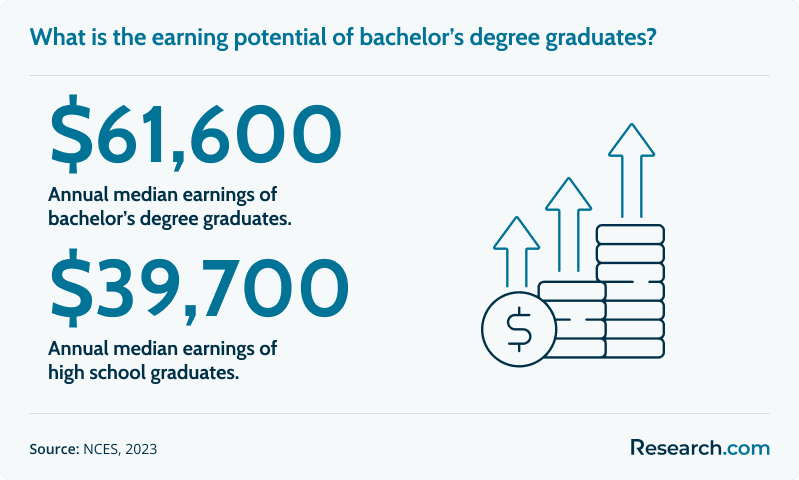
| Degree earnings benchmark | Graduates with a bachelor’s degree have a median annual salary of $61,600. |
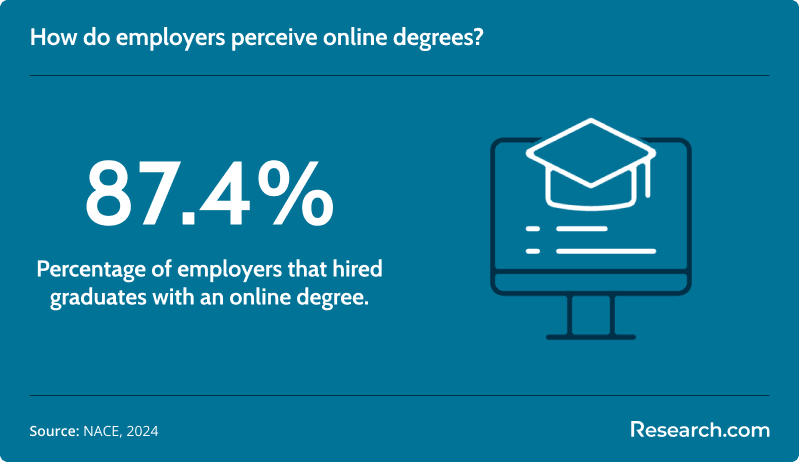
| Employer acceptance | Among employers that track degree type for new hires, 87.4% have hired graduates with an online degree. |
- Best fast online degree completion programs for 2027
- What a degree completion program means
- How long online degree completion usually takes
- How to finish an online degree as quickly as possible
- Admission requirements for fast online degree completion programs
- Documents needed for prior learning assessment
- Average cost of online degree completion programs
- Financial aid options for online degree completion students
- How to choose the best fast online degree completion program
- How prior learning credits can shorten your path
- Whether employers and schools respect online degree completion programs
- Stackable credentials in fast online programs
- How an online degree can support career advancement and future education planning
- Future trends affecting fast online degree programs
- Graduate school pathways after fast online programs
- Accreditation and quality evaluation
- Accessibility and inclusion in online completion programs
- Using certifications to strengthen an online degree
- Student support services for online degree completion learners
- How fast online programs respond to workforce needs
- Online degrees with strong return on investment potential
- Measurable career outcomes from fast online programs
- Common challenges in fast online degree completion programs and how industry alignment helps
Best Fast Online Degree Completion Programs for 2027
How Research.com evaluates schools
A fast degree is only valuable if the program is credible, affordable, and aligned with your goals. Research.com reviews data from trusted education sources, including the IPEDS database, Peterson's database, the College Scorecard database, and the National Center for Education Statistics. These sources help compare programs using measurable factors rather than advertising claims. You can review Research.com's ranking approach on the methodology page.
Business Management
A business management completion program is a practical option for students who already have transfer credits and want a broad degree that applies to many industries. Students commonly study leadership, strategy, organizational behavior, marketing, finance, human resources, and business ethics. Online coursework may use case analysis, team assignments, simulations, and applied business projects.
This path can make sense if you want to qualify for management-track roles, strengthen your promotion case, prepare for entrepreneurship, or move from a technical job into supervisory work. Because many business programs offer accelerated terms and flexible schedules, students may be able to finish in as little as 12 to 18 months.
- Average Salary: $77,274 per year
- Average Tuition: $26,918
Computer Information Systems
A computer information systems degree completion program connects technology with business operations. Students typically study database management, systems analysis, cybersecurity, software development, networking, and IT project support. Assignments often include coding exercises, lab work, troubleshooting scenarios, and business technology projects.
This degree may fit students who want applied technology roles rather than a heavily theoretical computer science curriculum. Graduates may pursue work as systems analysts, IT managers, network administrators, and related technology professionals. Transfer-friendly policies and accelerated online formats can help students complete the program in 18 months to two years.
- Average Salary: $52,185 per year
- Average Tuition: $27,002
Nursing
A nursing completion program is commonly structured as an RN-to-BSN pathway for licensed registered nurses. It builds on prior nursing education and clinical experience while adding upper-division coursework in leadership, community health, advanced health assessment, evidence-based practice, and healthcare systems.
This option is best for RNs who need or want a bachelor’s degree for advancement, specialized practice environments, management responsibilities, or future graduate study. Programs may include virtual simulations and clinical or practicum components, so students should confirm local placement rules before enrolling. Prior nursing experience and accelerated course formats often make completion possible in 12 to 18 months.
- Average Salary: $87,868 per year
- Average Tuition: $38,496 to $60,593
Human Resource Management
A human resource management degree completion program prepares students to support hiring, employee relations, training, compensation, compliance, and organizational development. Courses often cover labor law, benefits administration, performance management, workforce planning, and HR technology.
This degree is a strong fit for administrative professionals, recruiters, payroll specialists, office managers, or working adults who want to move into formal HR roles. Online programs may use employment law case studies, role-play exercises, policy analysis, and HR software simulations. Accelerated options can allow students to finish in at least one year.
- Average Salary: $77,650 per year
- Average Tuition: $26,969
Computer Science
A computer science completion program is more technical than many applied IT degrees. Students usually study programming, algorithms, data structures, operating systems, artificial intelligence, software engineering, and web development. Coursework may include programming projects, collaborative software builds, code reviews, and problem-solving labs.
This program can be appropriate for students who want roles in software development, data science, cybersecurity, or other technical fields and are comfortable with math, logic, and intensive coding. With enough transfer credit and a fast course schedule, students may complete the degree in 18 months to two years.
- Average Salary: $83,109 per year
- Average Tuition: $33,606
Political Science
A political science completion program focuses on government, policy, law, public administration, civic institutions, international relations, and political theory. Online students may complete policy briefs, debates, research papers, and comparative government analyses.
This degree can work well for students interested in public service, advocacy, nonprofit work, campaign operations, government agencies, or law-related graduate study. It is not always a direct career-preparation degree, so students should pair it with internships, writing samples, public policy experience, or relevant certificates when possible. Accelerated online formats may allow completion in under two years.
- Average Salary: $48,391 per year
- Average Tuition: $33,759
Psychology
A psychology degree completion program examines behavior, cognition, development, mental health, research methods, and social interaction. Students may study abnormal psychology, lifespan development, counseling concepts, statistics, and experimental design. Online coursework can include case analysis, virtual labs, research projects, and applied writing assignments.
This program can be useful for students pursuing work in human services, HR, case management, research support, or future graduate study. Students who want to become licensed counselors, psychologists, or therapists should check graduate education and licensure requirements because a bachelor’s degree alone is usually not enough for independent clinical practice. Some accelerated programs can be completed in about 18 months.
- Average Salary: $154,056 per year
- Average Tuition: $30,752
Accounting
An accounting degree completion program covers financial reporting, auditing, taxation, managerial accounting, accounting information systems, and financial analysis. Students may complete spreadsheet projects, audit cases, tax preparation simulations, and accounting software assignments.
This degree is a good match for students who want structured business training and are interested in accounting, auditing, budget analysis, or finance-related roles. Students planning to pursue CPA eligibility should verify state requirements before enrolling, since credit-hour and course requirements vary. Transfer credit and prior learning recognition can help some students finish in 12 to 18 months.
- Average Salary: $68,326 per year
- Average Tuition: $29,073
Education
An education degree completion program develops skills in teaching, instructional design, learning theory, classroom management, educational psychology, curriculum planning, and technology-supported instruction. Depending on the program, students may complete lesson plans, teaching portfolios, research assignments, or field-based experiences.
This degree can be valuable for paraeducators, childcare workers, training professionals, and students interested in teaching or education administration. However, teacher licensure rules vary by state, so students should confirm whether an online program meets the requirements in the state where they plan to work. Accelerated schedules may support completion in 18 months to two years.
- Average Salary: $92,340 per year
- Average Tuition: $35,723
Finance
A finance degree completion program prepares students to analyze money, markets, risk, investments, corporate finance, and financial decision-making. Courses often include financial markets, portfolio management, investment analysis, corporate finance, and risk management. Students may complete financial models, trading simulations, valuation exercises, and case studies.
This degree can be a strong option for students interested in banking, financial analysis, investment services, corporate finance, or wealth management. Because finance roles often value quantitative skills and industry tools, students should look for programs with applied projects and career support. Some programs can be completed in as little as 12 to 18 months.
- Average Salary: $92,631 per year
- Average Tuition: $30,413
What Students Should Look for in Graduate Feedback
Student testimonials can be useful, but they should not be the main reason you choose a program. Instead of relying on a few positive quotes, look for consistent patterns in graduate feedback. Strong signs include clear advising, fast transcript evaluations, responsive faculty, useful career services, and courses that connect to workplace skills.
Be cautious if reviews repeatedly mention unclear transfer policies, hidden fees, limited instructor feedback, poor technology support, or difficulty getting required courses. A fast program should still provide academic structure and student support.
What is a degree completion program?
A degree completion program is designed for students who began college previously and want to finish the remaining credits needed for a bachelor’s degree. Many online degree completion programs serve working adults, transfer students, military learners, and students who already hold an associate degree.
The main advantage is efficiency. Rather than starting over, students can apply eligible college credits, professional training, certifications, military learning, or exam-based credit toward degree requirements when the institution allows it. Most programs focus on upper-division general education, major courses, electives, and any missing requirements.
| Program type | Best for | Main advantage | Main caution |
| Degree completion program | Students with prior credits | Can reduce repeated coursework | Transfer rules vary by school |
| Traditional bachelor’s program | First-time college students | Full four-year curriculum sequence | Usually slower for returning students |
| Competency-based program | Students with strong existing knowledge | May allow faster progress through mastered material | Requires high self-direction |
| Self-paced online program | Students who need scheduling control | Flexible timing | Easy to fall behind without structure |
How long does it take to complete an online degree completion program?
Most online degree completion programs take 1 to 3 years. Your exact timeline depends on credits already earned, remaining major requirements, enrollment intensity, term length, and whether the school accepts transfer, test-based, military, or prior learning credits.
- Credits still required: Many programs expect incoming students to have about 60 credits or an associate degree, but some students enter with fewer or more transferable credits.
- Full-time or part-time pace: Full-time students may finish in about 1 to 2 years, while part-time students often need closer to 3 years.
- Accelerated terms: Shorter sessions can help students progress faster, similar to flexible options found when comparing the most affordable online counseling degree options.
- Transfer credit acceptance: A generous transfer policy can shorten the degree path, while a restrictive policy may force you to retake courses.
- Course availability: Multiple annual start dates, eight-week sessions, summer terms, and winter terms can reduce waiting time between classes.
The chart below shows popular undergraduate degree fields using NCES 2023 data.
How can I complete my degree online in the shortest amount of time?
To finish as quickly as possible, combine three strategies: maximize accepted credits, choose an accelerated format, and follow a course plan that prevents scheduling gaps. Speed matters, but it should not come at the cost of accreditation, licensure eligibility, or learning quality.
- Choose an accelerated program: Look for condensed terms, year-round enrollment, and clear completion maps. Students comparing career-focused options can also review the fastest accelerated project management degree programs online.
- Request a transfer evaluation before committing: Do not guess how many credits will apply. Ask for a written review that shows which credits count toward general education, major, elective, and residency requirements.
- Use prior learning assessment: Some schools award credit through PLA options for professional experience, military training, workplace learning, or certifications.
- Consider CLEP, DSST, or portfolio credit: Exam-based and portfolio-based credit can reduce the number of courses you need if the school accepts them.
- Enroll full time if your schedule allows: A heavier course load can shorten your timeline, but only if you can maintain performance.
- Use summer and winter terms: Extra terms can keep momentum going and reduce total calendar time.
- Review competency-based options: Competency-based education may help students move faster through content they already know.
- Build a term-by-term graduation plan: Work with an advisor to map every required class, including prerequisites and courses offered only in certain terms.
Are there any specific requirements or qualifications for enrolling in fast online degree completion programs?
Admission requirements vary, but fast degree completion programs commonly expect applicants to have previous college credits, a minimum GPA, and official transcripts. Some majors also require prerequisite coursework, licenses, professional experience, or field placement eligibility.
- Prior college credit: Many programs prefer students with about 60 credits or an associate degree, though policies differ.
- Minimum GPA: Schools may set a GPA threshold for admission or for transfer credit acceptance.
- Prerequisite courses: Nursing, accounting, education, technology, and science-related majors may require specific foundation courses.
- Application documents: Applicants may need transcripts, an application form, recommendations, essays, or standardized test scores, depending on the school.
- Transfer credit review: Colleges evaluate previous coursework to determine how it fits the new degree plan.
- English proficiency: International applicants or non-native English speakers may need TOEFL, IELTS, or equivalent documentation.
- Interview or advising review: Some programs use admissions interviews or required advising sessions to confirm program fit.
What documentation or evidence do I need to provide for prior learning assessment?
Prior learning assessment requires proof that your previous learning is college-level, relevant, and verifiable. Requirements differ by institution, but students should prepare documentation early because PLA reviews can take time.
- Official transcripts: Send records from every college or university you attended so the school can evaluate completed courses.
- Professional resume: Provide a detailed work history showing job titles, duties, dates, responsibilities, and major accomplishments.
- Employer verification: Some institutions request letters from supervisors confirming your work experience and skills.
- Professional certifications or licenses: Submit copies of relevant credentials, including career-specific awards such as an affordable online paralegal certificate if it applies to your field.
- Training records: Include certificates, course descriptions, syllabi, or training outlines from professional development programs.
- Military transcripts: Military learners may submit records such as the Joint Services Transcript or Community College of the Air Force transcript.
- Portfolio materials: A portfolio may include projects, reports, presentations, work samples, technical documentation, or reflective essays connecting your experience to course outcomes.
- Exam results: CLEP or DSST scores may be accepted for credit if the school recognizes those exams.
- Personal statement: A short written explanation can help connect your prior learning to the degree requirements.
- Course descriptions and syllabi: If you want credit for prior coursework, provide detailed course information so evaluators can compare content and rigor.
What is the average cost of online degree completion programs?
Fast online degree completion programs generally cost between $10,000 and $30,000, but your actual price depends on tuition rates, required credits, school type, fees, transfer credits, and financial aid. A program with a higher per-credit rate may still be cheaper overall if it accepts more of your existing credits.
- Institution type: Public universities often charge less than private institutions, and in-state pricing may apply to some online students.
- Credits required: Many programs require 60-90 credit hours to graduate, with costs ranging from $200 to $600 per credit hour.
- Major and program expenses: Nursing, engineering, and other specialized programs may cost more because of clinical, lab, or material requirements. Students comparing healthcare affordability can review the most affordable online psychiatric nurse practitioner programs, while education students can compare online colleges for early childhood education.
- Extra fees: Technology, online course, application, graduation, and assessment fees can increase the total cost.
- Program length: Accelerated programs may cost more per credit but reduce the number of terms you pay for.
- Transfer credits: The more accepted credits you have, the fewer new credits you must pay for.
| Cost factor | Question to ask before enrolling |
| Transfer credits | How many of my prior credits apply directly to this degree? |
| Fees | Which fees are mandatory in addition to tuition? |
| Residency requirement | How many credits must I complete at this institution? |
| Course sequencing | Are required classes offered often enough to avoid delays? |
| Financial aid eligibility | Is the program eligible for federal, state, employer, military, or institutional aid? |
What are the financial aid options for students enrolling in fast online degree completion programs?
Online degree completion students may qualify for several forms of financial aid, but eligibility depends on accreditation, enrollment status, citizenship or residency rules, academic progress, and the institution’s participation in aid programs.
- Federal student aid: Pell Grants are need-based grants that do not have to be repaid. The maximum award for the 2024-2025 academic year is $7,395. Federal Direct Loans may be subsidized or unsubsidized; subsidized loans are need-based and do not accrue interest while you are in school, while unsubsidized loans begin accruing interest immediately.
- State aid: Many states provide grants or scholarships for residents attending eligible institutions. For example, California offers the Cal Grant program for low- and middle-income students, including learners in fields such as affordable online education degrees.
- Institutional scholarships and grants: Schools may award merit-based, need-based, transfer, adult learner, or online student scholarships. Southern New Hampshire University offers various scholarships for online students based on GPA and other criteria, and Arizona State University provides need-based grants for online students with financial need.
- Employer tuition reimbursement: Some employers help pay for job-related education. Ask HR whether reimbursement requires a minimum grade, continued employment, or approval before enrollment.
- Private scholarships: Organizations and foundations may offer scholarships, such as the Coca-Cola Scholars Program for high-achieving students.
- Military and veterans benefits: The GI Bill can help veterans and active-duty service members pay tuition, fees, and living expenses. The Post-9/11 GI Bill covers full tuition at public institutions and up to $28,937.09 per academic year at private institutions. Active-duty service members may also use military tuition assistance programs, which can cover up to 100% of tuition costs, depending on branch rules.
- Federal Work-Study: Eligible students with financial need may work part time through the Federal Work-Study Program, often in community service or work connected to their field.
- Student loans: Private loans from lenders such as Sallie Mae and Discover are available, but they typically require a credit check and may carry higher interest rates than federal loans.
The chart below summarizes how much the GI Bill can cover for tuition and fees for veterans and active-duty members for 2024.
How to choose the best fast online degree completion program?
The best fast online program is not simply the shortest one. It is the program that accepts the most useful credits, meets quality standards, fits your schedule, supports your career goal, and avoids unnecessary cost.
- Verify accreditation: Confirm institutional accreditation and, when relevant, programmatic accreditation. Students comparing affordable online accounting degree options should pay attention to business school accreditation such as the Association to Advance Collegiate Schools of Business (AACSB), especially if they plan to pursue advanced credentials or competitive accounting roles.
- Get a written transfer estimate: Ask the school to show exactly which credits apply before you enroll.
- Compare total cost, not only tuition: Include fees, books, exams, technology costs, clinical fees, graduation fees, and credits that do not transfer.
- Check course format: Decide whether asynchronous, synchronous, self-paced, hybrid, or cohort-based learning fits your life.
- Review the curriculum: Make sure courses match your career target instead of choosing a major only because it is fast.
- Ask about advising: Strong degree planning is essential in an accelerated program because one missed prerequisite can delay graduation.
- Evaluate career services: Look for resume help, employer connections, internship support, portfolio guidance, and alumni networks.
- Review faculty experience: In career-focused fields, instructors with relevant industry experience can add practical value.
- Check outcomes carefully: Graduation rates, job placement information, and alumni feedback can help, but they should be interpreted in context.
Common mistakes to avoid when choosing a fast online degree
| Mistake | Why it matters | Better approach |
| Choosing only the shortest program | Speed does not guarantee quality, licensure eligibility, or employer value. | Balance timeline with accreditation, curriculum, outcomes, and support. |
| Assuming all credits transfer | Credits may transfer as electives instead of meeting degree requirements. | Request a written transfer evaluation before enrolling. |
| Ignoring accreditation | Unaccredited programs can affect financial aid, employment, and graduate school options. | Verify accreditation through recognized sources and the school’s accreditor. |
| Looking only at tuition | Fees and non-transferable credits can raise the final price. | Compare total estimated program cost. |
| Overloading courses | Too many accelerated courses can lead to burnout or poor grades. | Choose a pace you can sustain while meeting work and family obligations. |
How can prior learning credits maximize the efficiency of online degree completion programs?
Prior learning credit can make online degree completion faster and less expensive because it reduces repeated coursework. Colleges may evaluate prior college study, professional certifications, workplace training, military education, exam scores, and portfolio evidence against degree requirements.
For example, a student with relevant professional certifications may be able to skip an introductory course and move into advanced coursework. Military learners may receive credit for technical instruction, leadership training, or occupational learning documented through official records.
Standardized exams such as CLEP and portfolio assessments give students another way to demonstrate college-level knowledge. Institutions that offer fast track college programs often provide advisors who help students identify which credits can shorten the path to graduation.
The key is to ask how prior learning credit applies. Credit that counts only as a general elective may not shorten your timeline as much as credit that satisfies major, general education, or residency requirements.
Are online degree completion programs recognized and respected by employers and other institutions?
Yes, accredited online degree completion programs are widely accepted by employers and institutions, especially when the degree comes from a recognized college or university. According to NACE’s Job Outlook 2024 survey, 87.4% of employers that track new hires’ degree types have hired graduates with an online degree.
Employers are generally more focused on whether the institution is accredited, whether the degree is relevant, whether the candidate has the needed skills, and whether the applicant can show work experience or strong projects. Online degrees are especially common among working adults who combine education with professional responsibilities.
Graduate schools may also accept online degrees, but applicants should verify accreditation, prerequisite coursework, GPA expectations, and any program-specific admissions rules.
Can fast online degree programs offer stackable credentials for seamless career progression?
Some fast online programs include stackable credentials, which allow students to earn smaller credentials on the way to a full degree. These may include certificates, associate-level awards, or industry-recognized credentials that can support job mobility before the bachelor’s degree is complete.
This structure can be useful for students who need immediate career value while continuing toward a larger goal. For example, an accelerated associates degree online can provide a credential that supports employment and may also become a stepping stone toward a bachelor’s program.
How can earning an online degree help me advance my career?
An online degree completion program can support career advancement when it closes a credential gap, builds job-relevant skills, and aligns with your employer’s promotion or hiring standards. It is most valuable when paired with experience, networking, certifications, portfolios, or licensure preparation when needed.
- Skill development: Updated coursework can strengthen your knowledge in business, healthcare, technology, education, social science, or another field.
- Promotion eligibility: Some employers require a bachelor’s degree for management, specialist, or higher-grade positions.
- Earning potential: Bachelor’s degree holders often have stronger salary opportunities than workers without a degree, although outcomes vary by field, employer, location, and experience.
- Professional network: Online programs can connect students with instructors, classmates, alumni, and career services staff.
- Career transition support: A degree can help students move into a new field. For example, online SLP programs may help students plan for speech-language pathology pathways after building the right academic foundation.
- Graduate school preparation: Completing a bachelor’s degree may be the first step toward advanced professional roles.
Some career goals require graduate education. For example, students exploring industrial-organizational psychology often need to understand advanced degree expectations and may start by asking where industrial-organizational psychologists work before choosing a degree path.
What future trends are shaping fast online degree programs?
Fast online degree programs are being shaped by employer demand for practical skills, broader acceptance of online learning, improved learning technology, and interest in shorter credential pathways. Many institutions are using artificial intelligence tools, automated progress tracking, adaptive course features, and analytics to help students stay on pace.
At the same time, students should be careful not to confuse technology with quality. A strong accelerated online degree should still provide rigorous coursework, qualified instructors, reliable advising, accessible support, and clear outcomes.
Do fast online degree programs support a seamless transition to graduate education?
Many fast online degree completion programs can prepare students for graduate education, but not all do so equally. Students who plan to pursue graduate school should check prerequisite courses, GPA requirements, research expectations, faculty recommendations, and whether the bachelor’s curriculum is accepted by target graduate programs.
Students considering advanced study should compare degree pathways early, especially if they are interested in fields linked to the highest paying master's degrees. A fast bachelor’s program can be a smart foundation, but only if it meets the academic expectations of the next credential.
How are fast online degree completion programs accredited and evaluated?
Accreditation is one of the most important checks before enrolling. It indicates that an institution or program has been reviewed for academic standards, faculty qualifications, student services, governance, and educational quality. For online learners, accreditation also affects federal financial aid eligibility, transfer credit acceptance, graduate school options, and employer confidence.
Program evaluation may include curriculum review, faculty review, audits, student outcome analysis, and peer assessment. Students should verify accreditation directly rather than relying only on marketing language. Working adults comparing affordability and credibility can also review the best affordable online colleges for working adults.
Are fast online degree completion programs accessible and inclusive?
Well-designed online programs should support students with different schedules, learning needs, disabilities, locations, and technology access levels. Accessibility may include ADA-compliant course materials, captioned media, screen-reader-compatible platforms, flexible deadlines when approved, assistive technology support, and disability services.
Inclusive program design also means offering multiple routes to progress. Shorter pathways such as a 6 months associate degree can help some learners build momentum before moving into a bachelor’s completion program.
Can fast online degree programs be enhanced by supplementary certifications?
Yes. Certifications can strengthen a fast online degree when they add specific, employer-recognized skills. This is especially useful in technology, project management, HR, finance, healthcare administration, education technology, and business analytics.
A certification should not replace an accredited degree when a degree is required, but it can make a graduate more competitive. Students who want shorter career-focused credentials can compare online certificate programs that pay well.
What unique resources and support services are available to online degree completion students?
Fast online degree completion students often need more support, not less, because accelerated schedules leave little room for confusion. Before enrolling, ask whether the program offers services specifically designed for working adults and transfer students.
- Academic advising: Advisors should help map transfer credits, remaining requirements, course sequencing, and graduation timelines.
- Career services: Useful support includes resume review, interview preparation, job search coaching, portfolio help, and employer networking.
- Tutoring: Online tutoring, writing centers, math support, and subject-specific help can prevent small problems from becoming failed courses.
- Digital library access: Students should have access to research databases, journals, e-books, citation tools, and librarian support.
- Technology help: Reliable IT support matters because login issues, software problems, or platform confusion can derail accelerated coursework.
- Mental health and wellness resources: Virtual counseling, wellness workshops, and referral services can support students balancing school with work and family.
- Alumni and peer connections: Online communities, alumni events, career fairs, and discussion groups can reduce isolation and expand professional networks.
How fast online degree programs meet industry needs?
Strong fast online degree programs stay relevant by connecting academic content to workplace expectations. This does not mean every course should be job training, but students should be able to see how assignments build useful skills.
- Curriculum updates: Schools may revise courses to reflect current tools, regulations, technologies, and industry practices.
- Employer input: Advisory boards, employer partnerships, and guest speakers can help programs understand what skills are valued.
- Applied projects: Case studies, simulations, portfolios, labs, and capstone projects help students demonstrate ability.
- Skill-focused learning: Programs may emphasize data analysis, programming, patient care, compliance, communication, or leadership depending on the field.
- Career preparation: Resume support, mock interviews, employer events, and job search coaching can help students turn the degree into career progress.
Students who want the quickest bachelor’s route can compare fastest bachelor's degree options, but they should also check whether each program’s curriculum matches their target industry.
What online degrees offer the highest return on investment?
Return on investment depends on total program cost, time to completion, transfer credits, salary potential, job stability, employer demand, and whether the degree is required for advancement. Fields such as technology, healthcare, finance, accounting, business, and certain education pathways may offer strong opportunities, but outcomes are never guaranteed.
Students should compare online degrees that pay well with their own goals, strengths, local labor market, and willingness to pursue certifications or graduate study. A lower-cost program with strong transfer credit acceptance can sometimes produce better ROI than a more expensive program with a slightly faster timeline.
Do fast online degree programs deliver measurable career outcomes?
Some fast online degree programs publish employment rates, graduation rates, salary information, alumni outcomes, or employer feedback. These data points can help students judge whether a program supports real career progress, but they should be reviewed carefully. Ask whether outcomes apply to online students specifically, recent graduates, all graduates, or a selected group of respondents.
Accelerated formats can also support future academic goals. For students who already hold a bachelor’s degree, options such as 12 months masters programs online show how condensed formats can be used beyond undergraduate completion when the program is academically credible and career-aligned.
What are the common challenges students face in fast online degree completion programs?
Fast online degree completion programs can be effective, but they are demanding. Students should understand the likely obstacles before enrolling so they can plan realistically.
- Time pressure: Accelerated courses move quickly, and falling behind for even one week can be difficult to recover from.
- Work and family balance: Many students are working adults, parents, caregivers, or military learners with competing responsibilities.
- Reduced face-to-face interaction: Online learners may need to be more intentional about contacting instructors, joining discussions, and building peer connections.
- Academic intensity: Shorter terms often require frequent reading, assignments, projects, and exams.
- Technology issues: Unreliable internet, unfamiliar learning platforms, or software access problems can affect performance.
- Program fit: A program may be fast but still lack the specialization, schedule, support, or licensure alignment you need.
- Affordability concerns: Students comparing cheap accredited online colleges should confirm that low tuition is paired with legitimate accreditation, useful support, and acceptable outcomes.
- Delayed feedback: In some online courses, students may not receive quick responses or grading, which can make it harder to improve during compressed terms.
Questions to Ask Before Enrolling
- Is the institution accredited by a recognized accreditor?
- How many of my credits will apply to degree requirements, not just electives?
- What is the total cost after fees, books, assessments, and non-transferable credits?
- Can I complete the program fully online, or are there in-person requirements?
- Does the program meet licensure or certification requirements in my state, if relevant?
- How often are required courses offered?
- What happens if I need to slow down for one term?
- Are prior learning, military, CLEP, DSST, or portfolio credits accepted?
- What support is available for transfer students and working adults?
- What outcomes data are available for online students in this specific program?
Key Insights
- Fast online degree completion programs are best for students who already have college credits and want an efficient path to a bachelor’s degree.
- The fastest option is not always the best option. Accreditation, transfer credit acceptance, course availability, cost, and career alignment matter more than speed alone.
- Many programs can be completed in 1 to 3 years, while some accelerated pathways may take 12 to 18 months when students bring enough transferable credits.
- Total cost usually depends on credits remaining, fees, transfer policies, and financial aid, not just advertised tuition.
- Prior learning assessment can save time and money, but students need documentation and should ask how credits apply to the actual degree plan.
- Employers increasingly accept online degrees from accredited institutions; 87.4% of employers that track degree type have hired online degree graduates.
- Students in licensure-related fields such as nursing, education, counseling, and accounting should confirm state or professional requirements before enrolling.
- The best program is one that helps you finish efficiently while preserving long-term value for employment, graduate school, or professional advancement.
References:
- National Center for Education Statistics (NCES). (2023a). Annual Earnings by Educational Attainment. Population Characteristics and Economic Outcomes. NCES.
- National Center for Education Statistics (NCES). (2023b). Undergraduate Degree Fields. Postsecondary Education. NCES.
- National Student Clearinghouse Research Center. (2024). Current Term Enrollment Estimates: Spring 2024. National Student Clearinghouse Research Center.
- Gray, K. (2024). Employers See Online Degrees as Comparable to In-Person Degrees. Candidate Selection. NACE.
- US Department of Veteran Affairs. (2024). Future rates for Post-9/11 GI Bill. VA.
Other Things You Should Know About Fast Online Degree Completion Programs
In 2027, Southern New Hampshire University and Western Governors University offer some of the fastest online bachelor's degree programs. These programs typically allow students to complete their degrees in around three years, depending on transfer credits and course load.
Many accelerated online degree completion programs accept 60 to 90 transfer credits toward a 120-credit bachelor’s degree. Some schools also require at least 30 credits earned in residence, plus official transcripts for evaluation before admission or program placement.
Most fast online degree completion programs in 2027 do not require admission tests like SAT or ACT. Instead, they emphasize previous coursework and relevant work experience. However, some programs may require placement tests to assess proficiency in specific subjects.
Fast online degree completion programs in 2027 often accept various types of transfer credits, including those from accredited colleges, advanced placement exams, and military training. Verification of credit eligibility typically requires official transcripts and may be subject to program-specific policies.


