2027 Most Affordable Online Psychiatric Nurse Practitioner Programs

Co-Founder and Chief Data Scientist
The U.S. Bureau of Labor Statistics (BLS) reported 1.8 million openings for healthcare occupations each year from 2022 to 2032, with psychiatric mental health nurse practitioner (PMHNP) being among the fastest growing and lucrative jobs. However, pursuing a graduate nursing degree often comes with a hefty price tag, which is why many students take extra effort to search for the most affordable online psychiatric nurse practitioner programs.
This guide details essential information about PMHNP degrees, including costs, prerequisites, and career paths for graduates. We have also identified the top schools offering these degrees online.
What are the benefits of getting an online psychiatric nurse degree?
- Online PMHNP programs combine online coursework with in-person clinical training.
- Graduates can work in mental health clinics, hospitals, community organizations, private practices, government agencies, schools, community centers, and churches.
- The median annual salary for nurse practitioners is $129,480.
What can I expect from an online psychiatric nurse degree program?
Online psychiatric nurse practitioner programs combine online coursework with in-person clinical training. These clinical experiences, arranged by the program or student, allow students to get hands-on practice in mental healthcare settings in their communities. Some programs offer short on-campus intensives for networking and professional development.
Where can I work with an online psychiatric nurse degree?
With a PMHNP credential, you can work in various healthcare settings and serve diverse patients. You can work at mental health clinics or hospitals. Apart from healthcare facilities, you can also work at community organizations, private practices, and government agencies.
Specialized settings like crisis centers and facilities for substance abuse treatment and forensic mental health also employ graduates of online PMHNP programs. You may even find opportunities in non-traditional settings like schools, community centers, and churches, who connect underserved communities with mental health care services.
How much can I make with an online psychiatric nurse degree?
While the specific salary you earn will depend on your experience and other factors, an online PMHNP degree positions you well in the job market. The BLS data shows a median annual salary of $129,480 for nurse practitioners, compared to the $48,060 national median for all occupations.
Experience, location, and employer type can also influence salary. You may ask: “where do PMHNP get paid the most?” Business support services firms are the top-paying employers for nurse practitioners as of May 2023, offering a median wage of $180,570. California, where the average nurse practitioner earns about $161,540, is the top-paying state.
- List of the Most Affordable Online Psychiatric Nurse Practitioner Programs for 2027 Program List
- How long does it take to complete an online psychiatric nurse practitioner program? Completion Time
- How does an online psychiatric nurse practitioner program compare to an on-campus program? How does an online psychiatric nurse practitioner program compare to an on-campus program?
- What is the average cost of an online psychiatric nurse practitioner program? Program Cost
- What are the financial aid options for students enrolling in an online psychiatric nurse practitioner program? Financial Aid
- What are the prerequisites for enrolling in an online psychiatric nurse practitioner program? Program Prerequisites
- What courses are typically in an online psychiatric nurse practitioner program? What courses are typically in an online psychiatric nurse practitioner program?
- What types of specializations are available in online psychiatric nurse practitioner programs? Specializations
- How to choose the best online psychiatric nurse practitioner program? How to choose the best online psychiatric nurse practitioner program?
- What career paths are available for graduates of online psychiatric nurse practitioner programs? Career Paths
- What is the job market for graduates with an online psychiatric nurse practitioner program? Job Outlook
- How do regional differences influence PMHNP salaries? How do regional differences influence PMHNP salaries?
- How do licensing exam pass rates influence program quality and career success? How do licensing exam pass rates influence program quality and career success?
- How is technology integration shaping online PMHNP programs? How is technology integration shaping online PMHNP programs?
- Is the investment in an online PMHNP program worth it? Is the investment in an online PMHNP program worth it?
- What are the ethical considerations in psychiatric nurse practitioner practice? What are the ethical considerations in psychiatric nurse practitioner practice?
- Balancing Work and Study as an Online Psychiatric Nurse Practitioner Student Balancing Work and Study as an Online Psychiatric Nurse Practitioner Student
- Are Online PMHNP Degrees Valued by Employers? Are Online PMHNP Degrees Valued by Employers?
- What professional development opportunities can further enhance your PMHNP career? What professional development opportunities can further enhance your PMHNP career?
- Navigating the Path to Becoming a Licensed Psychiatric Nurse Practitioner Navigating the Path to Becoming a Licensed Psychiatric Nurse Practitioner
- Is Pursuing a Doctor of Nursing Practice Degree the Next Step in Advancing Your PMHNP Career? Is Pursuing a Doctor of Nursing Practice Degree the Next Step in Advancing Your PMHNP Career?
Most Affordable Online Psychiatric Nurse Practitioner Programs for 2027
Choosing an online psychiatric mental health nurse practitioner program is not just a tuition decision. You are comparing graduate-level nursing programs that must prepare you for advanced clinical assessment, psychotherapy, psychopharmacology, supervised patient care, board certification, and state licensure. The wrong choice can cost you time, money, and clinical placement problems; the right one can help you move into a high-demand mental health role while continuing to work as a nurse.
This guide is designed for registered nurses comparing affordable online PMHNP programs, including MSN, DNP, and post-master’s certificate routes. You will find a ranked list of lower-cost options, key admissions and curriculum expectations, cost factors, clinical requirements, online versus campus trade-offs, licensure steps, career outlook, and practical questions to ask before enrolling.
Quick answer: What is the most affordable online psychiatric nurse practitioner program?
Based on the programs reviewed here, Purdue University has the lowest listed per-credit rate among the ranked master’s-level options at $348 per credit. New Mexico State University offers the lowest listed graduate certificate option at $444 per credit for 18 credits. However, the cheapest program is not automatically the best fit. Students should also verify accreditation, state authorization, clinical placement support, eligibility for PMHNP certification, and whether the program accepts applicants from their state.
How these programs were ranked
Research.com reviewed online psychiatric nurse practitioner programs with affordability in mind while also considering academic quality, student outcomes, and institutional reputation. The ranking draws from the IPEDS database, Peterson’s database, the Distance Learning Licensed Data Set from the College Scorecard database, and the National Center for Education Statistics. For a broader explanation of how Research.com evaluates schools, visit the Research.com methodology page.
What to check before using this ranking
- Accreditation: Look for nursing program accreditation such as CCNE when evaluating eligibility for certification and licensure.
- State eligibility: Online nursing programs may not be authorized to enroll students in every state.
- Clinical placements: Ask whether the school finds placements, helps you find them, or requires you to secure your own preceptors.
- Total cost: Per-credit tuition is only one part of the price. Add fees, travel, background checks, books, clinical expenses, and exam costs.
- Credential level: MSN, DNP, and post-master’s certificate programs serve different students and career goals.
1. Purdue University
Purdue University offers a psychiatric mental health nurse practitioner graduate pathway focused on mental health promotion, assessment, and treatment for individuals and families across the lifespan. Students study evidence-based approaches to psychiatric care and may engage with research and clinical learning opportunities connected to Purdue’s campus and nurse-managed clinics. Graduates may pursue roles involving direct patient care, team leadership, patient advocacy, and program development.
- Program length: Two years
- Tracks/concentrations: None specified
- Estimated cost: $348 per credit
- Required credits to graduate: 49
- Accreditation: Commission on Collegiate Nursing Education (CCNE)
2. Augusta University
Augusta University provides an online Doctor of Nursing Practice pathway with a psychiatric mental health nurse practitioner track. The program prepares advanced practice nurses to serve individuals, families, and communities across age groups while also building skills in healthcare systems and clinical leadership. Students can choose full-time or part-time enrollment, but clinical placement eligibility is limited because students must live in Georgia or South Carolina.
- Program length: Three years, or eight semesters
- Tracks/concentrations: None specified
- Estimated cost: $441 per credit for residents; $1,189 per credit for non-residents
- Required credits to graduate: 268 semester hours
- Accreditation: Commission on Collegiate Nursing Education (CCNE)
3. New Mexico State University
New Mexico State University offers a fully online psychiatric mental health nursing graduate certificate for registered nurses who already hold a master’s or doctoral degree in nursing and a current advanced practice certification. The certificate covers advanced assessment, psychiatric diagnosis, psychotherapy, and medication management. It is best suited to advanced practice nurses who want to add a mental health scope to their existing qualifications rather than complete a full MSN or DNP program.
- Program length: One year
- Tracks/concentrations: None specified
- Estimated cost: $444 per credit
- Required credits to graduate: 18
- Accreditation: Higher Learning Commission (HLC)
4. McNeese State University
McNeese State University offers a cost-conscious master’s pathway for nurses who want to move into advanced practice or nursing education. The program uses the Intercollegiate Consortium for a Master’s in Science of Nursing curriculum and incorporates faculty-led instruction with clinical learning. Students gain experience applying evidence-based care to different patient populations.
- Program length: Two years
- Tracks/concentrations: None specified
- Estimated cost: $473 per credit
- Required credits to graduate: 48 to 51
- Accreditation: Commission on Collegiate Nursing Education (CCNE)
5. East Carolina University
East Carolina University prepares registered nurses for advanced psychiatric mental health practice through either a master’s degree or post-master’s certificate, depending on the applicant’s prior education. The online format includes two-day on-campus intensives each semester and 550 clinical practicum hours across age groups. Because of North Carolina’s provider shortage, the program currently focuses on admitting in-state nurses with mental health experience who plan to provide direct care after graduation.
- Program length: Six semesters
- Tracks/concentrations: None specified
- Estimated cost: $433 per credit for residents; $1,163 per credit for non-residents
- Required credits to graduate: 47
- Accreditation: Commission on Collegiate Nursing Education (CCNE)
6. Northern Kentucky University
Northern Kentucky University offers an online Master of Science in Nursing with a psychiatric mental health nurse practitioner track. The curriculum prepares nurses to evaluate and treat mental health needs across the lifespan while considering cultural, social, and economic influences on care. Students study diagnosis, assessment, treatment planning, advanced psychopharmacology, population health, and evidence-based practice.
- Program length: As few as 22 months
- Tracks/concentrations: None specified
- Estimated cost: $588 per credit
- Required credits to graduate: 46
- Accreditation: Commission on Collegiate Nursing Education (CCNE)
7. Indiana Wesleyan University
Indiana Wesleyan University offers an online Master of Science in Primary Care Nursing with a psychiatric mental health nurse practitioner specialization. The program combines online courses, simulations, and clinical learning experiences arranged locally. Coursework includes advanced pharmacology, pathophysiology, and psychiatric mental health care across the lifespan, delivered within a faith-based academic environment.
- Program length: Two years
- Tracks/concentrations: None specified
- Estimated cost: $689 per credit hour
- Required credits to graduate: 49
- Accreditation: Commission on Collegiate Nursing Education (CCNE)
8. Georgia College & State University
Georgia College & State University gives Georgia-based nurses an online route to psychiatric mental health specialization through its master’s nursing program. Students develop advanced practice skills that can support roles in direct care, nursing education, leadership, and healthcare management. The program is primarily online but includes limited campus requirements.
- Program length: Six semesters, with up to seven years allowed
- Tracks/concentrations: None specified
- Estimated cost: $787 per credit
- Required credits to graduate: 39
- Accreditation: Commission on Collegiate Nursing Education (CCNE)
9. Georgia Southern University
Georgia Southern University offers a post-MSN psychiatric mental health nurse practitioner certificate for registered nurses who already hold a master’s degree. The 19-credit certificate emphasizes psychiatric care, therapeutic approaches, and interdisciplinary collaboration in behavioral health settings. Graduates may apply for certification after completing the program.
- Program length: Five semesters
- Tracks/concentrations: None specified
- Estimated cost: $718 per credit
- Required credits to graduate: 19
- Accreditation: Commission on Collegiate Nursing Education (CCNE)
10. Texas Tech University
Texas Tech University prepares nurses for psychiatric mental health practice in varied clinical settings. The curriculum focuses on evidence-based care for mental health conditions across the lifespan, with attention to rural health, tele-mental health, and early intervention for children, adolescents, and families. Coursework is mostly online, with limited campus requirements and local clinical placements.
- Program length: Six to nine semesters
- Tracks/concentrations: None specified
- Estimated cost: $1,004 per credit for residents; $1,414 per credit for non-residents
- Required credits to graduate: 49
- Accreditation: Commission on Collegiate Nursing Education (CCNE)
If you already hold a graduate nursing degree and want the fastest route to PMHNP preparation, compare these programs with the shortest online PMHNP certificate programs.
What Online PMHNP Students Say About the Format
- Michael: "The online PMHNP format worked well for me because I could review lectures more than once and organize my study time around my schedule. I still had to stay disciplined, but the structure fit the way I learn best."
- Emily: "My program gave me access to faculty I would not have been able to learn from locally. The online model helped me stay in my community while preparing to serve its mental health needs."
- Sarah: "The biggest advantage was being able to keep working as a nurse while completing classes. I could connect coursework to patient care almost immediately, which made the material more practical."
Key Findings
- Affordable PMHNP programs still require careful vetting. Low tuition matters, but accreditation, clinical placement support, and state authorization are just as important.
- Program length depends heavily on your current credential. Post-master’s certificates can take about one year, while MSN and DNP pathways usually require more time and clinical preparation.
- Online does not mean fully remote. Many programs include clinical hours, campus intensives, simulations, or state-specific placement rules.
- Resident tuition can change affordability. Some schools list substantially different resident and non-resident rates, so out-of-state students should calculate total cost before applying.
- Clinical placement is a major decision factor. Working nurses should ask early whether the school assists with preceptors or expects students to arrange placements independently.
How Long Does an Online Psychiatric Nurse Practitioner Program Take?
The timeline depends on whether you are entering with a BSN, an MSN, a doctoral nursing degree, or advanced practice certification. Nurses who already have a graduate nursing degree may be able to complete a post-master’s PMHNP certificate in one year or less. BSN-prepared nurses typically need a longer MSN or DNP pathway because they must complete advanced practice core courses, psychiatric specialty courses, and supervised clinical requirements.
Full-time master’s-level programs may take several years, while part-time students may need longer depending on course sequencing and clinical availability. Some schools also offer faster routes for qualified students; nurses comparing time-to-completion can review accelerated nurse practitioner online programs as part of their planning.
| Starting point | Common PMHNP route | Best fit | Key caution |
| BSN-prepared registered nurse | MSN PMHNP or DNP PMHNP | Nurses seeking initial advanced practice preparation | Requires graduate coursework and clinical hours |
| MSN-prepared nurse | Post-master’s PMHNP certificate | Nurses adding psychiatric mental health specialization | Must confirm eligibility for certification |
| Advanced practice nurse | Graduate certificate or specialty certificate | APRNs expanding scope into mental health care | Prior certification requirements vary by school |
| Nurse seeking leadership or systems roles | DNP PMHNP | Nurses who want clinical practice plus leadership preparation | Usually longer and more expensive than certificate routes |
Online PMHNP Programs vs. Campus Programs: Which Format Makes Sense?
Online psychiatric nurse practitioner programs are popular among working nurses because didactic coursework can often be completed from home. Students may watch recorded lectures, join live sessions, complete assignments through a learning platform, and participate in online discussions. This flexibility can make graduate study more realistic for nurses with shifts, family responsibilities, or limited access to nearby universities.
The trade-off is that online PMHNP programs still require hands-on clinical training. Like many health-related online degrees, including online SLP programs, students must complete in-person clinical experiences even when most coursework is remote. Some programs also require campus intensives, simulation labs, or orientation sessions.
| Factor | Online PMHNP program | Campus PMHNP program |
| Schedule flexibility | Often stronger for working nurses, especially with asynchronous courses | More fixed class times and campus attendance |
| Clinical training | Completed in person, often near the student’s location if approved | May be tied to local university partners |
| Faculty access | Virtual office hours, online advising, email, and learning platforms | More face-to-face interaction |
| Networking | Requires intentional participation in online groups and clinical sites | Easier informal contact with classmates and faculty |
| Best for | Self-directed nurses who need geographic and schedule flexibility | Students who prefer in-person structure and local campus resources |
How Much Do Affordable Online Psychiatric Nurse Practitioner Programs Cost?
Among the affordable programs reviewed here, listed tuition ranges from $348 to $1,004 per credit when using resident rates. Non-resident tuition may be higher, and some programs charge the same rate regardless of residency. Students should calculate total program cost rather than relying only on the advertised per-credit price.
Purdue University has the lowest listed master’s-level tuition in this ranking, with tuition and fees totaling about $17,052 based on the information reviewed. For graduate certificates, New Mexico State University lists an estimated $7,992 total for its 18-credit option. The comparison below shows several program costs and credit requirements as listed in the source data.
| School | Cost Per Credit | Credits Required to Complete |
| Purdue University | $348 | 49 |
| Augusta University | $473 | 48 to 51 |
| East Carolina University | $433 | 47 |
| Northern Kentucky University | $588 | 46 |
Cost factors students often overlook
- University fees: Online, technology, clinical, simulation, and graduation fees can increase the final price.
- Travel: Campus intensives, orientations, and clinical site visits may require transportation and lodging.
- Clinical onboarding: Background checks, drug screening, immunizations, liability insurance, and documentation systems may carry added costs.
- Certification and licensure: Budget for board exam fees, state licensure fees, and continuing education after graduation.
- Reduced work hours: Some students reduce shifts during clinical semesters, which can affect overall affordability.
Financial Aid Options for Online PMHNP Students
PMHNP programs are graduate-level professional programs, so students should plan carefully for funding. Completing the Free Application for Federal Student Aid can help determine eligibility for federal aid options, including direct unsubsidized loans. Although PMHNP programs are not usually comparable to the cheapest easy online degrees in terms of cost or academic intensity, financial aid and employer support may reduce out-of-pocket expenses.
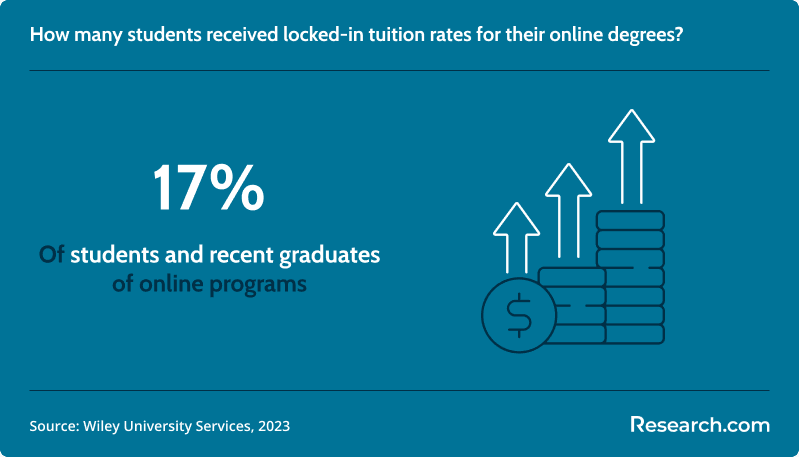
Students should also search for nursing scholarships, employer tuition assistance, state workforce grants, hospital-based funding, and institutional aid. Some online programs may offer tuition structures that help students budget more predictably. In a 2023 Wiley survey, 17% of online students and recent graduates reported receiving locked-in tuition rates as a form of aid.
| Funding option | Who should consider it | Question to ask |
| Federal student aid | Graduate students who need loans or aid eligibility documentation | Is the program eligible for federal financial aid? |
| Employer tuition assistance | Nurses working for hospitals, clinics, or health systems | Do I need to remain employed for a set period after graduation? |
| Nursing scholarships | Students with strong academics, service goals, or specialty interests | Are PMHNP students eligible, and what is the deadline? |
| State workforce programs | Students planning to serve shortage areas or public health needs | Does funding require practice in a specific location? |
| Payment plans | Students trying to avoid borrowing the full amount upfront | Are fees added for installment payments? |
Admissions Requirements for Online Psychiatric Nurse Practitioner Programs
Admissions standards are usually rigorous because PMHNP students prepare for advanced clinical practice with vulnerable patients. Most programs require an active RN license, a nursing degree, academic transcripts, clinical experience, and a background check. Some programs may also require applicants to live in approved states because of clinical placement and state authorization rules.
Common application requirements include:
- Bachelor’s degree in nursing for MSN or DNP entry
- Graduate nursing degree for post-master’s certificate entry
- Official transcripts and a minimum GPA requirement
- Current, unencumbered RN license
- Professional resume or curriculum vitae
- Letters of recommendation
- Personal statement or application essay
- Criminal background check results
- Proof of clinical experience, if required by the program
Because coursework is online, applicants also need reliable technology. As with an accelerated online computer science degree, students should have a dependable computer, a stable internet connection, and comfort using digital learning platforms.
Typical Courses in an Online PMHNP Program
Online psychiatric nurse practitioner programs combine advanced nursing core courses with psychiatric mental health specialty training. Students learn to assess patients, form differential diagnoses, develop treatment plans, prescribe and monitor medications where legally permitted, and provide psychotherapy-informed care across the lifespan.
Many programs also include teaching, research, leadership, or systems-based content. Those education-related skills can be useful when supervising staff, educating patients, training nurses, or later moving into academic roles. Students interested in education-focused doctoral study can compare this with an online doctorate in education.
Courses often include:
- Advanced Pathophysiology
- Advanced Pharmacology
- Advanced Health Assessment
- Nursing Theory and Research
- Neurobiology of Mental Disorders
- Differential Diagnosis of Mental Disorders
- Psychotherapeutic Frameworks and Modalities
- Clinical Psychopharmacology
Clinical practicum courses are a central part of the curriculum. During these experiences, students work with patients under supervision and begin applying psychiatric assessment, treatment planning, medication management, and therapeutic communication skills in real clinical settings.
PMHNP Specializations and Patient Populations
Many PMHNP programs prepare students for psychiatric mental health care across the lifespan, while some allow students to focus more deeply on particular populations or settings. Compared with related pathways such as a clinical social work master’s online, the PMHNP route is designed for nurses seeking advanced practice authority and a path toward nurse practitioner licensure.
- Pediatric Psychiatry
- Geriatric Psychiatry
- Adult Psychiatry
- Forensic Psychiatry
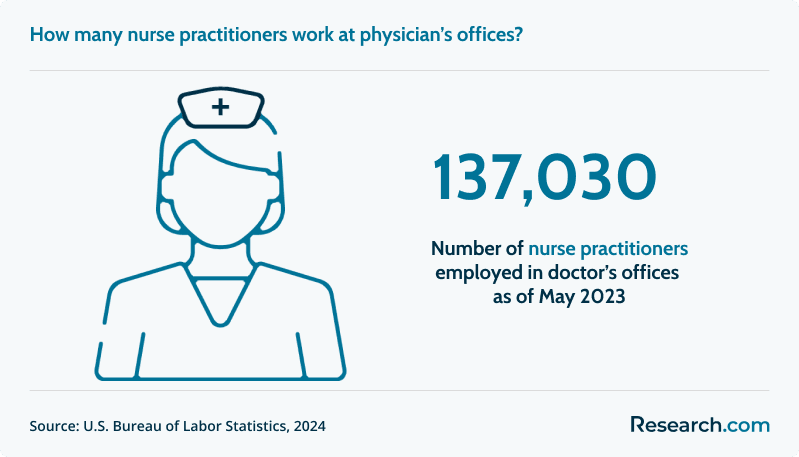
Specialization should be chosen carefully. Students should consider local demand, clinical placement availability, long-term career goals, and whether the specialty aligns with common employment settings. According to the BLS, physician’s offices are the top employer of nurse practitioners, accounting for about 137,030 in the workforce. Hospitals and outpatient care centers are also major employers. That context may make geriatric, adult, pediatric, and community-based psychiatric care more broadly applicable than narrower areas such as forensic psychiatry.
How to Choose the Best Online Psychiatric Nurse Practitioner Program
The best PMHNP program is the one that is accredited, affordable, authorized in your state, realistic for your schedule, and strong enough clinically to prepare you for certification and practice. A lower tuition rate is valuable, but it should not outweigh weak clinical support or unclear licensure alignment.
| Selection factor | Why it matters | What to ask the school |
| Accreditation | Supports eligibility for certification, licensure, and employer recognition | Is the nursing program accredited by CCNE or another recognized accreditor? |
| State authorization | Determines whether you can legally enroll and complete clinicals from your state | Does the program accept students from my state? |
| Clinical placement support | Clinical delays can postpone graduation | Does the school place students, provide leads, or require students to find preceptors? |
| Certification preparation | Graduates need to be prepared for the PMHNP board exam | What are the program’s board certification outcomes? |
| Total cost | Fees and travel can change affordability | What is the estimated full program cost, including fees? |
| Schedule design | Working nurses need realistic pacing | Can I study part time, and are courses asynchronous or live? |
Common mistakes to avoid
- Choosing by tuition alone. A cheap program can become expensive if you cannot find clinical placements or must extend enrollment.
- Assuming online means no campus visits. Some programs require intensives, simulations, or orientations.
- Ignoring state rules. Online nursing programs may have state-specific restrictions for enrollment, clinicals, and licensure.
- Failing to ask about preceptors. Clinical placement is often the hardest logistical part of PMHNP training.
- Relying only on rankings. Rankings can narrow your search, but your state, schedule, credential level, and career goals should guide the final decision.
Career Paths After an Online Psychiatric Nurse Practitioner Program
Graduates of eligible PMHNP programs may apply to sit for the psychiatric mental health nurse practitioner certification exam administered by the American Nurses Credentialing Center. After meeting certification and state licensure requirements, PMHNPs can practice in mental health settings that serve children, adolescents, adults, families, and older adults.
PMHNP responsibilities may include psychiatric evaluations, mental health assessments, diagnosis, medication management, treatment planning, therapy-informed care, patient education, crisis intervention, and collaboration with psychiatrists, therapists, primary care clinicians, social workers, and case managers.
| Career setting | Common PMHNP responsibilities | Good fit for nurses who want... |
| Outpatient mental health clinic | Assessments, medication management, follow-up care, therapy coordination | Continuity of care and scheduled patient visits |
| Hospital or psychiatric unit | Acute stabilization, crisis assessment, treatment planning, interdisciplinary rounds | Higher-acuity clinical work |
| Primary care or integrated care | Mental health screening, medication support, collaborative care | Whole-person care and team-based practice |
| Telehealth practice | Remote psychiatric evaluations and follow-up visits | Technology-enabled care delivery |
| Community mental health | Care for underserved populations, case coordination, long-term support | Mission-driven public or community service |
PMHNPs can further focus on child and adolescent psychiatry, adult and geriatric mental health, addiction treatment, or other psychiatric populations. Nurses comparing compensation across specialties may also review how neonatal nurse salary compares with mental health nurse practitioner earnings.
Further education can also support advancement. A Doctor of Nursing Practice may help nurses pursue leadership, systems improvement, policy, or advanced clinical roles. Nurses deciding between practice-focused pathways can review the comparison of FNP vs DNP. Those interested in healthcare administration may also consider an accelerated MBA program.
Job Market Outlook for PMHNP Graduates
Nurse practitioners are projected to grow much faster than many other healthcare occupations. The BLS projects 38% growth for nurse practitioners from 2022 to 2032. By comparison, registered nurses are projected to grow 6%, which is only slightly above the projected growth for all jobs shown in the chart below.
Demand is influenced by the aging population, greater use of preventive care, and the ongoing need for mental health services. PMHNPs are positioned to support this need because they combine advanced nursing practice with psychiatric assessment, diagnosis, treatment, and medication management.
How Location Affects PMHNP Salaries
PMHNP compensation can vary by state, employer type, practice setting, local mental health demand, and cost of living. Before relocating or negotiating an offer, review state-level salary information and compare it with housing, taxes, commuting costs, and scope-of-practice rules. Research.com’s guide to psychiatric nurse practitioner salary by state can help nurses benchmark compensation by location.
Why Certification Exam Pass Rates Matter
Board certification outcomes can reveal whether a program prepares students effectively for professional practice. Strong pass rates may suggest that the curriculum, faculty support, clinical experiences, and exam preparation resources align well with certification expectations. Prospective students should ask each school for recent PMHNP certification pass rates, graduation rates, and job placement information when available.
Students moving from associate or diploma preparation into advanced nursing should also evaluate bridge options carefully. Programs such as ASN to MSN bridge programs may help some nurses build toward graduate-level practice, but applicants must confirm whether the pathway leads to PMHNP eligibility.
Technology Trends in Online PMHNP Education
Online PMHNP programs increasingly rely on digital learning systems, virtual simulations, telehealth training, remote case discussions, and technology-supported clinical reasoning exercises. These tools help students practice psychiatric assessment, diagnostic thinking, and care planning before and during clinical rotations.
Tele-mental health is especially relevant because many psychiatric services now include virtual care components. Programs that teach students how to communicate therapeutically online, document virtual visits, use remote monitoring tools, and understand privacy obligations can better align with modern practice. Nursing schools across different institutional types, including HBCU nursing programs, are increasingly incorporating digital care skills into nursing curricula.
Is an Online PMHNP Program Worth the Investment?
An online PMHNP program can be worth it for nurses who want advanced psychiatric practice authority, are prepared for graduate-level clinical work, and choose an accredited program that fits their state and budget. It may not be the best investment if the program lacks clear clinical placement support, is not authorized in your state, or does not align with your licensure goals.
| An online PMHNP program may be worth it if... | You may want another path if... |
| You want to specialize in psychiatric mental health care | You prefer general primary care or family practice |
| You are comfortable with intensive clinical responsibility | You want a less clinically demanding graduate credential |
| You can complete required clinical hours in your area | You cannot secure or travel to approved clinical sites |
| You need online flexibility while working | You learn best in structured, face-to-face classrooms |
| You have confirmed accreditation and licensure alignment | You are unsure whether the program qualifies you for certification |
If you are comparing psychiatric care with another advanced practice direction, review the most affordable online FNP programs to understand cost and career differences between PMHNP and family nurse practitioner preparation.
Ethical Responsibilities in Psychiatric Nurse Practitioner Practice
PMHNPs work with sensitive mental health information, complex diagnoses, medication risks, and patients who may be experiencing crisis or impaired decision-making. Ethical practice is therefore central to the role.
- Patient autonomy: PMHNPs should support patients in making informed decisions whenever possible by explaining diagnoses, treatment choices, risks, benefits, and alternatives in understandable language.
- Confidentiality: Psychiatric care requires strict protection of personal health information, with disclosure only when legally required or authorized by the patient.
- Informed consent: Patients should understand the purpose of medications, therapy approaches, side effects, and alternatives before treatment begins.
- Non-maleficence: PMHNPs must weigh the potential harms of medications, interventions, and care decisions, especially when patients have co-occurring medical or behavioral health conditions.
- Beneficence: Psychiatric nurse practitioners should actively promote patient well-being, advocate for needed resources, and support recovery-focused care.
Accelerated Pathways for Future Psychiatric Nurse Practitioners
Some nurses want the fastest credible route into psychiatric advanced practice. Accelerated pathways may use heavier course loads, shorter breaks, summer enrollment, or streamlined plans of study. Students considering faster routes should also compare broader affordable accelerated nursing programs to understand how pace, cost, and completion expectations differ.
Acceleration can be useful, but it is not ideal for everyone. PMHNP coursework is clinically demanding, and psychiatric practicum experiences require time, supervision, and emotional readiness. A faster program may be a good fit for nurses with strong clinical experience, employer flexibility, and reliable study time. It may be risky for students working full time with unpredictable shifts or limited access to clinical sites.
How to Balance Work and Study in an Online PMHNP Program
Working while completing a PMHNP program is possible, but it requires planning. The workload typically becomes more difficult during clinical semesters, when students must balance patient care hours, assignments, readings, exams, and job responsibilities. Nurses concerned about stress and workload can also compare the least stressful nurse practitioner specialty programs before committing to psychiatric advanced practice.
Build a schedule before classes start
- Block study time: Reserve weekly study periods and treat them like clinical shifts or work obligations.
- Plan around shift work: If your schedule rotates, create separate study plans for day-shift, night-shift, and weekend-heavy weeks.
- Avoid overloading the first term: Start with a realistic course load until you understand the program’s expectations.
Use small gaps wisely
Short breaks can help with low-intensity tasks such as reviewing notes, organizing assignments, listening to lectures, or checking discussion boards. Save complex tasks such as care plans, papers, and exam preparation for focused study blocks.
Protect your health
- Prioritize sleep: Fatigue affects memory, clinical judgment, and emotional regulation.
- Schedule recovery time: Psychiatric nursing can be emotionally demanding, and graduate study adds another layer of stress.
- Watch for burnout: If work, school, and clinical hours become unsustainable, speak with your advisor before falling behind.
Use program support early
- Faculty office hours: Ask clinical and course questions before they become urgent.
- Peer groups: Online classmates can share study strategies and accountability.
- Advising: Advisors can help you adjust sequencing if your work schedule changes.
- Counseling or wellness services: Graduate nursing students should use support services when stress becomes unmanageable.
Talk with your employer
Some healthcare employers support nurses pursuing graduate education through flexible scheduling, reduced hours, tuition assistance, or clinical placement connections. Ask early, especially before practicum semesters.
Do Employers Respect Online PMHNP Degrees?
Employers generally focus on whether the program is accredited, whether the graduate is board certified and licensed, and whether the applicant has strong clinical preparation. The delivery format matters less than verified competence, supervised clinical experience, and eligibility for practice. Students should still evaluate employer reputation, clinical partnerships, graduate outcomes, and certification preparation before enrolling.
Nurses at earlier stages of the education pathway may also want to review accessible entry points such as the easiest nursing programs to get into, while remembering that PMHNP preparation itself is an advanced graduate-level path.
Professional Development After Becoming a PMHNP
PMHNPs should expect ongoing learning throughout their careers. Continuing education may focus on psychopharmacology, psychotherapy modalities, substance use treatment, telepsychiatry, trauma-informed care, pediatric mental health, geriatric psychiatry, leadership, or healthcare policy. Professional organizations, conferences, certificate programs, and specialty workshops can also support networking and mentorship.
PMHNPs who want additional expertise with children and adolescents may compare related training options, including online pediatric nurse practitioner programs, while confirming how each credential fits their scope of practice.
Steps to Become a Licensed Psychiatric Nurse Practitioner
Completing a PMHNP program is only one part of becoming authorized to practice. Graduates must also meet certification and state licensure requirements. Exact rules vary by state, so students should consult their state board of nursing before enrolling and again before graduation.
- Earn the required nursing degree or certificate: Complete an accredited master’s, postgraduate, or doctoral PMHNP program that meets certification eligibility requirements.
- Apply for national certification: Graduates typically apply for the PMHNP certification examination through the American Nurses Credentialing Center.
- Prepare for the exam: Use review courses, practice questions, study guides, and faculty resources to strengthen readiness.
- Apply for state licensure or APRN recognition: Submit required documentation to the state board of nursing, which may include transcripts, certification proof, fees, and background check materials.
- Confirm prescribing rules: Prescriptive authority requirements, collaborative practice rules, and controlled substance regulations vary by state.
- Maintain certification and licensure: Track renewal dates, continuing education requirements, and any state-specific practice obligations.
- Consider additional specialization: PMHNPs may pursue further training in substance use, geriatric psychiatry, child and adolescent mental health, or leadership.
For a broader overview of advanced nursing practice, see Research.com’s guide on how to become a nurse practitioner.
Should PMHNPs Pursue a Doctor of Nursing Practice?
A Doctor of Nursing Practice can be a strong next step for PMHNPs who want to move beyond direct clinical care into leadership, evidence-based practice improvement, health policy, program design, or executive decision-making. A DNP may also appeal to nurses who want the highest practice-focused nursing credential rather than a research doctorate.
The DNP is not necessary for every PMHNP career goal. Nurses focused primarily on clinical practice should compare time, tuition, and opportunity cost before enrolling. Those who want a shorter doctoral pathway can explore accelerated DNP programs.
Questions to Ask Before Enrolling
- Is the program accredited by a recognized nursing accreditor?
- Does the program meet PMHNP certification eligibility requirements?
- Can students from my state enroll and complete clinical hours?
- Who is responsible for finding clinical preceptors?
- How many campus visits or intensives are required?
- What is the full estimated cost, including fees and clinical expenses?
- What are the most recent certification pass rates?
- Can I attend part time if my work schedule changes?
- Are courses asynchronous, synchronous, or a mix of both?
- What student support is available during practicum semesters?
References
- Payscale. Psychiatric Nurse Practitioner salary information. https://www.payscale.com/research/US/Job=Psychiatric_Nurse_Practitioner_(NP)/Salary
- U.S. Bureau of Labor Statistics. Nurse Practitioners. https://www.bls.gov/oes/current/oes291171.htm#st
- U.S. Bureau of Labor Statistics. Healthcare Occupations. https://www.bls.gov/ooh/healthcare/home.htm
- U.S. Bureau of Labor Statistics. Licensed Practical and Licensed Vocational Nurses. https://www.bls.gov/ooh/healthcare/licensed-practical-and-licensed-vocational-nurses.htm
- U.S. Bureau of Labor Statistics. Registered Nurses. https://www.bls.gov/ooh/healthcare/registered-nurses.htm
Key Insights
- Purdue University is the lowest-cost master’s-level option in this ranking at $348 per credit, while New Mexico State University is the lowest-cost certificate option listed at $444 per credit for 18 credits.
- Affordability should be evaluated by total cost, not tuition alone. Fees, campus visits, clinical onboarding, exam costs, and reduced work hours can change the real price of a PMHNP program.
- Online PMHNP programs still require in-person clinical practice. Before enrolling, confirm how placements work and whether approved sites are available in your area.
- Accreditation and state authorization are non-negotiable. They affect certification eligibility, licensure, financial aid access, and employer recognition.
- The best path depends on your starting credential. BSN-prepared nurses usually need an MSN or DNP route, while graduate-prepared nurses may qualify for a shorter post-master’s certificate.
- PMHNP demand is supported by strong nurse practitioner job growth projections. The BLS projects 38% growth for nurse practitioners from 2022 to 2032, but individual outcomes depend on location, experience, employer, and licensure rules.
Other Things You Should Know About Most Affordable Online Psychiatric Nurse Practitioner Programs
Most online psychiatric nurse practitioner programs require about 500 to 1,000 supervised clinical hours before graduation. Students must complete these hours in approved settings with qualified preceptors, and many programs also require a separate advanced practice project or capstone before the final term.
Most affordable programs require a Bachelor of Science in Nursing (BSN), an active RN license, and a minimum GPA of 3.0. Some may have additional prerequisites like clinical experience or specific coursework completed prior to application.