
2027 FNP vs. DNP - What's the Difference?

Co-Founder and Chief Data Scientist
Choosing between an FNP and a DNP is not just a degree decision. It affects how long you will study, what kinds of patients or systems you will work with, how much autonomy you may have, and whether your career is centered on direct primary care, leadership, education, policy, or quality improvement. This guide is for registered nurses, BSN students, career changers planning a nursing pathway, and practicing nurse practitioners deciding whether a doctorate is worth the next step.
You will learn how Family Nurse Practitioner and Doctor of Nursing Practice pathways differ, where they overlap, what procedures and roles may be available, how licensing works, what salary sources report, and how to compare online or accelerated programs without overlooking accreditation, clinical placement, state rules, or long-term career fit.
Quick Answer: FNP vs. DNP
An FNP is a clinical nurse practitioner specialization focused on family primary care across the lifespan. A DNP is a doctoral degree in nursing practice that can support advanced clinical practice, leadership, education, quality improvement, policy, or systems-level roles. Many FNPs hold an MSN, while some earn a DNP to deepen clinical expertise or move into leadership. The better choice depends on whether your priority is becoming a primary care provider as efficiently as possible or preparing for the highest practice-focused nursing credential.
| Decision point | FNP path | DNP path |
| Main purpose | Prepare for family-focused primary care | Prepare for advanced practice, leadership, systems improvement, education, or policy roles |
| Typical degree level | MSN with an FNP track, though some FNPs pursue a DNP | Doctor of Nursing Practice |
| Best fit | Nurses who want direct patient care across age groups | Nurses who want advanced clinical authority, leadership, research translation, or organizational influence |
| Clinical role overlap | Diagnose, treat, prescribe, manage chronic conditions, and provide preventive care where state law allows | May perform similar clinical work if prepared and certified for that role, while also being positioned for broader leadership responsibilities |
| Key caution | Scope of practice depends heavily on state regulations | The DNP is not the same credential as an MD, and it does not automatically expand practice authority in every state |
Key Things You Should Know About FNP and DNP Degrees
- Nurse anesthetists, nurse midwives, and nurse practitioners are reported with a median pay of $129,480 per year.
- The projected job outlook is much faster than average, with an expected increase of 123,600 jobs from 2022 to 2032.
- FNP salary reports vary by source, with figures ranging from $103,885 to $157,928 per year.
- DNP salary figures also vary, ranging from $110,912 to $129,480 according to the Bureau of Labor Statistics and other cited sources.
- Over 70% of Nurse Practitioners (NPs) in the USA hold certifications in family practice, followed by Adult-Gerontology Primary Care (8.9%) and Psychiatric/Mental Health (6.5%).
- Other NP certification areas include Pediatrics-Primary Care (2.4%) and Women's Health (2.2%), showing that NP practice extends beyond adult primary care.
- Because demand for nurse practitioners and other healthcare professionals remains strong, FNPs and DNP-prepared nurses are expected to continue seeing career opportunities across many settings.
- What are FNPs and DNPs, and what do they do?
- What procedures can FNPs and DNPs perform?
- What skills and qualities are important for FNPs and DNPs?
- How can I develop the skills necessary to be a successful FNP or DNP?
- What kinds of jobs can you get with an FNP vs. DNP?
- What are the key factors to consider when choosing between an FNP and DNP degree?
- What specializations can I pursue as an FNP or DNP?
- What are the trends shaping the future of FNP and DNP roles?
- What are some career advancement opportunities for FNPs and DNPs?
- What steps should RNs take to transition into advanced practice nursing?
- How can RN to MSN accelerated programs expedite my advanced practice transition?
- What funding options are available for FNP and DNP programs?
- How do FNP and DNP licensing work in various states?
- What are the average salaries of FNPs vs. DNPs?
- Are RN to BSN online programs without clinicals an effective stepping stone to advanced practice?
- Are accelerated BSN programs a faster route to advanced practice?
- What do you need to consider when looking for online FNP and DNP programs?
- What are the best post-master's FNP certificate programs for career advancement?
- Can Accelerated NP Programs Expedite My Path to Advanced Practice?
- How Do Nurse Leadership Roles Enhance Advanced Practice Success?
- What are the main challenges FNPs and DNPs face in their careers?
What are FNPs and DNPs, and what do they do?
Family Nurse Practitioners and Doctors of Nursing Practice are both part of the advanced nursing landscape, but the terms describe different things. FNP refers to a nurse practitioner population focus: family care across the lifespan. DNP refers to a degree level: the practice-focused doctorate in nursing. A nurse can be an FNP without a DNP, and a DNP graduate may or may not be an FNP depending on the program track, certification, and state practice rules.
If you are comparing certification pathways, it also helps to understand what is the difference between FNP-C and FNP-BC, because national certification is often part of the route to advanced practice licensure.
FNP: Family Nurse Practitioner
An FNP is an advanced practice registered nurse prepared to deliver family-centered primary care. FNPs commonly evaluate patients, diagnose conditions, order and interpret tests, prescribe medications where permitted, manage chronic illness, and provide preventive care. They may work independently or under physician supervision depending on state law.
- Usually completes a Master's degree (MSN) in Family Practice nursing or an equivalent graduate FNP pathway.
- Practices as an advanced practice registered nurse with a family care focus.
- Provides primary care for infants, children, adults, and older adults.
- Diagnoses and treats common acute and chronic conditions.
- Orders and interprets diagnostic tests within scope.
- Prescribes medications when authorized by state rules.
- Works in clinics, hospitals, community health centers, urgent care, retail health, or private practice.
- May consider 12 month nurse practitioner programs when eligible and when the accelerated structure still meets certification and licensure requirements.
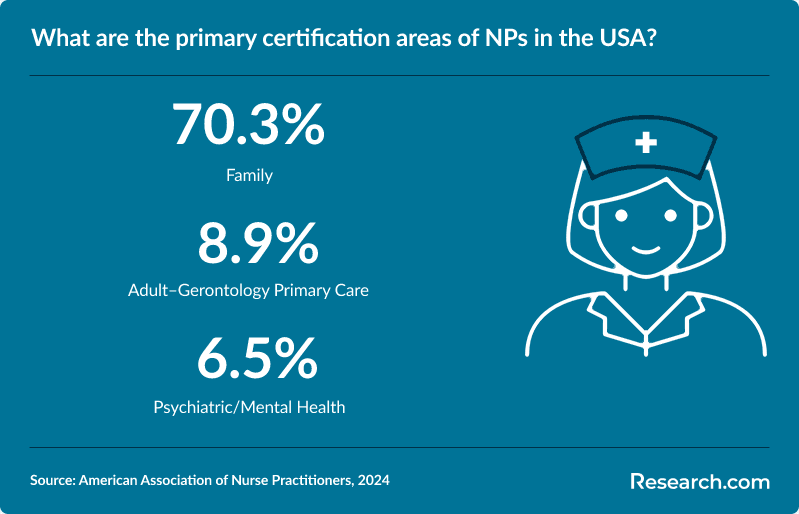
FNP is also the most common NP certification area. Over 70% of Nurse Practitioners (NPs) in the USA hold certifications in family practice, followed by Adult-Gerontology Primary Care (8.9%) and Psychiatric/Mental Health (6.5%). Less common areas include Pediatrics-Primary Care (2.4%) and Women's Health (2.2%). These figures show how central family and primary care remain within nurse practitioner practice.
DNP: Doctor of Nursing Practice
A DNP is the terminal practice degree in nursing. It builds on advanced nursing preparation and emphasizes evidence-based practice, clinical leadership, quality improvement, population health, health policy, informatics, and systems change. A DNP graduate may work in direct care, but the degree is also designed for nurses who want influence beyond one patient encounter at a time.
- Completes a Doctor of Nursing Practice program, often after an MSN, though BSN-to-DNP pathways also exist.
- May use the title “doctor” in academic or professional contexts, but is not a medical doctor (MD).
- Can perform FNP-type clinical duties only if appropriately educated, certified, licensed, and authorized by state law.
- Often focuses on leadership, evidence implementation, care quality, healthcare policy, and organizational improvement.
- May pursue roles in administration, education, public health, consulting, or advanced clinical practice.
- May compare shortest DNP programs online carefully, while checking accreditation, practice hours, project requirements, and state eligibility.
FNP vs. DNP: The Core Difference
| Category | FNP | DNP |
| What the term means | A nurse practitioner specialty focused on family primary care | A doctoral degree in practice-focused nursing |
| Common educational route | MSN FNP or graduate NP program; many online nurse practitioner programs include FNP tracks | Post-MSN DNP, BSN-to-DNP, or another doctoral practice pathway |
| Primary emphasis | Direct patient assessment, diagnosis, treatment, prevention, and chronic care management | Advanced practice, leadership, evidence-based change, quality improvement, policy, and systems-level outcomes |
| Typical settings | Primary care clinics, hospitals, urgent care, retail clinics, community health, private practice | Clinical settings, hospitals, health systems, universities, public health agencies, executive offices, consulting |
| Best for | Nurses who want to become family-focused primary care providers | Nurses who want doctoral-level preparation for advanced clinical, leadership, education, or policy work |
Scope of practice: where FNPs and DNPs overlap
Scope of practice is set by state law, licensure, certification, employer policy, and the clinician’s training. In many settings, both FNPs and DNP-prepared advanced practice nurses may diagnose and treat illnesses, prescribe medications within legal limits, manage chronic disease, provide preventive care, administer immunizations and screenings, and order and interpret diagnostic tests.
The important distinction is that a DNP degree alone does not replace the need for the right APRN role preparation and certification. For example, a DNP-prepared nurse who is not certified as an FNP is not automatically licensed to practice as a family nurse practitioner.
- Supervision and autonomy: Some states require physician supervision or collaboration for nurse practitioners, while others allow full practice authority.
- Clinical focus: FNPs usually center their work on direct primary care. DNP-prepared nurses may remain in clinical practice or move into leadership, policy, education, or quality roles.
- State verification: The most reliable source for practice authority is the state Board of Nursing where you plan to practice.
If you are still building toward a nursing degree from an earlier academic stage, accelerated bachelor's degree online programs may help you compare faster undergraduate routes before moving toward RN licensure and graduate nursing preparation.
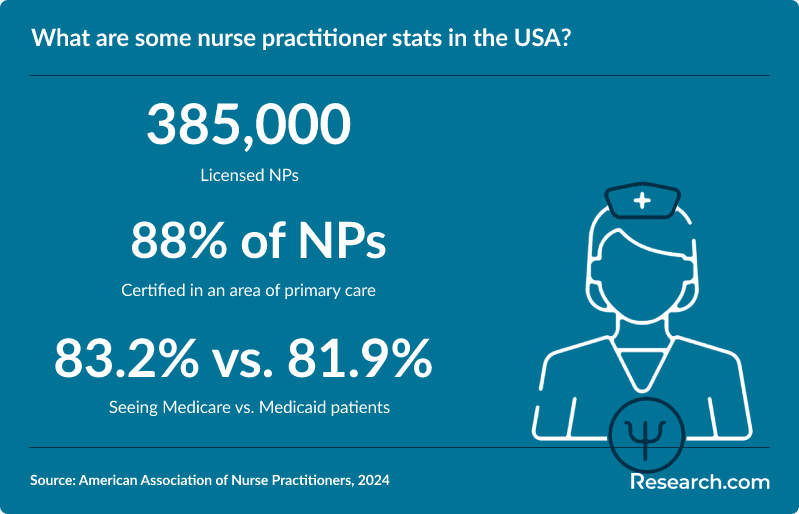
In the USA, there are over 385,000 licensed Nurse Practitioners (NPs). The profession remains strongly tied to primary care, with 88% of NPs certified in this area. NPs also serve large public insurance populations, with 83.2% seeing Medicare patients and 81.9% seeing Medicaid patients.
What procedures can FNPs and DNPs perform?
FNPs and DNP-prepared clinicians may perform many common primary care procedures, but the exact list depends on state law, national certification, employer privileging, specialty training, and clinical competence. Before enrolling in a program or accepting a role, confirm what procedures are legal and expected in the state and setting where you intend to work.
Procedures commonly associated with FNP and DNP-prepared primary care practice
- Immunizations and injections: Administering vaccines, allergy injections, and prescribed medications.
- Chronic disease management: Monitoring and treating conditions such as diabetes, hypertension, asthma, heart disease, and respiratory illness.
- Diagnostic workups: Ordering and interpreting lab tests, X-rays, and other diagnostic studies when permitted.
- Physical examinations: Conducting wellness visits, school or employment exams, and problem-focused assessments.
- Minor wound care: Cleaning wounds, dressing wounds, and performing basic closure procedures when trained and authorized.
- Preventive care: Offering health screenings, lifestyle counseling, risk assessment, and vaccination planning.
- Women’s health services: Providing routine gynecologic care, Pap smears, and contraception management when allowed by scope and training.
Procedures some DNP-prepared clinicians may perform in certain settings
Many readers ask both clinical and financial questions, including how much do DNPs make. Procedure authority is a separate issue from salary. A DNP-prepared nurse may be able to perform additional procedures only when the nurse’s role preparation, state authorization, specialty training, and employer privileges support it.
- Catheter placement: Inserting urinary catheters or related devices when trained and authorized.
- Joint injections: Providing therapeutic injections in appropriate clinical contexts.
- Minor surgical procedures: Performing procedures such as skin biopsies or mole removal when within scope.
- Other specialty procedures: Determined by specialty, clinical training, state regulations, and facility policy.
Procedures generally outside FNP and DNP primary care scope
- Delivering babies: Birth delivery is typically associated with nurse-midwifery or physician practice rather than FNP practice.
- Major surgery: Complex operations such as open-heart surgery require surgical training outside standard FNP or DNP preparation.
- Highly specialized procedures: Procedures such as neurosurgery require specialized medical or surgical training beyond general advanced nursing practice.
Practical check: Ask the Board of Nursing and prospective employers which procedures are allowed, which require additional training, and which require formal privileging. Do not assume a procedure is permitted because another NP performs it in a different state.
How do FNP and DNP responsibilities differ in clinical practice?
In day-to-day care, FNPs usually concentrate on patient encounters: assessing symptoms, diagnosing conditions, managing medications, educating patients, and coordinating care. A DNP-prepared nurse may do the same clinical work if trained and licensed for that role, but doctoral preparation often adds responsibilities related to improving care processes, leading teams, mentoring staff, evaluating outcomes, and translating evidence into practice.
| Clinical responsibility | FNP emphasis | DNP emphasis |
| Patient care | Direct family primary care across age groups | Direct care when role-prepared, plus system-level improvement |
| Clinical decisions | Diagnosis, treatment plans, medication management, referrals | Clinical decisions plus evaluation of protocols, outcomes, and quality metrics |
| Leadership | May lead within a clinic or care team | Often prepared for program leadership, executive roles, or organizational change |
| Education | Patient education and possible precepting | Patient education, staff development, academic teaching, or mentorship |
| Policy and advocacy | Advocates for patients within clinical practice | May influence institutional policy, professional standards, or healthcare reform efforts |
What skills and qualities are important for FNPs and DNPs?
Both pathways require advanced clinical judgment, strong communication, ethical decision-making, and the ability to manage complex health needs. The DNP path typically adds heavier expectations for leadership, evidence implementation, project management, and systems thinking.
Clinical competence
- Advanced assessment: Performing detailed physical exams, collecting histories, recognizing urgent findings, and forming differential diagnoses.
- Diagnostic reasoning: Interpreting tests and symptoms accurately while knowing when to refer.
- Medication management: Prescribing safely within state rules and monitoring effectiveness, interactions, and adverse effects.
- Procedure readiness: Developing hands-on skill only within the boundaries of training, authorization, and employer policy.
Communication and patient relationship skills
- Active listening: Understanding patient concerns, barriers, preferences, and health goals.
- Clear education: Explaining diagnoses, treatment choices, medication instructions, and self-care in plain language.
- Collaboration: Coordinating with physicians, specialists, nurses, pharmacists, social workers, and community resources.
- Cultural responsiveness: Providing respectful care that accounts for language, belief systems, access barriers, and lived experience.
Critical thinking and problem-solving
- Analytical thinking: Weighing symptoms, risk factors, lab findings, and patient context before choosing a plan.
- Complication management: Recognizing side effects, worsening conditions, and medication-related concerns early.
- Prioritization: Managing competing demands in busy clinical settings without losing patient safety focus.
Leadership skills especially valuable for DNP-prepared nurses
- Advocacy: Improving access, safety, equity, and quality for patients and communities.
- Change management: Leading new protocols or workflows while gaining team buy-in.
- Project management: Planning, measuring, and sustaining quality improvement efforts.
- Team leadership: Delegating, coaching, and coordinating interdisciplinary teams.
- Lifelong learning: Staying current with evidence, guidelines, technology, and regulatory changes.
- Strategic thinking: Connecting bedside problems to system-wide solutions.
How can I develop the skills necessary to be a successful FNP or DNP?
Skill development starts before graduate school and continues throughout practice. The strongest candidates build a record of bedside competence, academic readiness, professional maturity, and clear career direction before applying to an FNP or DNP program.
Step-by-step preparation plan
- Build a strong RN foundation. Earn the required nursing degree, pass RN licensure requirements, and gain experience in settings that strengthen assessment, medication safety, and communication.
- Choose the right graduate goal. Select an MSN FNP path if your main goal is family primary care. Consider a DNP if you want doctoral-level practice, leadership, quality improvement, policy, or academic influence.
- Check accreditation early. Prioritize programs accredited by recognized nursing accrediting bodies and confirm that graduates are eligible for certification and state licensure.
- Seek varied clinical exposure. Experience with pediatrics, adult care, older adults, chronic disease, urgent needs, and preventive care strengthens FNP readiness.
- Practice communication intentionally. Use patient teaching, interprofessional rounds, preceptorships, and feedback to improve clarity and confidence.
- For DNP goals, build leadership evidence. Volunteer for quality improvement projects, policy committees, charge roles, staff education, or workflow improvement initiatives.
- Join professional networks. Nursing associations, conferences, webinars, and mentors can help you understand changing expectations.
- Shadow advanced practice nurses. Observing FNPs and DNP-prepared nurses gives you a realistic view of workload, documentation, autonomy, and role boundaries.
Common mistakes to avoid while preparing
| Mistake | Why it can hurt you | Better approach |
| Choosing the fastest program without checking outcomes | A compressed timeline may not provide the clinical support or licensure alignment you need | Compare accreditation, clinical placement, certification pass preparation, and state eligibility |
| Assuming online means no in-person requirements | FNP and DNP programs often require clinical hours, practicums, intensives, or DNP projects | Ask exactly where and how in-person requirements are completed |
| Ignoring state practice laws | Scope of practice and supervision rules can differ widely | Check your state Board of Nursing before enrolling |
| Focusing only on tuition | Fees, travel, technology, clinical placement costs, books, and reduced work hours can change total cost | Calculate the full cost of attendance and lost income risk |
| Assuming salary averages guarantee earnings | Pay varies by location, specialty, experience, employer, and work setting | Use salary sources as reference points, not promises |
What kinds of jobs can you get with an FNP vs. DNP?
FNP and DNP pathways can lead to overlapping clinical roles, but they are not identical. FNPs are most directly aligned with family primary care and related patient-facing specialties. DNP-prepared nurses may continue direct practice or move into leadership, education, administration, quality improvement, public health, or consulting.
Jobs commonly aligned with FNP preparation
- Primary Care Nurse Practitioner: Provides comprehensive preventive and ongoing care for patients from infancy through adulthood.
- Chronic Care Nurse Practitioner: Manages long-term conditions such as diabetes, heart disease, and respiratory illness.
- Adult-Gerontology Nurse Practitioner: Cares for adults and older adults with age-related and chronic health needs.
- Pediatric Nurse Practitioner: Provides care for infants, children, and adolescents.
- Women’s Health Nurse Practitioner: Focuses on care across a woman’s lifespan, including reproductive health and menopause-related concerns.
- Acute Care Nurse Practitioner: Works with patients experiencing serious or sudden illness, often in emergency, hospital, or intensive care settings when appropriately prepared.
The primary NP certification area in the USA is Family (70.3%), followed by Adult-Gerontology Primary Care (8.9%) and Psychiatric/Mental Health (6.5%). This distribution reflects both the prominence of family practice and the range of other nurse practitioner options available.
Jobs commonly aligned with DNP preparation
- Clinical leader: Oversees evidence-based practice, quality improvement, or care delivery initiatives within a unit, clinic, or health system.
- Nursing administrator: Moves into director, manager, or executive-level nursing roles.
- Nurse educator: Teaches in academic programs, clinical education departments, or professional development settings.
- Consultant: Advises organizations on practice standards, quality improvement, nursing education, or healthcare operations.
- Research and evidence implementation specialist: Helps translate research into protocols, practice improvements, and measurable outcomes.
- Direct care provider: Continues patient care when the nurse’s DNP track, certification, training, and state licensure support that role.
| If you want... | Consider... | Why |
| To become a family primary care provider | MSN FNP or BSN-to-DNP FNP track | FNP preparation directly matches family care certification and practice |
| To lead quality improvement or clinical transformation | DNP | DNP programs emphasize evidence-based change and systems outcomes |
| To teach future nurses | DNP or other graduate preparation depending on role requirements | Doctoral preparation may strengthen eligibility for academic or leadership teaching roles |
| To enter practice quickly | MSN FNP or eligible accelerated NP pathway | Often more direct than completing a doctorate first, though state and program requirements vary |
| To pursue executive leadership | DNP, MSN leadership pathway, or related administrative preparation | Leadership coursework and project experience can support management advancement |
What are the key factors to consider when choosing between an FNP and DNP degree?
The right choice depends on your career target, time horizon, financial capacity, preferred work setting, and appetite for doctoral-level leadership or scholarly practice. Do not choose based only on prestige or speed. Choose based on the role you want to be eligible for after graduation.
Career goal fit
- Choose an FNP path if: You want to diagnose, treat, prescribe, and manage patients across the lifespan in primary care or related settings.
- Choose a DNP path if: You want doctoral preparation for advanced practice, leadership, quality improvement, policy, informatics, education, or organizational change.
- Choose a BSN-to-DNP FNP path if: You want both FNP role preparation and a practice doctorate, and you can commit to the longer academic and clinical workload.
Time and academic investment
An FNP master's degree (MSN) typically takes 2-3 years to complete after your BSN. DNP doctoral programs require an MSN beforehand in many cases, often taking 3-4 years to complete. Some programs structure entry differently, so always verify the curriculum sequence, clinical hours, DNP project expectations, and graduation requirements.
Cost and return on investment
A DNP usually requires a larger educational investment than an MSN. Compare tuition, fees, books, travel, required campus visits, technology costs, background checks, clinical placement expenses, and the impact of reduced work hours. If you are researching affordability across graduate and professional programs more broadly, resources such as affordable BCBA programs can illustrate how program cost comparisons should look beyond headline tuition alone.
Leadership, research, and education goals
- FNP: Can lead in clinics, precept students, manage patient panels, and shape care at the practice level.
- DNP: Is more intentionally designed for leadership, evidence implementation, policy, quality improvement, and sometimes academic roles.
Salary expectations
FNPs and DNP-prepared nurses can both have strong earning potential, but salary varies by role, specialty, state, employer, and experience. Some DNP-prepared nurses may earn more in leadership or specialized roles, while some FNPs in high-demand settings or specialties may also earn competitive compensation. Salary averages should guide your research, not determine your decision by themselves.
If speed matters, compare accelerated NP programs carefully. If compensation is a major concern, also study specialty-specific pay discussions such as psychiatric mental health nurse practitioner salary. The original salary comparison noted psychiatric mental health nurse practitioner salary or nurse anesthetist salary at around $141k/year and $240k/year, respectively.
What specializations can I pursue as an FNP or DNP?
Specialization can shape your patient population, work setting, schedule, procedure mix, and earning potential. Before choosing a track, confirm that the program’s specialty prepares you for the certification and state licensure category you want.
FNP-related specialization areas
- Primary Care: Broad preventive and ongoing care for patients across age groups.
- Adult-Gerontology: Care for adults and older adults, often with chronic or age-related conditions.
- Pediatrics: Health care for infants, children, and adolescents.
- Women’s Health: Reproductive, gynecologic, prenatal, and lifespan-focused care for women.
- Chronic Care: Long-term management of conditions such as diabetes, heart disease, and respiratory disorders.
- Emergency Medicine: Acute care in emergency settings, when training and credentialing support the role.
- Acute Care: Management of seriously ill or unstable patients in hospital-based settings when properly prepared.
- Cardiovascular: Focused care for heart and circulatory conditions.
- Endocrinology: Management of hormonal disorders and diabetes.
- Pulmonary: Respiratory care and disease management.
- Wound Care: Assessment and treatment of acute, chronic, or complex wounds.
When comparing affordable online FNP programs, look at whether the specialty track matches your certification goals, whether clinical placements are available in your state, and whether the program has experience supporting working nurses.
DNP specialization areas
- Advanced practice clinical tracks: May include areas similar to NP specialties, such as adult-gerontology, pediatrics, women’s health, or chronic disease management.
- Nurse anesthesia: A highly specialized advanced practice path that requires additional education and certification.
- Healthcare leadership and administration: Preparation for management, executive, and system improvement roles.
- Nursing education: Curriculum development, teaching, clinical education, and faculty-related responsibilities.
- Informatics: Use of health data, technology, and systems to improve care delivery.
- Policy and advocacy: Work focused on regulations, access, health systems, and public health priorities.
Many online DNP programs offer leadership, advanced practice, education, or systems-focused tracks. Compare the required practice hours, capstone or DNP project expectations, and whether the program’s outcomes align with the role you want.
What are the trends shaping the future of FNP and DNP roles?
Advanced practice nursing is being shaped by access gaps, workforce demand, technology, data-driven care, and evolving expectations for nurse leadership. These trends affect what employers value and what students should look for in a program.
- Telehealth and remote care: FNPs and DNP-prepared nurses increasingly need comfort with virtual visits, remote monitoring, digital documentation, and safe triage when patients are not physically present.
- Population health and prevention: Chronic disease management, preventive care, and community-based interventions remain major priorities, especially in underserved areas.
- Clinical analytics and evidence-based practice: DNP-prepared nurses in particular may be expected to use data to evaluate outcomes, identify gaps, and lead improvement projects.
- Leadership and policy advocacy: Healthcare organizations need clinicians who can connect patient care realities with operational, regulatory, and policy decisions.
- Flexible online pathways: Working nurses continue to seek online and hybrid formats, including online BSN to DNP programs, but flexibility should never replace scrutiny of accreditation, clinical placement, and state authorization.
What are some career advancement opportunities for FNPs and DNPs?
Career growth can mean deeper specialization, more autonomy, broader leadership, higher-level teaching, consulting, entrepreneurship, or policy influence. The best advancement route depends on whether you want to stay close to patient care or move toward system-level impact.
Advancement paths for FNPs
- Specialty certification: Build expertise in areas such as cardiology, pediatrics, wound care, chronic disease, or women’s health.
- Expanded autonomy: In full practice authority states, FNPs may have greater independence in managing care.
- Clinical leadership: Move into roles such as lead NP, clinic manager, practice director, or director of nursing.
- Precepting and mentorship: Train new NP students or early-career clinicians.
Advancement paths for DNP-prepared nurses
- Executive leadership: Pursue roles such as Chief Nursing Officer, Director of Patient Care Services, or senior clinical administrator.
- Academic teaching: Prepare future nurses through classroom, simulation, clinical, or curriculum roles.
- Quality improvement leadership: Lead safety, outcomes, workflow, or evidence-based practice initiatives.
- Consulting: Advise healthcare organizations on nursing practice, education, quality, or operations.
- Policy and advocacy: Work with organizations, legislators, or professional groups to improve care access and standards.
What steps should RNs take to transition into advanced practice nursing?
RNs planning to become FNPs or DNP-prepared clinicians should map the pathway backward from the desired license and role. Start with your state’s advanced practice requirements, then identify the degree, certification, clinical hours, and supervised experiences needed. Many nurses first complete a BSN, and some compare options such as the easiest RN to BSN online program while still checking accreditation and graduate school prerequisites.
- Confirm your current RN license status and state requirements.
- Earn or complete the BSN if your target graduate program requires it.
- Gain clinical experience that matches your intended population focus.
- Choose between MSN FNP, BSN-to-DNP, post-MSN DNP, or bridge options.
- Verify accreditation, certification eligibility, state authorization, and clinical placement support.
- Plan financially before enrolling, including tuition, fees, travel, and possible reduced work hours.
How can RN to MSN accelerated programs expedite my advanced practice transition?
RN to MSN accelerated programs can shorten the academic route for qualified registered nurses by combining upper-level nursing coursework with graduate study. These pathways may be useful for nurses who do not want to complete separate BSN and MSN programs, but they still require careful review of admissions rules, clinical expectations, accreditation, and whether the final track supports FNP certification or another advanced practice goal.
When reviewing RN to MSN accelerated programs, ask whether the program awards a BSN along the way, how clinical placements are handled, whether graduates meet certification requirements, and whether your state Board of Nursing accepts the pathway.
What funding options are available for FNP and DNP programs?
Advanced nursing education can be expensive, especially when clinical hours reduce the time available for paid work. Funding may come from institutional scholarships, grants, employer tuition assistance, loan repayment programs, professional associations, federal financial aid, and state or workforce-based incentives. Availability varies by school, employer, and location.
| Funding option | What to check | Why it matters |
| Scholarships and grants | Eligibility, deadlines, renewal rules, and whether awards apply to online students | These do not usually require repayment |
| Employer tuition support | Service commitments, grade requirements, annual caps, and approved programs | Can lower out-of-pocket cost but may restrict job mobility |
| Loan forgiveness or repayment | Practice setting, shortage area rules, employment length, and program requirements | May reduce debt for nurses serving eligible communities |
| Federal financial aid | School participation, enrollment status, and aggregate borrowing limits | Often central to graduate financing |
| Lower-cost program selection | Total cost, not just tuition per credit | Affordable options can still vary widely in quality and support |
Comparing tuition across programs, including easy nurse practitioner programs, can be useful, but do not choose a program solely because it appears cheaper. Accreditation, certification eligibility, clinical placement, and state authorization are more important than a low advertised price.
How do FNP and DNP licensing work in various states?
FNP and DNP-related licensing is governed by state Boards of Nursing. Requirements differ across the United States, especially around APRN recognition, prescriptive authority, supervision, collaboration agreements, and full practice authority. A DNP degree does not automatically create a license; you must meet the state’s licensure requirements for the role you intend to practice.
Common licensing elements
- Active RN license: You generally need a current registered nurse license in the state where you intend to practice.
- Graduate education verification: Boards typically require transcripts from accredited nursing programs.
- National certification: FNPs often need certification from a recognized organization such as the American Association of Nurse Practitioners (AANP).
- Jurisprudence or state law requirements: Some states require an exam or training related to nursing laws and regulations.
- Background check: Criminal background screening is commonly required.
- Continuing education: States may require ongoing education for renewal.
State differences that can change your career
- Supervision rules: Some states require physician supervision or collaboration, while others permit full practice authority for qualifying NPs.
- Prescriptive authority: Medication prescribing rules, including controlled substances, vary by state.
- Compact licensure: Nurse Licensure Compact participation may support RN mobility, but APRN practice requirements still need separate review.
- Clinical hour requirements: Some states or certifications may require specific practice preparation or supervised experience.
The safest approach is to check the Board of Nursing website in every state where you may practice before selecting a program. Also confirm that online programs are authorized to enroll students from your state and can support clinical placement there.
What are the average salaries of FNPs vs. DNPs?
Salary estimates differ because sources collect and categorize data in different ways. For Family Nurse Practitioners, Payscale reports $103,885, Indeed reports $157,928, the Bureau of Labor Statistics reports a median annual wage of $129,480, DataUSA reports $113,874, and Salary.com reports $124,330.
For Doctors of Nursing Practice, Payscale and Indeed report $110,912. The Bureau of Labor Statistics figure remains $129,480, DataUSA reports $113,874, and Salary.com reports $124,607.
Use these figures as comparison points, not guaranteed outcomes. Your actual pay may depend on state, metro area, rural or urban setting, specialty, years of experience, shift structure, productivity expectations, employer type, certification, and whether your role is primarily clinical, administrative, academic, or executive.
Are RN to BSN online programs without clinicals an effective stepping stone to advanced practice?
Some RN to BSN programs delivered online do not include traditional clinical rotations, but they may still include projects, leadership assignments, community health work, research, or informatics components. These programs can be helpful for working RNs who need the BSN before graduate study, but they should be evaluated carefully.
Before enrolling in RN to BSN online programs without clinicals, confirm accreditation, graduate school acceptance, state requirements, and whether the curriculum builds the writing, evidence appraisal, leadership, and population health skills expected in FNP or DNP programs.
Are accelerated BSN programs a faster route to advanced practice?
Accelerated BSN programs can help students with prior college credit or another degree enter nursing faster than a traditional undergraduate route. They are not advanced practice programs by themselves, but they can create the foundation for RN licensure, clinical experience, and later FNP or DNP study.
When reviewing the best 12-month accelerated nursing programs online, look beyond speed. Confirm clinical placement requirements, NCLEX preparation, accreditation, state approval, workload intensity, and whether the pace is realistic for your finances and responsibilities.
What do you need to consider when looking for online FNP and DNP programs?
Online FNP and DNP programs can make advanced nursing education more accessible for working nurses, but “online” rarely means entirely remote. Clinical hours, practicums, campus immersions, simulations, exams, and DNP project work may still require scheduled participation or in-person activity.
Cost-conscious students often compare cheapest FNP programs online, but the lowest advertised tuition is not always the best value. A program that lacks clinical placement support or does not meet your state’s rules can become expensive in other ways.
| Question to ask | Why it matters |
| Is the program accredited by a recognized nursing accreditor? | Accreditation affects licensure, certification, transferability, and employer acceptance. |
| Does the program meet requirements in my state? | Online programs may not be authorized or appropriate for every state. |
| Who finds clinical placements? | Some schools place students; others expect students to secure preceptors. |
| What are the in-person requirements? | Travel, campus intensives, simulations, and practicums can affect cost and scheduling. |
| What certification exam does the program prepare me for? | Your track should align with your intended national certification and APRN license. |
| How flexible is the course format? | Asynchronous, synchronous, part-time, and full-time formats create different workload demands. |
| What support services are available? | Advising, technical support, writing help, career support, and clinical coordination can affect completion. |
What are the best post-master's FNP certificate programs for career advancement?
A post-master’s FNP certificate can help nurses who already hold a graduate nursing degree add family nurse practitioner preparation without completing another full master’s program. This route may be useful for nurse practitioners changing population focus, nurse educators seeking clinical certification, or advanced nurses wanting family practice eligibility.
Some options can be completed in as little as 1 year post master's FNP online, but speed should not be the only filter. Confirm accreditation, required clinical hours, preceptor rules, certification eligibility, and whether the program accepts your prior graduate coursework.
Can Accelerated NP Programs Expedite My Path to Advanced Practice?
Accelerated NP programs can reduce the time to completion for qualified students by compressing coursework or using bridge structures. They may be useful for nurses who have clear goals, strong academic preparation, and enough schedule flexibility to manage a demanding pace.
However, faster does not always mean better. In the article Is there an accelerated NP program?, the key caution is that timelines can vary based on prior education, clinical experience, transfer credits, program format, and state-specific licensure requirements. Always verify that the accelerated path still prepares you for certification and safe practice.
How Do Nurse Leadership Roles Enhance Advanced Practice Success?
Leadership skills can make advanced practice nurses more effective because many patient care problems are connected to staffing, workflow, policy, communication, safety systems, and access barriers. FNPs benefit from leadership when coordinating teams or improving clinic operations, while DNP-prepared nurses often use leadership training to guide larger organizational changes.
If you are interested in management, operations, or executive influence, explore pathways connected to nurse executive leader MSN careers. Leadership preparation can complement clinical expertise by strengthening budgeting, staffing, policy interpretation, quality improvement, and strategic planning skills.
What are the main challenges FNPs and DNPs face in their careers?
FNP and DNP careers can be rewarding, but the work is demanding. Preparing for the challenges early can help you choose the right program, employer, specialty, and long-term career strategy.
- Burnout and workload: Advanced practice nurses often manage complex patients, high documentation demands, and productivity expectations.
- Regulatory variation: Practice authority, supervision, and prescribing rules differ by state, which can affect autonomy and job options.
- Clinical accountability: More authority brings greater responsibility for diagnosis, treatment, medication safety, and referral decisions.
- Keeping up with evidence: FNPs and DNP-prepared nurses must stay current with changing guidelines, medications, technology, and care models.
- Financial pressure: Graduate and doctoral nursing programs can be costly. Comparing affordable BSN to DNP programs online may help, but total cost and program quality matter more than price alone.
- Clinical placement barriers: Online students in particular may struggle to find approved preceptors if the school provides limited support.
- Patient expectations: Advanced practice nurses must balance patient preferences, clinical evidence, safety, access limits, and insurance or system constraints.
Key Insights
- An FNP is a clinical specialization; a DNP is a doctoral degree. They can overlap, but they are not interchangeable.
- Choose an FNP route if your primary goal is family-centered primary care. Choose a DNP route if you want doctoral-level preparation for advanced practice, leadership, evidence-based change, education, or policy.
- Scope of practice is controlled by state law, certification, training, and employer privileges. Always verify requirements with the state Board of Nursing.
- Online and accelerated programs can be valuable, but only if they are accredited, state-authorized, clinically supported, and aligned with your certification goal.
- Salary sources report different figures: FNP estimates range from $103,885 to $157,928, while DNP figures cited range from $110,912 to $129,480. Treat averages as research inputs, not income guarantees.
- The smartest program choice balances career fit, licensure eligibility, clinical placement, cost, schedule, student support, and long-term advancement—not just speed or tuition.
References:
- American Association of Nurse Practitioners. (2024, March 30). NP fact sheet. AANP.
- Bureau of Labor Statistics. (2023). Occupational Employment and Wage Statistics: Nurse Practitioners. Bureau of Labor Statistics.
- DataUSA. (2022). Nurse Practitioners & Nurse Midwives. DataUSA.
- Indeed. (2024). Family Nurse Practitioner Salaries in the United States. Indeed.
- Indeed. (2024). Doctor of Nursing Practice Salaries in the United States. Indeed.
- Payscale. (2024). Average Family Nurse Practitioner (NP) Salary. Payscale.
- Payscale. (2024). Average Doctor of Nursing Practice (DNP) Salary. Payscale.
- Salary.com. (2024). Family Nurse Practitioner (NP) Salary in the United States. Salary.com.
- Salary.com. (2024). Nurse Practitioner Salary in the United States. Salary.com.
- U.S. Bureau of Labor Statistics. (2024). Nurse anesthetists, nurse midwives, and nurse practitioners. U.S. Bureau of Labor Statistics.
Other Things You Should Know About FNP and DNP Careers
In 2027, DNP graduates can pursue roles in healthcare leadership, policy-making, and advanced clinical practice beyond the scope of FNPs. They often manage healthcare systems, develop national health policies, and hold executive positions, while FNPs focus on direct patient care within primary care settings.
After a DNP, an FNP candidate must still complete the family nurse practitioner certification route and then apply for state advanced practice licensure. Most states require national certification from ANCC or AANP, a graduate nursing degree, and a criminal background check before issuing an APRN license.


