
2027 How to Become a School Psychologist in Georgia - School Psychology Programs and Certifications Online & Campus

Co-Founder and Chief Data Scientist
Becoming a school psychologist in Georgia is not just a degree decision; it is a licensing, internship, exam, and career-planning decision. Students who want to work in Georgia schools need to understand which graduate programs qualify, what the Georgia Professional Standards Commission expects, how the internship works, and whether the role fits their long-term goals. This guide explains the Georgia school psychologist pathway in practical terms: education, certification, supervised training, costs, job outlook, related careers, professional development, and common mistakes to avoid before you commit time and tuition.
Quick Answer: How do you become a school psychologist in Georgia?
To become a school psychologist in Georgia, you generally need a specialist degree in school psychology, supervised school-based internship experience, a passing score on the required school psychology exam, and certification through the Georgia Professional Standards Commission. Most candidates complete graduate-level preparation that includes at least 60 graduate semester hours and a 1,200-hour internship before applying for state certification.
| Requirement | What Georgia candidates should expect |
| Licensing body | The Georgia Professional Standards Commission, often called GaPSC or PSC, oversees certification for school psychologists in the state. |
| Minimum education | Candidates usually need an Ed.S. or higher in school psychology from an accredited or state-approved program. |
| Program length | Preparation commonly includes 60 graduate semester hours, followed by supervised internship training. |
| Exam requirement | Applicants must pass the required school psychology examination, with current passing standards verified through the PSC. |
| Background check | Applicants complete a criminal background check, including fingerprinting and review by the Georgia Bureau of Investigation and the Federal Bureau of Investigation. |
| Best fit | This pathway is best for people who want to support student learning, mental health, assessment, intervention, crisis response, and special education decision-making in schools. |
Key facts to know before you start
- Georgia certification is handled by the PSC: The Professional Standards Commission sets school psychologist certification rules, reviews applications, and determines whether candidates meet state standards.
- The Ed.S. is the common entry credential: Georgia candidates typically need a specialist degree or higher in school psychology from an accredited institution, including graduate coursework and supervised field experience.
- The Praxis School Psychologist exam matters: Candidates are expected to pass the required exam, and because passing-score rules may change, applicants should confirm current requirements before applying.
- The application is documentation-heavy: Expect to submit an online application, official transcripts, internship verification, exam evidence, lawful presence documentation, and a non-refundable application fee.
- Background screening is part of the process: Fingerprinting and criminal background review help protect students and are required before working in educational settings.
- Education requirements for Georgia school psychologists
- Certification and licensing steps in Georgia
- Internship and supervised experience requirements
- Georgia school psychologist job market and salary outlook
- Benefits, pressures, and realities of the role
- Alternative careers with school psychology training
- Continuing education and professional growth options
- Legal and ethical responsibilities in Georgia schools
- Financial aid, scholarships, and cost planning
- School psychology and criminology career combinations
- School psychology versus marriage and family therapy
- Ways to improve earning potential
- How special education certification can help
- Specialized credentials for career advancement
- Collaboration with speech-language pathologists
- Professional organizations and Georgia resources
- School counselor requirements in Georgia
- Faster career growth strategies
- Licensure exam preparation
- Transitioning into counseling
- Related careers for similarly trained professionals
- Trends shaping school psychology in Georgia
What are the educational requirements for school psychologists in Georgia?
Georgia school psychologists need advanced graduate preparation because the role requires assessment, consultation, intervention design, crisis response, and collaboration with teachers, families, and special education teams. The usual minimum academic credential is a specialist degree in school psychology, often completed after a master’s degree and additional specialist-level study.
The education path usually includes the following stages:
- Bachelor’s degree: Most candidates begin with psychology, education, child development, sociology, or a closely related undergraduate major.
- Graduate preparation: A master’s degree in psychology or a related field is commonly followed by an Education Specialist degree in school psychology.
- Specialist-level training: The Ed.S. portion normally adds advanced coursework beyond the master’s level and focuses on school-based assessment, consultation, counseling, intervention, and systems-level practice.
- Supervised internship: Candidates complete a year-long supervised internship that gives them direct experience serving students in school environments.
- Total timeline: From the bachelor’s degree through the Ed.S. and internship, the full preparation period typically takes 6-8 years.
Strong school psychology programs should train students in child and adolescent development, psychoeducational assessment, data-based decision-making, behavioral intervention, academic intervention, ethics, crisis response, consultation, and culturally responsive practice. Because Georgia certification depends on meeting PSC expectations, applicants should verify that a program is state-approved or otherwise aligned with Georgia school psychologist credentialing standards before enrolling.
| Education component | Why it matters for Georgia practice | Decision tip |
| Master’s-level foundation | Builds core knowledge in psychology, learning, research, and human development. | Choose a program that leads directly into school psychology specialization if your goal is school certification. |
| Ed.S. in school psychology | Provides the specialist preparation commonly needed for certification and school-based practice. | Confirm that the curriculum meets Georgia expectations before comparing tuition or convenience. |
| Assessment and intervention coursework | Prepares candidates to evaluate learning needs and design supports for students. | Look for hands-on training, supervised practice, and exposure to diverse school settings. |
| Ethics and law coursework | School psychologists regularly handle confidential records, special education decisions, and mandated reporting responsibilities. | Ask whether Georgia-specific legal and ethical topics are covered in the program. |
| Internship preparation | Internship performance can strongly affect employability and readiness for independent school practice. | Review placement support, supervisor qualifications, and district partnerships before enrolling. |
The Georgia Association of School Psychologists has noted that the need for qualified professionals is especially visible in rural areas where mental health resources can be limited. That makes program choice important: students should look for training that prepares them for both urban and rural school systems, not only idealized textbook scenarios.
Georgia candidates should also remember that earning the degree is not the final step. The Georgia Department of Education requires school psychologists to be licensed by the Professional Standards Commission, and candidates must meet the examination and application standards connected to that credential.
What is the certification and licensing process for school psychologists in Georgia?
Georgia’s certification process is structured, but it becomes easier to manage when candidates treat it as a checklist rather than a single application event. The central question is whether your preparation, exam record, internship documentation, and background screening satisfy the Professional Standards Commission.
- Complete an approved or accredited program: Candidates should complete a school psychology program that is state-approved at the educational specialist level or accredited by the National Association of School Psychologists. This preparation generally includes 60 semester hours of coursework and a 1,200-hour internship.
- Pass the required examination: Aspiring school psychologists must complete the Georgia Assessments for the Certification of Educators or the applicable school psychology examination required by the state. Out-of-state applicants who passed a comparable exam may qualify for an exemption, depending on PSC review.
- Prepare a complete application: Applications may be submitted by the candidate, an educational institution, or a hiring school district. Required materials can include transcripts from every college attended, a verification of lawful presence form, and a recommendation form from a GaPSC-approved program when applicable.
- Avoid incomplete submissions: Missing transcripts, missing forms, or unverified exam documentation can delay review because incomplete files are returned without evaluation.
- Maintain the credential: Georgia school psychologists must complete continuing professional learning to renew certification. The renewal standard may be met through six semester hours of coursework or 10 Professional Learning Units every five years, and a year of recent practice in another state may satisfy the requirement in some circumstances.
- Understand temporary options carefully: A school district may request a nonrenewable professional certificate for someone who meets certain educational criteria but has not completed all Georgia-specific requirements. This should be treated as a temporary route, not a substitute for full certification planning.
| Step | What to do | Common risk |
| 1. Verify program eligibility | Confirm state approval, NASP alignment, degree level, internship structure, and Georgia certification compatibility. | Choosing a program because it is convenient without checking whether it qualifies for Georgia certification. |
| 2. Complete graduate coursework | Finish the required school psychology curriculum, including assessment, intervention, ethics, and consultation training. | Assuming all psychology graduate degrees qualify for school psychologist certification. |
| 3. Complete the internship | Document the required 1,200-hour internship under appropriate supervision. | Failing to keep official verification records from the district or university. |
| 4. Pass the exam | Take the required state-approved school psychology examination and verify the current passing standard. | Relying on outdated passing-score information. |
| 5. Submit the PSC application | Provide transcripts, lawful presence documentation, exam evidence, internship proof, and the required fee. | Submitting an incomplete application and losing time during hiring season. |
| 6. Complete background screening | Follow fingerprinting and background-check instructions involving the Georgia Bureau of Investigation and the Federal Bureau of Investigation. | Waiting until the end of the process to start clearance requirements. |
What are the internship and supervised experience requirements in Georgia?
The internship is where school psychology training becomes real practice. In Georgia, the school psychology internship typically requires a minimum of 1,200 hours completed across a full academic year. During this period, interns learn how to manage evaluation timelines, consult with teachers, communicate with families, support students in crisis, and translate assessment data into useful recommendations.
Where Georgia students can complete internships
- Public and private school systems: Many Georgia districts host interns in elementary, middle, and high school settings, giving candidates exposure to different student ages and service models.
- University-district partnerships: Programs such as those at the University of Georgia and Georgia State University often coordinate placements through relationships with local schools.
- Educational service agencies: Some placements may involve broader regional support, particularly where districts share specialized personnel.
How supervised experience differs from internship hours
An internship is usually a defined school-based training placement with a set hour requirement and formal supervision. Supervised experience can be broader and may include work in clinics, community programs, or related child-serving agencies, depending on the candidate’s goals and credentialing pathway. For Georgia school certification, the school-based internship is the central experience candidates should document carefully.
Are paid internships available?
Some Georgia school psychology students are able to secure paid internships. Payment policies vary by district and university arrangement, so candidates should ask early about stipends, benefits, contract expectations, travel between buildings, and whether the internship counts as employment or a training placement.
Questions to ask before accepting an internship
- Will I complete the required 1,200 hours within a full academic year?
- Who will supervise me, and is that person appropriately credentialed?
- How many schools will I serve, and what grade levels will I cover?
- Will I receive experience with evaluations, interventions, consultation, crisis response, and special education meetings?
- Is the internship paid, unpaid, or stipend-supported?
- How will the district and university document my completed hours?
Internship can feel demanding because students are still learning while taking on real responsibilities. A supportive supervisor can make the difference between simply completing hours and building the judgment needed for independent practice. Candidates should prioritize placements where supervision is consistent, feedback is specific, and interns are treated as developing professionals rather than extra clerical help.
If you are comparing psychology training options beyond Georgia, you may also want to review online psychology programs in Texas to see how state requirements can differ.
What is the job market and career outlook for school psychologists in Georgia?
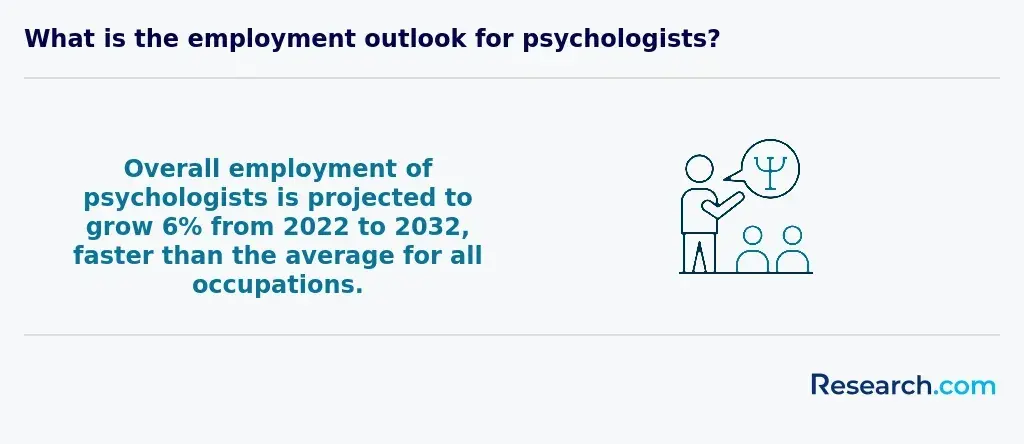
Georgia’s school psychologist labor market is supported by continuing demand for mental health, behavioral, academic, and special education services in schools. The field is projected to grow at an annual rate of 3.24% from 2018 to 2028, with employment expected to increase from about 2,810 professionals in 2018 to approximately 3,720 by 2028. The state is also expected to have an average of 320 job openings each year.
School psychologists in Georgia commonly work for public school districts, private schools, educational service agencies, and related educational organizations. The market is not automatic for every applicant: candidates still need the correct graduate preparation, certification eligibility, internship record, exam completion, and references from supervised practice.
Salary varies by district, years of experience, responsibilities, credentials, and employment setting. As of 2019, entry-level school psychologist roles in Georgia reported an average annual salary of about $35,180, while the average salary for all workers in the field was $90,760. The highest earners could make more than $161,910 annually.
| Career factor | Georgia outlook | What it means for candidates |
| Projected growth | 3.24% annual growth from 2018 to 2028 | The field shows steady demand, but candidates still need full certification readiness. |
| Projected employment | About 2,810 in 2018 rising to about 3,720 by 2028 | More roles are expected, especially where student support needs exceed staffing capacity. |
| Annual openings | Average of 320 job openings each year | Internship networking and district relationships can help candidates compete for openings. |
| Entry-level salary | About $35,180 as of 2019 | New graduates should compare salary schedules, contract length, and benefits by district. |
| Average salary | $90,760 for all workers in the field as of 2019 | Experience, specialization, and leadership duties can affect long-term earning potential. |
| Upper earnings | More than $161,910 annually for the highest earners | Higher pay may require advanced responsibilities, alternative settings, or specialized expertise. |
Growth opportunities can include lead school psychologist roles, district-level mental health coordination, special education administration, crisis response leadership, behavioral consultation, or private and nonprofit work where additional credentials permit. Candidates who decide the school setting is not the right fit can compare other routes in this guide to becoming a therapist without a psychology degree.
What are the challenges and rewards of being a school psychologist in Georgia?
School psychology can be deeply meaningful, but candidates should not enter the field with unrealistic expectations. Georgia school psychologists may face large caseloads, multiple school assignments, crisis situations, special education deadlines, family stressors, and limited mental health resources in some communities.
Common pressures include:
- High caseloads: Some psychologists serve more than one building or a large student population, which can make prioritization essential.
- Emotional strain: Student trauma, family instability, behavioral crises, and suicide-risk concerns can weigh heavily on practitioners.
- Competing demands: Assessment deadlines, intervention planning, consultation, meetings, and documentation often happen at the same time.
- Resource gaps: Rural areas and understaffed districts may have fewer community-based services to support students outside school.
Effective school psychologists use structured calendars, consultation boundaries, team-based problem solving, peer support, and regular supervision to reduce burnout risk. Professional development can also help practitioners stay effective, especially in crisis response, threat assessment, trauma-informed support, and evidence-based interventions.
The rewards are also substantial. School psychologists help students access services, understand learning needs, develop coping strategies, improve behavior, and reconnect with school after crisis or failure. They also support teachers and families by translating complex psychological and educational data into practical next steps.
| Reward | Challenge | How to decide if the role fits you |
| You can make measurable differences in student learning and well-being. | Progress is often gradual and may require persistence across months or years. | Choose this field if you are comfortable with long-term support rather than quick fixes. |
| You work at the intersection of education and mental health. | The role can involve difficult conversations with families, teachers, and administrators. | Strong communication skills are as important as technical assessment skills. |
| You can advocate for vulnerable students. | Legal timelines and documentation can be demanding. | You need to be detail-oriented and comfortable with compliance responsibilities. |
| You can grow into leadership or specialized roles. | Advancement may require additional training, networking, or certifications. | Plan professional development early instead of waiting until you feel stuck. |
For readers who like psychology but are unsure about school-based work, reviewing broader career options with a psychology degree can help clarify whether school psychology, counseling, research, human services, or another route is a better match.
What alternative career paths are available with a school psychology degree in Georgia?
A school psychology degree is designed for school-based practice, but the skill set can transfer into related roles. Assessment, child development knowledge, intervention planning, behavioral consultation, and systems thinking are valuable in education, nonprofit, clinical-adjacent, and policy settings. Some alternatives require additional licensure, so candidates should verify requirements before changing direction.
| Career option | How school psychology training applies | What to check before switching |
| Private practice | Assessment, family consultation, and child-focused intervention skills may be useful for serving families outside schools. | Private practice generally requires additional clinical licensure, supervised hours, and relevant exams. |
| Educational leadership | School psychologists understand student support systems, data use, special education, and prevention programs. | Administrative roles may require leadership credentials or district-level experience. |
| Higher education | Graduates may support college students, teach, supervise trainees, or contribute to school psychology programs. | Faculty positions may require doctoral preparation or specialized research experience. |
| Nonprofit child and family services | Skills in advocacy, program design, trauma-informed support, and community collaboration can transfer well. | Job duties may differ from school certification rules, so review licensing and supervision expectations. |
| Consulting and training | Experienced practitioners can train educators on behavior, intervention systems, crisis response, or student mental health. | Credibility usually depends on experience, specialized training, and a strong professional network. |
Professionals who move out of schools often find that the transition is easier when they build relationships before they need them. Mentors, supervisors, district leaders, university faculty, and professional association contacts can help identify roles that match both qualifications and temperament.
What are the pathways for continuing education and professional development for school psychologists in Georgia?
Continuing education is not optional for Georgia school psychologists. It is part of credential renewal and a practical necessity in a field shaped by changing student needs, legal requirements, intervention research, and technology. The Georgia Professional Standards Commission requires school psychologists to demonstrate professional learning for renewal every five years.
Renewal requirements
Georgia school psychologists may meet renewal expectations through six semester hours of coursework or 10 Professional Learning Units every five years. Because renewal rules can change, practitioners should track requirements directly through the PSC and keep documentation of completed training.
Useful professional development areas
- Crisis intervention: Helps school psychologists respond to student safety concerns, grief, threats, and acute distress.
- Applied behavior analysis: Strengthens behavior assessment and intervention planning, especially for students with intensive support needs.
- Trauma-informed practice: Supports students affected by adverse experiences and helps schools avoid responses that unintentionally escalate distress.
- Culturally responsive assessment: Reduces the risk of misinterpretation when evaluating students from diverse linguistic, cultural, or socioeconomic backgrounds.
- Special education law: Keeps practitioners current on evaluation, eligibility, documentation, and procedural responsibilities.
Where to find development opportunities
The Georgia Association of School Psychologists, the National Association of School Psychologists, school districts, universities, and related professional bodies can provide workshops, conferences, webinars, mentoring, and self-paced training. Practitioners who want to deepen their education base can compare psychology schools in Georgia when considering graduate certificates, advanced study, or doctoral training.
What are the legal and ethical considerations for school psychologists in Georgia?
School psychologists work with sensitive student information, special education records, family disclosures, crisis concerns, and assessment data. In Georgia, ethical and legal competence is central to the job because poor documentation, confidentiality mistakes, or unclear consent practices can create risk for students and schools.
Core legal responsibilities
- Assessment and evaluation: School psychologists conduct comprehensive evaluations to identify learning, behavioral, emotional, and developmental needs.
- Intervention planning: They help design supports that are individualized, evidence-informed, and appropriate for the student’s school context.
- Mandated reporting: When abuse or neglect is suspected, school psychologists must follow mandated reporting obligations.
- Special education compliance: They contribute to processes governed by federal and state requirements, including responsibilities connected to the Individuals with Disabilities Education Act.
Confidentiality and student records
Confidentiality is essential, but school psychologists do not operate in isolation. They must protect student privacy while sharing information appropriately with teams that have legitimate educational interests. FERPA governs many school record issues, and parental consent is typically needed for certain disclosures unless safety concerns or legal exceptions apply.
Ethical tensions to expect
- Supporting a student’s needs while managing parent, teacher, and administrator expectations.
- Explaining assessment results honestly when stakeholders disagree about eligibility or services.
- Maintaining objectivity when pressured to reach a particular recommendation.
- Balancing confidentiality with safety when a student may be at risk of harm.
How to reduce legal and ethical risk
- Document decisions, data sources, consent, consultation, and follow-up steps clearly.
- Use current assessment tools and interpret results within cultural, linguistic, and educational context.
- Seek supervision or consultation when cases involve safety concerns, ambiguous consent, or potential conflicts of interest.
- Stay current with GaPSC guidance, district policies, FERPA, IDEA, and mandated reporting rules.
- Provide staff training when schools need clearer procedures for referrals, confidentiality, or crisis response.
What financial aid and scholarships are available for school psychology students in Georgia?
School psychology training requires a significant financial commitment, so students should compare total cost, not just tuition. In Georgia, the average cost of earning a school psychology degree ranges from $20,000 to $40,000, depending on the institution and program length. Costs may also include exam fees, application fees, commuting, books, internship-related expenses, and lost income if the internship is unpaid.
Financial aid sources to review
- Federal student aid: Completing the FAFSA is the starting point for determining eligibility for federal aid and some state or institutional funding.
- Georgia Student Finance Commission: The GSFC offers funding information and may provide scholarship options relevant to education majors, including students preparing for school psychology careers.
- University scholarships: Institutions such as the University of Georgia and Georgia State University may offer program-specific or college-based aid for graduate students.
- Georgia grants and HOPE-related funding: Eligible students should investigate state programs such as the HOPE Scholarship, where applicable.
- Loan forgiveness programs: Georgia’s Teacher Loan Forgiveness Program may forgive a portion of loans for educators, including school psychologists, who work in high-need schools.
- Internship support: The Georgia Internship Program provides financial assistance to students completing internships in school psychology and may help offset living expenses.
| Cost-planning step | Why it matters | What to ask |
| File the FAFSA early | Many aid decisions begin with federal aid eligibility. | Does the school require FAFSA completion for institutional scholarships? |
| Compare total program cost | Tuition alone may not reflect fees, travel, books, or internship expenses. | What is the estimated full cost from admission through internship? |
| Ask about paid internships | A paid placement can reduce borrowing during the final training year. | Which districts offer stipends or paid internship contracts? |
| Review scholarship deadlines | Graduate aid can be competitive and deadline-driven. | Are school psychology students eligible for college, department, or education scholarships? |
| Check forgiveness rules | High-need school service may reduce loan burden for eligible professionals. | Which roles, schools, and service periods qualify? |
Students who need a lower-cost starting point can also compare affordable online psychology degree programs, especially if they are still completing undergraduate preparation before applying to a school psychology graduate program.
Could combining school psychology with criminology expand your career options in Georgia?
School psychology and criminology can overlap in work involving youth behavior, school safety, juvenile justice, threat assessment, prevention programming, and trauma-informed intervention. A school psychologist who adds criminology knowledge may be better prepared for roles connected to forensic consultation, juvenile services, safety planning, or multidisciplinary prevention teams. This combination is most useful for professionals who want to work beyond traditional assessment and eligibility roles. To understand related opportunities, review potential careers for criminology graduates.
How do school psychology and marriage and family therapy careers differ in Georgia?
School psychologists and marriage and family therapists both support emotional well-being, but they do so in different systems. School psychologists focus on learning, behavior, student assessment, educational eligibility, school consultation, and interventions within K-12 environments. Marriage and family therapists focus on relationships, family systems, communication patterns, emotional distress, and clinical treatment outside the school psychologist role. If you are considering a shift toward family therapy, compare the education requirements for marriage and family therapists in Georgia before assuming your school psychology training will satisfy clinical licensure requirements.
How can I enhance my earning potential as a school psychologist in Georgia?
Higher earnings usually come from a combination of experience, specialization, leadership responsibility, and setting. Georgia school psychologists can improve their long-term salary prospects by developing expertise in crisis intervention, behavioral analysis, autism support, program evaluation, special education leadership, or district-wide consultation. Some professionals also explore private practice or consulting, but those paths may require additional licensure and business skills. For a broader comparison of pay-oriented psychology pathways, see this guide to the highest-paying psychology careers.
How does special education certification impact school psychology careers in Georgia?
Special education knowledge can strengthen a school psychologist’s effectiveness because much of the role involves evaluation, eligibility, intervention planning, and collaboration with special education teams. Additional preparation in special education can help psychologists better understand instructional strategies, disability categories, individualized supports, and classroom implementation challenges. Candidates interested in formal teaching-related preparation can review guidance on special education certification in Georgia.
What specialized certifications can enhance my school psychology career in Georgia?
Specialized credentials can help school psychologists move into advanced practice, leadership, or consulting roles. Applied behavior analysis is one common option for professionals who want stronger behavioral assessment and intervention skills. Crisis intervention, trauma-informed care, autism support, and threat assessment training may also improve a practitioner’s value to districts. School psychologists interested in behavior-focused credentials can review the steps for becoming a BCBA in Georgia.
Can collaborating with speech-language pathologists improve classroom support?
Yes. School psychologists and speech-language pathologists often serve the same students, especially when communication, learning, behavior, and social-emotional development overlap. Collaboration can improve evaluation quality, intervention planning, classroom accommodations, and family communication. For example, a student with language-processing difficulties may also show academic frustration or behavioral concerns, making coordinated support more effective than isolated services. Understanding related credential pathways, such as Georgia speech-language pathologist license requirements, can also help professionals collaborate more effectively across disciplines.
What are the professional organizations and resources for school psychologists in Georgia?
Professional organizations help school psychologists stay connected, informed, and supported after graduation. In Georgia, the Georgia Association of School Psychologists is a key state-level organization for advocacy, networking, professional learning, and field-specific resources.
New and aspiring school psychologists can benefit from:
- Mentorship: Early-career professionals can learn how experienced psychologists manage caseloads, district politics, report writing, crisis response, and ethical dilemmas.
- Conferences and workshops: State and national events provide training in assessment, intervention, legal updates, consultation, and mental health supports.
- Peer networking: Local and statewide professional relationships can lead to internship leads, job openings, supervision advice, and resource sharing.
- Advocacy: Professional groups can help communicate the importance of realistic caseloads, student mental health funding, and best-practice staffing models.
- Continuing education documentation: Workshops and trainings may help professionals meet renewal expectations when properly documented.
Students should begin building their professional network before internship year. Joining associations, attending events, and introducing yourself to district professionals can make the transition from graduate student to certified practitioner smoother.
What are the requirements to be a school counselor in Georgia?
School counseling is a related but separate profession from school psychology. Georgia school counselors typically need a graduate degree in counseling or a closely related field, supervised practicum and internship experience, successful completion of required examinations, and ongoing professional development. The role focuses more on academic planning, student guidance, social-emotional development, and counseling services, while school psychology emphasizes assessment, special education eligibility, behavioral consultation, and intervention systems. For a focused pathway, review the requirements to become a school counselor in Georgia.
How can I accelerate my career growth in Georgia?
Career acceleration comes from being strategic after initial certification. School psychologists can grow faster by seeking mentorship, volunteering for district initiatives, developing specialized skills, presenting at professional events, and taking on leadership in crisis response, behavior systems, or intervention teams. Professionals who are considering adjacent counseling roles can also compare the fastest route to becoming a counselor in Georgia, but they should confirm that any faster pathway still meets state licensure requirements.
How should I prepare for state licensure exams in Georgia?
Exam preparation should begin before the final semester of graduate training. Candidates should review the current exam blueprint, identify content areas that need reinforcement, complete practice questions, and connect theory to internship cases. A strong study plan should include assessment, consultation, intervention, ethics, research, and school-based decision-making. Candidates can also use this overview of psychology licensure requirements in Georgia to distinguish school psychology certification from other psychology credentials in the state.
How can I transition to a counseling career in Georgia?
A school psychology background can provide useful transferable skills for counseling, including assessment literacy, child development knowledge, intervention planning, consultation, and crisis response. However, counseling licensure has its own coursework, supervised clinical experience, examinations, and scope-of-practice rules. Before changing paths, identify missing requirements, compare counseling programs, and clarify whether your prior graduate work can transfer. For a detailed counseling pathway, review how to become a licensed therapist in Georgia.
What other careers are available to those with similar qualifications as school psychologists in Georgia?
Professionals with school psychology training may also consider roles in child and family services, educational consulting, behavioral intervention, higher education, nonprofit advocacy, school administration, counseling, or marriage and family therapy. The best option depends on whether the person wants to remain in schools, pursue clinical work, conduct assessments, lead programs, or support families in community settings. Those interested in family-focused clinical practice should review MFT licensing requirements in Georgia before planning a transition.
What are the trends and innovations in school psychology in Georgia?
Georgia school psychology is being shaped by rising attention to student mental health, shortages in school-based support staff, technology-enabled services, and growing expectations for prevention and crisis response. These trends are changing what districts need from school psychologists and what graduate students should prepare to do.
- Greater focus on student mental health: Schools increasingly rely on psychologists to help address anxiety, trauma, behavior challenges, emotional regulation, and crisis concerns that affect learning.
- Staffing-ratio concerns: Georgia has reported a psychologist-to-student ratio of 1:2,137, compared with the recommended 1:500, which underscores the strain on available professionals.
- District-level hiring efforts: Atlanta Public Schools increased its psychologist count from 37 toward a target of 45, showing how some districts are trying to strengthen student support capacity.
- Technology in service delivery: Teletherapy options, digital assessment tools, and online consultation can help improve access, though they must be used ethically and appropriately.
- Integrated support programs: Schools are placing more emphasis on resilience, coping skills, prevention, teacher collaboration, and family engagement.
- Policy attention: Proposed measures such as the ASSIST Act reflect interest in funding, hiring, and retaining mental health staff in schools.
Students who want to enter the broader psychology field more quickly before specializing can compare accelerated online psychology degree programs, but they should remember that school psychologist certification still requires graduate-level specialist preparation and supervised internship experience.
Common mistakes to avoid when becoming a school psychologist in Georgia
| Mistake | Why it causes problems | Better approach |
| Choosing a psychology program without checking certification alignment | Not every psychology degree leads to Georgia school psychologist certification. | Confirm state approval, NASP accreditation, internship structure, and PSC compatibility before applying. |
| Focusing only on tuition | A cheaper program may become costly if internship support, transfer policies, or certification alignment are weak. | Compare total cost, placement support, exam preparation, graduation requirements, and district partnerships. |
| Waiting too long to plan the internship | Strong placements can be competitive and may require early coordination. | Ask about internship sites, paid options, supervision, and documentation during the admissions process. |
| Assuming salary outcomes are guaranteed | Pay depends on district, contract, experience, credentials, and responsibilities. | Review salary schedules, benefits, contract length, and advancement opportunities by employer. |
| Ignoring renewal requirements | Certification must be maintained through professional learning. | Track six semester hours or 10 Professional Learning Units every five years, and keep records. |
| Relying only on rankings | A highly visible program may not be the best match for your location, budget, or internship needs. | Use rankings as one input, then verify outcomes, costs, faculty expertise, and certification fit. |
Questions to ask before choosing a Georgia school psychology program
- Is the program state-approved at the educational specialist level or accredited by the National Association of School Psychologists?
- Does the curriculum include the 60 semester hours commonly expected for Georgia certification?
- How does the program support the required 1,200-hour internship?
- Which school districts regularly accept interns from the program?
- Are internships paid, stipend-supported, or unpaid?
- What percentage of students complete the program and move into school psychologist roles?
- How does the program prepare students for the required exam?
- What is the estimated total cost, including fees, books, travel, and internship expenses?
- Can previous graduate credits transfer into the program?
- How does the program address Georgia-specific legal, ethical, and special education requirements?
Graduate perspectives on becoming a school psychologist in Georgia
Graduates often describe the role as demanding but meaningful. One common theme is the satisfaction of helping students who are struggling academically, emotionally, or behaviorally and then seeing those students regain confidence. Another recurring theme is the importance of collaboration with teachers and families; school psychologists rarely work alone, and the strongest outcomes often come from coordinated support.
Many practitioners also emphasize that Georgia’s growing attention to school mental health has made their work feel more visible and necessary. At the same time, they caution that crisis response, heavy caseloads, and documentation demands require resilience, organization, and strong peer support. The best-prepared graduates tend to be those who enter the field with realistic expectations and a commitment to ongoing learning.
Related Articles for Nearby States
- 2027 How to Become a School Psychologist in South Carolina - School Psychology Programs and Certifications Online & Campus
- 2027 How to Become a School Psychologist in Florida - School Psychology Programs and Certifications Online & Campus
- 2027 How to Become a School Psychologist in Alabama - School Psychology Programs and Certifications Online & Campus
- 2027 How to Become a School Psychologist in Tennessee - School Psychology Programs and Certifications Online & Campus
- 2027 How to Become a School Psychologist in North Carolina - School Psychology Programs and Certifications Online & Campus
- 2027 How to Become a School Psychologist in Mississippi - School Psychology Programs and Certifications Online & Campus
- 2027 How to Become a School Psychologist in Kentucky - School Psychology Programs and Certifications Online & Campus
- 2027 How to Become a School Psychologist in Virginia - School Psychology Programs and Certifications Online & Campus
- 2027 How to Become a School Psychologist in Louisiana - School Psychology Programs and Certifications Online & Campus
- 2027 How to Become a School Psychologist in West Virginia - School Psychology Programs and Certifications Online & Campus
References:
- school-psychologists.com (11 Dec 2020). School Psychology Certification in Georgia: Become a School Psychologist in GA. School-Psychologists.com.
- careeroutlook.us (n.d.). Clinical, Counseling, and School Psychologists in Georgia. Career Outlook in the US.
- Imed Bouchrika (23 Jul 2024). School Psychology Careers: 2024 Guide to Career Paths, Options & Salary. Research.com.
- nasponline.org (n.d.). Georgia. National Association of School Psychologists.
- 11alive.com (09 Nov 2023). Need for school psychologists is critical across US including Georgia, expert says. 11 Alive.
Key Insights
- Georgia school psychologists generally need specialist-level graduate preparation, including 60 graduate semester hours and a 1,200-hour supervised internship.
- The Professional Standards Commission is the key certification authority, so candidates should verify current PSC requirements before enrolling, testing, or applying.
- The pathway typically takes 6-8 years from the bachelor’s degree through internship, making program fit and cost planning important early decisions.
- Georgia’s projected 3.24% annual growth from 2018 to 2028 suggests continued demand, but employment still depends on certification readiness, internship performance, and district hiring needs.
- Salary varies widely, with 2019 figures showing about $35,180 for entry-level roles, $90,760 on average for all workers in the field, and more than $161,910 for the highest earners.
- Students should not choose a program based only on tuition or convenience; accreditation, internship support, exam preparation, and Georgia certification alignment matter more.
- School psychology offers meaningful student impact, but the work can involve high caseloads, crisis situations, legal responsibilities, and emotional strain.
- Professional growth is strongest for practitioners who keep developing skills in crisis intervention, behavior support, trauma-informed practice, special education law, and culturally responsive assessment.
Other Things You Should Know about How to Become a School Psychologist in Georgia
In 2027, aspiring school psychologists in Georgia must complete a specialist-level degree or higher in school psychology, which includes a minimum of 60 semester hours and a year-long internship. Certification by the Georgia Professional Standards Commission is also required.
Georgia requires the Praxis School Psychology exam for certification, and applicants submit scores to the Georgia Professional Standards Commission. The state also expects completion of an approved specialist-level school psychology program, which includes a supervised internship before certification is issued.
To become a certified school psychologist in Georgia in 2027, you need to complete a specialist-level degree in school psychology, fulfill a supervised internship, and pass the Praxis School Psychologist Examination. Additionally, you'll need to apply for certification through the Georgia Professional Standards Commission (GaPSC).
In 2027, to obtain school psychologist certification in Georgia, candidates must complete a 1,200-hour internship, with at least 600 hours in a school setting. This supervised experience must be part of a state-approved graduate program, ensuring practical, real-world application of psychological principles.


