
2027 North Carolina Psychology Licensure Requirements – How to Become a Psychologist in North Carolina

Co-Founder and Chief Data Scientist
North Carolina needs more qualified mental health professionals, and licensed psychologists are central to that workforce. Around 1,804,000 adults in North Carolina reported experiencing a mental health condition, and 160,000 North Carolinians aged 12 to 17 have experienced a major depressive episode. For students and career changers, that demand creates a serious question: what does it actually take to become a licensed psychologist in North Carolina, and is the path worth the time, cost, and training?
This guide explains the North Carolina psychology license requirements, including the education pathway, supervised experience, exams, license renewal, and career options. It also compares psychology programs in the state, discusses online PsyD programs, and highlights related mental health careers such as counseling, school psychology, behavior analysis, substance abuse counseling, and forensic psychology. If you are comparing graduate programs, planning a clinical career, or deciding between psychology and adjacent fields, this guide will help you make a more informed choice. Students interested in combined behavioral science and organizational training may also want to compare options such as a psychology and business degree.
North Carolina Psychology Licensure Requirements Table of Contents
- Psychology workforce and demand in North Carolina
- Education requirements for becoming a psychologist in North Carolina
- How North Carolina’s education history shapes psychology training
- Ways psychologists can support rural mental health access
- How online PsyD programs can expand access to doctoral training
- Steps to become a BCBA in North Carolina
- How child psychology specialization may affect earnings
- How Licensed Professional Counselors can strengthen mental health care
- Why psychologists and social workers should collaborate in North Carolina
- How school psychologists can improve student mental health services
- Specific licensure requirements for psychologists in North Carolina
- Faster routes for aspiring counselors in North Carolina
- How psychologists and LPCs can coordinate integrative care
- Career paths for psychologists in North Carolina
- How psychologists can support substance abuse treatment
- Whether online PsyD programs can reduce education costs
- How forensic psychologists support North Carolina’s justice system
Quick Answer: How do you become a licensed psychologist in North Carolina?
To become a licensed psychologist in North Carolina, you generally need to complete undergraduate study, earn a doctoral degree such as a PhD or PsyD from an accredited institution, complete supervised professional experience, pass the Examination for Professional Practice in Psychology (EPPP) with a score of at least 500, pass the North Carolina State Examination, and apply through the North Carolina Psychology Board. Candidates seeking full licensure must complete 3,000 supervised hours, with half completed after the doctoral degree and a quarter involving close patient work. Licensed psychologists and associates must also complete at least 18 continuing education hours every two years to renew their license.
Overview of the Psychology Industry in North Carolina
North Carolina has a formal regulatory structure for psychology practice. In 1967, lawmakers enacted the North Carolina Psychology Act (NCPA), which established professional standards intended to protect the public from unqualified or unsafe practitioners. Today, the state’s mental health workforce remains under pressure. North Carolina’s mental health Health Professional Shortage Area (HPSA) designation is 4,269,267, and the state meets only 12.5% of its population’s mental health needs.
For aspiring psychologists, that shortage matters. It does not guarantee employment, admission to graduate school, or a specific salary, but it does show why North Carolina continues to need trained mental health professionals in clinical, school, community, correctional, and rural settings. Durham-Chapel Hill is also among the metropolitan areas with the highest concentration of psychology jobs, and licensed psychologists are practicing statewide as of 2024.
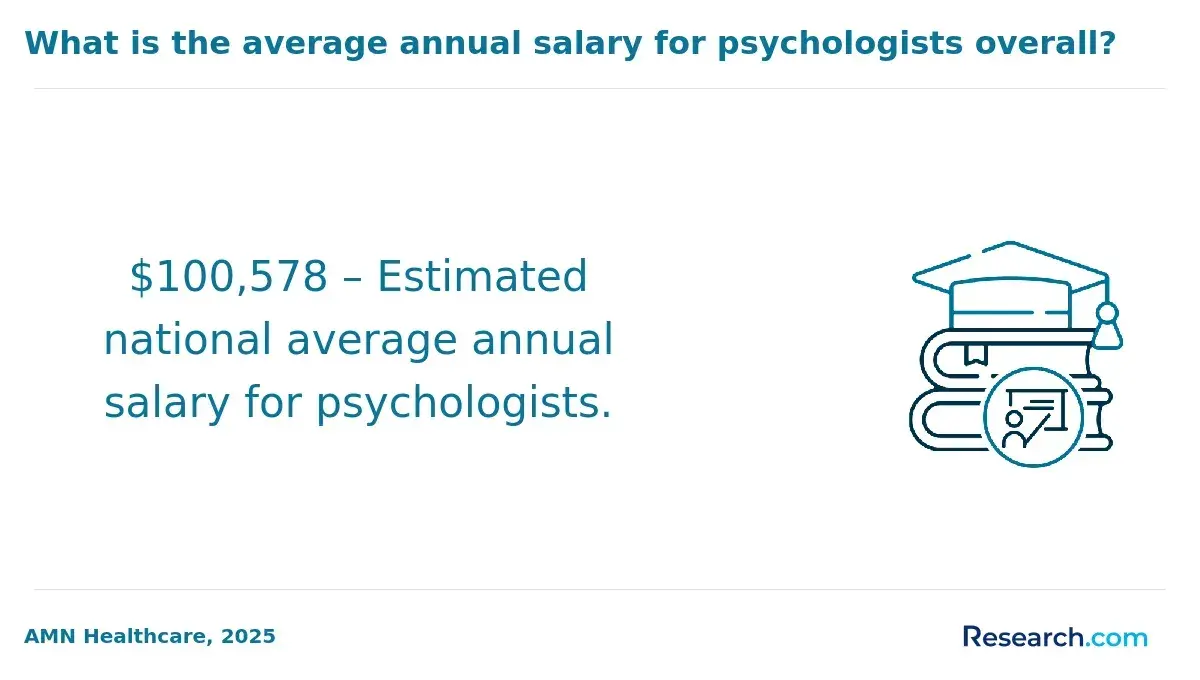
Compensation varies by specialty, employer, location, experience, and licensure status. The psychologist salary North Carolina facilities offer averages $113,331, while the annual mean wages reported by occupation category differ. Nationally, employment of psychologists is projected to grow by 10% through 2032. North Carolina’s state government has also launched a plan to improve access to mental health services, including an $835 million investment in the mental health system to address mental health and substance use needs.
| Psychology occupation in North Carolina | Employment | Annual mean wage |
| Clinical and Counseling Psychologists | 170 | $97,560 |
| School Psychologists | 80 | $70,580 |
| Psychologists, All Other | 130 | $78,120 |
What are the North Carolina psychology requirements?
The path to licensure begins with college-level psychology preparation, but the license itself requires advanced graduate training. Most future psychologists start with a bachelor’s degree, which typically takes four years of full-time study and includes about 120 credit hours. During this stage, students should build a strong foundation in research methods, statistics, human development, abnormal psychology, biological psychology, ethics, and writing.
Some students then complete a master’s degree, while others enter doctoral programs that include master’s-level coursework along the way. Many psychology master’s program degrees and courses take about two years and include 45 credit hours. Some programs may require the Graduate Record Examination (GRE), although admissions requirements vary by school.
The core credential for licensure as a psychologist is a doctoral degree, usually a PhD or PsyD, from an accredited institution. Doctoral programs commonly take five to seven years. A PhD often emphasizes research and academic preparation, while a PsyD generally places more emphasis on clinical practice, though both can prepare students for licensure when they meet state and accreditation expectations.
| Stage | Typical purpose | Time or credit information stated | Decision point for students |
| Bachelor’s degree | Builds the academic base for graduate study in psychology | Usually four years of full-time study and about 120 credit hours | Choose programs with research, statistics, clinical exposure, and advising for graduate school |
| Master’s degree or embedded master’s coursework | Can strengthen preparation or be built into a doctoral sequence | Most programs take two years, with 45 credit hours | Ask whether the credits transfer into a doctoral program or only support non-psychologist roles |
| Doctoral degree, PhD or PsyD | Required academic credential for psychologist licensure | Doctorate degrees range from five to seven years | Confirm accreditation, practicum placement support, internship expectations, and licensure alignment |
North Carolina Psychology License Requirements: Application and Renewal Process
After earning the required doctoral degree, candidates may apply for a provisional license through the North Carolina Psychology Board. The application process requires detailed documentation, including education, training, clinical experience, a supervision contract, and an information release form for a background check.
Once the Board reviews the application, it will determine whether the candidate may sit for the required licensing exams. Applicants must earn a score of at least 500 on the Examination for Professional Practice in Psychology (EPPP). They must also pass the North Carolina State Examination, which addresses state-specific laws, rules, and professional responsibilities.
A provisional license can be converted to a permanent license after the required supervised experience is completed. North Carolina requires 3,000 supervised hours. Half of those hours must be completed after the doctoral degree, and a quarter must involve close work with patients. Many candidates complete a large portion of the total hours during doctoral training. To apply for permanent licensure, candidates submit a Health Services Provider (HSP) Application form and the required fee. North Carolina does not currently offer psychologist license reciprocity, but out-of-state licensed psychologists may still pursue licensure by meeting North Carolina psychology license requirements.
License renewal also matters. Psychologists and psychological associates must complete continuing education requirements, which may include courses, workshops, seminars, or symposiums sponsored or co-sponsored by approved organizations such as APA-approved sponsors, the North Carolina Psychology Board, and the North Carolina Psychological Association. Psychologists and associates must complete at least 18 continuing education hours every two years.
| Licensure step | What you must do | Why it matters |
| Apply for provisional licensure | Submit the Board application, supervision contract, clinical experience details, and background check release | Allows the Board to verify eligibility before exams and supervised practice progress |
| Pass the EPPP | Earn at least 500 on the Examination for Professional Practice in Psychology | Demonstrates broad professional knowledge expected of psychologists |
| Pass the North Carolina State Examination | Complete the required state-specific exam | Confirms understanding of North Carolina rules and professional obligations |
| Complete supervised experience | Finish 3,000 hours, with half after the doctorate and a quarter in close patient work | Shows readiness for independent professional practice |
| Renew the license | Complete at least 18 continuing education hours every two years | Keeps professional knowledge current and supports continued ethical practice |
List of Top Psychology Programs in North Carolina for 2027
North Carolina offers a wide mix of public and private psychology programs, from undergraduate psychology majors to graduate school psychology and clinical psychology pathways. The right program depends on your career goal. A student planning to become a licensed clinical psychologist should prioritize doctoral preparation, supervised clinical training, and licensure alignment. A student interested in research, business, law, medicine, education, or human services may use an undergraduate psychology degree as a broader foundation.
Davidson College, Duke University, and UNC-Chapel Hill are well-known options for students seeking selective academic environments. Appalachian University and North Carolina State University may appeal to students comparing specialized graduate paths and tuition considerations. Below are the programs included in the Research.com list.
1. Duke University, BS in Psychology
Duke University introduces psychology majors to the causes, processes, and outcomes of human and animal behavior. The curriculum examines behavior through multiple systems, including biological, social, and economic influences. Graduates may apply this training in research, healthcare, education, law, policy, business, data analysis, and engineering. The major can also support graduate study in clinical psychology, psychological research, law, medicine, or business.
- Program Length: 4 years
- Annual Average Cost: $31,725
- Required Credits to Graduate: No information available
- Accreditations: APA, Psychological Clinical Science Accreditation System (PCSAS)
2. UNC-Chapel Hill, BS in Psychology
UNC-Chapel Hill offers a BS in Psychology designed to give students a broad grounding in behavioral science. The program can prepare students for psychology-related work, research, teaching foundations, or graduate study, and it may also serve students moving toward law, medicine, business, or education. Opportunities include a departmental senior honors thesis for students with an overall GPA of 3.3 or higher, faculty lab research experience, peer mentoring, and a monthly stipend for selected psychology majors.
- Program Length: 4 years
- Cost Per Credit Hour: $292.46 (resident); $1,556.67 (nonresident)
- Required Credits to Graduate: 120
- Accreditation: SACSCOC
3. Davidson College, BS in Psychology
Davidson College prepares psychology students to understand research, evaluate human behavior, manage relationships more effectively, and contribute to their communities. The program can support graduate study in psychology or another field. Its curriculum connects natural sciences, humanities, and social sciences, helping students develop critical thinking skills while deepening their understanding of people, behavior, and social responsibility.
- Program Length: 4 years
- Average Annual Cost: $55,000
- Required Credits to Graduate: N/A
- Accreditation: SACSCOC
4. North Carolina State University, MS in School Psychology (with a Certificate of Advanced Studies)
Students asking, is child psychology a good career?, should look carefully at programs that lead to school-based or child-focused practice. North Carolina State University offers an MS in School Psychology built around the scientist-practitioner model. The scientist side connects theory, research, and practice through case studies. The practitioner side emphasizes supervised fieldwork in assessment, consultation, and intervention with students, teachers, parents, school administrators, and other professionals.
- Program Length: 3 years
- Cost Per Credit Hour: $668.95
- Required Credits to Graduate: 119
- Approval: National Association of School Psychologists (NASP)
5. Appalachian University, Clinical Psychology (PsyD)
Students searching for PsyD programs Charlotte, NC schools offer may also need to consider programs in other North Carolina cities. Appalachian University offers a clinical psychology PsyD designed as advanced professional training for future clinicians, evaluators, administrators, educators, and consultants, with particular attention to service in rural communities. Students receive training in clinical intervention and assessment, along with applied research experience. Graduates may also pursue correctional center roles, which can connect to the criminal psychology education path.
- Program Length: 4 to 6 years
- Estimated Annual Cost: $5,740 (resident); $16,247 (nonresident)
- Required Credits to Graduate: 43
- Accreditation: SACSCOC
| Program | Best fit for | Important factor to verify |
| Duke University, BS in Psychology | Students seeking broad psychology preparation with strong research and interdisciplinary options | How the undergraduate curriculum supports graduate admission goals |
| UNC-Chapel Hill, BS in Psychology | Students who want behavioral science preparation with research and honors opportunities | Resident versus nonresident tuition impact |
| Davidson College, BS in Psychology | Students seeking a liberal arts psychology foundation | Total cost and fit with postgraduate plans |
| North Carolina State University, MS in School Psychology | Students focused on school psychology and child-centered assessment and intervention | NASP approval, field placement structure, and school licensure requirements |
| Appalachian University, Clinical Psychology PsyD | Students pursuing clinical psychology training, especially with rural service interests | Clinical placement expectations, licensure preparation, and total program cost |
The Impact of North Carolina’s Historical Legacy on Psychology Education
North Carolina’s long history in higher education helps explain why the state has a broad psychology education ecosystem. As the first state in the U.S. to establish a public university, North Carolina built an academic infrastructure that now supports public and private institutions, research programs, professional training, and community-focused mental health education.
Schools such as Duke University and UNC-Chapel Hill continue to contribute to psychology through research activity, interdisciplinary coursework, and preparation for local and national workforce needs. Many programs also connect psychology with public policy, behavioral health, education, social justice, and health systems, which is especially relevant in a state with both major urban areas and underserved rural communities.
For prospective students, the practical advantage is choice. North Carolina offers undergraduate psychology degrees, school psychology programs, clinical doctoral pathways, and related behavioral health training. Students comparing options should review the best colleges for psychology in North Carolina to evaluate academic quality, research access, affordability, and career preparation.
The key is to connect the school’s strengths to your end goal. A strong research university may be ideal for a future PhD applicant, while a practice-oriented doctoral program may better serve someone planning to provide clinical services in rural communities.
How can psychologists in North Carolina address rural mental health challenges?
Rural communities in North Carolina often face barriers such as provider shortages, long travel distances, transportation limitations, stigma, and fewer specialty services. Psychologists can help close these gaps by designing care models that match how rural patients actually access support.
- Use telehealth strategically: Teletherapy and virtual consultations can help patients receive care without traveling long distances. Telehealth is especially useful for follow-up sessions, continuity of care, and patients with limited transportation.
- Partner with trusted local institutions: Community health centers, schools, churches, nonprofits, and local agencies can help connect residents to mental health resources. Trust matters in rural care, and partnerships can improve outreach.
- Increase mental health literacy: Workshops, school programs, and community events can reduce stigma and help residents recognize when to seek support.
- Offer flexible scheduling: Evening and weekend appointments can help patients who travel far, work irregular hours, or cannot easily take time off.
- Coordinate referrals: Psychologists should build referral relationships with primary care providers, social workers, counselors, substance abuse professionals, and crisis services.
These approaches are especially important because rural access problems are not solved by licensure alone. Psychologists need service models that are reachable, culturally aware, and coordinated with local resources.
The Role of Online PsyD Programs in Expanding Psychology Education
Online PsyD programs can make doctoral psychology education more accessible for students who cannot relocate or pause work and family responsibilities. They may be especially relevant in North Carolina, where rural and underserved areas need more mental health professionals. However, students must evaluate online PsyD options carefully because convenience does not automatically mean licensure readiness.
Advantages of Online PsyD Programs
Online PsyD programs can work well for disciplined students who need flexibility but still want practice-focused doctoral training.
- Flexible coursework: Asynchronous classes may allow students to complete lectures and assignments around work or caregiving schedules.
- Reduced relocation pressure: Students in rural areas or outside major metro regions may be able to study without moving.
- Local clinical training: Many online PsyD programs allow students to complete practicum experiences in or near their communities, which can help them build local professional networks.
Accreditation and Licensure Readiness
Accreditation is one of the most important factors in choosing any PsyD program, online or campus-based. Students should confirm whether the program’s accreditation, practicum structure, internship requirements, and supervised training expectations align with North Carolina Psychology Board requirements. They should also ask how the program prepares students for the EPPP and state-specific licensure steps.
If this pathway fits your needs, compare options in Research.com’s guide to the best PsyD online programs. Focus on licensure alignment, faculty support, placement assistance, internship outcomes, and total cost rather than format alone.
Meeting North Carolina’s Needs
Online PsyD programs may help more students remain in their communities while preparing for psychology practice. This can be valuable for rural areas, but students should be realistic: doctoral psychology training still requires supervised clinical experiences, strong faculty mentorship, and careful licensure planning.
How can I become a BCBA in North Carolina?
A Board Certified Behavior Analyst (BCBA) career is related to psychology but follows its own certification pathway. BCBAs typically complete specialized graduate-level coursework, supervised fieldwork, and the Behavior Analyst Certification Board examination. In North Carolina, students should verify that the program they choose meets national certification standards and any relevant state expectations before enrolling. For a focused walkthrough, review Research.com’s guide on how to become a BCBA in North Carolina.
How Can Specialization in Child Psychology Impact Earnings in North Carolina?
Child psychology can be a valuable specialization for professionals interested in assessment, early intervention, family support, school collaboration, and child development. In North Carolina, demand for child-focused services may be shaped by school needs, pediatric behavioral health, community mental health programs, and early intervention services. Specialized training can help psychologists qualify for roles that require child assessment, evidence-based intervention, and collaboration with educators and healthcare teams.
Earnings still depend on credentials, licensure, employer type, location, and experience. Students should avoid assuming that specialization alone guarantees higher pay. To understand compensation considerations more clearly, compare current information on child psychologist salary.
How Can Integrating Licensed Professional Counselors Improve Mental Health Care in North Carolina?
Licensed Professional Counselors can expand the reach of mental health services when they work alongside psychologists. Psychologists may focus on psychological assessment, diagnosis, testing, complex clinical treatment, consultation, and research-informed intervention, while LPCs often provide counseling services that support ongoing therapeutic care. In underserved communities, this team-based model can reduce referral delays and help clients receive support sooner.
Collaboration works best when each provider understands scope of practice, documentation expectations, referral protocols, and crisis procedures. Professionals who want to broaden their role in counseling services can explore how to become an LPC in North Carolina.
How can interdisciplinary collaboration between psychologists and social workers enhance mental health care in North Carolina?
Psychologists and social workers often see different parts of the same problem. A psychologist may assess symptoms, diagnose conditions, and deliver evidence-based treatment, while a social worker may help address housing instability, family stress, benefits access, transportation, safety planning, and community resources. When these roles coordinate, patients are more likely to receive care that addresses both clinical and practical barriers.
This is especially important in North Carolina communities where mental health concerns overlap with poverty, rural isolation, school needs, substance use, or justice system involvement. Students considering human services careers can compare social work pathways through What degree do you need to be a social worker in North Carolina?.
How can school psychologists improve mental health services in North Carolina?
School psychologists are often among the first professionals to identify emotional, behavioral, learning, and developmental concerns in children and adolescents. Their work connects mental health, academic performance, disability services, family communication, and school safety.
In North Carolina schools, they can improve mental health services by conducting assessments, supporting individualized education programs, advising educators, helping with crisis response, implementing evidence-based interventions, and tracking student progress. They also play an important role in prevention by helping schools identify concerns before they become more severe. Students interested in this specialty can learn how to become a school psychologist in North Carolina.
What Specific Licensing Requirements Do Psychologists Need to Meet in North Carolina?
Licensed psychologists in North Carolina must complete a doctoral degree in psychology, obtain supervised experience, pass the EPPP, pass the North Carolina State Examination, and meet North Carolina Psychology Board application requirements. Candidates should also understand that related mental health professions have separate rules. For example, professionals who want to work with couples and families may need to pursue an MFT license in North Carolina rather than a psychology license.
Before choosing a graduate program, students should ask whether the degree leads to psychologist licensure, counseling licensure, marriage and family therapy licensure, school psychology credentials, or another professional path. These credentials are not interchangeable.
How can aspiring counselors fast-track their careers in North Carolina?
Students who want to provide counseling services may be able to enter the workforce faster through counseling pathways than through the psychologist licensure route, which requires a doctoral degree. Accelerated or integrated counseling programs may combine required coursework with supervised experience planning, but students should still confirm accreditation, state approval, practicum requirements, and exam preparation.
The fastest path is not always the best path if it limits licensure eligibility or career mobility. Compare options carefully using Research.com’s guide to the shortest path to become a counselor in North Carolina.
How can psychologists collaborate with Licensed Professional Counselors to enhance integrative care in North Carolina?
Psychologists and Licensed Professional Counselors can build stronger care plans when they coordinate assessment, therapy, referrals, and follow-up. A psychologist may provide diagnostic clarification or testing, while an LPC may support ongoing counseling goals. Together, they can improve continuity of care for clients with anxiety, depression, trauma, substance use concerns, family stress, or complex life circumstances.
Successful collaboration requires clear communication and respect for each profession’s legal scope. Psychologists who regularly work with counselors should understand the North Carolina LPC license requirements so referrals and care coordination are appropriate.
What are the career opportunities for psychologists in North Carolina?
Psychologists in North Carolina can work in clinical practice, hospitals, schools, universities, community mental health agencies, correctional settings, research organizations, government programs, private practice, and consulting. Clinical psychologists may treat anxiety, depression, trauma, behavioral concerns, and substance use-related conditions. Rural communities may offer meaningful service opportunities for psychologists willing to use telehealth, community partnerships, and integrated care models.
School psychology is another important path, particularly for professionals who want to support students’ mental health, learning needs, and behavioral development. Organizational psychology may also appeal to students who prefer workplace-focused roles involving employee well-being, leadership development, selection, training, or organizational effectiveness. Students considering this direction may compare an affordable online master's in organizational psychology.
Forensic psychology is a specialized option for those interested in law, criminal behavior, assessment, and the justice system. Psychologists may also work in research, policy, advocacy, program evaluation, or public health initiatives as North Carolina continues to address mental health access and substance use challenges.
| Career direction | Typical work setting | Good fit for students who want to... |
| Clinical or counseling psychology | Hospitals, clinics, private practice, community agencies | Assess and treat mental health conditions through evidence-based care |
| School psychology | K-12 schools and education systems | Support student learning, behavior, assessment, and intervention |
| Organizational psychology | Businesses, consulting firms, human resources departments | Apply psychology to leadership, workplace performance, and employee well-being |
| Forensic psychology | Courts, correctional settings, law enforcement-related agencies | Connect psychological assessment and behavioral expertise with legal questions |
| Research, policy, or advocacy | Universities, nonprofits, government, public health organizations | Study mental health systems, evaluate programs, or influence public policy |
How can psychologists bolster substance abuse treatment in North Carolina?
Psychologists can strengthen substance abuse treatment by integrating evidence-based approaches such as brief interventions, motivational interviewing, cognitive-behavioral techniques, assessment, relapse prevention planning, and coordinated care. Because substance use often overlaps with trauma, depression, anxiety, family stress, legal problems, and medical needs, psychologists should work closely with counselors, physicians, social workers, recovery programs, and community agencies.
Professionals who want to deepen addiction-focused services may also explore training connected to how to become a substance abuse counselor in North Carolina.
Are online PsyD programs a cost-effective alternative to on-campus education?
Online PsyD programs may reduce some costs, especially relocation, commuting, and lost income if students can continue working. Some may also have lower tuition than certain campus-based options. However, students should calculate the full cost, not just tuition. Fees, residency requirements, practicum travel, internship relocation, technology, books, and time away from work can change the actual price.
Students comparing lower-cost options can review the cheapest PsyD programs, but affordability should be weighed against accreditation, licensure alignment, faculty support, clinical placement assistance, EPPP preparation, and internship outcomes. A program that is cheaper but does not support licensure can become the more expensive mistake.
How do forensic psychologists contribute to the criminal justice system in North Carolina?
Forensic psychologists apply psychological expertise to legal and correctional questions. Their work may include risk assessment, behavioral evaluation, competency-related assessment, expert testimony, rehabilitation planning, consultation with attorneys or courts, and collaboration with law enforcement or correctional professionals.
This field requires strong assessment skills, ethical judgment, clear writing, and the ability to explain psychological findings in legal contexts. Students interested in this specialty can review how to become a criminal psychologist in North Carolina for more detail on education and licensure planning.
How to choose the right psychology path in North Carolina
Choosing a psychology program is not just about reputation. The right choice depends on your intended license, preferred work setting, budget, learning format, and willingness to complete long-term supervised training.
- Clarify the credential first: Decide whether you want to become a licensed psychologist, school psychologist, LPC, MFT, BCBA, social worker, or substance abuse counselor.
- Check accreditation and approval: Confirm that the program meets the expectations of the licensing or certification body tied to your career goal.
- Ask about supervised placements: Licensure depends heavily on practicum, internship, and supervised experience. A strong program should explain how placements are arranged.
- Compare total cost: Include tuition, fees, travel, relocation, books, technology, exam costs, and the income you may forgo while studying.
- Review outcomes carefully: Ask about graduation rates, licensure exam preparation, internship match support, and career services.
- Consider geography: If you plan to serve rural North Carolina, look for programs with rural health training, telehealth exposure, and community partnerships.
Common mistakes to avoid when pursuing psychology licensure in North Carolina
| Mistake | Why it can hurt your career plan | Better approach |
| Choosing a program before checking licensure alignment | A degree may be academically valid but not sufficient for your intended license | Confirm requirements with the North Carolina Psychology Board or the relevant licensing body before enrolling |
| Focusing only on tuition | Low tuition can be offset by fees, travel, unpaid placements, or weak support | Compare total program cost and placement structure |
| Assuming every online PsyD leads to licensure | Online format does not automatically satisfy state training requirements | Verify accreditation, practicum expectations, internship support, and EPPP preparation |
| Confusing psychologist, counselor, social worker, and MFT pathways | Each profession has different education, exams, scope of practice, and licensing rules | Map your target job title to the exact credential required |
| Waiting too long to get clinical or research experience | Graduate programs often value evidence of readiness and professional commitment | Seek research labs, volunteer roles, human services experience, or supervised exposure early |
| Assuming salary figures are guaranteed | Pay varies by specialty, employer, location, experience, and license status | Use salary data as a planning benchmark, not a promise |
The Fascinating World of Psychology
Psychology is broad, which is both an advantage and a challenge. Students can study mental processes, behavior, development, learning, relationships, organizations, health, schools, crime, addiction, and performance. That flexibility explains why students ask practical questions such as “What can you do with a sports psychology degree?"
If you are drawn to questions about why people think, feel, learn, change, struggle, and recover, psychology can be a strong academic direction. But if your goal is licensure, choose your path carefully. A general interest in human behavior is a good starting point; a clear credential plan is what turns that interest into a career.
Key Insights
- North Carolina has substantial mental health needs: Around 1,804,000 adults in North Carolina reported experiencing a mental health condition, and 160,000 residents aged 12 to 17 have experienced a major depressive episode.
- Licensure is a long but structured process: Future psychologists typically complete undergraduate study, doctoral training, supervised experience, the EPPP, the North Carolina State Examination, and continuing education.
- Supervised experience is essential: North Carolina requires 3,000 supervised hours, with half completed after the doctoral degree and a quarter involving close work with patients.
- Program choice should match the credential: A bachelor’s in psychology, school psychology program, PsyD, counseling degree, BCBA pathway, or MFT program can lead to very different careers.
- Online PsyD programs can help, but only if they meet licensure needs: Flexibility and possible cost savings are useful, but accreditation, clinical placements, and state requirements matter more.
- Career options are diverse: North Carolina psychologists may work in clinical care, schools, rural mental health, forensic settings, organizational consulting, research, policy, or substance abuse treatment.
- High Prevalence of Mental Health Issues: In North Carolina, 44.7% of adults reported experiencing anxiety or depression symptoms, and 22.1% did not receive therapy or counseling. This highlights a significant demand for mental health services in the state.
- Growing Job Market: The psychology industry in North Carolina is poised for growth, with a 22% projected increase in employment for psychologists until 2031. The state plans to invest $1 billion in its mental health system, which is expected to create more job opportunities.
- Competitive Salaries: The average annual salary for clinical and counseling psychologists in North Carolina is $97,560, while school psychologists earn $70,580. These figures indicate a lucrative career path for psychology professionals in the state.
- Comprehensive Education Pathway: To become a licensed psychologist in North Carolina, one must complete a bachelor's degree, a master's degree (if not integrated into a doctoral program), and a doctoral degree (PhD or PsyD). Additionally, candidates must complete 3,000 hours of supervised experience and pass the Examination for Professional Practice in Psychology (EPPP) and the North Carolina State Examination.
- Quality Education Programs: North Carolina boasts several top psychology programs, including those at Duke University, UNC-Chapel Hill, Davidson College, North Carolina State University, and Appalachian University. These programs offer comprehensive training and opportunities for specialization.
Related Articles for Nearby States
- 2027 South Carolina Psychology Licensure Requirements – How to Become a Psychologist in South Carolina
- 2027 Virginia Psychology Licensure Requirements – How to Become a Psychologist in Virginia
- 2027 Georgia Psychology Licensure Requirements – How to Become a Psychologist in Georgia
- 2027 Tennessee Psychology Licensure Requirements – How to Become a Psychologist in Tennessee
- 2027 West Virginia Psychology Licensure Requirements – How to Become a Psychologist in West Virginia
- 2027 Kentucky Psychology Licensure Requirements – How to Become a Psychologist in Kentucky
- 2027 Florida Psychology Licensure Requirements – How to Become a Psychologist for Florida
- 2027 Maryland Psychology Licensure Requirements – How to Become a Psychologist in Maryland
- 2027 Alabama Psychology Licensure Requirements – How to Become a Psychologist in Alabama
- 2027 Pennsylvania Psychology Licensure Requirements – How to Become a Psychologist in Pennsylvania
References
- Kaiser Family Foundation. (2025, December 31). Mental Health Care Health Professional Shortage Areas (HPSAs). Retrieved from Kaiser Family Foundation.
- National Alliance on Mental Illness. (2025, March). Mental Health in North Carolina. Retrieved from National Alliance on Mental Illness.
- North Carolina Office of the Governor (2026, February 5). Executive Order No. 33: Protecting North Carolinians Through Stronger Behavioral Health and Criminal Justice Systems. Retrieved from the North Carolina Office of the Governor.
- PsychologySchoolGuide.net (2026). Becoming a Psychologist in North Carolina [2026 Education & License Requirements]. Retrieved from PsychologySchoolGuide.net.
- U.S. Bureau of Labor Statistics. (2025, August 28). Occupational Employment and Wage Statistics. Area: North Carolina. Retrieved from BLS.
- ZipRecruiter (2026, March 3). Psychologist Salary in North Carolina. Retrieved from ZipRecruiter.
Other Things You Should Know About The North Carolina Psychology Licensure Requirements
North Carolina psychologists renew their licenses on a biennial schedule with the North Carolina Psychology Board. Renewal is due by June 30 of odd-numbered years, and licensees must complete 24 hours of continuing education during each two-year cycle, including 3 hours in ethics.
Out-of-state psychologists seeking to practice in North Carolina must apply for licensure through endorsement. They need to meet comparable state requirements, provide evidence of good standing, and complete North Carolina's specific jurisprudence exam to ensure familiarity with state laws and ethical standards.
You need to pass the Examination for Professional Practice in Psychology (EPPP) with a score of at least 500 and the North Carolina State Examination.
To qualify for licensure in North Carolina, candidates must complete 3,000 hours of supervised experience, with at least 1,500 hours postdoctoral. Supervision must meet the state's standards, involving direct psychological work and guidance by a qualified supervisor, as outlined by the North Carolina Psychology Board.
Licensed psychologists in North Carolina must complete 18 hours of continuing education each biennium starting in 2027. Of these, at least three hours must focus on ethical and legal issues relevant to psychology practice. The North Carolina Psychology Board mandates these requirements to uphold professional standards.





